The Productive Landscape: NatureTech for Profit and Planet
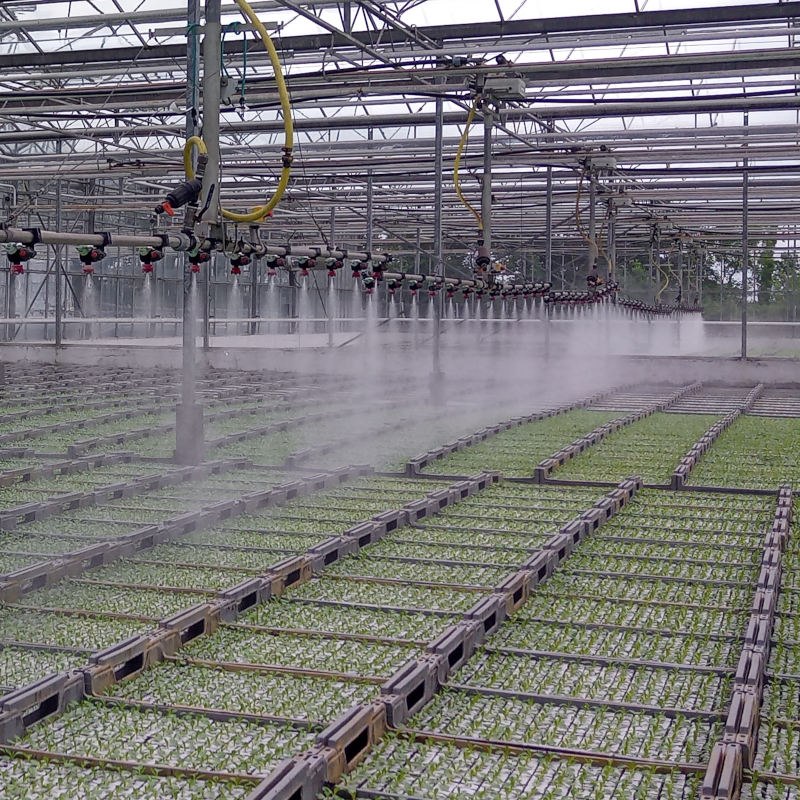
How can technology enable delivery of food, nature recovery, and climate resilience - all at once? The Head of the Environment Agency is asked: what's the national plan for dealing with land use pressures, plus you’ll hear from technologists and land managers working on nature-based and tech-enabled solutions for water, soils and climate adaptation.

Call for good science to inform agri-policy

Agri-TechE Blog
Agri-TechE
Elizabeth Truss, MP speaking at the Norfolk Farming Conference
Elizabeth Truss, MP

Lack of scientific evidence at the heart of EU legislation was one of the concerns raised at the Norfolk Farming Conference (NFC), which filled the mighty John Innes Centre lecture theatre, last week.

A rousing opening speech by DEFRA Secretary of State Liz Truss included a much-reported reference to the Norwich Research Park being “a powerhouse of British food and farming” and, more widely “[the] constellation of star research” across the east of England.

But just as importantly, she emphasised that regulation must be made on the best scientific evidence, stressing that the UK should be able to use its own scientific discoveries, including protecting the UK from plant and livestock diseases.

This message was reiterated by Andrew Clark, NFU’s Director of Policy, bemoaning the fact that science-based arguments don’t appear to be accepted in decision-making at EU level – citing the removal of the EU’s Chief Scientific Officer revealing the low priority given to science at the heart of policy-making and regulation.

Sugar beet advice

Good science was at the heart of another conference this month, with the Winter Conference of the British Beet Research Organisation – a great chance to share highlights and findings from BBRO’s research and technology transfer activities with growers, as well as reflecting on last year’s sugar beet crop.

With a budget of around £2M/yr, as a “hybrid research organisation” the BBRO supports projects on yield progression (varieties, nutrient uptake, root architecture etc), yield stability (management of pests and diseases) and harvest storage (soil tare and storage management). Its funding coffers have also been further boosted by two recent successful bids to Innovate UK.

Less nitrogen research reveals

Key questions often asked of BBRO were tackled by Dr Debbie Sparkes from Nottingham University, with the science supporting her answers.

In essence, there’s no need to apply more nitrogen than needed in high yielding varieties, it will rob the growing roots of vital biomass, but the plants need easy access to nitrogen early in the growing season Late harvested crops also don’t benefit from adding more nitrogen; it doesn’t increase leaf canopy development.

Delegates also heard that the UK only ranks 5th in Europe in terms of sugar yield, (behind the Netherlands, Spain, Belgium and France) due to average daily temperatures and irradiance – both lower in the UK during those critical canopy-building weeks.

Bearing in mind that the crop may have to stay longer in the ground, another question is whether there are any varieties that are better suited to late lifting. After a detailed scientific analysis, there is no evidence in the ranked performance of different varieties if the harvest date is delayed.

sugar beetShould you grow a cover crop before sugar beet?

Some interesting data showed growing a cover crop reduced nutrient leaching, improved soil structure and suppressed beet cyst nematode, but more research is needed on this one.

Some evidence of the benefits of cover crops were included in research presented by Prof Andrew Lovett of the University of East Anglia, and James Beamish of Salle Farms, who discussed  their Demonstration Test Catchment project, one of only 3 in the UK, where the east of England was specifically chosen for its different soil types. Using automated monitoring facilities, water quality indicators were measured every 30 minutes and sent wirelessly to a website. The results were dramatic, revealing that individual rainfall events can be very significant at washing nitrogen and phosphate into the water course – up to 9 kg of N / ha and 35 kg of P / ha.

Additionally, planting a cover crop in the form of oilseed radish substantially reduced leaching of these nutrients into the water course. Reflecting on the 2014 sugar beet crop, BBRO’s Lead Scientist Mark Stevens shared data on weather, varieties and sowing conditions which all helped to contribute to the high yields – as much as 163 tonnes / ha in trials.

A mild Spring, obliging rainfall patterns and rapid crop growth and yield progression, coupled with timely pest control helped to make 2014 a great year for sugar beet – although rust has now taken the dubious honour as the major disease issue for sugar beet in UK conditions, so there’s no room for complacency.

Innovative farmers are getting more vocal

Communication was another theme  this month – with current Nuffield Scholar Jake Freestone and Green Shoots Director Susie Emmett at the NFC encouraging more and wider communication about the industry and its achievements.  There has been a noticeable increase in the use of social media with “farmer-based” Twitter traffic actually averages out at 161 tweets per farmer per year!

The often-quoted statement that “the average age of UK farmers is 59” under plays a growing spirit of innovation, and the presence of younger farmers and growers was really noticeable at both the NFC and the BBRO event– and those aged under 30 drew a round of applause during Susie Emmett’s talk.

The panel of young farmers at the end of the NFC summed it up with 3 quotes each – when asked to give advice to their older counterparts:

1. The most dangerous phrase is “we’ve always done it this way”

2. It’s difficult to plan for volatility, so don’t beat yourself up about it

3. Retire!

Strong words, but ones which show a shifting mindset – one of change, open-mindedness, a willingness to take on new ideas and a desire to move the industry forward. Exciting times indeed.

Nestlé to speak at agri-tech water innovation event 9th March

Agri-TechE Article
Agri-TechE
Inder Poonaji, Head of Sustainability at Nestlé UK & Ireland,

Water is a finite resource and deciding how it is allocated is naturally contentious especially for farmers and food processors where it is a vital resource. There is an urgent need for improved methods of prediction and monitoring to increase the precision and efficiency of water usage.

Inder Poonaji, Head of Sustainability at Nestlé UK & Ireland, which has processing facilities in the region, will be a keynote speaker at a workshop which is aimed at generating innovative responses.

Producing, Processing and Packaging: Managing future water needs’ is hosted by Agri-Tech’s ‘Water for Agriculture‘ Special Interest Group, in partnership with the Agritech Water Cluster (based at the University of East Anglia) and Anglian Water.

Jamie Lockhart, farmer and incoming chairman of the Broadland Agricultural Water Abstractors Group (BAWAG), will be attending the workshop. He says that farmers should take a lead in improving efficiency and influencing policy.

He says: “I’m hoping to meet some innovative companies who can bring some fresh ideas on how to manage and monitor water usage and also to get some like-minded farmers in a room to put a new spin on things.”

More details are available here. 

The event is to be held 09.00 – 14.00, Monday 9 March 2015, at The Boathouse Business Centre , 1 Harbour Square, Nene Parade, Wisbech, Cambridgeshire, PE13 3BH.

Honingham Thorpe Farms joins Agri-Tech

Agri-TechE Article
Agri-TechE

Honingham Thorpe FarmsAgri-TechE has just opened its membership and is delighted to announce that Honingham Thorpe Farms (HTF) is the first farming business to join.

HTF, based near Norwich is a large farming and contracting business covering approximately 8,000 acres. It grows a range of combinable crops along with onions, potatoes, parsnips and sugar beet in a traditional Norfolk rotation. The farm is highly innovative and uses some of the latest techniques and equipment.

Precision agriculture is of increasing interest. One recent introduction is the use of a GPS logger and gatekeeper programme to produce soil maps.  Samples are taken from a known point and then logged onto a map.  This information can then be inputed into the fertiliser spreader and it will vary the rate according to the result.

Jamie Lockhart, Estate Manager, comments that he is keen to explore the potential of other technologies and says that being a member of Agri-TechE will help to facilitate this.

“We have joined Agri-TechE as we are keen to be at the forefront of agricultural innovation. It will give us the chance as farmers to speak to scientists and developers about the issues and problems we have and hope that this could lead to solutions that are relevant to our farming business.

“We are also keen to host trial sites for new products and technologies and could even provide office and warehouse space for start-up or existing businesses. As we are geographically close to The Norwich Research Park and hope that we can offer a link from the lab to the farm and from scientists to farmers.”

Jamie participated in the Remote Sensing and Monitoring Special interest group and was able to provide the technologists present some useful insights into the on-farm application of the technology and he will be attending the Water For Agriculture event in March.

Seize the opportunity to innovate, says Anglia Farmers’ Chair

Agri-TechE
Richard Hirst, Chairman of Anglia Farmers

Bird’s Eye revolutionised the pea industry when it introduced its ‘150 minutes to frozen’ promise using its processing plant in Great Yarmouth, according to Richard Hirst, recently appointed Chairman of Anglia Farmers. The problem, he says, is that “too little innovation has happened in the industry since the early 1970s.”

Anglia Farmers is a member of Agri-TechE and committed to encouraging entrepreneurial activity.  It  sponsored the January Agri-TechE Pollinator meeting, which provided a roundup of all the public funding available to innovators within the agri-industry,

Richard Hirst comments: “Agri-tech provides a host of business opportunities.  One example is pea production. The thrashing mechanism of the current pea harvester means that 10-15% of every harvest is lost in the field. If this was improved it would instantly improve yields and open up an international market for anyone who develops an improved harvester.

“Another example is our processing plants; once world leading, they now use double the energy of those in the EU. This adds to the cost of production and means that prospects for new factories and jobs are being lost.

“There is currently an appetite within the agri-food value chain for innovation and funding is available to support research and development. By supporting this meeting I hope that entrepreneurs will grasp the opportunity that exists in agri-tech and take advantage of this financial support.”

The Agri-TechE Pollinator provided an overview of the funding that is available from different sources and guidance on how to apply.

Dr Belinda Clarke, Director of Agri-Tech, says: “This Pollinator  aimed to demystify the application process so that people that have not previously considered applying for funding will be encouraged to do so. It was a unique opportunity to network with other like-minded individuals and to meet with a number of representatives from the major agri-tech funding agencies all in one place.”

Organisations represented included: BBSRC, Innovate UK, Enterprise Europe Network, ADAPT Commercial, and the Eastern Agri-TechE Growth Initiative.

For more information we have produced some top tips please click here if you would like more detailed information do contact us. 


Funding for new ventures start year of Pollinator meetings

Agri-TechE Blog
Agri-TechE
Photo courtesy of Serge Bertasius Photography from freedigitalphotos.net
Photo courtesy of Serge Bertasius Photography at freedigitalphotos.net

The clear message from the first Pollinator of the year, was there is funding available but you need to check that you are looking in the right pot!  To encourage more companies to consider innovation in agri-tech we brought together all of the key funding organisations for our January Pollinator network meeting.  It provided a one-stop-shop for anyone interested in finding out what funding is available and how to access it. If you missed it we have produced some “top tips” for you.

Talking about using funding to build your business, Delta-T Devices – the environmental monitoring cooperative – is one of the companies to be awarded grants from the Agri-TechE Catalyst, one of the funding instruments to be discussed at the Pollinator.

Already large and small businesses, universities and research organisations have shared in the £5 million awarded to 13 projects across the UK from Round 2 of the national Catalyst Fund, considered to be the UK’s flagship fund for agri-technology translation.

Round 4 of the Agri-TechE Catalyst opens this month and there are 7 rounds in total, so still lots of time to prepare proposals.

Tony Peloe, head of international sales for Delta-T Devices, is also the co-chair of our Remote Sensing and Monitoring Special Interest Group.  It is fitting that one of the funded projects is to develop a decision support system to improve soft fruit production by making more efficient use of inputs and reducing waste. The initiative is led by Berry Garden Growers and a fellow collaborator is Weatherquest, the weather forecasting company based at the University of East Anglia.

The super-food blueberries are the subject of the second Delta-T project which is to explore the impact of the growing environment and management practices on yield. The intention is to help the development of predictive yield maps and models.

If this area is of interest to you, the next RemSens Sig meeting is planned for the near future so there will be an opportunity to discuss this further with Tony.

URSULA Agriculture Ltd was also successful in achieving funding from the Agri-TechE Catalyst; it is expanding into the region and will be presenting at our March Pollinator.

As part of a collaboration – led by Pepsico and supported by Niab – URSULA will be deploying its Unmanned Aircraft Systems to develop and validate ways of translating visual and spectral sensor data into on-farm decision tools. The project aims to increase average oat yields by at least 1 t/ha by optimising the yield and quality.

Wild oats
Oats photo courtesy of kibsri at freedigitalphotos.net

Collaborations are vital in this sector. Cranfield University is collaborating with Pepsico in a project to help find cost-effective alternatives to the chemical chlorpropham (CIPC) to manage sprouting during the long-term storage of potato tubers. With CIPC potentially under threat from EU regulation, effective new interventions based on the potato physiology are likely to be welcomed by farmers.

Improved storage will also be discussed in more detail in April Pollinator as this is also the subject of a collaboration between John Innes Centre and Nelson County.  Bringing together lab and field is essential if solutions are to be found.

Other projects funded under the Agri-TechE Catalyst include: a feasibility study by Cambridge-based SME Isomerase Therapeutics to evaluate new and improved versions of crop and livestock crop protection agents and another by Pangaea Agrochemicals Ltd to exploit and pilot the commercial production of a new micro-encapsulated form of glyphosate.

The range of size and maturity of organisations that have been successful in attracting Agri-TechE Catalyst support shows that the funding really is open to all.

If you have been inspired to find out more, we will be discussing this, and other types of funding, at our Pollinator at the Norwich Research Park on January 26th 2014.

How new types of peas are reducing the need for additives

Agri-TechE Article
Agri-TechE

DomoneyThe desire to cut our consumption of food additives such as sugar and colouring agents has been one of the driving forces for the development of new varieties of pea for food.

Dr Claire Domoney is Head of Metabolic Biology at the John Innes Centre, the lead partner of the Pulse Crop Genetic Improvement Network (PCGIN), she says that PCGIN has been successful in identifying new types of pea that offer higher seed sugar and enhanced pigment retention, attributes that are very attractive to the canning and export food industries.

Here she explains how improved genetic knowledge of peas and faba beans is an important output from recent work by PCGIN and its related projects.

This has resulted in the knowledge of how traits with particular economic importance such as good colour and flavour might be stabilised.

Important traits that give growers a good return for their crops.


How can traits have economic value?

The requirements of the end-use (vegetable vining and canning, fresh product and feed) industries for peas and beans are really very different. Knowledge of the genetic traits that control quality, and care when harvesting can result in a premium product for the food industry in particular.

At least two types of pea seeds can be canned: immature and mature. Immature seeds can be from the same types of lines used for vining (for frozen markets) but for canning the seeds will be harvested at later stages of development.

This difference between these two markets is largely due to the industrial processes involved; in canning, for example, cans are rotated during and after heat treatment (cooking) and so require a robust seed that will not become damaged.

For mature seeds, the canned types are often marrowfat (large-seeded) varieties; high quality requires good colour retention, lack of starchiness in the canned liquid, lack of seed coat splitting and good flavour.


How can knowledge of traits impact commercial use of colourings?

There is pressure on the food industry to reduce the amount of additives used in production. Colour is valuable in making canned, dried and snack products look appealing to the consumer and so artificial colouring is often used. Mutations that lead to higher seed sugars and enhanced pigment retention are thus of great interest.

PCGIN is tasked with legume crop improvement in the UK , within its QDiPS project sources of new genes that control pea seed composition and colour stability have been identified. This is exciting as new genetic markers for these traits will be used to support the rapid selection of desirable lines from breeding programmes.

Also within QDiPS, improved genetic knowledge will allow the selection of genes that affect the sucrose content of seeds. Some of the new lines have been made available for testing under commercial conditions in, for example, fresh pea picking market trials.

Seed quality targets in faba beans are also being studied and new mapping populations, developed with input from the breeders, are now available for trials.


Peas are good in rotation as they add nitrogen. Is there any evidence that growing peas leads to a reduction in the need for nitrogen fertilizer?

Absolutely, and farmers are to be rewarded for growing legumes under the Basic Payment Scheme as they fix nitrogen, reducing the need for fertiliser.

Although the actual figures quoted for fixed nitrogen vary a lot and are often misquoted, the saving in nitrogen fertiliser costs, plus the benefit to the yield of the following crop, should rightfully be attributed to the legume/pulse crop. It was estimated that the value of growing legumes was about £200 per ha some time ago, but of course this will vary according to current fertiliser costs plus crop market value.

peas

How are researchers responding to the withdrawal of fungicides?

Of course the biggest challenge facing pea farmers is weather and its prediction. The last few years have brought huge contrasts, drought, deluges, cold and heat, and breeding crops that are more resilient to all of these is a huge task.

Ultimately what most pulse crops really need is cool conditions followed by heat, delivered at the right times. Prevalence of disease is linked to weather conditions, and the more limited range of fungicides available now means that diseases overall are becoming more of a problem to manage.

The discovery of novel sources of disease resistance and introgression into new varieties will help and the results from the PCGIN pea trials in 2013 were very promising.

John Innes has a vast germplasm collection; how does access to these exotic lines add value to your work?

It is probably fair to say that, without diversity, breeding is going nowhere.

The John Innes Germplasm Collection has a collection of over 3,000 pea lines from around the world and all our sources of novel variation for plant and seed traits as well as sources of disease resistance stem from this.

Our exploration of the more exotic lines and landraces – collected from various regions of the world including some extreme habitats – provides a huge reservoir of superior alleles of genes controlling numerous traits.

This resource, together with recent developments in high-throughput screening and sequencing, is allowing us to discover and categorise variation much more quickly.

In addition, we are working closely with pulse crop geneticists in Canada, whose research is very closely aligned to the needs of growers and the related food industry through Pulse Canada.

In summary, new varieties with improved standing and some impressive yield results are already available with further developments in the pipeline.


Have you found growers receptive to new varieties?

Yes, to convince growers in the UK to trial new varieties, a good approach is to highlight the higher disease resistance that is evident in new varieties. This translates to fewer inputs and a better balance sheet for the crop, which is very attractive to farmers.


Find out more about PCGIN at www.pcgin.org

New models help minimise water pollution and optimise yield

Meet the Network
Agri-TechE

Rivers and waterways are adversely affected by diffuse pollutionTools developed with French farms have been shown to model the effects of land-use on water pollution. Hutchinsons see a role in the UK to advise improved cultivation on a field level.

Our rivers and waterways are adversely affected by diffuse pollution. Although agriculture is not the only source of this pollution, according to DEFRA figures it does contribute approximately 60% of nitrates, 25% of phosphorus and 70% of the sediments entering our waters.

Jeremy Macklin, Director of Technology and Innovation at Hutchinsons, believes that tools developed from a nationwide project in France could help farmers in the UK reduce the amount of pesticides and fertiliser that is wasted each year and as a result improve water quality, improve food sources for pollinators and reduce Greenhouse Gas emissions.

Jeremy says: “For the last seven years I have been working with a French national cooperative organization, Invivo, which represents about 60% of French farming.

“In 2007 the French Government accelerated the implementation of the EU sustainable use of pesticides directive and this included a commitment to cut pesticide usage by 50%. This would have a major impact on agriculture without a strong evidence-base to suggest that this reduction by itself would improve water quality.

“So Invivo, together with three leading research organisations, created a national project to collect the data that is needed to model the impacts of different land use strategies on the environment.”

Jeremy Macklin, Director of Technology and Innovation at Hutchinsons

The consortium aimed to collect data on the agricultural practices which impact water pollution, greenhouse gas emissions and bio indicators to measure food availability for pollinating insects.

Invivo worked with a network of 30 cooperatives from different parts of France, covering 265 farms and 17,000 hectares. The farms were representative of their regions and detailed information was collated about their agronomic practice. This information was fed into models which allowed data about volumes of escaping pesticides and nitrates to be cross-referenced with agricultural productivity.

The results from a sample of the farms, analyzing 250 fields of winter wheat, showed that those fields with lowest level of pesticide in the water also had a 6% increase in gross margin, showing that the pesticide had reached the target rather than being wasted. This was also true of the contribution to Greenhouse Gas emissions from fertilizer usage.

The model showed that it was possible to create predictive recommendations for farmers.

Jeremy explains: “The interesting aspect of the model is that it offers a win-win situation for farmers, the environment and the water companies.”

Hutchinsons are working with a number of organisations to pilot the tools developed in the French project and adapt them for use in the UK.

If you are interested in water management then do get involved in our Water for Agriculture SIG, register your interest with the contact form.

Agri-tech water cluster creating a 25 year plan

Agri-TechE Article
Agri-TechE

Development of a “25 year plan” on water use in agriculture needs input from all stakeholders.  A workshop held during Agri-TechE Week provided a variety of perspectives.  It looked at the challenges, what a plan would need to include and the technologies that will be needed to allow more effective use of water.

More information is available in this report.

Agritech-Water-Workshop-11Nov14_Report

Grassroots input for agri-tech revolution

Agri-TechE Blog
Agri-TechE
Michael Totten of Sainsbury
Michael Totten of Sainsbury’s and Srini Sundaram of Agrisolum at REAP

Agri-TechE Week 2014 saw hundreds of people from the farming, agri-business, research and investment communities coming together across the east of England in a series of events to create connections, foster collaborations and build networks.

Kicking off the week was the “Innovation for Agriculture East” workshops at Trinity Park in Ipswich, by kind permission of the Suffolk Agricultural Association and in association with FramFarmers. With a keynote address by Guy Smith, Deputy President of the NFU, the scene was set for a series of discussions about technology translation and water for agriculture.

Trust, technology and translation

When asked who they trust most to present information about new agri-tech innovations, the role of the independent broker emerged loud and clear in the translation workshop.

Yet the role of commercial interest as being placed to invest in new innovations was noted – bringing a new product to market is usually not for those with faint hearts or shallow pockets.

Robert Rous, Suffolk farmer and Chairman of the Suffolk Agricultural Association

Social media, as well as the agricultural shows and trade press also featured, alongside word-of-mouth and the importance of demonstrations of new technologies, to enable people to make their own judgements. Barriers to technology translation included the fact that innovators need to be better at communicating, the mis-match between fundamental and applied research, and also the lack of inter-operability of new systems with existing ones.

Ways to improve the situation included closer working with politicians and funding agencies to present the case for connected, long-term (>25 years) commitments to research and innovation, as well as better connectivity of all the players in the ecosystem.

A vision for water – supported by technology

Delegates in the water for agriculture workshop explored the key challenges, namely volatile weather leading to too much or too little water; soil and cropping variability means there is no single solution. Soils generally have poor water holding capacity and delegates felt the current water licensing regimes are too inflexible.

With a call for a long-term (25 years) vision and clean actions, farmers agreed they need a clear voice on the economics of water. Some lessons can be learned from outside the UK, however there is a critical need to understand how soils and water perform, and to use new technologies – such as new cultivation techniques, genetics, water saving technologies and real time information to manage water efficiency.

Realising our Economic and Agricultural Potential (REAP)

REAP Conference 2014

We knew Agri-Tech’s inaugural REAP conference at Niab in Cambridge the following day was going to be a busy one – the event was a sell-out a week before the conference. It was great to be such a hot ticket in town, but huge apologies to those who were not able to join us this year. Over 50 % of the delegates were agri-businesses (Including farmers), and we were proud to showcase 8 businesses through our Start-Up Showcase. The Producers’ Panel featured expert growers describing their challenges, and it was clear that it was news to some of the non-agri businesses that literally hundreds of crop protection chemicals are being made unavailable to growers. We were also excited to announce GROW, the UK’s first national agri-tech business plan competition and our thanks to William Kendall, Suffolk farmer and entrepreneur, and founder of New Covent Garden Soups for formally declaring the competition open. We are delighted that within 48 hours we received the first application (from someone not at the conference). The power of social media!

A summary of the conference is available to view here.

Debating with Royalty

HRH Prince Edward at RNAA Conference as part of Agri-TechE Week 2014
HRH Prince Edward at RNAA Conference

The next day saw Agri-TechE Week move up the A11 to the Norwich Research Park’s beautiful new Centrum building. The Royal Norfolk Agricultural Association and its President, HRH the Earl of Wessex presented a lively debate entitled “What has science done for us?”, hosted by the wonderful Anna Hill, from the BBC’s Farming Today programme.

With a panel featuring Drs Paul Nicholson and Rachel Wells from the John Innes Centre, and Norfolk farmers Poul Hoveson and Robert Salmon, a lot of the discussions focussed around the importance of data and extracting most value from the data. It was a coincidence that this topic should be discussed the same day that the national panel was meeting to select the successful consortium to lead the new Centre for Agri-Informatics and Sustainability Metrics – there was no shortage of ideas and hopes for being able to collaborate with the new Centre around data collection, management and interpretation.

And finally on the farm

Tim Isaac, Regional Manager (East), HGCA speaks at the Monitor Farm event as part of Agri-TechE Week 2014
Tim Isaac, Regional Manager (East), HGCA speaks at the Monitor Farm event

The final day of Agri-TechE Week dawned wet and windy, and it was a relief to kick off the high heels and don flat boots for a visit to Lodge Farm in Westhorpe, seat of EJ Barker & Sons and the latest of the HGCA Monitor Farms. The Powerpoint projector was still in evidence in the large barn where delegates gathered, but it was the only time during the week it was overlooked by 3 huge tractors! Lodge Farm has been selected from a field of 120 applicants to be the 4th farm in the east of England to be one of the HGCA’s 24 Monitor Farms.

The focus is on collaboration, cooperation and sharing, with an emphasis on farmer-led knowledge transfer. With a steering committee and an arable business group formed around the farm, the idea is to bring together a cohort of the most innovative farmers to explore and adopt new practices or systems to improve their businesses.

With an innovative keypad voting system, delegates were encouraged to begin the process of sharing information with a series of questions about their thoughts and methods around growing winter wheat and oil seed rape. With the first question (to test the technology) being “If a pig goes ‘Oink’, a cow goes….?” I’m sure we shouldn’t read anything into the fact that only 78 % selected ‘Moo.’ The 15 % who chose the ‘To The Butcher’ option were clearly thinking either about return on investment or a juicy steak, but to the 7 % who pressed the ‘Cluck’ option – maybe stick to growing crops! Once the voting got serious, it was a great way to anonymously gather collective views of the delegates, and the collaborative spirit started to emerge in the coffee breaks where people were starting to share and compare responses to the various questions.

Brian Barker of EJ Barker & Sons,
Brian Barker of EJ Barker & Sons, host of the event

Some great insights into views on new technologies were revealed – 46 % use variable seed rates and haven’t looked back, over 50 % feel they are only just keeping blackgrass at bay, and nearly a fifth were losing the faith about growing oil seed rape in future. Slugs and snails won the dubious honour of being the most prolific pests throughout the year, but pest control in general fared poorly in the question as to what impacts yield of winter wheat most – with disease control and seedling establishment scooping around a third of the votes each.

One of the most telling results was in response to the question as to whether farmers did soil conductivity testing (which gives an indication of the levels of nutrients available for uptake by the crop).

While a third of delegates analysed their soils this way and found it interesting, a massive 60 % admitted they didn’t know how they would use the information gained from such data.

This theme of data management and interpretation was a recurring theme throughout the week. Gathering data actually isn’t the rate-limiting step – it’s accessing it, sharing it, and understanding what to do with it when you have it, and what different it makes to your research programme or your field of crops.

Agri-TechE Week 2014


Ursula presents at REAP

Meet the Network
Agri-TechE

Black Grass Multispectral imageBlack grass management is a hot topic at the moment and one in which precision agriculture is crucial.

URSULA Agriculture  was one of the companies in the REAP Start-up Showcase it uses remote sensing for, among other things, to generate black-grass maps for growers.

These accurate maps pinpoint infestations mid-season enabling farmers to mitigate the problem through selective harvesting, or killing/burning off the worst affected areas to reduce the spread of seed.

URSULA’s detailed maps also enable a more proactive approach for the following season by re-orienting tramlines, re-planning drilling patterns and adjusting seed rates. The maps also help to target pre-emptive herbicide application with the worst areas being treated separately.

URSULA is continuing its research activity and is expected to widen its commercial Scout mapping tool to the mapping of black-grass in the autumn and winter periods when 80% of black-grass emergence occurs. Detecting black-grass at this time will reveal the effectiveness of pre-emergence control measures and inform post-emergence herbicide application in the early spring. By identifying residual pockets of black-grass and patch spraying rather than spraying the entire field considerable savings can be made.

http://www.ursula-agriculture.com/

Ursula Agriculture


Water for Agriculture hot topic at Anglian Water event

Agri-TechE Blog
Agri-TechE
Anglian Water key points
Click to view larger image

“How could we capture on-farm innovations more effectively?”

“Which other sectors have innovations that could help agriculture”

“Could an independent broker help farmers by evaluating and highlighting new technologies?

anglian waterThese are just a selection of the questions emerging from the round-table discussions at the Anglian Water stakeholder event last week, during which Agri-TechE announced its new co-chairs for the Water for Agriculture Special Interest Group.

Delegates heard first from Henry Cator, Norfolk farmer and Chairman of the Association of Drainage Authorities, who elegantly and eloquently outlined the future challenges for integrated water management for agriculture. Key to this, Henry argued, is a return to a more complete form of husbandry of soils, and a culture of trust between the key players.

Case studies from Simon Bowen (AB Sugar), Guy Thallon (Produce World) and Chris Brown (Asda) demonstrated that there is no magic silver bullet, but better collaborations harnessing expertise in different crops and different geographies is critical.

Our collective social, economic and technological journey over the next 40 years needs to see a meeting of hearts and minds to earn and gain trust, new business models incorporating natural capital and ecosystem services, and the adoption of novel innovations which build on our existing knowledge of soil and rotation management.

Alongside the 80-odd delegates from farming, businesses and research, were pupils from Years 10 and 11 from Thomas Clarkson Academy in Wisbech who asked the panel why there is such confidence that now is the right time to build the successful collaborations, harness the technologies, and really make a difference to the way we manage water for food and agriculture. We have, they argued, had the relevant knowledge for many years, so what’s been the barrier to its implementation?

A fine question. As ever, the challenges of technology translation and adoption of emerging ideas and knowledge was seen as a barrier. But now really does feel like the time for change, with sustainability higher on the agenda than ever before.

Who pays for infrastructure supporting new innovation is also a key question – need to build multi-disciplinary consortia to go to funding agencies and build public-private partnerships to help deliver the necessary innovations needed for an integrated water management strategy.

Key actions emerging from the round table sessions were to explore the feasibility of giving real-time feedback to farmers about continuous water flow, not just at key strategic locations, and to help corral the funding agencies around longer-term major projects to help apply new innovations in the context of the existing knowledge and expertise. We hope this will form part of the work of our new Water for Agriculture Special Interest Group.

anglian water innovation

Pollinator event features on-farm decision-making

Agri-TechE Article
Agri-TechE

_DSC0270Produce World and KisanHub will be talking about on-farm decision-making at our first Pollinator event in Cambridge on Sept 17, 16.00.

As well as being a major grower itself, Produce World works closely with growers across Cambridgeshire, Suffolk and Norfolk including specialist brassica growers. It has close links to the research community and a knowledge-transfer partnership with Cranfield University. The project “Soil-for-life Beta: Optimising Big Data to Drive Sustainable Intensification” is creating a knowledge-base of information about soil types and properties of the land farmed by Produce World and its growers.

KisanHub is also interested in big data, particularly how to make it meaningful to farmers and growers.  This agri-tech start-up is developing a technology platform to help identify maximum yield potential of fields under particular crops.

This is an opportunity to find out more about agri-tech and what growers and technologists are bringing to the discussion.