Keeping spuds until June with smart storage

Meet the Network
Agri-TechE

“Potatoes can now easily be stored until June”, says Chris Lee of PJ Lee & Sons Ely about the new OmniCuro system form Omnivent that Highflyer Farms has installed to improve storage. The farm is one of the largest individual potato producers in the UK, serving chip shops the length and breadth of the country.
Omnivent was one of the presenters at the Post-Harvest Storage Pollinator, held at Sutton Bridge.
Rob Clayton of AHDB commented that the new high-yielding potato varieties need careful handling during storage. He says: “We are really pleased that the supply chain is introducing high-yielding varieties. It is part of the impetus that Great Britain needs to be more competitive against our competitors on mainland Europe.
“However, it takes time to ‘bed in’ the best store management techniques for each variety. Each can behave differently in terms of factors like rate of respiration, disease susceptibility etc. so store managers need to fine-tune their skills. Our team at Sutton Bridge can provide advice to those who have questions about storing a variety for the first time.”
Ronnie Laing of Omnivent talked about smart storage. He says: “For many years we have advised clients that the application of CIPC is more effective and efficient when applied in a controlled positive flow ventilation system, as opposed to free circuit or ‘room tower ventilation’. If the existing distribution systems can’t be modified, then we will recommend the introduction of speed inverters and flow separation curtains or walls according to ADHB guidance.”
Omnivent Omnicure systemThe new OmniCuro system uses a suction system to control for the fan speeds or fan groups. It can also switch or pulse particular fan groups on and off at a selectable time gap. This means precise control of the curtain of gas, ensuring it moves through the crop evenly and at slow speeds to provide coverage across the surface area. The process is not affected by flow deflection or hot spot creation due to over excessive exposure.
The return on investment can be measured in many ways. The fan running hours for an average season can be 40 to 50% lower than conventional systems; this is due to reactive accurate real time control that uses higher air capacity / mixing when and where it’s actually required. Other cost savings include: very low CIPC application rates: exceptional humidification control resulting in limited weight losses over a long storage season (3 or 4% on average). Successful long term quality potato storage at fry colour limiting storage temperatures till June /July.
Potato farmer Chris Lee has found adoption of the OmniCuro control system beneficial.
He continues: “Distribution of CIPC is excellent! The pulsing of fans is made extremely easy by the turning of a key. Rates are half that of other brands of stores. Total grams per tonne are in the region of 20 storing until June.PJ Lee Highflyer farms
“The service is fantastic with an exceptional knowledge base (they even have their own agronomist).
“Potatoes can EASILY be stored until June. There is minimal weight loss with the Omnibreeze’s, with only half the running hours where compared to the competition.
“Bloody amazing!” he said.
More information www.omnivent.nl

How does best practice become common practice?

Agri-TechE Blog
Agri-TechE

Innovation Insights at Cereals 2018 (web)

The season for agricultural trade shows, open days, field walks, demonstration farm visits, technical seminars, and other industry events is at its peak right now, offering a wealth of opportunities for farmers to see best practice in action. But how can we speed up the process by which best practice becomes common practice, and what are the barriers to be overcome?

It is widely hoped that innovation is the key to tackling this gap

As we outlined in our report last year, From Grass Roots to Blue Skies, there is a major productivity gap between the best-performing farms and the rest. While soil type, weather and other factors may play a role, the disparity between the Championship league producers and the farmers struggling to make a living is significant – but potentially addressable.
From Grass Roots to Blue Skies - a vision for agri-techIt is widely hoped that innovation is the key to tackling this gap. Among our membership alone we are seeing the development of novel sensors, imaging and positioning technologies, data platforms, robotics, automation, chemistries and engineering solutions, all of which are designed to improve efficiency, productivity and sustainability of the industry.
The theory suggests that the “early adopter” farmers will trial new methods, services, practices and technologies, and that their experiences will help trigger “spillover” into the mainstream industry. Suitably de-risked by someone else, perhaps with a recommendation by a trusted colleague and an “in-person” sight of something on another farm, means a farmer or cooperative is more likely to follow by example and be persuaded into investment and adoption of a new way of working.
Yet how effective is this spillover effect? How can it be accelerated and farmers given confidence in new research outputs and technological developments, especially when margins are so tight and there is so much uncertainty in the industry? A better mechanism is needed for helping incentivise this spillover without disadvantaging the lead adopters who have taken most of the risk.

De-risking innovation in agri-tech

As we discussed in last month’s blog, the public sector is looking to help de-risk this process and help innovation adoption be more widely accessible to more farmers and growers. Through its Industrial Strategy it aims to focus more on innovation adoption to increase productivity and boost farm incomes.
The creation of so-called “What Works” centres, organisations which almost literally kick the tyres of new innovations to assess their performance, has gained traction in other sectors. They are designed to help the public sector make better decisions based on evidence – one of which is the National Institute for Health and Care Excellence, which provides guidance, advice and even standards around the adoption of new pharmaceuticals and care practices by the NHS in the UK.
Of course, agriculture and horticulture are not public services, but the potential for such a centre to provide independent, evidence-based guidance on the latest new technologies and their efficacy would be a way to help inform and accelerate the adoption of new innovations by farmers. Happily, discussions are underway to consider the feasibility of such a centre for UK agriculture.

Independence is vital

Future systems need to help the best farmers get even better, while the rest also improve. This will be a combination of a few farmers making big step changes which will eventually filter across the wider industry, as well as lots of farmers taking smaller incremental steps.
Mechanisms to disseminate best practice, an independent centre to help farmers triage the myriad of new innovations, and most importantly, encouraging the continued role of farmers as trusted sources of information about new ways of working. That’s the future of knowledge exchange in agriculture.

Three steps to raise seed investment

Meet the Network
Member News
Agri-TechE

What is Angel investment?

Hannah Smith, Anglia Capital GroupI help to operate a network of business angel investors across Norfolk and Suffolk, called Anglia Capital Group. We hold pitching events throughout the year at which carefully selected companies are invited to pitch to our investor-members for potential equity investment.



Angel investment is a form of finance for early-stage businesses provided by wealthy individuals, usually successful ex-entrepreneurs or professionals, in return for a share of equity in the business. It is typically one of the earliest equity investments made into a start-up business and is actually the largest source of early stage capital in the UK. Approximately £1.5 billion is invested in this format in the UK, per annum.

Business angels tend to band together in networks, like Anglia Capital Group, in order to share knowledge, expertise and to syndicate deals.

How do I achieve angel investment?

STEP 1: Put yourself in their shoes

Before you can begin to understand what an angel investor might be looking for in a business, you have to put yourself in their shoes.

Set aside between 10 to 20% of your investable capital to invest in high-risk securities.

You know that high risk investing could return much larger returns than low-risk investing, but you are also aware that you could lose everything you invest in this form overnight.

In order to try and achieve these potential high returns you are looking for products or services that are unique and that have the potential to disrupt whatever market place they intend to operate in. You are looking for innovation.

You most likely want to do a bit more than just put your money somewhere, you want to give time and knowledge alongside your capital, to a business that you feel you can work with and make a difference with.

When you invest in a business, you are tying yourself in to a close relationship with the company for an absolute minimum of three years, but sometimes up to ten!

Scale up businesses usually have more than one investment round, and you want to be sure that they will have enough capital to make it through to profitability. Will you have to invest more money in the business down the line?

You know that 90% of start-up businesses fail.

You are going to use your best judgement to make sure you are backing the right horses. So, this is where the due diligence comes in…

You’re going to look in depth at the business plan, the route to market, you’re going to do a market analysis, ask about their exit strategy (i.e. when and how am I going to see a return on my investment?), understand their intellectual property and protection, and scour their finances. But most of all you want to know that you trust and like the people that you are giving your investment to, that they are the right people to take their product or service to market.

In fact, 90% of business angels say that PEOPLE are the deal breaker.

STEP 2: The deal

Understand this: When you stand there in front of an angel investor and pitch your business, you are PROMISING that person that you GENUINELY BELIEVE that you can multiply their money SIGNIFICANTLY if they hand it over to you and your business.

STEP 3: Think about the small things that might put them off:

Mistakes in your business plan.

This is on par with mistakes on a CV… except that you could be asking someone for hundreds of thousands of pounds worth of investment and you can’t be bothered to triple check you spelling and grammar?

Incomplete information, or avoidance of the truth.

Just be honest otherwise it will look worse down the line, when whatever it was that you were hiding or exaggerating comes to the investors attention. Give the investor all of the information you have, don’t leave anything out, that is the least you can do.

Pre-occupation with the technology/ product.

Often founders are not from a business background. They are scientists, engineers, academics, inventors, etc, etc. And there is absolutely nothing wrong with that, as long as you can prove to investors that you, or someone in your management team, has the capability to think as much about your business strategy as you do your product. You need to be able to sell your product after you’ve built it! Remember, people are the most important aspect to a business angel. Surround yourself with advisors that can fill skill gaps and experience gaps in your management team.

Arrogance.

Sounds obvious, right? But a lot of entrepreneurs act as if they are entitled to investment, that they know everything, and that nothing can go wrong for them. Very off-putting and very wrong. Something always goes wrong and it is more comforting to an investor if the entrepreneur can accept this and be ready for it.

Also, don’t forget that when you invest in a start-up, you are signing up to at LEAST a three-year relationship with the entrepreneur…. Would you want to commit to a three-year relationship with someone that, frankly, you don’t like?

Keeping them waiting.

Recognise that investors have a lot of other options in terms of what they could do with their money. Do not keep them waiting, they will get bored and give their money to someone else! Make sure that you have everything ready before you start pitching, including legal documents, a full business plan and financials.

A silly company valuation.

Valuing their start-up is something a lot of entrepreneurs get stuck on. Understandably so, because it is extremely difficult to value a start-up business, in comparison to valuing an established business. The best thing to do is to look at what similar businesses, have been valued at, at a similar development stage, in a similar market.

And then think of your company like a cake… An investor wants to purchase a slice of your cake as he believes that your cake has the potential to become more expensive in the future, and then he will be able to sell his slice of the cake and make a profit. He has a £10 note to invest. If you price your cake at £40 he can buy 25% of the cake. He might well decide to invest his £10 for 25%, if your cake is a beautifully decorated, 3-tier wedding cake… he definitely will not if you have a cupcake!

Anglia Capital GroupThere are many other things to think about when approaching an angel investor, but every case is different. Ultimately, it is all about relationship management. Just put yourself in their shoes!

If you would like to speak to someone about potentially pitching your business to Anglia Capital Group, please contact Hannah@angliacapitalgroup.co.uk

Innovation Insights showcases growth of agri-tech cluster

Agri-TechE

Cereals_2018_LogoJust four years after Agri-TechE launched at Cereals, we are hosting a new ‘Innovation Insights’ event at Cereals 2018. Around 30 of our member organisations from across the value-chain will be giving two-minute elevator pitches, providing a snapshot of how the diverse cluster has developed.
Director Dr Belinda Clarke comments: “Agri-TechE was established with the recognition that to create true innovation you need to provide novel solutions to industry problems. By bringing scientists and technologists from different fields together with potential end-users and industry experts we have facilitated the rapid growth of a thriving agri-tech sector.
“Our membership is now national and international and we are particularly delighted to see so many early stage companies and young entrepreneurs attracting the interest and support of the farming community.”
Antony Yousefian is the Director UK of the international smart sensing company 30MHz, which now supports a number of clients in the sector; however his knowledge of farming was initially very limited.
“Agriculture is not like any of other industry; it is incredible how Agri-TechE has really enabled our understanding and helped us to navigate the vast agriculture world. Innovation and the will to innovate is in abundance in UK agriculture, though sometimes it needs someone to light the match. This is what Agri-TechE does best and we are proud to be a member.”
Express Weather - Angshujyoti Das, CEOAngshujyoti Das, founder and CEO of Express Weather, came into contact with Agri-TechE when Dr Clarke presented at a conference at Hyderabad. It designs and implements weather stations.
He says: “Our Farmneed app is running successfully among Indian horticulture growers. We see a good opportunity for such a bespoke data and content delivery engine for the European and African markets where agriculture is facing tremendous risk from climate change. We were in search of an opportunity to understand more deeply and collaborate with the ecosystem, so meeting with Agri-TechE during mid 2017 came like a fortune. We are participating in ‘Cereals’ with open mind and eyes.”
It is particularly rewarding that younger entrepreneurs are seeing agri-tech as an exciting sector. Olombria was set up after a successful student project, and is developing an ‘alternative pollinator’ for the fruit industry.
Olombria - Tashia TuckerCo-founder and CEO Tashia Tucker comments: “We first got involved during the REAP conference last year and then joined as a ‘Seedling’ level membership. The support we have been given has been invaluable. It has helped us accelerate our knowledge of key organisations relevant to our work, and the diverse events that we have attended so far have introduced us to some key partners, expanded our understanding of different funding mechanisms as well as facilitated media exposure that has allowed us to reach a wider audience.
“We are looking forward to taking part in the Innovation Insights event during Cereals 2018 and the opportunity to discuss our work with the other attendees.”
Agronomex - Pascale MartinPascale Martin of start-up Agronomex participated in the GROW agri-tech business plan competition, which provides mentoring and support for entrepreneurs with a strong business concept. Pascale was one of the finalists in 2017 and pitched to potential investors and partners her plan for an online B2B fruit and vegetables marketplace.
She says this was the springboard she needed: “Agri-TechE has been very supportive, providing feedback and making introductions. Additionally, through the events organised over the year, it has created a unique ecosystem that has facilitated communication between the different actors of the industry, which is extremely important for a young company like ours.”
There will be an opportunity to hear from a wide range of members at the Innovation Insights marquee on Day 1 of Cereals, Wednesday 13th June, from 3 – 5 pm.
Find out more about Innovation Insights at Cereals 2018 here.
You can also see what we did at our launch at Cereals 2014 here and here!

Defra looks towards farm-centric R&D

Agri-TechE Blog
Agri-TechE

Putting the farmer in the driving seat of RnD
Putting the farmer in the driving seat of R&D

Ensuring farmers are at the centre of agricultural R&D is a major driver behind a new approach from Defra. We hosted a consultation event at which Defra outlined how helping farmers prepare for a post Brexit world, improving productivity and making the most of new technology are key priorities and that it is encouraging the farming community to help define the innovation required to deliver these goals. (more…)

No more lost sheep with Movetech sheep tracker device

Meet the Network
Agri-TechE

Losing sheep in a snowdrift or when about to give birth creates a severe economic loss to upland farmers, but now a new ultra lightweight tracking device offers a cost-effective way to monitor animal behaviour. 
The device was originally developed for tracking wild birds for research into migration, however the insights it offers into animals’ behaviour suggested that it might be of interest to livestock farmers.

The researchers from the University of East Anglia met with Jamie Lockhart, former Farm Manager at Honingham Thorpe Farms, to discuss potential applications. These included detection of eating habitats to provide early warning of ill health or food shortage; detection of lameness; unusual heart movements providing indication that the herd is being worried by a dog or locating the sheep in poor weather.

Stealing of sheep and deer is not uncommon so the device might provide early warning of a crime and the ability to track the animal if the device is undetected.
Aldina M.A. Franco is part of the research team; she comments: “There is a need to train the system before it can identify what is abnormal. This is achieved by collecting data and looking for patterns; if the animal behaves in a certain way for sometime and then changes this behaviour it can indicate stress or change in circumstances.”

Data management

Movetech devices use the mobile phone network to transmit the data. Where access to a network is not possible, they can store up to 60,000 records and will transmit these when network access is restored. The devices are network agnostic and will switch between networks depending on the strongest signal. In the UK, for example, they can access all the main carriers.
The information from the tag is sent to the Movetech server where it is stored and it can be simply  accessed via a standard web browser. There is also opportunity for the processing of the data and to determine various metrics from it – this can be tailored to each application. The standard device includes a GPS, accelerometer and temperature sensors. A barometric (pressure) sensor is also available. Accelerometers measure the change in movement (acceleration) of the tag and this can be used to infer aspects of the animal’s behaviour. It can be used as a mortality sensor (e.g. sudden decelerations such as when a bird is shot from the sky, or long periods of total inactivity).

Movetech experts in solar

Movetech are experts in wild animal tracking and use these devices in their research and sell them to other uses in the wildlife market. The devices are reliable and efficient and can be used in solar-powered versions (from 12 grams upwards) or using primary batteries. They can be easily integrated into other systems.
Movetech are expert in small solar-powered energy management systems and can use standard solar panels or very high efficiency (30% efficient) panels. The energy-harvesting system allows power to be generated, even in low light situations.

Future plans 

Phil Atkinson of the British Trust for Ornithology, one of the collaborators, says:  “Whilst we know the wild animal market, and are users of this technology ourselves, we are looking for partners to licence and develop the technology in other sectors in other markets.  “Livestock, pet and other asset tracking (e.g. drones) are all large markets and our devices would be suitable for all of these. The electronics in our smallest device weigh under 4 grams and these would be suitable for small animals and drones. Moving upwards we have larger devices that would be perfect for tracking larger animals.

“We of course do not lack ideas! We have a road map of what we want to achieve moving forward and this includes expanding the communications options to include download to local base stations, satellite data transfer to ensure truly global coverage and the development of ‘smart’ tags that process data on board and make decisions about how to respond based on this. We would be delighted to discuss and explore funding opportunities to make these ideas a reality.”

Find out more information about the Innovation Hub at the 2018 Royal Norfolk Show.

Read more articles on livestock technology in our Knowledge Hub.

Sugar beet research refines the sweet spot

Meet the Network
Agri-TechE

Vicky Foster, Head of BBROSugar beet is grown in East Anglia and East Midlands and is used as an ingredient in foods, beverages and pharmaceuticals with co-products used for animal feed and bioenergy. Yields have increased by 25 per cent over the last ten years and this has been achieved with the invaluable support of the British Beet Research Organisation (BBRO), a levy organisation that implements and commissions research specifically for the UK sugar beet industry.
Vicky Foster has recently joined as Head of BBRO and she brings a wealth of expertise from her previous role at AHDB. We caught up with her and asked her a few questions about her new role and plans for BBRO.
Q. You have recently been appointed Head of BBRO, but before this you were Head of Research & Knowledge Exchange Programme Management at AHDB – what attracted you to BBRO?
VF. I have a real passion for science; translating this new knowledge so it delivers valuable information on farm and makes a real difference to growers is what drives me. The opportunity to lead the BBRO at this key time for the industry is very exciting.
During my time with the AHDB I saw many changes, particularly in the way the knowledge exchange programme developed to incorporate a wide range of different mediums and a much more targeted approach, and also how partnerships and collaborations with other organisations can be nurtured to deliver better value for levy payers.
I believe the BBRO is a leading player in the industry but there areas where there is scope to further improve the service it can offer and I am keen to be part of that and to contribute to an organisation that is valued and has a positive impact.
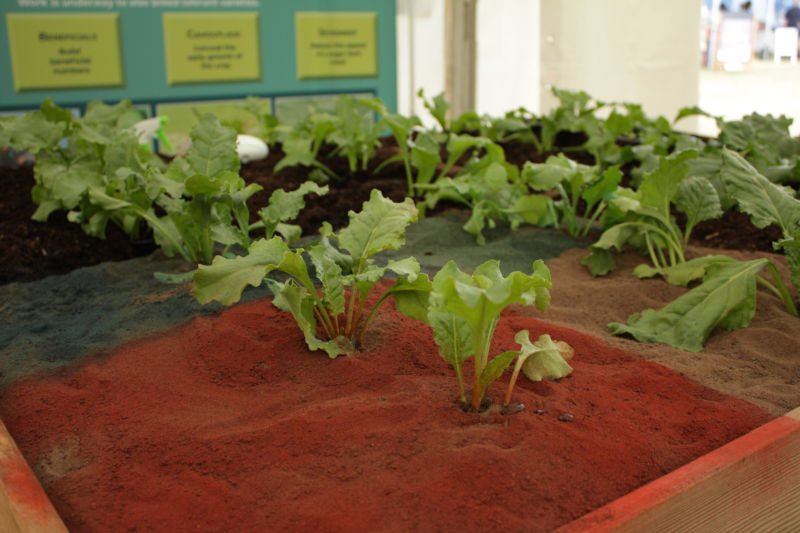
Sugar beet seedsQ. Sugar beet is the only UK crop that has seen yield improvement year on year. Can you give some examples of how BBRO has helped the industry achieve this?
VF. The significant investment made by the BBRO into the Recommended List has been key to yield improvements. This is a jointly funded activity with the British Society of Plant Breeders and aims to test the genetic potential of new varieties under a range of different UK conditions. Whilst the trials do not necessarily follow on-farm practice, their purpose is to push the system to see what can be achieved. Although investment in breeding programmes and new varieties is vital in delivering increased UK sugar beet yields, this is only part of the picture, without the underpinning agronomy and new knowledge that BBRO has delivered in this area we would not be where we are today.
Research into crop protection and crop nutrition, testing new products and technologies, and a better understanding of crop physiology have all played a key role. For example, in the last couple of years we have also been focussing on minimising losses through a better understanding of damage that occurs during harvesting and storage, an area, which hasn’t had as much attention as it merits.
Sugar beetQ. BBRO has recently introduced a new approach to field trials to allow closer engagement with farmers – please can you explain this and how it is going?

VF. The BBRO demonstration farms is a new concept that is just entering its second year. The main objective of these sites is to be able to demonstrate some of our research and new technology on a real farm situation and encourage growers to understand more about benchmarking and yield potential. They are not designed to provide huge replicated field trials but to provide smaller robust experiments and a platform for engagement with growers and to allow us to have a ‘look and see’ at some new proof of concept principles in a low risk and cost effective way. We have one demonstration farm in each sugar factory area giving us contact points across the main beet growing areas. It is well known that peer to peer learning is some of the best and we believe that by getting closer to the growers in this way we can help facilitate that.
Q BBRO is sponsoring the Innovation Hub at the Royal Norfolk Show – what will you be showing?
VF. Innovation is key to a successful future and innovation in how we farm and produce our food must be at the top of the list. BBRO is very pleased to be sponsoring the Innovation Hub again to demonstrate to the general public and other industries how British agriculture is leading the way. We will be demonstrating our new electronic beet that is helping us to better understand some of the stresses on the beet during harvest. We can put the electronic beet through the harvester, follow its progress and collect real time data. From this we can identify the key pressure points, information which can be fed back to the manufacturers for future development or used to refine machine settings in the field to reduce damage. Looking forward is there something that you see as really exciting for the industry?
I believe we are entering really exciting times with our ability to link improved crop modelling and forecasting with new technologies, with this we will be in a better position to provide bespoke information that can be used at an individual farm level.
More information about the Innovation Hub at Royal Norfolk Show (27-28 June 2018).

Young Innovators’ Forum: Farming in Stretham

Agri-TechE Article
Agri-TechE
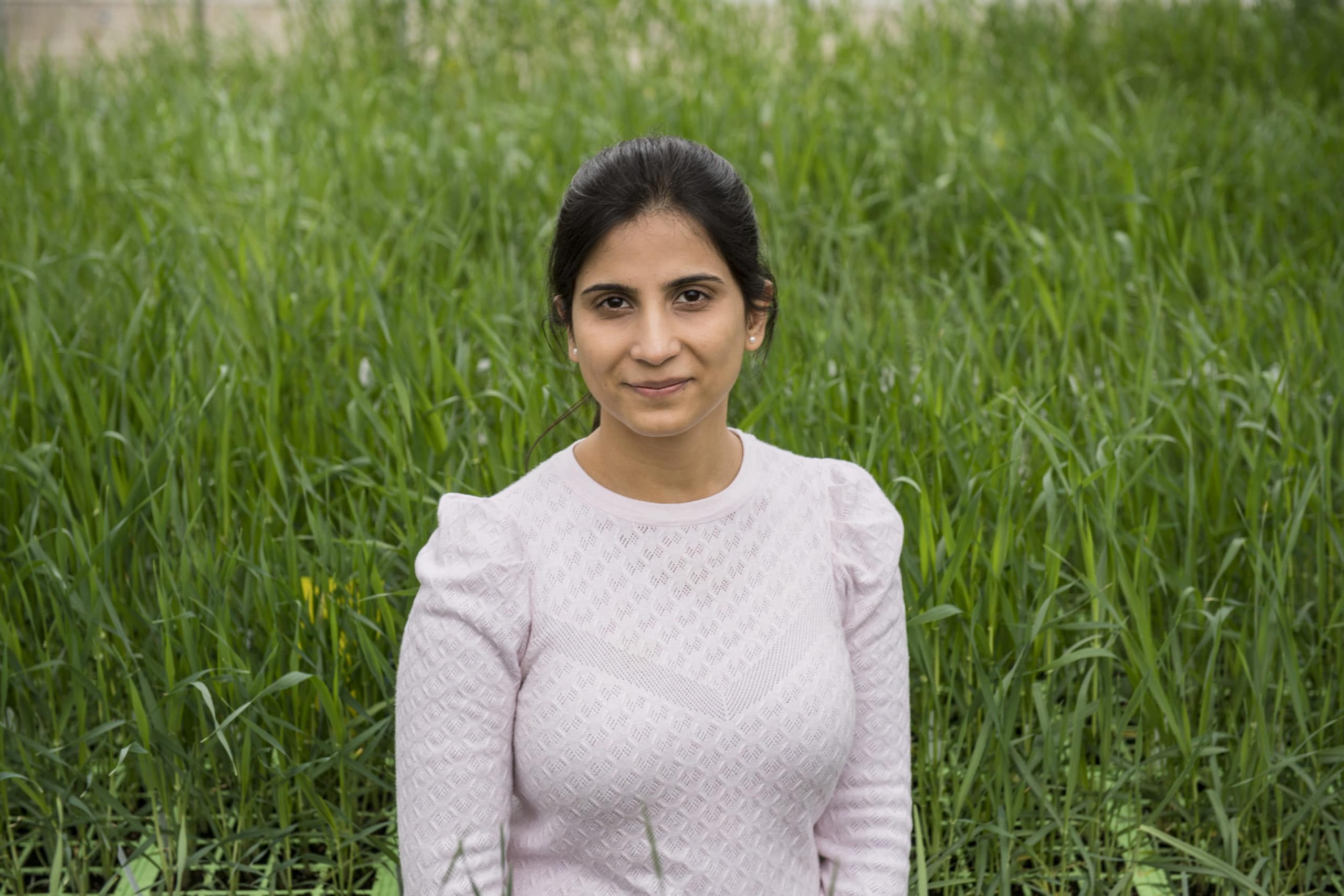
This blog is written by Funmi Ladejobi, who has recently completed her PhD at Niab working on wheat and rice pre-breeding and joined us for a visit to a Wicken Fen farm.

The Young Innovators’ Forum had a very educative visit to Wicken farm, hosted by farmer Luke Palmer. The farm is a highly innovative one which features a unique irrigation and water management system, tillage trials, solar panels and robotics system for potato packaging.

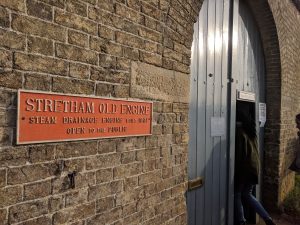
Upon arrival, we were given a brief history of the Fen and a tour of the Stretham Old Engine house, which houses the last of the steam engine pumps that had been used in the mid-19th to the early 20th century for draining the Fens. Drainage of the Fens began as far back as the 17th century and as a result, organic matter in the Fens, mainly comprising of peat, started to rot and the Fens began shrinking. Most of the irrigation used in the farmers’ fields around this area come from flood water in the Fens. The farmers around the Fens have installed water controllers in their fields in order to control the water level around the farms and to allow for sub-irrigation.

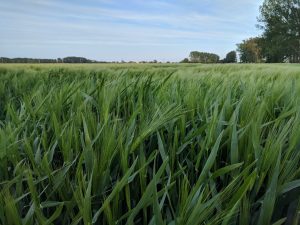
We were next shown around various parts of the farm. The farm grows specialist crop varieties for a number of companies. In the hybrid barley fields, they were also conducting trials for sowing density. We were taken to the fields where a new commercial soybean was being grown and simultaneously used to conduct tillage trials. Three different tillage levels were being tested in this field. The zero tillage method was working best at the time as the crops in this field grew fastest and they had the least problems with weeds.
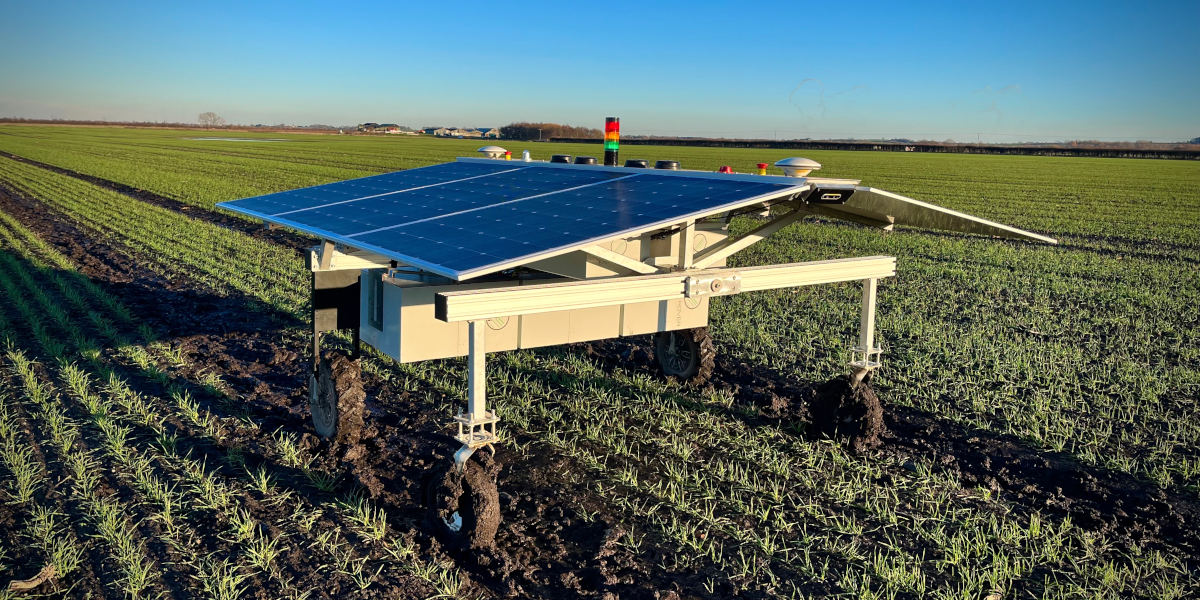
However, they did not recommend any particular tillage method as the results of tillage trials could often be inconsistent. They recommended that tillage methods should be applied on a case by case basis. We were given a brief demonstration of the GPS system being used to coordinate farm machineries such as the drills and sprayers. The farm also boasts its own solar panels which currently generate about 90 megawatts of electricity and also allows them grow sheep under the panels. They plan to use the electricity generated to run the robotics system and to acquire more electric farm machinery.
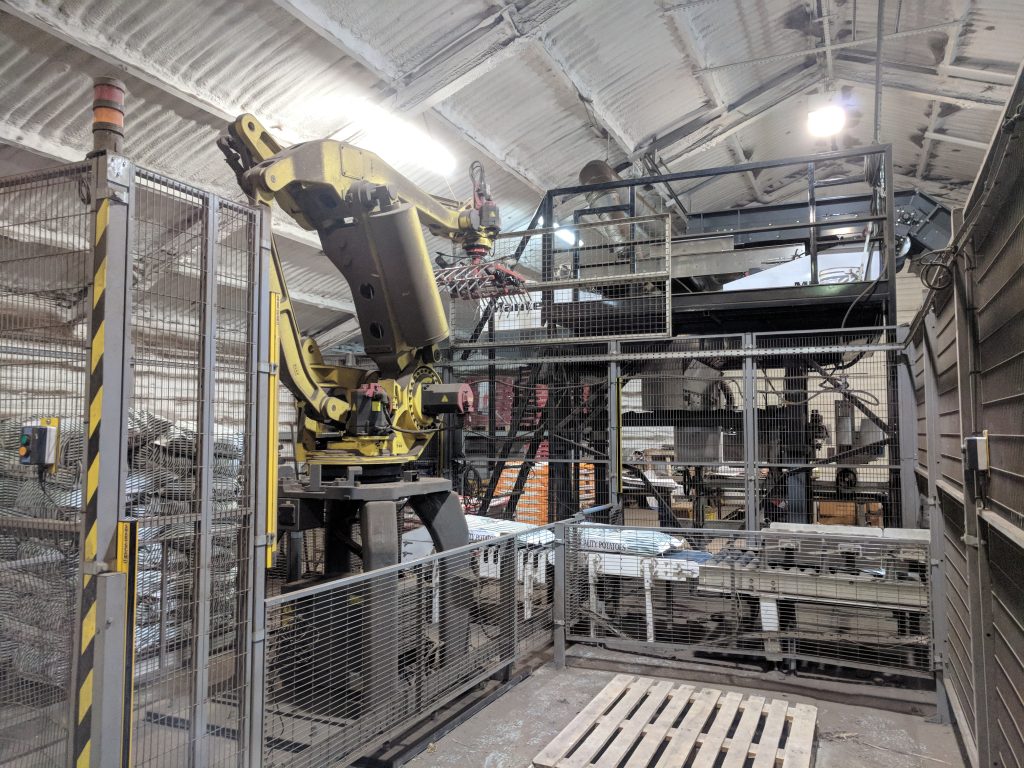

 
Lastly we were shown the potato shed where the farm had a robotics system installed for potatoes packaging. After harvest, potatoes were stored at 8°C, a temperature which they discovered was optimal for maintaining the quality after harvest. The semi-automated robot were currently used to sort and stack potatoes in crates. They plan to procure more robots with higher levels of automation in order to reduce manpower and to compensate for labour shortage on the farm.
 

Agri-Tech’s Young Innovators’ Forum, kindly sponsored by The Morley Agricultural Foundation, is designed to help farmers and scientists understand more about each other’s worlds through a series of free to attend events. Cambridgeshire events are coordinated through CambPlants and Cambridgeshire Young Farmers.

Timely farming at the Innovation Hub, Royal Norfolk Show

Agri-TechE

It is time for change – acting fast and making minimal interventions can reduce the use of inputs such as water, fertiliser or plant protection, and can also enhance animal welfare. The Innovation Hub at the Royal Norfolk Show (27-28 June 2018) is looking at ways that technology can provide alerts to farmers, from monitoring livestock behaviour to detecting disease, and how new knowledge about genomics can be used to accelerate plant-breeding programmes and improve the resilience and nutritional value of our food crops.
The Hub, sponsored by the British Beet Research Organisation (BBRO), brings together members of Agri-TechE – a diverse group of technologists, farmers and researchers – to provide an insight into how new thinking is helping to overcome the challenges of feeding more with less.
On show:
Electronic sugar beet measures harvester damage – by monitoring growth patterns, disease pressures and crop recovery, BBRO is helping sugar beet growers build upon the astonishing yields of 2017-18. A highlight at the show is the announcement of the winner of the Beet Yield Challenge at 14:00 on the 27th June.
From flight to fight in 24 hours Hummingbird collates and analyses aerial imaging from satellites, drones and fixed wing aeroplanes, alerting farmers to variations in crop development, nitrogen deficiency or disease risk. It will demonstrate how this is enabling action before there is an impact on the crop.
Crops have feelings too – we get stressed when conditions are too hot or cold, but how about your crop? 30MHz has developed a smart sensing toolkit that captures the microclimate at crop level. This information is crucial for the decision making to enable timely delivery of the right nutrients and irrigation and for 30MHz in the Exhibitiondisease prevention.
Soil loss no longer a dirty secret – underground activity of microbes and earthworms is vital for soil health and resilience to adverse weather. Niab will showcase traditional and novel ways to enhance the insurgence of these activists.
Proven disease free in hours – regular monitoring of cattle health, especially before transport, could be a powerful way to prevent the spread of bovine TB and Johne’s disease. PBD Biotech has created a rapid, precise test that can be used to identify both of these economically important diseases from a simple blood test.
System to follow the herd – the Movetech Telemetry technology, developed by University of East Anglia scientist Dr Aldina Franco, tracks and monitors normal animal behaviour so farmers and animal conservationists can build patterns and identify abnormal behaviour. See it in action at the Hub.
Robot eye sees more – walking the fields to see the progress of their work is now in the past for breeders with the aid of computer vision. Earlham Institute will show how its technologies CropQuant, SeedGerm and AirSurf are utilising state-of-the-art computer vision, image analysis and machine learning to aid plant breeding.
Better spuds for year-round chips – crisps and chips are eaten 24/7 but the potato has a fixed growing season and it is highly vulnerable to late blight, which can decimate the crop in a few weeks of cloudy, wet weather. The Sainsbury Laboratory is looking at wild relatives of our humble spud to discover new sources of disease resistance to protect the crop.Fruit - Saving waste in horticulture
Eat yourself well – all living things need fuel, and both humans and animals get their fuel from plants. The John Innes Centre is working to understand how plants, such as wheat, use, store and produce nutrients. Game-changers include: a variety of wheat that is bio-fortified with iron (1 billion people suffer from iron deficiency worldwide); a purple tomato that boosts the nutrients in your pizza topping; and a resistant starch that could help tackle diabetes.
More information about the Royal Norfolk Show.

On the Innovation Trail at the Royal Norfolk Show

Agri-TechE

The Tenstar Tractor Simulator will be on the Innovation Trail at the Norfolk Show
The Tenstar Tractor Simulator, courtesy of Easton Otley College

A simulator for tractor training, the world’s biggest beet eater and a virtual sheep wrangler will be among the highlights of a unique Innovation Trail that showcases technology being demonstrated at the Royal Norfolk Show on 27-28 June 2018. To add some fun there will be a challenge to see who can find all the tech stands and tweet a selfie using #AgriInnovation – can you catch ‘em all?
The trail culminates at the Innovation Hub, where there will be an opportunity to see a selection of latest research and developments hosted by Agri-TechE and sponsored by the British Beet Research Organisation (BBRO).
Director of Agri-Tech, Belinda Clarke, said: “The digitisation of farming is making it an attractive career choice, especially for those who don’t want to be working in an office all the time. With the Innovation Trail and Hub we are showing why agri-food is an exciting industry and how technology has the power to deliver improved productivity for farmers.
“Within the Innovation Hub we are featuring emerging technology that can help farmers make faster decisions or incremental interventions that can reduce inputs, enhance animal welfare and improve efficiency so a great finish – or starting point – for the trail.”
From fundamental research in the Hub to market-ready technology in the field, the all-new Innovation Trail will include:
State-of-the-art Beet Eater – British Sugar shows off the world’s first 9-row tanker sugar beet harvester. The Beet Eater 925 is capable of topping, lifting, cleaning and transporting sugar beet at around three hectares of sugar beet per hour.
The Tenstar Tractor Simulator – Easton and Otley College brings the simulation technology used by surgeons, pilots and astronauts to the tractor training-field. Regardless of bad weather, student-drivers can practice on their own, without the need of instructors.
The forefront of farm machinery – Norfolk Farm Machinery Club will roll out their robotic tractors, camera-operated automatic hoes, a new self-propelled sprayer and many more innovations besides!
Driverless vehicles and drones – Harper Adams University will profile the first project in the world to plant, tend and harvest spring barley with only autonomous vehicles and drones. The ground-breaking ‘Hands Free Hectare’ project is run in partnership with Precision Decisions.
Looking to the future – Savills will provide an insight into what we could expect from the major restructuring already taking place within UK agriculture.
Efficiencies at your fingertips – Brown & Co’s latest software and services can help you stay ahead of the curve and locate your sheep. See if you can find them.
Established innovators – Ben Burgess, one of the most established names in agricultural equipment, will share their experience and insights into the latest machinery on the market.
The Innovation Trail will culminate at The Innovation Hub, where Agri-TechE members will be highlighting technology that can provide alerts to farmers, from monitoring livestock behaviour to detecting disease, as well as new knowledge about, for example, how genomics can be used to improve the resilience and nutritional value of our food crops.
Dr Vicky Foster, Head of BBRO, sponsors of the Innovation Hub, commented: “The Royal Norfolk Show offers the perfect forum for farmers, producers and big business to come together and discuss the innovations that they can then put into practice on the ground. The BBRO through its research and knowledge exchange has helped the industry deliver year on year improvements in yield, and we wanted to support others in the agri industry to be as productive as they possibly can be.”
Royal Norfolk Agricultural Association Show & Programmes Director Mark Nicholas added: “The Innovation Trail adds a fresh dimension to the cutting-edge agricultural technologies that we profile at the Show each year, expanding on our regular Innovation Hub. We hope the Trail, with stops across the Show, will really add to showgoers’ experience and exploration of the showground – especially with more going on than ever before.”
More information about the Innovation Trail is available in the show guide or from the Agri-TechE Innovation Hub at stand 271. To be in with a chance to win, showgoers should tweet a selfie with each innovation using #AgriInnovation.

Act now to plan for the future

Agri-TechE Article
Agri-TechE

Mike Mack, SavillsWith crops springing back to life after a long winter, many farmers will be spending time behind the tractor wheel and thoughts may turn to the future. A few brave souls may also think this is a great opportunity to open discussions with the children about the succession of the family farm, but with 53% of farmers having no plan in place for transferring the farm between generations, it seems many are ignoring this issue, says Michael Mack of Savills.

The older generation brings a lot to a business: stability, experience, continuity to name a few attributes. However, if a sector is dominated by older business leaders it can experience limitations to growth, or, simply put, a lack of entrepreneurship.
Entrepreneurship at a sector level represents the attitude of the businesses to taking on risk. In farming this could be about adopting new production technologies, implementing new governance approaches, or the adoption of diversification and environmental systems.
Research undertaken by Lincoln University concluded that farmers between 35 and 45 years old showed the highest level of productivity; however, to achieve this the group run their businesses with higher levels of liabilities and will spend the most on asset purchasing. Data from the Government’s Farm Business Survey shows that the farmers in the younger age group achieve an average gross profit 88% higher than farmers over 75. Additionally it also shows that the use of labour on the farm was 39% more productive. It’s also worth noting that the HSE has identified that farmers who are over 65 are twice as likely to be subject to a fatal farm accident.
In all of the above we have not thought about the fact that behind most farming businesses is a family. It’s all too common for farming families to fall apart through conflict generated by the process of welcoming the next generation into the business. Very often it is the fear of this conflict and the repercussions which prevents the older generation from addressing the thorny issue of succession planning.
In the workshops and conferences I run on succession planning I will usually ask the attendees about how they feel about the process and what is stopping them. The same answers come up: fear of change, fear of failure, fear of stopping, fear of not being able to treat all the children equally. Interestingly, the issues of tax planning and legal matters do not raise their head.
Agri-TechE Member SavillsTo maximise the uptake of new innovations into farming there is a need to provide the farming community with the support and skills needed to implement the process of succession change. The changes coming to farming through Brexit may instigate the process for some businesses and families. However, we as industry professionals, supporters and commentators also need to step up to support each of these families to initiate the process of introducing the next generation of farmers to the roles and responsibilities of business managers and leaders.

For further information contact Michael Mack, Savills Norwich, 01603 229229, mmack@savills.com
Savills Food and Farming

Innovation Insights at Cereals – an overview of agri-tech

Agri-TechE

CerealsDo you want a quick overview of the latest, exciting agri-tech that is emerging in the UK?


This year Agri-TechE and Cereals are partnering to host Cereals’ first ever ‘Innovation Insights’.
Agri-TechE has challenged its members – farmers, technologists, researchers – to summarise their new products, services or research interests in a series of 2-minute lightning presentations.
The independent organisation is building a business cluster to facilitate innovation. Director of Agri-TechE Dr Belinda Clarke explains: “By bringing in new players, many of them from outside the industry, and making it easy for them to network with potential end-users, we are seeing new solutions to intransigent problems and accelerating the rate of adoption for new technologies.
“Cereals is a great opportunity for our members to extend this dialogue and find potential partners and customers. Innovation Insights offers an opportunity to see a snap-shot of the latest developments.”
The new feature comes as a direct result of feedback from the farmer advisory board. As event director Jon Day explains:  “We’ve been working closely with both the exhibitor and farmer advisory board to ensure this year’s event delivers what the industry needs. One of the overwhelming pieces of feedback we have received is the need for increased innovative content.” The  introduction of Innovation Insights meets that need.
Come and join us at 3pm on Day 1 (13 June) in the Innovation Insights Marquee in the centre of the crop plots with AHDB (stand 467) and meet the innovators!

  • 30 MHz – allows real time information about the crop growing environment or storage conditions to be collected automatically from wireless sensors.
  • Agrimetrics – a catalyst for new data solutions across the agrifood sector.
  • Agronomex – provides improved procurement of fresh produce through an integrated sourcing system.
  • Eastern Agri-TechE Innovation Hub – offers farmers more value through novel waste solutions.
  • Express Weather – delivers bespoke weather reporting to improve risk assessment.
  • Fieldmargin – a digital farm map and log book that makes it easier to record and communicate tasks.
  • Germains Seed Technology – improving seed performance with technology.
  • G’s Fresh – using multiple data sources to improve prediction of demand and timing of harvest.
  • Hutchinsons (Omnia) – collates soil, crop and yield data as multi-layered field maps to provide improved decision support.
  • John Innes Centrecombating important combinable crop losses by combining expertise in Brassica genomics, high-throughput phenotyping, bioinformatics and mathematical modelling of biological processes.
  • KisanHub – captures data from trials research and communicates it in real time to researchers and farmers.
  • Map of Agriculture – providing customer insights and market intelligence for agriculture.
  • Niab – improving root development in wheat to enable better yields with reduced inputs.
  • Olombria – using chemical volatiles to persuade flies to become better pollinators.
  • Outfield – low cost, accurate surveys of land use to deliver high resolution maps for farm management.
  • Prodata – creates alerts and warnings by rapid processing of field data to, for example, improve irrigation or better estimate harvest dates.
  • Rothamsted Research – using earthworms as indicators of soil health.
  • Sentry – uses the latest technology to encourage experienced farm managers to innovate and improve returns.
  • Smart AKIS – collating and disseminating updates on smart farming technologies such as robotics.
  • Stable – helping dairy, livestock and arable farmers manage volatile prices and input costs.
  • Timac Agro – offers a unique type of phosphate that offers improved availability.
  • University of Cambridge; Rural Business Research benchmark your farm performance
  • University of Essex – improving photosynthesis and water use efficiency in wheat and barley
  • University of Hertfordshire – a new prediction system for powdery mildew that gives growers 48 hour warning.
  • University of Lincoln transforming farming with robotics and artificial intelligence.
  • Weather Logistics – state-of-the-art seasonal forecasts providing local insights into flood risk and drought
  • Yagronegotiates better prices for agri chemicals through price checking and benchmarking.

Also visit our members on stands at the show – list of exhibitors here. 
More information about Cereals.