Assessing the economic future of precision farming in the UK

Agri-TechE Article
Agri-TechE

Precision farming technologies that were considered almost ‘space-age’ at the start of the decade (e.g. GPS auto-steering, drones etc.) have now become commonplace. Whilst many of these technologies undoubtedly have potential, there is little information on how their application improves on-farm financial performance.

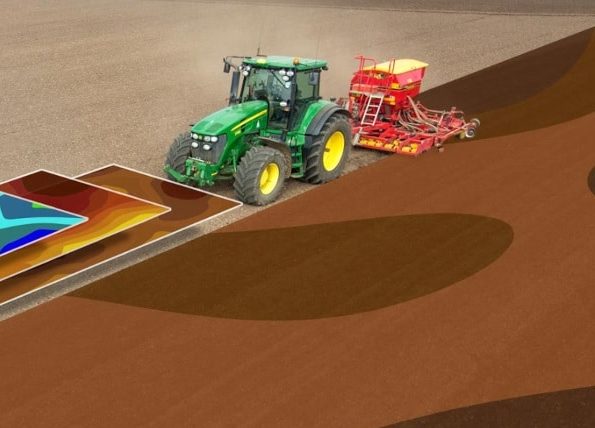
To assess the cost-benefit of precision agriculture, we have used Andersons’ Loam Farm model to trial precision farming on its wheat enterprise (300 Ha). Loam Farm is a notional business, based in the East of England, which has been running since 1991 and tracks the fortunes of combinable cropping farms. It comprises 600 hectares in a simple rotation of milling wheat, oilseed rape, feed wheat and spring beans, and is based on real-life data. The financial performance for Loam Farm as a whole (i.e. all enterprises) is shown in Figure 1 for 2017 under the status quo and precision agriculture scenarios. The precision agriculture techniques applied included soil mapping and GPS auto-steering whilst variable rate application was also built-in to the equipment used.
Performance was assessed by dividing the wheat enterprise into a series of 10×10 metre grids where seeding and application rates were varied in accordance with land capacity and needs. This meant that in some areas, input application increased and lowered in underperforming areas whilst the poorest land (3% approx.) was not cropped. By applying precision farming techniques, average wheat yield improved by 1.3%; the gross margin increased by 2.0% across the whole farm. Overhead costs rose slightly (0.3%) as the cost of the precision farming technology (£10,000) eclipsed the savings, particularly in labour, brought about by auto-steering. Overall, by applying precision farming techniques on the wheat enterprise Loam Farm boosted its profitability by around £8,400. Thus, indicating a payback in Year 2.
 
 
Figure 1 – Precision Agriculture applied to Loam Farm’s Wheat Enterprise*

£ per Hectare (unless stated) Status Quo Precision Agriculture
Wheat yield (t/Ha)  9.05 9.17
Output  1,163 1,171
Variable costs  394 387
Gross margin 769 784
Overheads  414 415
Rent and finance 243 243
Drawings 77 77
Production margin  35 49

* Trial on wheat enterprise, results shown for whole farm.
Source: The Andersons Centre
per Hectare (unless stated) Status Quo Precision Agriculture
Wheat yield (t/Ha)                          9.05                9.17
Output 1,163 1,171
Variable costs 394 387
Gross margin 769 784
Overheads 414 415
Rent and finance 243 243
Drawings 77 77
Production margin 35 49
* Trial on wheat enterprise, results shown for whole farm.
Source: The Andersons Centre
Michael Haverty, The Andersons Centre
Michael Haverty, Senior Agricultural Economist at The Andersons Centre
By its very nature, the cost-benefit of precision farming will vary from farm-to-farm. Some farms may achieve greater savings whilst for others, the overall benefit will be marginal. It is apparent that there is greater scope for precision farming to generate a return on larger farms. Indeed, for many users it is a key means to effectively manage scale. Once the data are captured on a farm management information system (FMIS) it remains easily accessible for analysis. A farm manager may be able to retain the key information for a small number of fields for the past few seasons in his/her memory. But as farm size rises, and insights from longer-term analysis are required, this will no longer suffice. A farmer’s ability to manage a larger business can be significantly enhanced by precision farming. However, farmers need to be careful in ensuring that the time spent on analysing and managing their precision farming systems is utilised effectively. It is easy to become engulfed in a torrent of data which can end-up inhibiting decision-making.
One would expect the uptake of precision farming to continue to advance. However, for companies offering precision farming products, it is vital that they show in realistic terms what return farmers could generate from investing in such technology.
The Andersons Centre has many years’ experience in conducting economic assessments at the farm, supply-chain and industry level. We are eager to support agri-tech businesses in conducting similar assessments for their products and services. For further information, please visit www.theandersonscentre.co.uk or contact Michael Haverty (mhaverty@theandersonscentre.co.uk).

Barclays investing in the future

Member News
Agri-TechE

Barclays can trace its earliest deal in UK Agriculture to being as far back as 1744 – in the following period of over 270 years since we have supported the sector through many periods of change and challenge.  While during that time we have also been at the forefront of Craig Sigley, Barclaysmuch change, innovation and financial sector firsts – from launching the world’s first cash dispenser in the 1960s to more recent innovations like cheque-imaging and Pingit, the phone-to-phone payment system. Clearly Barclays has an understanding of the need for innovation and, especially in this current era, the use of technology to improve efficiency and keep business productive, profitable, viable and vibrant.

Overall debt to the UK agricultural industry sat at over £18.5 billion in Quarter 4 2017, with credit balances sitting at over £7 billion in the same period – with debt levels being significantly higher the demand for funding and investment capital is clear. As a bank embedded within UK agriculture we often see the trends of agricultural expenditure as they happen, especially with little raw investment date available. While requests for land purchases always remain strong they in fact form less than half of the new funding requests – judged by amount. The large capital expense of a land purchase and long payback time on the investment means that some farms are looking at efficiency improvements and investment in infrastructure as a means of securing business viability in the longer term. Investment is across the board – robotic milking machines, GPS mapping for arable farms and some of the technology in use across the pig and poultry industry has been in place for many years.
From a banking perspective, not only does the investment provide efficiency and innovation it also provides an indication of the forward thinking nature of the management team. With most in the sector falling into the category of price-takers at the farm gate, it is management which most banks need to take a view on for any funding request.  However, it can also provide a huge amount of management data on enterprise performance, yields, and if tied in with a book keeping system it can all provide up-to-the minute management and financial information and ensure the business operator is in complete control of the production on the farm, and knowledgeable about finance requirement from working capital perspective – a sign of good business management.
The industry is alive with the buzz word that Agri-TechE has become and now it needs to look at how to embed new technologies into the industry swiftly and completely, as they happen. The technology that seems jaw-dropping today soon becomes tomorrow’s common place – just look at the innovation in mobile phones since they first appeared. A business which does not invest and embrace the latest innovation can soon become too out dated to catch up.
BarclaysIf you are looking to finance a budding business idea in the Agri-TechE sector or to invest in technology for your farming business to improve efficiency and competitiveness and want an informal chat, call Craig Sigley, Barclays Regional Agricultural Manager, on 07775 543705 to discuss how we might be able to help.

STABLE: An alternative to managing volatile prices

Member News
Agri-TechE

Introduction

Managing volatile prices is one of the farming industry’s biggest problems. Inelastic demand and supply means a small increase in supply, which can lead to a larger fall in prices.
We know that our productivity needs to improve to keep up with our international competitors. A once in a generation opportunity to improve our productivity is happening right now with the growth of Agritech. The opportunities within Precision Ag, IOT and Robotics is incredibly exciting and over the next 5-10 years they will transform our industry. However, a fundamental fact is often overlooked by developers, academics and policy makers.
Increasing use of technology requires increased investment; and investment requires confidence in the future.
As volatility increases, farmer confidence drops. Farmers need more predictable income to invest in new technology and bankers need reliable income to support a growing business.
To break this roadblock, farmers need a simple, affordable and low risk tool to help them manage the effects of volatile prices. Put simply they need a risk management tool designed and built for farmers, rather than financiers.

Current risk management tools – futures

‘Futures’ began in Chicago in 1848 as a simple risk transfer from farmers to speculators. From those early farmer-focused days, the market has become increasingly sophisticated and traded for short term speculation.

Key Features:

Expensive: Accounts require £25-50,000 to open
Risky: Margin calls need to be paid in 24 hours if the position moves against you
Complex: Bloomberg style screens and a steep learning curve
Time consuming: MIFID regulations mean that it can take 2-3 months just to open an account.
As a result, using ‘Futures’ as a risk management tool is not viable for any farm less than 400 hectares. That’s less than 3% of European farms and less than 1% globally.

A Stable alternative – insurance

Farmers need to transfer the risk of a price fall in a simple, affordable and low risk way. A more natural fit for farmers looking to simply reduce the risk of a price fall, is insurance. Time poor farmers are already familiar with insurance and the concept of paying a small fixed premium to remove a larger risk doesn’t require explanation. Revenue-based crop insurance in the USA is extremely popular and Stable has brought that same simplicity to British farming.
The Stable initiative is made up of over 200 British farmers, insurers, academics and developers. It’s also supported by Liverpool and Lisbon Universities.

Product Overview

As an industry, we pay a levy to the AHDB to collect ex farm price data on most UK farm commodities and input costs. This valuable industry data is high quality, independent and publicly available. Stable use these indices (rather than a single farmers own business), to calculate the risk of a price fall and settle any payments to replace a farmers lost income due to volatility.

Here’s how it works:

Farmers go online to www.stableprice.com After registering, they answer 3 simple questions. It takes 2 minutes:
How much would you like to insure?
How long do you want protection for?
What price do you want protecting from?
An instant quote is generated which the farmer can accept or reject. Payment is paid in advance or via monthly payments, just like insuring your car.
If the index price falls below the floor price the farmer selects, then Stable replaces the lost income automatically, with no claims process. If the index stays high then the farmer gets more for the physical crop, but loses the premium. It’s simple, low risk and affordable for dairy, livestock and arable farmers.
The platform was designed by a Nuffield Farming Scholar and after three years of R&D goes live in early 2018, supported by some of the UK’s biggest underwriters,stable
Our hope is that our groundbreaking insurance product can help to provide the financial confidence needed to unlock the potential of British farming and enable many more family farms to take advantage of the Agritech revolution.
For more information please visit www.stableprice.com

3 reasons why your pitch failed

Member News
Agri-TechE

Adelina Chalmers profile - 3 reasons why your pitch failed
Adelina Chalmers

Whether you are pitching internally (an idea to your team, boss or board), or pitching externally (to win a contract or investment), your audiences’ brain will prevent them from saying “YES”, unless they feel your conclusion makes them feel safe to act.
Here are three reasons why your pitch failed:
1. You were not clear about WHY exactly this is a problem you are looking to solve.
The most basic part of the human brain (amygdala) makes people feel threatened when you are proposing to solve (to their minds) a non-existent problem.
This may be because you were not clear what the problem is or the way you explained the problem made it not important enough to solve.
When you pitch, be very clear from the outset, in the simplest terms, what the problem is and why it needs to be solved.
2. You did not explain HOW you (or the client) is struggling because of this problem, HOW alternatives failed to solve it and HOW you reached the upcoming conclusion.
3 reasons why your pitch failedThe limbic (emotional) brain needs to be engaged in order to reach an agreement.

HOW do you engage the limbic brain?
Explain the problem, then tell the story how it is making things worse, how it is affecting you/the client and how past attempts to solve this problem (or the competition’s attempts) failed and how/why they failed. This will build up empathy as well as understanding as to how you came up with this solution, or how you reached the conclusion you need this much investment.
3. You were too abstract or complex about WHAT your solution is, WHAT it will do and WHAT you want from them.
The neocortex, the logical and third part of the brain, does not make decisions. It simply justifies the decisions it made in the first two layers of the brain.
Bring back the issues you described in the pitch and show how it solves each of them. WHAT your solution is must have a direct correlation to HOW it solves existing problems and WHY it is worth solving.
If you explained the WHY and the HOW well, by the time you get to your solution/ask (this is the “WHAT”) they will understand you and agree to give you what you want.
 
Adelina Chalmers profile - 3 reasons why your pitch failedAdelina Chalmers helps organisation deliver successful pitches both internally (to colleagues, bosses and boards within) as well as externally (to customers and investors to win contracts or investment).
Adelina’s clients include Agri-Tech, British Society for Plant Breeders, Niab, ARM, as well as Cambridge University, helping scientists from across the world learn how to launch their innovative technology by partnering with industry.
One of Adelina’s key skills that her clients love is that she can pitch to them their own pitch, on the spot, unrehearsed, and give them huge insights into their own project.
T: 07932 088 821 / W: www.genuineinsights.co.uk / E: Adelina@genuineinsights.co.uk

The circular bioeconomy – Farming, food and industry

Member News
Agri-TechE

At BioBridge we look at the market and regulatory aspects of developments in industrial biotechnology, analysing product or technology diversification, and looking for potential partners, writes Meredith Lloyd-Evans, Managing Director and Founder of the Cambridge-based company.
The ideas of interlinked processes are always on our mind and how they create the Circular Bioeconomy.
This concept, linking processes and companies so that side-streams from one become inputs into others, seems socially and environmentally virtuous and high in manufacturing efficiency.
An excellent and well-established example is British Sugar’s Wissington plant, valorising every part of the incoming sugar-beet loads in addition to the sugar, from sieved soil and aggregates, to betaine, to carbon dioxide for carbonated drinks, with excess heat and carbon dioxide used in tomato-production and, more recently, in cannabis cultivation for medicines.

Definition of waste is still an obstacle

One stumbling-block is that many side-streams are still defined as wastes that legally require discarding and cannot go for high-value uses.
This has a large impact on value of additional end-products; without legislation or standards, it blocks full value extraction even when specific processes are shown to be safe and effective at converting unpromising starting materials, such as undifferentiated food wastes or mixed domestic waste, into active components acceptable for human use in pharmaceuticals, cosmetics, nutritional supplements and other highly-regulated areas.
A start has been made in the EU with acceptance of food wastes for animal feeds*, which will help the efforts to use edible food wastes to feed insects and then produce insect oil and meal for animal feed and extracts of potentially higher-value molecules.

Getting multiple products from single source

The new trend of ‘multi-valorisation’ of raw materials is getting a lot of notice and research, development and innovation funding at national and international levels (here are two examples).
The BIC (Bio-Based Industries Consortium) is the outcome of EU support of this activity, and has now had several substantial funding calls, leading to projects in whey biorefineries, added-value products from algae, sustainable biocomposites, improved lignocellulose conversions, protein mining from cereal side streams and other promising ‘waste valorisation’ endeavours.
One of the areas I work in, blue biotechnology, recognises the usefulness of algae in first of all using side-streams such as heat, carbon dioxide and non-potable water, removing them from negative environmental balance, to produce the positives of processable biomass and cleaner water as outputs. It is now not just about algal biofuels.

Bioreactors create high value components on marginal land

Farmers could adapt non-arable or grazable land by having land-based flat-plate bioreactors for light-dependent microalgae or, if there is accessible coast, introduce suitable seaweeds, which are not only highly-productive of biomass for fractionation, but use excess nutrients introduced by river and coastal run-off of fertilisers and sewage and provide nurseries for young fish and crustacean larvae.
Once biomass from any source has been put into a manageable state, separation of components can begin, from high-fibre polymers and oligomers, anti-oxidant pigments and still-to-be-explored bioactives, to starches, oils and proteins, even before the energy value of the residues are exploited.

Circular economy is stimulating innovation

BioBridge-logoThe drive for innovation can be harnessed not only into a research aspect of exploring and exploiting all the molecules present, but into the technological side – engineering innovation is needed for down-stream processing, especially the steps involving de-watering – and into market-making for the end-products.
So, addressing the potential of the circular bioeconomy using agricultural, food and aquatic biomass can thus provide stimulus for innovation to everyone from academic scientists to market-makers via farmers, engineers and processors.
Contact me if you’d like an opportunities analysis and advice on possibilities in this area for your company or research activity:  mlloydevans@biobridge.co.uk.
 
*Commission Notice 2018/C 133/02 Guidelines for the feed use of food no longer intended for human consumption OJ 16.4.2018

Seaweed science to boost crop yields

Meet the Network
Agri-TechE

 
Seaweed technology could be the answer to boosting crop yields at a time of declining chemical efficacy, with scientific breakthroughs revealing the multiple benefits of algae.
The Olmix Group, which has invested tens of millions of euros into algae research and innovation since 2012, recently hosted a visit to its Brittany-based laboratories and manufacturing site. Following the acquisition of UK-based Micromix – a firm specialising in foliar nutrition and biostimulants – it invited four agricultural journalists from the UK to learn more about the science behind the technology.
“A lot of seaweed is being simply processed and sold as a plant booster, but Olmix has a scientific understanding of what the molecules are actually doing,” says Chris Gamble, sales manager at Micromix. “Now we know the plant genomes we can see exactly what the different active ingredients are doing.”
Olmix harvests seaweed from the Breton coast once it has reached the end of its lifecycle – so it is a sustainable product. Given the high tidal reach of the area the seaweed is particularly strong, which is reflected in its biochemical make-up and stress tolerance.
When broken down into its components: Carbohydrates, proteins, sulphated polysaccharides and nutrients, the seaweed can then be used to boost crop and soil health, explains Didier Blin, plant care manager at Olmix. “Each has a different action on the plant, from growth stimulation to boosting the plant’s natural defence mechanisms against stress.”
Combined with micronutrients, inorganic acids, or clay, the products can be applied at different growth stages for maximum effect, says Maria Matard-Mann, research projects manager. “We are using seaweed as a complement to crop and soil health, not the only part of nutrition. That’s what makes the difference – having both a nutritional and biological activity.”
There are more than 9,800 species of seaweed, with a greater genetic diversity than fungi and animals combined. Many elements – such as sulphated polysaccharides – are not present in land plants, which is what makes them so useful, she adds.
“As crops don’t recognise marine sulphated polysaccharides they respond with immune aggression, which improves their resistance to stress or disease.” Algal hormones stimulate root growth and nutrient absorption, while biological activators boost humification in the soil.
“Farmers have to produce more and better with less, to feed the planet in a sustainable way,” says international director Jean-Marie Bocher. “We believe algae can be the answer.”
John Swire, editor of the Agronomist & Arable Farmer, reckons it’s essential that alternative approaches are explored given the lack of new chemical controls. “Reducing inputs has got to be the right thing,” he says. “We’re looking at the end of the chemical revolution in agriculture. The technology is fascinating and I really do believe there is a place for such innovative approaches to the growing of crops in the future.”
Lucy de la Pasture, technical editor at CPM, agrees. “Seaweed extracts have been around for a long time but their action is not well understood. The investment and R&D Olmix is pouring into harnessing the properties of marine algae is a reassuring injection of science into a field that has been a dark art.
“I firmly believe that understanding the complex interactions between a crop and its environment, together with supporting the plant’s own defence mechanisms, will provide the backbone for crop production in the future.”

Pollinator event

Pollinator: Mimic, Harness or Borrow: Applying Nature’s Chemistry Set to Agriculture, January 15, 2019 @ 1:30 pm – 5:30 pm more information

Doug Chaplin, Business and Operations Manager, Micromix will be talking at this Pollinator event, for more information.

Prodata take on new role as direct importer for Davis Weather Stations.

Member News
Agri-TechE

Prodata Weather Systems, the Ely-based weather and environmental monitoring system experts, are delighted to announce that they will be direct importers for the entire Davis Weather Monitoring Catalogue.
This is a new type of relationship for the two companies, although Prodata have been involved with the US-based Davis for many years.  Their strong relationship has meant that Prodata have been involved in undertaking important beta-testing new products for Davis.
Dr John Dann, managing director said: “Prodata have been Davis dealers for over 20 years.  However, this new deal will give us the ability to import weather systems directly from Davis, which will significantly enhance the services and supply options we can offer to other dealers and retail customers throughout the UK and Ireland.”
He added: “We greatly look forward to our new relationship with Davis and building on our long-held reputation for quality, excellence, support and service.  A solid and reliable set-up service is one of the main keys to our success with Davis products and we will be continuing to build on this approach.”
The Davis product range includes the innovative environmental monitoring system, EnviroMonitor.  This system is extensively used by those in the agricultural and horticultural sectors, but it can be utilised by businesses in other areas, predominately the construction, environmental and sport and leisure sectors.  For individual users and those will simpler needs, Prodata will continue to supply the well-established and renowned Vantage weather station range under this new deal.

New facial recognition technology for producers

Meet the Network
Agri-TechE

To make it easier for fruit and vegetable roducers to manage their seasonal workers, Consus Fresh Solutions has developed a new Facial Recognition feature for its traceability software. Machine learning is used to identify staff and permit access, making clocking on and off a thing of the past and improving allocation of tasks and accountability.

The system compares the photograph in the human resources (HR) database with that of the person trying to enter the packhouse. If recognised, the worker is allowed access and can be given a task, which is then logged on the system.

Consus has developed an intelligent software-based system that reduces the burden of audits and improves productivity. By linking HR records to labour deployment the facial recognition module enables accurate costing of all products and improved traceability.

Derek Thompson, co-founder of Consus Fresh, has experience of managing a large packhouse: “Accurate time and attendance records are vital in a packhouse. In peak season you will have an influx of temporary staff. It is not unknown for staff to clock each other into work or not to turn up at all after the first day.

“Additionally if there is a product recall further up in the chain you may need to be able to identify exactly who was working on a specific product line on a particular day if later audited by a customer.

“The facial recognition system works with the procedures that a packhouse will already have in place but instead of RFID tags it uses a camera to identify the staff. Details are recorded electronically and updates or amendments made remotely.″

Craig Bargery, Packhouse Production Manager at Pollybell Organic Farm in the east Midlands, comments that he is looking forward to being the first to deploy the system in the New Year.

The Consus system is built on the Microsoft Azure platform, which supports AI applications.

Dr Matthew Smith, Director of Business Development at Microsoft research, says: “Consus is meeting a growing need by organisations to harness technologies in order to improve supply chain efficiencies, response times, waste reduction and branding. It’s particularly exciting to see how they’re utilising more advanced analytical capabilities such as face recognition to make the harnessing of the necessary information itself more efficient and effective.″

The Consus team has developed the facial recognition so that it needs no training to identify people; it is also consistent with BRC and reports can be generated to meet the varying needs of auditors and retailers.

Consus sees potential for increasing the level of support to producers and demonstrated two new modules for the product – Facial Recognition for improved workforce management and Shelf-life Prediction – in November at Agri-Tech’s REAP conference and at The CropTec Show.

Actiphage is ‘additional test’ farmers want to use, says Godfray TB review

Meet the Network
Agri-TechE

PBD Biotech’s Actiphage TB test is highlighted in the Godfray TB Review of the Government’s eradication strategy, published this week (13 November), as one of the additional tests that some farmers “would like to employ … to accelerate the removal of infected individuals and to better manage within herd transmission”.
PBD Biotech’s CEO Dr Berwyn Clarke, who responded to the review’s consultation call for submissions earlier this year, commented on Godfray’s recommendations: “It’s encouraging to see this independent review acknowledge farmers’ need for additional tests to better identify and manage TB on farm.
“There’s an increasing body of evidence that indicates the sensitivity of the existing skin test is much lower than previously thoughts, meaning many infected animals are being left in herd. It is vital that this hidden reservoir of infection is eradicated; otherwise, all other interventions will have very little benefit. And it casts doubt on whether TB-free status is genuinely the case.
“Actiphage’s sensitivity is higher than that of existing tests and trials have shown it is routinely able to detect live mycobacteria in blood or milk – at less than 10 mycobacterial cells per ml of sample.”
Studies demonstrate Actiphage’s reliability; a survey of SCCIT-positive UK cattle tested at slaughter, using Actiphage, found live Mycobacterium bovis in not only the blood of all animals with visible lesions but also in 93% of animals with no visible lesions  following post-mortem examination. In contrast, no mycobacteria were detected in blood samples from control animals that were taken from a high-biosecurity status herd known to be disease-free.
Dr Clarke continued: “The technology’s unique capacity to differentiate between live, or viable, and non-viable cells – meaning that it can also distinguish between a vaccinated and an infected animal – paves the way for new types of disease control when vaccines become available in the future, as called for as a priority by Professor Godfray.”
PBD Biotech’s highly sensitive and specific Actiphage assay was included in the Government’s ‘Exceptional private use’ policy for chronic TB breakdowns in England when it was updated 6 months ago. This new strategy was driven by the test’s field validation, during studies conducted by Devon-based vet Dick Sibley, who incorporated Actiphage into a disease management strategy to help clear a dairy herd that had been stricken with TB since 2012.
TB in cattle costs UK taxpayers £100m in compensation every year – with 33,000 infected animals slaughtered in 2017.
The Review, commissioned by Environment Secretary Michael Gove in February, aims to inform future strategies around the government’s goal of eradicating bovine TB by 2038. The report highlighted the need for stringent testing around cattle movements to clamp down on disease spread and greater flexibility in adapting bovine TB control measures as new research findings emerge.
Dr Clarke added: “Actiphage is involved in a number of further studies with bovine, ovine as well as exotic species in the UK and overseas. We are keen to work together with DEFRA to support the roll out of new disease management protocols, which include Actiphage, to achieve the most effective results for farmers and make the UK TB free.”
The Godfray report is now with Ministers who will consider its recommendations before publishing a response, setting out the next steps for the bovine TB Strategy.

Variable black-grass control needs follow up treatment

Agri-TechE Article
Agri-TechE

Pre-emergence herbicide performance on earlier wheat crops drilled into dry soils has been variable this season, leaving some growers a tricky choice between applying post-emergence herbicides or spraying off with Roundup (glyphosate).
Later drilled crops are likely to benefit from more moisture to help activate pre-emergence herbicide performance, but require monitoring going into winter for growers to maximise weed control.
Ryan Hudson, a Velcourt agronomist, tried to adapt his herbicide programmes to work around the lack of moisture in the soil, but has seen varying levels of success.
“Where we now have black-grass problems, in most cases we held off drilling into dry seedbeds and the plan was to go in with fairly robust stacks of residual herbicide including triallate, Liberator (flufenacet + diflufenican) and pendimethalin. However, due to the dry weather we generally broke those back down into just Liberator at pre-emergence with the view that we could follow it up with more residuals once we had rainfall.”
Bayer Variable black-grass control needs follow up treatmentWhere residuals were applied in good conditions there was good efficacy but due to the dry conditions some of the earlier pre-em applications have been more variable in performance: “I’ve had a few places where black-grass has come through but then we’ve had a reasonable amount of rain which has activated the herbicide and washed it into the soil, so we’ve started to see the black-grass reddening and whitening where the flufenacet is taking effect.
“In the areas we applied reduced pre-ems, we have come back with additional flufenacet and partner product to maintain residual activity against black-grass. Most crops will now have received a full dose of Liberator and a top up flufenacet plus partner product.”
But there are one or two places where a significant amount of black-grass has survived which may need a post-emergence contact herbicide as soon as possible.
“In this scenario we’d be looking at an Atlantis (mesosulfuron + iodosulfuron) and flufenacet follow up which will go on now while weather is mild and we can get a dry leaf.” Mr Hudson maintains that to avoid problems with resistance it is important to target the plant when it is small at 1 leaf, and more vulnerable to herbicide activity.
“In really bad situations, growers should consider the crops viability and seed return, possibly writing the crop off with Roundup to control the black-grass. You’ve got to be realistic about the level of control you’re going to get, especially if the farm historically has resistant black-grass.”
For growers considering Atlantis, a new OD formulation is available for the first time this autumn. Atlantis OD contains the same actives – mesosulfuron and iodosulfuron – as Atlantis WG but delivers them in a more effective oil dispersion (OD) formulation.
“In trials, the oil dispersion formulation – Atlantis OD – has been shown to have a clear advantage over the water dispersible granule formulation – Atlantis WG – for controlling black-grass,” says Bayer’s Development Manager Dr Gordon Anderson-Taylor.
Across several years’ trials, there is a difference of 6% in overall black-grass control between Atlantis OD and Atlantis WG. Although relatively small, any small advantage can count for a lot with black-grass control particularly when pre-em performance is not as reliable due to dry conditions.
“The post-em is the final opportunity to maximise the level of control for the season,” says Dr Anderson-Taylor.  “That bit extra control will reduce plant numbers this season and, most importantly of all, reduce seed return for the following year.”

Agri-TechE Week 2018: Soil health and the circular economy

Agri-TechE Article
Agri-TechE

Different methods of assessing, improving and maintaining soil health were discussed at the ‘Soil Health and Circular Economy’ Agri-TechE event hosted by Niab on Friday.

Prof Jim Harris, Cranfield University,
Prof Jim Harris, Cranfield University

The function of a healthy soil to receive, retain and release was discussed by Prof Jim Harris, Professor of Environmental Technology at Cranfield. He explained there were two main components of soil health: its quality (physical, chemical and biological) and its quantity.

Unstable soils lose heat

As an ecologist he views the soil as an interrelated system. When a system is inefficient it releases energy. In a project he has used this as a proxy for measuring the health of the soil and indeed found that balanced, stable soils released less heat. Additionally, soils that have inorganic inputs create twice as much heat as those that receive organic inputs. This is a metric that could be measured remotely, potentially creating a new way to look at soil health.

There are broadly four ways to improve soil:

  1. Method of cultivation
  2. Use of cover crops
  3. Soil additions
  4. Field engineering

Jim described some of the methods use by conservation farmers to maintain soil health, such as strip-tillage and showed how microbial activity declined in the areas impacted by soil cultivation, suggesting that no-till systems (although not widely applicable) could maintain soil structure and function.

Rewilding  – quality meat and birdsong

His last comments were about a rewilding project at Knepp Castle, where an area of heavy clay was left to return to forest and was grazed by longhorn cattle, tamworth pigs and Exmoor ponies.  The farming was subsidised by other sources, such as holiday rentals, but the results had been positive in terms of meat production, with only minimal supplementary feeding required in winter.

Lydia Smith, Niab
Lydia Smith, Niab

Other benefits had been an increase in biodiversity and the return of wildlife – in particular BTO had identified a concentration of nightingales.

Soil biology the missing dimension

Dr Elizabeth Stockdale, Head of Farming Systems Research, Niab is heading up a project ‘Soil biology and soil health partnership’ which is looking at the tools available to assess soil health.
Physical and chemical measurements can be made using current technology, but the biology, the living element is poorly served.
Guidance coming out of the project, which has trials across six farms, includes advice on the use of manure.

  1. Know the nutrient content
  2. Estimate the crop available nitrogen supply
  3. Minimise nitrogen losses
  4. Spread evenly and accurately
  5. Build into farm nutrient management

Elizabeth warned that although manure is a valuable source of organic material and can help improve soil quality there is considerable variation between manures
So it needed be applied within a wider framework.
The project is looking at the use of scorecard that can be used by farmers

Optimising use of manure

Dr Lizzie Sagoo, Principle Soil Scientist, ADAS, described some of the ways to maximise value of organic matter and described MANNER-NPK as a useful tool to estimates the fate of organic manure N following land application (details on the AHDB site)  She said that use of organic matter increased microbial activity as the lignin was slow to decompose, releasing food over a long period.
Dr Lydia Smith, Head of Niab Innovation Farm talked about the synergy between roots and mycorrhizal fungi and how this can extract more nutrition from the soil.
She commented that early results from the digestate trial demonstrated the benefit of cover crops in retaining nitrogen in the soil when compared with digestate alone.
Other trials underway with Agri-TechE members include the introduction of sheep into the arable rotation as ‘flying flocks’ on a temporary basis.  This project on Honingham Thorpe farm has just started.

AgriGrub offering crop protection and source of nutrients

Dr Joe Halstead, MD of AgriGrub Ltd based at the Eastern Agri-TechE Innovation Hub.  
AgriGrub is using chitosan, a natural stimulant for a plant’s defence system to create a potent active ingredient crop protection. The chitin comes from insect frass produced by the larvae of black soldier flies.  The frass also provides a soil improver – offering a slow release nitrogen, source of high organic carbon and many micronutrients. Joe is currently looking for trial sites.
Two farmers also spoke. Organic farmer Nik Tonev of James Foskett Farms and Conservation farmer David White, Hawk Mill Farm who discussed the benefits of their approaches.

In summary – what to measure to assess soil health

  • Soil nutrients, pH and VESS
  • Earthworms – species and abundance 
  • Soil microbial activity
  • Organic matter
  • Aggregate stability
  • Soil strength
  • Porosity and bulk density.

Useful resources

National Soil Map Cranfield has launched a National Soil Map showing soil types across England and Wales. It was created to give non-soil scientists the evidence they need to understand and manage land-based risks and opportunities.
Soil Biology and Soil Health Partnership Farmers and growers have taken the initiative to understand the health of their own soils and a great deal of work is being done on-farm to experiment with ways to optimise soil biology. The Partnership will work closely with farmers, growers and advisers to draw together and build on knowledge and experience to create accessible guidance and tools to help farmers improve soil health.
 
See more about Agri-TechE Week 2018


Reflections on Agri-TechE Week 2018

Agri-TechE Blog
Agri-TechE

As we look back on an exciting and interactive Agri-TechE Week, it is clear that data, drivers and discussions are top of the agri-tech agenda
We still need some work on the user-interface to make it all inter-operable with humans at the centre of it – a hot topic with all the robots making an appearance during the Week.

The Data Tsunami

The practicalities of managing huge – really huge – amounts of data were highlighted at the Earlham Institute’s ATW event, where delegates visited an entire room dedicated to information storage and computing power (and the associated back up generator, cooling systems and sound-proofing).

Gerard Parr speaking at REAP 2018

As very few of us, including farmers, have our own computing servers we are all increasingly relying on “the cloud” to store our data. Far from being in the air, “the cloud” is actually software, storage or services that run via the internet. And it has transforming the way we do many things, including managing businesses, communicating and interrogating information.
UEA’s Prof Gerard Parr spoke at the REAP conference of the data “tsunami” facing farmers, a topic to which we returned at the RNAA event at Easton College.
Monitor constantly, by all means, but can the associated communications be reduced?
There was a discussion of the need for “appropriate” communications from the myriad of sensors…..do we really want or need a sensor chirping away constantly to say everything is OK – or should they only speak when there is something important to say?

Working together

Trust and the benefits of data sharing are never far from these conversations and the question arose about whether trust needs to be in place before data is shared, or whether sharing data builds trust. And how is it policed if someone breaches that trust?
The farmer breakfast at REAP also discussed the role of standards in data management – a topic we know is high on the agenda of a number of organisations in the UK currently.

One of the robots on show at the Essex event

Robots are one answer

Many speakers over the Week highlighted the growing population but also the need for safe, healthy, nutritious food, and the need to mitigate climate change.
The socio-economic and political drivers for new technology development and adoption remain stark and ever-present.
The band of agri-food robots showcased at REAP, the University of Essex and at the AHDB precision spraying event offer the potential to take dull, dirty, difficult and dangerous jobs out of the hands of humans, freeing the labour force for higher value jobs.
Ongoing discussions between farmers and researchers to realise this ambition are going to be critical.

Collaboration needs to be farmer-centric

We are more convinced than ever of the need for collaboration to drive open innovation. For example, the University of Hertfordshire’s crop protection event showed the connections being made between industry and academia.
The role of the farmer front and centre in this wave of development cannot be under-estimated. Seeing farmers discussing new spray technologies at the AHDB precision spraying event clearly demonstrated the wealth of knowledge and practice among the farming community – and the need to tap into this when developing new products and services.
Niab’s soils event highlighted the Innovative Farmers project which also has research underway on farms – in this case looking at the impact of cover crops and additions such as digestate on soils health.

Upbeat mood for positive engagement

Agri-TechE Week 2018 - positiveFinally, a reflection from the Week. It was one of, perhaps unprecedented, positivity.

Regardless of the political events of the coming months, the mood was buoyant, upbeat and ready.
Farmers are responding to the indications of Government, there is a huge willingness to engage and a keenness to help Government develop policies that are fit-for-purpose. Researchers are looking beyond their traditional EU partnerships and forming exciting new collaborations with globally leading colleagues in Asia, South America, China, and India.
It’s been quite a Week. Huge thanks to all who took part. You are the reason we do what we do.
 
See more about Agri-TechE Week 2018