Ozo to prove energy efficiency of its novel hygiene solution
 Agri-TechE
 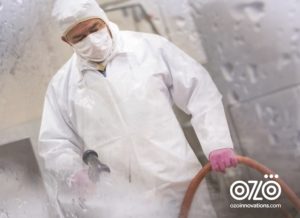 The food industry’s reliance on hot water for hygiene means that it is an energy intensive process, yet it is often an unrecognised hygiene cost, as utilities spend is managed separately from hygiene chemicals, labour and testing costs.
Innovations (Ozo) announces that it has secured over £600,000 project funding from the Department of Business Energy Industrial Strategy (BEIS) Industrial Energy Efficiency Accelerator (IEEA) Programme managed by the Carbon Trust and Jacobs.
The IEEA aims to lower costs and increase the number of available energy efficient technologies for a range of industrial sectors, through demonstration of near to market innovations. This will help to reduce carbon emissions and improve the competitiveness of UK industry. The funding will enable Ozo to substantiate the significant energy savings that could be achieved by implementing Ozo’s eloclear hygiene process.
The project hopes to demonstrate that it is possible to:
- remove hot water from the food factory hygiene process;
- reduce the total volume of water used;
- achieve robust high-quality hygiene outcomes.
Ozo substitutes cold electrolysed water for hot water, which requires significantly less power to produce. Using “cold water” for hygiene further benefits food processors that operate in chilled environments as it reduces condensation and removes the energy costs associated with re-chilling spaces that become warm when cleaned with hot water. The business has been working with leading UK food companies to optimise the technology and help businesses be more sustainable and competitive.
This demonstration project will compare the energy saving benefits of eloclear over the current industry standard of hot water based, multi-step chemical cleaning, across a number of standard hygiene procedures. Results will be published once the project is complete, in around 18 months’ time.
The trial site chosen is a leading maker of sandwiches, recognising that the “food-to-go” standards are some of the most demanding in the food industry.
“Consumers are recognising that their food choices are putting the planet under pressure. We use 70% of our fresh water for food production. Hygiene is an area, which offers an opportunity to save energy and water whilst maintaining or improving standards. This is good for everyone, as better hygiene means we can achieve longer shelf life, reduce food waste and maintain the safety of our food,” said Rowan Gardner, CEO of Ozo. “We are delighted to have the support of Carbon Trust and Jacobs to demonstrate the energy credentials of eloclear.”
Paul Huggins, Director Innovation, the Carbon Trust: “This exciting technology could have a major impact throughout the food industry, radically simplifying the way the sector carry out their hygiene processes. We are looking forward to working with Ozo, and scrutinising both the technical performance and energy saving credentials of the technology.”
Post Overview
Agri-TechE Related Posts

Why a fodder budget is essential this winter

Agri-TechE partners with leading farming voices in NEW ambassador programme

Agri-TechE Week 2020 NRP: Crops and non-chemical pest control – genetics, environment and biodiversity

Verdesian Europe and Africa: Circular Economy
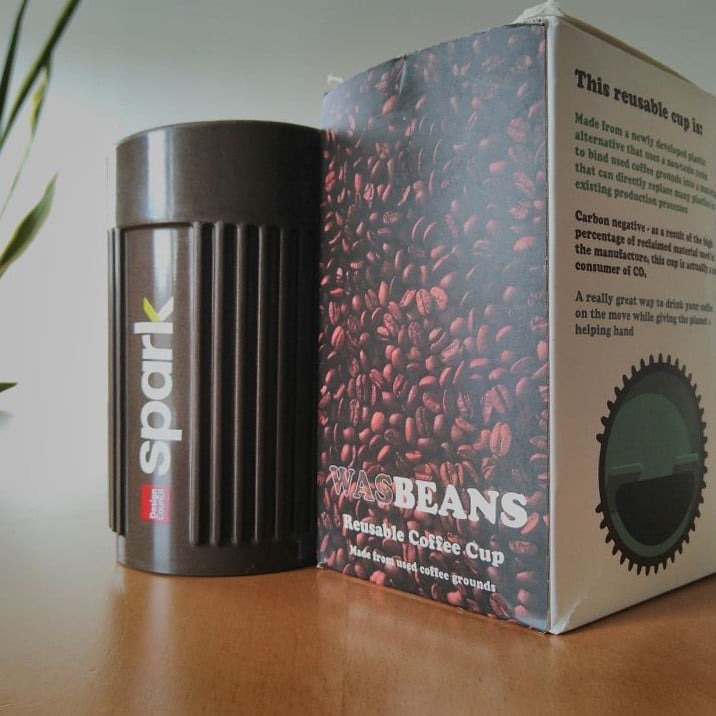
CamBond’s reusable coffee cup ‘wasbeans’ turns waste into plastic alternative












 Agri-TechE










 much change, innovation and financial sector firsts – from launching the world’s first cash dispenser in the 1960s to more recent innovations like cheque-imaging and Pingit, the phone-to-phone payment system. Clearly Barclays has an understanding of the need for innovation and, especially in this current era, the use of technology to improve efficiency and keep business productive, profitable, viable and vibrant.
 If you are looking to finance a budding business idea in the Agri-TechE sector or to invest in technology for your farming business to improve efficiency and competitiveness and want an informal chat, call Craig Sigley, Barclays Regional Agricultural Manager, on 07775 543705 to discuss how we might be able to help.








 The limbic (emotional) brain needs to be engaged in order to reach an agreement.
 Adelina Chalmers



 company.
 The drive for innovation can be harnessed not only into a research aspect of exploring and exploiting all the molecules present, but into the technological side – engineering innovation is needed for down-stream processing, especially the steps involving de-watering – and into market-making for the end-products.