Patenting, Trademarks, Copyright, Trade Secrets...
In the next installment of our micro-learning series, we’ll explore potential legal solutions to help you keep your ideas safe and sound.

NatureMetrics quantifying the richness of biodiversity with eDNA

Agri-TechE Article
Meet the Network
Agri-TechE

One of the companies using eDNA is NatureMetrics. The global nature intelligence company is working with Unilever as part of its new regenerative agriculture programme, the aim is to create metrics that will enable Unilever to measure the impact of changes to farming practice on biodiversity. NatureMetrics will be using its eDNA technology and digital analytics to analyse soil biology and invertebrates at four critical locations in Unilever’s supply chain.

Positive impacts of regenerative farming

To get a better understanding of how NatureMetrics is providing insights into the positive impact of regenerative farming, we spoke to the company’s Tom Ludwig, Head of Onshore Industries.

Tom explains that the company was established ten years ago by Dr Kat Bruce following a breakthrough discovery in her PhD and further research.

Tom says: “Kat was working on ways to quickly assess the presence of the Great Crested Newt, a protected species, in water bodies.

Tom Ludwig NatureMetrics
Tom Ludwig, NatureMetrics

“She had the foresight to see how the technology could expand, not just to detect individual species, but the whole composition of communities – the broader web of life across lots of different types of landscape.

“Kat is still involved in NatureMetrics but is also working at a national and international policy level, advising standards for biodiversity monitoring.”

Enabling biodiversity strategies

Roll forwards to 2024, and NatureMetrics is now an international player with over 500 clients in 104 countries, mostly multinationals operating in energy, mining, forestry and agriculture. It offers consultancy services in addition to testing, analysis and data analytics – that will enable corporates to understand their impacts and dependencies on nature.

The underlying eDNA technology provides a snapshot of biodiversity from a soil or water sample. This provides a profile of the ecosystem that is invaluable to organisations in creating biodiversity action plans.

Tom continues: “We have a consultancy team with knowledge of the regulations, and they help guide our corporate clients as they devise their strategy, and screen for risks across their supply chains.

“The company needs to build internal frameworks to support the strategy and knowing what and how to sample in order to create a representative picture of the ecosystem is vital. Our eDNA technology is an enabler for that.”

Indicators of soil health 

“The kits are easy to use – we’ve even had school children using them for citizen science projects – and then the samples are analysed in our labs,” Tom explains. “We match the DNA against a very large reference library. It’s a bit like forensics at a crime scene.

“Certain groups of species are associated with particular ecosystem functions, such as nutrient cycling. Therefore, the presence of these ‘functional groups’ is an indicator of soil health.”

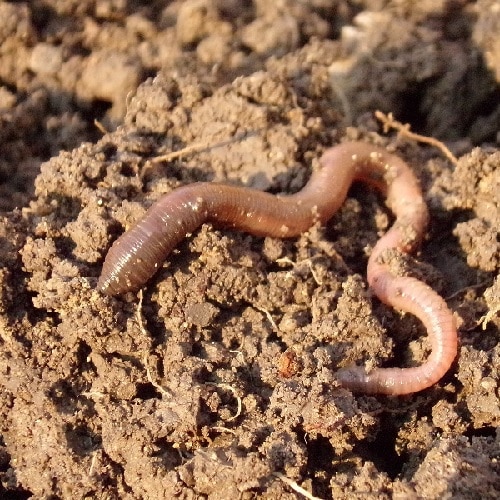
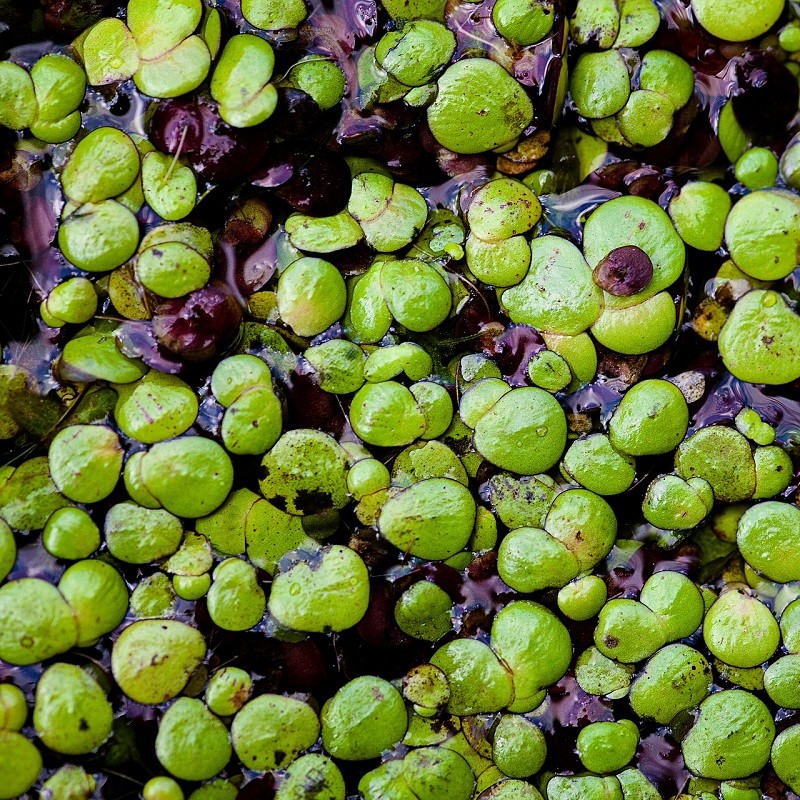
eDNA can detect functional groups of species and this is an indicator of soil health

Future is predictive analysis on a landscape scale

Tom sees the future as a combination of sampling technology such as eDNA with satellite observation and bioacoustics.

“We see ourselves as nature data aggregators. When you combine species data from eDNA with habitat and landcover assessments you move to another level. We are looking to develop metrics to assess ecosystem condition and to build a comprehensive picture of biodiversity across the landscape, which could be used by many different industries.

“We are going to move the needle on ecosystem assessment. There are loads of incredibly exciting things that you can start to do with these big data sets, and we are just scratching the surface.

“Until now people have been looking at physical habitats – ‘I have x amount of hedgerow, wildflower strips etc so if this is increased it’s going to be better’. However, when you combine data sources to train up a model, you can start to understand the living web and be predictive, moving the narrative to ‘if I do this, we can reintroduce particular species such as rare butterflies’.

“For the first time it will be possible to assess the condition of the ecosystem and measure the outcomes of the interventions – this is vital if effective management of ecosystem resources is to be incentivised and rewarded.”

NatureMetrics will be one of the speakers at Agri-TechE ‘s event ‘Digging Deep: A Showcase of Below-Ground Tech Advancements’, hosted by Cranfield University on 16 May 2024.

Welcome to the future – are we nearly there?

Meet the Network
Agri-TechE

As innovation management is risky and expensive, only technologies with significant commercial potential reach the market. Reviewing university research can provide an indication of what is in the pipeline, but it may be ten or even more years before deeptech reaches beyond proof-of-concept stage.

We asked Alun James, Chief Technology Officer at Sagentia Innovation, to review some of the current blue-sky research to see if it has applications for agriculture.

Sagentia Innovation agriculture and agri-tech consulting helps businesses navigate the “fourth agricultural revolution”, fundamental changes powered by digitalisation, data, and biotechnologies so Alun is well placed to provide an industry perspective.

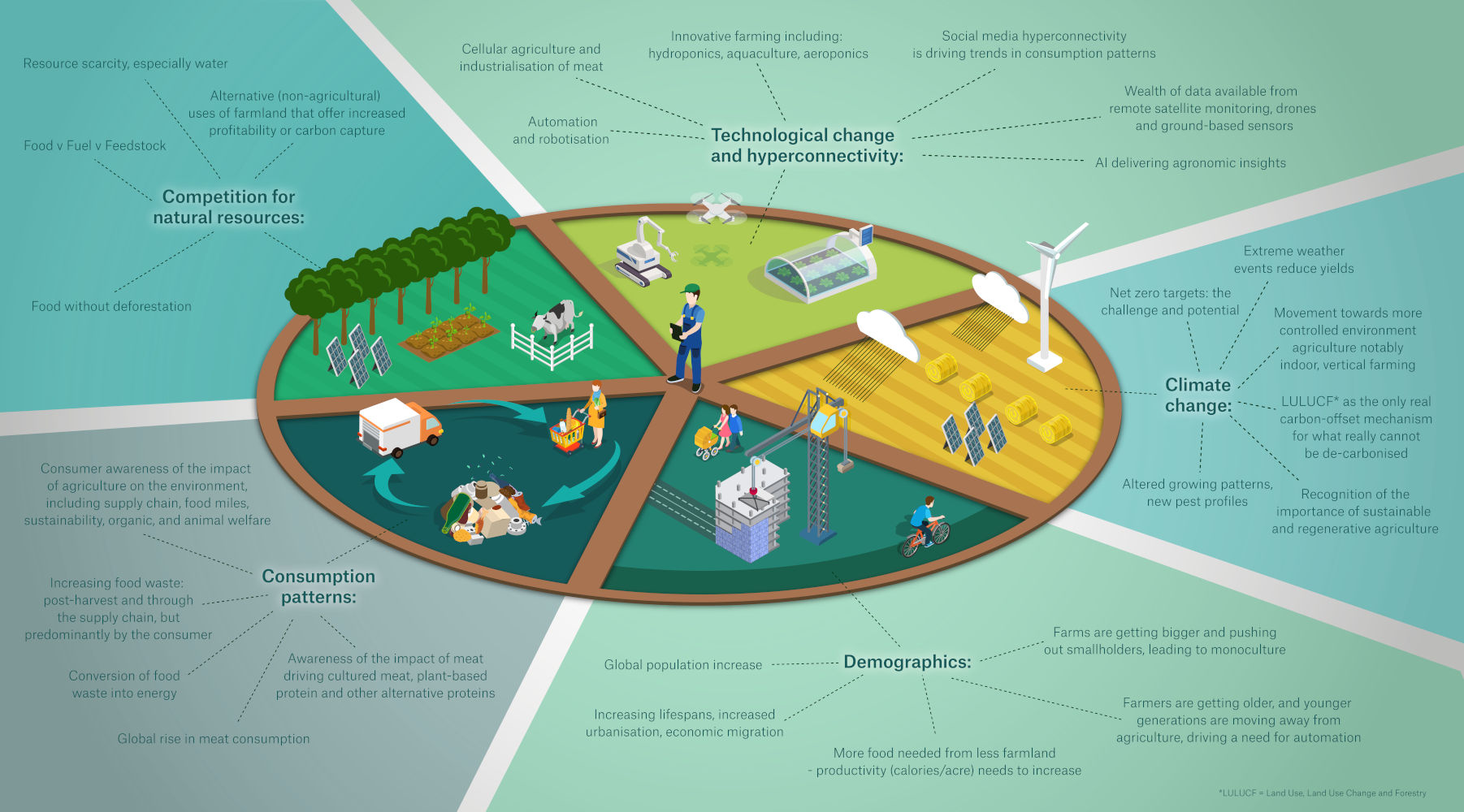
Agri-TechE Trends: challenges and considerations
Sagentia’s overview of agri-tech trends: challenges and considerations (click image to expand)
[from sagentiainnovation.com/insights/agri-tech-trends-challenges-and-considerations/]

Blue sky research is to explore new technologies and gain learning points – it is not intended to be commercially viable.

Innovate UK reviewed its research portfolio to produce a report ‘Welcome to the future: technologies that will shape the UK economy in 2040 and beyond’. although not specifically about technologies for the agrifood industry, we thought that some of the research projects mentioned in the report sounded exciting and might potentially provide future solutions to current challenges in the industry.

We selected four technology areas and discussed their potential applications with Alun James of Sagentia Innovation.

  • gridscale wireless energy transmission;
  • DNA data storage;
  • Novel immersive surfaces;
  • Biocatalytic membranes;
Alun James
Alun James, Sagentia

Alun is familiar with many of the technologies in the report, and as he is part of a team with cross-industry experience with experts across a range of skills and disciplines, from applied science to advanced engineering.

We asked him about the potential future applications of the research topics mentioned in the report to agrifood.

First, he made a couple of observations: “Reviewing the technologies in this report, there are few that are real game changers for agriculture, beyond those that we are seeing already such as advanced breeding.

“Technologies do take time to mature, so if you wound the clock back five or even ten years many of these technologies would still have been in this report. The question is: why haven’t they matured? Is it because there is limited commercial value? Or perhaps a socioeconomic change is needed to enable the technology?

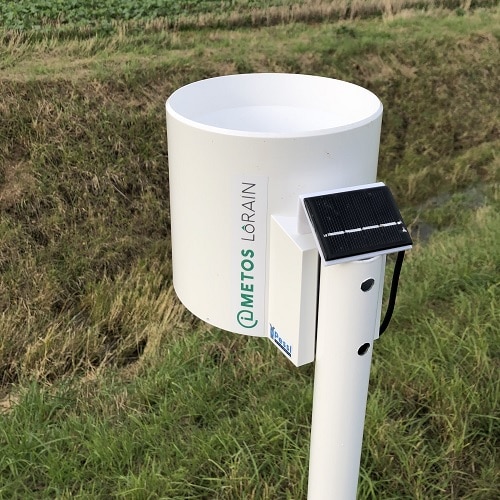
“Looking to the future, arguably the technological development that would make the greatest impact on farm productivity is greater accuracy in the long-range weather prediction; we have already seen the benefits of hyper-local weather reporting to support decision-making, and being able to plan crop selection according to the weather would be revolutionary. Sadly, this is probably unachievable as weather is a chaotic system that is impossible to predict.”

Cold front
Greater accuracy in long-range weather forecasting would be Alun’s game changer

We asked Alun to lower his aspirations and consider potential agri-tech applications for some of technologies in the report. However, in many cases, Alun suggested that nearer-to-market technologies could offer solutions to current challenges in agriculture.

He explains that the technology has specific applications: “I use a wireless charger pad for my iPhone as it is convenient, but this is a short distance and wastes energy. Beaming energy across a farm would fry anything in its path. The technology is used by the British Navy to detect ships, but ‘microwave antennae’ are highly dangerous and are known to kill a few seabirds.

Wireless charging available now in the office

“It is possible that charging pads for agri-robotics might be a future application, but I think it is unlikely that microwave technology will be the first choice for this.

“Autonomous electric vehicles in general are an area with potential. We are seeing technologies proven in other areas becoming de-risked and falling in cost, and this will make them more accessible for farmers.

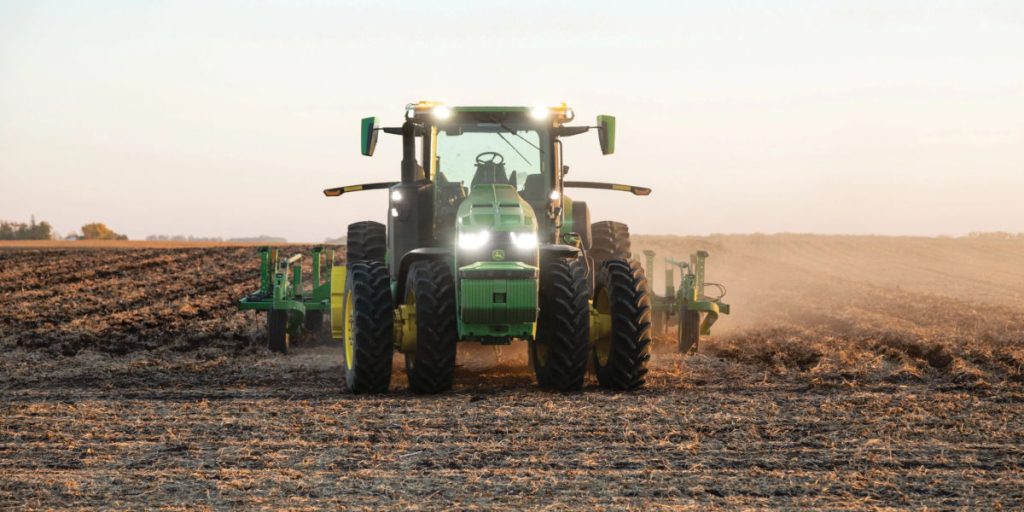
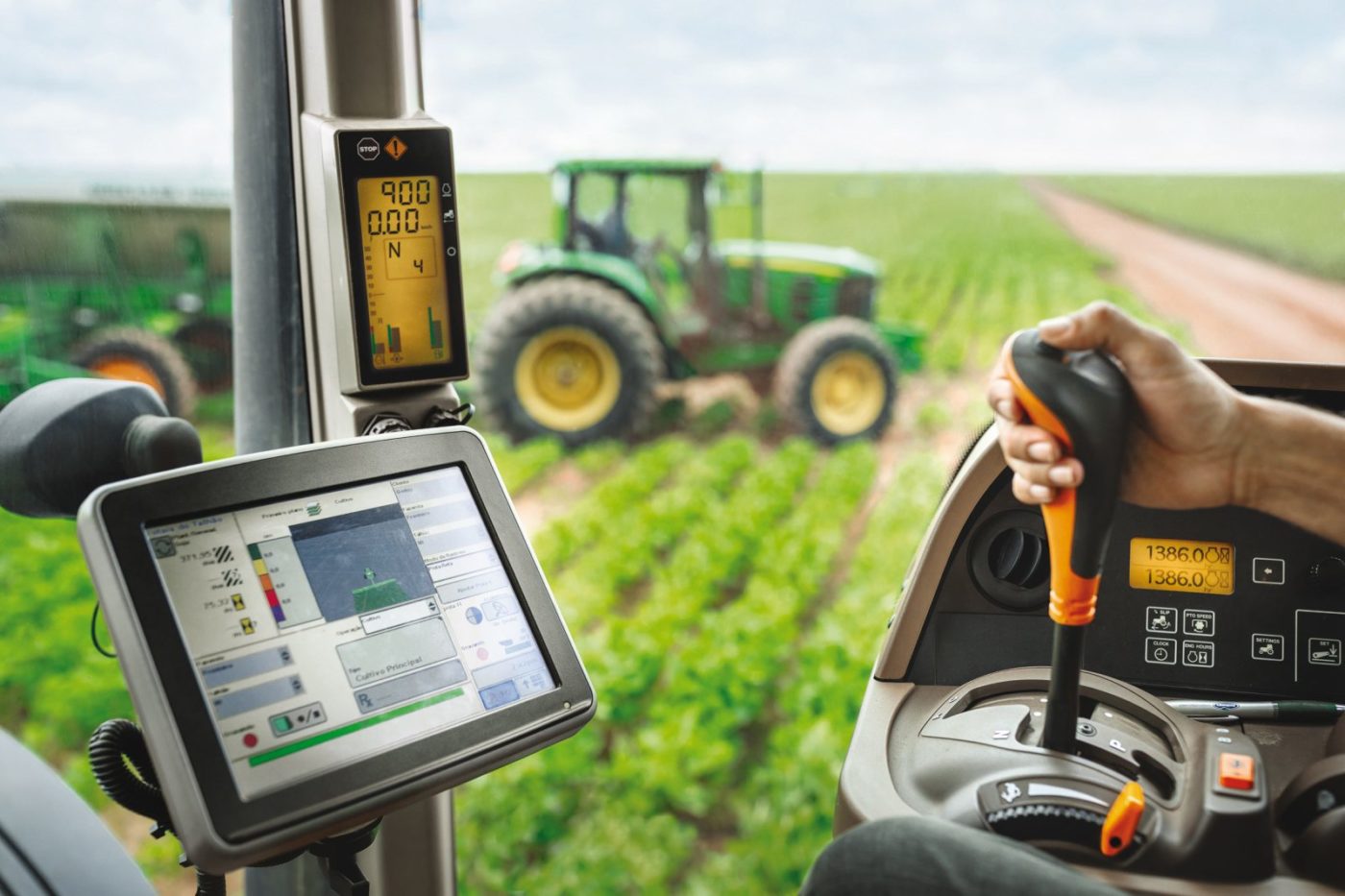
“An interesting insight into the future is the John Deere partnership with Starlink to develop electric, autonomous tractors. Assisted steering has been revolutionary, but totally autonomous vehicles? I think the jury is still out.”

Tractor
John Deere developing autonomous vehicles (credit John Deere)

Alun considers the question and suggests that there are two parts.

“The technology does have the potential to store phenomenal amounts of data, but the application is more likely to be in long-term archiving in other fields, such as medical science where vast data sets are needed to gain an understanding of genes for personalised medicine.

“The agricultural challenge is local storage and processing power. The streamed data is often visual imaging coming from cameras. Other technologies available now, such as edge computing, can analyse the data near the source and just keep the results – converting gigabytes of raw data into kilobytes of useful information. These alternative approaches would be more valuable on-farm.”

“Current applications for this tech include heads-up displays in cars that project speed etc onto the windscreen,” Alun observes. “There is potential to use the tech when it falls in cost to provide the tractor operator with alerts – you are ploughing too deep, a spray nozzle is blocked – however, the challenge is still how to provide this information without making the human feel ill.”

Alun considered the question: “This technology has the potential to be very useful for removing pollutants and bacterial contaminants from water for humans in drought areas.

“There is also an opportunity to gene-edit bacteria to create byproducts of commercial value. This has been seen with the use of algae to remove nitrates from water and create proteins. “I don’t think agriculture will be the leading application for this technology, but it would benefit from its development in other spheres.”

We put to Alun that it is possible to make precision farming ever more high-tech using increasingly sophisticated ways to use data, create synthetic versions of real-world processes, and utilise alternative methods of energy production.

An alternative would be to better understand the natural world and work with it regeneratively to feed the soil and use water smartly. This would require creating light-weight automation, and widen the diversity and resilience of crop plants.

Alun considers: “I would hate to think we had to choose between one or other camp. We will always need to ground-truth, and I think we are a long way from farming entirely from a computer, if that was ever a goal – farmer intuition and knowledge is invaluable.

“Food security is a pressing issue, and although population growth may be slowing, the land available for food production is finite and under pressure from climate change. New solutions and fresh thinking are required.

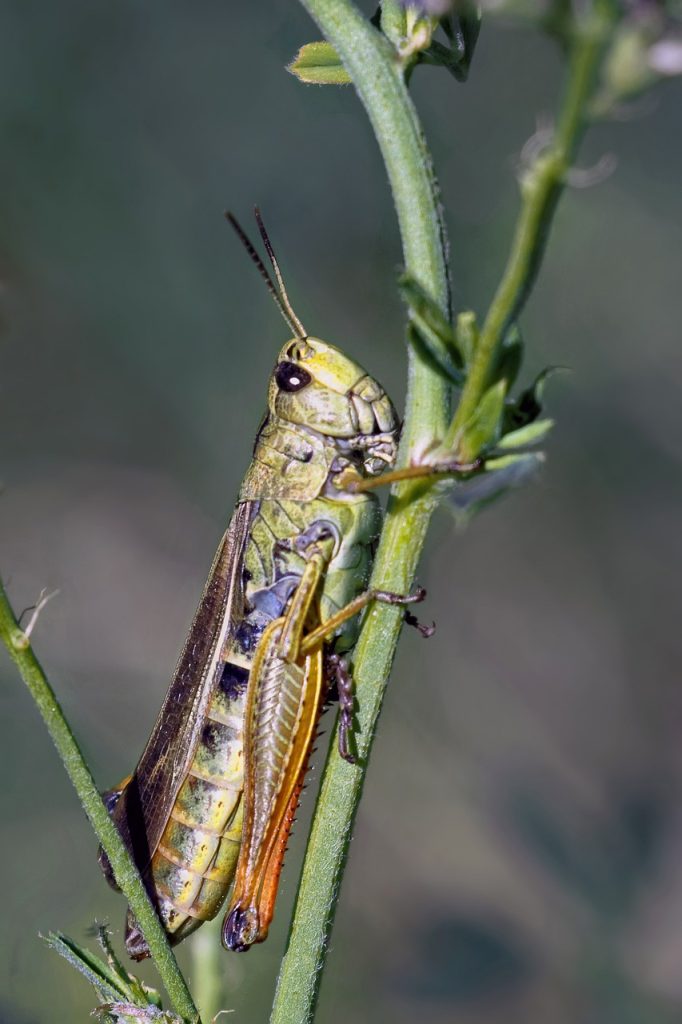
Grasshopper
Are insects the future?

“Perhaps insects are the future! They have an ick factor, but we eat prawns, and they consume detritus on the ocean floor.

“Perhaps the answers have been here all the time – we just need to know where to look.”

Read the report: ‘Welcome to the future: technologies that will shape the UK economy in 2040 and beyond’.

Welcome to the Future report front cover

Making connections is the secret to networking

Meet the Network
Agri-TechE

For Agri-TechE ‘s Connections Week, we asked our member KISS Communications to write a guest article sharing their top tips for successful networking in the agri-tech sector.

KISS is an award-winning B2B marketing agency that boasts expertise in the tech sector, thrives on collaboration and has an enviable track record of success – making their team expertly placed to offer advice on how to maximise every professional encounter.

Take it away, KISS!

We all know we should do more networking but many of us tend to put it at the bottom of our to-do list. Networking might seem more straightforward in a typical 9-5 job, but what about in the agricultural sector where traditional work hours don’t always apply?

We recognise that time is a precious commodity and that there are many challenges facing the industry right now, not to mention usual day-to-day demands. Despite these unique challenges, we’ve seen first-hand how networking within the agricultural community can be tremendously beneficial. It provides a platform to share knowledge, pool resources and collaboratively overcome obstacles whilst making valuable connections on the way.

We asked our MD Sarah (Reakes) for her tips on networking like a pro

1. Engage with people dealing with the same issues

Working in agriculture can often be quite isolating. Forging connections through networking helps in gathering resources, enhancing knowledge, creating support networks and fostering trust across the sector, ultimately driving success and expansion.

By going to industry events, you get to meet those at the coal face dealing with the same issues as you; nothing beats ‘lived’ experiences and exchanging best practice tips!

2. Be prepared

Do a bit of digging about who’s coming along and make a short list of the top 3-5 people you want to meet. Prepare a concise list of relevant topics or key questions to discuss, such as sustainable farming techniques, new technologies and practices or changes in agricultural policy.

This will help you make the most of the networking opportunities at the event.

3. Stay informed

Be sure to have your elevator pitch prepared— what do you offer, what is your area of expertise and what do other people at the event need to know to understand your experience? It’s a great way to quickly summarise the unique contributions you and your enterprise provide.  

Remember, networking is a two-way street. Think about how you can be a resource for others, whether that’s by sharing your knowledge in areas like crop management, grazing techniques and sustainable farming practices, or by making introductions to other industry professionals. This approach not only enriches your connections but also supports the growth and resilience of the agricultural community.

4. Follow up

Don’t waste opportunities and connections – connect over social channels or email and maintain the conversation.

5. Access to opportunities

Networking can open doors to numerous opportunities that you might not otherwise encounter. This includes discovering new markets, accessing funding sources such as grants or investment, and even finding potential business partners.

It’s often worth flipping the narrative

Think of ways you might help someone you meet – there are many ways you might be able to offer advice or support when networking. Try thinking ‘how can I help?’ rather than ‘here’s a possible partner or business opportunity’. And always remember that it’s worth giving networking a go!

Digital marketing agency KISS has worked with a number of the world’s leading agricultural companies and organisations to develop digital strategies, create marketing and PR campaigns and bring their stories to life across multiple touch points for global audiences.

Find out more about Connections Week 2024: attend a drop-in for bespoke advice and introductions, sign-up to an event or head over to our socials to follow our posts throughout the week.

Making connections the secret to networking - part of Agri-TechE 's Connections Week

Bayer and AlphaBio introduce revolutionary bioinsecticide

Meet the Network
Agri-TechE

Agri-TechE member Bayer has announced a significant partnership with UK-based R&D company AlphaBio Control, aimed at launching the first-ever biological insecticide tailored for arable crops. This exclusive licensing agreement is anticipated to bring the new product to market by 2028.
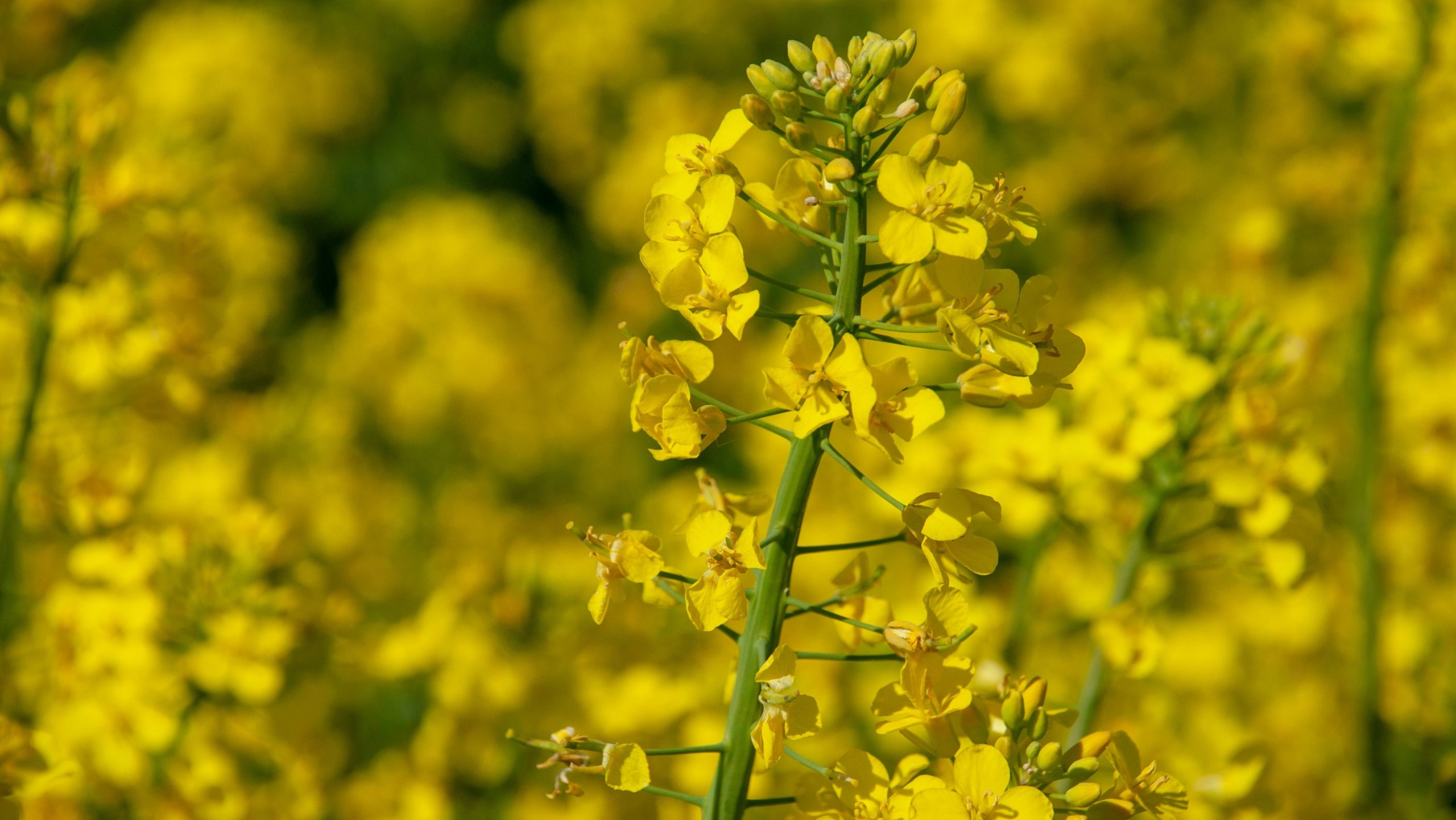
revolutionary bioinsecticide tailored for arable crops such as oil seed rape.

Under this agreement, Bayer gains exclusive rights to market the new biological insecticide developed by AlphaBio Control, tailored for arable crops including oilseed rape and cereals. This innovative product targets pests such as the cabbage stem flea beetle, prevalent in the United Kingdom and Europe, which inflicts damage throughout the growing season, leading to ‘shot-holing’ symptoms that stunt growth and compromise plant health.

“This is a really exciting product to bring to market,” remarked Becky Dodds, Director of Communities at Agri-TechE .

“We featured AlphaBio at an Agri-TechE event a number of years ago, and agronomists in the room expressed great interest in FLiPPER™ at the time. It’s a testament to the hard work and tenacity at getting this product not only in mainstream use on the farm, but that this exciting new relationship with Bayer has emerged.

“We’ve been thinking a lot about commercial application of biologicals recently – particularly in reference to the need for collaboration to effectively address the challenging regulatory environment. We know with greater pressure on active ingredients this is a really interesting partnership for the future.”

While many biological options cater to high-value vegetable and horticulture crops, their cost often relies on consumer-supported price premiums. However, for arable crops, cost-effective solutions at a larger scale are essential for competitiveness.

Bayer’s systems approach, which integrates various solutions, plays a pivotal role in ensuring affordability for these bioinsecticides. By incorporating the new product into a digitally-supported integrated pest management system, Bayer maximizes cost efficiencies, making the bioinsecticide accessible and competitive in the market.

Bayer and AlphaBio introduce revolutionary bioinsecticide

“We are delighted to license Bayer exclusive rights to our latest bioinsecticide, which will significantly improve the choices available to arable farmers wishing to reduce the environmental impact of food production,” said Marta Ruiz, General Manager for AlphaBio Control.

The collaboration between Bayer and AlphaBio Control signifies a significant step forward in addressing the growing demand for sustainable crop protection solutions. By targeting key pests in arable crops, the bioinsecticide offers farmers an effective and environmentally friendly alternative.

“With increasingly strong demand from farmers and changing consumer preferences, we see major growth potential for biological crop protections like this one,” added Ralf Glaubitz, Head of Global Asset Management for Seed Growth & Biologics at Bayer’s Crop Science Division.

“We’re working to outgrow the market and achieve more than 1.5 billion euro in biological sales by 2035. That’s only going to happen if we innovate to solve the challenges that farmers face in all fields.”


Please click here to explore the full insights and recommendations outlined in the report ‘Precision spraying and biologicals – driving collaboration’, produced by Agri-TechE in collaboration with Cambridge Consultants.
Future Biogas says green energy offers opportunities for broad acre and glasshouse farmers

Meet the Network
Agri-TechE
Biogas offers a renewable alternative to fossil fuels and is now being produced in quantity and made accessible via the grid, by organisations such as Future Biogas. This innovation promises to be a gamechanger for companies such as glasshouse growers looking for affordable, fossil-free fuel. It will also provide a stable revenue for farmers growing bioenergy crops within the arable rotation.

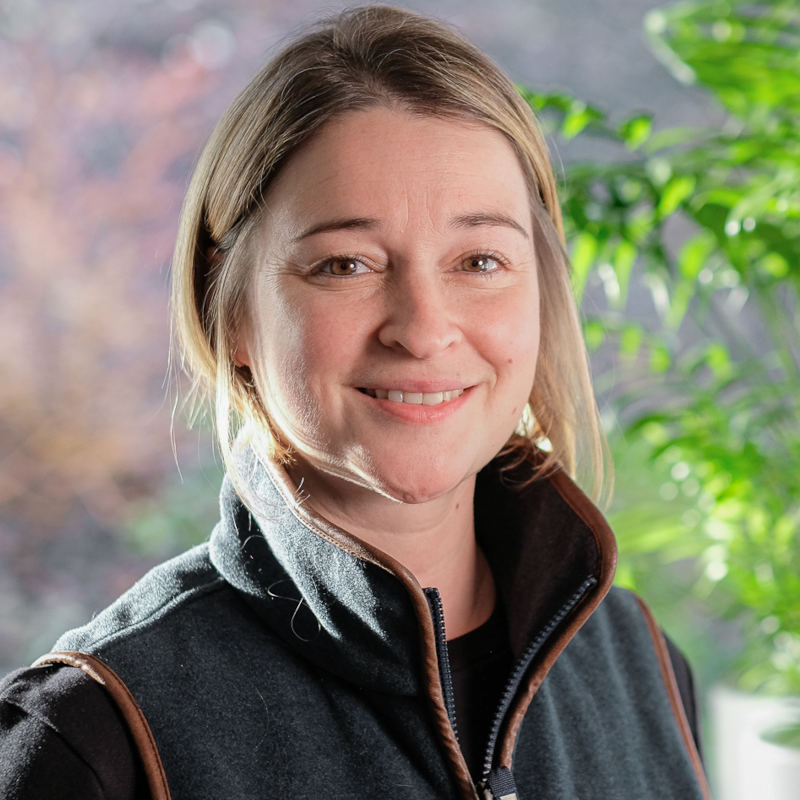
Dr Becky Wheeler, Business Development Director at Future Biogas, says the company has spent the last ten years optimising the technology and is now on a growth trajectory following significant investment from 3i Infrastructure in 2023.

Developing a body of knowledge

Future Biogas was founded in 2010 by Philipp Lukas and his father who had a vision to create an alternative source of gas from renewables. They built and constructed a number of anaerobic digestion (AD) facilities, developing a body of knowledge about the gas and how to optimise the technology. Future Biogas currently has twelve plants in its portfolio.

Dr Becky Wheeler, Future Biogas

Part of this learning was that the quality and consistency of feedstock is critical.

Although smaller AD plants do work well at a farm level and municipal waste is used successfully at many commercial operations, Future Biogas operates plants fed with bioenergy crops, predominantly from farms located in arable regions across the eastern side of the UK.

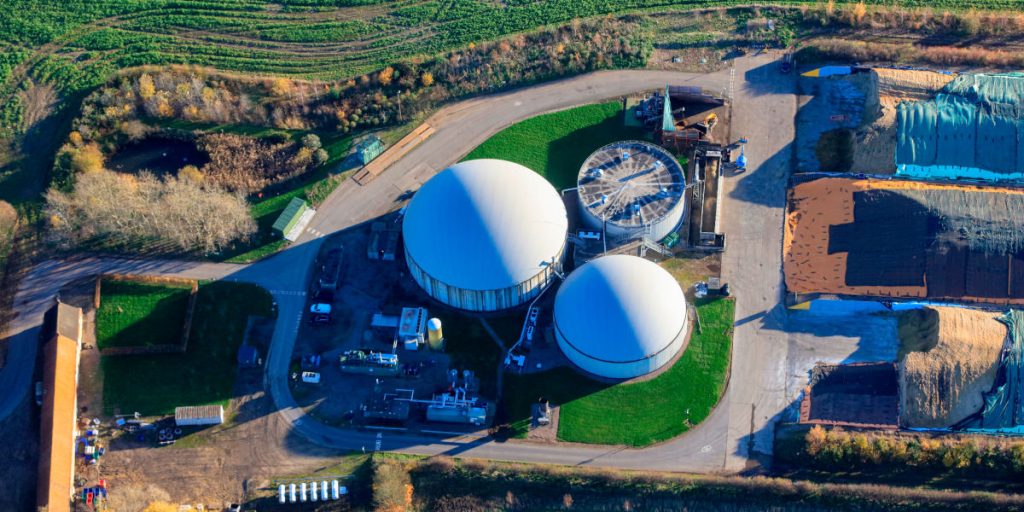
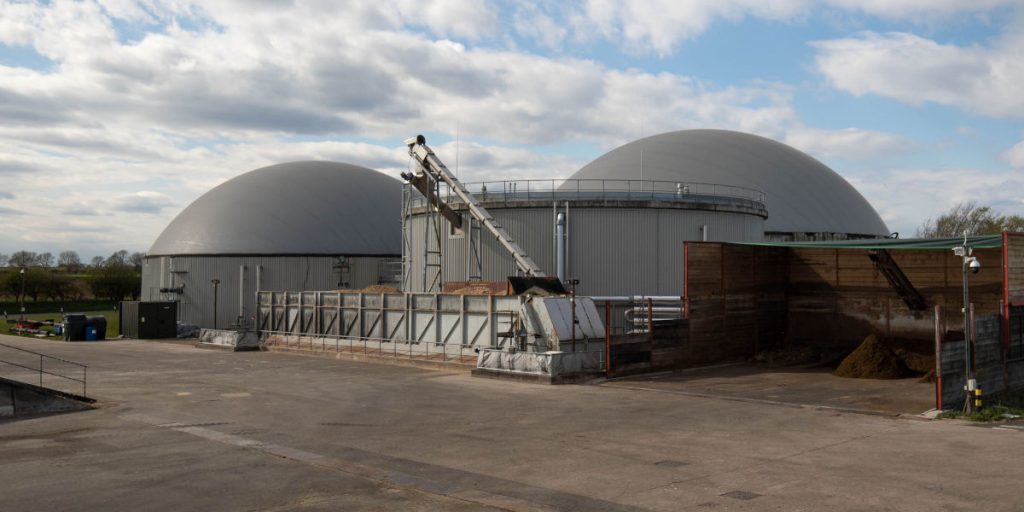
Bioenergy crops are fermented in the AD process, producing gas comprised of biogas (upgraded to biomethane) and carbon dioxide. The gas is split through a molecular sieve and the methane element can be used for heat and energy.

Since 2010, Future Biogas has become one of the largest biomethane producers in the UK.

The company was acquired in February 2023 by 3i Infrastructure, and this injection of finance has enabled Future Biogas to invest in a new generation of AD plants, moving away from government subsidies.

A new market for farmers

Producing biogas at scale has created a new market for farmers. Future Biogas has contracts for bioenergy crops, such as maize, which can be grown as a break crop within the rotation.

Becky explains what this means for farmers: “We are currently procuring about half a million tonnes of crop a year across Yorkshire, Lincolnshire, and Norfolk. Bioenergy crops, such as maize and rye, offer farmers a diversification opportunity, as they fit well within the arable rotations more often found across the east of England.

“Longer term contracts enable farmers to plan well in advance and offer stability. This also supports longer-term land management strategies that are needed to improve sustainability.

We have been working with our farmers to trial some more novel crops such as the perennial silphium, to various degrees of success because it’s very hard to establish. We are exploring the use of companion cropping and herbal lays, and over the years, we’ve seen the benefits of using maize to help control black grass. Therefore, we are supporting innovation both on-farm and through our own labs.

“There is also the opportunity to return solid and liquid digestate to the farm, to provide a source of organic matter.”

green energy offers opportunities
Biogas is 100% renewable and is now being produced in quantity

Building soil health

The importance of the soil microbiome for soil health has become more widely recognised. Although Future Biogas has a biology department dedicated to the microorganisms that support the AD fermentation process, the company would like to expand R&D in the field environment.

Becky is a soil scientist, so it is a subject of great interest to her: “Our project life cycle analysis focuses on carbon emissions and reducing the carbon intensity of our gas products, which includes the feedstock – so our feedstock team are looking at soil health, and farming practices that better support the soil microbiome. We do not currently have any trials in the ground, but we will certainly be looking at this in the future.”

Supporting a reduction in fossil fuels for Scope 3

As part of the Taskforce for Climate-Related Financial Disclosures TCFD, companies have to account for their Scope Three emissions and the use of fossil fuels on-farm is a major contributor. This means large businesses will inevitably analyse the sustainability of their supply chain.

Becky explains that currently the biomethane produced in Future Biogas’ plants is injected directly into the grid, except for one site that powers Combined Heat and Power Units (CHP) to generate electricity.

Many vegetable and fruit producers use electric-powered CHP for their glasshouses, so AD has the potential to provide a fossil fuel alternative, making them more attractive to scope 3-conscious retailers.

Future Biogas has recently signed a 15-year partnership with AstraZeneca, who will be using biogas as part of their strategy to decarbonise its manufacturing process. It is the UK’s first industrial-scale agreement for unsubsidised green gas.

Becky continues: “The model we’ve built in partnership with AstraZeneca is a good precedent for glasshouse producers as it is fossil free; it shows that you don’t necessarily need to co-locate an AD plant to tap into biogas. Green gas off-takers can also claim full additionality as the gas wouldn’t be produced without them.”

The agri-food industry also uses CO2 for carbonated drinks and other purposes, which also currently comes from the production of fertiliser.

Becky says that this is a potential opportunity for the company, but the focus currently is to permanently sequester the carbon dioxide produced within geological deposits, and this is part of its subsidy-free strategy.

“Come and talk to us”

“We have several new AD plants in the pipeline, so there are opportunities for growers, in particular those looking to partner with us on a journey to more sustainable land management. We invite farmers to come to us direct to discuss their needs.”

Green energy offers opportunities

Digital twins can support scenario modelling and collaboration says XD Innovation

Meet the Network
Agri-TechE
Collaboration is the way forward, according to Charlie Lane of XD Innovation. The company is a UK start-up aimed at making the services of one of the world’s largest software houses, Dassault Systèmes, accessible to agri-tech businesses.

Digital twins allow the real world to be simulated and various scenarios to be modelled using actual data.

XD Innovation are resellers of products such as 3DEXPERIENCE®, software that enables collaborative working and the creation of digital twins.

Charlie explains that if, for example, you were developing a new type of robotic sprayer, you could use a digital twin to model the terrain, crop growth and leaf position and see the impacts of the environmental conditions, or the benefits of modifying the sprayer arm or droplet size on coverage.

Charlie Lane of XD Innovation

All this can be done before the design is completed, accelerating the prototyping phase of development by removing the need for physical products.

Being able to combine data from different sources on the same platform enables it to be visualised and shared.

Charlie’s roots are in agriculture, working for dealerships and equipment manufacturers for over 15 years before he joined XD Innovation to head up a new agriculture division in the UK.

He sees opportunities in the UK to support established equipment manufacturers to digitalise their operations and accelerate new product developments. XD Innovation can provide technology roadmaps and offer consultancy to help transition its customers to collaborative environments, reducing waste and improving quality.

For example, Italian agricultural machinery manufacturer Maschio Gaspardo uses 3DEXPERIENCE to allow global developers and engineers to work together and to integrate the technical department with other functions. This has allowed the company to customise its products for particular applications and to keep ahead of the curve.

Charlie was also keen for the company to join Agri-TechE in order to investigate how he can deliver scalable packages of support for start-ups.
He says: “The licence fees for some of our CADCAM and 3D software would be too steep for early-stage companies to purchase independently, but there are many benefits in using industry standard software from the outset as it meets international standards, such as those for sustainability, which helps to futureproof developments.

“I am keen to provide affordable packages of software and support to get these early-stage companies on the right track.”

The digital twin environment can also support diverse land management applications.

As farm businesses adopt Net Zero policies they need to collate and account for carbon emissions from different revenue streams and to simulate the impact of events such as extremes of weather.

Charlie is currently in the early stages of modelling a landscape scale project involving multiple partners in a vulnerable ecosystem. The intention is to make the complexity easily understood by human decision-makers and for them to be able to model different land use scenarios.

He explains that he can pull in expertise from other parts of the world. “I was at a Dassault Conference recently and discussing some of the challenges of the landscape project when someone put me in contact with a guy that had been working on the Singapore Smart City project. They have built a complete digital twin: waterways, emergency services, utilities – everything.

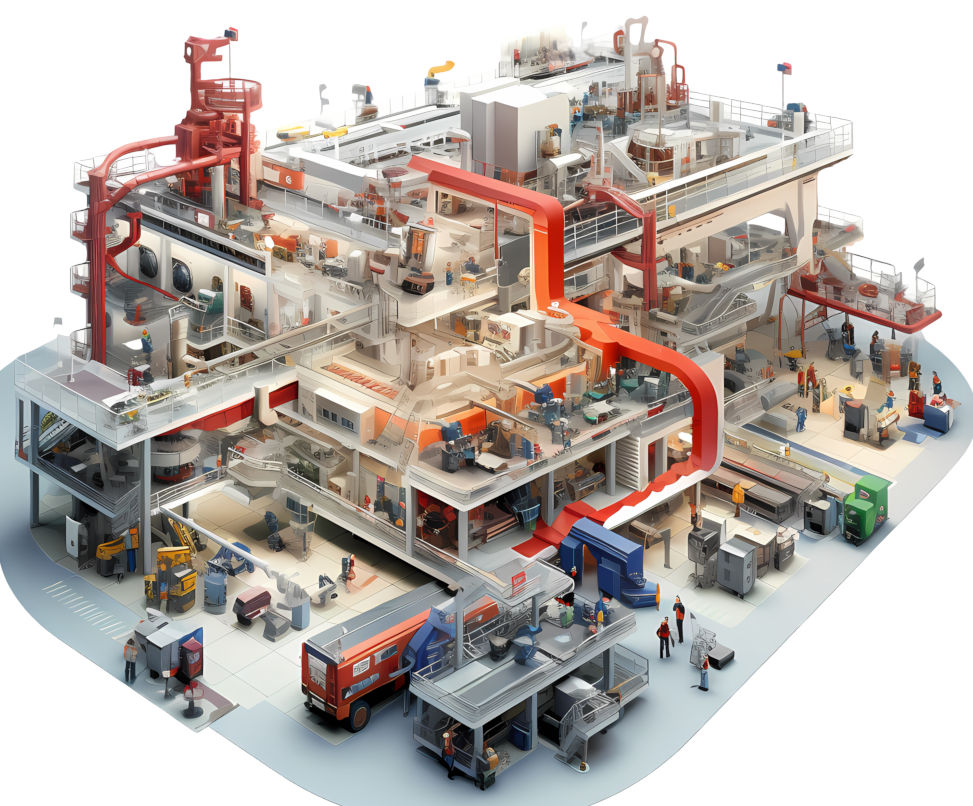
Industrial manufacturing plant render

“The project we are working on is tiny in comparison but basically it is the same requirement, and we can learn from these installations.”

Charlie is keen to adapt solutions that have been developed for other industries to agri-tech. He uses the example of auditing:

“Aerospace operates to the highest quality standards and every component down to a screw has an audit trail – where and when it was made and by whom. Other companies such as L’Oréal beauty products have a similar system.

“The idea is there is one point of truth, and you can give permissions for auditors and others to see as much or as little as they need. I see huge potential for these types of collaborative projects working well for agri-food too.”

New members increase diversity of Agri-TechE ‘s innovation ecosystem
Agri-TechE Article

Meet the Network
Agri-TechE

A record number of new members have joined Agri-TechE in recent months, further increasing the diversity and geographic spread of its innovation ecosystem. Agri-TechE ’s Director of Communities, Becky Dodds, comments that successful business is all about knowing people and sharing knowledge.
She says: “We have found that the farmers at the heart of our ecosystem are deeply committed to building sustainable, productive businesses that will provide food security to future generations. They are open and willing to engage with researchers and technologists that can support them on that journey.

However, the challenges are complex and need a multi-disciplinary approach, so knowing who to talk to has become the game-changer. As a result, I dedicate much of my time to facilitating connections between people with common interests but very different perspectives.

Becky Dodds, Membership and Events Manager
Becky Dodds – Director of Communities

Within every organisation there are individuals who are passionate about making change and are able to see the opportunity to apply new technologies or new approaches to solve problems. It is those people we look for and introduce them to others with mutual interests.”

Ecosystems are internationally recognised as a way to accelerate and de-risk innovation by providing access to knowledge, collaborators, early-adopters, and sources of investment.

Recent developments in agriculture – including changes in farming practices in the transition to Net Zero, rapid digitalisation of all processes in the value chain from field to fork, diversification in crops and business models, increasing automation, and growing internationalism – are shared by other industries. Therefore, solutions being adopted by pharma, aerospace and manufacturing will have potential applications within agri-tech.

By introducing non-traditional players to agriculture into its ecosystem, Agri-TechE is facilitating the development of new applications and use-cases.
Becky continues: “Many of the obstacles to agri-tech adoption – interoperability, data analysis and sharing, easy-to-use interfaces, battery life, connectivity – are being tackled in other spheres. Part of our role is framing those challenges within an agrifood context to ensure the conversations are productive.”

The vibrancy and diversity of the membership can be illustrated with a small selection of recent members, who represent some of the emerging trends that we are seeing.

Regenerative farming uses a soil first strategy to increase crop resilience while reducing inputs such as inorganic fertiliser. A number of farmers are adopting this approach and supporting each other. New member, Goodley Farm Services, is using learning points from its own journey to diversify the farm business and create a cooperative with other farmers.

Carbon management is opening up as another revenue opportunity for farmers. Underpining this is the need for verified measurements of soil organic carbon. Ecometric has gained independent verification for its approach to quantifying an increase in sequestered carbon. This methodology will pave the way for the development of a carbon market and enable farmers to provide evidence needed for the government’s Sustainable Farming Incentive.

Auditing best practice in particular de-risking the business and efficiency improvements. Mandatory legislation coming into force in 2024 is accelerating progress towards Net Zero, but new members Aethr Associates are keen to demonstrate the other benefits that the reporting can offer.

Online markets for low carbon produce. Legislation around reducing carbon emissions in value chains is encouraging food businesses to pay a premium for low carbon produce. Agrasta is establishing an online platform that gives visibility of producers with good credentials to food and beverage companies looking to reach net-zero targets.

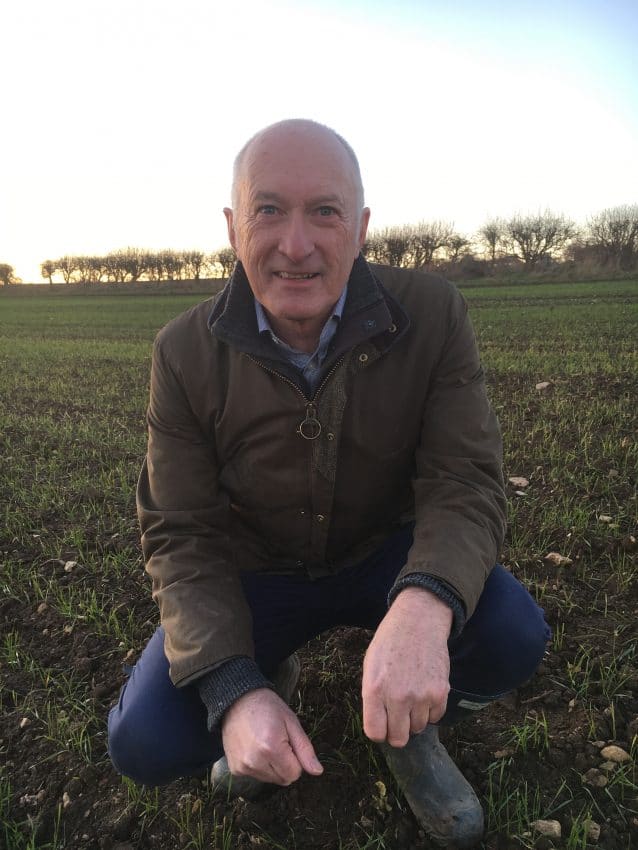
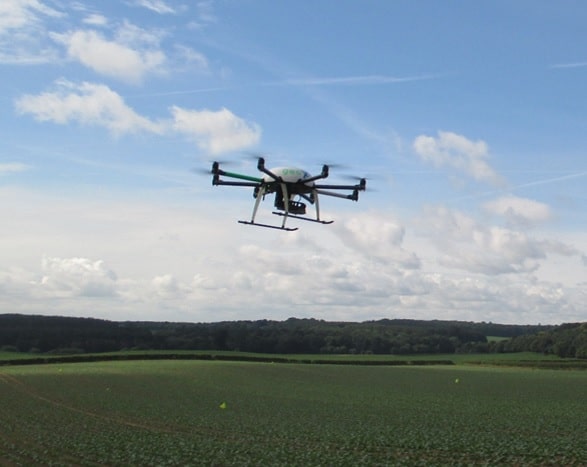
Predicting and forecasting – as ecosystems evolve innovation is multidimensional. The move to regen ag is also driving business process change in the agribusinesses that would traditionally provide inputs. Space-tech company Hyperplan, headquartered in France, is using satellite imagery ground truthed by its customers to provide objective information about crop performance and coverage to help inform new business models.

Overcoming resistance in pests. Many soils are rendered unusable for potatoes and other root vegetables due to the build up of nematodes resistant to inorganic pesticides. Members like Ecospray are developing plant protection products that are highly selective to a particular pest’s metabolic processes. It has been working with fellow members Earlham Institute and Niab to develop a nematode deterrent based on garlic.

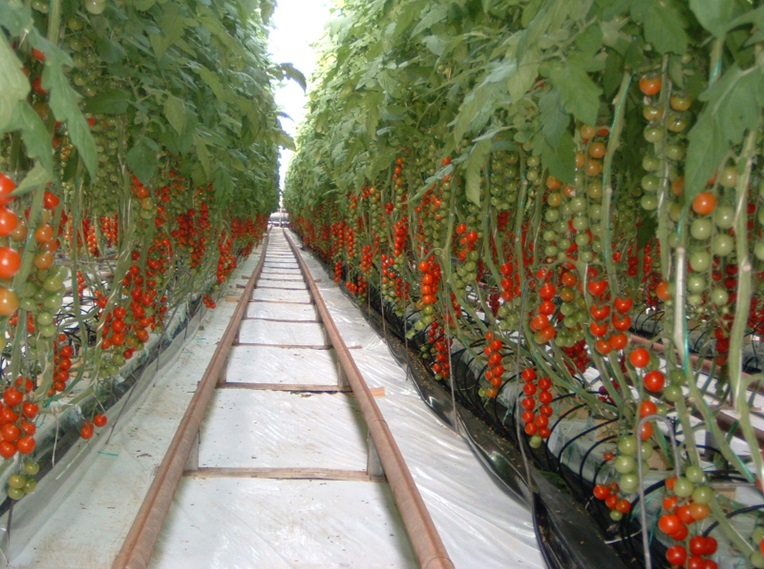
Supporting a move to industrial horticulture, it is a pivotal moment for undercover crops as high energy costs and shortage of skilled labour have forced many producers out of business. The current situation and ways forward have been reviewed by new members Camrosh, who are co-authors on a report that shows the potential for the sector to have a bright future, saying that the technologies needed to bring food security are already available

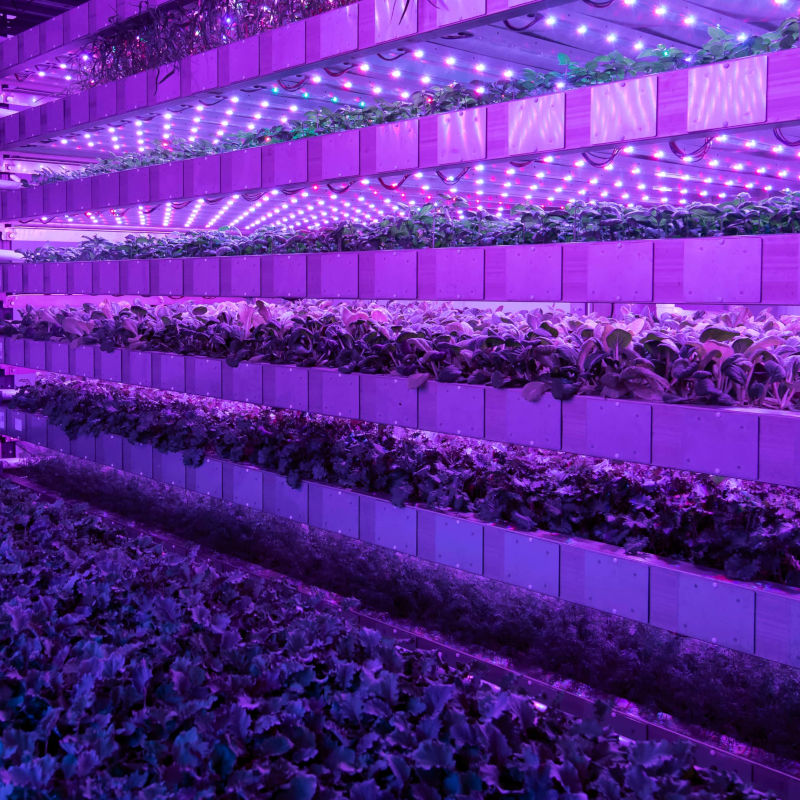
Indeed a good number of Agri-TechE members are developing solutions with Intelligent Growth Solutions (IGS) offering greater automation with its self-contained growth towers; Crystal Heart Salad creating plant plugs that can work with automated planters and Future Biogas offering renewable alternatives to fossil fuels. This is in addition to the work of long term members such as Lettus Grow.

Agri-TechE is an independent organisation funded and led by our members. We welcome industry veterans alongside new-to-ag companies, global conglomerates and family-run farms that together explore cutting-edge research to find innovations to support their businesses.

We offer flexible membership tiers to suit your individual needs. This includes brokered introductions, profile-raising initiatives, connections with international clusters, exclusive market opportunities, and strategic insights to assist business alignment with industry trends.

If you see a synergy with the members mentioned here or would like to discuss membership then do get in touch with Becky.

IGS growth towers
IGS growth towers offer self-contained environments
Hyperplan uses latest satellite imaging to improve prediction and forecasting of crop performance
Crystal Heart plants in production
Crystal Heart Salad plant plugs in production


A record number of new members have joined Agri-TechE in recent months, further increasing the diversity and geographic spread of its innovation ecosystem. Agri-TechE ’s Director of Communities, Becky Dodds, comments that successful business is all about knowing people and sharing knowledge.

Becky Dodds
Becky Dodds
Director of Communities

She says: We have found that the farmers at the heart of our ecosystem are deeply committed to building sustainable, productive businesses that will provide food security to future generations. They are open and willing to engage with researchers and technologists that can support them on that journey.

However, the challenges are complex and need a multi-disciplinary approach, so knowing who to talk to has become the game-changer. As a result, I dedicate much of my time to facilitating connections between people with common interests but very different perspectives.

Within every organisation there are individuals who are passionate about making change and are able to see the opportunity to apply new technologies or new approaches to solve problems. It is those people we look for and introduce them to others with mutual interests.”

Ecosystems driving innovation

Ecosystems are internationally recognised as a way to accelerate and de-risk innovation by providing access to knowledge, collaborators, early-adopters, and sources of investment.

Recent developments in agriculture – including changes in farming practices in the transition to Net Zero, rapid digitalisation of all processes in the value chain from field to fork, diversification in crops and business models, increasing automation, and growing internationalism – are shared by other industries. Therefore, solutions being adopted by pharma, aerospace and manufacturing will have potential applications within agri-tech.

By introducing non-traditional players to agriculture into its ecosystem, Agri-TechE is facilitating the development of new applications and use-cases.

Becky continues: “Many of the obstacles to agri-tech adoption – interoperability, data analysis and sharing, easy-to-use interfaces, battery life, connectivity – are being tackled in other spheres. Part of our role is framing those challenges within an agrifood context to ensure the conversations are productive.”

Current agri-tech trends

The vibrancy and diversity of the membership can be illustrated with a small selection of recent members, who represent some of the emerging trends that we are seeing.

Regenerative farming uses a soil first strategy to increase crop resilience while reducing inputs such as inorganic fertiliser. A number of farmers are adopting this approach and supporting each other. New member, Goodley Farm Services, is using learning points from its own journey to diversify the farm business and create a cooperative with other farmers.

Carbon management is opening up as another revenue opportunity for farmers. Underpining this is the need for verified measurements of soil organic carbon. Ecometric has gained independent verification for its approach to quantifying an increase in sequestered carbon. This methodology will pave the way for the development of a carbon market and enable farmers to provide evidence needed for the government’s Sustainable Farming Incentive.

Auditing best practice in particular de-risking the business and efficiency improvements. Mandatory legislation coming into force in 2024 is accelerating progress towards Net Zero, but new members Aethr Associates are keen to demonstrate the other benefits that the reporting can offer.

Online markets for low carbon produce. Legislation around reducing carbon emissions in value chains is encouraging food businesses to pay a premium for low carbon produce. Agrasta is establishing an online platform that gives visibility of producers with good credentials to food and beverage companies looking to reach net-zero targets.

Predicting and forecasting – as ecosystems evolve innovation is multidimensional. The move to regen ag is also driving business process change in the agribusinesses that would traditionally provide inputs. Space-tech company Hyperplan, headquartered in France, is using satellite imagery ground truthed by its customers to provide objective information about crop performance and coverage to help inform new business models.

Overcoming resistance in pests. Many soils are rendered unusable for potatoes and other root vegetables due to the build up of nematodes resistant to inorganic pesticides. Members like Ecospray are developing plant protection products that are highly selective to a particular pest’s metabolic processes. It has been working with fellow members Earlham Institute and Niab to develop a nematode deterrent based on garlic.

Supporting a move to industrial horticulture, it is a pivotal moment for undercover crops as high energy costs and shortage of skilled labour have forced many producers out of business. The current situation and ways forward have been reviewed by new members Camrosh, who are co-authors on a report that shows the potential for the sector to have a bright future, saying that the technologies needed to bring food security are already available

Indeed a good number of Agri-TechE members are developing solutions with Intelligent Growth Solutions (IGS) offering greater automation with its self-contained growth towers; Crystal Heart Salad creating plant plugs that can work with automated planters and Future Biogas offering renewable alternatives to fossil fuels. This is in addition to the work of long term members such as Lettus Grow.

Join the innovation ecosystem

Agri-TechE is an independent organisation funded and led by our members. We welcome industry veterans alongside new-to-ag companies, global conglomerates and family-run farms that together explore cutting-edge research to find innovations to support their businesses.

We offer flexible membership tiers to suit your individual needs. This includes brokered introductions, profile-raising initiatives, connections with international clusters, exclusive market opportunities, and strategic insights to assist business alignment with industry trends.

If you see a synergy with the members mentioned here or would like to discuss membership then do get in touch with Becky.

Advances in crop monitoring will enable agri-business to respond to Net Zero transition

Meet the Network
Agri-TechE

The move to hyperspectral imagery would offer a step-change in prediction and forecasting of crop performance, according to Rémi Banquet, Commercial Marketing Director for Hyperplan, a ‘Software as a Service’ company. He explains that insights gained from its crop monitoring software will enable agribusinesses to adapt their business models and secure sustainable growth during the transition to regenerative agriculture.

Hyperplan provides decision support services to suppliers, buyers and planners in agri-businesses and agricultural cooperatives.

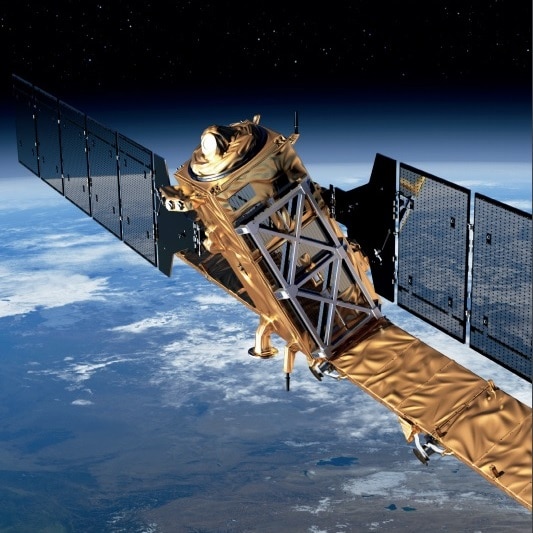
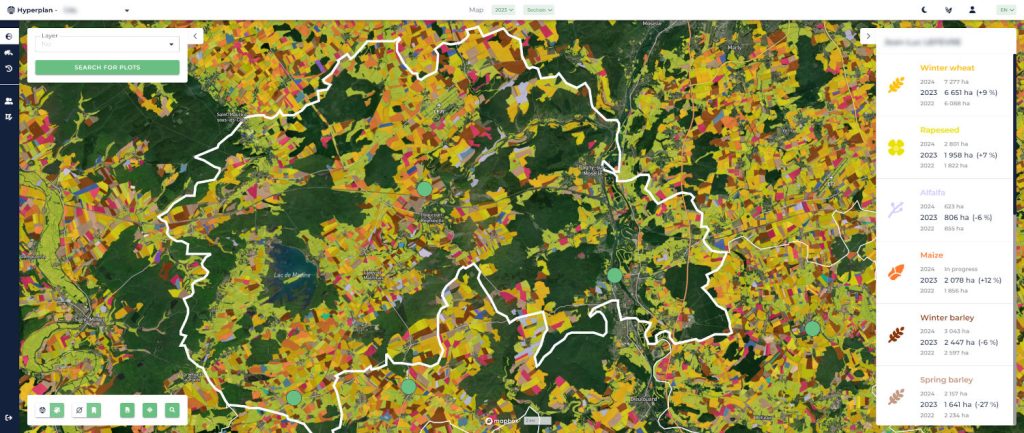
The Hyperplan platform ingests satellite data about the crop canopy, weather and soils and combines this with crop yield models to anticipate supply volatility.

The service is proving popular with agri-input businesses as it allows their commercial and marketing teams to grow their portfolio of farmers, manage KPIs and respond quickly to opportunities created by changes in production.

Remi Banquet, Hyperplan's Chief Growth Officer
Volatility in agriculture means it is difficult to gain an objective assessment, says Remi Banquet, Hyperplan’s Chief Growth Officer.

Anticipating supply volatility

Rémi explains that there is considerable volatility in agricultural production, and it is difficult to gain an accurate and objective assessment of crop acreage, performance and potential yield. “With Hyperplan our clients can determine what is grown, where, the volume, and monitor the stage of maturity through the season.”

The company was co-founded in France in 2021 by three former McKinsey consultants, each with a decade of expertise in developing supply chain operations for agri-food businesses. They saw the commercial requirement for improved crop monitoring software that could provide predictive insights.

The company now has clients across France, Germany and Spain and is looking to enter the UK market.

It works with partners to optimise the crop models. In France, the company is working with ARVALIS, an applied research organisation that works across the value chain with cooperatives and input firms, as well as feed, food and non-food industries.

By combining ARVALIS’ agronomic expertise with Hyperplan’s deep knowledge on statistical modelling, Hyperplan is able to develop advanced hybrid models and optimise the information available from its satellite imagery.

Hyperplan_screenshot
A screenshot from Hyperplan

The system currently uses multispectral satellite imaging to identify the type of crop and monitor development of the crop canopy and vegetation cover. It has access to Meteo weather data and LUCAS Soil, Europe’s largest topsoil database, with real-time information made available through a single, easy to use platform.

The company is working collaboratively with its clients to collect ground truth data and verify the crop classification and yield estimates. 

Current multispectral imaging satellites have 10 to 20 spectral bands available, but future hyperspectral imaging will give access to 10 times more spectral bands, allowing a much more detailed analysis of the crop as Rémi explains:

“For corn we have just done some trials of 3D crop modelling using hyperspectral imaging looking at the potential for assessment of micro stages of maturity. This is really exciting as it will increase the precision of our predictions and also offers the opportunity for quality analysis models in the future.”

Originally Hyperplan was focussed on providing its customers with a collect forecast on their territory. However, the agri input businesses saw the potential of using its technology to offer greater insights at a field level, as this would enable them to offer farmers and growers more personalised services.

“Being able to provide a customised service is particularly important in the transition to regenerative farming, where there is a focus on effective rotations and improving productivity with fewer inputs,” Rémi continues.

“For the agribusinesses, it means that their reps are not going in cold. They have a sufficient level of knowledge to start engagement with the farmer, to have a proper discussion and fine-tune the response.

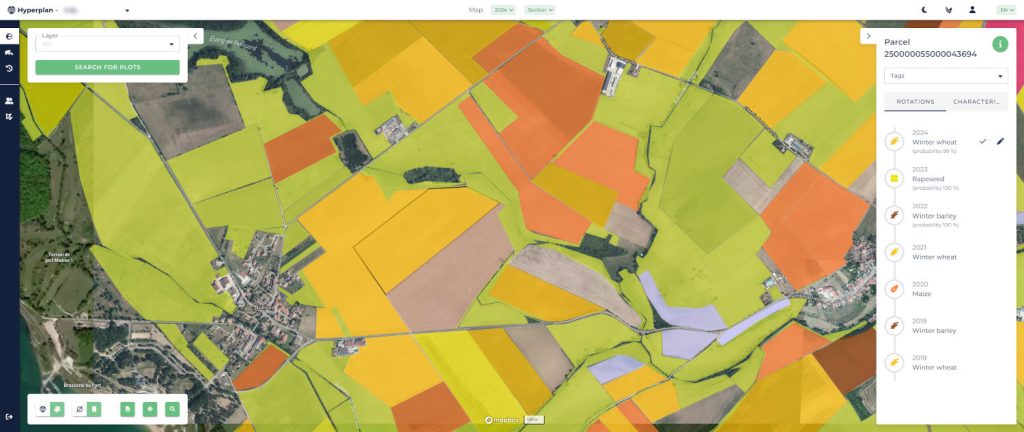
“They are trying to sell the most efficient products that will help the farmer gain better performance and improved margin, for example a particular variety of corn that grows well in their soils. This includes using historical data on rotations to look ahead to the next season and advise on suitability of follow-on crops.

“We are helping our clients to anticipate the market for the year, and this is invaluable as they are able to plan their budgets and marketing operations very early.”

Hyperplan_screenshot
A screenshot from Hyperplan

NatureMetrics and BigSis in Bloomberg Top 25

Meet the Network
Agri-TechE

The aim of the list was “to find the most interesting areas of innovation, the best ideas, the smartest founders.” The result was an eclectic mix of entrepreneurial companies.

“I’m truly thrilled by our inclusion as one of these 25 companies,” says BigSis Founder and CEO Glen Slade.

BigSis is tackling the problem of fruit flies in soft fruit. It has automated the rearing of sterile male insects that mate with wild females to reduce populations and prove affordable, chemical-free pest control.

In a project with Niab and Berry Gardens, the UK’s largest berry suppliers, the technology reduced the population of destructive “spotted wing drosophila” in a strawberry crop by 91%. Last year, BigSis raised £4.5 million, led by UK agritech fund Regenerate Ventures.

Glen Slade continues: “To have been selected from what was undoubtedly an impressive bank of entries is a great vote of confidence in the value of our work to reduce chemical insecticide usage and surely reflects BigSis’ unique and innovative approach to this problem.”

Fruit fly

NatureMetrics is a biodiversity-monitoring company that analyses traces of DNA found in soil and water samples to identify the organisms present.

The company says it is 10 times cheaper than traditional survey methods and identifies five times the number of species. Its platform is used by over 500 companies in 100 countries and it has recently launched a ‘nature intelligence platform’ to support impact reporting. The company has raised over £20 million in the last 18 months and won the recent Tesco Agri T-Jam, an ag-tech startup competition.

There are many exciting companies within the Agri-TechE ecosystem and ahead of the Agri-TechE REAP conference we experienced a big influx of new members.

The theme around ‘innovation in a time of extreme events’ resonated with many people and the benefits of being interconnected to tackle these challenges, has never been more apparent.

Being part of an ecosystem, sharing ideas with others from different perspectives and using networks to access skills, contacts and knowledge is vital for innovative companies, and among the benefits of joining Agri-TechE

To find out more information about membership do get in contact.

PES Technologies – REAP 2023 Start-Up Showcase

Meet the Network
Agri-TechE

PES Technologies – sniffing out biological soil health in-field with results in five minutes

An electronic nose to sniff out soil health that will deliver results to a farmer’s phone in five minutes is being developed by PES Technologies. The company is able to create an aroma fingerprint from gas released by microbes in the soil. These organisms are essential for breaking down organic matter and making nutrients available to plants, but current biological lab tests are expensive and take ten weeks to provide results.

Jim Bailey, CTO and Co-founder of PES Technologies, says: “From REAP, we are interested in meeting end-users – particularly agronomists – as well as collaborators.

Our electronic nose could potentially be trained on more indicators than the ones that we will offer on launch, and we are keen to explore what people are looking for.

We are happy to talk to companies that would want to fund a machine learning dataset for their own market niche and then utilise our hardware and machine learning support in that market.”

Andrej Porovic, CEO and co-Founder of PES Technologies, said, “This funding builds on the successful commercial trials PES carried out with large agronomy companies and farm businesses in 2022. It enables PES Technologies to complete product development, power product launch in 2024 and hire the key commercial and administrative staff needed to turn our potential into a commercial success story.”

Find out more at pestechnologies.com.

Start-Up Showcase 2023 - Jim Bailey, PES Technology (web)
Jim Bailey, PES Technology, presenting in the REAP Start-Up Showcase 2023
In-field use (web)
PES Technologies' 'electronic nose' (web)

REAP 2023 logo

REAP Conference 2023:
Adaptation Through Innovation; Beyond the Comfort Zone

Wednesday 8th November, 9:30 am – 6:30 pm
Rowley Mile Conference Centre, Newmarket

Surviving and thriving under increasingly extreme and unpredictable challenges is the theme of the 2023 REAP conference. To build a productive, profitable and sustainable agri-food industry, we must move away from the comfort zone and become open to the new opportunities that exist when we ‘stretch’.  Be a part of that future – bring yourself and your ideas to REAP.

reapconference.co.uk

HerdVision – REAP 2023 Start-Up Showcase

Meet the Network
Agri-TechE

HerdVision brings body condition scoring to DairyComp

HerdVision, a robust camera system for objective body condition and mobility scoring, will soon be integrated into the dairy management software system DairyComp, enabling real-time health updates each time a cow exits the parlour.

Matthew Dobbs, co-founder of AgSenze and HerdVision says: “Body condition scoring is a key indicator of health and fertility in dairy cows, and it is often based on subjective visual observations.

“With HerdVision the camera system can be retrofitted on the parlour or cattle race and provides 2D and 3D imaging of the animal. This enables body condition to be scored and lameness or other injuries to be detected.

“The information is synced automatically with the herd management system and made available through an app. This enables timely interventions, such as a feed supplement or health inspection, to catch a potential problem early.”

HerdVision has recently gained Innovate UK funding to further develop its body weight algorithm, and will be able to assess the bodyweight of calves through to adult animals, simply by passing under the camera.

The company has just closed a Series A funding round with strategic and institutional investors and is looking for further commercial partnerships and end users.

Find out more at https://herd.vision.

Start-Up Showcase 2023 - Matthew Dobbs, HerdVision (web)
Matthew Dobbs, HerdVision, presenting in the REAP Start-Up Showcase 2023
HerdVision Screenshot
HerdVision in use

REAP 2023 logo

REAP Conference 2023:
Adaptation Through Innovation; Beyond the Comfort Zone

Wednesday 8th November, 9:30 am – 6:30 pm
Rowley Mile Conference Centre, Newmarket

Surviving and thriving under increasingly extreme and unpredictable challenges is the theme of the 2023 REAP conference. To build a productive, profitable and sustainable agri-food industry, we must move away from the comfort zone and become open to the new opportunities that exist when we ‘stretch’.  Be a part of that future – bring yourself and your ideas to REAP.

reapconference.co.uk

Agtelligence – REAP 2023 Start-Up Showcase

Meet the Network
Agri-TechE

Agtelligence to provide financial institutes with a ‘sustainability rating’ for arable land

Providing evidence of best environmental practice ‘when the computer decides’ is currently difficult to do for farmers. A new tool, ‘FarmScore’, from Agtelligence aims to distil this complexity into a simple score that can be used by banks, financial institutes, and funding agencies to quickly benchmark progress against sustainability metrics.

Nima Eskandari, Chief Executive Officer at Agtelligence, says:

“Many insurance companies currently reduce premiums for farms with additional security against theft; FarmScore would provide evidence of de-risking natural assets. We are currently in discussion with financial institutes about how they could better support farmers that have a good score. It could be a virtuous circle.”

Agtelligence was recently awarded funding through the UK Space Agency and will be showcasing FarmScore in the UK pavilion at COP28.

Find out more at www.agtelligence.space.

Start-Up Showcase 2023 - Nima Eskandari, Agtelligence (web)
Nima Eskandari, Agtelligence, presenting in the REAP Start-Up Showcase 2023

Screenshots of FarmScore:

Agtelligence FarmScore screenshot

REAP 2023 logo

REAP Conference 2023:
Adaptation Through Innovation; Beyond the Comfort Zone

Wednesday 8th November, 9:30 am – 6:30 pm
Rowley Mile Conference Centre, Newmarket

Surviving and thriving under increasingly extreme and unpredictable challenges is the theme of the 2023 REAP conference. To build a productive, profitable and sustainable agri-food industry, we must move away from the comfort zone and become open to the new opportunities that exist when we ‘stretch’.  Be a part of that future – bring yourself and your ideas to REAP.

reapconference.co.uk