Patenting, Trademarks, Copyright, Trade Secrets...
In the next installment of our micro-learning series, we’ll explore potential legal solutions to help you keep your ideas safe and sound.

Making the transition from research finding to business concept

Meet the Network
Agri-TechE
Image from TGAC
Image from TGAC

A major milestone in crop breeding was announced recently: researchers have made significant progress in unravelling the secrets of the complex wheat genome, which is five times the size of a human genome.

Stuart Catchpole is Business Development and Communications Manager for The Genome Analysis Centre (TGAC) which has played a key role in this work. Stuart is keen to assist the rapid adoption of this type of leading-edge science by the agricultural industry. As result he is one of the champions of the GROW agri-tech business plan competition which helps those with an exciting business concept stress test their ideas. We asked him about how he saw TGAC’s research supporting agri-tech. 

A genome contains all the genetic instructions for building and maintaining an organism and access to this knowledge will help wheat breeders accelerate their crop improvement programmes and researchers to discover genes for key traits such as yield, nutrient use and bread making quality. and TGAC is instrumental in making the genome ‘assembly’ (a type of reference model) available to researchers.


How is the research at TGAC relevant to agri-tech?

TGACResearchers at TGAC are interested in agri-tech for many reasons, but primarily the application of their science allows a response to key global challenges and presents many opportunities for industrial collaboration.

Researchers are interested in things like in-field phenotyping, precision farming, food security, crop breeding and the analysis of big data. In particular they have an interest in areas such as biomarker development, developing resistance traits, plant immunity investigation and breeding tools.

Some of our more enterprising scientists are also interested in development of cost effective sensors and the monitoring of crops provides great opportunities for us to use our experience of analysing complex data.


Do you have any current projects in the institute that would be of interest to the agri-tech community?

Early collaborations, particularly with end-users, are essential for the further development of technologies but the following will be of interest to farmers and breeders:

  • Air-seq – a surveillance method to identify microbes present in the air through continuous monitoring of air samples and sequencing the material collected.
  • CropQuant – ‘The Next Generation Crop Monitoring Workstation for Precision Agriculture’
  • Seed Germination image analysis.


What support does TGAC give to potential entrepreneurs?

We provide our staff with mentorship, as well as support for business plan writing and market research. We also invest to provide Intellectual property protection and training of staff and help to find funding.


If researchers want to get involved with GROW how would you recommend they proceed?

Details of GROW are on the Agri-TechE website but ideally researchers at TGAC would come to us at the KEC Office as we are able to offer support and structure an application so that it answers the right questions and is targeted towards the right audience.


Are there any particular projects that you would like to highlight?

We have several impressive collaborations where we are working with breeders to identify disease resistance and yield enhancing genes. We are also working with Syngenta to develop a seed germination analysis platform.

So far most of our projects are at Technological Readiness Level 1-4 (where the technology has been validated in the lab). We will need to invest further in their development to get them to become viable technologies / spinouts.


GROW - The UK

Entomics are lord of the flies at AgriGate

Meet the Network
Agri-TechE

Entomics logo webOne industry’s food waste is a raw material for another. Cambridge start-up Entomics thinks it has found an interesting and innovative way to convert waste into valuable compounds using black soldier flies (Hermetia illucens).

Supported by the Agri-TechE network it has secured a trial site at the new AgriGate Research Hub managed by Niab at Hasse Fen to scale-up its technology. (more…)

Warning! Stealth slugs are coming!

Meet the Network
Agri-TechE

Ian Bedford, JICAccording to Dr Ian Bedford, an entomologist at the John Innes Centre, slugs are not only a nuisance, but they can be “quite a dangerous pest”.


He substantiates his rather bold statement by explaining: “Slugs can carry a host of harmful bacteria. This could include strains of E.Coli which have been shown to grow on their mucus; they can also be a host to parasites that live within the slug’s body. One of these is the heart worm parasite that can infest mammals such as dogs and foxes. If ingested, the heart of the infested animal becomes full of worms which can be fatal if left untreated.”

Adding to the gardener’s plight, the non-indigenous Spanish slug takes Dr Bedford’s obvious concern to another level. “I first noticed these slugs on my lawn and in my vegetable garden in 2012. They were different to our British slugs – growing much bigger, to as long as 16cm; they fed in packs, unlike our lone-feeding indigenous species; their diet was more diverse, including their voracious consumption of potato and onion tops, as well as dog faeces and dead animals.

In the spring of 2013 we found the slugs eating the tops of daffodils! “From the reports we’ve received this year and our own observations, it appears that Spanish slugs have been more prevalent during 2015 than in 2013, but less of a problem than in 2014 and 2012.

Although we’re not sure of the reason(s) for this, we’re assuming that it relates to a combination of unfavourable weather conditions and the fact that many people affected with Spanish slugs will have been reducing populations by collecting and destroying them. For example, I was collecting 30-50 each day from my garden during June/July, but this had reduced to less than 10 by Autumn.”

The Spanish slug is also much slimier than British species, he adds, which makes them very resilient to hot, dry weather, as well as some control options. This species is also a very prolific breeder, laying up to 400 eggs in its one year lifespan, compared to around 200 eggs per year by our native slugs.

Young Spanish slugs on leeks

According to Dr Bedford there are two Spanish species – Arion vulgaris, the Spanish slug, and Arion flagellus, the Spanish Stealth Slug, with the latter being less aggressive. The areas most affected by these invasive pests are East Anglia, the New Forest and the south east of England, with the Stealth Slug being more regularly sited in the west of England and up into Scotland.

Dr Bedford also points out that it is difficult to determine how they first arrived on our shores: “We can’t be sure how they first arrived here, although it is likely that individuals or eggs came across from Europe in the pots of imported plants.

“Their subsequent spread throughout the eastern counties could again be linked to the movement of plants as well as being through natural dispersals from the original outbreak(s). Along with the large number of eggs they produce during their lifetime, they can cover quite large distances when searching for suitable habitats.” He feels very strongly that home gardeners have an obligation to control this growing menace.

“In Norway the Spanish slug has become a huge problem over the 25 years since it was first identified in the country; if we don’t try and control its spread in the UK, it could soon become a serious problem to commercial crops as well as our home gardens.”

For this reason he has coordinated the setting up of the website slugwatch.co.uk, and is encouraging gardeners – and farmers – to register the location of any potential sightings. Primarily outbreaks of the Spanish slug can be identified by their behaviour and the huge numbers that can be seen (often many hundreds within a medium sized garden). “They seem to have a passion for meat and are strongly attracted to rabbit-flavoured cat or dog food,” says Dr Bedford.

“I suggest placing a large plastic drink bottle in the garden, containing a dollop of rabbit-flavoured cat food, to watch how the slugs react to it. Once you’ve caught some slugs you could then go onto the Slugwatch website to check what species you have.”

The control options are limited for Spanish slugs, so for home garden infestations, Dr Bedford recommends picking them up with gloved hands and drowning them in a bucket of soapy water overnight. Household bleach could also be used to sterilise the bucket before the contents are tipped into a hole in the soil and buried.

Spanish slug
A Spanish slug on a tomato

On no account, he says, should you cut them in half, nor squash them because of the risk of passing on the parasites to pets and other wildlife. Metaldehyde and Ferric phosphate-based slug pellets are both available for use against slugs and will control the Spanish slugs.

However, this is often impractical when large numbers of slugs are present. On a more positive note, of the 34 species of native slugs, only around six are regarded as problematic to growers. Dr Bedford comments: “Before the Spanish slug appeared, the grey field slug Deroceras reticulatum – mainly an issue for farmers – the Black Garden slug Arion hortensis – which attacks potatoes – and the Keeled Milax species of slugs – which feed on bulbs and tubers – were the most notorious species.

“The options for control of our native species, and possibly very small Spanish slugs of around 1g in weight, do include a biological option: Nemaslug, which kills slugs via microscopic eelworms specifically bred to kill just slugs and, if small enough, snails.”

Slug and other pest control was discussed at ‘The Good, the Bad and the (B)ugly’ Pollinator on 19th January at the Norwich Research Park by Dr Jonathan Clarke of the John Innes Centre, together with talks from Uta Paszkowski of the Department of Plant Sciences at University of Cambridge, and Tom Wood of Niab.

Ideas gained in Cambridge lead to ‘Uber’ aerial imaging business

Meet the Network
Agri-TechE

Max Bruner of Marvx to speak at Agri-TechE Remsens SIGA chance conversation in Cambridge has led to the development of a new aerial imaging service for agriculture that now supports farmers across the USA. (more…)
AgriGate ‘open for business’ says Minister for Life Sciences

Meet the Network
Agri-TechE
Emma Garfield with George Freeman at the AgriGate launch
Emma Garfield of G’s with George Freeman MP

Minister for Life Sciences, George Freeman MP, came to Cambridgeshire during Agri-TechE Week to officially open the new Eastern AgriGate Research Hub, at Hasse Fen near Soham.

The first of its kind in the UK, the hub will carry out commercial scale research to increase productivity and reduce crop wastage before produce reaches the processor and retailer.

George Freeman said: “I can’t tell you what a pleasure it is to be here to open this regional innovation centre, which is taking science out into the field.

Lucy Frazer,MP for South East Cambridgeshire; George Freeman MP; and Tina Barsby, CEO of Niab

“Since I persuaded the government to establish the Agri-TechE Strategy it has moved the sector up the agenda. I am impressed with the pace and scale in which Agri-TechE has responded to the opportunity that the strategy has created.

“We are all committed to reducing waste in the food chain and this is a win-win for both producers and consumers. This initiative needs to be underpinned by science and the ‘green tractor’ icon is a symbol that consumers can trust.

“It is incredibly exciting to see small businesses such as Kisan Hub pioneering new solutions and I hope it’s well on the way to becoming the ‘Google of agri-tech.’

“We need to inspire ambition and G’s Global is a good example of this with its junior apprentice scheme.

“Additionally the innovation being developed here has the potential to form the basis of a strong export business, and we need to take these products out into the world.”

Key attendees at the Agrigate launch

Andrew Burgess (Head of Agriculture, Produce World); Mark Pendlington (Chairman, New Anglia Local Enterprise Partnership and Group Director, Anglian Water); Tina Barsby (CEO Niab); Giles Barker (COO and co-Founder, KisanHub); Ben Tam (Innovation Programme Manager, Anglian Water);Belinda Clarke (Director, Agri-Tech); George Freeman MP; Martin Lutman (Programme Manager, Eastern Agri-TechE Growth Initiative); Mark Reeve (Chairman, Greater Cambridge / Greater Peterborough Local Enterprise Partnership) Effie Mutasa-Göttgens (Project Manager, AgriGate [Niab])

It’s a kinda MAGIC wheat breeding technique

Meet the Network
Research Digest
Agri-TechE

MAGIC diagram

Use of multiple parents has enabled Niab to produce pre-breeding lines of wheat that perform better for a range of traits including yield and disease resistance than any of the eight starting parents.

The new technique – Multi-parent Advanced Generation InterCross (MAGIC) – combines high diversity (from multiple parents) with high recombination (from multiple rounds of intercrossing).

One of the real advantages of MAGIC for breeding is that new genetic combinations are created from the re-shuffling of the starting varieties.

The Niab Elite MAGIC population has eight winter wheat pre-breeding lines as its founders (starting point). However, the lines developed from repeated inter-crossing of these lines perform better than any of the eight founders. This is the result of new genetic combinations, known as “transgressive segregation”.

It is also possible to assign these genetic effects to known positions with high precision, thereby speeding up their characterisation and exploitation.

Dr Alison Bentley, Programme Leader at the National Institute of Agricultural Botany (Niab) in Cambridge says: “Wheat breeding has led to constant rates of genetic improvement over time to ensure that production maintained supply.

“However, the challenge of securing future food security now looms large and there are signs that wheat yields are plateauing in Europe and elsewhere around the world despite increases in genetic potential (a phenomenon known as the “yield gap”).

“Added to this is the threat to arable farming caused by unstable seasonal conditions and there is pressure on farmers to reduce their environmental footprint by reducing agrochemical inputs.

“These factors, and many others, combine to present a huge challenge to wheat breeding and production. Driving genetic improvement has always been the focus of breeding, but new strategies are needed to accelerate this more than ever before.”

More information MAGIC Populations in wheat


Wheat banner


Improving on-farm decision making at REAP, 11 Nov 2015

Meet the Network
Agri-TechE

“We have seen real benefits with many of the technologies we’ve adopted, ” says Andrew Francis farm manager of Elveden Estates. He is one of the farmers on the Producers’ Panel at REAP (11 November) talking openly about the benefits and limitations of the technologies they have deployed, providing an excellence overview of the issues facing this complex industry.

Francis thinks that extracting better information from data to support on-farm decision making is where the future of farming should be heading.

“Vision guidance laser and hoes have increased the speed of weeding, along with a massive reduction in labour costs,” he continues.

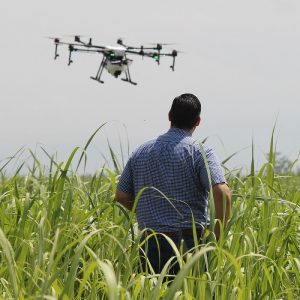
“Flying drones give another dimension to crop monitoring – being able to access soil quality and check on crop growth from my office is a fantastic development.”

The 10,000 acre Elveden Estate grows vegetables including potatoes, onions, carrots and parsnips and cereals such as rye, barley and wheat. It sells its produce to McCains, Pepsico, and Sainsbury’s and has its own potato brand. Elevden is part of the LEAF network and promotes environmentally responsible farming.

The Producers’ Panel, supported by Rothamsted Centre for Research and Enterprise (RoCRE), is followed by a panel of technologists who will respond to the points raised by the farmers and also discuss the new technologies on the horizon.

More information about REAP 

Sensors to provide early warning of disease

Meet the Network
Agri-TechE

Andy Thurman of OmnisenseAnimals suffering from an illness change their behaviour. A sick cow might lie down in a different area, split itself away from the herd or change its eating pattern. A new technology which detects these changes will make it easier for farmers to identify the early stages of disease. (more…)

Advanced electronics will boost farmers’ incomes says speaker at Pollinator

Meet the Network
Agri-TechE

Technology in the field during harvestReducing downtime on farm equipment and improving resource utilisation are two areas where telematics is making an impact on agricultural production – but there is considerable scope for advanced engineering to make a greater contribution.  A speed dating format at the next Pollinator will ensure all participants get maximum value from the meeting.

One of the speakers, Ben Turner of Ben Burgess, a family run business that has been supplying the agricultural community with machinery since 1931, says that intelligent use of data to increase resource efficiency is now a key driver in the industry as it maximises crop yield and farm income and this is just one of the many opportunities.

“We have been investing in the latest technology to add value to the machinery we supply.

Telematics reduces downtime

“Our role has changed quite a lot over recent years. Originally we’d sell a machine and offer a maintenance package, servicing the vehicles when the farmer contacted us. Now we are able to be more proactive and prevent breakdowns, this is achieved through telematics, where information about the equipment is sent electronically so we can monitor its performance remotely.

“Now I can sit at my computer in the office reviewing the machinery we’ve sold hard at work in the fields. I know its exact location, the fuel in the tank, what job it’s doing and how much of the engine is being utilised.

“The farm manager can also access this, giving them invaluable information about asset usage. For example, tractors are serviced on hours worked rather than miles, when the engine is switched on the timer starts. If the tractor’s static for 20% of that time then it is not only wasting diesel but is being serviced too often.”Ben Turner

The software within the tractor can determine any potential problems, automatically generating an email alert if an issue is detected.

“What’s great about telematics is we know the problem without looking at the tractor,” says Ben. “I can order parts or send out a technician who knows exactly how to fix it. If it’s not vital, such as a blocked air filter, the next time one of my guys is in the area, they can pop in and replace it, preventing a problem from developing.”

For software issues the Ben Burgess service team can remotely access the control panel in the tractor to solve the problem with less inconvenience for the farmer.

Variable rate application attracting interest

GPS guidance systems have become so advanced that a tractor can self-steer to within a centimetre of accuracy, allowing the driver to miss a row and then back-fill, eliminating the need for a 3-point turn. Using the same tramlines reduces soil compaction and cuts down on overlap when sowing or applying fertiliser.

Ben explains “Most farming equipment now monitors something. A combine harvester records the amount of grain being harvested every second and when analysed with the location data, the farmer knows exactly where his field is most fertile. When drilling seed the next year, this information can be used to increase or decrease seed rate, making the most of the land and resources.”

Variable rate application can also be used for fertilisers and herbicides. New technology, only available in the last 6 months, can wirelessly programme the tractor with specific distribution instructions for each product, rather than manual entry.

Ben sees opportunities for extending this functionality to new areas and thinks that irrigation should be the focus for future developments in precision farming.

Precision sensors growth area

“Water is becoming increasingly scarce, so soil moisture content will be vital for maintaining crop yield. High sensitivity ground water sensors that measure the water present in soil to a depth of 100cm and send this information wirelessly to the farmer would help improve efficiency.

“Wind speed and direction can affect herbicide application. By using mini weather systems located in the field the farm manager would be able to make decisions about spray timing from the office, rather than checking the fields.”

Speed dating format to Pollinator

The Engineering, Electronics and Software Pollinator will have presentations from Ben and Andy Thurman, CEO of Omnisense. Andy will be talking about a new technology that detects early changes in livestock behaviour making it easier for farmers to identify the early stages of disease.

After these short talks that will help stimulate discussion, the meeting takes on a ‘speed-dating’ format allowing the delegates to locate others with a mutual interest. Belinda Clarke, Director of Agri-TechE says “We are bringing together technologists and entrepreneurs with new innovations and solutions to try and solve issues not currently addressed by existing technologies.”

You can read more about the discussions held at the Pollinator in the full report, which is available free to members on our Publications page.

A soil improver that enhances both nutrition and hydration

Meet the Network
Agri-TechE

Paul Smith, head of business development from Biomation Biomation have developed a new approach to soil improvement that keeps crops well hydrated and nourished.

Paul Smith, head of business development from Biomation says: “Our product combines nutrient rich organic matter with a water absorbing polymer that also has soil binding properties. It is so good, plants can grow in builders sand.” (more…)

Forage legumes work for man and beast

Meet the Network
Agri-TechE
Ian Wilkinson, Managing Director of Cotswold Seeds
Ian Wilkinson

A 47% increase in net yield can be achieved by increasing the number of species in temporary grassland, according to Ian Wilkinson, Managing Director of Cotswold Seeds Ltd, a speaker at the June Pollinator. Extensive trials across Europe have revealed that forage legumes grown in a ley can increase the nutrient value of the sward, fix nitrogen to give an uplift to subsequent crops and provide invaluable food and shelter for insect pollinators. (more…)

Collaboration helping to provide crop protection answers

Meet the Network
Agri-TechE

The need for new thinking in the development of pest control is becoming more urgent as the EU is withdrawing many of the mainstay chemicals from usage. Natural products generated by microorganisms as part of a defence mechanism may provide an alternative to synthetic agrochemicals, and this is an area where collaborative research can fast-track new strategies. (more…)