Patenting, Trademarks, Copyright, Trade Secrets...
In the next installment of our micro-learning series, we’ll explore potential legal solutions to help you keep your ideas safe and sound.

Fogging improves packhouse hygiene and controls contamination

Meet the Network
Agri-TechE

Ozo InnovationsReducing microbes and pathogens on fresh produce improves product safety and extends shelf life of fresh produce. Ozo Innovations has demonstrated it can provide a significant improvement over existing wash systems using electrolysed water.

It will be showcasing some of its latest technology within the REAP 2017 technology exhibition.

Ozo has recently launched eloclear, an innovative way to improve packhouse hygiene.

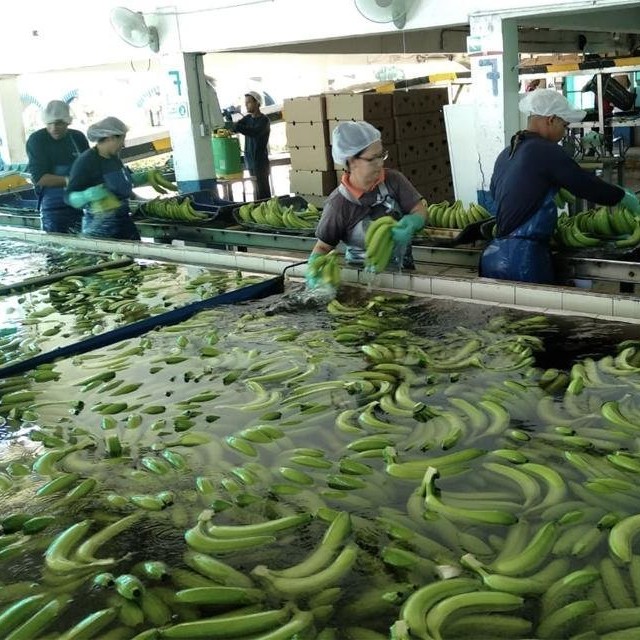
Rowan Gardner, CEO of Ozo Innovations, says: “Packhouses are large and often difficult places to keep clean. Moulds, yeasts and bacteria can multiply on walls, floors, air handling surfaces and cold stores. As a result produce delivered from the field can become cross contaminated during storage and packing.

eloclear from Ozo InnovationsOzo’s solution eloclear is a professional food industry biocide for use as a cleaning solution and a terminal disinfectant.

Regularly fogging with eloclear kills bacteria, viruses, yeast and mould helping to reduce spoilage and waste, increase produce shelf. life.

Ozo InnovationsTo help evaluate the impact of the eloclear fogging process, Ozo Innovations is working with a number of fresh produce packing companies in a range of environments.

Rowan continues: “This is the first stage of a significant programme of research, we plan to characterise our results using advanced metagenomic profiling of microflora on fresh produce and in packhouse environments.”

Find out more about what Ozo Innovation will be showcasing at the REAP technology exhibition click here.

REAP Conference 2017

Images from ozoinnovations.com

Automation as an alternative to chemicals

Meet the Network
Agri-TechE

Philip Garford, Garford Farm Machinery“Weed control has certainly been changing in the past few years,” says Philip Garford, Managing Director of Garford Farm Machinery. He is set to speak at Agri-Tech’s annual REAP conference in November. We caught up with Philip for his views on crop management, advancing automation and Garford Farm Machinery.

Peterborough-based ‘Garford Farm Machinery’ develops, manufactures and distributes high quality row equipment products to the UK and world agricultural market.

Q: The theme for REAP 2017 is ‘Today’s Knowledge Meets Tomorrow’s Technology’. What is a current challenge in agriculture that Garford Farm Machinery is helping to overcome?

A: A big challenge in agriculture at the moment is the changing situation with crop management. The herbicides that were available are becoming less prevalent; chemicals have been taken away whenever there has been any risk of them getting into water courses or the food chain. There’s also been build-up in resistance in some weeds to specific chemicals.

We sell equipment to vegetable growers and traditional row crop growers, specialising in sugar beet and maize, for example. It is clear that huge problems have arisen with blackgrass, for which there is no reliable chemical answer for – engineering can be an alternative in weed control.

To combat blackgrass we clean up between crop rows with our Robocrop Inter-Row Weeder. Garford is finding that a number of customers are now considering growing their conventional cereal crops on wider row widths to enable inter-row spraying or inter-row cultivation. Cereal crops are just an example, as other crops such as the likes of oil seed rape can also be controlled with wider width.

Q: The Garford Robocrop InRow Weeder distinguishes weeds from the individual plants – how does this work?

Robocrop InRow eRotor 20 rowA: Our InRow Weeder uses video image analysis techniques to mechanically remove weeds from the inter-row and the crop row between the plants. It can be used on most crops that are planted with regular plant and row spacing, such as lettuce and celery.

All of our camera guidance systems utilise colour recognition and grid matching programmes. A typical cereal crop is grown in rows and is generally green, so you can see a concentration of green pixels in the image relating to where the crop rows are.

We can tell the InRow Weeder that plants will be spaced every 30 centimetres along the row, and it will look for concentrations of the pixels within that spacing. It organises the grid to lock onto them and the implement is hydraulically guarded, to ensure that it stays between the crop rows. If there is a discrepancy, the grid makes an adjustment accordingly. The Weeder uses that information to rotate the weeding rotor around the plants, cutting all of the weeds.

Q: As agri-tech continues to advance, could you see a future where farmers rely on fully autonomous machines or robotics?

Robocrop Eliminator (23)A: We deal with variables such as weed types, weed growth stages, soil type, soil moisture levels and crop growth stage. Although machine learning is coming on leaps and bounds, we’re a long way from a machine that will be able to recognise all these factors and adjust to keep working at 100% without error.

We are currently developing autonomous and robotic machines that have good output, but still have a human operator. It is important that we attend to the fine detail, ensuring that everything is working correctly – our customers require the machines to cover around 5 hectares per hour, so it is high value work.

You also have to think about machines moving from field to field, which requires going out on the road. There have been advances with driverless cars of course, and Case New Holland has an autonomous tractor buzzing away in fields, so one day it could be a possibility.

For now, we are focused on developing machine vision and machine learning. Once we get to the stage where we feel we have 99% reliability, then we can perhaps talk about being a fully autonomous operation. At the moment we can refer to them as robotic machines that increase performance and enable better crop husbandry.

Q: Before the machine vision weeding, Garford started out with a skew bar topper for sugar beet harvesters…

Robocrop Inrow Weeder at work aerial shotA: We designed and manufactured our own sugar beet harvester, which was sold through the late 1980’s, 1990’s and into the 2000’s. The skew bar topper was designed to remove the leaves from the sugar beet, without taking the top off the sugar beet itself, enabling farmers to collect higher tonnage from the crop.

The harvester was unique in not only having skew bar toppers, but also with the ‘Spiroll Cleaning System’, which was used for cleaning the sugar beet. It was very good at taking clods of soil and stones from the lifted crop; this was a big problem for growers in north Norfolk, so the machine quickly took off.

Q: Were you always drawn to the machinery side of things?

A: I started out farming on the Garford family farm. My father had a history in farm machinery; he formed a company to manufacture sugar beet harvesters back in the 1950’s. The company was then sold out, and he set up his own farm.

When he had three sons, he started to diversify again to farm machinery back in the 1970’s. We specialised in hoeing and bran spraying equipment, but still operated under the farm banner.

So yes, all of us – my father, my two brothers and I – were always very interested in machinery. Nothing on the farm would remain as it was for long; we were always changing things and coming up with ideas to make them work better.

To learn more about Garford Farm Machinery, please click here. For further details on the REAP 2017 conference, please click here.

REAP Conference 2017

Reward farmers for building soil fertility, says Andrew Blenkiron

Meet the Network
Agri-TechE

Reward farmers for Natural Capital, says Andrew Blenkiron ahead of Agri-Tech“We need to go back to how my grandfather farmed, but using modern science,” says Andrew Blenkiron, Estate Director at Euston Estate, Suffolk. He is scheduled to speak at this year’s REAP conference on 7 November, which will focus on how best practice can be enhanced by emerging agri-tech.

“To run environmental schemes is quite a challenge to fit in with the farming side of things, so there should be a reward or enhanced compensation” says Andrew. “However, the complexity of how we are going to calculate that is quite a challenge.”

Natural Capital – which includes the Earth’s stock of water, land and air – applies economic thinking to the use of natural resources. Andrew believes it is critical to manage these assets effectively or lose the benefits they provide to the rural economy. Euston Estate has preserved its natural assets, such as woodland alongside its farming operations.

Andrew oversees all aspects of the 11,000 acre estate, including farming, let land, diverse enterprises, the historic house, shoot and woodland.

Approximately 6,260 acres are farmed, on which wheat, barley, oil seed rape, forage maize and sugar beet are grown. The land is also used for free-range pig and poultry farming, alongside potato, carrot and parsnip production by agreement with other producers.


Arguing the economic benefit

Andrew believes that it is important for long-term soil security to put organic material back on the land, taking the opportunity to build up fertility rather than remove it with the harvest. However, this can be difficult to justify from an economic perspective.

He says: “We need to enhance the utilisation of green manures, catch crops and the integration of more organic material. We are doing that through our various livestock enterprises. Also our anaerobic digestion plant produces a vast amount of organic material on an annual basis.

“I believe that over the last 40 to 50 years, we have become overly reliant on artificial inputs – it’s too easy to get a bag of fertiliser or a can of spray. We’ve got a lot more evidence to demonstrate that sustainable rotations, like my grandfather used to do, is a more sustainable way to boost fertility.

“The biggest challenge that Andrew faces at the moment, is working out the economic benefits of spreading 30,000 tonnes of organic material from the anaerobic digester, compared to the cost of artificial applications. There is maybe no economic gain if you look at it on a straight costings basis, but I know that the organic material will have the longer-term benefit on the soil health.”

Smarter use of water

Euston Estate is making the most of the latest technology to ensure that water is used economically. The irrigation reels have their own build-in sim card, so that they can be controlled remotely by mobile phone apps. Water is applied according to soil moisture probes and accurate weather forecasts. Looking to the future, Andrew already has some ideas of where he would like to see the agri-tech develop.

He says: “We could potentially have farmers’ extraction pumps linked to the Environment Agency controlled gauging stations. If the Environment Agency gauging station on our river had a telemetric link through to their central computers.

“These could tell our pumps when to switch on, when rivers go to a certain level. It could equally tell them when to switch off.

At the moment, somebody comes to the river gauging station and manually takes the information to their office. We then receive a phone call or an email, and we have to go down and switch our pumps on and off.

Sustainability criteria for food imports

“The days of cheap food are not over in the short to medium term,” says Andrew. “As the world population continues to increase, farmers are doing an incredible job, meeting and even exceeding demand.”

However, the Arab Spring of 2008 demonstrated that a rise in grain prices can lead to significant political instability; there is a realisation that there cannot always be a guarantee of cheap food. Andrew believes sustainability should be rewarded.

He says: “We need to have some criteria for the food imported into the UK; it should be measured for its sustainability versus how we can do it here. There are examples from around the world where they are moving vast amounts of water, in the form of fresh produce e.g. tomatoes around the world. In effect we’re moving water from climates that aren’t sustainable in terms of the abstraction of that water from their aquifers. It’s being moved across the world to countries that have enough water.

“The opportunity is here, but the political will isn’t – if we want to continue to provide cheap food. This has either to be through subsidised production in the UK, or through continuing to harvest the natural resources of other countries.

“It can be argued that we may as well take advantage, if other countries wish to destroy their environment and harvest their natural resource – we will still have a vast natural capital that we can call on when we desperately need to feed our nation.”

For further details on the REAP conference, please click here.

Agri-TechE REAP Conference 2017

Yagro connects farmers and suppliers with ease

Meet the Network
Agri-TechE

Purchasing farm inputs can be time consuming, as the options are not always clear for securing the best deal. Yagro solves this problem by connecting farms directly with their suppliers through cutting edge technology, making farm business easier and more profitable.

Farm input purchasing, made easy

“Yagro evolved from dozens of conversations with farms frustrated with the current way of doing their purchasing,” says Dan Jolly, Co-Founder of the farm input purchasing platform. “To procure effectively, farmers have to spend a lot of time shopping around and negotiating with suppliers. They would rather spend their time on what matters – farming the land.”

Based at Eagle Labs in Cambridge, Yagro has also developed the platform so that suppliers can quote for alternative products and alternative delivery dates, giving farmers greater visibility.

Yagro co-founders – Richard Sears (L), Gareth Davies (C) and Daniel Jolly (R)

Dan comments: “Yagro allows farms and suppliers to do business directly and transparently through a confidential digital connection, giving choice and control to the key decision makers in the process, allowing both parties to find the best deal.

“So a farmer gets access to a range of options when he needs critical farm inputs, leaving him firmly in control of what and when to buy. And it’s all made available in an intuitive, simple interface which our users love.”

Meeting Prince Charles

Yagro has been in use since March 2016, and indicative of its success, attracted the interest of the Prince Charles.

Dan comments: “It was fun [to meet Prince Charles]! We met him as part of a broader technology showcase associated with Barclays, where we have office space. Prince Charles clearly had a personal interest in our work, given the farming context: indeed he was “riveted” by the concept!

“We discussed the challenges and frustrations of farms today, which he knows well, and how technology can be of huge help to them and broader rural business.”

What does the future hold? 

So will Yagro now be looking at the overseas market?
“We’ve been delighted to receive a lot of enquiries from overseas, so we’re clearly onto something with much wider application!” says Dan. “Right now however, we’re focused on giving British farms the best possible tool for them.”

Yagro has attended and participated in several Agri-TechE events, exhibiting their product at the REAP 2016 conference. Dan believes that the company has benefited from membership of the agri-tech organisation.

“It’s always a pleasure to attend Agri-Tech’s events where possible, as it takes us outside our world of procurement technology and allows us to be inspired by a whole range of other innovators right across the farm,” says Dan. “It tends to give us a much broader view of the industry, as well as challenging everyone to keep thinking of how the industry will modernise over 10 years or more.”

To learn more about Yagro, please visit their website: yagro.com

Aspuna is breaking down barriers for African cassava farmers

Meet the Network
Agri-TechE
Aspuna cassava nursery in cooperation with the National Agricultural Research Institute

Although cassava is an important part of the diet for 800 million people in Africa, shortage of equipment for processing has meant production has been unable to increase. To meet this need a social impact business, Aspuna Group is developing a cassava processing facility in The Gambia, to convert the raw material into starch and to reduce unemployment.

The company will be discussing its learning points at Agri-Tech’s ‘Exporting Agri-TechE to Sub-Saharan Africa’ event on 12 July 2017, geared towards businesses developing innovations in the mature UK and US markets, now looking to explore the Sub-Saharan market.

While Cassava can be eaten in its tuber form, it is highly perishable, making it impossible to transport over long distances. To make use of its versatility as a food and industrial product, cassava needs to be processed into starch and flour, increasing shelf life from barely 24 hours to up to 2 years.

Access to domestic and world markets

Apuna team with technical MoU Partner National Agricultural Research Institute
Apuna team with technical MoU Partner ‘National Agricultural Research Institute’

Maria-Yassin Jah, CEO of Aspuna Group, says that the company’s business model will help it overcome this problem: “We are currently building a 2,000 m2 factory to process fresh cassava into cassava starch, internationally known as tapioca.

“Aspuna Group’s social impact business model means that we are providing the country’s small holder farmers with access to both a domestic market and the world markets.

“Our processing activities will provide employment and training opportunities for Gambia’s rural youth, which has an unemployment rate of close to 40%.”

As the smallest country on the African mainland, Maria-Yassin believes that The Gambia works to their advantage; logistics are not as challenging, and the relatively good road infrastructure reduces transportation time from the factory to the port.

Aspuna gained support from the Judge Business School in Cambridge, and plans to set up a network of subsidiaries with links to markets in Europe and the United States. Research has also been carried out to assess Nigeria and Portugal as possible next locations.

Sub-Saharan opportunities

At the upcoming event, Aspuna will be joined by other entrepreneurs operating in the Sub-Saharan market and representatives from the UK Department for International Trade.

“We have a great line-up for this event, all offering first-hand advice on the Sub-Saharan market,” says Dr Belinda Clarke, Director of Agri-Tech. “Whether you would like to establish an initial foothold, grow overseas business activities or just to learn about a potential market opportunity, you are welcome to come along.”

For further information and registration details, please click here.

Food for thought at the Royal Norfolk Show

Meet the Network
Agri-TechE

Food is to be enjoyed, shared and valued and this year’s Royal Norfolk Show will be creating a strong link between food, farming and the countryside, according the recently appointed Show and Programmes Director Mark Nicholas.

He says: “There’s a lot to be really proud about: it is the UK’s largest two day agricultural show, it showcases the innovation of the region and it is a great tribute to what a good country show is all about.

Mark Nicholas, RNAA“Too much of our information these days comes from the virtual world and here we can offer an experience that is real and memorable.”

It is vital that the show is relevant and reflects current interests. To achieve this Mark has spent time talking to the various stakeholders and creating a vision for the show that reflects the role of the Royal Norfolk Agricultural Association (RNAA) as part of the fabric of Norfolk.

He says: “We have a strong membership base of 3500 people, directly connected to farming so the agricultural components have got to have substance. The ‘innovation and enterprise’ theme reflects this.

“There will be 700 businesses trading here at the show, and a significant number of them are state-of-the-art agricultural machinery suppliers, with equipment worth millions of pounds.

“At the Innovation Hub, hosted by Agri-TechE and supported by BBRO (British Beet Research Organisation), we are demonstrating how science and emerging technologies are addressing the big challenge of how to do more with less.

“This is particularly true for those farming in some of Norfolk’s environmentally sensitive locations, with a fragile ecosystem, decreasing soil and uncertain water supplies.”

Big Data applications for agriculture

“Improved data about all aspects of the environment is making it easier to measure the impacts of different cultivation techniques; particularly how to close the gap between potential and actual yields. We have experts in soil, water, canopy cover and data analysis on hand to demonstrate some of the latest techniques that are currently being trialled.”

Alongside that is the need to make the industry accessible and entertaining to as many visitors as possible. The show is doing this within the ‘food, farming and the countryside’ theme, where there are displays that encourage visitors to look at the bigger picture and to understand that farmed land has many purposes.potato yield model

Mark continues: “A particular highlight is the Broads Village that marks the creation of a new national park last year. It will bring to life the industries associated with the Broads. Particularly how sustainable approaches to agriculture are balancing the demands for leisure activities, wildlife, food production and clean water.

“To encourage the involvement of younger people, we have the Discovery Zone and expect 10,000 children to visit. All sorts of people are coming in to demonstrate and entertain.”

Celebrating food micro businesses

The celebration element is captured in the ‘arts’ theme, which provides a platform for the lively Norfolk arts scene and the food hall, which offers a selection of Norfolk’s finest produce.

“There are over 20 bands performing over the two days and the closing ceremony will include a 1,000 strong choir. Singers from community, church and school choirs have been practicing a specially composed piece for the finale. “Norfolk Show showcase local producers

The food hall features 80 Norfolk food and drink producers. Mark was keen that as many of the micro-businesses were represented as possible.

“We have been grateful for the support of HSBC which has subsidised the cost of attendance and as a result we have an exciting selection of start-up businesses in the food hall.”

Ideas Factory designed map

As always the grand ring is one of the crown jewels of the Show, it’s a great arena for showing and demonstrating. In terms of entertaining the main act is the King’s Troop Royal Horse Artillery who will be performing on both days of the Show for their only performance outside of London this year.

With too much to do in a single day, visitors are being helped to prepare with a programme that will be distributed within the Eastern Daily Press on Friday 16 June. It includes a map designed by students at the Norwich University of the Arts Ideas Factory. “It is a fantastic map that brings the show to life and illustrates in a succinct way the three themes,” says Mark.

The RNAA has put a lot of effort into designing a show for Norfolk to be proud of.

As Mark concludes: “We are saying to people: ‘it’s your show; come and display, exhibit, explain, entertain and most of all enjoy’. It promises to be the best day out for everyone.”

More information about the Innovation Hub can be found here.

“Show me you can make it happen,” says Rob Alston

Meet the Network
Agri-TechE

Rob Alston, Managing Director of Silfield, will be at the final of Agri-Tech’s GROW business plan competition

“I’m looking forward to GROW this year; it excites me to see something that could be the ‘next big thing’ in the industry, challenging the status quo,” says Robert Alston, MD of Silfield Ltd, Board Director at Anglia Farmers and Chair of AF Finance – an agricultural pooled collective investment scheme which provides cash flow management for farmers. On 19 June 2017, he will deliver expert insight on agri-tech investment at the final of Agri-Tech’s GROW business plan competition.

The GROW final will feature pitches from early-stage agri-entrepreneurs looking for their first break into the industry.  In addition to the judging panel, the audience of seasoned investors, potential partners, farmers and advisers will also have an opportunity to vote for the winner.

Family farming business ‘Silfield Ltd’ is based south of Norwich. Silfield produces wheat, barley, oilseed rape, peas and potatoes across 1700 acres. Silfield also has a Red Poll beef herd and has diversified into property management.

Experience in the City

“I worked in the City for 18 years, before coming home to the family business about three years ago,” says Rob. “It was good fun working in the City, but there was a lot of travelling involved. You come to a point where you say, am I going to do this for the rest of my career?

“We had a young family – two boys at the time – and we had the opportunity to bring them up on a farm in Norfolk, rather than in London. It was a no-brainer in that respect, for the quality of life for the family.”

Rob built up years of experience in corporate finance at the likes of Deutsche Bank, JP Morgan and NatWest before he managed the family farm ‘Silfield Ltd’ full-time. He is now a Board Director at Anglia Farmers and also the Chair of AF Finance, an agricultural pooled collective investment scheme.

Getting started

With the final of the GROW business plan competition upcoming, Rob is set to present an investor’s point of view to proceedings.

“I began work as a Trainee at NatWest, after graduating from the University of Reading,” says Rob. “NatWest had a two-year graduate scheme, with four six-month placements in business. So you experienced all the different areas and I undertook six months in the Agricultural Office.

Rob then worked at the Head Office in the Treasury Department and Global Markets, before moving into transaction banking. JP Morgan soon offered Rob an opportunity, resulting in a move to their Treasury team. Over eight years he worked his way up to Vice President of Treasury Services, before moving on to a Director position in Private Banking at UBS and then Director of Capital Markets and Treasury Solutions at Deutsche Bank.

Issues in agri-tech investment

Rob Alston, Managing Director of Silfield, will be at the final of Agri-Tech’s GROW business plan competitionWell acquainted with farming, Rob has a strong understanding of the issues in agri-tech investment.

He says: “There is a lot of interest and a huge wall of money looking for investment. Agri-tech has a strong future, with the demand for resources that are finite on the planet.

“However, there are a few issues. Everyone understands agri-tech is essential, but no one quite knows where to put their money – it’s such a broad topic. Some of the technologies out there are still unproven and there is too much that is unknown at this stage.

“It might be to increase water efficiency, and everyone goes ‘yes, yes that makes sense’, but there needs to be a strong business model to attract investment.”

What does Rob look for in an investment?

“I am encouraged by people who really understand the industry, can get on with it and make it happen,” says Rob. “Often business plans and markets change, so have you got the right people that can make it work?

“You have to be able to adapt quickly in this market, and get something out there and prove it. It must be a problem that is there for farmers now – not one that is only becoming a problem, which we might see further down the line.”

Rob believes that the sector could benefit from further investment in crop development, to make arable farming more efficient. Whether this is through GM or improved breeding in the genetic development of crops, competition could be increased without losing quality.

“We are going to need more food, but we’ve got to get the costs down and keep food as cheap as it possibly can be,” says Rob. “I think that’s what investors are looking for, and ways to produce crops without using so much chemicals, time and energy.”

The final of GROW 2017 will take place at Agrii’s Throws Farm Technology Centre, Stebbing. To register, please click here.

GROW - The UK

Creating the optimum seed bed

Meet the Network
Agri-TechE

Oliver Wood, Omnia Precision + Hutchinsons“Omnia Precision software mirrors the way farmers and agronomists think when they look at a field,” says Oliver Wood, Precision Farming Technology Manager at Hutchinsons.

The company’s new precision agronomy service combines multiple factors such as soil type, weed burden, seed bed conditions and even potential yield which are represented by maps and over-laid to build variable rate application plans. This means that farmers can develop tailored seed rates for different parts of the field that are appropriate to the conditions at the time, thereby linking precision farming with agronomy.

“One of our customers, based in Essex, used Omnia Precision for his autumn drilling to help him calculate the most appropriate seed rates taking into account his heavy clay soils and blackgrass burden, and he will also be using the software for his spring drilling on a similar basis,” says Oliver.

Multi-Dimensional Analysis

Omnia Precision - smart farming softwareOmnia uses Multi-Dimensional Analysis, which allows the user to overlay different mapping layers such as soil type, weed pressure and seedbed conditions, which is critical for enhanced decision-making, Oliver argues.
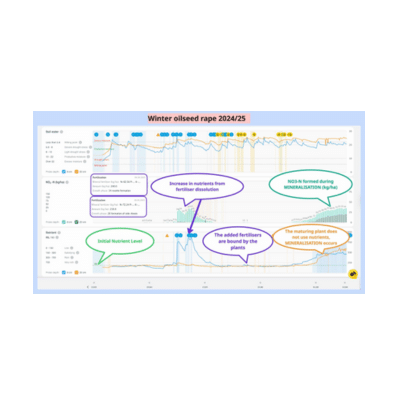
“Most precision systems only work with a single layer of data, but we have developed a system that brings in multiple factors such as soil type, seedbed and weather conditions.

“For a seedbed conditions map, you would define the seedbed as ‘poor’ or ‘very good’, and define your weed pressure as being ‘high’ or ‘low’. The system brings these different layers together, merging them to create a pattern.

“If a seedbed is defined as ‘poor’, the system uses algorithms to suggest the best course of action. We have a model for the majority of combinable crops, such as wheat, barley, peas and beans, helping you to make a decision about seed rate.”

The models were produced as a result of years of trials. The software additionally gives the user the ability to change the solutions suggested, to reflect their personal attitude to risk. “We have specifically designed Omnia to be easy to use,” comments Oliver. “You don’t need to have advanced IT skills to be able to pick it up.”

Oliver’s experience includes a time managing a large palm oil plantation in Papa New Guinea. He came to Norfolk and joined Hutchinsons soon after.

Omnia Precision - smart farming softwareOmnia was shown for the first time at Cereals 2016.  As well as being suitable for arable, Omnia also has nutrition models for a wide range of fruit crops, with Hutchinsons advising on a large proportion of the UK fruit sector.

Find out more

Oliver is set to speak about Omnia at “Smarter, Not Harder: Open Innovation for Smart Farming” at Elveden Farms on May 10.

The smart farming event is being run by Agri-TechE and Smart-AKIS for an audience of farmers, growers, technology developers and researchers.

Find out more about Omnia at www.omniaprecision.co.uk

Agrimetrics brings Potato Yield Model to farmers’ fingertips

Meet the Network
Agri-TechE

As consumer preferences for potatoes become more specific, with both small (salad) and large (bakers) premium products the number of potatoes that a farmer can produce of the required size can have a big impact on the value of the crop.  New enhancements to the Niab CUF Potato Yield Model supported by Agrimetrics will enable farmers to get timely advice about predicted yield and crop value on their smartphones, tablets and other devices. (more…)

Success in value-added dairy

Meet the Network
Agri-TechE

emily norton“Milk is not just some white stuff that goes in a cup of tea, or on your cornflakes in the morning – it’s something that should be respected,” says Emily Norton, Partner at J. Norton & Sons and co-founder of Nortons Dairy in Norfolk. We spoke with her about dairy farming, diversification and women in agriculture.

Nortons Dairy is a family-run dairy and arable farm, six miles north of Norwich city centre. The farm produces milk, butter, cream, cheese and yogurt from a herd of 55 Brown Swiss dairy cows, selling directly to local people and businesses.

Diversifying after the milk crash

The Norton family has farmed at Church Farm, Frettenham since 1946, but it was the milk crash of the 2000s that radically changed the business.

“We had always focused on producing high quality milk in order to maximise returns under the milk contract at the time,” explains Emily. “However we were very conscious that a big tanker would turn up in the morning to collect our milk and the effort we had put into making sure that milk was high quality was lost to us straight away.

“The milk crash in the mid-2000s was a historical low. However, we realised we had some of the skills and labour capacity on farm to be able to add a new business stream into the farm partnership. All the planets aligned to allow us to go ahead and do this. We started in 2007 running the dairy on-farm, so it’s actually our 10th anniversary this year.”

The milk is distributed through a doorstep delivery in the village and a wholesale round to local small businesses and shops in the Broadland area. Cheese and yogurt is also distributed and available throughout East Anglia from independent shops.

As well as selling other dairy products, Nortons Dairy runs educational visits for youngsters to explain the background and effort that goes into milk production.

“Once you put milk in a bottle it just becomes a commodity, rather than something that has been produced with love, care and attention and a huge amount of physical effort from everybody,” says Emily. “So maintaining a conversation and dialogue with the end customer is very important, to understand what it means to them as well as us.”

Voluntary milking system

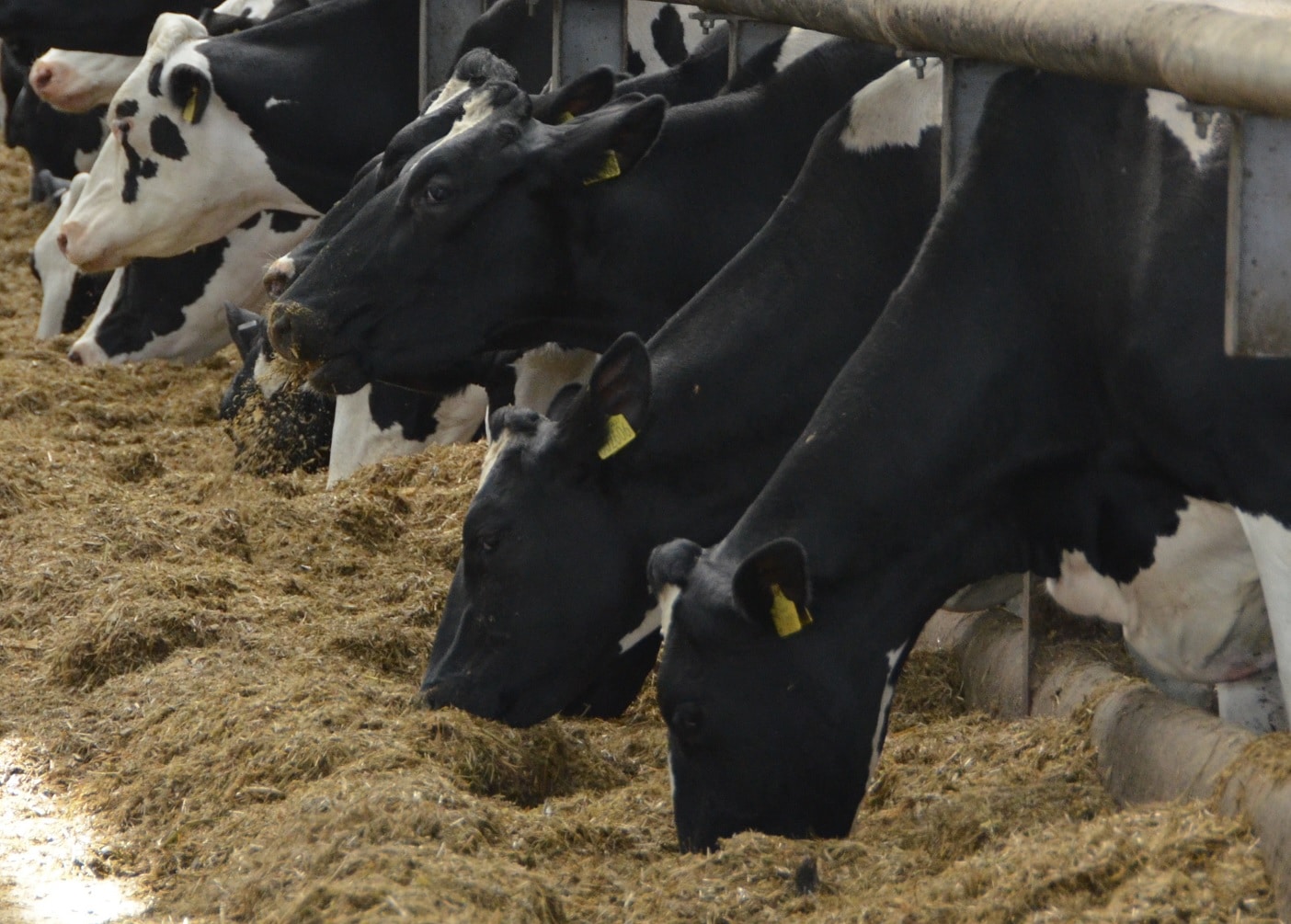
Success in value-added dairyWell-being is very important at Nortons Dairy; the cows have names (such as ‘Daisy 20th’), drink filtered fresh water and use a voluntary milking system.

Emily says: “We are milking 55 cows on a voluntary milking system (Fullwood Merlin). It works on the basis of incentivising the cows to milk themselves.

“Each cow wears a pedometer – a bit like a Fitbit – so that it activates the robot when they walk in, and measures their activity. They also get some food while they are in there, so we are constantly motivating the cows.

“As a measure of productivity, we are now achieving the same yield of milk from fewer cows. In terms of the quality of the milk and the welfare of the cow, using Merlin means that labour effort can be put into looking after the cows instead. So herd management is of a much higher standard than when labour capacity was taken up with milking.”

Norfolk Ladies in Agriculture

Success in value-added dairyEmily helps run ‘Norfolk Ladies in Agriculture’, a networking group for women involved in a range of agricultural businesses.
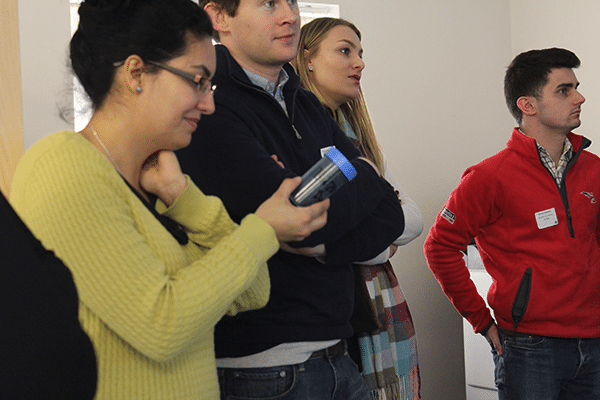
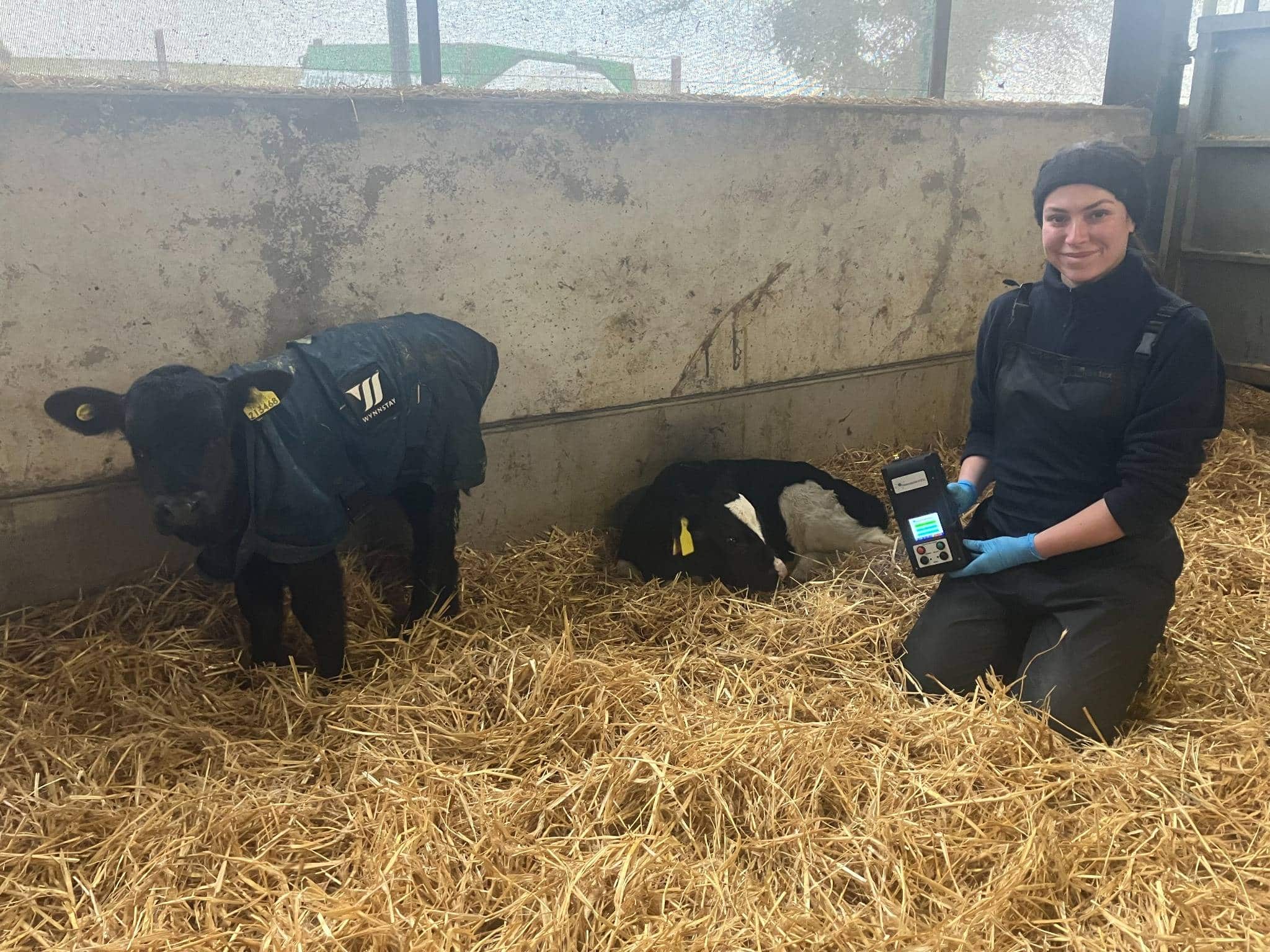
She comments: “The group provides advice, inspiration and mentoring amongst other women involved in the industry. This is really important, as it is quite easy in farming businesses for anyone to get stuck in their own bubble, so it’s good to push yourself to meet with others.”

Agriculture is often perceived as a male-dominated industry, but the number of female farmers is rising; women now make up 28 per cent of the British agricultural workforce[1]. Emily is encouraging others to make a difference.

She says: “It is important for women to realise the value of teamwork. There is this feeling that you have to do everything yourself, which I think is a product of female liberation in the ‘60s. However, you can also rely on other people to help you achieve what you want to achieve.

“Rather than feeling swamped by your set of circumstances, your family situation or whatever the expectations are – realise that you can make a massive difference in your own right. You can contribute through leadership, building teams or getting stuck in whatever way you can.

“I would encourage any ladies involved in farming or environmental businesses in Norfolk to contact me if they would like to participate.”

Emily recently spoke at Agri-Tech’s Young Innovator’s Conference at the Morley Agricultural Foundation Wymondham, Norfolk.

Find out more about Nortons Dairy on their website: www.nortonsdairy.co.uk

[1] https://www.gov.uk/government/news/environment-secretary-salutes-britains-women-farmers

It all adds up, says Dr Sargent of the Smith Institute

Meet the Network
Agri-TechE
Dr Cristina Sargent
Solving problems the answer is in the maths says Dr Cristina Sargent

Solving the problem starts with framing the right question. Dr Cristina Sargent of the Smith Institute believes that mathematics is a clear, objective way of resolving the type of complexity experienced in agriculture.

Improving forecasting for G’s Growers is one of the case-studies she will be discussing at the Big Data SIG ‘Bring Out Your Data’ on 21st March, which includes a brokerage workshop.

The Smith Institute completed over 100 projects in the last ten years across 12 high value sectors including aerospace, telecommunications, transport and defence.

What if we did this?

For agriculture it is work in prediction and creating models that will enable the analysis of various options using ‘what if?’ scenarios that is arguably the most interesting.

Dr Sargent says: “Often, it is not immediately apparent how we can use mathematical techniques to solve real life problems. This is why at the beginning we have in-depth conversations with a prospective client to understand the challenge they are facing and what they would like to achieve.

“We spend considerable time looking at current operations, models they may be using and data that they have access to. Once we are satisfied that we understand the problem we will design a solution. This may be a combination of models, algorithms and data. When creating a solution, data is just one piece of the puzzle.

“We need to select data that is relevant to the problem. It may come in different formats and collected at various frequencies. So, there is always a preparation stage, looking at the data, cleaning it up, checking for errors and deciding what is most pertinent.

“Once we have analysed it and have a feel for what is important, we devise a data strategy. This looks at relationships within the data that can reveal useful information and also the external data sources that might reveal new insights.

“By defining these relationships, it is possible to create a model that can be used for operation optimisation, scenario exploration and to help decision-making.

“Some clients have internal resources for data analysis and we can support this. Once we have identified the algorithms they need, the model and the most pertinent data, their staff are then on the right track and can adapt the model for their own needs.

“One example of this is in the area of animal welfare. For a large herd of cattle, it is important to identify signs of illness at an early stage, to stop disease spreading or to prevent contamination of the milk. Cattle that are unwell change their behaviours.

“By using various mathematical techniques it is possible to analyse and interpret the data collected from sensors attached to cattle to prevent the onset of bigger problems.”

How do I optimise inputs?

We asked Dr Sargent how her team might address the big question in precision farming:

If parts of the field have a better yield than others how do you decide the optimum amount of inputs to apply? Is it better to put your resource into improving the poorer land or to maximise the quality on the good land?

Dr Sargent considers the question and explains that the first stage is to ‘define the problem’. She says: “The first stage is to understand the dynamics of the problem in order to get to a point where you have the right data to define the relationship between spend and yield.

“Using historical data, it is possible to explore the relationship and ground truth it to see what factors are the most influential. With a sensible model, it should be possible to forecast optimal spend.”

Forecasting a barbeque weekend

Forecasting is another area where a small improvement could make a huge difference in profitability for farmers and producers.


The Smith Institute is working with G’s Growers on a model that will reduce waste in the production of Iceberg lettuces.

Salad consumption is very variable depending on weather – a ‘barbeque weekend’ will boost demand and a wet one depresses it. The maturity of the lettuce head is another variable; there is only a short time when it achieves the quality requirements of the supermarkets, if the head is too developed it will not have the required shelf life.

G’s has employed sophisticated monitoring systems to measure the growth of the lettuces and also collates data on weather and microclimate. This has enabled it to identify key growth stages and amend sowing and planting schedules to mitigate against potential shortfalls in crop availability.

The Smith Institute has been helping it to use this data to develop optimal production schedules that can cope with uncertainty. Additionally, it is creating an engine capable of crunching the data and creating ‘what if scenarios’ which would allow the in-house team to consider different management strategies.

Bring out your data

Forecasting and prediction is one of the areas that Dr Sargent will be discussing at the Big Data SIG. She is very interested to hear about these types of challenge in agriculture.

There will be an opportunity at the meeting to have a one-on-one discussion about specific challenges with experts, so, do make sure to ‘Bring Out Your Data’ on 21 March 2017 – click here to register.

Analysing text messages helps improve WeFarm advice

Meet the Network
Agri-TechE
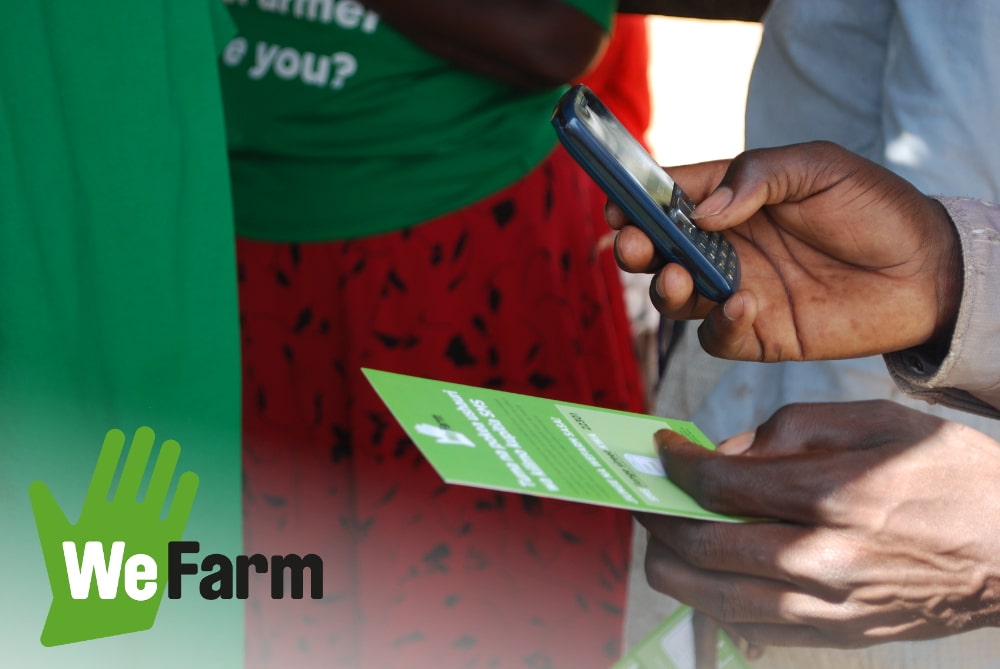
WeFarm provides an SMS text platform for small scale farmers in developing countries that don’t have access to internet. Using a mobile phone they can receive peer to peer advice on their crops and livestock.
(image courtesy of WeFarm.org)

WeFarm provides an SMS text platform for small scale farmers in developing countries that don’t have access to internet. Using a mobile phone they can receive peer to peer advice on their crops and livestock.

Ahead of the Big Data SIG event on 21st March, we spoke with the CEO of the Institute for Environmental Analytics (IEA), Colin McKinnon, about the organisation’s work in the agri-tech industry and support of London-based start-up ‘WeFarm’.

Climate change has made it increasingly important for these farmers to access simple and accurate information quickly.

WeFarm asked the IEA to analyse the texts that contained references to weather and climate, and recommend if there was a need to expand the advice in these areas. Allowing for irregular spelling and grammar, a comprehensive semantic analysis was undertaken. The results showed that climate information was clearly in demand.

Colin says: “We analysed their data traffic to look at what the patterns where, to find out which questions were regularly being asked. For example, a farmer can send a question such as ‘the monsoon is particularly long this year – what’s it going to do to the yield of my crop?’ or ‘it’s been a particularly dry year, what should I plant next season?’”

“Presentation factor is very important in data visualisation. It has to be intuitive, so we used word clouds to illustrate the most common topics in approximately 160,000 messages.”

The IEA also discovered the potential for WeFarm to provide educational and ‘recommend-a- crop’ services. Advice messages could be geographically targeted for potential climate impacts, such as El Niño.

Use of satellite data

Colin McKinnon, IEA CEO

Other agriculture projects include work with IEA Partner Sainsbury’s to accurately predict tuna stocks around the Maldives and analysing the weather impact on the growth of crops and an EU funded project examining the impact of climate on the agricultural sector.

Colin comments: “We work with a wide range of data sources from earth observation through to sensor data and social media and our expertise lies in fusing these disparate datasets into useable insight for customers.

“One good source of new data is the Copernicus Programme in Europe, which has satellites in orbit providing free optical and satellite data worldwide. The radar allows you to see through clouds – helpful for the UK – and to a certain degree, you can see into the soil. For agricultural applications, it can allow you to build cheaper applications depending on the resolution you require.

“The challenge is working with farmers and supermarkets to access the right data, but also to produce something that those in the sector can easily use within their existing software systems and ways of working,” explains Colin. “I’m hoping to make a few new partnerships at the Agri-TechE event, with specific farmers or trade bodies for example. It would be great if we could find a common data challenge that we could build one of our demonstrator projects around.”

If you would like to register for the BIG Data SIG event at Rothamsted Research, please click here: https://www.agri-tech-e.co.uk/events/bring-out-your-data/