Explore advancements in the arable industry
Join us at CropTec, the UK’s leading technical event for the arable sector, on 14-15 January 2026 at the NEC Birmingham. Gain exclusive insights from industry-leading specialists and explore the latest innovations shaping the arable industry.

Innovative vets adopts agri-tech for early dairy disease detection

Meet the Network
Agri-TechE

As milk prices decline, along with recurring and emerging diseases and pressures to meet sustainability goals, Nantwich Farm Vets are working with ag-tech innovators to identify diseases earlier, aiming to create more efficient, profitable and successful farming systems.

The next year is offering a challenging time for the dairy industry, reflects Phil Cullinan, Business Development Manager of Nantwich Farm Vets, noting that farmers are losing 6-8 pence per litre for their milk and facing additional pressures with disease and targets.

“There’s the constant challenge of things like TB and Johne’s, then there’s emerging diseases like bluetongue, which we don’t really know what kind of impact they might have.

“There’s also ever more pressure coming on the sustainability side of things; what processors and supermarkets are asking farms to do, and how they can continually develop to achieve the broader industry goals handed down by the government to retailers and processors.

“Juggling all of that is a massive challenge, along with the day-to-day on-farm challenges of staffing and weather”.

However, despite increasing challenges, Phil remains positive that agri-tech innovations could lead to new ways of working, improving animal welfare, and increasing efficiency.

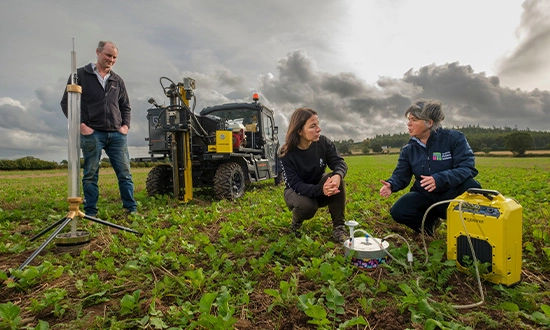
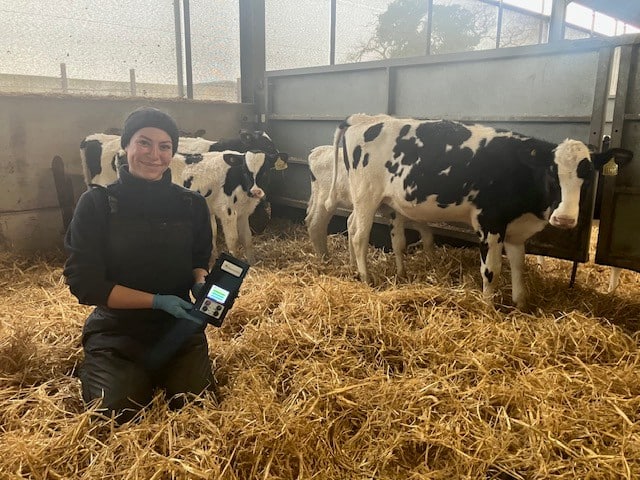
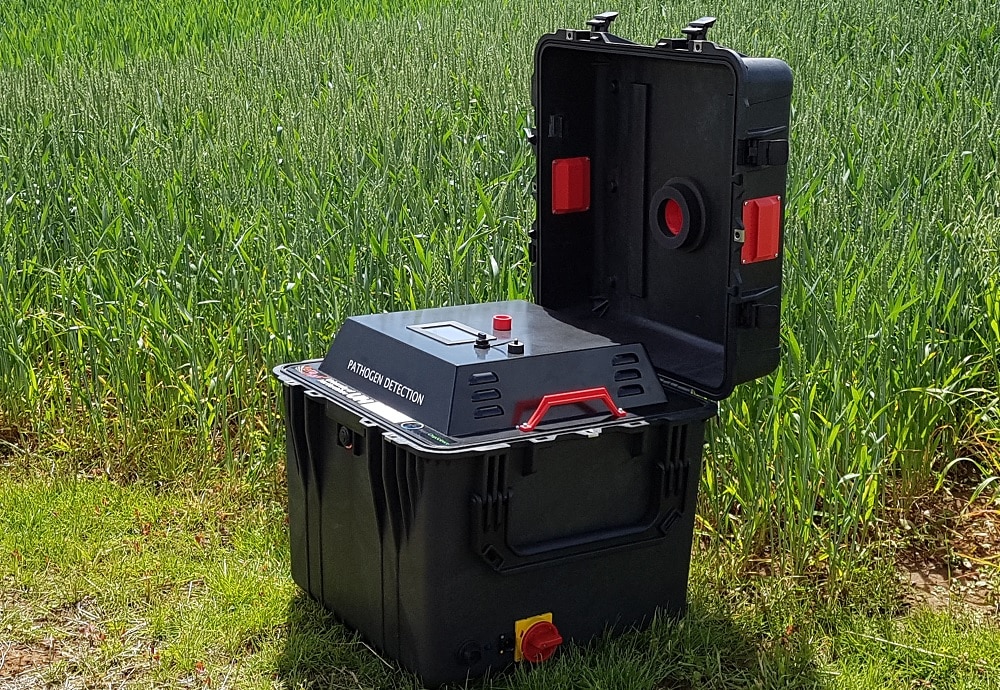
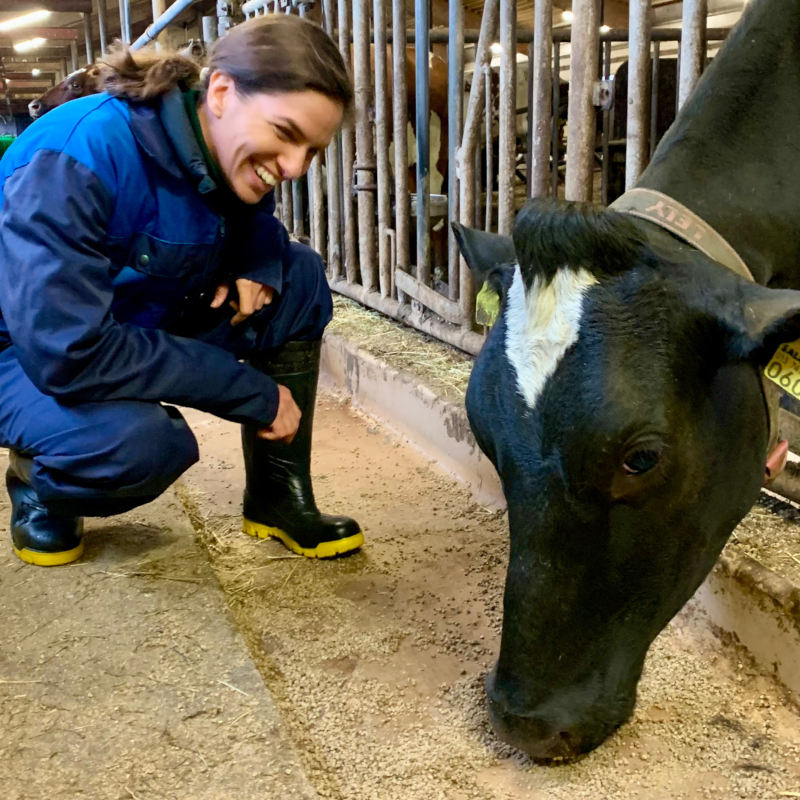
Nantwich Farm Vet Jodie with RoboScientific kit
Nantwich Farm Vet, Jodie, with RoboScientific kit
Business Development Manager of Nantwich Farm Vets
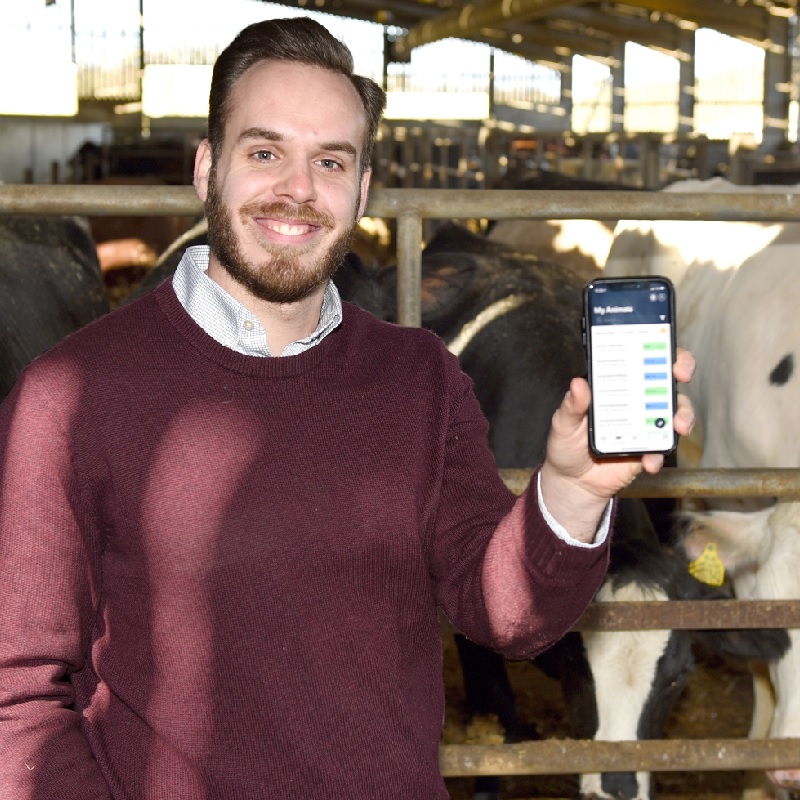
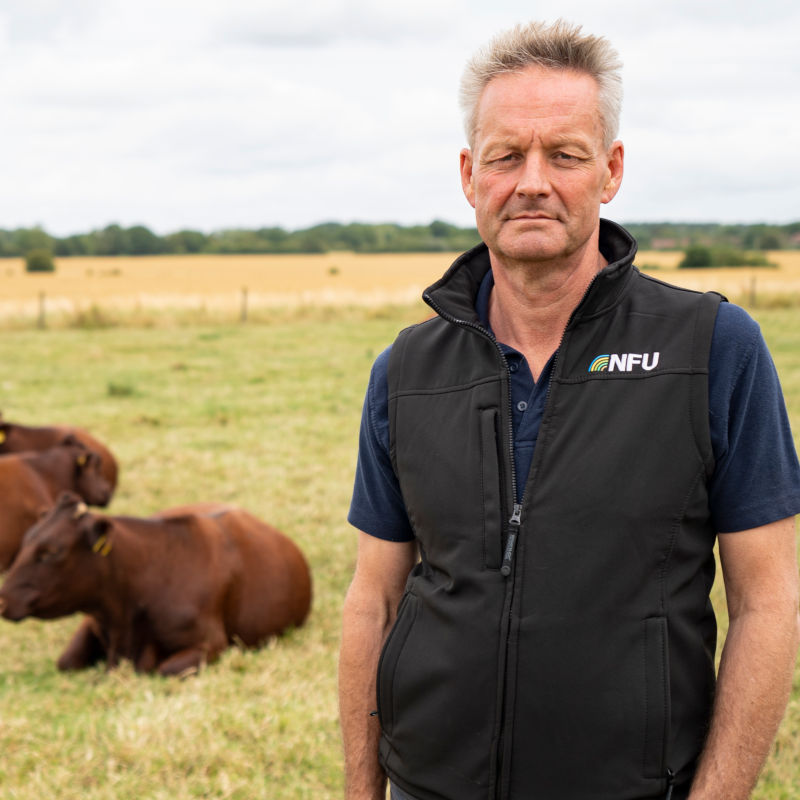
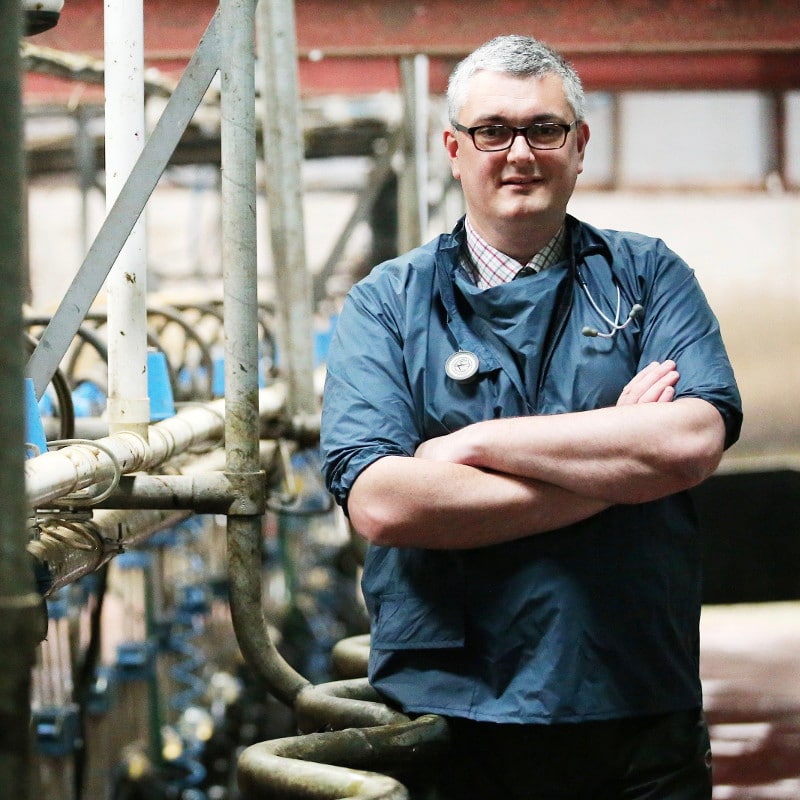
Phil Cullinan, Business Development Manager, Nantwich Farm Vets

Taking a preventative approach

When it comes to animal welfare, proactive measures can help detect disease earlier – which reduces suffering and contains infectious spread.

Nantwich Farm Vets is using its Agri-TechE membership to partner with several companies to find new ways to take a preventive approach. From ‘sniffing’ out diseases from gases released from animals, to taking tissue samples for on-farm diagnostics, and AI body monitoring. Agri-tech offers various solutions to get an earlier handle on livestock disease.

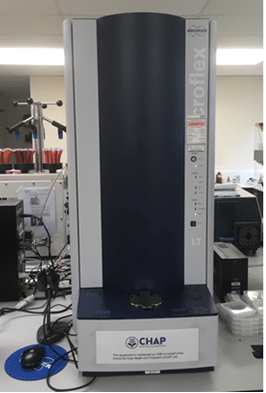
For instance, the team is working with RoboScientific, a business that uses volatile organic compound sensors to detect diseases in livestock using breath samples.

By matching the breath sample to on-farm vet assessments, Nantwich Farm Vets is working to corroborate and expand RoboScientific’s dataset.

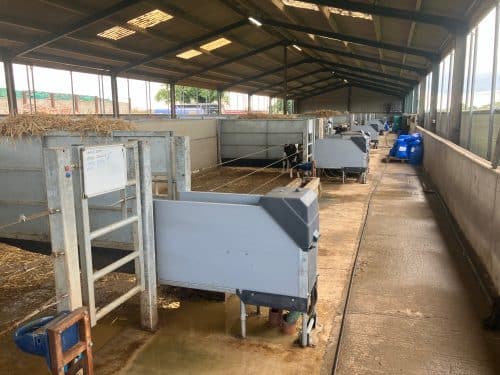
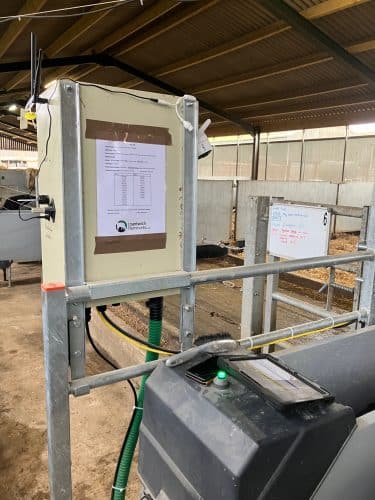
A breath sample is taken automatically by a machine as the calves feed from automatic milk feeders. “We’re currently in a development phase, but the hope would be that the farmer gets an alert early on in the disease process enabling earlier – and therefore likely more successful – treatment, as well as fewer knocks on calf growth and less antibiotic use. There are lots of benefits,” says Phil.

Additionally, Nantwich Farm Vets has been working with Vet Vision AI to use data to inform decision-making, with the aim of promoting this as a new service to their clients.

Phil explains that on one of their farms, AI cameras have been installed to monitor different parameters between two sheds. The goal is to analyse the data to guide future investments, identify small improvements, and enhance their business operations- caring for the cows and increasing efficiency.

On-farm rapid tests

Following this year’s Agri-TechE REAP Conference, Phil Cullinan also connected with one of the Start-up Showcase businesses, ProtonDX, which has developed an on-farm rapid test to diagnose diseases in under 30 minutes.

The veterinary team has supported the start-up in assessing where the technology could be useful.

“In terms of disease identification and reducing antimicrobial use, that presents another challenge for farmers, which is connected to human health. Some of the new technologies can help farmers to farm more effectively.”

Keeping the consumer in mind

Looking ahead, Phil emphasises that gaining consumer buy-in will be essential for both farmers and vets.

“Consumers, I think, are becoming more aware of what they’re doing and therefore farmers and vets are going to have to make sure that we’re able to deliver a product that is acceptable from the point of view of animal welfare, economics, and environmental sustainability,

“We as a business want to keep growing as an independent vet practice that’s thriving. We want to keep working with the kind of farmers that are going to be around in 20 years, and that can weather the additional pressures that are coming their way.

“The UK has committed to carbon targets and ultimately a legally binding target of Net Zero by 2050. So, there’s going to be more pressure on farmers, and as vets, we want to be best placed to advise them on the kind of things that we can help them with to achieve the targets that are going to be put on them, ultimately, by the processors and the people that are buying their milk.”


Nantwich Farm Vets is eager to partner with other agri-tech businesses.

“If there are any companies that are looking at agri-tech and thinking, ‘how can I get my product to the next stage? I’m interested in doing something to do with dairy cows’, then we’d be very interested in hearing from them”.
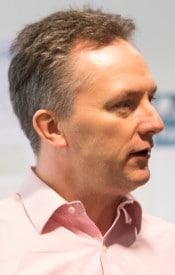
You can get in touch with Phil Cullinan here.

How open collaboration in agri-tech could help solve the farm profitability puzzle

Agri-TechE Article
Agri-TechE

Access to funding, technology fragmentation, and a misalignment with farmers’ needs are perennial barriers to the adoption of the latest agri-tech, according to industry leaders speaking at Agri-TechE ’s REAP agri-tech conference.

But with new funding like ADOPT and a more open approach to co-developing exciting new technology, farmers attending the event believe it is easier than ever to see the benefits of agri-tech.

With Baroness Minette Batters speaking at REAP about her Farm Profitability Review for the first time since submitting it to Defra, the stark realities that farmers face without direct subsidy support are apparent. She believes that new technology will be needed to help unlock efficiencies and improve profits.

“On the evidence that I have (in the Farm Profitability Review), agri-tech is front and centre of profitability,” said Baroness Batters. “We have got to get research and innovation onto every farm and into every field.

“Two bits of evidence that I have seen for farm profitability are farmers having to have really good control of input costs and farming at scale. To be able to get the latest research hitting on farms is fundamental to improving these.”

Minette Batters delivering keynote address at REAP 2025
Mario Caccamo, Niab, in the panel Co-Developing Solutions to Co-Exist
Mario Caccamo, Niab, in panel Co-Developing Solutions to Co-Exist

The benefits the UK has of diverse farming systems, soil types and innovative farmers make it an ideal location for agricultural trials. “We need to position ourselves as the world’s go-to place for testing and trialling agri-tech,” said Dr Belinda Clarke, Director of Agri-TechE .

“We are not going to change the world with one start-up or one research project at a time. Let’s pull them together, allowing the farmers to set the challenge,” she added.

Professor Mario Caccamo, CEO of Niab, cited one example in which the UK is pulling ahead of its competitors internationally, thanks to post-Brexit legislative changes. The Precision Breeding Act comes into force this month. It allows precision-bred crop varieties to be sold in England for human and livestock consumption, subject to individual approval from the Food Standards Agency (FSA).

He said that this has already had an impact in the research sphere, with the UK conducting more gene-edited crop trials than the rest of Europe combined this year.

“One key advantage of this (CRISPR-Cas9 gene editing) technology is that it is affordable, and it therefore has the potential to democratise access to it. We expect it to incentivise new ideas and investment in the UK,” explained Professor Caccamo.

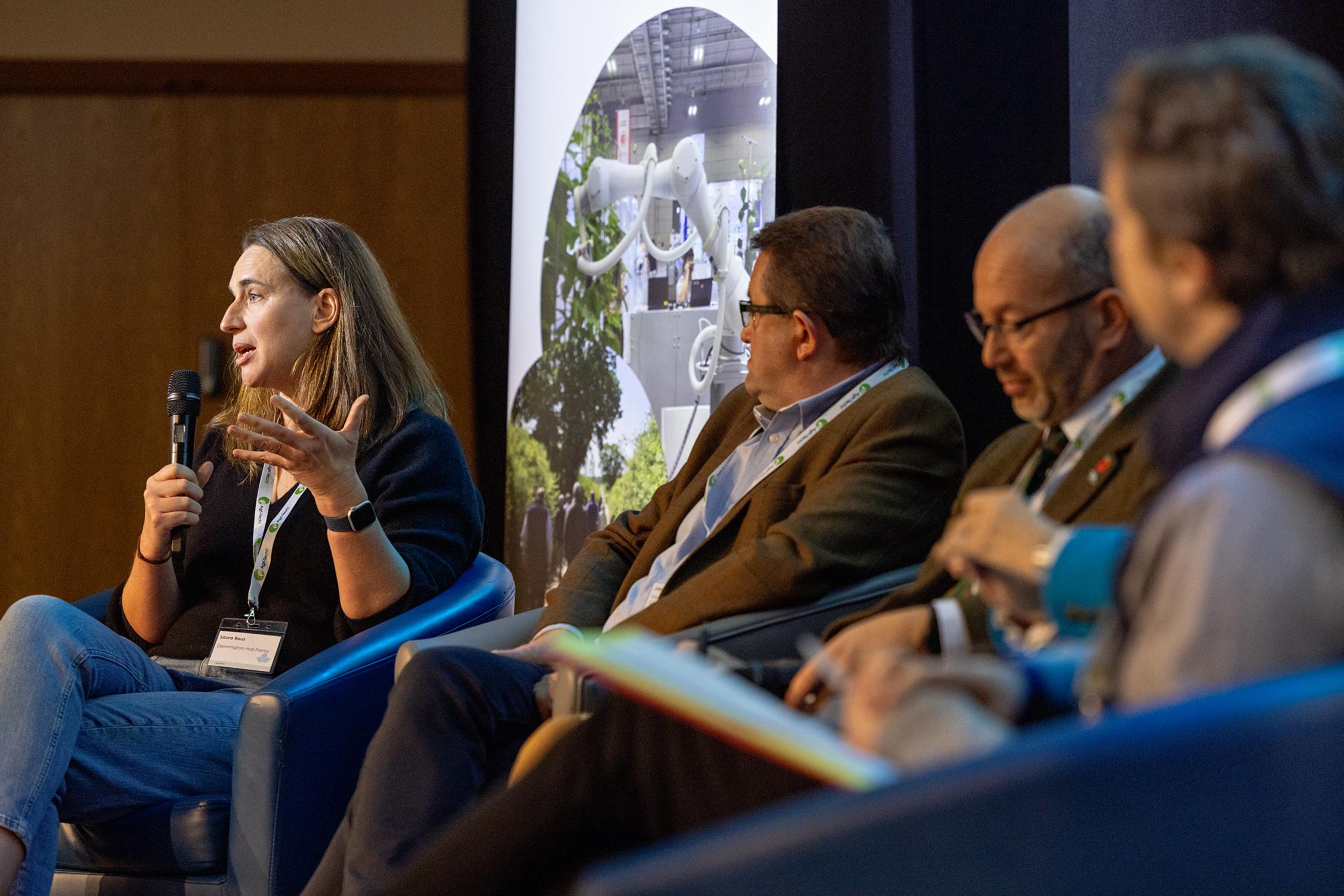
Laura Rous, Dennington Hall Farms, in the Farmer Insights panel
Jake Freestone, Overbury Estate, speaking at REAP 2025

What did the farmers and growers think?

Laura Rous from Dennington Hall Farms, a 1,500 Ha arable farm in Suffolk, is in an ADOPT-funded project with Niab and Limagrain and another neighbouring farm, looking at the long-term nitrogen reductions possible from using a legume cover crop mixture.

“We have found it really exciting to be part of the decision-making and problem-solving, building the project out from things I talk about with the farm’s manager, Ryan McCormick, on a day-to-day basis,” said Laura.

“Because our problem of trying to figure out reductions in nitrogen use is one all farmers face, we hope the results we get from this project will be meaningful to not just us but the wider industry.”

Outside of programmes like ADOPT, Jake Freestone, farm manager at the 1,600 ha Overbury Estate in Gloucestershire, said that less formal collaboration with researchers and companies has delivered the same impact for their business. As for him, the two-year funding timeline of ADOPT projects does not always work when he is examining the impact of experiments on a long-term rotation.

“If you are open to opportunity, then it will come,” explained Jake. “Attending events like REAP, making conversations and having a really open mind help. We have the land, the machinery, the ambition and the desire to make changes happen.”

“Working with ideas that are close to commerciality is important for farms. We need to do the final bit of testing, not necessarily always be there for the concept testing.”

For the horticulture sector, these collaborations are challenged by the lack of levy-funded research which Ali Capper, chair of British Apples and Pears, noted. “For apples, we had to rescue our research and development,” she said. “The primary focus at AHDB was pest and disease research, which is critical to the industry’s future.”

Ali welcomed the ADOPT programme, despite its administrative burden, noting, “It’s not perfect, but it’s brilliant that we have something farmer-led.”

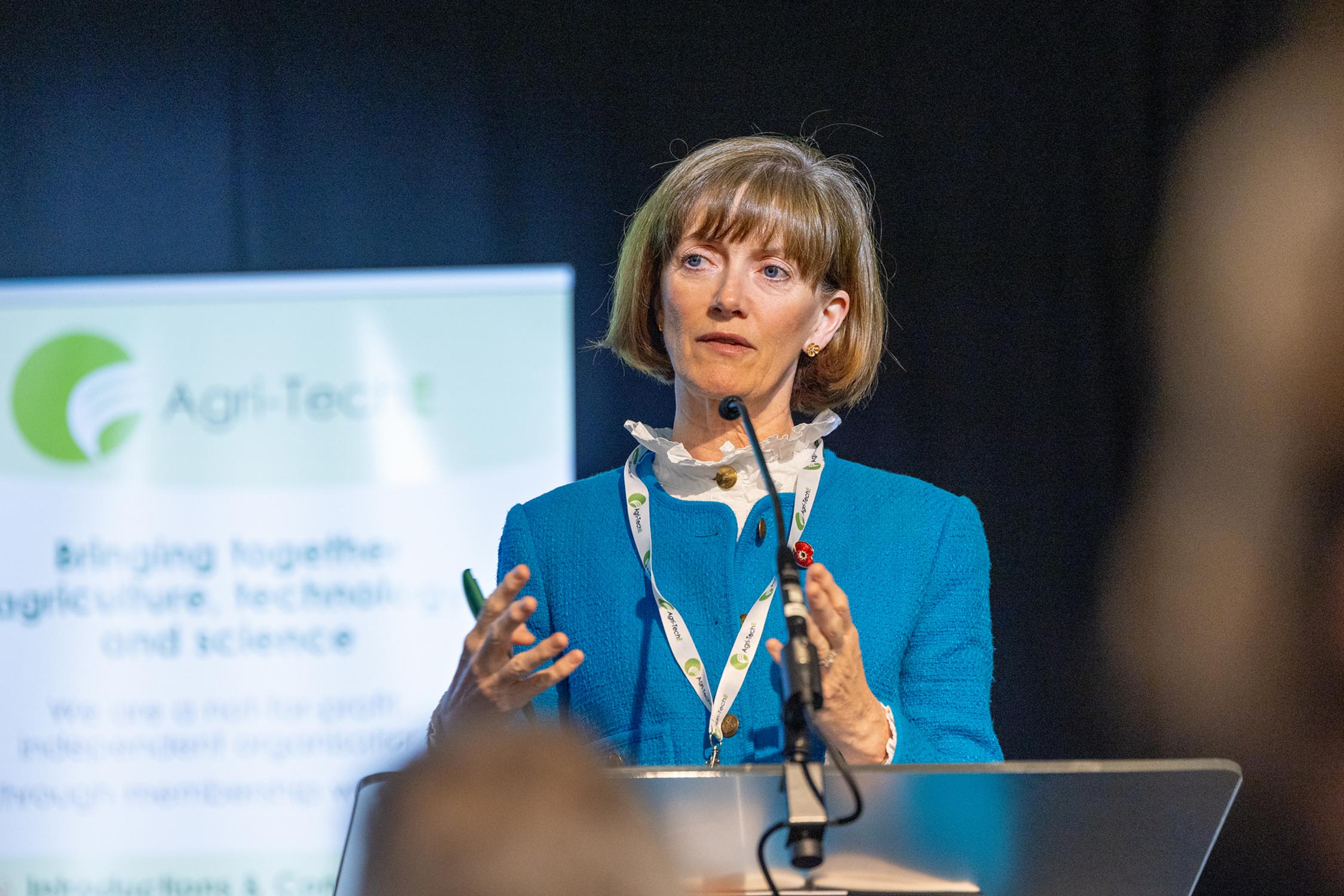
Ali Capper, Chair of British Apples & Pears, in the Farmer Insights panel at REAP 2025
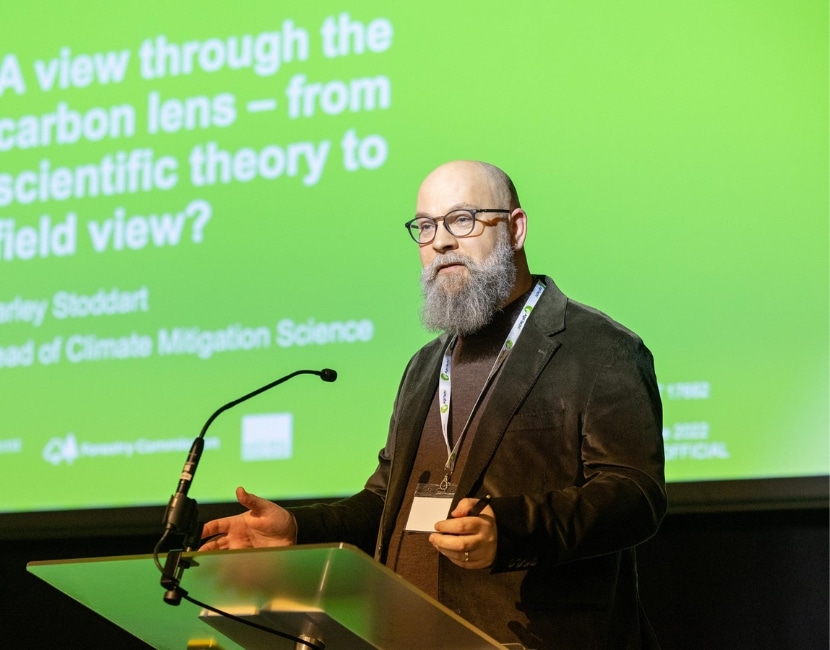
Harley Stoddart, Defra’s Head of Climate Mitigation Science, giving closing keynote at REAP 2025

Wrapping up the REAP Conference with his closing keynote, Harley Stoddart, Defra’s Head of Climate Mitigation Science, noted several similarities among the technologies on display throughout the day, notably those related to soil biology.

“I can’t help but think how many of these innovations link up to become more than the sum of their parts. The REAP conference is about collaboration and co-existing, and we wouldn’t be able to operate as an industry without doing those things,” Harley concluded.

Top technology to look out for from REAP 2025

The Research in Practice and Start-up Showcase sessions are annual features at REAP that this year allowed seven researchers and eight entrepreneurs to present their technologies to the audience. Here are our top five to look out for in the years to come:

1. Peptides: a 21st-century herbicide?

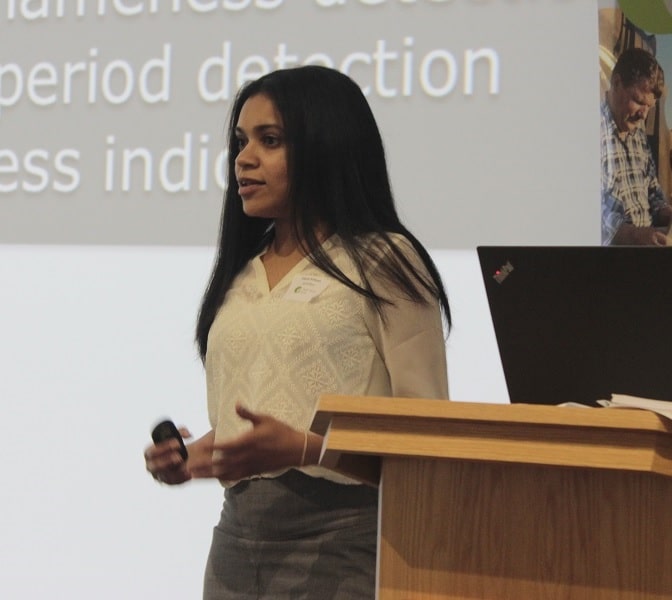
Peptides are traditionally used as a biostimulant to stabilise yield when a crop is subjected to drought or flooding. However, Dr Nadia Radzman, a biologist at the Sainsbury Laboratory in Cambridge University, is investigating the use of peptides as bioherbicides. She believes that by careful design, their effects can be reversed and used to elicit an extreme stress response in plants.

“At the same time, I am co-applying it with another chemical that is protecting the crops from the bioherbicide,” said Dr Radzman. “This protector RNAi spray makes the crop ‘blind’ to the bioherbicide. So, together, this would be a system that is very cost-effective as a bioherbicide.”

Dr Nadia Radzman, Cambridge University, Research into Practice REAP 2025
Jasper Kaucky, Oko Ag, REAP Start-Up Showcase 2025

2. Navigate funding availability and eligibility with the click of a button

Helping farmers to navigate the complex world of grants and subsidies is the start-up business Oko. It uses geospatial satellite imagery and conversational AI to identify potential funding available to farmers.

The key difference between Oko and other land management software is its ability to scan its database of available funding and provide farmers with options for a particular parcel of land, explained Jasper Kaucky, founding software engineer at Oko. Once identified, the system will assist in applications and manage the actions required by the funds.

In 2026, the team aims to implement a subscription plan that allows farmers to browse their directory, access real-time planning tools, efficiently plan and apply for funding, and estimate their potential earnings.

3. From two weeks to 30 minutes: rapid lab-quality livestock disease diagnostics

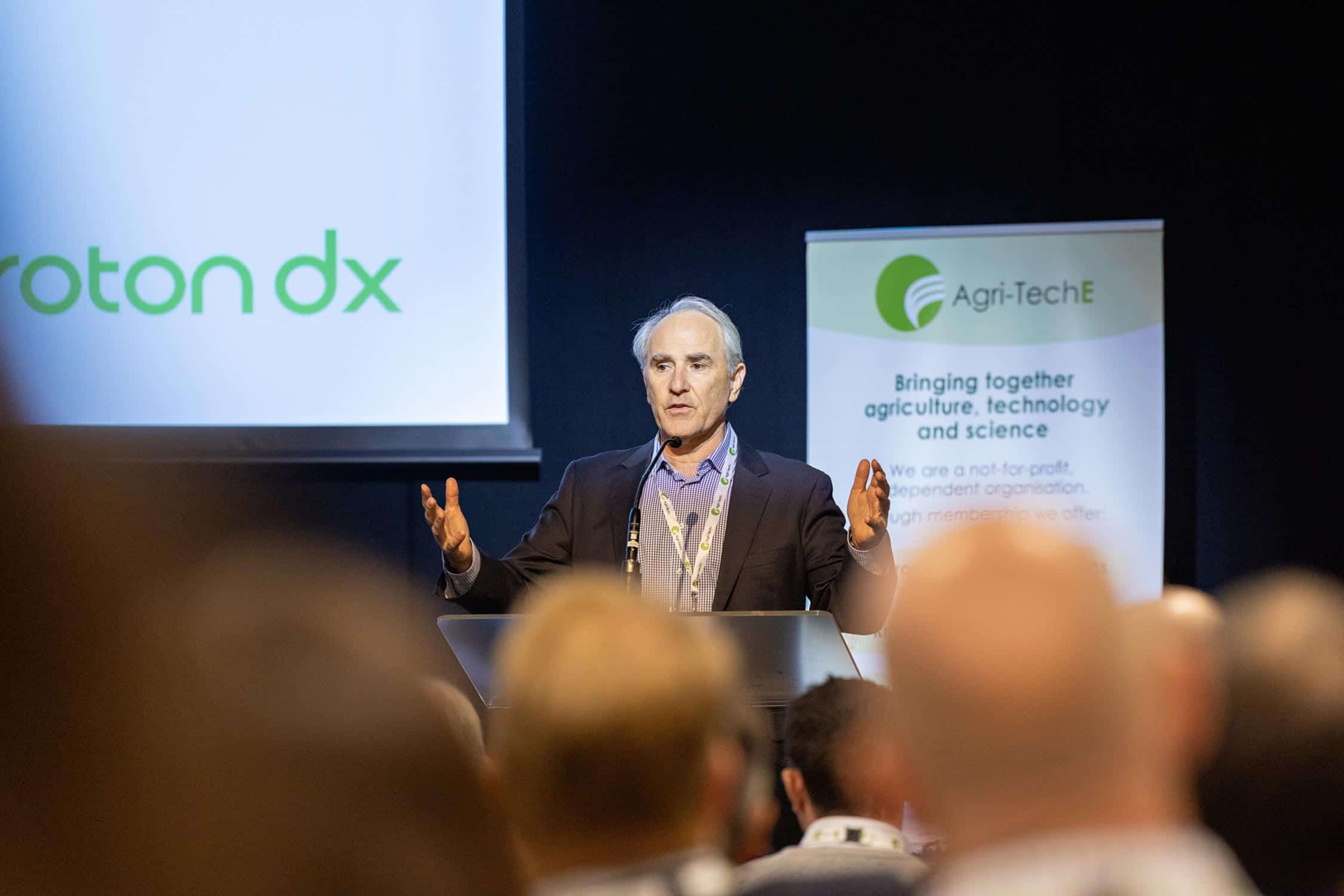
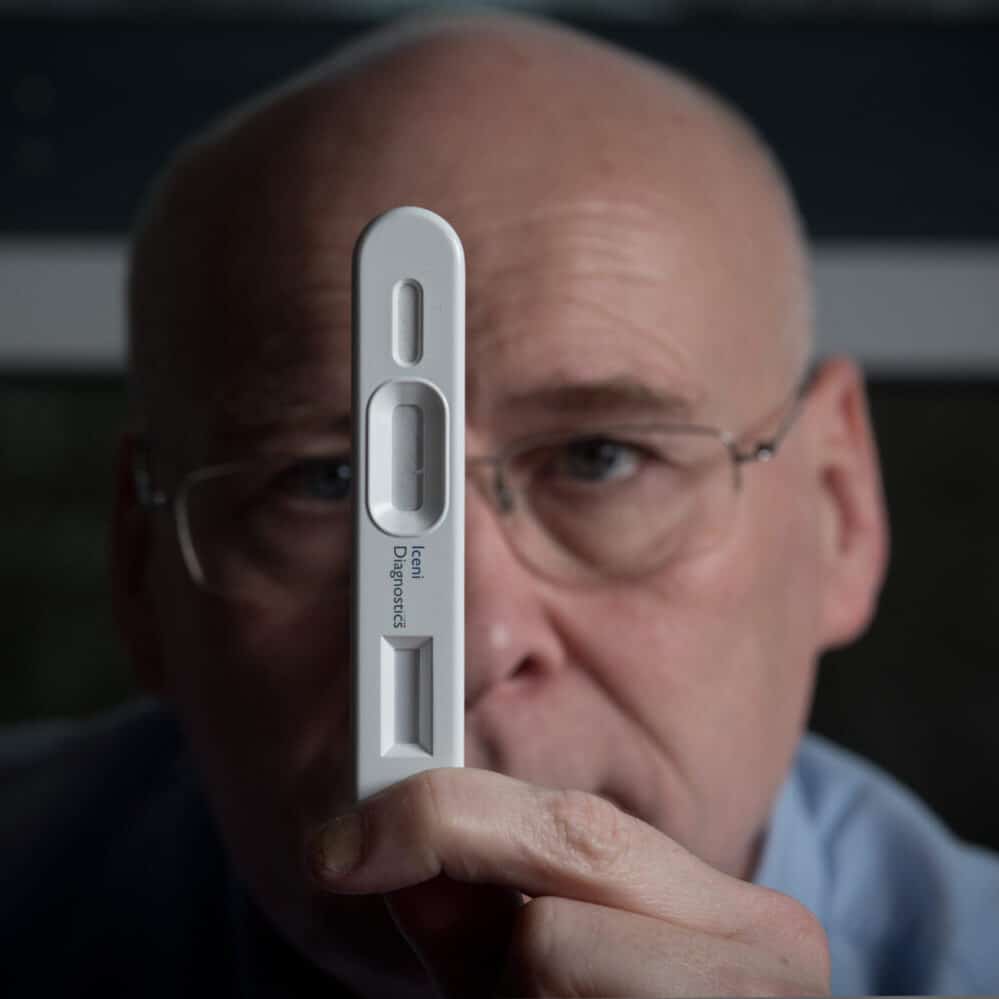
Sometimes an innovation arrives that completely transcends the existing standard. That’s the impact of the Tesco Agri T-Jam winner for 2025, ProtonDX. They have developed a farm-portable device which is capable of delivering lab-quality results for a range of livestock – and soon plant – diseases, explained Bob Enck, CEO of ProtonDX.

The system gets a clean sample extraction in the field, which feeds a molecular LAMP-based diagnostic test capable of producing an accurate result in 30 minutes. Compare that to the existing system, where samples are sent to a laboratory and results are often not returned for two weeks. That is an additional two weeks for the disease to spread and for farmers’ losses to accumulate. From this evidence alone, Bob believes ProtonDX’s business case is compelling.

Their initial work has been focused on screening pigs for porcine reproductive respiratory syndrome virus (PRRS) and influenza. PRRS, in particular, is a major challenge for the pig sector. It was the most frequently reported disease issue in pigs over the last six months, and with the potential to lead to infertility in sows, the economic impact can be huge.

ProtonDX is launching the product commercially in the pig sector and is developing poultry, beef, and dairy markets with specific pathogen diagnostics for important diseases in these sectors.

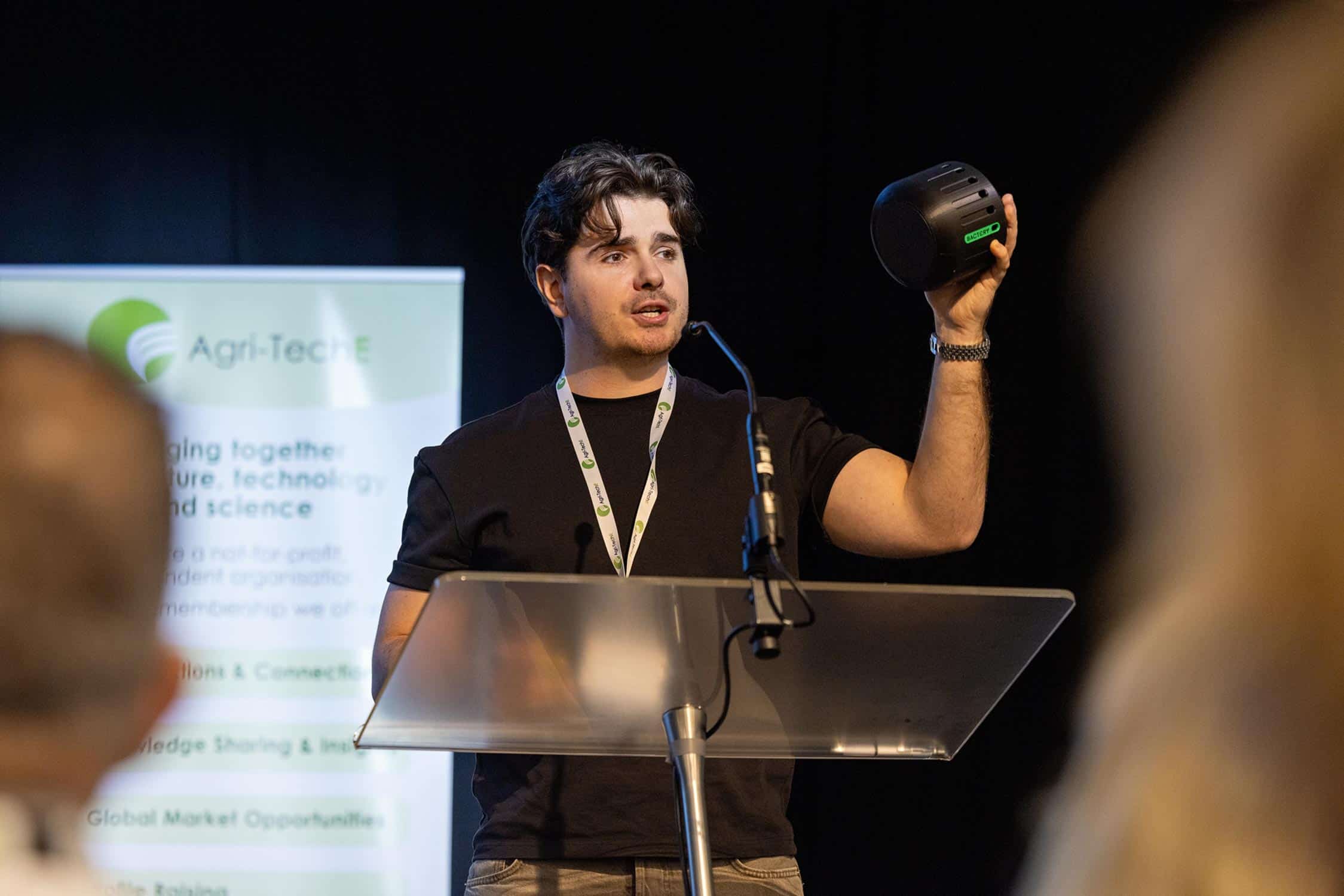
Jakub Dziegielowski, CEO & Founder of Bactery, REAP 2025
Robert Enck, ProtonDX, presenting in the Start-Up Showcase at REAP 2025

4. Could a six-inch soil battery be the most practical on-farm renewable yet?

A six-inch box filled with soil might not look like the future of on-farm energy generation, but that’s precisely what Jakub Dziegielowski, founder and CEO of Bactery, is betting on. Bactery has developed a soil-powered device that captures electrons released by soil bacteria to generate electricity.

With an anticipated lifespan of 30 years and measuring just six by six inches, the battery device is low-maintenance and designed to sit quietly in the ground, offering a low-profile alternative to above-ground renewable energy sources that depend on the wind or sunlight.

Jakub said it could offer a long-term, cost-effective solution for powering sensors scattered across a farm. With trials underway and a hopeful commercial launch planned, Bactery provides a new route to decentralised, soil-based energy.

5. Lupins. What’s not to like?

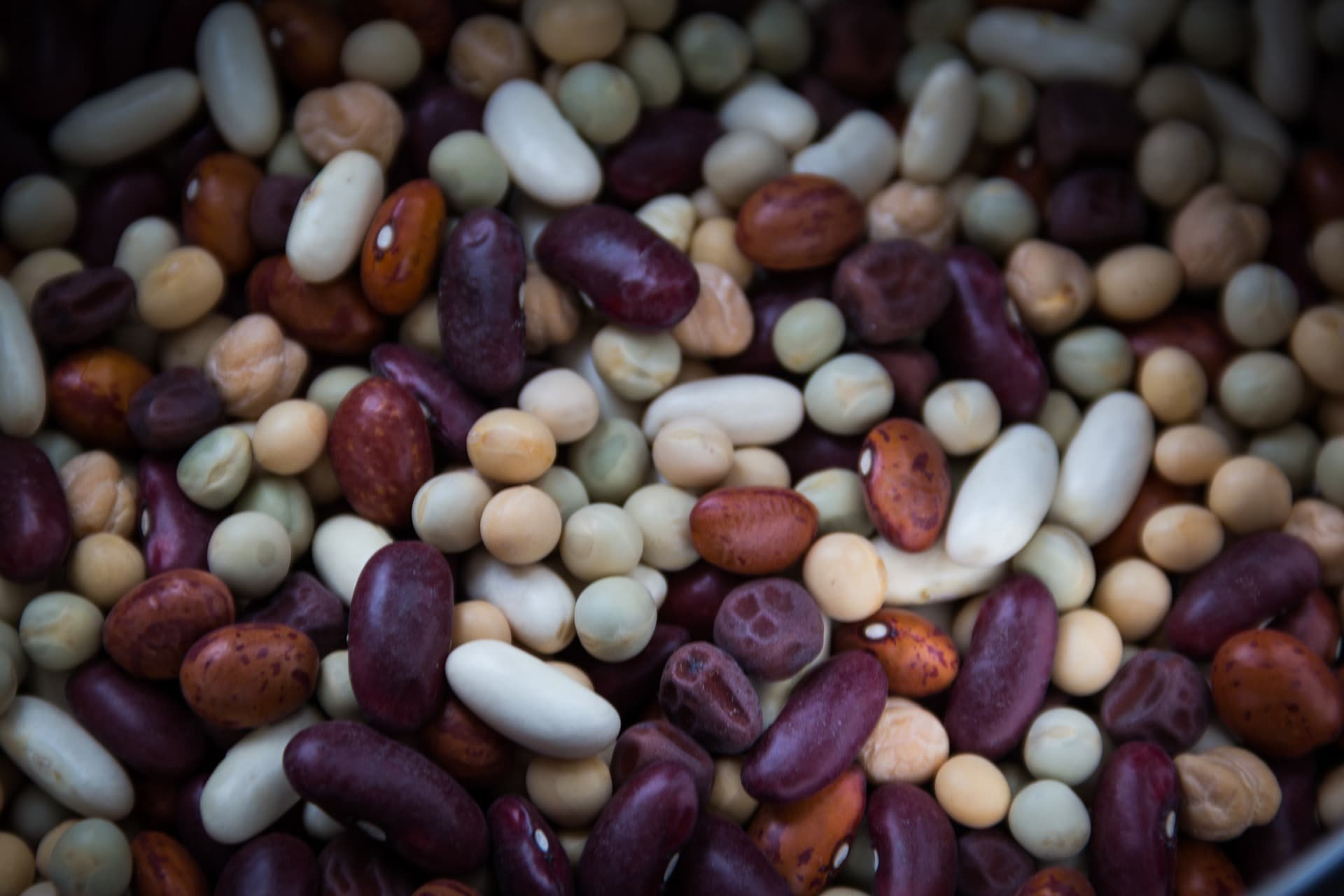
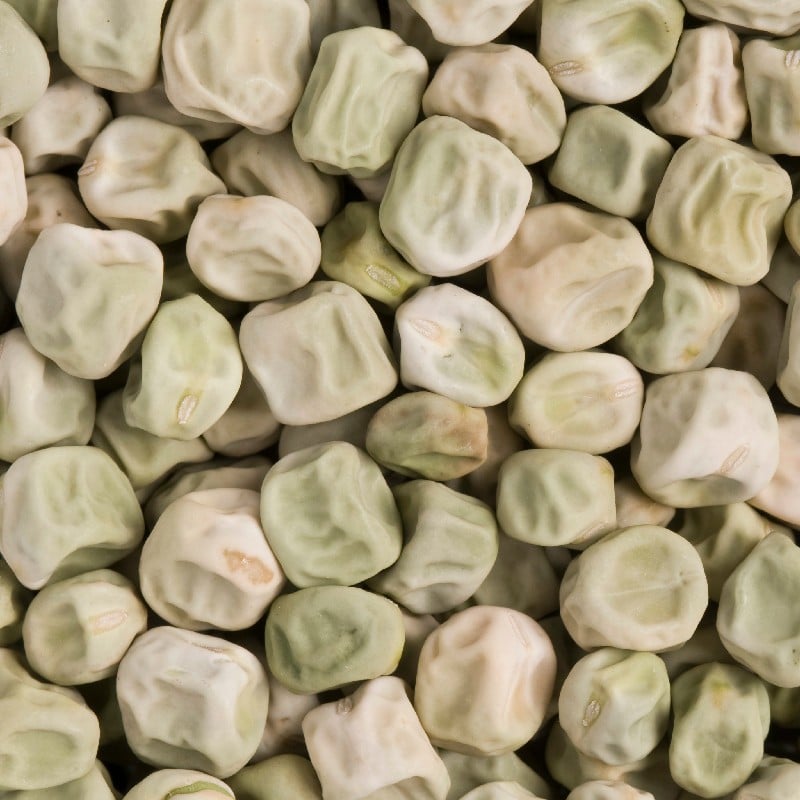
With >40% protein levels, high digestibility, and the ability to fix nitrogen, there is a lot to like about lupins, according to Dolapo Olawoyin, research scientist at the University of Leeds.

He has been studying the properties of lupins and their potential use in the food chain. The protein levels are comparable to those of imported soy and exceed those of the UK’s main pulse crops, peas and faba beans. Lupins also have a balanced amino acid profile containing all the essential amino acids.

He hopes that his research will stimulate further discussion within the food chain, creating a market for farmers to grow lupins for.

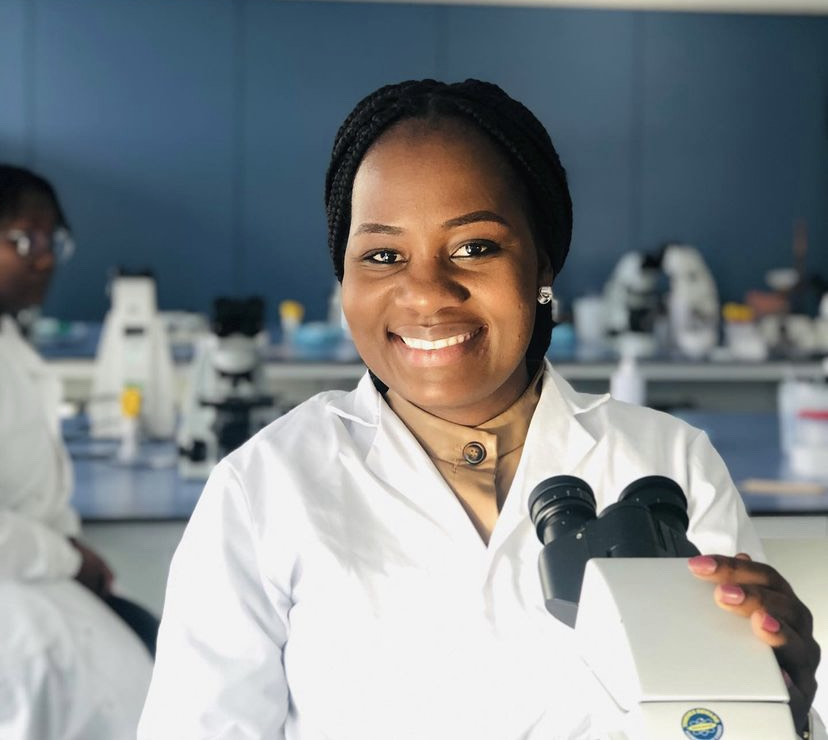
Dolapo Olawoyin, University of Leeds, Research into Practice REAP 2025
Bianca Forte, SugaROx Ltd, in the audience at REAP 2025

Thank you to our REAP 2025 sponsors!


Post REAP Conference blues?!

The annual REAP Conference may be completed for this year, but you needn’t wait until next November… On 28 April we are hosting another Conference NatureTech for Profit and Planet to explore how nature-tech innovation is enabling the delivery, measurement, and monetisation of ecosystem services across the UK’s productive landscapes.

An early-bird price of £100 (ex VAT) is available until 1st February.

Agri-TechE member discounts apply in addition – Agri-TechE  members will need to log in or register for an account.

ATW 2025: ‘Making the Most of Organic Materials’

Member News
The views expressed in this Member News article are the author's own and do not necessarily represent those of Agri-TechE.

Agri-TechE Week 2025 celebrates its 12th year! Our largest yet, featuring 11 events curated by Agri-TechE and hosted by our incredible member community, followed by the REAP Conference on 4th November. This week exemplifies innovation, collaboration, and forward-thinking in agri-tech.

Each event reflects the strength of our ecosystem, showcasing what our community can achieve and bringing together our growers, researchers, and technology developers. A big thank you to our members for hosting – we wouldn’t have an agri-tech week without you and we are very proud to have your membership.

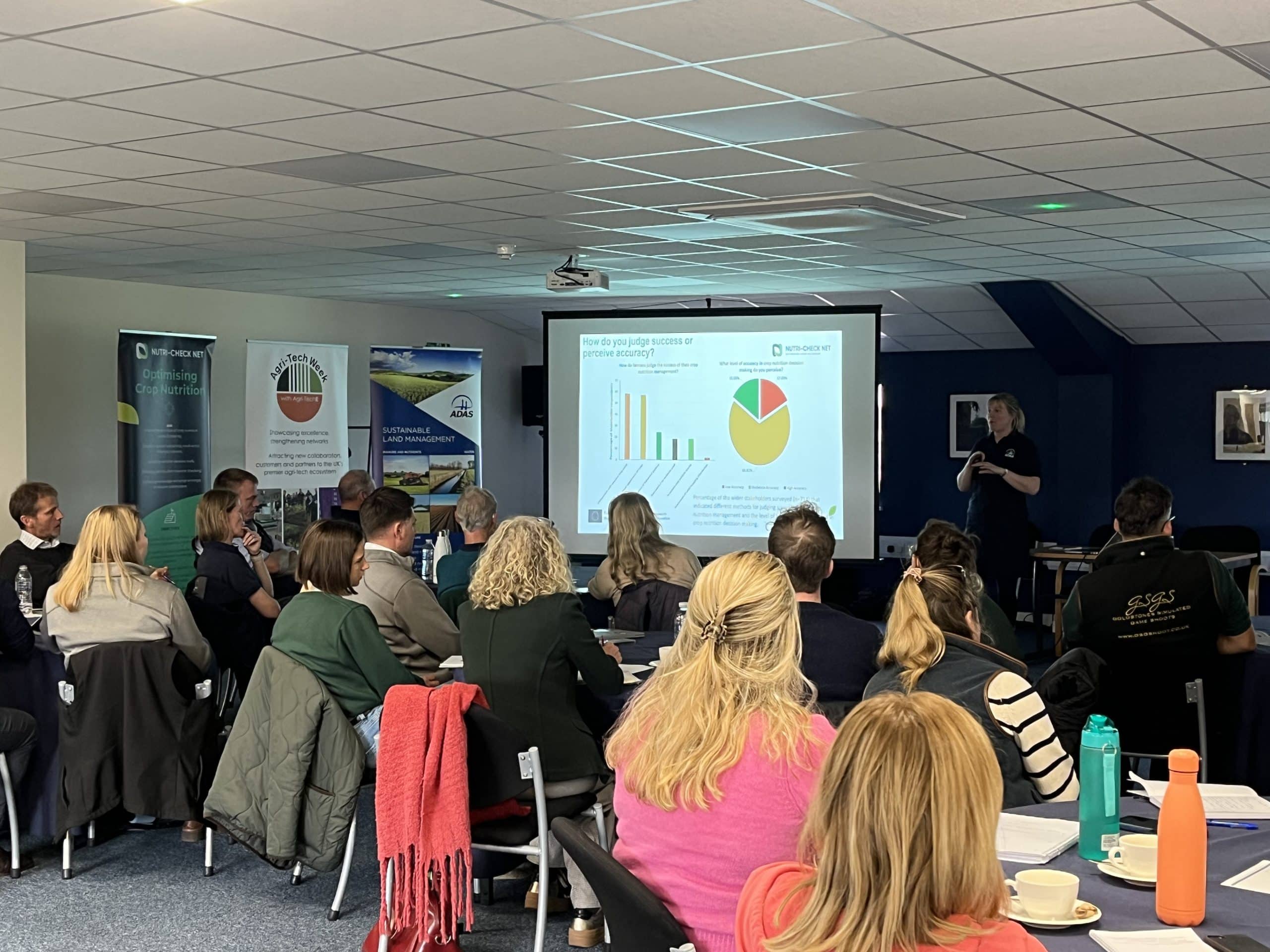
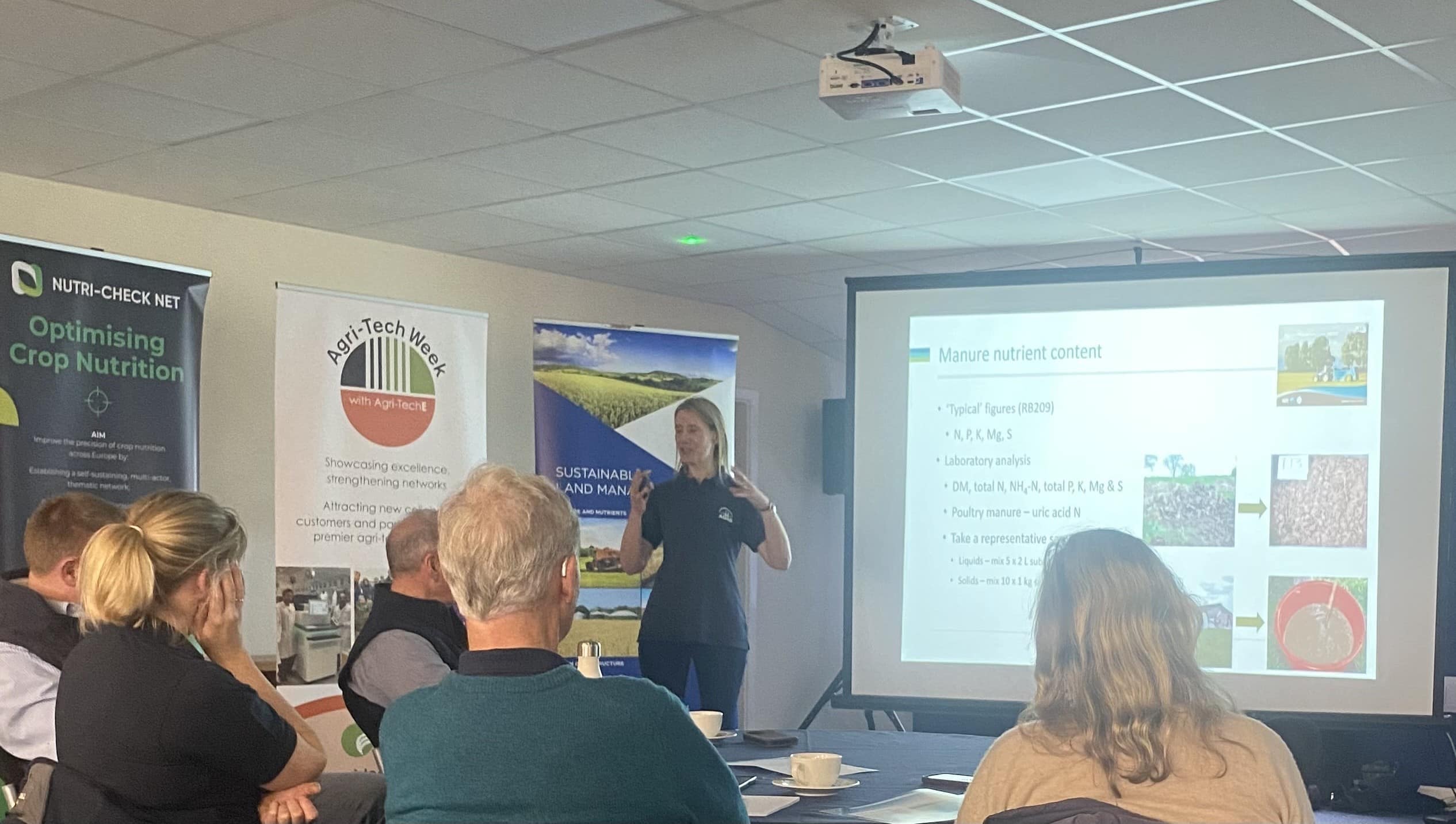
ADAS were delighted to host another successful AgriTech Week event this year — ‘Making the Most of Organic Materials’.

We were pleased to welcome arable and livestock farmers, advisors, and scientists to the event last week.

The day featured a fantastic line-up of speakers who shared a blend of research insights, future developments, and practical on-farm experience. Key topics included managing manures on farm, the fundamentals of manure management, improving slurry through separation, converting manures into organomineral fertilisers, crop nutrition, and real-time nutrient management.

It proved to be both an insightful and informative event, offering valuable perspectives on the use of organic materials — an increasingly important focus for sustainable agriculture.

Manures, slurries, biosolids, compost, and digestate all contain essential plant nutrients that can reduce the need for artificial fertilisers. With careful planning and management, their full potential can be unlocked to support both productivity and environmental sustainability.

Attendees commented:

‘A better understanding of the precise way to use these materials and a sense of excitement at the prospects of doing so.’

‘There is much promise in organic materials but much work still to be done in the field.’

ADAS would like to thank all our speakers and attendees for contributing to such a successful and engaging event — and for continuing the conversation around making the most of organic materials for a more sustainable future in agriculture.

ADAS2
Lizzie cropped

Nantwich Farm Vets Partnering in Calf Health Innovation

Member News
The views expressed in this Member News article are the author's own and do not necessarily represent those of Agri-TechE.

Nantwich Farm Vets partnering in calf health innovation.

Nantwich Farm vets are about to start round 2 of an innovative project in conjunction with Agri-TechE member’s Roboscientific, and SRUC (Scotland’s Rural College), and global animal health company Zoetis, and Ritchie Engineering Services Ltd, based in Aberdeen.

Roboscientific, winner of the 2019 Tesco Agri-TechE T-Jam award, specialise in detecting & analysing volatile organic compounds (produced by organisms such as bacteria) enabling early identification of disease. Building on their previous success with barn monitoring of pigs and chickens the current project, funded by Innovate UK, involves installing their VOC analysers on automatic calf feeders on 3 farms looked after by Nantwich Farm Vets. These analysers capture a sample of breath from individual calves as they feed and analyse the VOC ‘fingerprint’. Electronic ID tags enable the VOC pattern to be assigned to the individual calves and stored as a digital record on the farm.

Two of the Nantwich Farm Vet team visit the farms every day for 28 days where, using a published respiratory scoring system (the Wisconsin score), they will ‘score’ each calf. These scores will be added to lung scanning data and laboratory test results to then allow the Roboscientific and SRUC teams to correlate the VOC pattern with the clinical picture from the examination of the calves. The aim of the project will be to identify the difference between a ‘healthy’ VOC pattern, and the VOC pattern of a calf starting to develop respiratory disease.

“Our novel technology means that farmers will have a system of monitoring their calves for respiratory disease at this critical early stage of their lives automatically and non-invasively. By identifying calves with respiratory disease sooner, the vet and farm team will be able to implement treatment protocols sooner, leading to improved responses and enhanced calf welfare” says Angie Curtis, Sales Director for Roboscientific.

Round 1 of the project was completed in Spring 2025; in October/November 2025, the project team will return to the farms for round 2 of the trial, at which point Roboscientific hope to have a working prototype that will alert the farms to any calves that are starting to develop respiratory disease.

Business Development Manager Phil Cullinan has worked closely with the Roboscientific, SRUC and Zoetis teams to coordinate the practice’s role in the trial. “We’re ideally placed to support this type of project at the practice. Two of our vets are Personal Licence holders and our large, progressive customer base of dairy farms means we can support a wide variety of trial work”.

If anyone wants to discuss planned trial work contact Phil on philcullinan@nantwichfarmvets.co.uk

Nantwich Farm Vets drive growth of biological fly control on North West farms

Member News
The views expressed in this Member News article are the author's own and do not necessarily represent those of Agri-TechE.

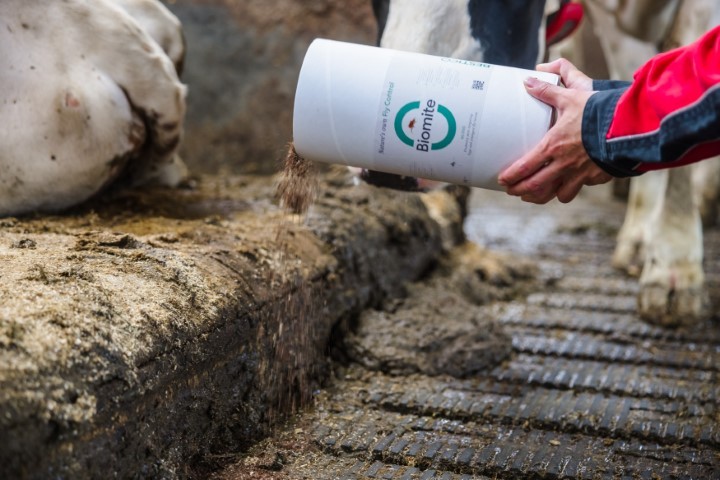
As fly populations rise with warming temperatures, UK dairy farms are increasingly turning to sustainable pest management strategies. One method gaining popularity is the use of biological fly control — specifically, the deployment of parasitic wasps, often branded as Biowasps. Additionally, parasitic flies and mites (Biofly and Biomite) are available for use in specific cases to support the Biowasp.

Biowasps are tiny, non-stinging insects that target fly pupae, breaking the breeding cycle and reducing future fly populations. They are harmless to humans and animals but deadly to flies in the pupal stage. They offer a natural, chemical-free alternative to traditional insecticides, which can lead to resistance, residue issues, and harm to non-target species including humans. On dairy farms, reducing fly burdens is essential for maintaining cow comfort, preventing disease transmission and improving milk yields.

Typically, Biowasps are introduced early in the season and applied regularly through the warmer months. They are most effective when used as part of an integrated pest management plan — combining good muck handling, dry bedding practices, and monitoring hot spots like calf pens, muck heaps and feed areas.

Trials and anecdotal reports from UK farms show that Biowasps can reduce fly populations significantly when used correctly. Their ease of use, compatibility with organic systems, and minimal environmental impact make them an increasingly attractive option for forward-thinking farms.

At Nantwich Farm Vets, anyone interested in the use of Biowasps receives an individualised site assessment and bespoke plan to cover the fly season. Packs of Biowasps (+/- Biofly/Biomite as required) are delivered every 2 weeks starting around April and running through to late September/early October.

Business Development Manager, Phil Cullinan has been working closely with Bestico and the farm team at the practice to drive growth in this area. “We’re seeing more and more of our farmers turn to biological fly control to help control the flies on their farm. People are becoming increasingly aware of the use of chemicals on-farm and are often looking to reduce them for a variety of reasons, including their own health. Bestico offer a viable alternative and we’re seeing great growth in this area”.

IMG_0844
h8c8d256efd1d23ee4c7dce9150971b26

Nantwich Farm Vets work with Agri-TechE member Vet Vision AI on Cheshire Dairy Farm

Member News
The views expressed in this Member News article are the author's own and do not necessarily represent those of Agri-TechE.

Nantwich Farm Vets are pioneering a new method of monitoring dairy cow comfort to support the growth & progression of their dairy clients.

Using technology from Agri-TechE member Vet Vision AI, they now offer a ground-breaking service – monitoring cows 24/7 using night vision-equipped time-lapse cameras and artificial intelligence, providing insights that would otherwise be impossible. Cow behaviour patterns can be tracked day and night, with detailed reports highlighting differences across the farm and benchmarking against other UK herds. Key metrics include cow comfort, resting times, and feeding patterns, making it easier for farmers to take meaningful action to continually improve health and well-being.

Brothers Will and Harry Dodd, of Dodleston Hall Farm near Chester, are early adopters. “We know our cows are doing really well,” says Will, “but there are a few things we’re considering changing to make them even more comfortable. Before investing tens of thousands of pounds, we want objective data to help guide where our funds will make the biggest difference. We’re really excited to see what this shows us.”

Rob George, partner at Nantwich Farm Vets and one of the farm’s main vets, adds: “Comfortable cows tend to be healthier, and healthier cows are more productive. This technology supports the win-win-win we strive for. Our practice will work closely with the Dodd family and Vet Vision AI to maximise cow health and welfare, driving the sustainability and long-term profitability of the farm.”

Business Development Manager Phil Cullinan has worked with Charlie Carslake and Liz Cresswell from Vet Vision AI to bring the opportunity to the practice. “It’s great to be able to see the progression of this from initial conversations with Charlie to now ‘going live’ on farm. We’re excited to see how this helps our clients better understand their stock behaviours and plan their investments accordingly”.

The cameras are being installed in September 2025, with results expected in October.

  • *I have permission from the copyright holder to publish this content and images.

Precision Breeding Legislation for Plants Passed – What This Means for Agri-Tech 

Member News
The views expressed in this Member News article are the author's own and do not necessarily represent those of Agri-TechE.

The recent passing of secondary legislation to implement the Genetic Technology (Precision Breeding) Act for plants in England marks a milestone moment for UK agriculture. England is now aligned with countries like the United States, Canada, Japan, Brazil, and India, which have already approved gene-edited plant varieties such as high-GABA tomatoes, drought-tolerant rice, and herbicide-resistant soybeans.  

As GMO regulation is a devolved matter, legislative harmony across UK nations has not yet been achieved. Currently, this is an England only Act, meaning that it has provided a new category for precision bred organisms to be authorised in England. In Wales, Scotland and Northern Ireland, these organisms will remain classified as genetically modified organisms. 

The legislation unlocks a regulatory pathway for gene-edited crops to be developed and commercialised under a domestic framework. This distinguishes them from genetically modified organisms (GMOs) and enables innovations that would have previously been stalled. This shift marks a significant step in the England’s agricultural policy, positioning it as a leader in precision breeding innovation. 

But what does this mean for the wider agri-tech sector? And where do livestock and aquaculture — also covered in the Precision Breeding Act — stand in comparison? 


A Step Forward for Plant Breeding 

This new legislation gives clarity and confidence to plant breeders working with traits that would traditionally be enhanced through traditional breeding, but now with more speed and precision through gene editing. We expect the initial wave of activity to focus on traits that improve: 

  • Disease resistance 
  • Climate resilience (e.g. drought or heat tolerance) 
  • Nutritional value 
  • Input efficiency (e.g. reduced fertiliser or pesticide use) 

For producers, it could mean access to varieties that are resilient to changing environmental conditions or that provide for consumer preferences — crucial in a sector under mounting pressure to deliver more with less. We’re also seeing development of cross-functional GE crops like high-lipid barley, which has been linked to reduced methane emissions in livestock.  


The Science Is Ready – But Is the System? 

We now have the scientific tools to introduce targeted, subtle genetic changes — changes that could have arisen naturally over time — with a precision unimaginable even a decade ago. In livestock, we’ve already seen examples like PRRS-resistant pigs or polled (hornless) cattle where gene editing can deliver clear welfare and production benefits. 

But having the tools is not the same as having a system ready to use them. For gene editing to fulfil its potential in either plants or animals, science must be backed by: 

  • Aligned legislation and trade frameworks 
  • Trust-building across the supply chain and with the public 
  • Robust monitoring, decision-making, and governance systems 

England has taken a bold step forward with plants, but the needs of the wider system that have been outlined above — particularly in animals — still require development. The regulatory path for livestock is still incomplete, and international divergence (including within the UK) poses barriers for deployment and trade. 


What About Animals? 

While the Act also applies to livestock and aquaculture, no secondary legislation has yet been implemented for animals — and this creates both opportunity and uncertainty. 

As highlighted in the Harnessing Genetic Tools report developed by AbacusBio for the UK Agri-tech Centres and the Roslin Institute, animal gene editing has the potential to: 

  • Eradicate or reduce major diseases (e.g. PRRS in pigs) 
  • Improve animal welfare (e.g. hornless cattle, heat tolerance) 
  • Accelerate genetic gain while maintaining the integrity of the animal 

However, the path to commercial use is less clear. Animal editing faces higher regulatory, ethical, and social hurdles, especially around welfare monitoring, ethics, environmental risk, and public acceptance. Cross-border trade challenges also remain a barrier. 


Shared Opportunities, Shared Challenges 

Whether in plants or animals, gene editing is not about “playing God” — it’s about accelerating changes that could happen naturally, but in a more targeted, predictable way. In both cases, the key considerations are similar: 

  • Do we have clear breeding goals tied to sustainability and resilience? 
  • Are systems in place for monitoring intended and unintended effects? 
  • Can we align regulation, public trust, and commercial demand? 

The lessons from plant roll-out will be instructive. If well-governed and communicated, early plant successes could help pave the way for animal applications. 


What We’re Advising Clients 

At AbacusBio, we’re working closely with clients across the value chain — from breeders and producers to policy and research partners — to help them prepare. Our advice is: 

  1. Start building capability now. Even if deployment is still down the road for animals, the foundations — genomic infrastructure, breeding goal refinement, and public engagement — are best laid early.
  2. Think system-wide. Gene editing is one tool among many — it will be most powerful when combined with other technologies like genomic selection, Artificial Intelligence in breeding decisions, and sustainability benchmarking. 
  3. Consider the long-term implication. It takes a substantial amount of R&D to get a precision breeding idea from concept to commercialisation. A robust and informative framework that assesses candidate gene edits for potential progression from research, proof of concept, integration into breeding and variety development programs, through to commercialisation is essential.
  4. Stay engaged and vocal. The plant sector is showing what’s possible when policy moves. Animal sector voices — including from producers and scientists — will be essential to ensure the next phase of legislation reflects both opportunity and practicality. 


Looking Ahead 

The passage of secondary legislation for plants is cause for optimism. It shows that England is willing to lead with science, while also demanding responsible innovation. The challenge now is to extend that clarity and capability across the whole of agriculture — plant and animal alike — and ensure we harness the best of genetic technology for a more sustainable future. 


Reflections on a journey from Seed to Field through Space

ECIF
Agri-TechE

In April 2025, ECIF hosted its annual conference, featuring presentations from research organisations and technology companies to show the wide range of innovations that are making a different to agriculture.

This is Dr Vongai Chekanai’s experience from the Early Career Innovators Forum Conference 2025: Reflections on a journey from Seed to Field through Space.

Having recently completed my PhD in Agriculture, I sought to connect with and join a community of other early-career professionals from diverse agricultural backgrounds, broadening my horizons and the options available to me.

Question Time!

My PhD project was centred on cover crop-based management of plant-parasitic nematodes. In my trials, some varieties of forage crops, such as alfalfa and forage chicory, were identified as poor hosts, reducing soil populations of root lesion nematodes under both controlled and field conditions. According to past research, resistance is partly due to high levels of saponins that reduce the digestibility of protein and amino acids in forage biomass by livestock.

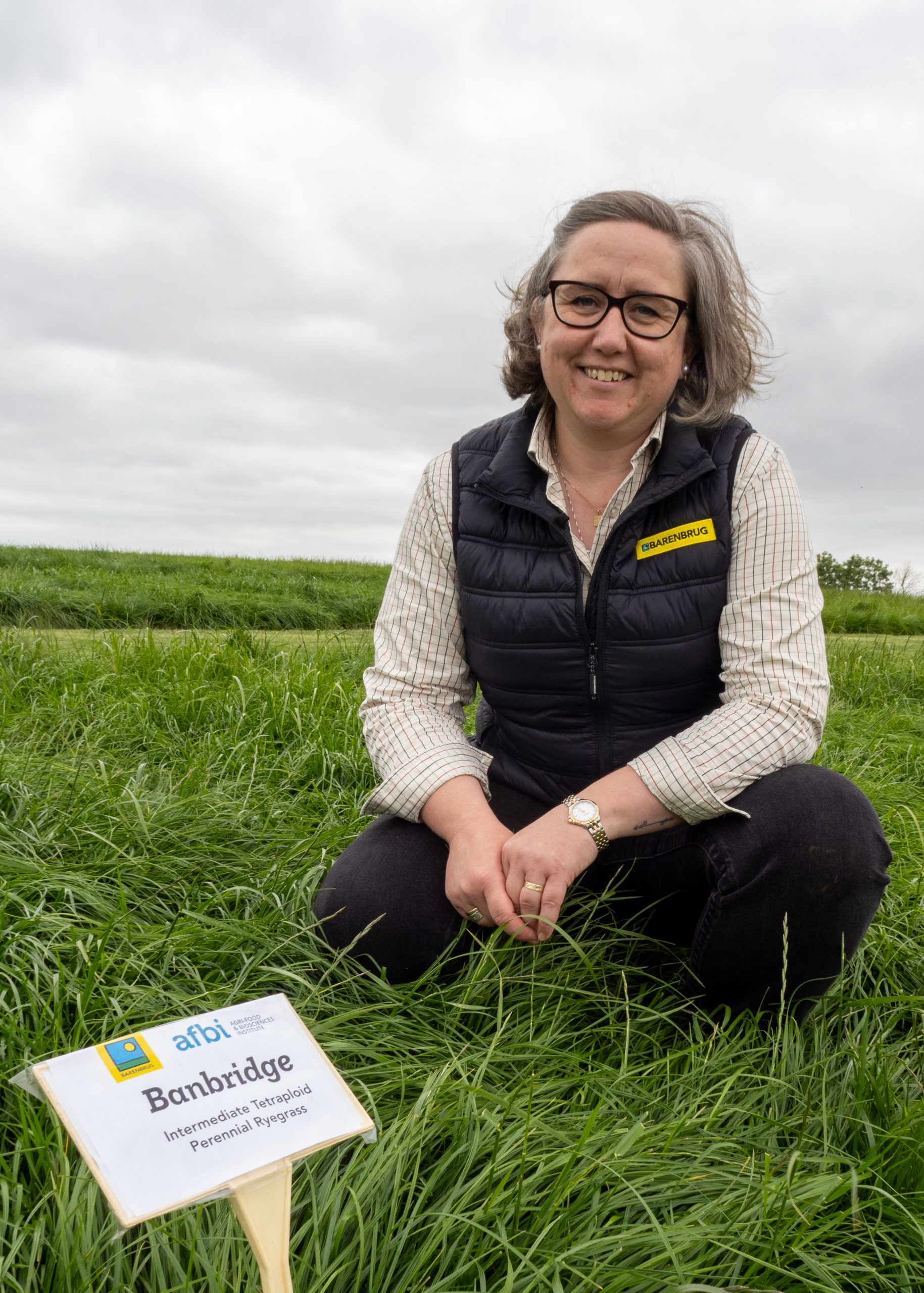
Listening to Janet Montgomery, the Product Manager for Agriculture at Barenbrug UK, discuss the breeding and development of forage species was particularly interesting – and it generated lots of questions for me:

  1. Does this mean improved forage varieties for higher nutritional quality will eventually render forage crops susceptible to plant-parasitic nematodes?
  2. Is it possible to combine breeding goals for higher digestibility and increased pest and disease resistance, and what is the optimal balance?
  3. Can we achieve two objectives by using common weaning mixes currently available on the UK market, such as alfalfa and forage chicory, to manage both ruminant helminths and plant parasitic nematodes?
vongai 2
vongai

Developing industry knowledge and three new-found facts

I am currently working in Plant Pathology research, and I have a specific interest in plant disease management using biocontrol agents. Through Dr. Rosario Campilongo’s presentation, we gained insight into the work that PfBio is doing in developing plant bio-stimulants and biopesticide products as alternatives to synthetic chemicals.

Top Fact #1: The bio-stimulants industry in the UK is largely unregulated, resulting in a shorter development pipeline, whereas crop protection products face stricter regulations.

Brilliant presentations were done on air pollution and animal welfare by the University of Reading Researchers, Dr. James Ryalls and Dr. Zoe Barker. In her research group, Dr. Zoe Barker and colleagues at the Centre for Dairy Research (CEDAR) use novel sensors to measure the responses of dairy cows to microclimate conditions, such as temperatures and humidity, rather than relying on traditional outdoor meteorological data.

Dr. James Ryalls’ research examines the effects of air pollution gases, including diesel exhaust nitrogen oxides and tropospheric ozone, on invertebrate pollinators.

Top Fact #2: Pollutants may mask or degrade the volatile organic compounds that plants use to attract pollinators, resulting in reduced visitation and lower yields.

Yara Al Sarrouh is an Application Scientist at Assimila Ltd, a company that gathers and monitors satellite Earth Observation data, used in climate metrics, crop modelling for sustainable crop production, and pest and disease management.

Yara is part of the Science Technical team for the European Space Agency-funded ‘World Peatland project’, where she plays a key role in developing indicators for peatland health.

Top Fact #3: Peatlands cover approximately 10% of the UK’s land area, and their restoration could significantly reduce carbon emissions.

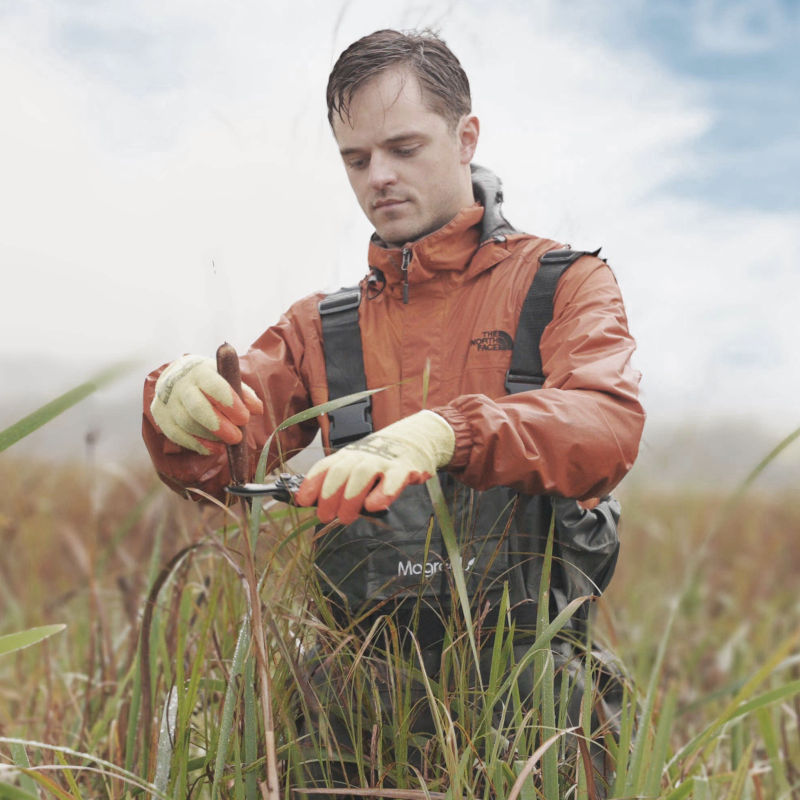
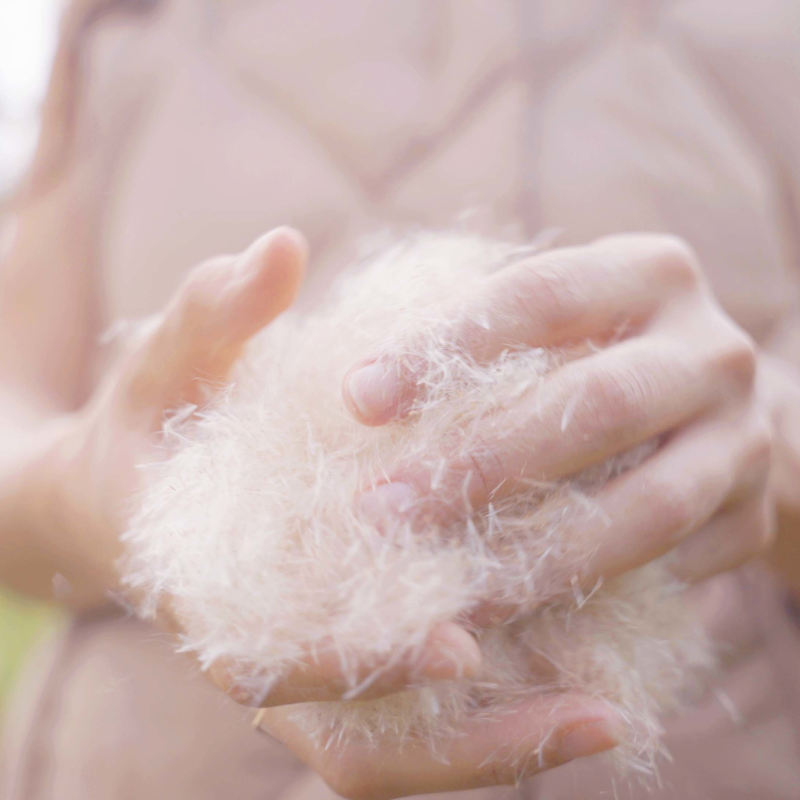
Julian Ellis-Brown introduced us to Ponda, which produces Typha-based textile clothing insulation materials grown in rewetted Irish peatlands—a far more natural and animal-cruelty-free way to stay warm.

Ponda-extracting-fibres-from-plants-that-aid-in-wetland-regeneration
BioPuff-from-Ponda-2-web

Reach for the stars! And getting a little perspective…

For me, being an agricultural innovator meant being exceptionally bright and reinventing the wheel. Publishing numerous peer-reviewed that would attract the attention of funders and secure substantial grants or attending a Dragon’s Den-type pitch.

While this may be partly true, it’s a narrow and frankly daunting way of perceiving Agricultural innovation…

After attending this conference, innovation in agriculture to me feels more practical and achievable – it means individuals seeking solutions to serve the sector. And sometimes brilliant ideas can come from conversations with different industry and commercial partners, as well as coming together to develop concept notes, which ultimately lead to technology development.

As Julian emphasised, customers pay for practical solutions to problems!

It was inspiring to see diverse ideas and individuals working in different areas contributing to the common goal of sustaining life in healthy environments.

As an early-career professional, attending such gatherings broadens your horizon and makes you realise that you might have more to offer and contribute than you often realise.

My message to early-career professionals is to be involved, listen, and ask – it’s all part of contributing.

Thank you, Agri-TechE , for putting together such a rewarding conference.


The Early-Career Innovators’ Forum (ECIF) is a platform uniting early career individuals passionate about agricultural innovation.

Join the ECIF Programme to enhance your knowledge and network in agriculture, and to attend free activities, including research, farm and industry visits, an annual conference, and professional skills webinars. Explore more about ECIF and how to join here.

Farm Fodder Flow: Spring Grass Growth

Member News
The views expressed in this Member News article are the author's own and do not necessarily represent those of Agri-TechE.

Spring Grass Growth: Why Patience Pays Off Before Turn-Out

When Spring arrives, the sun shines, the temperature creeps up, and the grass is greening, writes Barenbrug’s Agricultural Product Manager Janet MontgomerySurely that means turn-out’s just days away.

But think, has spring really arrived?

Only if you’re observing the meteorological calendar, where the official winter-to-spring transition occurs on 1st March. Those of us with a more traditional view of the seasons will be holding out for the spring equinox of 20th March – when daylight hours finally exceed those of darkness – to mark the change in season.

Either way, when it comes to grass, both the astronomical and the meteorological calendars are no more than a distraction. The only thing of importance is what’s happening in the field. And much of that will be the result of what happened at the tail end of the seasonal year.

That’s because one of the biggest influences on spring grass growth is how much cover was left in the fields in the autumn, and how much rest those fields needed over winter to be in sufficient good order to provide the desired spring cover.

Spring Cover

What that spring cover looks like, or what it’s capable of, all depends on your plans for it. Your target – measured in kilograms of dry matter per hectare (DM kg/ha) – should be reached by the time you’re lambing, calving, or simply for turn-out after housing.

To achieve that, the grass must be given its best shot. And you’ll not do that by near-religious observance of a circled date on the calendar! Restock those fields before they’re ready, too early, too soon – and not only will the covers not be enough to sustain them, you’ll also find yourself facing the knock-on effects for the rest of the season…

…which is why it’s important to have the Farm Fodder Flow (FFF) principles foremost in your mind. How can you match your farm’s productive capacity to your animals’ dietary requirements? Careful planning, assessments and projection are the key.

Conserved Feed

Right now, you’ll have a good idea of how much longer your conserved feed is likely to last. My advice is to keep using it until you’ve emptied the clamp. If you’ve enough feed to keep things in the shed, do it. It’s feed that’s already paid for. Your fields will thank you, and you might even find that it gives you extra ‘breathing space’ later in the season – Farm Fodder Flow principles coming into play – to close off an extra field to take an extra cut, and thus make use of a grass excess to cover a possible later shortfall.

Final Check: Soil

The final check is in the soil: its moisture, and its temperature. Be sure both are ‘in range’ before you sign off on that turn-out decision: moisture, to avoid any possible damage to soil structure, and temperature, because unless soil temperatures have reached 5°C, then the grass isn’t growing.

To sum it all up? Good grass comes to those who wait; don’t be too quick to open the gate.

  • *I have permission from the copyright holder to publish this content and images.

Farm Fodder Flow: Go With The Flow

Member News
The views expressed in this Member News article are the author's own and do not necessarily represent those of Agri-TechE.

Encouraging farmers to adopt a more holistic approach to on-farm feed management, recognising that home-produced feed will always be more beneficial to the bottom line, this concept is known as Farm Fodder Flow.

Janet Montgomery, Agriculture Product Manager at Barenbrug, explains the concept of Farm Fodder Flow. Farmers have always had to juggle numerous tasks while mitigating the effects of external factors beyond their control.

Grass has been the cornerstone of many farming systems, supporting livestock enterprises ranging from beef and sheep to dairy to diversified operations. Farming today demands a strategic, data-driven approach to optimise returns and sustainability.

Rethinking Grass Management

Farmers must move beyond the ‘one size fits all’ grass strategies of the past. Modern farming, shaped by economic and environmental pressures, calls for bespoke solutions tailored to the unique needs of each enterprise. This is where the concept of Farm Fodder Flow comes into play.

Put simply, Farm Fodder Flow is about matching the farm’s productive capacity to the nutritional requirements of livestock through planning, assessment, and projections. It ensures the efficient use of home-produced feed, reducing reliance on purchased concentrates, while improving productivity.

Done well, it can also optimise labour requirements and provide higher-quality feed throughout the year, benefiting both the animals and the farm’s bottom line.

First Steps

Consider it a return to basics: what are your production goals? Are they sufficient? Where or how do you need to make changes? For livestock farmers, these goals might pertain to litres of milk, kilos of beef, lambs sold, or other measures relevant to the enterprise.

For example:

  • In a dairy system, how many days a year produce milk? What is the average production per cow?
  • Beef farmers may aim for specific weight gains or finishing times.
  • Sheep farmers might focus on lambing percentages or faster turnaround times for market-ready lambs.
  • Mixed enterprises should account for goals across all activities.

By assessing these goals, farmers can gain a clear understanding of their annual production targets and the feed demands of their livestock throughout the year.

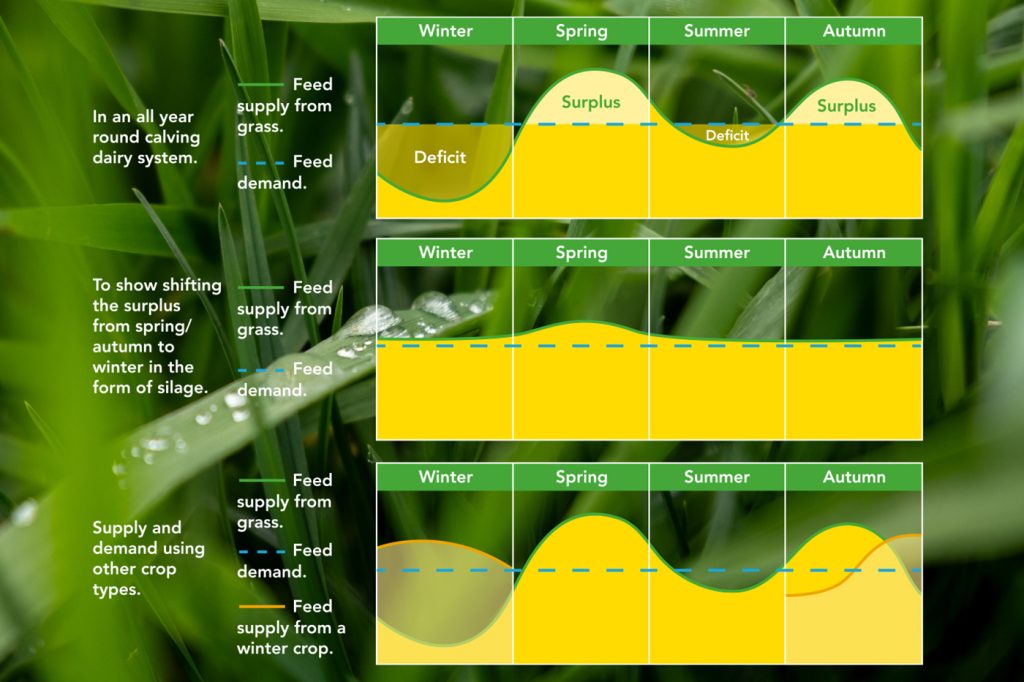
These graph curves are an example specific to an all-year round calving dairy system.

Supply and Demand

The next step is evaluating whether the available grass and forages meet the farm’s feed demand. Do your peaks in supply align with the nutritional needs of your livestock?

Most farms will identify a mismatch between the supply curve and the demand curve. Common strategies to address this include making silage or hay to bridge the feed gap during low-growth periods. However, Farm Fodder Flow takes this a step further by exploring ways to optimise both the quantity and quality of feed.

Improving the Flow

Adjusting the way silage is produced can make a significant difference. For instance, moving from a two-cut system to a four-cut system can improve the nutritional quality of silage, resulting in better feed conversion rates. Livestock fed on higher-quality silage often exhibit improved weight gain, milk yield, or overall performance.

Even without major changes to cutting schedules, practices such as grass indexing can help identify fields that need reseeding or maintenance, maximising the efficiency of the most productive areas.

Explore Alternatives

Don’t hesitate to consider alternatives to traditional silage. Short rotation crops like winter brassicas, Italian ryegrass, or forage rape can provide flexibility and a different nutritional profile. These crops are especially valuable as break crops in grass rotations, helping to manage weeds, improve soil health, and support long-term productivity goals.

A New Mindset

Farm Fodder Flow represents a shift in mindset. It’s not about wholesale changes but rather about refining and optimising current practices. By prioritising home-grown feed and recognising its superior nutritional and economic value, farmers can build more resilient and profitable systems.

This holistic approach empowers farmers to balance the demands of their enterprises with the resources available, ensuring sustainability and success in an ever-changing agricultural landscape.

  • *I have permission from the copyright holder to publish this content and images.

Can organic farming solve our sustainability dilemma?

Member News
The views expressed in this Member News article are the author's own and do not necessarily represent those of Agri-TechE.

Almost 11% of agricultural land in the European Union (EU) is organically farmed and the number of organic producers is increasing at a steady rate year on year.

But what does the term ‘organic farming’ actually mean?

For IFOAM Organics – one of the leading international organisations in the organic space – organic agriculture can be defined as: ‘A production system that sustains the health of soils, ecosystems, and people.’

To be organic is to rely on natural ecological processes, biodiversity and cycles adapted to local conditions, rather than turn to inputs which negatively impact both the environment and human health, such as synthetic pesticides, herbicides and fertilisers.

For some, organic farming is the answer to our sustainability dilemma.

However, in an era where global livestock production (particularly dairy) has been heavily scrutinised for its contribution to climate change, how can these organic principles translate to more sustainable livestock production?

“Dairy cattle farming has played a key role in the development of organic principles, regulations and practices,” says Dr Mette Vaarst, Senior Researcher at Aarhus University, Denmark and co-editor of this new book.

This is the focus of Advances in organic dairy cattle farming – a new book edited by three of the world’s foremost authorities on organic animal farming: Dr Mette Vaarst (Aarhus University, Denmark), Dr Stephen Roderick (Duchy College, UK) and Dr Lindsay Whistance (Organic Research Centre, UK).

The book considers how organic dairy farming has the potential to address major environmental challenges, whilst also meeting the four key organic principles of health, ecology, fairness and care.

“The environmental footprint of conventional dairy farming is significant and we can’t hide away from that fact,” says Francis Dodds, Editorial Director at Burleigh Dodds Science Publishing.

“But perhaps what needs to be highlighted and spoken about more is organic farming and its remarkable potential to not only reduce the environmental impact of dairy production, but also how it can promote biodiversity and enhance other ecosystem services,” he adds.

Conventional dairy farming often relies on intensive livestock management, imported feed and synthetic fertilisers and pesticides for pasture management which collectively contribute to higher emissions. In contrast, organic dairy farms utilise natural processes and inputs, including a higher reliance on pasture, organically-sourced feed supplements and regenerative methods for optimising pasture quality.

By working with nature, organic farms can promote biodiversity and create more resilient and sustainable agroecosystems able to deliver key ecosystem services, including pollination, pest control and water regulation.

“However, whilst organic dairy farming does offer numerous environmental benefits, it also presents challenges that need to be addressed,” says Francis Dodds.

“These challenges include potentially lower yields associated with more extensive production systems as well as health and welfare issues given a lower reliance on antibiotics and anthelmintics,” he adds.

However, these challenges also present opportunities for innovation and growth within an already exciting sector which offers a promising path to greater sustainability for the wider agricultural sector.

Note:

Agri-TechE members can redeem 20% off their purchase of the book via the BDS website. Simply enter code AGRITECH at checkout.

  • *I have permission from the copyright holder to publish this content and images.

Phase two for Farm Diversification

Agri-TechE Article
Agri-TechE

Farm diversification has become more critical than ever for farm profitability. Beyond the offerings of their natural capital, like glamping, ag-tech provides future diversification opportunities to innovative farms. This involves creating a closed loop where farmers can, for example, process their own waste, create biological fertilisers, or high-value out-of-season plants.

Could farms become mini manufacturers for insect protein, fermentation products, or high-value produce grown in a controlled environment?

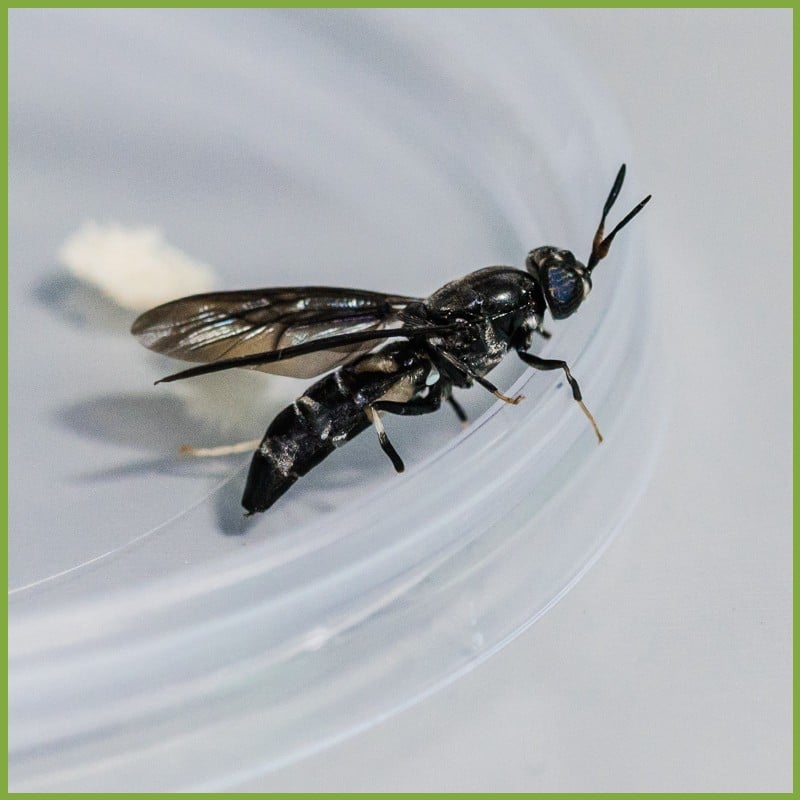
Modular insect farms are a ground-breaking and profitable waste management solution to help solve challenges like water pollution from excess poultry manure, simultaneously reducing our reliance on imported protein, says Larry Kotch, CEO of Flybox.

Flybox is developing smaller-scale insect farms. Larry says insect farms can be more efficient than an AD system while boasting greener credentials. The two technologies are also highly complementary.

“If you’re a farmer, you can diversify into the new protein source,” says Larry.

“You could convert an old poultry shed into an insect protein factory and have a guaranteed end market. We are trying to make it much more accessible with a lower requirement for capital.

“Previously, insect protein production was based around large factories with teams of entomologists and ingredients experts, which had a high amount of risk.”

Black-soldier-Fly-close-up-2@0
flybox

As agriculture moves from the chemical to the biological age, there’s also potential for farmers to manufacture their own inputs, believes Joanne Neary, Senior Technical Lead at the Centre for Process Innovation (CPI).

For years, CPI has had queries from farmers, mainly in America, asking for advice on how to culture certain bacteria, explains Joanne.

“You would get questions from a farmer with an IBC container trying to grow microbes which they have tested on plots of tomatoes, asking us to help them refine the process.  These days, the majority of enquiries are for non-farming businesses that have fermentors, but it’s an interesting concept to move this onto farms.”

Farmers making compost teas are already carrying out a process similar to a lab fermenter, so it is only a small step to a more formalised process, believes Jo. If the biologicals are produced correctly, it is cheaper than buying them because they do not need the sophisticated formulation to keep the organisms alive.

She says: “Much of the R&D budgets for commercial biological production is looking at the formulation. It is key to ensure the microbes are still viable when the product is stored, however it is packaged. You need the cells to stay in dormancy but still be viable.

“The cheaper approach is to make something on farm and use it immediately. You won’t have something that is stable, but if you can make it when you need it, why would you care?

“Another nice aspect of DIY biologicals is if you understand your soil microbial population, or if there’s a particular problem, you could tailor it to your needs.”

Centre-for-process-innovation_asset
Mark Horler

Mark Horler, Chairman of UK Urban Agri-TechE (UKUAT), believes that controlled environment growing technologies could be a viable proposition for arable and livestock farmers, providing they have the infrastructure. They would also link ideally with the quintessential farm diversification – a farm shop.

“UKUAT has identified a great deal of interest in controlled environment growing technologies as a form of diversification for farmers and landowners,” says Mark. “However, significant challenges and barriers remain. That might be in practical terms, for example, the capital cost, integration with renewable energy, or simply knowing where to get started and how to make appropriate choices.”

Firms like Grow Dynamics offer modular growing solutions more suited to the scale and cost farmers seek, but advice is still needed to navigate a complex landscape.

He adds: “Protected and controlled environment horticulture encompasses a wide range of technologies and approaches – from low tech/ low cost/ low control, for example, polytunnels, right the way through to Totally Controlled Environment Agriculture (TCEA) such as vertical farming. UKUAT tries to help bust some of the myths that have arisen around this topic and help farmers find the right advice.”


JOIN TODAY ONLINE! Future Farms Agri-TechE webinar – April 24th

Larry, Joanne and Mark will discuss the opportunities of future farm diversification in a webinar on April 24th, hosted by Agri-TechE .  It’s a chance to delve into the technology, with information on how to get started and the opportunity to ask the speakers questions.

To register to attend or find out more: Future Farms: Vertical Growing, Insect Cultivation & DIY Biologicals