The Productive Landscape: NatureTech for Profit and Planet
How can technology enable delivery of food, nature recovery, and climate resilience - all at once? The Head of the Environment Agency is asked: what's the national plan for dealing with land use pressures, plus you’ll hear from technologists and land managers working on nature-based and tech-enabled solutions for water, soils and climate adaptation.

The agri-tech sector and government relationship in 2021 and beyond

Member News
Agri-TechE

Now that the UK has left the EU, every UK business sector and investor will look to the Government for its strategic policy roadmap that addresses this historic event and the perceived opportunities that it presents. The Prime Minister has consistently argued that a key element of the UK’s departure is that it allows his Government to establish its own regulatory structures as a springboard to a globally competitive economy.
The now ratified Treaty entitled the “UK – EU Trade and Cooperation Agreement” provides the framework for the UK’s future trade relationship with the EU. Several commentators have characterised the Treaty as the end of the beginning of the new relationship as it requires the parties to enter into a wide variety of subsequent debates and agreements covering many important areas and details. The outcomes will be highly relevant to the UK’s relative prosperity over the longer term.
Notwithstanding the above and the ongoing challenges of the pandemic to the UK and world economies, the Government’s responsibility is to lay out its policy strategy for this new situation that facilitates the creation of an environment which encourages business investment and growth in our economy.  In relation to the AGRI TECH sector the enactment of the Agriculture Act 2020 already provides the long term, post CAP framework for the farming sector as a whole. Understandably, considerable uncertainty remains in the absence of the under-pinning structures and regulations.
The AGRI TECH sector’s relative profile and importance to the UK economy and the Government (officials and politicians) has risen materially in recent times. It therefore has a clear opportunity to assist the Government’s policy task as it relates to the sector. The relevant Departments – DEFRA and BEIS being the most obvious – will both need and welcome sector inputs in order to produce the best strategy, policy and regulatory outcomes within which the sector can prosper.
Additionally, because the Devolved Administrations of Scotland, Wales and Northern Ireland have the freedom to develop their own approaches in the agricultural sector, their policy developers will also be open to inputs.
The value of the sector’s opportunity is that players within it can, over time, become trusted voices and valued advisers to the Government and, in parallel, enhance their long term, competitive positions. Such players will certainly benefit from collaborating with their key stakeholders and partners, in particular academia, R&D centres and funders, such that their combined positions can be genuinely representative and of greater value.
To be successful and influential in policy and regulatory development there has to be an understanding of how to relate to and work with the key officials, whether at a national, regional or local level. A player needs to be clear about their own desired outcomes arising from creating a relationship with officials, and they must also have a good understanding of the issues, options and challenges confronting the officials. Possession of these basic facts will enable players to respond and assist officials in a constructive and positive way.
In summary, the Treaty opens a genuine opportunity for serious players within the AGRI TECH sector to create relationships with Government officials that are of long term mutual benefit. Policy makers at every level need trusted sector inputs to enable them to develop and operate sector relevant policies and structures.
TWENTYFIFTEEN understands this environment and how to work within it, and is open to conversations with fellow members of Agri-TechE at any time.
Contact Details – Richard Elsden, Director, TWENTYFIFTEEN ADVISORY LTD,
Email – Richard.elsden(@)twentyfifteen.co
Mobile – 07748 931372
www.twentyfifteen.co

This content has been contributed by TWENTYFIFTEEN;  the views, thoughts and opinions expressed in this text belong solely to the author, and do not necessarily reflect those of Agri-TechE .

How do we design the future we really want?

Agri-TechE Blog
Agri-TechE

The future is foreign place – we’ll all do it differently there, to paraphrase the first line in L.P Hartley’s famous novel “The Go Between.”  As we emerge into 2021, all eyes are looking forward and nurturing hopes, plans and ambitions that life will be better – healthier, happier, safer and more sustainable.
But how do we make the future we want a reality – and avoid ending up with the future we don’t want, by accident?
Achieving net zero greenhouse gas emissions across the whole of agriculture in England and Wales by 2040 is a huge ambitious goal set by the NFU. But what does this really mean for the food we eat, the way land, crops and livestock are managed, the options for consumers and the values that citizens and society consider are important.

Important questions

The entire agri-tech innovation ecosystem will be impacted by the route, direction and destination of this journey to a net zero future, raising important questions for everyone in the agri-tech ecosystem.

  • How will farmers change their practices – will it be carrot or stick – data driven or technology-enabled?
  • What scientific research will be needed to generate knowledge to inform the new future?
  • What new products, tools and services will emerge creating novel intellectual property, new business models and, indeed, entirely new companies?
  • How will consumers be informed of the contribution their food is making to greenhouse gas emission? What will be most important – ethical production, price, local provenance or planetary impact?
  • Development of these new innovations will also need to be financed – what will this look like? What will be the role of the banks, investors and asset finance groups? And what will be considered “valuable” in the net zero future? Carbon sequestration, management of biodiversity or increased yield? And at what cost?

Finally, how will the next zero future influence the way business is done? What will be the role of incubators, networks, collaboration, and how can they all play their role in the common target?

Journey to a net zero future 

Agri-TechE members are invited to an exclusive workshop to explore these questions and help prepare their organisations for the trajectory towards a net zero future. Through the use of novel “artefacts from the future” we will navigate the routes, the pitfalls, the signposts, the research and the technologies we need to achieve it.
We will be supported by our global design consultancy member Method, through a unique opportunity to experience the power of future-scoping to enable our members build resilience and plan for their futures – and meet each other on the way.
Members will have the opportunity to reflect on not just how to reach net zero but how this new future could impact their own organisations – and the tools to start thinking about now to achieve it. We’ll learn new skills, gain fresh perspectives and have access to internationally-renowned advice and support which we do it.
Come and join us – be inspired.
Be challenged.
Be networked.
More information
Agri-TechE Member Event: Envisioning net zero futures for the Agri-Food sector
Thursday 4th February @ 1:30 pm – 5:00 pm Free
Keynote: Chris Brown, Head of Sustainability and Ethical Sourcing at Asda will set the scene and share some of the insights from one of the major retailers.

Genomes for 15 globally important wheat varieties sequenced
Research Digest
Agri-TechE

The genomes for 15 important wheat varieties used in breeding programmes around the world have been sequenced; a landmark discovery for global wheat production. The results from the Wheat 10+ Genomes Project will enable plant scientists and breeders to much more quickly identify influential genes for improved yield, pest resistance and other important crop traits.
The research results, just published in the journal ‘Nature’, provide the most comprehensive atlas of wheat genome sequences ever reported.
Two species dominate current global wheat production: allotetraploid (AABB) durum wheat (Triticum turgidum ssp. durum), which is used to make couscous and pasta9, and allohexaploid (AABBDD) bread wheat (Triticum aestivum), used for making bread and noodles.
The large genome size (16 Gb for bread wheat), high sequence similarity between subgenomes and abundance of repetitive elements (about 85% of the genome) have hampered early wheat genome-assembly efforts. So these new developments will equip researchers and breeders with the tools needed to improve bread wheat and meet future food demands.
Niab was part of a BBSRC funded team, led by Dr Matt Clark at the Natural History Museum, Dr Bernado Clavijo at the Earlham Institute, Professor Mike Bevan at the John Innes Centre and Dr James Cockram at Niab, that contributed by sequencing the globally important spring wheat variety ‘Weebill 1’.

Wheat genome sequenced, Dr Cockram Niab
Dr Cockram, Niab key role in sequencing important wheat genomes

Niab’s Dr James Cockram comments: “Weebill 1’ has good yield coupled with drought and leaf rust pathogen resistance, and is already used in breeding programmes worldwide. Its genome assembly, as part of this ‘pan-genome’ of multiple wheat genome sequences, will help breeders and researchers identify these useful, and possibly unique, genomic loci to incorporate into wheat breeding programmes.”
This was one of the five wheat varieties that groups within the UK contributed to the sequencing project, highlighting the UK’s strong commitment to international wheat research.
CDC’s wheat breeder and director and project leader Dr Curtis Pozniak said, “This mass sequencing project is like finding the missing pieces for your favourite puzzle that you have been working on for decades. By having many complete gene assemblies available, we can now help solve the huge puzzle that is the massive wheat pan-genome and usher in a new era for wheat discovery and breeding.”
Scientific groups across the global wheat community will use these new resources to identify genes linked to in-demand traits, so helping to accelerate breeding efficiency. It enables researchers to more precisely control breeding to increase the rate of wheat improvement for the benefit of farmers and consumers, and meet future food demands.
“Having multiple wheat genome sequences enables us to identify genetic differences between wheat lines that are important for breeding. We can now compare and contrast the full complement of the genetic differences that make each variety unique. For example, understanding a causal gene for say insect resistance is a game-changer for breeding because you can select for pest resistance more efficiently by using a simple DNA test than by manual field testing,” said Dr Pozniak.
The usefulness of the resources generated was demonstrated within the project with the identification of a gene controlling wheat resistance to an important insect pest of wheat, orange blossom midge, allowing genetic markers to be developed that allow beneficial natural variants at this gene to be efficiently tracked within breeding programmes.
“We expect researchers across the world to exploit these sequenced resources in similar ways, resulting in further insights and tools that will help the continued development of wheat varieties with improved performance,” explained Dr Keith Gardner, a co-investigator on the project at Niab.
Dr Cockram also highlights how such research breakthroughs are all part of the fight to mitigate climate change by increasing the resilience of crops across the world. “Improved plant varieties may have a better capacity to withstand pests and diseases, while using fewer resources. They could also offer stable yields in an unstable climate and improve productivity through efficient use of water, land and nutrients,” he finished.
The Wheat 10+ Genomes Project collaboration was led by researchers at the University of Saskatchewan Crop Development Centre (USask CDC) in Canada and involved universities and institutes in Switzerland, Germany, Japan, the UK, Saudi Arabia, Mexico, Israel, Australia, and the USA.
Publication:
Multiple wheat genomes reveal global variation in modern breeding, Nature (25 November 2020)
Landmark study generates first genomic atlas for global wheat improvement – press release from the USask Crop Development Centre (CDC)

Light Science Technologies wins Innovate UK funding for vertical farming sensor

Agri-TechE Article
Agri-TechE

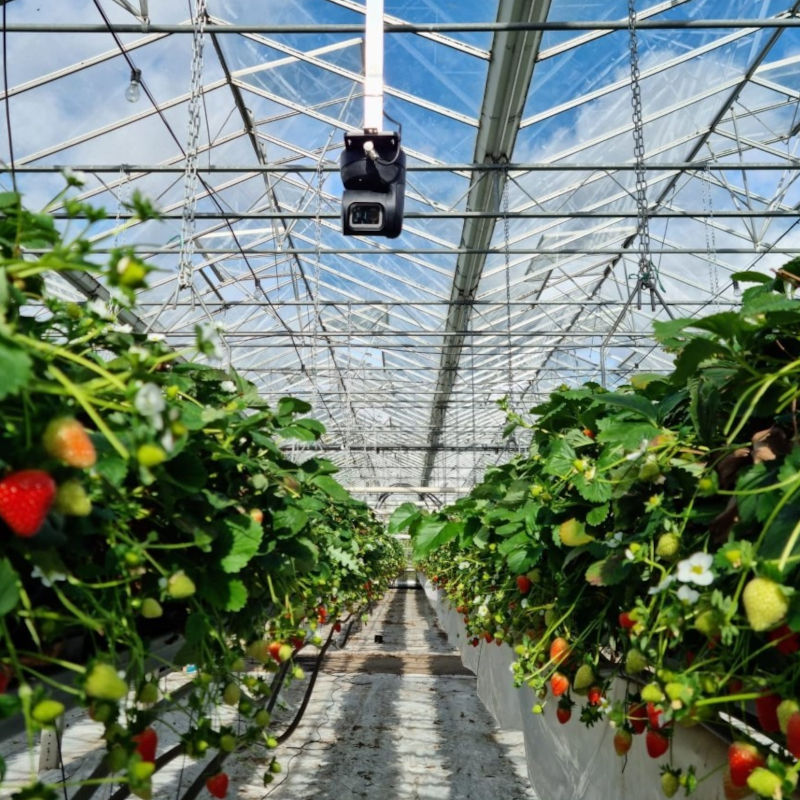
Light Science Technologies (LST) has secured funding to develop an ‘all in one’ sensor for vertical farming. It will measure light, water, air, temperature, humidity, oxygen and soil to enable thevertical farming monitoring and control of the growing environment; ensuring optimal plant productivity and yield.
The funding is through the Transforming Food Production (TFP) challenge, part of a £90 million government investment to support the UK’s most innovative technology to boost agricultural productivity and set food production systems towards net zero emissions by 2040.
The Controlled Environment Agricultural (CEA) market is growing fast at a CAGR of 21 per cent.
In partnership with Nottingham Trent University, the LST will be leading the project to develop a growing sensor and innovative transmission node for vertical farms. The sensor will form a vital part of its bespoke offering, reducing energy and saving costs using technology and real-time data.
LST is working with growers to provide an integrated, cost effective and low maintenance solution that can be used across different crops to achieve maximum yield, creating the full growing “recipe” of lighting, nutrient and environment.
The IoT precision data solution will help boost productivity and efficiency of vertical farming, reflecting the government’s drive to help the agricultural sector grow economically with less environmental impact.
LST is focused on becoming a technology driven trailblazer in vertical farming innovation and technology over the next four years.
Simon Deacon, CEO of Light Science Technologies added: “This is an especially important boost to our business. To be selected by Innovate UK is confirmation of the urgent need for more sustainable, productive and cost-effective solutions in farming. Investment in UK technology and innovation in this sector is crucial in achieving a better approach to agricultural production and reducing emissions.”
Innovate UK is part of UK Research and Innovation. For more information visit www.innovateuk.ukri.org.
More information about LST.

Oxford Farming Conference 2021: Consultation on gene editing announced

Agri-TechE Article
Agri-TechE

Gene editing is a way of altering DNA in a cell, it can be used to turn genes on or off without altering their sequence and offers the potential for rapidly introducing beneficial traits within crop plant. It is also controversial and needs a strong ethical and regulatory framework if it is to be widely introduced. To reflect this the government has announced at the Oxford Farming Conference 2021 its intention to hold a consultation on gene editing.
Sir David Baulcombe, Regius Professor of Botany in the Department of Plant Sciences at the University of Cambridge, said:
“The overwhelming view in public sector scientists is that the Nobel Prize winning methods for gene editing can accelerateconsultation on gene editing the availability of crops and livestock for sustainable, productive and profitable agriculture. I welcome the DEFRA consultation that will help with a broader assessment of gene editing as an appropriate technology in agriculture.”
The way that plants and animals grow is controlled by the information in their genes. For centuries, farmers and growers have carefully chosen to breed stronger, healthier individual animals or plants so that the next generation has these beneficial traits – but this is a slow process.  Gene editing promises a way to accelerate this process.

Gene editing 

Gene editing is different to genetic modification where DNA from one species is introduced to a different one. Gene edited organisms do not contain DNA from different species, and instead only produce changes that could be made slowly using traditional breeding methods. However, at the moment, due to a legal ruling from the European Court of Justice in 2018 gene editing is regulated in the same way as genetic modification.
So the consultation announced today will focus on looking at how certain gene editing organisms are regulated, so that modifications that could have been occurred naturally or through traditional breeding are not regulated in the same way as genetic modification.
This approach has already been adopted by a number of countries including Japan, Australia and Argentina.
Aside from gene editing, the consultation will also begin a longer-term project to gather evidence on updating the UK’s approach to genetic modification by gathering information on what controls are needed and how best to deliver them. To ensure regulations are in step with the current science and the knowledge gained from 30 years of existing regulation.

Highest food safety standards

In his speech Environment Secretary George Eustice said that the government will continue to work with farming and environmental groups to develop the right rules and ensure robust controls are in place to maintain the highest food safety standards while supporting the production of healthier food.
Professor Robin May, the Food Standards Agency’s Chief Scientific Advisor, welcomed the consultation and said:
“The UK prides itself in having the very highest standards of food safety, and there are strict controls on GM crops, seeds and food which the FSA will continue to apply moving forward.
“As with all novel foods, GE foods will only be permitted to be marketed if they are judged to not present a risk to health, not to mislead consumers, and not have lower nutritional value than existing equivalent foods. We will continue to put the consumer first and be transparent and open in our decision-making. Any possible change would be based on an appropriate risk assessment that looks at the best available science.”
Consulting with academia, environmental groups, the food and farming sectors and the public is the beginning of this process which, depending on the outcome, will require primary legislation scrutinised and approved by Parliament.

Consultation on gene editing

The consultation will run for ten weeks from Thursday 7th January to Weds 17 March at 23:59. The full consultation document will shortly be available on Citizen Space when published at 00:15 and applies to England only.
More information is available here https://consult.defra.gov.uk/agri-food-chain-directorate/the-regulation-of-genetic-technologies/

Alternatives to chemicals for cleaning to be discussed

Agri-TechE Article
Agri-TechE

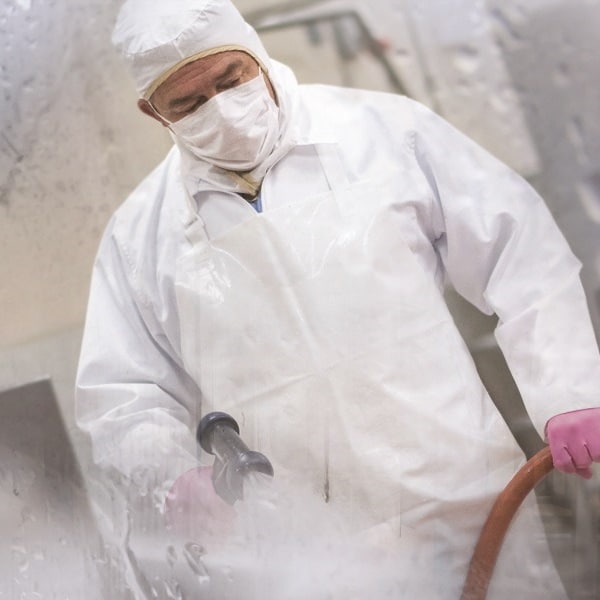
Alternatives to chemicals for sustaining the life span of fruit and vegetables, improving the quality of seed and reducing risk of contamination in food processing are to be discussed at the first Agri-TechE event “Keeping it clean with agri-tech innovation” 19th January.
Activated air, electrolysed water, free radicals – are among the innovations to be discussed for the first time.
Dr Belinda Clarke, director of Agri-TechE selected the topic as hygiene is at top of mind at the moment: “The use of water and chemicals for cleaning and decontamination is a major cost to the food industry at every stage from seed to sandwich; it is also an environmental cost. Within our innovation ecosystem we can see interesting alternatives emerging that work with natural processes to reduce the power of pathogens, offering a more effective and sustainable approach.”

Alternatives to chemicals 

Debbie Rees
Professor Debbie Rees of the NRI

Speaker Debbie Rees of NRI, explains that unprocessed fruit, vegetables and root crops are essentially alive, her focus is reducing the amount of fresh produce that is wasted between field, supermarket and home:
“We are interested in anything that allows us to monitor and sustain the lifespan of fresh produce without harming it. Loss comes from biological changes and these can be measured, for example, the respiration rate of potatoes in storage or the stress created when apples stored at low temperature become short of oxygen. Chlorophyll fluorescence is another useful measure that can be used to understand ripening as vegetables lose their chlorophyll as they age and fruits cease photosynthesis.”
“Unripe strawberries have a host of defence mechanisms to prevent fungal pathogens, but as they ripen, they go soft and sugar levels increase, increasing risk of pathogen attack. So, you can reduce rotting either by reducing pathogenic contamination or by slowing down ripening.”
Debbie’s research has revealed strawberries often remain in the heat for four hours before reaching the packhouse, so cooling in the field is a possible intervention.
Another is the use of ozone, a very reactive chemical that can destroy viruses, as well as unicellular organisms such as bacteria, and then revert to oxygen. One experiment involves flushing punnets of strawberries with ozone before sealing in film. Ozone is not suitable for use with all produce, but under controlled conditions it offers many benefits as Debbie will explain.

Food-to-go 

David Goosey
David Goosey of Ozo Innovations

David Goosey of Ozo Innovations is focused on the Food-to-Go market – ready meals and pre-packed sandwiches – where processing equipment needs cleaning and decontamination from allergens such as nuts, as they switch between recipes.
David explains: “Hygiene accounts for up to 12% of the cost of food processing. Typically, food manufacturers use hot water at 40-60°C to sanitise equipment and then need to re-chill the environment before use. Our solution uses cold water and is effective at an ambient temperature, meaning Ozo can help to cut both energy usage and costs.”
The company’s technology uses hypochlorite, created by electrolysing a saline solution. It is an effective cleaner and disinfectant that reverts back to salt and water after use. It is currently being trialled with a major UK food manufacturer and David will share more about its capabilities at the event.

Seed treatment that boosts germination

The Agri-TechE event will also see the announcement of a new highly effective, additive free approach to seed sterilisation that offers a fourfold increase in the germination rate of wheat. The new approach which uses ‘activated air’ to destroy bacteria and fungi on seed also has potential for improving storage of high value seeds such as tomato and basil that are currently untreatable as they germinate on contact with water.
Agri-TechE xplore: Keeping it clean with agri-tech innovation, is being held virtually on Tuesday 19th January 2021 from 2:00 – 4:00 pm.

Well-beeing sounded out with BeeSecure

Agri-TechE Article
Agri-TechE

By tapping into vibrations in the hive, agri-tech start-up BeeSecure is able to listen into conversations ensuring that the bees are happy, healthy and performing well. Co-founder Roberto Pasi says the company can understand ten main topics, quickly identifying issues. The company was part of the Start-Up Showcase at Agri-TechE ’s 2020 REAP conference.
BeeSecure is based in Italy and supports thousands of beehives across mainland Europe. It is part of the EIT Food Accelerator Programme and has just started working with beekeeper associations and farmers in the UK. Its new product BeeSecure is changing the way bee services are rented on farm. By providing a ‘high-performance pollination service’ well-kept bees are able to significantly boost yields of insect pollinated crops. Hives can be rented by farmers as required but keepers are concerned about the pesticides that might be used and farmers have little knowledge of the health of the bees.
Co-founded by Roberto with CTO Gabriele Garavini, BeeSecure uses IoT devices such as sensors to monitor the temperature, humidity and sound, Roberto explains:
“We have a little microphone that is able to translate vibration within the bee hive; it can’t pick up the individual conversations, but just like sitting in Old Trafford watching Manchester United, if somebody scores a goal, you’re really going to hear it.
“At the moment we can understand the ten most important topics, from ‘the Queen is dead’ to ‘there are not enough flowers nearby’ and this is sufficient to determine a problem with the hive and understand the size of the colony.
“Additionally, bees maintain a constant temperature of 35˚C; if that suddenly changes that is a real alarm that something is wrong.”
Roberto Pasi inherited his passion for bees from his grandfather, who left him 20 hives a decade ago. “It started as a hobby, but then we got thinking ‘bees are so important so why is there no technology to support beekeepers? There has been a massive loss of bees in recent years and no one really knows the reason for this.” Hive theft is an increasing problem for beekeepers so BeeSecure also contains a GPS tracker, which provides an alert if the hive is moved.
Data from the hives can be viewed in real-time by the farmer and keeper via a secure app
“So now we have the way to create a trusting relationship between farmer and beekeeper – we can guarantee the farmer that the rented bees are performing well – and at the same time we can guarantee the bee keeper that the bees will be returned in a healthy condition.”
Roberto is keen to talk to UK farmers about the rental of beehives and the BeeSecure system and to find partners with specialist knowledge of bumblebees, which are used for undercover pollination.

RIDDOR in the UK: A quick introduction

Member News
Agri-TechE

RIDDOR stands for Reporting of Injuries, Diseases and Dangerous Occurrences Regulations 2013. What a mouthful! This regulation is utilised in the United Kingdom. Let’s look at what you need to do and what you need to know.
Employers, self-employed and people in control of work premises are called ‘the responsible person’, and have a legal obligation to report certain work-related accidents under the Regulations. As soon as you become aware a work-related accident may be reportable under RIDDOR, you need to make the report.
Reporting is required for:

  • work-related accidents which cause death
  • work-related accidents that cause certain serious injuries
  • diagnosed cases of certain industrial diseases
  • certain ‘dangerous occurrences’

So how do you know what to report? We’ll explore each of the components of RIDDOR in a little more detail to help explain things.

  1. Let’s start with ‘work-related’.

Not every accident in the workplace is work-related. Here are the key things items that decide if the accident is work-related:

  • the way the work was carried out
  • any machinery, plant, substances or equipment used for the work, or
  • the condition of the site or premises where the accident happened

If none of these factors contributed to the accident, then it may not be work-related and a report isn’t required. It is only physical injuries caused by a work-related accident which are reportable. Mental health issues do not fall in to this category, and are not one of the listed occupational diseases so do not have to be reported.

  1. Injuries

There are 4 types of injury categories which must be reported.
Death – all deaths of workers and non-workers must be reported if they arise from a work-related accident, including physical violence.
Specified injuries – these include:

  • a fracture, other than to fingers, thumbs and toes
  • amputation of an arm, hand, finger, thumb, leg, foot or toe
  • permanent loss of sight or reduction in sight
  • crush injuries leading to internal organ damage
  • serious burns covering 10% or more of the body, or which damage the eyes, respiratory system or other vital organs
  • scalpings (separation of the skin from the head) which require hospital treatment
  • unconsciousness caused by head injury or asphyxia
  • any other injury arising from working in an enclosed space, which leads to hypothermia, heat-induced illness or requires resuscitation or admittance to hospital for more than 24 hours

Over-Seven-Day injuries to workers are where an employee or self-employed person is away from work or unable to perform their usual duties for more than 7 consecutive days. Day 1 is the day after the accident.
Injuries to people not at work are work-related accidents to members of the public if they are injured and are taken from the scene of the accident to hospital for treatment of the injury. The injury need not be traumatic. It can be minor, such as an abrasion or small cut. Being taking to hospital as a precaution when no injury is apparent is not reportable.

  1. Diseases

Certain diagnosed occupational diseases must be reported where they are likely to have been caused or made worse by work. These include:

  • carpal tunnel syndrome
  • severe cramp of the hand or forearm
  • occupational dermatitis
  • hand-arm vibration syndrome
  • occupational asthma
  • tendonitis or tenosynovitis of the hand or forearm
  • any occupational cancer
  • any disease attributable to occupational exposure to a biological agent (e.g. Hendra virus, avian influenza, Q-fever etc. from working with animals)
  1. Dangerous Occurrences

Dangerous occurrences are certain near-miss events (incidents with the potential to cause harm). There are 27 different occurrences, many of which are relevant to agriculture and some not so much. Those most likely relevant to farming include:

  • Lifting equipment– collapse, overturn or failure of any load-bearing part (e.g. a forklift truck tips on its side)
  • Pressure system – any failure (other than a pipeline) which could cause death (e.g. an air compressor valve bursts)
  • Overhead power lines – direct contact or close proximity causing electrical discharge (e.g. the auger of a combine harvester gets close enough to overhead power lines to cause an arc)
  • Electrical incidents causing explosion or fire – if a short circuit or overload results in the plant being unusable for 24 hours, or causes significant risk of death (e.g. plugging a power tool in to a socket which overloads the circuit, resulting in a fire of the electrical switchboard which shuts a workshop down for more than 24 hours while it’s repaired)
  • Explosives – unintentional fire, explosion or ignition, misfire, injury caused, or projection of material beyond the danger zone (e.g. when clearing large rocks from land and the explosive misfired)
  • Biological agents – any release or potential release of biological agents (e.g. Hendra virus)
  • Breathing apparatus – any malfunction which does or could cause significant risk to health and safety (e.g. if used in confined space entry)
  • Collapse of scaffolding – complete or partial collapse of scaffold more than 5 metres in height, working platform falling from a slung or suspended scaffold, or any scaffold collapse that creates a significant risk of a person drowning if they fall from the scaffold (e.g. scaffolding used to reach the roof ridge-cap of a shed partially collapses)
  • Structural collapse – unintentional collapse (full or partial) of any structure involving a fall of more than 5 tonnes of material, any floor or wall of a workplace, any falsework (e.g. a barn collapse after a storm)
  • Explosion or fire – unintentional fire or explosion resulting in stoppage for more than 24 hours (e.g. a combine harvester catches fire and shuts down harvest for a few days)
  • Release of flammable liquids and gases – sudden, unintentional and uncontrolled release of large volumes (e.g. 500kg of a gas in the open air)
  • Hazardous escape of substances – unintentional release or escape of any substance which could cause injury other than via combustion of flammable liquids or gases (e.g. Revysol is spilled)

Phew – that’s a lot of information!
It’s important to understand what you may need to report, and how to report. Remember, only ‘responsible persons’ should submit reports under RIDDOR. Reporting is easy and should be done online, with different links for reporting an injury, dangerous occurrence, case of a disease, flammable gas incident or dangerous gas fitting.
For reporting a fatality or specified incident only, and you are located in the UK, telephone the HSE Incident Contact Centre on 0345 300 9923. The Centre is open Monday – Friday 8.30am – 5pm. In certain circumstances HSE may need to respond out of hours. These include:

  • following a work-related death
  • following a serious incident where there have been multiple casualties
  • following an incident which has caused major disruption such as evacuation of people, closure of roads, large numbers of people going to hospital etc.

If an incident fits any of these descriptions, ring the duty officer in the UK on 0151 922 9235.
Best practice for any UK agribusiness is to have a policy for RIDDOR, including nominating who will contact HSE in the event of a work-related accident.
To find out more about RIDDOR go to https://www.hse.gov.uk/riddor/index.htm
 
This content has been contributed by SafeAg Systems;  the views, thoughts and opinions expressed in this text belong solely to the author, and do not necessarily reflect those of Agri-TechE .

Health and Safety Investigation in the UK – what to expect

Member News
Agri-TechE

You’ve had a serious incident or worse, a fatality on your farm and the HSE inspector arrives to investigate. If there has been a fatality, the police will be involved also. This will seem quite daunting, and it is important you know what you need to do.
HSE in the UK don’t investigate everything that’s reported to them, however if someone has died or sustained a serious injury they will be at your gate soon enough.
What purpose does a health and safety inspection serve?
The purpose of any investigation is to determine how something happened. This information is then used for a range of purposes, including sharing lessons, identifying what actions need to be take to prevent any recurrence, and where appropriate, to gather evidence to bring a prosecution.
If there has been an incident, they will want to see the site. The inspector will take photographs – lots of photographs. It’s possible they may take video footage as well. They may sketch out a bit of a floor plan showing where things are placed.
When it comes to the scene of the accident, you must not alter until an inspector says you can. Of course, you must make the site safe or get a person out for medical treatment, but you can’t fix anything else. Remember that the accident site is treated as a crime scene. If you’ve watched any TV involving police investigations, you can expect similar things for a workplace accident.
What will the inspectors require of you?
The inspector will ask lots of questions. They will ask you, your employees and their representatives, and anyone else on site. They will ask about what was going on when the incident happened, how you think the incident happened, how it could have been prevented and lots of other questions. You will also be required to supply your safety documentation – policies, procedures, evidence of training and induction, maintenance records of any machinery or equipment involved, risk assessments and any other documents.
The inspector will want to know about your own knowledge and experience around health and safety. You will need to be able to talk about the main health and safety issues in your workplace also, and what you’re doing to manage the risks. You will also need to be able to explain what was in place to manage the specific risk which resulted in the incident.
What should I expect next in the investigation process?
HSE may seize machinery or equipment involved in the incident. They may take it for inspection, investigation or as evidence. Think about how you will continue to operate if this occurs.
An investigation of a fatality or serious incident may take a while – days or even weeks. It is likely investigators will be back or want further information. Eventually, a decision will be made about what happens regarding the incident. It is likely that you will be issued with a Notice of Contravention, Improvement Notice, Prohibition Notice or notice that HSE intend to prosecute you for breaking health and safety laws.
You must comply with the requests of an inspector who is investigating a fatality or serious incident. It is advisable to promptly seek counsel from a legal representative who is skilled in health and safety law if you have a reportable incident or fatality.
To reduce the likelihood of a prosecution against you, it’s advisable to have a safety management system which has been implemented across your agribusiness. With this in place, there is far less likelihood of a serious incident occurring and if one does, you will be better protected with a system in place and being used.
 
This content has been contributed by Safe Ag Systems;  the views, thoughts and opinions expressed in this text belong solely to the author, and do not necessarily reflect those of Agri-TechE .

Innovation in Field Harvest Automation – MoU signed with Western Growers Association

Agri-TechE Article
Agri-TechE

Pioneers in robotics and automation will have an unprecedented opportunity to engage with the US fruit and vegetable producers as part of an initiative between Agri-TechE and Western Growers Association (WGA).
The Memorandum of Agreement has been signed by Dr Belinda Clarke, Director of Agri-TechE , and Dennis Donohue, Director of Western Growers Center for Innovation & Technology (WGCIT), and the first initiative to look at innovation in field harvest automation is to be the first of a series as the relationship develops.
Members of Western Growers are family farmers growing fresh produce in Arizona, California, Colorado and New Mexico, together providing over half the USA’s fresh fruits, vegetables and tree nuts, including nearly half of America’s fresh organic produce. Dennis Donohue comments: “We have some big challenges facing us, such as extreme weather, need for harvesting automation, concerns about resistance to pesticides, and water shortages.
“We didn’t want to reinvent the wheel so we decided to find out what agri-tech is out there and to start a conversation. With Agri-TechE , we saw the potential to create a viable relationship that would accelerate the development of solutions, and ultimately, solve the issues our growers are facing.”
The partnership will focus on connecting farmers, scientists, academics, technologists and entrepreneurs in both the United States and United Kingdom to collaborate on shared strategic priorities – most notably, field harvest automation and food safety solutions.

Timetable Western Growers

December 2020 MoA signed
January 27 2021 – Webinar “Innovation in Field Harvest Automation” – featuring presentation to introduce Western Growers Association and its Centre for Innovation & Technology. A number of US growers will also discuss the challenges they are experiencing. Open to all. Book your place now.

March virtual mission – workshop with selected companies and GGA members. Closed event.
Expressions of interest should be sent to Alex Dinsdale (at) Agri-TechE via the contact form.

A cocktail to catch a midge – PheroSyn bringing new smells to market

Agri-TechE Article
Agri-TechE

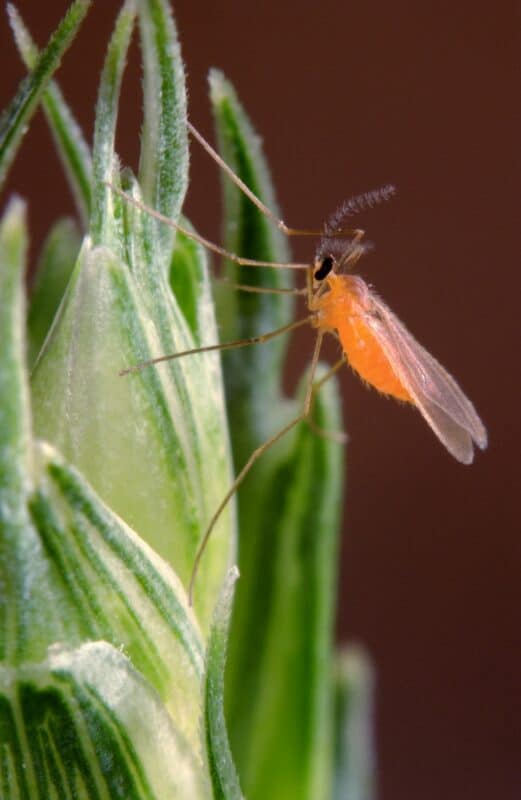
Swarms of orange midges dancing around an ear of wheat can be a worrying sight for growers – in bad years the UK has lost one million tonnes of grain to midge pests. But chemistry start-up PheroSyn has a smart solution, unveiled during the Start-Up Showcase at this years’ REAP conference.
Their small size and evening activity make midges, such as the notorious orange wheat blossom midge (OWBM), difficult to detect, and the difficulties mounted in 2016 with the UK government ban of the most effective treatment, Chlorpyrifos.
In response, PheroSyn has developed a cost-effective Smart Monitoring system using the insect’s own communication channel: Pheromones.
Smart, sticky and smelly

“Midges such as OWBM use pheromones to communicate and find a mate over long distances,” says Dan Bahia, co-founder and Business Manager at PheroSyn. “Our company aims to manufacture these natural high-value pheromones and then supply them into the agribusiness sector.”
“The pheromone is loaded into a slow-release mechanism, housed in a prism of card with a sticky inner surface,” the co-founder explains. “By surrounding the crop with just a few of these traps, the grower can easily determine whether pest control is necessary and, if so, when will be the most effective time to make the application.
“We’re looking to make pesticide use smarter in crop protection, for safer, greener and cost-effective insect pest management that is crucially also climate-friendly.” With increased temperatures being seen in the UK over the past decades, pest outbreaks are becoming increasingly unpredictable. “It’s vitally important for the grower to have a monitoring approach in place,” warns Dan, previously of the Smart Crop Protection team at Rothamsted Research.
He explains that midge swarms can migrate long distances on winds, before settling on a crop. After mating, the female lays her eggs into the developing grain buds of the wheat. “Once the eggs are laid, it’s too late for topical spraying,” Dan explains, “so the insecticide is needed early, to kill the female, before the eggs enter the grain buds.”

Cost-effective control

Pheromones have been used as part of IPM strategies for over thirty years, but the need to extract the chemicals from plants meant only specific pests could be targeted. “That’s where PheroSyn comes in,” Dan says. “We’ve started off with these midge pests but with the expertise we’ve developed, we could create synthetic pheromones for control against any insect pest.”
Pheromone traps have been shown to reduce costs for growers. “Smart monitoring approaches with pheromones are designed to remove the need for prophylactic pesticide application, therefore reducing spraying overall,” explains Dan, who co-founded PheroSyn in 2019 alongside a highly experienced team of Rothamsted chemists.
“The big problem with pesticides is that insects can become resistant to them,” says the co-founder. “Another benefit of using our pheromones in smart management systems is that not only will chemical pesticide application be reduced, but the longevity of the pesticide will be potentially extended by reducing the rate of development of pesticide resistance.
“We’ve created a product that’s very difficult for the insect to adapt to – the pheromone is identical to what the insects themselves are producing, and our slow release mechanism ensures that the amount of pheromone also matches that created by the insect.”

Perfect Chemistry

The team, which has a combined 40 years chemistry experience, received an immediate boost when they were awarded seed funding from this year’s Shake Climate Change competition. “The award gave us an incredible chance to work with experts, develop the business and the way we are selling our products – and it’s given me the ability to spend all of my time guiding the business through its initial stages.
“Our founders have a huge amount of experience in the scientific area. The expert guidance in entrepreneurship and start-ups from the Shake Climate Change competition will allow us to develop our business expertise, refine our business model and draw up a really solid investment plan.
“In addition to the OWBM pheromone, we’re now able to produce the saddle gall midge and pea midge pheromones for sale and we’re in the process of scaling up production for commercial volume. We’ve already been approached by members of the Agribusiness community who see the tremendous potential of pheromones but have until now been unable to exploit them due to unavailability.
“Based on previous work, we’ve been able to roll out three products immediately, producing at lab-scale, and we’re in the process of scaling this up for commercial volume. We’re very excited to have joined the Agribusiness community and are looking forward to meeting farming partners as part of the Agri-TechE cluster at the REAP conference.”
More information about PheroSyn 

Intelligent facility offers potential of net zero livestock production

Meet the Network
Agri-TechE

An innovative inflatable livestock production facility that offers the optimum conditions for animal wellbeing and productivity was announced at Agri-TechE ’s 2020 REAP Conference by Daniel Larn, managing director of Willand Group. The Willand Intelligent Livestock System (WIL System) can be installed and fitted-out within weeks and offers the potential for methane and carbon capture to enable net zero livestock production.
Daniel Larn was brought up on the family farm, but made a career in the oil and gas industry. With the downturn in 2017 he considered a move into farming, but then saw the potential for a way of transforming the way livestock is reared.
He explains: “The demand for meat is increasing internationally but the Middle East and Africa is environmentally unsuitable for intensive production.
“Happy animals are the most productive and we saw the opportunity for ‘sensitive intensification’: a climate controlled environment that would offer the animals space and protection from pests and harsh conditions. If we can scale production then the units would also be suitable for temperate countries offering benefits from standardising conditions and reducing greenhouse gas emissions.” Daniel Larn, Willand Group

Pop-up system removes GHG for outlet air

The WIL System – which resembles the inflatable structures used for many years to provide undercover sports facilities – can be installed quickly on a green field site. Fresh air is drawn in to maintain the pressure and stale air extracted and scrubbed to remove water, carbon dioxide and methane.
Daniel has been consulting with meat processors that have networks of suppliers. They see the potential to mass produce the livestock facility to lower the cost for farmers and support standardisation of the meat product.
The company is working with a leading university to create a prototype system and is looking for potential partners and investors to accelerate proof of concept so it can fulfil demand from Nigeria and the Middle East.
Willand Group has specialist expertise in IT systems integration, creating a platform into which third party devices such as sensors, monitors, and climate control can be installed and then managed remotely through a dashboard.
The company is working with ‘best in class’ suppliers across the industry to supply a robust and cost-effective next-generation livestock production facility.

Net zero livestock production creating value from co-products

Daniel believes that by removing ammonia and nitrates from the exhaust air and containing the slurry, units can also generate value from the by-products as fertiliser or through carbon capture. Although technically possible at the moment, more development is required for it to be cost-effective.
“In the UK, we are working with planning authorities and the Environment Agency to ensure that the units meet quality standards. This will enable installation of the WIL System in non-traditional sites close to centres of population if required.
“We are offering a complete installation package, together with finance as required and anticipate that it will take a month on site to go from bare field to fully functional unit.”
Belinda Clarke, Director of Agri-TechE , says: “In the race for net zero emissions from agriculture, Willand’s ‘pop-up’ solution for livestock management facilities has the potential to be a game-changer. This innovation will bring together a range of technologies to improve emissions and animal welfare.”
More information about Willand Group.