The Productive Landscape: NatureTech for Profit and Planet
How can technology enable delivery of food, nature recovery, and climate resilience - all at once? The Head of the Environment Agency is asked: what's the national plan for dealing with land use pressures, plus you’ll hear from technologists and land managers working on nature-based and tech-enabled solutions for water, soils and climate adaptation.

Nitrogen enriched slurry to cut carbon footprint and boost yields

Meet the Network
Agri-TechE

“Our technology can cut the carbon footprint of a dairy farm by 27% and produce a valuable organic nitrogen fertiliser with three times the crop-available nitrogen in slurry,” explains Chris Puttick of N2 Applied. He is one of the speakers discussing alternatives to inorganic fertiliser at an Agri-TechE event “Putting the N Into FarmiNg” 24th March 2021.
Chris explains: “A high proportion of the greenhouse gas emissions of a dairy farm are from slurry. Slurry is a hazardous product as the fumes can be toxic and detrimental to air quality, human health and our environment.”

Organic liquid fertiliser

“Our technology overcomes these issues and converts by-products like slurry into a valuable nitrogen enriched organic liquid fertiliser, which we call NEO. The scalable technology fits within a 20ft shipping container on the farm.”
Nitrogen can be present in the environment in multiple forms, including the gases N2 and ammonia NH3, causing air pollution, N2O, a strong greenhouse gas, and as the salt nitrate NO3, which is soluble in water and a source of pollution. N2 Applied originates from Norway. The company has developed a unit which uses electricity to extract nitrogen from the air via plasma. Nitrogen is captured within slurry and enriches it.
As a result of the process, the output NEO is slightly acidic which increases its stability and reduces the amount of ammonia released whilst eliminating methane emissions.
The technology can also be used with the digestate, produced after anaerobic digestion (AD). As the AD plant is used to produce biogas, it is anticipated that some of this energy could be used to produce NEO, adding value to the digestate within a circular onfarm system.

Trials show available nitrogen three times higher than untreated slurry

Trials by ADAS have shown that NEO is stable, which means it can be applied to the growing crop in a wider range of weather conditions. Further trials with the Norway University of Applied Sciences show there is no risk of scorching the crop.
Total nitrogen (NH4, NO3 and NO2) needs to be considered within a nutrient management plan for the crop, and is particularly important where the farm lies within a nitrate vulnerable zone (NVZ).
Trials of NEO have shown that the nitrogen available to the crop is three times higher than untreated slurry and when applied to a grass sward increased the yield by 41% over two cuts.
Chris continues: “We have seen interest from industry members that have set climate targets to reduce the carbon footprint of their supply chains. We are receiving encouraging feedback that these businesses are serious about sustainability and willing to invest in a technology that will reduce on farm emissions significantly.
“The benefit for the livestock producer is a high value organic fertiliser that is more nutrient dense. A considerable amount of heat can be recycled from the plasma unit. This means that farmers can turn a by-product into a valuable commodity.”
Chris Puttick of N2 Applied will join other speakers Guðbjörg Rist of Atmonia and Andrew Neal of Rothamsted at the Agri-TechE event “Putting the N In FarmiNg—Solutions for On-Farm Nitrogen Production” on Wednesday 24th March from 2pm – 4pm.
On-farm fertiliser production comes out of a box

Agri-TechE Article

Agri-TechE

Would it be possible to produce nitrogen fertiliser on-farm and reduce the agricultural sector’s greenhouse gas emissions? Early-stage agri-tech companies Atmonia and N2 Applied say it is. They have developed alternative approaches to generating fertiliser in a shipping container using renewable energy sources, offering the potential for carbon neutral production.
Food production accounts for 26% of global greenhouse gas emissions*. Changing the way we produce and use nitrogen fertiliser would make a significant difference to these headline-grabbing figures, and this is to be discussed at the Agri-TechE event “Putting the N in FarmiNg — SolutioNs for On-Farm Nitrogen ProductioN”on 24th March 2021.
Renewable alternative to energy intensive Haber-Bosch

Guðbjörg Rist, the CEO of Atmonia, explains that current inorganic fertiliser production uses an energy intensive process.
“The Haber-Bosch process splits hydrogen from coal and natural gas, creating free hydrogen ions that combine with nitrogen gas in air to produce ammonia, a raw product for inorganic fertiliser production.
“Current ammonia production facilities are huge factories, producing millions of tonnes of ammonia, and double that amount of carbon dioxide.
“Our process takes a completely different approach: it uses an electro-chemical reaction to split nitrogen, which combines with hydrogen from air and water, removing the need for coal or natural gas. It also reduces the energy requirement, which can be sourced from renewables.
“Our facility is designed to produce hundreds of tonnes of ammonia from a unit the size of a shipping container, creating a liquid fertiliser that can be produced close to the point of need.”

Cutting the carbon footprint of dairy farm by 27%

Another greenhouse gas, nitrous oxide (N2O), is released when synthetic nitrogen fertilizers are applied to soils. N2O and methane are also produced from the decomposition of animal manures under low oxygen conditions.
N2 Applied is tackling this issue by converting by-products like slurry into a valuable nitrogen enriched organic liquid fertiliser. As a result of the process, the output, known as NEO, is slightly acidic, which increases its stability. This reduces the amount of ammonia released whilst eliminating methane emissions.
“Our technology can cut the carbon footprint of a dairy farm by 27% and produce a valuable organic fertiliser with three times the crop available nitrogen in slurry,” explain Chris Puttick of N2 Applied.
Nitrogen is found in different forms in the environment and total nitrogen (NH4, NO3 and NO2) needs to be considered within a nutrient management plan for the crop. This is particularly important where the farm lies within a nitrate vulnerable zone (NVZ).
Trials of NEO have shown that the nitrogen available to the crop is three times higher than untreated slurry and when applied to a grass sward increased the yield by 41% over two cuts.

Use of nitrogen is also important

Work by Professor Andrew Neal of Rothamsted Research has shown that the way nitrogen is applied to the soil is also important. Results suggest that decades of artificial fertiliser inputs on UK soil without a corresponding return of organic matter have altered the balance of carbon and nitrogen in the soil, changing the way microbes get their energy, which has in turn altered the soil structure.
In the experiment, soil with high nitrogen content but low carbon content had an altered microbial community, which was associated with less pores and connectivity in the soil. As the pores close up, and oxygen in the soil is lost, microbes are forced to turn to nitrogen and sulphur compounds for their energy. This inefficient process drains nutrients from the soil and results in increased emissions of N2O.
Andrew Neal of Rothamsted Research will be joining Guðbjörg Rist of Atmonia and Chris Puttick of N2 Applied to discuss nitrogen production and use at the Agri-TechE event “Putting the N in FarmiNg—SolutioNs for On-Farm Nitrogen ProductioN” on Wednesday 24th March from 2:00 pm – 4:00 pm.
The Future is Brighter with Vitabeam

Member News
The views expressed in this Member News article are the author's own and do not necessarily represent those of Agri-TechE.

Vitabeam’s world-first technology is making a splash in the food sector. From farm to fork, Vitabeam technology is tackling some of the world’s biggest problems, including food waste, and producing safe, chemical-free, pathogen-free food.

When it comes to technological breakthroughs, few have the potential to impact the Food and Drink sector in a way as radical as Vitabeam.

After many years of R&D, Vitabeam produced their first LED light bar, which emits a unique combination of light wavelengths called VQe (Vitabeam Quantum energy). The wavelengths are all safe for human exposure, and have incredible properties that allow Vitabeam’s technology to positively contribute to many different global markets.

But it is within the Food and Drink sector that this tech is likely to have the biggest impact. The patented combination of light wavelengths has 2 abilities:

1) VQe interacts with plants to directly stimulate photosynthesis, increasing growth and yield, and delaying cell senescence in harvested produce to prolong freshness, and

2) VQe actively kills bacterial and mould pathogens, improving the health of plants, and minimising the microbial load on fresh food, extending its shelf-life.

Vitabeam’s technology is designed to benefit the food sector at every stage of the food supply chain, from grower, to packer, to retailer, to home consumer.
In the growing stage, the light bar, called the Vitabeam VQe MaxStrip, is a supplementary grow light. It can easily be retrofitted into any existing setup, making it an excellent option for growers looking to optimise their grow.

The MaxStrip supercharges plants by supplying them with the specific wavelengths of light, not emitted by any other grow lights, that maximise plant growth and yield. At the same time, the MaxStrip protects the plant from bacterial and mould pathogens, ensuring the plant stays healthy and the produce stays clean. This chemical-free method of pathogen killing allows growers to reduce their usage of pesticides and other chemicals, meaning they can produce clean, safe, chemical-free, residue-free food.

Once harvested, produce can be treated using Vitabeam’s high-powered sterilising technology, called the Steril Max, which combines VQe with UV. Whilst UV is often used for sterilisation purposes, the UV wavelengths cannot penetrate the surface of an object, limiting its effectiveness. VQe is able to penetrate into the food, meaning the combined usage of UV and VQe provides a more effective cleaning treatment than UV alone. This thorough cleaning treatment eliminates the need for washing produce with chemicals such as chlorine, ensuring that consumers are provided with the safest, cleanest food possible. This technology can be used for fruit, vegetables, meat, fish, and seafood to ensure they are pathogen-free, extending their shelf-life, and thereby reducing food waste.

Once food reaches the supermarket, Vitabeam’s technology can protect it, prolonging its freshness and keeping it safe and clean to keep customers healthy. MaxStrips installed in refrigerated display cabinets not only keep the produce within them clean, but also the surrounding environment. In a trial with a store in Michigan, USA, staff working in the fish department noticed the MaxStrips making a difference almost instantly. They reported that, within just a couple of days, the ‘fishy’ smell had disappeared, the fish felt firmer and looked healthier, and the ice surrounding the fish was no longer turning yellow. Furthermore, when the time came for the quarterly deep clean, there was noticeably less slime in the display case. Trials have also shown that Vitabeam’s technology can reduce wastage of fresh produce by between 25 and 30%.

Finally, when customers take their food home, VQe can be integrated into refrigerators to keep food clean and safe from pathogens. Not only does this diminish the risk of food poisoning, but it also means that food lasts longer, reducing the amount that ends up being thrown away because it has gone bad before it can be eaten. We’ve all felt the disappointment of finding that something we had been looking forward to eating has already gone mouldy. VQe can help to ensure that this feeling occurs much less often! Household food waste is therefore reduced, and less money is wasted on food that ends up in the bin!

Vitabeam is committed to helping businesses provide their customers with clean, safe, natural, chemical-free, residue-free food. Their technology has multiple benefits – keeping consumers safe and healthy, reducing food waste at every stage of the food supply chain, reducing chemical and pesticide usage, and helping everyone, from the grower to the consumer, to save money. Trials have shown that a return on investment for Vitabeam technology can be delivered quickly, for example within 6-9 months for retailers.

It is rare that a technology such as Vitabeam’s comes along which not only has the potential to benefit companies economically, but which also can help to protect the environment by reducing chemical and pesticide usage, and reducing food waste. The future really is brighter with Vitabeam.

Top innovation award for Actiphage, rapid tuberculosis test

Meet the Network
Agri-TechE
Actiphage®, a rapid, accurate test for tuberculosis that detects the presence of the live mycobacteria in a sample of blood or milk, has been awarded the Innovation Award 2021 by Veterinary Record, the official journal of the British Veterinary Association (BVA).
Tuberculosis (TB), Bovine Tuberculosis (bTB) and Johne’s Disease continue to be devastating diseases across the globe, and there are currently few reliable diagnostic tests available. Actiphage is a simple test that can detect the diseases in livestock, humans and companion pets as well as wildlife and exotic animals.
Actiphage is developed by PBD Biotech; CEO Mark Hammond says: “Vets know first-hand the devastation caused by bTB, so this award by the BVA provides a powerful endorsement of Actiphage’s innovation. By directly detecting mycobacteria at an early stage, Actiphage provides vets with a new tool for managing and eradicating bTB and Johne’s Disease.”
The other finalists for the Vet Record Innovation Award 2021 were the Animal Welfare Assessment Grid, presented by Sarah Wolfensohn of University of Surrey, and U-treat, presented by Rachel Kirkby of Test & Trace. Both showed innovative new ways to support improved diagnosis of other animal diseases. The support of vets is invaluable to PBD Biotech as the company is planning more on-farm trials of Actiphage in the near future.
Actiphage was named as a promising test in the review of UK bovine TB strategy conducted by Professor Sir Charles Godfray. It has also been approved by the APHA for exceptional private use in areas of chronic bTB infection.
Mark continues: “Although 2020 was a challenging year for almost everyone, we have been working closely with vets and farmers to further develop the test, and in parallel have been fund-raising. Our goal is to provide the validation data necessary for Actiphage to achieve international certification by the World Organisation for Animal Health (OIE).”
As Actiphage can distinguish between live and dead mycobacteria and also differentiate between wild strains and vaccine strains, it would be very effective to develop as a DIVA test – for Distinguishing Infected from Vaccinated Animals – a pre-requirement before a successful vaccination strategy can be introduced.
Actiphage has been shown to detect TB in livestock, domestic animals, wildlife and exotic species, so is of interest across the veterinary profession.
It also provides an accurate and non-invasive blood test for human TB and work is progressing to develop a clinically proven test in human TB.

Farm Performance Enhancement Platform – Farm PEP

Meet the Network
Agri-TechE
The Covid-19 pandemic has had a major impact on the ways that we communicate. ADAS has gained funding from Innovate UK to use this learning to good effect and will co-create a new digital solution called Farm Performance Enhancement Platform, or Farm-PEP. Farm-PEP will connect projects and people, integrating tools and initiatives and providing an online community space for knowledge sharing.

Farm-PEP

Daniel Kindred of ADAS comments: “We see Farm-PEP as enabling the communications between the people engaged in initiatives like the YENs.”
With partners University of Gloucester’s Countryside & Community Research Institute (CCRI), Agri-TechE , Innovative Farmers, The Farming Forum and Open Coop, the project seeks to engage key players across the industry. The intention is to evaluate the impact of Covid-19 on knowledge exchange in agriculture with a rapid appraisal, due to be published in late spring 2021 and then to create Farm-PEP to assist communications. ADAS has also gained funding to create Dynamic Benchmarking for the Yield Enhancement Network (YEN) to improve data exchange with growers. The YEN, since its foundation in 2012, has provided static pdf reports to growers on how their crops have performed within a season, compared to others in the network.

Daniel continues: “Our aim is to enable these comparisons online so that users can choose who they compare themselves to, for instance within a geographic region or for a particular soil type.
“We are aiming to make this available for YEN-Nutrition in 2021, and ultimately for YEN-Zero and all the YEN Family.”

YEN ZERO

These projects will support the development of YEN-Zero, which is supported by funding from The Morley Agricultural Foundation, and aims to quantify the greenhouse gas costs of YEN crops since 2013. This analysis will provide a baseline for comparisons and benchmarking of the different elements that make up a farm’s carbon footprint.
Daniel recently discussed the relationships between crop inputs, yields and GHG emissions at the first Agri-TechE Agritech Express webinar, which is summarised here.
Design of Farm-PEP

Agri-TechE will bring its expertise in engaging online events and digital networking to the project. Together with the other partners, it is organising a series of interactive workshops in spring 2021 to engage with the various stakeholders in the industry and co-design Farm-PEP from the ground up.
More information about Farm-PEP

See us at REAP 2021!

REAP 2021: Changing Time(s) for Agriculture10th November 2021

Imagine a world where agriculture is not constrained by time. The ability to manage and manipulate time is increasing and REAP 2021 will explore the advances in technology and breakthroughs in science that is making this possible.
REAP brings together people from across the agri-tech ecosystem who believe that innovation is the engine for change. The conference bridges the gap between producer needs and technology solutions and showcases exciting agri-tech start-ups. 

Does regulation drive or inhibit innovation?

Agri-TechE Blog
Agri-TechE

Sometimes you need to change agricultural practices to make them suitable for automation and technology, not try to invent tech that makes an incremental improvement. This was the clear message from major fresh produce suppliers who joined us recently as part of a mission from the west coast USA.
The delegation from the Western Growers Association talked to UK agri-tech innovators in robotics and decision support about the challenges they were facing from extreme weather and availability of labour and the need for harvest automation. The innovations needed to address these issues often require regulatory approval – to ensure safety of humans working alongside robots, or to stop drones conflicting with air traffic. New varieties of crop, more suitable for harvesting by machine, may also fall within legislation on genetic modification.
This started us thinking about innovation and its drivers, and the role of regulation in accelerating or hindering change.

Does regulation drive or inhibit innovation?

One of the main levers of Government (along with taxes, funding and incentives) is the legal landscape. Regulations around a sector or technology can make or break its potential commercial impact and Lexington Communications will be providing some thought provoking input on this subject at the next Agri-TechE xpress event.
With the UK’s departure from the EU, two key pieces of legislation are under consideration with significant potential impact on the sector: Gene-editing consultation
The Oxford Farming Conference saw the announcement of a consultation around gene-editing, as announced by George Eustice, Defra’s Secretary of State. Since 2018, gene-editing has been considered by the European Court of Justice to be “genetic modification” and hence subject to the same regulation about development and release of material engineered in this way.
For some, this regulation has been seen as inappropriate, given that gene-editing is a different process and consider that it should therefore be regulated in a different way. The start of 2021 saw the conversation begin to change around the UK’s position on how gene-edited organisms are regulated. For many, this is the start of a long-awaited shift with the potential to provide an uplift in productivity and reduction in use of ag-chem. A new approach to regulation may also open the way to making the UK a more attractive market to develop and innovate.
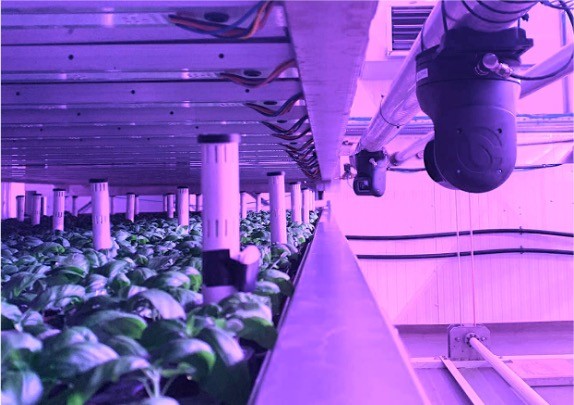
Different methods of growing plants may well require different traits, for example in vertical farming the plants gain nutrients through sprays, mists and deep water hydroponics, what implications will this have on production? Controlled Environment Agriculture is changing the way we traditionally think about growing crops and advanced breeding techniques will have an important role to play in this sector. National Security and Investment Bill
This is a major piece of legislation which impacts agriculture – and indeed many other sectors. The National Security and Investment Bill aims to have stricter screening of overseas investment into the UK. The aim of this Bill is to ensure overseas companies don’t undermine or usurp UK business interests and reduce their competitiveness on a global stage.
This Bill also has implications across the board for innovation, given that R&D is often a global, collaborative endeavour, and that international insights and technologies advance the body of knowledge and accelerate products to market.
There is a potential risk that the UK will be seen as a less attractive market in which to partner with innovators and do R&D. The implications for developments in Artificial Intelligence and robotics, in particular, are causing concern.

Balancing innovation and regulation 

Rarely do innovation and regulation keep pace with each other – often innovators and even end-users are frustrated at the apparent lack of pace of lawmakers to ensure appropriately robust, but suitably enabling requirements.
But similarly, law-makers need those in the innovation community to provide them with high quality insights, information and data to help the legislation stay abreast of the fast-moving pace of technology development. Also to consider the wider ethical and social consequences of new technologies.
Legislation around technology is likely to be moving fast over the coming months and years. By engaging with policy-makers, providing open and transparent information and ensuring there is good awareness of the potential implications, we can all help ensure the UK continues to build its reputation as one of the world’s leading places for innovation.

REAP 2020 report launched

Agri-TechE Article
Agri-TechE

A new era of decision support tools is making it possible to understand the complexity of food production for the first time and to begin to see how the system can be improved at every level to provide both incremental improvements and disruptive change.
The REAP 2020 conference brought together innovative thinkers from different disciplines to look at agricultural production from the perspective of a system that is an integral part of the natural environment.
The online event attracted a global audience and this report aims to provide a flavour of the discussions and to capture some of the excitement of the Agri-TechE innovation ecosystem.
Speakers discussed emerging agri-tech, the learning points gained from technologies already deployed on-farm, and the innovations that by providing decision support for managing risk are moving us closer towards a future that is productive, profitable and sustainable.
To capture the virtual nature of REAP 2020 we have produced an interactive report including video excerpts from many of the presentations (in the form of a Powerpoint Show), as well as a traditional pdf document.

Airponix Solution nutrient spray reduces water requirements in Kenyan trial

Meet the Network
Agri-TechE

airponix
A nutrient spray is being used by Airponix to deliver a growing system that makes agricultural sustainable in extreme conditions. 
Michael Ruggier is speaking at “CEA is Growing Up” he is the CEO of Airponix which has a smart, sustainable and soilless system that is designed to support the growth of a broad range of food and niche crops.
He explains: “Our solution mimics nature, like an orchid growing in air, absorbing light, oxygen, humidity and nutrients from its surroundings. Roots are exposed to a nutrient rich fog which is more effective way of delivering the nutrients than any other systems such as current aeroponics which sprays the roots, or hydroponics which submerges them.
“It does not require an expensive pumping system or for the water to be changed, so in comparison to hydroponics we use a fraction of the water and can provide double the yield.”
 ”It is a simple, low-maintenance, smart, soil-less system.” 
  Airponix is currently trialing the technology in Kenya to provide seed potatoes, and has an agreement with major potato house in the UK. 

Try before buying

Airponix nutrient spray
Airponix is trialing its technology in Kenya

The plan is to lease small units to potential customers for a season so they can test the technology before making a commitment.
Michael explains:  Adopting a new technology is hard enough, especially if it is a new radical change. We are going allow customers to try-before-buying with some clearly defined key performance indicators. When they see how good it is, they’re going to want as many as they can get! 
“This is already underway but currently looking for partners in geographies where there is low food-security but high-income, for example the Middle East) as they will be more comfortable trialing new technology. Once the technology has been proven multiple times we will expand further.” 

Nutrient spray offers benefits over other technologies

Michael explains that the system has benefits when compared to hydroponics and aeroponics.  
Hydroponics uses a lot of water and pumps, and so requires lots of energy  to pump the water. Airponix uses a much more fundamental force, entropy, to deliver the nutrients. 
“Aeroponics also uses a spray but this results in the roots becoming long, drooping, and stuck together. Airponix’s much smaller droplet size allows for the roots to grow out in a much more efficient way making it much easier for the plant to absorb the nutrients as it penetrates deep into all the root hairs. 
 ”In addition, we are developing a new technology (IP secured) that will drastically reduce the running and maintenance cost of the system to keep us ahead of the competition.” 
More about Airponix

How a data analyst is improving 4 arable businesses in Norfolk

Member News
The views expressed in this Member News article are the author's own and do not necessarily represent those of Agri-TechE.

Data is the new weapon for farmers seeking to enter a competitive global market, while protecting the environment and coping with the greater extremes in weather.

But not enough is often made of the data available, even on large, progressive estates, according to Poul Hovesen, director of farming at Salle Farms Company and Holkham Farming company.

“That’s especially true of what impact we can have on the crop’s potential, whether it is its resilience to stress, or its yield due to nutrients and biomass.”

Here the link to the complete article on Farmers Weekly

Germains Seed Technology Celebrates 150 Years of Innovative Seed Solutions

Member News
The views expressed in this Member News article are the author's own and do not necessarily represent those of Agri-TechE.

Before there was Rolls-Royce, Marks & Spencer, or Typhoo Tea, there was Germain’s Fruit and Produce Company—a business that has adapted and persevered to celebrate its milestone 150th anniversary in 2021. Although the company now known as Germains Seed Technology has changed considerably since it was founded by Eugene Germain in 1871, it continues to “maximise nature’s potential” through innovation, quality, and flexibility—just as it has since the very beginning.

Today, Germains Seed Technology is a leader in the international seed industry, delivering highly specialized seed pellet and treatment technologies for sugar beet, vegetable, and field crop seed producers and growers across the globe. The company operates from nine global locations across North America, the United Kingdom, and Europe. Germains Seed Technology’s Head Office and Sugar Beet Research and Development are based in King’s Lynn, Norfolk. In 2015, the company also opened a Fundamental Research Centre in Norwich Research Park, where senior researchers use advanced RNA technology to create strategically targeted seed priming and crop development treatments.

Victoria Lawrence, Managing Director of Germains Seed Technology, stated, “We are incredibly proud to celebrate this milestone anniversary with the multiple generations of employees, customers and partners who have grown right along with us. Staying true to the vision of our founder, we remain dedicated to using cutting-edge science and seed technology to develop solutions that benefit people around the world. We look forward to continuing to evolve and solve new challenges for the next 150 years!”
Message from Victoria Lawrence

The company was founded by Eugene Germain, a Swiss immigrant who opened Germain’s Fruit and Produce Company in the small, sleepy town of Los Angeles in 1871. The Southern California climate proved ideal for agriculture, and the business expanded quickly, moving to a larger location in 1898 that was billed as “the most complete seed store in the West.”

The company embraced flexibility from the start, branching into a wide range of different crops and agricultural business ventures over the years. Early in the 20th century, Germain’s shipped the very first carload of oranges from California to the U.S. East Coast. Later, in 1954, the company introduced the “Queen Elizabeth” pink grandiflora rose, which was named in honour of the newly crowned queen and remains one of the most popular cultivars grown today.

As a company, Germains has always fostered a culture of innovation, research, and development. In the early 1950s, Germain’s formed the Filcoat Processed Seed Division and introduced the first pelleted seed into the American market. Pelleting made it easier to precisely plant small, irregularly shaped seeds using automated planters and also provided a way to apply protectants needed to control pests and disease.

Researchers at Germain’s soon developed a clay-based pellet for sugar beets, which have oddly-shaped seeds that can be difficult to plant. After three years of comparative sugar beet trials in the 1960s, Germain’s Filcoat pellet was selected as the “pellet of choice” by the influential British Sugar Corporation. This marked a significant turning point for Germain’s. In 1965, Germain’s (UK) Limited formed, and the company opened its first plant in King’s Lynn, Norfolk, to meet the growing demand for pelletized sugar beet seed throughout the United Kingdom and continental Europe.

The seed technology division gradually became the main focus of the business, expanding to multiple locations in the UK, Europe and North America while other units were eliminated or sold off. Germain’s continued as a family-owned business until 1987, when it was acquired by S&W Berisford, then the owners of British Sugar. In 1990, the company was acquired by Associated British Foods LLC, and in 2010 was rebranded as Germains Seed Technology. Today, the company sells conventional and organic seed coating, priming and pelleting products for over 45 different crops and also collaborates with growers and seed producers to provide custom solutions for real-world problems.

Germains Seed Technology is also committed to social sustainability at both global and local community levels. The company donates quality treated seed to impoverished communities in developing countries through the non-profit Seed Programs International organization. Germains UK also supports a number of other charities, including the King’s Lynn Food Bank, Queen Elizabeth Hospital, Widowed and Young, East Anglian Air Ambulance, Norfolk Hospice, East Anglian Children’s Hospice, Brambles Animal Sanctuary, and the RSPCA (Royal Society for the Prevention of Cruelty of Animals).

Just like its determined pioneer founder, Germains Seed Technology has proven quite adept at responding to ever-changing market needs and persevering through adversity. In its 150 years, the company has survived multiple economic recessions, natural disasters—and now, two global pandemics. Its innovative seed technologies continue to help improve crop yields, making it easier, more affordable, and more sustainable for people to grow food across the globe.

Rothamsted businesswoman Nicole Sadd wins National Business Leader Award

Member News
The views expressed in this Member News article are the author's own and do not necessarily represent those of Agri-TechE.

The National Business Women’s Awards 2020/21 event was held at the Hilton Hotel in Wembley, and saw business women from across the UK come together to support and celebrate each other’s achievements in this annual awards ceremony.

There are 20 categories in total in these national awards and Hertfordshire-based Rothamsted Enterprises CEO, Nicole Sadd, was named as a finalist in two: ‘Corporate Leader of the Year’ and ‘Business Woman of the Year (Small Business – £1m-10m turnover)’.

Nicole faced some serious competition from a number of women business leaders and was delighted to be named as the winner in the Corporate Leader of the Year category.

This category is open to women in business who demonstrate being a proven leader in their organisation and brand category. Nominees demonstrate outstanding leadership, and a track record of building sales and profitability whilst energising and inspiring the people who report to them.

Nicole commented: “It’s taken a while to sink in. It was totally unexpected! I was up against some serious competition and I am absolutely delighted to have been named as winner in the Corporate Leader of the Year category. This achievement is great news, both for myself and my great team and I am proud to represent Rothamsted and women in business generally. The pandemic has been a hugely challenging time for us all and leading Rothamsted Enterprises – a hospitality business and innovation campus – during this time required huge focus, resilience and determination. It is a real honour to receive this award.”  

World’s first ‘activated air’ seed sterilisation system to be launched at Agri-TechE event

Agri-TechE Article
Agri-TechE

The world’s first activated air seed sterilisation system is to be launched at the Agri-TechE event “Keeping it clean with agri-tech innovation” on 19th January 2021. The system provides a dry alternative to chemical treatment or washing and boosts germination.
It enables high-value seeds such as tomato or fast-growing seeds like rocket to be disinfected – many for the first time.
Register: “Keeping it clean with agri-tech innovation”