The Productive Landscape: NatureTech for Profit and Planet
How can technology enable delivery of food, nature recovery, and climate resilience - all at once? The Head of the Environment Agency is asked: what's the national plan for dealing with land use pressures, plus you’ll hear from technologists and land managers working on nature-based and tech-enabled solutions for water, soils and climate adaptation.

Agri-TechE 2025: What’s Next?

Agri-TechE Blog
Agri-TechE

Cast your mind back to 2013. What did you imagine agriculture and horticulture would be like in 2025?

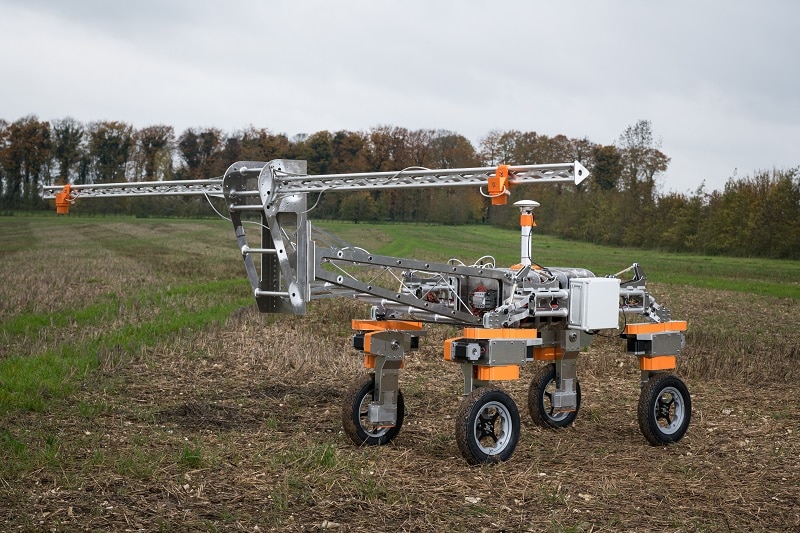
Fields buzzing with drones monitoring fields 24/7?

Robots routinely managing plants and livestock without the need for human supervision?

Farmers gaining unique insights into the health and status of fields, soils and animals that aren’t possible through the naked eye?

Precise breeding solutions speeding up deployment of genetics?

New chemistry that sits alongside biological solutions to manage pests and diseases and boost plant and animal health?

Contracts and deals being done via blockchain?

ChatGPT’s version of a Farm of the Future

Some of these technologies – such as the use of imaging and field analysis – are now routinely deployed at commercial scale on farms.

Others have taken longer to get where they need to be.

Farming in the future has always been a hot topic of discussion in an industry which every year is different. Agri-TechE was founded on the premise that farmers, alongside researchers and tech developers are highly innovative and as such would have a lot in common.

Experience tells us they do – but need a lot of help to get ideas ground in the lab or workshop, to delivering impact and benefit on farm.

The UK’s national agri-tech strategy was published over a decade ago to kick-start activities to get innovations developed to help increased productivity, profitability and sustainability in agriculture.

At our upcoming ‘Challenge Convention‘, we are asking what is needed to turbo-charge agri-tech into the next decade to realise its full-potential. Who needs to do what to get us to that future? What are the actions – from individual businesses, to investors, governments and supply chain actors – everyone will need to play their part.

We’re not looking to apportion blame, identify mistakes made or reflect on how things should have been done differently.

This is about looking forward and realising opportunity.

Building on some (as yet unpublished) findings from our “Back to the Future” project, we aim to pull together the expertise across the Agri-TechE community to “challenge convention” and agree what need fixing, changing or delivering to unlock the untapped potential for UK agri-tech.

Join us.

Challenge the convention. Let’s do things differently.


Pulses could deliver half of UK agriculture’s carbon reduction target

Meet the Network
Agri-TechE

We met Roger Vickers, head of PGRO, to discuss the vital role the PGRO plays in supporting domestic pulse production.

The launch of the Government’s Land Use Framework and Consultation last week highlighted how much we expect from our green and pleasant land. Food production, habitat creation, climate goals, and the UK’s ever-growing population compete for this finite resource.

The answer to intractable challenges is often complex and multi-faceted, requiring the collaboration and thought leadership that Agri-TechE hopes to help enable. There are some scenarios, however, when a simple solution exists that ticks almost all the boxes.

Growing more pulses would deliver the significant environmental benefits of having a flowering, no-nitrogen, biodiversity-stimulating cash crop whilst increasing domestic animal protein production and reducing UK agriculture’s carbon footprint.

So says Roger Vickers, head of PGRO.

From Soya to Sustinaability conference
Peas
Peas

We spoke with Roger shortly after the ‘From Soya to Sustainability’ conference, which revealed the first learnings from the ‘Nitrogen Efficient Plants for Climate Smart Arable Cropping Systems’ (NCS) project.

NCS is a £5.9m DEFRA-funded project involving a consortium of 17 partners from research, commercial businesses and farmer networks. When it launched, it had the bold ambition to reduce the UK farming industry’s carbon emissions by 1.5Mt CO₂e per year, 54% of the maximum potential carbon reduction for UK agriculture as suggested by a 2021 government report.

In fact, two years into the project, research by the Farm Carbon Toolkit has calculated that growing the maximum potential area of pulses, which is 20% of the UK’s arable area, could reduce the industry’s total carbon emissions even more than initially thought, claims Roger.

The carbon savings from growing pulses arise chiefly from two key areas. If pulses were grown across 20% of the UK arable area, Farm Carbon Toolkit estimates that the industry would use around 100,000 tonnes less nitrogen fertiliser.

However, if we quadrupled the area of pulses from around 5% to 20%, what would that do to the domestic market for peas and beans? Roger says that is where the second significant carbon reduction can be found.

Roger Vickers
Roger Vickers
CEO Processors and Growers Research Organisation (PGRO)

“The immediate and obvious answer is to displace soya bean. Peas and beans are a protein crop, and we import nearly three million tonnes of soya beans and soya bean meal each year. Most of that goes to feeding animals.”

If 50% of the imported protein used in livestock feed was replaced with UK peas and beans, the Farm Carbon Toolkit research indicates a carbon saving of 2.8m tonnes of CO2 emissions each year. Added to the reduction in nitrogen fertiliser, this would save a staggering 3.4m tonnes of CO2 emissions annually.

Building up the industry’s knowledge and skills in growing pulses is a key area that Roger acknowledges NCS needs to deliver to enable an expansion of pulse growing. Pulses presently account for only 6% of the arable area, meaning many farmers do not have immediate experience growing them.

“An agronomy work package is looking at field-scale farmer engagement. We aimed to get 200 farmers involved, but we have more than 350 farmers engaged.

“In addition, we are pushing for 40 Pulse Pioneers over the project’s lifecycle, and we currently have 20. These farmers are doing on-farm experimentation and measuring the carbon impact of the altered cropping patterns.”

As the Land Use Framework and Consultation highlights, so much on which we base our assumptions in the ag industry could be about to change. This will bring challenges and opportunities. There could be a generational shift in how we attribute value to the crops we grow in this country, which may realign our perception of domestic pea and bean production.

To find out more about the NCS project, visit https://ncsproject.co.uk. If you are a farmer and would like to get involved, go to https://farmpep.net/programme/pulsepep .


What is the PGRO?

The Processors and Growers Research Organisation (PRGO) is the UK’s centre of excellence for peas and beans. As a non-statutory levy-funded research organisation, it is supported by its grower members, the UK pulse trade and partners commissioning contract research.

With over 75% of its workforce in the research team, the organisation is heavily tilted towards maximising the returns for its levy payers. Some of its most well-known outputs are the annual descriptive list of varieties, agronomy guides and the Pulse Magazine.

New sequenced genome sheds light on weed resistance

Member News
The views expressed in this Member News article are the author's own and do not necessarily represent those of Agri-TechE.

Genomic advances reveal how similar weeds can dominate wheat fields that are geographically separated by over 5,000 miles.

Two new Alopecurus genomes have been sequenced, providing important additions to the growing body of community resources for weed genomics.

Access to the genomes for blackgrass and orange foxtail, sometimes called shortawn foxtail, will help researchers address what makes these weeds such exceptional survivors in modern agricultural systems.

The sequencing of the orange foxtail genome, which was carried out at the Earlham Institute, generated 11.7 million PacBio HiFi reads – nearly 230 Gb of data – corresponding to a haploid genome coverage of 32.9x.

Both blackgrass (Alopecurus myosuroides) and orange foxtail (Alopecurus aequalis) are native to many regions across the Northern Hemisphere.

Blackgrass has become the predominant agricultural weed in Western European winter wheat and barley, whereas orange foxtail has emerged as the dominant agricultural weed for similar crops in parts of China and Japan.

Both are grass weeds that grow in grass crops. They frequently out-compete cereal crops.

Changes in cropping practices have not been effective in controlling the weeds, and both have evolved resistance to multiple herbicides.

With both weeds presenting a major threat to crop yields and food security, a better understanding of the genetic drivers of their resistances and resiliencies are essential to generate effective strategies for control. Filling this knowledge gap requires high-quality genomic resources.

n December 2023, an annotated blackgrass genome was published by Rothamsted, Clemson University, and Bayer scientists. The blackgrass seeds were from a population collected in 2017 from the Broadbalk long-term experiment that had never been treated with herbicides and so remained susceptible to chemical control.

Comparing this population with resistant populations from other UK fields enabled these researchers to identify genetic mechanisms correlated with resistance.

Now, one year later, an annotated orange foxtail genome has been published. For this genome, Rothamsted researchers collaborated with partners at the Earlham Institute and the European Reference Genome Atlas (ERGA) initiative, which ultimately aims to provide reference genomes for all European species.

The orange foxtail plants sequenced were from seeds held by Kew’s Millennium Seed Bank from a UK-collected population.

As orange foxtail is not present in the UK’s agroecosystem, it is unlikely they have ever been exposed to herbicides.

As with the Broadbalk seeds, this genome is an important reference as it will not have been influenced by the strong selective pressures that have shaped some weed populations.

The orange foxtail genome at 2.83 Gb is smaller than the blackgrass genome (3.572 Gb) and contained just over 33,750 protein-coding genes. The genome is assembled into a total of seven chromosome-level scaffolds, and most are complete with telomere sequences on one or both ends.

The sequencing, assembly, and analysis of the orange foxtail grass were carried out by teams in both the Earlham Institute’s Faculty and its National Bioscience Research Infrastructure in Transformative Genomics, both supported by BBSRC.

Read the full article here

Opportunity: UK to India Agri-TechE Accelerator Programme 2025

Member News
The views expressed in this Member News article are the author's own and do not necessarily represent those of Agri-TechE.

The UK Agri-TechE Centre will spearhead a UK to India knowledge exchange initiative in 2025, promoting collaboration in targeted, late-stage R&D, new investment and market access for innovative agricultural technologies. Partnering with the Foreign, Commonwealth and Development Office (FCDO), UK Science and Innovation Network (SIN), Department for Environment, Food and Rural Affairs (Defra) and Department for Business and Trade (DBT), the programme aims to enhance collaboration and access to agricultural innovation across UK and India, supporting on-farm sustainability and profitability and agri-tech sector growth.

More information here


Applications are due on the 10th February 2025.

Ceres Agri-TechE and the University of Lincoln showcase Agri-TechE Innovation in Parliament

Member News
The views expressed in this Member News article are the author's own and do not necessarily represent those of Agri-TechE.

Cambridge Enterprise initiative Ceres Agri-TechE and the University of Lincoln partner to showcase innovative agri-tech solutions from university science addressing global challenges

Ceres Agri-TechE and University of Lincoln have partnered to present Agri-TechE Innovation as part of an Agri-Science Week in Parliament exhibit on 27-31 January. The team will share highlights from the Ceres Agri-TechE programme that is translating world-class UK university science into real world impact.

Initially funded in 2018 by a £4.8M Research England CCF award as a collaboration between the University of Cambridge, University of Lincoln, University of Reading, University of Hertfordshire and the University of East Anglia, Ceres Agri-TechE Knowledge Exchange Partnership (Ceres Agri-Tech), is a collaborative initiative founded by and located at Cambridge Enterprise, the innovation arm of the University of Cambridge. Ceres Agri-TechE builds upon Cambridge Enterprise’s world class track record in research translation, helping underpin food security, reducing environmental impacts and increasing the sustainability of agriculture.

Supported by grants from Research England’s Connecting Capability Fund and EPSRC Place Based Impact Accelerator Account, to date Ceres Agri-TechE has launched four agri-tech spinouts, which together have created 29 high-value jobs and are developing innovative agri-tech solutions for critical challenges. These spinouts include:

  • Fruitcast – AI-enabled decision support and fruit forecasting for improved yield optimisation, waste reduction and improved efficiency
  • Agaricus Robotics – intelligent robotic mushroom harvesting
  • Cellexcel – waterproofing biocomposites for lightweighting vehicles

Ceres Agri-TechE has a pipeline of over 40 agri-tech innovations with global potential including direct carbon capture for climate resilience, net zero precision fertiliser and improving crop storage for reduced food waste. The pipeline projects all address UN Sustainability Development Goals, such as zero hunger, clean water (and sanitation), responsible consumption and production and industry, innovation and infrastructure.

It is helping to bring together organisations in the UK and around the world to translate leading university science into real-world solutions, with 28 new collaborations, 8 UK civic partners, 30 international partners and 26 farmer partners. Ceres Agri-TechE has leveraged £6.07 million so far and supported the training of more than 380 academics, helping the continued pipeline and positive impact of agri-tech research innovation.

Since 2018, Ceres Agri-TechE has worked closely with university partners Cambridge, Lincoln and UEA, as well as local civic societies, businesses, farmers and growers in the region’s agri-tech cluster. In 2023 Ceres Agri-TechE announced two further formal collaborations.

Led by the University of Lincoln, with the Cambridge University Department of Engineering and Ceres Agri-Tech, Lincam is a collaborative initiative to deliver agri-tech impact in the Greater Lincolnshire and North Cambridgeshire (Lincam) region, funded by a £4.9m Engineering and Physical Sciences Research Council (EPSRC) Place Based Impact Acceleration Account. Already a nationally renowned agri-tech cluster this funding is driving the Lincam region to become an agri-tech gateway for the world – enabling the development of technologies at industrial scale and providing export opportunities for agri-tech companies and inward investment opportunities within both the agri-tech and primary production sectors.

Ceres Agri-TechE is also collaborating with Universities of Lincoln (lead), Cambridge and UEA to develop a truly global Agri-TechE cluster in the Greater Lincolnshire and East Anglia region with £1.49m from Research England’s Connecting Capability Fund (CCF) RED fund. Agri-TechE Global is a designed to translate agri-tech research from the Universities of Lincoln, Cambridge and UEA and build international academic and commercial links to support the onward development and commercialisation of their agri-tech innovations.

Ceres Agri-TechE is a testament to the power of innovation and collaboration, and the positive impact of publicly-funded research. By bridging the gap between research and real-world application, Ceres Agri-TechE is paving the way for a more sustainable, efficient, and resilient agricultural sector.

Dr Louise Sutherland, Director of Ceres Agri-Tech, said:

“Ceres Agri-TechE is a crucial link that enables world-leading University research from the UK to solve global challenges facing agriculture, driving sustainability across the environment and lives. Our work is having tangible impacts in the UK and worldwide and showcases the incredible potential of collaboration and publicly funded research to drive positive change.”

Professor Simon Pearson, Founding Director of Lincoln Institute of Agri-Food Technology (LIAT), University of Lincoln, said: “There is little doubt that the UK is a world leader in the diverse set of interdisciplinary sciences that underpin agriculture and food production. Ceres Agri-TechE focuses on the key challenge of translating this science from university labs to farmers’ fields. The Ceres Agri-TechE programme is now proven generating Lincoln’s first spin-outs and high quality jobs that support the national and local economy. Lincoln are proud to be one of the initial partners of Ceres Agri-Tech.”

Prof Julian Blow, PVC Research and Innovation, University of East Anglia, said:

“As leaders in agri-food research and innovation, we recognise the benefit that the Ceres Agri-TechE partnership has brought to our institution. The agri-tech specific support through Ceres Agri-TechE has proven to be an efficient model for fast-tracking the commercialisation of early-stage agri-tech arising from our research. A number of UEA academics have benefited from the process which has sharpened their understanding of pitching, market needs and developing commercial plans. Ceres Agri-TechE compliments UEA’s ambitious research, innovation and civic strategies, and our vision to solve the challenges of our changing world by working together sustainably.”


Soil sampling vs soil station data

Member News
The views expressed in this Member News article are the author's own and do not necessarily represent those of Agri-TechE.

Soil analysis is a valuable tool in agriculture for selecting suitable crops, assessing soil fertility, and providing fertiliser recommendations. To obtain reliable information, it is necessary to take representative soil samples and analyze the soil using methods calibrated with fertiliser trials in the respective region. On the other hand, it has long been observed by several researchers that, under sufficient soil moisture conditions, soil electrical conductivity (EC) describes plant growth conditions well or even better than soil analyses. However, correlations between EC and nutrient levels found in soil analyses have been inconsistent.

Macronutrients in soil

The main macronutrients in soil, which are determined through analyses, include nitrogen (N), phosphorus (P), and potassium (K), which are required in large quantities by plants. Secondary macronutrients like calcium (Ca), magnesium (Mg), and sulfur (S) are also important, but deficiencies and the need for their addition are less common in crop cultivation. Typically, soil analyses are conducted in early spring, when the level of nitrate (NO3), the most crucial plant-available form of nitrogen, is low in the soil. The total nutrient content in soil is much greater than the portion available to plants. For instance, potassium makes up approximately 1% of the world’s soils (as referenced in Soil Chemistry by H.L. Bohm, B.L. McNeal, and G.A. O’Connor, John Wiley & Sons, 2001), but the plant-available fraction in soil tests is around 100-200 mg/kg, which is only 1-2% of the total K content.

Soil sampling: how and what is measured

The same principle applies to all plant nutrients. Therefore, laboratory methods have been developed to specifically determine the plant-available nutrients, and these methods are validated through fertilisation trials. In Europe alone, 12 different soil analysis methodologies are used, employing various extraction solutions, meaning that results obtained from different laboratories are not directly comparable. During these analyses, a specific amount of extraction solution (e.g., Mehlich 3, AL, DL) is added to the soil, shaken for a set period, and the nutrients extracted into the solution are measured. Standard spring soil analyses (required every 5 years) typically measure K, P, as well as Mg and Ca content in mg/kg.

The role of electrical conductivity in soil data

Plant nutrition occurs through the water present in the soil, where nutrients are dissolved. This is the medium from which plants directly absorb nutrients through their roots. Dissolved ions in soil water cause electrical conductivity, and the total amount of ions can be universally estimated by measuring the electrical conductivity of a saturated soil extract, which is the Paul-Tech nutrient indicator. Phosphorus is usually strongly bound to soil particles in a non-water-soluble form, so its movement is not reflected in electrical conductivity. Key cations like K+, Mg++, and Ca++ are more or less bound to the soil structure (negatively charged colloid particles) through the cation exchange capacity (CEC) phenomenon.

Whether or not these exchangeable cations dissolve in soil water or sit on exchange sites, depends on many factors, particularly soil texture (the clay content, which determines the CEC value), organic matter content, temperature, soil moisture, and more. For example, it is known that K+ ions bind relatively quickly and strongly to soil particles, and this process is also influenced by winter freezing-thawing cycles, which is reflected in Paul-Tech’s nutrient value. The strength of cation binding to the soil matrix determines their leaching potential; for example, soils with higher clay and/or humus content (higher CEC) have little risk of K leaching, whereas sandy soils (low CEC) are at higher risk.

In traditional soil analyses, the total pool of potentially plant-available nutrients is determined using extraction solutions, whereas the Paul-Tech system measures in real time the sum of nutrients currently available to plants in the soil solution.

Summary:

  • The total nutrient content in soil is 10 to 100 times greater than the portion that is plant-available (the part that influences plant growth).
  • In soil laboratory analyses, nutrients are extracted from the soil using different extraction solutions, and it is unclear, and may vary over time, how much of the nutrients obtained in these analyses (the total soil nutrient content) are currently available to plants. The analysis methods are calibrated with fertilisation trials and are specific to the local context.
  • Plant nutrition occurs through the soil water solution. Measuring electrical conductivity and calculating nutrients from this in the Paul-Tech system describes the real situation in the soil water near the root zone (and not the extraction solution) in real time.
  • For long-term soil fertility management, the laboratory analyzes using extractant solution is essential as it shows the total nutrient reserve, even those not immediately available.
  • *I have permission from the copyright holder to publish this content and images.

Animal, Vegetable, or Mineral? Government consults on UK land use

Agri-TechE Article
Agri-TechE

How should the UK balance food security, climate goals, and development?

Land is a dynamic, multi-functional resource that can simultaneously produce food, store carbon, provide habitats, and support communities. The challenge is how to manage these increasing and sometimes competing demands holistically.

The UK government has launched a Land Use Framework & Consultation, in efforts to address the complex and often competing demands on England’s land. This framework, drawing on recommendations from the independent National Food Strategy released in 2022, seeks to provide a more strategic joined-up approach to balancing food security, climate change, nature recovery, housing, and clean energy.

For the agri-tech sector, this raises fundamental questions:

  • How can innovation help maximise land productivity while meeting climate and biodiversity goals?
  • What role will technology play in making land use more efficient and resilient?
  • How can data-driven decision-making support land managers through this transition? 

With England now ranked as one of the most nature-depleted countries in the world, this is an opportunity to influence how land use decisions can integrate cutting-edge agricultural technologies, AI-driven insights, and best practices from research and industry to ensure that farmers, land managers, and policymakers have the right tools and knowledge to make informed decisions.

The consultation is open until 25th April, providing a crucial chance for the agri-tech sector to engage, challenge, and help shape a land use strategy that is both sustainable and innovation-driven.

raphael-cruz-IwY-27ceRCA-unsplash
jakob-cotton-UQJf6y91zZs-unsplash

Key considerations for agri-tech

The scale of transformation is significant – 1.6 million hectares of farmland may transition for climate and nature objectives by 2050. But with precision farming, regenerative practices, and better land use data, could innovation help offset these shifts without compromising food production?

📉 Farmland shift – Can precision agriculture and AI-driven productivity gains ensure that a 1.6m hectare transition does not impact food security?
🌱 Nature recovery – How can data-driven regenerative farming help restore pollinators, soil health, and biodiversity?
📊 Land use data – What role should satellite monitoring, real-time sensors, and AI modelling play in guiding smarter land use decisions?
Clean energy – How can agri-voltaics, bioenergy, and energy-efficient farming be scaled without displacing food production?

We believe that the following activities should be prioritised:

Accelerating knowledge-sharing

  • The rapid advancement of agricultural technologies and innovative land management practices means that knowledge dissemination is critical. Independent organisations – including Agri-TechE – as well as government-backed initiatives that connect research institutions – such as the UK Agri-TechE Centre – are needed to bring together industry leaders with farmers and landowners to ensure that cutting-edge practices are implemented more widely and effectively.

Providing improved tools for planning

  • Climate adaptation strategies should be actionable. Developing user-friendly, sector-specific tools that translate climate projections into tangible actions (e.g., adaptation blueprints for arable, livestock, and mixed-use farms) to support landowners to make informed decisions.

Cluster farmer gatherings

  • Decisions can’t be made on a single farm level, nor is a countrywide rule book practical (or welcome). Smaller scale, local groups of farmers should be supported to share resources.

Investing in skills development for future land management

  • As the sector evolves, skills gaps must be addressed. The integration of new agricultural techniques, data-driven decision-making, and precision technologies requires targeted training and retraining programs.

Aligning private investment with public needs

  • The scale of land use change required to meet climate and nature objectives necessitates private sector involvement. Creating clearer frameworks for private investment in innovative land management through mechanisms such as carbon markets, biodiversity net gain, and natural capital accounting will ensure that financial incentives drive positive environmental outcomes.


The consultation process, while a step forward, demands much participation but lacks clarity on how to convert these contributions into actionable outcomes. While it asks important questions, with so many competing priorities, it remains to be seen whether this framework can actually navigate the complexities and deliver tangible, long-term solutions.

Introducing ActivatedAir™

Member News
The views expressed in this Member News article are the author's own and do not necessarily represent those of Agri-TechE.

Zayndu recently produced a video explaining its groundbreaking ActivatedAirTM seed priming technology, which we wanted to share to help growers understand its benefits.

Shot on location at its UK headquarters at the Advanced Technology Innovation Centre in Loughborough, the video features members of the Zayndu team discussing every aspect of ActivatedAirTM.

Zayndu CEO Ralph Weir introduces ActivatedAirTM by saying it helps produce bigger, stronger and healthier plants without artificial chemicals by encouraging the seed to utilise its resources better.

At the heart of the Z-Series plasma seed treatment machine is a plasma generator using high-voltage electricity to expose seeds to an environment similar to a lightning strike, said James Seaman, director of engineering at Zayndu.

One of the key features of the machine is its simple user interface. 

“We don’t want our customers spending lots of time upskilling and training their operators. We want the machines to be used out of the box with minimal skill required,” said James.

The plasma treatment removes the external waxes on the seed surface, increasing the water permeability of the seeds and enabling them to absorb water more efficiently, explained Dr Alberto Campanaro, head of plant science at Zayndu.

This produces faster germination, which, so far, Zayndu’s plant science team has tested around 130 varieties spanning 50 plant species.

“Generally speaking, what we see in terms of yield increase from using the ActivatedAirTM technology is somewhere in the region of 20%, up to 30%,” Alberto added.

What does this mean for a grower in practical terms?

“Vertical farmers find ActivatedAirTM particularly attractive because of the decreased (crop) cycle time,” said Nathanael Dannenberg, sales manager at Zayndu. “It means their crop under lights for less time, which makes their operational costs lower per cycle.”

Similarly, greenhouse growers can increase output by running more crop cycles per year, maximising their growing space, continued Nathanael.

In conclusion, Ralph added that ActivatedAirTM enables growers to lower their cost of production, increase their output, and deliver better crops without using artificial chemicals.

“It’s a very exciting proposition for a grower.”

Contact the Zayndu team via LinkedIn or the Zayndu website to learn more.

January 2025 Business Update: Deliverables from Ceres Research

Member News
The views expressed in this Member News article are the author's own and do not necessarily represent those of Agri-TechE.

Since Dr Alex Setchfield and Dr Danni Roche joined in October 2024, the Ceres Research team has been able to meet the growing demand for independent agricultural research and knowledge exchange within the sector. In our first business update, we bring you the latest activities and deliverables from Ceres Research.  

Deliverables: 

  • Research and Development: Collaborative partnerships and expert project management, including developing a circular economy-based R&D project linking arable and poultry farming, with multiple stakeholders. 
  • Analysis and Review: Comprehensive impact analyses and market studies to detailed policy reviews and strategic consultancy, such as a bi-annual farming update being prepared for institutional landowners to send out to tenants. 
  • Industry Intelligence: Targeted farmer surveys, focus groups and practical field-based analysis, including a farmer survey understanding nature recovery and floodplain management on-farm, and breaking news on the first instance of glyphosate resistance in Italian ryegrass in the UK. 
  • Technical Training and Events: Training programmes, engaging events, and expert-led presentations, including farm cluster event organisation and a technical review of harvest 2024 (more detail below). 

Ceres Research Technical Event
The first technical event was held at the end of 2024 at the Young Farmers Club in Essex. The event provided a deep dive into what had worked and what hadn’t during harvest 2024. We also explored what can be done to improve productivity in the face of climate change moving into harvest 2025 and beyond. You can read the full article from this event, with the resources attached, here: Reflect and Project: A Harvest 2024 Review – Ceres Research. 

Corporate Memberships 

Ceres Research is delighted to have joined Agri-TechE  and UK Agri-TechE Centre as a corporate member in 2024, bringing together organisations across agriculture, technology and science. This membership will help Ceres Research to connect with industry pioneers and cutting-edge technology developers to expand our data-driven insights and actionable solutions on farm. We will continue to provide updates on future projects that result from these valuable connections. 

Sector Engagement and Knowledge Exchange 

Amongst many of the critical conferences attended late last year and early this month (such as the Institute of Agricultural Management, British Crop Protection Council Diseases Review, CLA East Roadshow the Oxford Farming Conference and the AICC Industry Day), Ceres Research was also delighted to be invited to sponsor the British Society of Soil Science Early Career members event in Cardiff, focused on careers in the soil-related industry in December 2024. Dr Danni Roche also presented some of her work on biostimulants and their potential impacts on soil health at the AHDB Agronomy Conference. The full conference was recorded and is available here. 

We are looking forward to the year ahead, especially harnessing the skills and expertise of our newly formed team as we continue to advance research and knowledge exchange in the agricultural sector. 

If you come across something interesting you hear from us or have a collaboration idea, let us know! We’d love to continue maximising our opportunities through Agri-TechE .

  • *I have permission from the copyright holder to publish this content and images.

Get ready for Agri-TechE ‘s Connections Week 2025!

Agri-TechE Article
Agri-TechE

Connections Week

Are you looking to grow your network, make impactful connections, and find new opportunities?

Agri-TechE ’s Connections Week 2025 is all about empowering you to build relationships that accelerate innovation and collaboration throughout the supply chain.

The week offers a suite of activities, resources, and discussions to help you make meaningful connections – whether you’re a farmer, researcher, tech developer, or business professional.

Connections Week 3 – 7 March 2025

Connections Week is dedicated to the importance of making connections by addressing the challenges you may face, providing tools to enhance your networking skills and opportunities for you to connect with the right people.

This year, we have:

  • Events to enhance your networking skills and collaboration opportunities
  • Stories of impactful connections made through Agri-TechE
  • Tips, resources, and activities to help you connect with others in the agri-tech community

Highlights of Connections Week ’25

Monday, 3rd March: How to Network
Kick off the week in an online skills workshop. Learn practical tips that help you prepare and build confidence to make the most of your networking opportunities.
⏰ 2:00pm – 3:00pm (Online) | Free for members, £30 + VAT for non-members

Tuesday, 4th March: Challenge Convention
An immersive day of ideas and discussion to challenge the status quo, re-set the agri-tech strategy and spark new collaborations.
⏰ All day | Free for members, £75 + VAT for non-members

Thursday, 6th March: “Innovating With, and For, Farmers”
Our panel of farmers, scientists and technologists explore how innovators and farmers can work most effectively together through building trust and designing practical solutions that achieve on-farm impact.
⏰ 2:00pm – 3:30pm (online) | Free for members, £30 + VAT for non-members


Why Connections Matter

Networking is a powerful tool for growth, collaboration, and innovation:

  • Looking for the right people? We’ve helped farmers connect with tech developers, researchers find trial partners, and businesses explore new markets abroad.
  • Got a challenge to solve? We’ve matched members with the expertise, advice, and resources they need to move forward.
  • Seeking collaboration? Our events and forums are designed to create valuable opportunities for partnerships.

Networking doesn’t have to be daunting – and we’re here to help!

We’re looking forward to connecting with you at Connections Week 2025!

Bayer and Ecospray Reach Distribution Agreement for New Garlic-Sourced Biological Crop Protection Product

Member News
The views expressed in this Member News article are the author's own and do not necessarily represent those of Agri-TechE.

Bayer to distribute Ecospray’s new liquid nematicide with their exclusive brand, Velsinum™, across Europe, the Middle East, and parts of Africa starting in 2026 / Velsinum will increase access to biological alternatives for vegetable and potato operations in the European Union

Velsinum will increase access to biological alternatives for vegetable and potato operations.

Bayer today announced that the company has signed a new exclusive distribution agreement with UK-based Ecospray to market a biological liquid nematicide sourced from garlic. The product presents a biological alternative to traditional synthetic chemical nematicides in vegetable and potato crops, and will be marketed in the European Union under the new name Velsinum™.

“Farmers in the EU are in desperate need of new, effective solutions against pests for their high-value vegetable crops,” said Jens Hartmann, Regional Head for Europe, Middle East, and Africa (EMEA) at Bayer’s Crop Science Division. “Velsinum will be a welcome addition into Bayer’s trusted portfolio of biological solutions and technologies supported by innovations like Velum, BioAct, Nematool and Terra MG.”

Nematodes cause over 75 billion euros worth of damage to crops globally each year with all crops facing at least one nematode pest threat. Velsinum will offer growers a new tool against nematode root damage with complementary benefits for both plant and soil health. Plants which can avoid root damage are better able to absorb available nutrients and also can withstand disease and pest pressure overall, all while safekeeping beneficial earthworm populations to maintain soil quality.

Ecospray’s knowledge and expertise of the naturally occurring bioactive compounds contained within garlic has allowed the company to develop effective plant protection products which take advantage of the natural nematicidal properties of garlic extract in order to create safe, effective and zero-residue solutions.

“We are excited to collaborate with Bayer on Velsinum, which is fully compatible with Bayer’s existing biological portfolio,” said Peter McDonald, CEO of Ecospray. “This partnership is a strong endorsement of Ecospray and its R&D capabilities developed over many years. We also greatly appreciate the ongoing support from our existing distributors in Europe Certis Belchim BV and CBC (Europe) SRL., who remain vital to our market development with our legacy product Nemguard.”

Bayer’s partnership with Ecospray continues Bayer’s work to bring new botanical and biological solutions from the open innovation ecosystem to growers, while encouraging diversity in modern agricultural practices and enabling additional regenerative agricultural practices. With Bayer’s trusted brand, global commercialization capabilities, and unparalleled agricultural systems expertise Bayer helps to bring effective biological products to market more quickly.

About Bayer
Bayer is a global enterprise with core competencies in the life science fields of health care and nutrition. In line with its mission, “Health for all, Hunger for none,” the company’s products and services are designed to help people and the planet thrive by supporting efforts to master the major challenges presented by a growing and aging global population. Bayer is committed to driving sustainable development and generating a positive impact with its businesses. At the same time, the Group aims to increase its earning power and create value through innovation and growth. The Bayer brand stands for trust, reliability and quality throughout the world. In fiscal 2023, the Group employed around 100,000 people and had sales of 47.6 billion euros. R&D expenses before special items amounted to 5.8 billion euros. For more information, go to www.bayer.com.

About Ecospray
Ecospray Limited, a UK-based biopesticide company, specializes in creating garlic extract-based solutions with global registrations. Known for its residue-free products, it is a preferred choice among growers. With the tagline “Nature Defined, Technically Refined,” Ecospray is dedicated to advancing naturally derived crop protection technologies through ongoing research and development.

The company offers growers reliable, effective, and eco-friendly tools for managing pest and crop health challenges, while ensuring high crop quality and promoting sustainable farming practices. Ecospray’s commitment to innovation ensures its solutions meet the evolving needs of farmers around the world. For more information, visit www.ecospray.com.

Agri-TechE Director, Belinda Clarke, awarded OBE at Windsor Castle

Agri-TechE Article
Agri-TechE

Belinda has led Agri-TechE from its inception, drawing on her experience of scientific research and knowledge exchange with farmers. She has spent a career working at the interface of government, industry and academia.

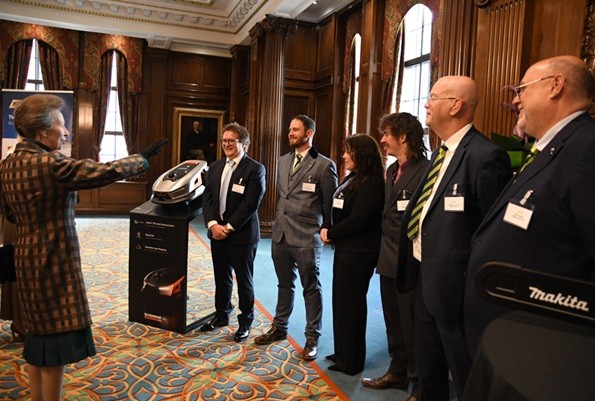
Belinda comments: “I was delighted to receive this honour from Her Royal Highness the Princess Royal, who really understands farming and agriculture and indeed asked if I had attended the recent Oxford Farming Conference (happily I had!).

“Agri-tech in the UK – and globally – feels ready to move into the next phase of its development and I am very much looking forward to exploring these opportunities with our wider communities.

Untitled design (56)
BC_HRH

Dr Belinda Clarke, OBE receiving award from Her Royal Highness The Princess Royal


Agri-TechE is a membership network that connects farmers and growers with researchers, technologists, entrepreneurs, and investors. Its agri-tech innovation ecosystem is internationally recognised for the quality of the collaborations catalysed and for its role in accelerating the development and adoption of novel technologies.

In addition to her leadership of Agri-TechE , Belinda was a member of the Council of UKRI-BBSRC and a Trustee of the Royal Norfolk Agricultural Association (2015-2021) and is currently a Non-Executive Director of Agrimetrics, formerly one of the UK’s Agri-TechE Centres. She chaired the BBSRC’s Bioscience for Industry panel, and was a member of the Programme Board for the £90m Transforming Food Production challenge.

In 2021 she was awarded the Sir Timothy Colman Prize for “outstanding leadership in the agri-tech sector” and she was among the “Women of the Year 2022” cohort.

Belinda has a first degree in Natural Sciences from the University of Cambridge (Newnham College) and a PhD in plant biochemistry following post-graduate research at the John Innes Centre into starch production by peas and potatoes. She is a Nuffield Scholar, a Fellow of the Royal Agricultural Councils, a Fellow of the Royal Society of Biology, a Chartered Biologist, and a qualified business coach.

John Barrett
John Barrett
Farms Director at Sentry and Chair of the Agri-TechE Stakeholder Board

I would like to congratulate Belinda on this richly deserved award. The founding vision of Agri-TechE was to introduce disruptors and new technologies into agriculture, and to bring farmers and tech innovators together to do things differently – and this has been achieved.

The many agri-tech businesses introduced, supported and promoted through Agri-TechE have been transformational. This wouldn’t have happened without Belinda’s drive, leadership and enthusiasm; she should be incredibly proud of this legacy.”

William Kendall
William Kendall
Farmer and Food and Drink Entrepreneur Green & Black’s, Trustee of The Grosvenor Estate and Director of Grosvenor Food & Agtech

Agriculture is the biggest industry in the world, offering potential solutions to some of the most pressing global challenges.

Organisations like Agri-TechE are vital in helping to catalyse the necessary connections and collaborations to accelerate this process.

I have been impressed by the progress and impact made by the Agri-TechE team under Belinda’s leadership.”