Does your farm need a data manager?

Agri-TechE Article
Agri-TechE

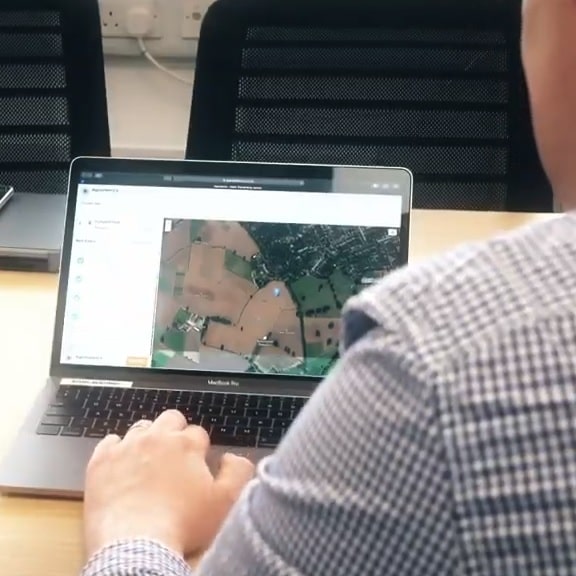
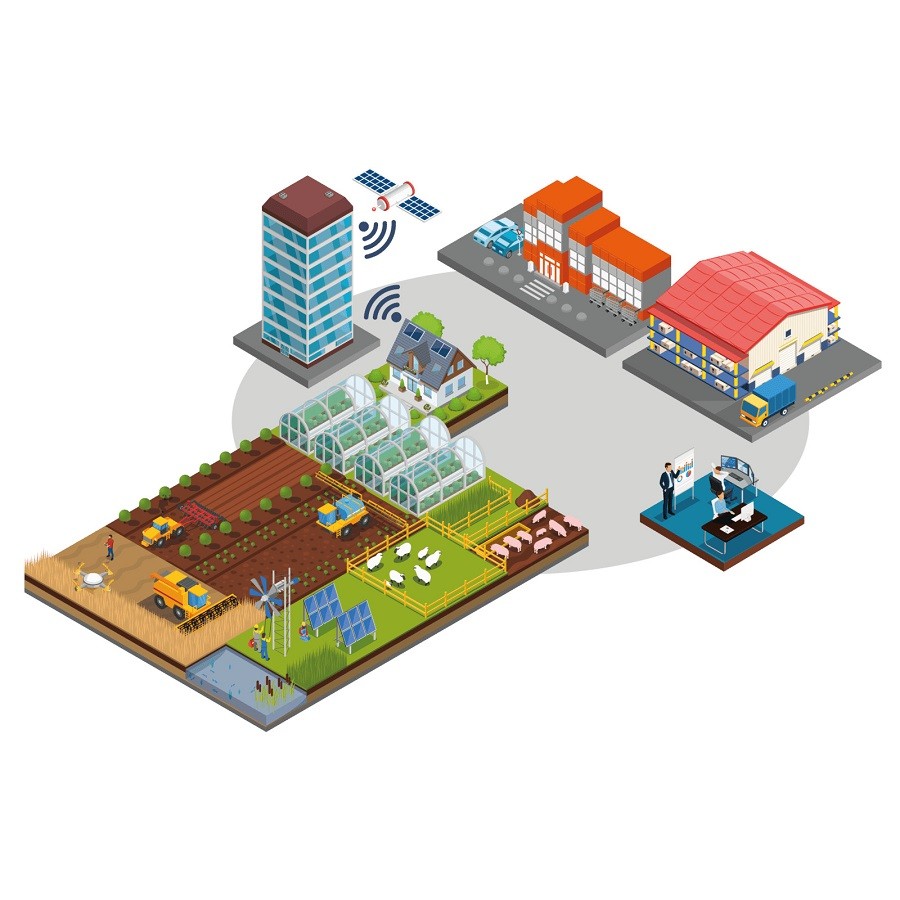
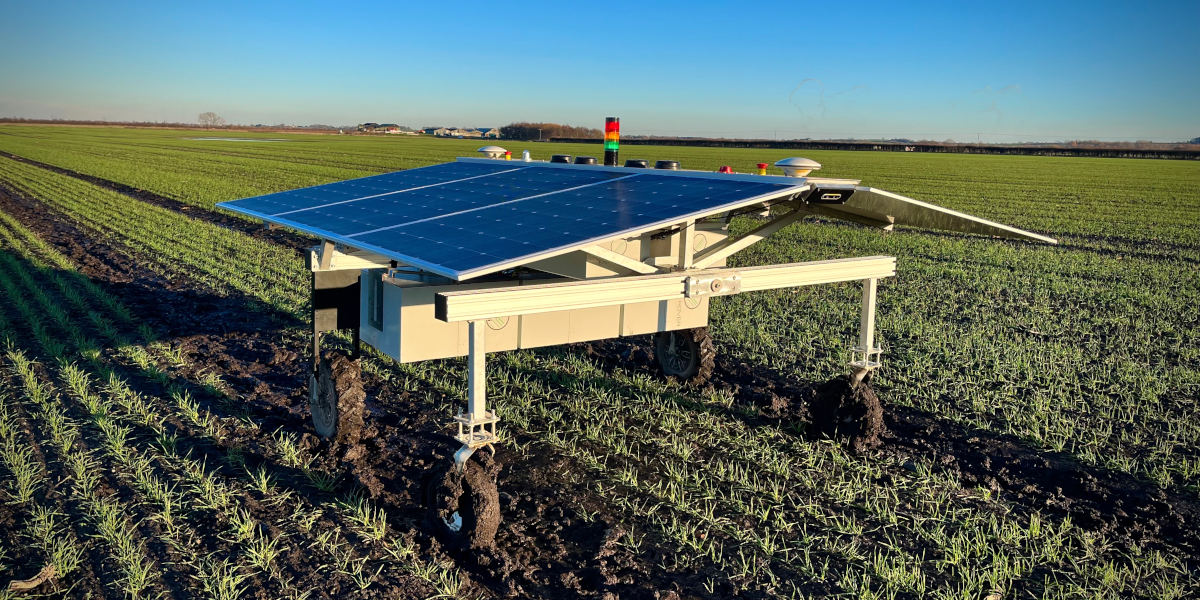
Virtual models of the real world are helping farmers, growers and breeders to understand the complex interconnections between crop, environment and markets.
Speakers from fruit farm Bardsley England and Earlham Institute will join those from technology companies Consus Fresh Solutions, LiveTrace and Hummingbird Technologies to discuss recent advances and how they are being used on the farm at the Agri-TechE event “Data Management – More Than A Numbers Game” on 13th April 2021.
Half the farming team will be employed in IT

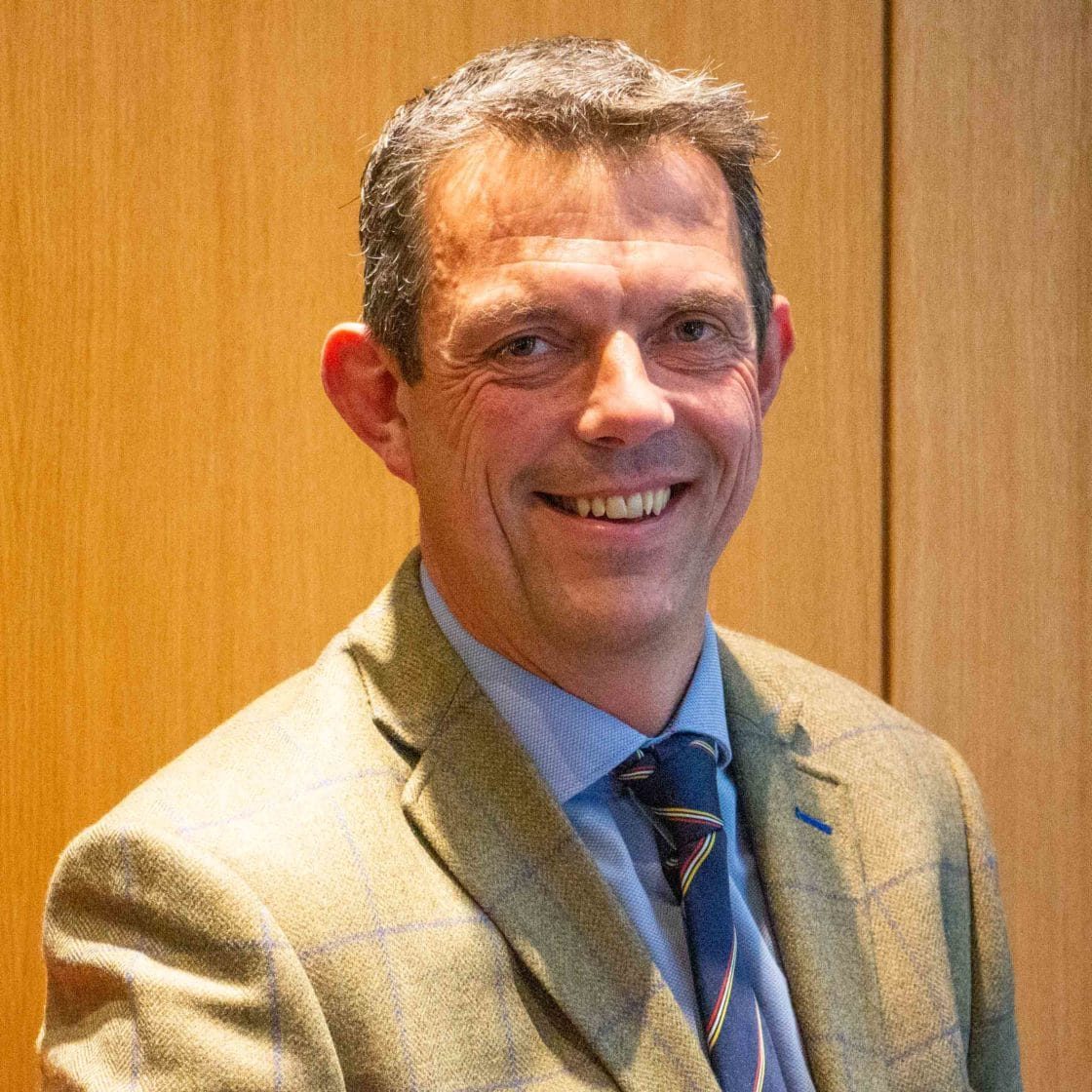
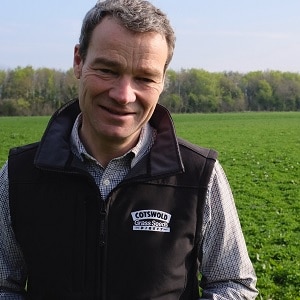
Antony Yousefian, Agri-TechE Director at Bardsley England, sees a major opportunity for the improved use of data in agriculture. He says: “If you are designing a new smartphone, all the parameters are known, the inputs and desired outputs are clear, and few products will be out of specification. But in agriculture, most of the inputs aren’t measured, much less controlled. There are so many variables in farming – I find it baffling that agriculture isn’t already digital given how complicated it is.”
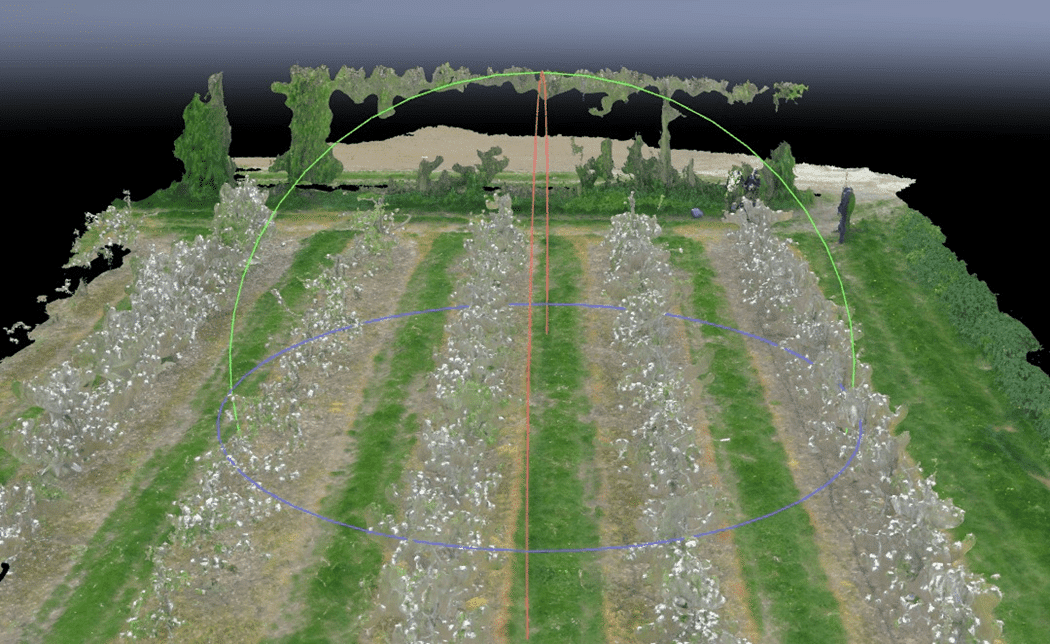
The farm is a major producer of top fruit – apples, pears, cherries and plums – and is using data collected on the farm to generate a computer model called a ‘digital twin’.
Antony continues: “The next stage of the agri-tech journey is to see farmers turning from having no IT team, to having half the business employed in IT.”

Sharing knowledge enabled potato industry to respond to change

LiveTrace has developed a Grower Management System for potato suppliers. It brings together data from a variety of sources on to one platform and offers bespoke apps to help manage variety trials and storage.
Co-founder Phillip Kemp firmly believes knowledge-sharing is the future. “Sharing data reduces administration and improves traceability, for example we are working with a haulage firm to allow paperless passports, load ticket weight and GPS tracking. Everything is in one place.” He explains that the company developed an app to help managers use ‘hot fog’ a new technique for potato storage, after the sprout suppressant CIPC was suddenly withdrawn last year, saying: “We made the decision to share our new Fogging app with companies in the processing supply, so all the major players have access to the database. Each fogging application is recorded using the app, this creates an invoice for the grower alongside sprout suppressant quantity, crop condition, date, fan speeds and, as always, a photograph. Live reporting on the dashboard is graphed by variety which is very useful to gain confidence to change the fogging process to make improvements to the application techniques.”

Sharing information gained from bigger datasets can also accelerate plant breeding

Professor Neil Hall, Director of the Earlham Institute, explains that the overarching aim for his institute is to take complex data and deliver something that is directly useful to breeders. He says: “Understanding population genetics of pathogens is very important as it helps us to predict outbreaks and also to monitor the spread and emergence of important traits such as drug resistance, pesticide resistance and virulence.”
Knowledge emerging from the Earlham Institute will give breeders tools to improve disease management, he explains: “If we were able to sequence all of the fungal effector genes in a population and see how they interact with resistance genes, in the future we could perhaps make predictions about what strains would dominate in future seasons.
“This would provide indications of how they are distributed and therefore where to focus crop protection interventions and what crops to breed for future seasons based on the dynamics of pathogens in the wild.”


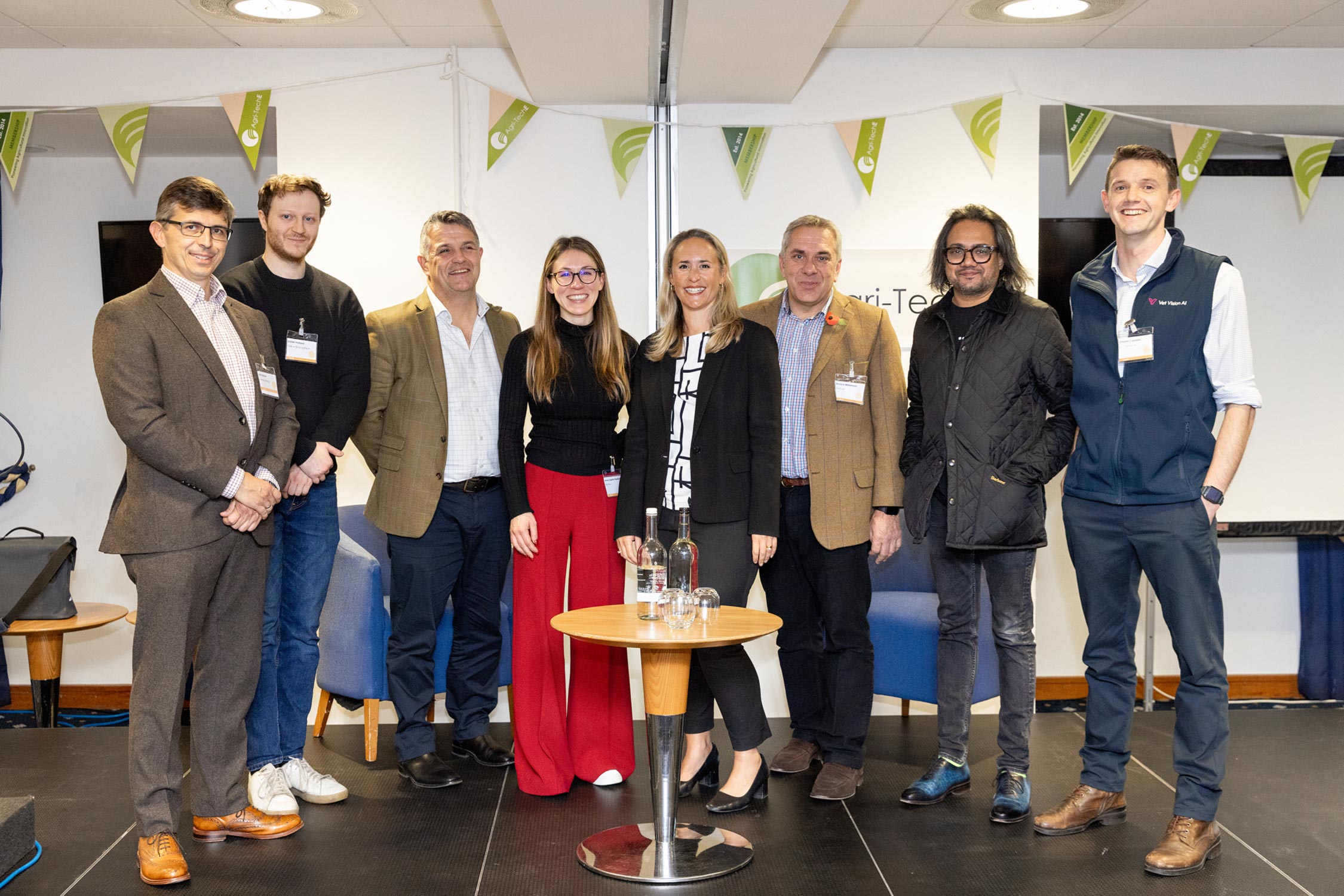
Professor Neil Hall will join Antony Yousefian, Agri-TechE Director at Bardsley England, Matthew Guinness, Head of Sustainability at Hummingbird Technologies, Jon Kemp, CEO of Livetrace, and Derek Thompson, CEO of Consus Fresh, at the Agri-TechE event: ‘Data Management – More Than A Numbers Game’ on Tuesday 13th April at 2:00 pm – 5:00 pm
Better Origin insect farm raises $3M to provide alternative protein for animal feed

Meet the Network
Agri-TechE
Insect protein provides a sustainable alternative to soy. Cambridge-based Better Origin has raised $3m to fund the development of its product X1, an AI enabled insect mini-farm.

insect protein Better Origin
Fotis Fotiadis, founder and CEO of Better Origin says the insect min-farm is a scaleable solution

X1 fits inside a shipping container and according to Better Origin, it is the world’s first autonomous insect mini-farm. It uses black soldier fly (BSF, Hermetia illucens)  to convert waste biomass, such as food waste into insect biomass that is rich in proteins and fats. It has been tried and tested on chicken farms where the larvae are harvested and fed directly to chickens.
The black soldier fly (BSF, Hermetia illucens) is a species of fly present in most parts of the world, known for its voracious appetite and rapid growth, making it perfect for converting waste into high value protein.
The entire process is automated through AI – from delivery of the food waste through to monitoring of  larvae growth, temperature, and humidity. When they are ready to harvest, the farmer is notified and the larvae can be fed to the hens.
Better Origin’s founder and CEO, Fotis Fotiadis, explains that the modular, distributed approach will accelerate adoption and remove barriers to entry for millions of farmers around the world.
“The agricultural industry has traditionally been reliant on unsustainable animal feeds such as soy, which is the leading contributor to deforestation around the world and travels for thousands of miles, generating high amounts of carbon emissions. And it does not stop there – it is estimated that 33% of arable land on the planet is used to produce livestock feed.
“Insect feed is an emerging alternative which offers a sustainable and natural feed solution for farmed animals, such as chickens and fish, with benefits that include increased productivity, better health, and higher welfare.”
The funding will accelerate Better Origin’s scaling operation and enable it to deploy more systems across the UK.
The project is backed by Fly Ventures, a Berlin-based VC firm that invests in deep technology and AI-driven venture start-ups.
Matt Wichrowski, who led Fly’s investment in Better Origin, comments: “We were blown away by the progress Fotis, Miha, and their team have made, and we believe in the sector’s potential to transform the food industry. We are delighted to back the team and support them over this next phase of growth.”
Better Origin’s vision is to help secure the future of food by offering an alternative protein that doesn’t cost the Earth. The company aims to upcycle upwards of 50,000 tonnes of organic waste and mitigate as much as 100,000 tonnes of greenhouse gas emissions per year by 2023.
More information about Better Origin.

Soil quality or soil health?

Research Digest
Agri-TechE
The term ‘Soil health’ encompasses the wider ecosystem services provide by soil and therefore is a better criteria for the sustainable management of soil than ‘soil quality’, argues Mark Pawlett of Cranfield  University one of the authors in an article for Microbiology.
He comments: “Soil quality and soil health are terms often used interchangeably without clear context or definition, providing greater clarity  is both timely and important, given that the term tries to explain complex environmental systems and interactions to different stakeholders with different perspectives.”
Mark explains that soil quality is a narrower term used to define the ability of soil to deliver specific functions such as crop yield. Whereas, soil health can be used to encompass the living element of the soil, the microbiome, and the wider role within a sustainable ecosystem.
The researchers conclude that soil health is more useful for management and have developed the following definition; that recognizes that healthy soils are dynamic and able to adapt to environmental fluctuations to maintain their functional capacity.
Soil health can be defined as the capability of soils to deliver multiple functional traits required to maintain ecosystem stability
within environmental constraints.

soil health
Soil health takes a more holistic view of soil function and management

Mark continues: “Disturbing soils by managing for one function often restricts additional functions of a given soil type, and thus soils become degraded with loss of critical soil characteristics such as organic matter and biodiversity.
“This is particularly apparent when the management strategy is at odds with natural processes.”
Moving forward the researchers see maintaining and improving soil health as being a more constructive way to assess the benefits of alternative cultivation such as regenerative agriculture and technologies such as biostimulants.
 
 
The full paper can be read in Microbiology: Redefining soil health Pawlett et al., Microbiology DOI 10.1099/mic.0.001030

The Economics of Biodiversity – Nature, productivity and growth

Agri-TechE Blog
Agri-TechE
Productivity. Growth. Nature. These words seem to come up regularly in conversation with farmers – and, crucially, they are talking about how to maximise the first two without compromising the latter.

These words are also key pillars of a recent report (Feb 2021) from the University of Cambridge which aims to change policy and practice in order to put nature’s value at the heart of economics.
The 600 page report is a hefty read, but Chapter 16 focusses particularly on food production, biofuel generation and changes to the food system.

The Economics of Biodiversity: The Dasgupta Review

Professor Sir Partha Dasgupta’s review presents the first comprehensive economic framework of its kind for biodiversity. The government press announcement says “it calls for urgent and transformative change in how we think, act and measure economic success to protect and enhance our prosperity and the natural world”.

This is welcome news for the UK industry, where increasing emphasis on delivery of ecosystem services is counter-balanced by lack of clarity about the business model needed to translate ‘natural’ capital into tangible financial value.

Commissioned by the UK Treasury, the report ‘The Economics of Biodiversity’ by Prof Sir Partha Dasgupta is expected to set the agenda for the 25 Year Environment Plan, as well as challenge the way economies and governments traditionally view ‘growth’.

Economists have historically excluded Nature from their economic models. Yet the Dasgupta report argues that long-term prosperity relies on balancing our demand for natural goods and services with Nature’s ability to supply them. The numbers are stark. In the period of 1992 to 2014, the produced capital per person doubled globally, while the stock of natural capital declined by 40%.
New, alternative metrics for success are needed to define growth and productivity, and they need to focus more on natural capital.

Measuring natural capital

As every forward-thinking farmer knows, however, so-called ‘sustainability metrics’ have been a huge challenge.

A current Holy Grail on farms is to establish how carbon storage, efficient water management, biodiversity enhancement and soils improvement can be measured, monitored and – crucially –  valued.

But progress is being made by a range of technology enablers – in the UK and internationally – towards developing natural capital measurement and valuation tools. This will be critical if we are to re-balance the supply and demand relationship with Nature.

Potential for agri-tech

Other agricultural technologies will also be crucial in helping this process, argues Dasgupta (abridged report p47). “Changing the biological capabilities of crops offers the possibility of using marginal land for production, improving crop resistance to pathogens, obtaining higher yield on existing farmland, and enhancing nutritional quality. Genetically modified crops remain controversial, even though prominent scientific bodies such as the Nuffield Council on Bioethics (NCB, 2003) continue to affirm their salience in a world with growing food needs.”

He contends that improving crop genetics using advanced breeding tools, adoption of precision agriculture approaches to reduce inputs such as nitrogen, and Integrated Pest Management, along with vertical farming and ‘cellular’ agriculture (for example for alternative meats production) are part of the solution.

Reconstructing global economics to include Nature as a key ingredient is a major task. Reconstructing the economics of agriculture through its constituent farm businesses is already underway. The journey has begun. Note: The Economics of Biodiversity – The Dasgupta Review
The Dasgupta Review is an independent, global review on the Economics of Biodiversity led by Professor Sir Partha Dasgupta (Frank Ramsey Professor Emeritus, University of Cambridge). The Review was commissioned in 2019 by HM Treasury and has been supported by an Advisory Panel drawn from public policy, science, economics, finance and business.

Is the future a carbon neutral basket of shopping? Asks Chris Brown at ASDA

Meet the Network
Agri-TechE
Chris is on the Agri-TechE Stakeholder committee and recently briefed delegates at a workshop for its members designed to create new thinking about the opportunities created by Net Zero for innovation.

“We’ve been talking about greenhouse gas emissions and I’ve been running GHG measurement on-farm for 15 years, but now its feels like there’s real momentum behind the conversation in terms of supply chains. For example, the EU has a proposal for a carbon tax for imports. So, there’s a clear focus from many directions.

“The ambition to eliminate carbon is great, and businesses are increasingly being asked to account for it. My own business is now under the streamlined energy and carbon reporting so for the first time our Scopes 1 and 2* are to be included in our financial reports.

“If you want a clear example of how important carbon is, we’ve been reporting carbon for the past three or four years but this is the first year I have had several accountants to actually audit what I’m presenting. It’s a big step on.”

Roadmap for moving towards Net Zero 

Chris explains that interest in Scope 3, which looks at carbon emissions in a business supply chain, has “suddenly shot up”:

“The supply chain also extends to our customers – the consumers – and they tell us very clearly that they expect us to help them reduce their waste. There is much investigation to understand what this could look like going forward.

“We’re part of the British Retail Consortium roadmap to be Net Zero by 2040, and that includes our agri supply chain. Agricultural and sourcing needs to respect and restore – so we’re doing a lot of work around natural capital and biodiversity, which also has to be taken into account.

“We will also have an ambition about being more regenerative – but first we need to have an understanding of what that means in practice and how to define it.

“I don’t personally see a future in which we’ll try to index the carbon account, because you end up having to work up how much evil you’re going to balance with good – a better alternative is to be more transparent about, for example, GHG emissions by product.

Carbon neutral basket of shopping

“I can see us having an ambition to talk about being a ‘carbon neutral basket of spend’ – i.e. products in the shopping basket balance out to carbon neutrality. Understanding what that might mean in terms of choices and the customer experience is complex.

“I recognise that the science isn’t developed and there’s a lot of conversation to be had over how that is calculated and presented. My customers spend 10-20 seconds in front of a shelf to make an informed choice – they’re not going to read a library of information on the back of a pack!

“We have very clear responses from market surveys: the customers expect us to make these choices on their behalf. If we ask, ‘do you want to pay more for a low-carbon product?’ the response we get back is ‘you wouldn’t sell me something that was high-carbon’.

“We need to be able to meet those customer expectations.

Potential future labelling were used by Method to stimulate discussion of the options for a Net Zero future

“However, I don’t think that will mean labels on products. This was trialled by the Carbon Trust a decade ago and it didn’t deliver as expected. Additionally, it can be difficult to interpret. About seven years ago we had a low carbon egg offer on our shelves, produced by renewable-powered free-ranged egg units – it was clearly marketed as a low carbon egg and sold very well.

“But the brutal reality is, if you wanted a low carbon egg, you’d have gone for a caged egg, because the carbon cost is that much lower than that of a free-range egg.

“My final comment is we need to find a way through communicating and taking our consumers with us which talks about understanding the trade-offs associated with a Net Zero future.

“Regrettably I don’t think there are many compromises in this – and so we’re going to need to face into some very clever innovation to be able to level out the market that we are all aiming to achieve.”

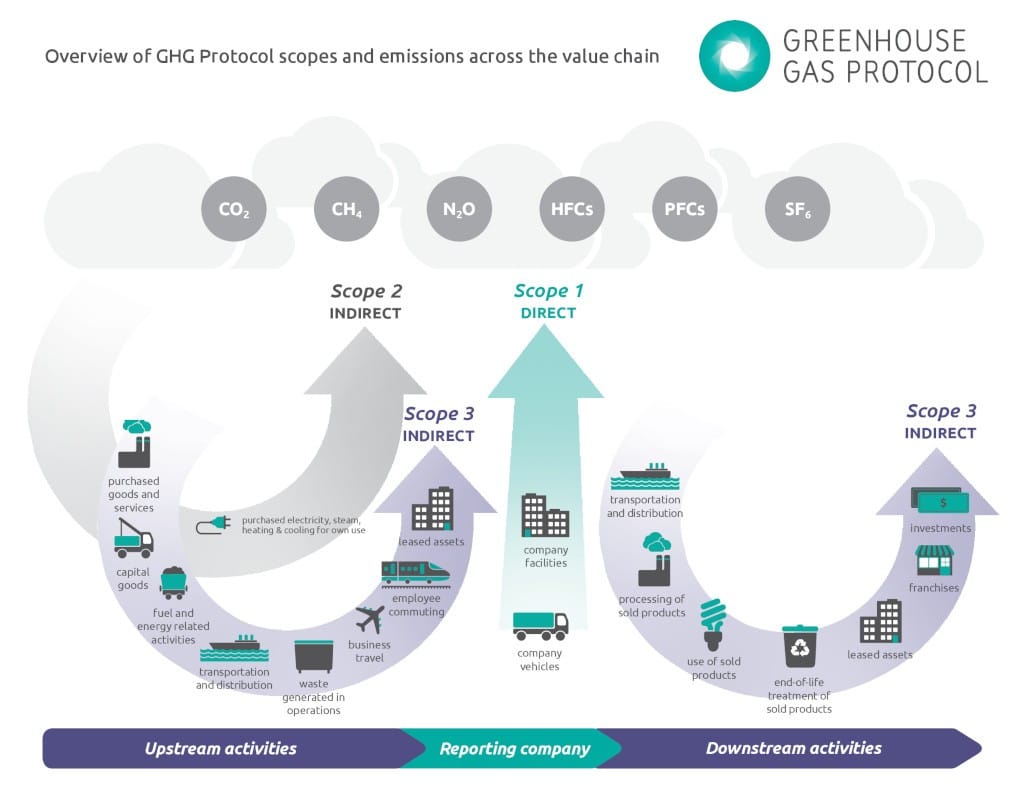
*GHG emissions are categorised into three groups, or ‘Scopes’:

Scope 1 covers direct emissions from owned or controlled sources.

Scope 2 covers indirect emissions from the generation of purchased electricity, steam, heating and cooling consumed by the reporting company.

Scope 3 includes all other indirect emissions that occur in a company’s value chain.

Find out more about GHG scopes at ghgprotocol.org

GHG Protocol - Diagram of scopes and emissions across the value chain
GHG Protocol – Diagram of scopes and emissions across the value chain [diagram from ghgprotocol.org]

Nitrogen enriched slurry to cut carbon footprint and boost yields

Meet the Network
Agri-TechE

“Our technology can cut the carbon footprint of a dairy farm by 27% and produce a valuable organic nitrogen fertiliser with three times the crop-available nitrogen in slurry,” explains Chris Puttick of N2 Applied. He is one of the speakers discussing alternatives to inorganic fertiliser at an Agri-TechE event “Putting the N Into FarmiNg” 24th March 2021.
Chris explains: “A high proportion of the greenhouse gas emissions of a dairy farm are from slurry. Slurry is a hazardous product as the fumes can be toxic and detrimental to air quality, human health and our environment.”

Organic liquid fertiliser

“Our technology overcomes these issues and converts by-products like slurry into a valuable nitrogen enriched organic liquid fertiliser, which we call NEO. The scalable technology fits within a 20ft shipping container on the farm.”
Nitrogen can be present in the environment in multiple forms, including the gases N2 and ammonia NH3, causing air pollution, N2O, a strong greenhouse gas, and as the salt nitrate NO3, which is soluble in water and a source of pollution. N2 Applied originates from Norway. The company has developed a unit which uses electricity to extract nitrogen from the air via plasma. Nitrogen is captured within slurry and enriches it.
As a result of the process, the output NEO is slightly acidic which increases its stability and reduces the amount of ammonia released whilst eliminating methane emissions.
The technology can also be used with the digestate, produced after anaerobic digestion (AD). As the AD plant is used to produce biogas, it is anticipated that some of this energy could be used to produce NEO, adding value to the digestate within a circular onfarm system.

Trials show available nitrogen three times higher than untreated slurry

Trials by ADAS have shown that NEO is stable, which means it can be applied to the growing crop in a wider range of weather conditions. Further trials with the Norway University of Applied Sciences show there is no risk of scorching the crop.
Total nitrogen (NH4, NO3 and NO2) needs to be considered within a nutrient management plan for the crop, and is particularly important where the farm lies within a nitrate vulnerable zone (NVZ).
Trials of NEO have shown that the nitrogen available to the crop is three times higher than untreated slurry and when applied to a grass sward increased the yield by 41% over two cuts.
Chris continues: “We have seen interest from industry members that have set climate targets to reduce the carbon footprint of their supply chains. We are receiving encouraging feedback that these businesses are serious about sustainability and willing to invest in a technology that will reduce on farm emissions significantly.
“The benefit for the livestock producer is a high value organic fertiliser that is more nutrient dense. A considerable amount of heat can be recycled from the plasma unit. This means that farmers can turn a by-product into a valuable commodity.”
Chris Puttick of N2 Applied will join other speakers Guðbjörg Rist of Atmonia and Andrew Neal of Rothamsted at the Agri-TechE event “Putting the N In FarmiNg—Solutions for On-Farm Nitrogen Production” on Wednesday 24th March from 2pm – 4pm.

On-farm fertiliser production comes out of a box

Agri-TechE Article
Agri-TechE

Would it be possible to produce nitrogen fertiliser on-farm and reduce the agricultural sector’s greenhouse gas emissions? Early-stage agri-tech companies Atmonia and N2 Applied say it is. They have developed alternative approaches to generating fertiliser in a shipping container using renewable energy sources, offering the potential for carbon neutral production.
Food production accounts for 26% of global greenhouse gas emissions*. Changing the way we produce and use nitrogen fertiliser would make a significant difference to these headline-grabbing figures, and this is to be discussed at the Agri-TechE event “Putting the N in FarmiNg — SolutioNs for On-Farm Nitrogen ProductioN”on 24th March 2021.

Renewable alternative to energy intensive Haber-Bosch

Guðbjörg Rist, the CEO of Atmonia, explains that current inorganic fertiliser production uses an energy intensive process.
“The Haber-Bosch process splits hydrogen from coal and natural gas, creating free hydrogen ions that combine with nitrogen gas in air to produce ammonia, a raw product for inorganic fertiliser production.
“Current ammonia production facilities are huge factories, producing millions of tonnes of ammonia, and double that amount of carbon dioxide.
“Our process takes a completely different approach: it uses an electro-chemical reaction to split nitrogen, which combines with hydrogen from air and water, removing the need for coal or natural gas. It also reduces the energy requirement, which can be sourced from renewables.
“Our facility is designed to produce hundreds of tonnes of ammonia from a unit the size of a shipping container, creating a liquid fertiliser that can be produced close to the point of need.”

Cutting the carbon footprint of dairy farm by 27%

Another greenhouse gas, nitrous oxide (N2O), is released when synthetic nitrogen fertilizers are applied to soils. N2O and methane are also produced from the decomposition of animal manures under low oxygen conditions.
N2 Applied is tackling this issue by converting by-products like slurry into a valuable nitrogen enriched organic liquid fertiliser. As a result of the process, the output, known as NEO, is slightly acidic, which increases its stability. This reduces the amount of ammonia released whilst eliminating methane emissions.
“Our technology can cut the carbon footprint of a dairy farm by 27% and produce a valuable organic fertiliser with three times the crop available nitrogen in slurry,” explain Chris Puttick of N2 Applied.
Nitrogen is found in different forms in the environment and total nitrogen (NH4, NO3 and NO2) needs to be considered within a nutrient management plan for the crop. This is particularly important where the farm lies within a nitrate vulnerable zone (NVZ).
Trials of NEO have shown that the nitrogen available to the crop is three times higher than untreated slurry and when applied to a grass sward increased the yield by 41% over two cuts.

Use of nitrogen is also important

Work by Professor Andrew Neal of Rothamsted Research has shown that the way nitrogen is applied to the soil is also important. Results suggest that decades of artificial fertiliser inputs on UK soil without a corresponding return of organic matter have altered the balance of carbon and nitrogen in the soil, changing the way microbes get their energy, which has in turn altered the soil structure.
In the experiment, soil with high nitrogen content but low carbon content had an altered microbial community, which was associated with less pores and connectivity in the soil. As the pores close up, and oxygen in the soil is lost, microbes are forced to turn to nitrogen and sulphur compounds for their energy. This inefficient process drains nutrients from the soil and results in increased emissions of N2O.
Andrew Neal of Rothamsted Research will be joining Guðbjörg Rist of Atmonia and Chris Puttick of N2 Applied to discuss nitrogen production and use at the Agri-TechE event “Putting the N in FarmiNg—SolutioNs for On-Farm Nitrogen ProductioN” on Wednesday 24th March from 2:00 pm – 4:00 pm.

Agri-TechE members named in global FoodTech 500 finalists

Agri-TechE

Breedr, Small Robot Company and Cellular Agriculture were among the top global agri-tech companies listed in the FoodTech 500 report by Forward Fooding.
The organisers comment: “It is our ambition that the FoodTech 500 becomes the Fortune 500 of AgriFoodTech, a list of top innovators and disruptors in the industry and the go-to leaders of this emergent and ever-evolving sector.
“With over 2,000+ applications received for this year, the competition to make the 2020 FoodTech 500 was fierce. So, from all of us at Forward Fooding, we would like to thank all the companies that enter this year’s competition as well congratulate to all the teams that have made our ranking for the great milestones they have achieved so far and for all the impact they are creating with their work!”

$4.1B raised 

423 companies out of 500 have received investments – raising a total of over $4.1B in funding to date. This figure doesn’t include undisclosed funding activities and has been validated using external data sources from the FoodTech Data Navigator.
The companies were selected from a pool of international AgriFoodTech startup and scaleup companies using a unique methodology that is used to rank them based on their business size, digital footprint, and sustainability practices

Companies in the Agri-TechE ecosystem listed in FoodTech 500

(more…)

Top innovation award for Actiphage, rapid tuberculosis test

Meet the Network
Agri-TechE

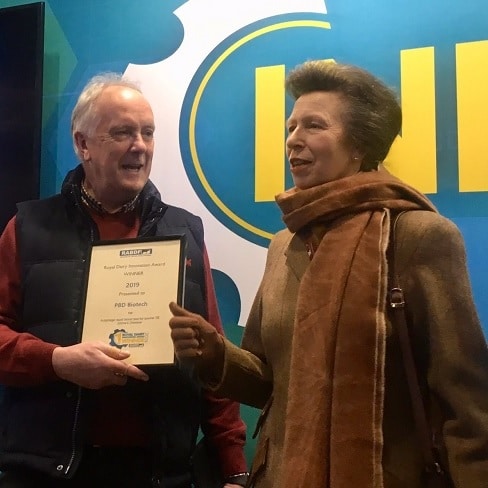
Actiphage®, a rapid, accurate test for tuberculosis that detects the presence of the live mycobacteria in a sample of blood or milk, has been awarded the Innovation Award 2021 by Veterinary Record, the official journal of the British Veterinary Association (BVA).
Tuberculosis (TB), Bovine Tuberculosis (bTB) and Johne’s Disease continue to be devastating diseases across the globe, and there are currently few reliable diagnostic tests available. Actiphage is a simple test that can detect the diseases in livestock, humans and companion pets as well as wildlife and exotic animals.
Actiphage is developed by PBD Biotech; CEO Mark Hammond says: “Vets know first-hand the devastation caused by bTB, so this award by the BVA provides a powerful endorsement of Actiphage’s innovation. By directly detecting mycobacteria at an early stage, Actiphage provides vets with a new tool for managing and eradicating bTB and Johne’s Disease.”
The other finalists for the Vet Record Innovation Award 2021 were the Animal Welfare Assessment Grid, presented by Sarah Wolfensohn of University of Surrey, and U-treat, presented by Rachel Kirkby of Test & Trace. Both showed innovative new ways to support improved diagnosis of other animal diseases. The support of vets is invaluable to PBD Biotech as the company is planning more on-farm trials of Actiphage in the near future.
Actiphage was named as a promising test in the review of UK bovine TB strategy conducted by Professor Sir Charles Godfray. It has also been approved by the APHA for exceptional private use in areas of chronic bTB infection.
Mark continues: “Although 2020 was a challenging year for almost everyone, we have been working closely with vets and farmers to further develop the test, and in parallel have been fund-raising. Our goal is to provide the validation data necessary for Actiphage to achieve international certification by the World Organisation for Animal Health (OIE).”
As Actiphage can distinguish between live and dead mycobacteria and also differentiate between wild strains and vaccine strains, it would be very effective to develop as a DIVA test – for Distinguishing Infected from Vaccinated Animals – a pre-requirement before a successful vaccination strategy can be introduced.
Actiphage has been shown to detect TB in livestock, domestic animals, wildlife and exotic species, so is of interest across the veterinary profession.
It also provides an accurate and non-invasive blood test for human TB and work is progressing to develop a clinically proven test in human TB.

Smartbell gives early warning of calf illness

Agri-TechE

Using indicators such as the animal repeatedly flicking at its ears, the Smartbell system can identify if a calf is becoming ill three days before any symptoms emerge. Early treatment then means reduced suffering for the calf.
Smartbell offers an ‘internet of cows’ by tracking calves, minute by minute, using an ear tag which monitors their activity and movements. The Cambridge start-up was awarded Commendation Award for Innovation at The Cream Awards 2021, a prestigious British industry trade award.
Veena Adityan, CEO of Smartbell, said: “It’s an honour to receive such an award. It is tremendous validation from the industry of work we are doing and the real difference it makes to farmers, the welfare of their animals, and also be a benefit to society.” The information from electronic tags is relayed to a farmer’s phone, or laptop, providing real time insights into the health of every animal in a herd. A powerful algorithm alerts the farmer to any concerns about the livestock.
Jose Chitty, Chief of Operations at Smartbell, said: “The smart tag is like an electronic herdsman, who never sleeps. If a dog is man’s best friend, this tag could become a farmer’s best mate.”
A calf which is in good health in its first three months of life yields, on average has optimal growth and productivity. It also needs far fewer antibiotics, and less food and water, minimising the animal’s carbon footprint.
The company has previously been awarded £1M in research funding by Innovate UK, a government agency which promotes research and innovation. They are partnering with Scottish Rural College and Parklands Veterinary Group (now part of Vet Partners) and Agri-EPI Centre to further develop this technology.

Farm Performance Enhancement Platform – Farm PEP

Meet the Network
Agri-TechE

The Covid-19 pandemic has had a major impact on the ways that we communicate. ADAS has gained funding from Innovate UK to use this learning to good effect and will co-create a new digital solution called Farm Performance Enhancement Platform, or Farm-PEP. Farm-PEP will connect projects and people, integrating tools and initiatives and providing an online community space for knowledge sharing.

Farm-PEP

Daniel Kindred of ADAS comments: “We see Farm-PEP as enabling the communications between the people engaged in initiatives like the YENs.”
With partners University of Gloucester’s Countryside & Community Research Institute (CCRI), Agri-TechE , Innovative Farmers, The Farming Forum and Open Coop, the project seeks to engage key players across the industry. The intention is to evaluate the impact of Covid-19 on knowledge exchange in agriculture with a rapid appraisal, due to be published in late spring 2021 and then to create Farm-PEP to assist communications. ADAS has also gained funding to create Dynamic Benchmarking for the Yield Enhancement Network (YEN) to improve data exchange with growers. The YEN, since its foundation in 2012, has provided static pdf reports to growers on how their crops have performed within a season, compared to others in the network.
Daniel continues: “Our aim is to enable these comparisons online so that users can choose who they compare themselves to, for instance within a geographic region or for a particular soil type.
“We are aiming to make this available for YEN-Nutrition in 2021, and ultimately for YEN-Zero and all the YEN Family.”

YEN ZERO

These projects will support the development of YEN-Zero, which is supported by funding from The Morley Agricultural Foundation, and aims to quantify the greenhouse gas costs of YEN crops since 2013. This analysis will provide a baseline for comparisons and benchmarking of the different elements that make up a farm’s carbon footprint.
Daniel recently discussed the relationships between crop inputs, yields and GHG emissions at the first Agri-TechE Agritech Express webinar, which is summarised here.

Design of Farm-PEP

Agri-TechE will bring its expertise in engaging online events and digital networking to the project. Together with the other partners, it is organising a series of interactive workshops in spring 2021 to engage with the various stakeholders in the industry and co-design Farm-PEP from the ground up.
More information about Farm-PEP

See us at REAP 2021!

REAP 2021: Changing Time(s) for Agriculture10th November 2021

Imagine a world where agriculture is not constrained by time. The ability to manage and manipulate time is increasing and REAP 2021 will explore the advances in technology and breakthroughs in science that is making this possible.
REAP brings together people from across the agri-tech ecosystem who believe that innovation is the engine for change. The conference bridges the gap between producer needs and technology solutions and showcases exciting agri-tech start-ups. 

From glasshouse to vertical farm – what’s next for Controlled Environment Agriculture?

Agri-TechE