Burleigh Dodds Science Publishing Limited: Mechanisms of soil organic carbon sequestration and implications for management

Member News
The views expressed in this Member News article are the author's own and do not necessarily represent those of Agri-TechE.

A new book from Burleigh Dodds Science Publishing Limited:

Chapter Title: Mechanisms of soil organic carbon sequestration and implications for management*

Authors: Ingrid Kögel-Knabner, Technical University of Munich, Germany; Martin Wiesmeier, Technical University of Munich and Bavarian State Research Center for Agriculture, Germany and Stefanie Mayer, Technical University of Munich, Germany

*This chapter features in our book: ‘Understanding and fostering soil carbon sequestration’.

Introduction and definitions

A major potential for increasing carbon sequestration in mineral soils is in agricultural systems under cropland use (Amelung et al., 2020). Understanding organic carbon (OC) sequestration in (mineral) soils requires considering the pathways and the associated different types of organic matter (OM) input. As
pointed out in Box 1, OC sequestration refers to ‘the process of transferring CO2 from the atmosphere into the soil of a land unit, through plants, plant residues and other organic solids which are stored or retained in the unit as part of the soil organic matter (humus)’ (Chenu et al., 2019; Olson et al., 2014). If we accept this definition, all processes are relevant that lead to a storage or retention of OC in soils. A number of mechanisms have been described that lead to the retention of OC in soils. As the OC that enters the soil is in dynamic equilibrium, all the different OM pools that are retained in a soil must be considered. SOC sequestration implies raising soil organic carbon (SOC) levels, where they are currently undersaturated, and to maintain maximal OC levels in well-managed soil systems (Lehmann et al., 2020).

Olson et al. (2014) pointed out that it is essential to strictly differentiate between the application of any of OM to soils from sources external or outside a land unit (e.g. amendments like manure, compost, biochar) and OC sequestration sensu strictu. Sequestration of OC in soils as defined here (Box 1) requires that atmospheric CO2 is fixed through photosynthesis and stored in the soil. No atmospheric CO2 is converted and stored as a result of amendment transfer and it does not add to reducing atmospheric CO2 levels. Therefore, we will not consider the application of organic amendments in this chapter. As organic amendments may in specific cases influence SOC sequestration through their impact on plant growth and soil microbial functioning, their management is discussed in Chapter 9 of this book.
Organic matter input to soils

Organic C enters the soil mainly as:
• aboveground litter or crop residues,
• belowground litter or crop residues, and
• rhizodeposition.

Both above and belowground litter or crop residues are mainly composed of OC bound in large polymers (celluloses, hemicelluloses, lignin, cutin, suberin) in leaves, stems, twigs and other woody debris, or roots, with only a small contribution of low-molecular weight organic components (Kögel-Knabner, 2017). They are either deposited on the mineral soil surface, or in different soil depths as root litter. Incorporation of OC from aboveground litter occurs via bioturbation or leaching of soluble components. In contrast, rhizodeposition consists mainly of low molecular weight compounds released from roots into the surrounding soil at various depths.

Long-term OC storage in soils occurs primarily when OC derived from plant biomass is stabilized in soils as soil OM. Plant biomass makes up the majority of OC input also to agricultural soils. But we have to take into account that OM is also added to cultivated soils through fertilization and waste disposal (e.g. liquid manure, compost, sludge, animal excreta, biochar, biogas digestate), which contribute significant amounts (Jacobs et al., 2020). Soils are often also contaminated with organic constituents from the petroleum
and coal chemistry/industry, as well as from coal combustion, e.g. tar oil, coal dusts, black carbon, specifically in industrial-urban areas (Kiem and KögelKnabner, 2003; Schmidt and Noack, 2000), as well as plastics (Rillig et al., 2021). Geogenic C such as kerogen or black shale can also be inherited from the parent material (Fox et al., 2020 and references therein). This short listing demonstrates the large diversity of OM input to soils. Lehmann et al. (2020) suggest that the molecular diversity of the organic compounds rather than the material properties of individual compounds controls decomposition in soils. As pointed out above, the amendments help to increase the OC content and stocks of a soil, but may not help sequestering OC in soils. At the same time, it is important to return organic residue materials to soils, rather than burning them or using them otherwise, e.g. for energy production or production of chemicals.

Read the full chapter here

Lombard: How technology helped a poultry farmer grow his business more sustainably

Member News
The views expressed in this Member News article are the author's own and do not necessarily represent those of Agri-TechE.

A Move Towards Sustainability

As energy prices remain persistently high, poultry farmer Gordon Whiteford has embraced a sustainable, more cost-effective future by investing in solar technology for his business.

Gordon runs his company, Highland Eggs, from the 150-hectare Lower Mill of Tynet Farm in Moray, in the north-east of Scotland, along with his wife, June.

The farm is mixed, with some arable land, 40 cows, a small flock of sheep, and 9,000 free-range laying hens and 6,000 organic-laying hens, producing award-winning brown and white eggs.

Lombard’s Support and Expansion

With Lombard’s support, Gordon recently installed 120 solar panels on the roofs of his hen sheds, to produce 40 kw of energy for the farm. He also received financing for new, multi-layered laying machinery which feeds and waters the birds and collects the 90,000 eggs they produce every week.

Gordon says: “We already had 12kw of solar energy, and Lombard helped us with the additional investment to expand that. With the price of electricity going up so much, we decided it was the right time.”

Gordon says that although the purchase of the panels increased his costs initially, the additional units were needed to help power his expanding milking operation, which can be a high energy consumer.

“It’s an investment for the future because once the panels have been paid off, they’ll still be producing electricity for you, and there’s very little upkeep required,” he says.

“First and foremost, you’re always trying to make a decent margin, but anything you can do to make yourself more sustainable helps – and it’s good to put that message out there so that people can support you.”

The bulk of the eggs produced on the farm find their way into supermarkets like Aldi and Lidl via wholesalers or are purchased by hotels and restaurants.

Connecting with the Community

But, eager to serve the local community, Gordon has installed five vending machines in the farm shop, where visitors can purchase eggs and other farm produce like milk – dispensed in reusable glass bottles – milkshakes and home baking. He also has plans to install an ice-cream vending machine as his dairy operation grows.
“That’s a pretty good source of income for us,” says Gordon. “And it’s a nice way to have a closer connection with our neighbours here.”
After studying Agricultural Business Management, Gordon received financing from the Prince’s Trust and a local enterprise grant to get his organic egg business off the ground in 2005. From there, he managed to secure a tenancy with Crown Estates in 2012, which meant he was able to expand the farm and build a packing facility on site.
He spent a year studying animal-welfare best practices through a Nuffield Scholarship. He now applies these techniques on the farm which, he says, not only help to improve the environment but also produce higher quality produce.
His ambition is to develop his business further, and he is especially keen to grow his dairy herd, despite it being an unusual practice in his region.
“Dairy farming is quite rare in this part of Scotland now, so everyone thought we were a bit crazy when we decided to develop a dairy herd, but we’ve grown it organically,” he says.
“It’s quite successful because there isn’t much competition, and the milk is locally produced and doesn’t have to be brought in on lorries from further afield. We sell about a third of our milk directly through our own vending machines too, so there is a good margin for us.”

Overcoming Challenges and Future Ambitions

Despite the recent success of Highland Eggs, building the business from the ground up hasn’t been without its challenges. Currently, for instance, there is the constant threat of avian flu – which has the capacity to wipe out entire flocks – and higher feed prices.

But with careful cash flow management, and a philosophy of always putting the hens’ welfare first, Gordon hopes he can continue his profitability and maintain the standards of hygiene and care on the farm.
“We’re quite lucky in that we have a healthy retail market for eggs in the UK, and because we pack our own eggs, we have control of the price,” says Gordon. “We have to stay on top of hygiene, but our hens are cared for to the highest welfare standards.”

Lombard’s Role in Agricultural Sustainability

Lombard’s agricultural relationship manager, Adam Peters, says: “It’s great to help our customers become more sustainable through our support. We’re helping them not only potentially reduce their own carbon footprints, but also potentially save them money in the long term, enabling them to invest that money elsewhere in the business.”

Find out more about how Lombard might be able to help you grow your agricultural business.
Security may be required. Product fees may apply. Business use only. Subject to status.

PES Technologies Secures £2.4M to power Product Launch in 2024

Member News
The views expressed in this Member News article are the author's own and do not necessarily represent those of Agri-TechE.

UK-based PES Technologies has closed its £2.4M Seed Investment round. This will enable PES to make their revolutionary in-field soil health measurement tool market-ready and power its launch in Spring 2024.

TSP Ventures

The funding round was led by TSP Ventures, with participation from Kero Development Partners, Green Angel Ventures, Moorhampton Investments Limited, Climate.vc and Generation-RE Holdings as well as angel investors and existing shareholders. The round is also supported by Innovate UK, which will add an additional £625k of non-dilutive funding on top of the raise.

Based in Norfolk, PES Technologies has developed a product that provides industry-leading, biology-based soil health information in-field in 5 minutes. The product is built around PES’ unique VOC-sensing (or “smell-based”) technology that, with one test, provides the multiple biological, chemical, and physical indicators agronomists use for soil health assessments.

Soil is a finite and non-renewable resource that should be teeming with life, especially microbial life –without it, soil is not soil, but just dust. Unfortunately, a significant amount of our world’s soils are degraded or heavily degraded , and the cost of land degradation has been estimated to be $231B per annum globally . Moreover, soil in poor health produces less food and is less resilient to climatic extremes, making it more prone to flooding and drought.

While governments, industry and farm businesses worldwide are increasingly looking to protect soils’ health, a lack of good-quality, affordable testing for soil biology has hampered their efforts and hindered the uptake of environmentally sustainable farming practices. PES solves this testing problem by using its unique technology to detect smells produced by microbial life in soil and link it to known soil health indicators with its affordable and easy-to-use product.

Founders

Founded in 2017 by CTO Jim Bailey, CEO Andrej Porovic and Graham Bailey (now retired), PES sees itself as “The Future of Soil Health Measurement”. It employs a team of 5 and is looking to strengthen with multiple hires over the coming months. It was recently featured on the Cleantech Group’s 2023 50 to Watch (selected from 1,814 companies) and was one of the FoodTech 500 in 2022.

Bloomberg UK names BigSis in its 25 ‘Startups to Watch’

Member News
The views expressed in this Member News article are the author's own and do not necessarily represent those of Agri-TechE.

BigSis, the British agtech start-up offering robust yet chemical-free insect control solutions to farmers, has been named today as one of Bloomberg UK’s 25 Startups to Watch.
From more than 1,500 applications received, BigSis is one of just 25 startups to feature in the inaugural list compiled by Bloomberg. The financial and media company says the final selection represents the most innovative, new UK businesses: those that are growing fast, working on something truly unique, and which demonstrate their commitment to diversity.
“I’m truly thrilled by our inclusion as one of these 25 companies,” says BigSis Founder and CEO Glen Slade. “To have been selected from what was undoubtedly an impressive bank of entries is a great vote of confidence in the value of our work to reduce chemical insecticide usage and surely reflects BigSis’ unique and innovative approach to this problem.”

Company Background

Founded in 2017, BigSis has harnessed AI and robotics in its quest to help farmers control insect pests without the use of harmful pesticides. Its in-house technology (Slade has a computer science degree from Cambridge and 25 years’ experience in agribusiness) has automated the individualised rearing of sterile male insects as a means to produce millions of them. These can be released into a crop, where they mate with wild females, which then produce no offspring. This prevents the rapid increase in pest populations that leads to crop damage. Farmers will subscribe to a season-long service, with BigSis taking care of insect releases and crop monitoring.
“The beauty of our system is that it’s species-specific, non-toxic, non-GMO, and demands minimal regulation,” notes Slade. “Despite its minimal impact on the environment, BigSis solutions are capable of outperforming chemical insecticides in many agricultural and horticultural crops, with further opportunities in pest control for public health.”

Collaboration

BigSis partnered with Berry Gardens, the UK’s largest berry supplier, and the National Institute of Agricultural Botany (Niab) in early field trials to prove the technology worked against Spotted Wing Drosophila (SWD), an invasive fruit fly. Introducing the sterile male insects reduced SWD populations in strawberries by as much as 91% compared to untreated plots. This year, trials in raspberries showed up to 88% reduction in SWD populations compared to plots treated with one spray of a chemical insecticide.
The clear success of the company’s trials has caught investors’ attention. BigSis Series A closed over-subscribed in November 2022 at £4.5m, with the round led by the specialist agricultural innovation fund Regenerate Ventures. BigSis is currently raising £3m to replicate its production system to treat up to nine times more hectares in 2024 compared to 2023; most of this is pre-ordered.

Production

The company’s current production plant is located within its headquarters in Reading, Berkshire, but the individualised insect rearing technology was designed to be easily scaled up by replicating the processing units. BigSis’ business model is to build its automated production facilities in each country or state where there is demand.
“This ties to our strategy to minimise environmental impact, which has the important benefit of minimising regulatory hurdles,” says Slade. “While most life sciences companies spend millions of pounds and many years pursuing regulatory approvals, our solutions are so safe that they need no permit for commercial sales in England; the same is true for four US states.”
BigSis is already developing solutions for other crop pests. “There’s enormous scope for our solutions in crops worldwide,” says Slade. “As regulatory pressure increases on chemical insecticides, we aim to facilitate producers to pivot towards regenerative practices and meet consumers’ demand for ‘greener’ food.”

SRUC: Capturing impact and evidence through collecting data on-farms

Member News
The views expressed in this Member News article are the author's own and do not necessarily represent those of Agri-TechE.


HUW JONES, HEAD OF INDUSTRY AND PARTNERSHIPS, SCOTTISH RURAL UNIVERSITY COLLEGE

As the quality of data being collected on farms improves, we are seeing a rise in the use of on-farm information helping to drive innovation.

At times it feels that the agriculture industry is under more pressure than ever before. Production costs have increased dramatically, whilst output prices have very rarely followed suit. Pressure to reduce any negative environmental impacts is at an all-time high, and the welfare of our livestock is continually under the microscope.
I strongly believe that the best response to such pressure is to innovate, adapt and evidence the good work we are doing.

Industry and Partnerships

As Head of Industry and Partnerships, I have the pleasure of working across SAC Consulting and SRUC, supporting and driving forward the creation of real industry impact from new innovations. I have a front row seat for many of the exciting developments in agri-innovation, but also know all too well that generating real industry impact from using them is not always that easy.
Over the last decade we have seen a growing focus on developments in Agri-tech, like electronic tagging, advanced sensors, digital cameras, use of satellite imaging, the wireless transfer of data and on-line data management software. We now have many opportunities to generate new information that can help you better manage your farm, whilst improving efficiency and reduce environmental impact. However, innovation isn’t and can’t be a one size fits all approach, each farm needs to evaluate what works for them.
Currently, our research and consultancy teams are involved in trailing and evaluating a number of tools and approaches, ensuring we are well placed to provide independent and knowledgeable advice for farms.

Data collection


As the quality of data being collected on farms improves, we are seeing a rise in the use of on-farm information helping to drive innovation. This brings with the opportunity to reliably quantify the impact of any on-farm improvements that are being adopted.
We are also seeing growing interest in developing more joined up thinking. Measurements are being taken and stored in such a way that it’s not only useful for its intended primary purpose, but also linked to other data sets that are held on the farm or by other partners. What that means in practice, is that over time there should be more opportunities to gain more value from the information you are collecting. There should also be less need to input data in manually, and less need to input the same data twice or even several times!
Obviously, the wish for more joined-up thinking and added value is not new. We already have several examples where it has been a key component of successes that SRUC helped deliver.

EGENES Unit

Did you know that through our EGENES unit, SRUC runs some of the most advanced genetic evaluations for dairy cattle, beef cattle and sheep in the world. At the core of that service is the analysis of data that has typically been collected primarily for another purpose by farmers or our partners. For example, milk production and quality, fertility and health data for dairy cattle that is recorded and used by milk recording companies, lifespan from traceability records, and Bovine Tuberculosis resistance for cattle from government led testing programs. This year the EGENES unit is celebrating 20 years of successfully running UK national genetic evaluations, so we’ve learned a lot in that time. It’s important to realise that the majority of our success stories have required careful combing of some enormous data sets. The analysis for dairy currently includes more than 75M records! In applying advanced analytics alongside many years of fine-tuning and effective collaborations, we have helped industry achieve substantial impacts. The value to the UK beef and sheep sectors alone is estimated a >£20M a year, with the value to the dairy sector even higher.

Collaboration


Our experience, knowledge and collaborations are now being used to develop new products and services in several other areas. delivering real value for the UK economy. For example, new digital tools to support animal welfare monitoring and herd health planning will be available later this year.
Regular readers of Perspectives may have also seen in the last addition that our web-based carbon calculator tool ‘Agrecalc’ is being moved to a cloud-based platform. This will vastly improve its flexibility and ability to link into other digital tools and data sets. Over time this should help farmers generate a more complete picture of their enterprises to help best inform and evidence the impact of positive on-farm decisions aimed at getting the industry closer to the net zero target.
These are just some examples of the advances and innovations we have made, but there is much more to come.
There is little doubt that as we move forward, data collected on farms will play an increasingly important role in driving Agri-innovation and demonstrating positive impact. However, not all data is useful, and careful consideration of what and how to record can make a big difference in terms of the benefits you can capture from it. Having friends that can help you make best use of it also helps!

Burleigh Dodds Science Publishing: Is a better understanding of fungicide resistance required to protect global food production?

Member News
The views expressed in this Member News article are the author's own and do not necessarily represent those of Agri-TechE.

Since the widespread introduction of fungicides in the 1940s, fungicides have emerged as a basic component of modern IDM programmes.

However, the sheer effectiveness of fungicides has proven to be – in part – their downfall, with widespread application and improper use contributing to the emergence of fungicide resistance.

“There is no doubt that fungicides will remain a vital component of modern agricultural production systems for the foreseeable future,” says Dr Gregory M. Kemmitt, Global Leader in Disease Management, Integrated Biology and Field Sciences at Corteva Agriscience.

“However their development and use within agronomic production systems will likely need to be adapted and grounded within a more holistic and sustainable system of food production,” he concludes.

A new book published by Burleigh Dodds Science Publishing explores the emergence of fungicide resistance in agricultural and horticultural systems, as well as how fungicide use and application can be optimised to reduce the impact of fungicide resistance on global food production.

Understanding and minimising fungicide resistance has been edited by Dr Francisco J. Lopez-Ruiz who currently leads the Fungicide Resistance Group at the Centre for Crop and Disease Management, Australia.

“This new book provides a comprehensive coverage of the issue of fungicide resistance in agriculture,” says Dr Lise Nistrup Jørgensen, Senior Scientist at Aarhus University, Denmark.

“Edited by a leading name in the field and featuring contributions from a very impressive list of international experts, the volume promises to be an excellent reference for the future management of fungicide resistance,” she adds.

Systemic Fungicides

Since the development of systemic fungicides in the 1960s, a core group of fungicides has provided the foundation for effective disease control over the last 50 years: sterol biosynthesis inhibitors (SFIs), quinone outside inhibitors (QoIs), succinate dehydrogenase inhibitors (SDHIs) and oxysterol binding protein inhibitors (OSBPIs).

Through the inclusion of a select number of informative case studies, coupled with discussions exploring the science behind the emergence of fungicide resistance, the book reviews our current understanding of resistance to the four key groups of fungicides mentioned above, as well as the role of good practice in minimising the development of resistance in key staple crops.

“These four groups of fungicides have proven to be extremely effective in preventing the onset of disease in crops and are extremely popular with farmers around the globe,” says Francis Dodds, Editorial Director at Burleigh Dodds Science Publishing.

“This popularity with farmers emphasises the need for a more informed understanding of the mechanisms of resistance of each fungicide group and I’m confident that this book can contribute to achieving that,” he concludes.

The need for farmers to have a more informed understanding of the crop protection products they’re applying on their farms is reinforced through the contribution of chapters written by experts working at some of the world’s most renowned agrochemical companies, including Bayer, Syngenta and Corteva Agriscience who are largely responsible for the development of these same fungicides.

Burleigh Dodds Science Publishing: Is vertical farming the answer to our global food supply problem?

Member News
The views expressed in this Member News article are the author's own and do not necessarily represent those of Agri-TechE.

The global population is estimated to reach 9.7 billion by 2050, with global demand for food set to increase by 60% as a result.

However, with the agricultural sector already heavily criticised for its contribution to global warming, and the sector vulnerable to climate change impacts, increasing global food production to feed an additional two million inhabitants using conventional models is no longer seen as viable.

Plant factories with artificial lighting (PFALs) – more widely known as vertical or indoor farms – are recognised as a promising model that protects food production from weather extremes, optimises yields and can reduce the overall impact of agriculture on the environment.

Burleigh Dodds Science Publishing: Advances in plant factories: New technologies in indoor vertical farming.

In their latest venture, two pioneers of indoor farming – Toyoki Kozai and Eri Hayashi – have collaborated with an impressive range of international experts to produce a new book: Advances in plant factories: New technologies in indoor vertical farming.

“Professor Toyoki Kozai and Dr Eri Hayashi have had a major influence on the advancement and global understanding of vertical farming,” says Christine Zimmermann-Lössl, Chairwoman of the Association for Vertical Farming, Germany.

Key Topics

“This new book addresses key topics such as energy modelling, the nutritional components of crops and spectral manipulation. We see tremendous value in this latest publication from Burleigh Dodds Science Publishing and are confident that it will become a standard reference book in this area,” she concludes.

The book provides an authoritative review of the latest research in the development and application of PFALs for a range of crop, including the application of machine vision, plant phenotyping and spectral imaging to monitor plant health and growth.

PFALs are viewed by many as a more resources-efficient production model with less environmental impact. For example, when compared to conventional open-field production, PFALs have been proven to reduce water consumption by 90% per kg of produce and pesticide and herbicide usage by almost 100%.

And it’s the technology within the system that enables this.

“One of the core technologies of the PFAL derives from the use of an airtight and thermally insulated cultivation room with sensors for measuring all resource inputs, product outputs, environmental factors and plant traits or phenotype,” says Professor Toyoki Kozai, co-editor of this new book.

“This means that plant environmental factors can be controlled at an optimum point with minimum resource inputs and waste outputs, regardless of local weather, soil and ecosystem conditions,” he adds.

What makes this book particularly valuable is that it also addresses the continuing challenges that indoor farming faces.

The editors and authors, identify where more research and investment is required to tackle some of the biggest obstacles facing indoor farming, including the current rate of resource consumption (electricity, plastics and fertilisers), as well as the emission of greenhouse gases during the construction and operation of PFALs.

Meet the Team at HOPS AgTech

Member News
The views expressed in this Member News article are the author's own and do not necessarily represent those of Agri-TechE.

In 2022 HOPS were awarded the Seasonal Worker Scheme license to operate. Since this license was awarded the HOPS team has grown from three people to fifteen. They have recruited people with agricultural backgrounds, two of whom are Angus and Lloyd who will be driving HOPS AgTech forward from this point.

Meet the Team at HOPS AgTech

Lloyd is Senior Accounts Manager for the East of England and joined HOPS in April of this year. Lloyd graduated from Harper Adams University and then undertook the MDS Ltd graduate scheme which he completed in 2017. Over the last 6 years he has spent his time in Farm Management for large scale fresh produce businesses.

Angus is our Account Manager for the West of the UK from Cornwall to Lancashire and joined the HOPs team in May of this year.  Angus joins us with a wide range of experience across the agricultural industry hailing from a farming background and having recently completed the MDS Ltd graduate scheme. 

Burleigh Dodds Science Publishing: Supply chain safety key to keeping contaminated food off our plates

Member News
The views expressed in this Member News article are the author's own and do not necessarily represent those of Agri-TechE.
 isThe estimated financial burden of the disease is claimed to be as high as €3 billion.

In the US, it’s suggested that Salmonellosis is the cause of more than 1.35 million infections, over 26,000 hospitalisations and more than 400 deaths each year.

Although Salmonellosis can be contracted from an array of sources, including through direct animal contact, 94% of Salmonellosis cases are transmitted by food.

Safe handling and management of food along the supply chain is considered key for reducing and/or preventing the risk of food contamination by harmful pathogens, such as Listeria and E.coli.

Advances in ensuring the microbiological safety of fresh produce

A new book published by Burleigh Dodds Science Publishing considers the importance of ensuring food safety along the fresh produce supply chain.

Advances in ensuring the microbiological safety of fresh produce features contributions from a pool of international experts in food safety and has been edited by Dr Karl R. Matthews – Professor of Food Microbiology at Rutgers University in the US.

“Increasing consumer demand for low-input cultivation and minimal processing has significantly increased the risk of microbiological contamination of fresh produce,” says Francis Dodds, Editorial Director at Burleigh Dodds Science Publishing.

“As well as presenting a major health risk to consumers, this also undermines the trust in the food supply chain from farm to fork,” he adds.

The deterioration of food as a result of microbial contamination is a major concern in terms of food waste, human health, financial burden and economic loss.

A significant amount of research is currently being undertaken to develop methods which measure both product safety and quality, such as high-throughput screening techniques and rapid detection.

“Rapid and accurate analytical procedures are critical to ensuring product quality, label compliance and safety,” says Dr Chunlei Shi, Professor of Food Science at Shanghai Jiao Tong University, China.

“Rapid screening of spoilage microorganisms in food during manufacturing and processing would facilitate their detection in a timely manner, thus controlling the spread of microbes and ensuring safe food supply,” she concludes.

The risk of contracting a foodborne illness from fresh produce is significantly higher than many other food types as fresh produce is typically consumed in its raw form. Any pathogens which may be present can’t be ‘killed off’ during the cooking process.

Packaging is key

With this in mind, the packaging of fresh produce, including fruits and vegetables, is crucial to reducing the risk of contamination via an external source.

One recent development in this area is the emergence of smart packaging – a process which utilises technology to enhance the functionality of packaging materials. For example, QR codes are now printed on packaging to allow consumers to track the journey of their food from farm to fork. Key developments, such as the use of QR codes are discussed in this new authoritative text.

See more here.

Burleigh Dodds Science Publishing: How will climate change affect agriculture in years to come?

Member News
The views expressed in this Member News article are the author's own and do not necessarily represent those of Agri-TechE.

The impact of climate change can be felt worldwide – from continent to continent.

For example, UK growers have highlighted concerns about the 2022 heatwave in which the country experienced its highest ever temperature on record (40.3 degrees Celsius), threatening yields of crops such as cereals, brassicas and top fruit.

And it’s not just the UK that’s heating up. According to research, the average surface temperature across the contiguous U.S. states has risen at an average rate of 0.1 degrees Celsius per decade since the start of the 20th century (Basso, Millar and Price, 2023).

Although for some the damage may already be done, many see great promise in the use of modelling techniques to predict the future impact of climate change on agriculture, as well as the efficacy of climate change mitigation measures.

Modelling climate change impacts on agricultural systems

A new book published by Burleigh Dodds Science Publishing promises to be the ‘go-to’ reference on this topic.

The book features contributions from an array of international experts in the field of climate change modelling and has been edited by Professor Claas Nendel who was the Principal Developer of the MONICA model. This simulates biophysical processes in agroecosystems to allow assessment of regional impacts of climate change.

“This book examines issues from the small scale, via regional to global, and explores current approaches and the gaps that need to be filled to make projections more robust,” says Professor Tim Benton, Director of the Environment and Society Programme, Chatham House, UK.

“It allows readers to judge the extent to which we really understand how climate change will affect agriculture in years to come, and what we need to do better in order to do so,” he concludes.

Modelling climate change impacts on agricultural systems provides a global perspective on the impact of climate change on different agricultural systems, including both crop and livestock production, in Europe, Asia, Africa, Australia and the Americas.

One of many concerns surrounding climate change is its impact on delivering key ecosystem services that underpin agriculture and deliver wider benefits such as improved air, soil and water quality.

“Invertebrates and micro-organisms living in the soil maintain its fertility and structure, but are vulnerable to disruption or damage to the soil,” states Dr Charlotte Weil, Swiss Federal Institute of Technology Lausanne, Switzerland.

“However, rising temperatures increase the rate of soil organic matter decomposition, causing losses in soil fertility that may be further compounded by climate-induced changes to soil invertebrate and microbial composition – both of which could compromise soil ecosystem services,” she adds.

“Climate change continues to wreak havoc on agricultural production worldwide,” says Francis Dodds, Editorial Director at Burleigh Dodds Science Publishing.

“It was therefore essential that our new book review the latest research on how modelling can better capture the impact of climate change and assess how effective potential mitigation measures might be in both adapting to and reducing its effects,” he adds.

Find out more about the book here.

Universities of Lincoln and Cambridge win £4.9m EPSRC award 

Member News
The views expressed in this Member News article are the author's own and do not necessarily represent those of Agri-TechE.

The Universities of Lincoln and Cambridge have been awarded a £4.9 million grant from the Engineering and Physical Sciences Research Council (EPSRC) to help fund their drive to make the Lincolnshire and north Cambridgeshire (LINCAM) region a global innovation centre for agricultural technology (agri-tech). 

The LINCAM region is already a major UK production centre for crop-based agriculture and the associated supply chain. Its significance and sheer scale has led to the establishment of a nationally renowned agri-tech cluster – centred on the Universities of Lincoln and Cambridge, where interdisciplinary agri-food innovation is focused on digital technologies, including robotics and artificial intelligence, to boost productivity. 

Now the hope is that the Place Based Impact Acceleration Account (PBIAA) award from the EPSRC – the main funding body for engineering and physical sciences research in the UK – will deliver a step change in activity. The aim is for the LINCAM region to become an agri-tech gateway for the world – enabling the development of technologies at industrial scale and providing export opportunities for agri-tech companies and inward investment opportunities within both the agri-tech and primary production sectors. 

Simon Pearson, founding director of the Lincoln Institute of Agri-Food Technology at the University of Lincoln, said: “The LINCAM agricultural sector supports 88,000 jobs, generates gross value added (GVA) of £3.8 billion and farms more than 50% of the UK’s grade 1 land. However, despite this scale, there are still significant challenges and opportunities. 

“Food production accounts for 24% of all UK greenhouse gas emissions, leads to significant biodiversity losses and drives challenging social issues – not least from seasonal worker influxes to rural communities. In addition, farmers are under relentless cost pressures which are eroding supply chain equity and local economies. 

“These challenges are acute across the LINCAM region but this funding award offers an opportunity to harness agri-tech to secure sustainable growth, bringing high-value and skilled jobs to the region, whilst mitigating the serious environmental impacts of the food production system.” 

The University of Lincoln has a long track record of agri-tech collaboration with the University of Cambridge and its commercialisation arm Cambridge Enterprise. Their work has included the setting up of Agriforwards CDT – the world’s first EPSRC centre for doctoral training (CDT) in agri-food robotics. LINCAM will build on the success of their Ceres Agri-TechE partnership with three other leading UK universities and three renowned agricultural research institutes. Ceres, funded by Research England, provides translational funding and commercialisation expertise to drive agri-tech innovation by accelerating high-quality research to market. It has launched four agri-tech spin-out companies to date and created 13 licensing opportunities. 

LINCAM will broaden participation in the cluster by offering access to the EPSRC funding to all UK higher education institutes involved in agri-tech research with the potential to drive economic and environmental or social sustainability in the region. Projects that are successful in securing a share of the funding will be actively mentored by the LINCAM team to accelerate the delivery of results. 

Professor Miles Padgett, interim executive chair at EPSRC, said: “I’m pleased to announce our first ten Place Based Impact Acceleration Accounts which will play a unique role in enhancing the capabilities of innovation clusters across the UK. A key priority for UKRI is to strengthen clusters and partnerships in collaboration with civic bodies and businesses, thereby driving regional economic growth.” 

The civic bodies involved in the LINCAM partnership include the Greater Lincolnshire Local Enterprise Partnership, the Cambridgeshire and Peterborough Combined Authority and West Lindsey District Council. 

Molendotech completes funding round with £500k CIOSIF support

Member News
The views expressed in this Member News article are the author's own and do not necessarily represent those of Agri-TechE.

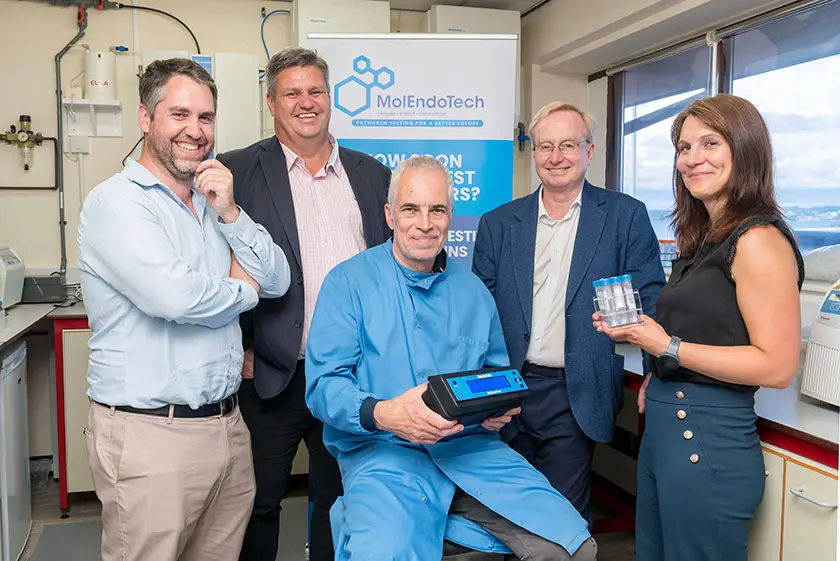
South West research and development company Molendotech is the latest business to be supported by the Cornwall and Isles of Scilly Investment Fund.

The business has secured a £500,000 CIOSIF equity investment, as part of an oversubscribed £1 million funding round which includes investment from appointed CIOSIF fund manager, The FSE Group, Exeter based VC firm QantX, a number of existing private investors and the management team.

Molendotech will use the newly raised funds to create an operational unit based in the Health and Wellbeing Innovation Centre in Truro.

The business has developed easy-to-use, portable and rapid tests to monitor and detect pathogens found in water. One of the company’s existing tests is BacterisK+ which can detect gram-negative bacteria in water in less than 30 minutes. Gram-negative bacteria include those associated with faecal contamination such as E.coli, and are among the world’s most significant public health problems due to their high resistance to antibiotics.

Molendotech was founded by Professor Simon Jackson at the University of Plymouth in 2018. Now its customer base includes environmental agencies, water companies, and national and local government authorities, and its methods and assays are protected by patents in several countries including the US, UK, Australia and Japan.

In 2022 the company successfully developed applications for specific areas of the healthcare sector, such as chronic wound – a condition that affects 2.2 million people in the UK with an estimated annual cost of £5.3 billion to the NHS.

Simon Jackson, Chief Scientific Officer at Molendotech, said: “Being able to detect pathogens quickly and accurately is vital when working to keep communities safe from harm. Our testing solutions can be used quickly and by anyone who has had basic training, meaning rapid action can be taken to address a poor quality environment or danger. Whilst our products can be used anywhere in the world we are extremely proud to be a South West company. Receiving support via CIOSIF has meant a lot to us, and we will use part of these funds to employ more local staff over the coming years as our business grows.” 

Anna Staevska, Investment Manager at The FSE Group, added: “We are delighted to be supporting a local business which has the potential to make a huge difference to the safety of people all over the world. We were impressed by the core team’s extensive knowledge of their sector and their strong links to Plymouth University, which will be incredibly useful throughout the research and development of new solutions. We look forward to seeing their Cornwall team grow and wish them every success for the future.”

The Cornwall & Isles of Scilly Investment Fund provides debt and equity finance from £25,000 to £2 million to help growing small businesses across the region. It was established by the British Business Bank in partnership with the Cornwall and Isles of Scilly Local Enterprise Partnership (LEP).

Paul Jones, Senior Investment Manager from the British Business Bank said: “Molendotech is a great example of a University spin-out that has used its research expertise to develop novel technology for applications around the world. With CIOSIF support we look forward to seeing the continued growth of the business.”

John Acornley, Chair of the CIOSIF advisory board and former LEP non-executive director, said: “Innovation and collaboration is at the heart of what Molendotech does and I am delighted they are establishing a base in Cornwall. They continue to develop new ways to test for bacteria and are already developing rapid tests for the food and drink sector in order to safeguard human health.”

CIOSIF is supported financially by the European Union using funding from the European Regional Development Fund (ERDF) as part of the European Structural and Investment Funds Growth Programme 2014-2020.

For more information about the Cornwall & Isles of Scilly Investment Fund including how to apply, please visit www.ciosif.co.uk  or follow the fund on Twitter at @CIOSIFBBB2