Patenting, Trademarks, Copyright, Trade Secrets...
In the next installment of our micro-learning series, we’ll explore potential legal solutions to help you keep your ideas safe and sound.

Department for Science, Innovation and Technology (DSIT) visits Norwich Research Park

Member News
The views expressed in this Member News article are the author's own and do not necessarily represent those of Agri-TechE.

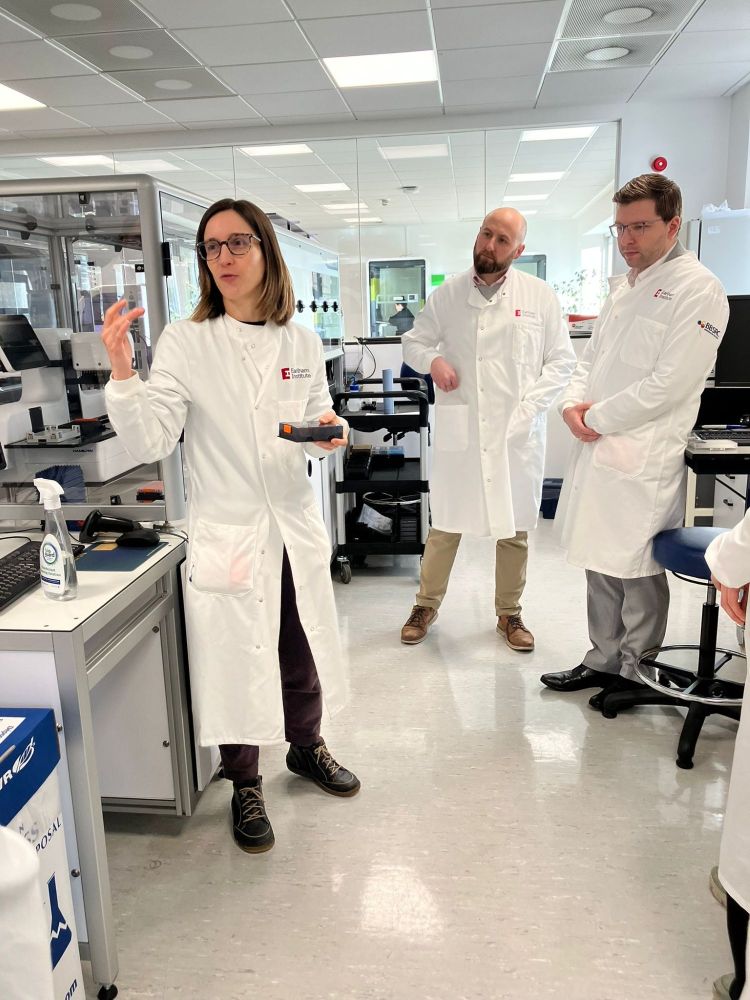
On 30 January, a high-level delegation from the Department for Science, Innovation and Technology (DSIT) visited Norwich Research Park, to see the cutting edge research and innovation in Engineering Biology that is being conducted on campus.

The team, led by Dr. Isabel Webb, Deputy Director for Technology Strategy and Security, visited Norwich Research Park’s BBSRC (Biotechnology and Biological Sciences Research Council) research institutes – the Quadram Institute, Earlham Institute and John Innes Centre.

Hosted by Roz Bird, CEO of Anglia Innovation Partnership, the campus management company for Norwich Research Park, the delegation initially met with the directors of the research institutes for a strategic discussion. Roz highlighted the opportunity for the campus to participate in, and where appropriate lead, transformative programmes of work that she termed ‘bio-transitions’.

This term describes the work being undertaken by the large cluster of microbiologists, based on campus, where they are making new discoveries to tackle climate change, food security and the health of the nation. This ‘bio-transitions’ work, to create new innovations, will ultimately support the Government’s growth agenda by creating new high-value jobs and improve productivity.

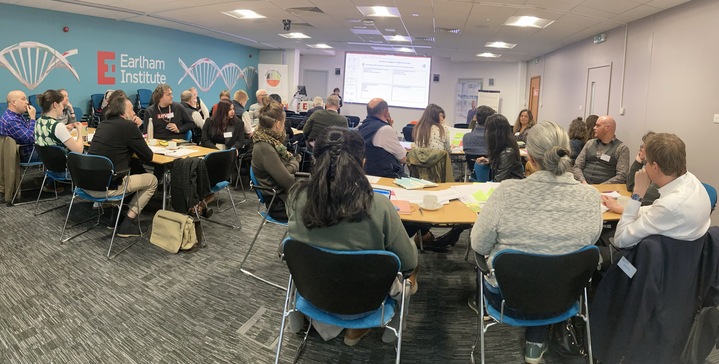
The department’s team were given a detailed presentation and tour of the Earlham Institute’s technologies, where they met Director of the Earlham Institute, Neil Hall, and the Head of Plant Genomics Anthony Hall. The DSIT team was particularly interested in the use of the BioFoundry and its advanced capabilities.

A networking lunch was held where they were introduced to many of the entrepreneurs who have set up successful companies at Norwich Research Park including Colorifix, Tropic, Alora and Inspiralis.

Lunch was followed by a series of presentations from the John Innes Centre, including a progress update on the Next Generation Infrastructure (NGI) project, the work of the Insectary and the work of Professor Anne Osbourn’s lab on plant natural product biosynthesis.

Next was a visit to the Quadram Institute where they were hosted by Dr Patricia Hart who explained the ground-breaking research being undertaken which included several aspects of engineering biology, from environmental applications to human health and plant biotechnology.

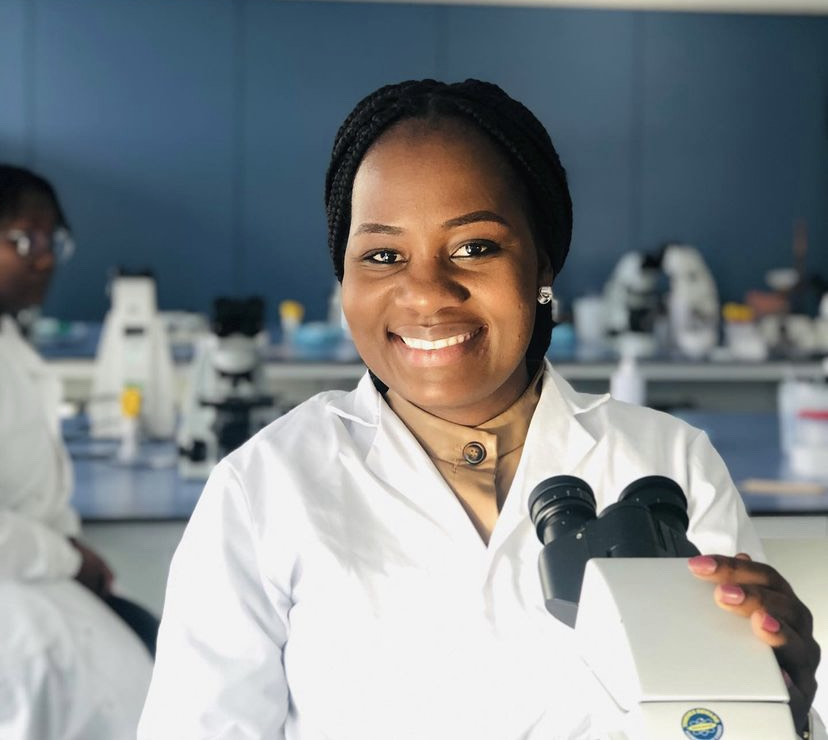
The DSIT visitors were introduced to PhD student Brenda Mionki who talked about her research into how gene-edited tomatoes could provide a new way of supplementing vitamin D for individuals lacking this important vitamin and Dr Rokas Juodeikis, a Quadram Institute Bioscience Fellow, who is developing novel strategies to improve health and address nutrient deficiencies using bacterial extracellular vesicle (BEV) engineering. The visit to the Quadram Institute was concluded by a discussion with Prof Mark Webber and his team around their use of functional genomics in Engineering Biology.

At the conclusion of the visit, Roz said, “This was a great opportunity to showcase the ways in which Norwich Research Park is leading the Engineering Biology scene in the UK, in terms of the critical mass of activity, the diverse range of work, the deep-tech nature of the curiosity-driven science and applied science, and the way in which the campus is supporting new spin-outs and industry partners to maximise the impact of publicly-funded research which is creating jobs and generating growth for the economy.

“With further support from our partners, in government, we will be able to create growth in the economy through ‘bio-transitions’ workstreams which involve all areas of industry and society and which will help mitigate the impact of climate change, ensure food is nutritious and that people stay healthier for longer.”
  • *I have permission from the copyright holder to publish this content and images.

Artificial Intelligence is speeding up the development of the next generation of biostimulants

Member News
The views expressed in this Member News article are the author's own and do not necessarily represent those of Agri-TechE.

Syngenta Crop Protection and TraitSeq announce a pioneering collaboration which could help farmers transition to more sustainable practices.

Syngenta and the pioneering artificial intelligence (AI) company TraitSeq are combining forces to use the full power of AI for the development of innovative, high-performance biostimulants.

Syngenta, a world leader in developing the next generation of biologicals products for agricultural use, will use its extensive knowledge of crop biology to complement TraitSeq’s proprietary AI methods to identify highly specific indicators of a plant’s cellular state called biomarkers. When activated, these biomarkers can indicate how well a plant is responding to efforts to boost its health or to block the effects of external, abiotic stressors.

Biostimulants are products applied to plants, seeds or the root environment that enhance natural plant processes, leading to an improved nutrient use efficiency, increased tolerance to abiotic stress or better crop quality. Biostimulants are a vital and growing component of sustainable agriculture, yet their performance can vary depending on environmental factors such as temperature and local climate.

Syngenta has extensive data across different branches of science – such as genomics, proteomics, metabolomics, and phenomics.  Using TraitSeq’s sophisticated proprietary platform, scientists from both teams hope to leverage AI to analyze complex biological big data, to uncover the intricate molecular interactions that impact a crop’s ability to utilize available nutrients in the soil. Once specific biomarkers can be identified, scientists hope to be able to quickly and accurately assess the efficacy of a new biostimulant in enhancing plant health.

The development of such biostimulants also fits in Syngenta’s efforts to support farmers transition to regenerative practices and its commitment to sustainability. Syngenta’s recently launched Portfolio Sustainability Framework (PSF) rates Syngenta’s products for sustainability and stakeholder alignments into 3 tiers. New products are also included with the aim to shift the portfolio towards the top tier.

Camilla Corsi, Head Crop Protection Research & Development, said: “At Syngenta, we are accelerating the pace at which we innovate, to deliver solutions farmers urgently need. Technologies such as TraitSeq’s AI-driven platform enable us to revolutionize our research, attain important data-driven insights, so that we can develop the next-generation of sustainable solutions faster – while further strengthening our pipeline of innovative agricultural technologies.”

Dr. Joshua Colmer, CEO of TraitSeq, said: “This partnership highlights how TraitSeq’s versatile platform can transform agricultural input development by uncovering predictive biomarkers that directly link molecular insights to biostimulant performance. By equipping Syngenta’s innovation pipeline with these capabilities, we aim to optimise and accelerate the development of new biological solutions, which will support farmers in adopting more sustainable agricultural practices.”

Biostimulants offer an important solution to farmers seeking to improve the sustainability of their farming operations while addressing challenges arising from an increasingly constrained toolbox of available agricultural technologies and evolving consumer demands.


More Information here

Green Mountain Orchards: Ditching Spreadsheets & Saving Time

Member News
The views expressed in this Member News article are the author's own and do not necessarily represent those of Agri-TechE.

About every six months or so, Casey Darrow used to do a Google search: record-keeping apps for fruit growers

He needed a better way to keep track of the pesticide applications on his 110-acre farm in Vermont, Green Mountain Orchards. But it seemed like every app he tried had no idea what fruit farmers needed. 

There were a few options geared toward corn and soybean growers. But Casey didn’t have much need for an app that helped him calibrate a 40-foot-wide sprayer. One app that was targeted more toward specialty growers seemed hopeful — until a report that was supposed to streamline Casey’s work turned out to be nearly 400 pages

For years, Casey kept searching and trying out new apps as they became available. Every time, he would end up going back to the same trusty spreadsheet that he’d spent hours building himself. 

That is, until he was scrolling through some posts in the Next Gen Fruit Growers Facebook group. Someone had left a comment about a new app called Farmable that was supposed to help out with record-keeping. 

“I immediately downloaded it, and right away, I was like, ‘Oh my gosh, this is what I’ve been looking for all these years,’” Casey said. 

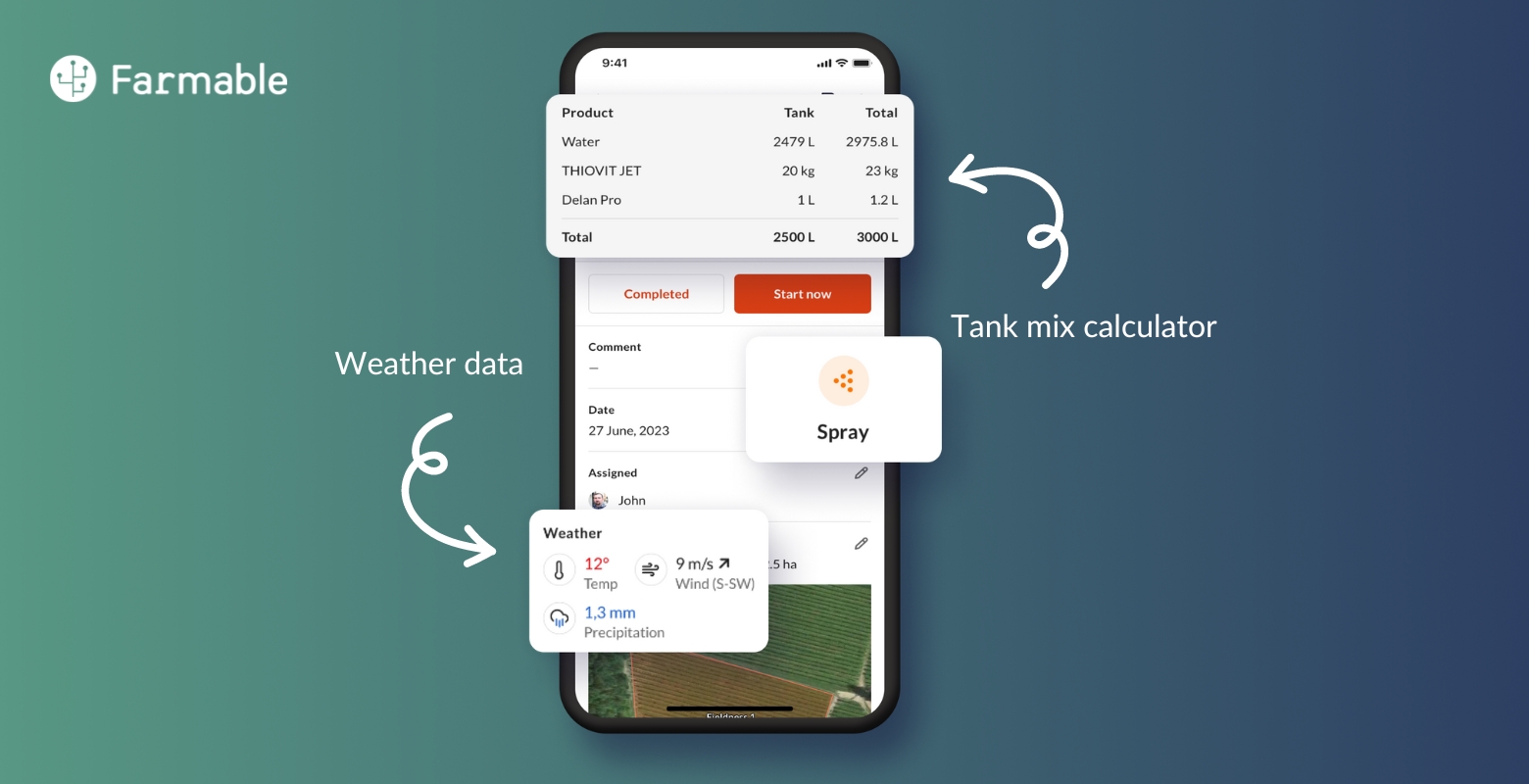
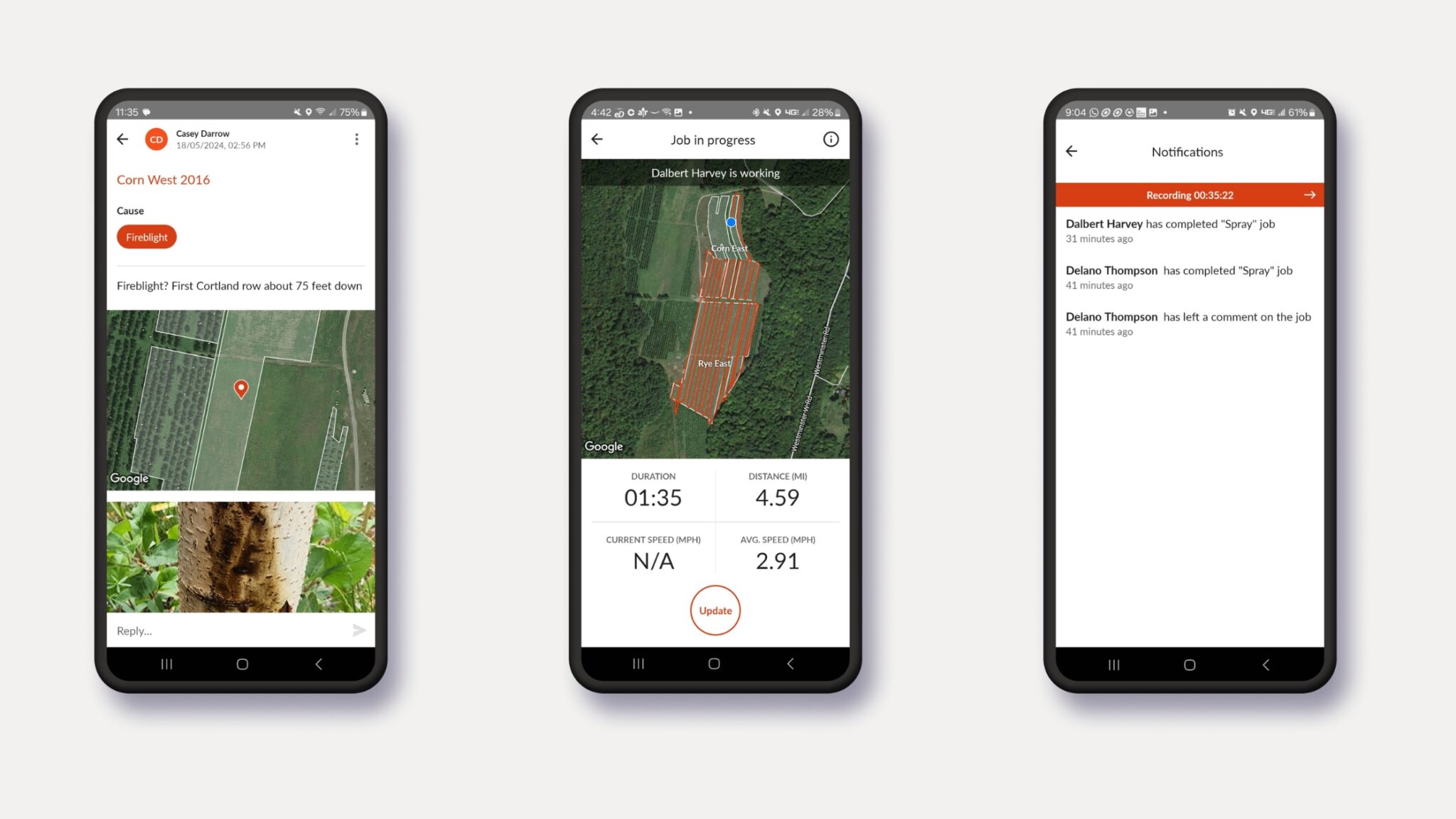
Casey’s acres — which grow mostly apples and blueberries — include 29 different blocks that he needs to keep track of. With Farmable’s import tool, Casey integrated maps of those blocks directly into the platform. Now he can track each block’s application records, pesticide and fungicide mixes, irrigation zones, and more. No spreadsheet necessary

“Most of the materials we use have limits on how much you can use per acre or how many times per year you can apply it,” Casey said. “I used to have to go down the spreadsheet and manually count the applications, from 29 different fields. With Farmable, now I can just say, ‘show me all the applications of this product in this block between these dates.’ It spits it right out.”

This has saved Casey about 2-4 hours of manual work each week — so he can focus on more important strategic work around the farm. 

He’s also used Farmable to set specific application tasks, then assign that work to specific employees. Once they finish, each employee can check off applications right in the Farmable app. Now Casey no longer has to walk around the fields at the end of the day, searching for certain employees and verbally asking if they finished an application or if they’re running low on a certain product. He can just pull out his phone and get real-time updates.

As Casey integrates more of Farmable’s features into his day-to-day operations, he’s also been pleased with Farmable’s ability to listen to their customers and adapt to new needs. 

For example, sometimes Casey’s employees will do an “alternate middle” application on the operation’s fields. In this situation, they spray every other middle, then go back a day or two later and fill in the rest. Early on, there was no way to record these types of applications in the Farmable app — instead, it showed up as two applications (and double the product used). 

“I emailed the team, and they told me they were already working on an update for that,” Casey said. “Their responsiveness has been great, and it’s really allowed me to finetune the platform to my operation.” 

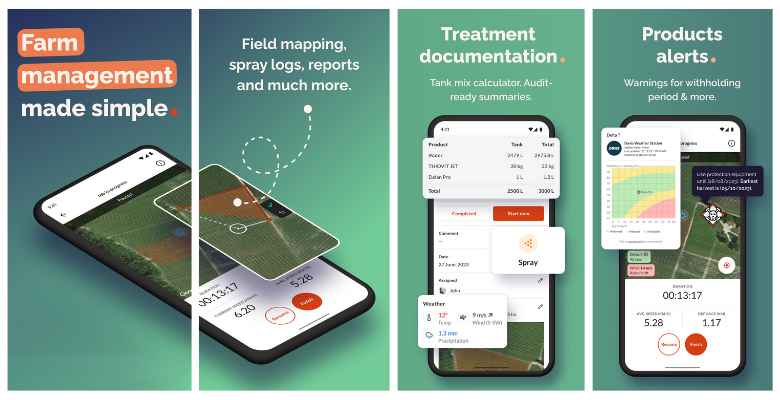
If you’re interested in seeing how Farmable can help you streamline operations, keep better track of your crop treatments, easily manage your employees’ workflows, you can download the Farmable App and get started for free.


  • *I have permission from the copyright holder to publish this content and images.

Hack Your Apple Harvest in 2025

Member News
The views expressed in this Member News article are the author's own and do not necessarily represent those of Agri-TechE.

Hack your Apple Harvest in 2025.

If you are growing apples this season, it’s time to simplify your harvest. 

 February 1, 2025

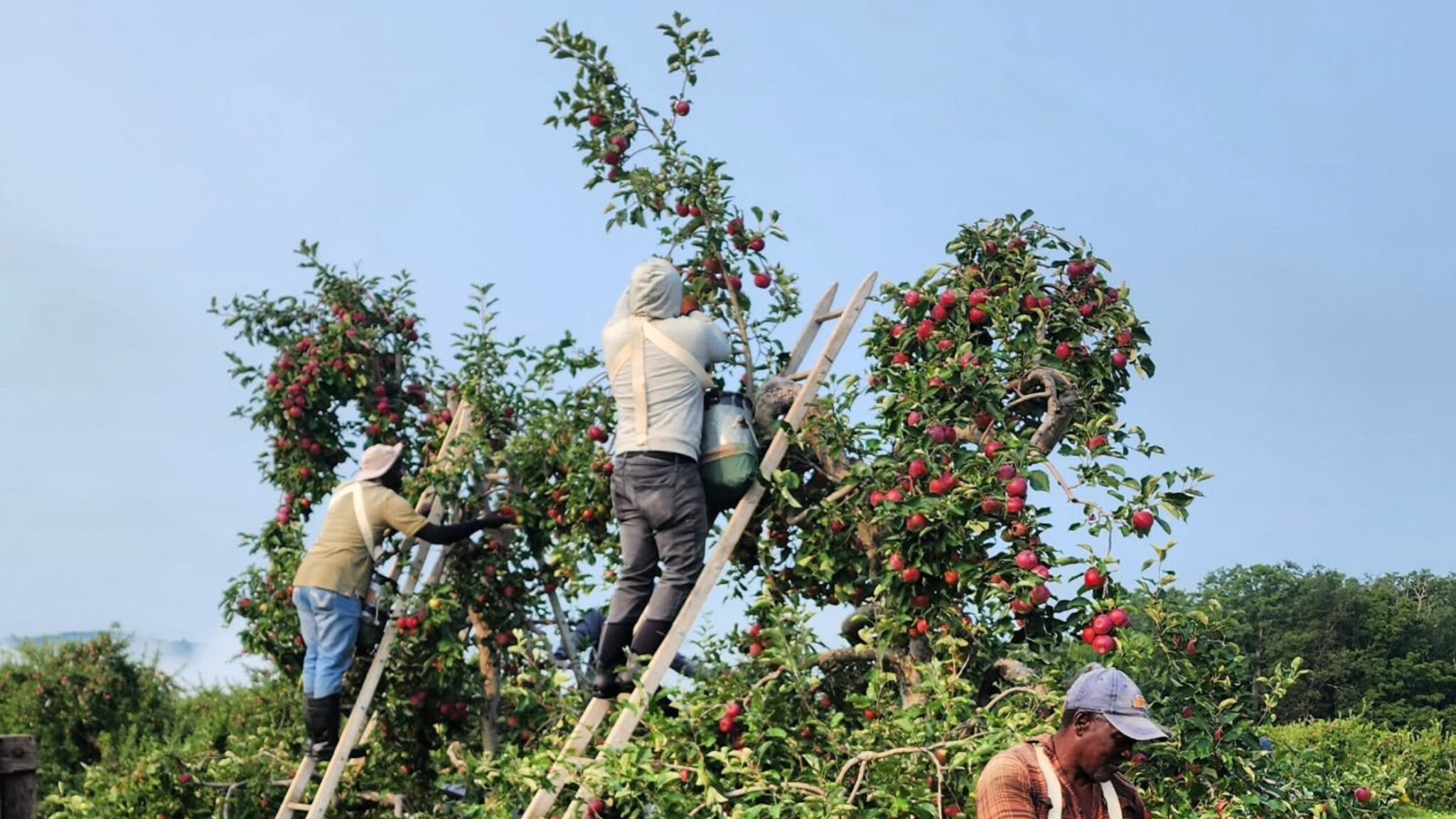
When harvest season arrives later this year, millions of crates of fruit are being picked and loaded into packhouses and cold storage. 

How do you keep track of it all? 

Solutions can range from expensive barcode systems to permanent markers and A4 paper. During the 2024 season, a simple and low cost technology for managing harvest made its way into apple farms in Germany. UK family-owned farms, stand to benefit all the same. 

A Game Changer in Apple Harvest

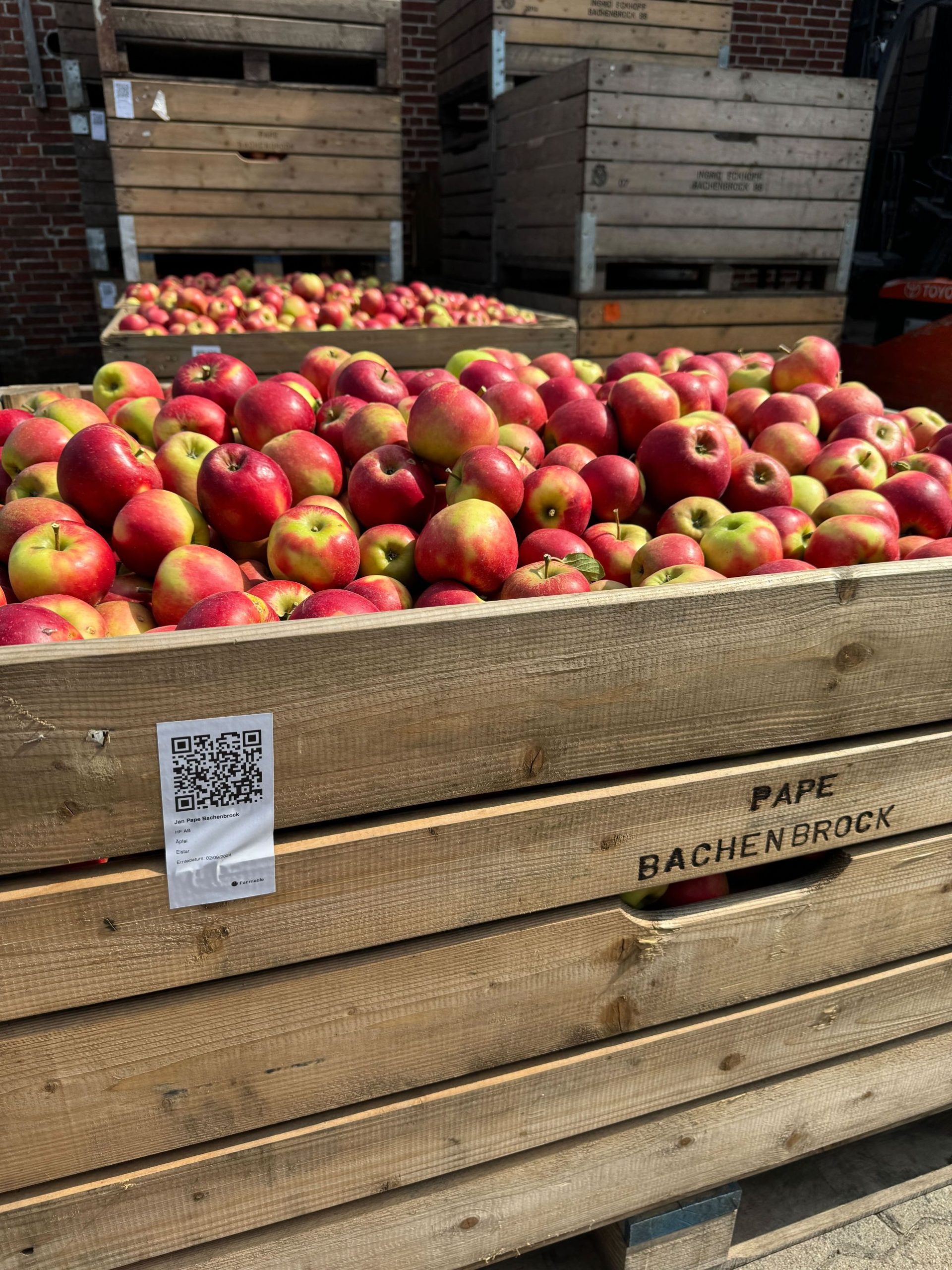
Farmable is a user-friendly farm management app for recording crop treatments, field notes and most importantly; harvest records. At £299 for an annual subscription, the tool is a no-brainer for simplifying record keeping. At the request of several apple growers, Farmable launched a new feature for harvest labels in August 2024. It immediately got adopted by German apple grower Jan Pape, from  outside Hamburg, who grows Elstar apples on his 100 acre farm.

“I manage the harvest recording securely in one place. There are hardly any errors made by employees or me, the farm manager, when preparing or following up the harvest day,” says Pape.

Super Easy Set-up

We asked Jan to comment on the new harvest label features. Here is what Jan and his team had to say about adopting a new tool, just days before harvest began.

  • How did you label your harvest bins last season?

“I used a program for printing business cards – always 10 business cards on an  A4 sheet; then cut it up… sometimes you have too few in the morning, but sometimes just too much… or I could forget it altogether.”

  • How much time did it take him to get started with the Farmable harvest labels?

“The setup is super easy/foolproof and was done in just a few minutes”

  • Who is benefiting from the harvest labels most in his operation?

“I think we all have a benefit. By record harvest and printing labels directly via the app, it seems to me that the susceptibility to errors when allocating harvest quantities is very low”

How can you benefit from Farmable in your orchard? 

  1. Map the field you are harvesting from in the Farmable App
  2. Record your harvest production easily from your mobile phone
  3. Print labels on the go with a low cost, handheld label printer

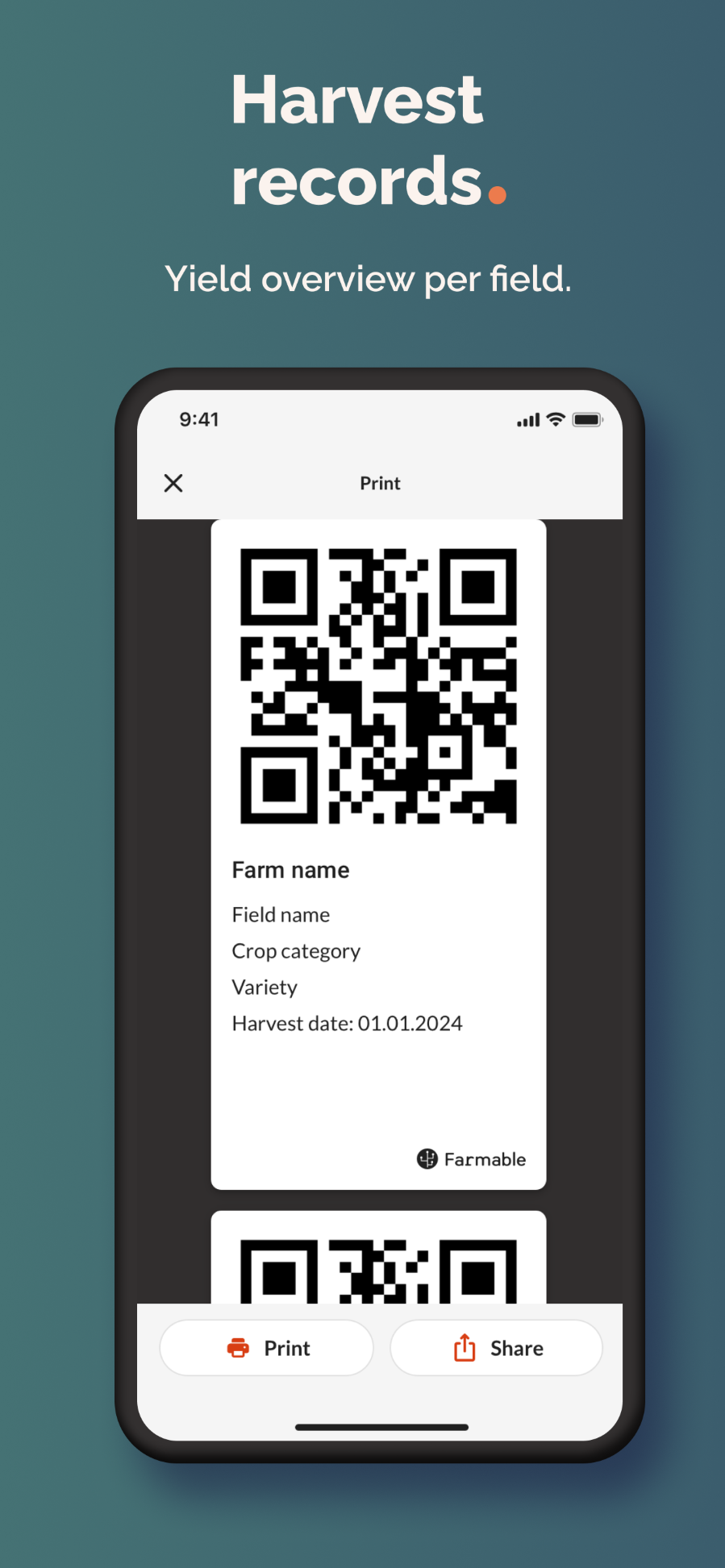
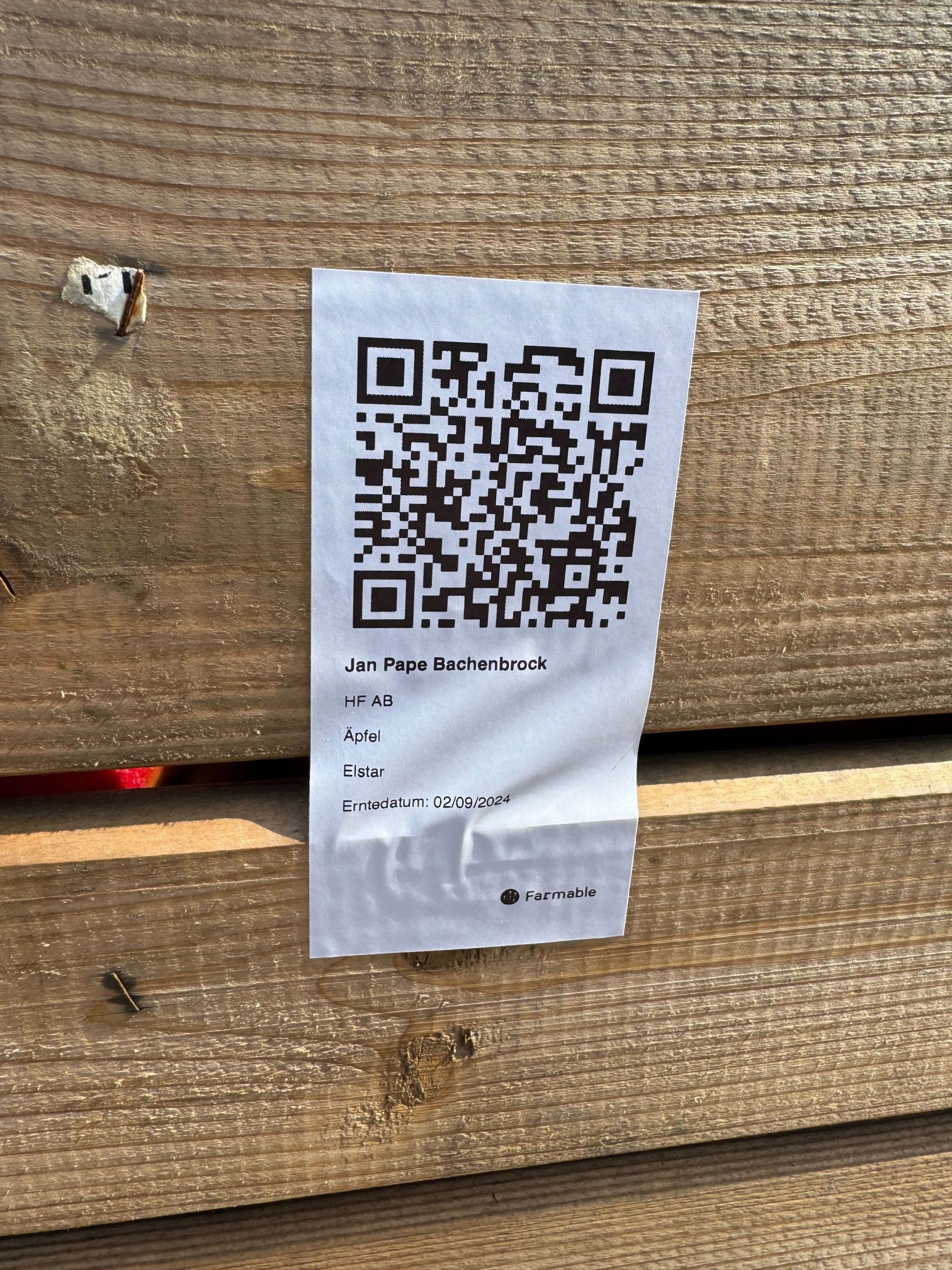
Labels for harvest bins can be created and printed, including all key data points such as field, apple variety, and harvest date. Each label also includes a QR code that can be scanned to retrieve even more detailed information about the harvest and the batch. This simplifies traceability and provides a level of detail that is essential for managing large-scale operations.

For farm managers, the benefits of this feature are clear: with access to all relevant information, they can ensure that each bin is handled correctly, reducing the risk of mix-ups or errors.

A team member on Jan’s farm explains,: “I can print it directly and flexibly with every harvest record and don’t have to print anything on a PC or change templates.”

A Total Harvest Solution for under £500. 

On Jan’s farm, he purchased a Brother Thermal Label Printer for £299, but you can find wireless label printers on Amazon starting at £100. Throw in an extra £50 for labels and your Farmable Pro subscription for £299 . All in, you can radically simplify harvest management and save a lot of stress for less than  £500. 

Whether you want to start using Farmable in tomorrow’s harvest or start planning for next season, you can get started in a few minutes by downloading the Farmable App.

Find it in your app store and try it for free.

  • *I have permission from the copyright holder to publish this content and images.

Regulation of NGT plants in Europe

Member News
The views expressed in this Member News article are the author's own and do not necessarily represent those of Agri-TechE.

In the latest development on the new proposed legislation for the regulation of NGT (gene-edited) plants in the EU, the Polish Presidency have proposed an amendment which removes the proposed patent ban for NGT plants, plant material and plant products.

By way of reminder, in preparing legislation to relax the regulatory process for the marketing of NGT plants, the EU Parliament proposed an amendment which effectively excluded from patentability “NGT plants, parts thereof, genetic information, and the process features they contain”.  The proposal also included restrictions on the scope of protection of existing patents and applications for all NGT plants.  The purpose of the proposed ban was to avoid legal uncertainties, increased costs and dependencies on large agritech companies for farmers and breeders.  This, they argued, was in line with the EU Commission aim to develop sustainable agriculture and increase food security in the region.

Since the proposed amendment, there has been debate over the scope of the exclusion, which could have been interpreted as extending to the genetic tools used for targeted mutagenesis.  There has also been understandable reluctance in having to revise existing legislation such as the EU Biotech Directive, the UPCA and the Trips agreement, as well as questions over the amendments that might be needed to the European Patent Convention.  Despite softening the proposal to be limited to the lower-risk NGT1 plants only by the Belgian Presidency, they were unable to secure a majority vote.

The current Polish presidency have recognised that in order to implement the regulatory legislation, the deadlock between the EU member states on the proposed patent ban has to be promptly addressed.  With the objective of stimulating innovation in the EU whilst enabling free access to varieties by breeders, the Polish Presidency have proposed the following:

  • There will be a distinction between patents which protect basic technologies and patents for plants and processes which result in a specific plant trait.
  • Reproductive material of an NGT1 plant can be placed on the market without any further restrictions, if it is not protected by a product patent, or a process patent which results in a specific trait of the plant.
  • If there are patents which protect the reproductive material, or which protect a process which results in a specific trait, then the reproductive material can still be put on the market, but it may be subject to further restrictions if a Member State wishes. Such restrictions include: a ban on use of the reproductive material for cultivation of reproductive material and a labelling requirement.  These restrictions would aim to protect national farmers and breeders against patents.
  • The proposal includes a verification procedure to determine the existence of patents or applications which may be relevant, and this burden will fall to the party putting the reproductive material on the market.

It is notable that the provisions don’t relate to plants per se, or plant products but only to reproductive material.  The requirements are also limited to NGT1 plants, and any other reproductive material will not be subject to the verification procedure.

Many have welcomed the removal of the proposed patent ban, and if the Polish proposal is accepted then the legislation may progress forward, although there are still many non-IP related issues to resolve.


This article was prepared by Partners Punita Shah and Ellie Purnell.

  • *I have permission from the copyright holder to publish this content and images.

Paul-Tech’s Soil Stations monitors Sherwood’s iconic oak

Member News
The views expressed in this Member News article are the author's own and do not necessarily represent those of Agri-TechE.

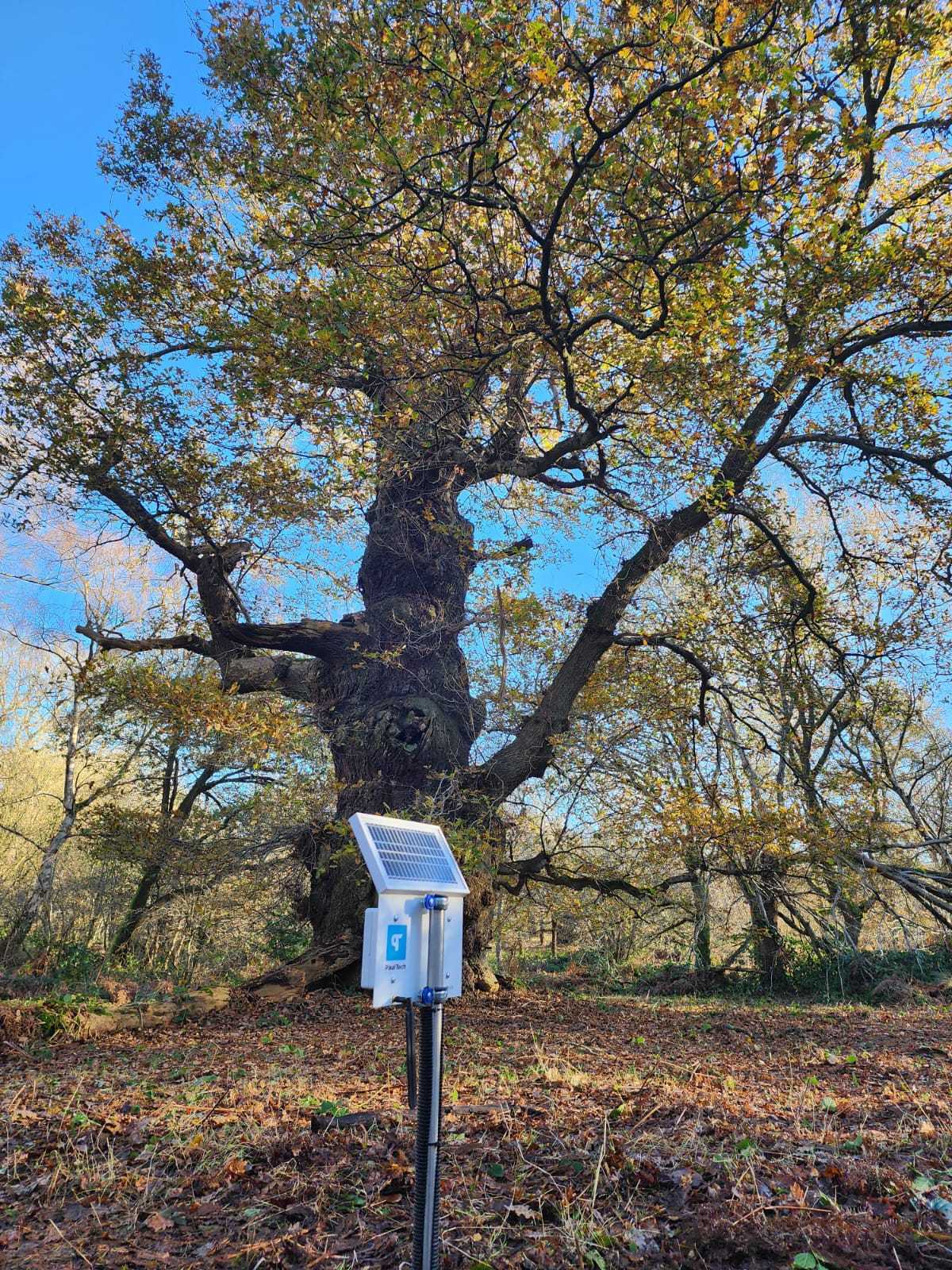
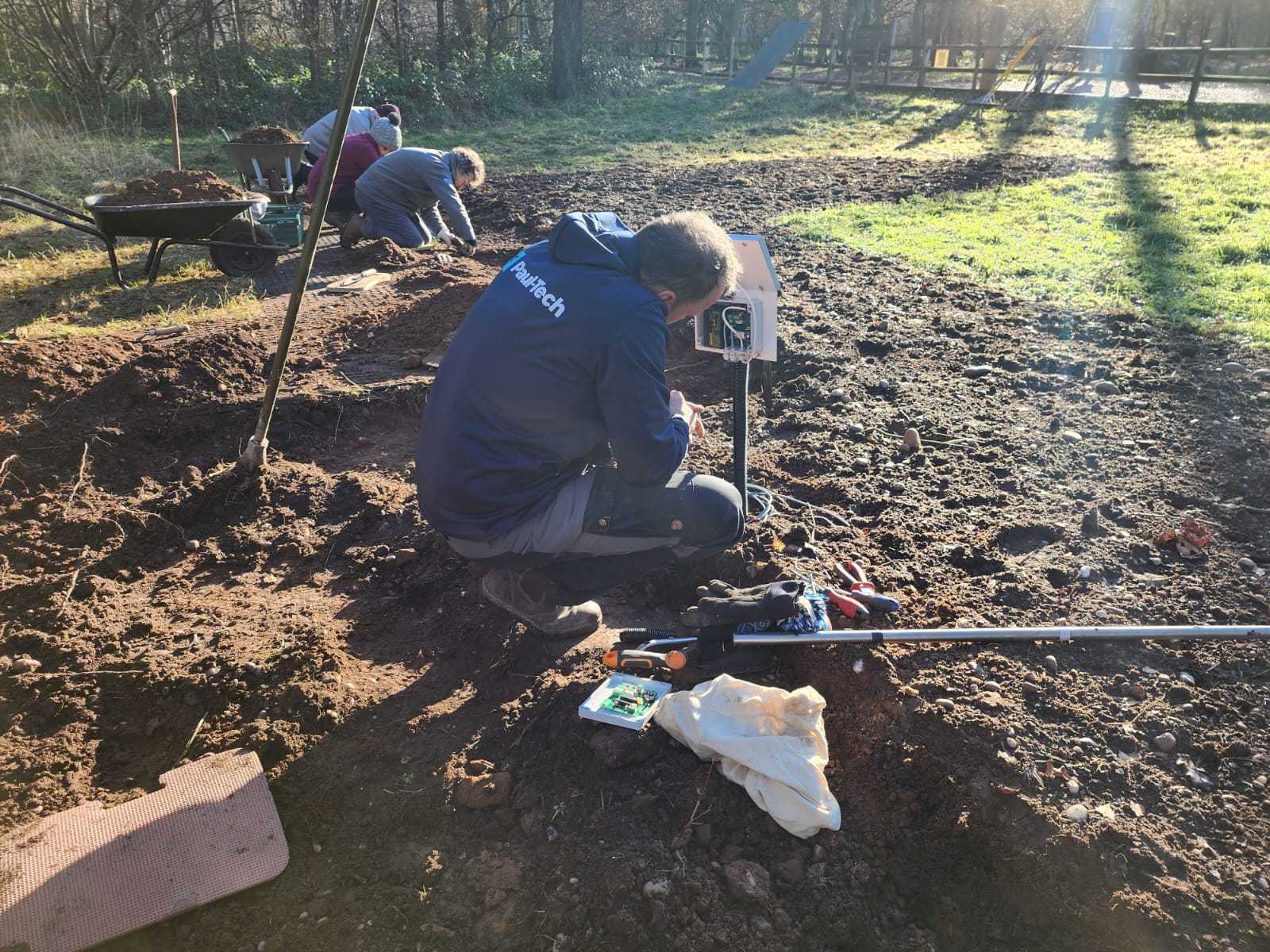
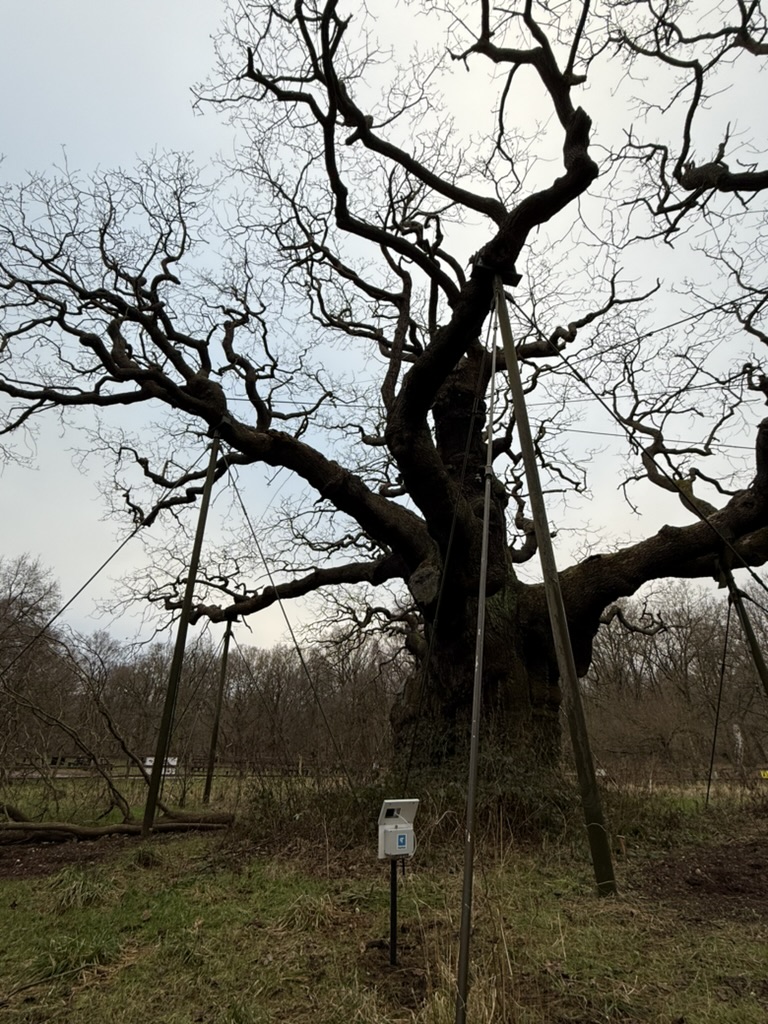
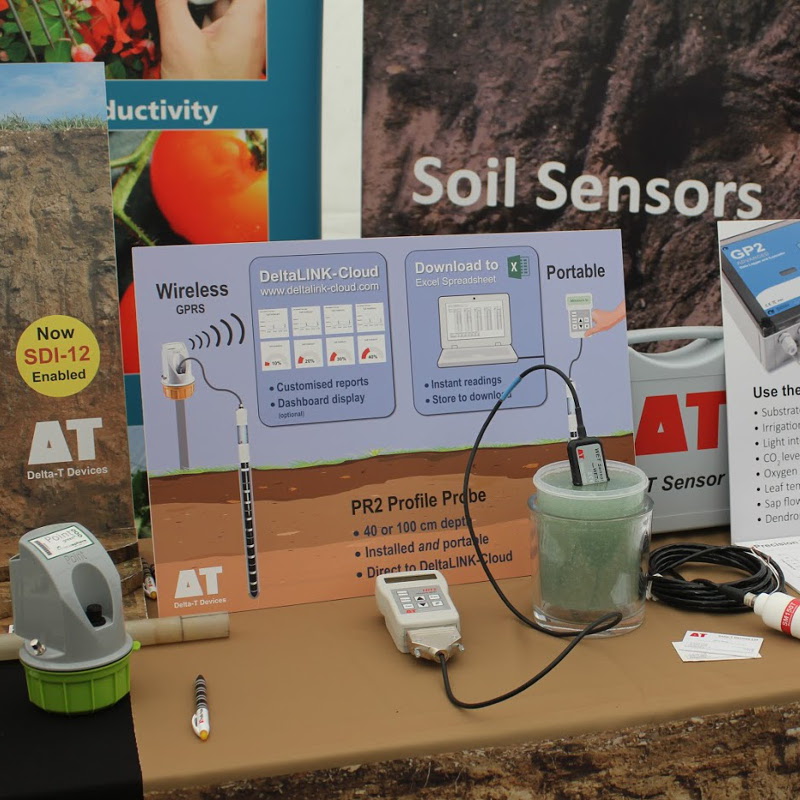
Paul-Tech has installed its innovative soil stations to closely monitor one of the UK’s most famous trees, The Major Oak, located in Sherwood Forest, Nottinghamshire.

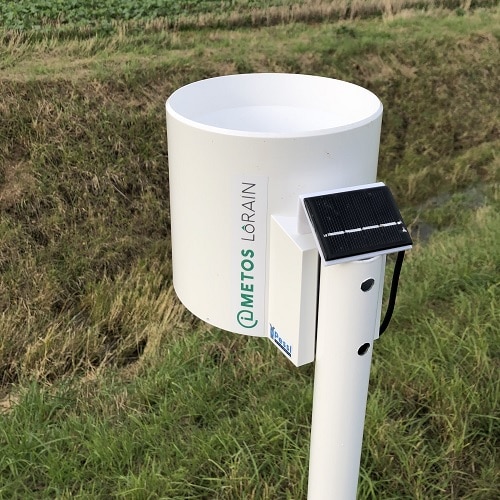
This advanced soil station enables real-time monitoring of soil conditions, offering valuable insights to better understand and care for the health of this iconic tree.

The Major Oak – one of Britain’s largest and oldest oaks – is said to have been the hiding place of Robin Hood and his band of outlaws in Medieval times. The legend attracts around 350,000 people from across the globe to visit Sherwood Forest each year, most hoping to see the 1,200-year-old native English oak (Quercus robur).

Over the years, numerous measures have been implemented to protect The Major Oak, including support structures and fencing to safeguard its soil and roots. Previously, the soil surrounding the tree was periodically tested to assess its quality and identify potential risks to the tree’s health.

Now, with the real-time data provided by Paul-Tech’s soil station, experts can continuously monitor key soil parameters, such as moisture, temperature, and nutrient levels. This data allows for more precise evaluations of the tree’s condition and the ability to adjust maintenance measures as needed.

The project is a collaboration between the UK’s largest nature conservation charity The Royal Society for the Protection of Birds (RSPB), which manages Sherwood Forest, SoilBioLab, the UK’s leading soil health company. Also involved are partners from academia, woodland and conservation organisations, and independent experts in tree health and hydrology, all carrying out vital work to support the oak throughout the year.

Simon Parfey, Managing Director of SoilBioLab, explained, “We have been analysing the soil around The Major Oak for years, studying its microbiology, including the fungi and bacteria it hosts. Paul-Tech’s soil station offers us the opportunity to better understand the hydrology – from water requirements to movement and absorption. Nutrient availability is also a major focus, and the ability to access this data in real time is a significant advantage.”

“The Major Oak is a symbol of Britain’s natural and cultural heritage, and it is a great honour to be part of its preservation,” said Mikk Plakk, Chief Executive Officer of Paul-Tech. “Our soil stations are primarily used in agriculture to help farmers make data-driven decisions. This project, however, allows us to apply our technology in an entirely new way – protecting a historically and ecologically significant tree. We are excited to see how the data we collect will enhance our understanding of heritage conservation.”

Chloe Ryder, the RSPB Estate Operations Manager for Sherwood Forest, said: “Sherwood’s ancient oak trees make it one of Europe’s rarest habitats and it is our privilege to have the responsibility for maintaining the delicate eco-system which has shaped the character of the woodland over thousands of years.

“Supporting the health of the Major Oak requires partnership and expertise. We are working alongside those who understand best how we can create the optimum conditions for the Major Oak to continue its already incredible lifespan.

“The RSPB is a science and evidence-led organisation, so harnessing technology like the Paul-Tech soil station to obtain vital real-time data is essential not just to learn how we can support this tree but other ancient oak trees throughout Sherwood Forest and elsewhere in the future. We’re all really excited to be able to share more clearly and accurately what is happening to the Major Oak and how the work we’re carrying out is benefitting it.”

Paul-Tech is a science-driven agricultural platform that enables farmers to make precise, data-informed decisions through real-time soil monitoring. Its soil sensors, developed over multiple generations of research, measure soil nutrient availability and fertiliser efficiency, providing farmers with valuable insights into soil processes. Founded in 2019, Paul-Tech operates in Estonia, Finland, Sweden, and Lithuania. Last year, the company expanded into the UK, where more than 100 soil stations are now in use.

  • *I have permission from the copyright holder to publish this content and images.

Looking at Integrated Pest Management

Member News
The views expressed in this Member News article are the author's own and do not necessarily represent those of Agri-TechE.

Looking at Integrated Pest Management

There is a big buzz about the increasing limitations on chemical usage such as pesticides. For some commodities, there have always been severe limitations. Pest resistance, resurgence and the development and growth of secondary pests into major pests has been an ongoing topic. But there is a solution for dealing with pests on your farm using a method that considers your economic value, the environment and best practice for sustainability.

What does IPM mean?

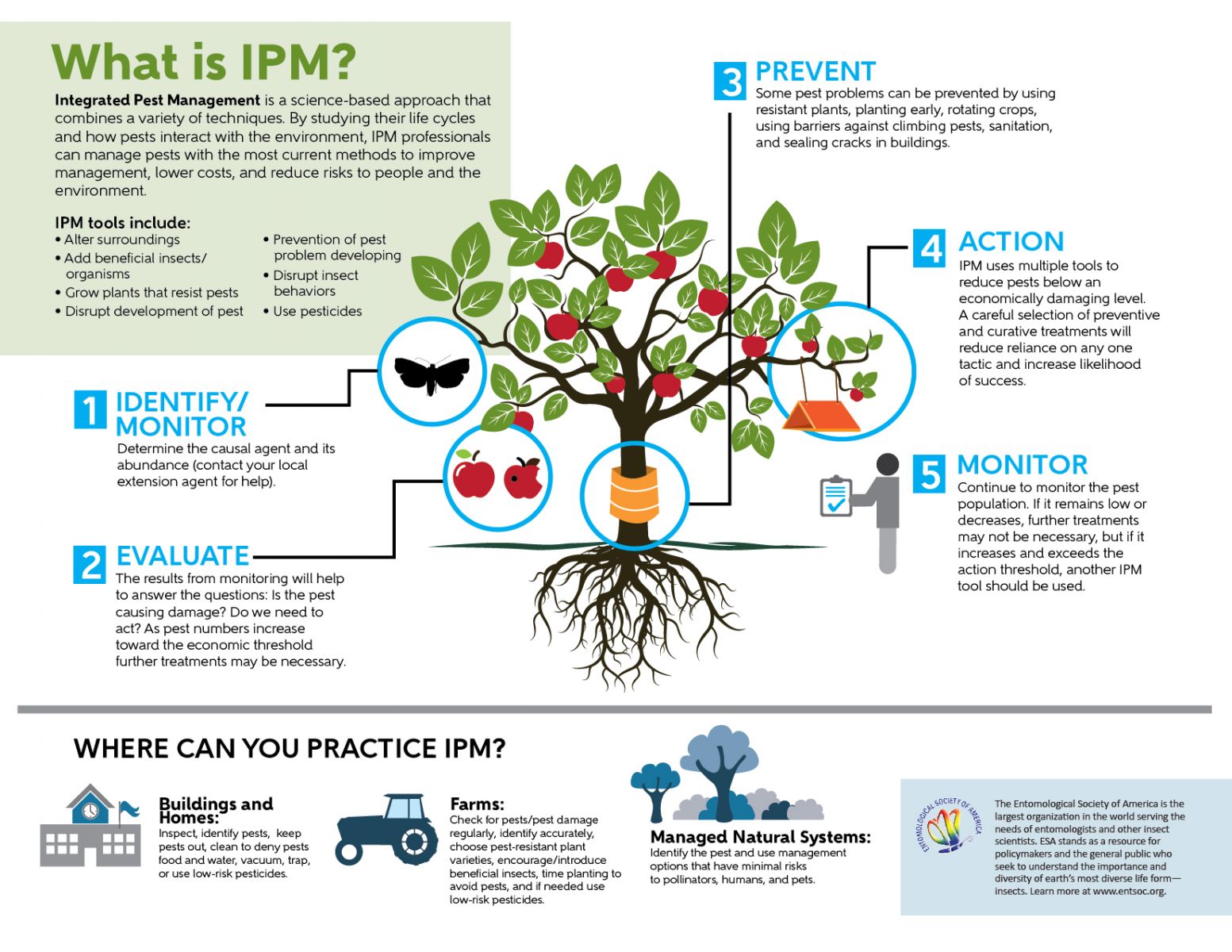
Integrated Pest Management (IPM) is a holistic approach to pest management that incorporates various methods to reduce pest populations and minimize the use of pesticides. It is a process that allows you to make the most economical, efficient and sustainable decision to best eradicate or minimize a pest that is causing damage to your crop.

An approach which “means the careful consideration of all available pest control techniques and subsequent integration of appropriate measures that discourage the development of pest populations and keep pesticides and other interventions to levels that are economically justified and reduce or minimise risks to human health and the environment. IPM emphasises the growth of a healthy crop with the least possible disruption to agro-ecosystems and encourages natural pest control mechanisms.”  – International Code of Conduct on the Distribution and Use of Pesticides, FAO.

The practices used in IPM are not new, they have been used for generations before pesticides were developed. Pesticides have been a great help. But with the cost of pesticides and the development of resistance to pesticides is increasing. It is evident that the only way forward is to look at all your options.

Setting up a good IPM program allows you to do just that. Monitoring and managing the pest instead of elimination can reduce costs, preserve the environment, and keep the health of humans, animals and beneficial insects in mind.

How to set up a good IPM plan?
To set up a good IPM plan, you have to look at the 5 main steps to follow:

Monitor the environment
Identify pests that can cause a threat
Assess the possible loss or damage
Implement a treatment strategy
Evaluate the success.

Most of you are not new to farming, some of the orchards are long-standing, and you already have a scouting plan and traps to monitor numbers. You know the pests that are prevalent in your area, when their numbers rise due to favourable weather conditions and which pests to look out for for your specific crops.

The step where we really start making decisions is the assess step. Where we reach certain thresholds. This is a crucial step because this is when you decide where to implement control. Accessing expert advice is crucial here because sometimes a low threshold like 5/ha is enough to take action, and you need to do it quickly.

When you implement a treatment strategy this can be done pre-, during or post-emergence. When managing this pest, you have to take into account the lifecycle of the pest, its naturally occurring enemies, the possible damage or crop loss, and weather conditions.

An IPM plan may be slower in result when compared to immediate eradication with chemicals and be a bit more effort than just a quick spray, but most times, it is more effective and economical in the long run. It is also important to note that a stressed plant attracts pests, and with that being said, plant health plays a crucial role in your pest management scheme.

The following touchpoints are the main control methods used when implementing a treatment strategy:

Cultural control: This includes practices such as maintaining good orchard hygiene, removing and destroying infested fruit, and pruning to improve air circulation. Good soil preparation by creating favourable environments for plants to thrive. Keep in mind good crop rotation when possible, or planting weeds or other plants that repel those pests prevalent in your orchard (intercropping), as well as removing those favourable to those pests to avoid them becoming hosts.

Mechanical/Physical control: Believe it or not, good irrigation practices are seen as a mechanical way to repel pests, for example, aphids and other insects usually feed on the bottom side of the leaf. Adjusting your spray nozzles to a bit of stronger steam when your orchards are mature can dislodge the tiny pests from the leaves. Hand-picking the pests while their numbers are low or when they are in an egg phase or larva phase might cost you some labour costs but will save damage to your crop and save you on chemical costs. Traps are not just used for monitoring but to lure the pest away from the crop. You can also establish barriers, like aluminium foil here and there, to repel aphids.

Biological control: This involves using natural predators such as ladybugs, spiders, lacewings and birds, parasites like parasitic wasps, and pathogens to control pests. They are often common in unsprayed fields for preventative measures.

And yes, when used correctly…

Chemical control: When necessary, the use of pesticides should be minimized and targeted specifically to the pest in question. Care should be taken to ensure that the pesticides used are approved for use in your country and that they are used according to the manufacturer’s instructions. It is recommended to rotate insecticides with different modes of action when controlling pests (See https://irac-online.org/mode-of-action/classification-online/ ). If early season pesticide is required, a seed dressing is often advised over a foliar spray for example to keep an inviting environment for your natural predators to still do their job. Natural enemies can often be promoted by spot spraying and really only spraying when all else fails.

Conclusion
Using chemicals only when necessary, helps to reduce the development of resistance in the pest population and prolongs the efficacy of the insecticides. The rotation frequency will depend on the specific pest population, the severity of the infestation, and the specific orchard environment.

It is equally important to consider the current climate conditions when developing a pest management plan for orchards. Monitoring the weather and the orchard environment can help to predict when pests will be most active and when control measures should be applied.

At the end of the day, it all comes down to cost, the cost of the pest management program should be considered and balanced with the potential economic loss from pest damage.

We recommend consulting with your pest management expert/advisor and monitoring the orchard’s environment and the market situation to make the most appropriate decision to protect the orchard.

  • *I have permission from the copyright holder to publish this content and images.

Raising the Profile of UK Agriscience in Parliament

Member News
The views expressed in this Member News article are the author's own and do not necessarily represent those of Agri-TechE.
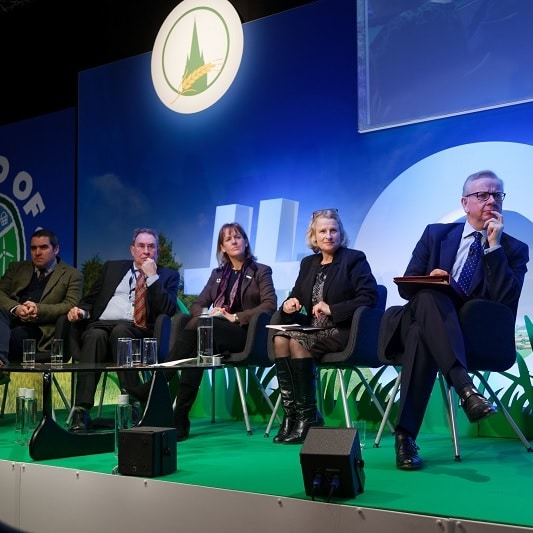
This week the All-Party Parliamentary Group on Science & Technology in Agriculture (APPGSTA) hosted an ‘Agri-Science Week in Parliament’ exhibit in the Palace of Westminster.

The multi-partner exhibit, staffed by scientists from Niab, the John Innes Centre, Rothamsted Research, the Roslin Institute and the University of Lincoln, showcased UK taxpayer-funded research and innovation taking place across a range of sectors and technologies, including digital agriculture, robotics, advanced crop and livestock breeding, vertical farming and AI.

The initiative provided a unique opportunity to engage with MPs, Peers and their staff, explaining why agricultural science and technology are so important to all our futures, particularly to a new intake of MPs who may not immediately think of farming innovation as important to them or their constituents.

Niab’s Scott Raffle and Mark Else showcased research from East Malling on water use efficiency, particularly the precision irrigation of strawberry plants, and in controlled environment horticulture with a poster on the development of a nitrogen demand model in raspberries.

APPGSTA chair George Freeman MP and vice-chair Charlie Dewhurst MP were joined by Agriculture Minister Daniel Zeichner MP at the exhibit’s opening ceremony and the launch of a new innovation agenda for UK agriculture from the Group, together with Niab CEO Professor Mario Caccamo and Head of Breeding Dr Phil Howell.

Read the full article here.

Current Status & Control of Take-all Disease in Cereals

Member News
The views expressed in this Member News article are the author's own and do not necessarily represent those of Agri-TechE.

Take-all was seemingly quite bad last year (2024). Current data on Latitude is quite outdated and there are no updated figures on the efficacy of Latitude. So, what is the current status of take-all and available control?

Highlights

  • Warmer and wetter conditions as a result of climate change may increase take-all severity and frequency
  • As varietal and chemical options to control take-all are limited, current strategies focus on an integrated approach where possible. These strategies relate to rotation, cultivation, varieties, drilling dates, seed rates/treatment, and nitrogen applications.
  • Current scientific research focuses on small-scale field trials and laboratory experiments to understand take-all mechanisms, forming the basis for resistance breeding and other solutions.

Take-all background information

Take-all is a soilborne disease in UK cereals, particularly UK winter wheat and to a lesser extent winter barley. Take-all is caused by two strains: the common Gaeumannomyces tritici and the rarer Gaeumannomyces avenae. The disease begins as soil-borne but spreads root-to-root. Take-all cause roots to become blackened, rotten and have a ‘rat-tail’ appearance. The reduction in root activity restricts water and nutrient uptake. This slows canopy growth and causes yellowing and stunting in severe cases. Patches of stunted plants and whiteheads (bleached ears) form. As a result, the fungus reduces yield and grain quality, with average yield losses of 5–20%; though more than half of a crop can be lost when take-all is severe. Take-all is the major cause of ‘second wheat syndrome’ when yields of second wheat crops are frequently 10–15% less than those of first wheats.1

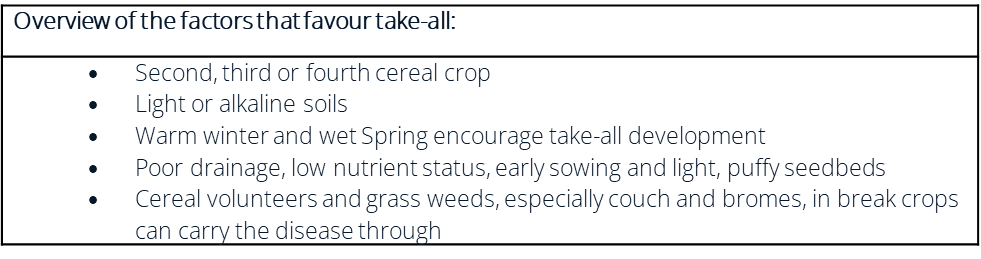
Take-all is challenging to control, as fungicides and varietal resistance are very limited. The seed treatment, Latitude, is currently the only crop protection product approved for used on the impact of take-all. The disease is very soil dependent, for example the disease is more prone in crops grown on Wick Soil Series than Hanslope Series, for example. Wick Soil Series is typically a light, sandy or loamy soil with good drainage but low water and nutrient retention. The lighter soil facilitates the spread of the fungus easily, and the loss of active roots has a large effect on crop water and nutrient uptake where there is already low water/nutrient retention of the soil. Contrarily, the Hanslope Series is typically heavy clay soils with a greater water holding capacity, which retains nutrients.2 Additionally, take-all thrives in alkaline soils, though acidic patches can also suffer damage.1 The unclear boundaries of how and where take-all is most damaging contributes to the challenges of trying to reduce its effect and manage future outbreaks.

Warm soil temperatures in the autumn (above 10–12°C) promote take-all activity, and a wet spring can exacerbate its spread. Considering the recent weather changes as a result of climate change, this may indicate that take-all may become more prevalent as we experience these warmer and wetter conditions. Additionally, moist soil conditions can build up take-all inoculum, impacting subsequent crops to a greater extent.

Current control/recommendations

As varietal and chemical options to control take-all are limited, current strategies focus on an integrated approach where possible, the main strategies provided by AHDB include:

1. Rotation

  • One-year break crops not susceptible to the disease can prevent take-all inoculum build up in the soil, reducing its impact on a subsequent cereal crop. The bigger the rotation, the less impact take-all will have on the future cereal crop. Broad-leave crops and oats are particularly useful in reducing take-all inoculum in the soil because they encourage antagonistic soil fungi to supress the take-all inoculum, a ‘fungi family feud’, as some are calling it.
  • Volunteer cereals and/or grassweeds can harbour the disease in break crops, so they require early destruction to reduce the risk of take-all on the following crop.

2. Cultivations

  • Firm seedbed discourages disease growth. Though compaction can hinder root growth in heavy clay soils.
  • Ploughing can bury take-all to deeper depths, allowing the crop time to establish before the roots reach lower depths and any take-all infected soil.
  • Delayed sowing in colder soils can help mitigate the risk, considering take-all thrives in warmer soils.

3. Drilling dates

  • Crops drilled later tend to develop root systems in cooler soils where fungal spread is slower. This leaves time for roots become more established before disease pressure builds. This encompasses trade-offs though, relating to a decrease in yield potential due to a potentially shorter growing season or an increased risk of planting in wet conditions, which may hinder crop establishment.

4. Seed rate/treatments

  • Take-all can become more severe with higher seed rates because of the increased root density of many seedlings, but a lower seed rate may not be practical.
  • Latitude seed treatment is currently the only chemical option to treat take-all.

5. Varieties

  • Some wheat varieties have shown greater yield improvements and response to the addition of Latitude. For example, the 2022 ADAS field trial evaluating the efficacy of Latitude on managing take-all across different wheat varieties (Extase, Zyatt, Dawsum and Palladium) showed that Extase had a higher yield increase (1.85 t/ha) compared to Palladium (0.9 t/ha), both compared to untreated controls.

6. Nitrogen applications

  • An early application of nitrogen followed by the main application later in the growing season to crops more at risk of take-all can be beneficial, compared to one main application at the start. This is because a diseased crop may be less efficient at taking up nitrogen, so little and often is a better approach.

Looking forward, what are the potential options?

From this recent review of the literature and advice presently available, the best advice to control take-all is using an integrated approach of the strategies already discussed above. However, there are new glimmers of hope in terms of alternative approaches to controlling take-all, which we should keep an eye on for future, commercial developments.

  • Biological Control Using Bacillus subtilisA study in China in 2023 has demonstrated that certain strains of Bacillus subtilis can effectively combat take-all disease in wheat. These beneficial bacteria produce antimicrobial proteins that inhibit the growth of the pathogen Gaeumannomyces graminis tritici. Field experiments have shown that applying these strains can reduce disease incidence.
  • A biological fungicide, TOLTEK by Certis Biologicals, has been approved for use in France on Wheat and other cereal crops in 2024. The product contains a bacterial strain that has demonstrated effective antagonistic affects against take-all, thus providing protection against the disease. UK product registration is ongoing (as of Jan 2025), until which time the trials data for the product is not yet available.
  • As the ADAS trial in 2022 showed, certain wheat varieties may have a more effective response to the seed treatment, Latitude. Whilst this study took place in 2022, a more recent news article on take-all in late 2024 still references this key field trial, suggesting its relative importance still. Chloe Francis, Senior Consultant in Plant Pathology at ADAS, shared that there are other seed treatments being investigated, but they have not been registered yet. Chloe also said that applications of the foliar fungicide, Amistar, have been reported to influence take-all but the effect is often quite small and inconsistent. The Amistar label explains that it can reduce the severity of take-all. Note, on cereal crops, Amistar must always be used in mixture with another product.
  • Rothamsted Research are investigating crop genetics, specifically resistant gene varieties to take-all. One wheat line has been evaluated under field conditions and was found to display good resistance to take-all, but it is a low yielding crop and is not a commercial cultivar. Whilst the exact genes that display resistance are still unknown, commercial breeders can start to take this information to cross the traits with commercial wheat cultivars in a breeding program. This may take 5-7 years. This is not seemingly a priority for breeders, because take-all can be depleted within one year.
  • A 2023 study suggests that there is a non-harmful relative of the take-all fungus which cannot penetrate crop roots and therefore does not cause the same level of damage as take-all. Infecting roots with this fungal relative could reduce the effects of take-all due to species competition. A further study in 2024, understanding the mechanisms behind take-all resistance, suggests that the non-harmful relative of the take-all fungus promotes the crops defence mechanisms, helping to reduce the effects of take-all.

Concluding remarks

Latitude continues to be a relatively effective seed treatment in response to take-all, but with warmer and wetter winters because of climate change, we may see a decline in its efficacy. Utilising multiple integrated management strategies and reducing reliance on a single chemical control method for reducing take-all offers significant advantages in terms of risk management.

The current scientific literature focuses on a combination of small-scale field trials and laboratory experiments to study resistant take-all gene expression, with the primary aim of understanding the mechanisms behind take-all. These small-scale experimental phases are crucial for unravelling the mechanisms of take-all, forming the foundation for breeding strategies targeting resistance and other effective solutions.

There does not seem to be any other treatments available or upcoming, except for TOLTEK, with no widely available data to support claims at present (due to ongoing regulation/registration in the UK). However, the foundational concept of TOLTEK as a biological fungicide is supported by the wider scientific literature, suggesting that some soil bacterial strains can have an antagonistic effect on take-all, thus helping to reduce its negative impact on crop growth.

References

  1. Take-all disease in cereals: prevent, detect, control | AHDB
  2. LandIS – Land Information System – Cranfield Environment Centre
  • *I have permission from the copyright holder to publish this content and images.

New sequenced genome sheds light on weed resistance

Member News
The views expressed in this Member News article are the author's own and do not necessarily represent those of Agri-TechE.

Genomic advances reveal how similar weeds can dominate wheat fields that are geographically separated by over 5,000 miles.

Two new Alopecurus genomes have been sequenced, providing important additions to the growing body of community resources for weed genomics.

Access to the genomes for blackgrass and orange foxtail, sometimes called shortawn foxtail, will help researchers address what makes these weeds such exceptional survivors in modern agricultural systems.

The sequencing of the orange foxtail genome, which was carried out at the Earlham Institute, generated 11.7 million PacBio HiFi reads – nearly 230 Gb of data – corresponding to a haploid genome coverage of 32.9x.

Both blackgrass (Alopecurus myosuroides) and orange foxtail (Alopecurus aequalis) are native to many regions across the Northern Hemisphere.

Blackgrass has become the predominant agricultural weed in Western European winter wheat and barley, whereas orange foxtail has emerged as the dominant agricultural weed for similar crops in parts of China and Japan.

Both are grass weeds that grow in grass crops. They frequently out-compete cereal crops.

Changes in cropping practices have not been effective in controlling the weeds, and both have evolved resistance to multiple herbicides.

With both weeds presenting a major threat to crop yields and food security, a better understanding of the genetic drivers of their resistances and resiliencies are essential to generate effective strategies for control. Filling this knowledge gap requires high-quality genomic resources.

n December 2023, an annotated blackgrass genome was published by Rothamsted, Clemson University, and Bayer scientists. The blackgrass seeds were from a population collected in 2017 from the Broadbalk long-term experiment that had never been treated with herbicides and so remained susceptible to chemical control.

Comparing this population with resistant populations from other UK fields enabled these researchers to identify genetic mechanisms correlated with resistance.

Now, one year later, an annotated orange foxtail genome has been published. For this genome, Rothamsted researchers collaborated with partners at the Earlham Institute and the European Reference Genome Atlas (ERGA) initiative, which ultimately aims to provide reference genomes for all European species.

The orange foxtail plants sequenced were from seeds held by Kew’s Millennium Seed Bank from a UK-collected population.

As orange foxtail is not present in the UK’s agroecosystem, it is unlikely they have ever been exposed to herbicides.

As with the Broadbalk seeds, this genome is an important reference as it will not have been influenced by the strong selective pressures that have shaped some weed populations.

The orange foxtail genome at 2.83 Gb is smaller than the blackgrass genome (3.572 Gb) and contained just over 33,750 protein-coding genes. The genome is assembled into a total of seven chromosome-level scaffolds, and most are complete with telomere sequences on one or both ends.

The sequencing, assembly, and analysis of the orange foxtail grass were carried out by teams in both the Earlham Institute’s Faculty and its National Bioscience Research Infrastructure in Transformative Genomics, both supported by BBSRC.

Read the full article here

Opportunity: UK to India Agri-TechE Accelerator Programme 2025

Member News
The views expressed in this Member News article are the author's own and do not necessarily represent those of Agri-TechE.

The UK Agri-TechE Centre will spearhead a UK to India knowledge exchange initiative in 2025, promoting collaboration in targeted, late-stage R&D, new investment and market access for innovative agricultural technologies. Partnering with the Foreign, Commonwealth and Development Office (FCDO), UK Science and Innovation Network (SIN), Department for Environment, Food and Rural Affairs (Defra) and Department for Business and Trade (DBT), the programme aims to enhance collaboration and access to agricultural innovation across UK and India, supporting on-farm sustainability and profitability and agri-tech sector growth.

More information here


Applications are due on the 10th February 2025.

Ceres Agri-TechE and the University of Lincoln showcase Agri-TechE Innovation in Parliament

Member News
The views expressed in this Member News article are the author's own and do not necessarily represent those of Agri-TechE.

Cambridge Enterprise initiative Ceres Agri-TechE and the University of Lincoln partner to showcase innovative agri-tech solutions from university science addressing global challenges

Ceres Agri-TechE and University of Lincoln have partnered to present Agri-TechE Innovation as part of an Agri-Science Week in Parliament exhibit on 27-31 January. The team will share highlights from the Ceres Agri-TechE programme that is translating world-class UK university science into real world impact.

Initially funded in 2018 by a £4.8M Research England CCF award as a collaboration between the University of Cambridge, University of Lincoln, University of Reading, University of Hertfordshire and the University of East Anglia, Ceres Agri-TechE Knowledge Exchange Partnership (Ceres Agri-Tech), is a collaborative initiative founded by and located at Cambridge Enterprise, the innovation arm of the University of Cambridge. Ceres Agri-TechE builds upon Cambridge Enterprise’s world class track record in research translation, helping underpin food security, reducing environmental impacts and increasing the sustainability of agriculture.

Supported by grants from Research England’s Connecting Capability Fund and EPSRC Place Based Impact Accelerator Account, to date Ceres Agri-TechE has launched four agri-tech spinouts, which together have created 29 high-value jobs and are developing innovative agri-tech solutions for critical challenges. These spinouts include:

  • Fruitcast – AI-enabled decision support and fruit forecasting for improved yield optimisation, waste reduction and improved efficiency
  • Agaricus Robotics – intelligent robotic mushroom harvesting
  • Cellexcel – waterproofing biocomposites for lightweighting vehicles

Ceres Agri-TechE has a pipeline of over 40 agri-tech innovations with global potential including direct carbon capture for climate resilience, net zero precision fertiliser and improving crop storage for reduced food waste. The pipeline projects all address UN Sustainability Development Goals, such as zero hunger, clean water (and sanitation), responsible consumption and production and industry, innovation and infrastructure.

It is helping to bring together organisations in the UK and around the world to translate leading university science into real-world solutions, with 28 new collaborations, 8 UK civic partners, 30 international partners and 26 farmer partners. Ceres Agri-TechE has leveraged £6.07 million so far and supported the training of more than 380 academics, helping the continued pipeline and positive impact of agri-tech research innovation.

Since 2018, Ceres Agri-TechE has worked closely with university partners Cambridge, Lincoln and UEA, as well as local civic societies, businesses, farmers and growers in the region’s agri-tech cluster. In 2023 Ceres Agri-TechE announced two further formal collaborations.

Led by the University of Lincoln, with the Cambridge University Department of Engineering and Ceres Agri-Tech, Lincam is a collaborative initiative to deliver agri-tech impact in the Greater Lincolnshire and North Cambridgeshire (Lincam) region, funded by a £4.9m Engineering and Physical Sciences Research Council (EPSRC) Place Based Impact Acceleration Account. Already a nationally renowned agri-tech cluster this funding is driving the Lincam region to become an agri-tech gateway for the world – enabling the development of technologies at industrial scale and providing export opportunities for agri-tech companies and inward investment opportunities within both the agri-tech and primary production sectors.

Ceres Agri-TechE is also collaborating with Universities of Lincoln (lead), Cambridge and UEA to develop a truly global Agri-TechE cluster in the Greater Lincolnshire and East Anglia region with £1.49m from Research England’s Connecting Capability Fund (CCF) RED fund. Agri-TechE Global is a designed to translate agri-tech research from the Universities of Lincoln, Cambridge and UEA and build international academic and commercial links to support the onward development and commercialisation of their agri-tech innovations.

Ceres Agri-TechE is a testament to the power of innovation and collaboration, and the positive impact of publicly-funded research. By bridging the gap between research and real-world application, Ceres Agri-TechE is paving the way for a more sustainable, efficient, and resilient agricultural sector.

Dr Louise Sutherland, Director of Ceres Agri-Tech, said:

“Ceres Agri-TechE is a crucial link that enables world-leading University research from the UK to solve global challenges facing agriculture, driving sustainability across the environment and lives. Our work is having tangible impacts in the UK and worldwide and showcases the incredible potential of collaboration and publicly funded research to drive positive change.”

Professor Simon Pearson, Founding Director of Lincoln Institute of Agri-Food Technology (LIAT), University of Lincoln, said: “There is little doubt that the UK is a world leader in the diverse set of interdisciplinary sciences that underpin agriculture and food production. Ceres Agri-TechE focuses on the key challenge of translating this science from university labs to farmers’ fields. The Ceres Agri-TechE programme is now proven generating Lincoln’s first spin-outs and high quality jobs that support the national and local economy. Lincoln are proud to be one of the initial partners of Ceres Agri-Tech.”

Prof Julian Blow, PVC Research and Innovation, University of East Anglia, said:

“As leaders in agri-food research and innovation, we recognise the benefit that the Ceres Agri-TechE partnership has brought to our institution. The agri-tech specific support through Ceres Agri-TechE has proven to be an efficient model for fast-tracking the commercialisation of early-stage agri-tech arising from our research. A number of UEA academics have benefited from the process which has sharpened their understanding of pitching, market needs and developing commercial plans. Ceres Agri-TechE compliments UEA’s ambitious research, innovation and civic strategies, and our vision to solve the challenges of our changing world by working together sustainably.”