Patenting, Trademarks, Copyright, Trade Secrets...
In the next installment of our micro-learning series, we’ll explore potential legal solutions to help you keep your ideas safe and sound.

Nantwich Farm Vets Partnering in Calf Health Innovation

Member News
The views expressed in this Member News article are the author's own and do not necessarily represent those of Agri-TechE.

Nantwich Farm Vets partnering in calf health innovation.

Nantwich Farm vets are about to start round 2 of an innovative project in conjunction with Agri-TechE member’s Roboscientific, and SRUC (Scotland’s Rural College), and global animal health company Zoetis, and Ritchie Engineering Services Ltd, based in Aberdeen.

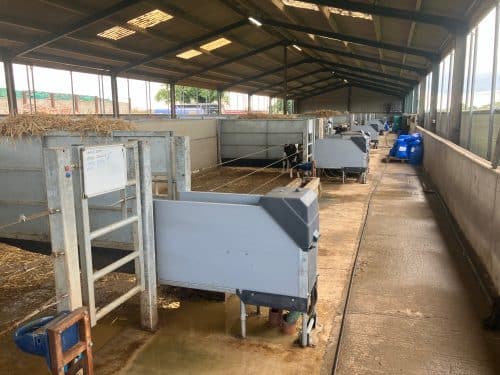
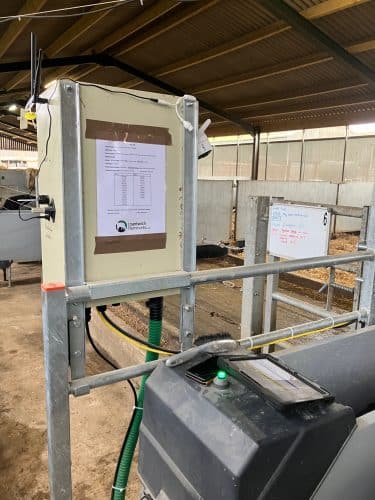
Roboscientific, winner of the 2019 Tesco Agri-TechE T-Jam award, specialise in detecting & analysing volatile organic compounds (produced by organisms such as bacteria) enabling early identification of disease. Building on their previous success with barn monitoring of pigs and chickens the current project, funded by Innovate UK, involves installing their VOC analysers on automatic calf feeders on 3 farms looked after by Nantwich Farm Vets. These analysers capture a sample of breath from individual calves as they feed and analyse the VOC ‘fingerprint’. Electronic ID tags enable the VOC pattern to be assigned to the individual calves and stored as a digital record on the farm.

Two of the Nantwich Farm Vet team visit the farms every day for 28 days where, using a published respiratory scoring system (the Wisconsin score), they will ‘score’ each calf. These scores will be added to lung scanning data and laboratory test results to then allow the Roboscientific and SRUC teams to correlate the VOC pattern with the clinical picture from the examination of the calves. The aim of the project will be to identify the difference between a ‘healthy’ VOC pattern, and the VOC pattern of a calf starting to develop respiratory disease.

“Our novel technology means that farmers will have a system of monitoring their calves for respiratory disease at this critical early stage of their lives automatically and non-invasively. By identifying calves with respiratory disease sooner, the vet and farm team will be able to implement treatment protocols sooner, leading to improved responses and enhanced calf welfare” says Angie Curtis, Sales Director for Roboscientific.

Round 1 of the project was completed in Spring 2025; in October/November 2025, the project team will return to the farms for round 2 of the trial, at which point Roboscientific hope to have a working prototype that will alert the farms to any calves that are starting to develop respiratory disease.

Business Development Manager Phil Cullinan has worked closely with the Roboscientific, SRUC and Zoetis teams to coordinate the practice’s role in the trial. “We’re ideally placed to support this type of project at the practice. Two of our vets are Personal Licence holders and our large, progressive customer base of dairy farms means we can support a wide variety of trial work”.

If anyone wants to discuss planned trial work contact Phil on philcullinan@nantwichfarmvets.co.uk
No more nasties: The government stamps its feet on baby food

Member News
The views expressed in this Member News article are the author's own and do not necessarily represent those of Agri-TechE.

The Department of Health and Social Care recently unveiled a new set of voluntary guidelines aiming to enhance the nutritional quality of commercial baby foods. These set new expectations for manufacturers, retailers, trade associations and non-governmental healthcare organisations to reduce the sugar and salt content of baby food and address misleading labelling within the next 18 months.

This initiative is the latest intervention as part of the government’s ‘Plan for Change’ and its broader 10-year plan for health. Building upon previous HFSS measures, such as the ban on junk food advertisements restrictions on fast-food outlets near schools, it indicates a growing appetite to intervene to improve the nation’s dietary health. Childhood obesity rates have doubled since the 1990s and obesity currently costs the NHS £11.4 billion per year; this is expected to increase as obese children reach adulthood. In order to shape healthy eating habits as much as possible, policymakers are turning their focus to the formative stages of children’s diets. The rationale is straightforward: if a child’s very first diet is contributing to lifelong health problems, then meaningful change must begin from the highchair.

The evidence underpinning these guidelines is clear. Researchers from the University of Leeds have found that baby foods from market leaders lack nutritional value and market their products in a misleading way. All too often, these products are sugary, watery, and breed consumer confusion with misleading slogans like ‘contains no nasties’. The guidance also advises manufacturers not to market products aimed at children under twelve months of age as ‘snacks’, with NHS guidance for parents contending that children this young do not need to eat snacks.

For manufacturers and retailers alike, the challenge will be to reformulate at pace. With the use of sweeteners prohibited for all foods aimed at children aged three and under, and a market that values both taste and convenience, they will need to find new ways to meet nutritional needs whilst maintaining trust with parental consumers.

Though billed as voluntary, these guidelines represent a clear direction of travel for the government. Public health campaigners have already indicated that these recommendations represent a further step rather than the finish line, and the government has left the door open to mandatory regulation should uptake be slow or inconsistent. For businesses, the choice is binary: act now and shape the policy conversation, or risk playing catch-up if it was to become law.

The government’s strong stance on baby food is a clear signal of intent to improve the nutritional content of the nation’s diet. It forms part of a wider push by the government to encourage healthy eating habits, improve transparency between businesses and consumers and reduce the long-term economic burden on the NHS. Whilst this will result in short-term costs to businesses, there remains a real strategic opportunity to engage in the policy conversation. Businesses that position themselves early as genuine leaders in providing nutritional baby food can win the trust of both policymakers and increasingly health-conscious parents.

  • *I have permission from the copyright holder to publish this content and images.

Nantwich Farm Vets drive growth of biological fly control on North West farms

Member News
The views expressed in this Member News article are the author's own and do not necessarily represent those of Agri-TechE.

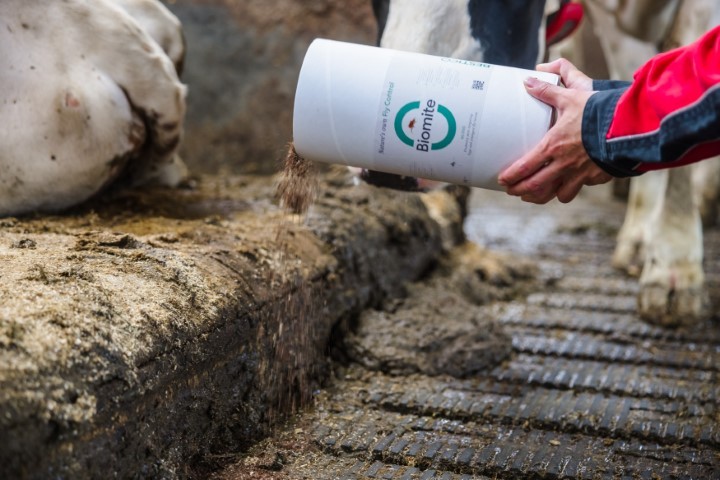
As fly populations rise with warming temperatures, UK dairy farms are increasingly turning to sustainable pest management strategies. One method gaining popularity is the use of biological fly control — specifically, the deployment of parasitic wasps, often branded as Biowasps. Additionally, parasitic flies and mites (Biofly and Biomite) are available for use in specific cases to support the Biowasp.

Biowasps are tiny, non-stinging insects that target fly pupae, breaking the breeding cycle and reducing future fly populations. They are harmless to humans and animals but deadly to flies in the pupal stage. They offer a natural, chemical-free alternative to traditional insecticides, which can lead to resistance, residue issues, and harm to non-target species including humans. On dairy farms, reducing fly burdens is essential for maintaining cow comfort, preventing disease transmission and improving milk yields.

Typically, Biowasps are introduced early in the season and applied regularly through the warmer months. They are most effective when used as part of an integrated pest management plan — combining good muck handling, dry bedding practices, and monitoring hot spots like calf pens, muck heaps and feed areas.

Trials and anecdotal reports from UK farms show that Biowasps can reduce fly populations significantly when used correctly. Their ease of use, compatibility with organic systems, and minimal environmental impact make them an increasingly attractive option for forward-thinking farms.

At Nantwich Farm Vets, anyone interested in the use of Biowasps receives an individualised site assessment and bespoke plan to cover the fly season. Packs of Biowasps (+/- Biofly/Biomite as required) are delivered every 2 weeks starting around April and running through to late September/early October.

Business Development Manager, Phil Cullinan has been working closely with Bestico and the farm team at the practice to drive growth in this area. “We’re seeing more and more of our farmers turn to biological fly control to help control the flies on their farm. People are becoming increasingly aware of the use of chemicals on-farm and are often looking to reduce them for a variety of reasons, including their own health. Bestico offer a viable alternative and we’re seeing great growth in this area”.

IMG_0844
h8c8d256efd1d23ee4c7dce9150971b26

Why is Monitoring Mineralisation Important in Agriculture?

Member News
The views expressed in this Member News article are the author's own and do not necessarily represent those of Agri-TechE.

For today’s farmer, visual assessment or an annual soil analysis alone is no longer enough – fields require more precise and continuous monitoring. One of the key processes that determines both yield and quality is soil mineralisation. By understanding how nutrients are released in the soil and when they become available to crops, fertilisation can be made smarter, more efficient, and more environmentally friendly.

What is mineralisation?

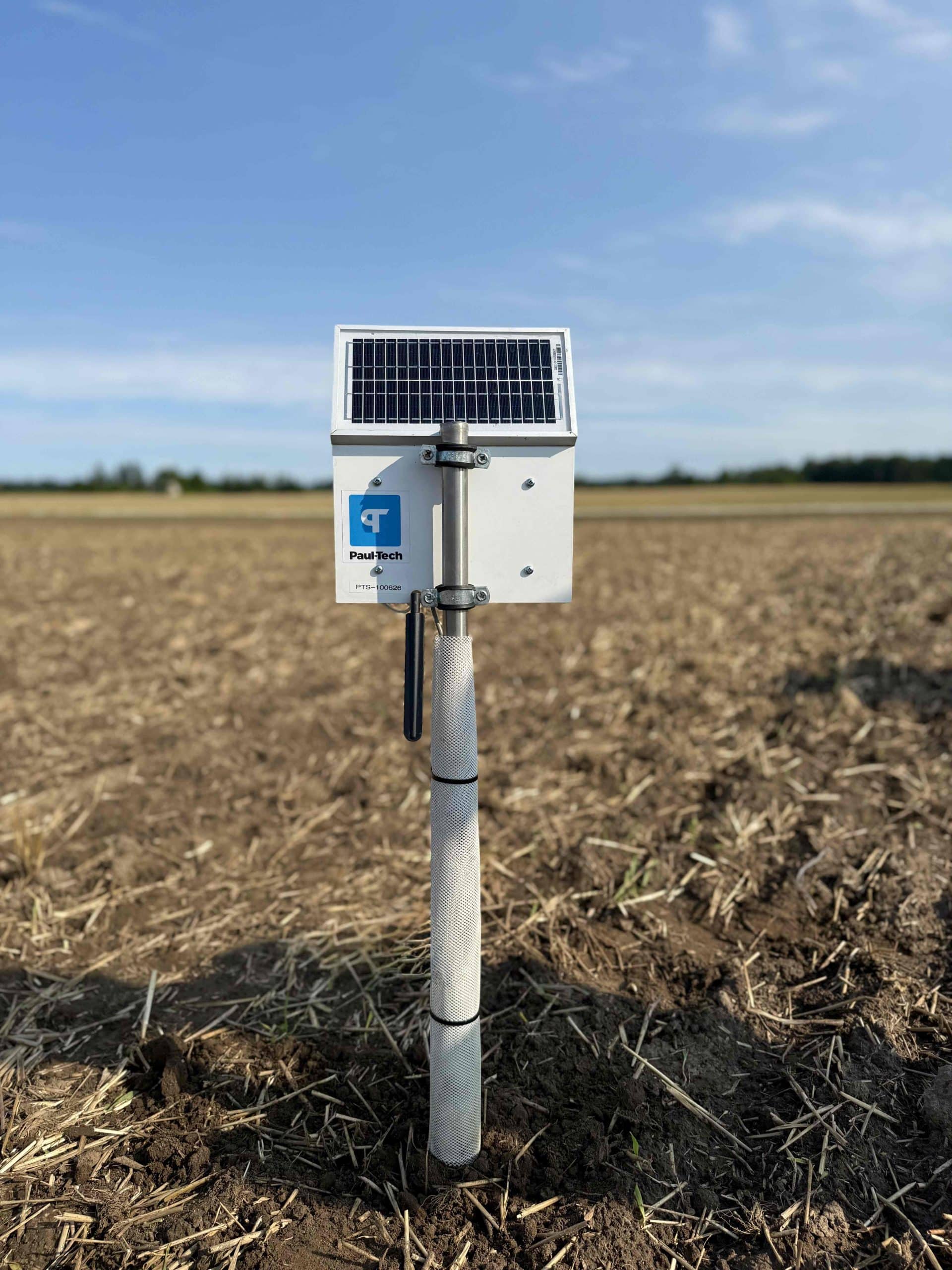
Mineralisation is a natural process in which the nutrients contained in organic matter are released into plant-available forms through the activity of soil microorganisms. The speed of mineralisation depends on several factors: temperature, moisture, soil aeration, soil pH, and the quantity and quality of organic matter. In temperate climates, mineralisation is seasonal. With Paul-Tech’s soil station, it is possible to monitor this process in real time.

For farmers, understanding mineralisation is essential as it helps optimise fertiliser use and improve soil fertility.

How does monitoring mineralisation help farmers?

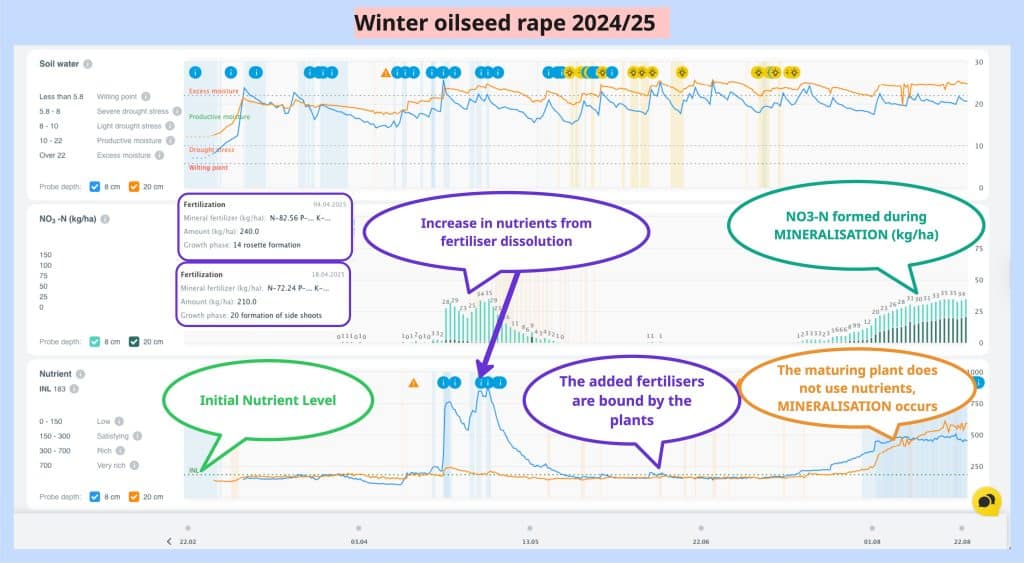
Savings can be made on fertilising autumn-sown crops by knowing the nutrient status of the soil before sowing. Paul-Tech’s soil station provides this overview through nutrient and NO₃-N graphs (see figure). Pre-sowing mineralisation appears on the graphs once crops have used up the applied fertiliser and their growth slows down. At this stage, ageing plants begin to break down. The effects of previous crop residues and manure are also visible. Under favourable temperature and moisture conditions, organic matter decomposes quickly.

The type of crop also matters: nitrogen is released rapidly from legume residues, followed by brassicas, while cereal residues take longer to break down.

If noticeable increases in nutrient levels occur before harvest, the nitrogen requirements for the next crop can be reduced significantly. Excess nitrogen can weaken winter crop survival and, if not taken up by plants, will be leached from the soil. Where spring crops follow in the rotation, the nitrogen released through mineralisation can be retained in the field with cover crops.

Summary

Monitoring the process of mineralisation is an essential tool in modern agriculture, helping farmers work more knowledgeably, efficiently, and sustainably. Paul-Tech’s soil station provides valuable support here, enabling you to track mineralisation across seasons and fields, and make decisions based on facts rather than assumptions. Real-time data gives you the confidence that your field is getting exactly what it needs – no more and no less.

👉 Want to see how Paul-Tech’s soil station can help you track mineralisation and other soil processes? Book a free demo with us, and we’ll find the right solution for your fields.

  • *I have permission from the copyright holder to publish this content and images.

Nantwich Farm Vets work with Agri-TechE member Vet Vision AI on Cheshire Dairy Farm

Member News
The views expressed in this Member News article are the author's own and do not necessarily represent those of Agri-TechE.

Nantwich Farm Vets are pioneering a new method of monitoring dairy cow comfort to support the growth & progression of their dairy clients.

Using technology from Agri-TechE member Vet Vision AI, they now offer a ground-breaking service – monitoring cows 24/7 using night vision-equipped time-lapse cameras and artificial intelligence, providing insights that would otherwise be impossible. Cow behaviour patterns can be tracked day and night, with detailed reports highlighting differences across the farm and benchmarking against other UK herds. Key metrics include cow comfort, resting times, and feeding patterns, making it easier for farmers to take meaningful action to continually improve health and well-being.

Brothers Will and Harry Dodd, of Dodleston Hall Farm near Chester, are early adopters. “We know our cows are doing really well,” says Will, “but there are a few things we’re considering changing to make them even more comfortable. Before investing tens of thousands of pounds, we want objective data to help guide where our funds will make the biggest difference. We’re really excited to see what this shows us.”

Rob George, partner at Nantwich Farm Vets and one of the farm’s main vets, adds: “Comfortable cows tend to be healthier, and healthier cows are more productive. This technology supports the win-win-win we strive for. Our practice will work closely with the Dodd family and Vet Vision AI to maximise cow health and welfare, driving the sustainability and long-term profitability of the farm.”

Business Development Manager Phil Cullinan has worked with Charlie Carslake and Liz Cresswell from Vet Vision AI to bring the opportunity to the practice. “It’s great to be able to see the progression of this from initial conversations with Charlie to now ‘going live’ on farm. We’re excited to see how this helps our clients better understand their stock behaviours and plan their investments accordingly”.

The cameras are being installed in September 2025, with results expected in October.


  • *I have permission from the copyright holder to publish this content and images.

Rethinking forages: Dairy Australia invites global collaboration on national R&D priorities

Member News
The views expressed in this Member News article are the author's own and do not necessarily represent those of Agri-TechE.

Australia’s dairy industry is taking a bold new approach to forage research. Backed by Dairy Moving Forward (DMF), the new National Dairy Forages R&D Strategy outlines a five-year vision to foster high-impact, nationally coordinated investments.

Now, Dairy Australia is calling on local and international researchers, agtech startups, and industry innovators to help co-design the next wave of forage solutions. Submissions close Thursday, 4th September, 5pm AEST.

“Our investment approach is shifting from partner-based to outcome-focused – and that means building truly collaborative, national-scale research that delivers for farmers,” says Jay Mody, Head of Research Investments at Dairy Australia.

View the opportunity here, via growag.com.

What is Dairy Moving Forward?
Dairy Moving Forward (DMF) is a long-standing collaboration between Dairy Australia, the Australian Dairy Farmers, Gardiner Foundation, and five state governments. While not a legal entity, the group plays a pivotal role in setting strategic R&D priorities for the industry and aligning cross-sector investment.

The new National Dairy Forages R&D Strategy was developed under DMF’s guidance and now enters its implementation phase, led by Dairy Australia. With four major forage investments set to conclude by FY26, the strategy provides a timely opportunity to reshape national investment across six priority areas.

Six priorities, one clear goal: impact for farmers
The Strategy outlines six key priorities — from breeding to soil-plant microbiomes. Priority 1 (National Breeding Objectives) and part of Priority 5 are being managed directly by Dairy Australia.

“Australia has the most diverse range of dairy production systems globally, which means our forage systems are equally complex,” says Dr John Penry, Dairy Australia’s Principal Scientist.

“This strategy provides a 20- to 30-year roadmap for R&D, developed through deep consultation and rigorous review.”

International collaboration is strongly encouraged, particularly in areas such as low-emissions forages.

“There’s huge opportunity to work with countries like New Zealand, Ireland, and parts of South America — particularly around low-emissions forage systems and improved digestibility,” says John.

He also identifies critical capability gaps ripe for innovation — notably remote sensing for pasture quality, and tools to measure genetic gains in forage breeding.

Building collaborative pipelines: A co-design approach
Rather than traditional funding rounds, Dairy Australia is running a structured co-design process from now through to November.

Two targeted webinars have already been held — one for research institutions, the other for the agtech sector — with submissions due by Thursday, 4th September. Proposals will be reviewed by a six-person expert panel covering pasture and crop agronomy, investment, animal nutrition, and practical farming.

Successful applicants will enter co-design workshops from September to November, supported by visibility over others’ capabilities to encourage partnership formation.

“It’s a rare opportunity — when you submit, you’ll also get access to a directory of who else is involved. That kind of visibility helps people connect and build stronger, more aligned projects,” Jay explains.

A call to agritech: Innovation must meet science
For the first time, agritech solutions have been explicitly invited into a national strategy of this scale.

Emily Samyue, Dairy Australia’s Head of Innovation, sees this as a major step forward.

“We’ve invested in agtech over the last three years, but this is the first time we’re embedding it into a core R&D strategy. There’s a real appetite for innovations that lift productivity, profitability, and sustainability — no matter where they come from,” Emily says.

Startups are encouraged to engage, especially in Priority 3: NextGen technology and management tools, but need to meet three criteria:

  • Technologies should have early validation or field trials
  • Founders must be open to co-design and feedback
  • A strong understanding of dairy industry needs is essential

“It’s about partnering with researchers to prove out the science behind your tech — not just pitching a product,” says Emily. “This is about impact, not marketing.”

Dairy Australia will offer in-kind and financial support, and can facilitate access to research farms and commercial players to help de-risk collaborations and support market entry.

Why now — and why you?
With $15 million in public and levy funding allocated annually to forages research (with another $25 million from private investment seed companies), the opportunity for real-world impact is significant.

“We’re not looking for 100 siloed projects,” says Jay. “We want consolidated, high-impact proposals that address our national priorities and deliver value for Australian farmers.”

Emily echoes this focus on impact, particularly for agritech applicants. “We’re really looking for that overlap between innovation and science,” she says. “It’s not just about a good idea — it’s about how it can be validated, scaled, and make a measurable difference for dairy farmers.”

International and cross-sector collaboration is not only welcomed — it’s essential. This is a call to those with novel solutions, strong science, and a mindset for partnership.

Get involved
Applications are open now. Submissions close Thursday, 4th September, 5pm AEST, with co-design workshops to follow. Learn more
here.


Australian producers call for practical and locally-proven agritech solutions

Member News
Agri-TechE

Australian producers are seeking agritech solutions proven to perform in Australia’s harsh and diverse environments. From horticulture to dairy farming, the message is clear: overseas innovation must be tested, tailored, and supported locally to succeed here.

When it comes to farming in Australia, no two operations look the same, and neither do their technology needs. From orchard rows in Victoria’s Yarra Valley to pasture-based dairies in the state’s southwest, producers are navigating challenges from labour shortages to climate volatility and seeking global solutions.

In September, AgriFutures growAG., Dairy Australia and Hort Innovation will co-host the Around the World – Australia webinar. Designed for UK-based researchers and innovators, a part of the Agri-TechE network, the session will explore the growAG. platform as a gateway to collaboration, highlight the key differences between the UK and Australian agrifood production, share first-hand perspectives from two Australian producers on where innovation is most needed, and how global partnerships could help.


“Labour is a big problem” – the horticulture perspective

As Production Manager at Battunga Orchards for over 21 years, Mark Trzaskoma oversees 176 planted hectares of apples, pears, and lemons across three Victorian sites in West Gippsland, about an hour and fifteen minutes southeast of Melbourne. His biggest challenge? Skilled labour.

“Labour is a big problem – especially skilled labour. Unskilled labour is becoming increasingly unskilled. Current training focuses on amenity horticulture – home gardens – not large-scale commercial operations,” Mark explains.

The business has been heavily mechanised, eliminating ladders in favour of work platforms for pruning, hand thinning, and harvesting. Revo platforms – self-propelled orchard platforms with built-in conveyor belts and bin fillers – have boosted efficiency, but not every technology trial has paid off.

In 2015, Battunga Orchards partnered with an American robotics company to test a robotic apple harvester. “It could pick colour well and achieved a 76% removal rate – the highest they’d seen – but it couldn’t get the volume. Manual pickers still do 100%,” says Mark.


Mark Trzaskoma
apples-packaging-300x200-1

Data for decisions

Automated data collection, however, is an area where technology has delivered benefits for Battunga Orchards. The Canadian-developed Vivid Machines canopy scanner now captures fruit counts, sizes, bud numbers and growth rates across 30% of orchard blocks, helping Mark make faster, more informed management decisions.

“We used to count five trees in a block; now we scan every third row. The data is more robust, and we can track fruit growth. One block’s estimate was within two or three bins of the final tally,” he says.

Mark also sees potential in advanced irrigation technology, particularly as drought tightens water supplies this year. Despite having a state-of-the-art system on one farm, moisture monitoring still relies on manual probes. “We’ve been too comfortable with our water supply – it’s not until you get bitten that you think, maybe we can do something better here.”


A call for grower identity and fit-for-purpose imports

Beyond the farm gate, Mark believes there’s a problem with global supply chain collaboration, and greater transparency is needed, including grower identity, particularly for the horticulture industry.

“It’s one of the only industries in the world where the people who do it well, aren’t known. Nobody knows the growers – who’s good and who isn’t. For export, if growers were known more, buyers could search them out,” he says, pointing to branding, traceability, and QR codes as part of the solution.

And while Australian growers are eager adopters of overseas innovation, climate and system differences often limit success. “Too often, something’s imported without proper local testing or limited backup service. We need technology that’s fit-for-purpose here, not just in a Northern Hemisphere orchard.”


Innovation needs local proof – the dairy perspective

A three-hour drive west, near Colac in southwest Victoria, Sam Simpson runs Craiglands Holsteins with her husband Mark Billing, on a fourth-generation, 450-hectare dryland dairy farm milking between 380–420 cows. The family has witnessed a century of change, from hand-feeding grain to computer-controlled collars that automatically deliver rations based on each cow’s needs.

“Technology has transformed the way we manage stock – from insight into animal health and mating behaviour to better record-keeping for the whole business,” Sam says.

Early adopters of GEA’s CowScout collar system and management software, the Billings also use genomics to improve fertility, reduce methane emissions, and diversify income through crossbreeding.


Barriers to adoption

While open to innovation, Sam is clear: new technology must provide a tangible return or meet a regulatory requirement. “If it doesn’t provide an extra income stream or more money in your pocket, it’s harder to adopt unless it’s pressed on you from a regulatory angle.”

Some promising tools remain out of reach in Victoria due to pending legislation – like virtual herding, which uses GPS-enabled collars to move cattle remotely, reducing on-farm vehicle use and improving safety. “It’s got more value than just moving stock around. There’s also the potential OHS value. If you can reduce the hours staff spend on bikes moving animals, you’re reducing risk and cost.”

Other Northern Hemisphere imports, such as robotic milking systems designed for barns, often need modification for Australia’s predominantly pasture-based systems.


AdobeStock_519511848_resized
Methane_Challenge_resized

The role of Artificial Intelligence and Automation

Sam sees huge potential in AI to help manage and utilise the plethora of farm data.

“We get so much data from different places. If AI could scan, condense, and send tailored reports directly to feed mills, semen resellers, or pasture specialists – that could be a game changer.”

With fewer people willing to take on the physical work of dairying, she believes automation and AI are the future – attracting tech-minded recruits interested in programming, robotics, and remote sensing.

Sam explains, “AI and automation won’t negate the need for labour requirements on farm, it simply changes the nature of the labour that is needed to operate various aspects of the farm business.  It’s possible that the skills needed to operate in these new areas don’t currently exist, so an education platform may need to be developed to cater to this”.


Opportunities for UK – Australia collaboration

Both producers see clear opportunities for UK innovators – but with a caveat. Whether it’s orchard scanners or dairy AI, solutions must be tailored to Australia’s climates, management systems, and regulatory context.

International partnerships already exist – Sam’s role with Dairy Australia’s DataGene involves collaborating with US, Canadian, and Irish researchers on genomic testing – but not all learnings translate directly. “In some areas, our systems are similar, but in reality, it doesn’t always translate. We need more collaboration that’s truly fit-for-purpose.”

As a part of the webinar, Agri-TechE members will also have an opportunity to speak with representatives from Australia Research and Development Corporations (RDCs), Hort Innovation and Dairy Australia. Members will learn what opportunities exist to engage with these RDCs and what topics or challenges the are looking to address.

Interested in joining the conversation? Register now for the webinar on Monday, 15 September 2025 here.

Small business, big savings: EPO Microentity Discounts

Member News
The views expressed in this Member News article are the author's own and do not necessarily represent those of Agri-TechE.

In April 2024 the European Patent Office (EPO) launched a scheme offering a 30% discount on the main patent prosecution official fees to applicants meeting a defined set of ‘micro entity’ criteria.

The initiative was designed to help smaller and more inexperienced businesses with what can be challenging costs for early stage applicants in filing a European patent application. Since before the launch of this scheme, some applicants with a residence/principal place of business in a European Patent Convention (EPC) State have been able to benefit from language-related reductions on selected fees in relation to non-EPO language filings. However this newer ‘micro entity’ initiative is advantageous in offering reductions on a wider range of fees and significantly – the nationality and domicile of applicants are irrelevant to eligibility criteria, making it particularly useful for priority filings from further afield.

The discounts are relevant to direct EP national filings, as well as international applications where the EPO is a designated or elected office.

Who is eligible?

Entities must meet the definition of a ‘micro entity’ to apply for the discounts. The EPO defines the following three categories of what a micro entity is:

  1. A ‘microenterprise’

– This is defined as a company that has:

    1. less than 10 full-time persons and;
    2. a total annual turnover and/or annual balance sheet that does not exceed EUR 2 million.
  1. A ‘natural person’

– i.e. an individual.

3. A non-profit organisation, university or public research organisation.

Further Requirements

Additionally the following must be met:

  • The same person must have filed less than five EP applications in the last five years:

–        These fee reductions are not available if five or more EP/Euro-PCT applications have been filed by the same person within the five years immediately prior to:

  • EP application (in the five years prior to date of filing)
  • Euro-PCT application (in the five years prior to date of entry into European phase)

–        An aim of this ‘filing cap’ is to support the more inexperienced users of the system, so the outcome of the previous applications is irrelevant.

  • If multiple persons are filing the application – each applicant must fulfil the required criteria.

What fees are reduced?

Once the eligibility criteria has been met, a 30% discount is available on the below fees:

  • filing fee;
  • European/Supplementary European search fee;
  • examination fee*
  • designation fee;
  • grant fee;
  • renewal fees.

For example, an examination fee of €1915.00 (correct as of 14 July 2025) would be reduced to €1340.50 euros – saving €574.50 for applicants.

*Furthermore in the case of a Euro-PCT application where the EPO acted as ISA in the international phase – then in the EP national phase, micro entities are eligible for the examination fee to be further reduced by 30% of the effective international search fee.

The risks for not meeting the eligibility criteria

Whilst a hugely useful scheme to take advantage of wherever possible, it’s important to carefully check eligibility is met before claiming – as claiming where not valid can have severe consequences on an application. However this very much depends on the scenario – examples of which are detailed below:

–            Scenario A – Changes occur that mean the applicant no longer meets eligibility criteria for the discounted fees

  • Before the discounted fee is claimed
  • Any changes affecting eligibility criteria must be relayed to the EPO.
  • After the discounted fee is claimed
  • Post-fee changes in eligibility are not taken into account for the specific fee already paid. Future fees would be affected however.

–            Scenario B – Discounted fee is claimed, but applicant does not meet micro entity criteria:

  • The application may be deemed withdrawn as it is viewed as an underpayment i.e. not meeting the legal requirements. If this does occur, depending on the situation, it may be possible to pursue further processing or reestablishment of rights to rescue the application – but it is highly recommended to avoid this scenario by taking care to assess criteria are met in advance.

–            Scenario C – Discounted fee is claimed, but applicant exceeds the filing cap limit on previous EP applications filed:

  • An applicant will be given two months from the date of an invitation by the EPO to rectify the fee difference. The EPO carries out random checks while the application is still pending.
  • Re: renewal fees – the usual six month grace period would apply.

Further information about these scenarios and others can be found on the EPO website here: (OJ EPO 2024, A8 – Notice from the European Patent Office dated 25 January 2024 concerning fee-related support measures for small entities).

Interested in filing an EP application? Or already filed an EP application and not claimed the discount?

If an EP application has already been filed but micro entity status eligibility wasn’t declared on filing, there may still be time to take advantage of the discounts provided by this scheme. You can still make a declaration after an application is filed and benefit from the discount on any future eligible fees that have not yet been paid – ask the attorneys at ip21 for assistance and we’ll be pleased to help.

The EPO may request evidence where there is any reasonable doubt on eligibility so applicants should be prepared to provide this. As a matter of caution and efficiency, we are recommending filing evidence with the declaration where possible.

Here at ip21, we’ve successfully claimed this discount for a number of clients already and we’ll be pleased to help with the same service on your behalf. We’d be happy to offer a competitive estimate to help you get the maximum saving on official fees wherever possible.

If you need more information on anything in this article, don’t hesitate to get in touch at info@ip21.com or via our contact page for more information on us and our services as UK and European patent and trade mark attorneys.

Further reading on information provided in the article above can be found in the following EPO resources:

Written by Rachel Daniel for ip21

July 2025


  • *I have permission from the copyright holder to publish this content and images.

SugaROx lands £1 million boost to accelerate field testing biostimulant research

Member News
The views expressed in this Member News article are the author's own and do not necessarily represent those of Agri-TechE.

SugaROx has secured £1million in additional funding following its latest seed round extension.

£400,000 of the strategic investment has been secured from a global player in the fertiliser industry, The Mosaic Company, alongside continued backing from  existing  UK-based angel investors and sustainable growth-focused investment funds the UK Innovation & Science Seed Fund (managed by Future Planet Capital) and Regenerate Ventures, who contributed a further £600,000.

Biostimulants are one of the fastest growing crop input sectors, with an estimated 11% compound annual growth rate (CAGR). Our £1 million extension follows a recent £2.4 million grant awarded from the UK’s national innovation agency, Innovate UK, to upscale manufacturing of our first active ingredient Trehalose-6-Phosphate (T6P).

Our T6P biostimulant boosts the yields and resilience of crops by inhibiting SnRK1, an enzyme that signals energy scarcity in the plant. Safety tests were completed in early 2024, confirming a promising regulatory outlook for the proprietary T6P, and led potential go-to-market partners to request samples for field trials.

We are working to launch our T6P wheat biostimulant in the UK market in 2027 and in the EU in 2028. This year we launched trials in soybean and maize with a view to enter the US and Brazilian markets shortly after.

Mark Robbins
Mark Robbins
CEO of SugaROx

Commenting on the additional £1million raised, Mark Robbins, our CEO, said: “In response to increasing demand for product samples, we decided to accelerate our manufacturing timeline, fast‑tracking the shift from in‑house lab production to a pilot facility. The Innovate UK grant and additional investment allows us to do that”.

“Our existing investors were quick to subscribe to the seed round extension, which we are delighted to complete with Mosaic as a strategic partner. We have the ambition to transform the biostimulants industry with science-based solutions – something that is only achievable in collaboration with other players”.

Explaining the benefits of Mosaic’s investment, Dr Cara Griffiths our CTO and co-founder, added: “With Mosaic we gain access to an established network of trial sites for validation of our first product in the US at scale. Mosaic will also provide us with access to TruResponse®, a digital platform to visualise field results, which will be extremely valuable for our research.”

National award shortlisting for Greenstalk founder

Member News
The views expressed in this Member News article are the author's own and do not necessarily represent those of Agri-TechE.

Greenstalk’s founder David Aarons has been shortlisted for a prestigious national award for his work transforming farms by making decades-old equipment digitally “smart”.

David is a finalist in the Agri-tech Innovator of the Year category of the British Farming Awards.

The software entrepreneur launched Greenstalk as a result of conversations with friends in the farming community about the challenges and expense of upgrading to digital farming practices.

It led to him working with farms in Norfolk and Suffolk to monitor existing machinery ranging from weighbridges to production lines. This means their output can be relayed on Greenstalk’s software platform via a mobile device, saving farmers many thousands of pounds and giving them all the information they need at their fingertips.

Greenstalk’s clients include vegetable producer Frederick Hiam whose site in Brandon now has sensors monitoring power output, QR codes and smart ticketing tracking produce, and a digital geofence created around its fuel tanks using the existing CCTV cameras to protect against fuel theft. An old weighbridge has been retro-fitted with sensors so it can photograph and record the details of vehicles arriving on site and analyse their load.

At Raveningham Estate, monitors have been retrofitted to irrigation pumps and grain stores to record power usage via Greenstalk’s web-based software platform.

David said: “I’m thrilled to be recognised for the work we’ve done together so far. I don’t believe in discarding existing machinery when it can be made ‘intelligent’ at a fraction of the cost. Our innovative approach has enabled us to apply our skills to the agri-tech sector and we want to do that by building solutions from the ground up, by listening to farmers’ needs and adapting Greenstalk technology to suit. It helps farmers to manage their operations more efficiently and make data-driven decisions, which is essential for tackling the challenges that today’s farming community face.”

The British Farming Awards will be held at Birmingham NEC in October.


  • *I have permission from the copyright holder to publish this content and images.

What can you be doing to prepare for the next parliamentary term?

Member News
The views expressed in this Member News article are the author's own and do not necessarily represent those of Agri-TechE.

MPs might be on their summer break but what can you be doing to prepare for the next parliamentary term?

August in Westminster is a quieter time. Government grinds to a halt as MPs return home to continue business back in their elected constituencies. This downtime in the political calendar grants companies a rare breathing space – and the opportunity to turn attentions to resetting government relations plans and preparing for the parliamentary year ahead.

Before parliament returns on 1 September, businesses should be taking the time to think about how to best prepare for the government’s second year in office. Although parliament is in recess, there’s still plenty we can be getting on with to develop an effective strategy and work towards policy objectives. From strengthening stakeholder engagement strategies to assessing regulatory risk, the planning taken now will make the crucial difference between scrambling to adapt to policy announcements and confidently navigating the next wave of policy decisions.

So, what should businesses be thinking about during these summer months?

Engaging with the civil service

While parliament draws to a close over the summer, the civil service remains central to ensuring the smooth operation of public services. Officials continue to work on the implementation of government policies, running consultations, and preparing for the legislative activity that is set to resume in the autumn.

For businesses, the absence of parliamentary activity offers a valuable opportunity to take stock of their existing relationships with civil servants, assess the strength of those channels of communication and identify where they could be expanded. Civil servants tend to be a bit quieter over summer too, so it’s the perfect time to catch up over a coffee in preparation for the year ahead.

Monitoring Parliamentary Committees

Similarly to the civil service, parliamentary committees continue their business while MPs are away. Staff continue to work behind the scenes, launching calls for evidence and meeting businesses in their sectors of interest. In recent weeks, we’ve seen a flurry of committee activity affecting the agri-tech space.

The Science, Innovation and Technology Committee have launched an inquiry into innovation and global food security, actively seeking to hear from agri-tech businesses about how new agricultural practices can catalyse food production. Each Committee’s reports, which are written using the evidence submitted to the inquiry, land directly on ministers’ desks – offering businesses the space to communicate exactly what they need from government to succeed.

Can we also add the health one here? One of the focuses of the health one is healthy food and many of the agri-tech businesses focus on improving nutritional content e.g. precision breeding.

Preparing for Party Conferences

The annual party conferences mark a significant moment in the political calendar. Taking place over September and October, each conference allows parties to set their political agenda and rally support from members and industry. For Labour as the governing party, this means actively listening to and engaging with businesses of all sizes to better understand their priorities, concerns, and capacity to contribute to the party’s core objective of economic growth. With agri-tech flagged as a frontier industry within the government’s industrial strategy, the party conference will provide a useful avenue for businesses within the sector to raise their profile with government.

For opposition parties, conferences are a critical space for developing and refining alternative policies that can challenge the government’s agenda. Without the responsibility of running departments day-to-day, opposition parties can use this time to strategise ideas that could credibly form the backbone of their next election manifesto.

Meeting with MPs

Although MPs are back in their constituencies during recess, they are not on officially out of office. During this time MPs turn their attentions to local priorities, such as meeting constituents, visiting community projects and engaging with businesses in their area. Businesses, and especially those developing cutting edge agricultural technology, should think about inviting MPs to visit their sites to see first-hand innovation in the sector. Demonstrating tangible contributions to local employment, food security, environmental sustainability, or economic growth can help MPs see how your business aligns with their constituents’ interests and supports the government’s wider priorities.

Building and strengthening relations with MPs is at the core of effective political engagement. An MP who understands your business and believes in its potential can be a powerful advocate by championing your work in parliament or connecting you with relevant ministers and officials.

Although the political pace of the parliamentary summer recess might feel slower, this is no time for businesses to wind down. Whether through strengthening relationships with civil servants, preparing for the party conference season, or engaging directly with MPs in their constituencies, the weeks remaining weeks until 1 September grant businesses the time to reassess their political engagement. Using this time productively will enable businesses to position themselves as constructive partners to government, trusted to feed into the conversations that will shape Labour’s next year in office and beyond.


  • *I have permission from the copyright holder to publish this content and images.

Paul Johnson Launches Populi Consulting to Drive People-First Growth in Agri and Amenity Sectors

Member News
The views expressed in this Member News article are the author's own and do not necessarily represent those of Agri-TechE.

After more than three decades leading teams through growth, restructuring, negotiation, and cultural change in the agri and amenity sectors, Paul Johnson has launched Populi Consulting, a specialist consultancy focused on people-first business growth.

Populi is built on a simple belief: Sustainable business success starts with people, not just process. From succession planning and leadership transitions to culture alignment and operational change, Paul works alongside leaders to ensure change sticks, practically, honestly, and with care. “I’ve seen what happens when people are overlooked in change, and I’ve seen what’s possible when they’re at the heart of it,” says Paul Johnson, Founder and Director of Populi. “Populi exists to help leaders unlock lasting performance by aligning their people, culture, and strategy.”

Populi provides hands-on, relationship-led consultancy to help agri and amenity businesses navigate:

  • Aligning People & Culture – Turning values into behaviours and building high-performance cultures.
  • Navigating Change & Transition – Supporting growth, succession, MBOs, and restructuring without losing people or momentum.
  • Strengthening Leadership & Clarity – Developing leaders at all levels to deliver with confidence and alignment.
  • Insight & Decision Support – Bringing sector-specific experience and operational clarity to complex decisions.

Paul’s sector specialism is rooted in board-level leadership experience within agriculture supply chains, amenity service providers, and field-based teams. He understands:

  • The realities of peak season pressures.
  • The importance of relationships in distributed teams.
  • The cultural nuances and commercial demands of family-owned, co-operative, and SME businesses.

Populi Consulting works with agri and amenity businesses facing change or growth. The consultancy’s approach is instinctive, collaborative, and grounded in lived leadership experience, not top-down frameworks.

Paul Johnson: paul@populiconsulting.co.uk

Website: www.populiconsulting.co.uk

LinkedIn: Paul Johnson


  • *I have permission from the copyright holder to publish this content and images.