Patenting, Trademarks, Copyright, Trade Secrets...
In the next installment of our micro-learning series, we’ll explore potential legal solutions to help you keep your ideas safe and sound.

Trust & Transformation – takeaways from REAP 2024

Agri-TechE Article
Agri-TechE

Stay ahead of the curve. Full of the latest agri-tech insights, the REAP 2024 Report provides you with current industry trends, research, and technology to guide your decisions both now and in the future.

Inside, you’ll find:

  • Big ideas: Dr. Elliott Grant’s predictions on how AI will transform farming over the next decade.
  • Farmer insights: What regenerative farmers think about tech adoption—and its real impact on their businesses.
  • Innovation highlights: Start-ups tackling sustainability including a new coffee alternative that tackles CO₂ and water issues head-on, plus what to do with a broccoli stem!
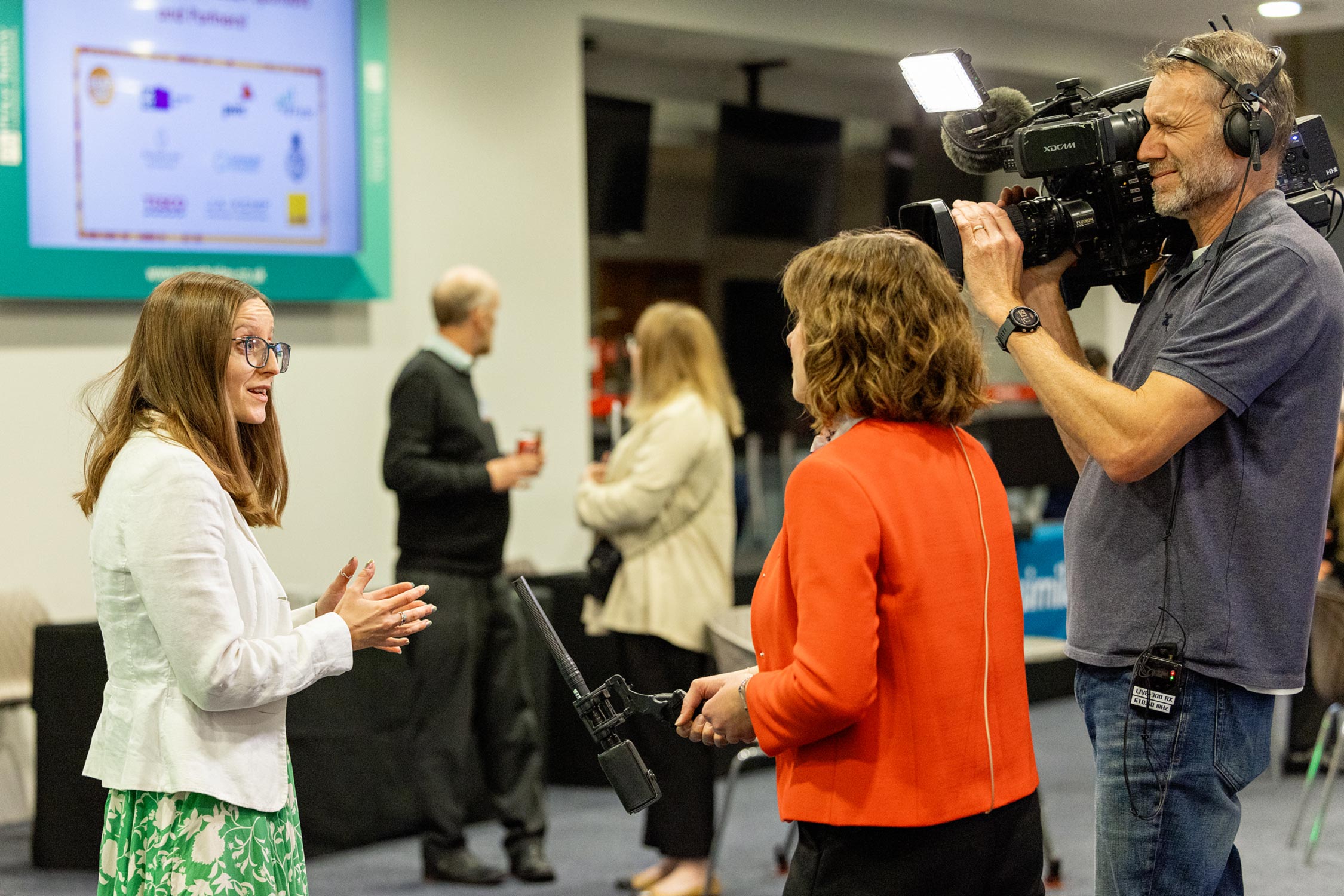
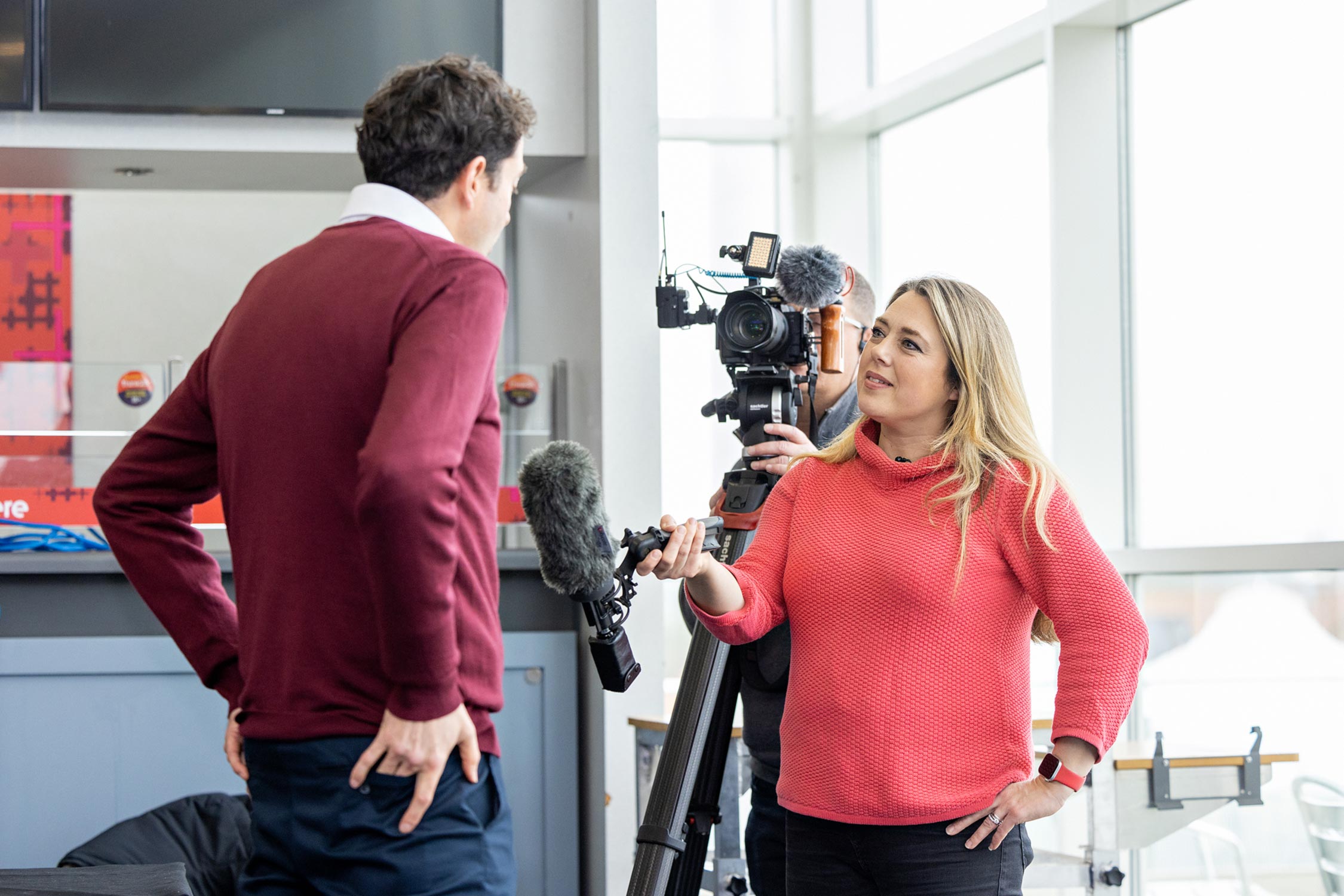
  • Behind the scenes: Technology exhibits that caught the media’s attention, featured on live TV.

Don’t miss the highlights and exclusive takeaways – read the full REAP Report 2024 in PDF, or check it out below!


And, a date is set!

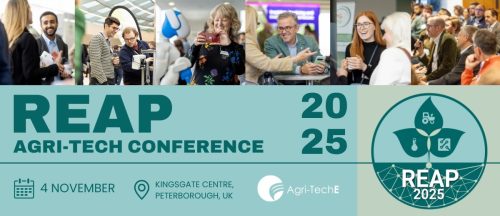
REAP 2025 will take place on Tuesday 4 November, and, we’re changing venues…

Come join us, tickets have just gone ON SALE!

The Farmers Weekly Podcast live from REAP

Agri-TechE Article
Agri-TechE

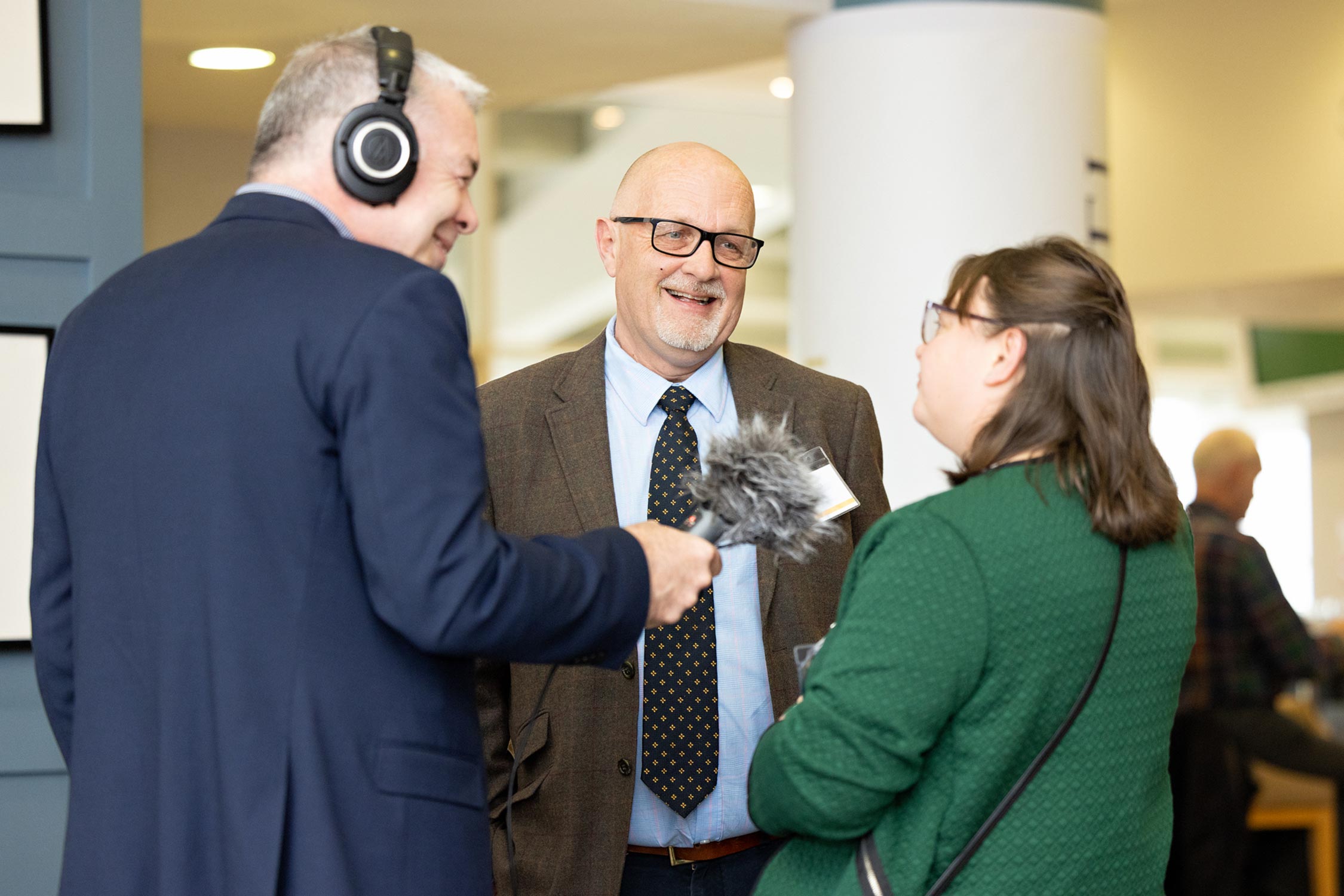
The Farmers Weekly Podcast has dedicated its final episode of 2024 to REAP, our flagship agri-tech conference: From artificial insemination to artificial intelligence ~ how agri-tech is shaping the future of farming.

Recorded live at the event, the episode features key highlights from the conference and interviews with world-class speakers, innovative start-ups, and forward-thinking farmers to explore how technologies such as artificial intelligence and advanced data science are reshaping agriculture.

Host Johann Tasker speaks with a diverse line-up of contributors who discuss:

  • Artifical intelligence in farming – from Silicon Valley to Suffolk, Elliott Grant, delivered a captivating presentation on AI’s practical applications and potential.
  • A UK start-up’s mission to revolutionise coffee production – Anna-Sophie Deetjen of Morrow shares how they’re developing an alternative coffee brewed entirely from homegrown ingredients.
  • A practical, accessible tool to support Sustainable Farming Incentive (SFI) applications, introduced by Tom Scrope of Soil Benchmark.
  • Game-changing innovation in livestock breeding – Dyneval’s advanced semen analysis technology can increase conception rates by up to 8%.
  • Big-picture insights from industry giants – Bayer’s Phil Taylor discusses partnerships that combine crop protection and data science, while John Deere’s Mark James highlights the importance of standardisation and interoperability in delivering value across the supply chain.
  • The future of broccoli is revealed by Mark Evans of UPP, who also reflects on the networking opportunities REAP provided, including fruitful conversations with a leading supermarket, FMCG company, and seed manufacturer.
  • On-the-ground perspectives from farmers, including Helen Reeve, a cattle breeder and direct-to-consumer beef farmer, and Nick Sheppard, an arable and root crop farmer (growing beet for British Sugar and maize for an on-site AD plant), who provide honest reflections on their real-world experiences of agri-tech.

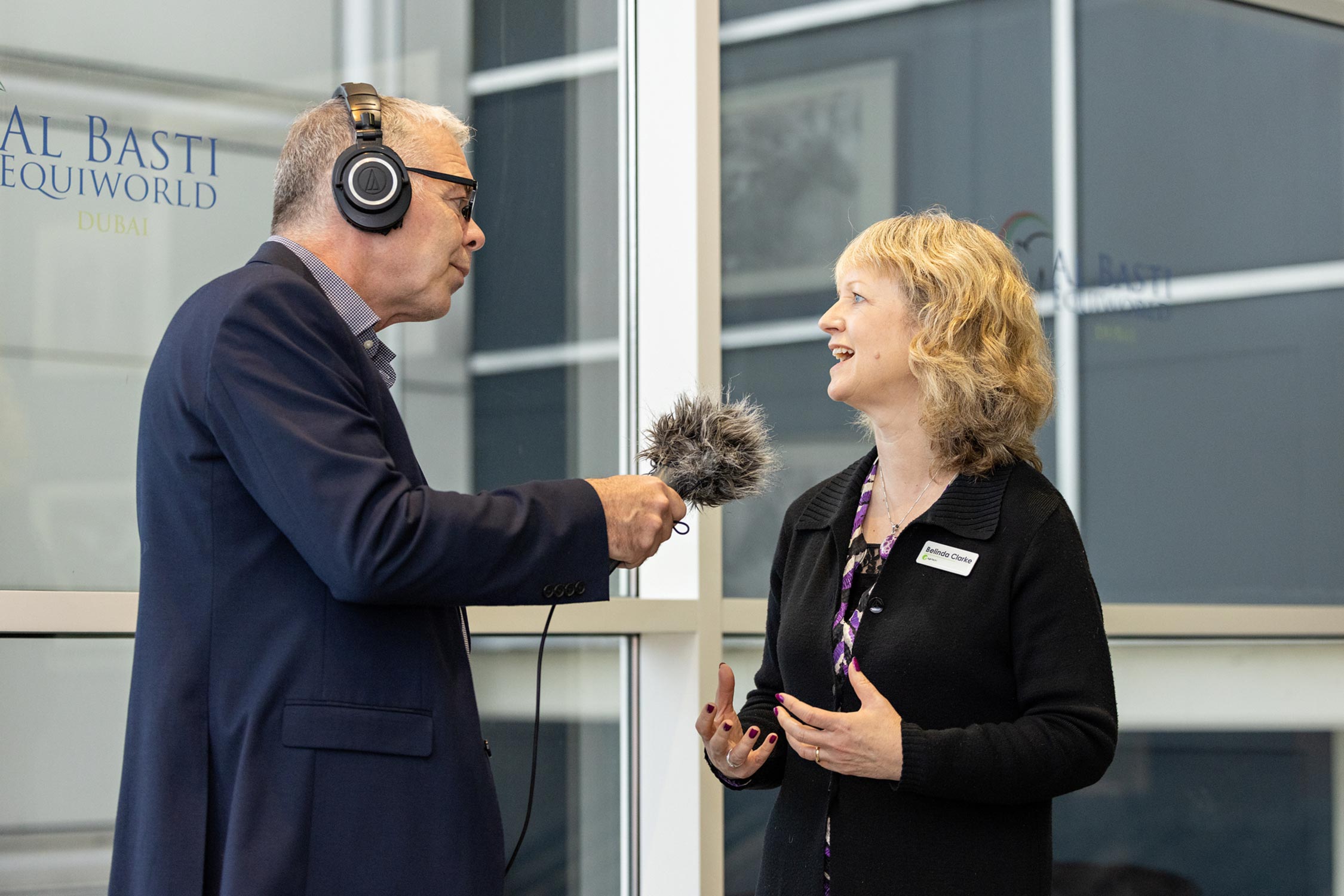
Plus, Dr. Belinda Clarke OBE, Agri-TechE ’s Director, explains why events like REAP are vital for fostering collaboration between farmers and technologists; to ensure innovation addresses the real needs of agriculture by focusing on what tech should do to benefit farmers and agriculture, without getting too carried away with what it can do.

You can listen to the episode on your preferred platform:

REAP24 Farmers Weekly Press Helen Reeve Nick Shepphard
REAP24 Farmers Weekly Press Belinda Clarke

For more insights, visit our Knowledge Hub, or consider subscribing to our newsletter for regular updates on agri-tech innovation, our other upcoming events, and REAP 2025 news.

Looking to get involved? Discover the benefits of Agri-TechE membership.

Record attendance for the 11th REAP Agri-TechE Conference

Agri-TechE Article
Agri-TechE

Optimise one or manage many?

Attendees of REAP 2024 learned that, in the future, both might be possible with new technologies powered by artificial intelligence.

Farmers, researchers, tech developers and members of the agriculture ecosystem gathered in record numbers for the REAP Conference on November 6th. Interest in the event extended to the press, with BBC and ITV news reporting from REAP alongside specialist agricultural journalists.

C0983_310
C0983_163

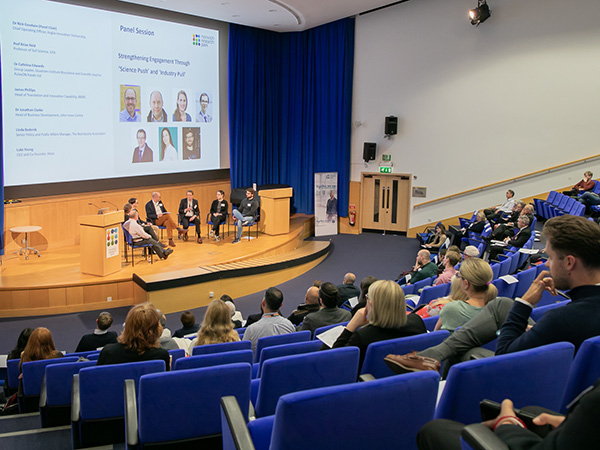
The stellar line-up of speakers stimulated much discussion about the industry’s future direction and how AI will power this, led by REAP’s keynote session.

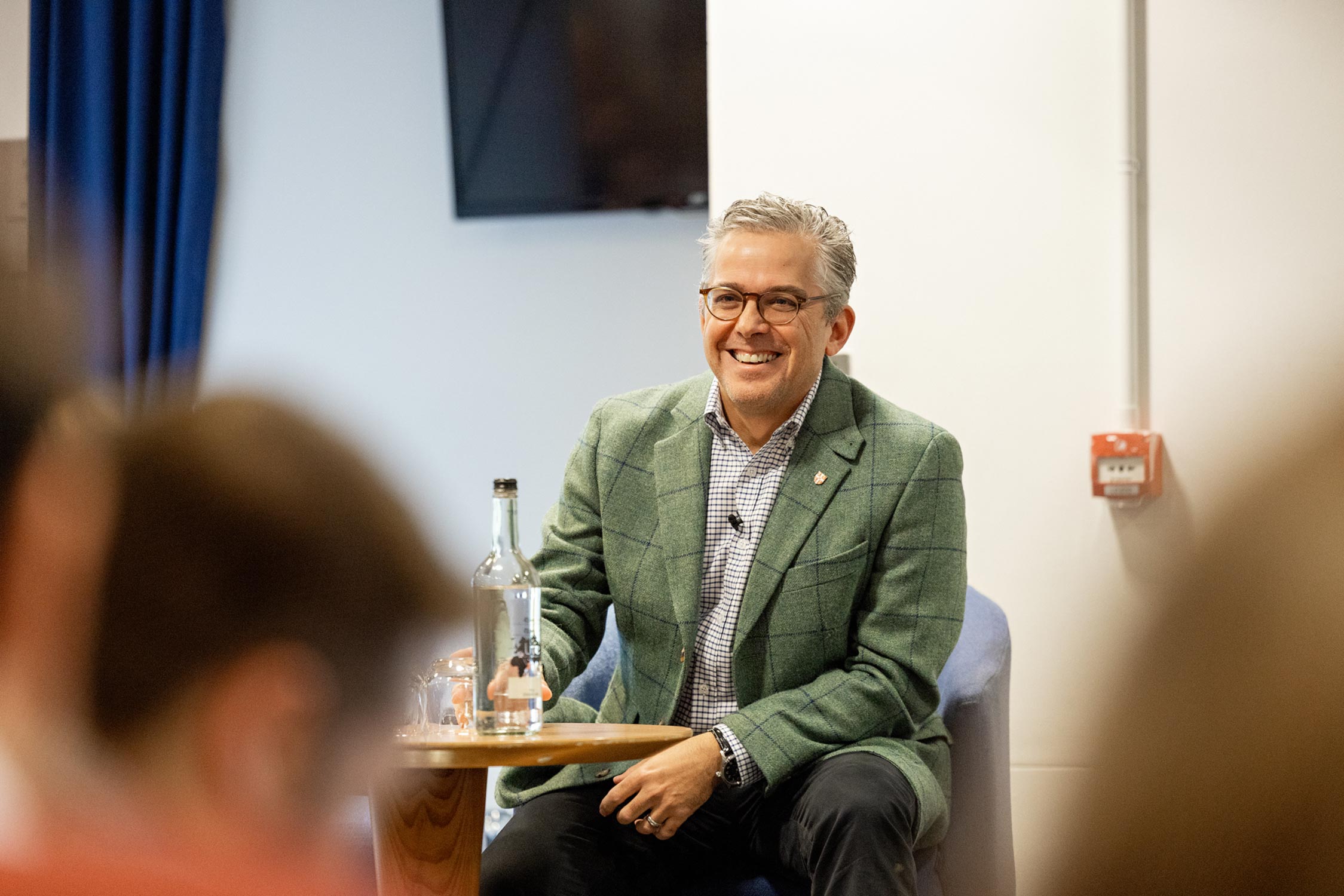
Substitute, augment and transform is how keynote speaker Dr Elliott Grant summarised the opportunities for AI in agriculture. He likened AI’s current position to the internet in 1997, where it is apparent that it will be a significant development, but the transformational change it will deliver in the future is unimaginable.

Repetitive tasks, especially digital ones, will be the first to be substituted by AI, predicted Dr Grant. This has already begun and can be as simple as using a chatbot to help with advanced information searching or written communication.

Further to substitution is augmentation, where AI will improve tasks carried out by humans. Dr Grant cited crop plot assessments for disease levels as an example of this. Work he conducted at Mineral AI used robots powered by AI to scan wheat plots for levels of rust infection, which were found to be quicker and more accurate than human assessments.

Dr Grant predicted that the transformational change in agriculture from AI will come within the next ten years. It isn’t easy to visualise this in 2024, but it is expected to include automation and super-charged data processing.

Dr Elliott Grant
Dr Elliott Grant

Dr Elliott Grant’s top three tips to prepare for AI in agriculture

  1. Start getting familiar with AI chatbots such as ChatGPT or Gemini.
  2. The best time to start collecting data is yesterday, and the second best time is today.
  3. No single company, government or country can deliver the benefits from AI alone. It will take an ecosystem to come together and make it happen.

The following session on supply chains assembled representatives from three industry heavyweights: Bayer, John Deere and Unilever. They discussed how collaboration can drive innovation.

Cambridgeshire farmer Tom Pearson then quizzed scientists on their findings from the latest farmer-focused research in the Emerging Agri-Tech: Research in Practice session.

To close the day was the Start-up Showcase, with the closely guarded line-up finally unveiled. Nicole Sadd, CEO of Rothamsted Enterprises, probed Dr Boris Breiner from Lambda Agri about what the firm was looking for following the Start-up Showcase – his response, a shout-out to the crowd seeking a company able to manufacture chemicals at scale, elicited a live, successful match!

Anna Sophie Deetjen, co-founder of Morrow, addressed sustainability and food security with coffee produced from alternative sources. She said coffee has some of the worst CO2 and water credentials of any food ingredient, and the UK imports £1.2bn of coffee each year. Their innovation uses UK-grown ingredients such as faba beans or barley and upcycled ingredients such as pips and malts.

Outside the sessions, the exhibition attracted significant interest from attendees and journalists – including a dedicated Farmers Weekly Podcast episode – with technology from Extend Robotics, Living Optics, and Versatile RobotX featured on TV broadcast reports.

The positivity and thought-provoking speakers brought the delegation together and stimulated countless networking opportunities. Indeed, REAP closed with the last remaining guests of the networking session asked to fill in as the backdrop for the second live news broadcast of the evening.


Did you miss out on exclusive access to the Back to the Future report at REAP?

Attendees of REAP 2024 were treated to a pre-release of the Agri-TechE Back to the Future report.

The report marks 10 years of Agri-TechE and provides a 360-degree overview of what is needed to maintain the momentum from the 2013 Agri-TechE Strategy. It reflects on both the successes and current challenges agri-tech faces.

Members of Agri-TechE gained early access of the Report, with official release on Friday 22 November. To view the Back to the Future Report, click here.

REAP 2024’s eight picks for the future of farming: the start-up showcase is revealed

Agri-TechE Article
Agri-TechE

Each year, the Start-up Showcase at REAP celebrates exciting new technology companies in the sector.

Companies presenting at the Start-up Showcase have gone on to raise hundreds of millions of pounds in funding, and several have become established parts of the agricultural ecosystem in the UK and abroad.

While the line-up remains a closely-guarded secret until the big day, 2024’s cohort offers ground-breaking innovations in food technology, protected crops, animal husbandry, and the fruit and horticulture sectors.


We are pleased to reveal our eight Start-ups for 2024.


Versatile RobotX

Versatile RobotX creates innovative and adaptable robotic platforms designed to tackle labour shortages and help solve labour security, food security, and climate sustainability challenges.

Dr Vishuu Mohan says the focus is to bring versatility to agri robotics, automating the high-value, manual labour-intensive jobs while being easily adaptable to crop types like strawberries, lettuce, tomatoes, onions and growing environments.

Their two flagship products include a mobile autonomous strawberry harvesting platform, successfully trailed in traditional polytunnels and at the UK’s first vertical growing system for soft fruit at Wilkin & Son’s Tiptree.

The same robotic platform and underlying perception-action-decision-making software have been adapted to other crops and tasks – for example, seedling transplantation, float handling and lettuce harvesting.

With £4m in DEFRA funding over the last four years, they are developing a second-generation, low-cost prototype to make agri-tech accessible to smaller farms.

The company’s ABC approach (Adaptive, Biomimetic, Collaborative) offers precision and speed, potentially saving over £200k in annual labour costs with just two robots, each working 7,000 hours annually. As they work to reduce costs further, the next generation of their strawberry picker is expected to launch soon.

Dr Mohan says, “We aim to bring versatility to the industry with low-cost, multipurpose robots that replicate tasks where there’s a critical labour shortage. With challenges in food security, energy, and climate, we’re in the right place at the right time to harness robotics and AI to make a positive difference beyond lab prototypes.”

1730991803412
C0983_202

Extend Robotics

“Labour without limits. Cutting-edge engineering, come rain or shine.”

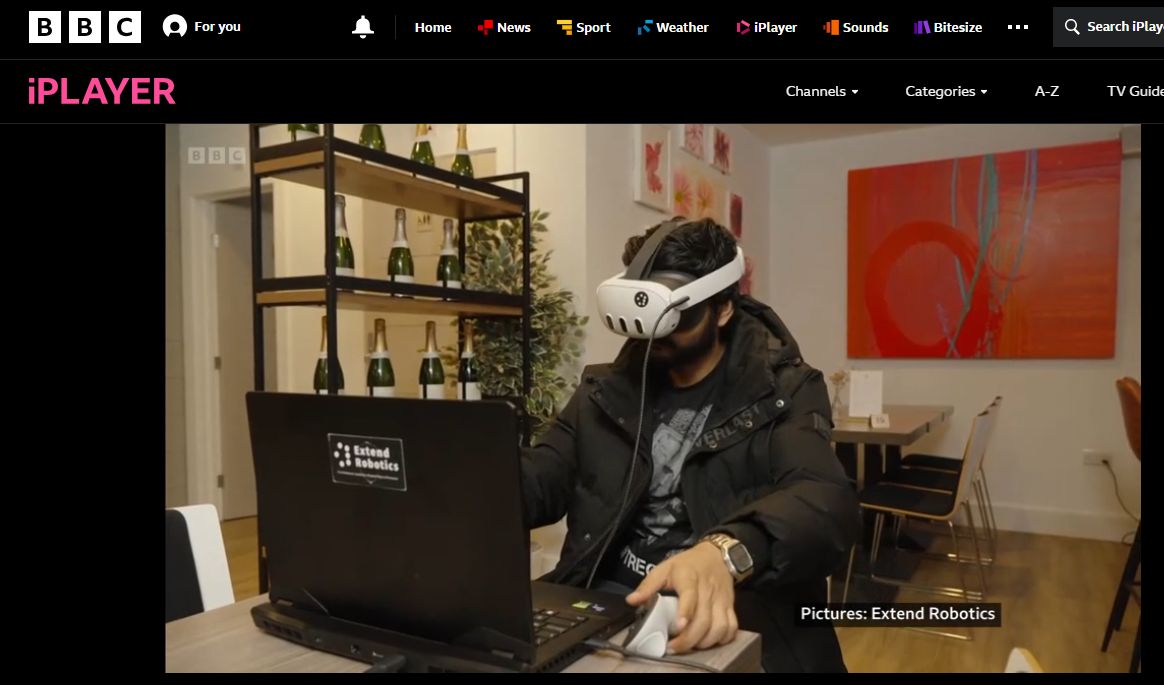
This is how Azmat Hossain, business development director for Extend Robotics, summarises their pioneering immersive augmented reality (AR) software technology that allows operators to remotely supervise, control and train robots to work on farms semi-autonomously.

Designed to tackle the persistent shortage of skilled labour, their scalable digital solution enables workers across the globe to log in and operate robots on farms remotely.

Already being deployed in a vineyard in Eastern England as part of Innovate UK funded Future Farming project, these robots can handle automated tasks, with skilled workers stepping in for those that require human expertise. The aim is to provide farms with a scalable solution that enables them to become fully digital and automated, helping farmers avoid a re-hiring process every harvest.

Through their patented compression and data streaming engine, their system can use standard internet connection and off-the-shelf accessible and affordable hardware. Extend Robotics partners with leading manufacturers, ensuring flexibility in robotic equipment choices.

With plans to expand into crops like tomatoes and strawberries, they are actively seeking farm collaborations to bring their vision of a human-robot workforce to life. They aim to deliver 24/7 automation for farms, ensuring year-round productivity and overcoming labour challenges through accessible technology.

C0983_218
1730991797491

Lambda Agri

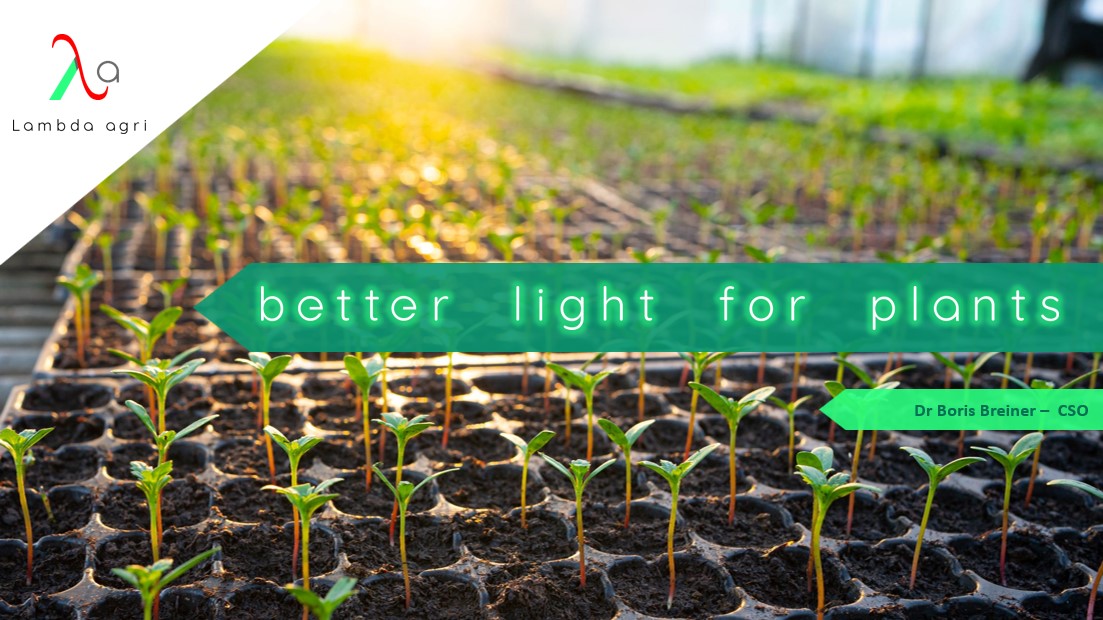
Based in Cambridge, Lambda Agri is developing innovative greenhouse solutions to optimise crop yields by enhancing the sun’s natural rays.

Dr Boris Breiner, chief scientific officer for Lambda Agri, explains how the technology alters the spectral composition of sunlight by converting high-energy UV light into lower-energy red light, in a process known as ‘luminescent downshifting’. This is highly effective for photosynthetic turnover as it boosts plant productivity, acting as a mechanism aiding crops to better harness Earth’s most potent resource, says Boris.

Their current project focuses on bringing a spray-on coating to market, which is applied to the exterior of greenhouses “much like painting a garden fence,” adds Boris. Early trials at Cranfield University showed promising results: basil crops achieved a 10% yield increase, while strawberries saw a 5% rise in sweetness.

Designed to last up to five years after it is applied, Lambda Agri is conducting accelerated lifetime testing to refine the product further.

The team is targeting a commercial launch within the next 12 months. They aim to offer cost-effective, environmentally friendly solutions that improve yields across various crops without causing harm to the ecosystem.

lambda agri slide
C0983_198

Plant Metrics

Plant Metrics is at the forefront of plant health monitoring with its SAP sensor technology, which measures ionic flow within plants and translates it into voltage readings.

The data reveals critical insights into plant water stress, nutritional stress, and certain disease states.

“Our aim is to give farmers, growers, and agronomists another layer of information previously unavailable for day-to-day farming operations,” says Dr Daniel Holland of Plant Metrics.

Current research includes trials in the USA, Israel, Canada, and the UK, with irrigation trials helping determine voltage levels that indicate drought. In internal trials, the technology detected signs of water stress before any phenotypes appeared on the plants.

Plant Metrics is also developing ionic-specific sensors to provide precise macro and micro nutrient insights, potentially replacing costly, time-consuming tissue testing. These ionic-specific sensors will also be used to explore early onset Huanglongbing disease detection in Citrus Trees in the USA by monitoring iron concentrations.

Over the New Year and into 2025, the team plans to launch a wireless setup for field trials, enabling more work to move out of the lab and into the field.

Morrow

With 3 billion cups of coffee consumed daily and demand skyrocketing, supply for traditional coffee is under pressure due to growers in the equatorial ‘coffee belt’ struggling to maintain yields amongst soaring costs and increasing climate impacts.

Founded in 2023, Morrow is crafting coffee without coffee beans by upcycling ingredients like fruit pips, peels and seeds and using locally grown crops and plants sourced from regenerative farms. “It smells, tastes, and feels like coffee as we replicate the aroma and flavour of a traditional brew,” says Anna Sophie Deetjen, co-founder of Morrow.

By partnering with maltsters, growers, and distributors, Morrow is committed to meeting the demand for sustainable, locally sourced coffee alternatives while proactively combating what they foresee as a looming “coffee deficit.”

Working with Dr Ian Fisk as technical director, the team applies world-leading flavour chemistry, data-driven research and biotransformation to address the environmental challenges of traditional coffee production.

Morrow is in the final stages of product development and is planning to launch across coffee shops, food service, and direct-to-consumer channels this year. They are developing naturally caffeine-free products and exploring instant coffee blends for future release.

C0983_209
C0983_241

Fruit Cast

Accurate yield forecasting is a significant challenge for fruit growers, as even small errors can disrupt supply chain commitments and operational planning. With precise data, growers can avoid miscalculating the productivity of their harvests, which may lead to financial losses and inefficiencies.

Fruit Cast offers a scalable solution to this issue. They analyse millions of images using advanced AI and camera technology to predict fruit yields. This allows growers to confidently forecast when and how much fruit will be ready for harvest, providing reliable and critical data for reporting to supply chains and labour planning.

The delivery-agnostic cameras are designed to attach to various farm vehicles, collecting data that is transformed into clear, actionable strategies through refined software architecture.

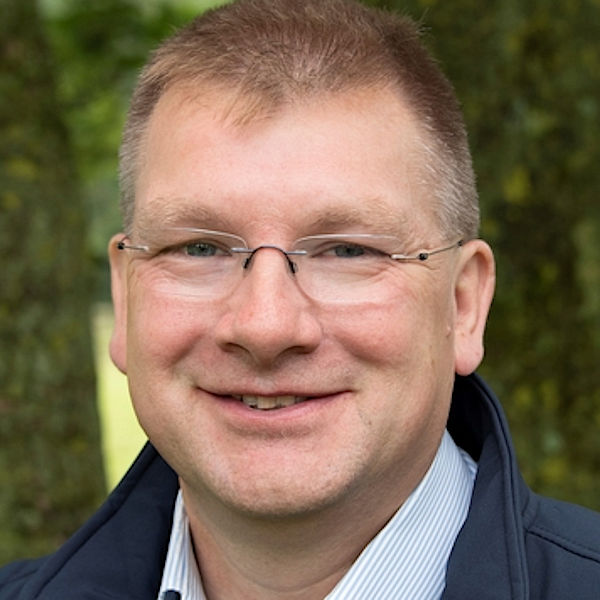
Currently in commercial pilot with three significant growers and supported by £3M of investment, Fruit Cast’s subscription-based service is cost-effective and adaptable to various growing environments, says Richard Williamson, CEO of Fruit Cast.

As they prepare to launch commercially in 2025, Fruit Cast is poised to deliver a practical, low-cost solution to one of the soft fruit industry’s most challenging problems.

C0983_193
img_0711_720

UPP

Broccoli presents a unique harvesting challenge. With a harvest window of as little as 24 hours due to weather and other factors and reliance on large teams of casual labourers for multiple harvests, growers face both high costs and significant waste. Inconsistent weather conditions can further complicate this, making it difficult to achieve steady yields.

According to Mark Evans, CEO of UPP, they have developed a two-fold solution to tackle these inefficiencies. First, their patent-protected, machine learning-powered, automated harvester reduces the dependency on labour. Rather than teams of up to 20 casual workers, one automated harvester moves up the tramlines quickly and efficiently. This technology helps farmers cut costs and minimise waste.

Secondly, continues Mark, UPP takes what would typically be discarded, the broccoli cores, and turns them into a high-protein, hypoallergenic ingredient. This plant-based protein product can be used in foods such as burgers and sausages to displace high-cost protein ingredients, offering a healthier, more sustainable option for the food industry.

Combining cutting-edge harvesting technology with a novel way to reduce food waste, UPP boosts farm profitability while meeting the growing demand for nutritious, low-cost, sustainable ingredients, adds Mark. Their future plans include scaling production and making their technology commercially accessible to farmers through a rental model.

upp slide2
C0983_213

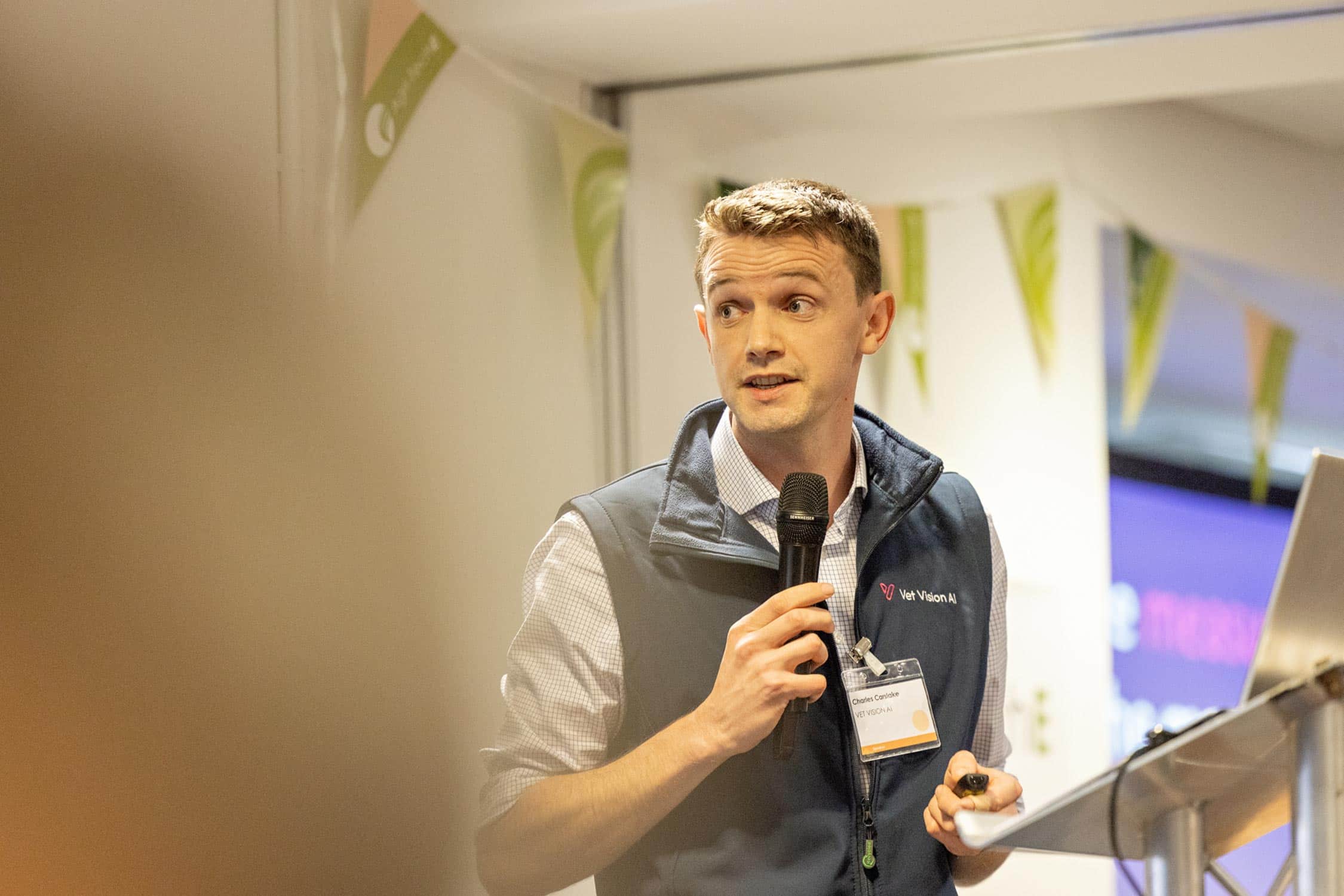
Vet Vision AI

Vet Vision AI is transforming animal welfare monitoring with its innovative computer vision and AI technology.

Frustrated with unreliable sensors that did not provide consistently accurate insights into animal welfare, the team developed AI-powered cameras for continuous, detailed monitoring. “We wanted to use simple cameras combined with AI to make a positive difference to animal health and welfare,” says CEO and co-founder of Vet Vision AI, Dr Charlie Carslake.

Charlie is a qualified vet who gained a PhD at the University of Nottingham before founding the firm.

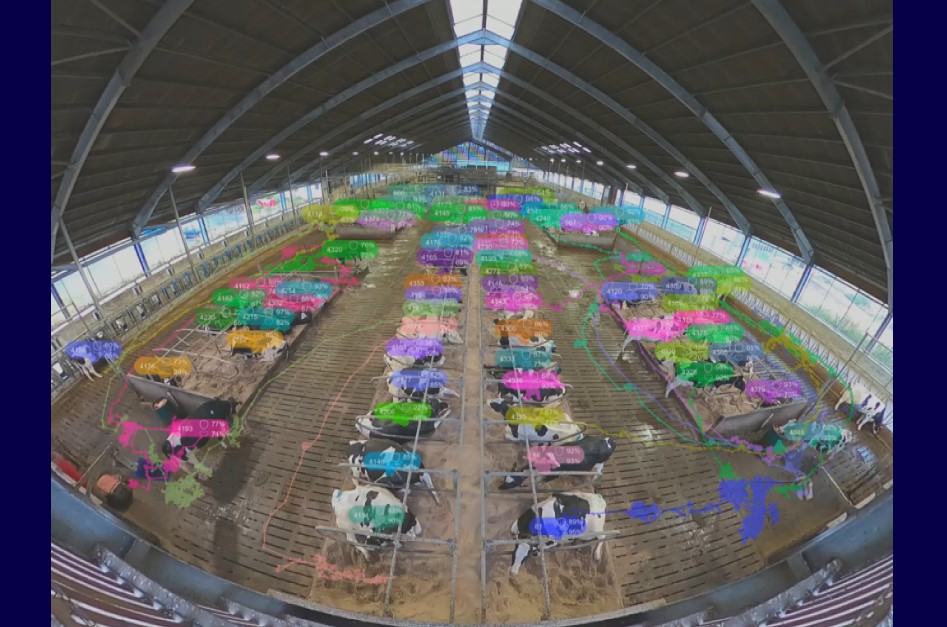
The cameras require just one week of data collection to deliver insights, tracking behaviours like feed access, lying times, and comfort levels. Data is analysed and linked to a dashboard, offering key performance indicators. Reports created are designed to help vets and farmers improve areas such as equal access to food, comfort and space usage.

“Our goal is to enable better veterinary services,” Charlie adds, noting that the system offers continuous monitoring beyond traditional moment-in-time checks. “We see potential across species and have developed an equine monitoring product that gives owners and vets insights they can use to improve their animals’ wellbeing.”

This technology helps animal owners enhance welfare and performance, enabling vets to broaden their services. It also supports supply chains with transparent, actionable data for high-welfare livestock production accreditation, explains Charlie.

“Developing low-cost, low-infrastructure ways of delivering high-value insights to help improve animal welfare,” says Charlie when summarising the goal of Vet Vision AI.

C0983_219
vet vision slide

Five reasons for a farmer to attend REAP

Agri-TechE Article
Agri-TechE

Do you want to attend a farming event where you can genuinely learn something new? REAP breaks the mould by focusing on genuine conversations, hands-on insights, and real-world applications.

This is where farmers, scientists, and innovators come together to explore the future of agriculture in an interactive, practical, and refreshingly informal way.

With speakers who are at the forefront of agri-tech, cutting-edge research presented by scientists, and opportunities to network with like-minded farmers, REAP is the place to discover solutions that can help you thrive in an evolving industry.

Here are five reasons why REAP 2024 is the must-attend event for any forward-thinking farmer.

REAP Farmer Breakfast James Green Gs John Barrett Sentry
C0905_291

1. Talk with like-minded farmers

REAP 2024 is a gathering of forward-thinking farmers keen to explore how the latest agricultural technology and research can benefit their businesses.

It provides a rare chance to engage directly with early adopters of new tech and learn about real-world applications.

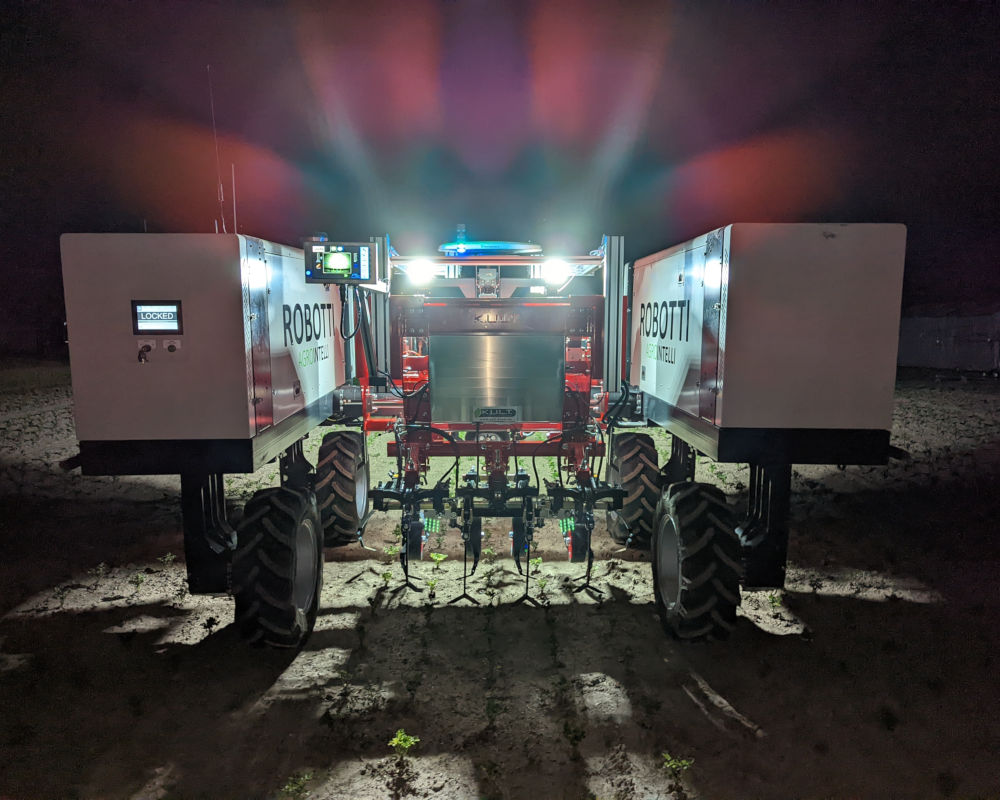
At REAP 2023, John Barrett, Farms Director at Sentry, discussed their completion of a 150 Ha trial on autonomous sugar beet farming using a Robotti robot supplied by another Agri-TechE member, Autonomous Agri Solutions. This sparked enormous interest from other farmers who were keen to learn more about the commercial applications of autonomous technology.

2. Understand and inform agricultural research

How often is a farmer presented with the opportunity to tell the industry’s most prominent scientists what research would make a difference to them?

REAP’s Research in Practice session is all about ensuring that cutting-edge studies deliver real-world impact for farmers.

Chaired by regenerative farmer Tom Pearson, the session gives farmers the unique opportunity to see agricultural research through the lens of a fellow farmer, who will push scientists to explain how their findings translate into practical benefits.

This year’s session features research for improving wheat yields through genetics, utilising soil-plant-machine simulations to optimise farming tools, reducing methane emissions with circular technology, practical guides for integrating farm robotics and detecting crop issues using AI, satellites and remote sensing.

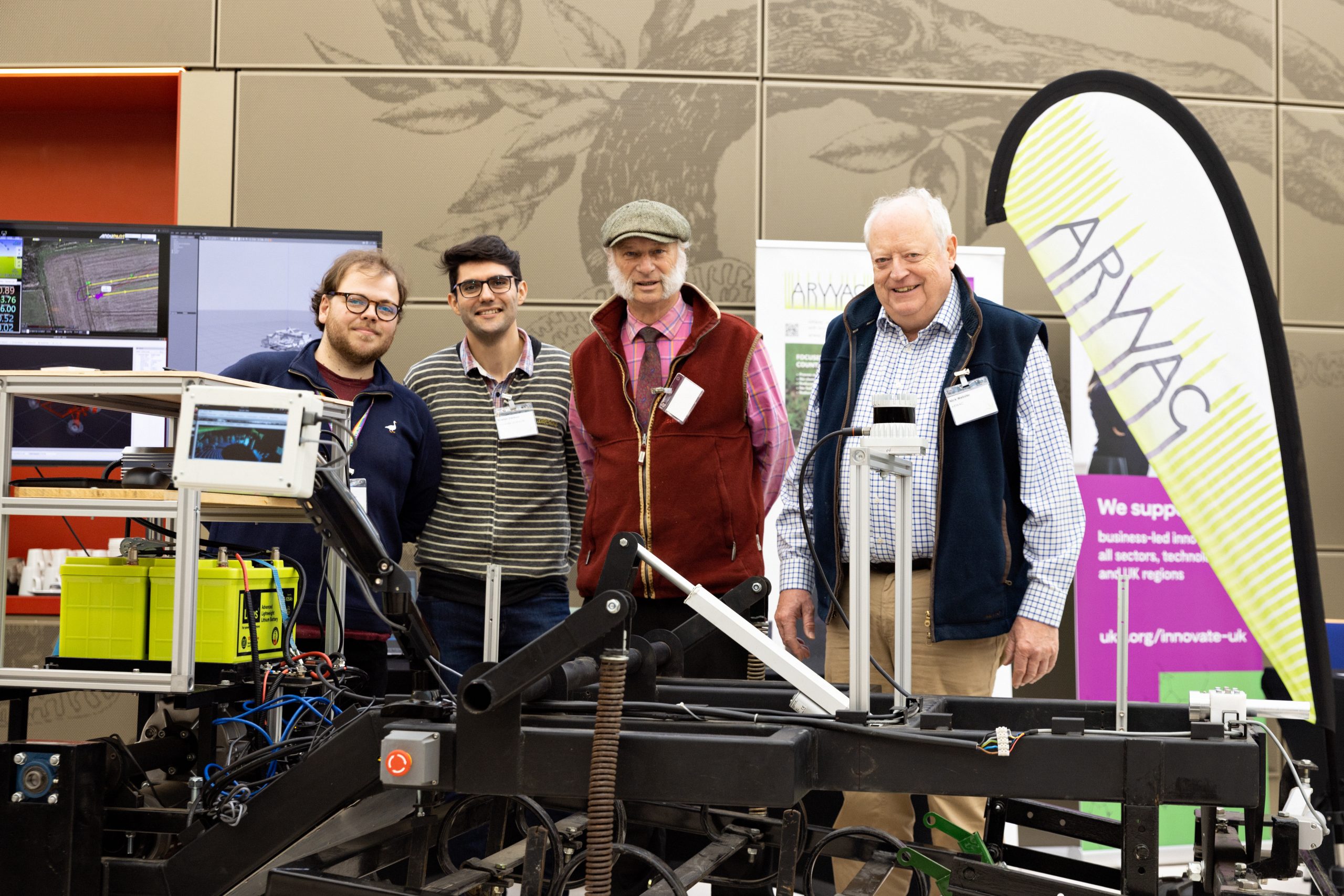
C0823_077 EXHIBITION ARWAC
IMG_8883

3. Connect with the latest technology developers

REAP is the place to meet agriculture’s hottest start-ups.

Eight early-stage agri-tech companies will pitch their innovations, giving farmers access to new tools and ideas that are shaping the future of farming. Previous participants have raised millions in funding and several have become established parts of the agricultural ecosystem in the UK and abroad.

There are also exhibitions from companies you won’t see anywhere else in the ag event calendar: from robotic pickers to virtual reality-powered tools on display.

Helen Reeve
Helen Reeve

“As a farmer, you need to be innovative and always looking at ways to improve productivity.

REAP is a good place to exchange ideas with people you wouldn’t normally meet out on the farm.”

Owner, Waveney Dexter Beef

4. An exclusive farmer’s breakfast with the speakers

Kick off the day at the exclusive Farmer Breakfast, where you’ll meet leaders in the industry for intimate discussions, including other forward-thinking farmers and our keynote speaker Dr. Elliott Grant.

Elliott, former CEO of Mineral (recently acquired by John Deere), has been at the forefront of applying artificial intelligence to improve agricultural sustainability and resilience. His work with Driscoll’s, the world’s largest berry company, has led to breakthroughs in crop forecasting and quality control.

The breakfast provides a valuable opportunity to discuss how AI and other advanced technologies can transform farm management in the coming years.

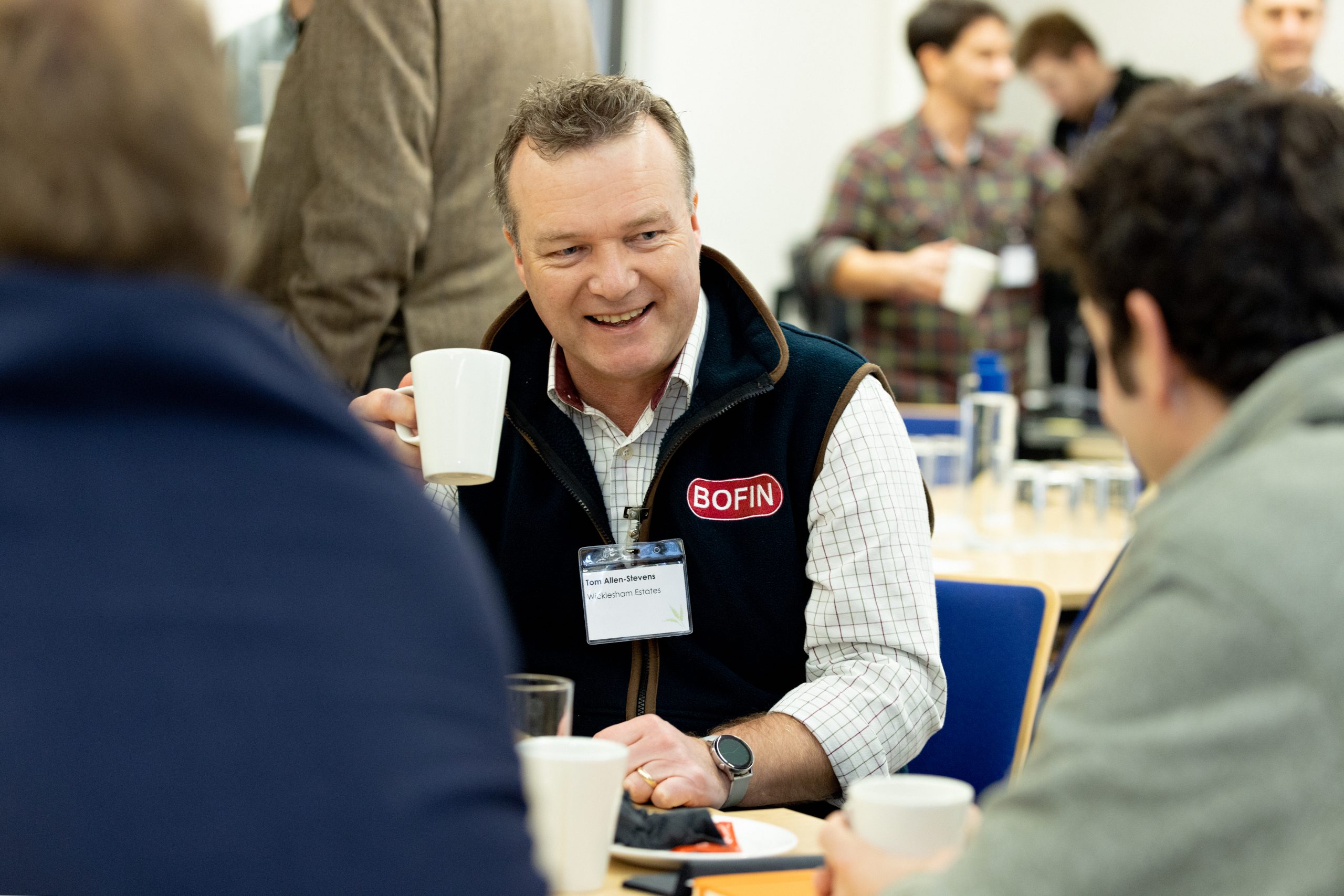
FARMER BREAKFAST Tom Allen-Stevens, Wicklesham Estates
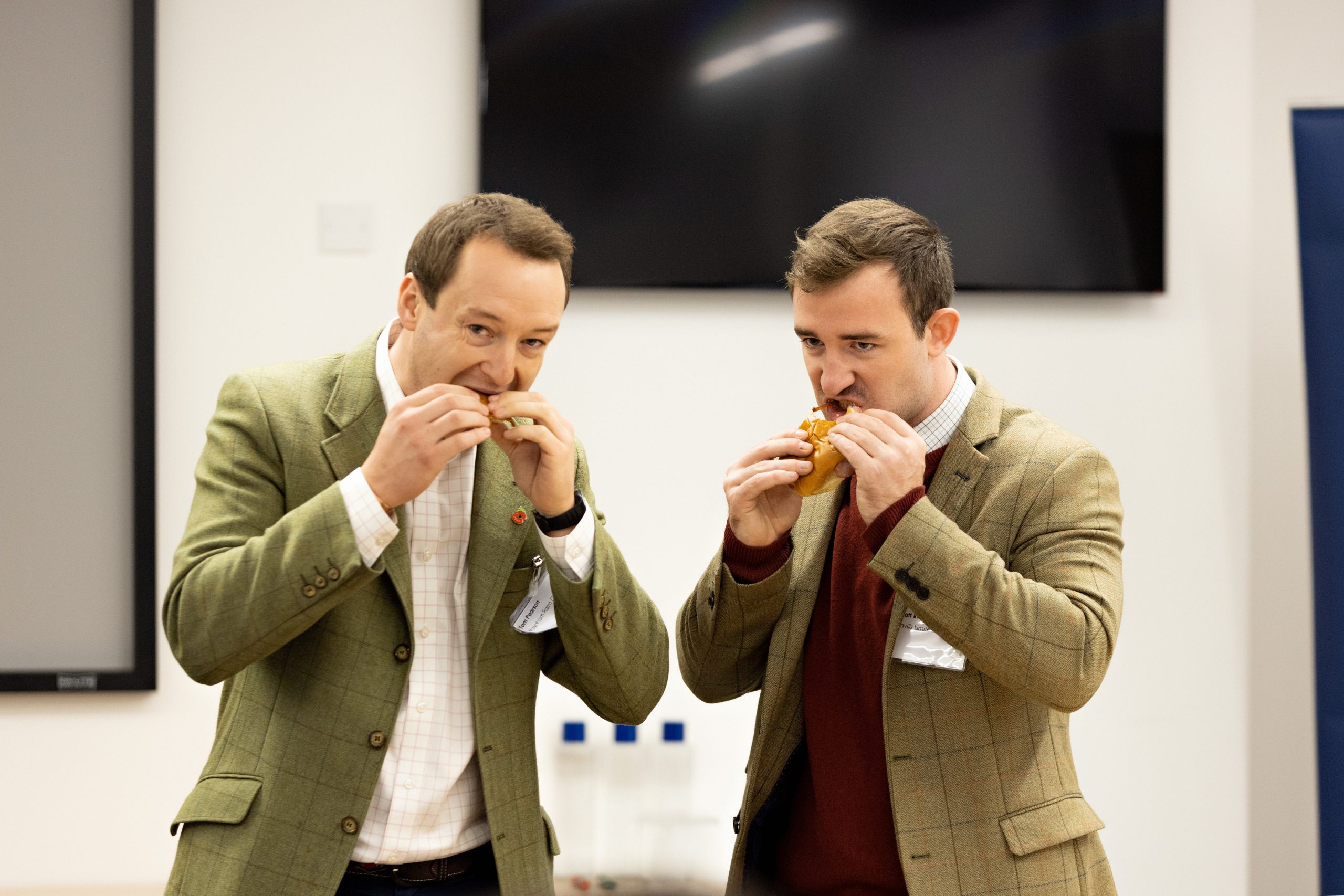
FARMER BREAKFAST Tom Pearson (Raynham Farm) and Matt Riddington (Savills)

5. Farmers can receive discounted tickets with the REAP Bursary

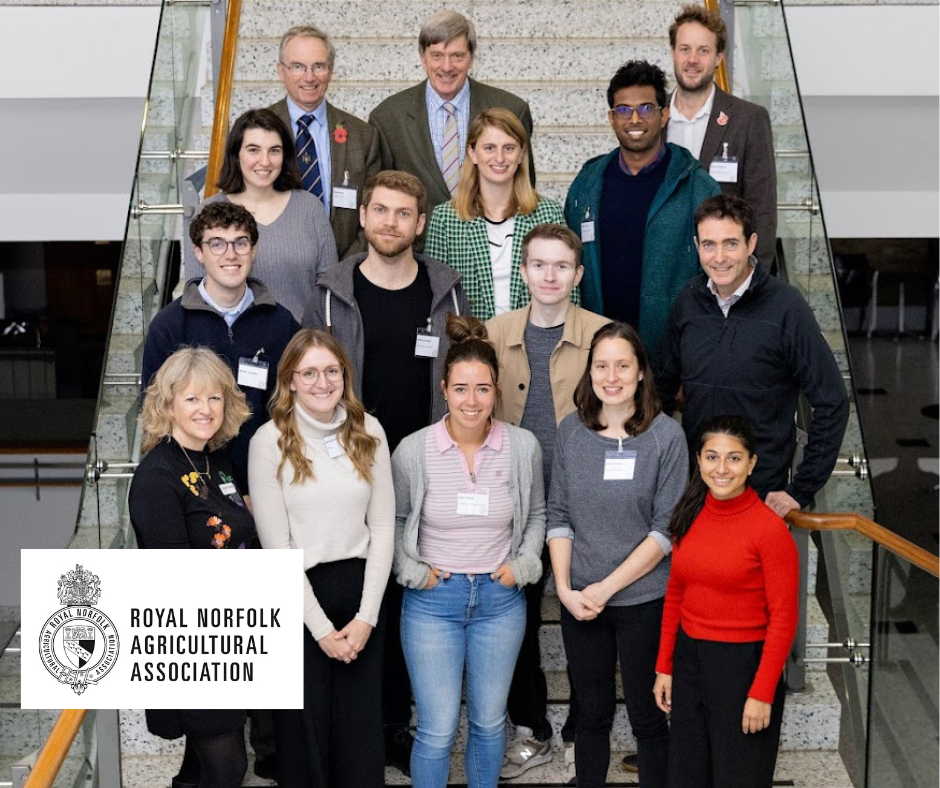
Farmers can attend REAP at a considerably discounted price of £65 (excl. VAT) by applying for the REAP Bursary, kindly sponsored by the Royal Norfolk Agricultural Association (RNAA).

“The RNAA is delighted to support the REAP Conference; we see knowledge exchange as a vital means to inform practitioners within the industry and to inspire new entrants.”

Mark Nicholas MBE, Managing Director of the RNAA.

Don’t miss out! Apply for the bursary today.

*BONUS: Earn BASIS and NRoSO points while you learn

REAP is BASIS and NRoSO accredited, offering 5 BASIS and 5 NRoSO points to attendees. These points are crucial for maintaining certification in best practices for crop protection and other agricultural inputs.

Attending REAP helps you stay up-to-date while expanding your practical knowledge.


The REAP Conference 2024 takes place on Wednesday 6th November at Newmarket Racecourse.

Click here to find out more, book your ticket or apply for a discounted bursary ticket.

Agri-Tech’s Business Model Maze

Agri-TechE Blog
Agri-TechE

How agri-tech start-ups are moving from hockey stick dreams to marathon revenue plans

Subscription, leasing, purchase or rental – when it comes to business models deployed by agri-tech start-ups, we’ve pretty much seen them all. In fact, if our first question on meeting a new business isn’t “what’s your business model” – it is certainly second or third.

Given the contraction of global investment into agri-tech seen in 2023, this question has never been more pertinent. A likely emphasis on generating revenues at an earlier stage means the “jam tomorrow” premise might be waning when talking to investors.

As every accelerator and entrepreneurs’ boot camp states, it’s not just about the technology, it’s also about the team – and specifically the founder. But it’s also about the business model, which ultimately leads to the exit for the investors – and the narrative is changing.

An interesting phenomenon is underway.

Global investment into agri-food tech has – as we previously reported – dropped by nearly 50 %  from 2022 to 2023, according to AgFunder. Clearly there is less money in the system, arguably creating a fertile ground for consolidation, mergers and acquisitions.

Yet, on the other hand, significant private equity funds are being raised. In the Agri-TechE network alone, there are usually at least one or two organisations putting together a new fund for agri-tech. Some of the big-ticket announcements include Paine Schwartz Partners who have a $1.6 billion fund (version VI) for sustainable investments across the food chain.

At a UK investor round table last year, the investors – mostly VCs – were discussing the role of government co-investment to de-risk their position. The Innovate UK Investor Partnership Programme is designed to do this at a modest level – micro-businesses and SMEs with a pool of investor partners who provide leveraged finance.

Reality check: revenue rules

But we need to get real. The days of the ambitious “hockey stick” graphs shown by start-ups in investor pitches are probably behind us – as one investor put it, “all hockey and no stick.” Revenues are increasingly important – taking us back to the earlier point about business models.

And we shouldn’t under-estimate the value of government-backed contracts – not a model we often see in agriculture, but procurement by the public purse gives great confidence to investors. Who better to procure UK food for public services than the government itself?

Over the last decade, we’ve showcased over 60 start-ups at the REAP conference – some offering single technology solutions, others whole platforms, and those that charge a minimum price for hardware while also monetising associated consumables. Subscriptions for cloud-based services or access to data platforms are becoming more common, as is leasing for high-capital-cost equipment such as robotics.

REAP 2023 SUSC PES Technologies
Autopickr Robyn Sands REAP 2023

Our Top Three Tips

  • Be different. Know your points of differentiation in this crowded market: your business model will make or break you.
  • Revenues are royalty. How are you going to make money – and fast?!
  • Prepare for partnerships. If indeed the landscape for Mergers and Acquisitions is opening up, start preparing now. Who might be your target partners and what is your value proposition to them?

At REAP 2024 we’ll be showcasing a new crop of start-ups, from livestock welfare solutions to innovations powering the circular economy, alternatives to some of our favourite staples and cutting-edge automation.

What will their business models be, and how will they transition from the hockey stick to a relay race?

Or perhaps that should be marathon…

Join us at REAP 2024 on 6 November to find out!

Could open innovation across the supply chain unlock agri-tech of the future?

Agri-TechE Article
Agri-TechE

Market forces are changing companies’ approach to innovation throughout the ag supply chain. We look at the vital role collaboration and open innovation play in the development and adoption of new technologies.

Extreme weather, stricter regulations, and a drive for sustainability mean farming is returning to system-based solutions rather than singular inputs, which is typified by the rise of regenerative agriculture.

The interconnectivity of farming systems drives even the biggest ag businesses to look further than their capabilities to deliver future innovations.

This approach is known as open innovation. It is built on the premise that organisations can create a bigger pool of ideas and solutions by connecting internal and external knowledge. In an agricultural context, this often means collaborations between large ag companies, smaller firms or start-ups, research organisations and farmer groups.

James Holmes Unilever
Untitled design (38)

Unilever has been using open innovation to develop nutritious, sustainable, and fair food, says James Holmes plant science and technology lead for Unilever.

“Unilever’s mantra is that ‘if we think we can do it alone, we are not thinking big enough’. The diversity of crops, production systems and geographical spread requires an open and collaborative approach to developing and implementing innovation with expert and local partners,” says James.

Phil Taylor, director of ecosystem development for Crop Science R&D at Bayer, sees integrated value chains as the future. He argues that the days of simply selling seeds, traits and synthetic chemistry are long gone.

“The world of agriculture has become more complex, and there is greater need for cooperation, decision support and targeted interventions.

“If industry doesn’t have a value proposition for the farmer, then it is not going to happen. We can have all the tools and technologies, but if at the end of the day it doesn’t fit the farming business model it’s being plugged into, it’s not going anywhere.

“As an industry, we have spent the last five years recognising that we need to work together, and the next ten years will be about how to make the whole system sustainable and self-supporting. To achieve this, we need to find new ways of partnering.”

Machinery is a crucial supply chain integrator, and the consolidated market means a handful of companies facilitate access to many of the agri-tech solutions in development by smaller firms. Mark James, John Deere sprayer product sales specialist, sees their role as ensuring equipment is compatible with as many different systems as possible.

Mark cites the development of closed transfer systems as an excellent example. Several competing closed transfer systems were available, all pushing for their design to become the industry standard.

Mark James
Mark James
John Deere

“The one thing we don’t want to do in this situation is create something that is proprietary. It limits our customer’s choices and pushes them down a closed route.

We want to be as open to as many people as possible.

We got involved in collaborating with other industry members to formulate the ISO standard for the coupling connection.”

End-to-end collaboration

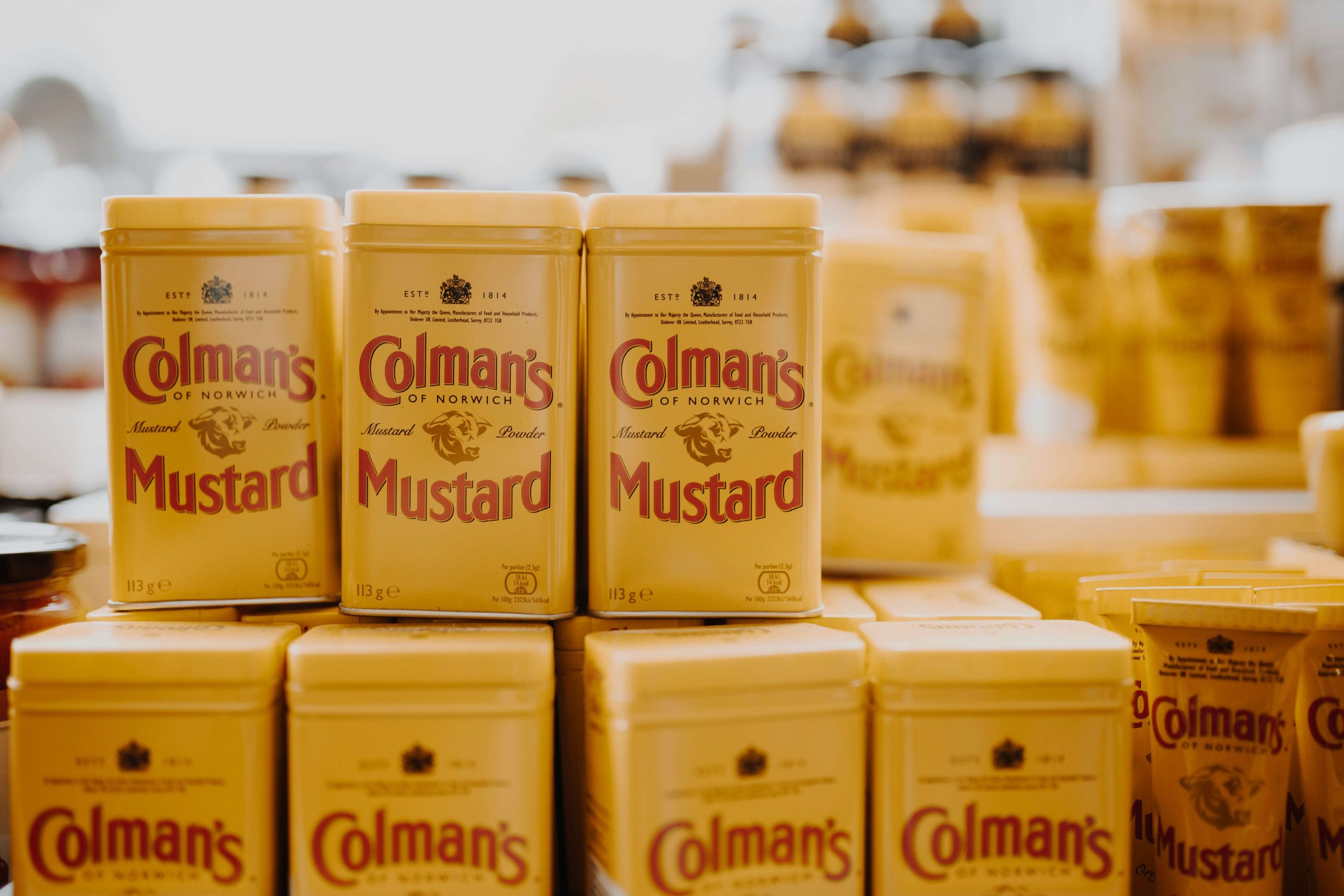
Colman’s is an iconic Unilever brand that produces English mustard and mint sauce, among other products. It has a long and illustrious history going back to 1814, and some farming families have been growing mustard for Colman’s for five generations.

With such strong farmer links to Colman’s, James saw an opportunity to utilise the open innovation approach.

“It takes around 4 million hectares of land to grow the crops Unilever uses to create its products, and since 2020, we have been supporting groups of farmers to adopt regenerative farming practices,” explains James.

“Unilever has been supporting farmers through open innovation to identify, develop and ultimately scale implementation of the innovative practices and technology required to reduce greenhouse gas emissions and limit global warming.”

Like all crops, mustard needs nitrogen fertiliser to reach its target yield. However, the application of ammonium nitrate or urea remains a significant proportion of the carbon footprint associated with mustard and mint crops, says James.

Unilever, Niab, growers and their existing agronomy partner Hutchinsons collectively agreed on a series of trials of regenerative farming practices, including reducing reliance on artificial fertiliser, testing irrigation technology, reducing cultivation and developing conservation biocontrol methods.

“Working with Niab has enabled us to set up a number of trials, testing practices and technologies on commercial farms.

“With Hutchisons’ experience, we were able to identify a number with the potential to reduce the crop requirement for artificial nitrogen. These were put through their paces on farms last spring and will be trialled for a second time in spring 2025,” adds James.

Mustard Unsplash
Colman mustard Unsplash

Regen is the catalyst for novel collaboration

Traditionally, Bayer has been seen by early-stage companies and academic entrepreneurs as a potential customer for a trade sale or acquisition of intellectual property (IP). The emergence of biologicals, active ingredients based on naturally occurring products, has changed that dynamic.

Phil Taylor explains Bayer’s fresh approach to collaborative innovation.

“Until recently, major innovations in traits or chemistry coming to the market needed a very heavy lift from a regulatory or product development perspective, and only the big guys had the firepower to deliver.

“Now the innovation landscape in agriculture is so much broader, with much more opportunity for smaller companies to contribute and stay part of the bigger story.

“With biologicals, we saw a mass of start-ups coming through with novel collections, screening capabilities and such, so the decision was made to lean into our strengths in development and integration.

“The result is we now take a licensing and partnership approach to the early research and let the experts drive it. We can come in with our leadership in product development and regulation and help get it out the door.”

Compatibility is key

Many crop monitoring and decision-support systems rely on fertiliser spreaders and spray technology to deliver variable-rate applications. Like with closed transfer systems, Mark James says John Deere has collaborated to develop a standard file format to upload data to its sprayers from any origin.

John Deere also goes to extremes to ensure its machines are ISOBUS compatible so that anything from another manufacturer can be plugged into a John Deere tractor, and it works.

This open approach is more complex with cutting-edge technology, where one manufacturer may lead the rest of the industry. Mark notes John Deere’s See & Spray as an example of this. It is a camera-based spraying technology that uses machine learning and advanced cameras to spray weeds in crops selectively.

“There are cameras mounted every metre on a 36m spray boom. They spot the weeds in the fields with varying degrees of resolution, whether it’s identifying the shape of the weed or just the green area.

“To do that, the amount of data moving through the system is way more than the industry standard technologies can handle. When it’s operating, it moves something like 5GB of data down a spray boom, which is massive.

“It is here where we need to do something exclusive to the system. Hopefully, that will become the basis for the following standard and be incorporated into subsequent versions to be compatible again,” finishes Mark.

The Supply Chain Panel at REAP 2024

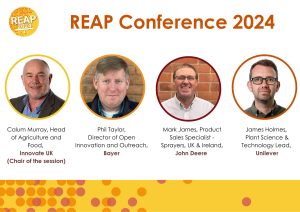
Phil Taylor, James Holmes and Mark James make up the effective and sustainable supply chain panel at REAP 2024, chaired by Calum Murray, Head of Agriculture and Food at Innovate UK.

They hope to explore open innovation further and how smaller companies connect and interact with larger firms at different points. The session will also recognise how farmers aren’t always the end users of tech and organisations across the supply chain utilise and enable it at different points.

To see and interact with the panel first-hand, book a ticket for REAP 2024 – on 6th November, Newmarket Racecourse.

REAP 2024 Farmer Panel: Opening our minds to alternatives

Agri-TechE Article
Agri-TechE

Gaining the big picture view about emerging agri-tech and bringing together others with different perspectives are two of the benefits of attending REAP, according to Mike Gooding who will be chairing the Farmer Panel.

The future might look quite different

Mike is a farmer by background and has recently joined the AHDB as the Crop and Livestock Services and Farming Systems Director. He says that he learns something new every day: “At REAP we are all learning together so I don’t mind asking what might appear to be the ‘silly question’ – which is probably why I am chairing the session!

“Having a variety of perspectives creates opportunities to open up your mind and to challenge yourself to think more about how ‘the future may well look quite different’.”

Mike also understands the challenges of agri-tech innovation. He chairs a start-up in Cambridge called SmartBell. It is developing an ear tag for livestock that can predict illness through minute changes in the animal’s physiology and behaviour. They are working with other sensors and technologies to bring an in-depth understanding of what happens at different life stages to provide insights that will ultimately secure the animal’s full genetic potential.

Early trials suggest it can detect early indicators of pneumonia in calves enabling interventions before they require antibiotics.

Benefit from different perspectives

The two SmartBell founders are experts in data and sensor technology, and they see agriculture as an area of opportunity. Veena worked for Amazon in the United States, and Jose is a gas and oil engineer.

“Get somebody from Amazon, and data issues are solvable,” continues Mike.  “Ask Jose about making the sensor more robust and he will say ‘well, this is how we do it in the oil industry’.

“What they are really progressing is a different attitude to data, and how it can be used and combined with other forms of data to advantage the livestock and farmer.

“They challenge me about decisions that farmers make – if we can’t justify it, we should open our minds up to alternatives.”

Mike gives the example of lameness which is an endemic condition in sheep but largely avoidable.

Multi-stranded strategy of technology and ideas reduces lameness

Working together with the team at FAI Farms in Oxfordshire a five-point lameness plan was developed offering a multi-stranded strategy of technologies and ideas. “By following this strategy, we reduced lameness to the point where I was able to go from 750 ewes on the farm to 1,250 ewes without any extra fixed costs and I started to make profit out of the sheep,” Mike explains.

“There was a straight economic benefit, a massive animal welfare benefit. And frankly, my staff were much happier because treating grotty, smelly feet is not a pleasant job.

“So, once we opened our minds up to being much more holistic, rather than simply the firefighting problem that’s directly in front of us, we brought around entire system change.”

The five-point lameness plan went on to be adopted across the sheep industry as a national strategy and is credited in reducing the prevalence of the disease in the UK from approximately 10% to 3%, a huge achievement.

“Having those different perspectives does build a much bigger picture. This is where I think the whole REAP conference should be about, not just the exciting technological opportunities, but how we apply them in practise.

Farm-centric innovation

Mike is keen to encourage as many farmers as possible to attend REAP and suggests these viewpoints would be good to discuss:

  • The farmer perspective is vital – current on-farm challenges should be the key motivation for entrepreneurial development – solve that first and then expand. There is still a large group of people who are looking for the silver bullet scenario and it rarely exists and there can be unintended consequences. We do need that spirit and imagination – but arguably that should be financed with a different type of investment.
  • New models are required for agri-tech investment – over the last 18 months it has been really difficult to access finance and increasingly we see investment funds holding the whip hand in what we can and can’t do in our agriculture and their time frames are different. If this country is serious about wanting to be at the forefront of innovation technology and to stimulate genuinely sustainable growth in our food production, then we need to find mechanisms and structures that encourage those agri-tech developments in practical ways and help overcome some of these key blockers.
  • Need greater support from legislation – it’s not just small companies that are experiencing challenges gaining finance, it is a supply chain issue. A global food manufacturing business recently observed that their ability to adopt a more regenerative approach is limited by the requirement of their big institutional investors to deliver a level of return. If there was legislation to say, ‘you need to manufacture your food to X specification’, that would give them the leverage with their investors to say, look, this isn’t a commercial decision, this something we have to do.

The theme of REAP this year is the tipping point and this is multifaceted. We need solutions to on farm problems in the near term, but we’ve also got big challenges on the horizon that are coming closer. So where do you think the balance falls between precision and broad-brush?

Mike Gooding
Mike Gooding
Farmer and Crop and Livestock Services and Farming Systems Director for AHDB

“I see absolutely no practical reason why a wider viewpoint and precision are mutually exclusive. They should be together.

“The fact that I can identify individual animals’ problems is very relevant whilst I’m still trying to do things in a whole systems-based approach. And that’s where technology, offers real benefit.”

“However, I do think we need a much, much more engaged vision, politically, for what we want out of our food and our agriculture.”

Nick Sheppard
Nick Sheppard
Farm manager, Upton Suffolk Farms

“For salad potatoes the size of the potato is critical to the profit margin. We need to be selling more than a million tubers per hectare to make a viable return, but the goal is not just tonnes per hectare – we are after a particular size and quality.

“The size of the potatoes needs to be between 25mm and 47mm in diameter; potatoes larger than 47mm normally have little value and the tubers below 25mm fall through the harvest machinery and are lost. The difference in your returns can be significant if there are too many oversize or conversely too many under size.

“In terms of technology, we use hand digs entirely to monitor the tuber size and determine when to harvest.

“If it were possible to individually analyse the nutritional status of each plant and treat them so more of the tubers were ‘small potatoes’. Also, in real-time measure the quantity and size of the daughter tubers below the ground, then I could see real benefit in that type of technology.

“However, practically it would be difficult to do with a huge crop canopy up to a metre tall and a plant population of up to 100,000 plants per hectare, with each plant having up to six stems.

“Also, we do not currently use variable rate applications for the crops we grow, as we do not have the ability within the harvest machinery to accurately measure the yield per square metre. This information is needed to produce a yield map from which to base the variable rate applications of seeds, fertilizer or sprays etc.”

Helen Reeve
Helen Reeve
Owner, Waveney Dexter Beef

“REAP is a good place to exchange ideas with people you wouldn’t normally meet out on the farm, and I am looking forward to joining the Farmer Panel this year.

“As a farmer, you need to be innovative and always looking at ways to improve productivity and REAP is a good place to see the science and the technology that is in development.

“It is vital that technologists gain the farmer perspective and I would suggest the following to them:

  • Technology must be accessible and fit in with the way that farmers work, as every farm is different.
  • Technology won’t replace the skills of a stock person – but it will improve the way that they work.
  • If technology improves productivity, it will be quickly adopted – nearly all the cows in our region now have the heat collars as the benefits are clear


Jimmy Goodley
Jimmy Goodley
Goodley Farms

“The transition to regenerative agriculture is a steep learning curve and it can take a while to see the benefits. We invite other farmers to come on to the farm and see what we are doing and then help them to do soil testing, baselining in preparation.

“Working together and being part of a cooperative, adds a degree of protection and an opportunity to share experiences and benchmark performance.

“We are looking to further evolve our cover crop policy and introduce more SFI options into the system but essentially the vision remains the big picture view ‘using botany, limited cultivation and soil biology to build healthy soils and crops’.”

To join us at REAP 2024, book your tickets here.

Emerging Agri-Tech: from Research to Practice

Agri-TechE Article
Agri-TechE
One of the standout sessions at REAP 2024 is the Emerging Agri-TechE panel, which bridges the gap between cutting-edge scientific research and its practical application on farms.
During this session, researchers will share the latest progress from their farmer-focussed projects, which often become the seeds for the most exciting future innovations in agriculture and horticulture.

C0905_171
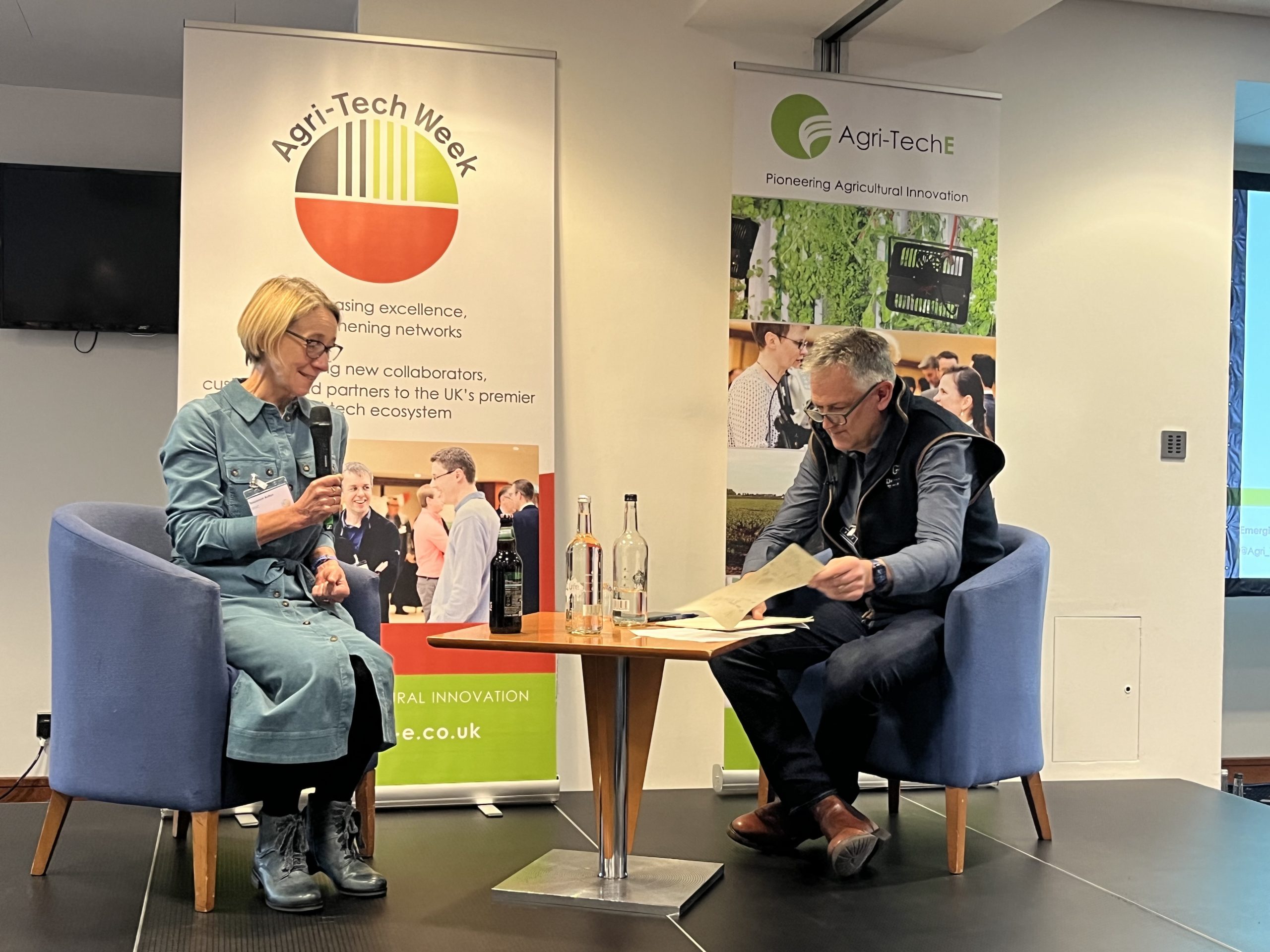
IMG_8883

Chaired by Tom Pearson, a regenerative farmer passionate about the role of farmers in driving research that delivers real-world impact, the discussion allows researchers to present their work while addressing its practical relevance.

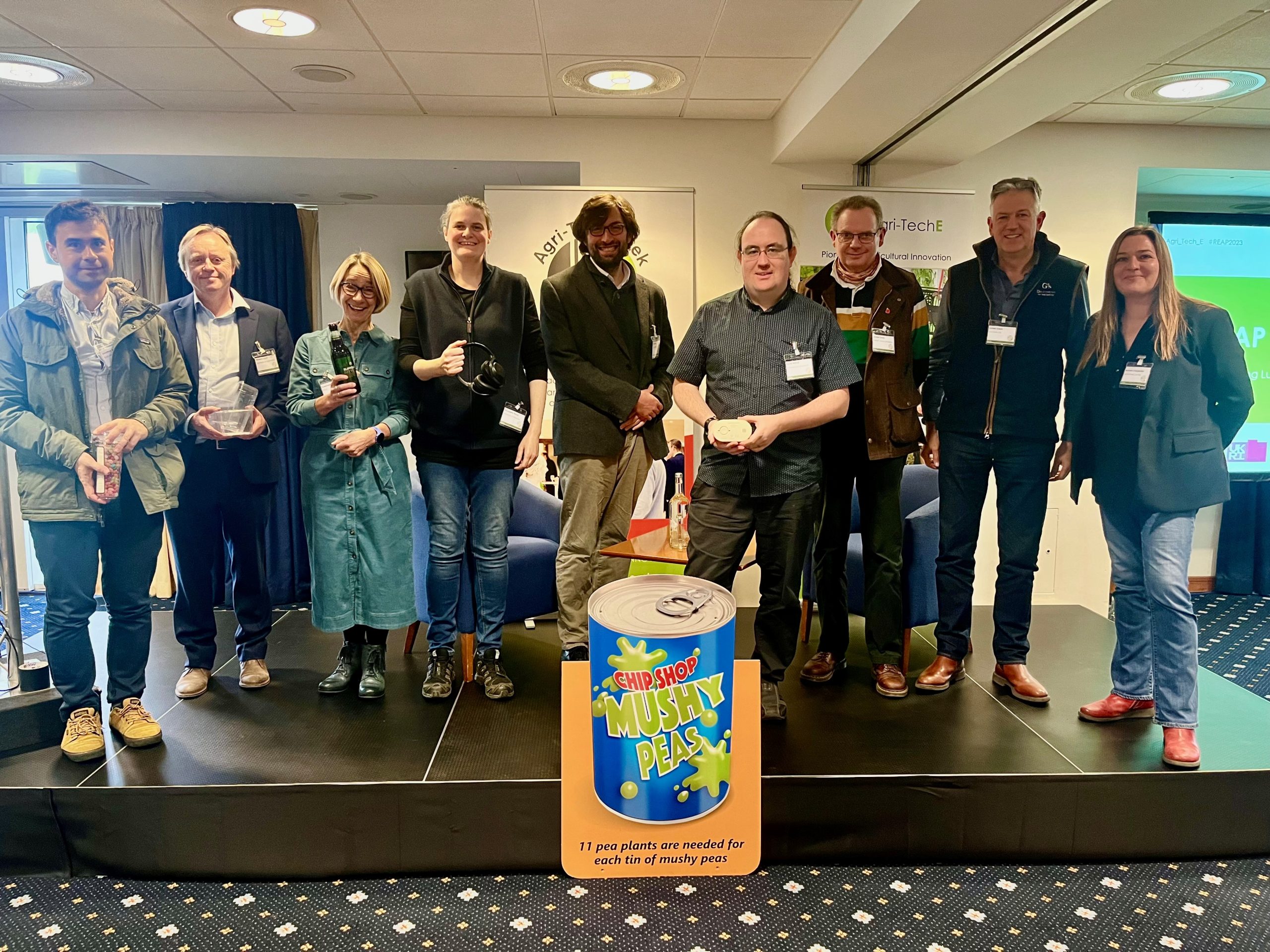
Through the informal ‘fireside chat’ format, Tom will prompt our scientists to explain what their findings mean for farmers, using some curious but everyday objects to help illustrate.

The goal is to ensure that agricultural research aligns with the practical needs of farmers, giving clear insights into how complex scientific understanding can translate to practical benefits on the ground.


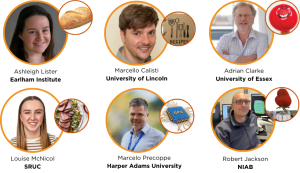
Agri-TechE membership is home to a wide range of world-leading research, and this session offers a glimpse into just a few of the exciting developments happening right now. From machine learning to livestock sustainability, these scientists are paving the way for the next big breakthroughs in agriculture. In the hot seat on November 6 we have:
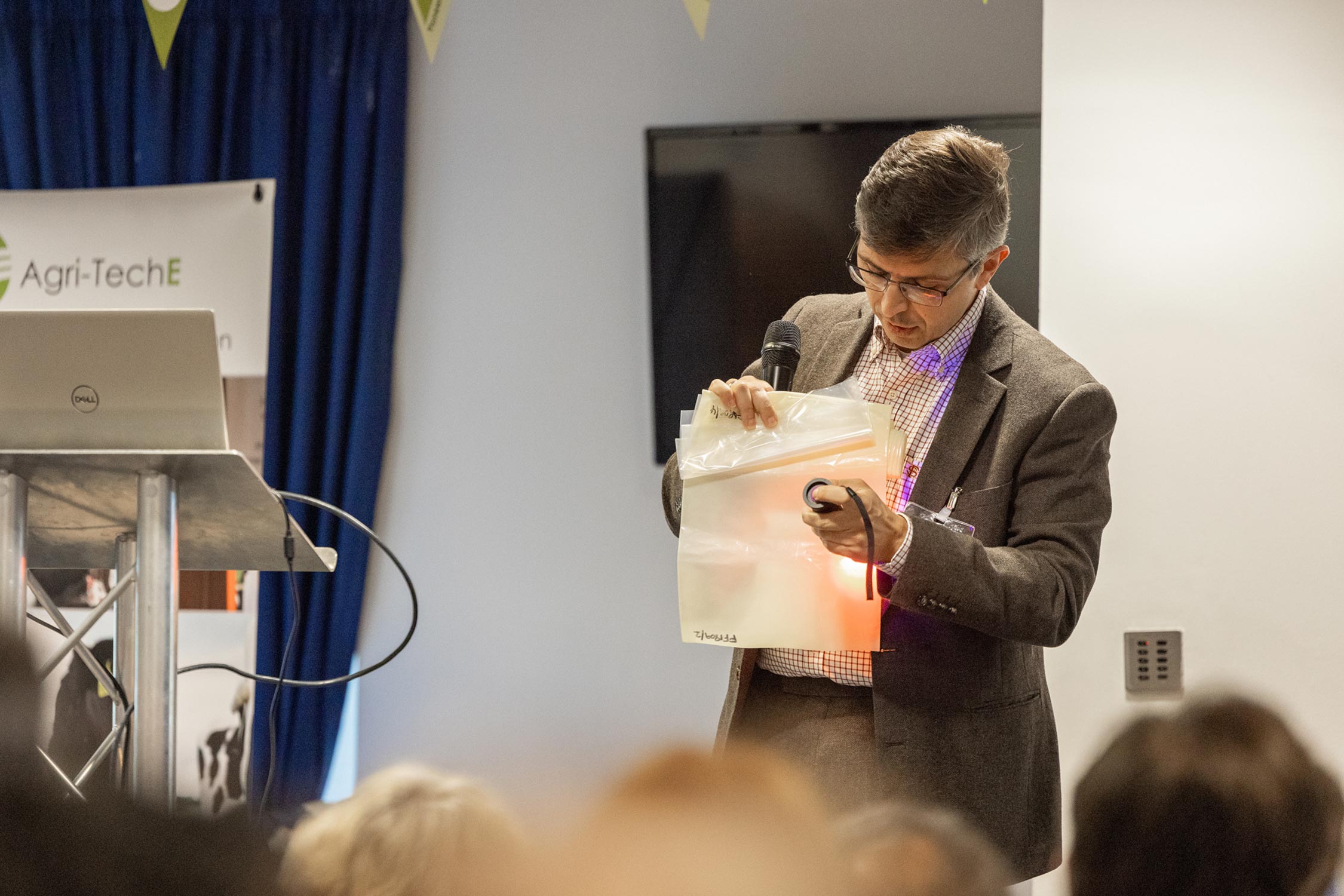
Can this GPU grow your yields, not just your top scores?

  • Marcelo Precoppe, Harper Adams University, will explain how simulations between soils, plants, and machines, can improve the design of farming tools.

The beef with methane emissions

  • Louise McNicol, SRUC, will discuss The GreenShed project, which is looking at how circular technology can help reduce methane emissions in beef farming.

The best thing since sliced bread?

  • Ashleigh Lister, The Earlham Institute, will show how an understanding of the genetics of pollen cells could improve wheat yields.

What’s cookin’ in agri-tech?

  • Marcello Calisti, University of Lincoln, will introduce the Robotics Cookbook, a practical guide for integrating robotics on farms.

No clowning around!

  • Adrian Clark, University of Essex, will show how AI and satellite can help detect crop issues like blackgrass.

Is this the sweetest solution yet?

  • Robert Jackson, Niab, will explore how AI and remote sensing can improve apple and strawberry farming.


C0905_180
Em Ag line-up

The Emerging Agri-TechE panel offers a rare opportunity to see how academic research is being applied to solve practical challenges, while also giving farmers the chance to engage directly with scientists and ask the all-important question: How does this apply to my farm?
Join us on Wednesday November 6, 2024 to find out!

Book your REAP 24 tickets here.

Horizon scanning at the AHDB

Meet the Network
Agri-TechE
Mike Gooding
Mike Gooding
Crop and Livestock Services and Farming Systems Director for AHDB

Mike Gooding is the Crop and Livestock Services and Farming Systems Director for AHDB. A farmer by background, he joined the AHDB a year ago, after a turbulent period in the levy board’s history, which has seen two sectors leave the board. 

With the new CEO Graham Wilkinson at the helm, and AHDB focused on delivering levy payer value, Mike’s focus is to bring a more holistic, systems-based approach to food production.

Levy payers are a diverse group including farmers in different sectors and processors such as abattoirs, millers, and maltsters, while there are many and varied stakeholders right across the industry.

We talked to Mike about the role of AHDB and his thoughts about the future.

A farmer at heart

Mike explains: “It’s a lengthy title, but what I am actually responsible for is the genetics, breeding and research of both crops and livestock, animal health and welfare, and much of AHDB’s research activities.

“I’m a farmer by training, and at heart, and have spent many years working alongside researchers and developers. My aim is to try and bridge that gap that between research and practical reality, to bring new thinking about how those things fit together, rather than sitting in defined silos.”

Horizon scanning

AHDB’s focus is four sectors: beef and lamb, dairy, pork, cereals and oilseeds. It collects a levy from operators in those areas and each sector has its own Council, which, in consultation with levy payers, determines the priorities for its sector.

Part of the remit of AHDB is horizon scanning, providing customer and market insights and an independent evaluation of what is being developed for, and supplied to, the industry.

“We are looking at where we think priorities need to lie, and where the sector councils might want to invest levy money, and that varies from sector to sector,” Mike continues. “For the livestock sectors the emphasis is on marketing activities, to ensure that as buying behaviours change, production is meeting customer needs and aspirations.

“Across cereals and oilseeds, the focus is more on research and pre-farm-gate technical improvement including efficiencies of fungicide use, nutrient uptake and performance in the variety trials.”

Mike gives the example of the newly formed R&KE (Research and Knowledge Exchange) subgroup of the Cereals and Oilseeds Sector Council. Its remit is to gather research ideas from levy payers and stakeholders, evaluate propositions, and commission research and development projects.

Recommended list

One of AHDB’s most iconic products is the Recommended List, which is celebrating its 80th anniversary this year.  This ongoing set of varietal trials provides the industry with a unique and objective assessment of new varietal performance.

The research is subcontracted to organisations like Niab, and there are technical boards around each of the cropping groups who assess trial performance. This provides the critical independence and arms-length disconnect from the commercial considerations that is a very important element of AHDB’s role and valued by levy payers.

Mike continues: “As farmers, we tend to focus on immediate problems. And I am just as guilty.  If I’m worried about fly strike in my sheep flock and there is potential for strike resilient genetics, I’d be on it tomorrow, but that might not be the most important thing for the long-term future of my sheep flock, or the sector.

“So, part of AHDB’s remit is looking at the direction of travel. We are operating in a world with changing demands on farmers. For example, it is likely we will see the withdrawal certain crop protection products, either through build-up of pest and disease resistance or through market and trading circumstances. This means that the existing arsenal of products will no longer be available to growers. It is critical that we understand these risks and work on alternatives to avoid leaving our farming businesses exposed.”

He explains that AHDB is able to provide the strategic insight that is so important to the future success of agriculture, by bringing together crop and livestock genetics, breeding, and the development of farming systems.

“Intrinsically, farmers understand the value of this,” he says. “They experience day-to-day that their farm has its own variables in soil, climate, management practices and that they are managing  a complex system that has many interacting factors.

“However, understanding that these variables always exist and that one ‘blueprint’ cannot relate to all, is not always obvious to those working in R&D that are new to agriculture. So, it is vital to communicate the wider context that new ideas and the opportunities have to operate in.

“I think this disconnect contributes, in part, to the void that people talk about between research and the practical application. Addressing this is part of my role, so in addition to the technical development activity AHDB also has engagement teams to help disseminate this knowledge.”

Mike Gooding on-farm
Mike Gooding - cattle

Q&A with Mike

Q. How do you think the Recommended Lists will evolve, for example do you see the wider use of molecular methods for assessing genetic differences? Also, in the move towards regenerative farming are priorities changing? Is returning a reliable yield under adverse conditions becoming more important than a high potential yield in perfect conditions?

A. We are sitting on a massive bank of data from varietal trials over the last 80 years. We are exploring how we might make greater use of data and new data techniques may well help.

The principles of the RL as an independent assessment are not going to change. As a farmer there is nothing quite like a field trial in your area to give you a clear indication of performance. But these trials are a big investment, so other tools for determining genetic potential are being investigated in parallel.

Additionally, although there will always be a need for the baseline and consistency provided by the RL, many levy payers would like to take the data and evaluate it in their own farming scenarios. For example, a sort of ‘RL plus’ for those moving to a lower input system. We are working on those elements.

So yes, I can see us extending and developing the RL data, benefiting from a greater understanding gained from new science, particularly around data modelling.  This will enable us to extract greater value from this resource. If we can use the levy budget to apply the data to more farming situations, then that would be an obvious direction of travel.

Q. At Groundswell earlier this year, one of your colleagues was discussing consumer insights and the difference between what consumers say they want – high animal welfare, lower environmental impacts – and what they actually buy. A member of the audience suggested that rather than adding a premium to products that have been produced more sustainably, wouldn’t it be better to introduce a carbon tax for the others, particularly imports?

A. I have great empathy with the principle that if your domestic production is required to meet a certain standard, you shouldn’t allow products to come into that market that don’t meet the same standards. International trading arrangements are riven with political challenge.

I can see a scenario in the future where we effectively have a licence to farm and if you don’t meet certain standards, you don’t farm.

That said, there is a fundamental difference between what is required as a base level of standards and what I, as an individual farmer, may aspire to in order to generate added value and attract a premium price.

Q. Looking to the future, do you think there is a need for a ‘land use strategy’?

A. There are over 8 billion people on the planet who are only alive because they eat.  As a farmer, I think it’s very humble to produce food to feed humanity, and I think we should be very proud of that.

Looking to the future, the pressure on us as food producers to feed society are going to become even greater and we’re going to have to consider how we deliver the nutrition society needs.

All I would observe is the needs of someone who hasn’t eaten for three days are very different from those who can afford to waste 30% of the food they buy each week.


To join us at REAP 2024, book your tickets here.

REAP’s Start-Up Showcase: Where are they now?

Agri-TechE Article
Agri-TechE
Over a Decade of Agri-TechE Innovation
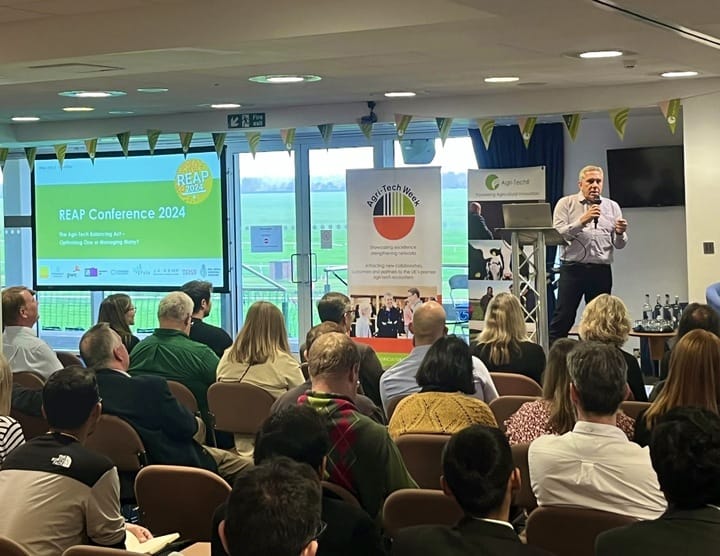
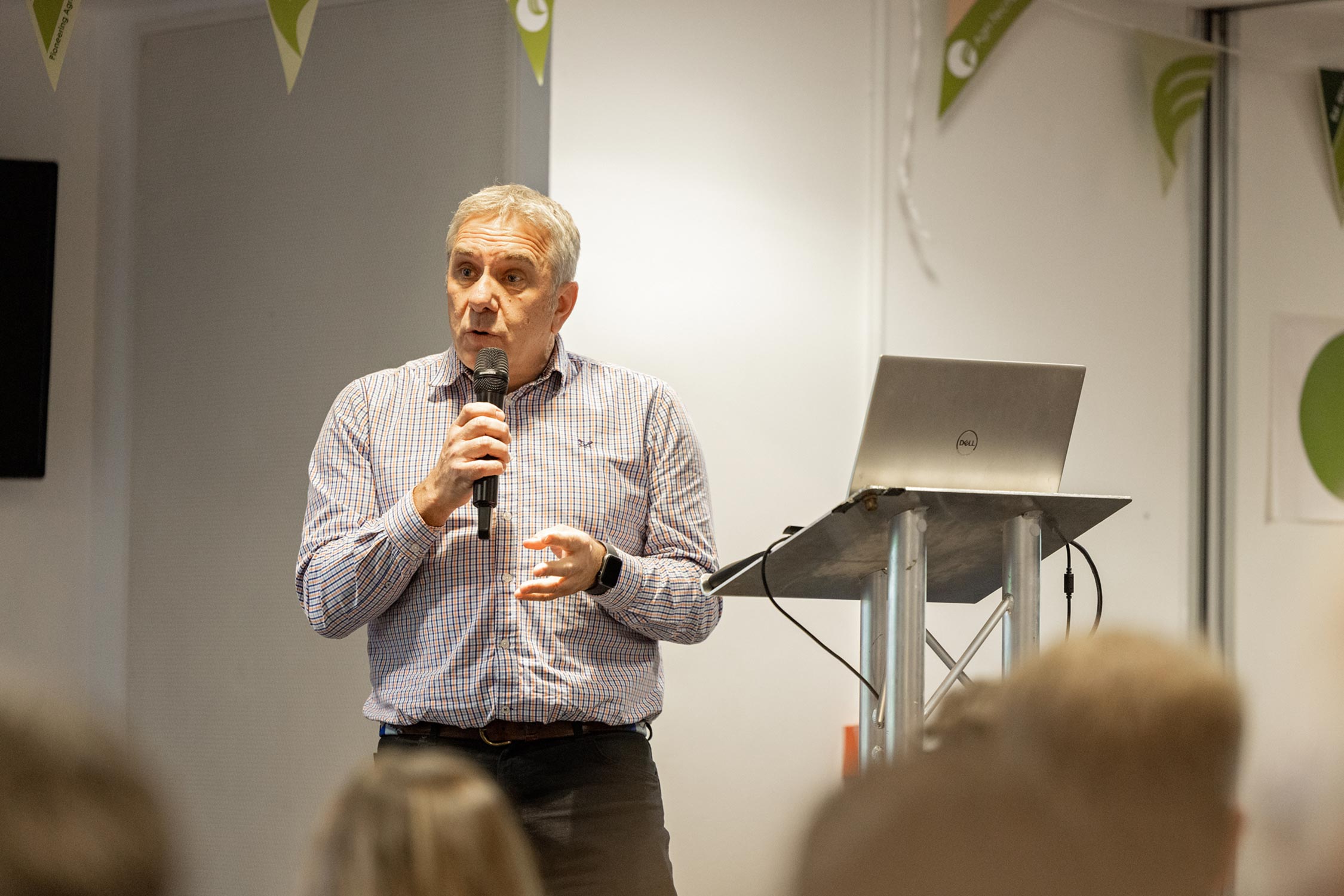
The annual Agri-TechE Conference celebrated its 12th year in a new venue on 4th November 2025. With another year wrapped, Agri-TechE uses the REAP anniversary to take a look back at the evolution of agri-tech innovation. Over the past decade, we have handpicked more than 60 of the most exciting, disruptive early-stage agri-tech ventures to present their innovations at our annual event, giving them valuable exposure and support.

From university spinouts to farmer-led enterprises, these companies have pushed the boundaries of technology and agriculture. Today, many of the solutions showcased – from agri-robotics to data-driven precision farming tools – are playing key roles in commercial farming operations, while others continue to navigate the often-complex journey of scale-up.

Despite the inevitable challenges faced by early-stage ventures, nearly 50 companies are still thriving, with notable successes in investment and adoption of new technologies – with fifteen of the companies featured raising over £120 million.

Join us as we revisit the stories of these innovators and explore how their concepts have shaped the agri-tech landscape as we ask: where are they now?

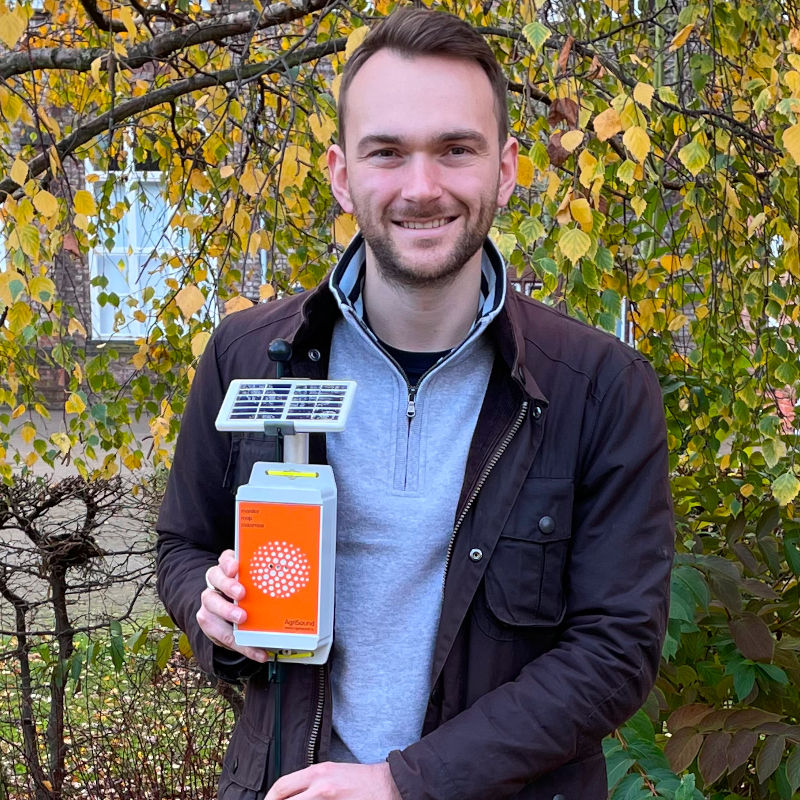
Casey Woodward, AgriSound: a vertical AI company using smart listening technologies and proprietary AI algorithms for precision pollination

AgriSound

AgriSound enhances bee health and productivity through IoT-powered insect listening. Its Polly sensors use AI to monitor pollinator activity in real time, helping farmers boost yields and biodiversity. Since May 2023, it has partnered with Tesco and WWF. Appeared in 2021.
Start-Up Showcase 2023 - Nima Eskandari, Agtelligence (web)

Agtelligence

Agtelligence has developed FarmScore, a tool to simplify sustainability metrics for banks and financial institutions, allowing quick benchmarking of arable land practices using Earth Observation data. In 2023, they raised £1.1M in funding through the UK Space Agency. Appeared in 2023.
Howard Wu, founder of Antobot

Antobot

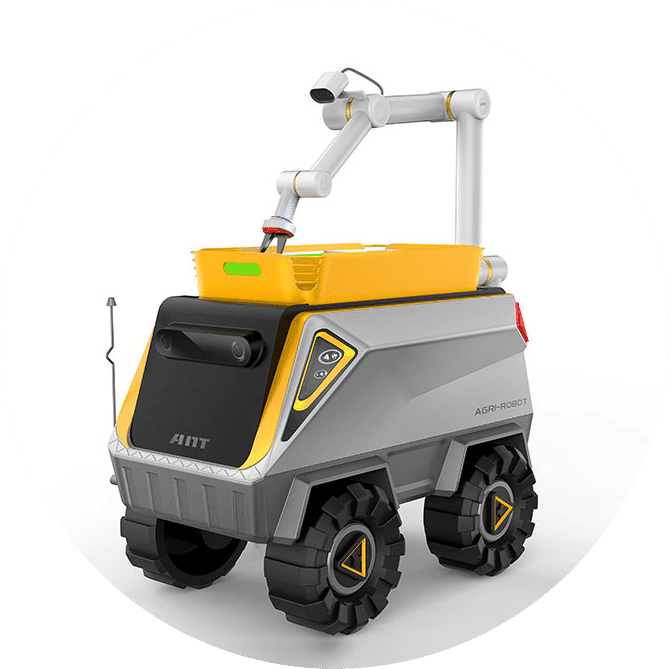
Antobot develops small, robust, affordable robotics. It secured £1.2M in seed funding in 2020 and in 2023 won a three-year £1.5M project to produce state-of-the-art fruit-picking robots. They expanded into viticulture in 2024, leading the integration of the Project VISTA-Map. Appeared in 2020.
Start-Up Showcase 2023 - Robyn Sands, Autopickr (web)

Autopickr

Autopickr is trialling “Gus,” an autonomous asparagus harvester, throughout 2024 and 2025 with UK growers. It raised £710k in 2023 and is preparing for a seed round to support commercialisation, with a projected release in 2026. Appeared in 2023.
Better Origin at REAP 2015

Better Origin

Better Origin developed the world’s first autonomous insect mini-farm, converting food waste into protein for animal feed via black soldier fly larvae. In 2022, they raised $16M, partnered with Morrisons, and expanded into the pet food market. Appeared in 2015
Ian Wheal, Breedr, in the REAP 2018 Start-Up Showcase

Breedr

Breedr’s livestock management platform tracks health, welfare, and productivity, with over 160,000 registered animals. It raised £17.5M, including £12M in Series A funding in 2022, in 2024 it launched in the U.S., and in May 2025 partnered with the UK’s Tenant Farmers Association. Appeared in 2018.
Dogtooth at REAP 2016

Dogtooth

Dogtooth develops intelligent robots for soft fruit picking using advanced AI. They raised £7M in a Series A round in 2021 and by 2025 were manufacturing hundreds of fifth-generation robots deployed commercially across 10 sites. Appeared in 2016.
Ilan Adler, EcoNomad, at REAP 2019

EcoNomad Solutions

EcoNomad Solutions offers an affordable waste-to-energy solution for smallholder farmers using bacteria to convert agricultural waste into biogas. It has raised funding through SHAKE and secured two successful rounds of SEIS funding. Appeared in 2019.
fieldmargin at REAPO 2015

Fieldmargin

Fieldmargin is farm management software, helping farmers make data-driven decisions through mapping and issue tracking. In February 2024, it was acquired by Agreena, its software reaching thousands of farmers across 170 countries. Appeared in 2015.
Fieldwork Robotics REAP SUSC 2021

Fieldwork Robotics

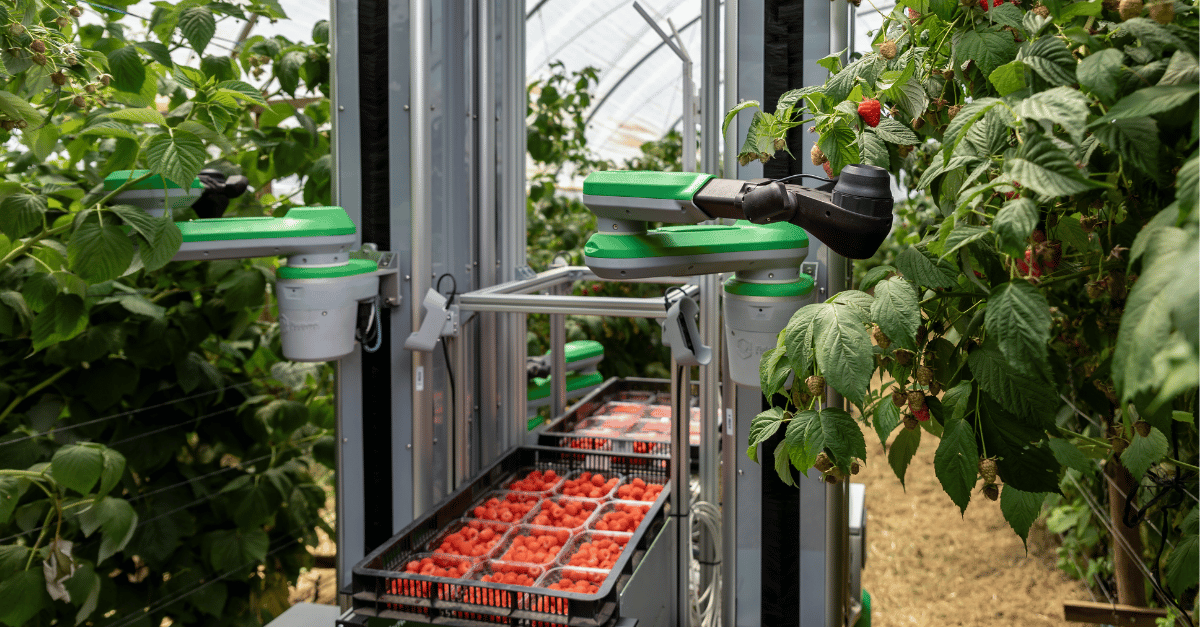
Fieldwork Robotics has developed soft, selective, and autonomous raspberry-harvesting robots. They raised £1.1M through Seedrs in May 2023, secured a £600K grant in March 2024, and in 2025 began trials in Portugal and Norfolk, and gained £258K in crowdfunding. Appeared in 2021.
Ed Fuchs, Folium, in the REAP 2018 Start-Up Showcase

FOLIUM Science

FOLIUM Science’s Guided Biotics® technology supports a healthy microbiome in plants and livestock by targeting harmful bacteria without antibiotics. In 2024, they launched a rapid Salmonella test and gained Brazilian approval for BiomElix® One as a feed additive. Appeared in 2018.
Fotenix

FOTENIX

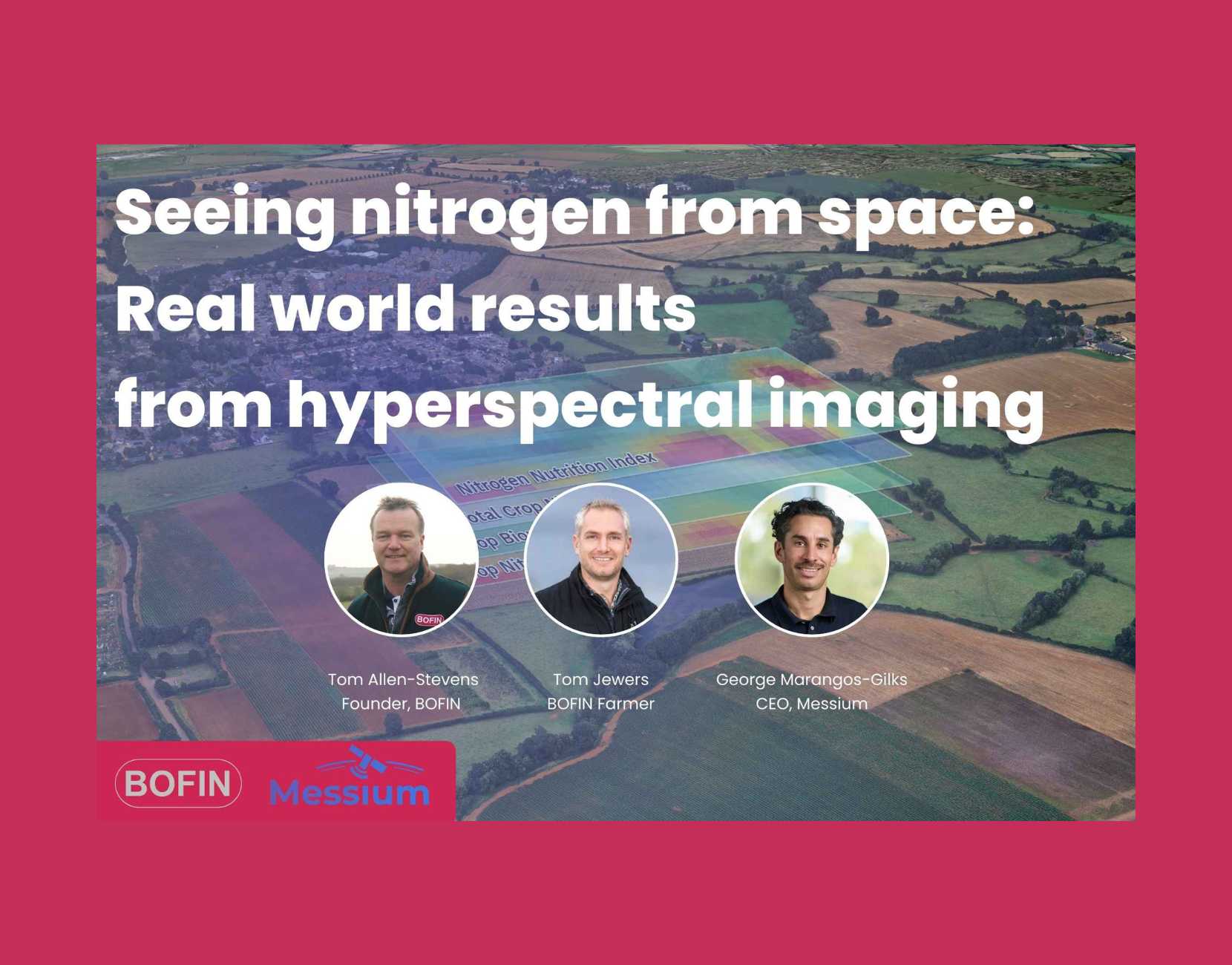
FOTENIX offers cost-effective crop analysis using 3D multispectral imaging to assess crop health and detect stress in real time. It has integrated its system with autonomous platforms and in 2025 raised £2.1M to expand UK farm deployments. Appeared in 2019.
The Start-Up Showcase - Kerry O'Donnelly of FungiAlert

FA Bio

FA-Bio created SporSenZ - a tool for real-time soil microbial analysis - with 2,600 units deployed globally. In June 2023, they received Farming Innovation Programme funding to develop biopesticides from native fungi. By 2025 they employ 36 people. Appeared in 2016.
Fabrizio Ticchiarelli, Gardin

Gardin

Gardin develops optical sensors and AI to monitor plant health via photosynthetic performance in greenhouses and vertical farms. They raised $10.8M in 2021, and in May 2025 secured a £3.6M Seed 2 round led by Navus Ventures to expand their sensing platform and commercial operations. Appeared in 2021.
Start-Up Showcase 2023 - Matthew Dobbs, HerdVision (web)

HerdVision

HerdVision’s automated camera system scores dairy cow condition and mobility in real time, integrating with DairyComp. In 2024, it raised £1.2M and £150K from Innovate UK, bringing total funding to £5.45M. In 2025 they partnered with Wynnstay and expanded into poultry. Appeared in 2023.
Start-Up Showcase 2023 - Martin Stocks, HotHouse Therapeutics (web)

HotHouse Therapeutics

HotHouse Therapeutics has raised over £2.9 million in seed funding to scale its AI-driven platform for producing rare medicinal compounds in engineered plants grown in controlled environments. Appeared in 2023.
Liam Dolan, MoA Technology, at REAP 2019

Moa Technology

Moa Technology, a plant genetics company, raised £35 million in a Series B in 2020. It is advancing next-gen herbicides with novel modes of action. By 2025, it had discovered over 80 targets and entered strategic partnerships with Nufarm and Gowan to accelerate global deployment. Appeared in 2019.
Start-Up Showcase 2023 - Jim Bailey, PES Technology (web)

PES Technologies

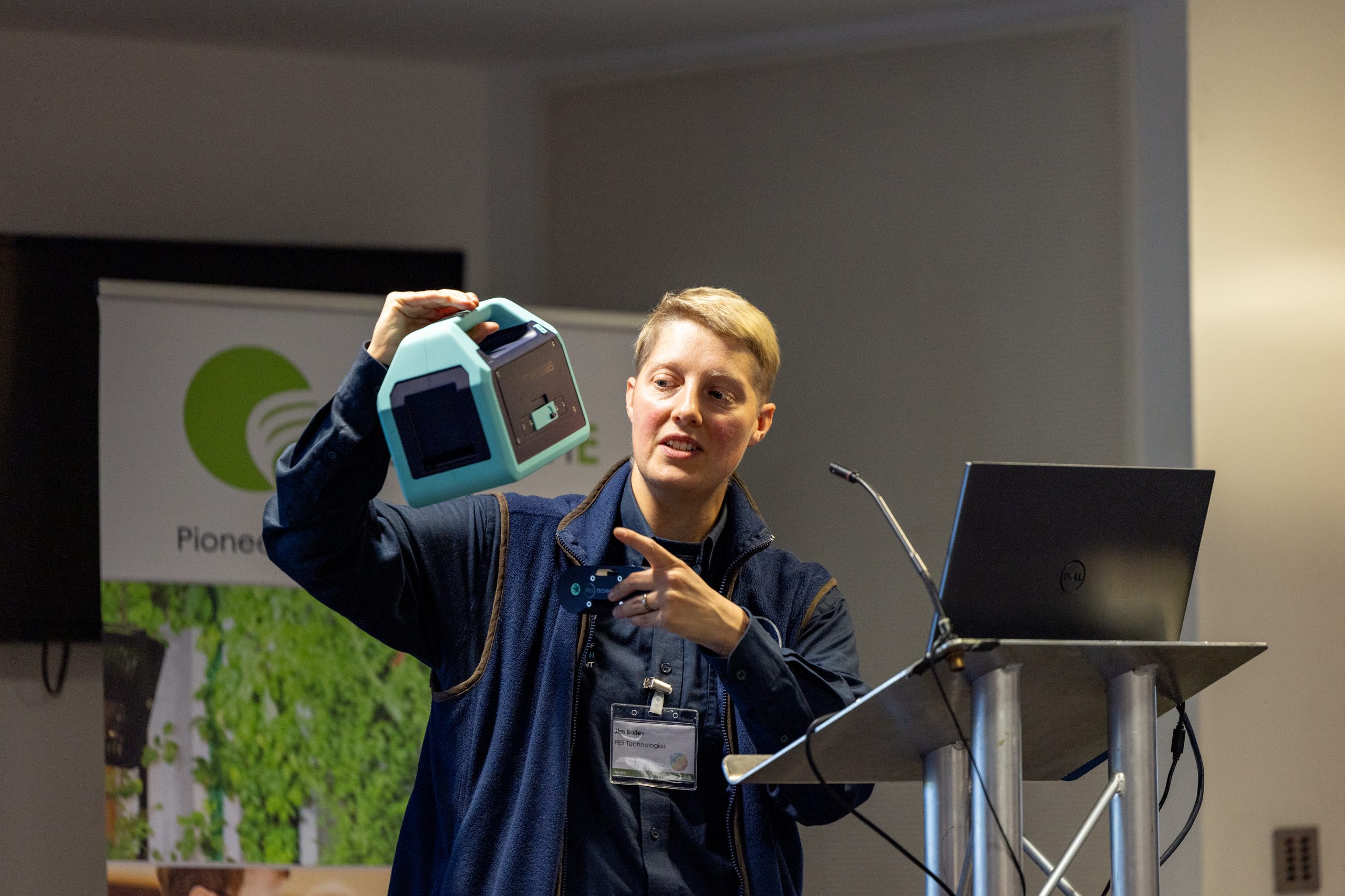
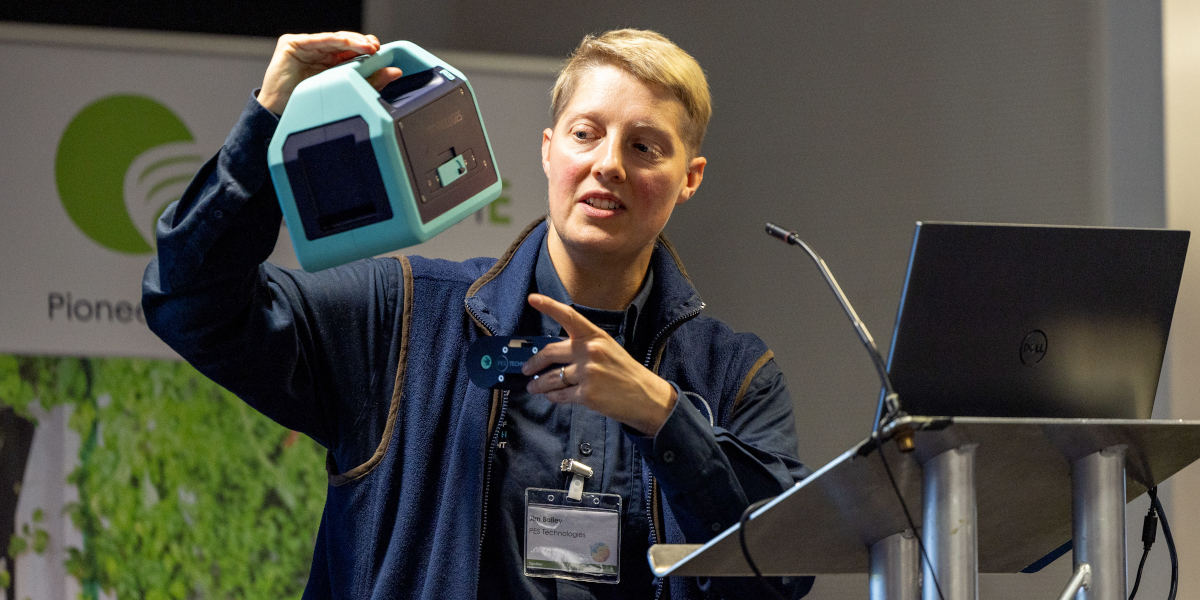
PES Technologies' soil health sensor analyses microbial activity through gas emissions providing a "biological fingerprint" that indicates soil condition. They won the FPC Award for Innovation Excellence in 2024, and in 2025, they raised £1.3M in pre-Series A funding to prepare for commercial rollout. Appeared in 2023.
Daniel Bahia, PheroSyn (web)

PheroSyn

PheroSyn develops and produces novel pest pheromones. It raised a £200K Innovate UK grant in 2021, began a 36-month collaboration project with Rothamsted Research in 2022. And in 2023, won the Radicle Inclusion Challenge securing a USD $750,000 investment. Appeared in 2020.
Plentysense REAP 2023

PlentySense

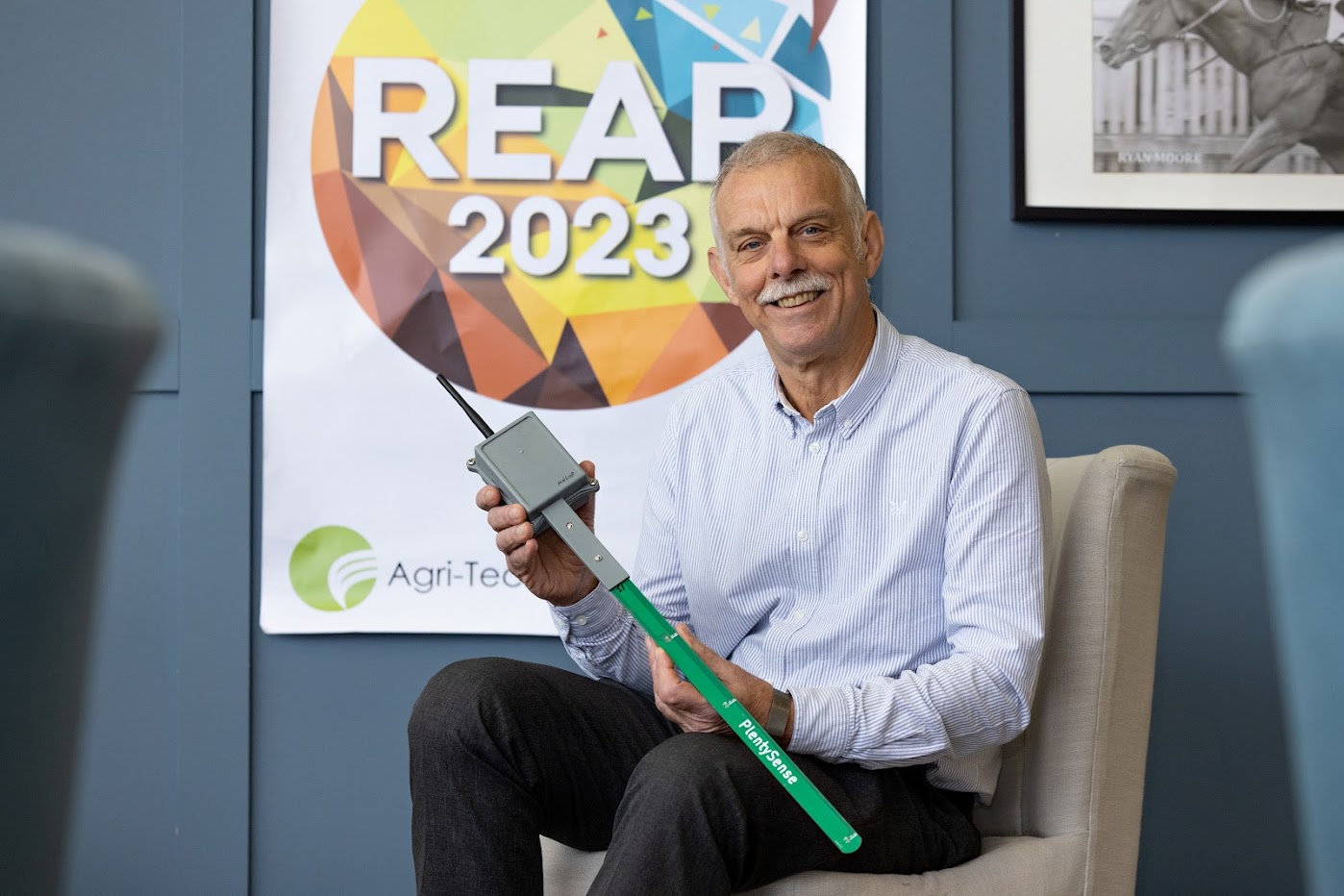
PlentySense, a spinout from John Innes Centre, has developed an advanced soil sensor that provides real-time monitoring of nitrogen availability to optimise fertiliser usage. In 2025, PlentySense collaborated with Agrii as part of their commercial launch strategy. Appeared in 2023.
C0983_213

Upcycled Plant Power

Upcycled Plant Power produces sustainable, hypoallergenic protein and fibre ingredients from discarded broccoli crops. In October 2025, it secured £3.5M in funding to scale its robotic harvesting system and launch its Prota and Fiba products. Appeared in 2024.
C0983_220

Vet Vision AI

Vet Vision AI is a veterinary-created AI system using portable cameras and behavioural analysis to give 24/7 welfare insights. They partnered with Sainsbury’s in 2024 as the first UK retailer to pilot this technology in UK dairy farms. Appeared in 2024.
Start-Up Showcase 2015 - Yagro

Yagro

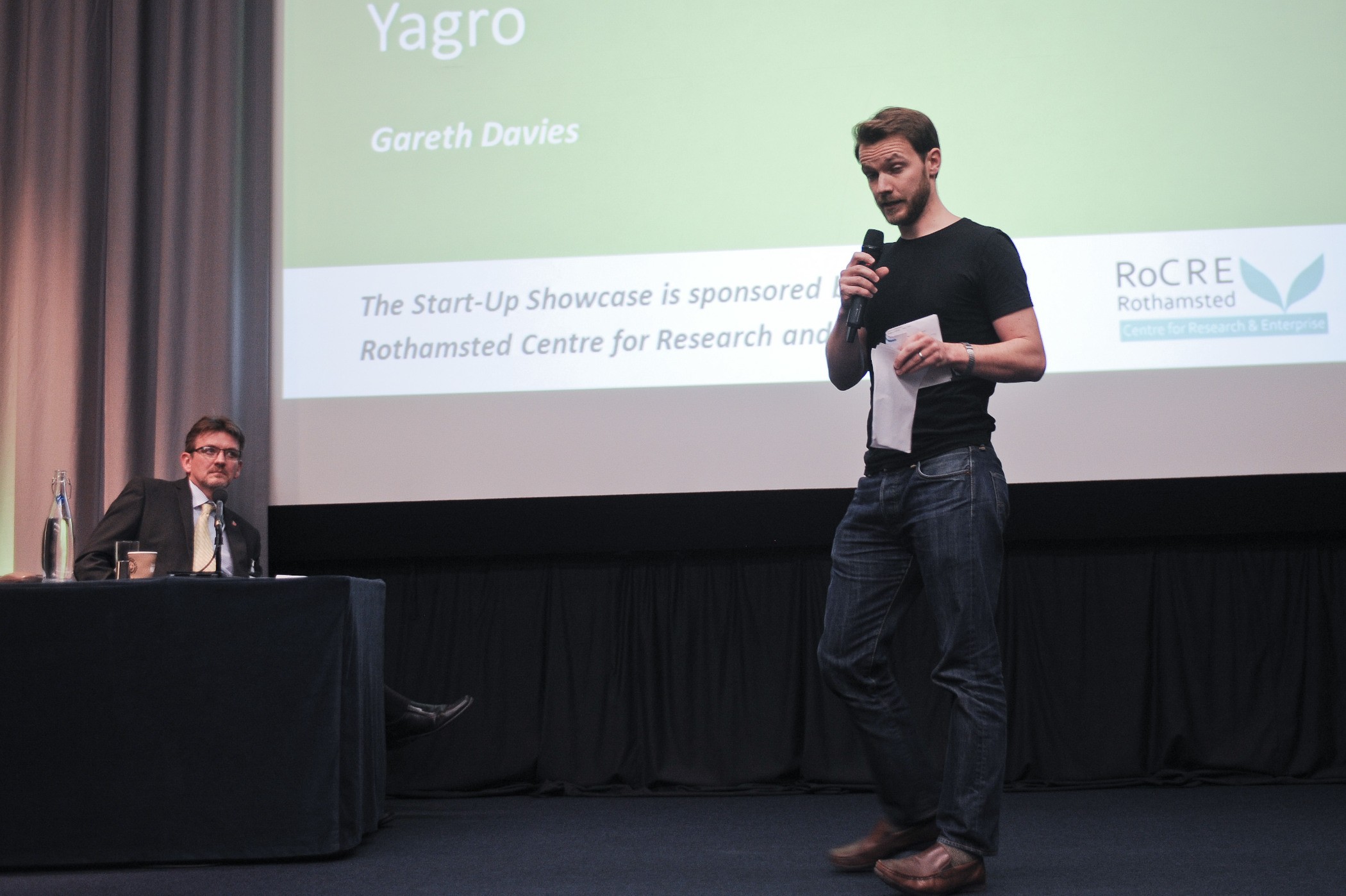
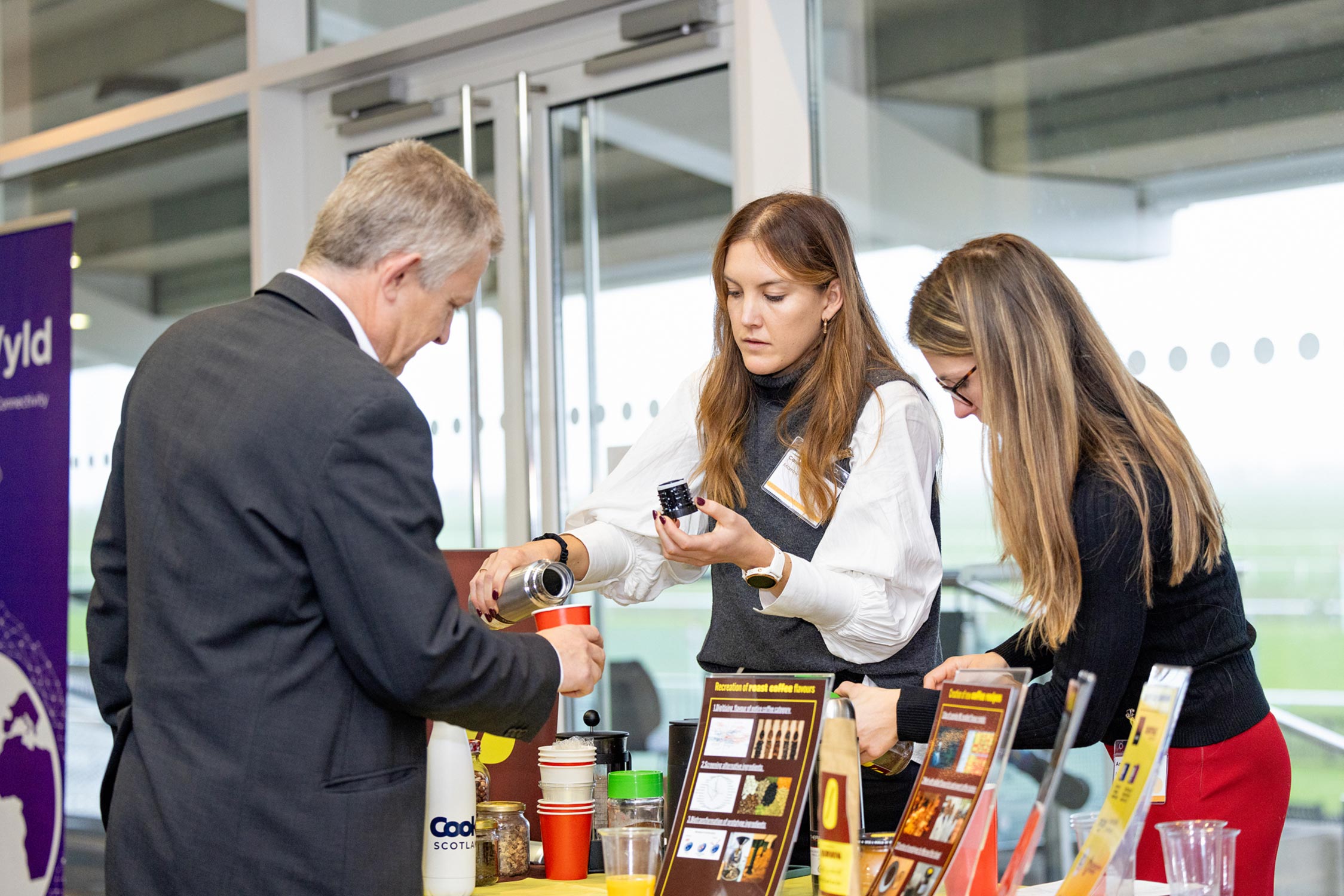
Yagro, founded in 2015, provides data analytics tools to support farm decision-making. Since launching Yagro Tracker in 2023 - which enables real-time tracking of farm costs and performance metrics - Yagro has grown to 47 employees and reported $5.2M in revenue in 2025. Appeared 2015.
Francisco-Norris-Zelp-at-REAP-2019

Zelp

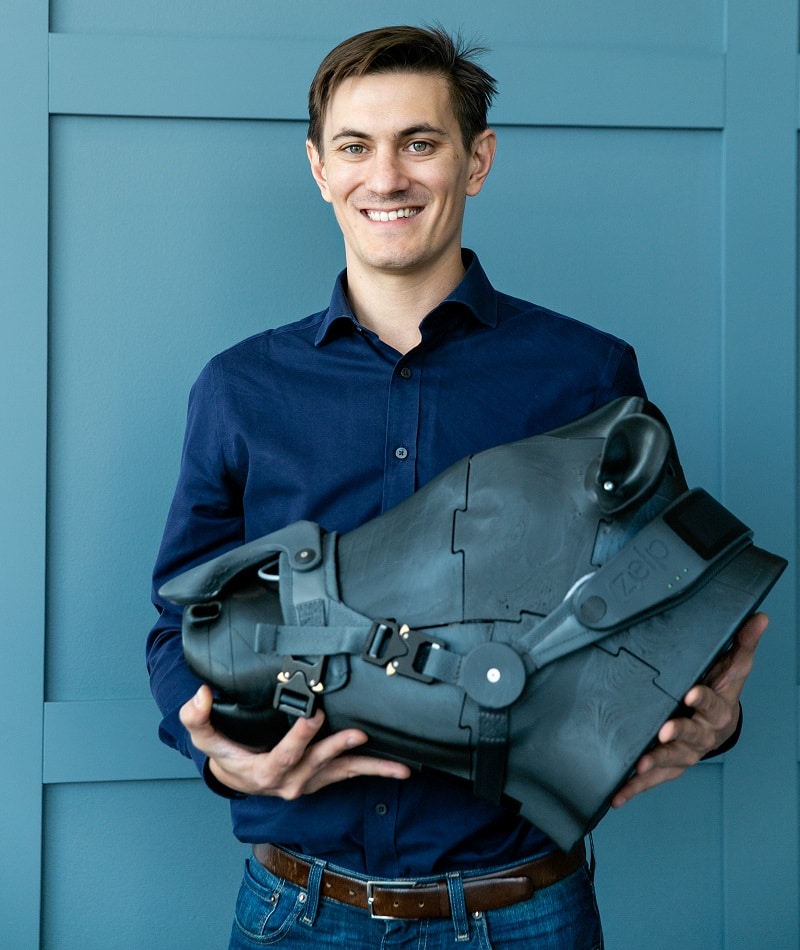
ZELP develops wearable technology for cattle that oxidizes methane emissions into CO₂, helping reduce livestock’s climate impact. They raised $10M in Series A funding in 2021, and in 2023, secured a $4.8M grant from the Gates Foundation to scale its platform. Appeared 2019.

We keep the line-up for the Start-Up Showcase companies under wraps until The Big Day. Join us live on 4 November for REAP 2025 to find out the next big players in agri-tech.


How one student found their future employer with the REAP Bursary

Agri-TechE Article
Agri-TechE

Biology graduate Reuben Langdon attended REAP 2023 with support from the REAP Bursary. He struck up a conversation with a presenter of the Start-Up Showcase in the networking session, and two months later, Reuben began his career in agri-tech.

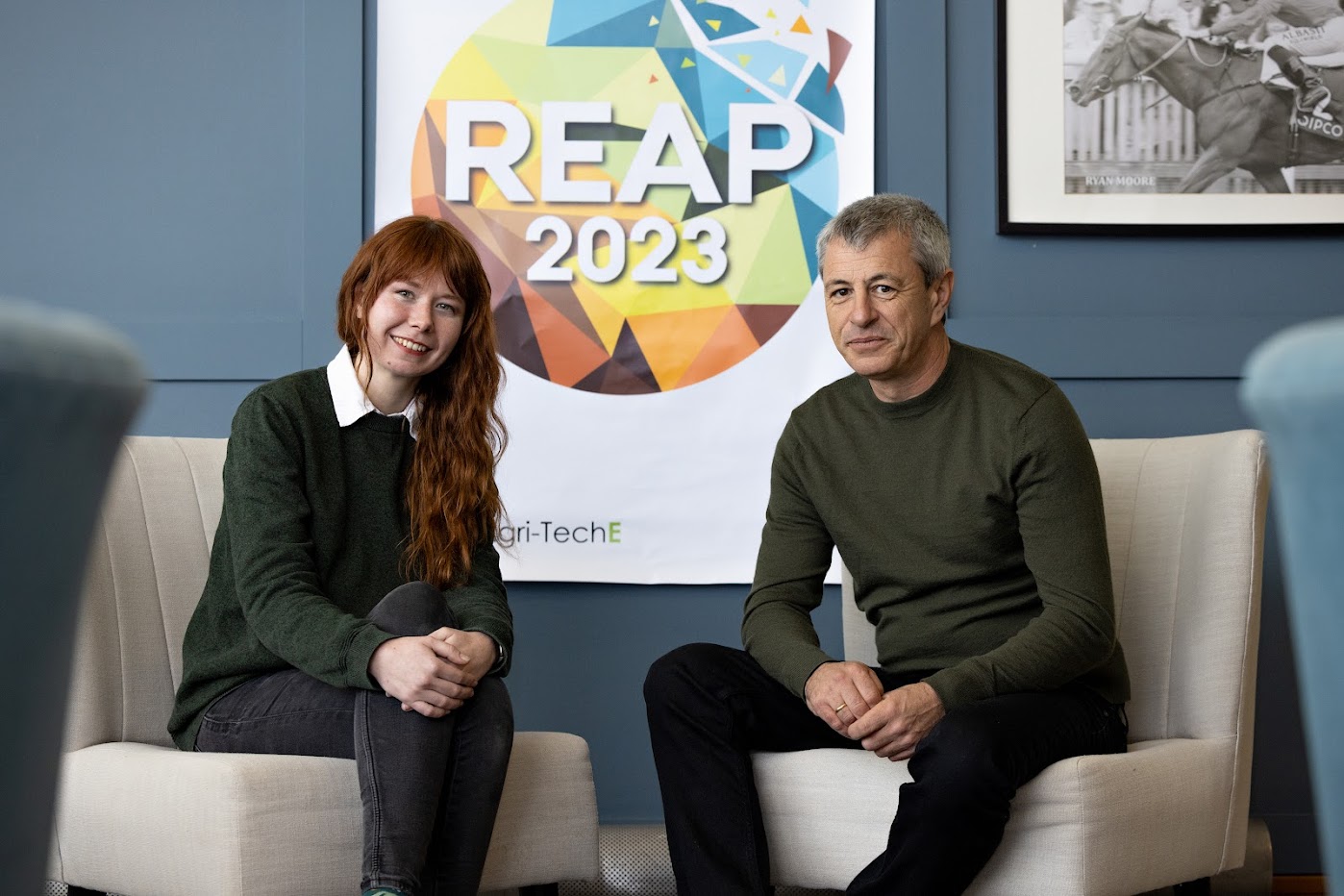
The REAP Bursary is for UK farmers and those in full-time education in agriculture or an agriculture-related discipline such as plant science, agri-engineering, or environmental sciences. Kindly sponsored by the Royal Norfolk Agricultural Association (RNAA), the Bursary discounts the ticket price to £65 for Agri-TechE ’s flagship REAP agri-tech conference on November 6th at Newmarket Racecourse.
Untitled design (12)
Nima-Eskandari-Agtelligence-REAP-2023

Ahead of the event, Reuben was unsure if he could participate in the networking sessions without industry contacts. However, he found the friendly atmosphere and diverse group encouraged him to contribute, which is where Reuben made the connection that began his career.

“I had hoped to meet a future employer but had no expectation to do so,” says Reuben. “I simply attended (REAP) to listen to those at the forefront of the industry to enjoy the range of speakers and panellists across policy, technology, farming and science.”

Reuben met Nima Eskandari, founder of Agtelligence, in the networking session at the end of the day.

“Nima had just presented in the Start-Up Showcase. I was keen to find out more about how he approached the problem of monitoring regenerative agriculture and what kind of interest he had gathered,” explains Reuben.

The connection made at REAP developed into an offer of a position at Agtelligence.

Reuben Langdon
Reuben Langdon
Project Assistant, Agtelligence

REAP is a fantastic opportunity to learn about ongoing innovation and meet the people behind it.

I highly recommend attending to any student interested in the intersection between agricultural sciences, farming, technology and policy.

An important take-home message from REAP for Reuben was that there is a strong demand for new skill sets and opinions from young professionals within the agricultural technology industry.

“REAP is a fantastic opportunity to learn about ongoing innovation and meet the people behind it. I highly recommend attending to any student interested in the intersection between agricultural sciences, farming, technology and policy.

“The panel sessions are informative and engaging, and balance competing interests well. The networking sessions offer a relaxed environment in which to discuss interests further.

“Without the bursary from the RNAA, I would not have been able to attend,” adds Reuben.

The REAP Bursary is open to UK farmers and those in full-time education in agriculture or an agriculture-related discipline. Eligible applications to be considered for one of the bursary tickets can be made here, through the Agri-TechE website. It closes on October 25th.