The Productive Landscape: NatureTech for Profit and Planet
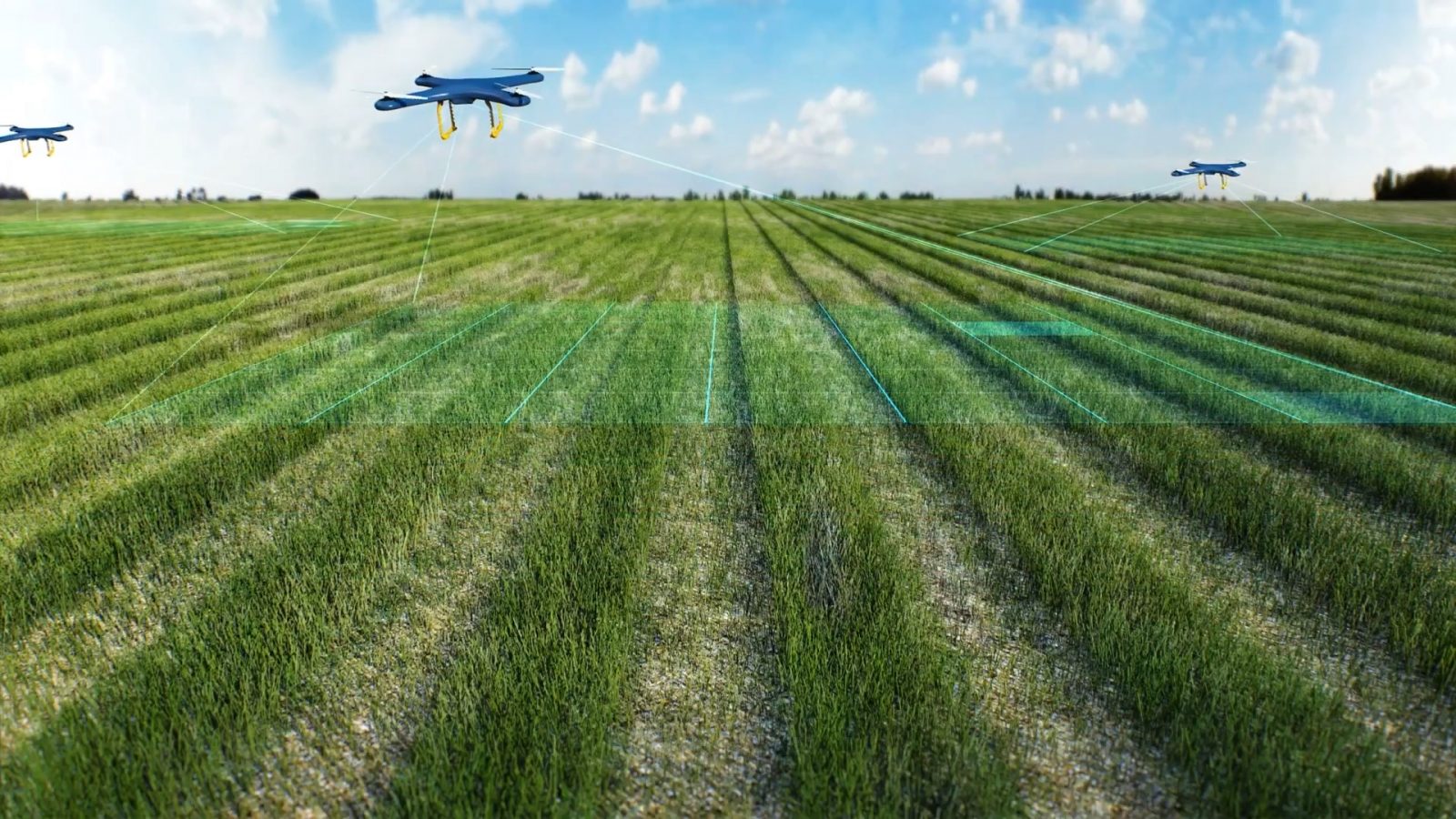
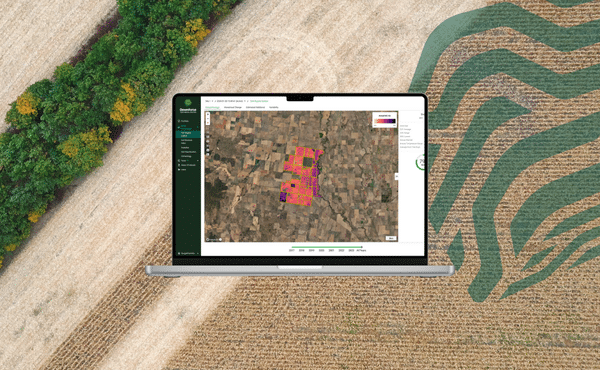
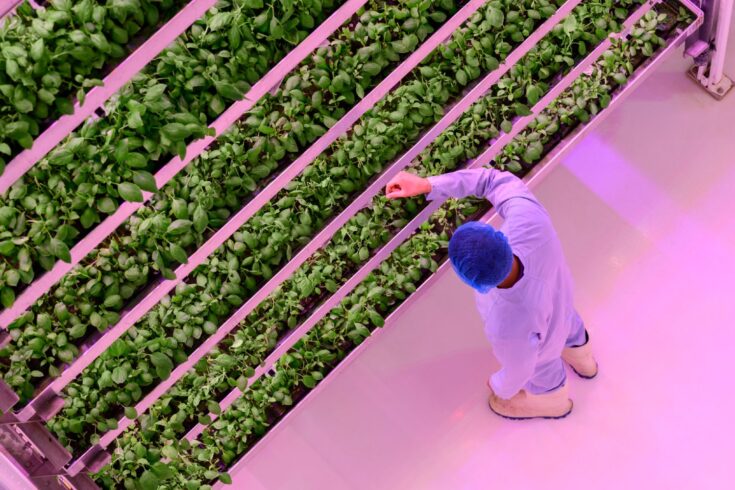
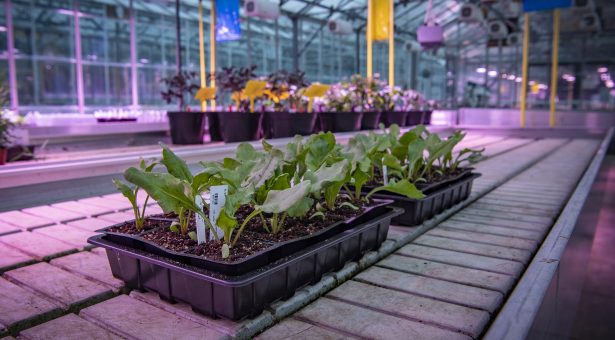
How can technology enable delivery of food, nature recovery, and climate resilience - all at once? The Head of the Environment Agency is asked: what's the national plan for dealing with land use pressures, plus you’ll hear from technologists and land managers working on nature-based and tech-enabled solutions for water, soils and climate adaptation.

60 Harvests Left: Debunking the Myth – Daniel Evans

Agri-TechE Article
Agri-TechE
Daniel Evans

75th Anniversary Research Fellow, Cranfield Soil and Agrifood Institute

“Headlines suggest the world’s topsoil could be gone in 60 years, but does the evidence support these claims? For the first time, a global study has assessed soil lifespans, revealing the urgency needed to combat soil thinning. While most soils are thinning, some soil conservation practices are bucking the trend.”

Dan Evans

The Emerging Agri-TechE session at REAP 2020 is kindly sponsored by EIT Food.
Deep Branch’s tech converting industrial emissions to animal feed secures €2.5M

Meet the Network
Agri-TechE
Using microbes to convert carbon dioxide from industrial emissions into a new type of single-cell protein, called Proton, Deep Branch has developed a low carbon animal feed with a nutritional profile that is comparable with fishmeal, the gold-standard protein source in aquafeed. The company has secured €2.5 million of European Innovation Council (EIC) Accelerator funding to build a new facility at the Netherlands-based Brightlands Chemelot Campus, a hub for circular chemistry and chemical processes.
The new facility will complement the REACT-FIRST project supported by Innovate UK, which through extensive research and testing will help the partners to gather valuable data about the cost, digestibility, nutritional quality and carbon footprint of Proton. Working with renewable power company, Drax, as well as a consortium of industry leading partners, the technology has already been proven on a smaller scale. This latest funding will enable Deep Branch to scale up increasing production to enable animal feed manufacturers to expedite performance testing of the new protein. Deep Branch expects the facility to be operational by Q2 2021.
Peter Rowe, CEO of Deep Branch, said: “In the UK, and in Europe, poultry and farmed fish are usually fed on fishmeal and soy, which is mainly imported from South America and has a huge environmental impact. We are developing a new, sustainable way of producing animal feed, which reduces CO2 emissions by more than 90 percent, compared to the currently used protein sources.”

Industrial emissions to animal feed 

Unlike fishmeal, Proton can be produced year-round, reducing the impact of any seasonal fluctuations in price or yield.
“We’ll be undertaking further trials with BioMar and AB Agri, two leading animal feed companies that support the salmon and poultry farming industries. Thanks to the EU’s Horizon 2020 research and innovation support, we can expand our production capacity to match the volumes that feed producers need to run these trials.
Bert Kip, CEO of Brightlands Chemelot Campus, said: “Deep Branch fits into our sustainable profile perfectly, and is the first organization at this campus that is active in gas fermentation. This is another area where we can develop a leading position.”

Iceni Diagnostics appoints BBI to produce its Covid-19/Influenza test

Agri-TechE Article

Agri-TechE
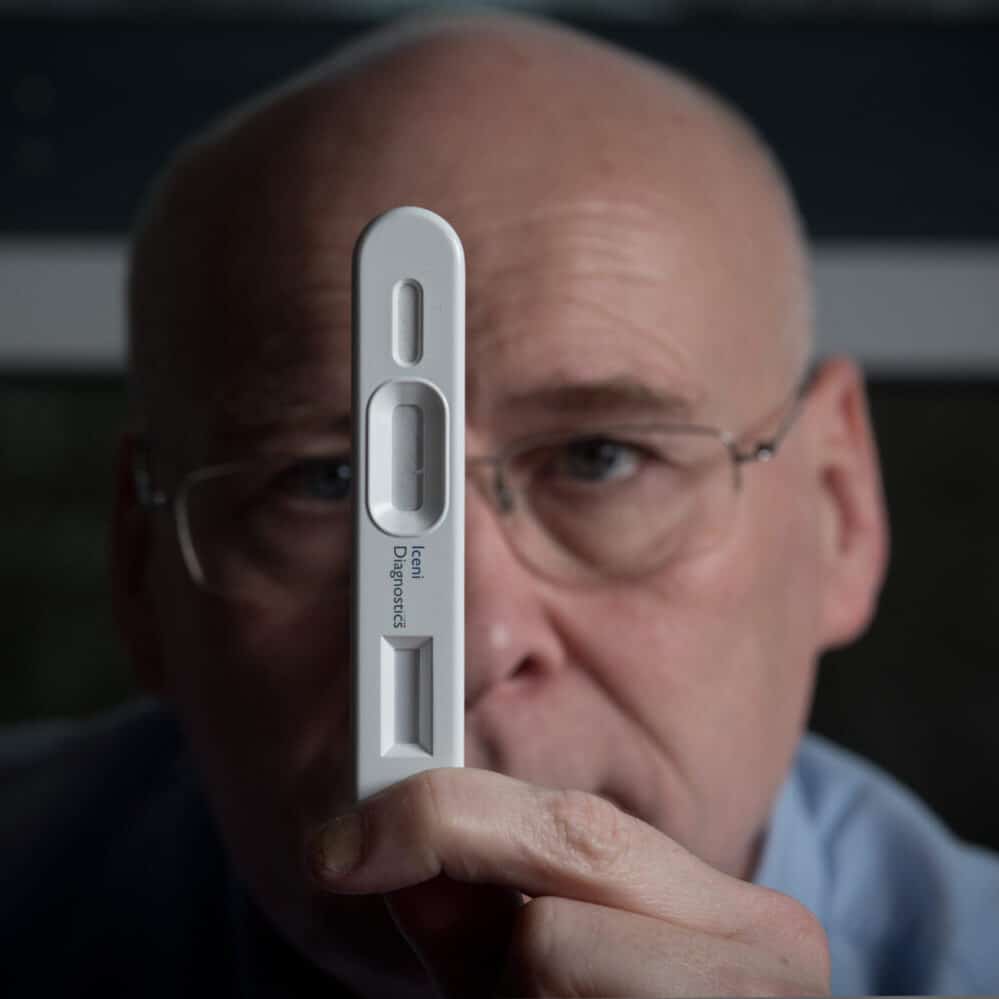
Iceni Diagnostics has appointed BBI Solutions to produce clinical trial batches for their new, rapid Covid-19/Influenza test. The test exploits the diagnostic company’s unique, proprietary HPGR™ (Host-Pathogen Glycan Recognition) technology to detect the presence of live virus in non-invasive samples within 15 minutes.
The agreement between Iceni Diagnostics and BBI will transfer protocols to standard lateral flow equipment. This work will enable the generation of devices for clinical trials, with the expectation of moving to assay scale-up and manufacturing transfer.
BBI is an ISO 13485 accredited manufacturer and will work with Iceni Diagnostics to deliver the necessary information required for CE marking of the final product. In parallel, similar studies will be undertaken in the US through a comparable program with a US manufacturer. Professor Rob Field, CEO of Iceni Diagnostics said: “We are delighted to be working with BBI on our rapid Covid-19/Influenza test. BBI has a clear understanding of our unique HPGR™ technology, and we are confident they can help us meet our ambitious targets to get product to market as quickly as possible.
“We are excited about the potential of this test. Our proprietary technology identifies intact virus, unlike most existing tests that identify viral genetic material. This crucial difference means that a positive result is a key indicator that live, active virus is present, giving a clear signal of current infection, whether the patient has started to show symptoms or not. Significantly, the test may also identify asymptomatic carriers and thus limit virus spread. It will similarly give rapid clearance to those who need to return home or to their school or workplace but who may still be carrying inactive virus particles following infection.” “We are manufacturing a duplex test that differentiates between SARS-COV-2 and Influenza from one sample. Covid-19 and human flu have similar symptoms so our test will be vital in supporting lockdown decisions during the winter flu season.
“The test is housed in a lateral flow device, with results available within 15 minutes. This makes it ideal to use as a rapid triage option to complement laboratory testing.
“Much interest is being generated worldwide and Iceni Diagnostics is heavily involved in generating the required investment to rapidly accelerate validation, manufacture and distribution to the global market.”
Dr. Mario Gualano, Chief Executive of BBI Group, said “BBI is delighted to extend our lateral flow development expertise to assist Iceni in translating their HPGR™ technology to market readiness for SARS-Cov2 and Influenza testing.
With BBI’s extensive experience in the In Vitro Diagnostics arena, we are confident that the Iceni Diagnostics technology offers significant potential benefits in pathogen detection while maintaining compatibility with an established, scalable, and trusted lateral flow diagnostic platform.
We look forward to working together in further addressing the global challenges presented by COVID-19.”

East Netherlands’ ‘Foodvalley’ comes to REAP

Agri-TechE Article
Agri-TechE
The East Netherlands, home to the Wageningen UR-Foodvalley Region of the Netherlands, will have a presence at REAP. Oost NL, the East Netherlands Development Agency, has joined Agri-TechE as a member and is keen to develop stronger relations with the UK agri-tech community by bringing a delegation to REAP 2020.  The day before there will be a webinar “Meet the Dutch’ to introduce the team from Oost NL  9th November. Remco Lucassen, Trade Development Adviser at Oost NL, comments: “Agri-TechE membership was brought to our attention by one of the partners we work with in Norwich.

“As there is much to be gained for both regions from our cooperation, we are happy to be a member.
“East Anglia, in particular, is a region with a long agricultural history and very strong agro sector and we can bring expertise from, for example, Wageningen University and the agri-tech ecosystem from our region and connect the members of Agri-TechE to our region.” The East Netherlands attaches high value to relations with the UK. Marloes de Goeijen works as advisor new business UK at Oost NL.

She adds: “Hopefully, we can add synergy by acting on behalf of our region and co-create with Agri-TechE to foster new partnerships and innovative events.”

International scope

For Agri-TechE the membership of Oost NL strengthens further its international bridge building, as director Dr Belinda Clarke explains:
“By building links with centres of Agri-tech innovation worldwide we are creating mutually beneficial relationships.  For early stage technology companies overseas expansion can be time-consuming and risky. By creating an environment where insiders introduce them to the ecosystem reduces these barriers. Our farmer members can also benefit from sharing best-practice and export opportunities.” The Wageningen UR-Foodvalley Region in the Netherlands is a primary knowledge-intensive agrifood ecosystem, characterized by many world-class innovative agrifood and food-related solutions and by cooperation between companies, knowledge institutions, education, and governments. Remco continues: “In this area you will find the largest concentration of innovative agrifood organisations. The collaboration possibilities between organisations, the availability of talent and the presence of Wageningen University & Research, has made the region the ‘place to be’ for innovative agrifood companies.”
The East Netherlands has particular strengths in:

  • Agtech and innovation: stimulated by Wageningen University and the ecosystem that’s in place to accelerate innovations
  • AgriTech Solutions: the University Twente
  • Poultry related industry: Barneveld is the poultry capital of the Netherlands
  • Animal Feed: large feed companies like De Heus, Agrifirm and ForFarmers are present
  • Veal industry and processing of meat and food
  • Fruit growing industry: Betuwe
  • Food logistics
  • Alternative proteins: there is a large concentration of companies active in plant based/ alternative proteins / Meat replacers such as Vivera, Beyond Meat, Ojah, Unilever.

Meet Wageningen UR-Foodvalley Region organisations at REAP 2020

Ahead of the REAP conference, REAP conference, Marloes will present an overview of East Netherlands and the agri sector and highlight the services available for British companies that are interested in European expansion (see details below about the webinar.)
We’re delighted to announce that the following businesses from the Netherlands will be exhibiting at REAP. All are particularly keen to connect with other REAP attendees and exhibitors and are looking forward to welcoming visitors to their digital booths. If you would like to schedule a meeting at the conference with any of the businesses listed below, please contact Alex Dinsdale.
AgriProgress supplies consultancy, training, and interim management to support businesses looking to develop into European maerkets. They are looking to meet UK companies exploring these markets, in particular, those involved in precision agriculture, soil sensors and robotic machinery and equipment.
AgriWatch BV supplies geospatial services for precision agriculture, based around affordable remote sensing and data acquisition, to help its customers make better decisions. They would be keen to speak to UK farmer & grower businesses interested in learning more about the opportunities offered by remote sensing, and businesses which provide technical support services to farm businesses.
Amstel Agro manufactures fertiliser products which provide, and improve uptake by plants of, silicon and silicon compounds, for better crop development, improved resilience and higher yields. They’re interested in talking to both UK agro-chemical distributors and end-users, in particular businesses growing tomatoes, apples and roses.
Drone4Agro supplies drones with extra-large payloads of up to 500kg, for use in irrigation & spraying. Controlled using GPS, the drones automatically take off, fly and spray crops with 2 cm accuracy. They’re keen to speak to farmers & growers who are interested in automated and targeted watering and chemical application (including fertiliser), for example on inaccessible land inaccessible such as slopes, orchards and wet ground.
Huizing Harvest BV offers technical support, operator training, harvest optimization, equipment checks, installation of machines and machinery modifications to machinery businesses establishing operations in new geographies. They are looking to meet manufacturers and exporters of agricultural machinery and equipment who are looking for HR support in other markets (service engineers, installation specialists etc).
Kubota Innovation Center Europe focuses on the creation of new business ventures, products, and services in agriculture. The Center acts as a venture arm of the Group and invests in promising agri-tech start-ups & advanced technologies, with a focus on specialty crops including fruit, vegetables & wine, as well as in hay & forage automation. They’re really keen to speak to agri-tech start-ups and early-stage businesses looking to expand in Europe, as well as those seeking investment. It is also seeking collaboration opportunities with existing businesses.
RMA BV provides decision-support for irrigation and crop protection in arable, vegetable and fruit crops. The company employs a range of sensors, related software, forecasting, disease models and agronomic advice to support growers in managing irrigation and controlling disease & pests. RMA BV would like to speak to farmers & growers, and companies providing technical & agronomic services to farming businesses.
You’ll be able to ‘swing by for a chat’ the digital booths of these exhibitors on the day itself but if you’d like to schedule a meeting in advance please contact Alex Dinsdale

Webinar – Meet the Dutch – 9th November 

You can find out more about opportunities, and the agri-tech sector in the Netherlands at a webinar on Monday 9th of November, 10am – 11.30 GMT. You’ll get to hear from various guest speakers at the Royal Netherlands Embassy in London, and the Dutch mission delegates (described above) will also be presented. The webinar is free to attend and will be run via MS Teams. Click here to register by email.

  • Opening  – Michiel van Deursen, NBCC
  • Presentation about the East Netherlands Region – Marloes de Goeijen, Oost NL
  • Opportunities for Dutch and UK companies –  Bas Harbers, Agricultural advisor Dutch embassy London
  • Introduction Dutch Trade Mission Participants –  Michiel van Deursen – NBCC
  • Supporting words –  Andrew Wood, Dutch Honorary Consul in East Anglia
  • Practical information and Q&A  – Michiel Martijn, NBCC/Oost NL

For more information and to reserve your place, click here to register by email.

Analytik launches new HyperAixpert multisensor plant phenotyping system

Meet the Network
Agri-TechE

Plant phenotyping is an emerging science that links the structure and appearance of a plant with its underlying genomics.  The genetic make-up is the genotype, the expressed characteristics are the phenotype. The growth and development of the plan is a result of a dynamic interaction between its genetics and the environment both above and below soil.
Analysing the phenotype is therefore important for research so, to determine the success of breeding, a new system from Analytik combines machine-learning with sensors to provide a rapid digital analysis of phenotyping traits. The new HyperAixpert multisensor plant phenotyping system from Analytik uses advanced machine-learning based analytical software together with an intuitive experiment driven design to ensure that data acquisition is both standardised and repeatable.
Suitable for a range of sample types for experiments in genetics, plant research and breeding, plant cultivation products as well as detecting plant stress and diseases.

Key features of HyperAixpert

  • Can be configured to operate hyperspectral cameras in scanning mode
  • Options for PAM chlorophyll fluorescence imaging and NIR imaging also enable the HyperAixpert to deliver top quality physiologically relevant data
  • RGB-imaging and laser scanning sensors enable study of plant morphology of plants under study
  • Comprehensive data sets originating from the broad range of cameras/sensors deliver phenotypic data on both morphological and physiological levels.
  • Broad ranges of typical laboratory samples can be measured, including seedlings up to 20 cm height, samples in MTPs or petri dishes, or detached plant parts.
  • Samples on trays can be loaded into the measuring cabinet by the user, or via an automated TrayProvider unit as an optional accessory.
  • The HyperAixpert is designed for easy integration into climate control chambers.

Though the HyperAixpert was designed to work with model species such as Arabidopsis, it equally handles early-stage seedlings of most crop species. Beneficially the multisensor plant phenotyping diagnostic power of the system is not restricted to just plants, several other sample types match with the system, too. For instance, assessment of fungal growth on plates, or insects feeding on leaf discs are applications that have been investigated by the HyperAixpert.
See more detailed information on the HyperAixpert multisensor plant phenotyping system

REAP Conference Bursary

Agri-TechE Article
Agri-TechE

REAP CONFERENCE 2026

APPLICATION FOR FARMER and STUDENT DELEGATE BURSARY

Anyone in the UK who is a grower or farmer, or who is in full-time education in agriculture is eligible to apply.

  • This field is for validation purposes and should be left unchanged.

Understanding the agri-tech ecosystem – from very very small to very very big

Agri-TechE Blog
Agri-TechE

“A virus,” according to Monty Python, “is what we doctors call Very Very Small.”
Yet as the last six months have shown, the ‘Very Very Small’ can have impacts on a massive scale. And just as the microscopic can dramatically influence the global, similarly actions and interactions on a big scale can affect much smaller systems and processes.
It is the inter-connectedness of nature, across different scales, that makes understanding farming and agri-food production systems so complex.
Scientific research has often taken a “reductionist” approach to understanding how things work – paring down to the bare bones of the genetic make-up, or the key processes in a single system. As it is both intellectually challenging and technically difficult to consider how natural systems on different scales work and interact with each other in a living landscape.
But we think it’s time to try. To achieve the global ambitions for agriculture, food production and land management, we need a much better understanding of how systems at these different scales operate and interact.
An ecosystem is a community of interacting organisms and their physical environment –underpinned, crucially, by the inter-connectedness and inter-dependencies of all its members.
Increasingly, we are realising the importance of linking the impact of the “micro-scape” – bacteria, fungi, insects, soil particles, root exudates – on the “landscape” or catchment and vice versa and this has inspired the theme for REAP 2020.
This need to think across multi-level scales has parallels with how innovation ecosystems operate as well. For example, by facilitating the linking up of smaller start-up businesses, individual research projects and consultants with the larger farmers, agri-businesses and investors – we are helping them to develop and bring benefit to the wider, global agri-tech system.
We’ll be showcasing our unique agri-tech ecosystem at REAP.
Just as in nature, the different scales in an innovation ecosystem need to be managed and understood in conjunction with each other, rather than thinking they all operate in isolation. The coming together at REAP, we believe, is a key enabler for that to happen.

Agri-tech ecosystem 

REAP 2020 will be bringing together an international audience to explore how agri-tech to helping us to understand how the ‘Very Very Small’ impacts on the ‘Very Very Big’ in the agricultural and food production ecosystem – and the emerging research that is helping to inform that thinking.
We’ll also be welcoming international delegations, such as members from Oost NL in the Netherlands,  who offer opportunities for members of the ecosystem to realise their ambitions on a global scale.
So come and join us – see how agri-tech is moving from lab to field and helping us to develop new types of food systems, learn how the smallest bacterial population can wreak havoc on a herd, or how  landscape level thinking can influence soils health. And see some of the latest technologies to help monitor, measure and manage the different scales at which our agri-food system operates.

Forestry or farming? Agroforestry offers a third way

Agri-TechE Article
Agri-TechE

Extreme weather at harvest can reduce cereal yields by 20 per cent, but for Stephen Briggs’ Cambridgeshire farm, the natural windbreak provided by agroforestry cut the loss by half during the storms of 2019. The benefits for farmers of growing trees within crops are not widely known, according to Dr Belinda Clarke, Director of Agri-TechE .
“Agroforestry offers more than habitats for wildlife,” comments Dr Clarke, ahead of an Agri-TechE online event “Seeing the Wood for the Trees,” on 8th October at 10am. The event sees Briggs, and others, discuss the potential of agroforestry for improving cropping, livestock production and as an alternative source of income. Briggs grows apple trees in strips across 52 hectares of fen soil on Whitehall Farm. He recounts: “In 2019 we lost about 20% of the grain in the high winds. However, in the fields with agroforestry, the losses were less than 10%. The trees slowed down the wind saving £215/ha worth of output.
“Growing fruit alongside cereals also means I’m doubling productivity across my farm, by effectively growing in three dimensions, throughout the year,” Briggs continues.
“Forestry or farming? To date it has been a binary choice but it doesn’t need to be,” says Jim O’Neill, of the Forestry Commission. “Combining the two can bring new incomes and benefits to the soil. “It’s important to make the best of poorer areas of land,” O’Neill advises growers in Cumbria as part of his role as Forestry Investment Zone Officer. “Trees can help, especially in the wet compacted soil that we have here in Cumbria. Planting trees increases aeration, water storage and fertility in the soil – all of these effects together can boost the productivity of the grass sward. Trees also provide shelter to animals in heavy weather or hot sun.”
Strategies that offer ‘public goods’ will be rewarded with payments as the UK transitions to ELMS (Environmental Land Management Scheme). Trees offer a carbon store, assisting the industry reach its net zero targets. Advice on carbon storage payment schemes will be given in the webinar by consultant Greg Beeton of Brown & Co.
The availability of trees for large scale tree planting may be a limiting factor, as germination rates are only 30 per cent, but overcoming this through advanced seed treatments is an area where the UK has strong track record.
Philip Ayres of Elsoms Seeds comments that the company is using its expertise in vegetables to improve the germination rate of tree seeds and provide alternatives to chemical seed treatments. He says: “To encourage germination we prime the seeds, through hydration and conditioning to get a more even germination, but also to improve the vigour. In addition, we’ve started tree seed trials with three of our biologicals that were already on the market for vegetables. These microbe packages help boost the ability of the tree to take up fertiliser and stimulate root growth of the plant.”
The Agri-TechE online event, ‘Seeing the Wood for the Trees,’ will occur on October 8th. For more info and to reserve your place, visit the Agroforestry event page.

Tree Seeds Primed for Growth

Meet the Network
Agri-TechE

Forestry and Land Scotland has strong ambitions to grow millions more trees, but they simply don’t have enough trees to meet demand,” says Phillip Ayres of Elsoms Seeds. “Tree seed supplies are sporadic – good years of production, called mast years, are interspaced with a series of barren years during which seed availability is poor; creating shortages.”
“We spotted an article about the CivTech Challenge that was looking at improving Scotland’s tree-seed. We felt that the sort of issues described were very similar to those we deal with in the vegetable industry – so that’s when we got interested,” says Phillip, who manages Technical Sales at Elsoms Seeds, leading plant breeding specialists in the UK.

Getting a good start

“They were getting tree seeds with high germination rates in the laboratory, but when they got it out into the field, the success rates were very low. So our idea was to take some tree seed and apply the sort of technology we use in vegetable seeds.” “To encourage germination we prime the seeds. Priming is a tailored process of hydration and conditioning – it doesn’t involve any chemical additives,” Phillip explains. “What we’re aiming to do is get a more even germination, but also to improve the vigour. So, in vegetables, the treatment means you get a quicker strike off, quicker establishments, and in turn a better root ball establishment, all of which gives a generally more vigorous plant.”
“In vegetable seeds we’d be looking for >86% germination rate, whereas the foresters we spoke to considered 20% as good. So, if we could increase that to just 40% we would already be doubling the number of viable trees available for sale.”
The priming process at Elsoms Seeds is able to maintain seeds in a state ready for germination. This would help to mitigate the sporadic seed supply in trees. Phillip says it’s still early days; “We’ve only been working on this since November 2019 so we’re still in our first set of trials.”

A Biological boost

Looking to the future, Elsoms Seeds is investigating additional means of increasing plant germination and survival, as chemical seed treatments are increasingly being withdrawn.
“Biologicals are a microbe package that helps boost the ability of the tree to take up fertiliser, to stimulate root growth of the plant,” Phillip explains. “Some of them work by multiplying in the soil, to surround the germinating tree with healthy fungi and bacteria and this stops pathogens from reaching the plant. This is an area that agriculture is currently moving towards, so we felt it would be a good idea to start looking at microbials in tree trials.”
“We’ve started tree seed trials with three of our biologicals that were already on the market for vegetables – this is something that Forestry and Land Scotland were very interested in.” Phillip Ayres will be speaking alongside Jim O’Neill of the Forestry Commission, Greg Beeton of Brown and Co and Stephen Briggs of Whitehall Farm at the Agri-TechE online event, ‘Seeing the Wood for the Trees,’ on October 8th. For more info and to reserve your place, click here.

Nurtured woods provide farming goods, say the Forestry Commission

Agri-TechE Article
Agri-TechE

“It’s important to make the best of poorer areas of land. Trees can help farmers and land managers to do that, especially in the wet compacted soil that we have here in Cumbria. Planting trees increases aeration, water storage and fertility in the soil – all of these effects together can boost the productivity of the grass sward.”

Creating an Overstory

Agroforestry is the concept of planting trees to provide protection to crops or livestock raised alongside, as Jim explains: “Trees also provide shelter to animals in extreme weather or hot sun, which is important in Cumbria where much of the land is permanent pasture – although it is important to strike a balance with canopy cover to ensure sufficient light gets to the grass sward.”

“When deciding whether to plant or what tree to plant, you’ve got to look at the soil first – choose an appropriate species for the soil. For example, in NE Cumbria some of the lower productive broadleaf species, such as alder and birch, might be the ideal overstory canopy for an agroforestry system.

“Birch, especially will give you a light dapple shade canopy, so the grass growth isn’t inhibited by that as long as cover density is managed, and offers possibilities the additional income through firewood, for example.”

Sheep grazing agroforestry

Adapting to ELMS

Jim is overseeing a pilot ‘forestry investment zone’ in Cumbria.

“We’ve always assessed farming and forestry separately, but the Environmental Land Management Scheme is a whole-holding approach, so there’s a need to start thinking along new lines,” says Jim.
“Many of the farms in this area are very reliant on the Basic Payment Scheme (BPS), hence the desire to help those farmers transition toward ELMS-based payment.”

“In Cumbria we have the extensive Kershope Forest – which is what people associate with the Forestry Commission. So it is natural that people may feel initially concerned about forestry encroaching on their land and upon the countryside around them…

“So my role is to spread the word about appropriate integration of trees on farm land that provides multiple benefits, and there are many good incentives to plant trees at the moment.”

converting timber on farm

Jim O’Neill will be speaking along with Phillip Ayres of Elsoms, Greg Beeton of Brown and Co, and Stephen Briggs of Whitehall Farm, at the Agri-TechE online event, ‘Seeing the Wood for the Trees,’ on October 8th. For more info and to reserve your place, click here.

Agri-tech Gravity Challenge focusses on use of satellite data for Net Zero metrics

Agri-TechE Article
Agri-TechE

Earth observation data could potentially be used to assess carbon capture and habitat change. How this could be achieved is the question posed by Agr-TechE and Agrimetrics with Deloitte as part of Gravity Challenge 02.  Gravity 02, is Australia’s premier space technology innovation program and this is the first year that UK organisations have participated.
There are 13 challenges each targeting an issue of international importance. The idea is that innovators will work with the proposers to develop solutions that utilise earth observation and satellite imaging data obtained by the NASA and ESA operated satellites, Landsat-8 and Sentinel-2.
Gravity 02 is facilitating access to satellite data, supporting its usage and offering the chance to work with potential end-users. Agri-TechE together with Agrimetrics has defined one of the challenges:
To identify new ways that satellite, positioning and communication technologies can enable farmers to measure and verify sustainability metrics such as carbon and habitat change. 

Net Zero metrics priority for Agri-TechE , Agrimetrics and Deloitte

Becky Dodds, Events Manager for Agri-TechE comments:
The global community has an ambitious goal to reduce the production of greenhouse gas emissions and agriculture will play an important role in this. However, there are few baseline assessments available of current carbon capture. The type of land use is an important factor and habitat change can influence the storage or release of carbon. 
“As part of our challenge we are asking the innovators to explore these questions and propose ways that earth observation data can be used to provide metrics for measuring progress against the Net Zero goals.

Presentation by Agri-TechE ‘s Becky Dodds for Gravity

The innovators for the Agri-TechE /Agrimetrics challenge are tackling the questions from different perspectives.
Super-Sharp Space Systems (S4), which is working with the University of Cambridge to improve the resolution of earth observation data. It has developed a tiny, unfolding space telescope with a 50 cm aperture.  Using its unique self-alignment technology the telescope is able to position its optics to better than a ten millionth of a metre enabling high resolution images at a fraction of the cost of existing technology.
Deep Planet is based at the STFC Rutherford Appleton Laboratory, Oxford.  It is using machine learning and satellite data to provide, for example,  smart irrigation systems of vineyards. Its AI-powered technology, VineSignal, analyses data from satellite imagery, soil sensors, weather stations, irrigation systems and other proprietary sources to map actual and predicted soil moisture readings at every point across the vineyard.
These two organisation have been selected to go through to the Accelerate phase where they will work with Agrimetrics, Agri-TechE and Deloitte to develop a response to the challenge.  Agrimetrics will supply access to its datasets which can be combined with the earth observation data that is being made available through Gravity 02. The winner of this stage will go through to develop a pilot with support to commercialise the solution.

Grand challenges: innovative solutions

Gravity 02 is an innovation program that is encouraging the development of novel applications for satellite data and space sector technology. It is moving to the next level following the selection of 26 innovators. Challenges include:
Aquaculture Stewardship CouncilHow can we remotely automate the identification of shrimp ponds within a farm boundary, and categorise their production and quality status?
UK Hydrographic Office – Is it possible to develop an elevation model of the coastal marine environment, depicting ‘change over time’, using machine analysis of satellite imagery? Agri-TechE member Mantle Labs  is participating in this challenge.
UK Hydrographic Office – How can we create a way for local and national authorities to track coverage and carbon storage of mangroves and seagrass, to verify their health status and open the door for carbon trading?
Bardsley England (fruit farm) –  How does one remotely measure and monitor carbon accurately?
Bardsley England – How can we bridge the link between regional weather measures (and forecasts) and local microclimates – starting with agricultural orchard systems? Agri-TechE member Weather Logistics has been selected as an innovator for this challenge.
The winners of Gravity Challenge 02 will be announced on 24 November 2020.
More information about Gravity Challenge 02. 

NEW PRODUCT: Davis EnviroMonitor Long Range Antennas

Member News
The views expressed in this Member News article are the author's own and do not necessarily represent those of Agri-TechE.

Prodata Weather Systems is excited to announce a new addition to the Davis range of high-quality environmental monitoring products.

The recently released Long-Range Antenna for the Davis EnviroMonitor system is now available to purchase from Prodata – https://davisenviromonitors.com/long-range-antenna/ (contact for pricing and availability)

The EnviroMonitor is a highly flexible system able to remotely monitor many physical aspects of the environment, both outdoors and in other settings such as greenhouses. Data readings include weather, soil conditions and many other environmental parameters such as water level, flow rate, water pressure and soil salinity. It provides farmers and growers invaluable information directly to their devices which enables them to make minute-by-minute crop management decisions.

This new Long-Range Antenna dramatically increases the flexibility and cost-effectiveness of the EnviroMonitor network.  Previously farmers and growers could effectively monitor 78ha with one gateway. Now with ideal conditions and the addition of the Long-Range Antennas, one gateway could cover 2,827ha.  By extending the EnviroMonitor network with the addition of further nodes and Long-Range Antennas the area monitored can be increased many times further.

This new product effectively reinvents the EnviroMonitor system by opening up this solution to those who may previously have been put off by the additional licensing and hardware costs as they can now deploy numerous sensors into multiple fields over a far wider area.

Peter Palmer, sales director at Prodata Weather Systems, said: “I believe this new product takes field weather and environmental data collection to a new level and places the Davis EnviroMonitor product well above its competitors.”

Farmers and growers should contact Pete on 03336 664175 or via sales@weatherstations.co.uk for further information.

EnviroMonitor dedicated website: https://davisenviromonitors.com