The Productive Landscape: NatureTech for Profit and Planet
How can technology enable delivery of food, nature recovery, and climate resilience - all at once? The Head of the Environment Agency is asked: what's the national plan for dealing with land use pressures, plus you’ll hear from technologists and land managers working on nature-based and tech-enabled solutions for water, soils and climate adaptation.

REAP 2020 Start-Up Showcase: BeeSecure

Meet the Network
Agri-TechE

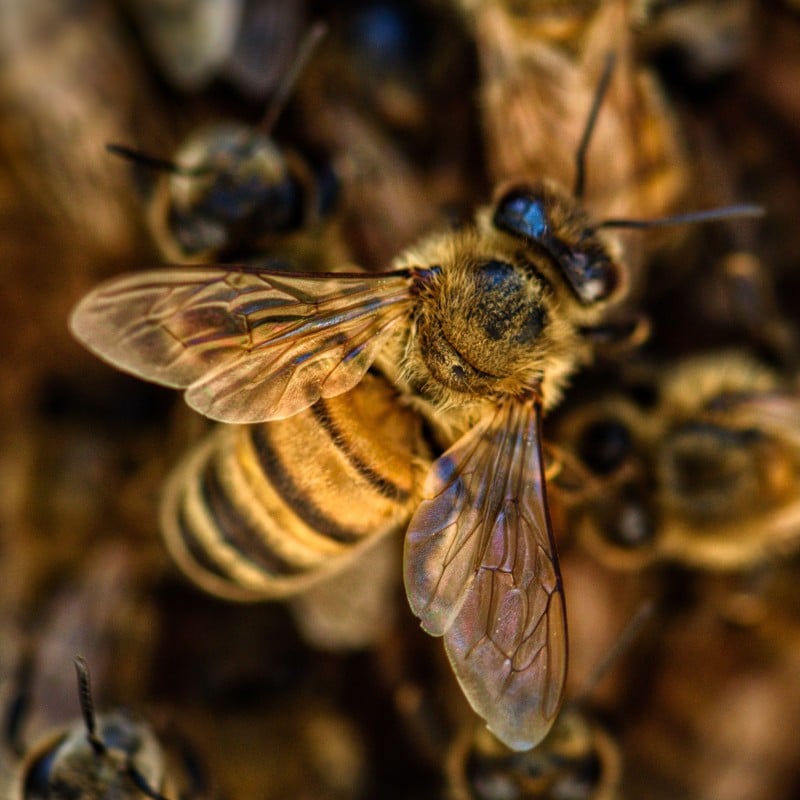
By tapping into vibrations in the hive, agri-tech start-up BeeSecure is able to listen into conversations ensuring that the bees are happy, healthy and performing well. Roberto Pasi, co founder of BeeSecure, says the company can understand ten main topics, quickly identifying issues.
BeeSecure is based in Italy and supports thousands of beehives across mainland Europe. It is part of the EIT Food Accelerator Programme and has just started working with beekeeper associations and farmers in the UK. Its new product BeeSecure is changing the way bee services are rented on-farm.

The Start-Up Showcase at REAP 2020 is kindly sponsored by Rothamsted Enterprises.

REAP 2020 Start-Up Showcase: Mantle Labs

Meet the Network
Agri-TechE

“We saw the opportunity to offer a world view of global agriculture with our Geobotanics crop monitoring platform, which mixes data from multiple satellites to provide a daily update with zero interference from clouds,” says Jon Pierre of Mantle Labs. The company’s revolutionary AI algorithm called Helios ‘sees through clouds’, increasing the accuracy of satellite imagery for risk assessment and crop monitoring
Mantle Labs now has a presence in the UK (Southampton), India and Austria and operates internationally. It recently won the special commendation award at the Financial Times / International Finance Corporation Transformational Business 2020 Awards in the Food, Land and Water Category.

The Start-Up Showcase at REAP 2020 is kindly sponsored by Rothamsted Enterprises.

New solutions to agri-food challenges in REAP 2020 Start-Up Showcase

Agri-TechE Article
Agri-TechE

A pop-up livestock facility that aims to eliminate greenhouse gas emissions; edible micro plastics from pea powder; super compact robot technology to improve yields; pheromone traps to inform precision spraying; land tech to support development of Natural Capital markets; bee wellbeing alert system to improve health of rented hives; seeing through clouds to improve crop risk assessment.

These were the disruptive solutions to some of the biggest challenges facing global agri-food production presented by early-stage agri-tech companies in the REAP Start-Up Showcase.
The companies were selected to present in the Start-Up Showcase, sponsored by Rothamsted Enterprises,  at Agri-TechE ’s REAP 2020 conference to an audience of farmers, investors, fellow technologists and researchers. A presence in the showcase has proven to be a good indicator of potential – many previous participants have successfully secures funding, deals and collaborators.

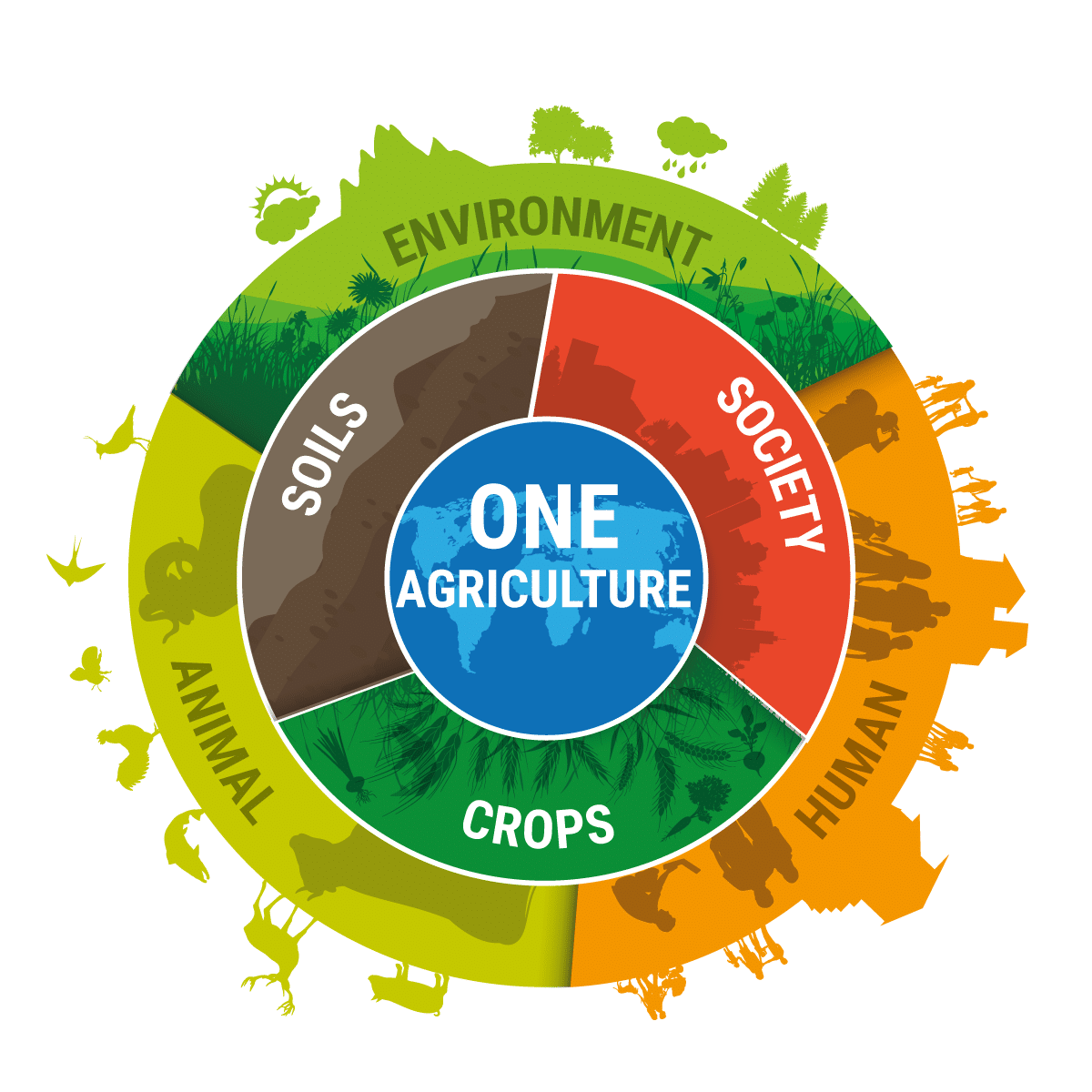
“The broader ‘One Agriculture’ type approaches presented at REAP today recognise that natural systems are interconnected and understanding that can help guide the direction of future innovations,” comments Dr Belinda Clarke, Director of Agri-TechE , a membership organisation supporting the growth of the agri-tech ecosystem.

“We have seen technologies that focus on the micro-scale of pheromones for trapping midges right through to the international scale of earth observation from satellites to mitigate risk of crop failure.
“Managing across all these scales is vital to take us closer to sustainable, productive and profitable agriculture. We need to focus our efforts on creating collaborations that can accelerate solutions to global challenges.”

AF Bursary encourages farmers and students to participate in REAP

Agri-TechE Article
Agri-TechE

REAP aims to inspire new thinking, and the availability of a bursary kindly sponsored by The AF Group, the UK’s largest agricultural purchasing co-operative, encourages farmers, growers and agricultural students to attend. AF has seen farming businesses adopt more and more technology, Tom Carter, Head of Membership & Marketing says that the organisation is pleased to work closely with Agri-TechE to help them build a hub of global innovation.
Tom said: “Agriculture stands at a crossroads as it navigates some of the most fundamental changes to the industry in a generation. Now, more than ever, collaboration and innovation is needed to help farmers adapt and thrive to these new changes. The REAP conference is a brilliant platform to gain insight into these changes and AF is proud to support the bursary once again.”
Some of the beneficiaries of the bursary are grateful for the chance to participate in the conference. Tom Pearson, Farmer, Manor Farm, Caxton, Cambs comments: “Our farm has long term goals of sustaining and eventually increasing output while maximising biodiversity, carbon sequestration and net zero farming. We are always on the look-out for incremental and game changing technology that helps us reach that goal. Hearing from current start-ups in AgTech and farmer-led projects helps us to be early adopters and know how to act now to adapt our business to accommodate these new technologies and practices.”
Robert Gemmill, Farmer, Sayers Farm, Essex agrees, “being a small arable farmer in Essex, growing a small range of crops using traditional cultivation and drilling methods, the REAP conference will hopefully stimulate new thinking to progress the farm and business in the future.”
Like many of the events in Agri-TechE Week, REAP offers BASIS points and this endorses its educational value, which is appreciated by Seamus Kelly, Tractor Driver, Besthorpe, Norfolk whom comments:  “Innovation is important in a future career because its more about implementing solutions instead of working around our problems hoping they will go away on their own. I am attending the conference to update my knowledge and information with the view to make valuable contributions to our agriculture based projects.
Jessica Nuboer, Master Student, Wageningen University, The Netherlands comments: “I am keen to learn more about regenerative agricultural practices and its relation to conventional norms. As an industry, I believe agribusiness needs to heal topsoil, prevent chemical runoff and pollution of freshwater resources, and practice responsible agriculture. I believe that by attending the REAP conference, I will gain the relevant knowledge and networking opportunities to support my future.”
View more information at theafgroup.co.uk

How to increase farmer adoption of new innovations

Agri-TechE Article
Agri-TechE

“How can we increase farmer adoption of new innovations?” A question that continues to challenge policy-makers, technology developers and the research community, and probably the one the Agri-TechE team is asked most often. So why are there no easy answers to this seemingly simple question?

Belinda Clarke - introduction to REAP 2020 farmer adoption of new innovation
The year REAP 2020 is looking at managing across the levels from micro-scale to landscape and the technology that is needed to do this.

Dr Belinda Clarke Director of Agri-TechE says that there is significant appetite among farmers for new and improved tools, products and services to help reduce costs, enhance outputs and increase sustainability, and there is certainly no shortage of companies developing novel solutions.
However, as she comments: “As we have learned over the years, it’s more complicated than just a simple introduction between developer and farmer and expecting magic to happen.
“The inability to accurately predict a return on investment in new technologies, issues of trust in new technologies, and the lack of clarity about which will become the “gold standard” solutions are all barriers to adoption.
“Add in the lack of inter-operability of some new tech with existing systems, and the barriers to adoption start to stack-up.”

Creating an innovation ecosystem

To help overcome this situation Agri-TechE ( or Agri-TechE as it was known) started to bring bring farmers together with researchers and technologists to gain mutual understanding of these types of issue.
Back in 2014, the big issue was a lack of understanding about what farmers wanted and needed in terms of new solutions and the research and innovation communities were eager for audiences with farmers to learn about their challenges, to help inform future development in line with the needs of the industry.  So the first REAP conference contained a “Producers’ Panel” designed to provide a platform for farmers to describe their challenges.
This started to create a forum for innovation that placed the end users of the technology at the centre of its development.  It has been interesting to see over recent years how collaborations between farmers and technologist have evolved.  In addition, how the technologies have changed from point solutions to a particular issue to platforms that support decision-making.
It has become clearer that a more systems approach is required that looks at the interconnections and the ‘big picture’ as well as the minutiae.
At REAP 2020 a number of entrepreneurs that have appeared in previous Start-Up Showcase sessions at the conference have returned with their farmer collaborators to give two perspectives on how the farmer-tech relationship started, grew and any tips for ensuring a successful outcome to adoption of the new tool, product or service.

Precision livestock production

George Fell, a Yorkshire beef farmer, has formed a very successful integrated supply chain with a local calf rearer and a finisher, all underpinned by the Breedr app, which tracks the performance of each animal, revolutionising the way that livestock is produced and traded.

farmer tech Breedr
Ian Wheal founder of Breedr

The beef industry has been singled out in recent years for its impact on greenhouse gas production, so agri-tech that enables the industry to increase its productivity while reducing its methane production is to be welcomed. Breedr has worked closely with all players in the value chain to improve the consistency and quality of meat.
George says, “Since the start of the year we’ve sold all our cattle through Breedr – it’s all worked seamlessly, it’s an easy system, we’ve been paid promptly, and it’s working well.”
He will be talking at REAP about his experiences of working with Breedr.
Another beef farmer Ian Sturmer, one of the first to trial the Breedr app, agrees: “With Breedr we are able to have a more powerful complete supply chain analysis, from the dairy farm right the way through to consumption. If we are going to have a vibrant beef sector in the UK and take advantage of the many export opportunities, I think it’s of paramount importance that we try.”

Precision fruit production

Farmer technology Tom Hulme Outfield
Tom Hulme has worked closely with Outfield

Precision measurement is available too in horticulture. Outfield is an orchard management platform that provides growers with yield estimates for fruit counting based on drone imagery. Growers are set up with their own low cost, off-the-shelf drone systems, and Outfield supports them to autonomously capture pictures of the orchard.
Jim McDougall, Commercial Director of Outfield Technologies, explains that there can be a three-fold difference between fruit production on neighbouring trees in an orchard. “
At the moment, in an orchard of 5000 trees, growers count the fruit on around ten – with outfield we add the remaining 4,990 trees to the count; creating an accurate yield map.”
One satisfied user of the Outfield system is Tom Hulme, Director of A.C. Hulme & Sons, a family run farming business of over half a million apple and fruit trees and has won the East Kent Fruit Society best orchard award 2 out of the last 3 years, he will be talking about the use of Outfield and its applications for fruit sizing, disease detection and orchard maintenance.

Precision crop protection

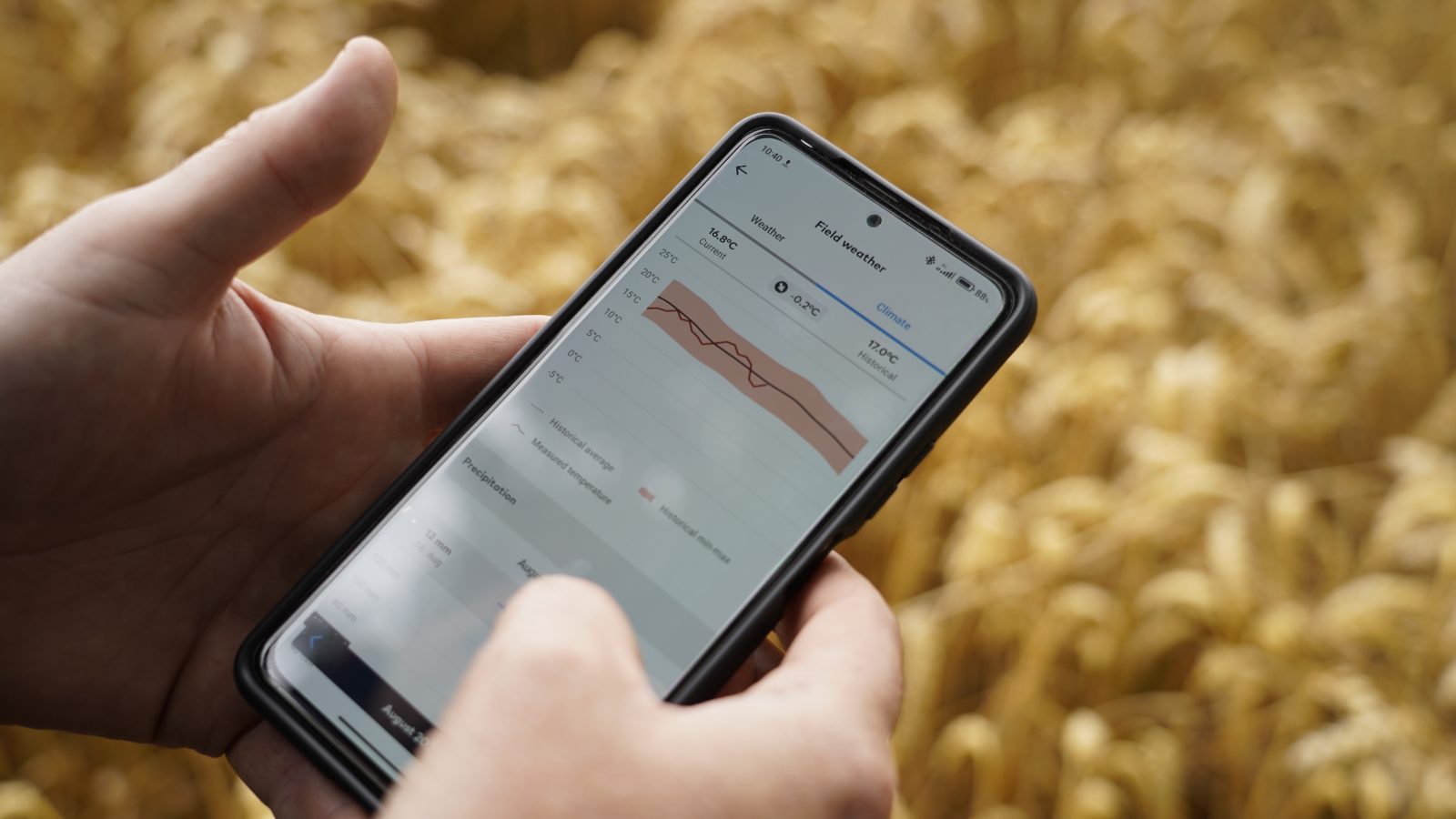
Arable, based in California, has developed a portable weatherstation, Arable Mark 2, which provides localised weather and plant health status in real time via a mobile phone. The company is presenting with one of its US clients and vineyard owner Will Drayton.
In the UK Arable has partnered with xarvio in the UK to combine its hyper-local crop and weather data with xarvio’s powerful crop production optimisation, to support more precise in-field decisions.  Xarvio is taking part in the TechHub at this year’s REAP and previewed its xarvio Field Manager at REAP 2019.

increasing farmer adoption of new innovation
David Hurn, a fenland farmer has worked with Arable and xarvio

One of the UK users is David Hurn, a fenland farmer based near Kings Lynn, he says that precision farming is the future: “As a smaller farmer – having average yields isn’t going to cut it. We need to be at the top of our game, all the time, or we won’t be here.
“I have been very impressed with the Arable weather station and the Arable team. It is a simple system, very easy to set-up and move between fields. It is compatible with the PC and my phone, you don’t need anything complicated to log in or subscribe to and I can share the information from the webpage with my Agronomist.
“Being linked to the xarvio software is very useful, the localised weather data from the Arable Mark ensures the best accuracy from the growth stage and disease modelling in Field Manager. We can then see the spraying windows around that.
“I have found the modelling pretty accurate – it only needs tweaking occasionally, as it uses machine learning. With all the users providing input it will get better and better. “This is the sort of feedback we are giving to xarvio and to Arable Labs and they are responsive. You need to feedback both ways – not just on the problems but also when things are good.

Increase farmer adoption of new innovations

“In a previous blog we have talked about ensuring a win-win situation between farmers and technology developers. And now we will hear first-hand from those who have made it work
“Working closely with farmers can provide mutual benefit,  but relationship management is an under-appreciated skill.  This Farmer Tech session will provide some interesting insights into how this can be achieved ” says Belinda.
“While there are successful examples, we know as an industry we aren’t there yet with seamless adoption of new agri-tech innovations. But by learning from those who have done it, we might just learn how to do it better.”
Arable, Outfield and Breedr will all be available at REAP 2020 for 1-2-1 chats and are looking forward to discussing collaborations with farmers or industry members at REAP 10th November 2020.

Air-seq: using DNA sequencing to provide early warning of airborne crop disease – Richard Leggett

Agri-TechE Article
Agri-TechE

Richard Leggett

Leader of the Technology Algorithms Group, Earlham Institute

“Airborne crop diseases are responsible for devastating loss of yield and over-reliance on pesticides. Current detection regimes often rely on expert identification of the pathogen from plant damage. Together with collaborators, we have developed Air-seq, a new approach that seeks to identify pathogens through sequencing of biological material present in the air.”

Richard Leggett

The Emerging Agri-TechE session at REAP 2020 is kindly sponsored by EIT Food.

We want to do business say the Dutch at REAP

Agri-TechE Article
Agri-TechE

‘We are still neighbours, despite the sea and Brexit, we want to do business with you,’ is the strong message coming from Oost NL (regional development agency East Netherlands and the province of Drenthe) in the Netherlands. A delegation of Dutch agri-food businesses are participating in the Tech Hub of Agri-TechE ’s Virtual REAP conference. Remco Lucassen, Director of Trade Development at Oost NL, and Michiel van Deursen, Projects Director of the Netherlands British Chamber of Commerce (NBCC, the “delivery partner” of this initiative), both say there is a strong appetite among farmers and agri-tech companies and researchers from both Wageningen University & Research and Technical University Twente and ‘Foodvalley’ region of East Netherlands to build links that transcend the political discussions.
Remco (Oost NL) says: “Businesses want to work with companies in the UK and we see participation in REAP as a good platform for this. With so much uncertainty at the current time it is even more important to build up personal links and trust for future cooperation.”
Oost NL, NBCC and the companies participating in this trade mission will present themselves in a kick-off meeting scheduled for 9 November following which the Tech Hub offers organisations an opportunity to have a virtual booth and for delegates to the conference to set up one-on-one meetings with each other and the exhibitors on 10 November.

AI matching 

Dr Belinda Clarke, director of Agri-TechE , and her team will be facilitating these meetings based on their knowledge of the industry, supported by an AI matching service.
Belinda says historically there are strong links between the Netherlands and the UK and the online conference potentially makes it easier for individuals to make connections. “Oost Netherlands is home to many innovative agrifood companies, offering mutually beneficial opportunities.
“By building links with centres of Agri-tech innovation worldwide we are creating mutually beneficial relationships. For early stage technology companies overseas expansion can be time-consuming and risky. By creating an environment where insiders introduce them to the ecosystem reduces these barriers. Our farmer members can also benefit from sharing best-practice and export opportunities.”
Companies coming to REAP from the Netherlands include:

  • Agriprogress, which offers support for sales channel development through its existing networks in the EU and Eastern Europe.
  • AgriWatch offering geospatial services for Smart Farming
  • Amstel Agro, developing novel fertilisers based on soluble silicon
  • Huizing Harvest a company offering technical outsourcing in the agricultural industry and
  • Kubota who are looking for investment opportunities and identifying agricultural challenges which require innovations.

Also Oost NL and NBCC will be joining the companies at REAP and will be available on the day to speak to UK organisations/companies who are looking for information/support concerning the market in the Netherlands or further afield.

Agri-TechE Week 2020 ADAS: crop sensing for field vegetables

Agri-TechE Article
ADAS

ADAS hosts: Use of crop sensing in field vegetables and potato crops

Monday 9th November: 9:30-11:00
The event brought together drone imagery and remote-sensing experts, together with researchers and growers from the UK, the Netherlands, Sweden and Australia.

Theory and practice: How to use Ag-tech in the real world?

Bert Rijk of Dutch-based Aurea Imaging

Aurea started off as building their own unmanned aerial vehicles but have now moved to data processing and analysis. The team today consists mainly of data analysts who now work closely with a network of drone pilots, described by Bert as ‘Uber for drone pilots’
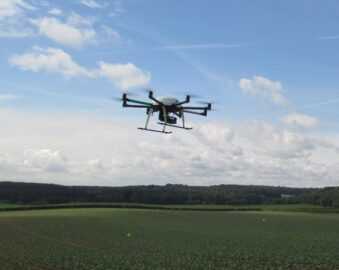
Drones used consist of fixed wing drones, which are better suited for larger areas, and ‘(heli)copter’ drones, which can fly closer to the ground. Different types of sensors are used also; from simply visual to multispectral and thermal imaging. More recently, it’s the introduction of RTK GPS technology that has been a real game changer for remote sensing, explained Bert. This type of technology enables precise aligning of images taken from several different flights over time – this is particularly useful in spot spraying and phenotyping scenarios where precision is key.
‘One of the biggest challenges is how you integrate drone imagery into your business profitably’ highlighted Bert. This is why Aurea works with growers and breeders to support them with their decision-making in a way that makes financial sense for the business. Bert then went on to highlight examples where drone imagery has made a positive difference to their clients. Potato growers have been able to use emergence maps of potato fields to use for insurance purposes when dealing with seed producers that will have supplied the potato seeds they have planted. In other cases, breeders have come to Aurea to assess the potential use of remote-sensing compared to manual observations. For example, flower breeders concluded that the duration and intensity of flowering was better assessed with Aurea’s imagery analysis than manual observations. Bert’s key message was to ‘start with what your client wants, don’t over focus on the technology and start simple’.

Analysis of field scale crop reflectance data using ADAS Agronomics data analysis methods

Susie Roques of ADAS

For root crops and other vegetables, assessing and predicting marketable yield is still a hot question for growers. As a result, scientists at ADAS and other partner research institute in Belgium, Netherlands and France are exploring whether imagery data be used as a proxy for marketable yield for potatoes and vegetables, as part of the EU-funded Interreg 2 Seas ‘INNO-VEG’ project.
The project has made use of Agronomics, a statistical tool developed by ADAS in conjunction with the British Geological Survey. This has enabled the modelling of underlying field variation in on-farm strip-line trials. And as a result, has made results of over 200 on-farm trials to date more robust.
Susie, crop physiologist at ADAS, shared the results collected from onion and vining pea trials, where different types of imagery based on different vegetation indices were assessed (NDVI and NDRE for example). For vining peas, results have shown that NDRE provides a better yield prediction compared to NDVI, which is consistent with the known suitability of NDRE for assessing dense canopy crops. For onions, a good correlation was observed between drone measurements and marketable yields. This time, it was NDVI that showed the best correlation. These couple of examples show how it’s important to consider the type of crop you are working with, and which vegetation index might be better suited.
With now up to 200 trials being assessed with Agronomics, some important lessons have emerged:

  • An even field is key for more precise results.
  • Variation across tractor tramlines is OK, as all treatments will be exposed to that variation.
  • Less is more – keeping the number of treatments relatively low, for example by simply testing against the farm standard, will keep things simple.

Crop sensing making sense?

Jacob van den Borne of Van den Borne Farm

Jacob farms over 500 hectares of potatoes in the Netherlands. Innovation and the integration of different technologies are integral to the success of his business.
On the farm, sensor data is collected from tractor cabs, spray booms, drones and satellites. This crop data is collected with soils and weather data and used to inform and continually improve crop management decisions such as irrigation management, fungicide and fertiliser applications. This successful integration of data has translated in significant reductions of input use across the farm.

  • Emerging weeds have been reduced by 90 % thanks to spot spraying
  • Fungicide application to treat late blight has been significantly reduced by implementing variable rate application and only targeting the plants that need treating
  • Water usage has been reduced thanks to the use of thermal imaging to assess soil moisture content and integrating it with weather data to optimise irrigation scheduling.

Jacob does not solely rely on sensor technologies. For him, ground trothing the data is as important so regular sampling of tubers and leaf canopy also form part of field evaluations.

Validating precision ag tech for vegetables

Julie O’Halloran of Queensland Department of Agriculture & Fisheries

Julie has been working with farmers in an Australian government-funded project looking to encourage the adoption of precision agriculture technologies on more vegetable farms. Imagery from drones has received relatively little take-up on vegetable farms compared to arable farms.
The project aimed at putting case studies together to showcase how commercially-available remote sensing technology and data analytics can make a difference on farm and to get a clear breakdown of the cost-benefit ratio for farmers. Some of these case studies included assessing flowering area in maize and head counting in lettuces.  The data obtained from maize flowering areas enabled the scheduling of spray timing applications around this critical growth stage. For lettuces, the automated plant count at different stages of the growing season has highlighted a 40 % discrepancy between the number of planted and packed lettuces.
Julie also pointed to the barriers to technology adoption in vegetables that were encountered during the project. Some of these barriers included a low awareness of commercially-available technology, a lack of technical support in adopting new tools and their perceived vs actual cost when accounting for time and money invested.

Industry view

Jeff from Hummingbird Technologies highlighted some of the data analytics expertise available at the company and its increasing focus on using remote sensing data and associated AI-powered analytics to develop sustainability assessment tools, such as carbon sequestration.
Russel from AgriVue gave an example of how AgriVue’s drone flying technology was used in a field experiment to compare the suitability of the resulting imagery with that of manual assessments. A 0.9 correlation was achieved, illustrating that crop sensing can go hand in hand with manual scores.
Igor from Solvi showcased how Solvi’s farmer-friendly data collection and analytics platform can be used for estimating yield in cabbages, automating plant counts and monitoring weeds. Written by Laura Bouvet

ADAS hosts: Use of crop sensing in field vegetables and potato crops

Monday 9th November: 9:30-11:00
Crop sensing and precision technologies have the potential to bring significant benefits to vegetable and potato growers wanting to improve crop production efficiencies. Hear from the researchers and innovators who are making a difference in this field, exploring and advancing the adoption of these new technologies in horticulture.
ADAS soil scientist and project lead Lizzie Sagoo explains that the INNO-VEG project is developing innovative methods for vegetable and potato crop research that can be easily upscaled and adopted by farmers.
She says: “We know that crop sensing data, for example, from drones or tractor-mounted sensors can show up differences in crop performance across a field. We want to see whether these techniques accurately assess final crop yields. If they do, they can they be used instead of the labour-intensive and expensive standard field assessments.”
Traditional crop research relies on replicated treatments in small plots and intensive measurements. It is usually led and delivered by agronomy, consultancy or academic organisations meaning that farmers are not asked to play active roles in research and, typically, only host experiments.
“If we can show that crop sensing data can be used to assess differences in crop treatments, we can upscale to split-field or tramline comparisons. Then, we can adopt a farmer-led approach to delivering research in this sector.”

The workshop will include presentations from commercial companies working in this area 

This event will showcase the use of crop sensing in field vegetable and potato crops.

  • Welcome and introductions – Lizzie Sagoo, ADAS
  • Theory and practice: How to use Ag-tech in the real world? – Bert Rijk, Aurea Imaging, Netherlands
  • Analysis of field scale crop reflectance data using ADAS Agronomics data analysis methods – Susie Roques, ADAS
  • Crop sensing making sense? – Jacob van den Borne, Van den Borne Farm, Netherlands
  • Validating precision ag tech for vegetables – Julie O’Halloran, Queeensland University, Australia
  • Industry view –short presentations from commercial companies working in this area – Hummingbird, Solvi and Uvue
  • Discussion and questions – All speakers

This event is being delivered as part of the EU Interreg 2 Seas INNO-VEG project. The INNO-VEG project is developing a new approach for carrying out research on field vegetable and potato crops by using crop sensing data to assess treatment differences.

Balancing the conflicting demands on farmers and farming systems – Jonathan Storkey

Agri-TechE Article
Agri-TechE

Jonathan Storkey

Principal Research Scientist, Agroecology Department, Rothamsted Research

“Life used to be simple, farmers were paid to grow food – now they are also expected to store carbon and deliver biodiversity all against the background of an ever depleting armoury of chemical crop protection products. Could a systems based approach that integrates technology with nature be the solution?”

Jonathan Storkey

The Emerging Agri-TechE session at REAP 2020 is kindly sponsored by EIT Food.

Soil glue: a microbial perspective – Tom Wilkes

Agri-TechE Article
Agri-TechE

Tom Wilkes

Post-graduate researcher, University of Hertfordshire

“Microscopic fungi provide the glue that helps to improve soil aggregates; a better understanding of the role of glycoproteins, the soil glue, could provide insights into improving soil resilience and structure, as well as reduce soil erosion. The question is, how does tillage impact this glue?”

Tom Wilkes

The Emerging Agri-TechE session at REAP 2020 is kindly sponsored by EIT Food.

Soils – Dirt with Life in It! – Alex Dumbrell

Agri-TechE Article
Agri-TechE

Alex Dumbrell

Professor in the School of Biological Sciences, University of Essex

“In which order should crops be rotated to get the best outcome, and why? The answers were hidden in the soil, but are finally being revealed with forensic technologies such as DNA Barcoding. It offers unprecedented insights into the fungi and bacterial communities that have such a huge impact on crop growth and yield. Now is the time to finally find out what is happening beneath your feet.”

Alex Dumbrell

The Emerging Agri-TechE session at REAP 2020 is kindly sponsored by EIT Food.

Sustainable solutions for global food security – Giles Oldroyd

Agri-TechE Article
Agri-TechE

Giles Oldroyd

Professor and Leader of the Crop Science Centre

“We are entering a golden era of crop science – basic science has given us insights into how plants grow and defend themselves against disease and stress and we now have a tool box to improve these traits – the explosive next step in the journey will be to replace chemical inputs with biological solutions.”

Giles Oldroyd

The Emerging Agri-TechE session at REAP 2020 is kindly sponsored by EIT Food.