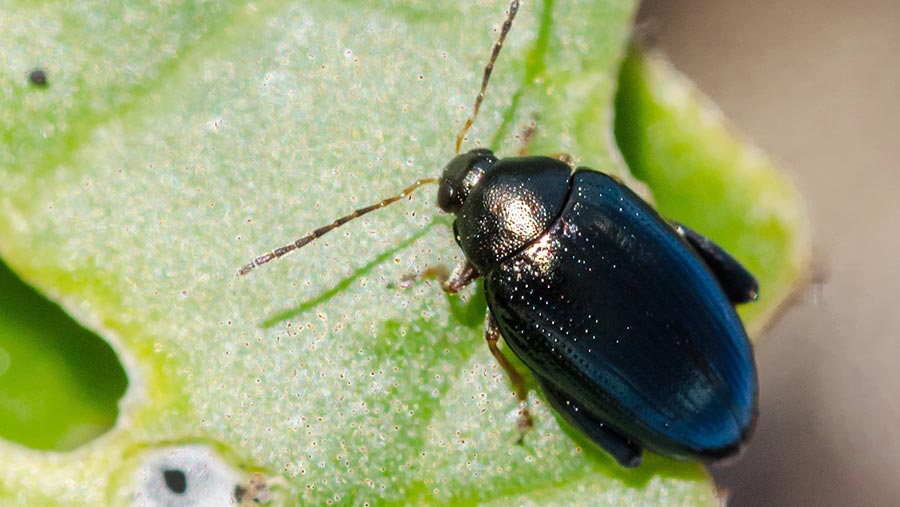
Five crop science projects funded under Bayer – Niab Challenge Grant Program
 Niab
NiabBayer will provide financial and mentorship resources, with a total award of £100,000 over one year and access to its leading crop science researchers, who will provide guidance as the research progresses.
Dr Phil Taylor, Director of Open Innovation and Outreach for Bayer’s Crop Science division said: “The Bayer – Niab Challenge Grant Program provides an exclusive opportunity for Niab scientists to receive funding for cutting edge ideas and connect with the Bayer team for their execution.
“We are looking forward to advancing innovations together in what is an exciting time for plant science in the UK as it moves forward with detailed regulations for precision breeding in England.”
Two of the projects aim to advance understanding of the genetic diversity in wheat.
Niab Director of Research Prof Xiangming Xu, who will coordinate the research programme, said:
“We are using two different approaches to help us better understand and exploit genetic diversity in the D-genome, facilitating further genetic discovery and exploration of haplotypes linked to useful traits such as disease resistance.”
Read the full article here
Related Posts

Join Our Journey: Why We’re Opening Ponda Up to Our Community

Expression of Interest for pitching – Focus on Finance event 2026
Government Unveils a Roadmap for Farming
Agri-Tech Start-ups invited to pitch to investors at Focus on Finance
Cambridge Agritech: what we look for in a pitch deck