The Productive Landscape: NatureTech for Profit and Planet
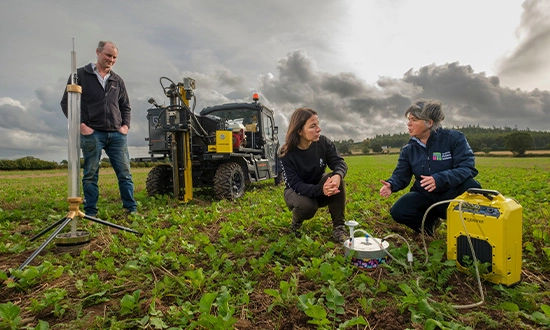
How can technology enable delivery of food, nature recovery, and climate resilience - all at once? The Head of the Environment Agency is asked: what's the national plan for dealing with land use pressures, plus you’ll hear from technologists and land managers working on nature-based and tech-enabled solutions for water, soils and climate adaptation.

Solar powered autonomous pest trap focus of BASF and Pessl Instruments collaboration

Agri-TechE Article
Agri-TechE

A pest trap that uses image recognition to identify pests and beneficial insects is to be developed through a collaboration between BASF Digital Farming and Pessl Instruments. The two organisations have signed an agreement to collaborate globally on R&D activities to improve pest management in fruits and vegetables.

R&D collaboration

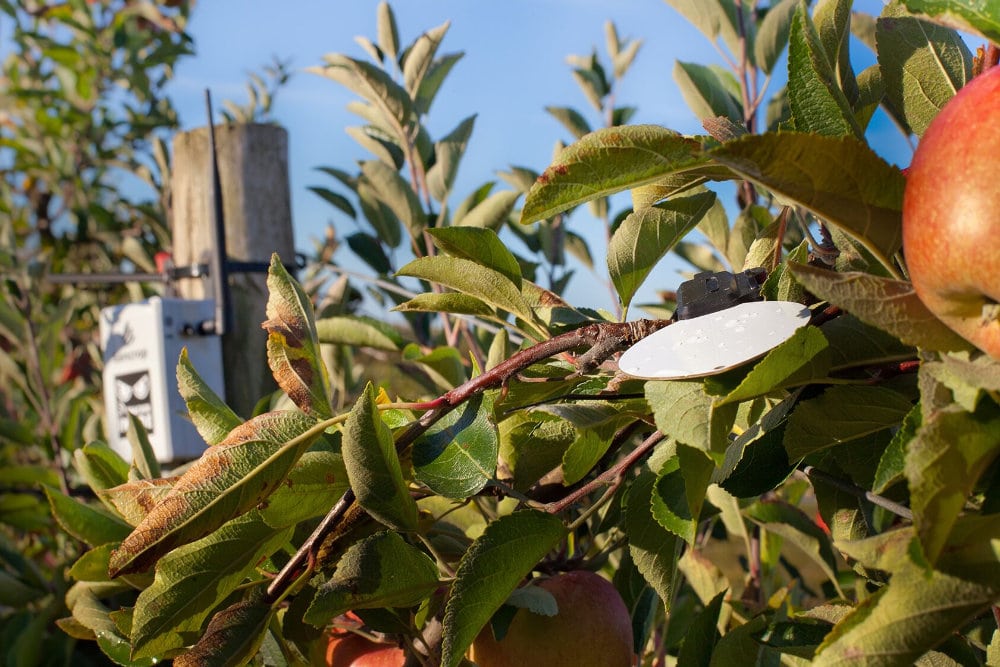
Pessl has developed  iSCOUT®, a fully autonomous solar powered insect trap, and the plan is to combine this capability with image recognition and analysis provided by BASF Digital Farming’s xarvio™ SCOUTING app. This will provide farmers with near real-time, field level observations of crop health and pest risk.
xarvio delivers independent, field-zone-specific agronomic advice through a range of digital products to  nable farmers to produce their crops most efficiently and sustainably. Its products SCOUTING, FIELD MANAGER and HEALTHY FIELDS are being used by farmers in more than 100 countries by millions of farmers and their consultants.

Pessl Instruments offers a complete range of wireless, solar-powered monitoring systems under the METOS® brand, which are are available to farmers and other clients worldwide.

Projects target pests of major economic importance

The first project of the collaboration focusses on the development of comprehensive pest monitoring and modelling for grapes and pome fruits, specifically apples, targeting the activities of the grape berry moth and codling moth.

This project began in early May 2021 and aims to create a fully automated pest recognition and monitoring service, initially for deployment in Argentina, Brazil, Europe and India.
The second project will look extensively at the row crops of soybean, cotton and corn. It will focus on the observation and modelling of stink bugs, corn earworm and fall armyworm.

Addressing challenge of real time monitoring

Bjoern Kiepe, Head of Agronomy for xarvio at BASF Digital Farming, says that one of the biggest challenges in fruit and vegetable production is getting timely field level pest monitoring data that can accurately identify the damaging or treatable stage within a pest life cycle.

He says: “By connecting xarvio SCOUTING’s image recognition and analysis with Pessl’s automatized iSCOUT pest trap we can solve this problem together. Precision farming helps ensure the more efficient use of crop protection applications, which is good for farmers, sustainability and biodiversity.”

“By monitoring pests, we aim to not just note the type of insects and the number of plants infected, but to help prevent the damage occurring in the first place. Precision farming equipment, backed with artificial intelligence, enables a more detailed analysis of in-field stresses and supports better decision making.”

Gottfried Pessl, founder and CEO of Pessl Instruments, agrees: “With the fully autonomous solar-powered insect trap iSCOUT we can monitor the pest risk 24/7, process this data and send it in near real time to xarvio SCOUTING for image recognition. This provides farmers with a stepping-stone to improved insect monitoring and better control anytime, anywhere.”

BASF Digital Farming and Pessl Instruments expect the pest recognition and monitoring service for grapes and pome fruit will be available from 2022.

Views on new innovation fund sought by Defra

Agri-TechE Article
Agri-TechE

Farmers interested in adopting new technologies, processes and practices and innovators seeking funding, are invited to attend an event on 15th June being held by Agri-TechE , which includes discussion of a new accelerating adoption fund.
As set out in the Agricultural Transition Plan published in November, Defra is bringing in landmark changes as we move away from the CAP system of farming subsidy payments. A key part of the future farming approach is supporting innovation to help farmers and growers increase productivity and reduce the environmental impact of agriculture. From 2022 Defra will launch an Innovation R&D programme for agriculture in England.
Officials from the Department for Environment Food and Rural Affairs (Defra) will host a session at the Agri-TechE event to discuss ways to support and accelerate the adoption of innovative technology in the agricultural sector.
Accelerating adoption of technology

Leah Segal, Innovation R&D policy advisor at Defra

Leah Segal, Innovation R&D policy advisor at Defra, said: “We appreciate the risk involved in investing in innovation, and how it can be a barrier for farmers and growers looking to trial new ideas. We want to provide support and funding to ‘de-risk’ investment in innovation and help share knowledge on which innovations are worth adopting.”
The ‘Accelerating Adoption’ fund of the Defra Innovation R&D programme will be specifically aimed at farmer-led innovation.
The fund will provide facilitation and funding for farmers and growers to connect with each other, as well as with researchers and businesses, to trial innovative technologies, processes and practices on-farm.
These will be small agile projects up to 2 years, to test the feasibility of new technology and demonstrate new methods to the farming community.
These projects will be focused on finding practical solutions to immediate on-farm productivity challenges.

Two further funds

As set out in the Agricultural Transition Plan, two other funds will open to applicants next year. These will build on the positive response to the recent Farming Innovation Pathways competition developed by Defra and UKRI.
The first will be to encourage industry led research on large-scale projects to develop technology and innovative solutions to shared productivity challenges that affect businesses.
The second will support collaborative R&D where farming and agri-food businesses work with scientists and researchers to address longer-term societal challenges, such as Net Zero, and will have themes set by Defra.
The funding programme will also be underpinned by support for knowledge exchange between farmers, growers, businesses, and researchers, so that the results and learnings from the projects can be shared widely. This is critical to ensuring widespread adoption of novel and trialled innovative technologies, processes and practices which will then lead to real world benefits for farmers and growers.

Co-design of research programmes

As well as on-farm trials through the ‘accelerating adoption’ fund, farmers and growers will also be able to get involved in other projects by participating in project teams and co-designing research, outputs and plans for sharing results.
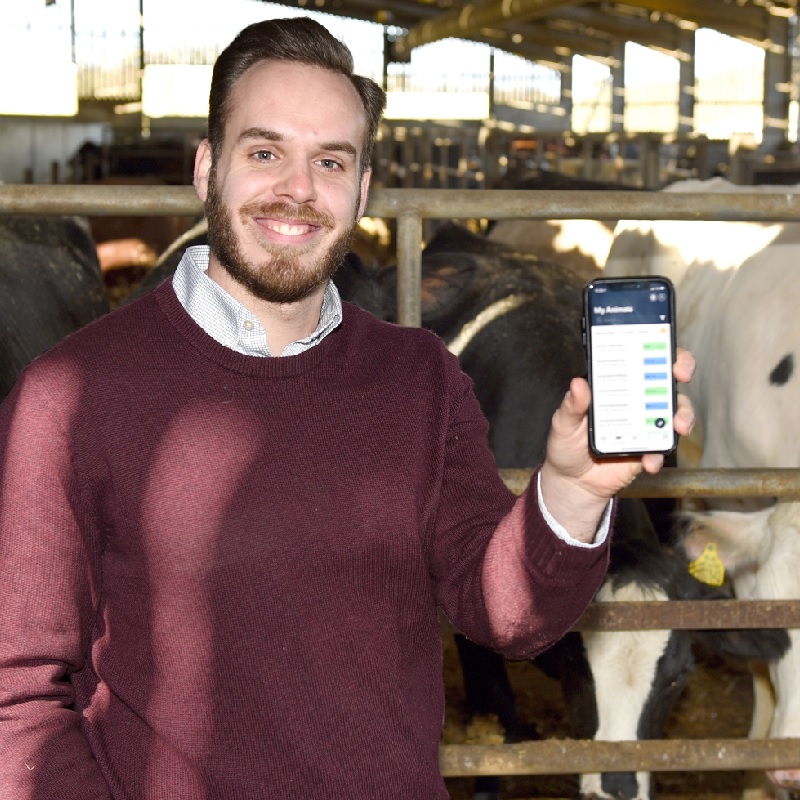
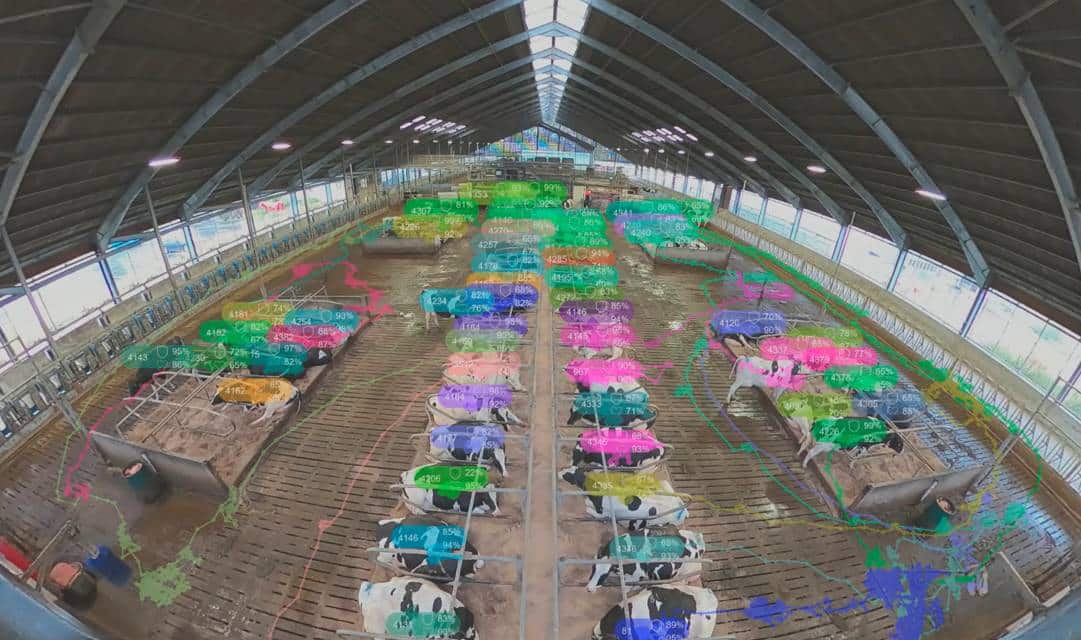
Leah gives the example, of the ‘REMEDY’ project (which stands for ‘REal tiME DairY’ and is funded through UKRI’s Transforming Food ProductionDefra Innovation R&D programmeCow sensors to provide early warning of diseaseCow sensors to provide early warning of disease programme) as a project that has successfully involved farmers in the design and demonstration of a technology that tracks cow behaviour and nutrition to provide insights for decision-making.
Leah Segal said: “We are working closely with our other colleagues in Defra and UKRI to ensure there is a clear link between different schemes, so farmers and growers know where to look for support.
“For instance, if a technological solution – trialled through the Defra Innovation R&D funding programme – then becomes readily available on the market, there may be potential for farmers and growers to receive support to invest in the technology through follow-on schemes.
“The event on the 15th June is a good opportunity for users to learn more about the planned funding schemes, which are still being developed. We would also welcome further input of potential end users of the technology as we are currently co-designing the fund to ensure that it can provide the support that is needed for investment in innovation.”

Focus on Funding event

The Focus on Funding event is being held virtually and will have speakers from Defra, UKRI, Transforming Food Production, Innovate UK and the Knowledge Transfer Partnership.
This will be complemented by a Agri-TechE Business Plaza where a number of business support organisations: GrantTree, LMixology, MMP Tax, Rothamsted Enterprises, RSM, Trendlines – will be offering drop in clinics and discussing their services.
More information about the event Focus on Funding with the Agri-TechE Business Plaza
Tuesday 15th June @ 11:00 am – 3:00 pm
BACKGROUND TO THE LATEST FUNDING ANNOUNCEMENTS
The government’s Industrial Strategy Challenge Fund (ISCF) was launched in November 2017 to stimulate innovation.
The stream directed at agriculture is called Transforming Food Production (TFP) and it is managed by Innovate UK and UKRI.

Transforming Food Production

The Transforming Food Production challenge is supporting new ways to produce food that reduce emissions and pollution and contribute to feeding a growing world population.

  • Future food production systems – ongoing projects include technologies for creating alternative proteins from insects and waste gases, also innovation for vertical farming
  • Science and technology into practice – projects include new methods of automation and robotics and also improved diagnostics for animal diseases, and monitoring of soils
  • International opportunities – this is directed at export opportunities to Canada and China
  • Investment ecosystems – aimed at supporting the investment community invest in agri-tech

Roadmap announced

Subsequently the government announced its roadmap “The Path to Sustainable Farming: An agricultural transition plan 2021 to 2024 (November 2020). This plan covers the period when Direct Payments are being withdrawn to UK farmers. (Direct payments are granted to active EU farmers in the form of a per-hectare basic income support.)
The UK government will instead invest the money to pay farmers to improve the environment, animal health and welfare and reduce carbon emissions, alongside grants to improve productivity.
As part of the roadmap two funds were announced:

  1. Farming Investment Fund (Equipment & Technology, and Transformation) to be launched April 2021
  2. Defra’s Innovation R&D programme to be launched in 2022

Defra’s Innovation R&D Programme (to open 2022)

The Innovation R&D Programme has three funding aims, based on the following principles:

  • Industry-led syndicates – connecting farmers and growers with researchers and agri-food businesses to work on industry specific challenges
  • Themed collaborative R&D – brings together food businesses and researchers on more fundamental research
  • Accelerating Adoption – support for smaller-scale, farmer-led R&D projects to demonstrate the viability of new and existing technologies.

Farming Innovation Pathways
Farming Innovation Pathways is a bridge between Transforming Food Production (TFP) and the Defra Innovation R&D Programme, and it will be delivered by the TFP team that have been working closely with the agri-tech sector and include agricultural specialists.
The first competition closed in April and the applicants will be informed of the outcome on 18th June 2021 and projects will start in October 2021.
More information about the funding is available through the Future Farming blog https://defrafarming.blog.gov.uk/
 

‘From Farmer to Pharma – and Beyond – with Medicinal Cannabis and Industrial Hemp ‘ Event Report

Agri-TechE Article
Agri-TechE

Every part Cannabis sativa  – stalks, seeds, flowers and leaves – can be harvested and processed, making hemp a versatile plant with multiple uses. This means that a single crop has the potential to produce a wide range of products, including biomaterials, cosmetics, feed, food and supplements.
In addition the use of plant extracts, such as CBD, is growing worldwide and represents a major opportunity for growers to produce higher value crops.
Attendees had the opportunity to meet the key players across the value chain and learn more about what is involved in the broadacre and controlled environment production of hemp and cannabis, new variety development, processing solutions and needs, regulatory requirements and potential routes to market.
And, most importantly, how the business model could work and how – and in which directions – the money is going to flow.

You can find a summary report of the event here.

It’s about time…

Agri-TechE Blog
Agri-TechE

“Have you got a minute?”
From the timing of input applications to predicting the date of harvest, extending the shelf-life of fresh produce and influencing the breeding cycles of crops and livestock, our industry is dominated by time.
Most of us don’t have enough of it, we want to save it, be less beholden to it, or even manipulate it to enable businesses or supply chains be more profitable or productive.

Changing Time(s) For Agriculture

Given the global pace of emerging innovations and technology with the potential to help the industry grab hold of time – and that time is, in fact, money – we believe it’s time we discussed Changing Time(s) For Agriculture.
As well as being the theme of REAP 2021, we’re going to take the idea to Groundswell Regenerative Agriculture Show and Conference, and talk to farmers about what aspect of time has the biggest impact on farming. And where should innovations in the future be directed to help influence time (or help generate more of it)?

Time to automate

It might be the more widespread automation of routine tasks and data collection and robotics to help save labour time, or using data to accurately forecast supply and demand to deliver a “just-in-time” supply chain for fresh produce.

In time with nature

Nature, of course, beats in time to its own rhythm. Plants and animals – and even fungi and bacteria – have internal “clocks” which influence processes – so understanding these better may help improve our management of them and interaction with them.
And then there are seasons which dictate so much of the operations around outdoor agriculture and horticulture – and this is where controlled environment agriculture liberates producers from the shackles of time, enabling multiple annual harvests in vertical farms, for example.
Many farmers – or even keen nature watchers – may have observed that harvests are now earlier, the arrival dates of migrant bird populations is changing and dormancy of perennial ornamentals is breaking at different times. So at REAP, we’re also going to be talking about how so-called agri-phenology (the study of the timing of key natural phenomena in agriculture) is being affected by climate change.
Take the time to consider innovation with us over the next six months and join us at REAP 2021.
It will be time well spent. We do hope if you’re at Groundswell you’ll take some time to visit stand MS6 and catch up with the team – we can’t wait to see you!

REAP 2021: Changing Time(s) for Agriculture10th November 2021

Imagine a world where agriculture is not constrained by time. The ability to manage and manipulate time is increasing and REAP 2021 will explore the advances in technology and breakthroughs in science that is making this possible.
REAP brings together people from across the agri-tech ecosystem who believe that innovation is the engine for change. The conference bridges the gap between producer needs and technology solutions and showcases exciting agri-tech start-ups. 

REAP Start-up Antobot raises £1.2m

Meet the Network
Agri-TechE

Smaller, faster, cheaper and more durable intelligent mobile robots will be possible with Antobot robotics technology, which offers twice the ‘brain’ power of commercially available mobile robots in a third of the size. It has recently secured £1.2 million in their seed funding round to help develop its mobile agriculture robot prototypes.
Antobot Ltd is a robotics technology company, with teams in Cambridge UK and China, which is focused on the control hardware and software development for intelligent mobile robots. It presented as part of the Start-Up Showcase at the Agri-TechE REAP 2020 conference.

Antobot’s robotics presented at REAP 2020

At the conference Antobot’s founder, Howard Wu, explained: “Our first commercial product will be a highly compact four-wheel-drive scouting robot capable of counting fruits and determining fruit ripeness and size, whilst also mapping fruiting locations in three dimensions to allow picking at a later stage.
“Small ground-based machines are able to fit into narrow spaces between plants to map fruit location in detail, and being light also prevents soil compaction. But the challenge of building very small robots is the requirement for a smaller control unit.
“Our universal Robot Control Unit (uRCU®) achieves twice as much ‘brain’ power as the current market leading mobile robot company, despite being just 1/3rd the size,” says Wu. “We also offer our uRCU to other robotics companies, to accelerate their robotics application development.”
The uRCU®’s sophisticated design combines the core hardware and advanced software for agri-robotic applications in one compact single unit.

Funding for fruit scouting robot

Funding from Intron Technology Holdings Ltd a leading automotive electronics solutions provider in China,  will enable Antobot to develop various full applications using its modular platform, starting with its scouting robot, Insight.
Focusing initially on the £875 million UK fruit sector, Insight travels autonomously through the farm and, using artificial intelligence, gathers accurate, timely and rich data for deeper insight into crop yield, profile, and pest / disease management.
Unlike manual scouting or scouting using large heavy machinery, Insight is powered by renewable energy and does not require any labour. Working with a selection of partner farms in England, Insight will be trialled in UK fields this summer of 2021.
Eddie Chan, Co-CEO and Executive Director of Intron Technology says. “We are strongly committed to Research and Development at Intron, particularly when promoting sustainability. And we are looking forward to working with Antobot, learning from each other, and helping Antobot grow into the leading force in the agricultural robotics sector we know it can be”
Dr Belinda Clarke, Director of Agri-TechE , says: “In the crowded agri-robotics market, Antobot is focussing on affordability and providing a platform solution to differentiate itself. It’s particularly exciting to see the application of expertise from other sectors into agriculture and the company is ground-truthing the potential application with farmers.”
Find out more about Antobot on their member page.

Heartbreak & Hope in the fight against bovine TB

Meet the Network
Agri-TechE
Yewdall appointed to PBD Biotech
Johnnie Yewdall sees potential of Actiphage to break the cycle of bTB

Jonnie Yewdall, a former dairy farmer, has been appointed Commercial Director at PBD Biotech. The company recently gained funding to take its Actiphage® blood test for bovine TB (bTB) and Johne’s Disease through the validation required for international industry acceptance.
Jonnie will be talking about his experiences and development of the Actiphage test at the Agri-TechE event ‘Heartbreak and hope – the story of a new diagnostic for bovine TB

Devastation of bTB

Jonnie has worked in a commercial role in other industries, but he knows first-hand the devastating impact bTB and Johne’s disease can have on farmers through his experiences on a family farm in North Devon, where the herd was decimated by these diseases.

He lost a third of his Guernsey herd following a positive bTB test, and then the replacement animals began to show signs of Johne’s Disease, another mycobacterial disease. Unfortunately, this was the final straw. The emotional toil and the ongoing financial loss were too great and the Yewdalls sold the family farm. 

Don’t want other farmers to go through same experience

Jonnie says: “I think that Covid-19 has shown the wider business community what it is like to be a dairy farmer at risk from bTB – you are locked-down and you can’t plan or budget. 

“I don’t want any farmers to go through what we did, which is why I have joined PBD Biotech. With tools like Actiphage the industry has an opportunity to work together to potentially eradicate these very difficult diseases.” 

Actiphage is an extremely specific test, as it detects the DNA from live bacteria in a sample of blood or milk, not just the animal’s immune reaction. It can detect just a few cells; this enables farmers to identify carriers of the disease and remove them from the herd before they become spreaders. This was a recent recommendation from the cattle health certification standards regulatory body Checs. 

Actiphage has been approved by APHA for use under special conditions, and when used on-farm as part of a disease management programme it has been proven to eradicate bovine TB.  

Supports farms gain bTB disease free status

By recently gaining £2.3M of funding, PBD Biotech is now able to take Actiphage through trials to gain OIE (the World Organisation for Animal Health) validation for the test which will enable international acceptance.

Jonnie sees potential for Actiphage to be used as part of a wider disease management programme to enable farmers to eradicate and then maintain a disease-free status on the farm. 

“Actiphage is a blood test for live mycobacteria that gives you a simple yes/no answer. When this is authorised for use on the farm, we could use it in parallel with the statutory testing to manage the infection risk, for example isolating inconclusive reactors pending a further skin test,” he says. 

“It could be used as a ‘pre-movement’ test to check animals before they are introduced into a herd and also as a ‘DIVA’ test to differentiate infected from vaccinated animals, paving the way for the introduction of a vaccination programme.”  

Agri-TechE event 

Jonnie will be talking about his experiences and development of the Actiphage test at the Agri-TechE event ‘Heartbreak and hope – the story of a new diagnostic for bovine TB on Tuesday 6th July 2021, from 10am-11am. 

UK’s first protein-from-potato ‘plant’ to open in Lincoln

Meet the Network
Agri-TechE

The UK’s first factory to convert potatoes into functional plant-based protein for vegetarian and vegan foods is being made possible following the development of a new extraction process by B-hive Innovations in collaboration with potato suppliers Branston.

Plant-based protein from potato

Lincoln-based B-hive Innovations develops new technologies for the fresh produce industry. Its new extraction process offers the potential to use potatoes in new ways. In addition to the plant-based protein the process also generates a starch co-product that has a range of applications.

Alison Wright, R&D project manager at B-hive Innovations, said: “The process enables gentle extraction of food-grade functional protein that is free from allergens. Market research revealed there was a growing demand for UK-grown, clean-label, 100% plant-based ingredients, highlighting a commercial need that fitted perfectly with Branston’s drive to utilise all harvested crop.”

The technology is part of a collaborative project with potato suppliers Branston. Construction of the new £6m protein facility has started at the Branston headquarters in Lincolnshire

Branston supports new technologies

Branston is one of the UK’s leading suppliers of potatoes for retail and wholesale and provides seed for potato growers. Working closely with its producer groups across its three sites at Lincoln, Scotland and the South West, Branston is supporting the development and adoption of new technologies.
This includes HarvestEye, a unique system that provides insights on root crops during harvest, that was highly commended in industry awards.

HarvestEye accurately measures potato size, count and crop variation, giving instant insight on marketable yield, ensuring producers get the best price for their harvest.

The first frost activates the timing of flowering

Research Digest
Agri-TechE

The first frost of autumn is shown to activate the timing of flowering, research at the John Innes Centre has found.

It is known that, for some varieties, exposure to an extended period of cold ‘vernalization’ is a preparation for flowering in spring.
The gene FLC creates a brake on flowering and its action is controlled by a molecule called COOLAIR. Researchers compared natural types of Arabidopsis grown in different climates (Norfolk, south Sweden, subarctic north Sweden) and measured the levels of COOLAIR.
COOLAIR levels varied among different accessions and different locations. However, the researchers spotted that when temperature first dropped below freezing there was a peak in COOLAIR. Dr Yusheng Zhao, co-first author of the study, said: “Our study shows the first seasonal frost serves as an important indicator in autumn for winter arrival and helps to explain how plants sense environmental signals to align flowering with spring.”
To confirm this boosting of COOLAIR after freezing the researchers did experiments in temperature-controlled chambers which simulated the temperature changes seen in natural conditions.
They found COOLAIR expression levels rose within an hour of freezing and peaked about eight hours afterwards. There was a small reduction in FLC levels immediately after freezing too, reflecting the relationship between the two key molecular components.
Next, they found a mutant Arabidopsis which produces higher levels of COOLAIR all the time, even when it is not cold, and low levels of FLC. When they edited the gene to switch off COOLAIR they found that FLC was no longer suppressed, providing further evidence of this elegant molecular mechanism.
The study offers insight into the plasticity in the molecular process of how plants sense temperatures, which may help plants adapt to different climates, and could be translatable to improving crops at a time of climate change.
The study: Natural temperature fluctuations promote COOLAIR regulation of FLC appears in Genes & Development.

Precision agriculture isn’t what they say it is

Member News
The views expressed in this Member News article are the author's own and do not necessarily represent those of Agri-TechE.

Precision agriculture is a journey. Lars Petter Blikom shares his journey straddling the twin worlds of agriculture and technology.

I am a farmer. And for the past 7 years, I have gotten to know a lot of fellow farmers, both in my home country Norway and across the world. I have developed the deepest respect for what farmers do.

Day in and day out, they hone the skills of cultivating the land and growing massive quantities of high-quality food. After thousands of years, there is quite a bit of precision to what farmers do. It’s not easy to produce food.

Day in and day out, they hone the skills of cultivating the land and growing massive quantities of high-quality food. After thousands of years, there is quite a bit of precision to what farmers do. It’s not easy to produce food.

Who speaks for the farmer?

My background is in other industries, my education is in technology, and my 17 years of professional experience have taken me through the hypes of internet-of-things, machine learning, and all the other buzzwords of the past few decades. And as the oldest kid on a farm, I was born with the questionable rights to a rewarding life as a farmer, and 7 years ago, my time had come.

I am writing this as a farmer primarily, perhaps with an unusual background in technology, but a farmer nonetheless.

Agriculture is a massively large industry. Some of the world’s largest companies are dependent on it. And the whole food and grocery industry is dependent on it too.

As with any large industry, all the usual suspects are present; the researchers, the experts, the financiers, the law-makers, the big corp executives, the investors – they meet at conferences and seminars, and they exchange papers, articles, and business ideas. They talk and discuss important things, such as “what is precision agriculture?”

But who’s not there? Who´s voice is not present? The farmers’.

Farmers don’t have time to hang around conferences and chat.

There is an entire ecosystem of players in this industry, fully dependent on the farmer as the core value creator – yet they are surprisingly disinterested in what the farmer needs, wants, and thinks.

I could go on for a long time about the imbalance of power in the agriculture industry, how even the largest of farmers are no bigger than a bug than their suppliers and customers, and how the value created ends up with those with the best negotiation position – never the farmer. But this is not today’s topic.

Defining precision agriculture

Naturally, “precision agriculture” is defined by above mentioned important people. You can read on Wikipedia what they say:

  • Vegetation indexes (NDVI) from satellites will tell us that our weak plants are… you guessed it; weak.
  • Cameras with image recognition will tell us what type of weeds we have in the fields… as if we didn’t already know.
  • IoT-sensors will tell us when to harvest for optimal ripeness… forgetting details like logistics, labour force management, weather, and a few other things that also impact the harvest time.

Don´t conclude I am against these concepts; I am a technologist, believe in the powers of image recognition, know that multispectral cameras in the sky can see things our human eyes can’t see, and I know that sensors will give us a better decision basis. The problem is that the development is technology driven – someone observes a shiny new thing and concludes, “let´s deploy this in agriculture.” The better way to guide development is to let it be driven by user needs.

But they forget to ask the farmers what they need.

This disconnect between farmers’ needs and the new technologies makes them too hard to adopt. NDVI imagery is a good example, it is readily available, and I can get it for my farm cheaply.

I get a yellow/green/red heat map indicating areas with low to high biomass density. It’s interesting; I can go out in the field and compare the heat map with real life – see if it fits. But then what? I don’t trust it enough to create variable zones based on it.

I don’t have the equipment to make variable-rate applications for my orchards. And even if I did, how do I adjust the rates? What’s the right spray application rate for a yellow area on the heat map? There is just not enough available knowledge in my ecosystem to jump into this yet.

It’s like the early days of the internet – remember all that work with dial-up modems and manually fiddling with protocol settings until the damn thing works? It’s like that, plus in farming, you don’t know until 3 months later if it worked or not. And if it didn’t, you can try something else next season – it’s the slowest learning cycle of all. You just can’t afford a lot of experimentation when there’s a year between each iteration.

Precision agriculture is a journey.

It’s a journey the whole agriculture industry has been on for thousands of years and which will continue for as long as people eat food. “Precision” is a word that describes diligence, accuracy, and knowledge in the farmers’ work and decision-making. I will let no external expert claim that word and make it synonymous with drones, satellites, and machine learning. Precision is realized through a farmer’s best judgment in the field. And the farmers will always use the best tools available to inform their judgment.

In the late 1800s, we got the first tractor. In the early 1900s, we got granulated fertilizers. In the early 2000s, maybe we are getting multispectral cameras. No big deal. Mostly, the production of food goes on. Business as usual.

In the next article of this series, we´ll discuss what problems this so-called “precision agriculture” needs to solve. What does the farmer need it to do? And I think we have to debunk a couple of myths too.

This is part one in a seven-part series on a farmer’s journey to precision agriculture.

Part 2: What problems will precision agriculture solve

Part 3: Reinvent how you gather, organize and use your data

Part 4: Why measuring return on investment per field is still a challenge

Part 5: What’s the biggest cost in agriculture? Labour.

Part 6: How to get your orchard future ready? Start automating documentation

Part 7: How variable zoning can lead to more precision in agriculture

Is per plant robotic weeding the answer to blackgrass?

Meet the Network
Agri-TechE

per plant weeding
Ben Scott-Robinson, CEO and co-founder, Small Robot Company with the ‘Dick’ non-chemical weeding prototype:

The world’s first ‘per plant weeding’ service has been demonstrated by the Small Robot Company (SRC), its first customer is the Lockerley Estate, where robots are a key part of a regenerative farming strategy.
The service uses two robots,  Tom a scanning robot and weeding prototype and  ‘Dick’ that zaps individual weeds with electrical ‘lightning strikes’, using no chemicals. On-farm pilots of the service will commence this autumn.
In future, Tom will also gather data from multiple sources, such as sensors and microphones for birdsong and pollinators, to assess soil health and biodiversity.
The ‘Dick’ robot prototype deploys RootWave non-chemical weeding technology mounted on an igus delta robotic arm to zap the weeds.
“To prove the power of per plant farming we are focusing on answering the biggest problem that farmers face at the moment which is weeding,” said Ben Scott-Robinson, CEO and co-founder, Small Robot Company.
“We’ve now proved we can deliver per plant weeding: a world first. The focus for us now is being able to move forward to deliver this, repeatedly, and at scale. This will be game-changing.”

Black grass costing a fortune

“Weeds, especially black grass, are crippling. It’s costing the industry a fortune,” commented Craig Livingstone, Lockerley Estate farm manager and National Food Strategy advisory panel. “Resistance to herbicides is the number one problem. The robot offers us a real chance to stop using artificial inputs, which goes towards our regenerative model of farming.”
Rob Macklin, the National Trust’s Head of Farming and Soils, agreed: “Technology needs to play a big part in solving many of the issues we currently face in farming – particularly improving soil health and carbon sequestration, reducing our reliance on fossil fuel power and fertilisers and avoiding the adverse impacts of synthetic chemicals on the environment. We have started small robot trials at Wimpole and intend to extend trials to other estates in the near future.

Tom Small Robot Company
Tom scanning robot is commercially available

Tom is now delivered to commercial specification, ready for ramp up of the service to more than 100 farms in 2023.
Other benefits from the mapping service include yield predictions, measurement of herbicide efficacy, and giving farmers the ability to take “no spray” decisions with confidence. The first crop for the service is wheat. SRC is now working on being able to recognise different weed species, with the next phase being multiple crop types. It has also just started a project to be able to detect disease in wheat.
Tom will cover 20 hectares per day autonomously, collecting about 6 terabytes of data in an 8 hour shift, and detecting millions of data points per field. As an example, Tom collected 12.7 million plants in a single 6 hectare field, of which 250,000 were identified as weeds.
He can distinguish plant details at submillimetre resolution, with less than one millimetre per pixel resolution on the ground. He is robust and weather-proof and can be used all year round. The next generation Tom also incorporates increased speed, 5K camera capacity and extended battery life.
 
Small Robot Company
 

One death every two weeks on UK farms innovative solutions to be launched at meeting

Agri-TechE Article
Agri-TechE

34 people died on-farm in the UK during the last 12 months (HSE March 2021), with the greatest risk coming from machinery, working at a height or with livestock. Innovations to improve on farm safety are to be announced at an Agri-TechE event on 24th May, including a machinery audit activated by QR code, an innovative risk assessment tool, and motion sensor alerts for moving machinery.
Agri-TechE director Dr Belinda Clarke comments: “One of the consequences of Covid-19 is that more people are using digital technologies for a greater range of applications. This creates a huge opportunity for making safety and compliance part of the culture on-farm. It would be possible to embed safety into the workplace by making it easy to access timely information, record incidents as they happen and set up alerts to danger.” At the event – ‘Improving Farm Safety with Innovative Agri-Tech’ – Farm365 is to launch a machinery safety and audit app that is triggered by scanning a QR code located on the equipment; Safe Ag Systems will preview a free interactive risk assessment tool that enables compliance with ISO31000; and Pathfindr are to discuss a wearable that alerts the user to moving machinery.
To hear more on how farm tech can play a role in preventing injury and death, join speakers Katy Landt, CEO of Safe Ag Systems, Elizabeth Creed, CEO of Farm365, Ben Sturgess, Founder and CTO of Pathfindr, and Stuart McClimont, Technical and Standards Director at the Agricultural Engineers Association, with chair Ben Turner, Director of Ben Burgess, for the Agri-TechE event: ‘Improving Farm Safety with Innovative Agri-Tech’ on Monday 24th May at 2:00 pm – 4:00 pm.

A trait based regulatory framework could release benefits of blight resistance

Research Digest
Agri-TechE

Adoption of a trait based regulatory framework, rather than one based on technology, may enable genetically improved potatoes to be made available in the UK. This was discussed within an interview with Professor Jonathan Jones of TSL (The Sainsbury Laboratory) 
Blight is a major disease of potatoes. Maris Piper, one of the most popular varieties of potato is susceptible to this fungal disease which is controlled by 15 -20 agrochemical sprays every year.

PiperPlus
The two tubers on the right side were inoculated with a Phytophthora infestans (late blight) spore suspension, and the two on the left were mock-inoculated with sterile water as controls. Photo was taken by Andrew Davis, John Innes Centre

In 2016 approval was given for development of a blight-resistant variety of Maris Piper and this has resulted in PiperPlus. The new variety is resistance to late blight and also has additional qualities to reduce losses during storage.
However, under current regulations PiperPlus will not be available in UK supermarkets anytime soon as it is classified as genetically modified (GM). This terminology was adopted before some of the recent technologies were developed.  So there is an argument that varieties that are enhanced with genes from species within the same genus – in this case the family Solanum –  should be treated differently.
Professor Jones explains that the future of PiperPlus depends on the outcomes of a recent consultation on genetic technologies conducted by DEFRA.
He said: “These potatoes are currently classified as GM, making them unlikely to ever reach the UK market, not least because of the high cost associated with the current regulations.”

Cisgenetics is also powerful but has fewer ethical concerns

There is a chance that this may change. Secretary of State, George Eustice, said in his address to the Oxford Farming Conference in January 2021, ” However, what we have learned since that initial GM debate is that cisgenesis – where traits are moved within a species or genus of plant – is also powerful, but raises far fewer ethical or biological concerns”.
Professor Jones continues: “The adoption of a trait-based regulatory framework, rather than a technological one, would allow the benefits of each line to be assessed on a case-by-case basis.
“Once any changes to the UK regulations have been made, it might take 5 year for lines like ours to become available for producers and consumers.
“It would then be important to ensure that each crop is properly labelled to enable consumer choice. In the case of PiperPlus, for example, it would be the choice between one line that requires spraying with a lot of agrochemicals and another that requires far fewer agrochemical applications.”
For the full interview please visit to the TSL website.