The Productive Landscape: NatureTech for Profit and Planet
How can technology enable delivery of food, nature recovery, and climate resilience - all at once? The Head of the Environment Agency is asked: what's the national plan for dealing with land use pressures, plus you’ll hear from technologists and land managers working on nature-based and tech-enabled solutions for water, soils and climate adaptation.

Clive Blacker, Map of Ag, on the challenges of time…

Agri-TechE Article
Agri-TechE

Clive Blacker is Head of Arable Produce at Map of Ag, a leading provider of insight and knowledge to Farmers, AgProfessionals and AgBusiness, delivering pioneering analytics, modelling and research.

The theme of the REAP conference is time; Clive explains why this topic is so relevant to Map of Ag.

“We work with the agri-food supply chain to address challenges in collecting and organising data from multiple sources, which allows businesses to make informed real-time decisions based on accurate information.

An excellent example of this in-practice is the use of data to advise farmers on when to apply nitrogen to their crop for the most efficient result. This not only creates a cost saving element for the farmer but also allows us to mitigate emissions, which delivers benefits throughout the supply chain.

“The granular level of data that we collect and organise through our models provides visual dashboards for our customers, where results of projects can be measured, and we can advise on sustainable pathway strategies.”

Hugh Martineau of Map of Ag will be part of the Carbon Conversation at REAP 2021.

More about Map of Ag.

REAP 2021: Changing Time(s) for Agriculture10th November 2021

Imagine a world where agriculture is not constrained by time. The ability to manage and manipulate time is increasing and REAP 2021 will explore the advances in technology and breakthroughs in science that is making this possible.
REAP brings together people from across the agri-tech ecosystem who believe that innovation is the engine for change. The conference bridges the gap between producer needs and technology solutions and showcases exciting agri-tech start-ups. 

Charles Veys, on the challenges of time…

Agri-TechE Article
Agri-TechE

Charles Veys is founder and CEO of Fotenix, developers of a tractor-mounted sensor that uses manipulated colours of light combined with embedded artificial intelligence to detect plant status, such as nutrient levels or disease. Time is central to how we operate in the world of agriculture, as our cloud-enabled cameras create a digital twin of a plant which is a four-dimensional snapshot (shape + content) in time, and can be rewound or fast-forwarded when looking to study and improve the understanding and detection of new pests and disease. 
“An ability to manipulate and revisit outbreaks is crucial to improving our scouting service which enables optimised timing for pesticide application both conventional and biological.”
Charles is a delegate at REAP 2021.

REAP 2021: Changing Time(s) for Agriculture10th November 2021

Imagine a world where agriculture is not constrained by time. The ability to manage and manipulate time is increasing and REAP 2021 will explore the advances in technology and breakthroughs in science that is making this possible.
REAP brings together people from across the agri-tech ecosystem who believe that innovation is the engine for change. The conference bridges the gap between producer needs and technology solutions and showcases exciting agri-tech start-ups. 

Camilla Hayselden-Ashby, fieldmargin, on the challenges of time…

Agri-TechE Article
Agri-TechE
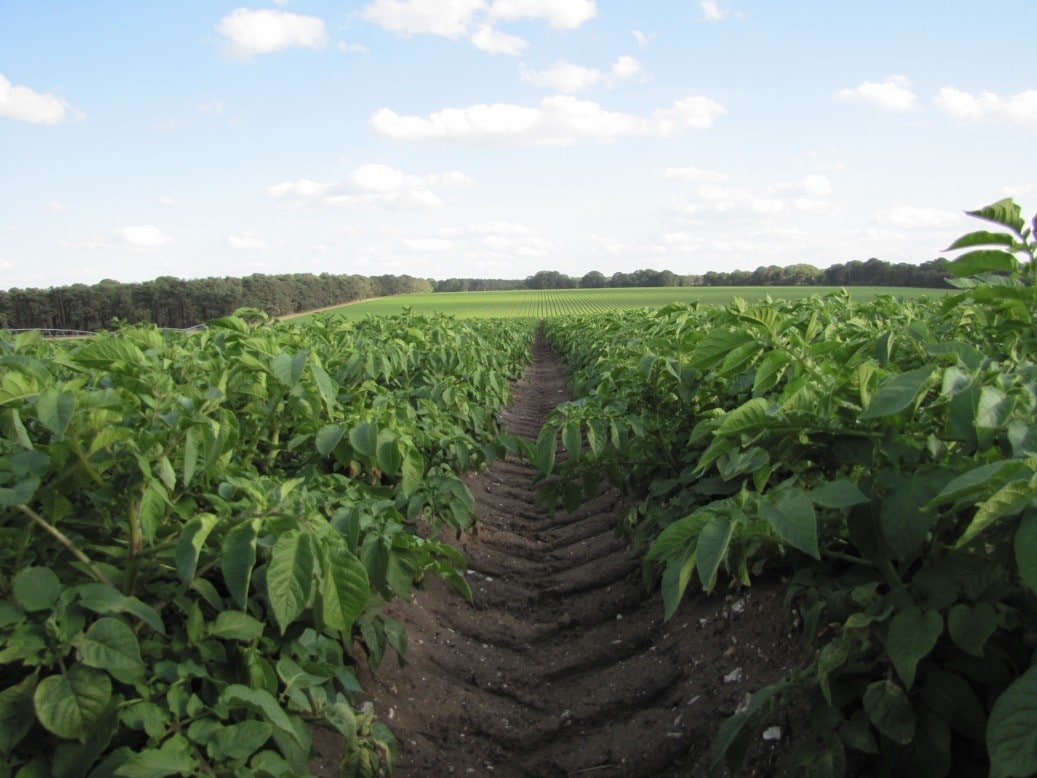
Camilla Hayselden-Ashby is Head of Product at fieldmargin, the digital farm mapping and management tool that links in with other technologies including satellite and drone imagery. Camilla works with farmers to understand how they are using the app, and what the overall challenge is that they are encountering within their business. The theme of the REAP conference is time; Camilla explains why this topic is so relevant to fieldmargin.
“One of the challenges we identified was the amount of paperwork in farming, particularly on the arable side. For example, the farm office prints off a job sheet for a spray job; that gets handed to the spray operator, they go off and do the job, meanwhile the farm manager is having to call them for an update on progress, then when the job is done a spray ticket goes back to the farmer and they need to type it all up.
“I’ve spoken to farmers who are doing a 60-hour work week out in the fields and then they’re spending their Saturday afternoon dealing with the data backlog.
“fieldmargin cuts out almost all of that. You have your phone with you all the time, you can log information on the go, and your records are automatically updated. There really is no need for that replication of data entry.
“On the livestock front, I was talking to a sheep farmer with about 1200 sheep across some rented ground and something he often has to do is provide information to the owner of the land on how many days it was grazed in that year and by how many animals. He said he has to go back through a notebook with the number of animals written and notes on where they were.
“Tackling that, we have a tool that helps farmers keep track of grazing. They set up livestock herds and can record where they are; it appears as a pin on the map and when you want to record a livestock move, all they need to do is select the herd they’re moving, tap the field they’re moving it to, and that’s done. On their herd and on their field, they can see where was grazed when, and on the field when they take the herd out it begins calculating the rest period, so if they’re allowing their field a particular amount of time to rest for the grass to regrow, that’s automatically calculated for them.”
fieldmargin are exhibiting at REAP 2021.
More about fieldmargin.

REAP 2021: Changing Time(s) for Agriculture10th November 2021

Imagine a world where agriculture is not constrained by time. The ability to manage and manipulate time is increasing and REAP 2021 will explore the advances in technology and breakthroughs in science that is making this possible.
REAP brings together people from across the agri-tech ecosystem who believe that innovation is the engine for change. The conference bridges the gap between producer needs and technology solutions and showcases exciting agri-tech start-ups. 

Cracking the secret of timing and its potential for agri-tech

Research Digest
Agri-TechE

As scientists, we know from the lab that time of day is important for treatments – herbicides are more effective when sprayed at dawn than dusk – but there is not much evidence that in current agricultural practice, timing of treatment is being considered. This is probably because it is only recently that the technology has become cheap enough to justify the investment.

The chronoculture idea is not just about the plant – it’s also about the fact that automation is now incredibly cheap.

25 years ago, it would have been ridiculously expensive and time consuming to optimise watering by computer. But now, somebody subscribing to a smart app can have automated watering for the cost of a few pounds – and suddenly these smaller benefits can start to accrue.

Professor Alex Webb, Chair of Cell Signalling in the Department of Plant Sciences, University of Cambridge

For example, if it was shown that watering at night would be more beneficial for the plant it would be possible to input this knowledge into the algorithm used to control irrigation. However, if the temperature is very high during the day and it is found that water is beneficial for cooling then the system could override these rules and sprinkle the crop. This dynamic decision making would balance the yield benefit with the cost of the water.

Fundamental research unlocks the secret of timing

Alex Webb’s team at the Department of Plant Sciences, University of Cambridge, had a major breakthrough when they discovered circadian clocks increased the size of the plants they were studying, confirming that this timing mechanism provides an advantage to plants.

Further research revealed that sugars produced by the plant regulate the clock function and calcium controls the circadian rhythm.

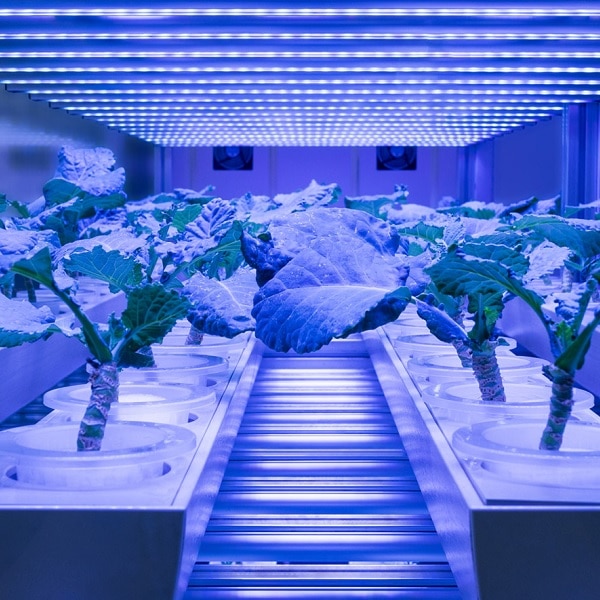
Professor Webb says we are at a tipping point where “we’ve got the fundamental biological knowledge and we’ve got the means to exploit it – with expensive automation like robots, cheap automation like smart irrigation, with smart data analysis tools and the ultimate: Controlled Environment Agriculture.”

Our findings about the importance of circadian rhythms in plants and the role of calcium and sugars in regulating their clocks are really fundamental discoveries that help us to understand the biology of the plant. I think this has been the exciting intellectual challenge for the past 25 years!

Now we more or less understand how plants measure time. The big excitement is that these discoveries don’t just apply to daily rhythms, they probably also apply to drought stress biology, pest resistance biology and much more.

We might be able to help adapt plants to different geographies, with different day lengths or breed for a changing environment.

It is already possible to get multiple harvests of wheat in a year under controlled conditions. This is achieved by giving the plants 18 hours of light, four hours of darkness – extreme photoperiods. This is an example of a really radical controlled environmental condition to rapidly accelerate the generation time of wheat – a real example of chronoculture.

But is this applicable in a field environment?  For this we need crop data, and my lab is currently working with Niab and BASF on field trials with wheat. We are growing plants in which the circadian clock is disrupted to see the consequence on different traits.

An application for this could be to adjust harvest time to coincide with optimum environmental conditions, particularly if we have trend towards wet Augusts and warmer drier Autumns.

We now have the opportunity to monitor the plant and control its environment 24 hours a day, which is a significant change in our relationship to farming.

This extends to storage and increasing the shelf-life of fresh produce.

For example, Beko have just released a range of ‘harvest fresh’ fridges which use blue and red lights in the vegetable drawer to simulate a 24-hour sun cycle which mimics natural light conditions ‘to maintain vitamins for longer’.

This feature came directly from fundamental research, where it was found that maintaining a light/dark cycle after harvest reduces pest attacks and maintains the quality of the fruit and vegetables because it stops them whitening and senescing – particularly in brassicas. The papers on this were only published only about 10 years ago.

The big question is: where will this new knowledge bring the best returns?

REAP 2021: Changing Time(s) for Agriculture

10th November 2021

Imagine a world where agriculture is not constrained by time. The ability to manage and manipulate time is increasing and REAP 2021 will explore the advances in technology and breakthroughs in science that is making this possible.

REAP brings together people from across the agri-tech ecosystem who believe that innovation is the engine for change. The conference bridges the gap between producer needs and technology solutions and showcases exciting agri-tech start-ups.

Read more here.

New Technologies in Low-Income Countries

Member News
The views expressed in this Member News article are the author's own and do not necessarily represent those of Agri-TechE.

The adoption of new technologies in low-income countries is not an easy process. Some people may fear change, while others may not understand the opportunities offered by technology.

And yet, promoting adoption is crucial!

The adoption of information and communication technologies (ICT) in developing countries offers a unique opportunity to transfer knowledge via private and public information systems. Mobile phones significantly reduce communication and information costs for the rural poor. This not only creates new opportunities to obtain access to information on agricultural techniques for rural farmers, but it also fosters the use of ICTs for other purposes, promoting their inclusion in a wider community.

Smallholder farmers should be able to access information and advice anywhere at any time and to apply them in their farming practice straightaway. Timing in farming is crucial. Internet broadband connection and a system that can provide farmers with local, tailored, real-time information is the first step towards increased production, adaptation to climate change, fertiliser and pesticide control, and peer collaboration.

Farmer Charlie’s aim is to create the best circumstances in which farmers develop trust, motivation, and a positive attitude towards new technologies.

-Margherita Magnini

Stable raises $46.5m to protect agrifood firms from volatile prices

Agri-TechE Article

Meet the Network
Agri-TechE
Stable, a startup and Agri-TechE member, is changing the way businesses manage volatile commodity prices, it has secured $46.5m to drive its US expansion.
Founded in 2016 by a farmer’s son Richard Counsell, while he was working in Chicago, the Stable platform enables millions of businesses to manage the risk in a simple and effective way.
Counsell comments: “I know the problems volatile cStableommodity prices can cause first hand, and I was struck by how little innovation has happened in the industry.
“Agricultural commodities are perishable and come in all shapes, grades and sizes, which makes them very hard to standardise and trade on an exchange,” said Counsell. “The result is that only 8% of commodities are available to trade on the likes of the CME Group Inc*, which makes purchasing risk management products such as futures or options contracts difficult without enormous basis risk.”
“Back in 1848 when the Chicago Board of Trade opened its doors, it had a simple and clear mission to provide buyers and sellers of crops financial certainty. I wanted to combine modern tools like machine learning (AI), with a great user experience and a clear and client-focused purpose to get back to the grassroots and become relevant again for businesses with a real risk to manage.”

Joe Brooker, VP research at Stable
Joe Brooker, VP Research at Stable, spoke at an Agri-TechE meeting

Stable’s platform hosts more than 5000 indexes which can be selected by clients to customise a contract to protect themselves from volatile prices. Payouts are automated and simply reference the local or highly correlated index to minimise basis risk. The result is a simple and modern way to manage price risk for millions of businesses globally. Currently focused on agricultural commodities, the company is widening its future offering to include packaging, construction & energy.
The company is seeing exceptional demand caused by the disruptions in the Covid impacted food chain, which has highlighted the risks involved for manufacturers and producers alike.
In the agrifood industry alone, more than $5 trillion of un-traded commodity exposures are currently self insured. Hedging can also be a complex, risky and intimidating experience for a business simply wanting to protect their risk rather than trade or speculate. After gaining regulatory approval in early 2021, Stable is now starting to work with many large food businesses in the US, as well as farming organisations wishing to protect against future price falls.
With operations in Chicago, Austin and NYC, the new investment will be used to build out its North American sales and marketing teams and invest in its world class data science departments in London & New York.
The Series A round of funding, was led by Greycroft as well as Notion Capital, Anthemis, Continental Grain and existing investors Syngenta and Ascot.
“Stable has a proven leadership team and is on track to reach $500m of annual premium within 3 years of launch, making them the fastest growing insurtech ever,” said Ian Sigalow, a Partner at Greycroft. “We’re delighted to support a company with this level of ambition and industry experience.”
*CME Group Inc. is an American global markets company. It is the world’s largest financial derivatives exchange, and trades in asset classes that include agricultural products, currencies, energy, interest rates, metals, stock indexes and cryptocurrencies futures. (source wikipedia)
An explanation of the Stable technology.
To find out more about Stable visit www.stableprice.com or email hello@stableprice.com


Helping Britain’s Hedgerows – an extraordinary ecosystem hidden in plain sight

Member News
The views expressed in this Member News article are the author's own and do not necessarily represent those of Agri-TechE.

Hedgerows might just be the most overlooked ‘super habitat’ we have. Many of us would probably relate to not taking that much notice or interest in them in their own right. A very British feature, they’re often viewed purely as a functional and aesthetic part of the landscape.  However, the humble hedgerow is a gem within our heavily modified environment, capable of supporting rich ecosystems and, perhaps even more importantly, of linking together habitats in our fragmented landscape.

Unfortunately, last century the UK lost about half of its hedgerows. This is due to a number of factors, but largely as a result of incentivised removal.  This occurred after the Second World War, as it was seen to be one of the best ways to improve agricultural efficiency and facilitate the ‘mass mechanisation’ of post-war farming.

Despite this, we still have around 500,000km of hedgerow habitat spanning the UK, some of which can be considered ‘ancient’. These older hedgerows have particular ‘indicator’ species and characteristics which make them especially valuable for wildlife.  Their existence today is a result of ‘an unbroken chain of care, management and periodic rejuvenation…that spans generation to generation, farmer to farmer’ – Megan Gimber, People’s Trust for Endangered Species (PTES). 

However, the quality of the remaining hedgerows differs widely; with many being poorly managed and maintained. These hedgerows are at risk of becoming ‘gappy’ and eventually being lost altogether. That’s where PTES have stepped in to help ensure that we keep the remaining hedgerows as healthy as possible. 

Not only are healthy hedgerows a sanctuary for biodiversity through providing shelter, a safe corridor and a food source (one study found over 2,000 species with just an 85m stretch of hedge) – they’re also an asset to farmers. ‘They can provide forage for pollinators, offer crop protection, act as a stock barrier and also as livestock shelters. They can also act as a source of income and have additional environmental benefits including acting as carbon stores, flood control mechanisms and they help to reduce soil erosion and even air and water pollution levels.’ These properties of hedgerows have value to us all and will be become increasingly relevant to the farming sector as the Environmental Land Management scheme is introduced. 

To thrive in the long term, hedges need to be managed according to their inherent lifecycle. 

For most of their history, hedges were managed by hand. This meant that the woody older year’s growth would remain intact, and so hedges would typically get bigger every year. At some point, they would get too big to easily cut by hand, at which point they’d be left to grow out. When they started to thin at the base, where they were no longer stock proof, they’d be laid – to start the cycle again. 

However, modern hedge cutting tools are capable of stripping away most of the energy producing growing part of a hedge, leaving just the older, woody structures behind. While a hedge can cope with this for several years, we’re now seeing the damage it does to hedge structure in the long term. 

We have the opportunity now to combine old methods with new tools and insights; using our existing tools, but just tweaking the way we use them to return to more traditional hedgerow management. And people are starting to rekindle their appreciation of what hedgerows do for us and the environment.

In order to help farmers identify how to return their hedges to a healthy state PTES chose to develop an app. 

In just 6 questions, Healthy Hedgerows, developed by the Natural Apptitude team, enables farmers to undertake a rapid assessment of their hedges. It then provides instant management advice, which is tailored specifically to the structure and condition of the hedge in question. No matter what stage a hedge is at within its lifecycle, there is a way to return it to its best.

Megan from PTES states; ‘Trying to manage hedgerows according to their lifecycle, especially across a whole farm, is a challenge. But by using an app, farmers gain instant access to customised hedge management options whilst they’re still standing next to their hedge. This is really important both to help them understand the issues and the solutions.’ 

‘Whilst we still run quite a few surveys on paper, these can present barriers. Obviously, there’s no way to provide dynamic feedback. People also struggle to add accurate locations and paper surveys often don’t mix well with the frequently inclement British weather!

‘Having a phone app removes these barriers and makes the whole survey process more streamlined and accessible.

‘The speed and ease of using the Healthy Hedgerows app means that farmers, who famously don’t have much spare time, are more likely to get involved. This means it can be a tool in the belt of more farmers wanting to help their hedgerows thrive. We’ve had really strong engagement with the app and most farmers love it. Much of that is due to how it’s been designed and put together.  

‘When choosing a provider to develop this app, we had no doubts that we wanted to work with Natural Apptitude as they are renowned for excelling when it comes to creating user friendly data recording apps. 

‘The team understand exactly what it takes to make an effective and engaging tool, and this is demonstrated by their impressive portfolio of citizen science and data collection apps.”

If you’re interested in surveying your hedgerow you can download the app for free by visiting the Apple Store or Google Play and searching for Healthy Hedgerows. 

For those who can’t download the app, more information is available online: hedgerowsurvey.ptes.org/healthy-hedgerows-survey.

Outfield raises £750,000 to progress orchard management system

Agri-TechE Article
Agri-TechE

How many apples on this tree, in your orchard, across your farms? Until Outfield launched its drone-based imaging system to map the orchards it was impossible for growers to know this vital information.
Now the company has raised £750,000 in its first funding round, to expand its yield estimation capability. The orchard management system is now used by growers across three continents for high value crops including apples, pears and plums. Jim McDougall, Director of Outfield, talked about the development of the technology at REAP 2021 along with one of the farmers that have helped to develop the technology so it meets the needs of growers. He says: “This investment will enable us to develop the customer base as well as adding new functionalities to the platform.”
Fruit growers are using Outfield map their orchards and to create detailed maps of tree condition and fruit loading. The technology helps growers visualise and track key parameters in their orchards, enabling them to produce more fruit to specification, reduce fruit loss and decrease the amount of chemicals used. Outfield already works with growers in the UK, Europe, South Africa, Chile and New Zealand. The funding round was led by the UK merchant bank Turquoise in its 11th deal for the Low Carbon Innovation Fund 2 (LCIF2). The investment is part of a £750k round that also includes Cambridge Agritech, Deeptech Labs and Amadeus. Jim says: “We are delighted to welcome LCIF2 as an investor in Outfield. Now is the time for new precision technologies to revolutionise this sector, supporting global food security and managing the environmental impacts of fruit growing”.

Axel de Mégille, director at Turquoise, commented: “Outfield technology will enable growers to improve yields on their production as well as decrease CO2 emissions associated with the use of chemical fertilisers.  We were impressed by what the Outfield team has built so far and are proud to be part of the next step of their journey”. This funding is being used to expand Outfield’s global reach and extract even more insights from rich data their growers are gathering, allowing for further impacts in the sector.
More about Outfield

YAGRO joins Frontier Agriculture

Agri-TechE Article
Meet the Network
Agri-TechE

The agri-tech ecosystem is maturing: YAGRO, which featured as an early-stage company in the second REAP Start-Up Showcase in 2015, has just announced that it has joined the Frontier group of companies.
The Cambridge-based company is a pioneer in the development of analytics for agriculture and released a ground-breaking new product in 2020 that aggregates on-farm business data into a simple online tool, and gives the farm manager incredible detail and insight on the farm’s current and historical performance.
YAGRO has worked closely with a steering group of progressive farmers to ensure its technology meets the needs of farmers; joining Frontier will help to secure its future as a leading provider for the whole industry.
YAGRO will continue to trade as an independently managed, stand-alone subsidiary.

YAGRO joins Frontier

Dan Jolly, Co-founder and Head of Business Development, said: “This is an exciting day for the whole of the YAGRO and our customers. With the backing of Frontier Agriculture, we can forge ahead with our plans for team growth and new analytical tools, supercharging the proven impact we’ve been delivering since 2015. We look forward to accelerating our developments with our farm users and our Partners.”
Gareth Davies, CEO and co-founder, said: “Today’s announcement recognises the quality of the team and capability we have built at YAGRO, that genuinely empowers our customers to better understanding and better decision making for the farm. Now anyone across our industry – from farmers to agribusiness to Government – can be confident in navigating the hard changes ahead, with YAGRO as their trusted and proven data partner to empower insight and decision making. This also marks a hug step forward for UK agri-tech and its role in driving the whole industry forward.”

Part of the Agri-TechE ecosystem

YAGRO is a member of Agri-TechE and many of its National Steering Group are also members, such as Sentry Ltd, Elveden Farms Ltd, and Greens of Soham Ltd.
Greg Colebrook, Director at Greens said: “I’ve been working with the YAGRO team and technology for the last 5 years, and believe that they are on the right track. They’ve already delivered some great products, and this news means that they’re sure to produce new products even quicker. We really like the team there, so it’s great to hear they will remain at the helm and most importantly the business will remain an independent entity.” Mark Aitchison, Managing Director of Frontier Agriculture, said: “We are excited by today’s news that YAGRO will be joining the Frontier group as an independent, stand-alone subsidiary company. YAGRO has quickly gained a strong reputation for nimble design and deployment of practical software solutions for farmers, advisers and the supply chain. Today’s announcement will enable YAGRO to fast-track their strong pipeline of products currently under development, which are much needed for the whole industry.”
More information about YAGRO

Aquagrain – The first commercially viable water absorbing soil improver?

Member News
The views expressed in this Member News article are the author's own and do not necessarily represent those of Agri-TechE.

Despite the variable global weather Biomation’s Aquagrain has turned in some impressive results in its 2021 Covid restricted commercial demonstration programme.

Aquagrain™ is a unique, organic based soil improver which can absorb up to 30 times its mass in water providing food and drink for plants. Aquagrain incorporates organic waste from the food industry into a biodegradable, carbon chain polymer.

Its organic content, with enhanced micronutrients, not only supplies crops with valuable nutrients, cutting the requirement for inorganic fertilisers, it also significantly stimulates microbial activity in the soil and is ideal for regenerative farming practices.  Aquagrain biodegrades over 12 months to leave just water, CO₂ and organic matter in soil.

Controlled environment trials have shown Aquagrain can cut irrigation requirements by up to 50%, reduce leachate by 60%, proven plants survive up to 16 days longer without irrigation if planted with Aquagrain and can increase crop yield by as much as 3 times, but those results needed verification in commercial growing scenarios.

Covid and the withdrawal of DfID funding saw Aquagrain trials with the South African Western Cape Province Agricultural Research Department and the Nigerian Centre for Dryland Agriculture cancelled but rainfed trials with Winter Wheat in the Middle East, Winter and Spring Barley in Suffolk as well as a “Bumble-Bird” crop trial to improve biodiversity on another Suffolk farm.

Aquagrain works best in hot, arid lands, with free draining soils and would be of little use on much of the UK farmland. East Anglia does have appropriate soil types, as well as receiving lower rainfall than the rest of the country. Commercial demonstrations with rainfed Winter and Spring Barley were set up on a Breckland farm with free draining sandy soil over chalk. A further Bumble Bird demonstration was set up on a patch of sandy, dry headland at a farm just outside Aquagrain’s R & D centre in Needham Market.

Aquagrain’s Chief Scientific Officer and inventor, Dr Arjomand Ghareghani was very pleased with the demonstration results despite weather events suggesting conclusive data might prove elusive. Arjomand reported ”It was good to get some demonstrations going after the disappointment of the main trial programmes in South Africa and Nigeria being cancelled, but both winter cereal trials were hit with heavy rain. In the Middle East there was biblical level flooding in the trial area, killing civilians and threatening to wash away the crop. In the Breckland trial it rained for three months post drilling nullifying the benefits of Aquagrain. After Christmas the weather in the Middle East turned from flood to drought and East Anglia suffered weeks of cold dry Easterly’s in the spring. I was not hopeful of significant data from anywhere.”

In the Middle East Aquagrain treatments yielded 720 kg/ha compared with inorganic treatments which yielded 520 kg/ha. Arjomand indicated that typical yields of 800 kg/ha in no ways compares with UK yields and could not be met because of the drought (85% lower rainfall than average) but Aquagrain could be considered an insurance policy against failure.

On the Brecks, despite the wet and dry periods Aquagrain achieved Winter Barley yields of 6.6 ton/ha compared with standard inorganic treatments which delivered 5.9 ton/ha an increase of 12% without an application of Chafer N30 + S fertiliser at 200,000 L/ha. Spring Barley results reflected better Aquagrain properties with an increase in crop yield of 27% from 4 tons/ha to 5.1 tons/ha.

On the Bumble-Bird crop outside Needham the farms wildlife manager reported the difference in Aquagrain, Non Aquagrain field strips as “like walking across a black and white Zebra crossing.” He added that “the headland is so dry nothing has survived in previous years but Aquagrain has transformed the area.” The farm owner was so impressed with Aquagrain performance he requested 35 tons of Aquagrain for his 70 hectares of rainfed cereals planned for 2022.

Aquagrain’s Head of Business Development, JP Dorgan, was pleased with the summer results, but pragmatic about the technology’s immediate widespread adoption. It is great that despite the climate challenges, these results indicate Aquagrain can add value to commercial growers. It is fantastic that even before the Brecklands results were received, after one trial a farmer is so convinced with results that they want to order 35 tons. Unfortunately, our production capacity at our R & D facility is only one ton a month, so it may take us a while to deliver that order. We are expecting the Breckland trial debrief shortly and if the quality of the grain, in addition to the quantity is improved, this could suggest that there is a rainfed crop market in the UK as well as the overseas, high value irrigated crop markets we intend to target when we have secured some investment.

“What we have done in the last couple of months is target a market we can penetrate. We have good trial results from pots, hanging baskets, trees and shrubs, so we have introduced two additional versions of Aquagrain. As well as AquagrainCrops for agriculture, we have AquagrainTrees and AquagrainPlants, to penetrate the retail ornamental market and the landscaping, desert greening and forestry markets. It was a huge effort but in only a few weeks we rebranded, rebuilt the website and prepared a stand for the UK’s largest Garden Centre trade Exhibition, GLEE (Gardening Leisure Entertainments Exhibition) held last week at the NEC. The AquagrainPlants stand attracted a lot of attention, in addition to interest from a number of smaller retailers and distributors we had interest from 3 of the largest players in the retail garden centre arena and have already agreed evaluation programmes with them. We could not really have hoped for a better reception. “

Asked about the future development plans JP added “It has been a great year to date, but there is still lots of work to do. We need to continue to find global farmers and landscapers to run commercial demonstrations with, find investors to fund those demonstrations and scaling up production facilities as more orders are received.”

“You need to know what the future will look like” – regenerative farmer Tom Pearson speaks at REAP

Agri-TechE Article
Agri-TechE


Farmer Tom Pearson is transitioning his farm to regenerative agriculture. Here he talks about the benefits of participating at REAP.

I took advantage of the bursary last year and found REAP really interesting. You can’t go to REAP and say “I like that, I’ll go to the website and buy it” but it makes sense, from a business point of view, to understand what the world might look like in ten years’ time, so that you can purchase the right kit and hire the right people.

REAP gives insights into direction of travel 

Last year we bought a combine – it was a major decision, a big amount of money, but I’m expecting to have that combine for 10 years plus, so these are long term decisions. Grain storage is another example – do I want a big 1,000 tonne grain store, or do I want lots of 100 tonne silos for specialist crops? You have to watch the market, the direction of travel – and technology is a big part of that.
I might need to buy a sprayer soon because ours is packing up, but because I know a bit about technology in the pipeline, I have realised that in five years’ time, I am likely to be using a sprayer far less; so I might be more inclined to look at a good value second hand sprayer rather than a new one.

I want to be ready for investment in natural capital 

It’s the same with carbon. If someone comes along and says: “We’d like to do a big collaborative natural capital project; where is your base-line data? How can we prove its money well spent?” I want to be ready by understanding the technology associated with that: how to measure carbon, understanding the depths for sampling, using GPS positioning to get the same geopositional reading. It is important to be keeping an eye on the future, and technology is obviously going to be a big part of that.
It is incredibly helpful, if you’ve got the time, to attend a conference like REAP and get a feel for what’s going on, some things might work for you now and others give an idea of where things are going.

Opportunity to provide input to get the tech right

The nice thing about being part of Agri-TechE is that you can see these tech guys are putting in a lot of effort, however it’s impossible to create these products without some input from farmers.
I’m from a science background myself and I understand how difficult it is to evidence a product and get it to market, so I’m happy to help out. I don’t want to be faced with a bunch of poorly designed products down the line when I know I’ve had the opportunity to provide that input.
Farmers have a lot on their plates and a lot to do, so it’s easy to think: “I haven’t got time for this, it’s too far down the line”. But I’ve still got the energy and enthusiasm for this so I’m keen to learn what technologies are out there.

Balancing agri-tech with regenerative agriculture

Tom Pearson is one of the farming leaders of the H3 project (Healthy soils, Healthy plants, Healthy people), which is comparing regenerative agriculture to traditional farming and looking at biodiversity, soil quality and food quality. He says: “Measuring each of these elements is becoming possible. There has been a lack of clarity over the future, but the wait is coming to an end. Interest in carbon sequestration, for example, is gaining momentum. We want to establish baseline data now, to be ahead of the curve when someone comes along asking to do a big collaborative natural capital project.”
He is also part of the farmer advisory group for the Small Robot Company, which launched in the REAP Start-up Showcase and has since gained funding and widespread industry support. The company is one of many that have benefited from the Agri-techE ecosystem and will take part in the exhibition in this years’ virtual REAP conference.
“In a nutshell: REAP is fantastic. It’s a lovely, friendly conference, with really enthusiastic people. It’s ag tech, it’s still on the fringes of what farmers do in our day-to-day lives, but it is another interesting aspect of my daily activities. I enjoy it from all those points of view.

Farmer? Grower? Student? Click here to apply for the REAP 2023 Farmer Bursary sponsored by RNAA

REAP brings together people from across the agri-tech ecosystem who believe that innovation is the engine for change. The conference bridges the gap between producer needs and technology solutions and showcases exciting agri-tech start-ups. 

Clock-wise

Agri-TechE Blog
Agri-TechE

October marks the onset of winter in the UK, with the clocks moving back by an hour and heralding later sunrises, earlier sunsets, and colder temperatures.
For some this marks a depressing demarcation to the end of summer, but this shift in day length and temperature is a vital cue for plants and animals to move into the next stage of their life cycle. Many animals begin hibernation as the days shorten, trees and other plants shed leaves and appear to die back, where they will spend the winter drawing on the precious reserves built up over the summer. Seasonal migrants arrive and depart, next year’s cereals are in the ground, and sugar beet is harvested.
Farming has, of course, always been closely aligned to the timing of Nature and the passing of seasons. Winter wheat, for example, is drilled in the autumn and requires a prolonged period of cold in order to trigger flowering in the spring – this is due to a genetic process (identified at the John Innes Centre in Norwich, UK). But climate change is causing disruption of the seasons – as discovered by phenology studies of these recurring biological events. Historic farm records from the late 19th Century, for example, show that the growing season in parts of England was around 244 days, yet by 2015 it had reached 280 days. This is likely to be linked to increase in UK temperatures since the 1960s of an estimated 1°C.
But as well as seasonal changes, living things respond to a day/night cycle as well. So it is also possible to tap into this internal ticking “clock” in plants and animals to help with productivity, efficiency and welfare.
The frequency of egg-laying by poultry, for example, is heavily influenced by the light regime, and similarly the performance of many crop plants in controlled environment conditions is closely regulated to prevent “bolting” and to ensure consistency of production.
A more intricate understanding of how the daily clock ticks is revealing new insights into better ways of managing agricultural systems. For a start, there are some indications that application of inputs on broadacre arable crops is more effective at particular times in the day-night cycle (we’ll be hearing more about this at REAP 2021).
Understanding the minute changes that take place within individual plants throughout the day and night can help with better understanding of when crops might be more responsive to management regimes, and to help build resilience. Breeding programmes which incorporate the genes which control the daily – or “circadian” clocks might be enable production of plants which perform better in different climates and – as have greater resilience to climate change.
The UK is hosting the global COP26 conference in Glasgow in November, where hopes for commitments to halve emissions by 2030, and to limit global warming to no more than 1.5°C. Nature is responding to the pressures it is under – in some cases it is providing opportunities for new agriculture in fresh ways and in new locations. In others it is resulting in serious irreversible challenges.
Join us at REAP 2021 to discuss the impact of time – hourly, daily and seasonally – on agriculture and how this can help with mitigation of the impact of climate change.

REAP 2021: Changing Time(s) for Agriculture10th November 2021

Imagine a world where agriculture is not constrained by time. The ability to manage and manipulate time is increasing and REAP 2021 will explore the advances in technology and breakthroughs in science that is making this possible.
REAP brings together people from across the agri-tech ecosystem who believe that innovation is the engine for change. The conference bridges the gap between producer needs and technology solutions and showcases exciting agri-tech start-ups.