The Productive Landscape: NatureTech for Profit and Planet
How can technology enable delivery of food, nature recovery, and climate resilience - all at once? The Head of the Environment Agency is asked: what's the national plan for dealing with land use pressures, plus you’ll hear from technologists and land managers working on nature-based and tech-enabled solutions for water, soils and climate adaptation.

Farmers from Horticulture Nova Scotia are looking for innovation

Meet the Network
Agri-TechE

Do you have a technology or research that would be of value to vegetable and fruit farmers from Nova Scotia? Horticulture Nova Scotia are members of Agri-TechE and will be hosting a meet and greet event on 21st of April.
We talked to Marlene Huntley, Executive Director of Horticulture Nova Scotia  why the organisation and its membership are keen to develop closer links with the Agri-TechE ecosystem.

Horticulture Nova Scotia fruit and vegetable farmers looking for innovationIs Nova Scotia a big fruit growing region? 

MH. We have primarily family farms in Nova Scotia of all sizes and many are multi-generational. Our farmers sell to retail, farm markets, and direct from farm.
Nova Scotia is connected to the rest of Canada by an isthmus, so it surrounded by salt water and this means that the climate is conducive to a massive number of crops. The Annapolis Valley can be quite hot, and some crops typically grown in warmer climates, like sweet potatoes, are now grown here successfully.
The growing season can run from May through to October/November, depending on the crop. To extend the season, many are now being grown under cover such as day neutral strawberries.  We also have year-round greenhouse operations and over the last few years there has been a lot of interest and growth in innovative tier farming for greens.

Image from horticulturens.ca

Has the pandemic created challenges for your farmers?

Isolation protocols have created challenges for sure, especially with gathering limits, etc.
The main challenge has been with labour as many of our farmers depend on offshore workers.
Initially the pandemic caused many delays in bringing them to Canada and to our province, but the regulations to protect both them and the existing farm workers and families caused challenges as well, especially with housing while ensuring proper distance, facilities and gathering numbers.

What are you keen to gain through membership of Agri-TechE ?

We see Agri-TechE as a door to all the information we seek, and a source for the connections we need to move forward in our industry; we want and need to be part of that larger worldwide network!
Before the pandemic, our growers were travelling across North America and Europe seeking new machinery ideas and growing innovations to help in their success.
We don’t want to attempt to re-create and waste limited resources on research  and innovation that we know must exist, but we don’t currently have access to.

What type of innovation are your members interested in?

Members of our organization are always interested in technology – they live and breathe this on their farms!
Our farmers are vegetable, greenhouse vegetable, strawberry, highbush blueberry, bramble and associated nursery stock growers. They are interested in any tech that leads to more successful farming operations.
Scotia Horticultural Congress is a mixture of business, production, with an insert of others from outside the industry who bring motivation and insights.
We already use AI extensively, and are increasing the use of robotics, especially in areas such as weeding and disease assessment. So yes, a great appetite for technology!
To join the event “Agri-TechE for Fresh Produce – Meet Horticulture Nova Scotia” 14:00 BST 21st April 2022. 

Growers could save thousands each year with Albotherm’s heat-sensitive coating

Agri-TechE

A heat sensitive coating, which optimises the amount of sunlight entering the greenhouse or polytunnel, could save growers thousands of pounds each year by removing the annual cost of applying and removing shade paints.

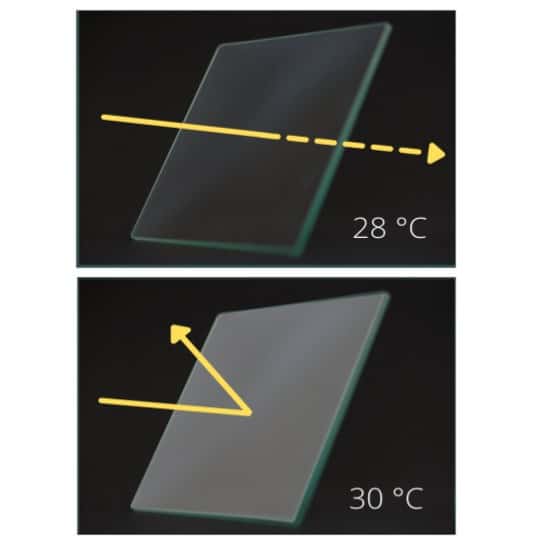
The coating, developed by University of Bristol spin-out Albotherm, stays transparent on cooler days to let maximum light through, but becomes opaque as temperatures rise.

Albotherm, presented in the REAP 2021 Start-Up Showcase. 

Responsive coating  moderates temperature

Molly Allington, CEO and Co-founder of Albotherm, explains that temperature control in the glasshouses is critical for maintaining crop health and maximising yields.

“In the UK, temperature control is achieved through application of shader paints, which act as a sun-protecting screen during the summer months and are then removed for the winter.

“Our coating would be applied once as a transparent layer. As the glass reaches a specific temperature it would gradually become opaque, and then become clear again as it cools. The benefit is that it would allow passive temperature control throughout the year and not require the costly painting and removal.”

The idea for the coating emerged during CTO Sian Fussell’s PhD research into temperature responsive materials, explains Molly: “Sian realised the materials could have applications in agriculture, so we built a bench-top model greenhouse in the lab and applied our materials. It worked really well, lowering the temperature by 5-10 degrees. That’s when we realised it could have real-world use.

“We are designing the thermoregulation product to be applied to the glass as a spray-painted coating, in the same way that current shade paints are applied, so it will fit within normal procedures.

Spray coating is time saving

Molly continues: “We are designing the thermoregulation product to be applied to the glass as a spray-painted coating, in the same way that current shade paints are applied, so it will fit within normal procedures.

“In the long term, we see this as a platform technology as we can use turn out materials into a coating for a range of materials, potentially including polytunnels. We are also able to create formulations that transition at different temperatures, ranging from 18 to 45 degrees, so we can control the amount of light that is being blocked, thereby cost-effectively maintaining optimum temperature and light level in the tunnel or glasshouse for different varieties of plants and climates

“Additionally, our technology can be used on conservatory roofs.”

The company is based at Future Space, an accelerator in Bristol, and is involved in product trials.

“Right now, we are refining the product for market – we’re pretty close to having a minimum viable product,” says Molly. “Moving forward, it’s a matter of improving the durability of that, and then scaling up over the next six months.”


Technologies to extract greater value from available light and the feasibility of year around production of green vegetables are among the topics to be discussed at the Agri-TechE event ‘Let there be Light’ hosted by the University of Essex Plant Innovation Centre on the 22nd February.
Find out more and book your place here.Event Booking

Increasing the rate of photosynthesis in field and undercover

Agri-TechE

SunYield, taste and time to harvest can all be impacted by light. So, increasing the rate of photosynthesis, the process by which plants convert sunlight to biomass, has the potential to improve agricultural productivity and the nutritional value of the crop. Technologies to extract greater value from available light and the feasibility of year around production of green vegetables are among the topics to be discussed at the Agri-TechE event ‘Let there be Light’ hosted by the University of Essex Plant Innovation Centre on the 22nd February.
This in-person event will include an exhibition with the chance to talk directly to those at the leading-edge of these technologies. 

Could Glaia ‘sugar dots’ increase rate of photosynthesis in field crops?

Field crops could also benefit from technology to accelerate the rate of photosynthesis. Agri-tech start-up Glaia is achieving this by using a naturally occurring carbon-nano material to create ‘sugar dots’ that can be sprayed on to foliage. Once located on the leaves the dots increase the number of light-harvesting antenna, improving the response to light. When applied to wheat, strawberries, and tomatoes they have been shown to increase yields between 20-40%.

Could UK be self-sufficient in leafy greens?

John Stamford
John Stamford

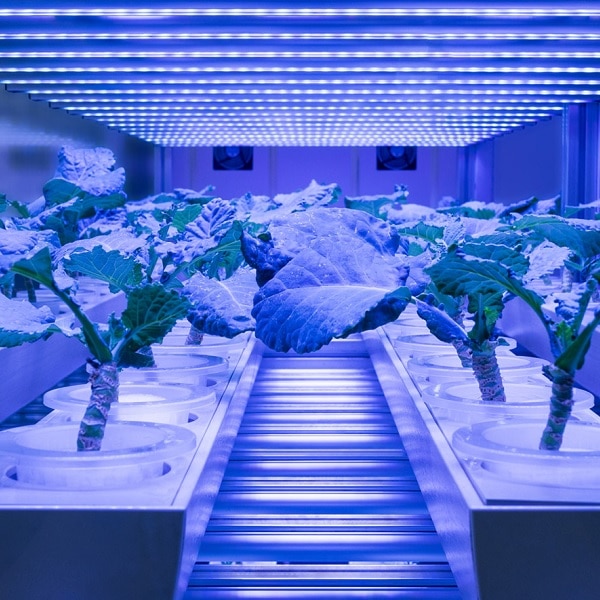
A blended approach of field and undercover cropping may increase the UK’s potential to be self-sufficient in leafy greens, says University of Essex researcher John Stamford, who is looking at how to use tailored LED lighting recipes to improve crop performance and yield as part of the Interreg2Seas funded Hy4Dense project.
“Speaking to farmers, there are a few issues around the supply of leafy greens in the supermarkets. Around November production switches from the UK to Spain which means we are importing these crops over the winter months. The idea here is to improve accessibility of hydroponics in order to potentially have cost-effective year-round UK production. Light plays an important role in that.
“For instance, growing under red light for the first few weeks may cause the plant to focus more on biomass growth, and then transitioning into blue light in the last week before harvest, the plant is stimulated to generate a range of pigments, secondary metabolites, and flavour compounds. So that could maximise yield and flavour in the crop.”
John has experimented with artificial day lengths and changing the quality of light that a plant receives over time to see the impact that has on flavour and other properties: “A plant responds to light quality and quantity in order to optimise itself for the environment, and we can use this response to customise the flavour and morphology of the plant. Some consumers have a preference for larger, leafier, plain tasting leaves whilst others prefer smaller, more flavourful leaves.”

But still challenges to overcome

lettuceLighting can also be used to reduce time to harvest, according to research by Jim Stevens of Vertical Future, an engineering firm that designs controlled environments for clients. Vertical Future recently announced a £21million fundraising round, which will be used to boost its development pipeline and widen the options of what can be grown.
Jim explains: “Growing lettuces at supermarket prices in vertical farms may be feasible if we can get their growth cycle down from eight weeks to six or even five. The problem is, lettuces suffer from tip burn, especially if they grow too fast. These ugly brown spots on the leaves are caused mainly by slow transpiration of water through the plants and are unsurprisingly rejected by consumers.”
“One option is to change the light spectrum to increase transpiration at higher light levels – for example turning up the blue spectrum to trigger the plant’s stomata to open and cool the plant.”
Other speakers at ‘Let there be light’ include:

  • Molly Allington, CEO of Albotherm, whose heat-sensitive shade coating optimises the amount of light entering the glasshouse or polytunnel
  • John Matcham, Technical Director of Light Science Technologies, developers of novel lighting recipes for a variety of environments
  • James Millichap-Merrick, CEO of Vitabeam, whose ‘Quantum Energy’ lighting has been shown to boost yield and extend shelf-life of fresh produce.

The exhibitors include:

  • Kroptek  developer of LED grow lights, the company recently announced a collaboration with Surexport to fast-forward the strawberry season by a full month with the best quality of fruit.
  • GE Current – providers of professional horticultural lighting solutions for greenhouses and indoor farms
  • Pro-Lite  – portable plant science instruments that measure and analyse everything from roots to leaves including rate of photosynthesis, canopy structure, leaf area, spectroscopy, and root function.
  • Glaia – developers of nanotechnology-based solutions for sustainable agriculture

Find out more and book your place here.

Event Booking


GROWPURA TARGETS GLOBAL EXPANSION WITH FIRST INTERNATIONAL PATENT

Member News
The views expressed in this Member News article are the author's own and do not necessarily represent those of Agri-TechE.


We have taken the next step in our quest to capture a global market by securing IP protection in Singapore – our first overseas patent with more pending.  This follows success with our UK patent being granted and also a trademark with the USA.

Our innovative and advanced hydroponic vertical farming technology which enables the farming of crops in small spaces whilst ensuring even greater taste, greater quality and longer shelf life is pioneering the move towards this more sustainable way of plant growth.  By meeting both consumer and retailer needs, this patent protects over 6 years of research and development into the pioneering techniques we are fiercely proud of.

Nick Bateman, CEO of GrowPura, said: “From first launching this venture; penetrating international markets with our unrivalled technology has always been on our radar and so making our first meaningful move in the Asian market in such a short space of time is both exciting for us and a statement of intent as to how far and wide we believe this technology can be used.

“Food security is a major global concern and our systems help address a serious need by equipping farmers all around the world with the tools they need to sustain themselves, serve their local communities and even distribute to wider markets.

“We are pleased to have secured this patent in Singapore and expect many more to follow.”

Overcoming the limitations of time – REAP report launched

Agri-TechE Article
Agri-TechE

Emerging technologies to overcome the limitations of time were discussed at the recent REAP 2021 conference – the report REAP 2021 – ‘Changing Time(s) For Agriculture’ has just been released.
There is much discussion of how more efficient use of resources will make farming more productive, but there are two dimensions that are frequently overlooked – time and light – and these resources are intrinsically linked.
Timing is crucial in agriculture, through the natural cycle of sowing to harvest and birth and maturation of livestock, but also for strategic decision-making such as predicting demand for perishable goods and scheduling interventions. For humans, without automation, the working day is limited by the number of daylight hours available. Light is also key to agricultural production.
At REAP this year the delegates and speakers were asked to imagine a world where time was not an obstacle. Together they reviewed emerging agri-tech that has potential to remove this constraint from agriculture and unlock greater potential from all of its resources.
There was a lot of information to absorb on the day, along with all the networking and the International Café, so the report provides an opportunity to review the content at your leisure. If you are interested in following up with some of the speakers then do let us know. Hope to see you at the next one – save the date Tuesday 8th November for REAP 2022.
In the meantime, thanks again to our 2021 sponsors.

Breeding wheat to withstand higher temperatures

Research Digest
Agri-TechE

The work focussed on the enyme Rubisco which has a key role in photosynthesis, it turns carbon dioxide into sugars.

Dr Amanda Cavanagh, from Essex’s School of Life Sciences, who led the research said that global temperatures are rising at a rate that is outpacing a plants’ ability to adapt.

She says: “We know that as temperatures rise, Rubisco has a harder time distinguishing between carbon dioxide and oxygen, and so rates of photorespiration rise. Because of this, we thought manipulating photorespiration might be a way to help crops take the heat and mitigate yield losses caused by higher temperatures.”

Protection plants against heat stress increases yield by 26% 

The research project, published in the Plant Biotechnology Journal, showed that the engineered plants produced 26% more yield than the wild-type plants exposed to the same heated conditions. The engineered plants also had 15% less yield loss under the higher temperatures than non-engineered plants. This gave the researchers insight into how to improve the yields of food crops in the changing climate.

Photosynthesis relies on the enzyme Rubisco to turn carbon dioxide into sugars. However, photosynthesis produces an oxygen-rich atmosphere and about 20% of the time, Rubisco grabs oxygen instead of carbon dioxide, resulting in a process called photorespiration which can reduce yield of a grain like wheat by about 36%.

Realizing Increased Photosynthetic Efficiency (RIPE)

This lost production is equal to 148 trillion calories in wheat and soybean, calories that could be feeding millions of people.

From an economic standpoint, the yield loss, reportedly as high as 40-50% in the southern United States, cost producers around $500 million in 2012. Producers in regions around the equator can see even more losses, due to the increased temperature, with the issue expected to escalate worldwide due to climate change.

This research is part of Realizing Increased Photosynthetic Efficiency (RIPE). Now the concept has been proven in tobacco plants, research is underway to take the same genetics and put it into food crops like potatoes and soybeans, allowing food production to increase, despite the ever-increasing temperatures around the world.

Alternative pathway to photorespiration protects growth and productivity at elevated temperatures in a model crop,Amanda P. Cavanagh,Paul F. South,Carl J. Bernacchi,Donald R. Ort,Plant Biotechnology Journal https://doi.org/10.1111/pbi.13750
 

The Wolfson Foundation supports a revolutionary new plant and microbial sciences hub

Member News
The views expressed in this Member News article are the author's own and do not necessarily represent those of Agri-TechE.

We are delighted to announce that the Wolfson Foundation is generously supporting The Sainsbury Laboratory and the John Innes Centre’s ambitious vision Healthy Plants, Healthy People, Healthy Planet (HP3), by awarding £1.1 million to the project.

This will contribute towards the development of an Advanced Technology Centre, a state-of-the-art facility for biomolecular sciences and bio-imaging. The Advanced Technology Centre will enable seamless, interdisciplinary science and advanced computational approaches to be taken in future. This will allow the institutes to be truly world-leading in plant and microbial sciences research and establish the Norwich site as a national research hub.

The  John Innes Centre and The Sainsbury Laboratory are committed to using their science to provide a step-change in capability that will enable us to tackle one of the world’s most significant scientific challenges. In the face of the climate emergency, it is imperative that agricultural production is transformed to become a net carbon zero activity that no longer relies on fossil fuels.

HP3 is a joint vision between two institutes that seeks to secure a safer, healthier and more sustainable future through the power of plant and microbial science.

Investment in new infrastructure to replace buildings established in the 1960s will revolutionise our capabilities and therefore maximise the potential benefits of plant and microbial research in achieving this vision. We are building a case for capital investment in cutting-edge, future-proofed facilities to supercharge national ability to translate scientific knowledge into practical solutions.

In the last few years, we have quickly garnered support from private and governmental stakeholders to create a UK hub for plant and microbial research. The HP3 project was highlighted in the UK Plant Science Research Strategy as the sort of specialised hub that should receive investment in order to provide world-class national capabilities. Last year, the project was also awarded £1,1 million by the UKRI to enable early-stage concept designs of our zero-carbon building.

Professor Nick Talbot FRS, Executive Director of The Sainsbury Laboratory, said: “The HP3 vision is a bold and ambitious one, which is what we need if we are to achieve net zero agriculture in the face of the climate emergency.  We are very excited that the Wolfson Foundation recognizes the enormous potential of plant and microbial sciences in helping us secure a safer, healthier and more sustainable future.

With the generous support of the Wolfson Foundation, the Advanced Technology Centre will enable us to be at the very cutting edge of plant and microbial research, with complete integration of structural, analytical and cell biology facilities with the latest approaches in artificial intelligence and machine learning.

We are very honoured to add the Wolfson Foundation’s prestigious name to our growing list of supporters. It is incredibly exciting to see how our ambitious vision for transforming global agriculture through innovation is becoming a reality.”

Professor Dale Sanders FRS, Director of the John Innes Centre, said: “This generous support from the Wolfson Foundation is an important step in delivering our ambitious plans for the future. We are delighted to have such a prestigious foundation backing the project.

Healthy Plants, Healthy People, Healthy Planet aims to enable a step change in plant and microbial science and this funding will support an innovative Advanced Technology Centre within a state-of-the-art research hub to provide solutions to some of the world’s most pressing challenges. It will support the UK as a global leader in plant and microbial science and enable researchers across the UK to address strategic challenges in plant and microbial sciences”.

Paul Ramsbottom, chief executive of the Wolfson Foundation, said: “The twin challenges of making food production more sustainable and protecting the planet’s natural resources are set against a backdrop of growing global population and a rapidly changing climate. These are issues that concern us all. We are delighted to award a grant to the ambitious HP3 initiative, which will transform the facilities of the John Innes Centre and The Sainsbury Laboratory – both international leaders in their field.”

Notes for Editors

The Wolfson Foundation is an independent charity with a focus on research and education. Its aim is to support civil society by investing in excellent projects in science, health, heritage, humanities and the arts. Since it was established in 1955, some £1 billion (£2 billion in real terms) has been awarded to more than 12,000 projects throughout the UK, all on the basis of expert review.

The Sainsbury Laboratory is an independent research institute that focuses on plant health for a sustainable future. It makes fundamental scientific discoveries in molecular plant-microbe interactions and applies these to reduce crop losses caused by plant diseases, particularly in low-income countries. Around one hundred and twenty staff and students work and study at the Laboratory which is located on the Norwich Research Park, United Kingdom. The Laboratory is generously supported by the Gatsby Charitable Foundation and by the University of East Anglia, wins competitive grants from the BBSRC, ERC and other research grant funding bodies and, for some research programmes, is funded by commercial companies. Established in 1987, highlights of The Sainsbury Laboratory include: discovery of RNA interference in plants by Prof. Sir David Baulcombe FRS as recognised by the Lasker Award and the Wolf Prize in Agriculture, discovery of the first immune receptor in plants by Prof. Jonathan Jones FRS, three current Group Leaders are Fellows of the Royal Society, and five researchers who have been on the Highly Cited Researchers list of top 1% scientists in the world since 2018.

The John Innes Centre is an independent, international centre of excellence in plant science, genetics and microbiology. Our mission is to generate knowledge of plants and microbes through innovative research, to train scientists for the future, to apply our knowledge of nature’s diversity to benefit agriculture, the environment, human health, and wellbeing, and engage with policy makers and the public.

We foster a creative, curiosity-driven approach to fundamental questions in bio-science, with a view to translating that into societal benefits. Over the last 100 years, we have achieved a range of fundamental breakthroughs, resulting in major societal impacts. Our new vision Healthy Plants, Healthy People, Healthy Planet is a collaborative call to action. Bringing knowledge, skills and innovation together to create a world where we can sustainably feed a growing population, mitigate the effects of climate change and use our understanding of plants and microbes to develop foods and discover compounds to improve public health.

The John Innes Centre is strategically funded by the UKRI-BBSRC (Biotechnology and Biological Sciences Research Council) and is supported by the John Innes Foundation through provision of research accommodation, capital funding and long-term support of the Rotation PhD programme.

Phased release nitrogen key to reducing input wastage – says Timac Agro

Meet the Network
Agri-TechE

Over 70 percent of the nitrogen applied in early Spring can be lost to the air or water, says Samuel Leadbeater of Timac Agro UK, which is based at Rothamsted Research. He is urging farmers to consider phased release nitrogen that will remain in the soil until released by microbial action as the soils warm and plants begin to grow.
Timac Agro’s soil health first approach can reduce the loss of expensive inputs and provide lasting benefits to soil structure and resilience.  The impact of increasing bioavailability of nitrogen can be seen in the protein content of the harvested crop, and the company offers an analysis service to enable farmers to quantify the benefits of its soil conditioners on the crop – including improvements in forage protein and nutrient content.
The company will be one of a number of technologists presenting in a session at “Agri-TechE and ELMS – the Innovation Enablers“, an in-person event on 22nd March at Rothamsted Research.

Role of microbes in soil is key

Samuel explains: “Our soils are immense reserves of nutrients, but these can be unavailable to plants when soil conditions are adverse, or without microbial action. Our approach is to improve the environment for the microbes so they can work better.”
Inorganic nitrogen applied to the soil in the spring releases large amounts of nitrogen and phosphorus, but cold conditions make plants slow to uptake. Under these conditions there is a high risk that expensive fertiliser will leach into waterways or be lost to the atmosphere or be stolen by other organisms.
It is estimated that across the year a commodity nitrogen, such as ammonium nitrate will be around 60% efficient, with early spring applications showing even greater losses.
Timac Agro has developed a phased release nitrogen, that uses a Humic complex to create a protective lattice around the nitrogen, binding it into the soil. Under the influence of temperature and moisture, this complex releases Nitrogen at a plant-friendly rate.
The N-Process molecule also releases a suite of trace elements and micronutrients which become available to the plant to increase the nutritional quality of the crop, including sulphur, magnesium, boron, zinc and manganese, all of which help the crop grow, but also including iodine, cobalt and selenium, which are trace elements crucial to the health of livestock that feed on the crop.
“Using our product, you can apply a lower rate of nitrogen and have more of it available to the plant,” explains Samuel. “This is particularly important for the first application of the season. In the south-west UK, with low temperature and high rainfall in the early spring, growers can see as low as 20% efficiency on their commodity nitrogen. Compare that to the Timac product, which can have 70% efficiency at this time. So, the increase in available nitrogen is stark.”
All Timac’s products act as soil conditioners, improving the chemical, biological and physical properties of the soil as well as fertiliser, releasing nutrients to the plants.

Soil acidity controls availability of nutrients

Soil pH is key to the availability of nutrients, especially phosphorus which is locked up when at both high (alkaline) and low (acidic) pH. Timac’s products contain CalcimerTM, a source of calcium from the sea, which acts as a pH buffer, regulating the acidity of the soil. Unlike liming the soil which can take months to show an effect, the highly porous nature and solubility of Calcimer allow it to take effect immediately.
“All our products enhance the bacterial and fungal community in the soil,” explains Samuel.
“Bacteria are essential to make better use of nutrients. This applies to organic sources of applied nitrogen, but it also applies to any existing organic matter in your soil, such as leftover roots and stubble, which contains nutrients that plants could potentially use.”
“Residues from the previous crop can break down in soil during the winter and then provide nutrients gradually over the growing season – but those nutrients will struggle to become available unless bacteria and fungi are present to break it down.”

Trials to show nutritional value of forage

Improved nutrient availability gives forage crops a higher protein and nutrient content, which is why Samuel says that a detailed forage analysis is the best way to demonstrate the benefits of a soil first approach to farmers as the results are not always visually apparent.
He says: “We want farmers to be confident in what they’re doing, so we offer to analyse their crop at harvest to help them evaluate the difference between our product and the commodity alternative.”
“Crop yield and quality improvements can add huge value, but this is only noticeable when you measure it, which is why we help the farmer do that.”
“It’s a matter of helping the grower set up trials on two separate fields, one using ours and one using the commodity. And then it’s a matter of sending one of our technicians at harvest time to take samples of both fields.”
“Our business model is based around a lasting relationship with the farmer, which is why in certain cases where trials are carried out by customers, we will bear the cost of analysis demonstrating the efficacy of our technologies, building trust and demonstrating value and return on investment.” Samuel is one of the innovators presenting potential technologies relevant to ELMS, alongside thematic experts who will be speaking at the Agri-TechE event “Agri-TechE and ELMS – the Innovation Enablers. Join us on Tuesday 22nd March @ 10:00 am – 4:00 pm.

Trendlines invests in agri-fintech company AgriG8

Member News
The views expressed in this Member News article are the author's own and do not necessarily represent those of Agri-TechE.

The Trendlines Group, is pleased to announce that its fund, The Trendlines Agrifood Fund, has invested in AgriG8 as its first foray into the thriving agri-fintech space.

Co-created in Q3 2021 with Golden Sunland Singapore, AgriG8 leverages on the diverse experiences of its founders and their in-depth knowledge in the smallholder agriculture sector to transform and set new standards in agri-financing.

Smallholder and family scale farms are the backbone of our global food system, yet many of them do not have access to financing. Globally, financial institutions have yet to efficiently access and accurately appraise these farmers as borrowers. However, given the right data and insights, financial institutions would be able to radically transform the sector, setting it on a more sustainable path. “AgriG8’s mission is to be the bridge between financial institutions and the enormous market of 475 million smallholder farmers globally,” said Mr David Chen, CEO of AgriG8.

Better farmers make better borrowers

Driven by big data and AI, smallholder farm advisory apps have advanced exponentially in the last decade. However, getting farmers to act on these insights remains a challenge. “Good advice has no real value unless the farmer decides to act on it,” said David.  AgriG8’s edge lies in its ability to use the data and insights to drive behavioral change in the farmers by encouraging sustainable agricultural practices through a gamification mechanism that creates real-world incentives in the form of differentiated borrowing rates and discounts on raw materials.

AgriG8 integrates real-time monitoring with proprietary farmers’ behavioral analysis to provide financial institutions the MRV (measurement, reporting, and verification) capabilities to reduce their lending risk. These features further validate the socio-environmental impact of their sustainability-linked loans (e.g., reduction of carbon footprint). AgriG8’s sustainable loan origination and credit assurance platform is designed to unlock urgently needed capital for millions of previously untapped borrowers. This platform also provides financial institutions the means to quantify and validate the new portfolios’ ESG performance – a market-rated benchmark gaining significance across all industries.

Future expansion

Together with Garuda Robotics as their key technology partner in platform and Artificial Intelligence development, AgriG8 will proceed with the pilot in Q1 2022, together with lending and NGO partners. The plan is to expand to Africa and Indonesia by Q3.

News of this investment was published in AgReadsYahoo Finance and PRNewswire

Trendlines sees a big gap in farmers’ access to sustainable financing especially for smallholder farmers in developing countries. We believe that AgriG8 brings a unique and creative approach to solving this problem. Their agronomy knowledge and innovative approach to farmer onboarding and retention will help financiers gain confidence in farmers’ performance and unlock an entirely new market segment.

Anton Wibowo, CEO, Trendlines Agrifood Innovation Centre

We are planning to add a carbon emissions measurement tool into our platform, allowing both farmers and lenders to further quantify their climate related mandates. Our goal is to provide new standards for agri-financing that benefits both the farmers and the lenders.

David Chen, CEO, AgriG8

Vitabeam’s novel ‘Quantum Energy’ lighting boosts yield and extends shelf-life

Meet the Network
Agri-TechE

Moulds such as mildew and botrytis are major issues for undercover crops. Vitabeam has developed an innovative lighting system that promotes plant growth whilst improving product shelf life by disinfecting the product during growth and before packaging. Using a unique combination of light wavelengths, the company has created VQe (Vitabeam Quantum Energy), a lighting strip that can be easily used in combination with existing lighting systems.

Vitabeam is talking at the Agri-TechE event ‘Let there be light – powering plant production‘ on 22nd February 2022.

CEO James Millichap-Merrick explains that one contact in the USA was losing 33% of their lettuce at the greenhouse door due to mould attack, before they asked for help from Vitabeam.

“Currently moulds are controlled by spraying the crop with chemicals or by chlorine washing the product post-harvest, but Vitabeam offers the same control without leaving harmful residue on the product.

“The VQe MaxStrip is a safe light energy that can be used throughout the growth cycle of the crop, as well as during storage and shipping of the product. The light strip is hung above the crop and is used in conjunction either with natural lighting or artificial lighting.

“By adding to the spectrum of light already being used, VQe has been shown to give yield enhancements, with some growers finding 10% to 30.1% increases in yield over conventional lighting.”

Vitabeam is gaining interest from the US, India and China and is keen to talk to UK growers at the Agri-TechE event about trials of the product. James continues:
“We began new trials at the end of 2020, following Innovate UK funding, and we now have some really strong relationships – the trials are in greenhouse and polytunnel environments, working with fruits, basil, lettuce and other produce.

“There are known spectra of light that plants respond to, and growers we work with are using LED lighting to create specific ‘light recipes’ and enhance certain traits of the plant.

“Specifically, in basil, our lighting has created stronger plants with a more ‘crisp’ structure, which enhances shelf-life and cold storage. After harvesting, plants can wilt very quickly. Therefore, making the plant structurally stronger by using the VQe MaxStrip is a clear benefit for retailers and customers.

“We are really keen to contact more growers in the UK to establish more of these relationships. And that’s our mission for 2022 – starting with February’s Agri-TechE event.

“Every grower is unique, and there are plenty of variables for us to investigate which alter the performance of our lights, including distance from the crop, intensity, duration and different crop types. There’s a real interest in our technology, from growers, to understand how Vitabeam VQe benefits their growing systems.

Vitabeam VQe strip polytunnel

“Anybody who would like to connect with us can get in touch by email and we will discuss how Vitabeam can help their company, and if they are interested in trials, we can organise that starting with a site visit.”

The Agri-TechE event ‘Let There Be Light – Powering Plant Production’ will take place on Tuesday 22nd February from 10:00 am – 2:00 pm at the University of Essex’s STEM Building in Colchester.
Speaking along with James Millichap-Merrick will be Tracy Lawson and John Stamford from University of Essex, John Matcham from Light Science Technologies, Molly Allington from Albotherm and Jim Stevens from Vertical Future.
Find out more and book your place here.

Oxford Real Farming Conference: Niab, AHDB and Soil Moisture Sense take the stage

Agri-TechE Article
Agri-TechE

How can the weather be used to predict pest invasions? Can stem flea beetle be tackled without pesticides? Can new crops give a boost to ecosystem services? Agri-TechE members will be out in force at the Oxford Real Farming Conference (5th – 7th Jan 2022) to discuss these questions and plenty more.

Oxford Real Farming Conference
Oxford Town Hall was the venue for last years’ ORFC – (c) Hugh Warwick

The conference started as a fringe event alongside the Oxford Farming Conference, but has created its own identity with a focus on regenerative farming.
Sessions that include  Niab, AHDB, and Soil Moisture Sense:
All The Trappings Of Success – How to control pests in horticulture – 11am on Thursday 6th Jan – Tim Blyth (Moisture Sense) will join James Rome (East of Scotland Growers), Carolyn Coxe (Soil Association) and Rosemary Collier (Warwick Crop Centre) to discuss the interaction of weather with the monitoring and control of pests.
Improving Crop Species Diversity In A Farmed Environment – 2pm on Thursday 6th Jan –  this session, chaired by Belinda Clarke (Agri-TechE ) will see Lydia Smith, Syed Shah and Jim Orson (all Niab) discussing ways to improve the environment for ecosystem service providers above and below the ground.

Oxford Real Farming ConferenceAhiflower
Ahiflower provides a rich source of omega oils. Grown here by Natures Crops International (PRNewsfoto/Natures Crops International)

The discussion will include re-introduction of old or under-utilised crops, such as hemp, poppy and quinoa, as well as new crops such as ahiflower and lentils.
Banish Pests Without Pesticides – 11am on Friday 7th Jan – Anne Stone (AHDB) is to join George Hosford (JHR Hosford), Ali Capper (Stocks Farm), David George (Newcastle University) and Jerry Alford (Soil Association) will look at the methods of tricking pests with trap crops in potatoes, defoliating oilseed rape to tackle cabbage stem flea beetle, introducing predatory insects to knock back the two spotted spider mites in hop yards, or growing flowers to attract beneficials.
More information at ORFC.org.uk

The Carbon Conversation – who is prepared to pay?

Agri-TechE Article
Agri-TechE

Accurately determining how carbon is being used – and lost as carbon dioxide – across the farm can provide insights that enable better management, and ultimately support climate neutrality.
There are a lot of unknowns, a major one being how to measure the baseline – but for landowners it offers the promise of alternative revenue streams, and for producers, healthier soils and a reduction of inputs.
To help identify where there are information gaps and to hear from farmers themselves about what they need to know before they take the plunge into carbon management, Agri-TechE , with the support of Savills, held a ‘Carbon Conversation’ – a roundtable event – ahead of the REAP 2021 conference. A discussion document capturing outputs from the event is now available.Carbon Conversation white paper – Agri-TechE

Creating a dialogue around carbon management

Recent research has shown that soils rich in carbon to feed the microbes are more efficient in making nutrients more available to crops, thus reducing the fertiliser requirements and increasing water retention. Dyson Farming has been reporting on its carbon for three years, and technical agronomist Ed Ford talked about this in the Sofa Session at REAP 2021.
The ‘Carbon Conversation’, sponsored by Savills, provided an opportunity to hear from a number of people working in this area including farmers who have started to measure carbon usage on their farms and beginning to make interventions.

Emily Norton, Head of Rural Research at Savills says: “Farmers urgently need a better understanding of how their operations will be expected to decarbonise by supply chains and banks, what carbon assets may be available to sell as an alternative source of revenue, and how their farms will be impacted by these changing market dynamics.

“It is critical to ensure that farmers lead this conversation, both to take ownership of the problems and to engage with the market opportunities.

Belinda Clarke agrees: “It is vital to have a proper dialogue and hear not just the upside but also the uncertainties and frustrations of farmers.”

The round-table discussion covered the:

  • current status around carbon management and how changing agricultural policy and business trends could support and enable new opportunities around carbon.
  • technology, innovation and knowledge involved in measuring soil carbon, understanding how farming practices alter soil carbon stocks, and verifying carbon sequestration from the atmosphere.
  • business models currently operating, as well as the risks and hazards associated with these and what to look out for when you’re considering diversifying into carbon.

There were also real case studies from farm businesses that are already making the transition to carbon sensitive farming – and the lessons they’ve learnt along the way.
The outputs and action points have been captured in a white paper to present a farmer-centric action plan.

Speakers included:

Niall Mottram, Head of Industrial & Energy at Cambridge Consultants, leaders in breakthrough innovation. Niall has been working on improving carbon capture in the field.
Hugh Martineau, Head of Sustainability at Map of Ag. Hugh has been working with Government departments and private sector clients to review, analyse and develop strategies to address environmental impacts in farming systems.
Nick Duncan, Business Development Lead at Bayer Crop Science. Nick is responsible for identifying and developing new business opportunities to complement the existing crop protection and seeds portfolio.
Antony Yousefian, Co-founder of Bx, a Climate-AgTech company that is seeking to redefine how fruit is produced and sold globally. It is focused on improving carbon capture to reduce climate change whilst increasing fruit yield and nutritional quality.
Jon Dearsley, Director at Savills Rural, who kindly sponsored the Carbon Conversation.

REAP 2021

Many of the technologies discussed within the REAP 2021 conference were relevant to the Carbon Conversation. Niall Mottram comments:
“Agriculture is the only industry in the world with the potential to be carbon negative and offers a tantalising possibility of new revenue for farmers. But to realise the full potential, we need traceability regarding regenerative agriculture practices, as well as combining modern techniques and data science in an economically viable way.
“REAP created an opportunity to hear more about this topic and how UK farmers can help society move down the road to net zero.”

REAP 2021: Changing Time(s) for Agriculture10th November 2021

Imagine a world where agriculture is not constrained by time. The ability to manage and manipulate time is increasing and REAP 2021 explored the advances in technology and breakthroughs in science that is making this possible. Read the report here REAP 2021 – ‘Changing Time(s) For Agriculture’
REAP brings together people from across the agri-tech ecosystem who believe that innovation is the engine for change. The conference bridges the gap between producer needs and technology solutions and showcases exciting agri-tech start-ups. REAP 2022 is on the 8th November 2022.