The Productive Landscape: NatureTech for Profit and Planet
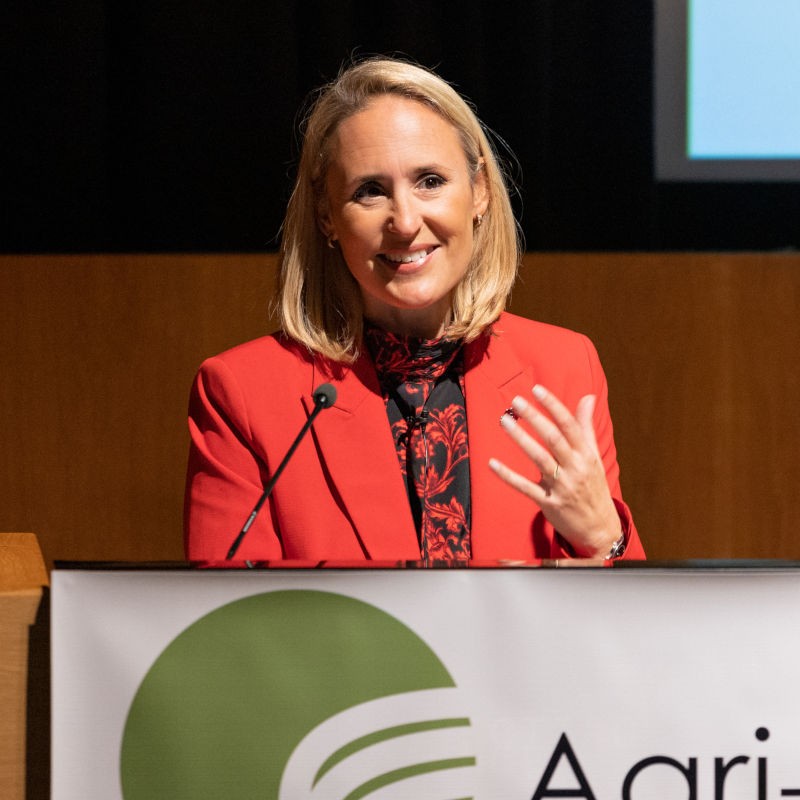
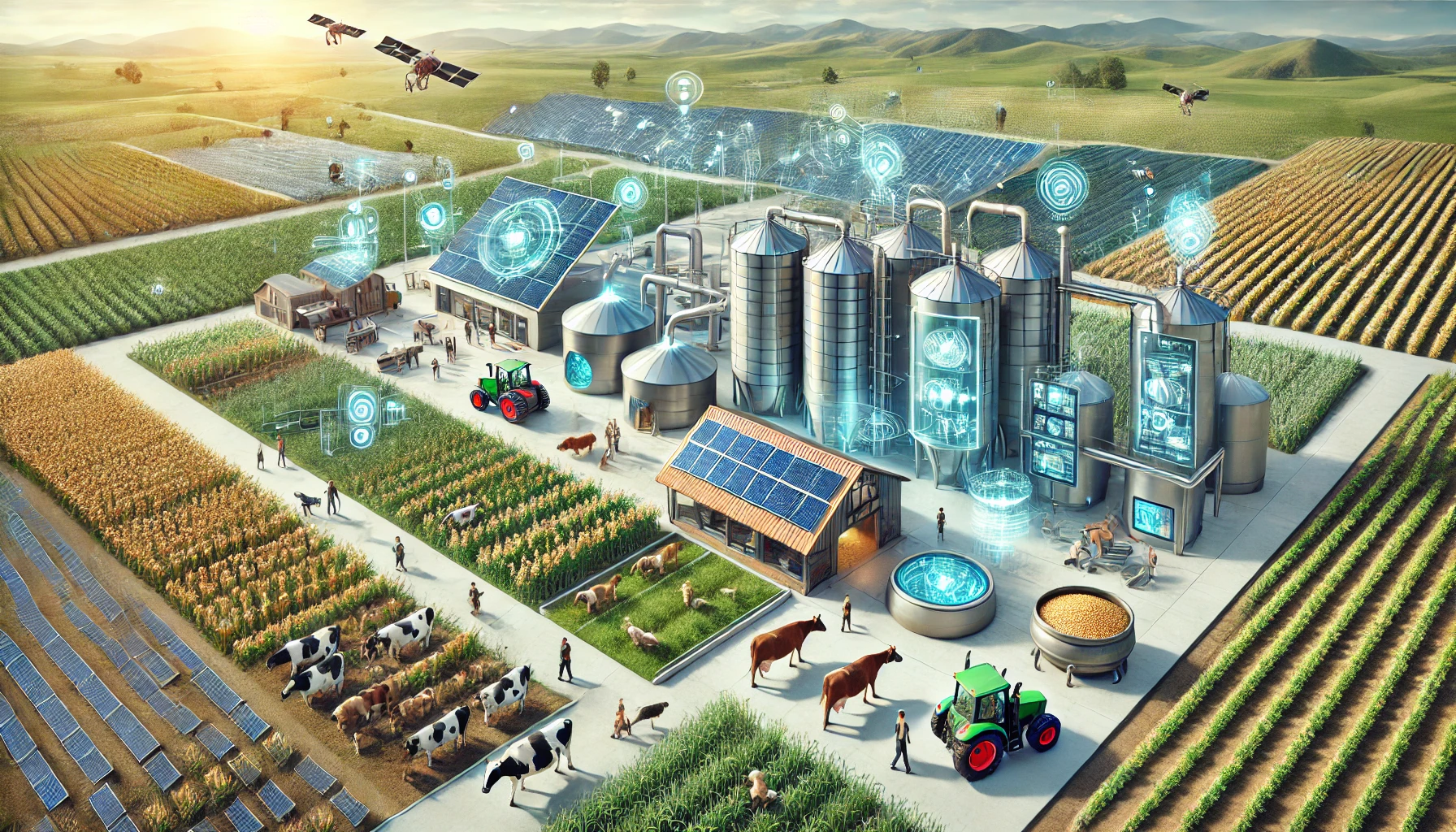
How can technology enable delivery of food, nature recovery, and climate resilience - all at once? The Head of the Environment Agency is asked: what's the national plan for dealing with land use pressures, plus you’ll hear from technologists and land managers working on nature-based and tech-enabled solutions for water, soils and climate adaptation.

Olmix launches in Dublin

Member News
Agri-TechE

“For a long time the use of natural products like algae was viewed with some scepticism, but Olmix has a deep scientific understanding of what individual molecules are actually doing,” said sales manager Chris Gamble.
“We can isolate distinct active ingredients which affect the plant or animal in different ways, whether that is protecting against digestive disorders in calves or stimulating plant growth.”
The company has announced the launch of its health, nutrition and biostimulant range of products in Dublin, so now Irish farmers can now take a more holistic approach to plant and animal health.
Olmix biostimulantCombined with micronutrients, inorganic acids, or clay, the products can be used at different stages for maximum effect.  Maria Matard-Mann, research projects manager explains. “We are using refined algal elements as a complement to crop and soil health, not the only part of nutrition. That’s what makes the difference – having both a nutritional and biological activity.”
That joined-up approach even bridges the gap between plant and animal health. “Instead of feeding low quality grass or silage, topped up with expensive supplements, farmers can use Micromix Essential – a foliar fertiliser containing all the essential micronutrients required for animal health and growth – to pasture.
“This is scientifically proven to increase forage quality, leading to higher blood nutrient levels in the livestock, alongside better growth rates and feed conversion efficiencies,” adds Chris Gamble. “At a time when producers are under immense pressure to reduce chemical and antibiotic use, this technology will prove vital in maximising animal health and productivity in a sustainable way.”
For more information visit www.olmix.com

Swarm robotics offer precision agriculture at plant level

Agri-TechE Article
Agri-TechE

Swarm robots – small, simple and inexpensive – are poised to reverse the trend in agriculture towards ever bigger machines. These little workers behave autonomously, interacting with each other and the environment to achieve the desired outcome.
The benefits include less damage to soil structure and greater precision for weeding and harvesting. But how close is this to reality and what is needed to ensure their safe, responsible usage on-farm?

Different perspectives

Experts with different perspectives will be discussing these issues at the Agri-TechE event ‘Swarm Robotics – the agri-workforce of the future?’ on 25 April 2019. Speakers include Sam Watson Jones, co-founder of the Small Robot Company, pioneer of ‘robots as a service’; Alan Millard, who is exploring the potential of swarm robots in automating cereal and brassica harvesting; Mark Nicholson, a safety specialist who warns there is currently ‘inadequate regulatory oversight to support farmers’; David Rose, who calls for a mature debate about the technology; and Clive Blacker of Precision Decisions, who will provide insights from the Hands-Free Hectare project.
“Lab-based swarm robots typically feature sensors for obstacle avoidance, a pair of wheels for simple locomotion, the ability to communicate with other robots – such as via Wi-Fi or Bluetooth – and sometimes a gripper for manipulating objects in the environment,” explains Alan Millard, a Lecturer in Robotics at the University of Plymouth.
In an agricultural context, robot swarms can be applied to tasks such as soil and plant health monitoring, weeding, drilling, and harvesting. And as they can work in parallel, they have particular benefits for large areas or for meeting tight deadlines. Alan is also interested in the applications of robot swarms for soil and plant health monitoring, the use of image processing and the acoustic detection of pests.
He says that the benefits are many and extend beyond reducing the size of vehicles and therefore minimising soil compaction and related issues such as pesticide runoff and diminishing yields. Alan has worked on adaptive systems of maintenance and explains that swarm robots can also “monitor each other’s behaviour and repair team-mates when faults occur, thus removing the need for human intervention.”
However, David Rose, Lecturer in Geography at University of East Anglia, argues that responsible innovation requires inclusion of users from the start and consideration should be given to three questions before starting on an innovation pathway: who benefits? Who loses? Who decides? “All too often, decisions are made by powerful technology companies without the inclusion of user voices.
Robotics might promise increased yields and profitability but there may be negative consequences that might mean we shouldn’t go down that route,” he says.

Compelling benefits

Clive Blacker, CEO of Precision Decisions, comments: “If we want more output from smaller machines we will need to work them for longer or need more of them. We are still very much in early phases of robotics in agriculture and unsure of the size of a fleet that may be needed to make it competitive. These are all questions we are trying to work out.
“However what is clear is that automation on-farm will occur in one stage or another and smaller robotic machines have some really compelling benefits, which will also need developing and exploring before the market is comfortable to adopt them. That said there is no lack of appetites or interest from farmers to know what this may look like in the future.”
Mark Nicholson, Senior Lecturer in Systems Safety at University of York, agrees that a bigger picture should be taken.
He says: “Management of the safety of workers and other land users remains a priority, and there is a lack of clarity over the roles and responsibilities of those deploying Robotics and Autonomous Systems (RAS). A proportionate risk-based approach is needed to support farmers.” He also adds that although there are a number of technical issues and changes in agricultural practice to be addressed he thinks a five to ten year timeframe for adopting RAS is realistic.

Developed by farmers for farmers

Dr Belinda Clarke, Director of Agri-Tech, the independent membership organisation that is facilitating the rapid growth of the agri-tech cluster, comments that many of the innovators of agri-robotics are close to the end users.
She says “Sam Watson Jones, co-founder of Small Robot Company, is also a fourth generation Shropshire farmer; Earth Rover has emerged from the Pollybell an organic farm; and Thorvald is supported by the Lincoln Institute for Agri-Food Technology. This close involvement of end users means that the innovators are directed at solving real problems which are easily understandable by the wider community.”
This view is shared by those that supported a Crowdcube equity crowdfunding call by the Small Robot Company, which raised £500,000 within minutes of its launch. Sam Watson Jones will be speaking at the Agri-TechE event and says this success is game-changing for Small Robot Company. “We have already made phenomenal progress. Just one year on from our foundation, we already have three prototype robots and an AI that can tell wheat from weed. “With this backing through Crowdcube, we are now poised to completely transform food production.”
The Agri-TechE event ‘Swarm Robotics – the agri-workforce of the future?’ is being held on 25 April 2019 at Future Business Centre, Kings Hedges Road Cambridge, CB4 2HY. More information can be found at agritechenew.wpengine.com/events

Citizen science project ‘Barberry Rust Explorer’ takes multi-disciplinary approach to conservation

Agri-TechE Article
Agri-TechE
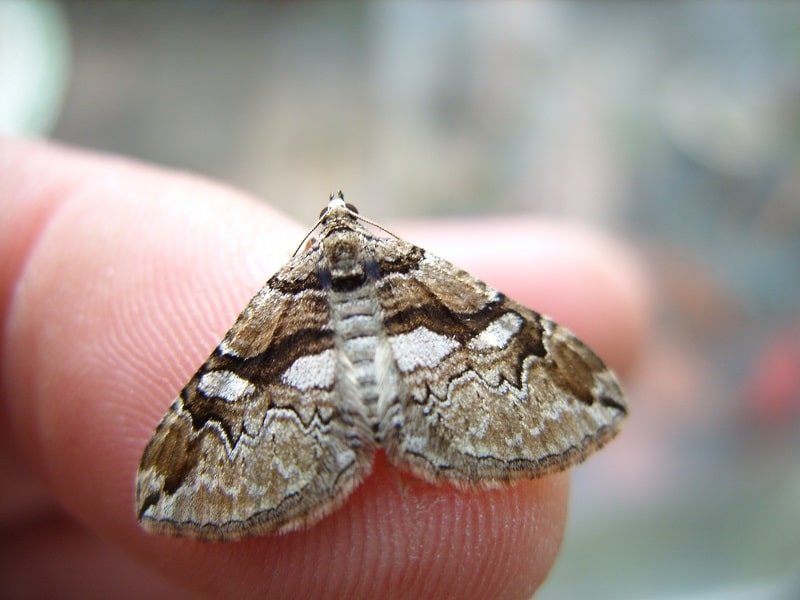
Barberry Carpet Moth - credit Ian Hughes, Butterfly Conservation
Barberry Carpet Moth (photo: Ian Hughes, Butterfly Conservation)

The delicately patterned Barberry Carpet moth is one of England’s species most at threat of extinction, but its conservation could risk helping a devastating wheat disease to re-establish.
The Barberry Rust Explorer (BarbRE) program, a citizen science project being launched in Norfolk on 3rd April 2019, aims to see how the moth’s host plant common barberry (Berberis spp.) can be managed to secure the future of this rare moth. It also seeks to better understand the life cycle of the stem rust pathogen to protect cereals from future outbreaks.
Dr Diane Saunders from the John Innes Centre explains that wheat stem rust (Puccinia graminis f. sp. tritici) has the potential to infect 80% of the current UK wheat lines. It was thought to have been eradicated until 2013, when it was discovered on a single wheat plant in a field in Suffolk – the first sighting for 60 years. Although no further infections have been recorded in the UK, increased incidence of wheat stem rust disease in Western Europe since 2013 is worrying as most of our wheat species are susceptible.
Dr Saunders says: “Barberry helps the overwintering cycle for wheat stem rust. At the end of the crop season, stem rust can produce hardy teliospores that germinate in the spring and infect barberry. The barberry bush acts as a seasonal bridge and source of inoculum. As a result, the shrub was largely removed from hedgerows and this was thought to have broken the disease cycle.

Diane Saunders, John Innes Centre

“Understanding how rust strains diversify and being able to accurately identify the cereal-infecting forms is vital for future bio-security. This knowledge may also suggest alternative methods of disease control.”
BarbRE is encouraging people interested in conservation and farming to use the iNaturalist app to report the location of common barberry bushes; these can then be checked by the BarbRE team for stem rust infection. This location information will directly inform the development of risk models, which will be invaluable if wheat stem rust re-emerges in the UK.
This project will ultimately provide a better understanding of the potential disease threat and help protect our wheat crops, while finding ways to manage conservation of the threatened Barberry Carpet moth.
Mark Parsons of Butterfly Conservation comments that BarbRE is a good model for how volunteers, conservationists, scientists and farmers can work together to find solutions to environmental issues.
He says: “Common Barberry still occurs widely in the countryside and despite this there have been no wheat rust issues in recent times. However, while the Barberry Carpet moth is an endangered species, restricted to just a handful of sites in this country, we are still concerned about the potential risk from stem rust and the impact it could have on food security. By working together, we can reach a consensus on the best way to manage this complex issue and maintain part of our natural heritage, whilst also reducing any possible threat from stem rust.”
More details about the BarbRE project and the launch meeting – at 18.30 on 3rd April 2019 at John Innes Conference Centre, Norwich Research Park, Colney Ln, Norwich NR4 7UH – can be found on the website barbre.co.uk.

International wheat award for speed cloning researcher

Meet the Network
Agri-TechE

Dr Sanu Arora WIT AwardCutting-edge research that is helping to make modern wheat more resistant to pathogens has brought international recognition for a John Innes Centre scientist.
Post-doctoral researcher Sanu Arora has been announced as a Jeanie Borlaug Laube Women in Triticum (WIT) Early Career award winner.
Dr Arora joins an exclusive group of 50 international recipients. The award provides professional development opportunities for women working in wheat.
Dr Arora is one of six winners of the 2019 award, which was announced at the International Centre for Maize and Wheat Improvement (CIMMYT) in Mexico. This year’s recipients come from India, Pakistan, Ethiopia, Mexico and Ukraine.
In making the award, the review panel of the Borlaug Global Rust Initiative (BGRI) praised Dr Arora’s “commitment toward wheat research on an international level” and her “potential to mentor future women scientists.”
Dr Arora is a researcher in Dr Brande Wulff’s group at the John Innes Centre working on a method to rapidly clone crop disease resistance genes. The technique called AgRenSeq involves searching a genetic library of resistance genes discovered in wild relatives of modern crops, so they can rapidly identify sequences associated with disease fighting capability.
By making crops more disease resistant, the cutting-edge technique outlined recently in the journal Nature Biotechnology will help to improve yields and reduce the need for pesticides.
“I am thankful to BGRI for recognising my work in speed cloning of resistance genes,” Dr Arora said. “The WIT Early Career Award will help me to achieve my target of building a catalogue of cloned R genes, which would help underpin breeding for durable resistance.”
“I grew up in the Punjab, India, where the tremendous socio-economic impact of the Green Revolution was felt by people around me. In recent years the excessive use of pesticides and emergence of increasingly virulent pathogens now threaten the viability of the farming industry. Improving this has been my driving force in developing new techniques to improve crop resistance to pathogens.”
Dr Brande Wulff said: “I am delighted to see Sanu recognised with a WIT Award. Her drive and intellect and unwavering engagement in the face of initial scepticism proved critical to the success of developing AgRenSeq. I hope she will continue to apply her energy and skill to solve new problems and bottlenecks in wheat breeding and research.”
Established in 2010, the early-career award is named after Jeanie Borlaug Laube, a high-profile mentor for scientists and daughter of the Nobel Laureate Dr Norman E. Borlaug, who is considered to be one of the founders of the Green Revolution.
Dr Arora has been invited to a WIT training course at CIMMYT, in Obregon, Mexico, and a BGRI Technical workshop taking place in Norwich in June 2020.
The awards are part of the project Delivering Genetic Gain in Wheat (DGGW) an international initiative to improve wheat that is funded by the Bill and Melinda Gates foundation and UK aid from the UK government, Department for International Development (DFID).
Maricelis Acevedo, Associate Director for Science of the DGGW said: “Building capacity within the scientific community by encouraging and supporting the training of young women scientists has always been one of our key goals. Collectively, these scientists are emerging as leaders across the wheat community.”

Itaka launches world’s first microbial seed treatment for borage

Agri-TechE Article
Agri-TechE

Fairking Ltd and Itaka Crop Solution partner on biological programme for high value medicinal crop
An innovative seed treatment of beneficial microorganisms is being applied to borage for the first time, following collaboration between Itaka Crop Solution, leaders in the use of biorationals, and Fairking Ltd, a speciality grower and producer of natural plant oils.

borage microbial seed treatment
Borage is a valuable herb that provides an excellent plant source of gamma linolenic acid (GLA)

KONCIA Borage provides a ‘starter pack’ of microorganisms that would naturally be found in undisturbed soil around the roots of established plants. This area, known as the rhizosphere, supports the resilience and growth of the plant by creating a similar environment from the outset. KONCIA Borage provides bio-stimulation, supporting rapid emergence, strong root development and vigorous development of the plant.
Borage (Borago officinalis) is a valuable herb that provides an excellent plant source of gamma linolenic acid (GLA). This valuable fatty acid is an anti-inflammatory and an important medication for conditions such as arthritis and nerve pain caused by diabetes, and also for skin problems such as eczema and psoriasis.
Working with Dutch company De Wit Speciality Oils, Fairking Ltd is one of the biggest producers of borage seeds in the world and has specialist knowledge of its cultivation. It works closely with its growers to ensure a premium product. To support this, it has partnered with Itaka to develop the first microbial seed enhancement for borage.
KONCIA Borage is approved by the Soil Association for use in organic farming. The product is completely natural, and safe for both the environment and the operators.
Itaka Crop Solution is an international leader in the use of beneficial microorganisms and naturally occurring products to boost crop resilience and performance. It has recently established its head office in the UK and KONCIA Borage is the first in a range of seed treatments under development.
Stephen Beal, leading Seed Treatment Strategy and Development at Itaka, comments:
KONCIA Borage is a revolutionary seed treatment containing beneficial organisms which we believe will provide the very best start for the borage crop. A unique combination of microbes will enhance the seed in all conditions producing a more vigorous and healthy crop. By partnering with Fairking Ltd we have created a programme of treatments specifically for this high value crop, boosting its performance.”
Andrew Fairs, CEO of Fairking Ltd, explains: “Borage is the richest plant source of GLA. It is therefore a high value crop. This novel seed treatment will allow rapid establishment of a crop, enhancing its resilience to adverse environmental conditions.”
bee on borage microbial seed treatmentThe rhizosphere is a region of the soil directly around the roots; here sugars and proteins from the roots provide food for beneficial microorganisms including bacteria and fungi, which in return make nutrients from the soil more available to the plant.
An important element of building plant resilience is the creation of a strong root system, it has been found that microorganisms occurring naturally in undisturbed soil stimulate root development. KONCIA Borage offers the same benefit to plants grown in cultivated soil, where the population of microorganisms have been depleted.
KONICA is a novel treatment that coats the seed with a unique formula of beneficial microorganisms including mycorrhizae (glomus intraradices, glomus), and bacteria such as Bacillus sp. and Azotobacter sp. responsible for nitrogen fixation. With a shelf life of many months, it allows sowing to be performed under optimum conditions.
Itaka recommends a programme for borage programme which includes stimulating the presence of microorganisms during entire plant cycle using other solutions from its range. By adhering to this programme the presence of beneficial microorganisms are increased around the roots and leaves, enhancing plant vigour and resilience.

More information about the companies 

Itaka Crop Solution is an international leader in the use of beneficial microorganisms and naturally occurring products to boost crop resilience and performance. By working closely with growers Itaka has developed a programme of natural solutions to enhance the development of a healthy plant. Its products are certified by the Soil Association for use on organic farms but can equally be used by conventional farmers, who want to improve soil health and the vitality of crops.
About Fairking Limited (www.fairking.co.uk)  is an independent, family run Farming and Seed Merchanting Business based on the Essex/Suffolk border, with a focus on the development of niche crops to bring local variety back to the UK consumer and grower. Having grown, cleaned and traded many of these crops for over 30 years on their own farm, they can offer farmers an opportunity to expand the diversity of their businesses through close links with a number of buyers, providing back-to-back contracts and reducing the volatility in an ever-changing industry.

Hummingbird Technologies wins coveted Best British Tech Startup 2019 award

Agri-TechE Article
Agri-TechE

Hummingbird Technologies wins Best British Tech Startup 2019 awardHummingbird Technologies has been awarded the coveted title of Best British Tech Startup 2019, presented by KPMG at the annual global tech industry gathering, Mobile World Congress (MWC), in Barcelona.
The artificial Intelligence business, which was represented by the CMO Alexander Jevons, overcame a competition of hundreds of applications and was chosen as the winner out of the five UK finalists. The judges were impressed by the business innovation, market potential and momentum that Hummingbird Technologies offers.
The London-based company uses the latest machine learning and artificial intelligence, together with computer vision techniques, to provide farmers with high resolution crop maps, by using imagery and data analytics from UAV, satellite and plane technology. They provide the data back to the farmer within 24 hours of a survey taking place and their application maps are exported as shapefiles, through desktop and mobile apps which can be integrated with farm equipment.
KPMG’s competition, now in its fifth year, provides an unrivalled opportunity for British startups to raise their profile, gain access to investors, clients, corporate alliance partners and a booth to present their startup to over 100,000 industry players.
Upon receiving the award, Alexander Jevons commented: “We are pretty shocked but it means an enormous amount! It’s been an incredible process and it’s going to allow us to grow and scale enormously, because having the backing of KPMG blue chip global player is enormous to a company of our size. Being a startup it’s real validation of us and we’re incredibly proud and humble to accept it and be nominated in the first place.“
Hummingbird Technologies are a team of 40 people servicing millions of hectares via satellite imagery and >300,000 Hectares of arable customers via UAVs across the UK, Brazil, Ukraine, Russia, Australia and New Zealand.

Scrutton Bland marks its centenary

Member News
Agri-TechE

When Alfred Scrutton and Francis Goodchild opened their accountancy firm in Ipswich in 1919, it is unlikely that they would have imagined that the business would still exist today, let alone having offices in four counties and employing over 200 people.
Original Bland insurance certificate
Scrutton Bland, as the firm is now known, is the product of a number of historical mergers and acquisitions between local accountancy and insurance businesses. Of these unions, the most impactful was the joining together of Suffolk-based Scrutton and Goodchild and Colchester insurance brokers Bland Fielden, both of whom were established in 1919 meaning that Scrutton Bland celebrates a double centenary in 2019.

Managing Partner Jason Fayers is proud of the firm’s history: “Our founding firms were established at the end of WW1 by soldiers returning from the Great War. They recognised the need for financial advice and insurance that the years of war had created and set up a service for both business and individuals to meet those needs. It is hard to imagine how life was back then, but one thing remains the same today, which is that people still need sound professional advice when it comes to their finances.”
In 1990 the firm rebranded as the Scrutton Bland Group, and in 2004 expanded its operations into Norfolk with the acquisition of Merrick Hill insurance brokers.
By the mid 2000s, the success of the Group meant that Scrutton Bland had outgrown both its Colchester and Ipswich offices, and in 2007 the firm expanded into a new building on Colchester Business Park and moved into an impressive three-story office on Ipswich’s Crown Street in 2014. In 2017 the firm expanded once again, this time northwards, increasing the size of its site in Diss and crossing over the border to open a new office in Cambridge later that year.
As it celebrates its 100th year, the current Scrutton Bland partnership team reflects on the firm’s long history and the position it has held for so long in local communities:
Tim Mulley, Senior Partner, thinks that the similarities between the business approach today and that of 100 years ago could be behind why the firm has prospered for so long:
“Our business is based on trust. Looking after people’s livelihoods, whether that is in business or their personal finances is a huge responsibility and one which we take very seriously. I think understanding what matters to our clients, and genuinely putting them first is what sets us apart and why we are still operating today.”

•The Bland Fielden offices at Sir Isaac’s Walk, converted to Scrutton Bland offices, in around 2005.
The Bland Fielden offices at Sir Isaac’s Walk, converted to Scrutton Bland offices, in around 2005.

“We still approach everything we do from our clients’ perspective:, honesty, integrity and empathy are critical. In my view where so many businesses fail is that they view their clients merely as ‘commodities’, numbers on a spreadsheet – we’ve never operated that way. We see ourselves very much as part of the community within which our clients live and work, and that means we genuinely want to achieve the best for them. If we hadn’t maintained that integrity in our approach, I don’t think we would still be here 100 years on.”
Although boasting such a long history, the modern day Scrutton Bland is on a mission to position itself at the forefront of new technology. Having been one of the first adopters of cloud-based accounting in the region, the firm has recently secured exclusive partnership arrangements with online apps and software providers to ensure that it remains well positioned to adapt to its clients’ needs as both business and personal finances become increasingly digitalised.
 
•Bland Fielden senior staff circa 1970.
Bland Fielden senior staff circa 1970.

Stable launches risk management platform and seals $6m seed funding round

Agri-TechE Article
Agri-TechE

Stable launched its risk management platform at RICS HQ in London, with speakers NFU Deputy President Guy Smith and former Minister of State for Agriculture George Eustice MP.
The platform is initially focused on food and farming businesses in over 15 countries around the world. Stable has raised $6m in seed funding from Anthemis, Syngenta Ventures, Baloise and Ascot Underwriting.
Price volatility is a major risk to sellers and buyers, yet the current financial tools to deal with price risk are currently designed for financiers, rather than farmers. Farmers require a minimum of 2,000 acres to justify a Futures account, but less than 1% of the world’s 500 million farmers farm over 250 acres. Just 10 of the world’s top 200 crops are traded on an exchange and the forgotten crops are where Stable operates, as it works to make ‘hedging’ accessible and simple.
Stable’s data science platform prices the risk and manages the portfolio on behalf of its global capital providers, including insurers and other capital markets, who provide the liquidity and risk capital required. The design of Stable’s algorithms was inspired by the writer A. G. Street’s phrase ‘Up Horn, Down Corn.’ The algorithms are designed to mimic traditional mixed farming as they spread the risk across a wide variety of niche commodities, in many different countries.
This new approach to price risk management is made possible by recent advances in data science and the reduced cost of computational power. Stable’s platform runs 62 trillion simulations a month across the commodity portfolio, adjusting the risk capital in real-time across hundreds of niche commodity indexes.
Richard Counsell, CEO at Stable commented: “Stable’s price risk management platform is the result of over three years of R&D by our world-class team of data scientists and academics. We’re bringing a fintech mentality to the price risk management industry and our current soft commodity indexes will shortly be joined by niche industrial and energy products.”
Find out more about Stable at stableprice.com/

Can technology mitigate the risks of weather?

Agri-TechE Blog
Agri-TechE

This time last year, the “Beast from the East” brought snow and freezing temperatures, which were followed – pretty quickly, it seemed – by a dry, hot summer. Farming has always had to work alongside the elements, but just how far can technology go to help mitigate the risks of weather and make even better use of increasingly complex on-farm weather data?
Short and long-term weather forecasting has become increasingly sophisticated and accurate and is a key element of farm planning and crop management. As well as revealing the optimum windows for tasks such as spraying or harvesting, predictions of particular conditions have for years enabled warnings of increased risk of crop damage or disease outbreaks.
For example, the “Smith period” traditionally details a particular combination of temperature and relative humidity which increases the risk of infection by late blight, the UK’s most significant disease of potatoes (and cause of the Irish Potato Famine). This has been updated more recently by the James Hutton Institute but the premise is still sound.

Weather stations 

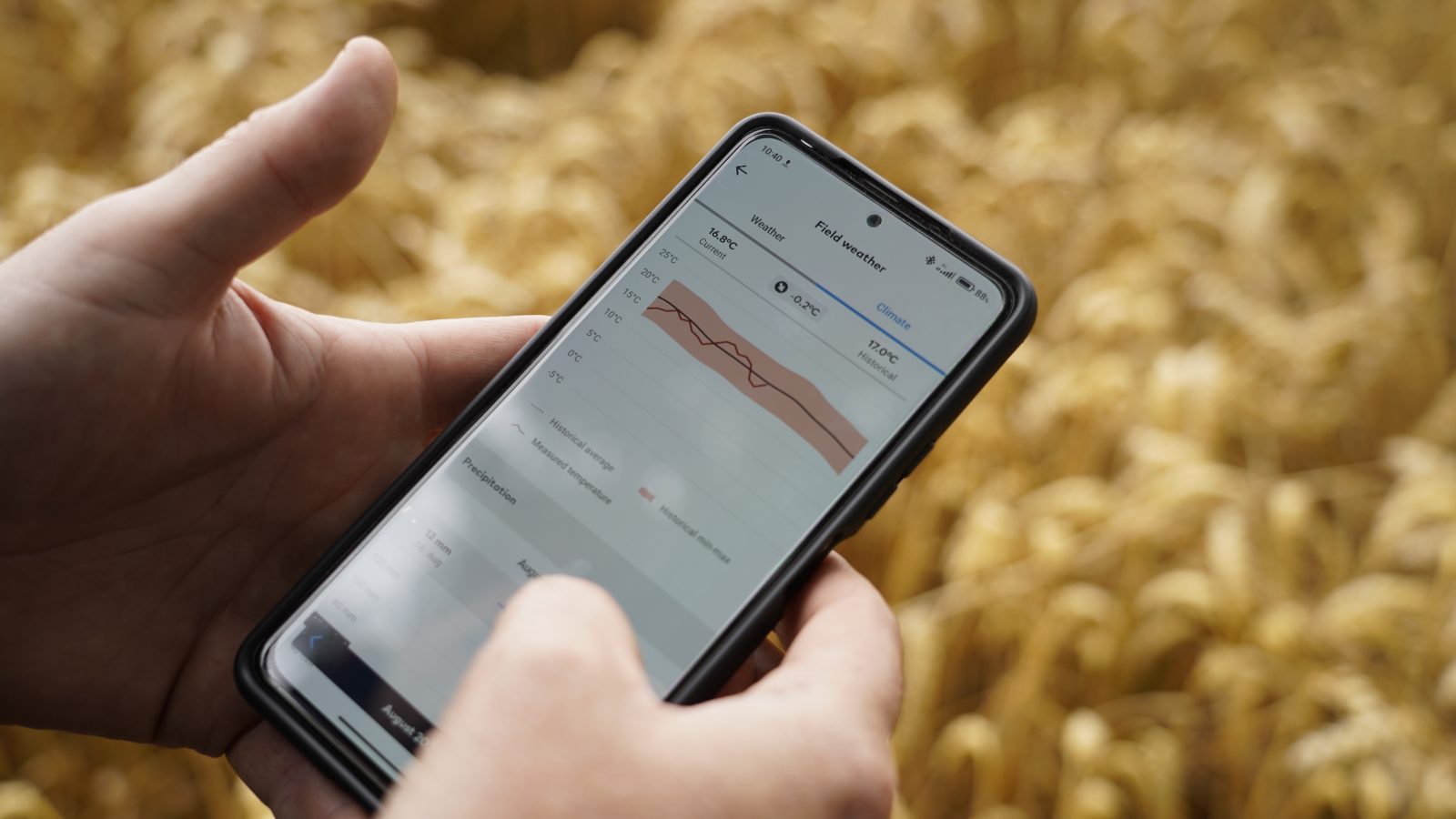
Weather stations and monitoring equipment to help provide real-time information about conditions in the field are also becoming more advanced and prices of devices are coming down. Plus, the application of artificial intelligence to the information emerging from these devices is enabling interpolation of data leading to greater accuracy of prediction between stations (reducing the number of devices needed on farm). Harnessing the so-called “internet of things” also allows connectivity with each other and a smartphone to enable real-time remote sensing.
The interrogation of long-term historical weather data sets also helps provide benchmarking of the current growing season, and when introduced into a plant growth or yield model, can provide valuable insights into the rate of development – and predict potential maturation dates and yields. This kind of analysis is helping to model supply chains for a range of crop species, with the aim of improving scheduling, reducing waste and managing supply chains more efficiently.

Controlled Environment Agriculture

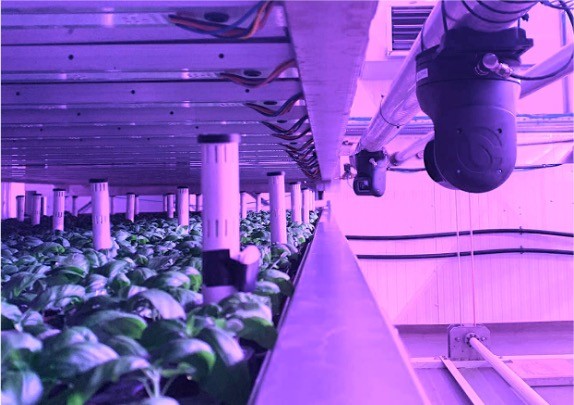
Bringing The Outside In - Phytoponics
Of course, crops that are grown undercover or in controlled environments (are you coming to our Controlled Environment Agriculture event this month?!) are not at the mercy of the elements. However, providing the optimum growing conditions comes at a cost.
From an engineering perspective, photosynthesis is a relatively inefficient process, however the energy from the sun is free, providing the warmth and light needed for plant growth. Providing this artificially can be an expensive challenge, however plants growing outdoors spend a lot of their own energy tolerating and adapting to fluctuations in temperature, light and moisture. So the perfect growing conditions can accelerate growth cycles, provide more frequent harvests at reliable dates and remove the risks of unfavourable weather conditions.

Looking to the future

All the evidence suggests that the changing climate is likely to be subject to more extreme weather events, but with the right monitoring technologies, integration of weather data into crop growth models, and the potential – in some cases – to mitigate against weather fluctuations by growing undercover, technology is again on hand to help manage the challenges of the weather.

G’s appoints successful candidates for its Management Training Scheme

Member News
Agri-TechE

Since September, candidates have been working hard to gain a spot on the G’s Management Training Scheme. The scheme, which is aimed at university graduates, encompasses two years of training and development through the rotation of four six month placements around different areas of the business. Competition between applicants this year was extremely high, but the candidates were whittled down to ten talented individuals who were invited to attend the assessment centre at the G’s Head Office in Ely on the 20th February. A variety of activities were arranged for the day, including a strategic discussion and two group activities where the candidates were assessed against numerous competences.
After considerable debate between the assessors, the group collectively decided which four individuals they would like to appoint to join this year’s intake of Management Trainees. A huge congratulations to the four successful candidates, we look forward to you joining us in September!
We have now begun recruitment for our Farm Graduate Scheme, a 2 year training scheme commencing in February 2020, at the beginning of the planting season! Similar to the Management Training Scheme, the trainees will experience 4 six month placements giving them a complete overview of the full farming cycle. If you are interested in this opportunity, or know someone that is – please get in touch by emailing graduatescheme@gs-fresh.com. We look forward to hearing from you!

Debate continues about classification of gene editing

Meet the Network
Agri-TechE

The debate about new breeding techniques (NBTs), and the distinction between genetic modification and gene editing, was raised once again at the Oxford Farming Conference.
Emily Norton SavillsEmily Norton, Director of Rural Research at Savills, discusses the implications  in a blog on the Savills website.
She comments:  “Whether gene editing technology forms part of the fourth agricultural revolution, or is made redundant by it, is a moot point. Without access to it, the UK remains wedded to a version of ‘museum agriculture’, to quote Dr Julian Little of Bayer, and unable to access the productivity improvements achieved in the US, Brazil and Argentina.
“Is there an opportunity to be freed from the GMO straightjacket as we leave the CAP and will we be brave enough to allow consumers to decide?
“For the Devolved Administrations, there may well be a continued marketing advantage in remaining ‘GMO free’. But for producers looking at global commodity markets, smart deregulation by government combined with an enterprising spirit from business will give the public all that is necessary to show their opinion on precision plant breeding with their purses and wallets.”
To read the full post on Savills’ website click here.

Ozo to prove energy efficiency of its novel hygiene solution

Member News
Agri-TechE

OZO Funding Feb 2019The food industry’s reliance on hot water for hygiene means that it is an energy intensive process, yet it is often an unrecognised hygiene cost, as utilities spend is managed separately from hygiene chemicals, labour and testing costs.
Innovations (Ozo) announces that it has secured over £600,000 project funding from the Department of Business Energy Industrial Strategy (BEIS) Industrial Energy Efficiency Accelerator (IEEA) Programme managed by the Carbon Trust and Jacobs.
The IEEA aims to lower costs and increase the number of available energy efficient technologies for a range of industrial sectors, through demonstration of near to market innovations. This will help to reduce carbon emissions and improve the competitiveness of UK industry. The funding will enable Ozo to substantiate the significant energy savings that could be achieved by implementing Ozo’s eloclear hygiene process.
The project hopes to demonstrate that it is possible to:

  •  remove hot water from the food factory hygiene process;
  •  reduce the total volume of water used;
  •  achieve robust high-quality hygiene outcomes.

Ozo substitutes cold electrolysed water for hot water, which requires significantly less power to produce. Using “cold water” for hygiene further benefits food processors that operate in chilled environments as it reduces condensation and removes the energy costs associated with re-chilling spaces that become warm when cleaned with hot water. The business has been working with leading UK food companies to optimise the technology and help businesses be more sustainable and competitive.
This demonstration project will compare the energy saving benefits of eloclear over the current industry standard of hot water based, multi-step chemical cleaning, across a number of standard hygiene procedures. Results will be published once the project is complete, in around 18 months’ time.
The trial site chosen is a leading maker of sandwiches, recognising that the “food-to-go” standards are some of the most demanding in the food industry.
“Consumers are recognising that their food choices are putting the planet under pressure. We use 70% of our fresh water for food production. Hygiene is an area, which offers an opportunity to save energy and water whilst maintaining or improving standards. This is good for everyone, as better hygiene means we can achieve longer shelf life, reduce food waste and maintain the safety of our food,” said Rowan Gardner, CEO of Ozo. “We are delighted to have the support of Carbon Trust and Jacobs to demonstrate the energy credentials of eloclear.”
Paul Huggins, Director Innovation, the Carbon Trust: “This exciting technology could have a major impact throughout the food industry, radically simplifying the way the sector carry out their hygiene processes. We are looking forward to working with Ozo, and scrutinising both the technical performance and energy saving credentials of the technology.”