REAP 2018 – latest agri-tech

Agri-TechE

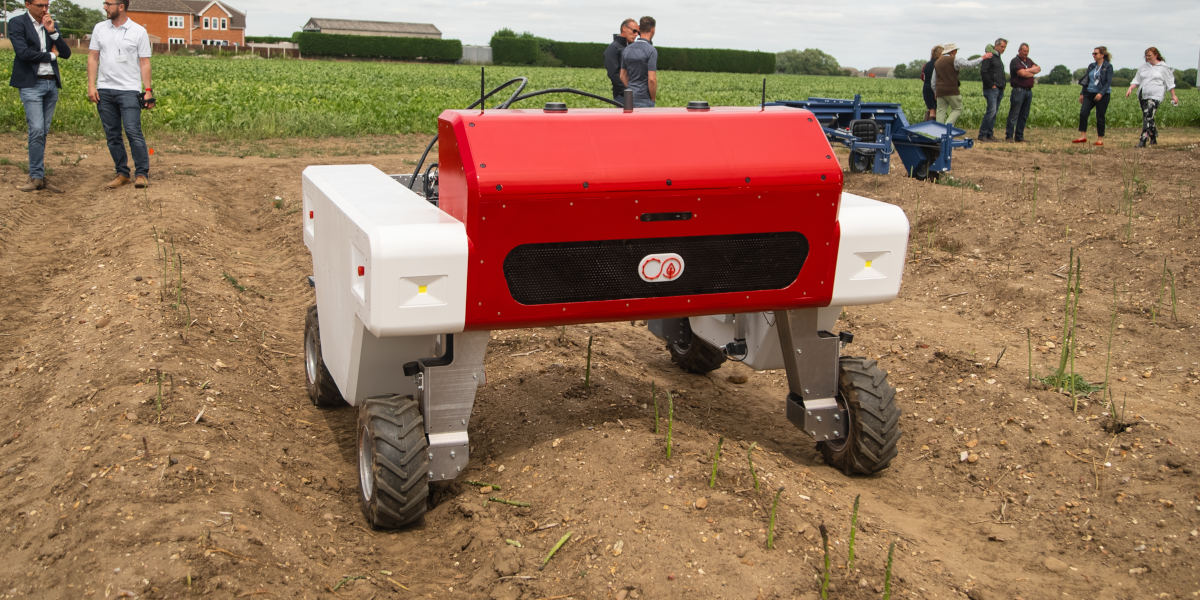
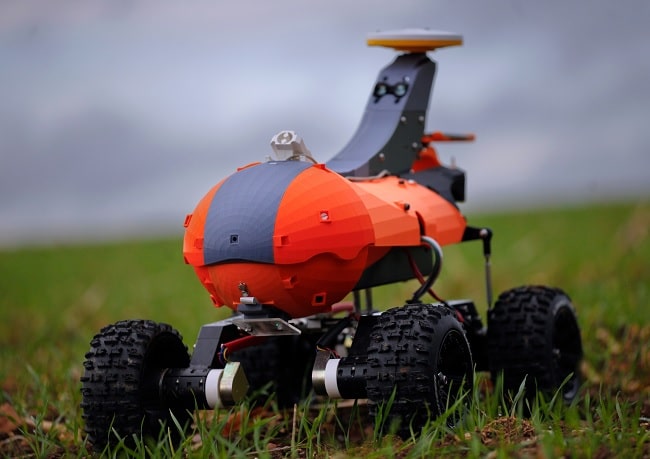
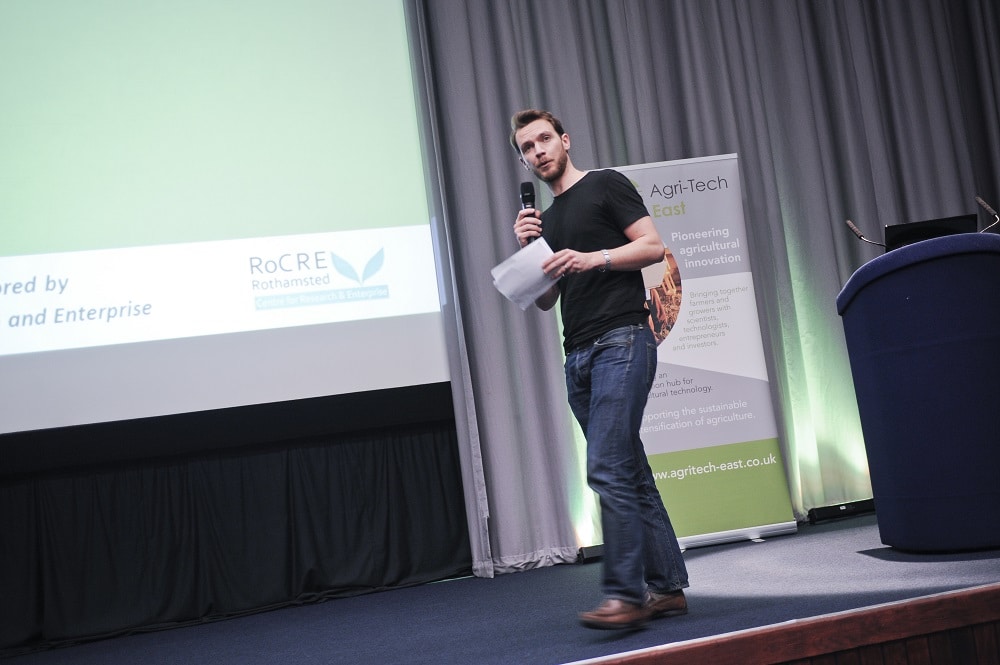
A small taster of the technology exhibition at REAP – featured in the video are: Thorvald robot from University of Lincolnshire; Analytik; Olombria; Drone AG; PlaterBio; Harry from Small Robot Company; EnviroMonitors; facial recognition from Consus Fresh Solutions; Robot-Fish from University of Essex. (more…)

World’s first robotic drill unveiled at REAP 2018

Agri-TechE

The prototype of the world’s first digital drilling robot for combinable crops is being officially unveiled by the Small Robot Company at Agri-Tech’s REAP 2018 Conference in Cambridge today (7 November).

Belinda Clarke of Agri-TechE and Sam Watson Jones from Small Robot Company reveal Harry at REAP 2018

Just one year on since the tech start-up first announced its ‘Farming as a Service’ model at REAP 2017, the Small Robot Company is unveiling Harry, one of three precision engineered, smart robots that could revolutionise food production and the toll big machinery takes on soil and the wider environment.
Harry, a 1.8 metre-square spider-shaped robot, compactly folds and unfurls to provide farmers with a driverless, super accurate drill that punch-plants seeds at a uniform depth, making minimal soil disturbance. It is able to accurately record exactly where it has placed individual seeds, and feeds this data back to the Small Robot Company’s artificial intelligence platform, called Wilma, that produces a per-plant crop map.
An early version of the interface for Wilma is also on show at REAP 2018. Other robots, Tom and Dick, are already in trial and due for development next year, respectively. Directed by Wilma, the farmbots will only feed and spray the plants that need it, giving them the perfect levels of nutrients and support – cutting chemicals and emissions by up to 95%.
In recent years farming costs have increased by 10-12% per year, particularly with regards to machinery, putting much more strain on farmers. Fourth-generation farmer Sam Watson Jones and entrepreneur Ben Scott-Robinson wanted to offer farmers an innovative solution.
Inspired by the work of Professor Simon Blackmore, at the National Centre for Precision Farming at Harper Adams University, Sam and Ben came up with the idea for Tom, Dick and Harry. Sam explains: “Before we even started working on the technology, we looked at the pain points farmers were facing and realised the old model had to change. Our AI-driven operating system will give farmers a more detailed knowledge of their crop and their land, allowing them to be more efficient and environmentally friendly. This will entirely change what’s possible on the farm, and how we think about farming.”
The National Trust’s Wimpole Estate has recently joined the Small Robot Company’s Farmer Advisory Group, which consists of 20 farms across the UK. Wimpole Estate’s Food and Farming Researcher, Felicity Roos, commented: “Big tractors are effective but environmentally damaging and inefficient – currently, 95% of energy is used ploughing and this is only necessary because the use of heavy machinery compacts the soil.
“The SRC are building robots that will seed and care for each individual plant in a crop. For farmers the increased efficiency has the potential to increase yields, and reduce input costs and so hopefully increase profits.”
The Harry prototype has been developed thanks to a prestigious Horizontal Innovation™ Award from the Institution of Engineering and Technology (IET) and the High Value Manufacturing Catapult (HVMC), which the Small Robot Company to harness the power of manufacturing technologies used in pharmaceuticals and construction to deliver Harry’s precision drilling and planting mechanism.
“Feeding an estimated extra 2.2 billion people living on planet earth by 2050 is going to be one of the biggest challenges we face in the future,” says Alan Howard, the IET’s Design and Manufacturing Lead. “This brilliant idea from Small Robot Company, with its ingenious application of robotics and automation technologies, could provide a vital and secure source of food to help feed the world”.
The Harry prototype was showcased at Agri-Tech’s REAP Conference (7 November). Find out more about Small Robot Company at smallrobotcompany.com.
REAP 2018

Enabling livestock farmers to meet changing customer preferences

Meet the Network
Agri-TechE

Changing customer tastes mean that almost half of prime beef now fails to meet ideal market specifications, resulting in lower prices for livestock farmers and waste in the value chain.

Breedr has developed an easy-to-use app that will help farmers finish cattle to retailers’ specifications with greater precision, underpinned by the data to evidence this. The company is launching the Field to Yield trial with Rothamsted Research at North Wyke, to improve the metrics available to farmers, at Agri-Tech’s REAP Conference 2018.

Breedr co-founder Ian Wheal was brought up on a mixed livestock farm in Australia, where his father was one of the first to adopt electronic tagging. The tags capture information about the performance of individual animals and enable an audit trail to be created of medical interventions, time on grass etc.

Wheal explains that this knowledge of data-driven production has helped him to develop a decision support system for UK producers. He says: “There is a big drive towards loin (steaks) and mince (burgers) from consumers, however the current EU-wide EUROP grading system, which is used to value beef, was originally designed when rump was the main piece of beef consumed.

“The result is that today’s farmers are flying blind when trying to meet the specifications of retailers for meat with less fat and improved taste.”

Data from the Agriculture and Horticulture Development Board (AHDB) suggests that if customers have a bad eating experience it can take up to 12 weeks for them to buy that specific cut of meat again.

Breedr’s Field to Yield project with Rothamsted Research is looking at ways to improve the metrics available to both farmers and processors, to truly understand the yield of an animal and the quality of its meat.

Wheal continues: “Currently producers use their experience and expertise to visually assess conformation and estimate carcass weight as a percentage of live weight, but it seems this no longer syncs with what retailers need for their customers. We are looking at ways to capture this information in a more evidence-based way that will provide farmers more meaningful insights.

“One example would be to provide better understanding of how genetics and breeding can create a desirable frame size. Also, to investigate how the use of 3D camera technology can help standardise measurement and give a much earlier predictor of value, and better align to the actual needs of a processor.”

Breedr aims to create a virtuous circle where consumer behaviours and buying decisions are fed back through the value chain to inform decisions on breeding, feeding and animal welfare, and livestock producers can provide data evidence that they are producing premium meat.

Breedr is working with Professor Michael Lee, Head of Sustainable Agricultural Sciences at Rothamsted Research North Wyke and Chair in Sustainable Livestock Systems at Bristol Veterinary School, on the Field to Yield project, which is funded by the Impact Labs.

Prof Lee is excited by the project and comments: Our research shows that it is possible to produce livestock with the desired attributes within 18 months from pasture based finishing, to balance the needs of production efficiency, product quality and environmental impact. But to achieve such targets requires excellent pasture management, appropriate animal genetics and visualisation tools to predict carcass and eating quality.”1, 2

A spokesperson from the Impact Lab says: “Livestock makes a valuable contribution to the UK economy. Supporting farmers to produce high quality meat with lower inputs and reduced environmental impacts will improve their competitiveness in the global market.”

Breedr aims to bring data to the supply chain that can help processors and retailers buy appropriate animals, increase usable meat for their need and reduce variance in supply. Wheal comments that most buyers are now data-analysts: “If buyers have the evidence to show that a particular producer consistently produces meat of the desired quality then it becomes easier to assess fair value.

“Data paves the way for a different type of relationship between producers and their customers where a quality product is rewarded and the guesswork is removed.”

Livestock producers interested in gaining early access to the Breedr technology are invited to take part in the Field to Yield trail. More information is available www.breedr.co


References

1 Takahashi et al. 2018

2 Wilkinson and Lee, 2018

Triple helix approach to agri-tech innovation underpins UK farming future

Agri-TechE

Belinda Clarke of Agri-TechE and Sam Watson Jones from Small Robot Company reveal Harry at REAP 2018

By delivering a ‘triple-helix’ model for innovation – which brings together industry, research and government – Agri-TechE is helping to facilitate the rapid growth of the agri-tech sector. Priorities for future investment in agri-tech is the theme for its fifth annual REAP conference, held on 7 November in Cambridge. The event started with an exclusive breakfast meeting where invited farmers were given the ear of government to give input into its R&D proposals, and culminated in a lively debate where experts from different disciplines argue their case for a technology that will provide the greatest returns. (more…)
Agri-TechE Week 2018: Solving the challenges of crop protection

Agri-TechE

Professor John Senior, Pro Vice-Chancellor of Research and Enterprise, introduces the event

This event at the University of Hertfordshire explored the innovative and cutting edge solutions being developed to improve crop protection in the face of environmental change.
The University of Hertfordshire works collaboratively with farmers, crop protection and plant breeding companies, government research bodies and agricultural charities, and the event emphasised that research is strongly linked to industry needs.
Some of these collaborations were the focus of discussion at the event, including: understanding interactions between light leaf spot and phoma stem canker in oil seed rape (ADAS, RSK, Uni of Herts); identifying resistance to phoma stem canker and light leaf spot (Uni of Herts, KWS); potato cycst nematode diagnostics (Syngenta and Uni of Herts through Keith Davie’s start up); and an automated smart trap for wheat pathogen detection which is near commercialisation (Uni of Hert, Bayer, FERA).
A number of cross sector initiatives were present at the event, such as Hertfordshire Science Partnership, which is involved in delivering healthy and sustainable food economy in Letchworth Garden City.
Also represented was The Green Triangle, a partnership between BRE, Rothamsted Research, St Albans City and District Council and Oaklands College, and discussion focused on how they are looking to promote green industries and sustainability (for example agriculture, environmental, construction etc).
A prime example of the application of a technology used in one discipline (in this case from the Physics Department) to agriculture is the use of optical remote sensing technology (LIDAR) for agriculture e.g. bio-forecasting. It could also be used for mapping water flow and monitoring soil erosion. LIDAR is extensively used for mapping in archaeology, and although it is still at proof-of-concept stage it sounds very exciting.
The event concluded with a tour of the University’s New Science Building; Laura Bouvet commented “Thank you very much for the tour – It was great to learn about exciting research on spore traps, genetic resistance against OSR diseases and nematode control.”
The afternoon concluded with a tour of the New Science Building

The afternoon concluded with a tour of the New Science Building

 
See more about Agri-TechE Week 2018

Rothamsted Centre for Research and Enterprise joins UK Science Park Association

Meet the Network
Agri-TechE

Rothamsted Centre for Research and Enterprise, RoCRE, part of the historic, world-renowned Rothamsted Research campus in Harpenden, Hertfordshire, has joined the United Kingdom Science Park Association (UKSPA). UKSPA represents over 130 science, technology and innovation parks in the UK, encompassing well over 4000 companies, and exists to represent innovative knowledge-based environments.
Nicole Sadd, RoCRENicole Sadd, Executive Director of RoCRE comments on the importance of being part of UKSPA: “It’s vital that the innovation centres we build here at RoCRE are fit for purpose and we’re looking forward to building many fruitful relationships with other like-minded parks and organisations. Being part of UKSPA will help us ensure that RoCRE is not only firmly on the map in terms of our state-of-the-art facilities and offering as a centre for innovation and collaboration, but will also help us build a network of relationships across the UK with other parks, to share ideas and best practice. Connecting with these businesses will cement our position in UK innovation culture. Of course, we also want to look at how we can continually keep up with and exceed the competition!”

“UKSPA are delighted to welcome RoCRE on board” says Jim Duvall, Executive Director of UKSPA. “Our work to promote the UK’s Science and Innovation sector is greatly enhanced by the scale and growth of our membership and RoCRE are an important addition to our Association. UKSPA’s mission is also to help deliver the ambitious plans that RoCRE has to expand their capacity to deliver even greater impact in the future.”
For more information, go to www.rocre-rothamsted.com or contact Claire Flawn, Marketing, claire.flawn@rocre-rothamsted.com Tel: 01582 938175.

Agri-TechE Week 2018: Big data and the supply chain

Agri-TechE

Helping producers benefit from objective consumer insights was one of the subjects discussed at ‘Big Data and the Supply Chain’,  the Norfolk-based Agri-TechE Week event hosted by the Royal Norfolk Agricultural Association in partnership with University of East Anglia and Easton & Otley College.
Delegates got an overview of how different types of data can be used across the food supply chain. At the field level data includes: yield, weather (temperature, wind, rain fall), fuel consumption, engine performance. At the livestock level it will be: carcass composition, gut health, indoor environment data such as temperature, humidity etc. At the consumer level it includes: shopping habits such as where customers shop, what they buy, how often and how much is spent.  (more…)

Exciting programme of interactive events launched at REAP

Agri-TechE

“The discussions and debate you have heard today is just the start,” Dr Belinda Clarke, Director of Agri-Tech, said at REAP. “Ideas generation is an essential part of the innovation process and we will be continuing this with a series of inspirational events in 2019.”
The outline programme is on the website now.
The focus of Agri-Tech’s approach is to help frame the challenges so that they can be understood by individuals with expertise in other areas. This leads to collaborations between people that wouldn’t otherwise meet, which can stimulate new ideas.
A good example of the type of projects that can emerge is this collaboration between two Agri-TechE members: Sentry, one of the largest farming companies in the UK, and early-stage company Yagro.

Met thorough Agri-TechE event

John Barrett, Sentry
John Barrett, Director at Sentry Norfolk

John Barrett is Director at Sentry Norfolk and here’s what he had to say about Yagro: “At Sentry we regularly review our farming practices to stay ahead of the curve, especially in this volatile time for UK farming. As a large farming company with many sites, it is essential we have best business practice across all farming operations.
“We came to know about Yagro through Agri-TechE and watched them from inception in 2016, keen to see how a new player in the industry would get on and differentiate itself. On behalf of our landowners and investors, we needed confidence that Yagro’s technology and business model would work.
“Our farms bought fuel in different ways; some through buying groups, others shopped around, and some had sole supply relationships. We wanted a unified best practice that all our farms could use – and that saved us time and money.
“We benchmarked our fuel buying against Yagro’s independent market data. The analysis showed that using the Yagro Marketplace for our fuel buying was an obvious way forward.”

Has it saved you money?

Yagro CEO Gareth Daviesat the Start-Up Showcase at REAP 2015
Yagro CEO Gareth Davies at the Start-Up Showcase at REAP 2015

“Yes, and plenty of it too! We’ve already saved nearly £4,000, and on track to save around £45k over a full year.
“What’s difficult to calculate is the time saving: some of our farms would spend a couple of hours on the phone ringing around suppliers just to get a price. Now, technology does it all for us, and we can focus on the value-adding aspects of farming, knowing that Yagro’s independent tech tool is working on our behalf in the background.”

Excited to be at the forefront 

“We are excited to continue development with Yagro, building more technologies to help us on farm, and it is great to be at the forefront of tech in UK agriculture. With savings north of £120k per year to be had, it’s a no-brainer.”
If you want to put innovation at the heart of your organisation in 2019 – put the events in your diary now!

Nova Extraction launches world’s first industrial off-grid essence extractor

Agri-TechE Article
Agri-TechE

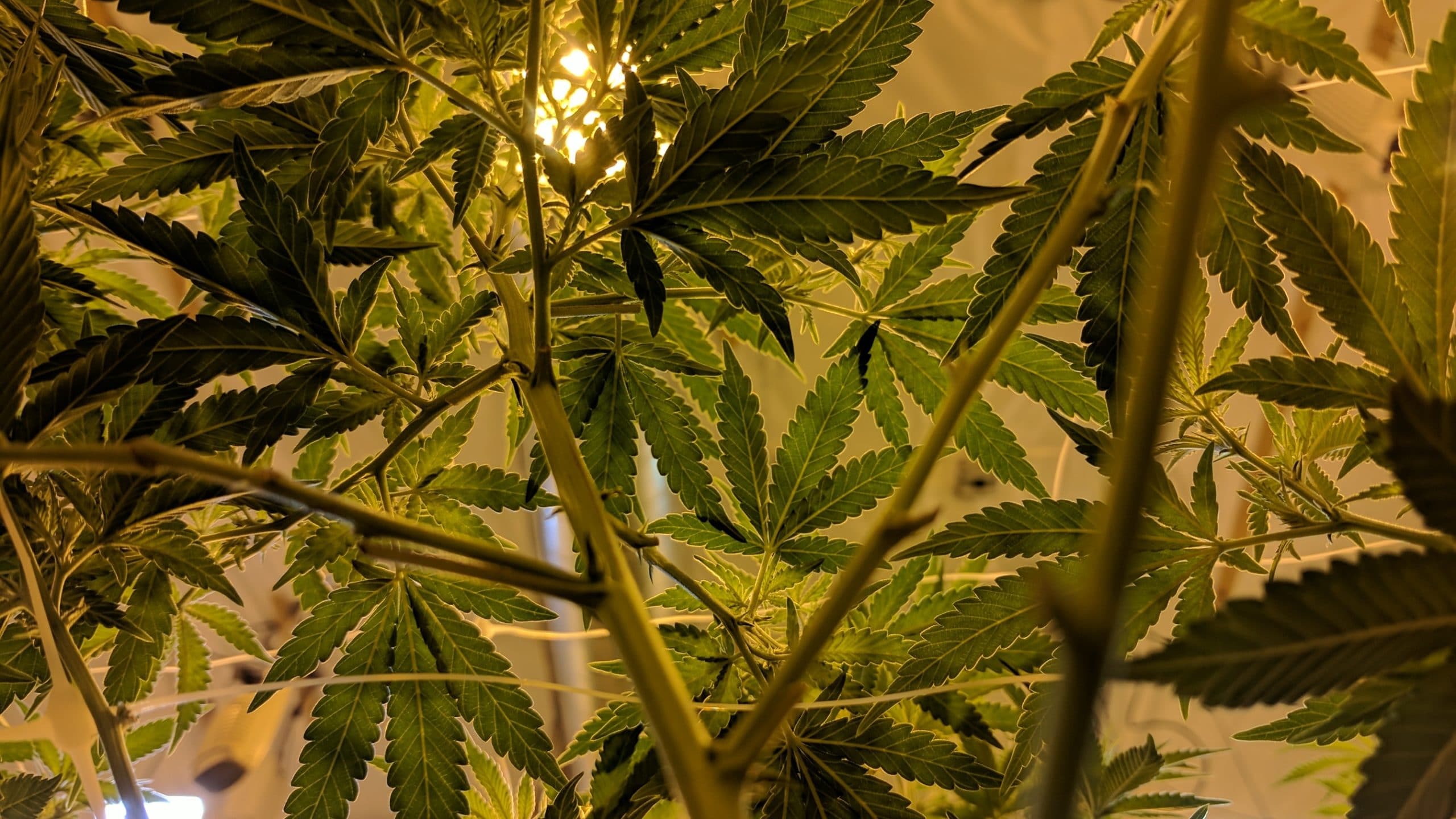
Increasing interest in the use of herbal essences and cannabis oil for health and wellbeing has created a demand for high quality, pure botanical extracts. Early-stage company Nova Extraction has developed the world’s first industrial, off-grid, clean-tech extractor. It is now available for flower, herb and food producers to rent, providing producers with affordable and consistent technology to extract flavours or fragrances in-field. The announcement comes as part of REAP’s Start Up Showcase in Cambridge this week (7 November).

Alex Novitskiy, Nova Extraction, in the REAP 2018 Start-Up Showcase
Alex Novitskiy, Nova Extraction, at REAP 2018

Nova Extraction’s new autonomous extractor uses supercritical carbon dioxide (CO2) technology, originally developed for decaffeination of green coffee beans. Unlike other widely-used forms of extraction, supercritical CO2 separates essences without degradation or impurities. However, this high quality comes at a cost.
Nova Extraction’s Alex Novitskiy explains: “Supercritical extraction equipment is usually super expensive, so even the top five processors in the world try to outsource extraction, rather than own the equipment.”
Company co-founders Alex and Sergey Soshin re-engineered the process, designing and building every piece of their new equipment from scratch in their workshop. The equipment includes a smart-energy generation system to enable efficient off-grid processing.
Alex continues: “We’ve looked at how we can reduce the cost of fabrication and have designed a unique piece of equipment that can be deployed almost anywhere in the world, without the need for electricity or water.”
The low operating temperature of the CO2 extraction lends itself to protecting fragile fragrances, such as lavender, for high-end perfumes. Nova Extraction is also gaining interest from hemp growers about the extraction of cannabinoid oil for health benefits; and with herb producers about how to preserve over-production. The flavour and fragrance of rosemary, for example, is widely extracted in Europe to add to products ranging from memory aids to hair conditioners and Christmas stuffing.
“We have been speaking to farmers in Yorkshire, who produce herbs for restaurants, about how they can preserve this kind of crop – in, say, an essence – if they overproduce,” says Alex.
“We developed Nova Extraction to break the barrier of price for producers, as we believe there is a big demand for an easy pay-as-you-go rental model for supercritical extraction equipment. We’re seeking first-adopters to trial the equipment in the UK next year.”
Nova Extraction is one of seven emerging agri-tech companies featuring in this year’s REAP Start Up Showcase, hosted by membership network Agri-TechE to profile the next big breakthroughs in agricultural innovation.
The start up’s unique self-sufficient Supercritical extractor can process half a tonne of raw material a day and the company plans to build a larger model that will enable increased in-field throughput for producers to 2.5 tonnes of raw material per day. The larger model will fit into a standardised, 20-foot shipping container to enable flexibility of movement depending on international, seasonal need.
For more information visit novaextraction.com
Nova Extraction launches world’s first industrial off-grid essence extractor

Agri-TechE Week 2018: Above, Below and Around at Essex Uni

Agri-TechE

University of Essex  launched its new Plant Science Innovation Centre at its Agri-TechE Week event and showcased its £11.8 million STEM (Science, Technology, Engineering, and Mathematics) building in this Agri-TechE Week event.
The delegates enjoyed a journey  “Above, Below and Around”  with a number of demonstrations and talks about drones, agricultural robotics, plant health, soil health and a lot of other exciting research.

Jim Stevens from the School of Biological Sciences, Uni of Essex looking at chlorophyll fluorescence in strawberries.

The day started with Prof Tracy Lawson introducing the research in her group which is focused on photosynthesis, acclimation and stress. The group has pioneered research into chlorophyll fluorescence to measure plant health, from nutrient deficiency through to disease susceptibility.
Going below ground to look at biology and biodiversity of soil featured a talk by Dr Alex Dumbrell. He is investigating the response of Arbuscular mycorrhizal fungi, a beneficial type of fungi, to different levels of CO2. He is untangling data to better understand what this means in the context of climate change.
Dr Javier Andreu, lecturer in computer science at Uni of Essex poses with humanoid robot Pepper and Dr Kirstie Cochrane, EIRA director.

Presentations included a discussion of strawberry production at Tiptree – famous for their  delicious jams – to support the robotics, they are looking at the psychology of strawberry harvesting by tracking the eye movements of the pickers.
Laura Bouvet said it was a very enjoyable event: “It’s been a really good event today, with collaboration across sectors. It was interesting to see how Tiptree is collaborating with engineering dept at Essex Uni.
“A key message that came out during the networking and the presentations, was that the farmers were in the room to put some of the research outcomes into perspective. For example, looking at the Arbuscular mycorrhizal fungi in the soil and UAV for surveying.
“Dr Kirstie Cochrane rounded off an excellent afternoon of talks by describing how the University is enabling innovation in AI and biotech with the multi-partner project EIRA.”
See more about Agri-TechE Week 2018


Agri-TechE Week 2018: AHDB discusses precision spraying now and in the future

Agri-TechE Article
Agri-TechE

Investigating best practice in spray application was the topic of the AHDB event in Agri-TechE Week. The hands on event looked at the current technology, emerging themes and a peep into what is on the horizon.

One of the groups on the AHDB sprayer day during Agri-TechE Week 2018

Harry Fordham, Area Manager Essex and Kent Syngenta explained that its important to consider the wider context when looking to make spraying more efficient and precise. Check things like making sure the tractor tyres are of the right inflation (too full and they will cause a hard ride so the spray boom moves about more) and understanding the weather conditions (to maximise spray time) can provide optimum conditions.
There are only so many days a year when it is possible to spray so you have to travel at a reasonable speed to get it all done. But faster might mean you miss bits of the crop. This is where the selection of nozzle is really key.  There are many different types and you need a balance between pressure in the nozzle, application rate and speed of travel of the boom.
Sam Stephenson, Syngenta looked at the emerging technology such as the use of map sensors and drones and  variable spray rate technology , which is still a cause of lots of debate among farmers.
For the future, the new robotic precision spray tech  was presented by Nikolaos Koukiasas, PhD student from Reading University. The farmers asked a lot of questions about the technology and its functionality but it is still early days for this approach and a concern that it will be over-hyped before it is made robust enough for routine use.
A key sticking point was that while farmers can spray cheaply there is little incentive to invest in precision technology as the pay-back is too long.  The value of the crop needs to be high enough to justify the return on investment or there needs to be a policy to incentivise the adoption of best practice.

Agri-TechE Week 2018: Scientific Advances in Agriculture

Agri-TechE

As part of Agri-TechE Week 2018 Earlham Institute presented a three-part workshop featuring Carousel Activities of live demonstrations, laboratory tours and finished with transforming food workshop discussions.
The aim of the event ‘Scientific Advances in Agriculture’ was to facilitate discussions between scientists on the Norwich Research Park and the local agricultural community to encourage greater collaboration.

from L to R: Frank Domoney (Anglia Maghreb Smart City), Luke Dewing (farming apprentice in the crop trials team at JIC) and Peter Bickerton (Earlham Institute)

The presentations included:
MinION live genome sequencing demonstration – Dr Peter Bickerton, Scientific Communications and Outreach Manager.
Biomanufacturing insect pheromones to control agricultural pests – Dr Nicola Patron, Synthetic Biology Group Leader.
The Future of Wheat Breeding – Dr Anthony Hall, Head of Plant Genomics.
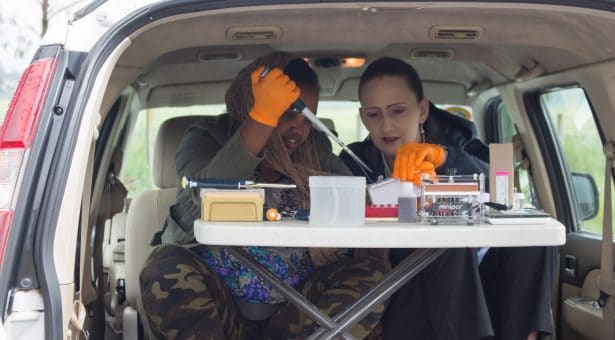
The in-field crop monitoring system demonstration by Dr Ji Zhou, Phenomics Project Leader, was very popular as it featured the CropQuant robot.
CropQuant provides continuous monitoring in-field of the micro-climate, providing unique insights into crop performance. It monitors the crop growth and its growing environment using a suite of sensors and an imaging ‘eye’ that can extend up to three metres. This allows visualisation of the crop canopy as it grows.
CropQuant
Dr Belinda Clarke, Director of Agri-Tech, controlling the CropQuant robot using her smartphone, which had been hooked up to be able to wirelessly control the robot (which had previously appeared at REAP 2017).

The data is processed using machine-learning based algorithms to create a very detailed picture of the way that a particular variety of wheat grows in the field, allowing comparison between different genotypes and a better understanding of how performance can be enhanced. It is well known that there is often a big gap between the potential yield of wheat and that actually attained.
The data obtained from CropQuant will allow analysis of the multiple factors involved to provide better models for forecasting and also decision making about application of fertiliser or the best timing for harvest. Dr Ji Zhou explains that the environmental factors that determine crop growth – soil moisture, humidity, temperature (ambient and soil) and light level – can now be measured easily with cheap sensors built into the robot, which then feed into the growth predictive model.

The event was very successful; Dr Belinda Clarke commented: “It was a good evening last night at Earlham – they were really thoughtful about how they organised the event and there were a number of farmers there, which was excellent.”

Earlham Institue
L to R: Philip Simons (Prime Agriculture), George Leonard (Home Farm Nacton), Luke Dewing (farming apprentice in the crop trials team at JIC), Karim Gharbi (Earlham Institute), Iain Flint (G’s Growers), and Frank Domoney (Anglia Maghreb Smart City)


See more about Agri-TechE Week 2018