RICHARDSON INVESTMENT AT BEDFORD, UK OAT MILL TO INCREASE PROCESSING CAPACITY BY 35%

Member News
Agri-TechE
The views expressed in this Member News article are the author's own and do not necessarily represent those of Agri-TechE.

April 8, 2021 (Winnipeg, MB) – Richardson International Limited is pleased to announce a significant investment in their Bedford, England oat mill to expand the facility and increase capacity by upwards of 35%. This latest investment will improve upon all operational aspects of the plant, from intake and warehousing capabilities to logistics and distribution. A full overhaul of the site footprint will result in greater operational efficiencies, modernization, and enhanced storage capacity.

When completed, the Bedford mill will boast a high-speed receiving system, providing a fast and effective means for inbound oats delivery. Extensive modernization of the plant will significantly increase storage capacity and ensure efficiencies in production and processing capabilities. In addition, the site will include a new expanded warehouse to allow for improved transportation and logistical functions. Construction will begin later this spring with no anticipated disruption to current operations and is expected to be completed in 2025.

These specifics and other features of the multi-phase project will allow the plant to rapidly meet an ever-growing demand for oats and oat-based products. “The global oats segment is thriving as shifting consumer behaviours drive market growth,” said Benoit Soucy (Vice-President, Milling Operations, Richardson International). “A significant investment such as this will enable us to fulfill the incremental demand of our customers as we continue to efficiently meet current requirements and anticipate their evolving needs.”

Now, more than ever, consumers worldwide look to quality plant-based products when making their purchasing decisions. Located in the heart of the country’s key growing region, the Bedford mill occupies a geographic position integral to meeting the needs of these informed consumers, both domestically and abroad. “The growth demand for our oat products has consistently increased through the years and we are committed to taking the business to a higher level,” said Carl Smith (Plant Director, Bedford).

“As a world class oat milling operation, we are incredibly excited by our new plans. Consumer interest in healthy oat products continues to grow and we see this as a great opportunity to supply existing and new customers with quality oat products,” added David Jordan (Board Director, Richardson Milling U.K.). “The outlook is positive for all industry participants – from the farming community and our facility staff to our suppliers and valued customers.”

About Richardson International

Richardson International Limited is Canada’s largest agribusiness and is recognized as a global leader in agriculture and food processing. Richardson is a worldwide handler and merchandiser of all major Canadian-grown grains and oilseeds and a vertically-integrated processor and manufacturer of oats and canola-based products. Over the past two decades, Richardson has become a significant player in the global food business, producing a wide variety of food products and ingredients for the retail, food service, and industrial markets. One of Canada’s Best Managed Companies, Richardson has over 2,900 employees across Canada, the U.S., and the U.K.

What Roles & Career Routes Exist in AgriTech – and is an Agri background normally required?

Member News
The views expressed in this Member News article are the author's own and do not necessarily represent those of Agri-TechE.

Working as a Recruiter in AgriTech, naturally people often ask me what type of roles I find myself recruiting for. We also collaborate and provide advice to various academic bodies and institutions in this space and, in a similar vein, are also asked; what kind of career opportunities exist in this world?  Is it a career route people should be actively looking to pursue? Do you need a farming background to build a career in this domain?

The truth is that, just like in other tech driven sectors, the nature of roles that arise can be highly varied, weird & wonderful. Some of course may require an agri / farming specific skillset, but there’s a plethora of others that don’t. Below is a (by no means exhaustive!) snapshot:

  • Roles of a STEM (science, technology, engineering, mathematics) discipline. The demand for staff with a STEM background has increased hugely in the AgTech sector in recent years. In most cases, an Agri background is not needed for roles of this nature, a successful candidate is just as likely to have built up their skillset from experience in other sectors. This category covers a wide range of roles, and it is here that we’re referring to the likes of Software Developers, Data Scientists, AI Specialists, Engineers (Electronic, Mechanical, etc…), Scientists of various specialisms and more.
  • Senior Leadership posts. Covering up to C Level. These roles exist across organisations of all types but are arising regularly at the moment in the AgTech space as so many start-ups and SMEs are emerging in the sector. Upon reaching growth point the first steps of a start-up will often be to recruit for the senior staff that can head up various parts of their business – this could include Chief Technology Officers, Commercial Directors, Heads of Product, even CEOs. Whether or not you’ll require an Agri sector background depends completely on the role type here – naturally, something tech oriented like a CTO often won’t, whereas a more commercially oriented post may require somebody with a background and extensive contacts in the space.
  • Commercial posts. Here we’re talking about Sales, Business Development, Account Management, anything client focused… I would also include roles in areas such as Customer Success in this. At the moment it’s common for a hiring company to want an Agri sector background (as mentioned previously, somebody who has contacts in this space). This does seem to be changing though, especially in roles that relate to a tech product or service – in these cases employers may be more interested in somebody with a tech sector background, or might consider somebody from one or the other (Agri or Tech).
  • The ‘In Between’ roles. There are some roles that arise regularly that aren’t purely tech / STEM focused, but neither are they purely commercial – roles that will sometimes bridge the gap between the two. This is where I would place the likes of Product specialists and Project Managers. Candidates may need to have some nous in both areas – so will be comfortable liaising with clients, but are also able to understand & translate tech concepts without necessarily being a hands on expert. It really depends on the client and exact role nature when it comes to whether or not an Agri background is required – some clients will value more a background that relates to the nature of the product (whether that’s Software, Data, AI, Engineering, etc), whereas others will stipulate an existing understanding of the Agri domain.
  • Agri Specific posts. Certain roles within AgriTech companies will require an Agri / Farming background, in the same way that some FinTech companies might sometimes need to hire a finance expert, or a HealthTech company may require the expertise of people with a medical background. Recent examples for us include Agronomists, and a Trials Manager position for a company looking to trial their tech solutions out in a real farming environment.

In summary, for anybody interested in this space and the opportunity to work in a sector that can have a genuinely positive impact on the world, there are career opportunities aplenty… whether you’re of an Agri background or not. Don’t let a lack of an Agri background deter you!

The Future is Brighter with Vitabeam

Member News
The views expressed in this Member News article are the author's own and do not necessarily represent those of Agri-TechE.

Vitabeam’s world-first technology is making a splash in the food sector. From farm to fork, Vitabeam technology is tackling some of the world’s biggest problems, including food waste, and producing safe, chemical-free, pathogen-free food.

When it comes to technological breakthroughs, few have the potential to impact the Food and Drink sector in a way as radical as Vitabeam.

After many years of R&D, Vitabeam produced their first LED light bar, which emits a unique combination of light wavelengths called VQe (Vitabeam Quantum energy). The wavelengths are all safe for human exposure, and have incredible properties that allow Vitabeam’s technology to positively contribute to many different global markets.

But it is within the Food and Drink sector that this tech is likely to have the biggest impact. The patented combination of light wavelengths has 2 abilities:

1) VQe interacts with plants to directly stimulate photosynthesis, increasing growth and yield, and delaying cell senescence in harvested produce to prolong freshness, and

2) VQe actively kills bacterial and mould pathogens, improving the health of plants, and minimising the microbial load on fresh food, extending its shelf-life.

Vitabeam’s technology is designed to benefit the food sector at every stage of the food supply chain, from grower, to packer, to retailer, to home consumer.
In the growing stage, the light bar, called the Vitabeam VQe MaxStrip, is a supplementary grow light. It can easily be retrofitted into any existing setup, making it an excellent option for growers looking to optimise their grow.

The MaxStrip supercharges plants by supplying them with the specific wavelengths of light, not emitted by any other grow lights, that maximise plant growth and yield. At the same time, the MaxStrip protects the plant from bacterial and mould pathogens, ensuring the plant stays healthy and the produce stays clean. This chemical-free method of pathogen killing allows growers to reduce their usage of pesticides and other chemicals, meaning they can produce clean, safe, chemical-free, residue-free food.

Once harvested, produce can be treated using Vitabeam’s high-powered sterilising technology, called the Steril Max, which combines VQe with UV. Whilst UV is often used for sterilisation purposes, the UV wavelengths cannot penetrate the surface of an object, limiting its effectiveness. VQe is able to penetrate into the food, meaning the combined usage of UV and VQe provides a more effective cleaning treatment than UV alone. This thorough cleaning treatment eliminates the need for washing produce with chemicals such as chlorine, ensuring that consumers are provided with the safest, cleanest food possible. This technology can be used for fruit, vegetables, meat, fish, and seafood to ensure they are pathogen-free, extending their shelf-life, and thereby reducing food waste.

Once food reaches the supermarket, Vitabeam’s technology can protect it, prolonging its freshness and keeping it safe and clean to keep customers healthy. MaxStrips installed in refrigerated display cabinets not only keep the produce within them clean, but also the surrounding environment. In a trial with a store in Michigan, USA, staff working in the fish department noticed the MaxStrips making a difference almost instantly. They reported that, within just a couple of days, the ‘fishy’ smell had disappeared, the fish felt firmer and looked healthier, and the ice surrounding the fish was no longer turning yellow. Furthermore, when the time came for the quarterly deep clean, there was noticeably less slime in the display case. Trials have also shown that Vitabeam’s technology can reduce wastage of fresh produce by between 25 and 30%.

Finally, when customers take their food home, VQe can be integrated into refrigerators to keep food clean and safe from pathogens. Not only does this diminish the risk of food poisoning, but it also means that food lasts longer, reducing the amount that ends up being thrown away because it has gone bad before it can be eaten. We’ve all felt the disappointment of finding that something we had been looking forward to eating has already gone mouldy. VQe can help to ensure that this feeling occurs much less often! Household food waste is therefore reduced, and less money is wasted on food that ends up in the bin!

Vitabeam is committed to helping businesses provide their customers with clean, safe, natural, chemical-free, residue-free food. Their technology has multiple benefits – keeping consumers safe and healthy, reducing food waste at every stage of the food supply chain, reducing chemical and pesticide usage, and helping everyone, from the grower to the consumer, to save money. Trials have shown that a return on investment for Vitabeam technology can be delivered quickly, for example within 6-9 months for retailers.

It is rare that a technology such as Vitabeam’s comes along which not only has the potential to benefit companies economically, but which also can help to protect the environment by reducing chemical and pesticide usage, and reducing food waste. The future really is brighter with Vitabeam.

How a data analyst is improving 4 arable businesses in Norfolk

Member News
The views expressed in this Member News article are the author's own and do not necessarily represent those of Agri-TechE.

Data is the new weapon for farmers seeking to enter a competitive global market, while protecting the environment and coping with the greater extremes in weather.

But not enough is often made of the data available, even on large, progressive estates, according to Poul Hovesen, director of farming at Salle Farms Company and Holkham Farming company.

“That’s especially true of what impact we can have on the crop’s potential, whether it is its resilience to stress, or its yield due to nutrients and biomass.”

Here the link to the complete article on Farmers Weekly

Germains Seed Technology Celebrates 150 Years of Innovative Seed Solutions

Member News
The views expressed in this Member News article are the author's own and do not necessarily represent those of Agri-TechE.

Before there was Rolls-Royce, Marks & Spencer, or Typhoo Tea, there was Germain’s Fruit and Produce Company—a business that has adapted and persevered to celebrate its milestone 150th anniversary in 2021. Although the company now known as Germains Seed Technology has changed considerably since it was founded by Eugene Germain in 1871, it continues to “maximise nature’s potential” through innovation, quality, and flexibility—just as it has since the very beginning.

Today, Germains Seed Technology is a leader in the international seed industry, delivering highly specialized seed pellet and treatment technologies for sugar beet, vegetable, and field crop seed producers and growers across the globe. The company operates from nine global locations across North America, the United Kingdom, and Europe. Germains Seed Technology’s Head Office and Sugar Beet Research and Development are based in King’s Lynn, Norfolk. In 2015, the company also opened a Fundamental Research Centre in Norwich Research Park, where senior researchers use advanced RNA technology to create strategically targeted seed priming and crop development treatments.

Victoria Lawrence, Managing Director of Germains Seed Technology, stated, “We are incredibly proud to celebrate this milestone anniversary with the multiple generations of employees, customers and partners who have grown right along with us. Staying true to the vision of our founder, we remain dedicated to using cutting-edge science and seed technology to develop solutions that benefit people around the world. We look forward to continuing to evolve and solve new challenges for the next 150 years!”
Message from Victoria Lawrence

The company was founded by Eugene Germain, a Swiss immigrant who opened Germain’s Fruit and Produce Company in the small, sleepy town of Los Angeles in 1871. The Southern California climate proved ideal for agriculture, and the business expanded quickly, moving to a larger location in 1898 that was billed as “the most complete seed store in the West.”

The company embraced flexibility from the start, branching into a wide range of different crops and agricultural business ventures over the years. Early in the 20th century, Germain’s shipped the very first carload of oranges from California to the U.S. East Coast. Later, in 1954, the company introduced the “Queen Elizabeth” pink grandiflora rose, which was named in honour of the newly crowned queen and remains one of the most popular cultivars grown today.

As a company, Germains has always fostered a culture of innovation, research, and development. In the early 1950s, Germain’s formed the Filcoat Processed Seed Division and introduced the first pelleted seed into the American market. Pelleting made it easier to precisely plant small, irregularly shaped seeds using automated planters and also provided a way to apply protectants needed to control pests and disease.

Researchers at Germain’s soon developed a clay-based pellet for sugar beets, which have oddly-shaped seeds that can be difficult to plant. After three years of comparative sugar beet trials in the 1960s, Germain’s Filcoat pellet was selected as the “pellet of choice” by the influential British Sugar Corporation. This marked a significant turning point for Germain’s. In 1965, Germain’s (UK) Limited formed, and the company opened its first plant in King’s Lynn, Norfolk, to meet the growing demand for pelletized sugar beet seed throughout the United Kingdom and continental Europe.

The seed technology division gradually became the main focus of the business, expanding to multiple locations in the UK, Europe and North America while other units were eliminated or sold off. Germain’s continued as a family-owned business until 1987, when it was acquired by S&W Berisford, then the owners of British Sugar. In 1990, the company was acquired by Associated British Foods LLC, and in 2010 was rebranded as Germains Seed Technology. Today, the company sells conventional and organic seed coating, priming and pelleting products for over 45 different crops and also collaborates with growers and seed producers to provide custom solutions for real-world problems.

Germains Seed Technology is also committed to social sustainability at both global and local community levels. The company donates quality treated seed to impoverished communities in developing countries through the non-profit Seed Programs International organization. Germains UK also supports a number of other charities, including the King’s Lynn Food Bank, Queen Elizabeth Hospital, Widowed and Young, East Anglian Air Ambulance, Norfolk Hospice, East Anglian Children’s Hospice, Brambles Animal Sanctuary, and the RSPCA (Royal Society for the Prevention of Cruelty of Animals).

Just like its determined pioneer founder, Germains Seed Technology has proven quite adept at responding to ever-changing market needs and persevering through adversity. In its 150 years, the company has survived multiple economic recessions, natural disasters—and now, two global pandemics. Its innovative seed technologies continue to help improve crop yields, making it easier, more affordable, and more sustainable for people to grow food across the globe.

Rothamsted businesswoman Nicole Sadd wins National Business Leader Award

Member News
The views expressed in this Member News article are the author's own and do not necessarily represent those of Agri-TechE.

The National Business Women’s Awards 2020/21 event was held at the Hilton Hotel in Wembley, and saw business women from across the UK come together to support and celebrate each other’s achievements in this annual awards ceremony.

There are 20 categories in total in these national awards and Hertfordshire-based Rothamsted Enterprises CEO, Nicole Sadd, was named as a finalist in two: ‘Corporate Leader of the Year’ and ‘Business Woman of the Year (Small Business – £1m-10m turnover)’.
Nicole faced some serious competition from a number of women business leaders and was delighted to be named as the winner in the Corporate Leader of the Year category.

This category is open to women in business who demonstrate being a proven leader in their organisation and brand category. Nominees demonstrate outstanding leadership, and a track record of building sales and profitability whilst energising and inspiring the people who report to them.

Nicole commented: “It’s taken a while to sink in. It was totally unexpected! I was up against some serious competition and I am absolutely delighted to have been named as winner in the Corporate Leader of the Year category. This achievement is great news, both for myself and my great team and I am proud to represent Rothamsted and women in business generally. The pandemic has been a hugely challenging time for us all and leading Rothamsted Enterprises – a hospitality business and innovation campus – during this time required huge focus, resilience and determination. It is a real honour to receive this award.”  
The agri-tech sector and government relationship in 2021 and beyond

Member News
Agri-TechE

Now that the UK has left the EU, every UK business sector and investor will look to the Government for its strategic policy roadmap that addresses this historic event and the perceived opportunities that it presents. The Prime Minister has consistently argued that a key element of the UK’s departure is that it allows his Government to establish its own regulatory structures as a springboard to a globally competitive economy.
The now ratified Treaty entitled the “UK – EU Trade and Cooperation Agreement” provides the framework for the UK’s future trade relationship with the EU. Several commentators have characterised the Treaty as the end of the beginning of the new relationship as it requires the parties to enter into a wide variety of subsequent debates and agreements covering many important areas and details. The outcomes will be highly relevant to the UK’s relative prosperity over the longer term.
Notwithstanding the above and the ongoing challenges of the pandemic to the UK and world economies, the Government’s responsibility is to lay out its policy strategy for this new situation that facilitates the creation of an environment which encourages business investment and growth in our economy.  In relation to the AGRI TECH sector the enactment of the Agriculture Act 2020 already provides the long term, post CAP framework for the farming sector as a whole. Understandably, considerable uncertainty remains in the absence of the under-pinning structures and regulations.
The AGRI TECH sector’s relative profile and importance to the UK economy and the Government (officials and politicians) has risen materially in recent times. It therefore has a clear opportunity to assist the Government’s policy task as it relates to the sector. The relevant Departments – DEFRA and BEIS being the most obvious – will both need and welcome sector inputs in order to produce the best strategy, policy and regulatory outcomes within which the sector can prosper.
Additionally, because the Devolved Administrations of Scotland, Wales and Northern Ireland have the freedom to develop their own approaches in the agricultural sector, their policy developers will also be open to inputs.
The value of the sector’s opportunity is that players within it can, over time, become trusted voices and valued advisers to the Government and, in parallel, enhance their long term, competitive positions. Such players will certainly benefit from collaborating with their key stakeholders and partners, in particular academia, R&D centres and funders, such that their combined positions can be genuinely representative and of greater value.
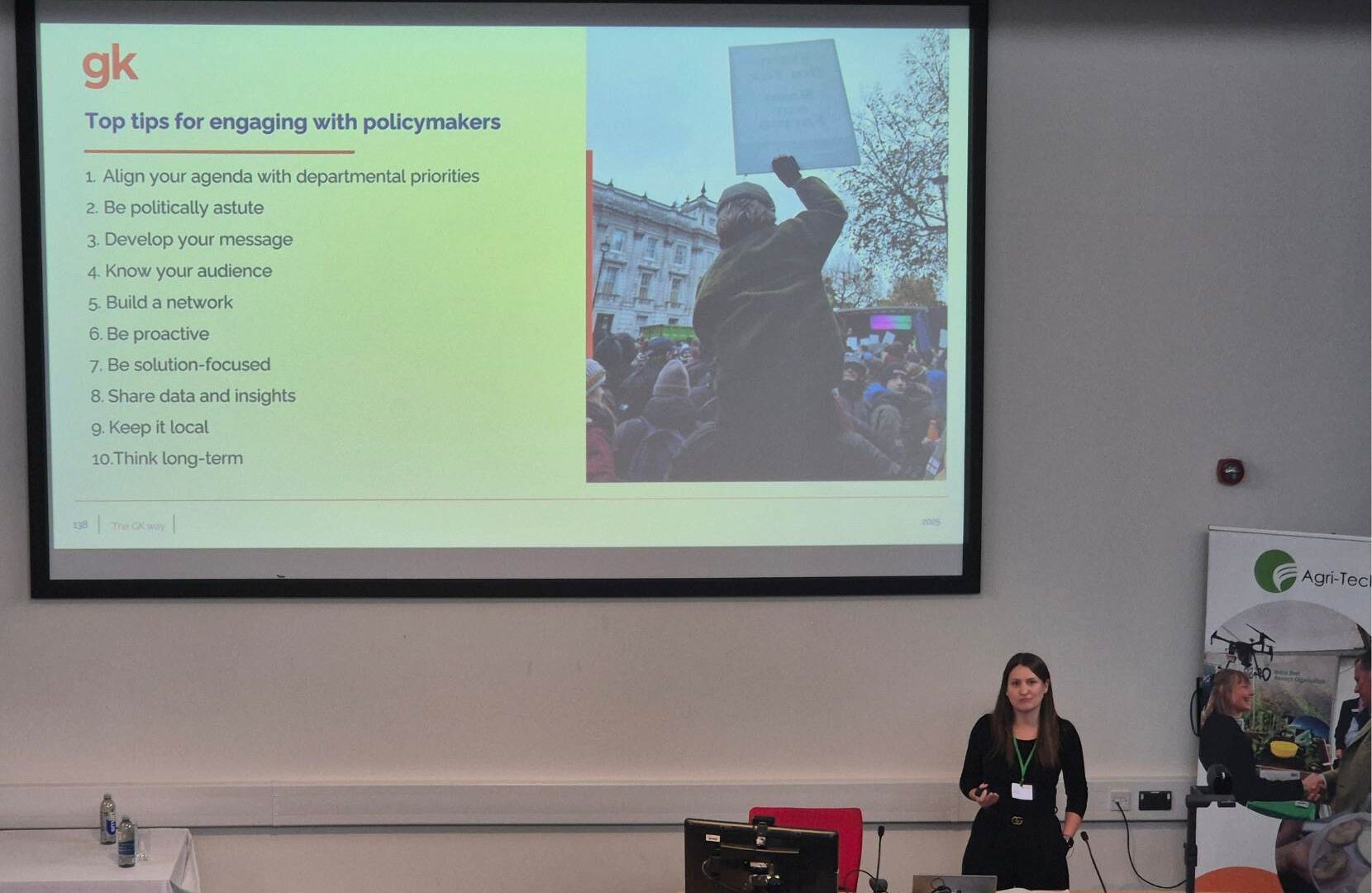
To be successful and influential in policy and regulatory development there has to be an understanding of how to relate to and work with the key officials, whether at a national, regional or local level. A player needs to be clear about their own desired outcomes arising from creating a relationship with officials, and they must also have a good understanding of the issues, options and challenges confronting the officials. Possession of these basic facts will enable players to respond and assist officials in a constructive and positive way.
In summary, the Treaty opens a genuine opportunity for serious players within the AGRI TECH sector to create relationships with Government officials that are of long term mutual benefit. Policy makers at every level need trusted sector inputs to enable them to develop and operate sector relevant policies and structures.
TWENTYFIFTEEN understands this environment and how to work within it, and is open to conversations with fellow members of Agri-TechE at any time.
Contact Details – Richard Elsden, Director, TWENTYFIFTEEN ADVISORY LTD,
Email – Richard.elsden(@)twentyfifteen.co
Mobile – 07748 931372
www.twentyfifteen.co

This content has been contributed by TWENTYFIFTEEN;  the views, thoughts and opinions expressed in this text belong solely to the author, and do not necessarily reflect those of Agri-TechE .

Looking after lone workers with world leading technology in the UK

Member News
Agri-TechE

Lone workers make up a large part of the agricultural workforce in the UK. Did you know live tracking of them is not actually a legal requirement? While it’s a great option for some, your legal obligation as an employer is to keep lone workers healthy and safe, just as you do all other workers, taking in to account the risks of working alone.
A bit of background information
According to the definition provided by HSE in their Protecting lone workers guide, it’s reasonable to assume many workers in agriculture would be considered lone workers as they could be ‘someone who works by themselves, without close or direct supervision’. Farm workers, delivery drivers including HGV drivers, van drivers and couriers would all fit this definition.
Lone work can involve long, unsociable hours, have high physical and mental demands, and for jobs like HGV drivers can mean long hours of sedentary work. There are also potential risks such as violence and manual handling. Each individual is different so you need to consider the individual as well as the role or task when considering the risks.
How do I manage the risk?
While it’s not necessary to do a separate risk assessment just for lone workers, you do need to consider the particular risks faced by lone workers in your risk assessing process.
Think about who is going to work alone, and what hazards exist that could cause harm. Wherever possible, avoid anyone having to work alone. If this is not an option, consider the capabilities and training of those undertaking the task and ensure they have been trained in not only the task, but how to keep themselves safe while working alone.
The medical suitability of someone who is going to be a lone worker is a factor in the risk assessment process. Some jobs may have physical demands that may preclude some individuals with pre-existing medical conditions from safely performing them. Think about what training and experience an individual has, and how best to supervise or monitor them.
Some of the risks to consider include:

  • violence in the workplace
  • stress and mental health/wellbeing
  • medical suitability of the person to work alone
  • the workplace itself
  • the work being done

There are high-risk tasks which require another person to be present, such as working in a confined space, near exposed electrical conductors, carrying anything explosive or fumigation. These types of work must not be done by a worker on their own.
You have an obligation to train, supervise and monitor lone workers, as well as keeping in touch and responding to any incident. This is where some think it is mandatory to have monitoring gadgets or devices, however this is not a regulatory requirement. The requirements to train, supervise and monitor workers can be achieved in various ways, and employers should consider multiple options rather than rely on a single approach.
There are some great technological solutions which can assist employers – the most obvious one being the mobile phone. As simple as it seems, using a mobile phone can be a significant part of your strategy to supervise and monitor lone workers but should not be the only control. Of course, relying on phones is only as good as your mobile phone coverage, so think about where your workers may be and what the mobile reception is like there.
Apps on smartphones are also a great way to provide support to lone workers. The Safe Ag Systems app allows workers to let you know when they are at work, you can see there last known location and allows lone workers to notify of an incident so you are able to respond accordingly. The Emergency Page within the app gives the worker the option to notify everyone on farm of a problem, call 999, call a key emergency contact, access chemical safety data sheets and important information in the event of an emergency.
If lone workers are going to be working in an area with little or no mobile phone coverage, you need to find other ways to supervise and monitor. Some ideas include:

  • have two or more people working together or in close proximity
  • use of radios or other communication means
  • know where your workers are and what time they will finish
  • have pre determined check-in times
  • determine when supervisors should visit lone workers
  • make sure the worker is aware of any risks they may face
  • let them know it’s OK to stop work if they feel unsafe – set the boundaries of when to stop and seek help, and create a supportive culture so no one feels they need to take unnecessary risks

Talk with those who work alone – they will know the hazards to be considered and have ideas on the best way to control the risk, as they are the ones doing the work. You should also check records to see if there are any learnings from past incidents involving lone workers.
Make sure lone workers have first aid kits and know how to administer first aid including on themselves. Workers need know who they should contact in the event of an emergency and what the emergency procedures are, including having contact numbers available. If a worker has a known medical issue, for example allergic reactions or asthma, ensure they have appropriate supplies such as auto-injectors and respiratory relievers with them at all times.
What can or should I do now?
If you haven’t already done so, complete or review your risk assessment particularly around lone workers. Have conversations with your employees to find out if there’s anything they can add regarding risks and controls.
And if you want to use an app built by farmers, for farmers, check out www.safeagsystems.com for all your health and safety needs.

This content has been contributed by SafeAg Systems;  the views, thoughts and opinions expressed in this text belong solely to the author, and do not necessarily reflect those of Agri-TechE .

RIDDOR in the UK: A quick introduction

Member News
Agri-TechE

RIDDOR stands for Reporting of Injuries, Diseases and Dangerous Occurrences Regulations 2013. What a mouthful! This regulation is utilised in the United Kingdom. Let’s look at what you need to do and what you need to know.
Employers, self-employed and people in control of work premises are called ‘the responsible person’, and have a legal obligation to report certain work-related accidents under the Regulations. As soon as you become aware a work-related accident may be reportable under RIDDOR, you need to make the report.
Reporting is required for:

  • work-related accidents which cause death
  • work-related accidents that cause certain serious injuries
  • diagnosed cases of certain industrial diseases
  • certain ‘dangerous occurrences’

So how do you know what to report? We’ll explore each of the components of RIDDOR in a little more detail to help explain things.

  1. Let’s start with ‘work-related’.

Not every accident in the workplace is work-related. Here are the key things items that decide if the accident is work-related:

  • the way the work was carried out
  • any machinery, plant, substances or equipment used for the work, or
  • the condition of the site or premises where the accident happened

If none of these factors contributed to the accident, then it may not be work-related and a report isn’t required. It is only physical injuries caused by a work-related accident which are reportable. Mental health issues do not fall in to this category, and are not one of the listed occupational diseases so do not have to be reported.

  1. Injuries

There are 4 types of injury categories which must be reported.
Death – all deaths of workers and non-workers must be reported if they arise from a work-related accident, including physical violence.
Specified injuries – these include:

  • a fracture, other than to fingers, thumbs and toes
  • amputation of an arm, hand, finger, thumb, leg, foot or toe
  • permanent loss of sight or reduction in sight
  • crush injuries leading to internal organ damage
  • serious burns covering 10% or more of the body, or which damage the eyes, respiratory system or other vital organs
  • scalpings (separation of the skin from the head) which require hospital treatment
  • unconsciousness caused by head injury or asphyxia
  • any other injury arising from working in an enclosed space, which leads to hypothermia, heat-induced illness or requires resuscitation or admittance to hospital for more than 24 hours

Over-Seven-Day injuries to workers are where an employee or self-employed person is away from work or unable to perform their usual duties for more than 7 consecutive days. Day 1 is the day after the accident.
Injuries to people not at work are work-related accidents to members of the public if they are injured and are taken from the scene of the accident to hospital for treatment of the injury. The injury need not be traumatic. It can be minor, such as an abrasion or small cut. Being taking to hospital as a precaution when no injury is apparent is not reportable.

  1. Diseases

Certain diagnosed occupational diseases must be reported where they are likely to have been caused or made worse by work. These include:

  • carpal tunnel syndrome
  • severe cramp of the hand or forearm
  • occupational dermatitis
  • hand-arm vibration syndrome
  • occupational asthma
  • tendonitis or tenosynovitis of the hand or forearm
  • any occupational cancer
  • any disease attributable to occupational exposure to a biological agent (e.g. Hendra virus, avian influenza, Q-fever etc. from working with animals)
  1. Dangerous Occurrences

Dangerous occurrences are certain near-miss events (incidents with the potential to cause harm). There are 27 different occurrences, many of which are relevant to agriculture and some not so much. Those most likely relevant to farming include:

  • Lifting equipment– collapse, overturn or failure of any load-bearing part (e.g. a forklift truck tips on its side)
  • Pressure system – any failure (other than a pipeline) which could cause death (e.g. an air compressor valve bursts)
  • Overhead power lines – direct contact or close proximity causing electrical discharge (e.g. the auger of a combine harvester gets close enough to overhead power lines to cause an arc)
  • Electrical incidents causing explosion or fire – if a short circuit or overload results in the plant being unusable for 24 hours, or causes significant risk of death (e.g. plugging a power tool in to a socket which overloads the circuit, resulting in a fire of the electrical switchboard which shuts a workshop down for more than 24 hours while it’s repaired)
  • Explosives – unintentional fire, explosion or ignition, misfire, injury caused, or projection of material beyond the danger zone (e.g. when clearing large rocks from land and the explosive misfired)
  • Biological agents – any release or potential release of biological agents (e.g. Hendra virus)
  • Breathing apparatus – any malfunction which does or could cause significant risk to health and safety (e.g. if used in confined space entry)
  • Collapse of scaffolding – complete or partial collapse of scaffold more than 5 metres in height, working platform falling from a slung or suspended scaffold, or any scaffold collapse that creates a significant risk of a person drowning if they fall from the scaffold (e.g. scaffolding used to reach the roof ridge-cap of a shed partially collapses)
  • Structural collapse – unintentional collapse (full or partial) of any structure involving a fall of more than 5 tonnes of material, any floor or wall of a workplace, any falsework (e.g. a barn collapse after a storm)
  • Explosion or fire – unintentional fire or explosion resulting in stoppage for more than 24 hours (e.g. a combine harvester catches fire and shuts down harvest for a few days)
  • Release of flammable liquids and gases – sudden, unintentional and uncontrolled release of large volumes (e.g. 500kg of a gas in the open air)
  • Hazardous escape of substances – unintentional release or escape of any substance which could cause injury other than via combustion of flammable liquids or gases (e.g. Revysol is spilled)

Phew – that’s a lot of information!
It’s important to understand what you may need to report, and how to report. Remember, only ‘responsible persons’ should submit reports under RIDDOR. Reporting is easy and should be done online, with different links for reporting an injury, dangerous occurrence, case of a disease, flammable gas incident or dangerous gas fitting.
For reporting a fatality or specified incident only, and you are located in the UK, telephone the HSE Incident Contact Centre on 0345 300 9923. The Centre is open Monday – Friday 8.30am – 5pm. In certain circumstances HSE may need to respond out of hours. These include:

  • following a work-related death
  • following a serious incident where there have been multiple casualties
  • following an incident which has caused major disruption such as evacuation of people, closure of roads, large numbers of people going to hospital etc.

If an incident fits any of these descriptions, ring the duty officer in the UK on 0151 922 9235.
Best practice for any UK agribusiness is to have a policy for RIDDOR, including nominating who will contact HSE in the event of a work-related accident.
To find out more about RIDDOR go to https://www.hse.gov.uk/riddor/index.htm
 
This content has been contributed by SafeAg Systems;  the views, thoughts and opinions expressed in this text belong solely to the author, and do not necessarily reflect those of Agri-TechE .

Health and Safety Investigation in the UK – what to expect

Member News
Agri-TechE

You’ve had a serious incident or worse, a fatality on your farm and the HSE inspector arrives to investigate. If there has been a fatality, the police will be involved also. This will seem quite daunting, and it is important you know what you need to do.
HSE in the UK don’t investigate everything that’s reported to them, however if someone has died or sustained a serious injury they will be at your gate soon enough.
What purpose does a health and safety inspection serve?
The purpose of any investigation is to determine how something happened. This information is then used for a range of purposes, including sharing lessons, identifying what actions need to be take to prevent any recurrence, and where appropriate, to gather evidence to bring a prosecution.
If there has been an incident, they will want to see the site. The inspector will take photographs – lots of photographs. It’s possible they may take video footage as well. They may sketch out a bit of a floor plan showing where things are placed.
When it comes to the scene of the accident, you must not alter until an inspector says you can. Of course, you must make the site safe or get a person out for medical treatment, but you can’t fix anything else. Remember that the accident site is treated as a crime scene. If you’ve watched any TV involving police investigations, you can expect similar things for a workplace accident.
What will the inspectors require of you?
The inspector will ask lots of questions. They will ask you, your employees and their representatives, and anyone else on site. They will ask about what was going on when the incident happened, how you think the incident happened, how it could have been prevented and lots of other questions. You will also be required to supply your safety documentation – policies, procedures, evidence of training and induction, maintenance records of any machinery or equipment involved, risk assessments and any other documents.
The inspector will want to know about your own knowledge and experience around health and safety. You will need to be able to talk about the main health and safety issues in your workplace also, and what you’re doing to manage the risks. You will also need to be able to explain what was in place to manage the specific risk which resulted in the incident.
What should I expect next in the investigation process?
HSE may seize machinery or equipment involved in the incident. They may take it for inspection, investigation or as evidence. Think about how you will continue to operate if this occurs.
An investigation of a fatality or serious incident may take a while – days or even weeks. It is likely investigators will be back or want further information. Eventually, a decision will be made about what happens regarding the incident. It is likely that you will be issued with a Notice of Contravention, Improvement Notice, Prohibition Notice or notice that HSE intend to prosecute you for breaking health and safety laws.
You must comply with the requests of an inspector who is investigating a fatality or serious incident. It is advisable to promptly seek counsel from a legal representative who is skilled in health and safety law if you have a reportable incident or fatality.
To reduce the likelihood of a prosecution against you, it’s advisable to have a safety management system which has been implemented across your agribusiness. With this in place, there is far less likelihood of a serious incident occurring and if one does, you will be better protected with a system in place and being used.
 
This content has been contributed by Safe Ag Systems;  the views, thoughts and opinions expressed in this text belong solely to the author, and do not necessarily reflect those of Agri-TechE .

NEW PRODUCT: Davis EnviroMonitor Long Range Antennas

Member News
The views expressed in this Member News article are the author's own and do not necessarily represent those of Agri-TechE.

Prodata Weather Systems is excited to announce a new addition to the Davis range of high-quality environmental monitoring products.

The recently released Long-Range Antenna for the Davis EnviroMonitor system is now available to purchase from Prodata – https://davisenviromonitors.com/long-range-antenna/ (contact for pricing and availability)

The EnviroMonitor is a highly flexible system able to remotely monitor many physical aspects of the environment, both outdoors and in other settings such as greenhouses. Data readings include weather, soil conditions and many other environmental parameters such as water level, flow rate, water pressure and soil salinity. It provides farmers and growers invaluable information directly to their devices which enables them to make minute-by-minute crop management decisions.

This new Long-Range Antenna dramatically increases the flexibility and cost-effectiveness of the EnviroMonitor network.  Previously farmers and growers could effectively monitor 78ha with one gateway. Now with ideal conditions and the addition of the Long-Range Antennas, one gateway could cover 2,827ha.  By extending the EnviroMonitor network with the addition of further nodes and Long-Range Antennas the area monitored can be increased many times further.

This new product effectively reinvents the EnviroMonitor system by opening up this solution to those who may previously have been put off by the additional licensing and hardware costs as they can now deploy numerous sensors into multiple fields over a far wider area.

Peter Palmer, sales director at Prodata Weather Systems, said: “I believe this new product takes field weather and environmental data collection to a new level and places the Davis EnviroMonitor product well above its competitors.”

Farmers and growers should contact Pete on 03336 664175 or via sales@weatherstations.co.uk for further information.

EnviroMonitor dedicated website: https://davisenviromonitors.com

Cambridge agritech incubator Barn4 on Niab Park Farm gains funding

Member News
Agri-TechE

Barn4, a purpose-built Cambridge agritech incubator that will give start-ups access to sector specific expertise and laboratory facilities is to be co-located on the Niab Park Farm site in Histon.  Tenants will gain access to the recently redeveloped Park Farm field research station, which includes two new large research and office buildings and state-of-the-art research glasshouses.
Niab (The National Institute of Agricultural Botany) was founded in 1919 with a mission to provide independent science-based research and information to support, develop and promote agriculture and horticulture; helping the industry to fulfil its potential in supplying food and renewable resources, while respecting the natural environment. Her Majesty The Queen is Niab’s patron.
Niab also supports the Eastern Agri-TechE Innovation Hub, where a number of companies with expertise in controlled environment agriculture and the circular economy are based.

Cambridge agritech incubator Barn4
Barn4 will be a Cambridge agritech incubator providing access to sector specific expertise and facilities

The Barn4 development is supported by £2.5 million funding from The Cambridgeshire and Peterborough Combined Authority, and  will be open to tenants from spring 2021.
It will provide facilities for up to 15 companies with 45 staff
In addition to laboratory, workshop and office space, meeting rooms and video-conferencing facilities. Tenants will be able to gain access to Niab’s high performance computing capability, specialist laboratory facilities and both indoor and outdoor growing spaces.

Unique access to facilities and expertise

The unique offering of state-of-the-art technical facilities and links to Niab, the Cambridge technology cluster and the wider agricultural sector will be ideal for early stage companies to grow and flourish.
Dr Juno McKee, Director of Niab Ventures, says:  “Niab will work with a network of commercial and academic partners to provide a complete ecosystem within which technology driven start-ups and spinouts can thrive.”
Simon Clarke MP Minister for Regional Growth and Local Government  says, “Investing in innovative agritech projects is at the heart of this Government’s commitment to create new, green jobs and reach our target of Net-Zero by 2050. That is why we are investing £2.5 million from the Local Growth Fund in this exciting project to create space for start-ups and small businesses in Cambridgeshire to grow and innovate, creating new jobs for the region and supporting this world-leading centre for agritech.”
Niab’s Director of Commercialisation Dr Michael Gifford explains that to date there have been gaps in support for start-ups including access to sector specific expertise, basic research facilities with laboratory space, field plots, and engineering workshops:  “We are thinking about agritech in its widest sense and expect to have companies specialising in plant genetics, pest management, soil health, and AI to support sustainable farming decisions, farm robotics and much more.”

A Cambridge agritech incubator

A study carried out for Niab by the University of Cambridge’s Judge Institute showed that agritech start-ups felt that they would benefit from sector specific technical expertise and advice – exactly the type of support to be provided with the Cambridge Barn4 logoagritech incubator Barn4.
“In Barn4, Niab will be able to provide an environment in which young companies can thrive in the agritech sector. It allows companies to access the region’s unrivalled technology sector whilst also being on the doorstep of some of the most fertile farmland and progressive farmers in the world,” finishes Dr Gifford.