Patenting, Trademarks, Copyright, Trade Secrets...
In the next installment of our micro-learning series, we’ll explore potential legal solutions to help you keep your ideas safe and sound.

BioBridge celebrates 30 years of innovation consultancy on April 1st 2019

Member News
Agri-TechE

No, not an April Fools’ joke – BioBridge Ltd, the Cambridge-based independent life science innovation consultancy, was founded in 1989 and has been at the forefront of biotechnology and life science advances since then, from a ground-breaking report for Frost&Sullivan on biotechnology in animal breeding and production, via helping establish new approaches to xenogeneic therapies and biopharming, to current involvement in the latest green and blue biotechnology advances.
Dr Meredith Lloyd-Evans, founder and CEO of BioBridge Ltd, said “Since we started, we have  worked with  over 100 clients from  individuals to giant corporations through start-ups and SMEs to governments, spread over the world from Japan via Europe to Canada and the East coast of America. We are very grateful to our clients for their support, especially our long-term relationships stretching from 10 to 25 years. Using our expertise in innovation and exploitation in Life Sciences, we’ve been able to work with and help creative people and companies build strong advances in marine and crop biotechnology, tissue engineering, animal health, medical devices and industrial biotechnology. Our expertise allows us to carry out highly- focused projects for companies on specific topics, and  the  breadth  of  experience  means  we can offer support to strategic decisions at top level, as well.”
Looking to the future, Meredith is strongly involved in efforts to build sustainable economies based on marine and aquaculture biomass, in areas such as blue bioproducts for chemical, plastics and health uses, and is helping create European and international groupings to achieve this, via the BioMarine organisation. In Animal Health, he is working with the US-based Vaxiam Group to accelerate productive linkages between European and Chinese companies and research activities. In dermatological healthcare, BioBridge has successfully helped companies find new ingredients, especially from natural sources, and new products for management of long-term skin conditions. He is an active member of IBioIC, the Scotland-based Industrial Biotechnology Innovation centre, and works with IBioIC and the Bio-Based Industries Consortium on marine biotechnology workshops and seminars. In Spring and Summer 2019, he will be contributing to round-tables, panel discussions and EU-supported conferences in the Blue Economy. Work, and the opportunity to contribute to progress, does not stop!

PwC Cambridge moves to new home in St John’s Innovation Park

Member News
Agri-TechE

PwC Cambridge has moved to a new home in the flourishing St John’s Innovation Park, opposite the Cambridge Science Park.PWC Office opening, in march 2019
The new office move was celebrated with an official opening on 27 March 2019, attended by over 150 guests and staff.
The new office brings together more than 200 staff members from the Cambridge and Norwich teams. The relocation will allow PwC to be closer to their clients, and provide greater support in PwC’s priority fields of agri-tech, life sciences and artificial intelligence. The demand for expertise in these areas is increasing, and PwC is committed to ensuring it is best placed to help prepare its clients for future growth potential.
The new office space will encourage collaboration, inclusivity and flexibility. The doors will also be open for clients, local busineSian Steele PwCsses and charities to use the new space, encouraging a greater sense of community throughout the city and region.


Sian Steele, PwC Cambridge office senior partner, said:
“Cambridge is an international city and we have a wonderful and diverse team. We pride ourselves on looking after one another as well as our clients. The move will allow us to address new challenges and opportunities within the city and surrounding areas. We want to be part of the team helping the city go from strength to strength, and our new office will no doubt help us to achieve this.”
Chrissie Freear, PwC Cambridge office senior manager and agri-tech team leader said:
 “Moving to our new office demonstrates our commitment to the East and provides a great collaborative environment to bring together our range of specialists, in our key focus areas such as Agri-Tech. We are delighted that the new office has already been used as a venue by some agri-tech guests who were particularly impressed with our agri-moss wall!”

Olmix launches in Dublin

Member News
Agri-TechE

“For a long time the use of natural products like algae was viewed with some scepticism, but Olmix has a deep scientific understanding of what individual molecules are actually doing,” said sales manager Chris Gamble.
“We can isolate distinct active ingredients which affect the plant or animal in different ways, whether that is protecting against digestive disorders in calves or stimulating plant growth.”
The company has announced the launch of its health, nutrition and biostimulant range of products in Dublin, so now Irish farmers can now take a more holistic approach to plant and animal health.
Olmix biostimulantCombined with micronutrients, inorganic acids, or clay, the products can be used at different stages for maximum effect.  Maria Matard-Mann, research projects manager explains. “We are using refined algal elements as a complement to crop and soil health, not the only part of nutrition. That’s what makes the difference – having both a nutritional and biological activity.”


That joined-up approach even bridges the gap between plant and animal health. “Instead of feeding low quality grass or silage, topped up with expensive supplements, farmers can use Micromix Essential – a foliar fertiliser containing all the essential micronutrients required for animal health and growth – to pasture.
“This is scientifically proven to increase forage quality, leading to higher blood nutrient levels in the livestock, alongside better growth rates and feed conversion efficiencies,” adds Chris Gamble. “At a time when producers are under immense pressure to reduce chemical and antibiotic use, this technology will prove vital in maximising animal health and productivity in a sustainable way.”
For more information visit www.olmix.com

Scrutton Bland marks its centenary

Member News
Agri-TechE

When Alfred Scrutton and Francis Goodchild opened their accountancy firm in Ipswich in 1919, it is unlikely that they would have imagined that the business would still exist today, let alone having offices in four counties and employing over 200 people.
Original Bland insurance certificate
Scrutton Bland, as the firm is now known, is the product of a number of historical mergers and acquisitions between local accountancy and insurance businesses. Of these unions, the most impactful was the joining together of Suffolk-based Scrutton and Goodchild and Colchester insurance brokers Bland Fielden, both of whom were established in 1919 meaning that Scrutton Bland celebrates a double centenary in 2019.
Managing Partner Jason Fayers is proud of the firm’s history: “Our founding firms were established at the end of WW1 by soldiers returning from the Great War. They recognised the need for financial advice and insurance that the years of war had created and set up a service for both business and individuals to meet those needs. It is hard to imagine how life was back then, but one thing remains the same today, which is that people still need sound professional advice when it comes to their finances.”
In 1990 the firm rebranded as the Scrutton Bland Group, and in 2004 expanded its operations into Norfolk with the acquisition of Merrick Hill insurance brokers.
By the mid 2000s, the success of the Group meant that Scrutton Bland had outgrown both its Colchester and Ipswich offices, and in 2007 the firm expanded into a new building on Colchester Business Park and moved into an impressive three-story office on Ipswich’s Crown Street in 2014. In 2017 the firm expanded once again, this time northwards, increasing the size of its site in Diss and crossing over the border to open a new office in Cambridge later that year.
As it celebrates its 100th year, the current Scrutton Bland partnership team reflects on the firm’s long history and the position it has held for so long in local communities:
Tim Mulley, Senior Partner, thinks that the similarities between the business approach today and that of 100 years ago could be behind why the firm has prospered for so long:
“Our business is based on trust. Looking after people’s livelihoods, whether that is in business or their personal finances is a huge responsibility and one which we take very seriously. I think understanding what matters to our clients, and genuinely putting them first is what sets us apart and why we are still operating today.”

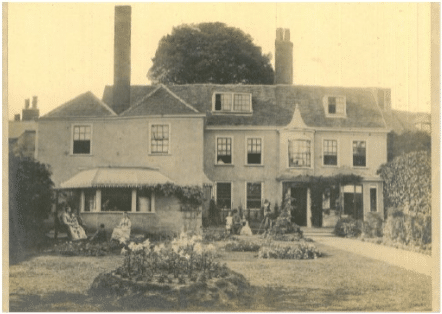
•The Bland Fielden offices at Sir Isaac’s Walk, converted to Scrutton Bland offices, in around 2005.
The Bland Fielden offices at Sir Isaac’s Walk, converted to Scrutton Bland offices, in around 2005.

“We still approach everything we do from our clients’ perspective:, honesty, integrity and empathy are critical. In my view where so many businesses fail is that they view their clients merely as ‘commodities’, numbers on a spreadsheet – we’ve never operated that way. We see ourselves very much as part of the community within which our clients live and work, and that means we genuinely want to achieve the best for them. If we hadn’t maintained that integrity in our approach, I don’t think we would still be here 100 years on.”
Although boasting such a long history, the modern day Scrutton Bland is on a mission to position itself at the forefront of new technology. Having been one of the first adopters of cloud-based accounting in the region, the firm has recently secured exclusive partnership arrangements with online apps and software providers to ensure that it remains well positioned to adapt to its clients’ needs as both business and personal finances become increasingly digitalised.
 
•Bland Fielden senior staff circa 1970.
Bland Fielden senior staff circa 1970.

G’s appoints successful candidates for its Management Training Scheme

Member News
Agri-TechE

Since September, candidates have been working hard to gain a spot on the G’s Management Training Scheme. The scheme, which is aimed at university graduates, encompasses two years of training and development through the rotation of four six month placements around different areas of the business. Competition between applicants this year was extremely high, but the candidates were whittled down to ten talented individuals who were invited to attend the assessment centre at the G’s Head Office in Ely on the 20th February. A variety of activities were arranged for the day, including a strategic discussion and two group activities where the candidates were assessed against numerous competences.
After considerable debate between the assessors, the group collectively decided which four individuals they would like to appoint to join this year’s intake of Management Trainees. A huge congratulations to the four successful candidates, we look forward to you joining us in September!
We have now begun recruitment for our Farm Graduate Scheme, a 2 year training scheme commencing in February 2020, at the beginning of the planting season! Similar to the Management Training Scheme, the trainees will experience 4 six month placements giving them a complete overview of the full farming cycle. If you are interested in this opportunity, or know someone that is – please get in touch by emailing graduatescheme@gs-fresh.com. We look forward to hearing from you!

Ozo to prove energy efficiency of its novel hygiene solution

Member News
Agri-TechE

OZO Funding Feb 2019The food industry’s reliance on hot water for hygiene means that it is an energy intensive process, yet it is often an unrecognised hygiene cost, as utilities spend is managed separately from hygiene chemicals, labour and testing costs.


Innovations (Ozo) announces that it has secured over £600,000 project funding from the Department of Business Energy Industrial Strategy (BEIS) Industrial Energy Efficiency Accelerator (IEEA) Programme managed by the Carbon Trust and Jacobs.
The IEEA aims to lower costs and increase the number of available energy efficient technologies for a range of industrial sectors, through demonstration of near to market innovations. This will help to reduce carbon emissions and improve the competitiveness of UK industry. The funding will enable Ozo to substantiate the significant energy savings that could be achieved by implementing Ozo’s eloclear hygiene process.
The project hopes to demonstrate that it is possible to:

  •  remove hot water from the food factory hygiene process;
  •  reduce the total volume of water used;
  •  achieve robust high-quality hygiene outcomes.

Ozo substitutes cold electrolysed water for hot water, which requires significantly less power to produce. Using “cold water” for hygiene further benefits food processors that operate in chilled environments as it reduces condensation and removes the energy costs associated with re-chilling spaces that become warm when cleaned with hot water. The business has been working with leading UK food companies to optimise the technology and help businesses be more sustainable and competitive.
This demonstration project will compare the energy saving benefits of eloclear over the current industry standard of hot water based, multi-step chemical cleaning, across a number of standard hygiene procedures. Results will be published once the project is complete, in around 18 months’ time.
The trial site chosen is a leading maker of sandwiches, recognising that the “food-to-go” standards are some of the most demanding in the food industry.
“Consumers are recognising that their food choices are putting the planet under pressure. We use 70% of our fresh water for food production. Hygiene is an area, which offers an opportunity to save energy and water whilst maintaining or improving standards. This is good for everyone, as better hygiene means we can achieve longer shelf life, reduce food waste and maintain the safety of our food,” said Rowan Gardner, CEO of Ozo. “We are delighted to have the support of Carbon Trust and Jacobs to demonstrate the energy credentials of eloclear.”
Paul Huggins, Director Innovation, the Carbon Trust: “This exciting technology could have a major impact throughout the food industry, radically simplifying the way the sector carry out their hygiene processes. We are looking forward to working with Ozo, and scrutinising both the technical performance and energy saving credentials of the technology.”

Keith Norman to join Hutchinsons

Member News
Agri-TechE

Keith Norman, formerly Technical Director for Velcourt Ltd has joined Hutchinsons as an external consultant.

Keith Norman Hutchinsons
Keith Norman joins Hutchinsons

The role will see Keith provide consultancy support to the technical areas of the business and help to develop the Foundation and Academy agronomist training programmes already in place within the company.
In his previous position at Velcourt, Keith supported a team of 45 farm managers responsible for farming in excess of 50,000 hectares of commercial crops. His responsibilities included planning and delivery of technical research and knowledge transfer programmes in areas such as crop protection, seed and crop establishment, crop nutrition, precision farming technology and farm management.
More information 

Farmland Market Update – Savills report

Member News
Agri-TechE

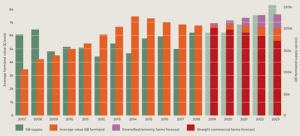
Savills has recent published its annual research publication covering all aspects of the Great Britain (GB) Farmland Market at a national level.

Farmland values
GB farmland forecasts 2019–2023 Diversity and quality will underpin performance Note: Savills data and analysis of the farmland market is for Great Britain only as comparative data from Northern Ireland is difficult to acquire. Source: Savills Research

Economic change and uncertainty continue to have an impact on the farmland market in GB. Alongside the traditional core drivers of this market some new influences are on the horizon including regulatory change, a shift towards public money for public goods, enforcement of the polluter pays principle and an increased scrutiny on land value capture. All these will amplify the importance of nurturing natural capital, non-farm income streams, economic AgTech and innovation take up.
Key findings include:

  • Farmland values 2019 and beyond – a mixed forecast: Quality and diversity of the asset will underpin performance – see page 2 for more information
  • The farmland market 2018: Farmers represent around 45% of all buyers with 85% buying to expand. Sales data shows the proportion of farmers selling has fallen each year since the EU Referendum in 2016. In 2018 farmers represented 39% of all sellers; the lowest figure recorded for at least 25 years
  • Could a third of the UK land area change use by 2050? The next 30 years are likely to see some significant changes in land use across the UK that will no doubt impact on the tenure of farmland and its capital and rental values – we discuss in more detail on pages 4 and 5
  • Comparative investment performance: rural property, notably let estates, farms and forestry, have been a comparable investment to alternative property assets and financial instruments over the past 20 years (see pages 6 and 7)

The report is available to read here 

Incubyte supports potato insights company AxoMap

Member News
Agri-TechE

Support from Incubyte is helping AxoMap to bring its technology to market.
AxoMap is a remote sensing application that is able to identify potato tubers during harvesting. It provides tech and big data solutions for potato growers and harvesters.
Founder, Keith Geary, has been an Incubyte member since November 2017.
Rob Precious, Founder of Incubyte comments: “AxoMap is at an exciting stage now whereby Keith can prove the software delivers impactful data for potato farmers and processors.
“Agriculture is cyclical by nature, so it’s been a long but interesting journey of development and it’s great to see that investment of time, technology and expertise proving itself.”
More information about Incubyte. 
 

A Guide to Claiming R&D Tax Credits for Farm Businesses

Member News
Agri-TechE

R&D credits were introduced in 2000 to help stimulate innovation in the UK. They subsidise companies innovating either in the form of a reduction in the amount of tax companies pay or a credit against tax. So there’s money waiting in HMRC’s coffers for deserving farm businesses who are innovating in their field!
Despite agriculture contributing £8bn to national GDP and directly employing 425,000 people, the value of R&D claims made to government from the sector was only 0.2% of the total amount claimed. So it’s widely agreed that agricultural businesses are missing out on a lot of potential credit from the government.
EmpowerRD are a digital-first R&D claims advisor who combine industry-leading expertise with an intelligent claims platform to dramatically reduce the cost of claiming for R&D credits. They charge claimants 5% of their credit or less – which EmpowerRD estimates makes them 3-4 times cheaper than traditional advisors and accountants.

Common Misconceptions

You needn’t wear a white coat to claim R&D credits, sometimes a pair of wellies will do!
While many farm businesses will be employing a lot of advanced technologies on site, they may think that only the manufacturers of those technologies have the right to claim. However, we know that many farm businesses in the UK are eligible for R&D tax credits but aren’t currently claiming.

Activities that Qualify

To help understand the opportunity, here are three areas of activity that could qualify for R&D credits, but might be overlooked by farmers:

  1. Developing different processes to check their success: e.g. experimenting with new feed compositions or feeding techniques.
  2. Experimenting with bespoke technical solutions to solve a problem on the farm: e.g. implementing novel odour control methods.
  3. Appreciably improving technical solutions to increase their efficacy: e.g. improving an irrigation system to make it functional to the topography of your farm.

Even if a business’s attempts to innovate end up being unsuccessful they can still make a claim. So, if you’re unsure about whether you are eligible to claim then get in touch and one of our team will be able to advise.

Timac Agro UK Launch new website and competition

Member News
Agri-TechE

To improve and support the business visibility, Timac Agro UK has launched its brand new website today: www.uk.timacagro.com
Timac Agro UK is a specialist in plant and animal nutrition,  offering a specific range of fertilisers adapted to local soils and farmers’ needs.
New features include:

  • Improved and more interactive functionalities such as:
  • Insightful explanation about the wider Roullier group and Timac Agro International’s DNA including the CMI by Roullier, our industrial capability and commercial presence
  • Added news section with regular content coming both from our UK operation and the international group
  • Revamped product catalogue providing description, technical information and many more
  • A dedicated career page to get insight on what it is to work for Timac Agro UK

We hope that this is another development in TIMAC AGRO UK in 2018!
To mark the occasion of our brand new website, we have also included a competition to win a TIMAC AGRO UK branded Schöffel©. Details are on the website, and there are plenty of ways to enter. Find out more and enter.

Field bean quality very variable this year says PGRO

Member News
Agri-TechE

High levels of bruchid damage and very dry weather at harvest in 2018 have led to variable bean seed quality.
Field bean samples tested at PGRO from August to October 2018 had an overall average germination capacity of 79.5%, with winter beans having an average of 79% and spring beans 83%. Germination can be affected by physical damage to the seed caused when harvesting over-dry crops, chemical contamination by glyphosate, or insect damage such as bruchid damage, and if saving seed on-farm, it is important to test seed for germination capacity.
At low levels of bruchid infestation, germination losses may not be significant in larger seeded varieties, although damaged beans can be more susceptible to moulds. It’s likely that lightly infested seeds have a greater chance of survival, with the size of seed and portion remaining following larval feeding being important determinants of germination capacity.
At high levels of seed damage by bruchid, germination is affected, and losses between 10 and 15% germination have been recorded in laboratory tests when bruchid damage is between 40% and 80%. There is potential in the field for the damage to cause seeds to decay before germination occurs, and damage close to the point of attachment with the hypocotyl can cause establishment failure.
This occurs more frequently when bruchid damage levels are high. Crops that are harvested at low moisture content, particularly when less than 12%, may incur mechanical damage during harvesting or cleaning.
Mechanical damage to seed causes seedling abnormalities and increased infection by soil-borne pathogens such as damping off (Pythium spp.), lowering the germination capacity.
If glyphosate has been used as a desiccant, seedling abnormalities are likely to arise if the seed from the treated crop is used.
You can see their full Winter 2018-19 magazine online.
PGRO