Patenting, Trademarks, Copyright, Trade Secrets...
In the next installment of our micro-learning series, we’ll explore potential legal solutions to help you keep your ideas safe and sound.

Member Collaboration: £2.6M Defra-funded project launched to revolutionise slug control
Member News
The views expressed in this Member News article are the author's own and do not necessarily represent those of Agri-TechE.

A new £2.6M project has been launched which seeks to provide arable farmers with precision slug control solutions.

Strategies Leading to Improved Management and Enhanced Resilience Against Slugs (SLIMERS) is a three-year £2.6M research project involving over 100 UK farms and six industry partners, funded by Defra’s Farming Innovation Programme and delivered by Innovate UK.

The consortium of UK companies, research institutes and farmer networks, led by the British On-Farm Innovation Network (BOFIN), intends to provide two specific services to control slugs more sustainably.

“Since the ban on metaldehyde, there is now only one form of chemical control for slugs – ferric phosphate pellets – so protecting the longevity of this will require both a strategic and precision approach to slug management,” says project lead and BOFIN founder, Tom Allen-Stevens.

“Slugs are arable farming’s biggest pest issue which is estimated to cost the UK industry about £43.5M per year. Developing solutions to tackle these pests sustainably could be a game-changer for the entire industry and wider supply chain.”

Project aims

The aims are to reduce reliance on slug pellet usage through precision application of treatments to slug hotspots and advance alternative biological control, both via an economically viable approach.

Dr Jenna Ross OBE from UK Agri-TechE Innovation Centre, Crop Health and Protection (CHAP) is the project’s technical lead. “I travelled the world in 2018 as a Nuffield Farming scholar and noticed a gap in the market for improved slug control. 

“Farmers urgently need alternative control measures that are effective, sustainable, environmentally and societally acceptable, and economically viable.

“This industrial focused research project utilises the consortium’s unique expertise and capabilities to develop cost-effective digital autonomous slug monitoring, forecasting and precision treatment tools, thus delivering on-farm game-changing solutions to benefit farmers.”
Slug Sleuths

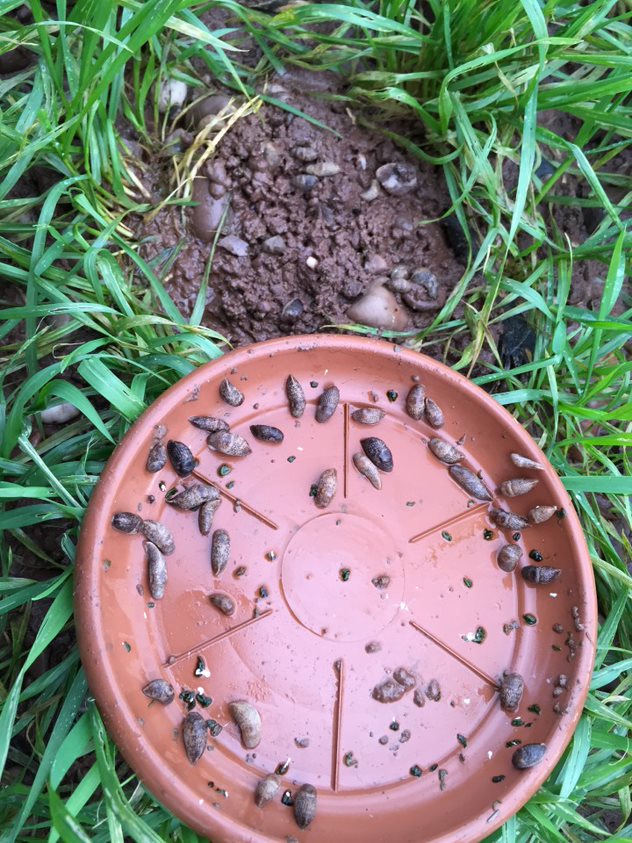
The first stage of the project will be the recruitment of 30 ‘Slug Sleuths’ – a group of farmers determined to overcome their slug burdens – who will be selected and paid to host trials on their own farm. These farmers will test the developing technology and novel patch location forecasting to help researchers learn more about slug behaviour in a bid to create a long-term solution.

Next, the robots will move in, bringing infield cutting-edge slug identification and spot-treatment technology, building on the SlugBot project which was carried out by Small Robot Company and Crop Health & Protection (CHAP), funded by Innovate UK. The Slug Sleuths will work side-by-side with the autonomous bots to improve the AI models and advance pellet-free biological solutions.

While this technology will be tested infield by farmers, it will be supported and refined in laboratories, guided by leading scientists, and will include slug patch location forecasting and autonomous solutions for precision control.

How to get involved

Keen to expand the knowledge exchange beyond the core group of farmers, the project is also launching the Slug Circle – a platform and knowledge exchange hub designed to facilitate discussion, idea sharing and tips for best practice when it comes to slug burdens and controlling them.

The project team are urging farmers interested in being involved – or those who simply interested in alternative, precision techniques for control – to sign up now.

The project was officially launched to the industry on Wednesday 28 June at 1:00pm on the Small Robot Company stand (DF E27) at this year’s Groundswell event, with a follow up webinar to explain more about it and what’s on offer for farmers who wish to take part on 15 August at 8:30am. To register your interest in the Slug Circle Community, with no obligation click here.

More information about the project, including links to project partners and research initiatives that underpin the project can be found at slimers.co.uk

Rothamsted Research Blog: Seven Things We’ve Learnt From The World’s Oldest Experiment

Member News
The views expressed in this Member News article are the author's own and do not necessarily represent those of Agri-TechE.

The Broadbalk Winter Wheat experiment was established in 1843 to better understand the impact of adding varying amounts of manure or man-made fertiliser on both wheat yields and the soil it was grown from. Still running today, the experiment has seen various additions and modifications to help maintain its relevance as farming and environmental awareness have evolved over the last 180 years. 

With new insights and rapid advancements in technology, and alongside an ever-growing store of soil, grain and straw samples, the world-famous experiment continues to inform the way we farm. 

In the wake of our recent Long Term Experiments conference, we asked a few of our experts to suggest seven key things Broadbalk has taught us:

How to feed the world

First up, Broadbalk has achieved its initial aim of showing us how good yields of wheat can be achieved from the same field for 180 years with either inorganic fertilizers or manure. At the time the experiment was set up, typical wheat yields were about 1 tonne per hectare. Today, we’ve reached yields that can exceed 12 tonnes through careful management ensuring that soil acidity, weeds and diseases do not compromise the experiment – whilst the introduction of short-straw cultivars in the late 1960s led to game changing increases in grain yield.

Much of the knowledge of how to successfully grow wheat, knowledge which we now take for granted, originally came from what Broadbalk taught us. But it’s important to remember the part wheat has played in the history of mankind, as increasing wheat yields played a large part in fuelling the rapid growth of European cities in the late 1800s, and the 1960s green revolution that transformed the developing world.

Soil carbon and climate change

Initially developed for the soil data from Broadbalk, the RothC model is now used the world over to simulate the dynamics of carbon in soils – including grasslands, woodlands, and even volcanic soils. Taking into account soil type, climate and plant cover, it successfully mimics the fate of carbon in soils over decades from small experimental plots right up to the global scale.

Our current understanding of how soils will affect, and be affected by climate change, is in large part, thanks to the RothC model, which wouldn’t have been possible without decades of soil samples collected from Broadbalk.

When not to use fertiliser

Data from Broadbalk was instrumental in stopping the routine application of nitrogen fertilizer in autumn by cereal farmers in the UK, as it was clearly demonstrated how inefficient (and harmful) this was, with most being lost to the air or soil. Separate analyses of the drainage water from Broadbalk also led to important developments in our understanding of soil phosphorus leaching, which results in excess fertiliser encouraging harmful algal blooms in freshwaters.

Broadbalk not only shows us the value of adding fertilisers but also the point at which we need to stop – where diminishing yield returns are not worth the financial cost or the environmental impacts. 

The impact of acid rain on soils

Excess nitrogen is considered one of the major drivers of global biodiversity loss. Many human activities release nitrogen and sulphur into the atmosphere, resulting in various types of pollution, including acid rain. Data from Broadbalk showed just how bad things had got in the 1980s, with over 40 kg of nitrogen deposited per hectare. Thankfully, with various measures implemented to reduce nitrogen pollution since, today that number is closer to what it was in the 1880s. Interestingly, a similar decline in sulphur pollution over recent decades has actually led to a deficiency in many agricultural soils.

The growing threat of weeds

On plots where herbicides have never been used, yield losses to weeds have been consistently increasing since the 1960s. Less than a third of the harvest was lost to weeds during the 1970s, but between 2005-2014, this had risen to more than half. This is due to weeds doing better than crops in a warming climate, coupled with a shift towards shorter crop varieties that get shaded out by the taller weeds. Many weed species have also benefited over this period from increased use of nitrogen fertilisers whilst many have developed resistance to herbicides.

Conversely, these same areas of Broadbalk which has never received any herbicides, provide a refuge for seven plant species that are rare, uncommon or declining nationally, including corn cleavers – one of the UK’s rarest plants. These two results further demonstrate the fine balancing act we face in feeding a growing population without harming the planet.

The first ever study into ‘rewilding’

Rewilding is very much in vogue at the moment, but rather than be a modern idea, its roots can actually be traced back 140 years. One end of Broadbalk field was fenced off in 1882 and allowed to naturally revert to woodland, becoming the ‘Broadbalk Wilderness’. A publication on this (by two of our first women scientists, Winifred Brenchley and Helen Adam, in 1915) recorded the succession of plants that recolonised the former cultivated land as it transitioned to woodland. The Wilderness has also subsequently demonstrated the capture of carbon in soil and biomass through rewilding, with as much organic carbon sequestered in the soil under trees as on the plots receiving 35 tonnes per hectare of manure annually. That’s not to mention the carbon captured in the trees themselves.

How to design experiments

Away from the field, many of the concepts of experimental design and the statistical tests used to analyse their results were developed at Rothamsted specifically to cope with the reams and reams of data coming from Broadbalk and the other long-term experiments.  From archaeology to zoology, the statistical methods developed for Broadbalk in the 1920s have transformed research in the experimental and social sciences, and ultimately, shaped our world.

Revolutionising Agriculture: How Farmscan Ag’s ISOBUS Solution is Helping Farmers Increase Yields and Profitability

Member News
The views expressed in this Member News article are the author's own and do not necessarily represent those of Agri-TechE.

As we approach the one-year mark since the launch of Farmscan Ag’s ISOBUS solution, it is an excellent opportunity to reflect on the technology’s impact and identify potential areas for growth. Over the past year, ISOBUS technology has continued to revolutionise agriculture by providing farmers with greater efficiency, accuracy, and profitability in their operations. Farmscan Ag’s ISOBUS solution is an excellent example of how this technology is transforming the industry, and here are some of the ways in which it is making a difference:

1. Improved efficiency and accuracy

Farmscan Ag’s ISOBUS solution enables different machines to work together seamlessly, resulting in better efficiency and accuracy. Farmers can use a single display in their cab to control both the tractor and planter, resulting in uniform seed placement, improved germination, and crop growth.

2. Reduced costs

The use of our ISOBUS solution has led to significant cost reductions for farmers over the past 12 months. The system can control seed and fertiliser application rates precisely, leading to substantial savings on inputs. Additionally, the system can detect when a machine is not working correctly, reducing downtime and repair costs.

3. Increased flexibility

Another key benefit of our ISOBUS solution is the flexibility it provides farmers. The system is compatible with a range of agricultural machinery and devices, allowing farmers to use different brands of equipment on their farms. This flexibility means that farmers can choose the best equipment for their specific needs, rather than being tied to a single manufacturer’s offerings.

4. Better data management

The importance of data management in agriculture has become increasingly apparent over the past 12 months. Our ISOBUS solution has played a vital role in this regard by enabling farmers to collect data and reliably record it. This often results in data from different machines and devices, displaying it on a single screen. This has made it easier for farmers to monitor their crops and make decisions based on real-time information.Looking to the future, ISOBUS technology offers several benefits for the future of agriculture. Increased connectivity for all functions, such as Seeding, Spraying and Spreading, will enable farmers to collect and analyse more data, leading to more efficient and productive farming practices. Automation will reduce manual labour and increase efficiency, while integration with precision agriculture will optimise planting, fertilising, harvesting, spraying and spreading operations. As ISOBUS is an international standard, we can expect to see greater standardisation across different manufacturers, making it easier for farmers to use ISOBUS technology across different machines and devices.Overall, the past 12 months have highlighted the importance of Farmscan Ag’s ISOBUS solution in modern agriculture. The system’s ability to reduce costs, provide flexibility, and improve data management has been particularly useful in a year marked by supply chain disruptions and increased volatility. As the demand for new innovative technology continues to grow, our ISOBUS solution will remain a vital tool for farmers looking to improve their operations and succeed in an ever-changing agricultural landscape.Farmscan Ag continues to optimise and improve ISOBUS functionality for all aspects of the farming operation. It is important to stay up to date with the latest releases so that the systems perform at a continuously high level. Remember to check our Website for the latest software releases.Want to learn more?We’re here to help you achieve real-time efficiencies in the field. Get in touch with our friendly and knowledgeable team to find out more.

The Origins of Growpura

Member News
The views expressed in this Member News article are the author's own and do not necessarily represent those of Agri-TechE.

What is the origin story of GrowPura?

The GrowPura story started around ten years ago in 2013 when the founder, Nick Bateman, turned his attention to vertical farming.

Nick’s journey took him through several technology iterations with a relentless focus to address the key challenges in vertical farming, namely cracking the code of the economic model of controlled environment growing to deliver great tasting food at regular prices, ie with no premium to field or glasshouse grown crops.

The current GrowPura technology solution has a compelling combination of lower relative capex and opex than traditional vertical farms creating increased yield per square metre of building footprint.

What are some of the biggest challenges facing GrowPura in the future? 

Our biggest challenge is to scale up our technology quickly in order to prove our economic model and to restore faith in the sector after the recent problems many of the big growers have run into.

It is an exciting time and we have several really interesting conversations ongoing at the moment and the team feels it is on the verge of doing something rather special very soon.

What is unique about GrowPura compared to competitors? 

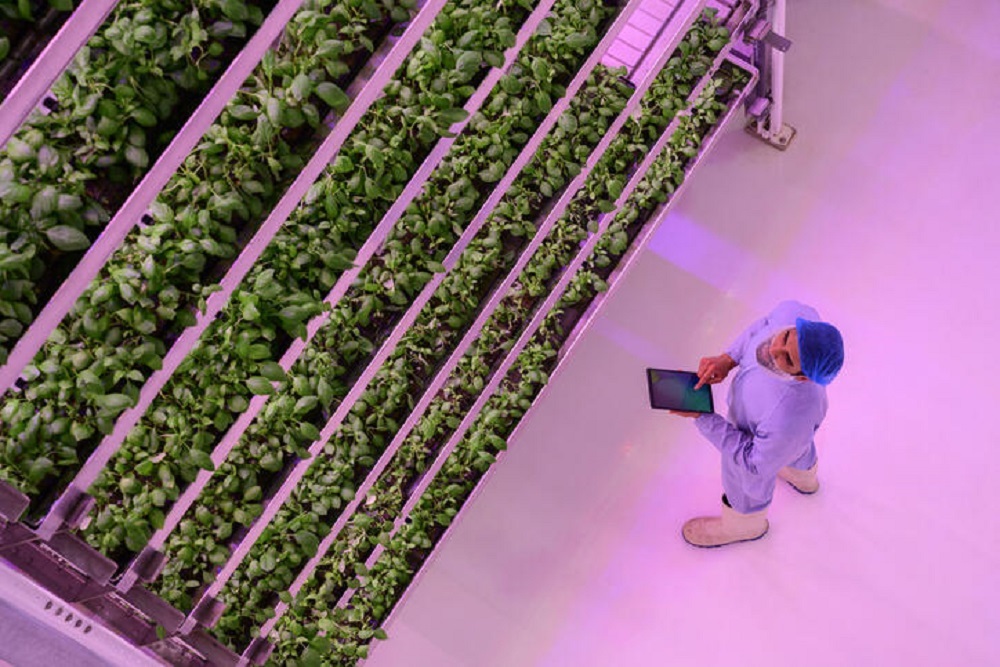
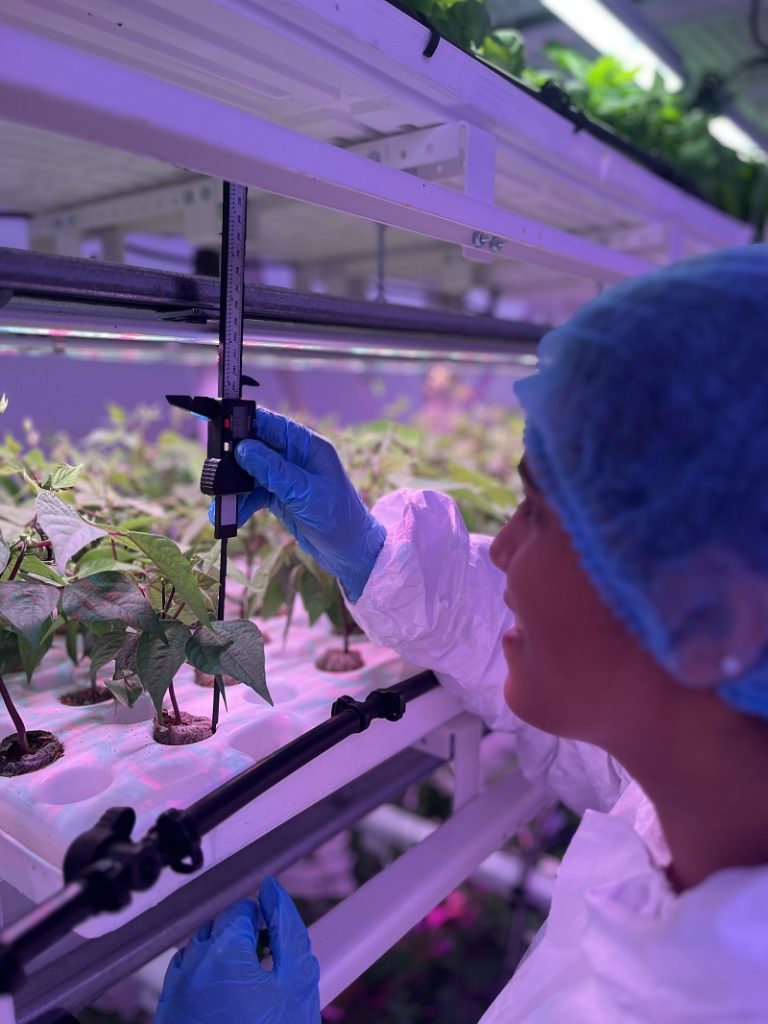
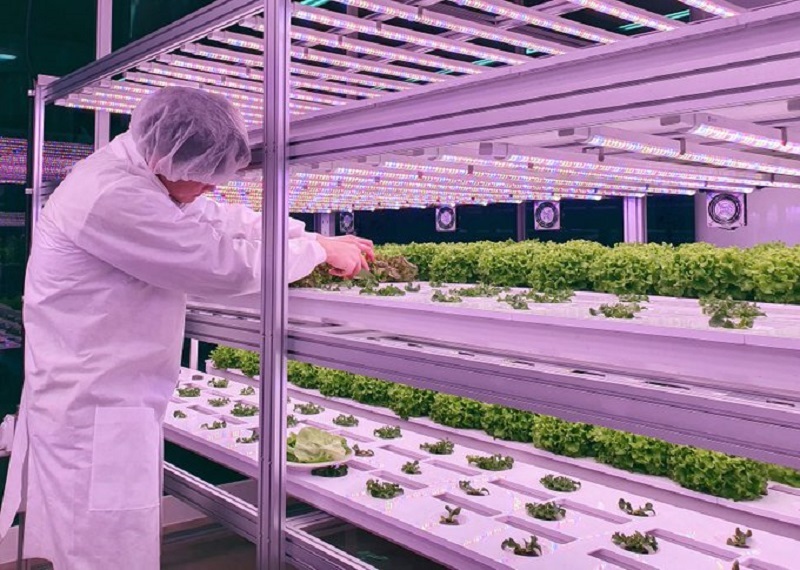
The GrowPura technology creates an environment that is very close to natural conditions for the plants. It does this by moving the plants continually, creating positive horticultural benefits by making the crops stronger and more consistent, and economic benefits due to the crop density that we can achieve via the technology. There are a whole host of advantages to using the GrowPura vertical farming system compared to traditional VF methods. These include using 50% less LED lighting, 50-75% less space requirements, resulting in 100-300% more output.

We are confident that our system delivers unrivalled financial and environmental advantages compared with other growing technology.

How do you measure the impact of GrowPura so far? (Revenue, Employees, Customer Quantity, Production Volume) etc? 

We are a small company with big ambitions. Our R&D centre in Bedfordshire is open for business and is growing crops right now. Everyone who visits feels the energy and intellectual capital that we have in our team, ranging from plant scientists, AI experts and electro-mechanical engineers. Combined with the commercial focus that we have, this is a winning combination. 

What has Jeremy learned that he wishes he knew when he started the company? 

I’m learning all the time.

I love spending time with our engineers and our plant scientists.

Most important is probably the sweet spot that we have created between horticulture, engineering and financial benefits for our clients.

How can people connect with you or learn more about GrowPura?

You can write directly to me at Jeremy.mcnamara@growpura.com, or contact our PR agency at growpura@ceres-pr.co.uk

Nick Bateman
Nick Bateman
Founder GrowPura

Our biggest challenge is to scale up our technology quickly in order to prove our economic model and to restore faith in the sector after the recent problems many of the big growers have run into.

It is an exciting time and we have several really interesting conversations ongoing at the moment and the team feels it is on the verge of doing something rather special very soon.

Barenbrug at Groundswell 2023

Member News
The views expressed in this Member News article are the author's own and do not necessarily represent those of Agri-TechE.

What can your grassland do for you?

Becoming a better grassland farmer will naturally bring regenerative agricultural principles to your farm, says Barenbrug, returning to Groundswell in 2023 with another set of grass and herbal ley displays.

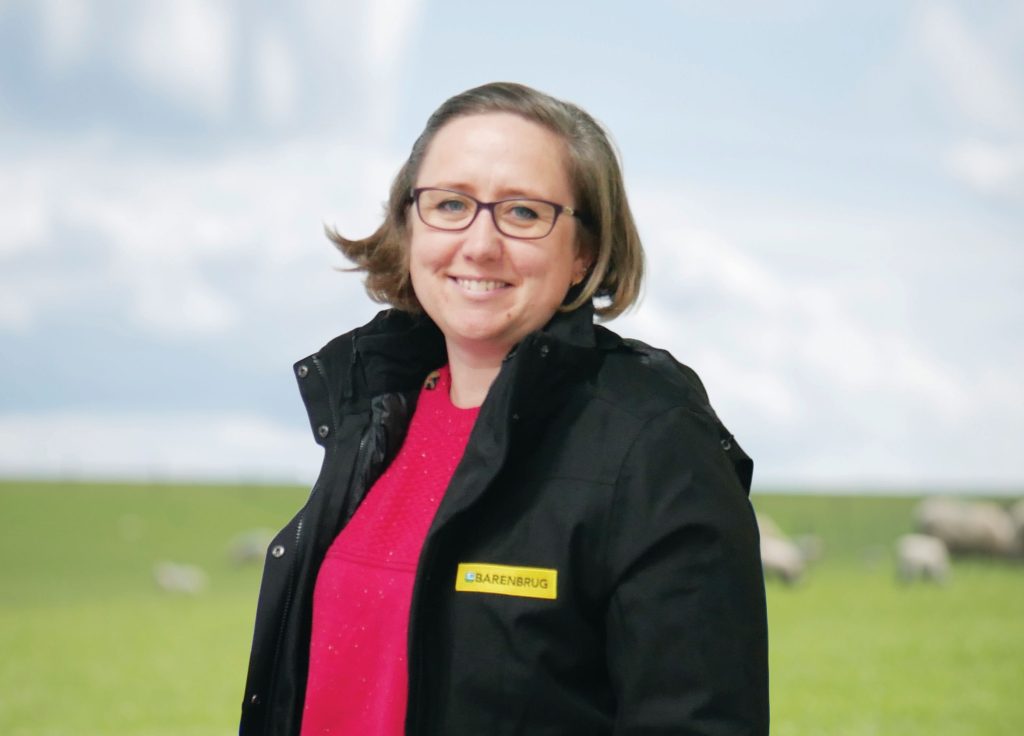
With grass at the centre of the regenerative agricultural system, the company’s agricultural product manager Janet Montgomery says pastoral farmers should be asking themselves what their grassland can do for them.

“Without major change to management practices, it’s easy to use grassland to accomplish a few more of your regen ag goals,” she says.

“UK farmers already have a more holistic approach to farm management: well-practised rotations, varied and diverse cropping, integrated crop and pest management, livestock and crop integration. We’re much closer to being able to implement regenerative principles without needing to tear-up the playbook and start over.

“There’s still a lot of things we can do to progress and go further down that path, but you may already be ‘more regenerative’ than you think!”

Janet says grass should be at the heart of any regen system. “Ensuring grazing livestock have a role on your farm is one of the system’s crucial five principles. So if you’re an arable farmer, you should be thinking about putting down some grass and borrowing some of your neighbour’s stock.

“If you can’t borrow stock, then even growing a multispecies ley to cut for silage will still deliver some of the benefits: feeding the soil and helping to increase biodiversity, while allowing the land a rest from its crop-growing duties for a year or more.”

For pastoral farmers, Janet recommends three simple steps to adopt to make the farm ‘more regenerative’. “First, think about the biodiversity of your swards. Adopting regenerative principles doesn’t mean you have to ditch the perennial rye-grass altogether; far from it.

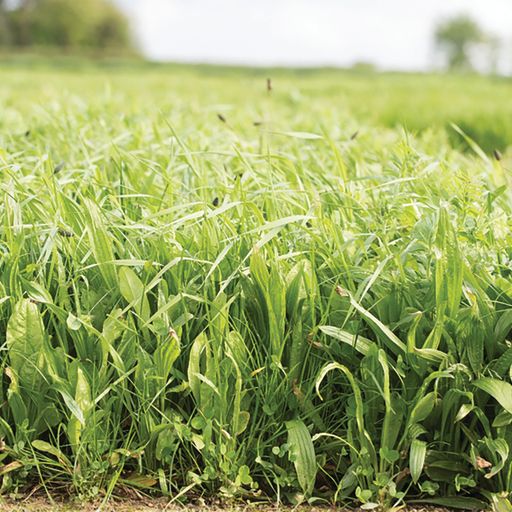
“Our best multi-species swards and herbal leys rely on PRG as their backbone species, but adding herbs and additional grass species can significantly improve soil health, pasture resilience and animal health.

“Then you should be assessing your grass fields, using our grassland index. This will help you plan your rotation to ensure that swards don’t go beyond their prime and can either be reseeded, or brought back into cropping.

“With those two steps complete, the third and final step is to implement a robust grass management plan that will ensure all the grass across your farm is performing at its optimum level.

“Incorporating regenerative principles really can be as easy as 1, 2, 3,” Janet enthuses. “The team and I will be available on the stand throughout the show, to help answer queries about multi-species swards and herbal leys, and encourage wider adoption of these easy, simple but oh-so-valuable practices.”

Barenbrug, Groundswell’s official Grass and Herbal Ley Sponsor, has grass and herbal ley plots in the Demo Field and further displays on stand.

Agtelligence announces win at StartUp Award on LinkedIn

Member News
The views expressed in this Member News article are the author's own and do not necessarily represent those of Agri-TechE.

I am very happy to announce that Agtelligence has been recognised with the prestigious StartUp Awards for Southeast England ! This award is a testament to the hard work, creativity, and innovative spirit that every single member of our team brings to the table each day.

This award isn’t just for us – it’s for every advisor, every academic institute that supports us, and every individual who has believed in our vision to bring the power of Earth Observation and Artificial Intelligence into environmental monitoring in agricultural lands. This is your award as much as it is ours .

And what better way to celebrate this achievement than with a fantastic team-building day in sunny and beautiful London? We took the day off to invest in ourselves and strengthen our bonds as a team. We had fun, laughed, and, most importantly, celebrated this incredible milestone together.

We’re just getting started, and we’re excited about what the future holds. Here’s to many more years of innovation and success!
www.agtelligence.space

Special #thanks to:

ESA Business Incubation Centre United Kingdom
UK Space Agency
Harwell Science and Innovation Campus Mark Burrows
Space4Climate
University of Leicester Rothamsted Research University of Lincoln James Cutler Louise Manning Bita Najafi (MSc, BSc) Innovate UK EDGE East of England Barclays Eagle Labs Keyvan Vakili Mark Burrows Sonia Pietosi Wendy Hewitson Victoria Jeffery Dan Metcalfe Alex Wheldon

Scientists are discovering how land management impacts the environment

Member News
The views expressed in this Member News article are the author's own and do not necessarily represent those of Agri-TechE.

Experts who are revolutionising agricultural practices have joined forces with Leicester scientists to develop a monitoring tool that tracks the environmental outcome of land management. 

Agtelligence takes complex earth observation data and simplifies it to enable businesses to take action to help the environment.

It is now working with scientists from the University of Leicester and Space Park Leicester on an innovative project that examines how land management impacts soil health, biodiversity, water and carbon.

The initiative has received funding from the UK Space Agency and uses data from the Sentinel-1 Synthetic Aperture Radar (SAR) satellite which provides high-quality data on the Earth’s surface.

Agtelligence chief executive officer Nima Eskandari explained one of the advantages of Sentinel-1 is its ability to acquire radar data in all weather conditions and at any time of day, making it a valuable tool for monitoring environmental changes in the UK where cloud cover or darkness limits observation.

Nima Eskandari

He added: “Our research is pushing the boundaries of what can be observed and inferred from satellites and developing metrics that help us understand how land management impacts soil health, biodiversity, water and carbon. 

“We will use and distribute our results fairly and equally, connecting everyone to landscapes around them through our web-based platform FarmScore ®.

“Once we’re able to quantify the environmental outcomes, we can begin using this information to introduce the right interventions at the right time to support the environment. 

“Environmental projects can help improve communities’ health and well-being by reducing pollution levels, providing access to clean water, and promoting sustainable practices.

“They can also create new job opportunities in sustainable industries, which can help to reduce poverty and inequality.”

Professor Heiko Balzter, Professor of Physical Geography and Director of the Centre for Landscape and Climate at the University of Leicester, added: “The University of Leicester is working with Agtelligence on the development of radar imaging for agricultural tillage.

“Tillage practices are important for soil health, soil carbon stocks, the water balance and crop yield.”

The scientists are now in the process of finalising a prototype that can evaluate arable farms in Hertfordshire. Their goal is to complete it in the coming months and eventually expand it across the UK.

Agtelligence is also planning to recruit a Full Stack Software Developer and a Chief Technology Officer and is currently searching for investors who share its passion for the environment and recognise the impact of climate change on it.

The organisation has also recently graduated from the European Space Agency – Business Incubation Centre (ESA-BIC) programme at Harwell and is collaborating with Space4Climate.

ESA-BIC (UK) at Leicester is a route for SMEs to develop technologies for the Space industry. Successful applicants receive a programme of technical support from the University of Leicester’s leading Space and Earth Observation scientists as well as business support. The deadline for the next ESA-BIC is September 18. Further details are available at https://www.space-park.co.uk/innovation/esa-bic/ 

Grant Instruments unveils high impact manufacturing facility in Royston

Member News
The views expressed in this Member News article are the author's own and do not necessarily represent those of Agri-TechE.

One of Cambridge’s oldest and most globally successful businesses – Grant Instruments – has opened a new headquarters and ramped its capabilities in the process.

The company, which since 1951 has fashioned scientific equipment for household name clients around the world, has moved from Shepreth to nearby Royston into a new, high impact manufacturing facility. 

The move enables Grant to push forward with its next stage of growth, driving high-end innovative solutions that serve scientists globally. 

The site is also a much more environmentally sustainable building and will lead to a lower carbon footprint which Grant says is a key focus for the business.

CEO Mark Davison said: “The new site offers us so much opportunity to grow and support our customers’ future growth and ambitions. It will enable us to innovate and manufacture at a much faster rate and in a more sustainable way, which aligns very much to our ethos and that of the scientific community we serve.”

Grant Instruments is a longstanding part of the Cambridge technology ecosystem, contributing over 70 years of innovation. That tradition is carried into the future by the drive and motivation of the team. 

The company is a sustainability first organisation, from its product design and development through to driving fundamental workplace changes including a 4-day working week. The new facility is called ‘Evolution House’ reflecting the changes that are expected to continue.

Davison adds: “Over the past year we have made huge changes at Grant Instruments. The new site is the most visible of these but the move to four-day working has been arguably as revolutionary. 

“The positive impact of these on staff morale and workplace practice has exceeded our expectations. The changes don’t stop here and we will continue our evolution and growth.”

Additional to the fresh facility, the company is also launching a new state-of-the-art cryopreservation system known as CRFT. The technology is produced at the new site and offers a more sustainable and safer approach to the freezing and thawing of highly sensitive biological samples for scientific research. 

Applications include IVF (human and veterinary), stem cell banking, vaccine research and drug discovery. Grant says the system brings accuracy, precision and reproducibility to biological cryopreservation and, importantly, improves the viability of cells when thawed for use.

Davison continued: “Our new CRFT system is an exciting product for us to launch. The new version was driven by feedback from our customers. They wanted a system that allows precision, accuracy and flexibility in cryopreservation. We are incredibly happy to be able to launch this multi-format device to the scientific community and look forward to hearing about the excellent research outcomes this enables in the future.”

Since Grant began its journey it has become renowned worldwide for its solutions. The company has built a global presence across 70 different countries, selling more than 10,000 scientific equipment products annually plus 80,000 data acquisition products worldwide. 

The company now has more than 60 employees across the US, India and in the UK.

Grant Instruments was born through one man’s vision and passion for invention. Peter Ward, a Cambridge University economics graduate and Olympic three-mile runner, had a hobby of repairing mechanical singing birds.

From this, some might say, unlikely link, Ward went on to create his first commercial invention – a water bath. Operating from a folly in the Old Vicarage grounds, together with Cecil Chapman who joined Grant in 1954, they built the foundations of Grant Instruments to instil strong values that remain deep-rooted in the company today.

As a pioneer of temperature control, Grant has been developing innovative scientific apparatus solutions and data acquisition tools for decades to the scientific, healthcare and industrial markets the length and breadth of the planet.

Niab: New research set to increase carbon capture through cropping

Member News
The views expressed in this Member News article are the author's own and do not necessarily represent those of Agri-TechE.

A new research project aims to help UK farmers and growers target Net Zero and build farming resilience through diversifying their arable and forage cropping.

It will also enable new revenue sources through a carbon marketplace and support enhanced value chains for industries such as textiles and construction.

The Centre for High Carbon Capture Cropping (CHCx3) is a four-year, £5.9 million project, supported by a consortium of 22 industry and research partners and led by crop science organisation Niab. The project, which runs from spring 2023 to 2027, has been awarded funding by Defra under the Farming Futures R&D Fund: Climate Smart Farming. This forms part of Defra’s Farming Innovation Programme, delivered in partnership with Innovate UK.

https://www.youtube.com/watch?v=moCneprR5Nw

The research will focus on four cropping options: rotational cover crops; annual fibre crops (industrial hemp and flax); perennial food, forage and feed crops (including cereals and herbal leys); and perennial biomass crops (miscanthus, willow and poplar). In addition to evaluating their potential to enhance atmospheric carbon capture and sequestration, in the soil and crop-based products, CHCx3 will examine the effects of cultivation system and agronomy on economic returns and other environmental outcomes. Further work will optimise the production and use of renewable biomaterials for fibre, textiles, and construction and develop carbon insetting/offsetting platforms.

The Centre’s ‘Knowledge Hub’ will provide resources to support the effective uptake and utilisation of crops with high carbon-capture potential, with practical outputs such as crop guides, web tools and apps available to landowners, farmers and agronomists. The project will offer a wealth of opportunities for its many stakeholders to engage with and participate in the ongoing research, including crop trials, field demonstrations, webinars, workshops and training.

Project Lead and Head of Niab Innovation Farm Dr Lydia Smith explains that crop choice, management and utilisation all offer opportunities. “Farmers and associated industries can address climate change goals through input-efficient crops that are able to increase carbon capture, but they must have confidence in achieving profitable and sustainable outcomes,” says Dr Smith.

Project Knowledge Exchange Lead and Niab Director of Agronomy Stuart Knight highlights that the Centre will build on Niab’s extensive programme of crop diversity and improvement, farming systems and soils research. “The project will kick-start vital new collaborations between researchers, seed suppliers, growers and industries seeking to realise the full potential of crop-based products, establish new revenue opportunities within the carbon market, and give a major boost to our shared aim of achieving Net Zero,” concludes Mr Knight.

Partners include:

The Centre for High Carbon Capture Cropping partners are: Niab, Biorenewables Development Centre, British Hemp Alliance, Cambond, Carbon Farm Hubs, Cotswold Seeds, Crops for Energy, Dark Green Carbon, Elsoms Seeds, Energy Crops Consultancy, English Fine Cottons, FarmED, FC Palmer & Sons, National Farmers Union of England & Wales (NFU), Natural Building Systems, Northern Ireland Hemp Association, Rothamsted Research, Scottish Hemp Association, Terravesta, UK Hempcrete, University of York, Unyte Hemp.

Last call for the British Farming Awards

Member News
The views expressed in this Member News article are the author's own and do not necessarily represent those of Agri-TechE.

Are you a farmer of the future or an agri-tech innovator? ‍ ⚙️

If so, you could be in the running for a coveted win at the British Farming Awards 2023

The awards recognise British Farmers and Agricultural businesses for their commitment, resilience and innovation to this challenging and over-changing industry.

Categories include Agri-TechE Innovator of the Year, Digital Innovator of the Year and Sustainable Farmer of the Year. Entries close 23 June 2023.

Agri-TechE members have historically done well to scoop all the Agri-TechE Innovator of the Year prizes – congratulations to Muddy Machines and Ag-drive

On the judging panel are several Agri-TechE members including Christopher Chavasse (Muddy Machines), Rebecca Geraghty from Agrimetrics AHDB – Agriculture and Horticulture Development Board Harper Adams University NFU Mutual

Farmer Charlie wins Energy Catalyst 9 grant from Innovate UK Research and Innovation (UKRI)

Member News
The views expressed in this Member News article are the author's own and do not necessarily represent those of Agri-TechE.

London, 31 May 2023. London-based Farmer Charlie Ltd and Côte d’Ivoire Direct Impact Partners (brand name: Cool Lion Energies) have won an Innovate UK Research and Innovation (UKRI) competition. The grant will support the partners with the development of their Cool Mangoes project, following the Energy Catalyst Round 9 competitive call that took place last year. Cool Mangoes launched on the 1st of March 2023.

Cool Mangoes is aimed at bringing refrigerated containers to small farming cooperatives in Côte d’Ivoire. Cool Lion Energies will provide container units that will be equipped with Farmer Charlie’s sensors to monitor cooling temperature and humidity for ideal storage conditions. Both partners rely on the support and collaboration of the local Wopinin-Wognon cooperative, based in the Tchologo region of the country. The cooperative includes more than two hundred farmers, and its involvement brings in-depth knowledge of the growers’ challenges in the area.

The eleven-month demonstrator project will inform the next iterations and improvements required in scaling the innovative cooling-as-a-service solution. The installation will also serve as a visitor centre for other cooperative leaders, with the aim of securing additional deployment and scale the partners’ presence in the country and beyond.

The project is unique in the provision of refrigerated solutions to smallholder farmers and the integration of sensors and digital equipment to improve their experience. It is expected to demonstrate the efficiency and cost-effectiveness of the solution and will be advertised to attract interest from other cooperatives in Côte d’Ivoire and neighbouring countries.

IUK public funding has been crucial to the implementation of the partners’ integrated solution, which will otherwise take much longer to realise in terms of resources that both SMEs would struggle to obtain. Funding will also help absorb potential risks linked to the trial nature of the project, both in terms of planning and of technology adoption.

Albotherm secures £1.6M to develop low carbon cooling for buildings and greenhouses

Member News
The views expressed in this Member News article are the author's own and do not necessarily represent those of Agri-TechE.

Albotherm Ltd, a ClimateTech spinout specialising in the development of low carbon cooling coatings, announce today the close of their £1.6M seed investment round. The investment was led by Green Angel Syndicate and supported by Oxford Innovation Finance through its angel platform OION, Bristol Private Equity Club (BPEC), Cambridge Angels, Cambridge Agritech, and Science Angels Syndicate (SAS), along with a £500k Innovate UK grant. The investment will enable Albotherm to further develop its smart coating technology within the commercial building and greenhouse sectors. 

As global temperatures rise and many parts of the world are seeing their hottest summers yet, there is an ever-increasing need to find sustainable, low carbon cooling solutions to regulate temperatures in indoor settings. This is particularly an issue in commercial buildings where there is high demand, as well as greenhouses where 25% of crop yields can be destroyed by excess heat and light, threatening the farming industry and global food security. Energy intensive air conditioning systems currently in place are a key contributor to global warming, accounting for 10% of global electricity usage, thus worsening the problem and creating further need for a sustainable solution.  

Albotherm has developed a reversible coating for glass surfaces, using polymer chemistry that can switch between opaque and transparent, providing shade in high temperatures and allowing sunlight through at lower temperatures. Albotherm’s proprietary technology has significant implications as a net zero approach for temperature regulation, replacing energy intensive cooling systems, where their initial focus on commercial greenhouses has shown a 34% increase in crop yield compared to other approaches. The company’s work in commercial greenhouses will not only increase food productivity but also pave the way for broader applications in the building sector, where energy-efficient cooling solutions are in high demand.

The £1.6M seed investment round led by Green Angel Syndicate, represents a significant vote of confidence in Albotherm’s vision and potential to transform the cooling industry. With this substantial investment, Albotherm is poised to shape the CleanTech landscape, moving the greenhouse and built environment industry towards low carbon cooling technologies

The all-female team, led by Molly Allington (CEO) and Dr Sian Fussell (CTO), is based on cutting-edge research from the University of Bristol. The funding will enable Albotherm to develop its technology further, scale up their manufacturing capabilities, and complete large scale commercial pilots, allowing them to bring their first products to the greenhouse market within the next two years.

Molly Allington, CEO of Albotherm Ltd: “We are delighted to have received investment to propel our technology development into large scale commercial pilots. Gaining support from such prominent investors such as GAS, will help us realise our vision to contribute to a more sustainable and resilient food system.”

Dr Sian Fussell (CTO of Albotherm): “As Albotherm continues to push the boundaries of low carbon cooling, we are thrilled to announce our recent investment. As an all-female founding team in the sustainable technology sector, we are inspired by the growing recognition and support for diverse voices and perspectives and we are thrilled to have found investors that are leading the way for this cause.”

For more information, or for partnership opportunities, please contact:

Molly Allington, CEO and Co-founder of Albotherm, mollyallington@albotherm.com

For more information check out our website and LinkedIn for regular updates.