Inspirational thinkers share their views of different aspects of agri-tech.
Agri-TechE Newsletter
Get the latest agri-tech news, events and opportunities direct to your inbox
Lighting increases tomato yield by 12% – Light Science Technologies and CHAP trial finds
Meet the Network
Agri-TechE
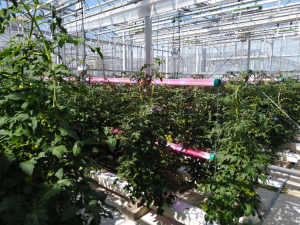
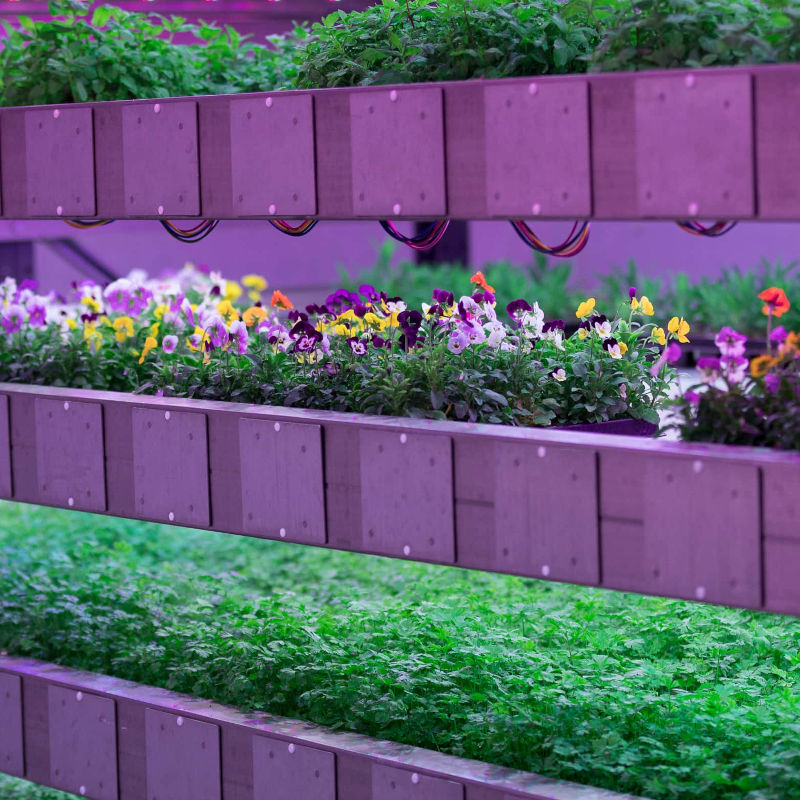
Supplementary light was found to increase tomato crop yield by up to 12.1%, a trial by Light Science Technologies (LST) and CHAP has found.
The 5-month project used three different lighting combinations to see which produced the most yield for the least energy, while finding the optimum balance between energy and yield.
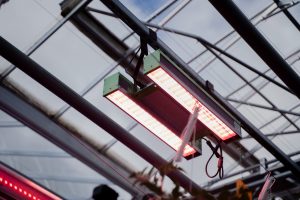
The first used LST’s nurturGROW interlight only, the second used its nurturGROW high power top light and the third used both types of supplementary lighting.
The results showed that supplementary light increases crop yield by up to 12.1% even when used in summer months and that top lighting only is the most energy efficient lighting regime with 38.2% more fruit per kWh. The trial also revealed that interlighting only was the top performing light regime.
During the trial period, 7,880 tomatoes were grown, collectively weighing 615.31kg and with 7449.15kWh total energy used.
Andy Williams, Marketing Director at LST said: “The trial has shown the tangible gains and benefits of using an energy efficient grow light on vine crops, with further energy saved as the luminaire turns off when not needed. nurturGROW also reduces light wastage with its recyclable and reusable design, making it more sustainable.”
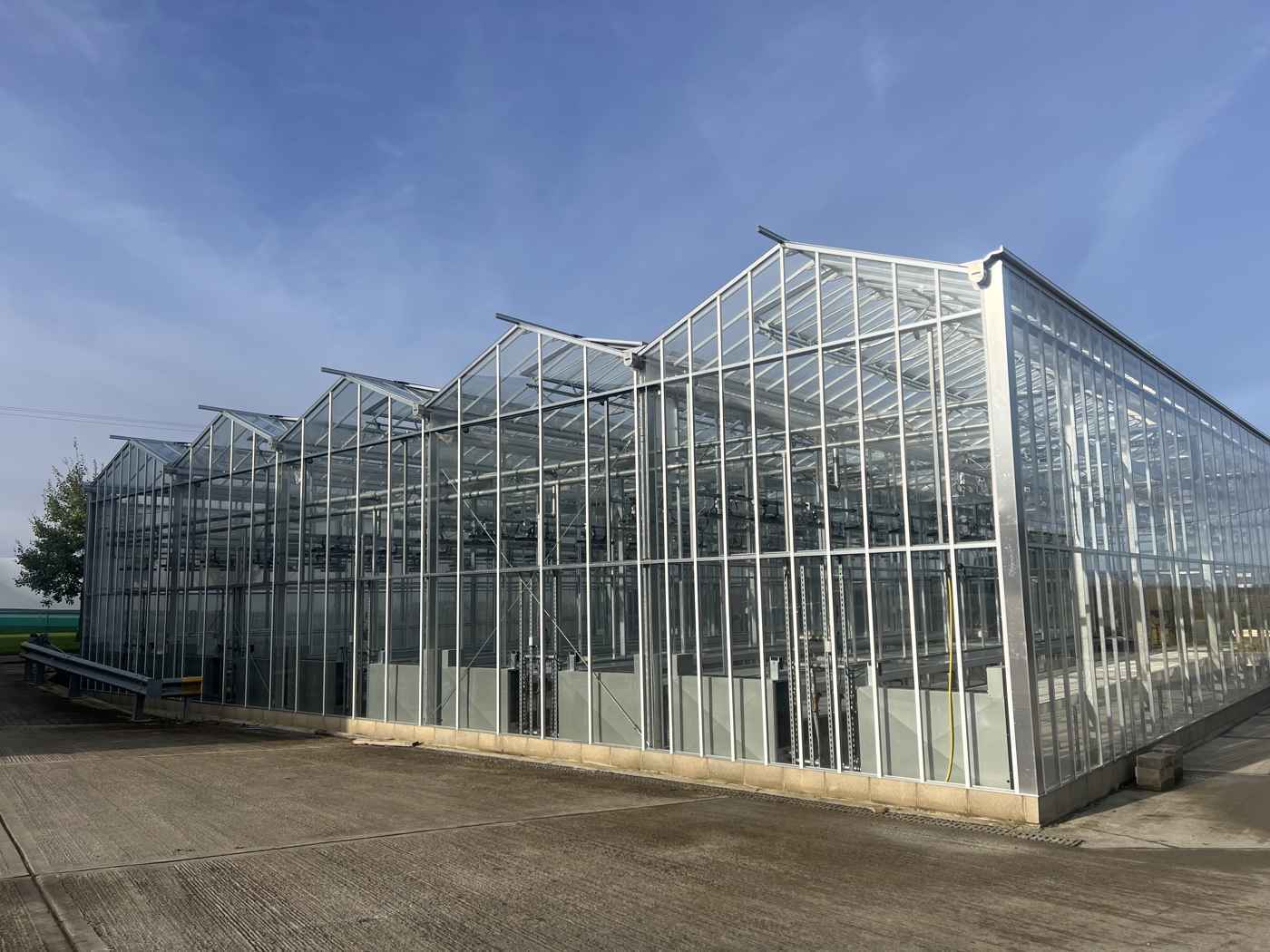
The project was carried out in conjunction with CHAP at the Stockbridge Technology Centre (STC), at their Advanced Glasshouse facility in Selby, North Yorkshire.
Light science increases yield
The facility enables new plant protection products and integrated crop protection programmes to be robustly assessed in field, glasshouse and hydroponic systems. This provides benefits to food producers by offering more reliable trial conditions for their products, especially for biopesticides, with consequent benefits to the crop production sector in the form of increased product availability.
CHAP’s Technical Liaison Officer, Lucy Plowman, said: “Lighting has a huge impact on the success of glasshouse-grown crops, particularly in a grower’s ability to extend the production season for vine crops such as tomatoes. But, recent price hikes in energy costs means it is critical to ensure it is efficient as well as effective.
“The research undertaken by LST will help growers to strike this balance, as well as address environmental concerns associated with both energy waste and produce imports.”
Get the latest agri-tech news, events and opportunities direct to your inbox
Frederick Hiam uses ROBOTTI to provide automated weeding of parsnips
Meet the Network
Agri-TechE
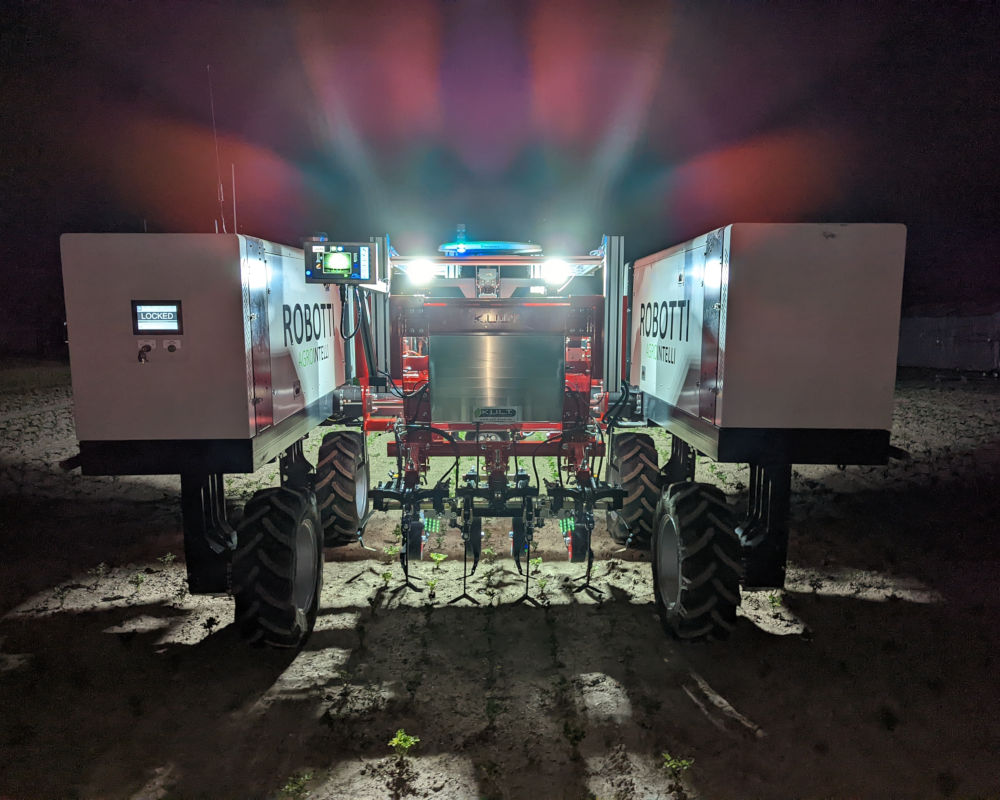
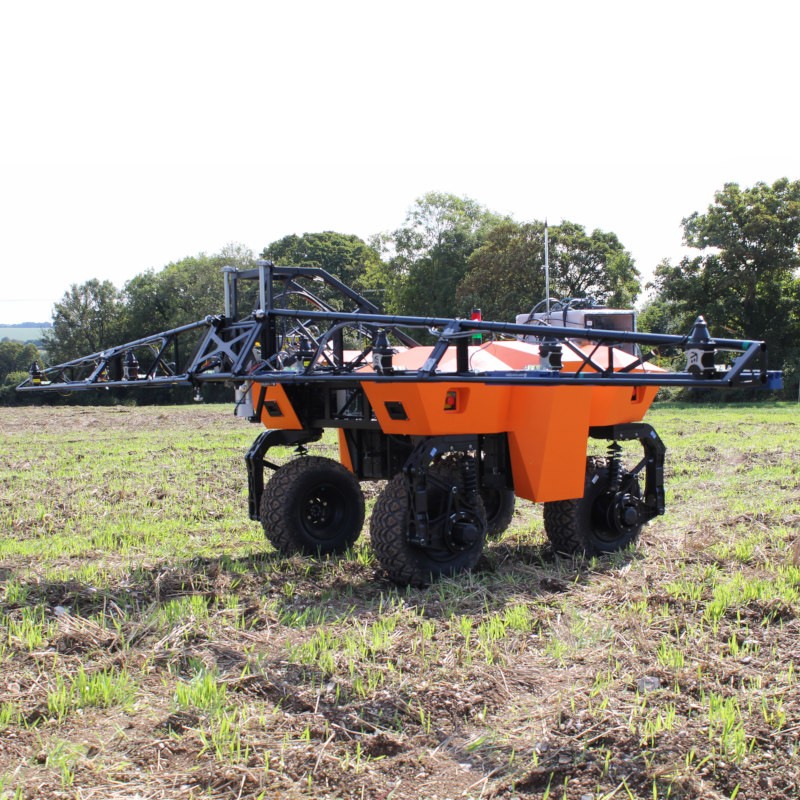
Automation of farming operations offers promise but integrating robotics on-farm when there has already been a significant investment in equipment creates many challenges. ROBOTTI, a type of autonomous tractor is designed to work with conventional approaches and machinery. It is appearing at REAP on 8th November 2022.
Mechanised weeding
Jamie Lockhart
Jamie Lockhart is Managing Director of Frederick Hiam Limited, a diverse farming and fresh produce business with farms in Suffolk and Cambridgeshire growing a wide range of root vegetables, including parsnips, potatoes and onions, on light sandy and rich fen soils.
Jamie explains: “We are looking to increase the accuracy of our mechanised weeding to reduce the use of herbicides and move to a more preventative approach to weed control.”
Farm-centric automation with ROBOTTI
Jamie met Tom Beach through his father at Mudwalls Farm in Warwickshire; Tom had recently co-founded Autonomous Agri Solutions to bring a farm-centric approach to automation.
“I was impressed by Tom’s enthusiasm for all things autonomous and how we could use them in a practical and immediate way. It was at this first meeting that a trial with a ROBOTTI was suggested.”
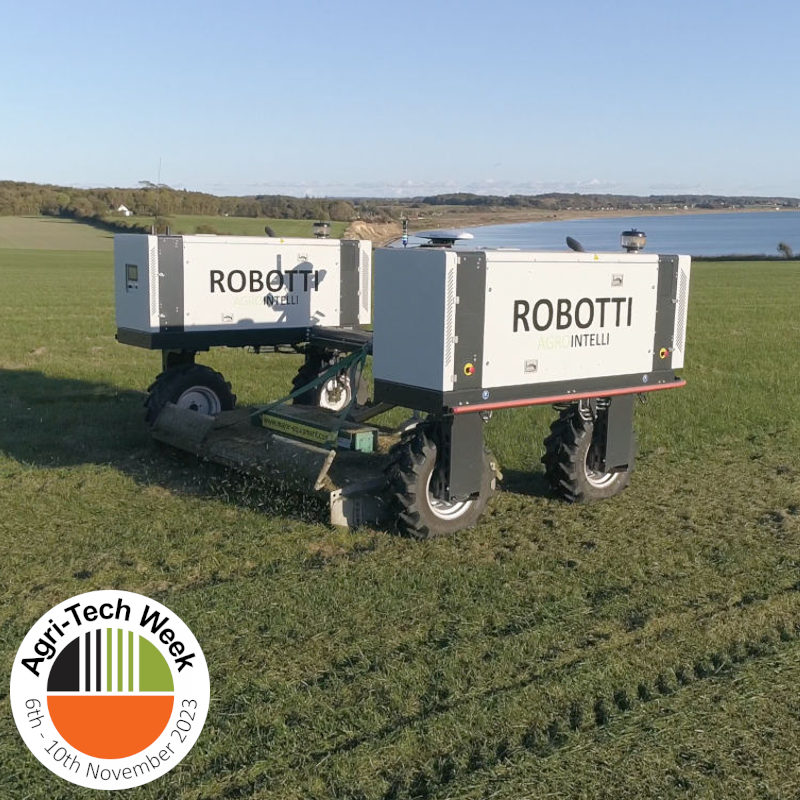
ROBOTTI (credit: AgroIntelli)
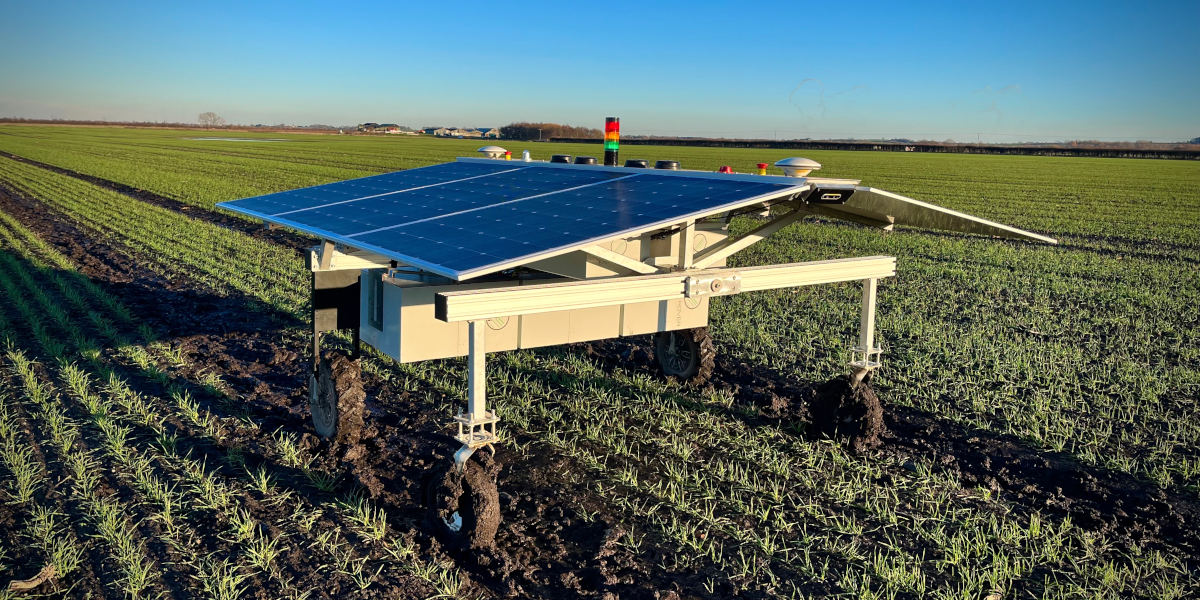
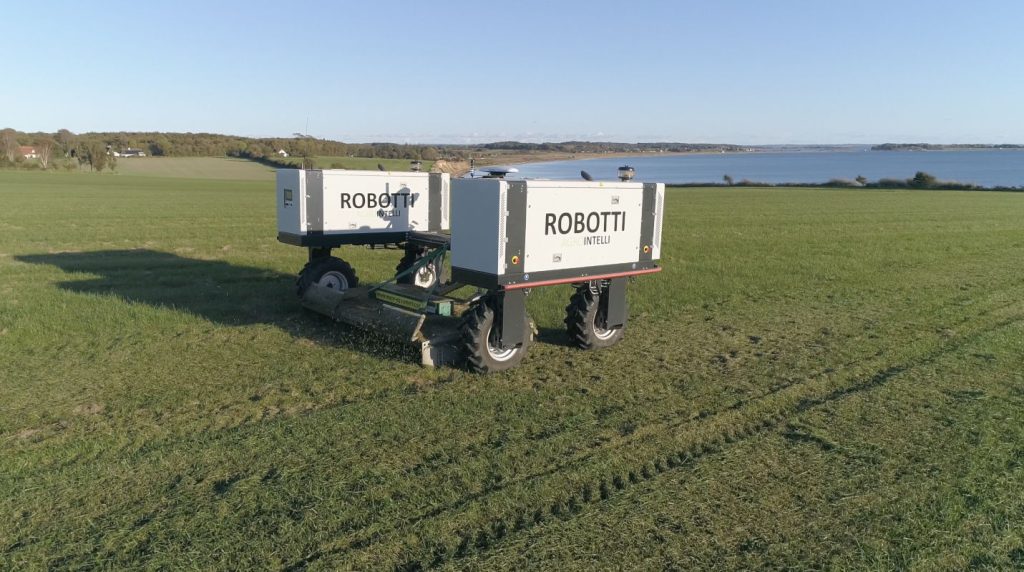
The ROBOTTI is like an autonomous tractor – it can navigate the field fitted with attachments for various operations, such as seeding, weeding, spraying etc. Autonomous Agri Solutions is using an N-Trip RTK system for navigation that offers sub-2cm accuracy. Sowing the crop with this level of precision allows a sequence of automated operations to be conducted with confidence.
Jamie continues: “We offered a 40-ha block as part of the trial. We were keen to learn the true costs of operation and how they compared with our existing conventional system.
“The ROBOTTI has drilled the parsnips on this block and weeded them on several passes. Initially it was about getting confidence in the accuracy and reliability of a fully autonomous system. In this regard the machine hasn’t put a foot wrong and, on several occasions, we left the machine running all night whilst weeding and the accuracy was perfect.
“We don’t see the ROBOTTI as a direct replacement for our manned equipment. Our biggest asset remains our highly skilled team, who are essential to ensure consistent results with these high input crops, but we absolutely see opportunities for the ROBOTTI to work alongside these teams going forward.”
Complementing conventional approaches
Tom Beach agrees; he sees automation as a complement to farm operations: “It’s about the systems integration. Our first customer in the UK, Home Farm Acton, based in Suffolk, wanted to use ROBOTTI from day one for weeding in potato ridges. Unfortunately, with the inaccuracy of their planting system and the way the beds were created, this was not possible. But this was something we could rectify and improve.
“We made sure that the level of guidance being used on the conventional agricultural equipment, the tractor, was of a high enough level of accuracy and precision. The management systems were in place to support that all the way through; the same guidance lines were used, making sure it all matched up and flowed together.
“This year they’ve had absolutely no issues weeding their organic potatoes with ROBOTTI – it’s gone perfectly, because we were able to support them in putting this in place, and they are now able to introduce other forms of automation.
ROBOTTI in action – mowing (credit: AgroIntelli)
“It’s all about understanding the needs of the farmers and the reasons for doing things. Next year we are planning to weed a greater area of crop than we’ve actually seeded; that is, to weed a crop that’s been planted using a conventional tractor.
“As we can’t guarantee the level of accuracy that the tractor’s been able to achieve, we will be using a vision system to add a side-shift element to move the implement left and right within the constraints of the ROBOTTI, to adjust for that inaccuracy.
“We have a variety of technology that can work on-farm and this type of hybrid solution means that farmers can use their legacy equipment where most effective and we can help automate the elements that will be most beneficial.
Need for actionable insights
“The volumes of data available in farming is enormous. What I’m interested in and what I’m looking for is actionable data – ‘what data will make a difference to a real decision we’re making on-farm?’ If we have appropriate information, then we can really make changes in our farming practices.”
Jamie shares Tom’s sentiments: “One of the main uses we see going forward for the ROBOTTI is for crop monitoring throughout the growing season.
“The company is a developing a ‘crop eye’ system that will monitor crops and, through a series of algorithms, will decide on precision applications and actions. This will have a big impact on reduction of inputs and creating a more focussed management plan.”
Jamie Lockhart and Tom Beach will be at the REAP conference on 8th November 2022 to continue the discussion with other farmers. Autonomous Agri Solutions will be demonstrating ROBOTTI and showcasing videos of the robot in use on-farm.
REAP 2022: ‘Making Sense of Agriculture’ – Tuesday 8th November 2022
From yield mapping and precision livestock through to digital twins and cloud computing, at REAP 2022 we will be exploring the technology and looking at the implications from a field to landscape level. Making technology farm-centric is core to Agri-TechE ’s mission so a key feature of the conference will be a panel of farmers and producers discussing the emerging technologies and future scenarios.
Get the latest agri-tech news, events and opportunities direct to your inbox
Prescription field maps direct strategic plant protection
Meet the Network
Agri-TechE
Apply crop inputs only where they are needed; this is the aim of xarvio Digital Farming Solutions, the digital arm of BASF. It has developed tools like FIELD MANAGER to create targeted prescription maps, which enable strategic application of plant protection products to ensure better crop uniformity and yield.
Luke Pollard, xarvio Implementation Lead at BASF, says that data driven crop modelling and detailed environmental data can assist decision making on-farm, and these digital technologies are a key enabler to achieve a more sustainable agriculture. He will be talking about precision application in the Technology Exhibition at REAP 2022.
xarvio FIELD MANAGER is a leading platform for the digital optimization of crop production. It is trusted by more than 98,000 farmers around the world, supporting more than 14 million hectares.
Digital decision-making tool delivers on-farm efficiency
Pat Thornton has been trialing xarvio’s FIELD MANAGER
xarvio FIELD MANAGER was launched in 2020 as a handy tool for growers and agronomists to improve collection and utilisation of data through satellite imagery and a number of farmers, like cereal grower Pat Thornton have been involved in trials.
Pat runs Low Melwood Farm, near Doncaster, in partnership with his father. The 150ha operation grows Oilseed Rape, Winter Wheat, Spring Barley and Spring Beans.
Over the past season, he has been using xarvio FIELD MANAGER, as part of a whole field scale trial with BASF. Growers can use the tool to access historical biomass maps, called PowerZone maps, which identify high and low performing field-zones, based on satellite data.
Pat has identified historical productivity trends for the last 15 years and in-season field variation on his farm, this has allowed him to alter and target his inputs more precisely.
Using the PowerZone maps, Pat found that there was a fair amount of variation between his crops and was able to manipulate his seeding rates to improve uniformity in the field.
“It is not low-hanging fruit for a farm of our size to embrace this technology, it does come at a price, but I was really surprised how much data was on there,” he said.
“We have also been able to use the latest in-season satellite images to target Nitrogen rates to even out fields in the early spring. We were able to create application maps for our spreader, so thinner areas received a higher rate of 60kg per hectare of Nitrogen and thicker areas were reduced to 40kg per hectare.”
Amazone precision equipment loaded with prescription map
He explained that he sees the technology as making the best use of what they have. He has been using the Amazone range of seeding, spreading and spraying equipment, which can be loaded with a prescription map to carry out a designated task, using information from the xarvio app.
For this project, the Cayena tine seeder and Cirrus cultivator drill were used for crop establishment and then crop care was carried out using a ZA-TS 3200 Profis Tronic spreader and Pantera 4504 self-propelled sprayer.
By altering seeding rates in August 2021, Pat was able to see improved biomass consistency across his field by May the following year.
Targeted fungicide programme
xarvio digital field enables a prescription field map for directing inputs
He was then also able to apply this targeted input approach for application of Revystar® XE, a systemic fungicide with protectant and curative properties for disease control.
Luke Pollard explains: “We discussed how to target Revystar XE for Pat’s T2 application, using the latest satellite images, to produce an application map for the sprayer. We maintained the average use at 1.25 litres per hectare, but we varied from 1.0 litre in the thinner areas up to 1.5 litres per hectare where there was more biomass and more green leaf area”
Luke adds that by using a new piece of hardware called xarvio CONNECT – which physically connects to the terminal within the machinery – growers can wirelessly ping data backwards and forwards from the FIELD MANAGER system to the terminal.
“This allows a grower to, for example, send an application map for liquid fertiliser or crop protection to the sprayer terminal wirelessly,” he said.
Another recent feature is the ability to add field notes. This allows growers to use GPS location on their phone to pin the location of a particular part of their farm and log any information or photos to monitor how fields are progressing. Pat explained how he used this to help map black-grass, which allowed him to go back to the precise location to treat it.
“It is a useful tool to have in your pocket when out walking the fields. I make notes, monitor disease risk and growth stage,” Pat continues. “It has brought an additional level of information and insight to help me make decisions on-farm.”
Biodiversity planner
By using a biodiversity planner, growers can pinpoint less productive areas and assess their suitability for a range of environmental management options.
Growers can create management zones for biodiversity measures, targeting low performing field zones and integrate those insights with seeding, nutrition, and crop protection maps.
Luke continues: “We have been working alongside The UK Centre for Ecology and Hydrology to look at how we can incorporate biodiversity maps in our app, to assess the most suitable zones for introducing biodiversity measures. They have done lots of research in terms of understanding which different factors on the field such as altitude, latitude, location of water sources, hedgerows, trees, etc and how all these have an impact on where is the most suitable area for example, for a pollinator habitat, or to drill some nectar mix or wildflowers.”
Growers can automatically exclude zones from their maps for example for drilling, where they are about to plant nectar mixes.
“We can all walk and look at our farms and assess them to an extent, but having a tool like this gives you the ability to back up your decision-making process,” Pat concluded.
REAP 2022: ‘Making Sense of Agriculture’ – Tuesday 8th November 2022
From yield mapping and precision livestock through to digital twins and cloud computing, at REAP 2022 we will be exploring the technology and looking at the implications from a field to landscape level. Making technology farm-centric is core to Agri-TechE ’s mission so a key feature of the conference will be a panel of farmers and producers discussing the emerging technologies and future scenarios.
Get the latest agri-tech news, events and opportunities direct to your inbox
Brown&Co supporting farming businesses adapt to agricultural transition
Meet the Network
Member News
Agri-TechE
Greg Beeton, Brown&Co
The Future Farming Resilience Fund aims to provide business support to farmers and land managers in the first few years of adapting to agricultural transition. Brown&Co is one of the organisations selected to deliver this business support and it has announced a series of webinars to provide an overview of the changes in the payment systems.
From 2024, The Basic Payment Scheme (BPS) in England, which is based on land area, will be replaced with delinked payments. Some of these are one-off payments for investment in equipment and others will include a number of new schemes that have been co-designed by the government together with farmers and land managers.
Farming businesses that currently receive direct payments can access business support free of charge and it will help them to make the right business choices for the future.
Business support from Brown&Co
Brown&Co is a leading national provider of professional and consultancy services with specialist expertise in rural businesses, agriculture and the environment. It is providing consultancy funded by the Scale-Up Phase of the Future Farming Resilience Fund (FFRF) to farm businesses across England.
Since the launch of the FFRF programme in 2020, Brown&Co has directly assisted over 1,400 farmers across all farm types and many hundreds more through remote and digital engagements.
Agricultural business consultant Greg Beeton, explains: “Farmers face many challenges, from soaring input prices and market instability to changing weather patterns and government policy, but opportunities lie ahead and guidance on how to capture these is more important than ever.
“Planning and actioning a way forward can take time, experience and detailed knowledge, and this is where Brown&Co can help. We are deploying skills from our agribusiness, land agency, environmental and planning teams to offer farmers free support over the next 2.5 years to help them make the transition away from reliance on the Basic Payments Scheme.
“Support is available one-to-one through on farm meetings with farmers and their families. To be eligible, you must have a single business identifier (SBI) and normally would receive BPS payments.”
Farmers can take up this free advice to plan and support their own business decisions by signing up via the link below or calling 01480 598869.
Get the latest agri-tech news, events and opportunities direct to your inbox
Gardin sensors provide deep understanding of plant stress
Meet the Network
Agri-TechE
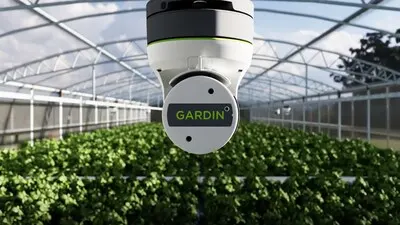
Gardin sensors monitoring crops at Intelligent Growth Solutions’ (IGS) Crop Research Centre as part of an ongoing research project
Directly measuring the health of a plant is the best way to ensure high productivity, says Fabrizio Ticchiarelli, Gardin’s Lead Biologist, about the the company’s sensors.
Since Gardin first spoke in the REAP 2021 Start-Up Showcase, it has been successful in raising $10.8M to develop a plant stress detector, and it is returning to REAP as an exhibitor this year to discuss progress.
Fabrizio explains how the technology is helping to ‘Make Sense of Agriculture’, the theme of REAP 2022: “We are developing a system that will give farmers easily actionable insights by revealing how their crops are responding to the environment in real-time, before any visible changes to the canopy happen.”
Early alert of problems
Fabrizio appreciates that farmers are time-poor.
“The aim is to direct farm managers to the cause of growth issues, unlocking the potential for higher yield and better crop quality. The Gardin technology makes farmers aware of problems as early as possible, and helps to narrow down the causes, which in turn makes maintaining a high performing farm more manageable.
“We are shifting the focus from measuring and controlling the environmental parameters to measuring crop health, automatically and directly in the field.”
Monitoring plant stress
Photosynthesis is so fundamental to health that it is linked to many molecular pathways in the plant. If a plant is stressed or limited by suboptimal growth conditions, it diverts energy away from growth and towards other processes to compensate. The Gardin device picks up that change by monitoring chlorophyll fluorescence.
“We use computer vision to assess where the changes are happening” Fabrizio explains. “For example, if they manifest first in younger or older leaves or if they are specific to a certain part of the plant. By looking at changes in the photosynthetic signal we will be able to determine what type of stress is occurring and how to get things back on track.”
The predictive power of the tool relies on data, so Gardin is currently building up its datasets for several uses: to optimise light usage in vertical farming; to identify where stress is occurring across a crop for precise interventions; and to forecast yield.
Commercialisation for covered crops
The company has developed a sensing technology for controlled environments and is now focusing on commercialising its early warning system in vertical farms and greenhouses.
Fabrizio continues: “The Gardin sensors measure a small number of parameters that are essential to plant health and productivity. We then run the complex statistical analysis ourselves to extract useful insights for our clients.
“These valuable nuggets of information are then surfaced to the growers via our user interface, in the form of simple visuals and alerts. Everything about the user interface is tailored around the client’s facility, so that end-users get alerts in a language they recognise.
“We think this is the right approach to empower busy growers to produce more and ensure quality.”
REAP 2022: ‘Making Sense of Agriculture’ – Tuesday 8th November 2022
From yield mapping and precision livestock through to digital twins and cloud computing, at REAP 2022 we will be exploring the technology and looking at the implications from a field to landscape level. Making technology farm-centric is core to Agri-TechE ’s mission so a key feature of the conference will be a panel of farmers and producers discussing the emerging technologies and future scenarios.
Get the latest agri-tech news, events and opportunities direct to your inbox
AI-directed mechanical weeder promises improved blackgrass control
Meet the Network
Agri-TechE
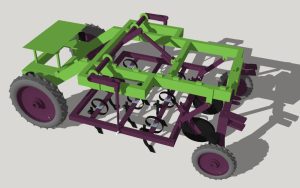
Stylised render of the ARWAC blackgrass weeding robot
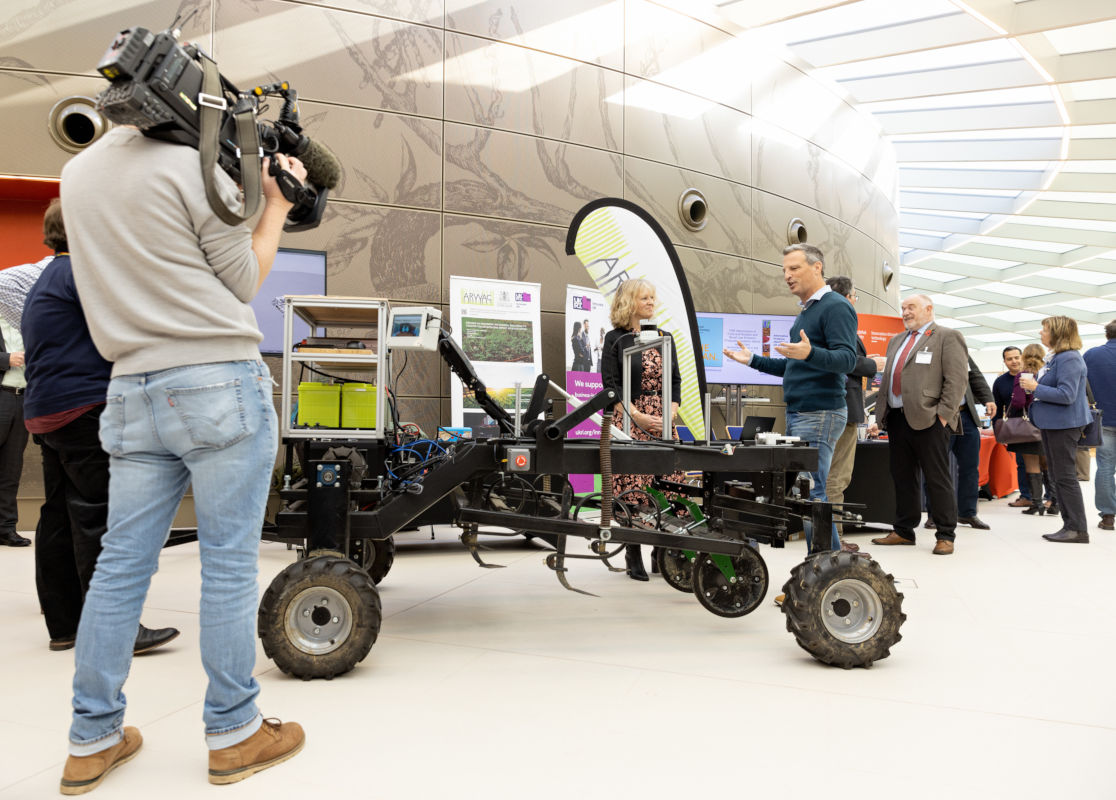
Blackgrass is a major threat to cereal crops as it has become resistant to many pesticides. Improved mechanical weeders provide an alternative strategy and ARWAC has developed a novel weeding machine that it will be discussing in the REAP exhibition.
ARWAC has been spun out of the Innovate UK funded project ‘Autonomous Robotic Weeder (in) Arable Crops (ARWAC)’. The consortium combines robotics expertise from the University of Lincoln with industry expertise to provide a solution for blackgrass control. The objective is to optimise crop production and soil quality through the reduced use of herbicides. Crop losses resulting from competition with blackgrass are expected to be in excess of £300m, equating to 200k tonnes of wheat lost each year*.
Can identify between blackgrass and wheat
ARWAC Managing Director Nick Webster comments that the weeding machine uses robotics to work remotely.
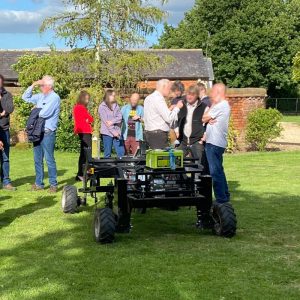
Early prototype of the robot on display
“The weeding machine uses refined sensors and AI to distinguish between the cereal crop and blackgrass. This is a challenging task as the two have a grass-like appearance.
“The aim is to develop a mechanical solution that is diesel- and chemical-free and is also lightweight to avoid soil compaction. The machine will help to address both the current labour and environmental challenges that agriculture faces and provide a commercial edge for the industry.”
Precision digital mapping of fields will be used to direct a specially engineered vehicle to provide a sustainable alternative to herbicidal use. ARWAC is currently conducting field trials to test the most effective methods of weed destruction.
Nick continues: “A low carbon mechanical approach to weed removal will reduce inputs and bring financial and environmental improvements to the UK farming economy.”
REAP 2022: ‘Making Sense of Agriculture’ – Tuesday 8th November 2022
From yield mapping and precision livestock through to digital twins and cloud computing, at REAP 2022 we will be exploring the technology and looking at the implications from a field to landscape level. Making technology farm-centric is core to Agri-TechE ’s mission so a key feature of the conference will be a panel of farmers and producers discussing the emerging technologies and future scenarios.
Get the latest agri-tech news, events and opportunities direct to your inbox
Agricultural digital twins reveal alternative futures
Meet the Network
Agri-TechE
Dr Marcelo Valadares Galdos, Soil Carbon Specialist at Rothamsted Research
Future climate projections show that the frequency of more extreme events in terms of precipitation and droughts is predicted to increase and this is leading to an increase in demand for better climate information and agricultural digital twins will have a role in this, explains Dr Marcelo Valadares Galdos, ahead of REAP 2022 where he is speaking.
Marcelo’s particular interest is soil health and climate-smart agriculture. He was on secondment to the Met Office for several years, exploring how its climate services could provide additional benefit to farmers. He has recently joined Rothamsted Research as a Soil Carbon Specialist in the Sustainable Soils and Crops department.
His research projects have included developing agricultural digital twins and agri-environmental sensor networks for decision support. This has included experimenting with novel sensors and use of robotics for soil monitoring.
Turning climate data into actionable insights
Previously as part of the Leeds Smart Agri-Systems initiative, Marcelo was involved in turning the highly instrumented farm at Tadcaster, Yorkshire, into a Smart Farm to monitor soils, vegetation and livestock. The Smart Farm aims to study processes that are important economically for productivity and yields but also for the environment and in mitigating climate change.
He explains: “By using the UK climate projections UKCP18 – which is the most recent high-resolution climate projection for the UK – we have examined how extreme events could impact soils, particularly in terms of highly erosive rainfall events, when precipitation falls in a short period with a lot of energy and volume.
“This has obvious links to flooding, runoff and pollution, but it also leads to the detachment of soil particles, leading to losses of nutrients, carbon and fertile topsoil, which takes centuries to replenish.”
The concept of Climate Services – turning weather and climate data into something that stakeholders can actually use to make smart decisions – has a lot of potential applications in the food production sector.
“Translating what seasonal forecasts might mean for when to cultivate the soil, plant, apply fertilizer and harvest is a whole area of interest to me.
“Combining climate projections with information on land use and agricultural management practices, we can develop ‘what if?’ scenarios, which are useful to identify ‘climate-smart’ options that contribute to climate change mitigation and adaptation.
“One of the advantages of this approach is to see ‘what could I do to improve the sustainability in my specific farm or region with my microclimate and my soil type?’
“I think the most interesting approach is when you include economics as well – input costs, commodity prices, environmental externalities and so on. The question then becomes ‘What could I do in an economically viable way to become more sustainable?’”
Improving methods of carbon measurement with sampling robot
Soil health is important for mitigating climate change. Carbon as a component of organic matter is important to the structure, fertility and soil moisture retention in soils, but storage is also important. Accurate ways to measure carbon directly in soils is a major challenge and one that Marcelo’s team has been addressing.
“We have been taking a science-based approach to the monitoring, reporting and verification of soil carbon, by deploying sensors at multiple scales – satellite-based but also drones and proximal sensing, such as sensors that scan soils and direct sampling.
“Conventional soil sampling is costly and time-consuming, so part of the project is looking at non-destructive ways to scan key properties of soil and how to locate sensors to provide the most useful information
“Our approach is to use a lot of other information from remote sensing, from management systems and from scanning the soils with certain sensors, then identifying the best places to actually do in-depth sampling.
“This is a really exciting area of science. We particularly want to know the carbon stocks – ie how much carbon is in a certain area to a certain depth.
“One of the projects is a scoping study using a rover robot instrumented with novel sensors. This will provide a deeper understanding of spatial variability across the plot I hope to have some interesting results to discuss at REAP.”
Modelling – Sensor networks and agricultural digital twins
Marcelo’s team has been applying the Internet-of-Things (IoT) concept to agri-environmental monitoring, generating data on soil chemical, physical and biological variables, and also on climate and vegetation. However, collecting the data is just one element of the jigsaw.
“The idea is that these sensors are connected but also that there is data fusion with different types of sensors combined to generate other outputs that are viewable from a dashboard.
“For the last several decades we have been applying computer representations of crops and soils for scientific research, and this is one part of the puzzle, but the idea of digital twins encompasses the workflow of the data, from collection and analysis through to visualisation and its presentation on a dashboard of real-time data with actionable insights.
“However, connectivity is still an issue. At the Leeds smart farm, where I was working before, there is a lot of instrumentation already, and it is a challenge to transmit and to have near real-time connectivity, and this is an issue in most rural settings.
“Improved connectivity would be game-changing everywhere, not only in the globally remote areas.
“When all of those elements start to come together we can start to use agricultural digital twins for decision support, and I think we will have something that is very powerful indeed.”
REAP 2022: ‘Making Sense of Agriculture’ – Tuesday 8th November 2022
From yield mapping and precision livestock through to digital twins and cloud computing, at REAP 2022 we will be exploring the technology and looking at the implications from a field to landscape level. Making technology farm-centric is core to Agri-TechE ’s mission so a key feature of the conference will be a panel of farmers and producers discussing the emerging technologies and future scenarios.
Get the latest agri-tech news, events and opportunities direct to your inbox
Hutchinsons’ advice for how to manage potato crops in warm, dry conditions
Meet the Network
Agri-TechE
Unlike most years 2022 will not be about managing large green haulm to aid skin set and lifting, but about keeping the crop alive with water or making more challenging strategic decisions, says Hutchinsons‘ root crop technical manager Darryl Shailes.
He points out that even the best of irrigation systems or the crops grown in the perfect silt that were planted in great conditions are struggling under the prolonged hot and dry weather we are experiencing.
By early August, most irrigation reservoirs are getting very low and restrictions are being put on some other licenses.
“During the heat wave in July many crops ceased bulking and only put on dry matter, and were just about kept alive,” he says. “This rapid increase in dry matter means that many crops, especially those that are unirrigated or short of water, are already in excess of 24% DM and will be highly prone to bruising.”
Darryl believes the best decision for many growers will be to stop the crop even though the yield is only in the low teens per acre.
“To leave the haulm alive under the current conditions will only increase dry matter and yield is unlikely to be significantly improved.”
“For some crops even if rain were forecast, their ability to increase yield and tuber size significantly will already be compromised with very poor haulm and will probably cause issues with secondary growth.”
He says growers may have to target lifting and irrigation where still available to those crops that are most sensitive to bruising.
“Where water is available, irrigation pre-harvest – even though having no real effect on dry matter – can help to keep more soil on the web and cushion the potatoes to reduce bruising.
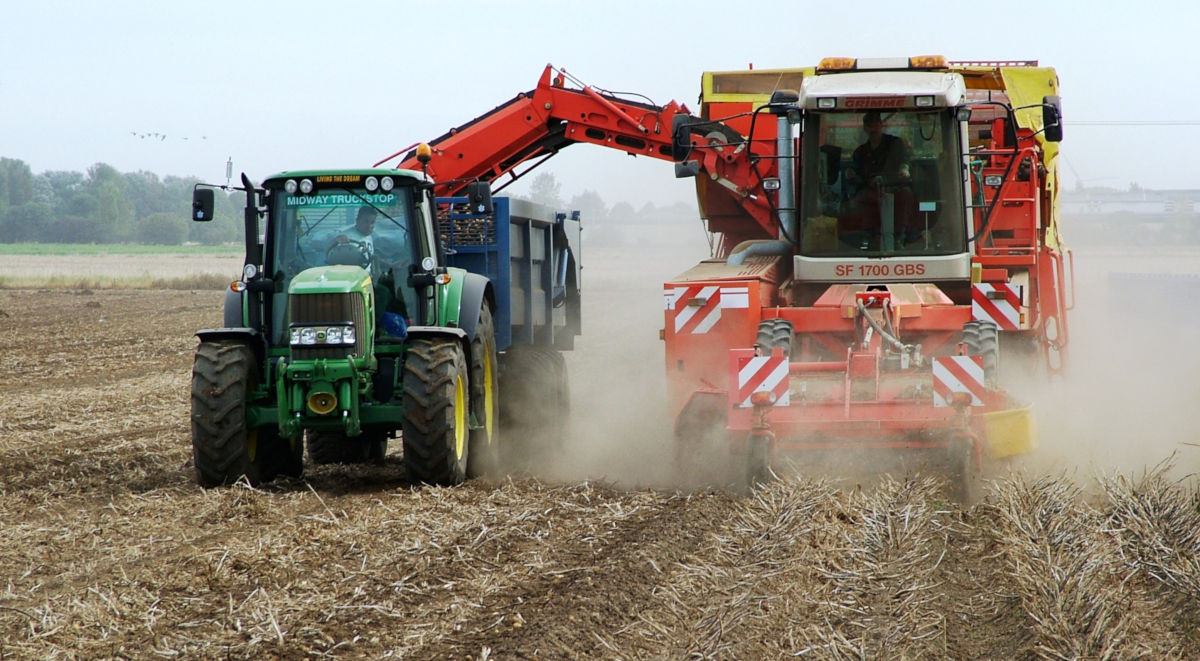
“Single handling and correct settings of harvesters and elevators will be even more important than normal to reduce the exposure to bruising as much as possible.
“A relatively small unbruised crop should be easier to market than a slightly larger but heavily bruised crop,” he adds.
However, Darryl says it is not all doom and gloom: “Some well irrigated crops are still bulking and have good haulm, and in an ideal world soil moisture deficit should be maintained at around 30mm until flailing and or burn down to reduce the risk of bruising.
“Normally blight control would need to be continued until all the haulm is dead but with this season with hardly any reports of blight some growers may decide not to treat during the haulm destruction process especially on crop not intended for storage.”
Post Overview
16th August 2022
Agri-TechE
Agri-TechE Article
Crops, Varieties, Breeds, Rotations
Share this Page:
Related Posts
‘From Farmer to Pharma – and Beyond – with Medicinal Cannabis and Industrial Hemp ‘ Event Report
Get the latest agri-tech news, events and opportunities direct to your inbox
RNAA announces a winning line-up at the Norfolk Show
Meet the Network
Agri-TechE
Wait for ages and then three come at once! The Royal Norfolk Agricultural Association’s most prestigious award – the Timothy Colman prize for outstanding contribution to the development and promotion of food, farming and the countryside – was presented to Archant journalist Chris Hill at the Royal Norfolk Show by the Marquess of Cholmondeley, farmer and President of the RNAA, and also to the winners from the two previous years.
Chris is the 2022 winner of the award, and he was joined at the ceremony by previous winners Dr Belinda Clarke, Director of Agri-TechE , (2021) and Jake Fiennes, director of conservation at the Holkham Estate, (2020).
Chris Hill at REAP 2016
Mark Nicholas, Managing Director of the RNAA explains: “The Timothy Colman prize recognises a contribution to agriculture and Chris Hill, through his journalism, has promoted greater understanding of the sector with the wider community, shared best practice and created awareness of innovations that will keep Norfolk farmers at the forefront of competitiveness.
“We are delighted to be back in person at the Royal Norfolk Show, after missing two years during the pandemic, and it is a real pleasure to have Jake Fiennes and Belinda Clarke here to receive their awards alongside Chris.”
Also back after a break is the RNAA flagship event the Norfolk Farming Conference, to be held on 30th November 2022. Belinda has been invited to chair the event, taking over from Guy Smith, an Essex farmer and former Vice-President of the NFU.
Belinda says: “Guy Smith has played a major role in this vibrant conference for many years, so I am humbled by this invitation to take up the baton. There is a stimulating line-up of speakers for the conference and several farmer case-stories, so after missing a year there will be lots to talk about. It is an excellent opportunity to meet up with old friends and open the doors to new faces.”
A farmer based on the north-east Essex coast, Guy Smith’s farm is officially recognised as the driest in the UK. In addition to chairing the Norfolk Farming Conference for nine years, he has also served on the boards of FACE, HGCA and Landskills New Entrants Committee.
The Norfolk Farming Conference attracts about 350 farmers, producers and industry professionals; keynote speakers this year include: Tom Bradshaw (NFU), Barney Kay (Pilgrim Foods), Sir Dieter Helm and The Lord Dannatt.
Tickets for the Norfolk Farming Conference are £72 per person (£42 for students) and can be purchased through the RNAA website.
Get the latest agri-tech news, events and opportunities direct to your inbox
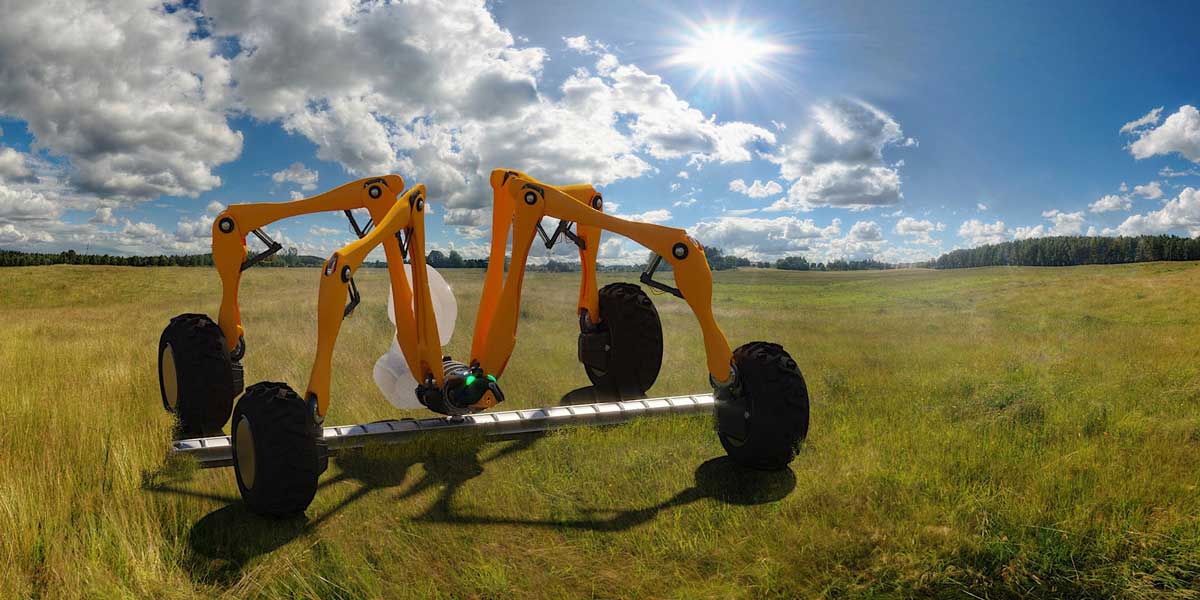
Soon it will be unusual not to use AI – Small Robot Company
Meet the Network
Agri-TechE
“The exciting thing about the 4th Agricultural Revolution is that ALL of the technology that we need to make Per Plant Farming a reality already exists,” says Sam Watson-Jones, President and Co-Founder of Small Robot Company (SRC).
The company was profiled in the REAP Start-Up Showcase at REAP 2017, and has launched several of its robots at the conference.
Sam Watson-Jones of Small Robot Company with Belinda Clarke, Director of Agri-TechE , at Groundswell 2021 (image from @smallrobotco)
Ahead of REAP 2022 we asked Sam how he saw the future of agriculture and role of robotics.
“The future of food production will be shaped by Per Plant Farming – this is the way that the majority of the world’s farms will be operating by 2040.
“Per Plant Farming requires two elements. Firstly, Per Plant Intelligence – the ability to gather data and to understand every single plant in a field, and every square inch of soil. Secondly, Per Plant Action – the tools to take action at that same level of granularity.
“There are huge parts of agriculture that we simply don’t understand in enough detail at the moment. But huge, organised and integrated data sets (gathered by robots, sensors, satellites and so on), supported by the power of Artificial Intelligence will enable a transformation in how we understand our farms and our soils, and off the back of this we will see a transformation in how we take action.
“Very soon it will be unusual for a farmer to take any decision on their farm without the support of AI, and very soon it will be unusual for a farmer to apply a blanket application of anything in their field. We will move towards a system of Per Plant Farming.
“The technology is there, but the challenge is in finding the right business models to accelerate adoption and to attract investment so that these solutions can be scaled. But the tech is there – it already works and farmers are already finding it useful.
Do you see the future of farming as high tech, frugal or diverse?
“Maybe this is an obvious answer, but all of the above – they should not be mutually exclusive.
“We need to take a soil first approach, but we also need remote management and high tech to support this soil first approach so that we are taking the right decisions. We also need our farm businesses to be more diversified.
“Off-land approaches clearly have a future, but they will not be the answer in isolation, and diversified land use management should be a foundation of everything we do.
“Importantly, ‘High Tech’ is not a contrast to either of these approaches – it should be seen as a tool to support all other approaches.”
REAP 2022: ‘Making Sense of Agriculture’ – Tuesday 8th November 2022
From yield mapping and precision livestock through to digital twins and cloud computing, at REAP 2022 we will be exploring the technology and looking at the implications from a field to landscape level. Making technology farm-centric is core to Agri-TechE ’s mission so a key feature of the conference will be a panel of farmers and producers discussing the emerging technologies and future scenarios.
Get the latest agri-tech news, events and opportunities direct to your inbox
For greatest impact we need to be looking at data at scale – fieldmargin
Meet the Network
Agri-TechE
fieldmargin helps ‘make sense of agriculture’ by bringing together all of the farm’s data into a single hub which fits in the farmer’s hand – their phone. The company was profiled in the Start-Up Showcase at REAP 2015, and we asked Camilla Hayselden-Ashby, the Head of Product, to describe the opportunity gaps for digital agriculture.
“Digitising the data that farmers already gather in the form of work done, livestock moves, observations and measurements is the first step to getting better insights. Bringing this alongside data from technologies such as satellite and drone imagery, machinery and sensor readings through our API will provide a holistic overview of the farm’s performance.
“Having this data together and on hand when it’s needed means that a) it gets used (how many farms have ring binders of soil test results or printed yield maps which gather dust?) and b) it is in context, making it easier to pick out trends. Once we have a large enough pool of data we plan to add analysis across these data sources.
Current challenge is data is in silos
“The challenge with sensors available for agriculture is that the data from them is siloed into different tools, making it difficult to derive insight. There are a huge number of factors which impact agricultural performance and farmers need to consider the whole picture rather than just one aspect. Bringing this data into context with farming practices is key to identifying trends and opportunities.
“For the greatest impact we need to be looking at this data at scale. One of the frustrations experienced by many farmers is that you only get one shot per year to try something new and it can take years to see the results. By aggregating data across farms the world becomes our science lab and we will be able to learn a lot more than gathering data from a single farm, or even a network of farms. This will result in more timely, targeted recommendations for farmers.
Will the future by high tech, frugal or diversified?
“The farm of the future will be a combination of all of these. Looking after soils and understanding the farm as an ecosystem both above and below ground will be key to reducing costs and delivering a net positive impact for the environment.
“Going ‘high tech’ will help to facilitate this by quantifying the impact of different methods of soil improvement. For instance being able to DNA sequence soils to measure which microorganisms are living in them. Automation will allow smaller kit, using less fuel (or electric) and creating less compaction, and more targeted application of treatments or moving to non-chemical treatments such as zapping weeds instead of applying herbicide.
“Diversity in ecosystems and cropping will increasingly be seen as a necessity for farm resilience as evidenced by trends to companion cropping or sowing variety blends.”
REAP 2022: ‘Making Sense of Agriculture’ – Tuesday 8th November 2022
From yield mapping and precision livestock through to digital twins and cloud computing, at REAP 2022 we will be exploring the technology and looking at the implications from a field to landscape level. Making technology farm-centric is core to Agri-TechE ’s mission so a key feature of the conference will be a panel of farmers and producers discussing the emerging technologies and future scenarios.
Get the latest agri-tech news, events and opportunities direct to your inbox
To know what is happening farmers need to see it – Drone Ag
Meet the Network
Agri-TechE
Alex Macdonald-Smith
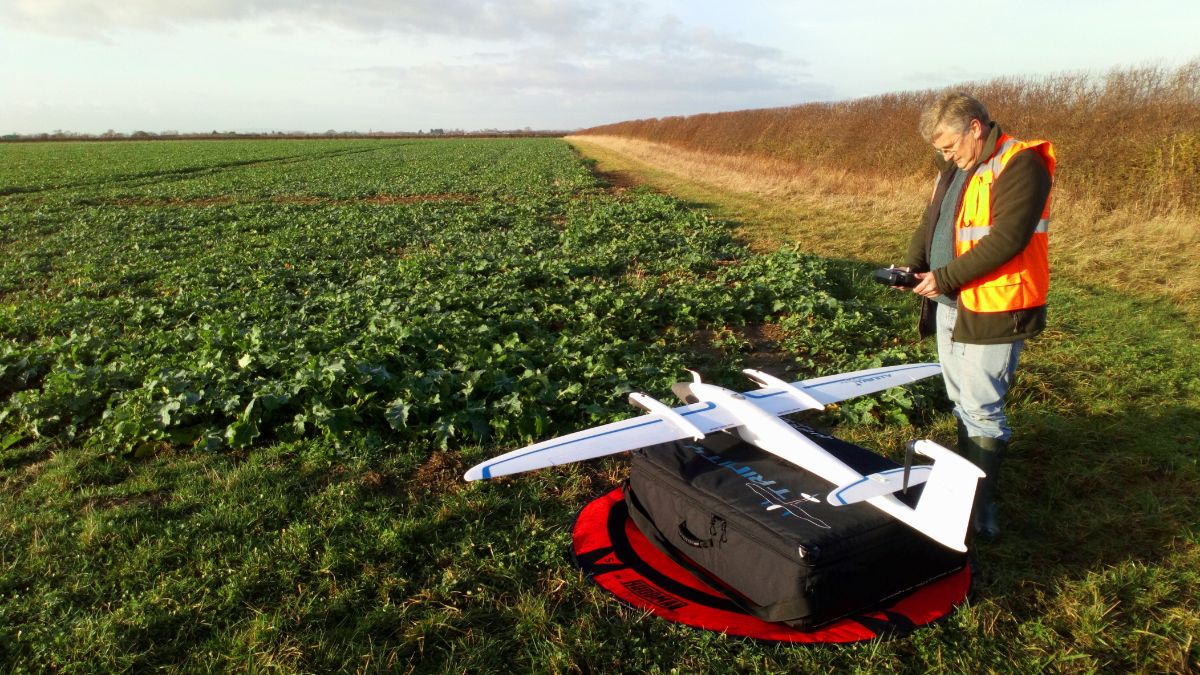
The company has exhibited several times at REAP and has benefited from crowdsourced funding for its product.
Ahead of REAP 2022 we asked Alex about the challenges and opportunity gaps.
“In order to know what’s actually happening in the crop, the farmer/grower/agronomist needs to actually see it.
“With the time constraints and demands of modern agriculture, the likelihood of missing a yield limiting factor that may arise throughout the growing season, or catching important timing triggers in the crop too late to prevent yield loss – is unfortunately high.
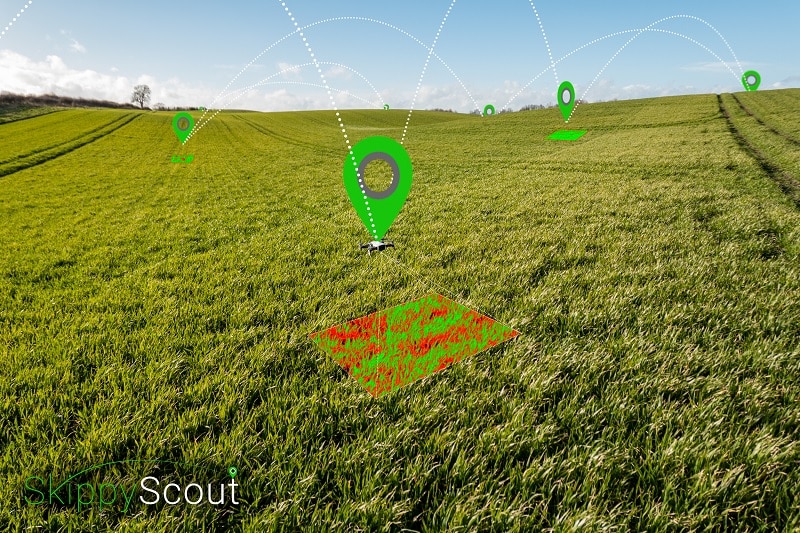
“With Skippy Scout, using standard, off-the-shelf technology, the whole field can be viewed quickly, and data collection can be repeated throughout the season to view comparisons and trends in near real-time.
“Moreover the collected data can be viewed or sent anywhere, so anyone who needs to see it, can see it instantly.
Where are the gaps at the moment?
“Within farming as a whole, there is a definite need for technologies to earn the trust of their target market. There are obvious gaps, especially surrounding powerful, potential integrations, and things have been promised of certain technologies that have as of yet, not delivered any meaningful results.
“So, in short, yes there are plenty of tools, the Internet of Things (IoT) is a very powerful thing, but as of yet we’ve only scratched the surface and the possibilities are endless.
“One of the reasons we built Skippy Scout was that other drone software, that wasn’t designed for agriculture, had been adapted to provide agricultural insights but didn’t deliver on its promise. These technologies were complex and slow, and therefore not an easy fit for fast-paced farming workflows, so adoption was slow and the drawbacks outweighed the benefits. Skippy was designed purely with broad-acre cropping and these demands in mind.
“At Drone Ag we are constantly working on building trust with farmers by providing a useful, affordable service for them, with the ever-clear goal of making their jobs easier.
Is the future high tech, frugal or diversified?
“I don’t think I could choose one single scenario from these three – I can’t predict the future, but the way things are going all three are definitely set to play their role in the bigger picture.
“Farming needs to become more sustainable and more productive; the only way this can happen is with frugality, diversification and high tech.
“At Drone Ag we definitely play into the high-tech category, but also into the environmental space. We have our sights set on soil as well as variable rate inputs, not only that but our system allows for less soil compaction, fuel usage etc.
“If farmers are to meet the growing needs of an ever expanding population, all avenues of future-proofing and sustainability must be approached with an open mind.”
REAP 2022: ‘Making Sense of Agriculture’ – Tuesday 8th November 2022
From yield mapping and precision livestock through to digital twins and cloud computing, at REAP 2022 we will be exploring the technology and looking at the implications from a field to landscape level. Making technology farm-centric is core to Agri-TechE ’s mission so a key feature of the conference will be a panel of farmers and producers discussing the emerging technologies and future scenarios.

 Agri-TechE
  Supplementary light was found to increase tomato crop yield by up to 12.1%, a trial by Light Science Technologies (LST) and CHAP has found.
  This provides benefits to food producers by offering more reliable trial conditions for their products, especially for biopesticides, with consequent benefits to the crop production sector in the form of increased product availability.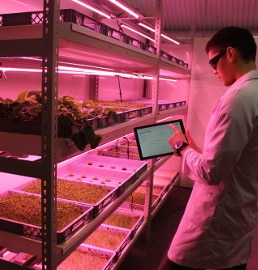


 Agri-TechE