The Productive Landscape: NatureTech for Profit and Planet
How can technology enable delivery of food, nature recovery, and climate resilience - all at once? The Head of the Environment Agency is asked: what's the national plan for dealing with land use pressures, plus you’ll hear from technologists and land managers working on nature-based and tech-enabled solutions for water, soils and climate adaptation.

1978: What can the ‘facial action coding system’ tell us about animal health?

Agri-TechE Article
Agri-TechE

Until recently Marwa Mahmoud’s work was focussed on human behaviour understanding, automatically detecting social signals from facial expressions and body gestures in the context of automotive applications and healthcare. She is now applying her expertise in computer vision and machine learning to livestock, in particular to provide early warning of contagious disease in sheep.
She says: “Sheep are prey animals and so have evolved to hide signs of pain or lameness when predators are around.  We are working on systems that can detect these signs of illness when humans are not present, using machine learning to predict early signs of pain and distress by automatically analysing their facial expressions and gait.”
Marwa is working with collaborators from University of Chester and University of Lincoln on field trials to gather training data to build robust machine learning models that are able to distinguish between healthy and ill sheep, the first step towards automated disease detection.

REAP 2021: Changing Time(s) for Agriculture10th November 2021

Imagine a world where agriculture is not constrained by time. The ability to manage and manipulate time is increasing and REAP 2021 will explore the advances in technology and breakthroughs in science that is making this possible.
REAP brings together people from across the agri-tech ecosystem who believe that innovation is the engine for change. The conference bridges the gap between producer needs and technology solutions and showcases exciting agri-tech start-ups. 

Satellite data, farming and our environmental future

Agri-TechE Article
Agri-TechE

Increasing knowledge about humankind’s impact on the planet – from earth observation and other sources – has given us strong signals on how we are damaging the environment, but also potential solutions to manage our natural capital better, according to Jan-Erik Petersen of the European Environment Agency (EEA), Copenhagen, one of the keynote speakers at REAP 2021. 

Jan-Erik coordinates EEA work to develop better estimates of natural capital and ecosystem services and he will be explaining the implications for farmers and technology developers in his keynote address at REAP 2021.
The falling cost of satellite technology and instrumentation for monitoring and image analysis is opening up new knowledge streams, which the EEA is actively exploiting, combining a range of data sources to understand the link between farming and biodiversity, farming and soils, farming and climate change etc.

Objectivity for rewarding farmers

The satellite data produced by the EU Copernicus programme are one key element in analysing the link between farming and environment at EU level. It offers new options for increasing the productivity of farming, for monitoring how farmers manage their land and associated natural features (such as hedgerows) and potentially for rewarding better environmental management via payments for ‘public goods’, such as higher soil carbon content or landscape elements to favour biodiversity.
The EEA team collates data from multiple sources – from member states, statistical offices, research projects – but also from earth observation data from the Copernicus satellites, and Jan works closely with teams developing new products using the raw satellite data.

High nature value farmland

One focus of his work is the interaction between farming and ecosystems. He comments: “We’ve created a distribution map of high nature value farmland areas and I am actively exploring the kind of data that we can use to further develop this concept. One of the things we’ve been investigating is the role of the high-resolution data that are becoming available.”
Of particular interest to Jan-Erik is extensive grazing where there is a close relationship between agriculture and biodiversity. He says that this is a real test for the technology as it is currently difficult to distinguish between different types of grassland using satellite data, and this is where he believes the combination of old and new knowledge is so important.

Opportunities for tech developers

He is looking forward to sharing his knowledge at REAP and also hearing from technology developers about innovations that are relevant to the work of the agency.

REAP 2021: Changing Time(s) for Agriculture10th November 2021

Imagine a world where agriculture is not constrained by time. The ability to manage and manipulate time is increasing and REAP 2021 will explore the advances in technology and breakthroughs in science that is making this possible.
REAP brings together people from across the agri-tech ecosystem who believe that innovation is the engine for change. The conference bridges the gap between producer needs and technology solutions and showcases exciting agri-tech start-ups. 

#ATW21 Monday: Collaborations

Agri-TechE Article
Agri-TechE

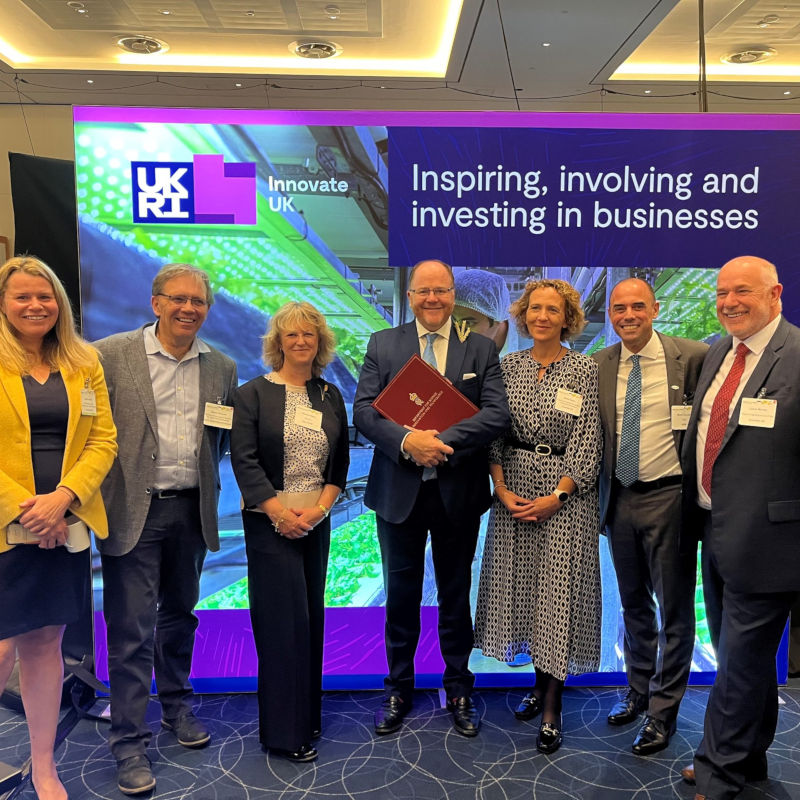
“A collaborative approach is vital,” explained Stuart Catchpole, investment manager at New Anglia, the local enterprise partnership (LEP) for Norfolk & Suffolk. In the Agri-TechE Week event ‘Agri-food in the East of England’ the agri-food sector was urged to work together to drive growth within the sector.
“We want to work with the research base,” he continued. “That means the region’s world-leading academics, as well as our world-leading businesses across the food chain, from farmers to processors and technology businesses.”
The event was focussed on how New Anglia LEP, Greater Lincolnshire LEP and the Cambridgeshire & Peterborough Combined Authority are working towards developing major inward investment opportunities in the region’s agri-food sector. Stuart told the meeting that in order to support the growth and further development of the wider region’s agricultural, research, innovation and technology expertise, the LEP needs to forge collaborations across the agri-food value chain.
“We want to build additional collaborative innovation programmes, with real national and international impact, supported by a globally significant agri food research. And we want to lead the development of sustainable agriculture simultaneously feeding Britain and protecting and enhancing our natural capital.” The event showcased some of the area’s world-leading businesses, and highlighted mechanisms and initiatives which support business growth and make the region such a great place to innovate and do business. Martin Collison from Greater Lincolnshire LEP stressed the importance of the logistics sector.
Delegates at the event heard from Martin Lutman, who ran the highly successful Eastern Agritech Growth Initiative, which ran from late 2013 through to March 2021.  The scheme supported SMEs by providing grants for research and development which might otherwise not ever get off the ground, and its other focus was helping businesses grow by funding investments in capital equipment to help them become more productive, efficient, healthier and more profitable. Two of the successful grant recipients, Sam Steggles from Fielding Farm Cottage and Joe Halstead from AgriGrub Ltd, talked about their experiences.
Joe Halsey from Agrigrub said: “Eastern Agritech Growth Initiative really helped us scale up the business in one big leap. It helped us recruit employees and implement new management software. With it we acquired and modified the critical kit we needed. So the funding made a huge difference for the business.”
Also speaking were Dr Louise Sutherland, Agri-TechE Project Development Director for CERES, a collaborative agri-tech partnership between five leading UK universities and three renowned agricultural research institutes, and Professor Simon Pearson from the University of Lincoln, who shared examples of industry linked projects supported by the Centre for Doctoral Training in Agri-Food Robotics. This event was hosted by New Anglia Local Enterprise Partnership, Lincolnshire Local Enterprise Partnership and the Cambridgeshire and Peterborough Combined Authority.

Agri-TechE Week features a mix of in-person and virtual events that are designed to showcase exciting developments in agri-tech. It is coordinated by Agri-TechE working closely with partners across the innovation ecosystem and aims to provide opportunities to attract new customers and partners and to broker collaborations and international connections.

#ATW21 Monday: Precision Nutrition

Agri-TechE Article
Agri-TechE

Increasing fertiliser prices and the ambition to achieve net zero have focussed attention on the importance of good nutrient management – particularly Nitrogen fertiliser Use Efficiency – and its financial and environmental benefits.
But what does good nutrient management look like? Today, a range of tools and strategies are available to help farmers reach that goal. ADAS hosted an Agri-TechE Week event to discuss recent developments.
“One good starting point is to measure what is in the soil”, said Dr Mechteld Blake-Kalff of Hill Court Farm Research. Her analytical lab has been helping farmers with measuring soil nitrogen supply (SNS), including additionally available nitrogen (AAN).
Measuring available nitrogen gives a better idea of how much nitrogen will become available from mineralisation during the growing season, having this information has been shown to improve Nitrogen fertiliser Use Efficiency (NfUE).
“By accounting for AAN in nitrogen recommendations, it’s possible to use less fertiliser and make some savings, while still achieving similar yields” commented Dr Blake-Kalff.

Working with Kellogg’s to benchmark Nitrogen fertiliser Use Efficiency

NfUE is also a variable that Clive Blacker, from Map of Ag, has been working on in collaboration with global food giant Kellogg’s and the EFFP, an agri-food consultancy. Together, they are encouraging their network of farmers to benchmark NfUE in order to determine their optimum fertiliser rate of application. They have found that, intensive but regular data capture from crops (with the N Tester from Yara) throughout the season, combined with other environmental data sources, have provided real insight with tangible results. “This approach resulted in one instance in £53/ha of savings, representing a 20% improvement compared to standard on-farm practice,” said Clive.

Timing makes a difference

In addition to using technology and different data sources, different application timings can also make a difference.
A ‘Little and Often” (L&O) approach to application has been tested across different sites and years by ADAS researcher Kate Storer. “Drip feeding nitrogen throughout the season was shown to significantly increase N fertiliser uptake efficiency at two of the four sites tested, under added sugar application” revealed Kate. “Overall the L&O approach did not impact yield negatively”.
Another way to improve nitrogen use efficiency is to look at different ways of applying it.  “People tend to opt for liquid application of fertiliser over solid because of its accuracy” commented David Booty from Omex Agriculture.  Other advantages include the ability to incorporate nitrogen inhibitors to reduce run-off and phosphate protection, particularly in high pH soils. Ultimately, deciding how much nitrogen to apply does come down to pricing. “How much one should buy is an economic decision” commented Daniel Kindred from ADAS. This is because the economic optima sits at the ‘Break-Even Ratio’, the quantity of grain that is required to cover the costs of 1 kg of nitrogen fertiliser. “With increasing prices, we are moving to a situation where not applying enough is costing us more”.
Finally, Daniel concluded that “we should be using a range of tools and experimenting on-farm” in order to decide how much nitrogen to apply in a particular situation. Forming part of initiatives like the YEN where there are opportunities to experiment and discuss results with peers is a crucial part of this.
A recording of the event is now on YouTube. 

This event was hosted by ADAS.
Agri-TechE Week features a mix of in-person and virtual events that are designed to showcase exciting developments in agri-tech. It is coordinated by Agri-TechE working closely with partners across the innovation ecosystem and aims to provide opportunities to attract new customers and partners and to broker collaborations and international connections.

Preventing yield loss through real-time prediction and diagnosis

Agri-TechE Article
Agri-TechE

Yield loss diagnosis is one of the features of a new system developed by Omega Crop. Weed mapping and disease prediction is achieved using data gained from multiple sources – satellite, drones, smartphones, hyper-local weather – is layered into Omega Crop’s proprietary crop model resulting in either a yield loss event prediction or diagnosis; the findings delivered to the agronomist or farmer as actionable intelligence.
Co-founders Jared Bainbridge (CEO) and Grant Whittle (CTO) of Omega Crop, presented in the REAP 2021 Start-up Showcase.
Jared says: “When Grant and I started to walk fields with farmers and ask them what really hurt each year, we thought that yield prediction was going to be the thing that would bring them the most benefit. But instead, they wanted to prevent yield loss or reduce the cost of preventing yield loss. They want to know when their diseases are going to occur, or where there weeds are so they can tailor their interventions.”
Grant: “We noticed that other remote sensing solutions in agriculture either came with dedicated hardware or provided additional data to the farmer without telling them what it means. Omega Crop’s crop model tells farmers and agronomists what the data means to them.”
Omega Crop is providing its proprietary crop model services through its web and iOS apps. The software system is independent of any hardware and can be used with a range of data sources, sensors and imaging devices.
Jared is interested in talking to farmers and agronomists about their challenges, and also to potential partners and collaborators.
Find out more at omegacrop.com.

Antony Dodd: 1880: What do Greenwich Mean Time, the first electric train and the Pirates of Penzance have in common?

Agri-TechE Article
Agri-TechE

How and why do plants tell the time?  Antony Dodd’s lab is looking at the influence of timing on plant productivity.
“My team conducts fundamental research to understand the processes that allow plants to measure the time of day. This is crucial for crops, because they grow in environments that have daily cycles of light and darkness. We have found that circadian rhythms have far reaching effects upon plant performance, such as their photosynthesis and the amount of water they use.  This is an area of study known as chronobiology.
“Of particular interest is how circadian rhythms affect the responses of plants to agrochemicals, and to fluctuations in the temperature of the environment in which they grow.
“We have also found that soil bacteria that affect plant health also have a biological clock.”
Projects have included work with:

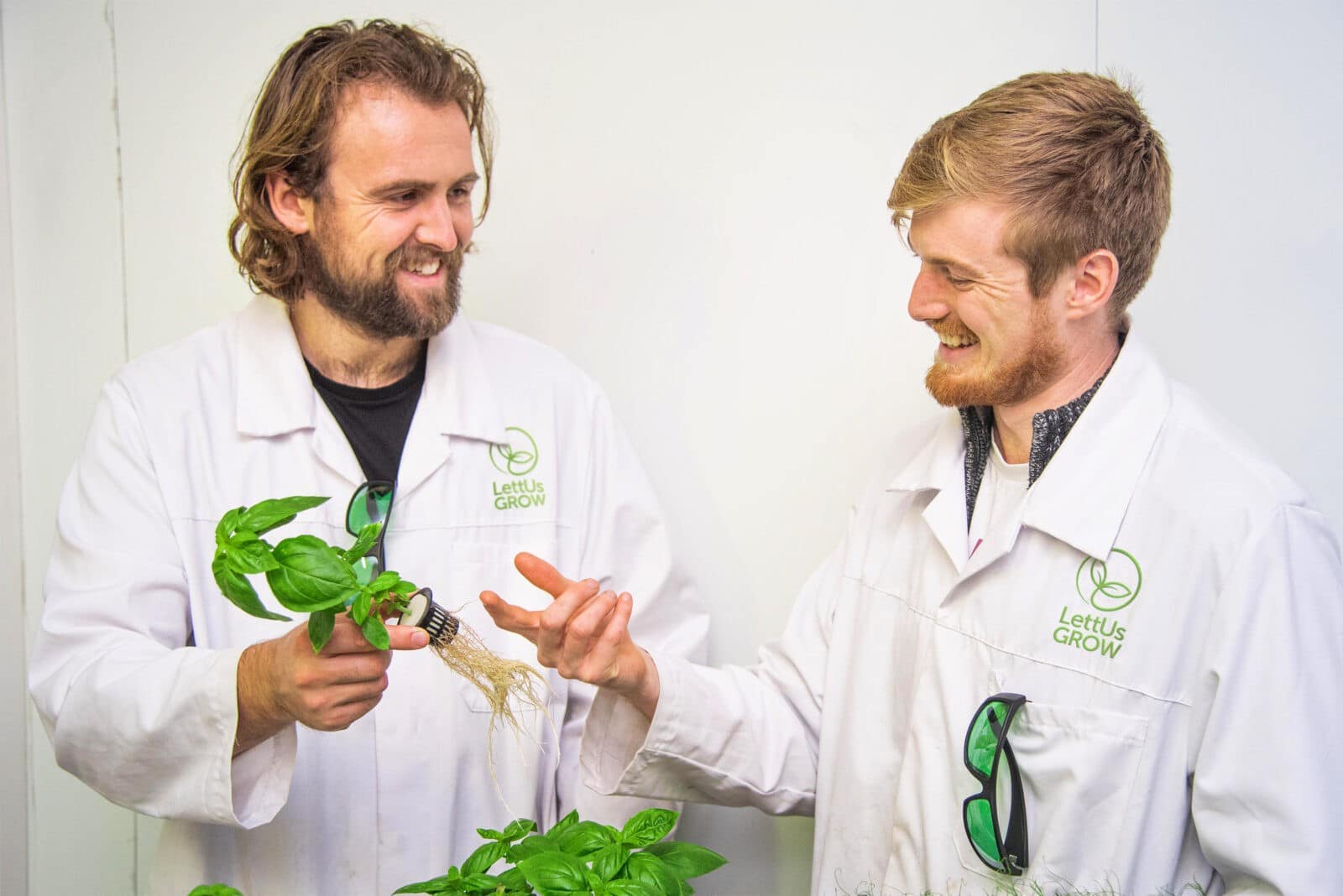
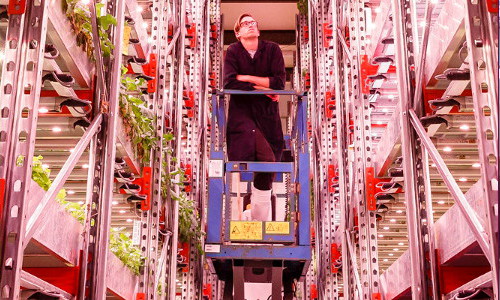
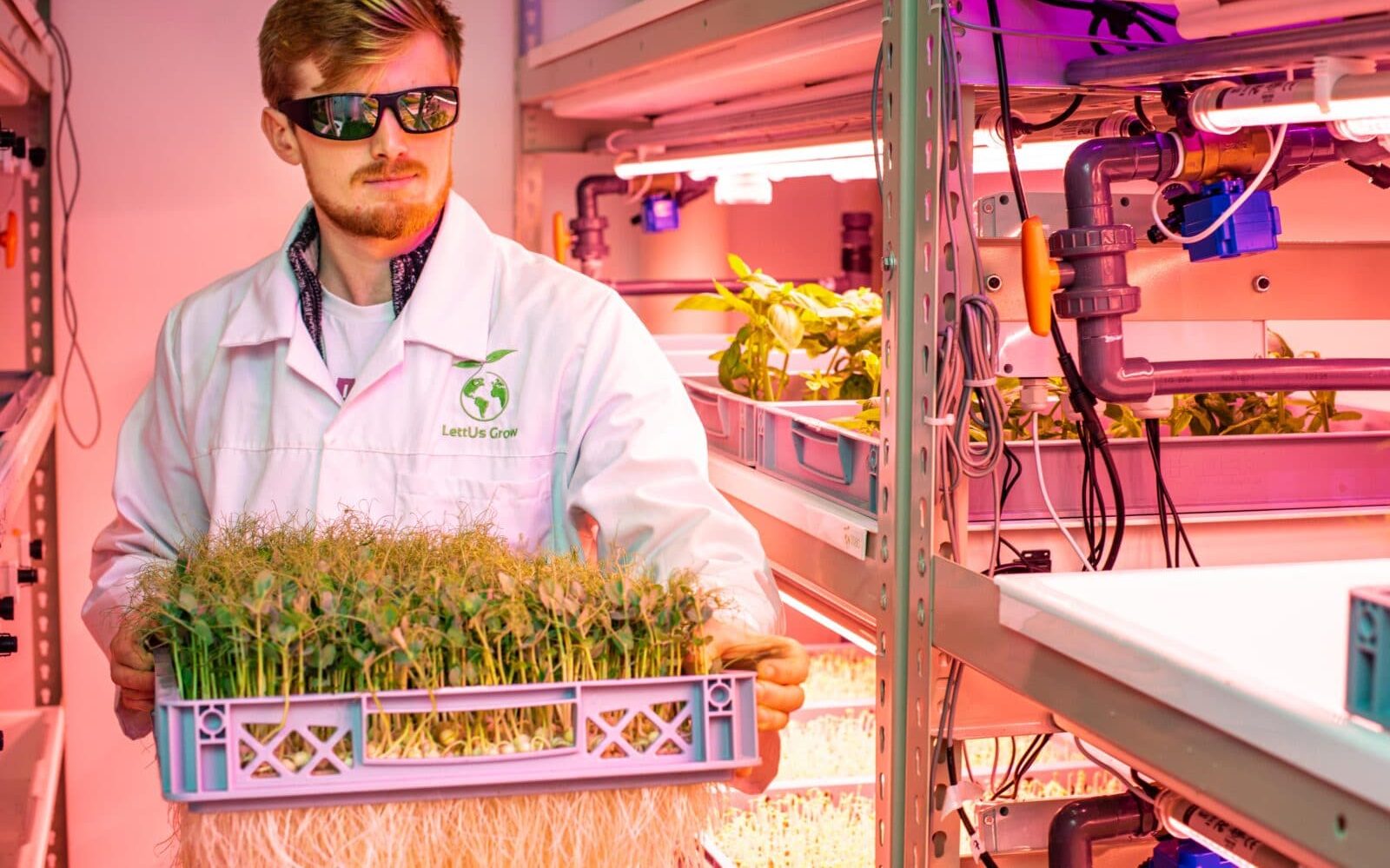
  • LettUs Grow, developers of technology for vertical farming, studying how cultivation recipes such as lighting, fertilisation, sowing can be optimised, using knowledge of circadian rhythms.
  • Syngenta, to study roles for circadian rhythms in the effectiveness of herbicides including glyphosate.

REAP 2021: Changing Time(s) for Agriculture10th November 2021

Imagine a world where agriculture is not constrained by time. The ability to manage and manipulate time is increasing and REAP 2021 will explore the advances in technology and breakthroughs in science that is making this possible.
REAP brings together people from across the agri-tech ecosystem who believe that innovation is the engine for change. The conference bridges the gap between producer needs and technology solutions and showcases exciting agri-tech start-ups. 

Martin Brown, Verdesian, on the challenges of time…

Agri-TechE Article
Agri-TechE

Martin Brown is Managing Director of Verdesian Life Sciences, developers of the biological, nutritional, seed treatment and inoculant technologies that maximise performance on key row crops such as wheat, corn, rye and soybeans. The company has developed a biostimulant that reduces the timeline for winter wheat establishment by 3 days. The theme of the REAP conference is time; Martin explains why this topic is so relevant to Verdesian.
“There are of course a multitude of challenges to choose from but I am selecting a challenge which in time frame is right now and that is – the ability to sow winter wheat in mid October/November and get it through the ground and established within as quick a time frame as possible. The reason this late drilling is taking place is to overcome a particular problem of herbicide resistant blackgrass.
The later sowing allows for germination of the black grass which can be removed in advance of drilling by light cultivation or systemic herbicide like glyphosate. Of course the issue is reducing soil and night temperatures which slow down germination of the seed and crop establishment at this time of year.
“Therefore any treatment of the seed that can reduce the days to reach 90% + germination and establishment to at least 2 true leaves is of significant importance.
“Verdesian is currently conducting laboratory and field trials across UK and Europe with a new biostimulant seed treatment product based on fermentation metabolites. Recent work conducted at Nottingham University demonstrated that the average timeline for winter wheat sown in soil at 7oC takes over 1 week to achieve 90 % + germination. The addition of the Verdesian seed treatment reduced the time for seed to hit 90% + germination by 28% compared to the untreated seed.
“We then looked at the time line for the germinating seed to reach the 2 leaf stage post crop-emergence. On average at 7oC soil temperatures this takes some 3 weeks from sowing the seed to having the crop reaching the 2 leaf stage. The addition of the Verdesian seed treatment reduced the time needed to reach the 2 leaf stage by 10.5% or in practical terms reducing the timeline for establishment by over 3 days.
“This may not seem much but at this time of year with lowering temperatures and daylight length, a matter of days improvement in establishment of the crop can be critical in providing a plant with strong root and shoot growth which in turn improves the plant’s ability to utilise available nutrients and radiation in readiness to overwinter.”
More about Verdesian Life Science

REAP 2021: Changing Time(s) for Agriculture10th November 2021

Imagine a world where agriculture is not constrained by time. The ability to manage and manipulate time is increasing and REAP 2021 will explore the advances in technology and breakthroughs in science that is making this possible.
REAP brings together people from across the agri-tech ecosystem who believe that innovation is the engine for change. The conference bridges the gap between producer needs and technology solutions and showcases exciting agri-tech start-ups. 

Agri-TechE spinouts from University of Lincoln and UEA gain funding

Agri-TechE Article
Agri-TechE

Robotic mushroom picking, strawberry yield forecasting and new bio-based materials to drive down the carbon footprint of car manufacturing Agri-TechE Week 2021are three new spin-outs to emerge from the agri-tech ecosystem. 
The companies have received funding from Ceres Agri-Tech, a partnership between six Agri-TechE members University of East AngliaUniversity of Lincoln, University of Reading, Niab (National Institute of Agricultural Botany), Rothamsted Research,  John Innes Centre,  plus the University of Hertfordshire and led by Cambridge Enterprise. Ceres is to feature in the Agri-TechE Week event Agri-food in the East of England.    

Agaricus Robotics – mushroom harvesting

Agaricus RoboticsAgaricus Robotics, a spinout from the University of Lincoln,  is developing a robot that can harvest even the most challenging dense clusters of mushrooms.
The market for fresh mushrooms in the UK is worth £450 million and growing annually. But, until now, the picking has had to be done by hand to prevent damage to the delicate mushrooms.
“Existing robotic harvesters are not suitable for mushrooms – which is a major issue as the industry struggles to cope with the current labour shortages.
Agaricus Robotics founder Bashir Al Diri says: “In the UK alone, approximately 4,500 people are required every day to pick mushrooms – with labour costs representing a third of total production costs.
“Our patented intelligent mushroom harvesting robot can pick whole crops without bruising the mushrooms and will lead to 20-30% yield increases from optimised 24/7 harvesting 365 days a year.”
 

FruitCast – yield forecasting for strawberries

FruitCast, also a spinout from University of Lincoln,  is focused on strawberry yield improvements, with an innovative yield forecasting system based on AI-enabled data analytics. Image data from hand, vehicle or robot mounted cameras is used to measure individual fruit numbers, along with the weight and maturity state of millions of berries each day.
This data is combined with weather forecasts in algorithms to predict yield with unrivalled accuracy six weeks ahead of existing systems.Yield forecasting for strawberries
Fruitcast founder Raymond Kirk says: “The UK produces 120,000 tonnes of strawberries each year, with a retail value of £659 million.
“Predicting the timing and yield of strawberries is critical for the industry – but extremely difficult to do accurately.
“We are creating a system that will not only benefit strawberry growers through improved sales but also reduce supply chain friction and crop waste.”

Cellexcel – developing natural alternative to fibreglass

Cellexecl, a spinout from UEA,  has developed a novel industrial-scale patented process to make water-resistant materials from flax.
The global market for composites – materials made from resin-reinforced fibres – in car manufacturing is predicted to reach nearly £20 billion by 2024. But the most popular composites, such as fibreglass and carbon fibre, are non-renewable and energy intensive to produce.
Cellexcel co-founder Richard Stephenson says: “Replacing fibreglass and carbon fibre with renewable bio-based materials like flax promises to increase sustainability and reduce carbon footprints, as well as improving vehicle safety – as bio-composites do not shatter on impact.
“However, currently available flax-based composites are not water resistant and therefore cannot be used on car exteriors – severely limiting their applications. Our novel process is now set to drive down the carbon footprint of car manufacturing and add value to agricultural products and agricultural waste.”

Support for spin-outs

“The launch of our first three spin-out companies is evidence of the success of the Ceres collaboration and testament to the quality of agri-tech innovation in UK universities,” said Ceres Agri-TechE director Dr Louise Sutherland, who is to speak at the Agri-TechE Week event hosted by New Anglia LEP, Lincolnshire LEP and the Cambridgeshire and Peterborough Combined Authority.
Louise continues: “Alongside our commercialisation work with other projects in our pipeline, we are now also embarking on the next phase of Ceres and exploring new funding opportunities to enable us to accelerate our supply of innovative solutions to address the agri-tech problems of today and tomorrow.”
More about Ceres Agri-Tech.
Ceres is featured in one of the Agri-TechE Week events. 

Overcoming the ‘selection bottleneck’ that reduces resilience to climate change

Agri-TechE Article
Agri-TechE

Dr Paul Kersey is the Deputy Director of Science at Kew Royal Botanical Gardens. His particular interest is genomics and bioinformatics, which play an increasing role in Kew’s scientific mission.

Paul is taking part in the Sofa Session at REAP 2021, so ahead of the conference we asked him what the theme of time means to him.

“I am looking at time from two perspectives, both looking forward to see how we can speed up breeding technologies, to create new crop varieties that can withstand climate change in the future, and also looking backwards through the samples in the herbarium to see changes in the genomes during previous periods of change.
“The development of new crops is a really problematic challenge. Existing crops have been optimised for their conditions and developed for the taste and properties that humans desire.
“As a result, there has been a ‘selection bottleneck’ which means there is relatively little genetic variety in our modern crop species. For each generation we select for optimal yields in optimal conditions, and in effect that means removing ‘unwanted’ genes, but the result is that the gene pool of these elite lines is now very small. “Contrast this to the pool of genetic diversity in the wild cousins of our crops. Many wild species have a large gene pool that allows them to adapt to increased temperature and extended drought periods – changes that are predicted to take place in prime growing areas over the coming years.
“Using traditional breeding methods to introduce desirable traits from wild species into modern crops can be a very lengthy process as each generation of offspring needs to mature for its characteristics to be seen.
“However, with modern genetic sequencing it is cheap and quick to sequence the plant offspring when they are very young and work out which ones have the right genes; significantly increasing the number of breeding cycles you can achieve in a year. While gene editing possibilities offer the potential to directly modify elite lines with exactly the desired changes, removing the need for extensive backcrossing,
“New Genomic Technologies are completely transforming the potential of the work we do at Kew. They create a practical basis for searching for genes and mutations that will confer desirable traits.
“And this is why I’m so interested in the digitisation of Kew’s collections, to catalogue, photograph and sequence the material we hold. For example, sequencing our seedbank (which holds large numbers of wild relatives of crop species) will identify genes and alleles they might have which could be directly useful for crop improvement.
“One example of this is the work that my colleague Aaron Davis, has been doing with coffee. He has identified non-domesticated species which produce very drinkable coffee, and are growable in the regions in Africa where existing species of domesticated coffee are starting to really struggle with the environmental change.
“Aaron really is finding the species that have the ecological potential to provide the coffee we may be drinking in the future.”
To hear Paul and experts from other disciplines talk about overcoming the challenges of time come to REAP 2021.

REAP 2021: Changing Time(s) for Agriculture10th November 2021

Imagine a world where agriculture is not constrained by time. The ability to manage and manipulate time is increasing and REAP 2021 will explore the advances in technology and breakthroughs in science that is making this possible.
REAP brings together people from across the agri-tech ecosystem who believe that innovation is the engine for change. The conference bridges the gap between producer needs and technology solutions and showcases exciting agri-tech start-ups. 

Golden age of Earth observation in agriculture says Airbus speaker at REAP 2021

Agri-TechE Article
Agri-TechE

“We’re currently in a golden age of Earth observation. The wealth of publicly available data from the Copernicus programme is a fantastic resource to monitor climate change and land use change, and to provide information at landscape scale,” comments Dr Andrew Tewkesbury, Solutions Consultant (Intelligence UK), Connected Intelligence at Airbus, a speaker in the Sofa Session of REAP 2021.
He continues: “Alongside the public missions there is an explosion of commercial low Earth orbit satellites typically providing much higher resolution information, and at a user determined frequency.
“The benefit for end-users is in the combination of all of these, with commercial low Earth orbit satellites providing the detailed information to characterise boundaries and within field details, and the public missions offering more land-scape scale observations.”

Applications for Earth observation in agriculture

He gives the example of the FieldFinder capability, where Airbus is partnering with Agrimetrics: “We are using high resolution satellite imagery (1.5m resolution) to accurately find the field boundaries, and then by combining that with Sentinel information via Crop Analytics we can find out more about that field as a whole.
“We’re in an age where there’s a huge amount of spatial data available, on weather, on soil, satellite imagery, previous cropping history, and all of it requires a spatial framework.
“FieldFinder provides automated generation of field boundaries delivering a spatial framework for other data to attach to. This will enable us to capture the changing nature of agriculture on a field basis.
“Looking to the future, we will see more and more satellites delivering sub-metre imagery.”
Andrew will be talking more about the potential applications for this technology at REAP 2021.

REAP 2021: Changing Time(s) for Agriculture10th November 2021

Imagine a world where agriculture is not constrained by time. The ability to manage and manipulate time is increasing and REAP 2021 will explore the advances in technology and breakthroughs in science that is making this possible.
REAP brings together people from across the agri-tech ecosystem who believe that innovation is the engine for change. The conference bridges the gap between producer needs and technology solutions and showcases exciting agri-tech start-ups. 

AbacusBio and Bayer expand collaboration to additional crops and geographies

Member News
The views expressed in this Member News article are the author's own and do not necessarily represent those of Agri-TechE.

Following a successful year of collaboration, AbacusBio and Bayer have agreed to expand their partnership in the area of predictive plant breeding. This marks AbacusBio’s largest collaboration to date, which is anticipated to have a far-reaching impact along numerous crop supply chains. As part of this multi-year collaboration, the companies will work together to incorporate AbacusBio’s leading expertise in prioritisation and valuation of crop attributes to advance Bayer’s products that deliver grower, market, and consumer needs.   

The success of this collaboration has been recognised by the IHS Markit’s Crop Science awards, as a shortlist nominee for Best Industry Collaboration of 2021. Moving forward the collaboration will expand row crops across broader geographies and will also include various vegetable crops. Through computational integration of economic, grower preference and socio-demographic data, AbacusBio technology can improve the predictions of how products will meet market needs. 

“We know from the first year of the collaboration that the benefits of bringing together AbacusBio’s expertise and Bayer’s wealth of data are significant,” said Dr. Tim Byrne of AbacusBio who has seen first-hand, the benefits farmers stand to gain when science and technology are combined at scale. “Now, working with Bayer to apply the solutions we are building to a broader range of crops is very exciting.” By gaining insights, Bayer is able to better select and advance products that will help meet grower needs and deliver consumer demands. This is achieved by balancing genetic gain across a combination of product attributes to meet production, quality and sustainability needs in the market, while collaborating closely with all members of the supply chain. 

Importantly, and aligned with Bayer’s strategic goals, the collaboration will also focus more deeply on genetic gain for global sustainable farming practices and for smallholder farmers. 

Excitement amongst both organizations is palpable, as the impact of this work is expected to improve the livelihoods of farmers around the world and allow for improved decision making across the Bayer pipeline.  

“Innovation does not happen in a vacuum,” said Dr. Mike Graham, Head of Plant Breeding, Bayer Crop Science. “Expanding beneficial partnerships, like what we have with AbacusBio, brings together the brightest minds to tackle agriculture’s biggest problems.” 

“We are thrilled to bring some of our vegetable crops into the partnership with AbacusBio. Leveraging data and algorithms will help narrow in on product characteristics that are important to growers and consumers today and in the future,” said Dr. J.D. Rossouw, Head of Vegetable Seeds R&D at Bayer Crop Science. 

AbacusBio applies world class science and technology to improve and enhance the performance, resilience, competitiveness, responsiveness, and profitability of client enterprises. Learn more at www.abacusbio.com.

Bayer is a global enterprise with core competencies in the life science fields of health care and nutrition. Its products and services are designed to help people and planet thrive by supporting efforts to master the major challenges presented by a growing and aging global population. Bayer is committed to drive sustainable development and generate a positive impact with its businesses. At the same time, the Group aims to increase its earning power and create value through innovation and growth. The Bayer brand stands for trust, reliability, and quality throughout the world. In fiscal 2020, the Group employed around 100,000 people and had sales of 41.4 billion euros. R&D expenses before special items amounted to 4.9 billion euros. For more information, go to www.bayer.com

Paul Coleman, Crop4Sight, on the challenges of time…

Agri-TechE Article
Agri-TechE

Paul Coleman is Managing Director of Crop4Sight, a simple to use app for potato crop yield management. It combines potato crop milestone data captured in the field, such as emergence, ground cover and sample digs, with 30 years of potato data and some clever software to give access to instant insights into potato crop performance.

The theme of the REAP conference is time; Paul explains why this topic is so relevant to Crop4Sight.
“In many ways, Crop4Sight was developed precisely to address the issue of time. Optimal timing for planting, applying crop inputs, irrigation, burndown, etc, can all be accurately worked out by the app, removing any need for guesswork. This produces demonstrable efficiencies in a farm business as well as increasing crop quality, producing a greater saleable yield, and ultimately driving profitability.

“Of course, the timing of these interventions is ever changing and depends on a host of variables. That is why we have made the app as dynamic as possible so that when conditions do change, Crop4Sight can take account of that and reconfigure intervention timings to achieve the best possible outcome.

“The future of agriculture is all about making data-based decisions and much of that comes down to identifying exactly the right time to act. Crop4Sight is has been created to help potatoes growers do just that.”

REAP 2021: Changing Time(s) for Agriculture10th November 2021

Imagine a world where agriculture is not constrained by time. The ability to manage and manipulate time is increasing and REAP 2021 will explore the advances in technology and breakthroughs in science that is making this possible.
REAP brings together people from across the agri-tech ecosystem who believe that innovation is the engine for change. The conference bridges the gap between producer needs and technology solutions and showcases exciting agri-tech start-ups.