The Productive Landscape: NatureTech for Profit and Planet
How can technology enable delivery of food, nature recovery, and climate resilience - all at once? The Head of the Environment Agency is asked: what's the national plan for dealing with land use pressures, plus you’ll hear from technologists and land managers working on nature-based and tech-enabled solutions for water, soils and climate adaptation.

SugaROx’s new biostimulant protects wheat yields by up to 40% after drought

Agri-TechE Article
Agri-TechE
Cara Griffiths, Co-Founder and CTO of SugaROx, at REAP 2022, speaking at REAP 2022

As erratic weather events are becoming more common, and have a detrimental effect on crop yields, a biostimulant being developed by agri-tech start-up SugaROx is attracting significant interest. It has been found to prevent yield-loss in wheat by up to 40% when applied after a drought event and can boost yields by up to 18% under typical growing conditions. The product slots seamlessly into existing agricultural practices, offering ease-of-use for farmers. The company discussed the new product at the Agri-TechE REAP 2022 Start-Up Showcase.

SugaROx is a spinout from Rothamsted Research and University of Oxford. It was formed following collaborative work published in Nature* that discovered that a modified version of a natural plant molecule, trehalose-6-phosphate (T6P), had the potential to significantly increase grain yield. In addition, application to vegetative tissues pre-flowering was found to improve plant recovery after a drought event.

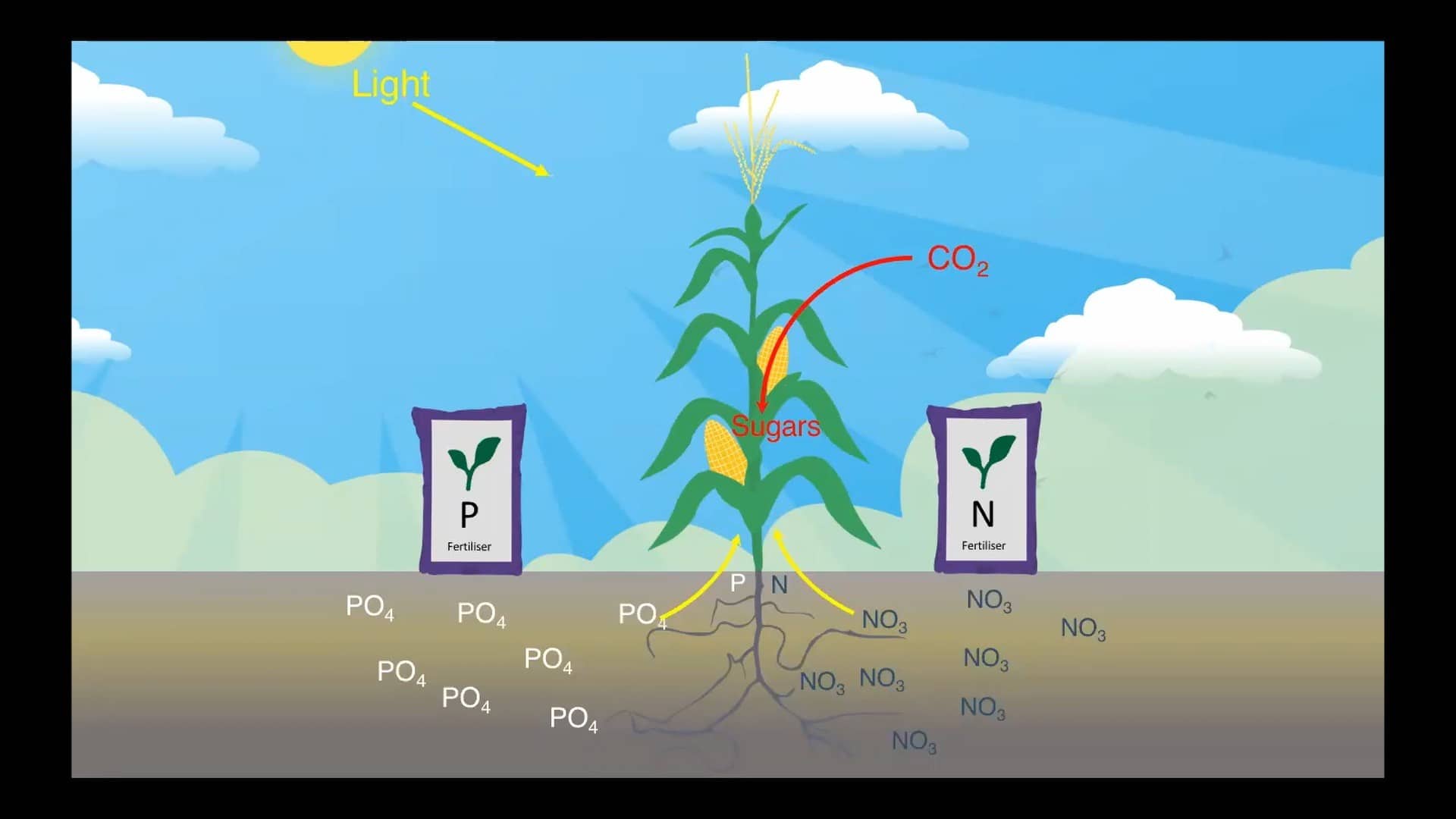
Dr Cara Griffiths, Chief Technology Officer and co-inventor of the SugaROx technology, explains that T6P plays a key role in controlling sucrose utilisation, which underpins plant growth, grain development and stress responses.

She says: “The collaboration between plant biologists at Rothamsted Research and carbohydrate chemists at Oxford University resulted in the development of a modified version of T6P. This was so effective at boosting wheat yields that we decided to protect the invention, and form SugaROx to develop this technology commercially”.

Initial field trials have established proof-of-concept, and further trials are being commissioned in 2022 to determine optimal application rate and other use conditions in wheat. The potential for this biostimulant to contribute to a low-carbon economy is huge: a 15% yield boost to wheat grain yields could provide a 24% uplift in gross margin for UK farmers, while reducing CO2 emission by 11% per loaf of bread.

Further product development is occurring to cover additional broadacre crops: maize, barley, millet and sorghum with promising results. SugaROx will also be developing T6P solutions for improvement in fruit quality, flowering, and stress tolerance.

“We are essentially making plants as productive as they can be at driving nutrients and carbon resources into grain yield, making every unit of agricultural land more efficient than ever before,” says Cara.

Dr Belinda Clarke, Director of Agri-TechE , comments: “Increasing the efficiency of photosynthesis is a holy grail for agriculture; I am sure SugaROx’s innovative approach will attract significant interest from the agri-tech innovation ecosystem. REAP has provided profile for many exciting early-stage businesses with collaborators, end users and investors. 14 of the companies previously featured have collectively raised over £92 Million in the last three years.”

Since 2020, SugaROx has attracted over £1.4M of funding from angel and VC investors, as well as receiving funding from Defra and Innovate UK through the Farming Innovation Programme for product development and market analysis for a wheat biostimulant. This latest round of investment will enable the company to launch more extensive field trials on wheat, start the registration process in key markets and obtain proof of concept for new products ideas based on this platform technology.

Cara says that the company is keen to talk to potential investors, commercial partners, and end-users about applications to a range of crops and geographies – the product offers potential for worldwide application.

Find out more at sugarox.co.uk. 

*Chemical intervention in plant sugar signalling increases yield and resilience nature.com/articles/nature20591


REAP 2022: Making Sense of AgricultureREAP 2022: ‘Making Sense of Agriculture’ – Tuesday 8th November 2022 

From yield mapping and precision livestock through to digital twins and cloud computing, at REAP 2022 we will be exploring the technology and looking at the implications from a field to landscape level. Making technology farm-centric is core to Agri-TechE ’s mission so a key feature of the conference will be a panel of farmers and producers discussing the emerging technologies and future scenarios.

reapconference.co.uk

WASWARE announces world’s first organic bioresin seed coating at REAP

Agri-TechE Article
Agri-TechE
Xiaobin Zhao, WASWARE, speaking at REAP 2022

Frasscoat uses a bioresin impregnated with a biopesticide created from insect frass to provide powerful, biodegradable seed protection. It has been developed by WASWARE to create a seed treatment that increases seed sprouting and seedling survival, enhances growth and repels pests, whilst leaving no chemical residues. Frasscoat was showcased by Prof Xiaobin Zhao of WASWARE at the Agri-TechE REAP 2022 Start-up Showcase.

The idea for Frasscoat emerged after a discussion between AgriGrub and Cambond in the Royal Norfolk Show Innovation Hub hosted by Agri-TechE . The discussion was facilitated by Dr Lydia Smith of Niab, an expert in the circular economy, who saw an opportunity for a collaboration between the two organisations to address a huge crop protection challenge facing agriculture following the withdrawal of many chemicals used for seed treatments.

AgriGrub is using chitosan, a natural stimulant for a plant’s defence system, to create a potent active ingredient for crop protection. The chitin comes from insect frass produced by the larvae of black soldier flies feeding on waste fruit. Cambond has created a bio-resin from dried distillers’ grains, a by-product from whisky production, that, when combined with plant waste, offers an alternative to oil-based plastics.

The two companies have collaborated to develop Frasscoat with WASWARE, Cambond’s product development arm, to take it to market.

Xiaobin Zhao, WASWARE, speaking at REAP 2022 (2)Prof Xiaobin Zhao explains: “Frasscoat has potential to be the first organically certified seed coating technology. Seed treatments typically use a polymer containing pesticide to provide protection to the crop during emergence. These chemicals leave residues in the soil and are unsuitable for organic crops.

“By combining a biopesticide that has been developed naturally by insects and a bio-resin created from plant materials and biological processes, the result is a plant protection product that is highly effective, bio-degradable and provides uses for materials that would otherwise have been wasted.”

WASWARE has been conducting trials of Frasscoat with Niab, the John Innes Centre and Rothamsted Research to verify the findings, which are very promising: seed germination is enhanced (>20%) and seedling growth is stimulated. There is also evidence of pest resistance properties.

Dr Belinda Clarke, Director of Agri-TechE , comments: “Increasing the germination rate and promoting strong growth in seedlings has been shown to improve crop resilience and performance. I am sure that WASWARE’s technology will attract significant interest from the agri-tech innovation ecosystem. REAP has provided profile for many exciting early-stage businesses with collaborators, end users and investors. 14 of the companies previously featured have collectively raised over £92 Million in the last three years.”

Find out more at was-ware.com.


REAP 2022: Making Sense of AgricultureREAP 2022: ‘Making Sense of Agriculture’ – Tuesday 8th November 2022 

From yield mapping and precision livestock through to digital twins and cloud computing, at REAP 2022 we will be exploring the technology and looking at the implications from a field to landscape level. Making technology farm-centric is core to Agri-TechE ’s mission so a key feature of the conference will be a panel of farmers and producers discussing the emerging technologies and future scenarios.

reapconference.co.uk

Same parents, different outcomes

Agri-TechE Article
Agri-TechE
Maria Jensen, Antler Bio, speaking at REAP 2022

“I have two racehorses with the same parents, but one has won 5M, the other €5K; why?” This was the question that fuelled the curiosity of Maria Jensen, founder and CEO of Antler Bio, to look at the impact of nurture on gene expression. The result is the EPIHERD Platform, a technology that bridges the massive data gap between an animal’s potential and its performance.

The company originally started by looking at racehorses, but is now focussed on the dairy industry, where more effective breeding and management would revolutionise productivity. Maria outlined the huge potential for Antler Bio’s technology in the Agri-TechE REAP 2022 Start-Up Showcase.

Maria explains: “A farmer can have two genetically similar cows on the same farm, but one might produce three times as much and is much healthier than the other. It’s evident that genetics alone does not explain these differences.

“I considered that if we could better understand the data behind the best producing and healthiest individuals and were able to more accurately identify the next generation of animals to meet these standards, then the industry could be producing at least three times as much high-quality produce with the current number of animals and with even fewer resources, thereby reducing methane output by up to 40%*.”

Current genetic testing looks for the presence and absence of gene variants that can affect different traits, such as milk yield, conformation, and fertility. These tests, however, do not quantify how much relevant genes are expressed and whether they are even active. It is also recognised that environmental factors such as nutrition, animal husbandry and stress can influence gene expression and directly impact the animal’s performance. Understanding these processes and their mechanisms is called epigenomics.

Maria continues: “Our innovative EPIHERD Platform focuses on the analysis of epigenomic data, looking at expression of key genes that impact health and performance, not just the presence or absence of a gene as with classical genetic testing. By measuring which genes are actually active in an animal and their level of activity we bridge the existing data gap between the animal’s DNA and the environment it resides in.

“In addition, by understanding which events trigger desirable or undesirable gene expression we can give precision recommendations regarding habitat, animal husbandry and feed in order to unlock the herd’s full potential and support herd health in a natural way.”

EPIHERD aims to help farmers:

  • Analyse herd performance against its actual potential
  • Improve animal management and husbandry in a targeted way
  • Strategically select individuals for breeding and production
  • Detect developing health disorders before any symptoms arise
  • Reduce GHG emissions/carbon footprints via increased efficiency
  • Gain a rapid ROI with low risk

Maria Jensen, Antler Bio, in the REAP 2022 Start-Up Showcase

Based in Dublin and Cambridge UK, the company has so far raised over £1M in equity and grants including from Innovate UK and is looking towards further fund raising.

“The Innovate UK project started in February 2022,” says Maria. “We are currently generating proprietary epigenomic data from samples such as blood and milk from dairy cattle and building the EPIHERD platform. This will deliver results and insights to the farmer in an easy-to-understand and actionable format. This platform is scalable to plants and even humans in the future.”

Dr Belinda Clarke, Director of Agri-TechE , comments: “The potential role of so-called epi-genomics in breeding improvement has been hugely under-exploited to date. I am sure that Antler Bio’s innovative approach will attract significant interest from the agri-tech innovation ecosystem. REAP has provided profile for many exciting early-stage businesses with collaborators, end users and investors. 14 of the companies previously featured have collectively raised over £92 Million in the last three years.”

Find out more at antlerbio.com

*Epigenetic regulation of milk production in dairy cows, Singh et al: pubmed.ncbi.nlm.nih.gov/20131087


REAP 2022: Making Sense of AgricultureREAP 2022: ‘Making Sense of Agriculture’ – Tuesday 8th November 2022 

From yield mapping and precision livestock through to digital twins and cloud computing, at REAP 2022 we will be exploring the technology and looking at the implications from a field to landscape level. Making technology farm-centric is core to Agri-TechE ’s mission so a key feature of the conference will be a panel of farmers and producers discussing the emerging technologies and future scenarios.

reapconference.co.uk

Solar-powered ActiveWater tech reduces salinity of water for agriculture

Agri-TechE Article
Agri-TechE

Zac Gazit, ALVÁTECH, presenting at REAP 2022

As further droughts are predicted worldwide there will be increasing demand for crop irrigation, but a lack of fresh water is causing extensive soil degradation. To overcome this issue, ALVÁTECH has developed ActiveWater, a sustainable and affordable solar-powered treatment for water that reduces its salinity by up to 50% and improves soil health, enabling poorer quality water to be used without harm to the crop or the environment. The company presented in the Agri-TechE REAP 2022 Start-up Showcase.

The London based company, which operates in 27 countries, is looking to expand into Europe and presented in the Start-Up Showcase at the Agri-TechE REAP conference. ALVÁTECH’s devices can be incorporated into existing irrigation systems and are already being used in Africa, LATAM, MENA and North America with the support of governments and NGOs such as the Red Cross.

Zac Gazit, CEO and Managing Director of ALVÁTECH, explains: “20% of all irrigated land has been lost by salinisation and in many arid and semi-arid regions the only accessible water source is saline or brackish.

“We have developed an innovative grower-friendly technology that enables farmers to use available high salinity water while improving soil biodiversity with every irrigation cycle. This advanced agri innovation repairs the soil, breaking down salt crusts and walls, improving water infiltration and plant growth.”

ActiveWater disrupts the way water molecules move and interact with other molecules and minerals in the soil. ActiveWater increases water absorption by the soil, reducing the salinity around the plant roots while improving nutrient uptake by the plants. This saves 20-50% of the water normally required for irrigation and reduces the need for fertilizers.

ALVÁTECH technology was tested by the Kenya Red Cross at Lama. Elijah Muli, Head of Disaster Management, comments that the ALVÁTECH device was fitted to reduce salinity in water and soil used for growing sweet melon and watermelon. The salinity was reduced from 2,722 Micro Siemens to 580 Micro Siemens in less than two weeks.

He observes: “The results were very clear and positive with a significant reduction in salinity. With ALVÁTECH treated water the crops were developing and fruiting with proper leaf coverage with a dark green colour. In the untreated control the fruits were few, developed poorly and leaf coverage was poor and yellowing.

Zac Gazit, ALVÁTECH, in the REAP 2022 Start-Up Showcase

“The Kenya Red Cross Society views ALVÁTECH as a possible solution to allow farmers to use water with higher salinity for irrigation, grow more and faster and avoid environmentally damaging and costly alternatives.”

Dr Belinda Clarke, Director of Agri-TechE , comments: “The summer of 2022 has been one of the driest on record, with many farmers in the east of England reporting brackish water in their bore holes. I am sure that ALVÁTECH’s innovative approach to water resources will attract significant interest from the agri-tech innovation ecosystem. REAP has provided profile for many exciting early-stage businesses with collaborators, end users and investors. 14 of the companies previously featured have collectively raised over £92 Million in the last three years.”

A UN report (2014) estimated that 62 million hectares, an area the size of France, of previous agricultural land has been salt-affected at an estimated global economic loss of US$27.3 billion per year*.

IPBES suggests that approximately 190 million acres (76 m.ha) of irrigated land has already been permanently lost to salinisation.

ALVÁTECH is offering the system in the form of weatherproof devices, which easily slot into existing irrigation systems. The technology is affordable and available on a subscription basis to make it more accessible to farmers.

Find out more at www.alva-water.com

*World Losing 2,000 Hectares of Farm Soil Daily to Salt-Induced Degradation: unu.edu/media-relations/releases/world-losing-2000-hectares-of-farm-soil-daily-to-salt-induced-degradation.html


REAP 2022: Making Sense of AgricultureREAP 2022: ‘Making Sense of Agriculture’ – Tuesday 8th November 2022 

From yield mapping and precision livestock through to digital twins and cloud computing, at REAP 2022 we will be exploring the technology and looking at the implications from a field to landscape level. Making technology farm-centric is core to Agri-TechE ’s mission so a key feature of the conference will be a panel of farmers and producers discussing the emerging technologies and future scenarios.

reapconference.co.uk

LST Secures Further sensorGROW Trials & Files Patent For nurturGROW

Member News
The views expressed in this Member News article are the author's own and do not necessarily represent those of Agri-TechE.

Light Science Technologies (LST), a leader in agritech, recently announced that it has contracts for two further sensorGROW experiments and files patent for nurturGROW

If the contracts are successful, which include one with a well-known UK brand of preserves, marmalades, and related goods, they might develop into subscriptions and generate recurring income of up to £167,000 over the course of three years. These trials are additional to those that were revealed in September and could be worth up to £940,000. LST continues to discuss sensorGROW studies with a number of other growers.

The all-in-one growing intelligence tool introduced earlier this year aims to give indoor farmers improved environmental management. Its advantages include decreased use of water, nutrients, fertilizers, and energy, as well as increased yields, healthier crops, and decreased waste.

LST has also submitted a PCT patent application to the Intellectual Property Office for its nurturGROW “tuneable” luminaire, which uses its ground-breaking LED grow lighting technology. Any indoor grower can use the slimline-designed grow lamp to modify the lighting output to minimize energy expenses and to precisely tailor the light emission spectrums to correspond to a crop’s growth cycle, enabling the grower to select the best lighting conditions for a variety of crops.

NurturGROW is especially suited for usage in a closed, climate-controlled growing facility and can maximize space because to its lower profile and custom length, making it ideal for vertical farms and other multi-layer growth applications. It can give up to 2.8 umol of efficacy, which helps to reduce energy consumption and operational expenses while maintaining performance.

Simon Deacon, CEO and founder of Light Science Technologies, said: “We remain focused on growing recurring revenues by providing technology, data collection, advisory and maintenance services for the CEA market. Our product range is steadily expanding and we very much look forward to building on our recent momentum.”

“We’re experiencing strong growth as the sector looks to grow produce more intelligently and sustainably, as global food security becomes more of a critical issue. COP27 is seeking to put more pressure on governments to urgently adopt a shift in thinking to rebuild the broken food system; this in turn will only create more demand for products and technology that offer an energy and cost-efficient solution, reducing reliance on imports.”

Suffolk New College: Impact Review for 2021-2022

Member News
The views expressed in this Member News article are the author's own and do not necessarily represent those of Agri-TechE.

We are proud to present our impact review document for 2021-22. Over the last two years, we have grown in geography, taking on the Rural campus at Otley and the Halesworth Skills campus, in a background of disruption through COVID and other factors.

Here the Impact Review document.

We have succeeded in ensuring that our learners’ experience has continued to be enhanced and that learners achieve well and go on to good destinations. Suffolk New College is strong financially which has enabled continuing investment. Of course, none of this would be possible without the dedication of our talented staff who go ‘above and beyond’ to support students in their time at College.

You can also find the Strategic Plan for 2022 – 2027. The 2022 – 2027 Strategic Plan for Suffolk New College has been developed in consultation with stakeholders, staff and customers. The Plan outlines the College’s ambitious goals for the next five years. Feel free to browse through our Strategic Plan.

Read the Strategic Plan here.

ATW22: Tuesday: SRC launches Tom v4 monitoring robot at REAP 2022

Agri-TechE Article
Agri-TechE

Sam Watson-Jones made the announcement at REAP 2022

Agri-TechE REAP Conference, 8 November 2022: Small Robot Co (SRC), a British agri-tech start-up for sustainable farming, today announced the launch of its next generation Tom v4 monitoring robots. This is a major milestone: commercialisation to both farmers and corporates. This comes just five years to the day from SRC’s initial unveiling at Agri-TechE ’s REAP Conference 2017.

Tomv4 is rolling out onto 20 farms in November to deliver SRC’s first commercial services for Per Plant Farming. Services will roll out to a total of around 50 farms throughout the coming year, with additional farm services in Suffolk and Shropshire. Farmers can try out the service on as little as 20ha, without a costly machinery outlay.

Meanwhile, pending corporate customer trials include nutrient company Mosaic (NYSE: MOS), world-leading research centre James Hutton Institute and leading fresh produce company G’s Growers. Five corporate trials are pending for 2022-2023, with a further seven in negotiation.

The first Per Plant services from the Tom V4 monitoring robot will optimise farmers’ existing sprayer equipment to reduce costs and inputs, by treating only the problem areas. This is anticipated to cut herbicide applications by around 77%, based on 2021-2022 field trials, and fertiliser by an estimated 15%. The potential is for far greater savings.

Sam Watson Jones, co-founder and President of Small Robot Company, says that automated commercial service is the major step forward: “Small, lightweight robots protect the soil structure, and detect problems before they escalate. This enables targeted application of small amounts of treatment, reducing costs and protecting yields. Our business model has made the service accessible to farmers with as little as 20ha, without a costly machinery outlay.”

Small Robot Company's Tomv4 (web)
Small Robot Company’s Tomv4

Dr Belinda Clarke, Director of Agri-TechE , comments: “The Small Robot Company was profiled in the REAP Start-Up Showcase five years ago and it has gone from strength to strength. It has worked closely with farmers to ensure the technology addresses a real-world challenge and it has received an enthusiastic response from the industry.”

Tom’s capabilities include precisely geolocated per plant data, precise plant counts, and extremely high-resolution plant images, with the opportunity for every field to become a trial plot. Tom V4 delivers a ground sample distance of 0.28mm per pixel, among the highest resolution of any crop-scanning technology. This gives Tom the capability to see individual water droplets on leaves and early signs of disease outbreak.

Tom Jewers, a farmer and contractor in Suffolk who signed up to the services for the 2022-2023 season, comments: “We desperately need to develop ways to reduce the need for expensive plant protection products and artificial fertilisers. The ability to treat only the plants that actually need it is game-changing.” Tom is also on the SRC farmer advisory board, taking a lead in co-designing SRC’s robotic service.

The service comprises three scans targeting:

● Winter wheat crop count and Per Plant visualisation
● Weed detection, geolocation and per plant imagery
● Glyphosate treatment sprayer export: green on brown map for targeted glyphosate application
● Herbicide treatment sprayer export: variable rate nitrogen application maps using plant counts and biomass assessments
● Fertiliser treatment sprayer export: variable rate nitrogen application maps using plant counts and biomass assessments

Tom V4 scans the crop to a level of detail that identifies individual plants, gathering data on plant and weed distribution to determine the optimum treatment path. This information is used to inform variable rate fertiliser applications and to spot-apply herbicides through nozzle control and sectional control sprays.

Tom V4 can successfully identify all the wheat plants, determining precise plant counts, as well as broadleaf weeds. Tom accurately geolocates and analyses data on every plant in the field with 6m camera coverage, and 8 x 6 megapixel cameras, gathering 15,000 images from its cameras, or 40Gb of per plant intelligence, for every hectare.

Tom v4 is also a major technical advancement: Tom’s new modular design is also the basis for Dick and Harry. SRC’s new modular robot architecture enables its robots to share 80% of the hardware, 90% of the electronics and all of the deployed software. This platform will allow SRC to scale internationally to cover much larger farms.

More about Small Robot Company

Research to better understand the economic value of biodiversity

Member News
The views expressed in this Member News article are the author's own and do not necessarily represent those of Agri-TechE.

Biodiversity supports everything in nature that we need to survive, including food to clean water.

From the plants, animals, insects, fungi to bacteria, biodiversity creates the intricate ecosystems we rely on.

7 new interdisciplinary studies announced today (8 November 2022) will improve our understanding the significant economic value of biodiversity and how it underpins our economy.

This will enable us to better manage our natural environment by directing investment to restore and conserve this vital natural resource.

Biodiversity under threat

Though the UK has more than 70,000 species of animals, plants, fungi and microorganisms, research has shown that we are also 1 of the world’s most nature depleted countries.

The studies have received a share of £6.4 million from UK Research and Innovation (UKRI) to study 7 key areas. They will:

  • inform the development of the world’s first biodiversity credit standards (similar to carbon credits) for valuing biodiversity for market trading and investment
  • test a new international approach to valuing nature using woodland sites in Wales, Helsinki, and Tanzania, as well as exploring how the value of woodland can be integrated into natural capital accounts
  • measure and map the acoustic properties of the UK’s natural soundscapes to better understand the value of nature to human mental health and wellbeing
  • value biodiversity in urban areas and new developments by understanding its benefits in providing drainage and recreation while reducing pollution, noise and intense heat
  • determine novel and robust economic, ecological and socio-cultural values of marine ecosystems, and embed these values in the co-development of green investment options including nutrient, carbon and biodiversity markets
  • investigate whether ‘virtual labs’ coupled with decision-support frameworks, can help us understand the complex interactions needed to support biodiversity
  • focus on ‘additionality’, a key goal of biodiversity policy stating that any intervention, be it a protected area, a performance-related payment or a biodiversity law, must provide additional biodiversity to what otherwise would have happened

Embedding biodiversity in the economy

The studies are all part of UKRI’s Economics of Biodiversity programme and will help to deliver on the recommendations from the government’s Dasgupta Review. The review found that biodiversity must be embedded in decision making to support nature recovery and halt biodiversity loss.

The funding has been provided by UKRI’s Natural Environment Research Council (NERC) and Economic and Social Research Council (ESRC).

Investing in biodiversity research

Professor Sir Duncan Wingham, Executive Chair of NERC, said:

The Economics of Biodiversity programme will address critical gaps in our understanding of the economic and societal value and benefits of biodiversity.

As governments work to tackle climate change and biodiversity loss at the COP27 conference and the forthcoming COP15 biodiversity conference, these UKRI-funded projects will support increased investment and improve management of biodiversity.

They will help us protect our natural environment and Earth’s carefully balanced ecosystems.

Further information

The projects form a major part of UKRI’s Economics of Biodiversity programme. The programme also supported 9 rapid research synthesis projects that produced summary reports of their findings.

An open programme information sharing webinar of the new awarded research projects and recently completed synthesis projects will be held on 8 November 2022 and a recording will be available after the event on the programme web page.

The projects

Developing a new co-designed decision support tool for biodiversity credits and investment

Led by Dr Richard Field, University of Nottingham (£799,560)

This project will do research that is needed to underpin the world’s first biodiversity credit standards, standards for assigning investable and tradable economic value to biodiversity. Biodiversity credits are quite similar to carbon credits.

Scientists in the project will field-test methods to quantify biodiversity of pieces of land or sea to enable the creation of biodiversity credits. They will use key indicators, such as the health of the vegetation and the numbers and abundances of species of birds and invertebrates to measure the biodiversity. In addition, market experts will user-test the tools and processes for the credit standard.

Biodiversity credits benefit landowners by enabling them to seek investment in rewilding and other biodiversity projects, organisations that are seeking to offset their impact on the environment from their economic activity, and people seeking to invest in nature.

Field sites: Knepp Farm in Sussex and Attenborough Nature Reserve in Nottingham.

NAVIGATE (Understanding NAture’s multiple Values for InteGrATion into dEcisions)

Led by Professor Mike Christie, Aberystwyth University (£799,726)

In July, 139 countries including the UK agreed a common approach to understanding the multiple ways people value nature and methods to embed these values into political and economic decision making.

The NAVIGATE project will, for the first time, use this IPBES value assessment approach to assess 4 areas of the UK, as test cases.

The field sites will be:

  • Welsh Woodland Trust forest in Neath, Wales, where woodland will be valued for its impact to reduce flooding, carbon storage and improving community wellbeing
  • UK National Forest, where scientists will value the benefits of woodland ecosystem services
  • Helsinki, Finland, which is one of the greenest cities in the world. Scientists will evaluation the benefits of trees and green spaces
  • Tanzania, where scientists will value the sustainably managed savannah woodland

Valuing the mental health and wellbeing benefits of nature engagement through measures of soundscape complexity

Led by Dr Simon Butler, University of East Anglia (£797,562)

Bird song provides the soundtrack to time spent outdoors and plays a key role in our experience of nature. The team will combine UK Breeding Bird Survey data with recordings of birds from the Xeno-Canto sound database to reconstruct natural soundscapes in different habitats and times across the UK.

Spatial variation in the acoustic properties of these soundscapes will be measured and mapped. Environmental psychologists will examine which acoustic properties convey benefits to human health and determine how noise pollution can reduce these benefits.

These findings will be combined with indicators of mental health and data on antidepressant prescription rates across the UK to value the contribution of biodiversity to human mental health

Sea the Value: marine biodiversity benefits for a sustainable society

Led by Professor Nicola Beaumont, Plymouth Marine Laboratory (£797,953)

Marine biodiversity provides a host of benefits including providing a source of food, capturing carbon, extracting phosphorus and nitrogen waste, providing jobs and being fundamental to our wellbeing.

The aim of the project is to determine the pluralistic values of marine ecosystems. This includes economic values but also ecological and socio-cultural values, and explores precisely who benefits from marine biodiversity and who is affected when these values change.

The determined values be applied in the natural capital accounts and also in setting up green investment schemes such as carbon, nutrient and biodiversity markets and Payments for Ecosystem Services schemes.

Research is focused on 2 field sites: The Solent in Southern England, and the Moray Firth in Scotland. At these sites communities and organisations will be engaged in mapping values and trade-offs, and in co-developing green investments to maintain and enhance marine biodiversity.

The lessons learned from these sites will be shared with coastal partnerships through a series of training exercises, enabling dissemination of best practice across the UK and beyond.

The project will also undertake a range of activities to train upcoming professionals in the valuation of biodiversity, transforming the future UK capability in this critical area.

Trustworthy and accountable decision-support frameworks for biodiversity: a virtual labs based approach

Led by Professor Gordon Blair, UK Centre for Ecology & Hydrology (£794,402)

The overall aim of the project is to investigate how to support transparent and accountable decision-making around biodiversity, using recent developments in digital research infrastructure.

Scientists leading this project plan to investigate whether virtual labs coupled with decision-support frameworks provide the necessary support to understand the ecosystems and support informed policy development and organisational decision-making needed in order to manage biodiversity.

Scientists this framework to test ideas from environmental accounting, ecosystem services and natural capital, and systems thinking approaches more generally.

This overall aim is to:

  • determine the best approaches to support good decision-making around biodiversity
  • test those ideas within a virtual lab forum
  • design a decision-making framework to enhance accountability and trustworthiness

Biurbs: valuing biodiversity in multifunctional urban development and environment

Led by Professor Grada Wossink, The University of Manchester (£778,143)

The UK government’s Nature Positive 2030 report recommends businesses, organisations, cities, and local authorities adopt targets to become nature positive.

Urbanisation and densification have resulted in environmental degradation and severe habitat fragmentation in towns and cities.

Biodiversity may benefit other ecosystem services, such as sustainable drainage, outdoor recreation, and noise and heat attenuation, yet the economic value of biodiversity is undercounted in existing planning tools.

This project will engage with decision makers and stakeholders, to help inform practical, well-grounded tools and guidance assess the economic value of urban biodiversity.

BIOADD: the economics of biodiversity additionality

Led by Professor Ben Groom, University of Exeter (£798,608)

The project’s aim is to understand the economic and ecological determinants of what makes interventions in biodiversity successful.

The project aims to use this information to provide guidance, evidence and tools for people deciding on investments and policymaking around biodiversity. These include:

  • government policy
  • central banks
  • financial institutions

Researchers will evaluate the potential of nature-based solutions to climate change, their contribution to biodiversity. They will investigate the potential for biodiversity to be priced using a target compatible, cost-based pricing method, illustrating the economy-ecology trade-offs that are required to meet societal targets for biodiversity to be consistently evaluated.

Scientists will also assess the Amazon rainforest, in particular Bolivia and Indonesia.

The project will create an online platform for evaluating nature-based solutions for climate change, and help the UK prioritise approaches to meeting its commitments to global biodiversity and net zero.

ATW22: Monday: field applications and opportunities using genetic technologies

Agri-TechE Article
Agri-TechE

NRP ATW22 speaker line-up
L-R: Event moderator Nick Goodwin (AIPLLP) with speakers Tim Teece (MKAI), Penny Hundleby (JIC), Darren Heavens (Earlham Institute) and Nick Talbot (The Sainsbury Laboratory)

The Genetic Technology (Precision Breeding) Bill returned to Parliament last week, so the Norwich Research Park event for Agri-TechE Week was very timely.

The first two talks described what can be done with genetic technology and that both gene editing and genetic modification should be seen as tools, not as a silver bullet, for addressing key challenges such as drought, plant diseases and productivity. Then a number of real life applications of tech with the power to improve farming were discussed.

Advanced breeding

Genetic technologies are ways of understanding, making or adapting genetic material. This can be achieved by a number of methods and there are differing opinions over how these can be regulated.

The two key categories are:

  • Genetic modification is when genetic material is introduced from a different organism to achieve a preferred characteristic.
  • Gene editing involves changing or altering the original base pair arrangements within the genome of an organism so there is no introduction of foreign genetic material. Techniques include CRISPR/Cas-9.


The key debate here is whether the new characteristic or trait could have been achieved eventually through classical breeding.

ATW2022 Penny Sparrow John Innes Centre
Penny Hundleby of John Innes Centre

Penny Hundleby of the John Innes Centre explained how gene editing works, highlighting some of the cool things that can be done with it when growing crops:

“Before gene editing, random mutations were induced and then the results selected to make new crops with desirable traits.

“The issue is that the breeder does not have control over where the mutation is; now with gene editing, we acquire a tool to gain control on which mutation is induced and where and to validate gene functions.”

Nick Talbot from The Sainsbury Laboratory discussed ‘the power of gene editing’. He explained how using wild relatives as a gene pool can provide a source of genes that can be used to make more resilient crops. With the introduction of the precision breeding bill it will become easier to run field trials for research purposes with GE plants.

ATW2022 NRP
Tim Teece of MKAI

Tim Teece from MKAI talked about the importance of collecting farm data to inform good farming decisions and how their blockchain solution works. He explained there are still challenges over data ownership and sharing.

Dr Darren Heavens from the Earlham Institute discussed AirSeq, which uses DNA sequencing to detect airborne pathogens near crop fields. He explained how it provides unbiased detection of airborne pathogens. The pocket-sized real-time sequencing creates the potential to screen in-field for the presence of pathogen, informing the farmer if and when to spray plant protection products.

There was also an interesting discussion about innovation at the interface between precision agriculture and precision breeding. By using drones and spectral imaging and AI, disease pressure can be identified early and a number of start ups are already leveraging these techs to achieve this.


ATW Logo 2022Agri-TechE Week 2022: 7th – 11th November 2022

Agri-TechE Week is a partnership initiative founded in 2014 by Agri-TechE with the Royal Norfolk Agricultural Association. It features a mix of in-person and virtual events that are designed to showcase exciting developments in agri-tech.

It is coordinated by Agri-TechE working closely with partners across the innovation ecosystem and aims to provide opportunities to attract new customers and partners and to broker collaborations and international connections.


Making Sense of Agriculture with Elizabeth Fastiggi REAP 2022

Agri-TechE Article
Agri-TechE

Elizabeth Fastiggi AWS
Elizabeth Fastiggi, Head of Worldwide Business Development for Agriculture at AWS

At this year’s REAP conference we will exploring the interface between the real and the virtual worlds, and how emerging technologies will enable improve decision making against a background of turbulence in the natural and economic environment.

From yield mapping and precision livestock through to digital twins and cloud computing, we will be asking specialists to explore the technology and inviting progressive farmers and producers to discuss the applications for agriculture. 

REAP keynote speaker Elizabeth Fastiggi of Amazon Web Services

To provide the big picture we are delighted to have Elizabeth Fastiggi, Head of Worldwide Business Development for Agriculture at Amazon Web Services (AWS), as the keynote speaker at REAP 2022.

By providing an infrastructure for cloud computing AWS is supporting the creation of a more sustainable and resilient food system.

Elizabeth says: “Our objective is to enable the entire industry to use data to deliver insights and improve outcomes.”

AWS’ customers large and small can use its tool kits to harness data to support better farming solutions, develop more efficient machinery and use machine learning and AI for improved decision support.

Elizabeth is one of a panel of experts who will be discussing how the virtual world is driving change in the real world, facilitated and grounded by Anna Hill, best known for her role as a presenter on BBC Farming Today

Leveraging the power of the cloud

Recent years have seen the development of an ‘Internet of Agri-Things’ – smart sensors and monitors that are connected to the internet and provide real-time information to farmers and producers.

Cloud computing is facilitating this by reducing the processing load for the sensors, and therefore the energy required. The role of the sensor is simply to collate data and transmit when connectivity is available and the processing is done on a remote processor ‘in the cloud’.

The development of cloud computing has opened the door for new types of agri-tech services. Early-stage companies can develop their products and services rapidly using toolkits, and farmers will be able to use ‘plug and play’ applications that don’t need lots of setting up or powerful computers for them to work.

One example is the smart collars being developed by herd management tool developer Halter. Its devices aim to improve the work/life balance for dairy farmers by enabling remote management and monitoring of the herd, even creating virtual fencing to improve the efficiency of grazing.

However, to be feasible, the device needs to be low-cost, lightweight and solar powered, and the company also wanted to be able to update its functionality remotely. This is where Amazon Web Services (AWS) comes into the picture.

Smart collars create virtual fencing Halter

Instead of trying to analyse the data in the field, the smart collar now sends information to the ‘cloud’.

Machine learning is then used to understand the implications of the data – the animal is lame; the calf has become lost – and to use this to create an instruction for smart equipment or to provide the farmer with an alert or decision support.

As a result of leveraging the cloud, the wearable device requires less computing power, can be charged by sunlight, and reprogrammed remotely.

Of course, you do still need a connection to the internet – but with the new network of communication satellites this too is improving.

AWS helping agribusiness harness data

Project Carbonview will enable farmers to report, analyse and better assess their end-to-end supply chain carbon footprint. Credit: Bayer

Elizabeth explains that AWS customers are not individual farmers, but the enterprise and start-up companies that work with these farmers:

“We work with customers across the agricultural landscape, including major equipment manufacturers and corporations, as well as start-ups.”

Customers include CropX, which is developing a system to detect crop stress by integrating soil data with numerous above-ground data layers such as satellite imagery and weather data, and Bushel, which is part of a collaboration developing Project Carbonview, a system that aims to track carbon emissions through the value chain from the farmer to the end purchaser of agricultural goods (categorized as Scope 3 emissions by the Greenhouse Gas Protocol).

Enabling automation, robotics and machine vision 

There is a myriad of ways where modelling of the real world can improve productivity in agri-food systems, but for Elizabeth Fastiggi the long-term viability of the food system is the biggest challenge.

“Several of our solutions – and those of our partners and customers – are focused on addressing sustainability in farming,” she explains.

“There is a collective recognition that no one organization can ‘go it alone’ and we must collaborate because of how complex and interdependent the agri-food system is.

“This makes me incredibly hopeful because I know we will get to much better outcomes – for people and the planet – through cooperation, and AWS is uniquely positioned to foster these cross-industry collaborations and help our customers work together to build a more sustainable and resilient food system.”


REAP 2022: Making Sense of AgricultureREAP 2022: ‘Making Sense of Agriculture’ – Tuesday 8th November 2022 

From yield mapping and precision livestock through to digital twins and cloud computing, at REAP 2022 we will be exploring the technology and looking at the implications from a field to landscape level. Making technology farm-centric is core to Agri-TechE ’s mission so a key feature of the conference will be a panel of farmers and producers discussing the emerging technologies and future scenarios.

reapconference.co.uk

Nurturing, supporting, scaling – the UK start-up landscape

Agri-TechE Blog
Agri-TechE

At REAP 2022 we will be unveiling the line-up of our much-anticipated Start-Up Showcase – seven exciting young companies succeed the 51 who have featured in the last eight REAPs. Showcase alumni include Breedr, Yagro, Small Robot Company, PBD Biotech, AgriSound and many more … click here to see ‘What Happened Next’.

REAP Start-Up Showcase attracts investment

Over the last three years, 14 of the start-ups appearing in previous REAP Showcases have collectively raised over £92M. But where is this money coming from and how does the UK compare to Europe when it comes to raising finance for growing agri-tech?

Early-stage ventures provide a vital engine of growth and innovation and early association with those ‘Who Could Make It Big’ is always a bonus. There are many that are keen to meet, help and support start-ups – from investors to potential partners and acquirers.

Some of these ventures will succeed, and many will fail, but their journeys provide crucial insights into the likely innovations on farms in the future.

A recent report by Forward Fooding reveals that 2020 saw the creation of a massive 709 start-ups, (second only behind the US with 1,924). Vertical farming companies and those from the plant-based meat sector top the charts as compared with Europe, but farm management and precision farming companies also featured strongly.

The amount of money flowing into these businesses is significant and they are good at raising money – in the last decade an impressive €5.1 bn has been raised by agri-food start-ups.

But here is the thing…

start-upsOf the investment into the sector in 2020, 63% came from overseas investors. And there is more overseas money to come…

Recently, Agri-TechE has been working with the Department for International Trade Venture Capital Unit to help identify UK agri-tech companies ready for more significant investments – in the range of £5M to £100M. This finance is being sourced from international investors keen to invest in one of the most innovative and vibrant global agri-tech ecosystems.

The goal of this inward investment is to ensure that the value creation resulting from the R&D and company formation leads to real value capture and that companies are supported to scale-up and thrive where they were founded.

start-up showcase

All great news…

The Forward Fooding report highlights the numerous UK-based accelerators. The Agri-TechE network has no shortage of supportive and nurturing incubators, together with increasingly wise CEOs who have successfully exited their business and are ready to invest and support again.

An enabling, and world-leading environment for start-ups to thrive.

The rest of the world is looking – and investing – with great interest into UK-grown companies. We need to make sure that continues and that start-ups are supported to look global from the outset for their fund-raising.

Click here to be among the first meet the REAP 2022 Start-Up Showcase companies.

Smart farming technology to tackle black-grass problem

Agri-TechE Article
Agri-TechE

An innovative project for black-grass control that aims to use precision farming technology, sensors and AI  xarvio Field Managerto deliver a smart sprayer for targeted applications has gained funding from the Farming Innovation Programme – Small R&D Partnership Projects. The collaboration will include Agri-TechE members BASF Digital Farming and Rothamsted Research along with experts from Bosch and Chafer Machinery.

Black-grass economically damaging

Black-grass (Alopecurus myosuroides) is a weed that inhibits the growth of wheat crop, reducing its yield and therefore damaging the productivity of farms.

It is threatening the sustainability of UK cereal production.

David Comont from Rothamsted Research said: “Black-grass has become the UK’s most pressing weed problem, resulting in considerable wheat yield losses annually and causing ever-increasing herbicide use as farmers attempt to control this species.”

It is estimated that the weed is responsible for annual wheat losses of up to 800,000 tons, with associated economic losses of approximately £400 million.

Using the Bosch Smart Spraying camera technology and software, Chafer will design innovative boom sprayers to detect, identify and map black-grass at different growth stages within cereal crops across a farm. The smart sprayer technology will be tested on commercial farms selected from the Rothamsted Black-Grass Research Initiative (BGRI).

Agronomists from Rothamsted will label the images and will support Bosch in training algorithms to recognise black-grass in cereal crops. This information is then processed and analysed by BASF Digital Farming and delivered to its advanced xarvio Digital Farming Solutions crop optimization platform.

In the platform, the information will be used to map infield populations to support the development of integrated weed management plans for targeted black-grass control.

Additionally, beside a superior performance in black-grass control, the project could result in reduced herbicide volumes sprayed in-field. This would minimise unintended direct consequences on other organisms and reduce the potential for leaching into other vulnerable ecosystems, such as waterways.

Daniel Ebersold, Head of Digital Farming Project House (Smart Machinery) at BASF Digital Farming, said: “Developing “smarter” systems which can automatically monitor and more precisely spray this weed has the potential to maximise control, whilst reducing both herbicide use and costs to farmers.

“By working together on this important project our shared aim is to find an innovative solution that will measurably reduce the impact of black-grass infestation over time.”

More about BASF and Rothamsted Research.