The Productive Landscape: NatureTech for Profit and Planet
How can technology enable delivery of food, nature recovery, and climate resilience - all at once? The Head of the Environment Agency is asked: what's the national plan for dealing with land use pressures, plus you’ll hear from technologists and land managers working on nature-based and tech-enabled solutions for water, soils and climate adaptation.

WoodTech project for University of Lincoln and Elsoms

Meet the Network
Agri-TechE

New WoodTech to support the modernisation of tree nurseries will benefit from a £20m ‘Tree Production Innovation fund’ announced by the government announced to improve tree planting stocks, woodland resilience, domestic timber production and accelerate tree planting across England. Also announced is the Woodland Creation Accelerator Fund to support local authorities and rural communities increase tree planting. 

Robotic nurseries

One of the projects is aimed at creating a robotic solution for plant processing, called Intelligent Singulating and Labelling of Developing trees Using Robotics (ISILDUR) it is a collaborative project between the University of Lincoln, Elsoms and Royal Botanic Gardens Kew. It aims to automate elements of the forest nursery sector and build capability into robotics

ISILDUR will work with tree nurseries to address labour shortages in the forest nursery sector by developing an intelligent robotics solution for plant processing. The project will involve the design and prototype demonstration of a novel 2-robot solution, combining flexible robotic manipulation and intelligent machine vision in a system capable of performing singulating (using an RFID reader to identify tags used to label trees), grading, counting and packaging.

Increasing germination

In addition, Royal Botanic Gardens Kew, working with Elsoms Seeds and Elsoms Trees, will investigate germination and morphological traits in UK native tree seeds. The project seeks to better understand how such traits vary between wild populations and commercial seed batches, explore how this variation relates to environmental conditions, and apply this knowledge to optimise seed quality and germinability by developing innovative high-throughput seed screening techniques.

Ted Chapman, UK Conservation Partnerships Coordinator, Royal Botanic Gardens Kew, explains that seed lies at the heart of the tree supply chain but, unlike most crops bred for consistency and ease of cultivation, native tree seed is inherently variable in size, shape and germination behaviour. He says: “Understanding this variation and how it impacts on seed quality and germinability will be key to designing efficient production processes, reduce waste and make a wider range of seed available.

“Our TPIF project is an exciting opportunity to link science directly to industry, combining Kew-led research into the morphology and germination ecology of tree seeds with technical development and application in high throughput screening techniques at Elsoms. We are delighted to continue our work and look forward to sharing what we learn as the project progresses.”

Other projects include the University of Cambridge’s TIMBER project, which is designing and creating prototypes for new building materials to drive home-grown, low-carbon and long-lasting construction nationwide.

Unleashing potential of forestry with WoodTech

The United Kingdom consumes 53 million tonnes of wood and wood products each year; however, 81% is imported from abroad. The major investment announced today will support projects developing new technologies and working practices to help homegrown timber production meet a greater proportion of domestic demand. This will help to improve timber security and grow the United Kingdom’s forestry and primary wood processing sectors, which support 30,000 jobs and contribute over £2 billion to our economy every year.

Sir William Worsley, Chair of the Forestry Commission, said: “These funds will unleash the potential of the forestry sector by championing nurseries, charities and businesses operating at the forefront of technological innovation. They will help more people across society get trees in the ground at an unprecedented pace and scale, whilst ensuring their resilience for future generations.

“Through the Woodland Creation Accelerator Fund, local authorities have set out a range of inspiring and ambitious plans which equate to more than 10 million trees being planted on public land across England by 2025.”

New funding streams

Tree Production Innovation Fund

The Tree Production Innovation Fund aims to support innovative projects which explore how new technologies and ways of working can enhance the quantity, quality, and diversity of tree planting stock in England. This will serve to supply young trees in the quantities required to realise ambitious tree planting goals over the coming years. £4.5 million has been made available to support 13 organisations operating across the forestry industry, including collaborations between nurseries, researchers and charities.

Woodland Creation Accelerator Fund

Staff employed or trained through the Woodland Creation Accelerator Fund can include project managers, woodland creation officers, community engagement officers, funding consultants or specialist advisors, such as landscape architects or archaeologists – with each new job created boosting the local economy. Together, the staff will focus on developing planting plans, applications for capital funding in 2023/2024 and 2024/2025, and speeding up the delivery of new woodlands, contributing to our plans to reach net zero emissions by 2050.

How can we scale regenerative farming?

Agri-TechE Blog
Agri-TechE

How can we scale regenerative farming? Following the COP27 discussions in Egypt, this month we look at mindset, money and markets, and how to harness them to influence a more regenerative approach to food production. A recent report from the Sustainable Markets Initiative (SMI) Task Force suggests a tripling of land under such a management approach is needed (up to around 40% of cropped land globally) to reach the climate goals by 2050 and mitigate the predicted 1.5°C rise in the Earth’s temperature.

How will farmers be rewarded for regenerative agriculture?

Scaling Regenerative Farming report coverThe Sustainable Markets Initiative Agribusiness Task Force report ‘Scaling Regenerative Farming: An action plan’ reveals three main reasons why regenerative approaches are not scaling:

  1. The short-term economic case is not compelling enough for the average farmer
  2. There is a knowledge gap in how to implement regenerative farming
  3. Drivers in the value chain aren’t aligned

The reasons why regenerative approaches are yet to be widely adopted are not rocket science – either the economic case is weak, there is a knowledge gap around implementation, or the drivers in the value chain are misaligned with the positive (sometimes costly) changes that farmers are making on the ground.

Co-authored by the CEOs of some of the major global agri-businesses (including retailers, processors and input suppliers), the SMI report identified a set of solutions needed to at least tackle the economic barrier to adoption. These include:

  • Agreement of common environmental metrics, around which additional income for farmers can be generated.
  • Creating mechanisms to share the cost of farmers’ transition to regenerative agriculture
  • Policy reform to reward farmers
  • Sharing costs across the value chain.

It is this latter point which we’d like more detail on.

Many governments are already incentivising a shift to more regenerative and sustainable solutions for farmers, and the common environmental metrics has a lot of people working on them in both the public and private sector (spoiler alert – but not quite there yet!).

Yet sharing costs across the value chain – and, crucially, being fair to farmers – is something that can and must be implemented as a matter of urgency.

At the recent World Agri-TechE Investment Forum, there was much talk of consumers not being willing to pay extra, and hence the farmers likely bearing the brunt of the transition at their own risk and cost.

Collaborative approach across the value chain

Improving collaboration (always an easy one to call for!) and a change in mindset (ditto!) are cited as ways of achieving this by the report authors, along with taking evidence-based methodologies to decisions and accepting ambiguity. There is also a call – not quite a commitment – to assign regenerative agriculture approaches across commercial and procurement teams in big corporates, not just within the sustainability teams.

The report also contains a call-to-arms of actions for different players across the value chain, from landowners, to farm advisors, retailers to input suppliers, and governments to the financial services industry.

So, everyone has the opportunity to contribute to the shift to regenerative agriculture.

But to paraphrase George Orwell’s Animal Farm, while all animals are equal, some are more equal than others. And while everyone has a part to play in the world embracing regenerative agriculture, it is clear that some have a greater part than others.

Pea and Bean 2023 Descriptive List Launched

Member News
The views expressed in this Member News article are the author's own and do not necessarily represent those of Agri-TechE.

The Processors and Growers Research Organisation (PGRO) has launched today its Descriptive List for 2023. Seven new varieties have been added to this year’s Descriptive List, which is eight more varieties than the 2022 list. These new varieties include six new combining peas, one new winter bean, and up to four new spring beans.

Download the lists here from the PGRO website.

Norwich company aims to reduce emissions with plant-based composites

Member News
The views expressed in this Member News article are the author's own and do not necessarily represent those of Agri-TechE.

With a growing focus on sustainability across all industries, Cellexcel, a company based at the University of East Anglia (UEA) at Norwich Research Park, has launched a new technology to enhance the performance and increase the usage of plant-based materials in manufacturing. Its technology is forecast to extend and accelerate the adoption of biomaterials, leading to a significant reduction in greenhouse gases.

Cellexcel is a spin-out company from UEA and was formed to take advantage of the rapid growth forecast for the use of composite materials in industry. The market was worth $23bn in 2021 and is expected to grow to $80bn by 2029. The ability to replace materials, which generate CO2 emissions, with biomaterials has become a matter of urgency across multiple industries, including automotive and aerospace.

Cellexcel’s technology was created through the work of Prof Richard Stephenson, CSO of Cellexcel and Emeritus Professor School of Chemistry at UEA, which is a partner organisation of Norwich Research Park, one of the world’s most acclaimed centres for bio-based science research.

Tim Pryce, executive chair of Cellexcel, said: “There are major benefits to Cellexcel of working with great associates at both UEA and Norwich Research Park. Firstly, they provide a great technical resource, right on our doorstep, but critically, the team at Anglia Innovation Partnership LLP – the science park management company at Norwich Research Park that manages campus-wide initiatives – facilitated pre-seed funding that enabled us to prepare our business plans, retain talented staff and introduce key people drivers, within multi-national global businesses.

“It’s provided a great launch pad for Cellexcel and will be able to do the same for other spin-out companies.”

Composites, as the name suggests, are materials that are made up of a number of different elements – a reinforcement material embedded in a resin. Some of the most common in use are fibre glass reinforced resins and carbon fibre reinforcing materials, and along with thermoplastics they are used to make components such as panels for cars, aircraft and high-performance bicycles. Traditional composites like these, as with polycarbonate plastics, consume a massive amount of energy in their manufacture and thus create high CO2 emissions.

A change to bio-based composites made from materials like flax or hemp would make a measurable  difference. Not only do they not need as much energy in the manufacturing process, growing a field of hemp or flax in the first place will absorb a significant amount of CO2 out of the atmosphere.

As an example, if fibreglass material was replaced with a bio-composite, then approximately three tonnes of CO2 per tonne of fibreglass would be saved. With such rampant growth in demand forecast for composites, replacing fibre glass and carbon fibre with bio-composites could become a positive contributor to the environment.

Currently, bio-composites account for just 6pc of the market. The big challenge is how to replace thermoplastics and fibreglass with bio-materials. If the market moves from a 6pc to 12pc bio-composite usage, that is a $10bn opportunity.

Cellexcel’s primary technology is focused on enhancing the water resistance properties of flax and hemp materials, enabling them to then be employed in a much wider range of applications, from lawnmowers, to drones and external automotive panels.

In dry environments, like the inside of a car, bio-composites work well, but for exteriors there is a need to improve their performance. Cellexcel is applying an innovative approach to this and is chemically modifying the plant material to enhance their properties, such as water resistance.

Cellexcel is looking to expand its product portfolio and technology offering and believes that it can make in-roads into both the aviation and automotive sectors as well as other high-performance applications.

Tim said: “The demand for bio-composites is being driven by industries seeking more sustainable solutions. The technology advances in this area are proving to be attractive to investors who view sustainability as a key shareholder goal. The desire to reduce emissions will lead to the ultimate success of bio-composites being adopted on a large scale.”

Nick Goodwin, COO of Anglia Innovation Partnership LLP, said: “Cellexcel is a great example of the commercialisation of research taking place at Norwich Research Park. These are people with ingenious ideas, working hard to develop and test them in laboratories and workshops and then, with data to prove their theories, they leap into business to maximise the societal impact by setting up a company, developing a plan and raising money to fund their new idea.

“We have been working with Tim, and his team, to fund early-stage business formation activity and helped to put in place some options for seed funding, to enable future growth. Without doubt, the reduction of carbon emissions in manufacturing is a global challenge and it’s one that people here at Norwich Research Park are making significant progress in addressing – something that we can all be really proud of.”

For further enquiries, please contact tim@cellexcel.co.uk

If you would like to keep up-to-date with developments at Norwich Research Park you can subscribe to our newsletter in the footer below.

Schneider Electric leverages AI to accelerate growth for Jones Food Company

Member News
The views expressed in this Member News article are the author's own and do not necessarily represent those of Agri-TechE.

Schneider Electric, a specialist in digital transformation of energy management and automation, has announced a new partnership with Jones Food Company to design and install leading AI-driven software designed to optimize growing conditions and improve energy efficiency.  

Jones Food Company (JFC) is one of the UK’s leading agri-tech companies, building vertical farms that supply 24,000kg of fresh produce weekly to customers around the UK.

Schneider Electric is providing Jones Food Company with the state-of-the-art AVEVA Flex subscription, supplied by Aveva Select UK and IR, creating a centralized, automated model for data analysis that is flexible and scalable to JFC’s requirements. The subscription model includes the AVEVA Advanced Analytics Module. The AI-driven software solution enables JFC to make real-time changes to growing conditions (including temperature, humidity, nutrient mix, and water quality) to produce a higher yield at a lower energy cost.  

Vertical farming is an energy-intensive process by nature, using controlled environments and growing vast amounts of fresh produce. In the current energy market environment, spiraling costs mean that Jones Food Company must ensure that every kilowatt of energy input returns the maximum output.  

Schneider Electric has helped JFC to achieve this by using AI to accurately detect and adjust the growing environment to the optimum temperature. As a result, the yield produced has more crops grown to specification dimensions, reducing food waste and handling time in the sortation stage. This will ultimately enable JFC to deliver value quicker to its customers by accelerating the speed to market.  

“Jones Food Company is one of the most exciting young companies in the UK agri-tech scene – they’re revolutionizing the way that agricultural supply chains are built,” said Mark Yeeles, VP of Industrial Automation at Schneider Electric. “Real-time, rich data is essential for JFC to create the foundation upon which they can develop and meet ambitious growth targets, and I am thrilled that they have selected us as a partner to support them on their journey.”

“Automation is at the heart of everything we do,” added James Lloyd-Jones, CEO & Founder of Jones Food Company. “Without it, we wouldn’t be able to produce our high-quality, high-yield crops sustainably. Schneider Electric’s advanced technology and premium service level has meant we can continue to innovate at breakneck speeds. At the same time, our employees learn from Schneider’s support team, expanding their knowledge of the technology at our disposal.”

Lighting increases tomato yield by 12% – Light Science Technologies and CHAP trial finds

Meet the Network
Agri-TechE

Light Science TechnologiesSupplementary light was found to increase tomato crop yield by up to 12.1%, a trial by Light Science Technologies (LST) and CHAP has found. 

The 5-month project used three different lighting combinations to see which produced the most yield for the least energy, while finding the optimum balance between energy and yield.

The first used LST’s nurturGROW interlight only, the second used its nurturGROW high power top light and the third used both types of supplementary lighting.

The results showed that supplementary light increases crop yield by up to 12.1% even when used in summer months and that top lighting only is the most energy efficient lighting regime with 38.2% more fruit per kWh. The trial also revealed that interlighting only was the top performing light regime.

During the trial period, 7,880 tomatoes were grown, collectively weighing 615.31kg and with 7449.15kWh total energy used.

Andy Williams, Marketing Director at LST said: “The trial has shown the tangible gains and benefits of using an energy efficient grow light on vine crops, with further energy saved as the luminaire turns off when not needed. nurturGROW also reduces light wastage with its recyclable and reusable design, making it more sustainable.”

The project was carried out in conjunction with CHAP at the Stockbridge Technology Centre (STC), at their Advanced Glasshouse facility in Selby, North Yorkshire.

Light science increases yield

The facility enables new plant protection products and integrated crop protection programmes to be robustly assessed in field, glasshouse and hydroponic systems. Light Science TechnologiesThis provides benefits to food producers by offering more reliable trial conditions for their products, especially for biopesticides, with consequent benefits to the crop production sector in the form of increased product availability.

CHAP’s Technical Liaison Officer, Lucy Plowman, said: “Lighting has a huge impact on the success of glasshouse-grown crops, particularly in a grower’s ability to extend the production season for vine crops such as tomatoes. But, recent price hikes in energy costs means it is critical to ensure it is efficient as well as effective.

“The research undertaken by LST will help growers to strike this balance, as well as address environmental concerns associated with both energy waste and produce imports.”


More about Light Science Technologies Ltd

More about Crop Health and Protection (CHAP)

Agri-TechE Week kicked off with a bang at Norwich Research Park

Member News
The views expressed in this Member News article are the author's own and do not necessarily represent those of Agri-TechE.

The team at Anglia Innovation Partnership LLP (AIP LLP), the science park management entity of the Norwich Research Park, were delighted to organise and hold the first event to kick things off for this year’s Agri-TechE Agri-TechE Week.
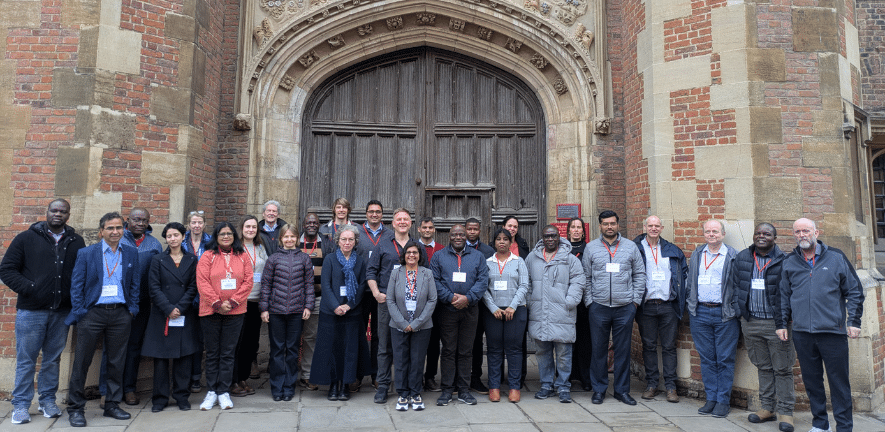
The event, entitled ‘field applications and opportunities using genetic technologies’ discussed the exciting innovative possibilities that the application of genetic technologies, when combined with continued developments in AI and automation, has the potential to bring to sustainable agriculture, providing solutions to global challenges such as sustainability and productivity.

The event featured four fantastic presentations from experts in the field, three from the park, Professor Nick Talbot (The Sainsbury Laboratory), Dr Penny Hundleby (John Innes Centre) Dr Darren Heavens (Earlham Institute) and we were also thrilled to be joined by Tim Teece, Technical Strategic Advisor from Morality and Knowledge in Artificial Intelligence (MKAI). The presentations were followed by a lively panel discussion with lots of thought-provoking audience questions. the event concluded with time for networking and refreshments.

Professor Nick Talbot from The Sainsbury Laboratory and Dr Penny Hundleby from the John Innes Centre explained gene editing technology and outlined current research applications as well as potential future applications for farming. Examples included gene editing to stop premature pod shatter in oil seed rape and the creation of non-browning bananas.

Dr Darren Heavens from the Earlham Institute discussed a specific cutting-edge technology, AirSeq, which uses a device that uses real time sequencing technology to detect airborne pathogens. This can provide a farmer with key information that a specific pathogen is present in the area providing them with essential knowledge that will allow them to act swiftly and with precision.

Tim Teece of MKAI showed an example of their Agricultural Data Aggregation Platform (ADAP) that leverages blockchain and AI technology to collect data consistently that will help farmers make more informed decisions, improve their strategies, be environmentally friendly and create a peer-to-peer network.

Diego Durantini, Agri-TechE Interdisciplinary Manager at Agri-TechE , said, “The Norwich Research Park pulled off a great event, assembled a lineup of amazing speakers, and engaged the community with thought-provoking talks. A fantastic event to start Agri-TechE Week 2022!

Nick Talbot, Executive Director of The Sainsbury Laboratory said, “There is enormous strength in the Norwich Research Park in Agri-TechE with discovery science expertise in plant and microbial sciences and innovative ideas in how to provide new solutions and products for agriculture.  There is a twin revolution underway in agriculture currently, with advance genetic technologies offering real hope to provide low input, high output crops with increased resilience to environmental stress, in addition to the artificial intelligence and autonomous vehicle revolution providing sustainable infrastructure to the farming industry.  The institutes in the NRP have much to offer in Agri-TechE as this event clearly demonstrated.”

The event attracted a varied and engaged audience, which was very buzzing during the break sessions and asked a lot of insightful questions to the panel.”

A great summary of the event can also be found on the Agri-TechE website here!

About Agri-TechE Week

Agri-TechE Week is a partnership initiative founded in 2014 by Agri-TechE with the Royal Norfolk Agricultural Association. It features a mix of in-person and virtual events that are designed to showcase exciting developments in agri-tech.

It is coordinated by Agri-TechE working closely with partners across the innovation ecosystem and aims to provide opportunities to attract new customers and partners and to broker collaborations and international connections.

90 days free member access to Burleigh Dodds Science Publishing database

Member News
Agri-TechE

Burleigh Dodds Database

Members of Agri-TechE will have access the world’s most comprehensive agricultural science publishing database for 90 days, the first in a series of member-to-member offers it was announced at REAP.

Dr Belinda Clarke, Director of Agri-TechE said:  “We were excited to launch a new initiative to help members help each other. The scheme will enable members to offer opportunities and benefits to other members, and we are delighted to announce Burleigh Dodds Science Publishing as founder partners in the scheme.”

Burleigh Dodds curates an agricultural science database, compiled by 4,000 internationally recognised experts with over 120 titles and 1,800 chapters. The resource can be customised to meet the user’s requirements, so they are presented with the most relevant information.

All Agri-TechE members have free access to the database from 1st Dec 2022 to 28th Feb 2023, with an additional discount on purchase of any books.

Rob Burleigh says:  “The trial provides a good opportunity for members to explore the database and see which content is of greatest value to them. Recently published and forthcoming volumes have focused on the latest work on soil carbon sequestration, pollinators and crop sensors. It can be hugely time saving to have all this information available in one place.

“For those involved in the livestock sector we have two new books on poultry flock health and poultry meat quality, as well as another new book focussed on pig herd health and production.”

Following the trial the user will be able to select the content they are most interested in and Burleigh Dodds can tailor the database to specific requirements.

Burleigh Dodds had a stand at REAP 2022, and one of the delegates was delighted with  Professor Watkins book, Advances in post-harvest management of horticultural produce.  She said: “It’s great. All the key information is included, meaning that I don’t have to waste time looking elsewhere for the key research – it’s all here in one place.”

If you an Agri-TechE member interested in taking up the offer, please get in touch with us.

Innovate UK and BBSRC announce new strategic partnership

Member News
The views expressed in this Member News article are the author's own and do not necessarily represent those of Agri-TechE.

Innovate UK and BBSRC are partnering to invest over £50 million in strategic innovation programmes to help UK businesses collaborate with the UK research base.

Boosting innovation

Innovate UK and the Biotechnology and Biological Sciences Research Council (BBSRC) are partnering to co-develop and jointly invest in a range of new strategic innovation programmes.

This will accelerate the translation of bioscience and biotechnology research into commercial products, processes and services that improve lives and livelihoods through helping to address national and global societal and environmental challenges.

Successful partnership history

A new series of joint programmes will be announced over the coming weeks and months. This builds on a highly successful partnership between BBSRC and Innovate UK.

This partnership has, for over 15 years, invested millions of pounds to support hundreds of businesses and academic researchers in collaborating with each other across diverse areas including:

  • agri-tech
  • industrial biotechnology
  • engineering biology
  • integrated omics
  • biofilms
  • regenerative medicine

The creation of UK Research and Innovation (UKRI) has strengthened this partnership and collaborative working, helping to build a thriving, inclusive research and innovation system.

Investing in collaborative research and development (R&D)

Innovate UK and BBSRC have set out these programme commitments in detail in the recently published strategic delivery plans. These programmes will help to support innovation in UK bioscience, build connections across the innovation ecosystem and stimulate private sector investment in R&D.

These programmes and activities will span research and innovation that will focus on a multitude of areas, including:

  • biofilms and broader microbial communities
  • bio-based manufacturing
  • improved diet, nutrition and health
  • more sustainable food production systems, including novel proteins

Keep an eye out for the new series of funding opportunities by signing up to the UKRI newsletter and Innovate UK newsletter.

Accelerating innovation

BBSRC Executive Chair, Professor Melanie Welham, said:

As set out in the BBSRC strategic delivery plan 2022 to 2025, our partnership with Innovate UK is an important part of delivering our ambition to drive and accelerate innovation.

It supports researchers, innovators, and businesses in translating fundamental understanding of biological systems.

This is a partnership with a long history of success in providing joint support for innovation and commercialisation, and I look forward to this continuing with a new series of strategic bioscience innovation programmes to be announced over the coming months.

A strong strategic partnership

Innovate UK CEO Indro Mukerjee said:

Innovate UK has been building a strong strategic partnership with BBSRC to support collaboration between business and the UK research base.

This partnership consists of co-created programs across the biosciences and biomanufacturing. It is a good example of the active collaboration work with all the research councils and Research England across UKRI.

ATW22: Friday: Sensors and robotics for soil health and soft fruits

Agri-TechE Article
Agri-TechE

Robotics and automation was the theme for the final Agri-TechE Week 2022 event, held at the University of Essex. Above, Below and Around at Essex Uni feat

strawberry picking robot designed by Dr Vishuu Mohan credit Essex University
Strawberry picking robot designed by Dr Vishuu Mohan with Wilkin & Sons. credit: University of Essex

Robotics for soft fruit

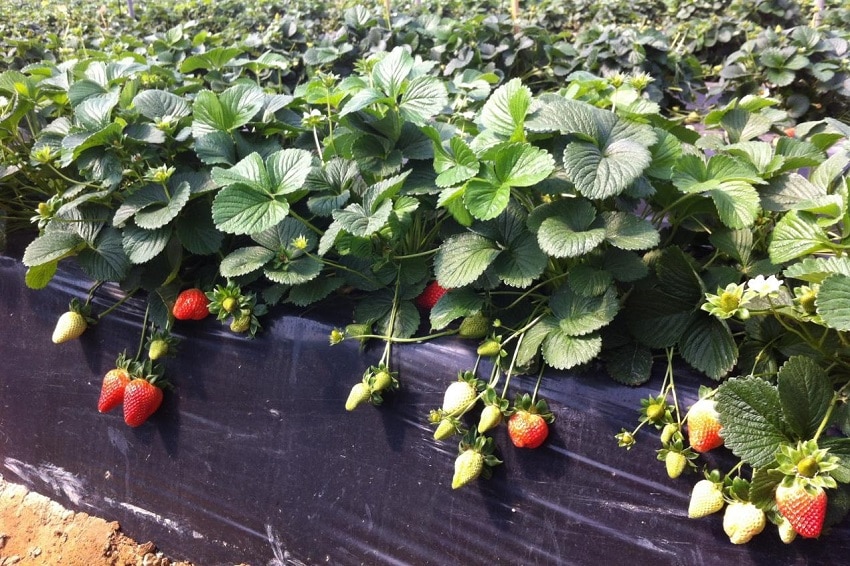
Currently one billion strawberries are picked by hand at Tiptree every year, by humans who have half a second to check the strawberries for ripeness, disease and size. There is a national shortage of labour and so Wilkin & Sons of Tiptree has been working with Dr Vishuu Mohan, from the School of Computer Science and Electronic Engineering, at University of Essex, to investigate how robots can work in natural, unstructured environments.

The team has come closer to developing a robot that can pick, inspect and pack soft fruits, work alongside humans in a farm environment and also reduce production costs.

Andrey Farm Manager at Tiptree
Andrey Ivanov, Farm Manager of Wilkin & Sons of Tiptree discusses collaborative research

Andrey Ivanov, Farm Manager of Wilkin & Sons of Tiptree, took us through the farm innovation journey from field production to protected tabletop strawberries.

Continual investment has led the farm to become 90% self sufficient for water, and in an average year they have more than enough water to see them through the growing season (2022 has of course been particularly dry). Experimentation in density of plants has also led to an optimal linear meters per hectare of plants, more than twice the original infield density.


Wilkin & Sons of Tiptree is undertaking a robotic harvesting project and early disease detection project with University of Essex.


Strawberries, mushrooms and lettuce focus of research

Dr Vishuu Mohan, took us through three robotics projects in the department – strawberry picking, mushroom picking, sandwich assembly and lettuce harvesting. The pandemic led to some new discoveries being made due to necessity – such as using synthetic data to train the robots, and attempts to transfer this learning into other crops – cutting down on set up and training time considerably.

The lettuce harvesting project is relatively new but particularly interesting; the group took the principles of car manufacturing and have applied it to lettuce production. This has included a redesign of the field to incorporate a water flume, transporting the crop past the robots much as a conveyor belt would. The idea is to structure the setting in which the machines will operate, then embed the hardware into that. Watch this space..!

Funding from Innovate UK

Vishuu Strawberry picking robot
The team is moving on from strawberry picking to other crops. Credit: University of Essex

Robert Crook of Innovate UK gave a detailed overview of current funding available to researchers and industry.  The Farming Innovation Programme  includes a  ‘Small R&D Partnership’ competition. This is grant funding for industrial research projects worth between £1 million and £3 million. The aim is to further develop new solutions to address major on-farm or immediate post farmgate challenges to enhance productivity and sustainability. The most recent call closed in November 2022 but further calls are expected.

Much discussion followed – largely focussed on how you can work with academics to apply for funding successfully, and how to ensure the technology will be accepted by growers in the field.

There is no doubt that automation systems being developed will need to take into account how to work with humans; whether its from a safety perspective, augmenting what humans already do, or automating the repetitive parts of their job leaving them free for knowledge-intensive tasks. We’ll be seeing collaboration between industry and academia to develop human/robot collaborations and maybe in the future robot/robot collaborations.

One thing is for sure – we can’t tackle our food challenges without working together.

More about University of Essex.


ATW Logo 2022

Agri-TechE Week is a partnership initiative founded in 2014 by Agri-TechE with the Royal Norfolk Agricultural Association. The week features a mix of in-person and virtual events that are designed to showcase exciting developments in agri-tech. It is coordinated by Agri-TechE working closely with partners across the innovation ecosystem and aims to provide opportunities to attract new customers and partners and to broker collaborations and international connections.

ATW22: Friday: Farming resilience and how greater crop diversity can contribute on-farm

Agri-TechE Article
Agri-TechE

Addressing climate change and its impact requires farmers considering crop diversity to have confidence in profitable cropping outcomes, this Agri-TechE Week event, hosted by Niab looked at the options and highlighted some of the top runners. 

Cambond
Cambond bio-resins provide alternatives for plastics

Diversifying crop species, whether in agriculture, horticulture or livestock farming, has the potential to increase farm resilience, reduce crop inputs and help improve the environment.

Although there are an estimated 369,000 known species of flowering plants, only about 7,000 have been cultivated for food, forage, fibre or fuels, with 30 underpinning the world’s food supply.

In the UK, 75% of arable-farmed land grows just three crops: wheat, barley and oilseed rape. Similarly, apples and strawberries account for a large proportion of the UK’s fruit production, and carrots, onions and brassicas are the leading vegetable crops. However, a range of energy crops are now gathering momentum following a slow start.

Diversifying crop species, whether in agriculture, horticulture of livestock farming, has the potential to increase farm resilience, reduce crop inputs and deliver environmental benefits. Yet farmers need to have confidence in profitable cropping outcomes.

Tree-Mend-Us

Willow and Miscanthus both have the potential to deliver in a net zero system, according to Neil Watkins from Energy Crop Consultants Ltd, and Michael Squance from Terravesta.

Neil Watkins discussing the potential of willow and its multiple benefits

Agronomically (relatively) straightforward and suitable for non-productive land, both are ideal where there are local markets for fuel or other purposes. Short rotation forestry poplar and eucalyptus are also options, although as Neil pointed out, “farmers need to decide which crop suits them best” – with pros and cons for each.

Feeling Fruity

The area of UK fruit production has declined in the last decade, according to Niabs’ Felicidad Fernandez, but outputs are stable due to increased efficiencies. A recent study for Defra in collaboration with Niab’s Lydia Smith revealed 32 potential alternative fruits and vine crops which could be grown in the UK, but, according to Feli, “the barrier to adoption of new crops is that they are not profitable or there is a limited market.”

Table grapes are the most consumed fruit in the UK, and climate change is meaning that UK production is now a real possibility, along with apricots and the exotic-sounding “honey-fruit” (haskap). Nut production is also an option – especially with the demand in plant-based milks increasing……….hazelnut milk, anyone?

Building on Strong Foundations

Much is talked of the potential for plant-based materials in the construction industry, but as Chloe Donovan of Natural Building Systems Ltd commented, “Scaleable isn’t sustainable, and sustainable isn’t scaleable.” The so-called “embodied carbon” within the construction materials accounts for around 11% of the carbon footprint of the industry, so new products like HempSil™ enables modular building panels to be created for new builds with better environmental credentials.

Hemp is one of Nature’s most efficient carbon capture mechanisms and as a replacement for timber (much of which is imported to the UK), there are high hopes. Chloe’s vision is for 100,000 homes to be built of bio-based materials by 2030 which will sequester over 2 million tonnes of carbon equivalents.

Applying Gene-ius Thinking to Crop Diversity

Heather Oldfield of Elsoms Seeds showing plant-based alternatives for automotive parts

Modern crop varieties are not as genetically diverse as their wild ancestors, explained Elsoms’ Heather Oldfield. As a business that has been aiming to develop varieties adapted to a changing climate, Elsoms has discovered many genes have been lost over time as habitat destruction and environmental changes mean these species are lost.

But new varieties of crops such as hemp, flax and mallow are in development, with mallow being considered as a form of soluble fibre for the pig feed market as a zinc oxide replacement.

“We Don’t Know What We Don’t Know”

The farmer-focussed element was provided by Niab’s Colin Peters and Nick Sheppard of Upton Suffolk Farms. Both agreed that growers need to get value for money and an economic return, but as Colin reflected “We still need to understand more about the life cycle of crops and pests in order to ensure they are being managed properly and make it easier for farmers to grow these alternative crops.”

Closing comment of the day rests with Colin “What the fossil fuels industry wants, and what plants can deliver, are actually very similar. They just don’t know it yet.”

You can now watch a recording of the event at  niab.com/farming-resilience-hybrid-seminar.

More about Niab


ATW Logo 2022

Agri-TechE Week is a partnership initiative founded in 2014 by Agri-TechE with the Royal Norfolk Agricultural Association. The week features a mix of in-person and virtual events that are designed to showcase exciting developments in agri-tech. It is coordinated by Agri-TechE working closely with partners across the innovation ecosystem and aims to provide opportunities to attract new customers and partners and to broker collaborations and international connections.

FLOURISH makes ‘bad’ bacteria self-destruct to create a healthy microbiome

Agri-TechE Article
Agri-TechE

Ed Fuchs, FLOURISH
Ed Fuchs, FLOURISH

Bacterial crop diseases cause devastating losses. Some are controlled by antibiotics, which results in damage to beneficial organisms in the microbiome and the risk of resistance. FLOURISH offers an alternative plant protection strategy. By disrupting the metabolism of the pathogen, it enables natural competition to create a healthy growing environment, which boosts yield.

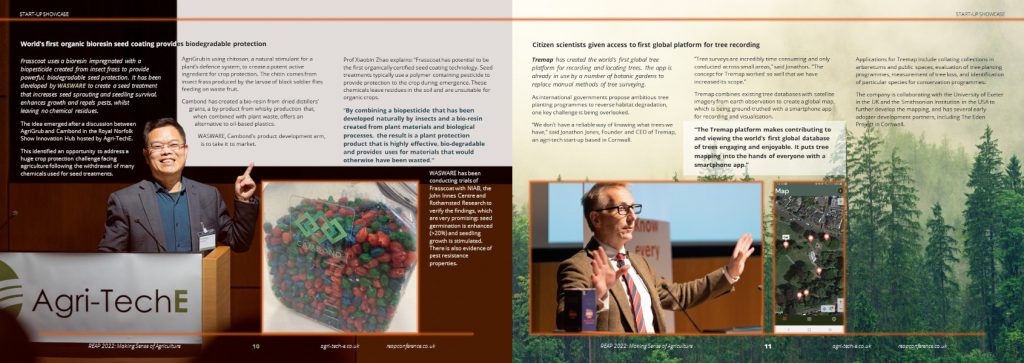
Ed Fuchs is a Co-founder of FLOURISH, a carve-out from FOLIUM Science, which has developed a Guided Biotics® technology for animal health and now has a number of product candidates ready for commercialisation via multinational feed additives distributors, following successful safety assessments by regulators. Ed presented in the Agri-TechE REAP 2022 Start-up Showcase.

Ed comments: “Plants extract nutrition from their environment using complex interactions with microorganisms in the soil. The importance of this microbiome is increasingly recognised in human and animal health.

“Our technology uses either bacteria or phages (virus particles) that are highly selective for a particular type of bacteria, such as Pseudomonas, to share a specific DNA sequence with the target that redirects its immune system, causing the pathogen to self-destruct. As the sequence is very specific and targeted to the particular bacteria it will not damage organisms that are vital for plant growth. This process therefore gives the beneficial organisms a competitive advantage.”

In trials with tomatoes the use of Guided Biotics® was shown to reduce Pseudomonas syringae and Botrytis cinerea by more than 99.9% and double the weight of the tomato yield.

Ed explains: “Our first product candidate uses an epiphyte (a naturally occurring bacteria from the tomato plant), to share the DNA sequence which gets rid of the Pseudomonas Syringae. The epiphyte also naturally produces molecules to remove Botrytis (fungus) and the combination enables the yield improvement.”

Over 12 million hectares of tomatoes are grown globally and they are at risk of bacterial canker which is caused by Pseudomonas syringae. Canker is also a serious disease of stone fruits such as cherries and peaches, showing the technology has a significant global market across many disease targets.

The use of phage particles is already regarded as safe by major territories and is being increasingly used in diagnostics and medication. The ‘reprogramming’ uses the gene editing technology CRISPR, which is recognised as distinct from genetic modification as it does not introduce alien DNA into the organism. Regulatory reform already underway is likely to support the wider use of this technology.

Ed continues: “FOLIUM has benefited from funding and due diligence from Innovate UK; with the necessary funding it has the potential to be spun-out as a plant-focussed company addressing a global crop protection market valued at £50bn.

“FOLIUM benefited greatly from the profile gained at the REAP 2018 Start-Up Showcase and I hope to repeat this success with FLOURISH.”

Dr Belinda Clarke, Director of Agri-TechE , comments: “Antibiotic resistance is a global ‘One Health’ problem and FLOURISH is offering an innovative alternative. I am sure that it will attract significant interest from the agri-tech innovation ecosystem. REAP has provided profile for many exciting early-stage businesses with collaborators, end users and investors. 14 of the companies previously featured have collectively raised over £92 Million in the last three years.”

Find out more at foliumscience.com


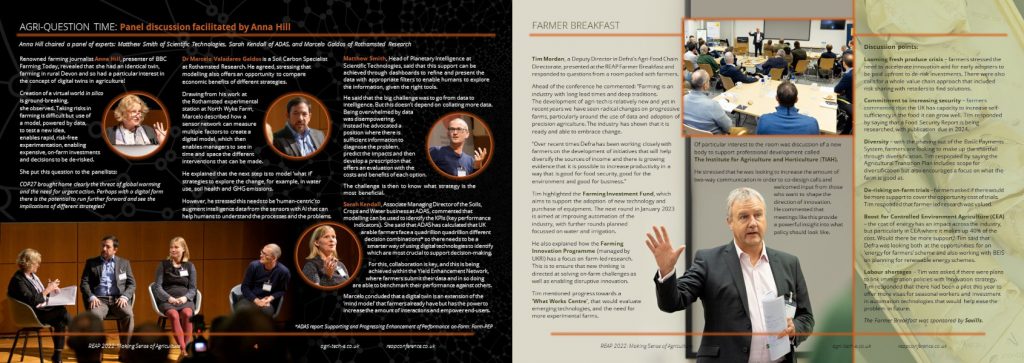
REAP 2022: Making Sense of AgricultureREAP 2022: ‘Making Sense of Agriculture’ – Tuesday 8th November 2022 

From yield mapping and precision livestock through to digital twins and cloud computing, at REAP 2022 we will be exploring the technology and looking at the implications from a field to landscape level. Making technology farm-centric is core to Agri-TechE ’s mission so a key feature of the conference will be a panel of farmers and producers discussing the emerging technologies and future scenarios.

reapconference.co.uk