The Productive Landscape: NatureTech for Profit and Planet
How can technology enable delivery of food, nature recovery, and climate resilience - all at once?
The Head of the Environment Agency is asked: what's the national plan for dealing with land use pressures, plus you’ll hear from technologists and land managers working on nature-based and tech-enabled solutions for water, soils and climate adaptation.
The views expressed in this Member News article are the author's own and do not necessarily represent those of Agri-TechE.
To cut dependence on fossil fuel made artificial fertilisers, the agricultural sector “must find ways to make the most of nutrient-rich organic fertilisers like livestock manures, slurries and composts” – so says John Williams, Head of Soils and Nutrients at ADAS.
John was speaking ahead of the 18th International RAMIRAN Conference, a global gathering of nutrient management, soil health, and environmental research experts being held in the UK for the first time this September.
With record-breaking artificial fertiliser prices listed as a driving force behind food price inflation last year, there is renewed interest globally in how to best recycle organic materials like farm manures, sewage sludge, compost, and biomethane production by-products for food production. And importantly, how to limit their associated environmental impacts.
John, the Conference Co-Chair said To feed a growing population, farmers are charged with producing more and more with finite resources. Fertilisers are essential for boosting crop growth and maintaining soil health. Instead of depending on artificial fertilisers created from natural gas, we ought to make better use of what we already have. It’s outdated to view organic materials as waste, they hold the key to enhancing world food production.
He noted though that if these organic materials are not managed well, not only were growers wasting a valuable resource, they could end up causing significant harm to the environment with ammonia and nitrous oxide emissions being released into the air and nitrogen and phosphorus losses to water.
“To sum up when it comes to these organic materials – we either use them or we lose them”.
Maintaining food production in an environmentally sound way is a problem every country can relate to, which is why the global reach of RAMIRAN is incredibly important.
Conference Co-Chair, Professor Dave Chadwick from Bangor University added
“For decades, the RAMIRAN network has played a leading role in sharing information across countries and continents to improve organic material use in agriculture. At this year’s conference, we’re expecting delegates from across Europe, China, the US, New Zealand, Nigeria, and Peru. It is a rare opportunity for leading agricultural scientists to meet, listen, discuss, and hopefully co-develop new solutions to maximise the efficiency of organic materials against the background of changing regulation, policy and market force and increasing pressure on the environment, soil quality and food production.”
The RAMIRAN (Recycling of Agricultural, Municipal and Industrial Residues in Agriculture Network) conference takes place between 12 and 14 September at the Corn Exchange and Guildhall in Cambridge. Organised by ADAS, with Bangor University and Rothamsted Research, the conference will attract more than 250 delegates from 25 countries and five continents.
Conference sessions will examine: policy and regulation, nutrient utilisation, soil quality, air and water quality, treatment and processing technologies and promoting best practice.
Find out more be visiting the RAMIRAN website or by following #RAMIRAN2023 on Twitter.
Post Overview
This story has been submitted by an Agri-TechE member.
The views expressed in this Member News article are the author's own and do not necessarily represent those of Agri-TechE.
Advanced climate tech that’s ready to accurately measure carbon capture
The challenge of accurately measuring soil carbon is crucial for the future of the carbon market. Yard Stick’s vision of real-time measurement relies on spectrometry. Its previous prototype probes were based on well-documented research linking visible infrared spectrometry to soil measurement. Our challenge – with a short turnaround – was to advance optical design and manufacture for its next-generation devices while dealing with mechanical and electrical constraints. The task involved maximising performance (signal noise ratio and wavelength) while minimising both form factor and power draw.
Carbon measurement plus validation
As well as addressing measurement itself, Yard Stick wanted to validate their soil carbon measurement against testing performed by existing laboratories. Why did they turn to CC? Our diverse and relevant experience bolstered their talented in-house team so that all phases of the development could be addressed. We have specific optical lab testing facilities and optical physics expertise that perfectly complemented their core software and electronics strengths. The addition of CC’s in-house manufacturing capabilities made sure that tight deadlines were met.
Carbon credits to offset emissions
Yard Stick is operating in a dynamic marketplace as the commercial world responds to the carbon crisis. Across the globe, carbon credits are used to offset emissions to mitigate environmental impact. Credits are available for capturing and sequestering CO2 in the soil via plants – opening a significant potential revenue source for growers. Right now, the system relies on trust, and the only way to definitively measure soil carbon content is analysing a core sample in an offsite lab.
Soil carbon real-time measurement
The trust model of carbon credits is slowly evolving to a compliance one driven by legally binding CO2 targets signed by governments worldwide. The imperative to prove carbon trading claims is propelling the switch from remote image-based modelling to physical soil measurement in the field. Yard Stick’s ambition for its devices to provide a real-time in-situ service will make the time-consuming process of sample extraction across acres of farmland – followed by composition analysis miles away – completely obsolete.
Evaluating optical design efficiency
CC’s North American team originally met up with Yard Stick during a start-up event in the heart of Boston’s vibrant innovation community. As alluded to above, discussions soon settled on a project with three key phases:
• Development of the optical module for next-generation devices • Investigation of optical architecture for the generation after next • Construction of testing equipment for measurement validation
The first part began by evaluating optical design efficiency and identifying component architecture. This was then integrated into the significant space constraints of the existing device with new mechanical functionality.
Maximising the carbon measurement spectrum
With seasonally determined field trials looming, we pressed the button on manufacture and assembly of a small run of components in the UK. This pre-empted integration into the US manufacturing plan for the devices. Meanwhile, with an eye on the generation after next, CC investigated optimal device architecture to maximise the measurement spectrum. This demanded an agile pivot when the existing spectrometer was unexpectedly removed from production. We evaluated alternative suppliers and successfully carried out performance testing and commercial suitability assessment (price versus lead time versus difficulty of development and integration).
Carbon validation testing of soil
The final stage saw CC design and manufacture bespoke testing equipment for the validation of the new prototypes against the industry standard, ahead of sample collection in the next period of field testing. Despite fluctuating requirements, a working prototype has now been deployed for the validation testing of hundreds of soil samples.
Post Overview
This story has been submitted by an Agri-TechE member.
Get the latest agri-tech news, events and opportunities direct to your inbox
How emerging space technologies are transforming agriculture on Earth
Agri-TechE Article
Diego Durantini
At Agri-TechE , we have witnessed a surge in the integration of space technologies within our community. Our technology members are harnessing space-tech solutions, and our farmers and agronomists are reaping the benefits of the valuable insights they provide.
While agriculture has had a taste of space-enabled technologies through GPS-guided auto-steer systems for over a decade, recent developments are causing the industry to take notice. Lower satellite costs, coupled with faster and more accurate data processing, are opening new doors of opportunity.
As our members, along with those from techUK, stand at the forefront of these exciting industries, we consider the dynamic intersection of space technology and agriculture that is shaping the future of our planet’s food production.
Photo by NASA
Space is unique as it offers conditions that are hardly replicable on Earth. Near-vacuum, microgravity, and high-radiations create rich research and manufacturing environments that can only be achieved in space. And with uniqueness comes value: space-tech has the incredible potential to enable, scale and shape the technologies of tomorrow.
Nevertheless, technology is already in space: since the late 1950s, when Sputnik I was launched, humankind has taken advantage of space to better lives on Earth. And if Sputnik could be considered the grandparent of satellite technology, more than 8000 of its grandchildren are orbiting our planet as you are reading.
The results of decades of space-tech development have brought us technologies that, by now, are largely taken for granted. Think about GPS, powered by Low-Earth Orbit (LEO) satellites, or even telecommunication as radio signals that power satellite television, telephone, radio and internet.
While navigation and communication, along with defence, have constituted the first extensive uses of technology in space, Earth Observation (EO), satellite internet services and remote sensing are gaining prominence as applications for space-tech.
” In 2008, there were approximately 150 satellites with the purpose of conducting EO and remote sensing. Fast forward to 2023 and the total now stands at over 1000, with plenty more scheduled to join them. “
This surge of hardware in space is matched by a surge of applications on Earth: a phenomenon which promises to enhance a diverse array of industries. From monitoring offshore wind farms to tracking plant health on farms, satellite technologies are gaining prominence as an effective tool to confer a competitive advantage. And entrepreneurs are noticing.
While satellites have facilitated this explosion in interest surrounding EO and connectivity applications, the real enabler is the improvement in technology miniaturisation and sensitivity, which has opened up new potential industries to satellite applications. In the last few years, a wide range of cutting-edge technologies have been deployed in space. Cameras, radar, LiDAR, and photometers provide us with high-resolution images that can tell us anything from plant health to net biodiversity gains, from soil water status to crop growth.
Together with the improvement in machine learning and AI, these technologies are spawning a flurry of applications that are poised to take several industries by storm from insurance, energy, and finance, to agri-tech and environmental monitoring. Remote sensing and EO deployment bring exponentially more value when the areas to monitor are vast and hard to access, as is the case with agricultural lands and forests. Hence, it is no surprise that the most innovative uses of space-tech are finding fertile ground in agriculture and environmental monitoring.
Photo by Ivan Bandura
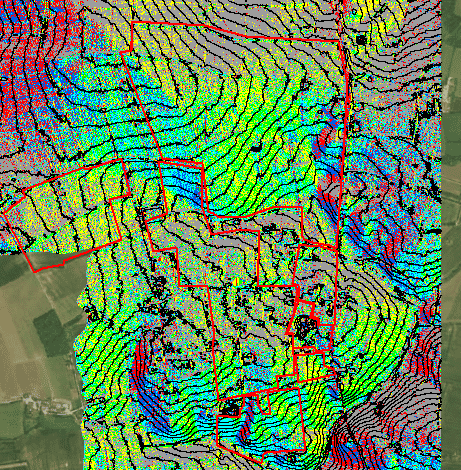
One of the most comprehensive uses of satellite imaging is showcased by Agtelligence, an Agri-TechE member. This start-up combines LiDAR (a remote sensing technology that uses laser light) with hyperspectral data from a wide range of wavelengths to accurately measure the distance to objects on the ground and ultimately create detailed images of Earth’s surface. This imagery enables Agtelligence to monitor and measure environmental metrics that capture soil health and biodiversity, as well as the anthropomorphic impact on land.
If it is true that businesses and organisations cannot manage what they cannot measure, Agtelligence is providing a tool to meet that need. As current industry trends point to farmers and downstream players in the agrifood supply chain needing to evidence their impact on the environment, the clever combination of technology in space and ingenuity on Earth will support them in the transition to a more sustainable food production. Agtelligence helps to manage the impact of agronomic and environmental actions and practices by giving confidence in the measurement of their outcomes over time.
Agtelligence’s ability to provide insight across the agrifood value chain would not be possible without the recent development in space technologies. This is also true for other agri-tech applications. Cameras can now identify crop stress early to prevent the impact on yields, measure and monitor grassland to optimise grazing and soil carbon storage, or peer through cloud coverage to remove the weather variable from the observation equation.
Farm connectivity, especially with the large amount of data produced by machinery, sensors, and IoT devices, is becoming crucial to extract real-time insights and increase automation on-farm. Satellite-driven connectivity is paramount to make these innovations mainstream.
Photo by Marios Gkortsilas
Another company at the forefront of the space and agri-tech industries is OneWeb, a techUK member organisation. By providing reliable, low latency connectivity, OneWeb’s LEO satellites can facilitate the deployment of new digital technologies to even the most remote areas. These include AI, big data, IoT sensors and computer vision, all contributing to enhanced farming efficiencies through a wide range of new transformative applications – including, drone-based monitoring of agricultural sites to data analytics for crop yield optimisation and the increased automation of operations.
OneWeb states that:
“ by the end of the decade, enhanced connectivity in agriculture could potentially add more than $500 billion to global GDP, a critical productivity improvement of as much as 9% for the industry. ”
There is no doubt that space technologies are increasingly showing their revolutionising potential in agri-tech and climate-tech.
With the UK poised to play a foundational role in the advent of a space industrial revolution, as explored in techUK’s upcoming Industries of the Future: Space webinar on 20 September, our leadership in agricultural systems and technologies has never been more crucial. It is clear that the sector is quickly becoming the ideal entrepreneurial laboratory in which to combine emerging space technologies and a pioneering spirit.
The question is: are there limits to what we can achieve?
Post Overview
6th September 2023
Diego Durantini
Agri-TechE Article
Industry Trends
Tech from Other Industries
Share this Page:
Related Posts
Agritech Thymes: Exploring the Agritech IP landscape – past trends and future insights
The views expressed in this Member News article are the author's own and do not necessarily represent those of Agri-TechE.
In this episode, as annual figures show another rise in farm theft, Farmers Weekly Podcast meet the former SAS soldier helping to combat crime in the countryside. Episode includes our members, NFU Mutual.
The views expressed in this Member News article are the author's own and do not necessarily represent those of Agri-TechE.
We are thrilled to announce the launch of our highly anticipated ISO Spray System after two years of meticulous development. ISOBUS technology has quickly gained recognition in modern farming practices and has become one of the fastest-growing components in the sprayer control market. Our cutting-edge technology enables seamless communication and integration between tractors, implements, and software, resulting in streamlined operations and significantly enhanced efficiency on the farm.
In this blog post, we introduce the concept of ISOBUS sprayer farming and delve into the numerous benefits of our new system, highlighting its profound impact on the agricultural industry.
Introducing the ISO Spray System
ISOBUS is an international standard that enables electronic communication between agricultural machinery, including tractors and implements. We discuss this in further detail in one of our earlier blogs, ‘What’s all the fuss about ISOBUS?’.
ISOBUS sprayers utilise this technology to establish a unified connection between the factory-supplied tractor terminal and the sprayer, allowing for real-time data exchange and control.
With ISOBUS sprayers, farmers can control various aspects of the spraying process, such as application rate, nozzle selection, and boom control, directly from the screen that was factory fitted in the tractor’s cabin. The seamless integration eliminates the need for multiple control systems, reducing complexity and improving ease of use. ISOBUS compatibility also enables interoperability between different manufacturers’ equipment, providing farmers with greater flexibility in implementing their machinery.
Let’s summarise the three key benefits of our ISO Spray System:
Unmatched efficiency: ISOBUS sprayers optimise the use of fertilisers, pesticides, and other agrochemicals by precisely applying them at the required rates. The ability to control the sprayer directly from the tractor cabin allows for swift adjustments based on speed, field conditions, crop type, or weather changes, ensuring accurate application and reducing waste.
Enhanced precision and productivity: Our ISO Spray System incorporates advanced technology, including GPS control systems and automated section control, to deliver exceptional precision. These features facilitate precise application, preventing overlaps or missed spots, resulting in uniform crop coverage. The automation eliminates the need for manual adjustments, saving time and enabling farmers to cover larger areas efficiently.
Simplified machinery management: ISOBUS technology allows for seamless integration between different implements and tractors, reducing the complexity of managing multiple control systems. Farmers can easily switch between various implements, such as sprayers, spreaders, or planters, without the need for additional wiring or compatibility concerns. This flexibility enables farmers to adapt their machinery to different tasks and crop rotations efficiently.
Differentiating factors of Farmscan Ag’s ISO Spray System
Our ISO Spray System stands out from the competition due to two crucial factors:
Collaborative design approach: At Farmscan Ag, we value close collaboration with both OEMs (Original Equipment Manufacturers) and farmers. Our engineers work closely with these stakeholders to develop equipment that specifically targets real-time efficiencies in the field. This approach ensures that our system is tailored to meet the practical needs and challenges faced by farmers, resulting in a highly effective and user-friendly solution.
Simplicity as a priority: While there may be more advanced and complex controls available, we have intentionally focused on providing a simpler and cleaner user interface. Our ISO Spray System offers a user-friendly interface that is intuitive and easy to navigate. By prioritising simplicity, we have created a system that minimises complexity and avoids unnecessary distractions. This streamlined interface enables farmers to focus on their core tasks and operate the system smoothly, ultimately leading to enhanced efficiency in the field.
Want to learn more?
Contact our dedicated team today to learn how you can access the ISO Spray functionality on our current ISOPOD software system.
Post Overview
This story has been submitted by an Agri-TechE member.
Get the latest agri-tech news, events and opportunities direct to your inbox
From algorithms to AI – ChatGPT and agri-tech
Agri-TechE Blog
Agri-TechE
With high profile public commentary about the future of artificial intelligence (AI) in society, this month we’re chatting about ChatGPT and its role in agri-tech.
In case you haven’t tried it, ChatGPT is an advanced AI language model that can generate human-like text and engage in natural language conversations (so it told us).
But ChatGPT is a potential game-changer as the most well-known of the emerging “generative AI”.
Some versions are (currently, at least) free to use, widely available and learning rapidly. You simply type in a challenge, question or task and it types out the answer in front of your eyes. The exciting thing about ChatGPT is that its dataset is the whole of the internet, in effect – some would argue – all human knowledge.
How can ChatGPT’s AI benefit us?
Technology advancements like this make knowledge more accessible to everyone. New users can interact with these algorithms without training. You no longer need to know coding to be able to get a bespoke data analysis based on your criteria.
And the answers can tap into new, creative avenues. Ask ChatGPT for the plot holes in your favourite film, and I’d be surprised if it doesn’t find something you’ve never thought of, no matter how many times you’ve seen it.
What if we ask it what we haven’t studied in soils? Or if there’s a pattern in the data between two of our sensors? Do solar flares affect our milk production? Chat to it further, and it can give ideas on how to investigate the answers.
Then there’s the enormous time-saving potential. Could an agronomist create a bespoke dashboard for a client’s farm-specific needs in a matter of minutes, just by typing a few sentences?
Sounds too good to be true…?
As with all innovations, there are inherent risks.
For example, it can be pretty difficult to find the source for answers provided by ChatGPT. How do we know this information is reliable enough? Or current? And not ‘learnt’ from some unusual or out-dated options contained in the web with little scientific support but presented by ChatGPT as a fact like any other.
Plus, when technology is so fast moving, regulating it is extremely difficult. To some extent, we are relying on the developers to test it, self-regulate, and ensure ethical development. Frequent scandals of badly trained algorithms – such as the GCSE results tool used by the UK government, or the consistent bias against ethnic minorities in crime-reduction – highlight the need for constant real-life assessment and testing by experts in the field.
Although users need no training to ask questions, knowing what prompts to use and how best to use them is key. ChatGPT is just a tool like any other – if we don’t know how to use them effectively, they can’t give us useful outputs!
Will ChatGPT replace us?
Given time, ChatGPT and its successors will probably design the world. What then of the role of the expert vet, the agronomist – even the UK’s longest established agri-tech network organisation?
No-one has a monopoly on information – almost everything is “out there” if you know where to look, which YouTube videos to watch, what website to search and who to talk to. But who has the time for all this research and information gathering?
This is where ChatGPT and its friends will no doubt be part of life going forward – to aid and augment.
For Agri-TechE (and our members), we see this is as a tool to help us scale our activities, be even more effective, and provide additional insights – but not as a replacement.
ChatGPT will give a comprehensive answer to the question you ask; Agri-TechE will respond to your question, set up a bespoke introduction, and give you useful and relevant answers to the questions you didn’t even know to ask yet… So says Andrew Francis , Senior Farm Manager at Elveden Farms:
I take great value from events like REAP because often you get ideas and come away with something that you didn’t go intending to find. In some ways you’re being presented with the answers before you have considered the question.
The REAP conference was fantastic and I would liken it to having a room full of answers floating above you and just needing to grab the right answer to match your question – sometimes before you even know the question!
Post Overview
31st August 2023
Agri-TechE
Agri-TechE Article
Digital Farm Management
Share this Page:
Related Posts
30MHz gains €3.5m to accelerate development of agri-data platform ZENSIE
The views expressed in this Member News article are the author's own and do not necessarily represent those of Agri-TechE.
Half a year into the carbon monitoring in sugar beet with the TMAF Flux Towers at Morley, lead researcher Dr Georgina Barrett from BBRO shares the latest news from the trial that is attracting lots of interest.
The flux towers have now been in place for six months. Since their arrival (reported in March 2023), conditions have been good for sugar beet growth with sufficient rainfall and few excessively hot days, the complete opposite to optimal conditions for the current cereal harvest!
The towers have been operating well, with only a small fault so far. This was a leak on the regulator which contains the zeroing gas. This is used by the system to calibrate the gas IRGA to ensure that the CO2 measurements are correct. Once detected, this was quickly rectified, and the data from the towers is looking good.
Another challenge we were aware of from the start was growing sugar beet immediately under the flux tower. It was decided that beet would only be planted directly under the radiometer arm so that the sensors could measure the crop which is then used in the flux calculations. This decision was made because managing the crop growing immediately under the flux tower would be challenging as it is not accessible by machinery, so would need to be hand sown and sprayed to control weeds, pests and diseases.
The small patches of beet grown under the flux tower arms has not grown as well as the commercial crop, and this has led to the UK Centre for Ecology and Hydrology (who operate the flux towers) to order a tripod system that means the crop monitoring sensors can be placed in the commercial crop, away from the main flux tower mast (Fig.1).
Fig 1. Beet grown under the flux tower arms has not grown as well as the commercial crop.
What the data tells us so far
The data collected has shown a contrast between the two fields, mainly driven by an infestation of ryegrass in one field (Fig.2). Early on, this appears to have resulted in slightly more carbon being taken up compared to the field without the ryegrass as there was a greater amount of biomass being produced.
However, the ryegrass has competed with the beet which now has a lower biomass than the field without the ryegrass and resulted in this field having now taken up more carbon. This highlights an important message that good crop husbandry and growth of the crop will increase the amount of carbon taken up by the crop.
Although this carbon will be released in the short term, through harvest and processing of the beet, the carbon balance of the crop will be better as more beet will have been produced for the same amount of carbon input through inputs such as fertilizer, fuel and crop protection sprays.
Fig 2. Ryegrass in one of the flux tower fields
Visitors to the tower sites
The flux tower sites have been visited by lots of groups, with farmers across the UK and from the wider agricultural industry curious to see what we are doing at Morley and why. This has been a great opportunity to engage in discussions and debates over the best approaches to reach net zero and the challenges and opportunities arising.
It’s been fascinating following the carbon dynamics of the crop so far. The next phase will be interesting as we look at emissions from harvest and how management practices drive emissions into the following cereal crop.
The views expressed in this Member News article are the author's own and do not necessarily represent those of Agri-TechE.
Darren’s Observations
There has been, and remains, a real buzz and energy around the agriculture sector globally. The past 12 months have demonstrated the importance of food security during what can be viewed as one of the toughest periods ever for producers. The need for innovative solutions that can feed growing populations and solve the problems associated with climate change are paramount. But we’re constantly reminded that the road ahead is tough. Food system transition needs to be balanced against financial stability, and longevity, but many food producers are facing into incredibly challenging market conditions that disincentivise production which, ironically, is counter to the need for a concrete food security plan.
These factors, compounded by more global ‘shocks-to-the-system’ have forced many reinventions and the emergence of cutting-edge technologies that will help businesses to diversify. These impacts are yet to be felt further up the supply chain but this creativity will likely form the basis of our food production systems in the decades to come. Once again, the agriculture industry is proving itself the most resilient and adaptable of sectors. From vertical farming, through to genetically edited wheat and nanobubble irrigation systems, the future is really exciting!
Investors are keen to invest, innovators strive to innovate and companies are ready to adapt but at Eden Search we are conscious that the Farmer’s voice must be heard and it is critical that this remains a central part of the conversation. In our view it’s those emerging companies with the right support around the Board table as well as an in-depth knowledge and passion for their supply chains that are likely to be most successful. Knowing our customers is key but knowing our customer’s customer is better. The agricultural ecosystem, for all its challenges, cannot be ignored and the question is how do we work with farmers and producers to support them to unlock their own potential through the implementation of new technology? Alongside this we cannot discount the importance of people! We’re huge believers that it is, and will remain, people who move businesses forward by bringing the most important of qualities, empathy! More so, emerging companies need to be aware of the significance that potential investors pay to advisory Boards and the quality of ‘industry’ people around a Board table. It’s just good business sense that people will remain at the centre of the agriculture sector in the years to come.
But talent is changing!
We’ve spent many years supporting executive teams but it is during the past 12 months that we have witnessed the biggest shift. The changing expectations of leaders, the skills required for new technologies and the urgency of some of the challenges we are seeking to tackle mean that the Boards of today will look very different tomorrow. Skills are changing and will keep changing but our advice is let’s lean into it!
A strong people and talent acquisition strategy is critical to success but let’s not forget the importance of empathy and value added by the voice of the Farmer.
Darren Houghton, Director and Head of Agritech, Eden Search
Post Overview
This story has been submitted by an Agri-TechE member.

The views expressed in this Member News article are the author's own and do not necessarily represent those of Agri-TechE.
Seeded was founded in February by Will Charlton, Limagrain’s former arable marketing manager. It has experienced impressive growth and has gained well-known businesses in the agricultural sector as clients.
“I am delighted by how well our clients have received Seeded’s service,” says Will. “We now support some of the biggest businesses in the industry with marketing and PR expertise. The most exciting thing is that they are reporting excellent results from the work we have done for them. Not only in terms of the exposure we are getting for their business but also in sales leads citing our marketing material as the reason they have approached our client.
“Seeded has got to a point where I felt it was important that it has an established headquarters, and Barn4 was a perfect solution. It is conveniently located just north of Cambridge, the facilities are excellent, and it is associated with Niab, one of the most well-known institutions in the industry.”
“Niab is delighted that Seeded has chosen Barn4 as a base to establish the business,” says Charles Gentry, Niab’s Barn4 manager. “Marketing to the agricultural industry is challenging, and Seeded’s presence at Barn4 will undoubtedly complement the Barn4 community. Will brings with him significant agricultural expertise, knowledge and skills, and I hope to see some member-to-member collaborations very soon.”
Post Overview
This story has been submitted by an Agri-TechE member.
The views expressed in this Member News article are the author's own and do not necessarily represent those of Agri-TechE.
It makes an idea real
A tangible ‘something’ born out of a solution to an identified need, envisioned by the inventor. Every prototype is a great milestone, and we are often asked ‘do you make prototypes?’, as well as other product development-process related questions such as, ‘how do you test prototypes?’ and ‘do you transfer prototypes to manufacture?’.
They’re all great questions, and each one is integral to the product development process. But what is that process, and where do prototypes fit?
The point of product development is to monetise the innovation by selling a product (or associated service) that embodies it. Along the way there may be other forms of monetisation, but ultimately it all comes down to being able to place the product on the market.
Think of a product or piece of equipment you’ve bought, and why you’ve bought it. Chances are it’s to fulfil a need you have at an acceptable value, or to put it in ‘user requirements’ language because it’s commercially attractive and works as manufactured. And that’s what product development is really all about; designing and engineering a ‘thing’ to meet those requirements.
For complex products, that means both understanding those requirements, including the use environment which for AgriTech can be challenging, engineering a working solution, and importantly testing any uncertainties in the design effectively, which most often involves prototyping.
Tackling all uncertainties at once is often not only inefficient but impossible as many questions only reveal themselves once others have been answered. The art of product development is therefore to sequentially recognise the uncertainties and address those in the most appropriate manner, using prototypes designed to address the most pertinent questions at each stage.
Most projects therefore go through several rounds of prototyping, hence terms such as proof of principle, alpha, and beta prototypes, each increasing in fidelity as the technical and commercial risk is reduced.
Conceptually, this looks like the process depicted in the diagram below, where each project has a different number of ‘W’ cycles – and activities within those cycles – depending on the specific pertinent uncertainties.
So back to the original questions…
‘Do you make (and test) prototypes?’
Yes, we do! Our workshops and labs are an integral part of our business for that very reason. The real questions are:
What are trying to learn? How will we do that?’ and as such, What does the prototype need to incorporate to enable that?
One must also bear in mind that not all prototypes are for technical testing; some may be to test investor appetite, customer reaction or manufacturing aspects. Not having the appropriate aspects or functionality in a prototype renders it unfit for purpose, while adding too much adds redundant costs.
‘Do you transfer prototypes to manufacture?’
Yes, we do! Production intent, pre-production and pilot production prototypes are all integral to the process of making sure that designs are delivered from their manufacturing processes as intended. All prototypes are means to an end, and upstream of that prototypes are useful tools to refine the design, but rarely suitable for commercial deployment.
There are of course many more nuances to the process, and each development project is unique in the challenges it identifies and how it addresses those. The art is understanding the process of developing the appropriate prototypes to get it to its commercial market as effectively as possible.
If you were thinking about these questions, or have any others about product development, don’t worry, it’s often unchartered waters for innovators and investors alike, and there is no such thing as a naïve question. The good news is that in working with eg technology, you’ve come to the right place to have them answered in a constructive way.
Post Overview
This story has been submitted by an Agri-TechE member.
Get the latest agri-tech news, events and opportunities direct to your inbox
REAP bursary was highly beneficial to my career progression
Meet the Network
Agri-TechE
Now a Research Consultant at Vegetable Consultancy Services (UK) Ltd, Dr James Fortune had just started his PhD when he gained a bursary for Agri-TechE ’s REAP Conference 2018. He found the conference inspirational and says the contacts and insights he made have been highly beneficial to his career progression.
Memorable presentation
“I have been to many conferences since but that REAP was memorable.
“The keynote speaker Dr Zhenling Cui discussed nitrogen use efficiency and he was inspiring, to be honest. He had a paper in Nature, and to see someone of that calibre speak and to share some of their time with you was phenomenal.
“If I remember correctly, he had something like 20 million different data points, and it was the first time I saw some real solid concrete data that specific reductions in nitrogen do not reduce yields. Being able to produce the same amount of yield, if not more, by applying the data was transformational. It was a really good presentation, and one that really sticks in my mind.
“Whenever you come away from a conference you wonder what you’ve brought away from it. I’ve been to quite a few big conferences and there’s only a handful that I can remember so distinctly. At REAP I was fully locked into what was being said.
Developing contacts with REAP bursary
“It was especially good timing as it was early in my PhD following a year in industry at ADAS, and when you are early in a career it is all about building up the networks and the contacts.
“That’s one of the benefits I see from Agri-TechE ’s approach – it’s very good at linking everybody together. Coming to an event like REAP, everyone is from different backgrounds but they’re all like-minded and keen to talk.

James Fortune is now a Research Consultant at Vegetable Consultancy Services
Dr Zhenling Cui spoke at REAP 2018 about his study published in Nature
James Fortune discussing impact of climate change on diseases of oil seed rape in Emerging Agri-Tech at the virtual REAP 2021
Understanding the science
James continues, “Some science conferences can be a little bit too academically-focused, and a little bit hard to comprehend or get a foothold in. Alternatively, some industry events can be a bit basic and you want more depth.
“I thought the REAP conference managed the balance well. There’s lots of different areas of expertise all being presented at the same time. It introduces things that you might not be familiar with, but you can draw parallels from that and bring it into your own work or your own thinking.
“I later presented in the Emerging Agri-TechE section of REAP 2021 about the impact of climate change on pathogens in oilseed rape and I am due to present further development of this work at the International Rapeseed Congress in Australia.”

Why come to REAP?
“If I was to sum up REAP in a few bullet-points it would be:
Inspirational speeches, such as that from Zhenling Cui.
High quality networking.
Gaining a broad knowledge and understanding of how the wider world impacts agriculture.”
It is open to UK growers, farmers and those in full-time education in agriculture or related discipline and reduces the cost of the ticket to £65 per delegate.
Other beneficiaries of the REAP bursary include farmer Tom Pearson and George Crane who was a PhD researcher at Niab and is now working as an agri-tech investment analyst with YARA.
James Fortune, Research Consultant at Vegetable Consultancy Services, will be speaking at ‘Ag101 – An Introduction to the Industry’ on 14th September 2023 in Cambridge. See more on the event page here.
REAP Conference 2023: Adaptation Through Innovation; Beyond the Comfort Zone
Wednesday 8th November, 9:30 am – 6:30 pm Rowley Mile Conference Centre, Newmarket
Surviving and thriving under increasingly extreme and unpredictable challenges is the theme of the 2023 REAP conference. To build a productive, profitable and sustainable agri-food industry, we must move away from the comfort zone and become open to the new opportunities that exist when we ‘stretch’. Be a part of that future – bring yourself and your ideas to REAP.