The Productive Landscape: NatureTech for Profit and Planet
How can technology enable delivery of food, nature recovery, and climate resilience - all at once? The Head of the Environment Agency is asked: what's the national plan for dealing with land use pressures, plus you’ll hear from technologists and land managers working on nature-based and tech-enabled solutions for water, soils and climate adaptation.

Wheat from seed to seed in 8 weeks

Research Digest
Agri-TechE

Speed breeding techniques would allow six crops of wheat in a year, intensifying food production.
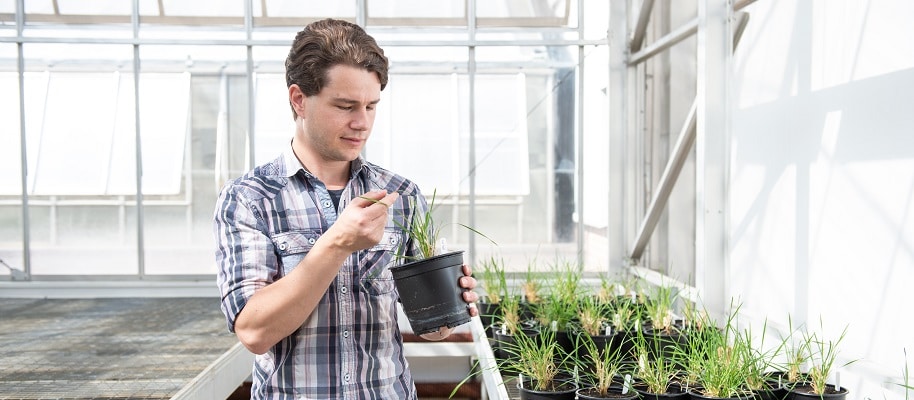
A speed-breeding platform developed by teams at the John Innes Centre, University of Queensland and University of Sydney, uses a glasshouse or an artificial environment with enhanced lighting to create intense day-long regimes to speed up the search for better performing crops.
Using the technique, the team has achieved wheat generation from seed to seed in just 8 weeks.
Speed breeding, says Dr Wulff, offers a potential new solution to a global challenge for the 21st century.
“People said you may be able to cycle plants fast, but they will look tiny and insignificant, and only set a few seed. In fact, the new technology creates plants that look better and are healthier than those using standard conditions. One colleague could not believe it when he first saw the results.”
The exciting breakthrough has the potential to rank, in terms of impact, alongside the shuttle-breeding techniques introduced after the second world war as part of the green revolution.

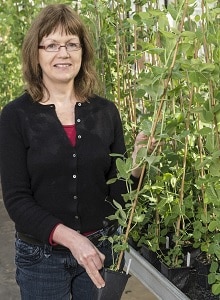
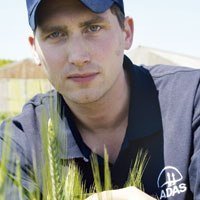
Dr Brande Wulff of the John Innes Centre

Dr Wulff goes on to say: “I would like to think that in 10 years from now you could walk into a field and point to plants whose attributes and traits were developed using this technology.”
This technique uses fully controlled growth environments and can also be scaled up to work in a standard glass house. It uses LED lights optimised to aid photosynthesis in intensive regimes of up to 22 hours per day.
LED lights significantly reduce the cost compared to sodium vapour lamps which have long been in widespread use but are ineffective because they generate much heat and emit poor quality light.
The international team also prove that the speed breeding technique can be used for a range of important crops. They have achieved up to 6 generations per year for bread wheat, durum wheat, barley, pea, and chickpea; and four generations for canola (a form of rapeseed). This is a significant increase compared with widely used commercial breeding techniques.
Ruth Bryant, Wheat Pathologist at RAGT Seeds Ltd, Essex, UK, said: “Breeders are always looking for ways to speed up the process of getting a variety to market so we are really interested in the concept of speed breeding. We are working closely with Dr Wulff’s group at the John Innes Centre to develop this method in a commercial setting.”
The full paper: Speed breeding is a powerful tool to accelerate crop research and breeding is available at Nature Plants.

Social, Strategic or Opportunistic – How Do You Network?

Agri-TechE Blog
Agri-TechE

Networking at REAP 2017 (POM)“I came here with a specific goal – to meet farmers to recruit into a new soils project – and I’ve achieved it,” a delegate from a major agri-research organisation commented on the REAP feedback form.

Another delegate, this time one of the region’s leading farmers, tweeted to a speaker in the Start-up Showcase: “Been keeping tabs on your development and then saw start up demo @AgriTechEast and thought what have I got to lose?”

And finally, “I should know everyone in this room – but I only know about 20% of them – it’s not the ‘usual crowd’ I always see at agricultural conferences.”

These quotes show the diversity of opportunities for networking and collaboration that emerged during REAP and other events held during Agri-TechE Week in November. They reveal the different ways in which new introductions are made and partnerships can form.

Brief encounter

Networking at REAP (Robert Salmon)Innovation often occurs following chance encounters. This is well recognised by architects who include cafes, seating areas and co-working areas in the design of business incubators such as the Centrum on the Norwich Research Park, the Lawes Open Innovation Hub at Rothamsted, and the Kings Lynn Innovation Hub run by NWES.

However, for many farmers and growers, opportunities to bump into others during their working day is more limited – it mainly happens at events or conferences.

So, we recognise that maximising the chances of farmers meeting new and relevant people when they come to our events is really important so we’re thinking hard about how to make the connection process even more effective. A photo board to help you identify the person you’re looking for? Sophisticated pre-event partnering software? Speed-dating? Watch this space.

The social network

Social media at REAP 2017Social media also has an important role – providing global, national and local insights into new developments, and sharing challenges and experiences. We have seen Twitter being embraced by the community as quick way to ‘bookmark’ key nuggets of information.

However, seeing for yourself and talking face-to-face are still vital communication. We are looking forward to putting this into practical application through our new initiative with AHDB, which will create more on-farm interaction around themes of mutual interest.

Many thanks to all who travelled to, talked at, and tweeted from the conference – looking forward to more interaction next year!


REAP 2017

Agrilytix making satellite sourced data accessible to farmers

Agri-TechE Article
Agri-TechE

AgrilytixStart-Up Showcase - AgrilytixAgrilytix Ltd is developing an agricultural monitoring system that uses satellite imagery and machine learning to provide enhanced decision support for smaller farmers in challenging environments.

Co-Founder Nilesh Mistry developed the idea for the service when he was working as a development consultant on agricultural development projects with smallholder farmers in Asia, Eastern Europe and Africa.

He says: “The cost of satellite imagery is expensive as only commercial sources can provide high resolution and hyperspectral data, with data analysis adding another layer of cost. Agrilytix will provide a service that makes information about weather and climate more accessible and affordable to smaller farmers and the wider supply chain.”

The company is based at Rothamsted Research and is looking for industry partners and seed funding to develop the service further.

Find out more at www.agrilytix.co.uk.


See more about the 2017 Start-Up Showcase >>

Olombria flies to the rescue of orchards threatened by lack of pollinators

Meet the Network
Agri-TechE

Hairy flies that mimic the behaviour of honeybees are being conscripted by start-up Olombria (formerly known as POM) to overcome the dramatic decline in pollinators, it was announced at REAP 2017. The fly ‘body doubles’ are being lured to orchards by pheromones that encourage them to forage among the blossom, pollinating the crop as they do so.

The early-stage company participated in the Technology Exhibition at REAP.

Louis Alderson-Bythell, co-founder of POM, explains: “The numbers of bees and other wild pollinators have been decimated in recent years; although a number of initiatives are trying to boost the numbers of bees, we thought that the role of other pollinators was being overlooked.”

There are a number of species of fly that resemble bees and have hairy bodies that can trap pollen and transport it to the next flower. Their larvae also eat aphids and so have a dual benefit.

Alderson-Bythell was part of a team that entered the RCA’s entry to the 2017 Biodesign Challenge. Their solution uses pheromones to stimulate the fly’s foraging response; these chemicals are released through a series of nodes located through the orchard.

The flies themselves are easy to breed and die at the end of the season so do not need the same degree of care required by bees. POM believes that the large monocultures across California and Australia, which rely on migrant beekeepers, have the most to gain from its pollination system.

Olombria is working with leading agricultural research organisations including Imperial College, Rothamsted Research, and Niab-EMR to develop an Internet-of-things (IoT) system consisting of a network of small nodes spread throughout an orchard. The nodes collect data and curate the behaviour of flies in the field. Olombria aims to work with natural systems to manage and support rather than exploit local ecosystems.

The start-up’s work originated from the RCA’s entry to the 2017 Biodesign Challenge and is led by RCA graduates Louis Alderson-Bythell, Tashia Tucker and Sam Roots, and current student Greg Swan.

Find out more about Olombria at flypollination.com or follow them on Twitter: @flypollination

Update on Olombria. 

Agrimetrics showcases new developer portal to tackle big questions in agriculture

Member News
Agri-TechE

AgrimetricsHow do you value land use? How can you benchmark crop performance? How do you measure sustainability? These are big questions in agriculture. To help technology developers create the tools to support industry answering these questions, Agrimetrics has created a new Developer Portal that was demonstrated for the first time at Agri-Tech’s REAP conference. The portal will allow programmers access to national agri-food data, ordered in a consistent format so that multiple sources of information can be brought together in new ways.

Simon Davis, Head of Partnerships for Agrimetrics, the big-data centre of excellence, explains: “The UK has a rich legacy of data, not just about soil, weather and crop performance but also about ecosystem services provided by natural capital – for example environmental assessments and water catchment studies. Until now the value of this data has been limited as it is kept isolated in silos.

“Agrimetrics has developed a platform that can integrate these various datasets from multiple sources, making it available to developers to ‘plug and play’. This will allow agri-food data to be analysed in ways not possible before, and new solutions developed.”

The falling cost of sensors and imaging technology is making it easier for farmers to collect information about their own crops and growing conditions, but this data really becomes useful if it is combined to enable better benchmarking of performance against others. The new insights generated can also be used to enhance decision-making on productivity and sustainable best practice.

The Agrimetrics platform supports this type of analysis by linking national and international datasets from different public and private sources to a specific reference point, for example a location, field or a parish.

The new Developer Portal provides tools so that programmers can easily incorporate a wealth of relevant data into their own applications. This could be a dashboard that allows non-specialists to easily compare different scenarios or a handheld device that supports decision-making in the field.

Agrimetrics demonstrated at REAP two examples of how this can be achieved.

Agrimetrics
Agrimetrics’ David Flanders and Simon Davis at REAP

The Natural Capital Explorer is a dashboard developed with data from Defra and the Developer Portal. It brings together various indicators of the national ecosystem and applies them at parish level. This enables the ecosystem services and the impact on the environment provided by, for example, woodland, fens, and cover crops to be assessed objectively at a local level. The information is displayed graphically so that different parishes can be compared and implications of a change in land-use can be explored more effectively.

Davis explains that the dashboard has many applications, from mapping information across value-chains, to displaying data from different government sources to make integrated decisions about land use and environmental management.

The other application is Agrimetrics Data Combine, a web-based tool that provides support to decision making on crop varietal choice. The application provides benchmark information to users on the performance of alternative varieties in similar environmental conditions. It is based on data provided by farmers in exchange for the benchmark. By crowd-sourcing data, and combining it with data held in the portal, Agrimetrics is creating a comprehensive record on varietal performance in real-world conditions.

Agrimetrics was established as part of the Government’s Agri-TechE Strategy to add value to public data sets and provide the tools for its exploitation. The platform brings together data and makes it available in a consistent format so that it is ready to be analysed and used.

To find out more visit www.agrimetrics.co.uk .

Agri-TechE and AHDB announce new joint position at REAP to accelerate innovation in the field

Agri-TechE Article
Agri-TechE

Belinda Clarke with Ian Crute at REAP - Agri-TechE and AHDB
Dr Belinda Clarke and Professor Ian Crute at REAP 2017

Agri-TechE and AHDB (the Agriculture and Horticulture Development Board) have announced a joint initiative to accelerate the adoption of innovation in the field. A new position of ‘Knowledge and Innovation Facilitator’ is being created to help deliver a programme of new projects. The announcement was made at Agri-Tech’s REAP, the flagship conference for the agri-tech sector.

Dr Belinda Clarke, Director of Agri-Tech, says: “An objective assessment is required of new technology to ensure that it is fit for purpose. Our ambition within Agri-TechE is to create a number of specific initiatives driven by member interests that can evaluate innovations on-farm, compare findings and then work with researchers and technologists to improve the solutions.

“We need to move beyond focusing on crop yield as the measure of success and look at the bigger picture to make the industry productive, profitable and sustainable. This can be achieved by facilitating well-designed real world projects between our members.

“By working with AHDB we are able to fund a project manager to devise and deliver these projects and also to gain access to the wealth of expertise within AHDB and make this more readily available.”

For AHDB the joint position is part of a wider objective to create closer links with industry. For example, the potato industry is currently under pressure on the use of sprout suppressants essential for long-term storage. AHDB is researching alternative strategies to overcome this at Sutton Bridge Crop Storage Research in Lincolnshire. It is involved with commercial-scale trials, so working closer with partners across the value chain is essential for this.

Professor Ian Crute, AHDB Board Member, spoke at REAP about different models for stimulating and supporting innovation in the industry. He was responding to a presentation about the Argentinian experience by María Beatriz Giraudo, Winner of the Kleckner Prize Global Farming Prize 2016.

Prof Crute commented: “Past experience informs us that a policy environment in agriculture encouraging common purpose, close connectivity and regular interaction between researchers, practitioners and their advisers leads to the emergence of successful innovations that are adopted widely and swiftly. This was certainly the case in the UK in the four decades after the Second World War. However this close alignment between the aims of research institutions and the priorities of agricultural industries no longer seems so evident.

“One reason for this was a down-turn in the value of agricultural products, which led in turn to disinvestment in agriculture-relevant science.”

Giraudo described a similar situation in Argentina and how the farming industry has responded by taking a lead through its investment in agricultural research. A partnership between farmers and academics has enabled the rapid uptake of the latest findings and also directed research at solving industry challenges. This led to successes, such as its approach to no-till cultivation, but also failures, and Giraudo was keen to share her learning points with the UK.

Crute commented that the situation was also changing in the UK. “The food-price spike of 2008 was a ‘wake-up call’ and this prioritised the need for a more active two-way dialogue between researchers and producers and in particular to look harder at the ways that land is used and production prioritised.”

He says: “There is an important distinction to be made between ‘land use’, which is about deciding what the land is used for and ‘land management’, which is how best to manage the land productively and sustainably for its chosen purpose.

“I have argued that the UK could be a very good place to demonstrate in practice the principles of how best to model and devise optimised – sustainable and productive – regional land use and management with global significance. This is because UK agriculture is relatively small scale compared, for example, to Argentina, and there is a high geo-diversity, or soil types, diverse topography, abundant data availability and a high knowledge base.

Dr Crute identifies the need for new metrics for evaluating agricultural output so that the relative value of different land uses – food production, energy generation, and ecosystem services – can be assessed.

He says: “For example, comparing ‘person-years of nutrients’ with ‘joules of energy’ created per hectare per unit of input might be a better way of comparing food production with that of
energy generation.”

These types of cross-disciplinary analyses benefit from the input of thinking from other industries, which is where Agri-TechE is bringing new approaches.

Dr Clarke continues: “There is no question that really significant innovations are always underpinned by advances in basic scientific understanding, but equally innovation can come from many directions.

“Our members have found that technologists approach problems from a different perspective. A multi-disciplinary approach can provide practical solutions, for example smart irrigation utilises knowledge of plant science alongside better methods of data capture, engineering and resource use.

“With additional resource we will be able to scale up our current programmes such as work with Innovative Farmers where we are coordinating a consortium of six farmers, and introduce new cross-cutting initiatives to accelerate the rate of innovation and its adoption.”

Applications for the role of ‘Knowledge and Innovation Facilitator’ are welcomed.

Click here to see more information.

Saving waste in horticulture: optimising resources – 10 Nov 2017

Agri-TechE Article
Agri-TechE

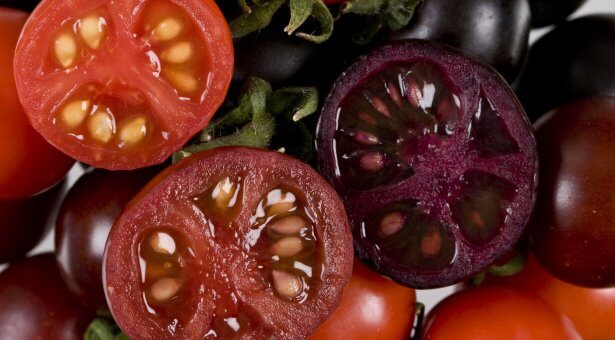
Fruit - Saving waste in horticultureTomatoes, strawberries and other crops grown undercover are a rich source of active plant ingredients such as lycopene, anticyanins and isoflavones that are used in the cosmetic and health industries. A workshop hosted by Niab will be reviewing the options for growers in the emerging bioeconomy on Friday 10th November during Agri-Tech’s Agri-TechE Week 2017.

Niab is a partner in the EU Interreg2Seas BioBoost project. It aims to support the horticulture industry exploit the benefits of the bioeconomy by using resources that would previously have been considered waste. The partners that include leading growers from the Lea Valley will implement regional test and pilot projects, to develop novel techniques, methods and products. There will also be focus on the commercialisation of innovation, with funding and business support for SMEs looking to take their products to market.

Dr Lydia Smith, Head of Niab Innovation Farm and one of the speakers, says: “Brightly coloured fruit and vegetables offer a wealth of bioactives that are being used for anti-aging products, cancer prevention, natural colourings and nutritional enhancements. This is a valuable new market for the horticultural industry and allows offers an opportunity to use non-edible waste such as skins and stones. The workshop aims to scope out the prospects to accelerate the transition to a bioeconomy.”

Niab has a pilot facility for the production of green pesticides from mushroom growth and soft fruit waste. Alongside this, Niab will be looking at improving the quality of active plant ingredients in tomato and strawberry, such as lycopene, anticyanins and isoflavones that are used in the cosmetic and health industries. Agri-TechE Week aims to showcase different aspects of research and innovation happening across the region with REAP the flagship conference held on day 2.

Dr Belinda Clarke, Director of Agri-Tech, comments: “Agri-TechE was invited by Niab to be a subcontractor in BioBoost and we have supported the project by mapping the supply chain. This has revealed many ways that plant resources can be used more productively. The workshop will allow this information to be shared and discussed from different perspectives.

“The Niab event ties in with the theme of Agri-TechE Week’s flagship REAP conference, looking at our current knowledge and how it can be applied for a more profitable and sustainable future.”

BioBoost is a 3.5 year project, undertaken by scientists from industry and academia in the UK, Netherlands and Belgium. The project is co-ordinated by leading horticulture centre – Westland – in the Netherlands.

Saving waste in horticulture: Optimising resources will take place from 10am-4pm at the Sophi Taylor Building, Niab Park Farm, Villa Road, Histon, Cambridge. Speakers will include: Dr Gavin Milligan of the William Jackson Food Group, Dr Jean Fitzgerald of Niab EMR, Dr Lydia Smith, Head of Niab Innovation Farm and Dr An Callens of the University of Vives.

Click here for further information.

Making agri-tech profitable, productive and sustainable at REAP 2017

Agri-TechE Article
Agri-TechE

We will be looking beyond maximising yield at this year’s REAP to explore other ways to boost the value of output and to make agriculture profitable, productive and sustainable.

Prof Ian Crute, former chief scientist at AHDB says we need to take a harder look at the way that land is used and production prioritised. He argues that new metrics are needed for evaluating agricultural output.

(more…)

Climate smart agriculture

Meet the Network
Agri-TechE

Farmneed from Express WeatherExpress Weather has developed a decision support system called Farmneed that quantifies weather risk in agriculture.

The innovative application is device agnostic and delivers bespoke content on weather and early warning for disease and pest infestation. It also provides on-demand guidance on crop protection, agri input management and soil management based on location, crop and field conditions.

Farmneed has been developed through multidimensional research related to crop and weather relationship including disease infestation and agri input management. The interactive platform easily connects a farmer or grower with other stakeholders in the agriculture value chain.

Angshujyoti Das, Express WeatherAngshujyoti Das, founder of Express Weather, explains:

“Agriculture in developing and under developed nations is mainly rain fed, so to determine the exact time for sowing seed, it is important to consider rainfall. During the early stages seed germination and crop establishment requires adequate water, but excess rainfall is as harmful as insufficient water.

“Humidity can also increase the risk of disease and pest infestation. By mapping weather parameters against germination possibilities helps to identify the level of risk.

“Armed with the above knowledge of disease related risk it is possible to determine the right application of pesticide.

“Farmneed changes a schedule-based pesticide application programme to one that is need-driven. This helps to reduce cost, waste and contamination of water supplies.

“Mapping water availability is also important for fertilizers that have a water soluble component. Rainfall is a key trigger for fertilizer application.

“A smart irrigation system is also possible if you can map soil conditions against rainfall. Rainfall after irrigation may cause excess water, and an accurate forecast can prevent loss of both energy and water.”

Farmneed promotes “climate-smart agriculture” for the whole agri-food chain, from individual growers, farming groups and agri input companies to agri funding agencies, insurers and even researchers and academics.

The simple registration system works on basic inputs: personal information, location information (geo tagging), crop and plot level information. Based on this one-time input, the system gets activated automatically to deliver bespoke content covering the following key areas:

  • Crop protection
  • Crop management
  • Agri input management
  • Soil and water management
  • Overall sustainable practice in agriculture
  • Rural employment generation

Das got the idea for Farmneed when he was working on a project on sustainable tourism in West Bengal, India. He wanted to gain historical wind data for the location and found that such data was only available though an American agency

“India is a big agriculture economy that lacks quality weather data,” says Das.

“I evaluated the technical feasibility of generating quality weather forecasts for Indian grain population. As farmers in India are unfamiliar with standalone weather data, I realised that it would be more meaningful if the implications of weather data on their crop was available to them.”

Farmneed - climate smart agricultureTo ensure the accuracy of their guidance, Express Weather has collaborated with centres of excellence in India, who have provided weather related risk knowledge during life cycle stages of particular crops.

Das is looking forward to showcasing the Farmneed platform at REAP: “The technology and the platform is a good fit for Europe but it requires some customization based on local context. We would like to gather primary information on local level challenges, market, available technology etc. Identifying funding scope would also be an important agenda.

“We are keen to find a knowledge partner, who should have readily available research data on crop weather relationship.”

Find out more about Farmneed at www.farmneed.com

For more information about Express Weather visit www.expressweather.in

Find out more about REAP here.

REAP 2017

Forecasting a barbecue weekend at G’s Growers

Meet the Network
Agri-TechE

John Shropshire of GA recent report released by WRAP estimates that around nineteen per cent of all lettuces were unharvested in 2015, with 38,000 tonnes lost across the sector worth an estimated £7million. To ensure that supply meets demand the industry overproduces, this partially due to uncertainty over weather conditions, but also as a result of specifications over the desirable ‘head size’.

Progressive producers, like G’s Growers, are working with others in the value-chain to address this issue.

Forecasting to reduce waste

John Shropshire is Director of G’s Growers, based at Soham on the Fens and one of the largest producers of salad and vegetable crops in Europe.  He explained to an audience at the House of Lords how joining Agri-TechE had helped the family-run company improve forecasting.

John says: “Across the UK, the yield and quality of crops varies greatly between farms, but even within an individual field or crop there is quite a lot of scope to improve efficiency. New technologies will enable us to do that.”

Forecasting is an area where a small improvement in accuracy could make a huge difference in profitability for farmers and producers.

Lettuce - Forecasting a barbecue weekendSalad consumption is highly variable depending on weather – a ‘barbeque weekend’ will boost demand and a wet one depress it. The maturity of the lettuce head is another variable: there is only a short time when it achieves the quality requirements of the supermarkets; if the head is too developed it will not have the required shelf life.

Much of this material can be recycled as compost or within an anaerobic digester so the waste is not visible, but if better forecasting was available this land could be used more profitably.

John continues: “The demand for iceberg lettuce is 24/7 and we overgrow by 30 percent to make sure we have enough. Agri-TechE introduced us to an ecologist at Microsoft to look at new ways to solve the problem.”

Following a discussion with Microsoft at an Agri-TechE meeting, G’s Growers saw the potential to create a model that would reduce waste in the production of Iceberg lettuces. After initial discussions with Microsoft provided proof of concept, G’s subsequent collaboration with the Smith Institute has been instrumental in developing the concept further.

G’s has employed sophisticated monitoring systems to measure the growth of the lettuces and also collate data on weather and microclimate. This has enabled it to identify key growth stages and amend sowing and planting schedules to mitigate against potential shortfalls in crop availability.

The Smith Institute has been helping G’s to use this data to develop optimal production schedules that can cope with uncertainty. Additionally, it is creating an engine capable of analysing the data and creating ‘what if’ scenarios, which would allow the in-house team to consider different management strategies.

“Sophisticated monitoring technology has allowed us to identify key growth stages in the lettuce and also to collate data on weather and microclimate.” John explains.  “We are now able to predict demand better than the retailers and to adjust our production schedules to mitigate against potential shortfalls, reducing waste.”

IceCAM model is now in commercial practice in the UK and Spain.

30MHz to show “smart sensing toolkit” at REAP

Meet the Network
Agri-TechE

30MHz to show smart sensing toolkit at REAP

“There’s this perception that with the Internet of Things everything has to be very lofty and large scale, but there are so many very basic challenges or questions in agriculture that can be solved just by installing a sensor,” says Joanna Madej, Head of Communications at 30MHz. The company will be demonstrating its “smart sensing toolkit” at REAP in November.

The “toolkit” provided by the Netherlands-based company allows the collection of data using a variety of sensors across a large area, whether it’s a greenhouse, field or busy port.

“Consider the toolkit like Lego pieces of a smart sensing solution,” continues Madej. “It includes sensors, an adjustable mesh network, and analytics and alerts in the form of a dashboard that’s accessible from any device.

Joanna Madej, 30MHz
Joanna Madej

“Depending on the metric you want to capture – such as temperature, soil moisture, humidity or wind speed – the sensors will be different, and they are all adjustable. In essence the thing that unifies all our customers is that they have a problem they want to solve that requires monitoring physical space, and we have the sensors and the data capabilities to do that in real-time.

Madej comments that agriculture is the industry that really sees the potential in sensing, and has the strongest case for it: “We have seen just how innovative the agricultural space is in the Netherlands, and we see that same drive for innovation in the UK.

“British farmers are very tech-savvy, but they are looking for solutions that are easy to use and not unnecessarily complicated,” she continues. “Every time we speak to them we see that they are looking for new technologies, new ways to be more sustainable, productive and cost-effective.”

30MHz focuses on customisability, accessibility and scalability, aiming to make it easy for companies of all sizes to capture data from their physical environments and make better decisions with a product that’s out of the box and easy to deploy.

“We want the bottom line to be simplicity, usability and the ability to solve problems straight away,” says Madej. “We don’t want to be over-complicated for the more basic needs, but if you have more complex data and analytic needs the product can grow to accommodate that as well.”

30MHz focuses on customisability, accessibility and scalabilityThroughout its two-and-a-half year history, 30MHz has worked within several industry sectors, including monitoring damage on mooring posts for the port of Amsterdam, and monitoring occupancy and people flow in the Van Gogh Museum.

However, significant work has been done within the agri-food chain, including with retailers, transport, storage and producers and companies such as Bejo Zaden, Syngenta, Pop Vriend Seeds, Rijk Zwaan, Svensson and Jan de Wit & Sons.

“One of our most successful sensors is a pointed temperature sensor that we developed with Dutch commercial pepper farmers Kwekerij Moors,” continues Madej (see more about this project here). “It’s a flexible, contactless temperature sensor that can accommodate the irregular shapes of fruit, vegetables and leaves. We were told by the customer that it was something they needed, that it didn’t exist, so we worked with them to create it.”

The UK’s passion for evolving the agricultural industry is why 30MHz will be exhibiting at REAP. They will be showcasing a variety of sensors alongside their analytics dashboard to demonstrate the real-time monitoring capabilities of their products.

“We are very interested in speaking to more British farmers, to understand their vision, their challenges and the opportunities they see to innovate within their sector. If Dutch agriculture is any indication, smart sensing is a big part of that. Coming to REAP felt like a really good fit – it’s exactly the kind of audience that we would resonate with.”

For more information about REAP, including the technology exhibition, click here.

Visit the 30MHz website at: www.30mhz.com

See more about 30MHz’s projects on YouTube here.

REAP 2017

John Deere focused on precision technology

Meet the Network
Agri-TechE

David Purdy, John Deere, will be speaking at REAP “Yield mapping is now cheap as chips, and you can’t buy a combine without it. It’s a really accurate technology – for a narrow width it takes readings every couple of seconds. It’s the most precise record you can make and extremely worthwhile” says David Purdy, Territory Manager at John Deere UK. He believes precision farming is critical to improving profitability for farmers.

David will be sharing his insights on the relationship between current farming knowledge and new technology at this year’s Agri-Tech’s REAP conference on 7 November 2017.

Invest in management time

John Deere has been at the forefront of agricultural equipment manufacturing for 180 years; as the agriculture industry has evolved, so has John Deere, supporting best farming practice with precision technology. David believes this is critical to improving profitability for farmers.

He explains: “By taking five years of data it is possible to see which areas of the field are consistently lower yielding – which ones are normalised, and which ones are above normal. This indicates where to sample the soil to understand better what is happening and can drive a whole host of different decisions; particularly if a good farm manager or agronomist, spends time with the data that is collected.

“The issue, I think, is that often not enough management time is given to considering the options.”

Predictive maintenance

John Deere remains focused on precision technologyThe integration of sophisticated technology into farm equipment is enabling the company to provide intelligent data-backed services, for product support.

“We are collecting a huge amount of data about our machines, which can be used to improve their efficiency for farmers,” says David. “John Deere can mine this information to predict what might happen to a machine during its lifecycle.

“We can identify when a part is likely to fail, enabling us to make a preventative repair before it becomes an issue. We also go back to the supplier of that part, and tell them what needs to be improved. The aerospace and trucking industries already have this in place, but in agriculture we are well on our way.”

Managing traffic in the field

David cites the renewed interest in soil health as the stand out topic in farming. One method of preventing damage to soil health is to control traffic in the field

“Tyre pressure is one of the factors that can reduce damage to the soil as it is important to get the power to weight ratio right to avoid soil compaction,” explains David. “John Deere is talking to people where the fields are heavily trafficked.  We have been able to help them reduce that dramatically, with the adoption of simple machinery alterations, guidance systems and good training for staff.” In addition the management and use of consistent guidance lines through the cropping year and beyond can also reduce traffic longer term

Integration of farm management systems

John Deere at the forefront of agricultural equipment manufacturing for 180 yearsA lack of interoperability between some technologies is a point often raised by farmers. Although there have been some integration of farm management systems – there are many issues.

David says: “The move towards precision farming has changed the industry dramatically over the last five years.

“It’s an evolving story and a positive one. Will the issue ever be totally fixed? Well, there are intellectual property factors to be considered, which lock people into using certain methods. When millions of USD is invested into developing these systems, there will always to be an element of competition. I don’t think we’ll get to a stage where everything will just plug and play, but I think that most manufacturers are beginning to sing to the same song sheet. The progress of technologies such as ISOBUS and machine connectivity is improving all the time.

“However, much of the issue is the speed of change.  There are old legacy systems that are still in use. At present people want to connect these up to the newer technology but the development needed is not worth it. With wider adoption of digital technologies there will be less compatibility problems. It’s a function of time as much as willingness to integrate.”

David Purdy will be speaking as part of the Sofa Session at REAP 2017, which will reflect on the day and discuss the close interaction between emerging agri-tech and current knowledge amongst the farming and growing community. For further information, please click here.

REAP 2017