Stable raises $46.5m to protect agrifood firms from volatile prices

Agri-TechE Article
Meet the Network
Agri-TechE

Stable, a startup and Agri-TechE member, is changing the way businesses manage volatile commodity prices, it has secured $46.5m to drive its US expansion.
Founded in 2016 by a farmer’s son Richard Counsell, while he was working in Chicago, the Stable platform enables millions of businesses to manage the risk in a simple and effective way.
Counsell comments: “I know the problems volatile cStableommodity prices can cause first hand, and I was struck by how little innovation has happened in the industry.
“Agricultural commodities are perishable and come in all shapes, grades and sizes, which makes them very hard to standardise and trade on an exchange,” said Counsell. “The result is that only 8% of commodities are available to trade on the likes of the CME Group Inc*, which makes purchasing risk management products such as futures or options contracts difficult without enormous basis risk.”
“Back in 1848 when the Chicago Board of Trade opened its doors, it had a simple and clear mission to provide buyers and sellers of crops financial certainty. I wanted to combine modern tools like machine learning (AI), with a great user experience and a clear and client-focused purpose to get back to the grassroots and become relevant again for businesses with a real risk to manage.”

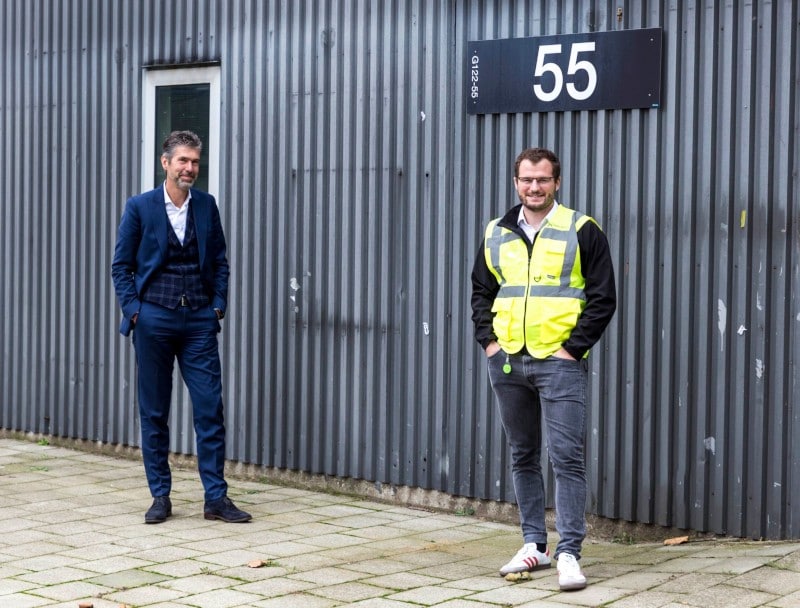
Joe Brooker, VP research at Stable
Joe Brooker, VP Research at Stable, spoke at an Agri-TechE meeting

Stable’s platform hosts more than 5000 indexes which can be selected by clients to customise a contract to protect themselves from volatile prices. Payouts are automated and simply reference the local or highly correlated index to minimise basis risk. The result is a simple and modern way to manage price risk for millions of businesses globally. Currently focused on agricultural commodities, the company is widening its future offering to include packaging, construction & energy.
The company is seeing exceptional demand caused by the disruptions in the Covid impacted food chain, which has highlighted the risks involved for manufacturers and producers alike.
In the agrifood industry alone, more than $5 trillion of un-traded commodity exposures are currently self insured. Hedging can also be a complex, risky and intimidating experience for a business simply wanting to protect their risk rather than trade or speculate. After gaining regulatory approval in early 2021, Stable is now starting to work with many large food businesses in the US, as well as farming organisations wishing to protect against future price falls.
With operations in Chicago, Austin and NYC, the new investment will be used to build out its North American sales and marketing teams and invest in its world class data science departments in London & New York.
The Series A round of funding, was led by Greycroft as well as Notion Capital, Anthemis, Continental Grain and existing investors Syngenta and Ascot.
“Stable has a proven leadership team and is on track to reach $500m of annual premium within 3 years of launch, making them the fastest growing insurtech ever,” said Ian Sigalow, a Partner at Greycroft. “We’re delighted to support a company with this level of ambition and industry experience.”
*CME Group Inc. is an American global markets company. It is the world’s largest financial derivatives exchange, and trades in asset classes that include agricultural products, currencies, energy, interest rates, metals, stock indexes and cryptocurrencies futures. (source wikipedia)
An explanation of the Stable technology.
To find out more about Stable visit www.stableprice.com or email hello@stableprice.com


Agri-TechE partners with Trendlines to offer discount to Israeli AgriFood Summit

Agri-TechE

Scarce water and extreme environments may be a feature of climate change, but they have always been a challenge for agriculture in Israel, driving advances in smart irrigation and controlled environments. Now the agrifood industry is embracing the move towards snack foods, plant-based diets and meat alternatives – these topics and more are being discussed at the AgriFood Summit Israel 25-27th October 2021.
There is an opportunity to gain an inside track to Israel’s agri-food industry and find out more about the innovation challenges and solutions in this dynamic country. Agri-TechE has partnered with The Trendlines Group to offer a 25% discount for the largest agrifood event in Israel.
The three-day event features a showcase of over early-stage companies with cutting-edge technologies who aim to transform the food and agriculture industries that are under the threat of a changing climate. Sarai Kemp, Trendlines’ VP Deal Flow, says: “AgriVest is a key event in our industry, attracting the leading global players from industry, investors, academia and startups. It’s a great opportunity to learn about current investment and technology trends, and get exposed to active investors in the agrifoodtech sector. We are excited to partner with Agri-TechE because of our shared values and believe we can leverage our dual networks to collaborate together to solve industry problems in the agrifoodtech ecosystem.”
Delegates at the event are also eligible for a discount to REAP, Agri-TechE ‘s flagship conference where Trendlines is taking part in the International Cafe.
The AgriFood Summit Israel takes place on 25-27th October 2021; find out more at agrifoodsummit.co.il

Outfield raises £750,000 to progress orchard management system

Agri-TechE Article
Agri-TechE

How many apples on this tree, in your orchard, across your farms? Until Outfield launched its drone-based imaging system to map the orchards it was impossible for growers to know this vital information.
Now the company has raised £750,000 in its first funding round, to expand its yield estimation capability. The orchard management system is now used by growers across three continents for high value crops including apples, pears and plums. Jim McDougall, Director of Outfield, talked about the development of the technology at REAP 2021 along with one of the farmers that have helped to develop the technology so it meets the needs of growers. He says: “This investment will enable us to develop the customer base as well as adding new functionalities to the platform.”
Fruit growers are using Outfield map their orchards and to create detailed maps of tree condition and fruit loading. The technology helps growers visualise and track key parameters in their orchards, enabling them to produce more fruit to specification, reduce fruit loss and decrease the amount of chemicals used. Outfield already works with growers in the UK, Europe, South Africa, Chile and New Zealand. The funding round was led by the UK merchant bank Turquoise in its 11th deal for the Low Carbon Innovation Fund 2 (LCIF2). The investment is part of a £750k round that also includes Cambridge Agritech, Deeptech Labs and Amadeus. Jim says: “We are delighted to welcome LCIF2 as an investor in Outfield. Now is the time for new precision technologies to revolutionise this sector, supporting global food security and managing the environmental impacts of fruit growing”.

Axel de Mégille, director at Turquoise, commented: “Outfield technology will enable growers to improve yields on their production as well as decrease CO2 emissions associated with the use of chemical fertilisers.  We were impressed by what the Outfield team has built so far and are proud to be part of the next step of their journey”. This funding is being used to expand Outfield’s global reach and extract even more insights from rich data their growers are gathering, allowing for further impacts in the sector.
More about Outfield

YAGRO joins Frontier Agriculture

Agri-TechE Article
Meet the Network
Agri-TechE

The agri-tech ecosystem is maturing: YAGRO, which featured as an early-stage company in the second REAP Start-Up Showcase in 2015, has just announced that it has joined the Frontier group of companies.
The Cambridge-based company is a pioneer in the development of analytics for agriculture and released a ground-breaking new product in 2020 that aggregates on-farm business data into a simple online tool, and gives the farm manager incredible detail and insight on the farm’s current and historical performance.
YAGRO has worked closely with a steering group of progressive farmers to ensure its technology meets the needs of farmers; joining Frontier will help to secure its future as a leading provider for the whole industry.
YAGRO will continue to trade as an independently managed, stand-alone subsidiary.

YAGRO joins Frontier

Dan Jolly, Co-founder and Head of Business Development, said: “This is an exciting day for the whole of the YAGRO and our customers. With the backing of Frontier Agriculture, we can forge ahead with our plans for team growth and new analytical tools, supercharging the proven impact we’ve been delivering since 2015. We look forward to accelerating our developments with our farm users and our Partners.”
Gareth Davies, CEO and co-founder, said: “Today’s announcement recognises the quality of the team and capability we have built at YAGRO, that genuinely empowers our customers to better understanding and better decision making for the farm. Now anyone across our industry – from farmers to agribusiness to Government – can be confident in navigating the hard changes ahead, with YAGRO as their trusted and proven data partner to empower insight and decision making. This also marks a hug step forward for UK agri-tech and its role in driving the whole industry forward.”

Part of the Agri-TechE ecosystem

YAGRO is a member of Agri-TechE and many of its National Steering Group are also members, such as Sentry Ltd, Elveden Farms Ltd, and Greens of Soham Ltd.
Greg Colebrook, Director at Greens said: “I’ve been working with the YAGRO team and technology for the last 5 years, and believe that they are on the right track. They’ve already delivered some great products, and this news means that they’re sure to produce new products even quicker. We really like the team there, so it’s great to hear they will remain at the helm and most importantly the business will remain an independent entity.” Mark Aitchison, Managing Director of Frontier Agriculture, said: “We are excited by today’s news that YAGRO will be joining the Frontier group as an independent, stand-alone subsidiary company. YAGRO has quickly gained a strong reputation for nimble design and deployment of practical software solutions for farmers, advisers and the supply chain. Today’s announcement will enable YAGRO to fast-track their strong pipeline of products currently under development, which are much needed for the whole industry.”
More information about YAGRO

“You need to know what the future will look like” – regenerative farmer Tom Pearson speaks at REAP

Agri-TechE Article
Agri-TechE


Farmer Tom Pearson is transitioning his farm to regenerative agriculture. Here he talks about the benefits of participating at REAP.

I took advantage of the bursary last year and found REAP really interesting. You can’t go to REAP and say “I like that, I’ll go to the website and buy it” but it makes sense, from a business point of view, to understand what the world might look like in ten years’ time, so that you can purchase the right kit and hire the right people.

REAP gives insights into direction of travel 

Last year we bought a combine – it was a major decision, a big amount of money, but I’m expecting to have that combine for 10 years plus, so these are long term decisions. Grain storage is another example – do I want a big 1,000 tonne grain store, or do I want lots of 100 tonne silos for specialist crops? You have to watch the market, the direction of travel – and technology is a big part of that.
I might need to buy a sprayer soon because ours is packing up, but because I know a bit about technology in the pipeline, I have realised that in five years’ time, I am likely to be using a sprayer far less; so I might be more inclined to look at a good value second hand sprayer rather than a new one.

I want to be ready for investment in natural capital 

It’s the same with carbon. If someone comes along and says: “We’d like to do a big collaborative natural capital project; where is your base-line data? How can we prove its money well spent?” I want to be ready by understanding the technology associated with that: how to measure carbon, understanding the depths for sampling, using GPS positioning to get the same geopositional reading. It is important to be keeping an eye on the future, and technology is obviously going to be a big part of that.
It is incredibly helpful, if you’ve got the time, to attend a conference like REAP and get a feel for what’s going on, some things might work for you now and others give an idea of where things are going.

Opportunity to provide input to get the tech right

The nice thing about being part of Agri-TechE is that you can see these tech guys are putting in a lot of effort, however it’s impossible to create these products without some input from farmers.
I’m from a science background myself and I understand how difficult it is to evidence a product and get it to market, so I’m happy to help out. I don’t want to be faced with a bunch of poorly designed products down the line when I know I’ve had the opportunity to provide that input.
Farmers have a lot on their plates and a lot to do, so it’s easy to think: “I haven’t got time for this, it’s too far down the line”. But I’ve still got the energy and enthusiasm for this so I’m keen to learn what technologies are out there.

Balancing agri-tech with regenerative agriculture

Tom Pearson is one of the farming leaders of the H3 project (Healthy soils, Healthy plants, Healthy people), which is comparing regenerative agriculture to traditional farming and looking at biodiversity, soil quality and food quality. He says: “Measuring each of these elements is becoming possible. There has been a lack of clarity over the future, but the wait is coming to an end. Interest in carbon sequestration, for example, is gaining momentum. We want to establish baseline data now, to be ahead of the curve when someone comes along asking to do a big collaborative natural capital project.”
He is also part of the farmer advisory group for the Small Robot Company, which launched in the REAP Start-up Showcase and has since gained funding and widespread industry support. The company is one of many that have benefited from the Agri-techE ecosystem and will take part in the exhibition in this years’ virtual REAP conference.
“In a nutshell: REAP is fantastic. It’s a lovely, friendly conference, with really enthusiastic people. It’s ag tech, it’s still on the fringes of what farmers do in our day-to-day lives, but it is another interesting aspect of my daily activities. I enjoy it from all those points of view.

Farmer? Grower? Student? Click here to apply for the REAP 2023 Farmer Bursary sponsored by RNAA

REAP brings together people from across the agri-tech ecosystem who believe that innovation is the engine for change. The conference bridges the gap between producer needs and technology solutions and showcases exciting agri-tech start-ups. 

Clock-wise

Agri-TechE Blog
Agri-TechE

October marks the onset of winter in the UK, with the clocks moving back by an hour and heralding later sunrises, earlier sunsets, and colder temperatures.
For some this marks a depressing demarcation to the end of summer, but this shift in day length and temperature is a vital cue for plants and animals to move into the next stage of their life cycle. Many animals begin hibernation as the days shorten, trees and other plants shed leaves and appear to die back, where they will spend the winter drawing on the precious reserves built up over the summer. Seasonal migrants arrive and depart, next year’s cereals are in the ground, and sugar beet is harvested.
Farming has, of course, always been closely aligned to the timing of Nature and the passing of seasons. Winter wheat, for example, is drilled in the autumn and requires a prolonged period of cold in order to trigger flowering in the spring – this is due to a genetic process (identified at the John Innes Centre in Norwich, UK). But climate change is causing disruption of the seasons – as discovered by phenology studies of these recurring biological events. Historic farm records from the late 19th Century, for example, show that the growing season in parts of England was around 244 days, yet by 2015 it had reached 280 days. This is likely to be linked to increase in UK temperatures since the 1960s of an estimated 1°C.
But as well as seasonal changes, living things respond to a day/night cycle as well. So it is also possible to tap into this internal ticking “clock” in plants and animals to help with productivity, efficiency and welfare.
The frequency of egg-laying by poultry, for example, is heavily influenced by the light regime, and similarly the performance of many crop plants in controlled environment conditions is closely regulated to prevent “bolting” and to ensure consistency of production.
A more intricate understanding of how the daily clock ticks is revealing new insights into better ways of managing agricultural systems. For a start, there are some indications that application of inputs on broadacre arable crops is more effective at particular times in the day-night cycle (we’ll be hearing more about this at REAP 2021).
Understanding the minute changes that take place within individual plants throughout the day and night can help with better understanding of when crops might be more responsive to management regimes, and to help build resilience. Breeding programmes which incorporate the genes which control the daily – or “circadian” clocks might be enable production of plants which perform better in different climates and – as have greater resilience to climate change.
The UK is hosting the global COP26 conference in Glasgow in November, where hopes for commitments to halve emissions by 2030, and to limit global warming to no more than 1.5°C. Nature is responding to the pressures it is under – in some cases it is providing opportunities for new agriculture in fresh ways and in new locations. In others it is resulting in serious irreversible challenges.
Join us at REAP 2021 to discuss the impact of time – hourly, daily and seasonally – on agriculture and how this can help with mitigation of the impact of climate change.

REAP 2021: Changing Time(s) for Agriculture10th November 2021

Imagine a world where agriculture is not constrained by time. The ability to manage and manipulate time is increasing and REAP 2021 will explore the advances in technology and breakthroughs in science that is making this possible.
REAP brings together people from across the agri-tech ecosystem who believe that innovation is the engine for change. The conference bridges the gap between producer needs and technology solutions and showcases exciting agri-tech start-ups. 

Backpack LiDAR used for the first time in field phenotyping

Research Digest
Agri-TechE
field phenotyping with CropQuant
This is the first time that plant researchers used backpack LiDAR to provide phenotyping for large-scale field trials.

LiDAR is used by the Environment Agency and others to visualise gradients and recreate 3D landscapes – now this technology is being used for crop phenotyping, to show the physical characteristic of plants obtained by breeding.
Prof Ji Zhou is Head of Data Sciences at Niab,  his latest published paper explains how LiDAR has been used to provide large-scale 3D crop phenotyping in the field.
He says: “The lack of high-quality phenotypic data has prevented researchers and breeders from fully exploiting available genomic resources and this has become a major bottleneck.  To address this Niab has developed the CropQuant-3D technology to provide an in-field solution for large-scale crop phenotyping for breeding, agronomic services and agricultural production.
“We utilised a backpack LiDAR device to overcome limitations in mobility and scalability possessed by other phenotyping platforms and performed large-scale phenotypic analysis to characterise key agronomic traits such as crop height, canopy development and 3D canopy structural changes in response to different nitrogen (N) treatments for wheat field trials, which are imperative to yield- and development-related crop monitoring.”
The LiDAR device carried in the backpack obtained hundreds of millions of 3D data points from wheat in field trials.  The CropQuant-3D platform provided automated 3D trait analysis revealing the relationship between key agronomic traits with the yield and N responses.
Additionally, the CropQuant-3D platform could also provide a unified analysis pipeline to analyse 3D point clouds obtained by different sources – such as drones and gantry-based LiDAR sensors –  demonstrating its great potential in large-scale field phenotyping and open-source trait analysis.
This work has been published by one of the top plant research journals, Plant Physiology in its breakthrough technology column, entitled “Large-scale field phenotyping using backpack LiDAR and CropQuant-3D to measure structural variation in wheat”.
More about Niab

Times are a-changing

Agri-TechE

Harvest is a crucial time in the agricultural calendar: a poor year directly impacts farm incomes, and indirectly affects supply chains, global prices, import/export balances and even the cost of food. A successful harvest depends on the timing of many factors – including the weather, immediate availability of equipment and people, hauliers and storage facilities.

What will the harvest of the future look like?

Technologies are emerging that can automate not just the processes, but there are also new insights into how to influence the responses of crops and livestock to time and the environment.
We are discussing the potential of this agri-tech in the REAP conference which brings together the crucial end-users on-farm with those who are creating and capturing the value by generating knowledge and transforming it into actionable insights, tools or practices. Agri-TechE Director Dr Belinda Clarke says: “Technologies that will enable us to influence time are possible now; a key question is how these could be reliably delivered at scale to farmers? A lot of moving parts need to come together to make this a reality, such as application of new knowledge in the farm context, development of relevant new skills to integrate them into current practice, availability of de-risking finance to incentivise adoption, and an over-arching enabling policy landscape.”

REAP 2021: Changing Time(s) for Agriculture10th November 2021

Imagine a world where agriculture is not constrained by time. The ability to manage and manipulate time is increasing and REAP 2021 will explore the advances in technology and breakthroughs in science that is making this possible.
REAP brings together people from across the agri-tech ecosystem who believe that innovation is the engine for change. The conference bridges the gap between producer needs and technology solutions and showcases exciting agri-tech start-ups. 

RNAA Timothy Colman Prize 2021 awarded to Dr Belinda Clarke

Agri-TechE

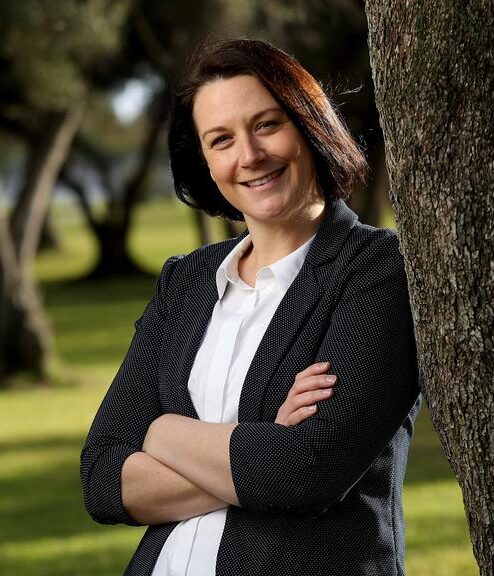
Agri-TechE ‘s director Dr Belinda Clarke has been awarded the prestigious Timothy Colman Prize 2021 by the Royal Norfolk Agricultural Association, for her outstanding contribution to the development and promotion of food, farming and the countryside.
Announcing the Prize at the RNAA’s AGM held on 23 September 2021, Robert Alston, Chairman, said that “the award of the Timothy Colman Prize to Dr Clarke is recognition of her tireless energy and commitment to harness the collective power of the agri-tech sector. Her support to this sector and more widely, to highlight opportunities and to overcome challenges, has been exceptional”.
The award was founded by the late Sir Timothy Colman, a former chairman of the RNAA, as a way of recognising as a way of recognising outstanding commitment in the agricultural sector. Belinda says: “Sir Timothy Colman was a wise and generous leader in agriculture, who I was lucky enough to meet on a number occasions. I’m very humbled to follow in the footsteps of previous winners of this award, such as Poul Hovesen, Jake Fiennes and others. A huge thank you to everyone in the agritech community who has joined in the Agri-TechE activities and of course to the Royal Norfolk Agricultural Association.”
Dr Clarke has been the Managing Director of Agri-TechE (formerly Agri-Tech) since 2014. Agri-TechE is an independent, business-focussed cluster organisation, which seeks to improve the international competitiveness and sustainability of plant-based agriculture and horticulture. It is bringing together farmers and growers with scientists, technologists and entrepreneurs to create a global innovation hub in agri-tech.

The RNAA commented that ‘during her tenure Belinda has been the driving force behind Agri-TechE ’s rapid and successful development into a world-leading network of innovative professionals who share a vision of increasing the productivity, profitability and sustainability of agriculture.

‘The impact of Dr Clarke’s work is well documented. Member organisations report many benefits from engagement within the cluster including collaborations; access to funding and grants; trials of technology with farmers; technology integration with other members; business growth resulting from profile raising activities.’
The success of Agri-TechE has been recognised through a number of awards including the UK’s SME National Networking Group of the Year 2019, European Business Awards One to Watch 2017 and Knowledge Catalyst Award Eastern Daily Press 2016.
Belinda is also a Non-Executive Director of Agrimetrics, one of the UK’s Agri-TechE Centres, has been a Trustee of the RNAA, and was a member of the Council of BBSRC-UKRI (2015-2021).

More about the RNAA

Controlled Environments & support for Far East expansion at REAP 2021

Agri-TechE

Opportunities to expand into the Far East are to be discussed in the REAP International Café by Trendlines, an investment company that supports a portfolio of companies innovating within medical and agriculture technologies. Controlled Environment Agriculture is a particular area of interest.
The organisation has two funds: Trendlines Agrifood Fund and Bayer Trendlines Ag Innovation Fund, and its staff are based in Israel, China and Singapore.
The portfolio companies are based principally in incubators: in Israel (Trendlines Medical and Trendlines AgTech) and in Singapore (Trendlines Medical Singapore and Trendlines Agrifood Innovation Centre (AFIC)). Trendlines also has its own in-house innovation, with Trendlines Labs based in Israel, China and Singapore.
We are delighted that Trendlines will be represented in the REAP 2021 International Café and talked to Anton Wibowo, CEO of Trendlines Agrifood Innovation Centre, about his aims for the event.
Q. Are you currently looking to invest in new agri-tech? If so, do the investees need to have a presence in one of the incubators?
AW Yes we are looking to invest in agri-tech companies. They do not have to be based in our incubators but they can consider the incubator as a platform for their expansion into the different markets. Q. What are the big challenges facing producers in Israel and Singapore? What sort of trends are you seeing? Where do you see the opportunities developing?
AW The challenge of food security is becoming more urgent, especially in relatively smaller countries like Singapore and Israel.
Any innovation that enables increasing food production with less resources (land, manpower) is in high demand. For example, Singapore is the first country that approves the sales of cell-based chicken products.
For us we see a strong trend towards the urbanisation of food production (indoor farming, recirculating aquaculture system, cell-based proteins) and there are significant opportunities in these areas. Q What are your plans for the International Café? 
AW We are pleased to be participating in the first International Cafe; plans are still evolving but we anticipate that Enterprise Singapore will be joining us. This is the government agency that promotes the development of the agri-tech ecosystem in Singapore and looks to promote more collaboration and exchange of technologies. This is a good opportunity for companies thinking of expansion to find out more about the opportunities.
Q The theme of the conference is ‘Time’ what does that mean for Trendlines? 
AW Our investment philosophy is to invest in companies that solve the “near-future” challenges. Not something conventional that you can see now but yet not something that you need to wait for another five years to see the impact.
I would say that all our portfolios are addressing the challenges of “time”.
If you are interested in food security, Controlled Environment Agriculture or opportunities for expansion in the Far East there will be an opportunity to discuss this with Trendlines at REAP 2021.

REAP 2021: Changing Time(s) for Agriculture10th November 2021

Imagine a world where agriculture is not constrained by time. The ability to manage and manipulate time is increasing and REAP 2021 will explore the advances in technology and breakthroughs in science that is making this possible.
REAP brings together people from across the agri-tech ecosystem who believe that innovation is the engine for change. The conference bridges the gap between producer needs and technology solutions and showcases exciting agri-tech start-ups. 

Showcase update: Xampla creating plastic alternatives from pea powder

Agri-TechE Article

Agri-TechE
A plant-based alternative to micro plastics is being developed by Xampla. When it took part in the REAP 2020 Start-up Showcase the company was making edible plastics but saw a bigger opportunity in creating biodegradable products from non-food crops and waste streams. We asked about progress of the last year. 
CEO Simon Hombersley says that business is going well: “Since we launched at REAP2020, Xampla has received a £6 million seed investment to commercialise its first plant-based plastic product, microcapsules. This product provides a biodegradable alternative to the single use plastics which are currently used in the fragrance industry.”

Plant-based alternative for microcapsules

Microscopic plastic capsules are used in home and personal-care products to gradually release the active ingredient, such as an enzyme or fragrance, but as the capsules are currently made of plastic, they build up and remain in water systems as a major environmental pollutant.
“Our microcapsules can store a range of cargos from fragrances to food grade ingredients, replacing hidden single-use plastics added to a multitude of products,” explains Simon, “the aim is to get the plant based microcapsules to market later this year.”
In June 2021, the research and process behind Xampla’s plant-plastic material was published in Nature Communications, making clear the scientific breakthroughs that allow Xampla to turn plant proteins into a material with the same properties and functionality as plastic that can decompose fully without harming the environment.

Welcomes former Unilever Chief 

The company also welcomed Jeff Seabright as Chair of Xampla. Jeff is the former Unilever Chief Sustainability Officer and Coca Cola VP of Environment & Water Resources. He also worked in the White House as climate advisor to the Clinton administration.
This year of success has followed from Xampla’s launch in the Start-Up Showcase at REAP2020. To get the first look at this years’ Start-Up Showcase participants, book your tickets for REAP2021 now!

REAP 2021: Changing Time(s) for Agriculture10th November 2021

Imagine a world where agriculture is not constrained by time. The ability to manage and manipulate time is increasing and REAP 2021 will explore the advances in technology and breakthroughs in science that is making this possible.
REAP brings together people from across the agri-tech ecosystem who believe that innovation is the engine for change. The conference bridges the gap between producer needs and technology solutions and showcases exciting agri-tech start-ups. 

Showcase update: Land App supporting land managers and ELMS trials

Agri-TechE

The Land App is an easy to use digital mapping platform that enables land managers to benefit from new agri-environmental schemes, connect with Natural Capital investors and design integrated estate plans that support best practice.  The company presented in the Start-up Showcase at REAP 2020 we caught up with the team to find out what has happened since. 
Having recently partnered with three Environmental Land Management trials The Land App aims to help groups of landowners prepare for natural capital investment and to design integrated estate plans that support best practices to benefit from agri-environment schemes.

ELMS Trials

One of these Land App trials is in the Surrey Hills, where 22 landowners are working in collaboration with advisors on a combined 4,500acre project to improve natural capital.
“The Land App allows land managers to work collaboratively with advisors to build independent land management plans,” explains Partnership and Growth Manager, Dan Geerah, “but crucially the plans from multiple holdings can be brought into a single view to ensure the projects are aligned and deliver maximum benefit.”

Landscape level change needed

The Land App has embarked on a series of ambitious projects bringing landowners together. With over 1.2 million hectares of farmland now represented, the digital mapping platform is being used to help steer land managers to best manage their assets over large land areas.
Dan explains:
“Landowners are making good progress with countryside stewardship at an individual holding level, with wildflower meadows, buffer strips etc, but for actual ecological restoration we need those meadows and buffer strips to be connected across the wider landscape.”
“In Surrey we’re trialling a more user-friendly Land App dashboard which shows the overall farm plan, aggregated across all participants in the study, and indicates the total area eligible for habitat enhancement (e.g number of trees that need to be planted in each location / area for wildflower creation), and approximately how many biodiversity credits this will generate – and all of these elements update as individual land managers in the project update their holdings.”
“We’re asking the farmers what aspirations they have for their land, and then we have this ‘what-if’ approach – what if by 10 years’ time, all of the land management plans in this project have been completed – what benefits would that bring to the landscape in terms of: habitat connectivity; carbon sequestration; floodwater mitigation; and biodiversity.”

Supportive community

The Land App has now grown to over 7000 users and according to Dan the user base is starting to develop into a community of its own: “Most of our clients are very self-sufficient, with some key individuals helping to train other users on the app. We want this to be a platform for consultants and land managers to use side by side without intervention from the Land App team.”
This year of success has followed from the Land App’s participation in the Start-Up Showcase at REAP2020. To get the first look at this years’ Start-Up Showcase participants, book your tickets for REAP2021 now!

REAP 2021: Changing Time(s) for Agriculture10th November 2021

Imagine a world where agriculture is not constrained by time. The ability to manage and manipulate time is increasing and REAP 2021 will explore the advances in technology and breakthroughs in science that is making this possible.
REAP brings together people from across the agri-tech ecosystem who believe that innovation is the engine for change. The conference bridges the gap between producer needs and technology solutions and showcases exciting agri-tech start-ups.