Opportunities for funding from InnovateUK

Agri-TechE

A number of funding opportunities have opened up for UK-based businesses, research organisations and SMEs, announced by InnovateUK.
Applications for InnovateUK Smart Grants are open until 26th May, and are designed to fund collaboration between SMEs and UK-based businesses and research organisations. The total pot available for these grants is £25 million. Applicants must:

  • be a UK business or research organisation
  • be, or collaborate with, a micro, small or medium enterprise
  • carry out research targeted to, and carried out in, the UK

An additional funding route is via the Knowledge Transfer Partnership, designed to help businesses innovate by employing academic expertise that they do not have in-house. These grants are open for collaborations between businesses and research organisations, with funding available for up to 36 months.
Any UK-based business may apply, along with a research partner, in order to carry out work that would not usually be within the capabilities of the business. Interested business partners should contact a knowledge transfer advisor or a nearby research organisation to discuss feasibility of the project and find a suitable partner
For more information on grants available from UKRI and InnovateUK, and to stay up to date with available opportunities, visit the funding finder.

Does regulation drive or inhibit innovation?

Agri-TechE Blog
Agri-TechE

Sometimes you need to change agricultural practices to make them suitable for automation and technology, not try to invent tech that makes an incremental improvement. This was the clear message from major fresh produce suppliers who joined us recently as part of a mission from the west coast USA.
The delegation from the Western Growers Association talked to UK agri-tech innovators in robotics and decision support about the challenges they were facing from extreme weather and availability of labour and the need for harvest automation. The innovations needed to address these issues often require regulatory approval – to ensure safety of humans working alongside robots, or to stop drones conflicting with air traffic. New varieties of crop, more suitable for harvesting by machine, may also fall within legislation on genetic modification.
This started us thinking about innovation and its drivers, and the role of regulation in accelerating or hindering change.

Does regulation drive or inhibit innovation?

One of the main levers of Government (along with taxes, funding and incentives) is the legal landscape. Regulations around a sector or technology can make or break its potential commercial impact and Lexington Communications will be providing some thought provoking input on this subject at the next Agri-TechE xpress event.
With the UK’s departure from the EU, two key pieces of legislation are under consideration with significant potential impact on the sector: Gene-editing consultation
The Oxford Farming Conference saw the announcement of a consultation around gene-editing, as announced by George Eustice, Defra’s Secretary of State. Since 2018, gene-editing has been considered by the European Court of Justice to be “genetic modification” and hence subject to the same regulation about development and release of material engineered in this way.
For some, this regulation has been seen as inappropriate, given that gene-editing is a different process and consider that it should therefore be regulated in a different way. The start of 2021 saw the conversation begin to change around the UK’s position on how gene-edited organisms are regulated. For many, this is the start of a long-awaited shift with the potential to provide an uplift in productivity and reduction in use of ag-chem. A new approach to regulation may also open the way to making the UK a more attractive market to develop and innovate.
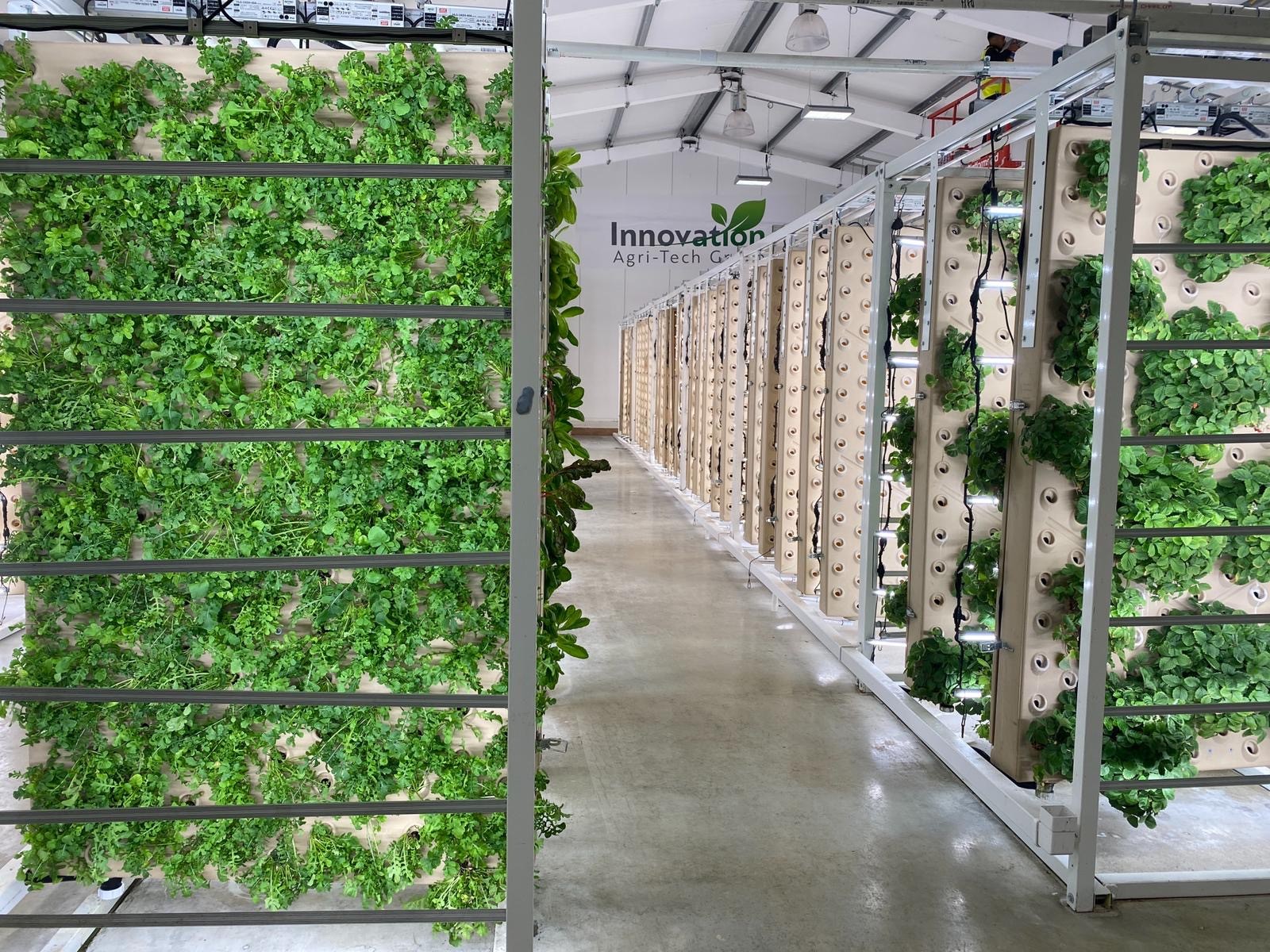
Different methods of growing plants may well require different traits, for example in vertical farming the plants gain nutrients through sprays, mists and deep water hydroponics, what implications will this have on production? Controlled Environment Agriculture is changing the way we traditionally think about growing crops and advanced breeding techniques will have an important role to play in this sector. National Security and Investment Bill
This is a major piece of legislation which impacts agriculture – and indeed many other sectors. The National Security and Investment Bill aims to have stricter screening of overseas investment into the UK. The aim of this Bill is to ensure overseas companies don’t undermine or usurp UK business interests and reduce their competitiveness on a global stage.
This Bill also has implications across the board for innovation, given that R&D is often a global, collaborative endeavour, and that international insights and technologies advance the body of knowledge and accelerate products to market.
There is a potential risk that the UK will be seen as a less attractive market in which to partner with innovators and do R&D. The implications for developments in Artificial Intelligence and robotics, in particular, are causing concern.

Balancing innovation and regulation 

Rarely do innovation and regulation keep pace with each other – often innovators and even end-users are frustrated at the apparent lack of pace of lawmakers to ensure appropriately robust, but suitably enabling requirements.
But similarly, law-makers need those in the innovation community to provide them with high quality insights, information and data to help the legislation stay abreast of the fast-moving pace of technology development. Also to consider the wider ethical and social consequences of new technologies.
Legislation around technology is likely to be moving fast over the coming months and years. By engaging with policy-makers, providing open and transparent information and ensuring there is good awareness of the potential implications, we can all help ensure the UK continues to build its reputation as one of the world’s leading places for innovation.

Guidance for Hopin

Agri-TechE

We are excited to welcome you to an Agri-TechE event hosted on Hopin. To help you make the most of your event, we have pulled together some information about the platform.

Click on the links below to be taken to the specific section:

Accessing the Event

Signing-Up for the Event

Accessing the event

Networking:

Updating your profile information

Networking – 1:1

Networking – Scheduling a meeting

Networking – Speed Networking

Finding your conversations with other attendees

Breakout Rooms/Live Exhibition Sessions:

Watching breakout rooms

Taking part in breakout rooms

Leaving Breakout Rooms

Event follow-up:

Following up after an event

Signing up for the event

All attendees must register for events on the Agri-TechE website first.
For all Agri-TechE events you will receive and email with a ‘magic link’ which will take you to the event registration page. Not received this email – check out our FAQs.
Please allow a minimum of 10 minutes to get onto the platform. We advise you do this ahead of the event date.

Accessing an event

Once you have registered for an event, you simply need to log into Hopin to access the event.
All your events will appear under the Events tab on the Hopin homepage.

Updating your profile information

To edit the your profile information, simply log into Hopin. Select you profile picture/grey circle in the top right hand corner of the home screen. Select Profile.
You can then enter you personal information, social media handles and picture.
In the headline box, we advise you enter your job role and organisation as this shows up in the people list.
If you wish to delete you account after the event, you can do so here.

Networking – 1:1

You can find everyone that is attending the event in the ‘People’ list on the right hand side.
To find an attendee:
Scroll down the list and then click on their name.
To send a text chat:
Enter your text in the box at the bottom of the right hand toolbar.
To have a 1:1 video chat:
Select ‘Invite to Video Call’ which sends a link to the person, you both then need to click on this link to be taken into the video chat. You will need to give permission for the platform to access you audio and visual.

To schedule a meeting with an individual:

Click ‘schedule a meeting’ underneath the name of the person . You can then select a later time on the day of the event and add upto 4 others to join in on the call. This will send them all a notification of the event.

Networking – Speed Networking

Speed Networking can be found using the button on the left hand side.

      • In order to begin networking, an attendee must have a camera and microphone connected to their device and allowed in their browser.
      • In Networking, when someone clicks the Ready button, the system searches for someone else who has also clicked the Ready button. If someone else is available, the two are matched instantly and the video chat begins and lasts for a preset amount of time.
      • You have up to 3 minutes to chat, however you can exit by pressing Leave whenever you want in the top right hand corner.

  • In a Networking meeting, the blue Connect button shows up at the top right corner of the screen. The purpose of this button is to give users the ability to quickly and easily exchange contact information, similar to exchanging business cards at a physical event. Information is only exchanged if both participants press the Connect button.
  • If both people click Connect, a connection registers. When a connection registers, both people will see the others’ contact info on Connections tab of their Profile.
  • Attendees will not know if the other person clicked Connect until the end of the event. The purpose is to allow users to un-awkwardly avoid giving out their contact information if they do not wish to.
  • If you wish to spend longer talking, you both need to press Extend to reset the time.

Finding your conversations with other attendees

At the top of the screen, locate the arrow and then click on this.
It will open up an inbox of all the conversations you have had during the event. This will not be visible after the event.

Watching breakout rooms

Please note: some breakout rooms will be set up so that you cannot just watch and that you will have to turn your camera and audio on – see ‘Taking part in breakout rooms’ for more information
When you click on the breakout room of your choice, you will enter into the room.
To see who else is in the room, click Breakout Room in the right hand toolbar and then People. You can type in questions or comments into the dedicated room chat on the right hand ride.
Please see below for what all of the buttons do:

Taking part in breakout rooms

Please note: some breakout rooms will be set up so that only certain participants can turn on their camera and audio – see ‘Watching breakout rooms’ for more information
When you click on the breakout room of your choice, you will enter into the room. You will be given a green button with the option to ‘Share Audio and Video’, either in the middle of your screen or in the top right hand corner, which gives the platform the permission to use these for the purpose of you engaging in the room. Once you have given you permission you will then enter the room with your video and audio on. Anyone already in there will be able to see and hear you.
To see who else is in the room, click Breakout Room in the right hand toolbar and then People. You can type in questions or comments into the dedicated room chat on the right hand ride.
Please see below for what all of the buttons do:

Leaving the Breakout Rooms or live exhibition session

When you no longer wish to be a part of the breakout room/live exhibition session:
– If you have not shared your audio and video simply click back or navigate to another place on the platform using the options on the left of the screen
– If you have shared your audio and video, click ‘Leave’ in the top right hand corner of the session screen. This will then make you a passive viewer, if you wish to leave the session/room completely now click back or navigate to another place on the platform using the options on the left of the screen.

Following up after an event

Log back into Hopin using your email and password. On the welcome page, you will find a bar at the top with multiple options, one of which is Connections.
Click on Connections under which anyone you have connected with through the Speed Networking functionality and chat function will appear. You can follow up using the contact details which they have provided.
Please note, only when both attendees have clicked ‘Connect’ during the Speed Network will the details appear on the homepage. For more information please read ‘How to follow up with someone post event‘ from Hopin.

REAP 2020 report launched

Agri-TechE Article
Agri-TechE

A new era of decision support tools is making it possible to understand the complexity of food production for the first time and to begin to see how the system can be improved at every level to provide both incremental improvements and disruptive change.
The REAP 2020 conference brought together innovative thinkers from different disciplines to look at agricultural production from the perspective of a system that is an integral part of the natural environment.
The online event attracted a global audience and this report aims to provide a flavour of the discussions and to capture some of the excitement of the Agri-TechE innovation ecosystem.
Speakers discussed emerging agri-tech, the learning points gained from technologies already deployed on-farm, and the innovations that by providing decision support for managing risk are moving us closer towards a future that is productive, profitable and sustainable.
To capture the virtual nature of REAP 2020 we have produced an interactive report including video excerpts from many of the presentations (in the form of a Powerpoint Show), as well as a traditional pdf document.

V-4 food producers look to UK to increase productivity through agri-tech

Agri-TechE
Poland is one of V-4 countries looking to UK agri-tech innovators to improve the productivity of its agriculture. Poland sees the opening of the large and affluent EU food market as a major opportunity and is looking to invest in R&D and emerging agri-tech to build on its reputation for Polish agri-food products and to capitalise on the growing demand for more complex food ingredients such as for customised diets. Agri-TechE is partnering with the UK-V4 mission.

Introducing agriculturalists from V4 countries

Alex Dinsdale is Regional Growth Manager for Agri-TechE , the leading membership organisation for agri-tech, he is coordinating the UK-V4 Mission. The aim is to introduce agriculturalists from the V4 countries of Poland, Hungary, Slovakia and the Czech Republic to innovators within the Agri-TechE ecosystem. Alex says: “The V-4 food producers are interested in agri-tech developments such as the use of drones, robots, sensors and farm management software for precision farming, as well as next generation farms and urban farming. “Academic and business members of Agri-TechE have significant expertise in these areas and the V-4 countries have a combined agricultural area of 26.6 million hectares representing an opportunity for UK companies to deliver these solutions at scale.”
Michal Sobczyk, Digital Attaché at the British Embassy in Warsaw is leading the UK-V4 mission, he comments: “It is Poland’s ambition to be Europe’s food production hub. Agri-food accounts for 8% of the country’s gross added value and the trade surplus is increasing. Many Polish companies have invested recently in the latest production-line infrastructure particularly in dairy, meat and frozen food and now is the turn of agriculture.
“A major challenge is fragmentation, as the average farm is only 10 hectares (70 in the UK). However, there are other issues, our farms use 20 percent more fertiliser than UK farms and we are looking for solutions to improve farming output and quality and reduce environmental impacts.” “Academic and business members of Agri-TechE have significant expertise in these areas and the V-4 countries have a combined agricultural area of 26.6 million hectares representing an opportunity for UK companies to deliver these solutions at scale.”
Investment in production-line infrastructure

Michal Sobczyk, Digital Attaché at the British Embassy in Warsaw is leading the UK-V4 mission, he comments: “It is Poland’s ambition to be Europe’s food production hub. Agri-food accounts for 8% of the country’s gross added value and the trade surplus is increasing. Many Polish companies have invested recently in the latest production-line infrastructure particularly in dairy, meat and frozen food and now is the turn of agriculture.
“A major challenge is fragmentation, as the average farm is only 10 hectares (70 in the UK). However, there are other issues, our farms use 20 percent more fertiliser than UK farms and we are looking for solutions to improve farming output and quality and reduce environmental impacts.”

V-4 food producers also interested in packaging and nanotech

The consortium is also interested in FoodTech which encompasses innovation in the products, distribution, marketing or business model in the food sector. So, it is looking at R&D in areas such as nanotechnology in conservation, filtering, and packaging innovation.
Also important is the need to increase food product complexity to move production up the value chain, for instance with organic food and products for customized diets. Creating greater job opportunities within the processing sector.
Michal sees the event on the 18th March as the starting point for closer UK- Central Europe business links. “We see potential to include more countries such as Romania and Bulgaria in the UK-V4 mission and we hope that this initiative will create value for UK companies.”
Dr Belinda Clarke, director of Agri-TechE agrees: “Our members are looking at international markets and there is no better way to gain an understanding of the needs and opportunities than by talking one-on-one to potential customers. We look forward to welcoming the V4 agriculturalists.” The UK-V4 Mission will include a webinar on 18th March 2021 – it is open to all agri-tech organisations. More information about the events.
How Drop & Grow container farms offer chance to rethink urban food systems

Meet the Network
Agri-TechE
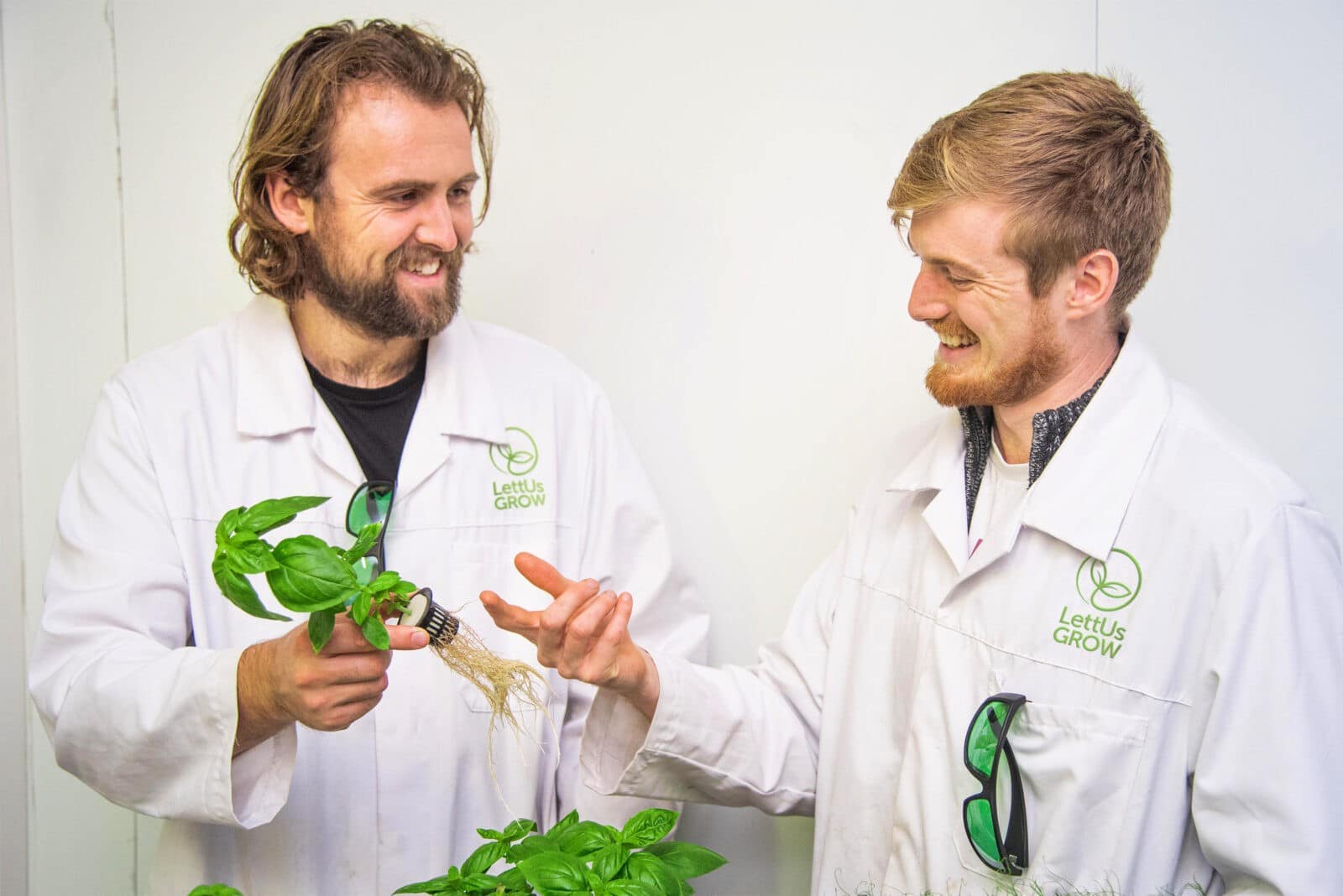
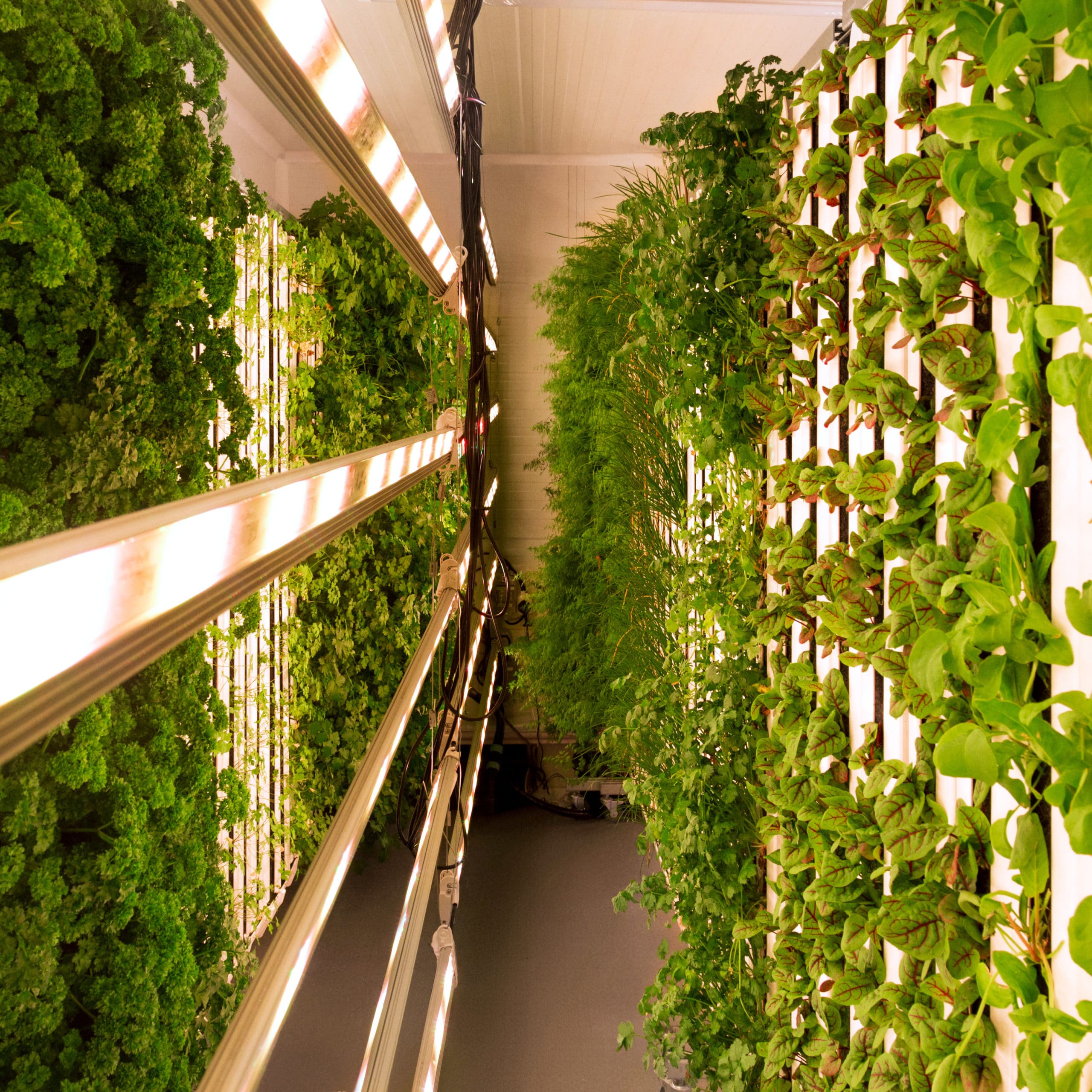
Aeroponic container farms offer the potential to grow high value fresh produce 24/7. Jack Farmer, Co-founder and CSO, of LettUs Grow will explain at “CEA is Growing Up” how the company is pioneering a new concept in farming with its Drop & Grow aeroponic container farms. During the first lockdown of 2020 the technology company devoted production from its R&D facility in Bristol to local food banks. This showed on a small scale how there is an opportunity for a new type of value chain to feed urban populations.  
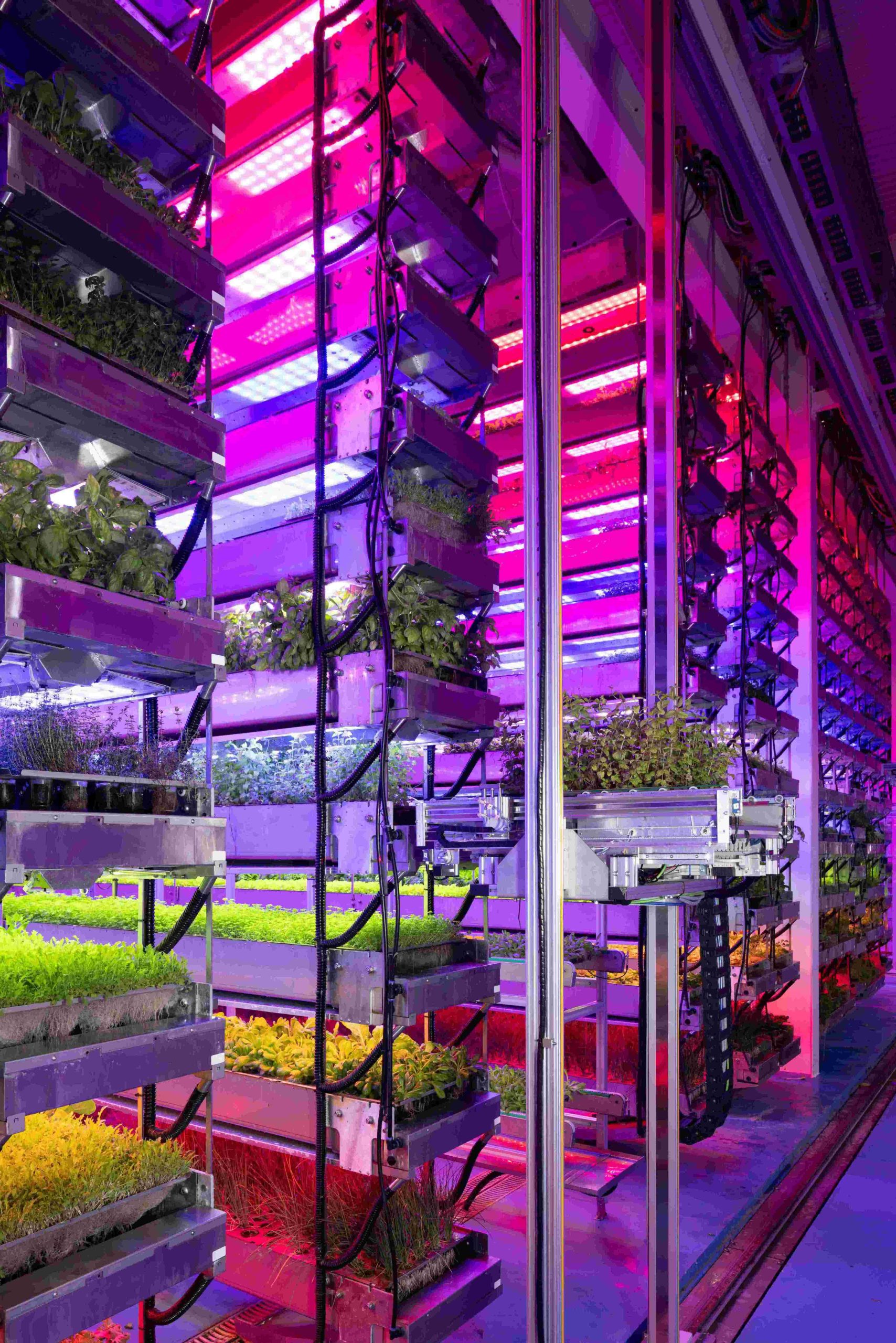
We have created an aeroponic container farm, called Drop & Grow, which includes everything you need to start growing fresh produce, it utilises our automated management software. The aeroponic container farms are portable and can be moved with the kit pre-installed, they are also modular so they can be scaled as required. This new product will be despatched across the UK in the first half of this year 
The smaller model Drop & Grow:24 is primarily focussed on people entering the horticultural space, be they entrepreneurs, new growers, agriculturalists who weren’t previously into CEA. Some units are also being funded by a philanthropic fund or government finance as an educational or community tool to get newcomers interested in growing. 

Most productive container farm on the market

We expect Drop & Grow to be one of the most productive, ethical, and easy to use container farms on the market. It is a core part of our strategy to be the leading technology provider in this space.

Drop & Grow container farm
High brand awareness will create an experiential experience

Container farms are a distinct market opportunity that offers high levels of brand impact but we are also working with large-scale growers as Drop & Grow can also be used for propagation of plants for use in greenhouses or field. The farm management and control software Ostara, has been designed within a vertical farm but has applicability to different types of CEA including glasshouse. 
Our approach is very collaborative, working with our partners to see how we can add value by integrating our technologies. A key part of our growth strategy is to be selling our core technologies at a larger scale for usage in a broad spectrum of settings ranging from glasshouses to vertical farms.  
To support this ambition, we’ve got collaborations with academics in University of Bristol, JIC and Uni of York. Projects range from investigations of root morphology and root exudates, speed breeding programs for developing economies, through to more plant physiological investigation of how you would breed for a vertical farm. These are generally programmes that have broader impact outside of LettUs Grow.  

Prospects for 2021 

2021 is looking really exciting, regardless of what happens with Covid – supermarkets are investing to ensure a sustainable source of food production in the UK, which is what CEA provides.  Access to capital for building horticultural installations is also very good.  
Two interesting trends that will impact CEA are:   

  • Boom in online shopping  – online is massively benefitting from the pandemic, and a lot of the bigger vertical farms are now positioning themselves as distribution centres next to the food distribution centre – I think that trend will continue
  • Growth in ‘experiential’ side of food and retail – the collapse of traditional high-street retail is probably an accelerated long-term trend – but the question as to what replaces it. Container farming as we do it is essentially experiential growing – the fact that the farm is very visible and local to consumers of the product has significant brand value to surrounding restaurants and supermarkets.

There is quite a big pull in the UK right now – it’s a good place for CEA – still being a small company, we need to collaborate with bigger players in order to feel that pull. So the UK is certainly taking all of our short-term attention.  
 More about LettUs Grow.
Controlled Environment Agriculture is growing up  

GrowUp Farms aims to change food systems

Agri-TechE

Kate Hofman is the CEO of GrowUp Farms. In 2014, the company established Unit 84, the UK’s first commercial-scale vertical farm. Sales from the prototype Unit 84 were made through local supply chains and restaurants across London – with a focus on social and environmental sustainability.

Kate Hofman, GrowUp Farms
Kate Hofman CEO GrowUp Farms

Having been in the business of commercial controlled environment salad production since 2012, starting off with shipping container aquaponics before scaling up, Kate is in an excellent position to comment on the challenges of breaking into the UK leafy green supply chain using a vertical farm.

Q. Are GrowUp technology developers or growers?

Our focus is very much as a salad grower that grows a fantastic product that everyone will want to buy. To bring down the cost of sustainable food, means doing it at a big enough scale to gain the economies of production that are needed to be able to sell at everyday prices.Our long-term strategy is to continue to build toward this model of producing affordable product, and to continue to be a grower rather than a technologist.
From a tech development point of view, indoor farming is still at a relatively early stage, and any industry at this stage will see ideas and concepts start in academia or start-ups, into early-stage development, later-stage development, and then into commercialisation from there. That’s reflected in where the indoor farming market is at the moment – a growing number of projects, technologies, business and products at different stages of development, and operating at different stages of the supply chain.

Q. What did you learn from your vertical farm: Unit 84?

Bringing The Outside In - GrowUp
Unit 84 was the UK’s first commercial vertical farm

Unit 84 was our commercial prototype, and was the largest in the UK when we built it – and that ran until the end of 2017. We had a local supply chain – our farm was in East London; we used an electric van to do all our local deliveries and worked with a wholesaler in Covent Garden market. We sold to local restaurants and various independent stores.
We have pivoted away from aquaponics, and now focus on controlled environment hydroponics; looking at how to optimise large scale production to bring down costs and reduce impacts.
Because of the scale we are now looking at, we are focussed on a wholesale model, so although we are less likely to work directly with individual restaurants and retailers as we did before, having conversations directly with consumers through smaller channels will always be important. It helps people understand where food comes from and how it’s made, and they can make better food decisions for themselves if they understand more about sustainability.
It is hard to break into traditional salad supply chains as the conventional industry is very consolidated and very commoditised.
We are a member of the leafy salad association, the AHDB’s salad wing, and because our ambition is to make what we do part of mainstream food production in the UK, we see the value in opening dialogues with all sectors of the industry in terms of research and best practise – there are opportunities for collaboration around things like sustainability and food safety.
And there is some overlap – I know several projects where conventional growers have looked into applying controlled environment technology to what they’re doing, but we are positioning ourselves as an alternative supplier to retailers.

Q. What does the future look like for vertical farming?

It will be really interesting to see how the food service world recovers after lockdown – the rough numbers are that supermarket trade was up at least 11% in the last year – so retail still looks like a really good direction to go in. If we want to have an impact on the food system in the UK and change it for the better, we’re committed to partnering with those big retailers to help them deliver on their sustainability and values-driven goals.
There are lots of exciting technological developments occurring, and I see that as a very positive thing. I like the idea of the UK becoming a centre of excellence for CEA production in the same way as we are for other agricultural innovation – it’s not just about the technology it’s about growing world class quality food and maintaining that agricultural heritage as a country known for its delicious produce.
More information about GrowUp Farms.

Aponic to launch new vertical aeroponic farming system

Agri-TechE

Aponic develops vertical aeroponic farming systems for sustainable, commercial produce growing.  

Jason Hawkins-Row, Aponic
Jason Hawkins-Row founder of Aponic

Jason Hawkins-Rowe is the CEO of Aponic, the company is to release a new product in March aimed at large commercial farmers. It offers a new farming system in a modular form that will convert existing and under-utilised buildings into high profit areas on farms. He says: “We are now being invited onto farms to show our ways to encourage meaningful diversification, 5 years ago it was a very different story!”

The idea for Aponic emerged when Jason had his fresh produce stolen from his allotment, he saw a way to increase production within a smaller footprint and developed a vertical farming unit. He sees the system as offering the potential for diversification.

“We are constantly trialling new crops this includes pharmaceuticals and food crops that are usually grown in other climates, such as ginger. We are also experimenting with crops such as asparagus, and potatoes, they are difficult to grow efficiently out of soil but all around growing might be useful for breeding.

“For some varieties, such as herbs, vertical aeroponic farming delivers higher oil and sugar content and this can be further enhanced by light stress and other factors.
“To bring profit margins up, we are also looking at efficient ways to process fresh product before it crop leaves the farm gate. For example, ways to maximise profits from crops by extracting oils and other elements on the farm.

“This creates opportunities for farmers to gain new value from their buildings.  We are not aiming to replace broad acre farming, but instead to enable farmers to diversify in their core market and make a stable income from existing assets and we think this is only going to grow in future. ”

CEA in action with Mira Merme from OneFarm

Agri-TechE

Plant-based pharmaceuticals are one of the crops to be grown in OneFarm CEA vertical farms.

Mira Merme OneFarm CEA
Mira Merme, OneFarm CEO

Mira Merme is the CEO of UK based OneFarm, the company’s goal is to provide affordable fresh healthy food and plant pharmaceuticals to local communities to mitigate the upcoming food crisis and has plans to roll-out a large scale CEA vertical farms.
OneFarm combines knowledge about food and plant pharma, technology, infrastructure. The data produced feeds into an open source feedback learning system which can be used to inform the selection of seeds, new product development and long term control of growing environment  – leading to first mover advantages.
Mira comments:  “The system aims to optimise water usage, energy use, substrate and plant nutrition. Also to reduce waste in food by increasing the shelf life
“The UK population has  now unfortunately had first hand experience of the impact of being  import reliant for  key food products and continues to be more at risk on supply and pricing with Covid and Brexit impacting food distribution – so ensuring a better, safe and secure food supply has become more critical.
Dutch agri-tech  has benefited enormously from a collaborative approach and joint learning, particularly in  their flower industry where there is definitely a ‘common good’ philosophy.  I would like to see this happening more in the UK.”
More information about OneFarm

Airponix Solution nutrient spray reduces water requirements in Kenyan trial

Meet the Network
Agri-TechE

airponix
A nutrient spray is being used by Airponix to deliver a growing system that makes agricultural sustainable in extreme conditions. 
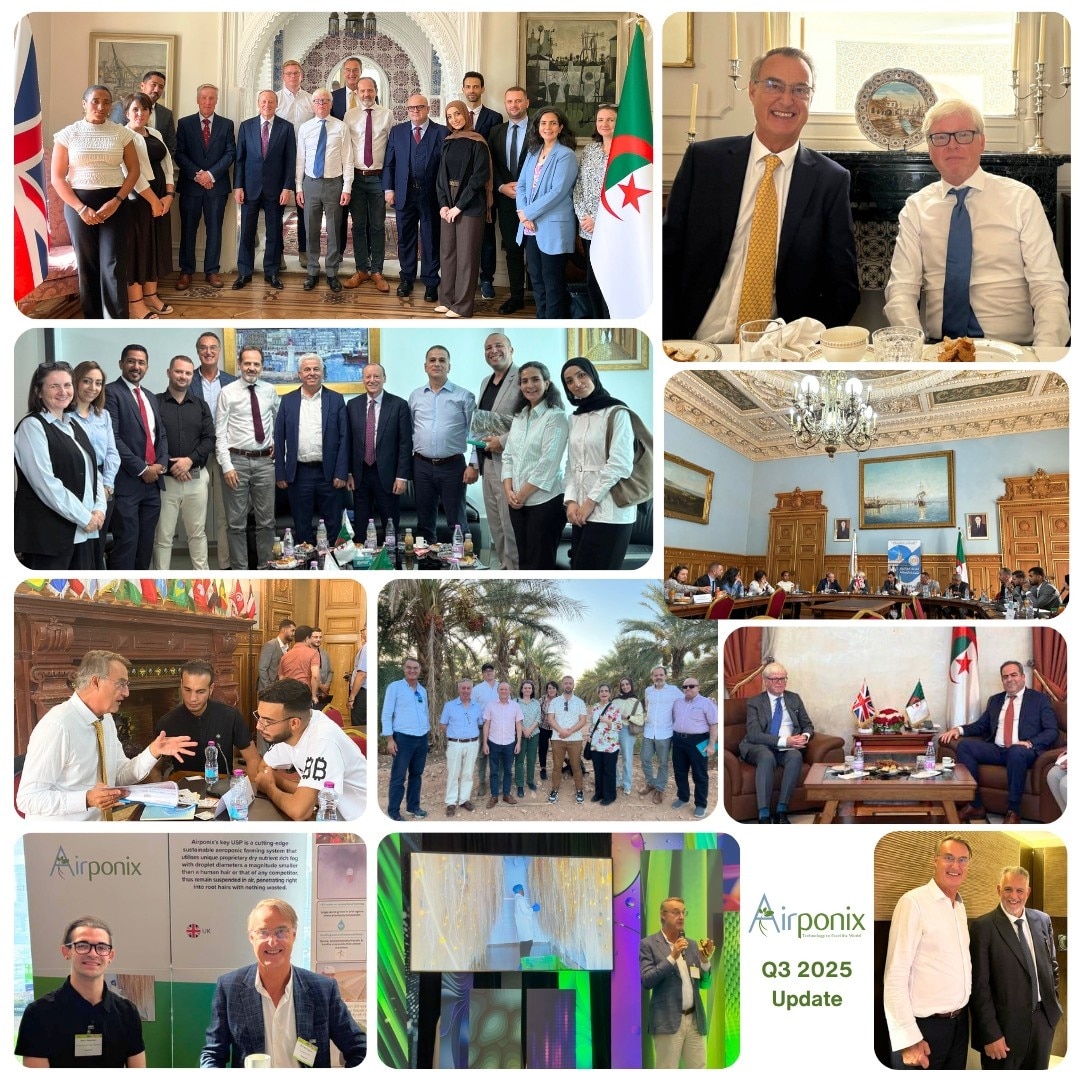
Michael Ruggier is speaking at “CEA is Growing Up” he is the CEO of Airponix which has a smart, sustainable and soilless system that is designed to support the growth of a broad range of food and niche crops.
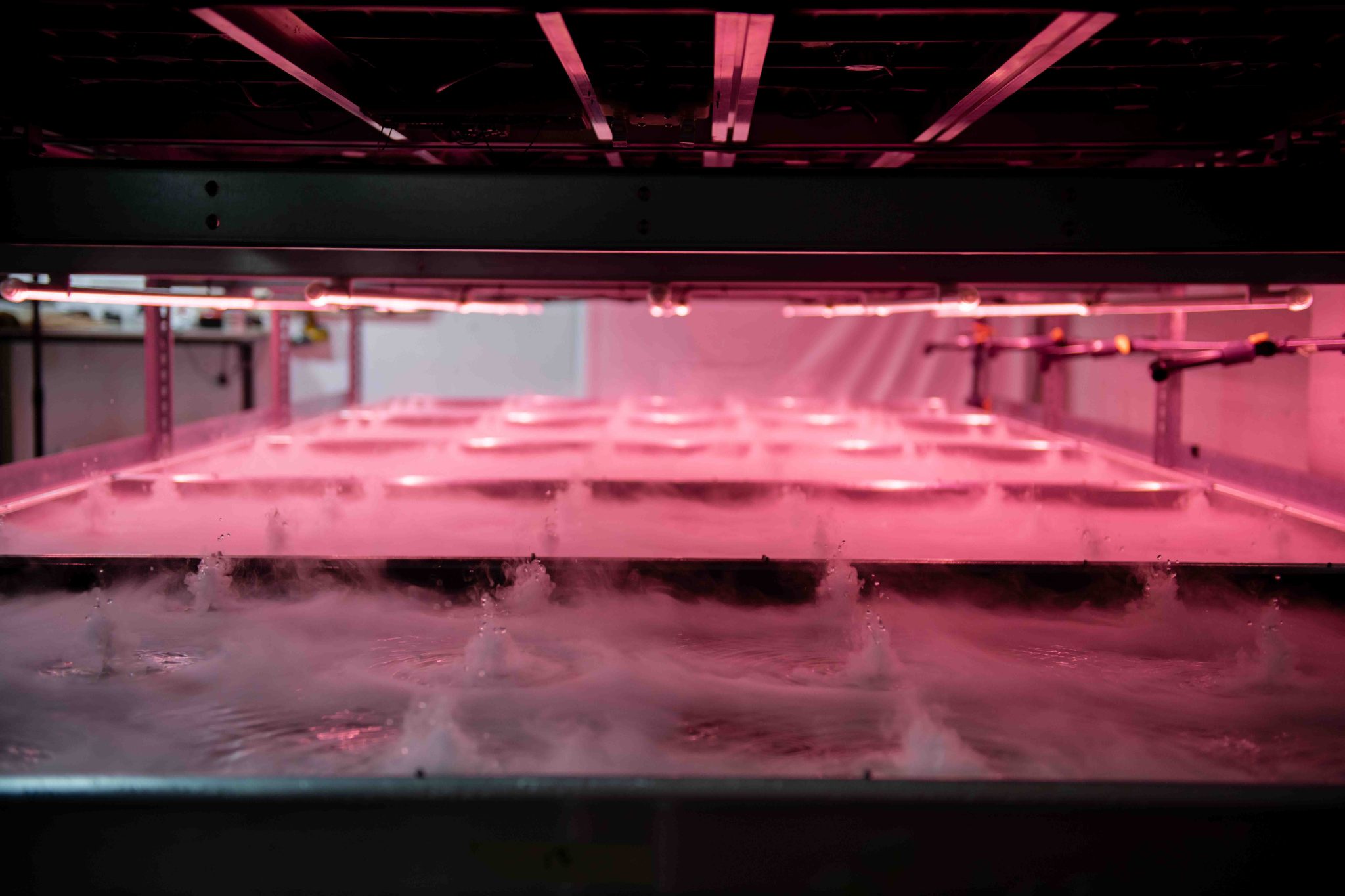
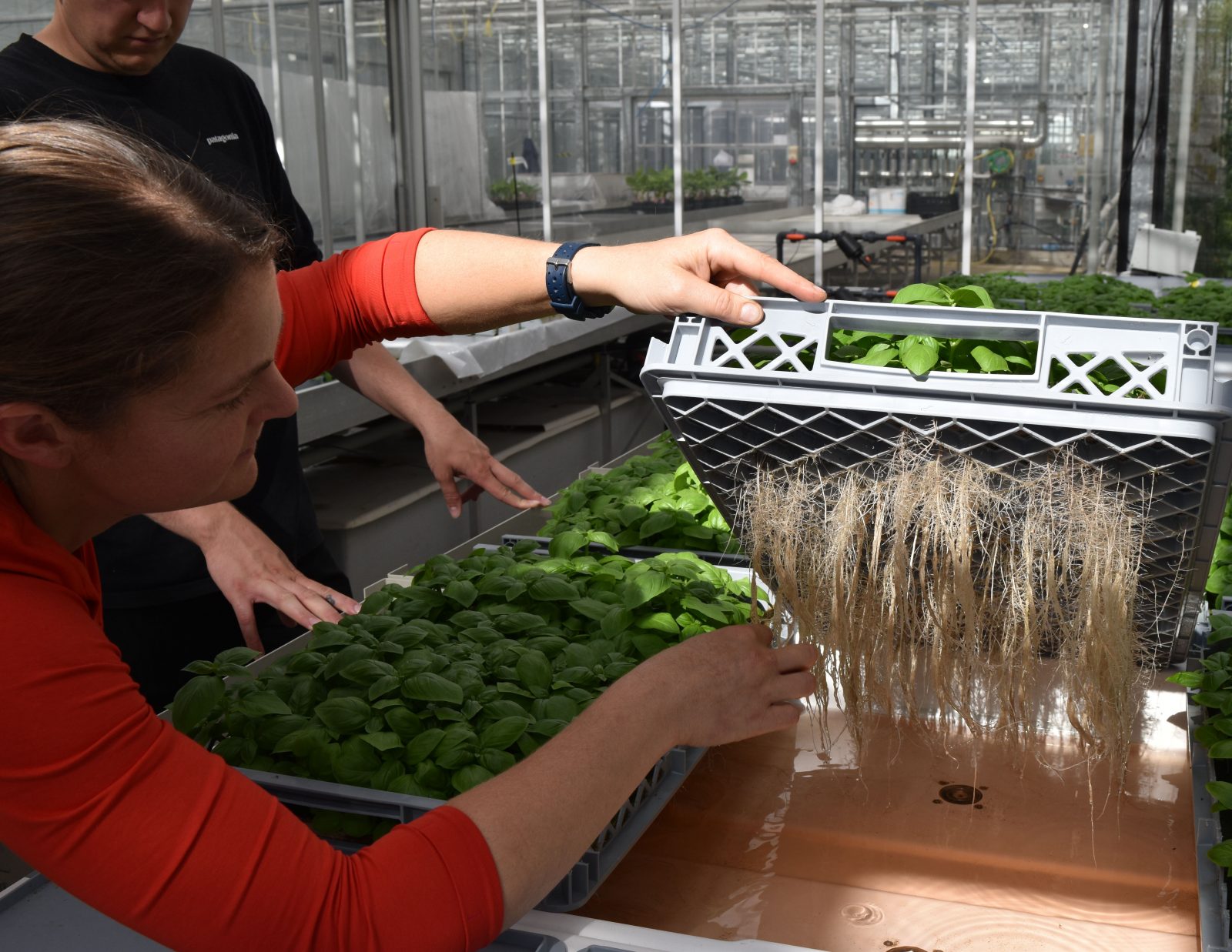
He explains: “Our solution mimics nature, like an orchid growing in air, absorbing light, oxygen, humidity and nutrients from its surroundings. Roots are exposed to a nutrient rich fog which is more effective way of delivering the nutrients than any other systems such as current aeroponics which sprays the roots, or hydroponics which submerges them.
“It does not require an expensive pumping system or for the water to be changed, so in comparison to hydroponics we use a fraction of the water and can provide double the yield.”
 ”It is a simple, low-maintenance, smart, soil-less system.” 
  Airponix is currently trialing the technology in Kenya to provide seed potatoes, and has an agreement with major potato house in the UK. 

Try before buying

Airponix nutrient spray
Airponix is trialing its technology in Kenya

The plan is to lease small units to potential customers for a season so they can test the technology before making a commitment.
Michael explains:  Adopting a new technology is hard enough, especially if it is a new radical change. We are going allow customers to try-before-buying with some clearly defined key performance indicators. When they see how good it is, they’re going to want as many as they can get! 
“This is already underway but currently looking for partners in geographies where there is low food-security but high-income, for example the Middle East) as they will be more comfortable trialing new technology. Once the technology has been proven multiple times we will expand further.” 

Nutrient spray offers benefits over other technologies

Michael explains that the system has benefits when compared to hydroponics and aeroponics.  
Hydroponics uses a lot of water and pumps, and so requires lots of energy  to pump the water. Airponix uses a much more fundamental force, entropy, to deliver the nutrients. 
“Aeroponics also uses a spray but this results in the roots becoming long, drooping, and stuck together. Airponix’s much smaller droplet size allows for the roots to grow out in a much more efficient way making it much easier for the plant to absorb the nutrients as it penetrates deep into all the root hairs. 
 ”In addition, we are developing a new technology (IP secured) that will drastically reduce the running and maintenance cost of the system to keep us ahead of the competition.” 
More about Airponix

Hopin – FAQs

Agri-TechE

Find below a selection of Frequently Asked Questions which we have received regarding the Hopin Platform.

We are constantly updating this so please do keep checking back.
If you can’t find the answer to your question, please email Fiona.

I’m an attendee and I can’t get on the Hopin Platform

Firstly, you should have received an email from Hopin with a magic link. All the emails sent from Hopin are sent from no-reply@hopin.com . It is possible that this email ended in your Spam/Junk folder. If you still cannot find it,  please check which email you signed up to the event with as this is the email which we will have sent the magic link to. If you cannot find it after checking these steps please email Fiona who will look into if for you.
Once you click the magic link you will be directed to Hopin and asked to create an account. Please keep this safe.
From the point of setting a password onwards, to access Hopin either in the run-up to or on the day, navigate to Hopin on your browser and enter your email and password. This will bring up the homepage with all your upcoming events shown. Full access to the events will only be possible just ahead of the event start time.

I’m an attendee and I don’t understand how to navigate around the Hopin Platform

To find out how to navigate around the Hopin platform please watch the Attendee Experience video from Hopin, which shows you all the different functions in Hopin.

How can I network with other attendees on the Hopin platform?

There are two ways you can network:
From the People list – you can find an individual in the people list which is located on the right hand side toolbar, you can send them a message and then invite them to a video call immediately or schedule a call for later on in the day.
Speed Networking – by clicking ‘Ready’ in the Speed Networking you will be matched up with another attendee. If you want to meet someone else you can both end the call or you can extend it if it is a conversation you wish to continue.

      • In Networking, when someone clicks the Ready button, the system searches for someone else who has also clicked the Ready button. If someone else is available, the two are matched instantly and the video chat begins and lasts for a preset amount of time.
      • In a Networking meeting, the blue Connect button shows up at the top right corner of the screen. The purpose of this button is to give users the ability to quickly and easily exchange contact information, similar to exchanging business cards at a physical event.
      • If both people click Connect, a connection registers. When a connection registers, both people will see the others’ contact info on Connections tab of their Profile.
      • Attendees will not know if the other person clicked Connect until the end of the event. The purpose is to allow users to un-awkwardly avoid giving out their contact information if they do not wish to.
      • In order to begin networking, an attendee must have a camera and microphone connected to their device and allowed in their browser.

Does it matter what web browser I use to access Hopin?

It is advised to use Chrome, Firefox, or the most recent versions of Edge.
Users are experiencing issues when accessing Hopin using Internet Explorer or older versions of Edge. When trying to open the links from emails, please make sure it is opening in one of the previously mentioned browsers.

How do I add more information about myself onto Hopin?

Follow this step-by-step guide produced by Hopin on using the platform, including how to update your profile and how to follow up on connections after the event.
For a full walk through of Hopin for attendees please watch the video below:

I want to access Agri-TechE events on Hopin on the move – can I do this?

Yes you can! The Hopin platform can be accessed both via a desktop web browser as well as on mobile devices.
To access Hopin on a mobile device you will need navigate to the Hopin webpage on your browser. If you have not already followed the magic link we would advise you do this first. After using your magic link, you will just login with your username and password as noted above.

I want to look through the connections I made at an Agri-TechE event on Hopin?

Log back into Hopin using your email and password. On the welcome page, you will find a bar at the top with mutliple options, one of which is ‘Connections’. Click on ‘Connections’ under which anyone you have connected with through the Speed networking functionality and chat function will appear. You can follow up using the contact details which they have provided.
Please note, only when both attendees have clicked ‘Connect’ during the Speed Network will the details appear on the homepage. For more information please read ‘How to follow up with someone post event‘ from Hopin.

Who will my information be shared with?

Your data will be collected and dealt with by Agri-TechE , organizer of this event, to allow you access to our events and the Hopin digital platform.
When you register, an account will be created with all the information that you entered. This account will allow you to access to the platform.
Your data will be shared with Hopin, our partner and editor of our digital platform, event partners and exhibitors.
Your data will be protected and not commercialized. You have the right to access your data, as well as editing or deleting it.
For further information on your data processing and your rights, please refer to Hopin’s data policy: https://hopin.to/privacy

Visit Hopin now.

Northern lights phenomenon inspires chemical-free seed treatment

Agri-TechE

Ralph Weir CEO of Zayndu

The world’s first ‘activated air’ seed sterilisation system, Aurora Z10, was launched by Loughborough University spinout Zayndu Ltd at the Agri-TechE event “Keeping it clean with agri-tech innovation” January 19th 2021. The system provides a dry alternative to chemical treatment or washing. It enables high-value seeds such as tomato or fast-growing seeds like rocket – some to be disinfected for the first time.
Seed cleaning reduces the pathogen load on the seed and protects the soil from contamination with seedborne fungal infection. However, many of the chemicals widely used for disinfection are being withdrawn from use so alternatives are urgently needed.
Ralph Weir is CEO of Zayndu, he explains that the system gets its name from the Aurora Borealis – the northern lights – a naturally occurring plasma created when an electric current moves through air.

Dry cleaning with activated air

He says: “The Aurora Z10 is the first in a series of products and is aimed at high value seeds for which there is no treatment at present. The seeds are contained in a sealed rotating drum and we introduce a current, which splits oxygen and nitrogen molecules into individual atoms creating a plasma. This “Activated Air” technically a blend of RONS – Reactive Oxygen and Nitrogen Species – is a powerful disinfectant.
“The RONS are desperate for something to latch on to and tear apart bacteria, fungi or viruses present in the chamber. The seeds are not affected as they are protected by their thick walls, so coming out of the drum are just cleaned seeds and fresh air.”
Ralph explains that the technique overcomes a number of problems faced by seed suppliers.
“The gold standard fungicide seed treatment is Thiram, which prevents damping-off diseases in seedlings. This has recently been withdrawn, so the pathogen load on seeds is increasing, leading to the waste of seed or risk of contaminating the soil. We have done trials of our technology with many crop varieties and it both destroys the pathogens and typically boosts germination – one example being a fourfold increase in early germination of winter wheat, when compared with untreated seed.”

High value seed

Zayndu’s first product has a capacity of 1kg of seed per batch so the company is concentrating on high value seed such as flowers, fruit and vegetables; tomato seeds can be worth €5 a seed.
However, further products are in production with a larger system, the Z100, due for commercial availability in the summer, with ever-larger systems thereafter. Weir is realistic: “The Z10 is great for high-value seeds processed in small batches, of grams to kilograms – but carrots are processed in tonnes/day throughput. We’re working towards those systems now”.
“Some seeds are untreatable at present, for example fast-growing salads where the time to harvest is too short to allow the chemicals to dissipate or where the seeds, like basil and other herbs are mucilaginous and germinate on contact with water. This is problematic as existing decontamination involves chemicals dissolved in water or a hot dip at 500c. Our treatment is completely dry enabling disinfection of herbs, salads or staple crops such as wheat.”

Keeping it clean

Ralph spoke about the new technology at the first Agri-TechE event of 2021. Agri-TechE is a membership organisation that brings together technologists with farmers, growers and scientists to create an innovation ecosystem.
Agri-TechE director Dr Belinda Clarke comments: “The agri-food industry is highly regulated and relies on large volumes of water for washing and chemicals for hygiene to meet stringent quality and safety standards. Zayndu’s ‘activated air’ technology is one of a number of emerging approaches that offer sustainable alternatives and other benefits. We look forward to exploring these in the virtual meeting which is also open to non-members.”
 

About Zayndu – www.zayndu.com

Zayndu is a high-tech start-up bringing state-of-the-art plasma disinfection to the seeds industry – simultaneously killing pathogens while boosting germination rates, and doing it with a fraction of the costs of alternative technologies. A spin-out from Loughborough University, Zayndu benefits from decades of experience in plasma and biology engineering – enabling an organic, eco-friendly seed treatment at a time when the industry needs it most. Zayndu is working with large seed producers and a network of test houses, breeders and specialists to establish plasma as the safe, environmentally friendly approach to seed disinfection.