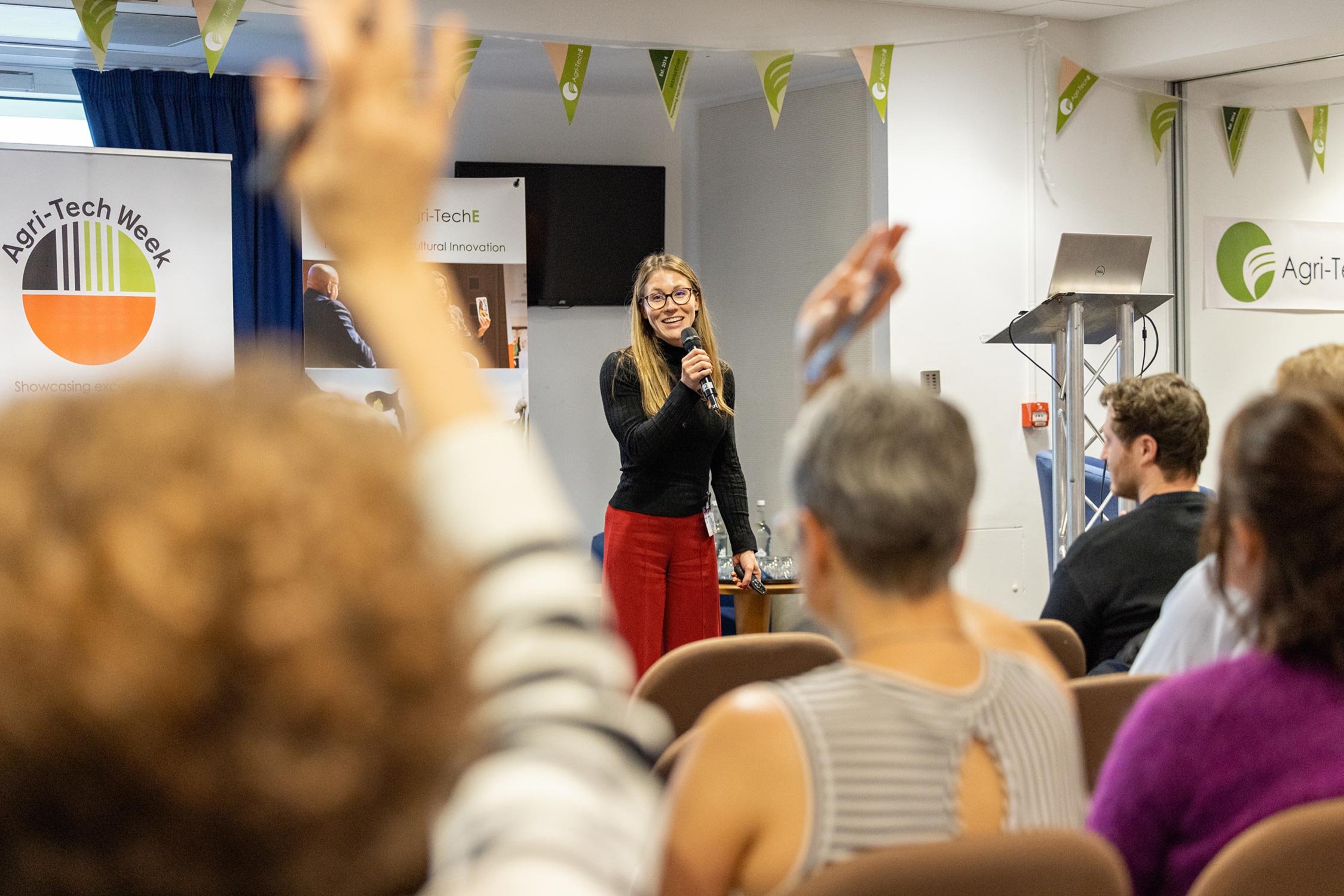
Agri-TechE can help make us world class and competitive

Meet the Network
Agri-TechE

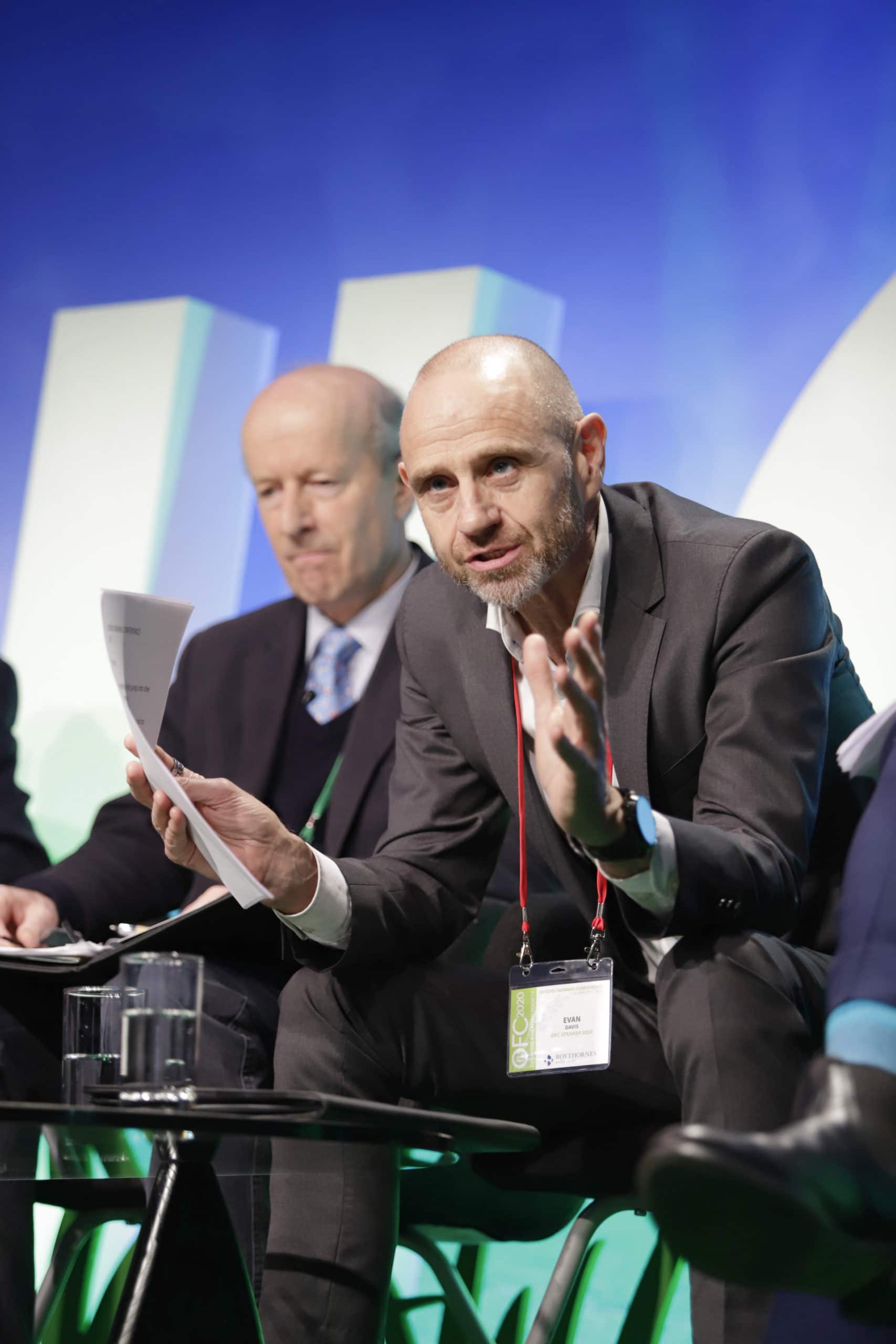
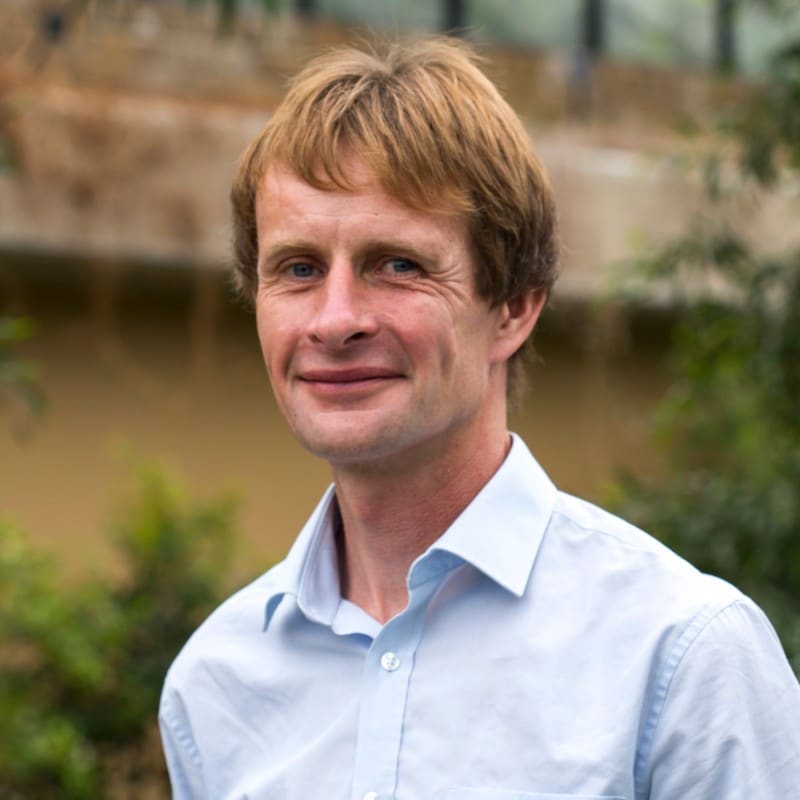
Tony Bambridge, B&C Farming“As an industry, I think we need to focus on things that the market really wants us to provide and where we have a chance of being world-class and competitive,” says Tony Bambridge, Managing Director of B&C Farming, who will be joining a debate about the priorities for agri-tech at Agri-Tech’s REAP Conference on the 7th November 2018.
“There will still be a need for British beef and oven chips are not going to start pouring in from Brazil. I think most East Anglian farmers actually produce products that are really needed by brewers, bakers, confectioners and the poultry industry – but there will need to be a rebalancing and refocusing of our market,” Bambridge says.
With significant changes already taking place in UK agriculture, he believes there is more to come: “We’re going to have to try and compete with those who have tremendous cost advantages in terms of land and labour, and with less regulatory measures. But they will have to compete with our traceability and unique products,” says Bambridge, who is also the NFU County Chair for Norfolk 2017-18.

Improving yield by reducing costs 

With a growing global population, including the UK’s 65 million mouths to feed three times a day, Tony is clear that improving yield while reducing costs is the only way UK agriculture will be able to remain competitive – particularly while game-changing techniques like gene editing are not yet permitted.
For Tony, agri-tech’s key role will be helping to make labour cost-saving measures: “We have to raise productivity and driving that, in part, is going to be how we can achieve more with our time and reduce labour costs.
“At B&C, we are investing in superfast computing and imaging to remove stones out of potatoes – in the coming years, I could see a situation where we have one operator actually controlling two or three or four vehicles in a field.
“In the next ten years, we will see some pretty significant changes in the structure of our industry.”

Gene editing has potential 

Although Bambridge sees incremental improvements in productivity he considers that gene editing has the potential to provide a step change.
“If we were permitted to use gene editing this would have a profound effect within a decade through reduced spoilage through pest and disease, improved yields and less waste. That would be a major step.”

Realistic pricing

Loaf of bread
However he also considers that encouraging more realistic pricing of products at the farm gate would improve sustainability.
He says: “A penny on a loaf of bread puts about £18 per tonne onto the wheat price. So, is your loaf of bread £1.12 or £1.13? Who actually looked at the price of bread last time they went out? Half a pence on the cost of a bag of oven chips puts £20 per tonne on the potatoes. If this went back to the producer it would off-set the lost of subsidies.”

REAP Debate 

The priorities for agri-tech is to be debated at REAP – a new feature for the conference. Producers, technologists, scientists and advisors will consider the question of if it is cheaper to import food than produce our own should agri-tech investment focus on other, more lucrative, uses of land?
The Agri-TechE REAP Conference is on Wednesday 7th November 2018, Wellcome Genome Campus Conference Centre, Hinxton, Cambridge, CB10 1RQ.

Three things not to do when running a hackathon

Agri-TechE

sudo GROW Hackathon 2018
We ran our first Agri-TechE Hackathon early this year in partnership with Allia Serious Impact.  It was an intensive weekend that resulted in some very exciting ideas emerging.
A hackathon brings together programmers from different disciplines with specialists providing deep knowledge of the industry. To share the learning points we have invited a number of the participants to talk about their experiences at REAP.
This will include the overall winner and category winner, one of the hackathon experts Aaron Croucher and Richard Corden from our ‘gigabyte’ sponsor BASF.
Such is the interest that we have invited Paul Hughes, Director of Enterprise Support, Allia to give some of his tips about what makes a successful hackathon….and here is what not to do!

Paul Hughes, Allia1) Don’t leave it too late to get organised.... Give yourself enough time to find a venue that will accommodate small groups and larger networking areas.  Also securing sponsors with the right fit always takes longer than you think. Promoting the event to participants requires a number of hits so factor this in as well.  Three months is just about doable but a six month lead time is best

2) Don’t forget your participants are an unknown entity... You need to prepare for a mix of skills and knowledge.  If the promotion was broad then you won’t know much about your participants until they arrive so aim to may the subject accessible and available for all levels – keep it interesting for someone new to the tech as well as a seasoned expert.

3) Don’t forget about the details… it is often the small details that help participants to think, build and create.  So invest in colourful post-it notes, whiteboard pens, flipcharts, blue-tack and ensure there are sufficient extension leads and USB keys.  Have plenty of supplies for any eventuality.

To hear more about the ideas that came out of the session come and hear Paul and the others talk at REAP.
Thank you once again to BASF with their strapline ‘we create chemistry’ – they do indeed, by helping to make the hackathon possible and are also by sponsoring this slot at REAP. 

Read all about it – reports for members

Agri-TechE

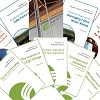
Agri-TechE publications 2018If you have missed any of our events this year you can catch up by reading one of the reports. These give a great overview of the key points and contact details for speakers to gain more information.
In addition to the report we launched at the House of Lords, we have six new reports from this year that are available free to our members through the publication page.
Here are some of the titles:
 

Healthy Soils: Waiting for the Worms

It is well established that earthworms are a good indicator of “soil health” but what can farmers do to encourage more earthworm activity in soils? How can worm numbers be increased and measured – and what types of soils attract which types of worms? And how is the world of worms affected by different cropping and management regimes?
This report captures the presentations and discussions of the event, including results of an investigation showing how adding organic matter to soil produces a yield benefit.

Trust, Provenance and Blockchain: Impacts and Opportunities for Agriculture

The internet revolutionised our society by enabling information exchange between individuals across the globe; blockchain technology will have the same global impact, but this time by enabling the exchange of value rather than information between individuals, says PwC’s Patrick Spens, one of the speakers at this event.
Among the benefits of blockchain discussed at this event was how it can offer huge savings to the agifood industry, through reduced back office systems, intermediaries and invoice waiting periods.

Finding the Funding – The Research and Business Guide to Smart Agri-Tech

This report provides a useful overview of the current funding streams available for agri-tech innovation .

Smart Farming: The ‘AI’m of Machine Learning in Agriculture

Can machines be taught to spot diseased crops and weeds and take action to solve the problem? So-called machine learning is already being used to spot patterns and make decisions – in fraud detection, advertising and self-driving vehicles, and it is poised to be the next new decision support tool for agriculture.
This report captures the discussions and insights about the future of the ‘connected farm’ via the Internet of Things – including research looking at how wearable tech is helping to train people to train robots to work more effectively in areas specific to agriculture.

Counting the Cost, Value and Benefits of Natural Capital in Agriculture

“Natural capital” is an attempt to value in economic terms natural resources such as soils, air, waterways and the flora and fauna that live in them. For farmers, the so-called “ecosystem services” that are delivered by these natural resources are a huge part of the living landscape and indeed all farm businesses, but it can be difficult to justify investing in natural capital assets without being able to value them properly and calculate return on investment.
If you are not a member and want to purchase one of these reports then do get in contact. 

Solving real world problems in the real world

Member News
Agri-TechE

David Plummer, Managing Partner of Triage, gives his insights into solving intractable challenges. 

Solving real world problems in the real world

Real world problems

Why do we qualify the word problem with “real world”? There are a number of reasons but there are three I have observed to be consistently true.

  1. Many of the problems we are trying to solve aren’t, in fact, real. A good example of this is the dominant paradigm of global food security that says we need to increase food production by between 50 and 100% by 2050. We don’t.
  2. Many of the problems we are trying to solve are peculiar to “here”, i.e. they are not universal, presenting challenges around replication and scale.
  3. Our understanding of value, what it is and why it is valuable.

Only real world problems are worth solving. We help clients with all three.

Starting with the problem

In 2016 I lived in the US and spent a lot of time with agri food tech company founders and their backers.

The two questions I asked more than any other were “what problem are you trying to solve?”, and “what’s your business model?”. Without exception no-one could answer either; not a single one. It was, at best, technology chasing a problem.

It is not a surprise, therefore, that many of these companies have subsequently failed, some quietly through an “elegant” exit, with others more publicly, leaving investors with cumulative losses of hundreds of millions of dollars.

Is the problem the problem?

The best solutions nearly always come from an alternative definition of the problem. An example of this might be the number of solutions aimed at improving yield, but is yield really the problem we need to solve?

If the majority of the world’s farmers don’t make a profit, and profit is the difference between revenues and costs, then yield is but one of a number of important variables.

The work we are doing with farmers, farmer to farmer organisations, cooperatives, and others would suggest that yield isn’t the problem we need to solve, profit is, and our work on the highest and best use of land is yielding exceptional results.

Triage web photo fieldsKeeping it simple
We need to simplify the problems we are trying to solve. One of the questions we ask regardless of context is, “what one thing is going to make all of the difference?” The answer to this question doesn’t just keep it simple, it also gives us the one thing to focus on.

A great example of this is the work we are doing at a country level in Africa where one change universally adopted and measured in one way will add more than $2.9 billion to the economy.

Another is FarmView, a data platform providing data driven location intelligence that has achieved a number of sector firsts.

Systems thinking

Systems thinking is a discipline for seeing wholes, a way of seeing inter-relationships rather than things, and for seeing patterns of change rather than static snapshots.

Technology has enabled us to see things that we previously couldn’t, from the microscopic world within soils and their critical role in earth systems to understanding the complex and interdependent relationships of agricultural economics.

Similarly, Triage sees the whole and is leading a number of systems level projects including a National Plan that puts a redesign of the food system from the ground up at the centre of government policy and its’ industrial strategy.

Triage Professional InsightsThe bottom line

Our biggest challenge in solving real world problems in the real world, however, is not in solving real world problems, but in solving the human one, so we help clients get people right first.

If you are interested and would like to discuss any of the above, then please contact David Plummer on 07770 866235

www.triage.ag

Triage web photo Malaysia

Click here to see our news archive

Agri-TechE

Speed breeding and the rise of stem rust

Agri-TechE

Speed breeding of wheat, the secrets of rice immune systems and the worrying rise of stem rust are among the recent research findings recorded in the research digest.

Dr Brande Wulff of the John Innes Centre
Dr Brande Wulff of the John Innes Centre produced 6 harvests a year

One of the most promising achievements is the use of LED lighting to produce six harvests of wheat a year under glass, offering a new way to boost food production.
Also revealed is the flawed thinking behind burying carbon in the soil. Soil data from long-term experiments were used to debunk the idea of using crops to collect more atmospheric carbon and locking it into soil’s organic matter to offset fossil fuel emissions.
Read more information in the Agri-Tech Research Digest. 

Rice ‘immune system’ protects again rice blast pathogen

Research Digest
Agri-TechE

The rice blast pathogen destroys enough food to feed more than 60 million people every year – almost the population of the UK. However, it would be worse if rice didn’t have an immune system that was designed to detect the presence of pathogens, and resist infection.rice blast pathogen
By studying how rice has evolved bespoke defence solutions against different variants of the rice blast pathogen, researchers at the John Innes Centre and the Sainsbury Laboratory (Norwich) are unravelling the molecular mechanism behind plant immunity.
The team, led by Professor Mark Banfield, have shown how rice has evolved to recognise multiple versions of a pathogen effector protein, a molecule used by the fungus to promote disease, in a sort-of “molecular handshake” that stops infection.
Further work has brought the multidisciplinary team nearer to engineering disease resistance against a range of crop pathogens.
The findings are outlined in the study titled: “Polymorphic residues in rice NLRs expand binding and response to effectors of the blast pathogen”,  in the peer-reviewed Journal Nature Plants.
Read the full study: ‘Polymorphic residues in rice NLRs expand binding and response to effectors of the blast pathogen’ in Nature Plants

REAP 2018 – how Chinese farmers used science to inform best practice

Agri-TechE

Zhenling Cui, Keynote speaker for REAP 2018Increased productivity with reduced environmental impacts may sound like the holy grail of farming, but our keynote speaker at REAP, Dr Zhenling Cui of the China Agricultural University, Beijing, will present the findings of a ten year national campaign that has achieved just this.


Dr Cui was awarded the Norman Borlaug Award for Field Research and Application in 2017 for his work in improving soil health and increasing crop production through the implementation of innovative on-farm fertilizer management strategies.

Dr Zhenling Cui – Keynote Speaker for REAP 2018:


Can’t play the video above? Watch it on YouTube here.

Boosting yields with lower inputs

Dr Cui explains how the science evidence-base was established: “First we conducted 13,123 field trials that tested the applicability of a comprehensive decision-support integrated soil–crop system management (ISSM) program for growing maize, rice and wheat across China’s vast agroecological zones.
“The ISSM framework appeared to suit these needs. It consists of a crop module from which cropping strategies (for example, crop variety, planting date and density for maize, rice or wheat) can be determined based on crop model simulations for optimal use of solar and thermal resources in a given region.
“Also a resource supply module for the formulation of nutrient and water applications according to soil tests and the needs of the growing crops.
“The expansive field trials provided strong evidence that the ISSM program is robust and versatile and could be used nationwide for developing management practices to simultaneously enhance productivity and environmental performance.”

Applying best practice

Zhenling Cui
(image from worldfoodprize.org)
The scientists then worked very closely with the farmers through a network of collaborators and agribusiness personnel to roll-out the system across 37.7million cumulative hectares over ten years (2005–2015). Aggregated 10-year data showed an overall yield improvement of 10.8–11.5% and a reduction in the use of nitrogen fertilizers of 14.7–18.1%, when comparing ISSM based interventions and the prevailing practices of the farmers.
Dr Cui will discuss learning points from this campaign – which involved extensive communication between all parties.

Come and hear the debate 

In addition to the popular Start-Up Showcase and Emerging Agri-TechE sessions – which look at early stage businesses and the latest science coming out of the labs – REAP 2018 will also has a new feature a debate that proposes the motion:
“This house believes supporting land-use for competitive sustainable UK food production should be the priority for agri-tech innovations.”
As Dr Cui’s work has shown agri-tech has the potential to create a new future, through the perspective of farmers, technologists and researchers we explore the alternatives.
Visit the REAP website at reapconference.co.uk.

Moving on up – Innovation Hub at Royal Norfolk Show 2018

Agri-TechE

Agricultural shows have a strong track record in showcasing innovative thinking, providing an opportunity not only to see new developments but also to talk to the people behind them. The Innovation Hub buzzed with activity during the Royal Norfolk Show 2018, bringing this tradition up to date. We also had a number of special guests and announcements, and among those who visited the Hub were NFU President Minette Batters, RNAA President Ben Turner, and Chris Starkie, Chief Executive of New Anglia LEP.

Champion sugar beet growers

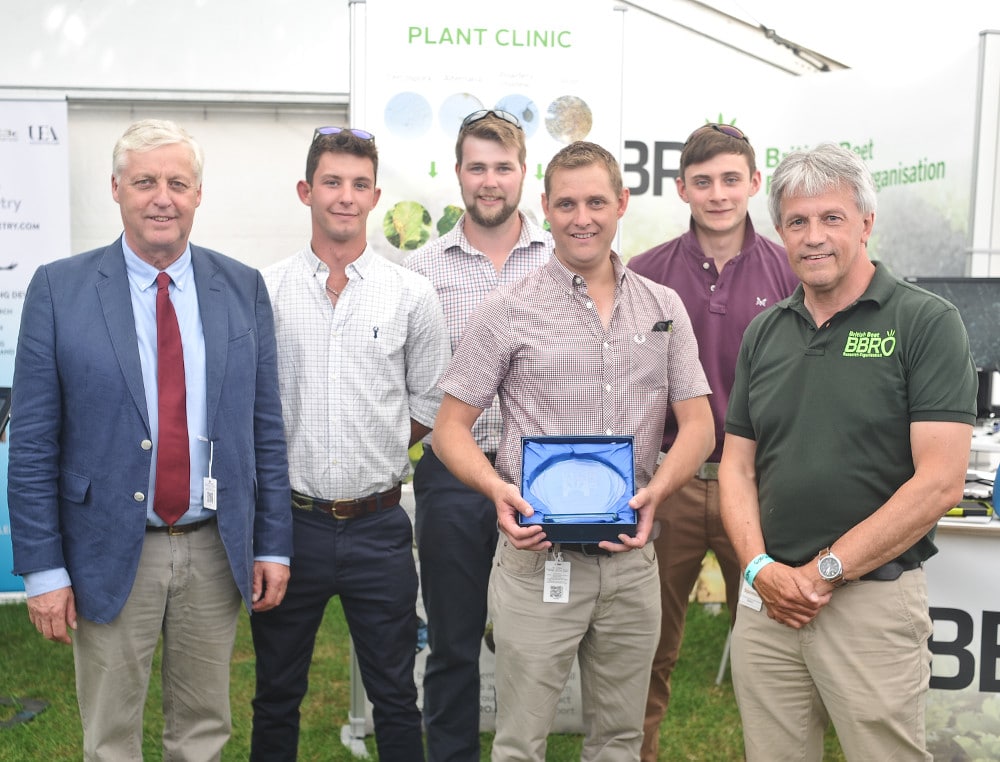
Salle Farms, winner of BBRO Beet Challenge, with Simon Bowen (right)

“Salle Farms achieved a yield of 121 t/ha representing over 95% of the crop’s potential yield…..phenomenal!” said Dr Simon Bowen, Knowledge Exchange & Crop Progression Lead at BBRO, announcing the first winner of the Beet Yield Challenge. BBRO were also sponsors of the Innovation Hub.

He put Salle Farms’ success down to good soil health and strong management.

The challenge makes an estimate of yield potential based on the farm’s soil capabilities, rainfall and degree days and then compares that with the actual yield achieved. Farms that share similar postcodes can deliver very different yields.

Simon continues: “Good practice is the element that makes the different. We are not looking for the highest yield, but for those that have closed the yield gap.”

The potential yield was calculated by a model based on extensive data sets from different seasons. Crops were monitored very closely, measuring plant establishment, crop canopy cover, weed, pest and diseases levels. The actual yield was calculated on delivery to one of the four British Sugar factories and assessed not just for yield but also for sugar content.

Simon continues: “Last year was record breaking, but this year will be very interesting. Crops were sown late but if we have repeat of the warm, sunny weather from the past few Autumns the sugar content may be on par. This is the type of information that we are hoping to glean from the challenge and the insights will be fascinating.

Proven disease free in hours

Other announcements included funding by New Anglia Capital for PBD Biotech.

PBD Biotech was part of the REAP start-up showcase in 2016 and has just launched its first product – a rapid, sensitive test for mycobacteria, the pathogen responsible for Bovine TB and Johne’s Disease – and has opened a subsidiary in Canada.

The company has benefited greatly from profile and networks gained through involvement with Agri-TechE and is gaining international interest in its products.

The funding by New Anglia Capital will help fuel its expansion plans.

Read more here.

System to follow the herd

Livestock has recently been added to Agri-Tech’s sphere of interest and a tracker developed by MoveTech was being shown by the University of East Anglia. The technology has been used to track birds successfully and was being demonstrated at the show for use with livestock. The tracker was attached to a sheep and it was possible to see which parts of the field had been grazed.

By understanding normal behaviour it would be possible also to see when an animal was showing signs of distress caused by illness or other factors.

A practical demonstration of the Movetech system was provided by Mark Nicholas, Director of the Royal Norfolk Show, who wore one of the trackers at the show – you can see his movements around the showgrounds here!

Rapid cropping

John Innes Centre was showing how it is possible to get six harvests a year from wheat by growing it under special lights – creating opportunities for new types of ‘urban farm’ or to grow this staple food in different geographies.

Additionally, gaining multiple harvests will accelerate research allowing knowledge that would previously have needed years of research to be achieved more quickly.

The lighting is also applicable to other crops.

How do plants feel?

Understanding how a plant is responding to its environment can enable you to control the conditions more precisely. For example, strawberries are sweeter if kept slightly short of water, and peppers lose their value if allowed to burn.

30MHz was showing how low cost, easy to use sensors could provide this intelligence. Monitoring multiple factors make it possible to fine-tune controls, reduce inputs and predict harvesting with greater accuracy.

Building resilience to blight

Blight is a serious problem for potatoes; a spell of warm wet weather can decimate the crop overnight. Protecting a crop requires massive amounts of fungicide at a cost to the industry and the environment. Wild types of the cultivated varieties are naturally resistant to blight.

It has been shown that by introducing genes from these varieties into the main crop potato Maris Piper can provide protection against blight. Other genes can also reduce browning, a condition that reduces the value of the potato for processing. The Sainsbury Laboratory was describing how it can developed the blight- resistant varieties.

Robotics on show

No agri-tech show is complete without a robot and Ben Turner, President of the RNAA, was introduced by Ji Zhou to CropQuant and its ‘seeing eye’, a robotic eye that grows with the crop to provide insights into the growing conditions in the field. Other exhibitors included Hummingbird, who showcased their system of collating and analysing aerial imaging from satellites; Innovation Hub sponsors BBRO, with their ‘Beet Eater’ sensor; and Niab was demonstrating traditional and novel ways to enhance the insurgence of underground microbes and earthworms.

What is the impact of digestate on soil?

Agri-TechE Article
Agri-TechE

Anaerobic digestion (AD) is becoming an increasingly attractive technology for farmers, as it adds value to waste material by converting it into biogas. Digestate, the by-product generated through the AD process, is a rich source of nutrients and has emerged as an alternative to chemical fertilisers.
Some of Agri-Tech’s farmer members have AD plants and regularly apply digestate on their fields. However, nutrient losses, particularly that of Nitrogen, are a common problem and can lead to leaching through the soil or to ammonia gas emissions.

Setting up field labs on a working farm

Having encountered those issues on farm, a group of seven farmers from the East of England, including five Agri-TechE members, decided to join the Innovative Farmers’ Network to set up a Field Lab and investigate how to maximise the nutrient value of their digestate. From sandy black soil to sandy clay loam, soil types vary greatly from one farm to the next and this is likely to have an impact on the efficiency of the digestate in supplying nutrients.

Anaerobic digester
JF Temple & Son is one of the farms in the project that manages an AD plant as part of his business

Based on their experience of managing an AD plant and utilising its organic output, farmers in the group were keen to focus on nitrogen stability and availability as key areas of investigation in the project. Nitrogen stability is being tested by adding acid to the digester to generate a more alkali digestate. A mix of deep-rooting and mycorrhizal-friendly cover crops (buckwheat, vetch, radish and black oat) and the addition of organic fibre were selected as treatments to increase the nitrogen readily available for crops from the digestate. Overall, these treatments are expected to not only capture more nutrients but also to have a positive impact on soil health, by improving soil structure and living conditions for the proliferation of beneficial micro-organisms.
With support from Niab and Cranfield University as research partners, farmers opted for a simple split-plot design where a field is ‘split’ into two, with the treatment on one side and the control on the other. This type of design works well with on-farm trials since they can accommodate different soil types and fit around the already busy schedule of a working farm business.
Another area that farmers would like to explore and one that is not often directly considered is the economic impact on each of their farms of applying digestate. Do the costs of production and storage outweigh the agronomic benefits? A cost-benefit ratio analysis will be undertaken to answer this important question.

From challenges to answers

Following digestate application and cover crop drilling in the Autumn of 2017, the first set of results from soil sampling all the different treatments came in earlier this year. Although it is too early to draw any conclusions, differences in nitrogen content was observed amongst farms. The benefits from the digestate and cover crop combination should be observed when harvesting the following cash crops this summer, which will be maize and sugar beet.

Niab training session at Cereals 2018
The training session on soil measurements attracted a larger crowd than expected

Farmers will be undertaking the next set of measurements, including assessment of soil structure (VESS) and counting worms. To facilitate this, Agri-TechE organised a training session, delivered by Niab at Cereals. Although we could not get our spades in the ground, the Soil Pit provided the perfect backdrop for David Clarke and Lydia Smith to explain differences in soil structure under different conditions.
A year into the Field Lab, one of the highlights has been the challenges of undertaking soil research across different farms, with all the environmental variations that this implies. But mostly, it has been fantastic to see farmers engage in all stages of the process, from designing the field trials to accommodate the project around their business, to interpreting and discussing the significance of the results with other farmers and researchers in the group. Now is the time for the next round of soil sampling, if the weather will let us.
If you’d like to learn more about this project, join us in September 2019 for an event covering the outcomes and findings of the project. Find out more about the event.
Agri-TechE has been coordinating the Innovative Farmers digestate group, in collaboration with the Soil Association and research partners Niab and Cranfield University. Farms involved in the project are Allpress Farms, Boxford Suffolk Farms, Euston Estate, Holkham Estate, JF Temple & Sons Ltd, JH Walter Energy and Upton Suffolk Farms. To find out more about the Innovative Farmers Network, visit the website.

Minette Batters, President of NFU, gets update on Agri-Tech

Agri-TechE

Minette Batters NFUIt was a pleasure to meet Minette Batters who has just completed her first 100 days as the NFU president.  We gave her a short tour of the Innovation Hub to show the diversity of technologies being developed here.

She later spoke to Chris Hill of the EDP and said that a key concern among farmers at the Royal Norfolk Show was business uncertainty.
“There has been a diversity of opinion here. A lot of people are embracing the opportunities and some are very nervous about what lies ahead.
“Farmers are a pretty resilient bunch and they are used to evolving. There is definitely going to be a change and it is a question of whether they are going to get on the train and embrace that change.”

BBRO electronic sugar beet
Vicky Foster says electronic sugar beet will provide new insights

Innovations on show included ways of providing alerts to farmers through imaging, sensors and trackers that allow remote monitoring of plants and livestock and fine control of their environment.  These types of technology can make the incremental improvements that reduce risk and improve productivity.
Sponsors of the Innovation Hub, BBRO were showing an electronic beet that could be used to understand the impact of the harvester on sugar beet.
Vicky Foster of BBRO explained that some varieties  are more sensitive to handling than others.  Improving the design of the harvester informed by the electronic beet could reduce loss at harvest.


Novel agri-tech best way to produce enough safe, high-quality food whilst reducing environmental impact

Meet the Network
Agri-TechE

Dave Hughes SyngentaWhen Dave Hughes started working for Syngenta over 20 years ago his focus was chemistry but his interests and that of the company have developed and it is now a knowledge of biology that is providing new avenues for plant protection.
A new feature of the REAP conference this year is a debate about whether the priority for agri-tech innovation should still be food production or, if food can be produced more cost-efficiently somewhere else, should the emphasis be on more lucrative uses of land?
We asked Dave Hughes where he thinks the future direction for agri-tech lies.
Hughes is well placed to have an opinion: as Global Head of Technology Scouting, Hughes connects scientists and technologists from within Syngenta with scientists from other companies, research institutes and universities around the world creating collaborations focused on developing new technologies for agriculture. This multidisciplinary approach is reflected in the collaboration portfolio, which encompasses chemistry, synthetic biology, AI, robotics as well as genomics and engineering.

So what are the most interesting developments he is seeing at the moment?

“Our portfolio is diverse and much of the work is very early stage. Working with a range of scientists and technologies offers a spectrum of views and this creates a challenge to traditional thinking and a greater potential for innovation.
“One of the biggest technology disrupters is digital, which is radically changing the way farmers operate. This is a very dynamic space for innovation with a relatively low barrier for entry, so many companies, including start-ups and SMEs, are competing to find the best solutions for the grower.
“Another exciting opportunity I see at the moment is gene editing which can be used to create new traits in plants without introducing any foreign DNA. Many groups around the world are using this approach to create benefits for the consumer like improved flavour and nutritional content.
“The success of this technology is highly dependent on the regulatory environment. If it is recognised as no more risky than traditional breeding then it offers a huge opportunity to introduce traits benefiting the consumer in a way that has never been done before. Managed effectively this technology could be a real game changer allowing us to produce higher quality food within the same footprint.”
Hughes highlights a number of areas of special interest including the convergence of engineering and robotics. This is creating new applications such as precision agriculture and the use of AI to improve the way the company does research; mimicking the human brain to look at patterns in data and to extrapolate information from incomplete data.
“Greater understanding of fundamental biology is creating the opportunity for a new generation of highly specific pesticides. Particularly interesting is a new class of biocontrol agent based on a natural biomolecule called RNA. RNA has a sequence, just like DNA, and if a pest is treated with RNA of just the right sequence it can trigger a process which dials down the production of a specific protein of choice in the pest in a highly specific way.
This represents a new mode of action for pest control by enabling biomolecules to be developed that are much more specific than traditional pesticides, offering highly selective control of pests while protecting closely related beneficial species. Another new avenue for pest control is the use of biological agents such as bacteria; again these can be highly specific to a particular host. Hughes sees this as an exciting time to be involved in agriculture.

The market for non-food crops

“Feeding the population should be a priority,” continues Hughes, but he comments that growing crops for non-food uses is not new. “The issue is one of scale.”

Although the food versus fuel debate hinges on the relative value of the resources used and produced, growing some high value non-food crops would potentially make little impact on broad acre crops. Hughes gives the examples of plant-based pharmaceuticals such as taxol, opioids and Artemisia. Mapp Biopharmaceutical Inc. has produced a drug called ZMapp from tobacco leaves (right), which was used to combat the 2014 Ebola virus outbreak in West Africa. The Novartis Malaria Initiative is making antimalarial drugs based on Artemisia annua.
“Many of these crops, such as tobacco modified to produce vaccines, are cultivated in contained environments such as greenhouses on a relatively small scale, and so don’t compete with food crops. We are interested in this area and in supporting farmers whichever way the industry goes. UK agriculture has enormous potential and we are seeing great progress on a number of fronts,” says Hughes.

Call for objective decisions based on science evidence base 

Hughes has been asked to be an industry commentator on the Defra Health and Harmony Consultation.
“The key challenge is to support the productivity of UK agriculture and the quality and safety of our food whilst reducing the environmental impact of food production. I believe this is achievable, but we will need to embrace the best state-of-the-art technology to succeed.
“It is vital that decisions impacting the UK’s ability to feed itself are based on sound scientific evidence, not as a reaction to a few strong voices.
“The food security of our nation is vital, and any decisions affecting it should be based on an objective assessment of the very best available evidence. In a world of fake news and social media echo chambers this is becoming increasingly difficult.
“Small molecule chemistry has gained a poor reputation over the years but it is important to note that the use of synthetic pesticides in agriculture actually improves the quality, quantity and safety of our food, and by improving yields they give us a fighting chance of producing enough food in the future without having to plough up all of our remaining wild lands.”

No ‘best way’ 

“It is clear that a robust global food supply requires a diverse range of production systems. There is no single ‘best way’ of producing food: the choices farmers make depend on many factors from the microenvironment on their farms to the macroeconomic environment of the markets to their own attitude towards risk. This diversity is a good thing: it provides choice for the consumer and helps to buffer our food supply from unexpected events like extreme weather.
“We aim to provide the tools to help farmers drive the improvement of agriculture right across the spectrum of farming practices, from smallholders in Asia and Africa right up to large highly-mechanised farms in the USA and Brazil.
“I see a major opportunity arising to use technology to combine food quality, safety and productivity with improved environmental outcomes.”

DEBATE NEW FEATURE OF REAP 2018

This house believes supporting land-use for competitive sustainable UK food production should be the priority for agri-tech innovations”

Chair: Mark Suthern, Head of Agriculture, Barclays
To be discussed by

  • Dr Dave Hughes, Head of Global Technology Scouting, Syngenta
  • Dr Stuart Knight, Deputy Director, Niab
  • Prof. Claire Domoney, Head, Metabolic Biology Department, John Innes Centre
  • Tony Bambridge, Managing Director, B&C Farming, former NFU Norfolk Chairman
  • Andrew Spicer, CEO, Algenuity
  • William Cracroft-Eley, Lincolnshire farmer and Chairman, Terravesta
  • Guy Poppy, University of Southampton, Chief Scientific Advisor to the Food Standards Agency

More information about the speakers REAP 2018