The ‘future of farming’ shouldn’t be discussed without farmers in the room
 Agri-TechE
 Farmers have never been short of people offering them solutions. The harder question is whether those solutions are tackling the problems that matter most to them.
For a long time, one of the criticisms being levelled at agricultural innovation was that too much of it happened without farmers. Described as a ‘pipeline’ where researchers make discoveries, businesses develop products and farmers then decide whether or not to adopt them.
Research priorities were set elsewhere, away from the farm gate. Businesses developed technologies, then looked for agricultural applications. Products arrived on farm with game changing promises and farmers were expected to be the people who adopted them.
While that description still holds true in some cases, there are changes afoot. A less linear pipeline in favour of a more collaborative ‘circle’.
Of course, not every farmer wants the same relationship with innovation. Some are keen to be involved from the outset, helping to identify challenges, shape trials and evaluate potential solutions. Others simply want technologies that are proven, practical and ready to deliver value. As Andrew Blenkiron of the Elveden Estate observed, there is demand both for those wanting to push the boundaries and those looking for more “shovel-ready” solutions.
A grower wrestling with water availability may find themselves working alongside researchers, technology companies and policymakers. An arable farmer looking at ways to reduce nitrogen use may become involved in trials long before a product reaches the market. A challenge raised in a casual conversation over a networking lunch can become the basis of a research project. Speaking of networking lunches…


Twenty years ago, a farmer attending a conference might have come away with a notebook full of ideas. Today, they might be looking for something more specific: a solution to a challenge affecting their business, a technology worth trialing, a researcher working on a problem they recognise, a potential collaborator, or even a route to funding that could help turn an idea into reality. (And still a notebook full of ideas!)
That’s one reason REAP continues to attract such a diverse audience of farmers, growers, researchers, tech developers, businesses and policymakers from across the sector. And REAP has always been built around bringing those different perspectives together. One farmer last year described the conference as:
“An excellent place for the ecosystem of farming and academics, researchers and agri-tech innovators to meet.”
It’s difficult to improve on that testimonial (from Ali Capper, Chair of British Berry Growers). It is hard to think of many other events where a discussion about farm profitability can start with a grower, continue with a researcher, be challenged by an entrepreneur and then picked up by policymakers, all within the same conversation.
And, as always, the REAP programme reflects that mix. Alongside growers and farming businesses including Marion Regan of Hugh Lowe Farms, Jack Smith of Waldersey Farms and Kathryn Wright of Wright Farm Produce, delegates will hear from Anjali Goswami, Chief Scientific Adviser at DEFRA, Cristóbal Uauy (former agronomist turned Director of the John Innes Centre), and Ken Sloan, Vice-Chancellor of Harper Adams University.
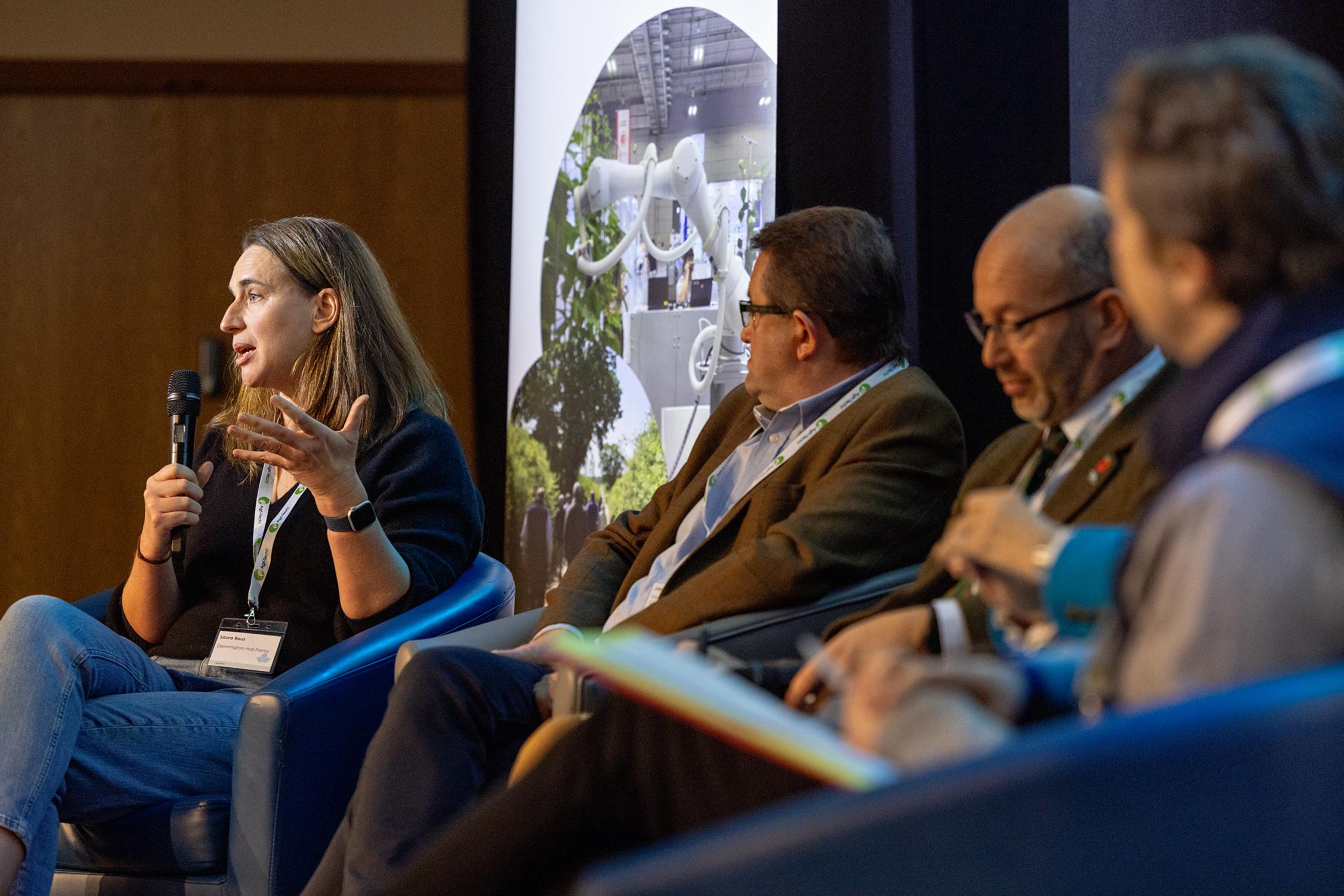
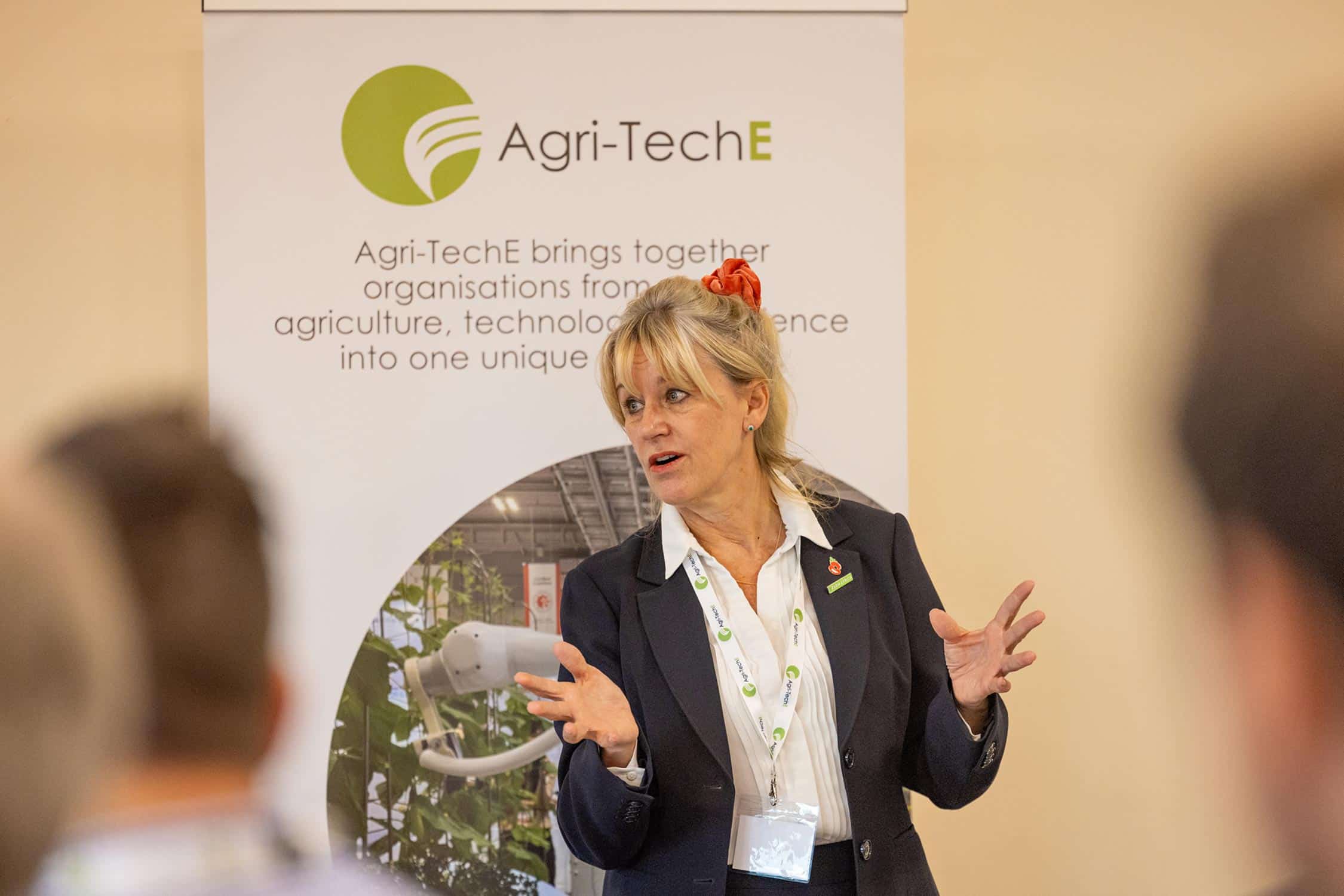
Some delegates come to understand where science is heading. Others come looking for practical ideas they can take back to their businesses. A grower looking at water resilience may find themselves talking to a researcher developing new monitoring tools. A farmer considering automation can compare approaches with different technology providers and those already putting them to work. An agronomist interested in biologicals can hear the science, see the products and discuss the practical realities of adoption, all in the same day.
But perhaps the most important conversations won’t happen on stage. Start your day with peers at the Farmer-Exclusive breakfast and, between talks, find the conversations you want to have about what agri-tech means for you, and how you’d like to see it work for you on farm.
And then there’s the exhibition: a chance to see technologies in action and ask questions of their creators.
For first-time delegates, it is often the breadth of innovation that comes as a surprise. Louise Penn – an agronomist and farmer’s daughter said last year: “This is my first time at the REAP Conference and it has been so fascinating. I have always had an interest in tech within the agricultural space, and I know there are so many people out there doing really interesting things, but I didn’t quite realise the breadth.”
Not every technology on display at REAP will be relevant to every farm. Nor should it be, with every farm as unique as the next. But if something does catch your attention, there are now more ways than ever to get involved, with programmes such as ADOPT funding the transition from discussion to real-world trials.
Whether you come looking for inspiration, a solution to a specific challenge, new contacts or simply a better understanding of what new technology could mean for agriculture, REAP offers the chance to meet the people working on those challenges and share what’s happening on your farm.
For farmers, growers and students considering attending REAP, financial support is available through the REAP bursary, reducing the ticket price to £80 + VAT. Eligible delegates can also claim five BASIS CPD points for attending.
As one returning delegate put it: “It’s always a good event, it’s always different, the mix of technology is good.”
Come and see for yourself at REAP 2026!
Post Overview
Agri-TechE Related Posts
New no-dig seismic technology helps farmers understand compaction in extreme climates