University of Lincoln and Barclays Eagle Labs launch AgriTech Accelerator

Member News
The views expressed in this Member News article are the author's own and do not necessarily represent those of Agri-TechE.

The University of Lincoln, in partnership with Barclays Eagle Labs, is launching another 10-week business accelerator designed to help early-stage agricultural technology (AgriTech) businesses to drive innovation in the UK’s agriculture sector.

Applications are now open to entrepreneurs in the AgriTech sector with a promising business plan or early stage (0-3 years) AgriTech businesses with the desire to grow.

The fully funded, 10-week business accelerator will include a series of half-day workshops focused on business skills, including developing a business model, financing a business and planning a route to market. Although most workshops will be delivered virtually, the first workshop will be face-to-face to enable participants to get to know each other.

In addition, each individual business will have access to tailored support and resources via a specialist mentor and a series of unique masterclasses tailored to the sector’s needs. Topics could range from selling to farmers and working with partners to developing new technology and artificial intelligence in farming.

Participants will also gain access to the facilities and services of the Barclays Eagle Lab Farm, based at the University of Lincoln’s Riseholme campus, as well as the opportunity to collaborate with the research teams within the University including:

  •  Lincoln Institute for Agri-Food Technology (LIAT)
  •  Lincoln Centre for Autonomous Systems (LCAS)
  •  Lincoln Agri-Robotics (LAR), a £6.4M project funded by the Expanding Excellence in England fund via Research England.

The lab offers access to cutting-edge AgriTech resources, including a dedicated robotics lab, a food handling pack-house, scaled down industry standard strawberry farm and a refrigeration research centre, available for businesses to develop and prototype their products.

Participants will also gain access to the UK-wide Eagle Labs network and exclusive access to community events.

Adam White, National Head of Agriculture at Barclays, said: “Barclays has a long history of supporting UK agricultural and in a further partnership with the University of Lincoln, we want to drive the sort of innovation that will put UK farming at the forefront globally. I urge any early stage AgriTech entrepreneur to go online and find out more – I can’t wait to see what kind of businesses sign up.”

Simon Pearson, Director of the Lincoln Institute of Agri-Food Technology, said: “Agriculture has been at the heart of Lincolnshire’s economy for decades and the Lincoln Institute for Agri-Food Technology is here to ensure that farming and food production make the most of the technological advances on offer. The partnership of LIAT with Barclays Eagle Labs offers early stage AgriTech businesses with unparalleled access to business support, expertise, facilities, research and know how and we can’t wait to get started ”

For more information, or to apply for the programme, visit https:/10by10.co.uk/agri-tech-accelerator-2023/

Haskelberg Nurseries Enter Joint Venture with Ag Tech Firm Yellow Brick AgTech for New Software

Member News
The views expressed in this Member News article are the author's own and do not necessarily represent those of Agri-TechE.

Israel based Haskelberg Nurseries has entered into a joint venture agreement with UK based ag tech company Yellow Brick AgTech (YB AgTech) for the creation of a bespoke data collecting software. The new software will fall under Haskelberg Nurseries subsidiary brand Canacado, an avocado rootstocks selection.

The software is being created for Haskelberg Nurseries by an in-house development team at YB Ag Tech’s parent company Yellow Brick Capital. The creation of the software marks the first phase of an ongoing partnership between YB AgTech and Haskelberg Nurseries The new 50/50 joint venture project sees the formation of new company Haskelberg Advanced Technologies Ltd.

The new software will follow and manage information from orchards around the world. The data collection will enable Haskelberg Nurseries, and its subsidiary brand Canacado, to make accurate rootstock recommendations to growers based on where they are in the world allowing them to buy the right plant to maximize the performance of their orchard.

Udi Haskelberg, CEO of Haskelberg Nurseries commented: “We are thrilled to announce our partnership with YB AgTech on the creation of Haskelberg Advanced Technologies Ltd. This is the beginning of an exciting strategic venture which will produce amazing results for Haskelberg Nurseries and Canacadao.”

Johnathan Kol-Bar, Chairman of Yellow Brick Capital commented: “Haskelberg Advanced Technologies Ltd is an exciting new collaboration for both YB AgTech and Haskelberg Nurseries. The creation of this new software will make Canacado’s data collection dynamic, while supported by an algorithm. This will allow the utilisation of machine learning to improve the product and service offering of Canacado.”

Canacado is a rootstock selection revolutionising the future generation of avocado growing. Canacado combines a wide range of advanced rootstocks of both clonal and seedling propagation. Each of the stocks is the fruition of decades international experimentation in nurseries and orchards alongside years of research, development and mapping the present global variety.

The brand is part of Haskelberg Nurseries, founded in 1974, and currently providing most of the avocado and fruit tree seedlings for Israeli agriculture, while also exporting growing materials and professional knowhow to nurseries and agricultural farms in Europe, Africa, North America and Asia.

YB AgTech has been operating for almost ten years creating and investing in some of the world’s most innovative agricultural technologies. These include cloud-based software i-Plant Nutrition, irrigation hardware I-Feeder Technologies and plant sensor Plant Metrics. The company sits under Yellow Brick Capital, an international private equity company investing in the ag-tech and residential property markets.

Innovative biomaterial start-up Cellexcel appoints Tim Pryce as Executive Chair

Member News
The views expressed in this Member News article are the author's own and do not necessarily represent those of Agri-TechE.

Experienced materials industry executive joins founder team to commercialise unique green technology

Norwich, UK, 13 December 2022. Biomaterial technology start-up Cellexcel today announced the appointment of Tim Pryce as the company’s first Executive Chair. Tim will be responsible for developing the structure, team, and skillsets to accelerate commercialisation of Cellexcel’s innovative greentech solution.

A spin-out from the University of East Anglia (UEA), Cellexcel is developing unique technology to enhance the water resistance of biomaterials. Because they naturally absorb moisture, biomaterials made from plants such as flax and hemp normally decay, dramatically reducing their effectiveness, and limiting the applications they can be used for.

Thanks to Cellexcel’s advanced technology, biomaterials can now be integrated into external applications, such as composite panels used in the automotive or aerospace industry. This ensures lower weight products with around a 90% reduction in manufacturing CO2, by replacing emission-heavy materials such as polycarbonates, metal, or fibreglass composites – all while retaining their form, fit and function over time. This technology is expected to enable a wide range of industries to meet their embedded sustainability goals, benefiting us all.

Since beginning his career at Rolls-Royce Plc, Tim has worked for over 35 years with companies across the materials and engineering industries in the UK and US. Senior leadership roles include CEO of Applied Composites Group, President of Chase-Walton Elastomers Inc, Non-Executive Chair of John Roberts Paper and Packaging, and Executive Chair of Calder Precision.

“Industry faces pressing sustainability challenges and Cellexcel has developed a breakthrough solution that enables manufacturers to increase their use of bio-composites, match performance requirements, and reduce carbon emissions,” said Tim Pryce, Executive Chair, Cellexcel. “My role will be to accelerate Cellexcel’s market adoption, building a strong business and team around our innovation and working with customers to deliver on the promise of our technology. We are already in advanced discussions with potential industry partners and hope to announce our first licensing agreement and revenues in 2023.”

Since the initial development of its technology within UEA, Cellexcel has attracted translational funding and seed investment from Ceres Agri-Tech, a knowledge exchange partnership led by Cambridge Enterprise and financed by Research England. Cellexcel has also received grant funding from Innovate UK, Norwich Research Park, and other sources. To fund its growth and further expand its technology portfolio it will be seeking strategic investment in 2023.

“To meet our current sustainability challenges it is vital to successfully commercialise the exciting research work happening across our universities,” said Louise Sutherland, Director, Ceres Agri-TechE and Cellexcel board member. “Tim has the perfect combination of experience, passion for engineering, and team building skills, to accelerate Cellexcel’s technology and enable it to deliver on its enormous potential. I look forward to supporting him and Cellexcel’s growing team on the next stage of the company’s exciting journey.”

Since joining Cellexcel, Tim has focused on building the team, particularly expanding its depth and commercial breadth, as well as putting in place a management structure and auditable processes to position the company to target the growing opportunities in the biomaterials market.

About Cellexcel
Cellexcel’s technology aims to increase the adoption of biomaterials, reducing carbon emissions and increasing sustainability. To achieve this goal, it has developed a unique solution to chemically modify biomaterial properties, with the first application enabling greater water resistance. This enables bio-composites to be used in external applications, such as the exterior panels of cars, trucks, vans, or aircraft, dramatically reducing their carbon footprint without impacting strength or other properties.

A spin-out from the University of East Anglia (UEA), Cellexcel has received initial investment and commercialisation support from Ceres Agri-Tech, the knowledge exchange partnership led by Cambridge Enterprise and financed by Research England, as well as grants from Innovate UK and the Norwich Research Park. Visit our website or LinkedIn page to learn more.

Farming innovation – creating a digital mapping tool for vineyards

Member News
The views expressed in this Member News article are the author's own and do not necessarily represent those of Agri-TechE.

NFU member and owner of JoJo’s Vineyard Ian Beecher-Jones tells us how he used Defra’s FIP (Farming Innovation Programme) grant to transform the use of digital mapping on his vineyard. 

JoJo’s Vineyard, based in the picturesque Chiltern Hills, has been awarded an FIP grant to support the development of a digital mapping tool for vineyards and other row crops.

The FIP is an investment by Defra into research and development projects of commercial value to the agriculture industry, as part of the ATP (Agricultural Transition Plan).

Ian is just one of the many recipients who has benefited from the grant and predicts that the digital mapping tool has the potential to save up to £1million for the UK viticulture and orchard industry.

Drones and robots on the vineyard

The mapping tool, developed with OpenAgMaps and the Collabriculture project in Australia, will create a shareable, digital infrastructure of the farm’s rows and boundaries using either drones or other surveying tools.

The crux of the project is to develop a mechanism by which this infrastructure can then be shared with any other on farm technology developer, such as robots or drones, instead of each different technology undergoing its own infrastructure mapping procedures. 

The project will invite developers to work with them to onboard their technology onto the mapping software, using the vineyard as a trial farm.

Time and cost savings

Ian hopes that this project will improve access to automation technologies for all row crop growers by reducing the time needed and the costs associated with installing new digital solutions on farm.

He sees significant cost savings available to growers, alongside the benefits of automation and increased technology to improve production and mitigate labour issues.

Applying for the grant

When discussing applying for the funding, Ian described the benefits of partnering with the Agri-EPI Centre as key to winning the award. He also appreciated their partnership in the admin procedures involved in applying for grant funding and the opportunities a network organisation has of meeting forward thinking businesses who want to technology work on farm.

Ian’s advice to any farmers or growers considering applying for FIP grants in the future was to “talk to the people around you about your crazy ideas, learn from them and then seek out the great support that’s out there to turn it into a reality”.

You can find out more about the grant, and other upcoming competitions for funding, by reading our guide to the Farming Innovation Programme.

Use time wisely to make wise decisions

Member News
The views expressed in this Member News article are the author's own and do not necessarily represent those of Agri-TechE.

Growers make a quintillion decisions a year. Make buying from you a no-brainer.

Two things are increasingly true in this world: not enough time and too much information. And nowhere more than in agri, where Sarah Kendall from ADAS recently claimed UK growers make a quintillion decisions a year. So, with growers facing such a mass of information, how can agri marketers get growers to sign up to your offer? As always, it’s about clear, punchy benefit statements made at the right time. A recent visit to REAP showed me yet again how easy it is to miss the target.

The ancient ‘feature, advantage, benefit’ (FAB) mantra still holds true. A great, well-built product is essential – but then you have to be really clear who your buyer is, who’s making the decision, and speak about benefits. Remember, they won’t fall in love with your chemistry or your kit, or even with the idea of buying less herbicide: you’re looking for a small emotional reaction, so speak about whole-farm thinking, more sleep, lower stress, and higher profits.

You have to be really clear who your buyer is, who’s making the decision, and speak about benefits.

Kiwi dairy-herd managers Halter seem to have a great product but their messages need to be even tighter – they push feature statements: ‘combat labour shortages’, ‘redistribute nutrient loading’ and make good use of video. However, they could go a step further to the true benefits to the farmer: lower stress, more sleep/family time, productivity etc. ‘Save up to 20 hours a week’ is a hugely powerful benefit message, but why bury it three screens deep?

Meanwhile, Kiwi beekeeper Edmund Hilary would have had even more time to climb mountains if he’d had Beewise: the beehive reinvented. A quality offer (and I love the line ‘To be or not to bee’…) but they should split good investor-facing messages such as ‘an industry using 150 year old technology’, ‘save bees, save the planet’ from those for growers, (advantage statements like ‘improved yields, improving pollination’) which are buried a long way down their messaging. I do like that there’s a prominently placed order form, taking a prospect right through to ‘Order now’. However, their pitch implies advantages like lower labour costs, less bee loss and significantly higher per-box productivity (which I guess means the true benefit is less bee stings, less smoke, and more sleep!) but these messages are too subtle and there are no testimonials or clear claimed savings to spell any of this out.

In all sectors high-commitment, high-payback offers abound – especially automation and digital ones, and to me it seems none more so than in arable and combinables. There’s just a bewildering array of options that deliver a mind-boggling amount of farm data. These offers take precious time to sift through. Many appear compelling but narrow solutions, rather than whole-farm thinking, and all this must make some growers despair. So your messages need to be tight, consistent, benefit-focused, and delivered in the right space at the right time.

Your messages need to be tight, consistent, benefit-focused, and delivered in the right space at the right time.

I enjoyed some clarity from Salisbury’s Small Robot Company. Everything from their name onwards leans towards some advantages – Tom the small robot means easier transport and less soil compaction – but even here there’s too much messaging about per plant farming and automated weeding, which are advanced features. However, there’s not enough on the major grower advantages such as huge savings in time and labour, or the claim we heard verbally of 90% less herbicide use – all leading to the true benefits for the grower around less stress, time-efficiency and greater financial security. For agri startups like this one investor communications are very key, but I would suggest trying to save your overloaded grower audience some precious seconds: package your investor pitch and grower pitch clearly and separately, with different FABs.

A good buying decision takes time, so a prospect’s time is our most precious commodity – let’s use it wisely.

Pea and Bean 2023 Descriptive List Launched

Member News
The views expressed in this Member News article are the author's own and do not necessarily represent those of Agri-TechE.

The Processors and Growers Research Organisation (PGRO) has launched today its Descriptive List for 2023. Seven new varieties have been added to this year’s Descriptive List, which is eight more varieties than the 2022 list. These new varieties include six new combining peas, one new winter bean, and up to four new spring beans.

Download the lists here from the PGRO website.

Norwich company aims to reduce emissions with plant-based composites

Member News
The views expressed in this Member News article are the author's own and do not necessarily represent those of Agri-TechE.

With a growing focus on sustainability across all industries, Cellexcel, a company based at the University of East Anglia (UEA) at Norwich Research Park, has launched a new technology to enhance the performance and increase the usage of plant-based materials in manufacturing. Its technology is forecast to extend and accelerate the adoption of biomaterials, leading to a significant reduction in greenhouse gases.

Cellexcel is a spin-out company from UEA and was formed to take advantage of the rapid growth forecast for the use of composite materials in industry. The market was worth $23bn in 2021 and is expected to grow to $80bn by 2029. The ability to replace materials, which generate CO2 emissions, with biomaterials has become a matter of urgency across multiple industries, including automotive and aerospace.

Cellexcel’s technology was created through the work of Prof Richard Stephenson, CSO of Cellexcel and Emeritus Professor School of Chemistry at UEA, which is a partner organisation of Norwich Research Park, one of the world’s most acclaimed centres for bio-based science research.

Tim Pryce, executive chair of Cellexcel, said: “There are major benefits to Cellexcel of working with great associates at both UEA and Norwich Research Park. Firstly, they provide a great technical resource, right on our doorstep, but critically, the team at Anglia Innovation Partnership LLP – the science park management company at Norwich Research Park that manages campus-wide initiatives – facilitated pre-seed funding that enabled us to prepare our business plans, retain talented staff and introduce key people drivers, within multi-national global businesses.

“It’s provided a great launch pad for Cellexcel and will be able to do the same for other spin-out companies.”

Composites, as the name suggests, are materials that are made up of a number of different elements – a reinforcement material embedded in a resin. Some of the most common in use are fibre glass reinforced resins and carbon fibre reinforcing materials, and along with thermoplastics they are used to make components such as panels for cars, aircraft and high-performance bicycles. Traditional composites like these, as with polycarbonate plastics, consume a massive amount of energy in their manufacture and thus create high CO2 emissions.

A change to bio-based composites made from materials like flax or hemp would make a measurable  difference. Not only do they not need as much energy in the manufacturing process, growing a field of hemp or flax in the first place will absorb a significant amount of CO2 out of the atmosphere.

As an example, if fibreglass material was replaced with a bio-composite, then approximately three tonnes of CO2 per tonne of fibreglass would be saved. With such rampant growth in demand forecast for composites, replacing fibre glass and carbon fibre with bio-composites could become a positive contributor to the environment.

Currently, bio-composites account for just 6pc of the market. The big challenge is how to replace thermoplastics and fibreglass with bio-materials. If the market moves from a 6pc to 12pc bio-composite usage, that is a $10bn opportunity.

Cellexcel’s primary technology is focused on enhancing the water resistance properties of flax and hemp materials, enabling them to then be employed in a much wider range of applications, from lawnmowers, to drones and external automotive panels.

In dry environments, like the inside of a car, bio-composites work well, but for exteriors there is a need to improve their performance. Cellexcel is applying an innovative approach to this and is chemically modifying the plant material to enhance their properties, such as water resistance.

Cellexcel is looking to expand its product portfolio and technology offering and believes that it can make in-roads into both the aviation and automotive sectors as well as other high-performance applications.

Tim said: “The demand for bio-composites is being driven by industries seeking more sustainable solutions. The technology advances in this area are proving to be attractive to investors who view sustainability as a key shareholder goal. The desire to reduce emissions will lead to the ultimate success of bio-composites being adopted on a large scale.”

Nick Goodwin, COO of Anglia Innovation Partnership LLP, said: “Cellexcel is a great example of the commercialisation of research taking place at Norwich Research Park. These are people with ingenious ideas, working hard to develop and test them in laboratories and workshops and then, with data to prove their theories, they leap into business to maximise the societal impact by setting up a company, developing a plan and raising money to fund their new idea.

“We have been working with Tim, and his team, to fund early-stage business formation activity and helped to put in place some options for seed funding, to enable future growth. Without doubt, the reduction of carbon emissions in manufacturing is a global challenge and it’s one that people here at Norwich Research Park are making significant progress in addressing – something that we can all be really proud of.”

For further enquiries, please contact tim@cellexcel.co.uk

If you would like to keep up-to-date with developments at Norwich Research Park you can subscribe to our newsletter in the footer below.

Schneider Electric leverages AI to accelerate growth for Jones Food Company

Member News
The views expressed in this Member News article are the author's own and do not necessarily represent those of Agri-TechE.

Schneider Electric, a specialist in digital transformation of energy management and automation, has announced a new partnership with Jones Food Company to design and install leading AI-driven software designed to optimize growing conditions and improve energy efficiency.  

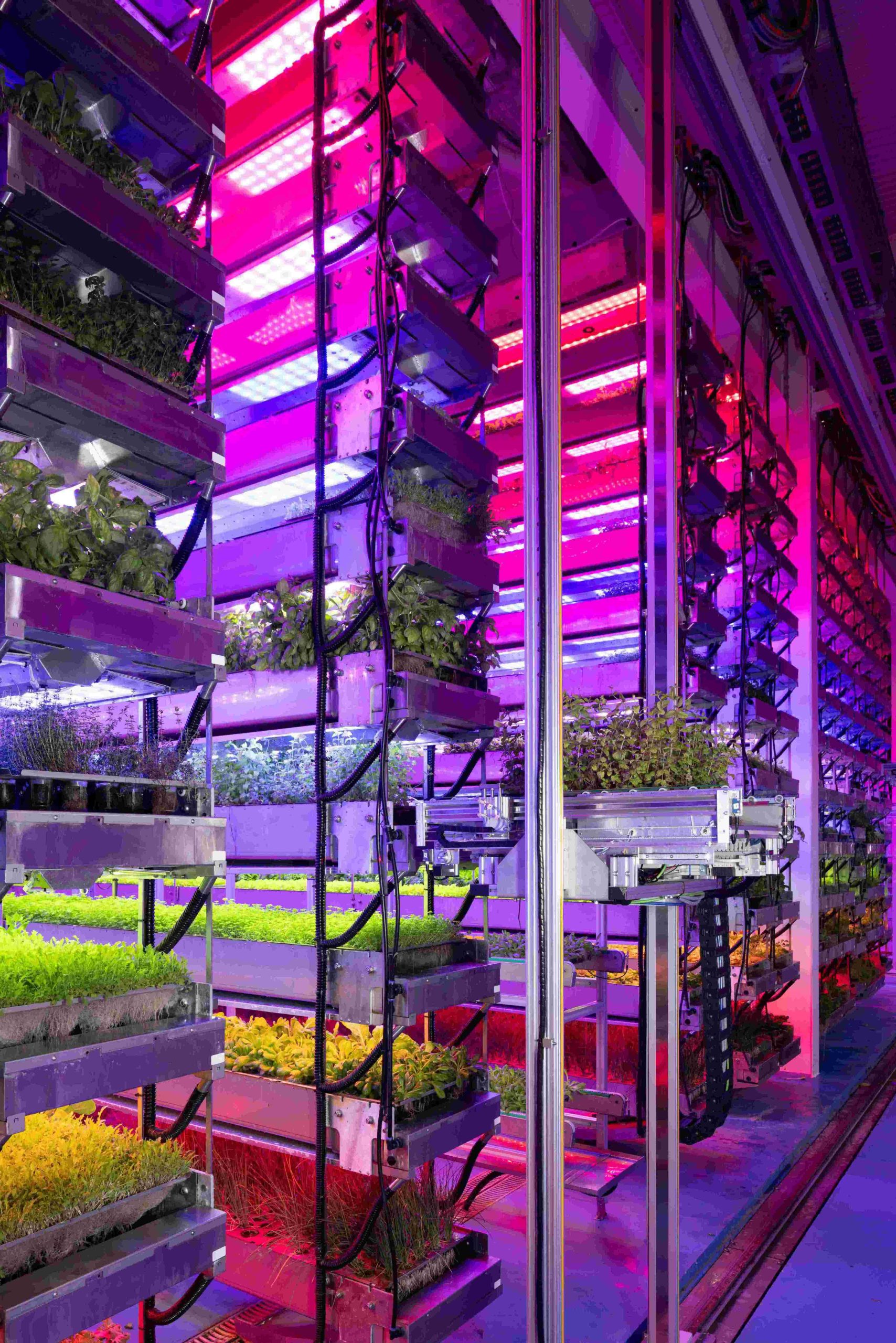
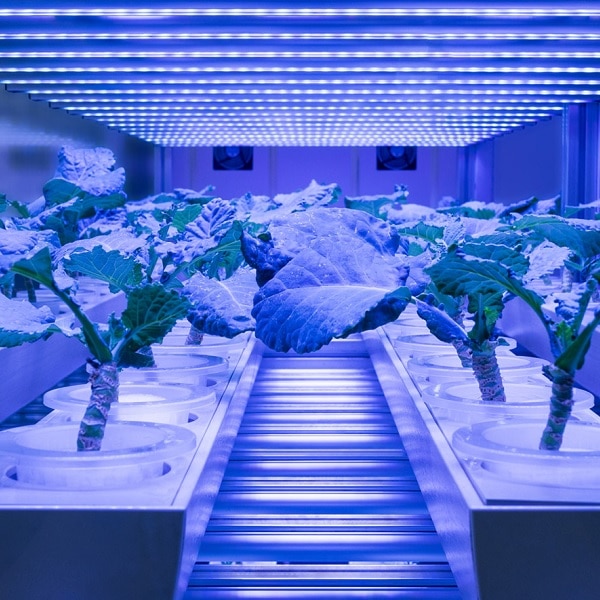
Jones Food Company (JFC) is one of the UK’s leading agri-tech companies, building vertical farms that supply 24,000kg of fresh produce weekly to customers around the UK.

Schneider Electric is providing Jones Food Company with the state-of-the-art AVEVA Flex subscription, supplied by Aveva Select UK and IR, creating a centralized, automated model for data analysis that is flexible and scalable to JFC’s requirements. The subscription model includes the AVEVA Advanced Analytics Module. The AI-driven software solution enables JFC to make real-time changes to growing conditions (including temperature, humidity, nutrient mix, and water quality) to produce a higher yield at a lower energy cost.  

Vertical farming is an energy-intensive process by nature, using controlled environments and growing vast amounts of fresh produce. In the current energy market environment, spiraling costs mean that Jones Food Company must ensure that every kilowatt of energy input returns the maximum output.  

Schneider Electric has helped JFC to achieve this by using AI to accurately detect and adjust the growing environment to the optimum temperature. As a result, the yield produced has more crops grown to specification dimensions, reducing food waste and handling time in the sortation stage. This will ultimately enable JFC to deliver value quicker to its customers by accelerating the speed to market.  

“Jones Food Company is one of the most exciting young companies in the UK agri-tech scene – they’re revolutionizing the way that agricultural supply chains are built,” said Mark Yeeles, VP of Industrial Automation at Schneider Electric. “Real-time, rich data is essential for JFC to create the foundation upon which they can develop and meet ambitious growth targets, and I am thrilled that they have selected us as a partner to support them on their journey.”

“Automation is at the heart of everything we do,” added James Lloyd-Jones, CEO & Founder of Jones Food Company. “Without it, we wouldn’t be able to produce our high-quality, high-yield crops sustainably. Schneider Electric’s advanced technology and premium service level has meant we can continue to innovate at breakneck speeds. At the same time, our employees learn from Schneider’s support team, expanding their knowledge of the technology at our disposal.”

Innovate UK Funding For Energy Efficient Aeroponic Farming Systems

Member News
Agri-TechE

This content is hosted by Agri-TechE as part of its service to its members. The views and opinions expressed are those of the individual/organisation that supplied the content and not those of Agri-TechE or its employees. This content is hosted by Agri-TechE as part of its service to its members. The views and opinions expressed are those of the individual/organisation that supplied the content and not those of Agri-TechE or its employees. Aponic International has secured Innovate UK funding to commercialise its super efficient aeroponic farming system developed with help from the Eastern Agri-TechE Growth Fund. The vertical farming market has been slowed by high capital outlay and high energy costs. Aponic International has developed a design that dramatically cuts manufacturing and energy costs. Drawing on 9 years of commercial experience in the vertical farming market they have designed a new system that can be run from just two solar panels and a pair of deep cycle batteries. “We originally developed the system so that our farms could be run off grid, anywhere in the world and in the age of net zero, this thinking is paying dividends.”

We have a turnkey system that converts unused barn space and commercial units into controlled environment farms that grow abundant produce 365 days a year and creating full time jobs rather than seasonal labour. Taking the experience gained over a decade of developing this technology, we know that with our new design, we can improve the power usage, workflow and scalability of aeroponic growing by redesigning the aeroponic food factory system to be more labour and energy efficient and more easily rolled out at large commercial scale. The new design has all of the advantages that our previous designs excelled with, and still benefits from the energy and space efficient vertical tower design, but it comes in a package that creates great ROI for large commercial food production operations.

We obtained funding to develop the new design prototypes and run trials over lockdown. These proved successful and we are now attracting investors to create commercial scale production facilities and equipment. CEO Jason Hawkins-Row said “The Aponic International Food Factories are perfectly placed to plug the gaps in todays food production market by enabling ultra-local food production 365 days a year using 95% less water, renewable energy and 60% less nutrient to produce above organic quality, fresh produce in urban and rural farms.”

The Innovate UK funding will be used to create the tooling and processes to manufacture this new design which will be available in the New Year. Details will be released on our web site www.aponic.co.uk.

In a net zero environment, we need to continually move towards clean, efficient ways to meet the demands for high quality, nutritious food. Sustainable food only works if there is a sustainable business model and that is why we have made every effort to get an efficient product at the right price to the right people.

Agri-TechE Week kicked off with a bang at Norwich Research Park

Member News
The views expressed in this Member News article are the author's own and do not necessarily represent those of Agri-TechE.

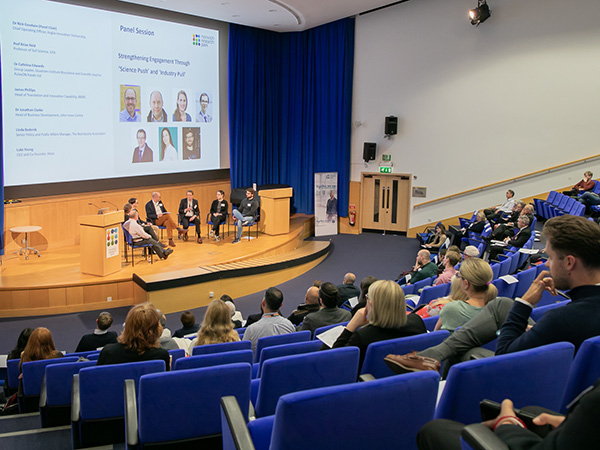
The team at Anglia Innovation Partnership LLP (AIP LLP), the science park management entity of the Norwich Research Park, were delighted to organise and hold the first event to kick things off for this year’s Agri-TechE Agri-TechE Week.

The event, entitled ‘field applications and opportunities using genetic technologies’ discussed the exciting innovative possibilities that the application of genetic technologies, when combined with continued developments in AI and automation, has the potential to bring to sustainable agriculture, providing solutions to global challenges such as sustainability and productivity.

The event featured four fantastic presentations from experts in the field, three from the park, Professor Nick Talbot (The Sainsbury Laboratory), Dr Penny Hundleby (John Innes Centre) Dr Darren Heavens (Earlham Institute) and we were also thrilled to be joined by Tim Teece, Technical Strategic Advisor from Morality and Knowledge in Artificial Intelligence (MKAI). The presentations were followed by a lively panel discussion with lots of thought-provoking audience questions. the event concluded with time for networking and refreshments.

Professor Nick Talbot from The Sainsbury Laboratory and Dr Penny Hundleby from the John Innes Centre explained gene editing technology and outlined current research applications as well as potential future applications for farming. Examples included gene editing to stop premature pod shatter in oil seed rape and the creation of non-browning bananas.

Dr Darren Heavens from the Earlham Institute discussed a specific cutting-edge technology, AirSeq, which uses a device that uses real time sequencing technology to detect airborne pathogens. This can provide a farmer with key information that a specific pathogen is present in the area providing them with essential knowledge that will allow them to act swiftly and with precision.

Tim Teece of MKAI showed an example of their Agricultural Data Aggregation Platform (ADAP) that leverages blockchain and AI technology to collect data consistently that will help farmers make more informed decisions, improve their strategies, be environmentally friendly and create a peer-to-peer network.

Diego Durantini, Agri-TechE Interdisciplinary Manager at Agri-TechE , said, “The Norwich Research Park pulled off a great event, assembled a lineup of amazing speakers, and engaged the community with thought-provoking talks. A fantastic event to start Agri-TechE Week 2022!

Nick Talbot, Executive Director of The Sainsbury Laboratory said, “There is enormous strength in the Norwich Research Park in Agri-TechE with discovery science expertise in plant and microbial sciences and innovative ideas in how to provide new solutions and products for agriculture.  There is a twin revolution underway in agriculture currently, with advance genetic technologies offering real hope to provide low input, high output crops with increased resilience to environmental stress, in addition to the artificial intelligence and autonomous vehicle revolution providing sustainable infrastructure to the farming industry.  The institutes in the NRP have much to offer in Agri-TechE as this event clearly demonstrated.”

The event attracted a varied and engaged audience, which was very buzzing during the break sessions and asked a lot of insightful questions to the panel.”

A great summary of the event can also be found on the Agri-TechE website here!

About Agri-TechE Week

Agri-TechE Week is a partnership initiative founded in 2014 by Agri-TechE with the Royal Norfolk Agricultural Association. It features a mix of in-person and virtual events that are designed to showcase exciting developments in agri-tech.

It is coordinated by Agri-TechE working closely with partners across the innovation ecosystem and aims to provide opportunities to attract new customers and partners and to broker collaborations and international connections.

90 days free member access to Burleigh Dodds Science Publishing database

Member News
Agri-TechE

Burleigh Dodds Database

Members of Agri-TechE will have access the world’s most comprehensive agricultural science publishing database for 90 days, the first in a series of member-to-member offers it was announced at REAP.

Dr Belinda Clarke, Director of Agri-TechE said:  “We were excited to launch a new initiative to help members help each other. The scheme will enable members to offer opportunities and benefits to other members, and we are delighted to announce Burleigh Dodds Science Publishing as founder partners in the scheme.”

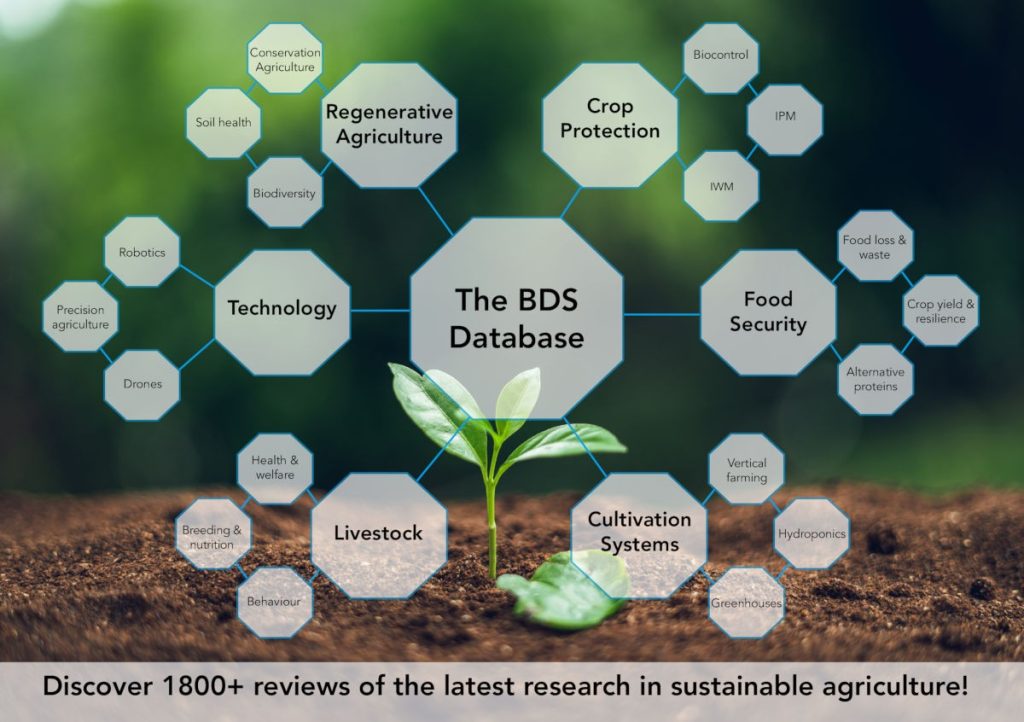
Burleigh Dodds curates an agricultural science database, compiled by 4,000 internationally recognised experts with over 120 titles and 1,800 chapters. The resource can be customised to meet the user’s requirements, so they are presented with the most relevant information.

All Agri-TechE members have free access to the database from 1st Dec 2022 to 28th Feb 2023, with an additional discount on purchase of any books.

Rob Burleigh says:  “The trial provides a good opportunity for members to explore the database and see which content is of greatest value to them. Recently published and forthcoming volumes have focused on the latest work on soil carbon sequestration, pollinators and crop sensors. It can be hugely time saving to have all this information available in one place.

“For those involved in the livestock sector we have two new books on poultry flock health and poultry meat quality, as well as another new book focussed on pig herd health and production.”

Following the trial the user will be able to select the content they are most interested in and Burleigh Dodds can tailor the database to specific requirements.

Burleigh Dodds had a stand at REAP 2022, and one of the delegates was delighted with  Professor Watkins book, Advances in post-harvest management of horticultural produce.  She said: “It’s great. All the key information is included, meaning that I don’t have to waste time looking elsewhere for the key research – it’s all here in one place.”

If you an Agri-TechE member interested in taking up the offer, please get in touch with us.

Innovate UK and BBSRC announce new strategic partnership

Member News
The views expressed in this Member News article are the author's own and do not necessarily represent those of Agri-TechE.

Innovate UK and BBSRC are partnering to invest over £50 million in strategic innovation programmes to help UK businesses collaborate with the UK research base.

Boosting innovation

Innovate UK and the Biotechnology and Biological Sciences Research Council (BBSRC) are partnering to co-develop and jointly invest in a range of new strategic innovation programmes.

This will accelerate the translation of bioscience and biotechnology research into commercial products, processes and services that improve lives and livelihoods through helping to address national and global societal and environmental challenges.

Successful partnership history

A new series of joint programmes will be announced over the coming weeks and months. This builds on a highly successful partnership between BBSRC and Innovate UK.

This partnership has, for over 15 years, invested millions of pounds to support hundreds of businesses and academic researchers in collaborating with each other across diverse areas including:

  • agri-tech
  • industrial biotechnology
  • engineering biology
  • integrated omics
  • biofilms
  • regenerative medicine

The creation of UK Research and Innovation (UKRI) has strengthened this partnership and collaborative working, helping to build a thriving, inclusive research and innovation system.

Investing in collaborative research and development (R&D)

Innovate UK and BBSRC have set out these programme commitments in detail in the recently published strategic delivery plans. These programmes will help to support innovation in UK bioscience, build connections across the innovation ecosystem and stimulate private sector investment in R&D.

These programmes and activities will span research and innovation that will focus on a multitude of areas, including:

  • biofilms and broader microbial communities
  • bio-based manufacturing
  • improved diet, nutrition and health
  • more sustainable food production systems, including novel proteins

Keep an eye out for the new series of funding opportunities by signing up to the UKRI newsletter and Innovate UK newsletter.

Accelerating innovation

BBSRC Executive Chair, Professor Melanie Welham, said:

As set out in the BBSRC strategic delivery plan 2022 to 2025, our partnership with Innovate UK is an important part of delivering our ambition to drive and accelerate innovation.

It supports researchers, innovators, and businesses in translating fundamental understanding of biological systems.

This is a partnership with a long history of success in providing joint support for innovation and commercialisation, and I look forward to this continuing with a new series of strategic bioscience innovation programmes to be announced over the coming months.

A strong strategic partnership

Innovate UK CEO Indro Mukerjee said:

Innovate UK has been building a strong strategic partnership with BBSRC to support collaboration between business and the UK research base.

This partnership consists of co-created programs across the biosciences and biomanufacturing. It is a good example of the active collaboration work with all the research councils and Research England across UKRI.