Patenting, Trademarks, Copyright, Trade Secrets...
In the next installment of our micro-learning series, we’ll explore potential legal solutions to help you keep your ideas safe and sound.

Meet the Team at HOPS AgTech

Member News
The views expressed in this Member News article are the author's own and do not necessarily represent those of Agri-TechE.

In 2022 HOPS were awarded the Seasonal Worker Scheme license to operate. Since this license was awarded the HOPS team has grown from three people to fifteen. They have recruited people with agricultural backgrounds, two of whom are Angus and Lloyd who will be driving HOPS AgTech forward from this point.

Meet the Team at HOPS AgTech

Lloyd is Senior Accounts Manager for the East of England and joined HOPS in April of this year. Lloyd graduated from Harper Adams University and then undertook the MDS Ltd graduate scheme which he completed in 2017. Over the last 6 years he has spent his time in Farm Management for large scale fresh produce businesses.

Angus is our Account Manager for the West of the UK from Cornwall to Lancashire and joined the HOPs team in May of this year.  Angus joins us with a wide range of experience across the agricultural industry hailing from a farming background and having recently completed the MDS Ltd graduate scheme. 

Burleigh Dodds Science Publishing: Supply chain safety key to keeping contaminated food off our plates

Member News
The views expressed in this Member News article are the author's own and do not necessarily represent those of Agri-TechE.
 isThe estimated financial burden of the disease is claimed to be as high as €3 billion.

In the US, it’s suggested that Salmonellosis is the cause of more than 1.35 million infections, over 26,000 hospitalisations and more than 400 deaths each year.

Although Salmonellosis can be contracted from an array of sources, including through direct animal contact, 94% of Salmonellosis cases are transmitted by food.

Safe handling and management of food along the supply chain is considered key for reducing and/or preventing the risk of food contamination by harmful pathogens, such as Listeria and E.coli.

Advances in ensuring the microbiological safety of fresh produce

A new book published by Burleigh Dodds Science Publishing considers the importance of ensuring food safety along the fresh produce supply chain.

Advances in ensuring the microbiological safety of fresh produce features contributions from a pool of international experts in food safety and has been edited by Dr Karl R. Matthews – Professor of Food Microbiology at Rutgers University in the US.

“Increasing consumer demand for low-input cultivation and minimal processing has significantly increased the risk of microbiological contamination of fresh produce,” says Francis Dodds, Editorial Director at Burleigh Dodds Science Publishing.

“As well as presenting a major health risk to consumers, this also undermines the trust in the food supply chain from farm to fork,” he adds.

The deterioration of food as a result of microbial contamination is a major concern in terms of food waste, human health, financial burden and economic loss.

A significant amount of research is currently being undertaken to develop methods which measure both product safety and quality, such as high-throughput screening techniques and rapid detection.

“Rapid and accurate analytical procedures are critical to ensuring product quality, label compliance and safety,” says Dr Chunlei Shi, Professor of Food Science at Shanghai Jiao Tong University, China.

“Rapid screening of spoilage microorganisms in food during manufacturing and processing would facilitate their detection in a timely manner, thus controlling the spread of microbes and ensuring safe food supply,” she concludes.

The risk of contracting a foodborne illness from fresh produce is significantly higher than many other food types as fresh produce is typically consumed in its raw form. Any pathogens which may be present can’t be ‘killed off’ during the cooking process.

Packaging is key

With this in mind, the packaging of fresh produce, including fruits and vegetables, is crucial to reducing the risk of contamination via an external source.

One recent development in this area is the emergence of smart packaging – a process which utilises technology to enhance the functionality of packaging materials. For example, QR codes are now printed on packaging to allow consumers to track the journey of their food from farm to fork. Key developments, such as the use of QR codes are discussed in this new authoritative text.

See more here.

Burleigh Dodds Science Publishing: How will climate change affect agriculture in years to come?

Member News
The views expressed in this Member News article are the author's own and do not necessarily represent those of Agri-TechE.

The impact of climate change can be felt worldwide – from continent to continent.

For example, UK growers have highlighted concerns about the 2022 heatwave in which the country experienced its highest ever temperature on record (40.3 degrees Celsius), threatening yields of crops such as cereals, brassicas and top fruit.

And it’s not just the UK that’s heating up. According to research, the average surface temperature across the contiguous U.S. states has risen at an average rate of 0.1 degrees Celsius per decade since the start of the 20th century (Basso, Millar and Price, 2023).

Although for some the damage may already be done, many see great promise in the use of modelling techniques to predict the future impact of climate change on agriculture, as well as the efficacy of climate change mitigation measures.

Modelling climate change impacts on agricultural systems

A new book published by Burleigh Dodds Science Publishing promises to be the ‘go-to’ reference on this topic.

The book features contributions from an array of international experts in the field of climate change modelling and has been edited by Professor Claas Nendel who was the Principal Developer of the MONICA model. This simulates biophysical processes in agroecosystems to allow assessment of regional impacts of climate change.

“This book examines issues from the small scale, via regional to global, and explores current approaches and the gaps that need to be filled to make projections more robust,” says Professor Tim Benton, Director of the Environment and Society Programme, Chatham House, UK.

“It allows readers to judge the extent to which we really understand how climate change will affect agriculture in years to come, and what we need to do better in order to do so,” he concludes.

Modelling climate change impacts on agricultural systems provides a global perspective on the impact of climate change on different agricultural systems, including both crop and livestock production, in Europe, Asia, Africa, Australia and the Americas.

One of many concerns surrounding climate change is its impact on delivering key ecosystem services that underpin agriculture and deliver wider benefits such as improved air, soil and water quality.

“Invertebrates and micro-organisms living in the soil maintain its fertility and structure, but are vulnerable to disruption or damage to the soil,” states Dr Charlotte Weil, Swiss Federal Institute of Technology Lausanne, Switzerland.

“However, rising temperatures increase the rate of soil organic matter decomposition, causing losses in soil fertility that may be further compounded by climate-induced changes to soil invertebrate and microbial composition – both of which could compromise soil ecosystem services,” she adds.

“Climate change continues to wreak havoc on agricultural production worldwide,” says Francis Dodds, Editorial Director at Burleigh Dodds Science Publishing.

“It was therefore essential that our new book review the latest research on how modelling can better capture the impact of climate change and assess how effective potential mitigation measures might be in both adapting to and reducing its effects,” he adds.

Find out more about the book here.

Universities of Lincoln and Cambridge win £4.9m EPSRC award 

Member News
The views expressed in this Member News article are the author's own and do not necessarily represent those of Agri-TechE.

The Universities of Lincoln and Cambridge have been awarded a £4.9 million grant from the Engineering and Physical Sciences Research Council (EPSRC) to help fund their drive to make the Lincolnshire and north Cambridgeshire (LINCAM) region a global innovation centre for agricultural technology (agri-tech). 

The LINCAM region is already a major UK production centre for crop-based agriculture and the associated supply chain. Its significance and sheer scale has led to the establishment of a nationally renowned agri-tech cluster – centred on the Universities of Lincoln and Cambridge, where interdisciplinary agri-food innovation is focused on digital technologies, including robotics and artificial intelligence, to boost productivity. 

Now the hope is that the Place Based Impact Acceleration Account (PBIAA) award from the EPSRC – the main funding body for engineering and physical sciences research in the UK – will deliver a step change in activity. The aim is for the LINCAM region to become an agri-tech gateway for the world – enabling the development of technologies at industrial scale and providing export opportunities for agri-tech companies and inward investment opportunities within both the agri-tech and primary production sectors. 

Simon Pearson, founding director of the Lincoln Institute of Agri-Food Technology at the University of Lincoln, said: “The LINCAM agricultural sector supports 88,000 jobs, generates gross value added (GVA) of £3.8 billion and farms more than 50% of the UK’s grade 1 land. However, despite this scale, there are still significant challenges and opportunities. 

“Food production accounts for 24% of all UK greenhouse gas emissions, leads to significant biodiversity losses and drives challenging social issues – not least from seasonal worker influxes to rural communities. In addition, farmers are under relentless cost pressures which are eroding supply chain equity and local economies. 

“These challenges are acute across the LINCAM region but this funding award offers an opportunity to harness agri-tech to secure sustainable growth, bringing high-value and skilled jobs to the region, whilst mitigating the serious environmental impacts of the food production system.” 

The University of Lincoln has a long track record of agri-tech collaboration with the University of Cambridge and its commercialisation arm Cambridge Enterprise. Their work has included the setting up of Agriforwards CDT – the world’s first EPSRC centre for doctoral training (CDT) in agri-food robotics. LINCAM will build on the success of their Ceres Agri-TechE partnership with three other leading UK universities and three renowned agricultural research institutes. Ceres, funded by Research England, provides translational funding and commercialisation expertise to drive agri-tech innovation by accelerating high-quality research to market. It has launched four agri-tech spin-out companies to date and created 13 licensing opportunities. 

LINCAM will broaden participation in the cluster by offering access to the EPSRC funding to all UK higher education institutes involved in agri-tech research with the potential to drive economic and environmental or social sustainability in the region. Projects that are successful in securing a share of the funding will be actively mentored by the LINCAM team to accelerate the delivery of results. 

Professor Miles Padgett, interim executive chair at EPSRC, said: “I’m pleased to announce our first ten Place Based Impact Acceleration Accounts which will play a unique role in enhancing the capabilities of innovation clusters across the UK. A key priority for UKRI is to strengthen clusters and partnerships in collaboration with civic bodies and businesses, thereby driving regional economic growth.” 

The civic bodies involved in the LINCAM partnership include the Greater Lincolnshire Local Enterprise Partnership, the Cambridgeshire and Peterborough Combined Authority and West Lindsey District Council. 

Molendotech completes funding round with £500k CIOSIF support

Member News
The views expressed in this Member News article are the author's own and do not necessarily represent those of Agri-TechE.

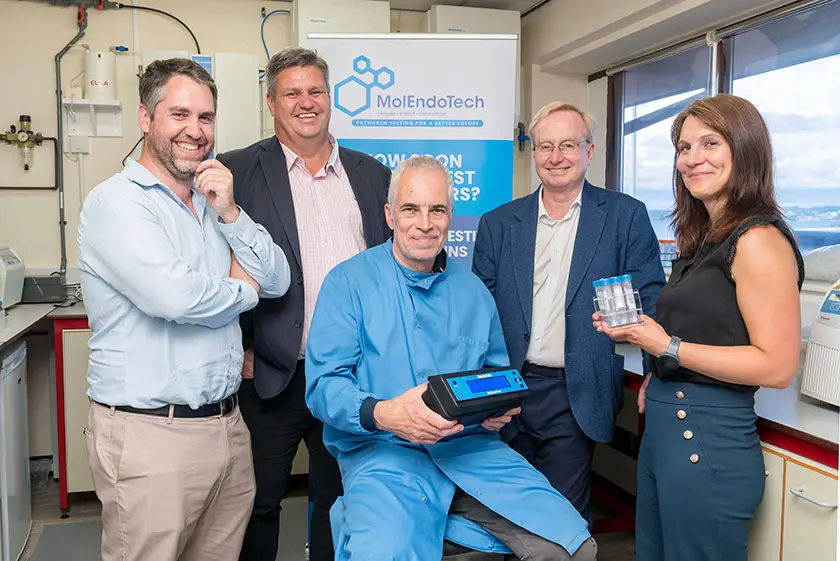
South West research and development company Molendotech is the latest business to be supported by the Cornwall and Isles of Scilly Investment Fund.

The business has secured a £500,000 CIOSIF equity investment, as part of an oversubscribed £1 million funding round which includes investment from appointed CIOSIF fund manager, The FSE Group, Exeter based VC firm QantX, a number of existing private investors and the management team.

Molendotech will use the newly raised funds to create an operational unit based in the Health and Wellbeing Innovation Centre in Truro.

The business has developed easy-to-use, portable and rapid tests to monitor and detect pathogens found in water. One of the company’s existing tests is BacterisK+ which can detect gram-negative bacteria in water in less than 30 minutes. Gram-negative bacteria include those associated with faecal contamination such as E.coli, and are among the world’s most significant public health problems due to their high resistance to antibiotics.

Molendotech was founded by Professor Simon Jackson at the University of Plymouth in 2018. Now its customer base includes environmental agencies, water companies, and national and local government authorities, and its methods and assays are protected by patents in several countries including the US, UK, Australia and Japan.

In 2022 the company successfully developed applications for specific areas of the healthcare sector, such as chronic wound – a condition that affects 2.2 million people in the UK with an estimated annual cost of £5.3 billion to the NHS.

Simon Jackson, Chief Scientific Officer at Molendotech, said: “Being able to detect pathogens quickly and accurately is vital when working to keep communities safe from harm. Our testing solutions can be used quickly and by anyone who has had basic training, meaning rapid action can be taken to address a poor quality environment or danger. Whilst our products can be used anywhere in the world we are extremely proud to be a South West company. Receiving support via CIOSIF has meant a lot to us, and we will use part of these funds to employ more local staff over the coming years as our business grows.” 

Anna Staevska, Investment Manager at The FSE Group, added: “We are delighted to be supporting a local business which has the potential to make a huge difference to the safety of people all over the world. We were impressed by the core team’s extensive knowledge of their sector and their strong links to Plymouth University, which will be incredibly useful throughout the research and development of new solutions. We look forward to seeing their Cornwall team grow and wish them every success for the future.”

The Cornwall & Isles of Scilly Investment Fund provides debt and equity finance from £25,000 to £2 million to help growing small businesses across the region. It was established by the British Business Bank in partnership with the Cornwall and Isles of Scilly Local Enterprise Partnership (LEP).

Paul Jones, Senior Investment Manager from the British Business Bank said: “Molendotech is a great example of a University spin-out that has used its research expertise to develop novel technology for applications around the world. With CIOSIF support we look forward to seeing the continued growth of the business.”

John Acornley, Chair of the CIOSIF advisory board and former LEP non-executive director, said: “Innovation and collaboration is at the heart of what Molendotech does and I am delighted they are establishing a base in Cornwall. They continue to develop new ways to test for bacteria and are already developing rapid tests for the food and drink sector in order to safeguard human health.”

CIOSIF is supported financially by the European Union using funding from the European Regional Development Fund (ERDF) as part of the European Structural and Investment Funds Growth Programme 2014-2020.

For more information about the Cornwall & Isles of Scilly Investment Fund including how to apply, please visit www.ciosif.co.uk  or follow the fund on Twitter at @CIOSIFBBB2

Eagle Genomics takes latest funding past $25m and unveils new CEO and Chair

Member News
The views expressed in this Member News article are the author's own and do not necessarily represent those of Agri-TechE.

Eagle Genomics in Cambridge, a global specialist in microbiome-related research, has raised an extra $4 million+ to take its funding past the $25m mark inside the last 12 months.

The company has also appointed ex-Microsoft executive Dr Victoria Kimonides as CEO and recruited a new chair of the board. Previous CEO Anthony Finbow has become what the company describes as Eagle’s chief evangelist.

He will “support the company in reaching its full potential and promote the importance of the exploration of the Microbiome and innovative breakthroughs in the field.”

The funding has been topped up with continued participation from existing backers Environmental Technologies Fund, abrdn plc and a consortium of investors headed by Granpool Innovative Investments.

The money will be used to further deploy Eagle’s pioneering software platform. This enables corporate customers to explore and monetise on microbiome-related research. 

Prior to joining Eagle, new CEO Dr Victoria Kimonides spent almost 14 years in leadership positions at Microsoft, where she spearheaded co-selling with partners and oversaw channel sales across Central and Eastern Europe. Before that she led Enterprise Technology Strategy and Customer & Partner Experience for the region. 

She has a BSc in in Biochemistry and Microbiology from King’s College London and a PhD from the University of Cambridge where she studied neuroscience and is a leading expert in this scientific domain. She is also a Fellow of the Cambridge Judge Business School.

Dr Kimonides said: “Eagle is a company with tremendous potential as we can help large companies curate, analyse and make impactful the billions of dollars being invested into microbiome research.

“Our goal is to help those companies commercialise that research and develop new, sustainable solutions that are good for both the people and the planet.”

Eagle has also appointed a new chair – John Schoellerman – currently SVP, Corporate & Business Development at Oxford Nanopore Technologies plc, where he was instrumental in private financing, the public listing, and development of long-term strategy.

Previously he was a Managing Director and Head of the Medical Technology practice at Lazard, a leading global investment bank.

SRUC: 2023 – a big year for biodiversity

Member News
The views expressed in this Member News article are the author's own and do not necessarily represent those of Agri-TechE.
SRUC

SRUC’s Thriving Natural Capital Challenge Centre is invested in making 2023 a big year for biodiversity in Scotland

When the 15th meeting of the United Nations’ Conference of the Parties to the Convention on Biological Diversity (COP15) concluded just before Christmas, it secured a historic new ‘deal for nature’. 

More than half of global GDP is moderately or highly dependent on nature, according to the World Economic Forum. At COP15, 195 nations agreed that our world must not only become net zero, but also nature-positive, for the benefit of both people and the planet.

The Glasgow Financial Alliance for Net Zero (GFANZ), committed over US$130 trillion of private capital to transforming the economy for net zero, but the wide-ranging nature of the COP15 framework shows that nature and biodiversity is everybody’s business too.

There is now global commitment to halt and reverse biodiversity loss and to protect 30 per cent of land and oceans, all by 2030. There was also commitment to reduce all pollution to levels not harmful to wildlife and ecosystems, taking in significant cuts to nutrients, pesticides and plastic waste. The world has woken up in 2023 to the fact that there is no net zero pathway to limit global warming to 1.5°C to halt devastating effects of climate change, without addressing nature loss and land degradation.

SRUC’s Thriving Natural Capital Challenge Centre has been awarded a Natural Environment Research Council grant to focus on network building for nature positive projects – between Scottish biodiversity uplift programmes happening on the ground, and the investment and private finance sector. 

It’s important that the private investment sector concentrates financial flows on biodiversity projects, but first, they need to understand them. Biodiversity and ecosystem services are the basis of new business opportunities. This is most obvious in the case of organisations selling goods and services that are directly associated with biodiversity and ecosystems. I am also about to start a project with RSPB Scotland at its new Glencripesdale reserve in the Morvern peninsula to explore how digital data about biodiversity uplift can be presented to investors to assure them of progress and impact in nature-based projects in which they have invested.

Along with SAC Consulting, Dr Al McVittie, an environmental economist at SRUC, and I have also just started research for the Scottish Government on Approaches to Measuring Biodiversity in Scotland.

Kate Dowen, Head of Sustainable Nature Finance in the Scottish Government’s Environment and Forestry Directorate, said: “It’s important to be able to measure biodiversity so we can better protect and restore it. But this research will be important in a number of policy areas as well as conservation. What happens in planning, agriculture and natural capital or green finance all have a part in ensuring that Scotland protects 30 per cent of its land and seas by 2030.”

This is going to be a big year for biodiversity. The Thriving Natural Capital Challenge Centre is excited to have generated income of over £300,000 for the projects mentioned here, and I look forward to creating impact through nature positive action research. This work will be a really essential part of the natural economy’s pathway to net zero, as well as helping with the sector’s influence in the climate emergency and biodiversity crisis.

Dr Hannah Rudman

Co-Director, SRUC Thriving Natural Capital Challenge Centre

Eden Search’s Emerging Leader’s Programme 2024

Member News
The views expressed in this Member News article are the author's own and do not necessarily represent those of Agri-TechE.

A new round of funding and mentoring is available to talented executives working within small-to-medium sized enterprises (SMEs) in the food supply chain as Eden Search launches its second Emerging Leaders programme.

To help future SME managers fast track their leadership skills, Eden Search is making a training budget of up to £3000 available to one aspiring executive working for an SME in either food manufacturing, fresh food or agritech. The money can be used to fund a course, research project or work experience placement that will help unlock the individual’s potential and broaden their horizon. In addition, the winner will receive up to four hour-long mentoring sessions with sector specialists (founders, CEOs and senior leaders) over the course of a 12-month period. Mentoring will also be available to one other applicant.

Explaining more about the launch of the 2024 Emerging Leaders programme, Richard Macdonald, Non-Executive Director of Eden Search, said: “The last few years have been tough for companies in agri-food. Post-Brexit and COVID, the industry has been hit with ingredient shortages, labour issues and inflation. SMEs have borne the brunt of this. This is incredibly concerning given they are the backbone of the sector. In UK food manufacturing alone, SMEs account for 22% of turnover and 33% of employment. Yet many don’t have structured training and development programmes in place or, if they do, they’ve been impacted by recent macro-economic pressures. Emerging Leaders is designed to help bridge this gap – giving the most talented individuals in the sector the chance to apply for funding and mentoring that will help them achieve their professional and personal goals and keep SMEs innovating and leading the way.”

Eden launched its inaugural Emerging Leaders campaign in 2023, providing training and mentoring to three talented industry executives: Dr Ruth Bastow, Innovation Director for CHAP; Miranda Beebe, Head of Volunteer Management at Trussell Trust; and Dr Lisa Morgans is Head of Livestock for i4Agri.

Commenting on how her experience of the programme, Dr Ruth Bastow, said: “Being part of the inaugural Emerging Leaders initiative was fantastic. It enabled me to complete a MIT course on Leadership & Innovation. It also gave me access to an inspiring, supportive mentor. Working in a small business can be intense. There’s not much time to stop and think about training and development. Emerging Leaders helped me discover more about myself. With a clearer understanding of my motivations and strengths, I can make better use of my skills to drive the company forward. I’d urge anyone looking to further their career to apply to this programme.”

The Emerging Leaders programme is open to anyone with five or more years’ experience working within an SME (<£15m turnover) in food manufacturing, fresh food or agritech in the UK or internationally. Individuals must be able to demonstrate experience in a senior management position and have a clear view of the external support they require to continue their career path into leadership / board positions. Applicants need to send a copy of their CV and write a 500-word summary answering the following key questions:
• What are the challenges you would like to solve within your industry?
• What training / development would you need to achieve this?
• What difference will this training make to you and the industry, long-term?

Applicants need to confirm the support of their company and provide details of a ‘sponsor’ (e.g., their line manager) when they make their application. The deadline for applications is 23:59 on 19th November 2023. Applications should be emailed to: emergingleaders@edensearch.co.uk. For further information including all terms and conditions, go to www.edensearch.co.uk/emerging-leaders-program

NatureMetrics Win Tesco Agri T – Jam Competition

Member News
The views expressed in this Member News article are the author's own and do not necessarily represent those of Agri-TechE.

NatureMetrics has won the 2023 Tesco Agri T-Jam Competition, securing fast-track introductions to the Tesco supplier network and a trial with one of the retailer’s supply chain partners.

Now in its sixth year, the Tesco Agri T-Jam pitching event, run in partnership with Leading Edge Only, saw 10 different agri start-ups pitch to a panel of Tesco sustainable agriculture and commercial experts, Tesco suppliers, and stakeholders to find the most promising agriculture innovation.

This year, the event was dominated by innovations which can contribute to Tesco’s aim of building more sustainable supply chains, incorporating ideas with solutions to support on-farm measurement, data analytics, and supporting farmers in making informed choices around complex sustainability issues.

NatureMetrics, represented at the pitch event by its Head of Agriculture, Tom Ludwig, won the competition for its innovative solution which measures biodiversity using eDNA analysis of soil, water, and insects. The innovation converts this complex data into simple metrics which can be viewed through its Nature Intelligence Platform, allowing users to comprehensively report on biodiversity improvement in their supply chain.

Commenting on the competition this year, Natalie Smith, Head of Sustainable Agriculture at Tesco, said: 

“We are thrilled to welcome NatureMetrics to our network, and to offer them the opportunity to work with our suppliers and experience direct feedback and mentoring from our Sustainable Agriculture team. In an incredibly strong field, Tom Ludwig demonstrated his commitment to biodiversity and really impressed the whole of the judging panel.

“This competition is designed to help us find innovators who can help us build long-term resilience within our supply base, addressing key sustainability challenges so we can continue our progress towards our stretching climate and biodiversity targets. I’d like to thank all of our finalists for taking part – I’m sure there will be more opportunities in the future for these innovators to work with Tesco suppliers.”

Ludwig will also receive a one-year free membership to both Agri-TechE and Agri-EPI Centre and will have the opportunity to present on stage at the World Agri-TechE Innovation Summit taking place in London on 26-27 September, to an audience of over 900 international senior ag-tech decision-makers and innovators.

Alongside Tom Ludwig, the other finalists were: Viridian (Angus Middleton), Flexifarm (Kevin Gooding), Map of Ag (Joe Towers), Bloomfield (Mark DeSantis), Laguzze (Laurent Vigouelle), Yard Stick PBC (Chris Tolles), Snapp Laab (Donat Posta), Protiomix Ltd (Stephan Jaffe), and Sunamp (Ana Amaral).

Scott Sharp, founder and CEO of Leading Edge Only, said:“We are delighted for Tom and for all of the applicants who were shortlisted. This is a life-changing opportunity and it is incredibly exciting to see the level of talent across start-ups in the agri-tech space. We are confident that we will continue to hear these names as they each make their stamp within the landscape over the next few years.”

ADAS: Organic fertilisers ‘key to cutting dependence on artificial fertilisers’

Member News
The views expressed in this Member News article are the author's own and do not necessarily represent those of Agri-TechE.

To cut dependence on fossil fuel made artificial fertilisers, the agricultural sector “must find ways to make the most of nutrient-rich organic fertilisers like livestock manures, slurries and composts” – so says John Williams, Head of Soils and Nutrients at ADAS.

John was speaking ahead of the 18th International RAMIRAN Conference, a global gathering of nutrient management, soil health, and environmental research experts being held in the UK for the first time this September.

With record-breaking artificial fertiliser prices listed as a driving force behind food price inflation last year, there is renewed interest globally in how to best recycle organic materials like farm manures, sewage sludge, compost, and biomethane production by-products for food production. And importantly, how to limit their associated environmental impacts.

John, the Conference Co-Chair said
To feed a growing population, farmers are charged with producing more and more with finite resources. Fertilisers are essential for boosting crop growth and maintaining soil health. Instead of depending on artificial fertilisers created from natural gas, we ought to make better use of what we already have. It’s outdated to view organic materials as waste, they hold the key to enhancing world food production.

He noted though that if these organic materials are not managed well, not only were growers wasting a valuable resource, they could end up causing significant harm to the environment with ammonia and nitrous oxide emissions being released into the air and nitrogen and phosphorus losses to water.

“To sum up when it comes to these organic materials – we either use them or we lose them”.

Maintaining food production in an environmentally sound way is a problem every country can relate to, which is why the global reach of RAMIRAN is incredibly important.

Conference Co-Chair, Professor Dave Chadwick from Bangor University added

“For decades, the RAMIRAN network has played a leading role in sharing information across countries and continents to improve organic material use in agriculture. At this year’s conference, we’re expecting delegates from across Europe, China, the US, New Zealand, Nigeria, and Peru. It is a rare opportunity for leading agricultural scientists to meet, listen, discuss, and hopefully co-develop new solutions to maximise the efficiency of organic materials against the background of changing regulation, policy and market force and increasing pressure on the environment, soil quality and food production.”

The RAMIRAN (Recycling of Agricultural, Municipal and Industrial Residues in Agriculture Network) conference takes place between 12 and 14 September at the Corn Exchange and Guildhall in Cambridge. Organised by ADAS, with Bangor University and Rothamsted Research, the conference will attract more than 250 delegates from 25 countries and five continents.

Conference sessions will examine: policy and regulation, nutrient utilisation, soil quality, air and water quality, treatment and processing technologies and promoting best practice.

Find out more be visiting the RAMIRAN website or by following #RAMIRAN2023 on Twitter.

Cambridge Consultants Client Story: Carbon sequestration in action

Member News
The views expressed in this Member News article are the author's own and do not necessarily represent those of Agri-TechE.

Advanced climate tech that’s ready to accurately measure carbon capture

The challenge of accurately measuring soil carbon is crucial for the future of the carbon market. Yard Stick’s vision of real-time measurement relies on spectrometry. Its previous prototype probes were based on well-documented research linking visible infrared spectrometry to soil measurement. Our challenge – with a short turnaround – was to advance optical design and manufacture for its next-generation devices while dealing with mechanical and electrical constraints. The task involved maximising performance (signal noise ratio and wavelength) while minimising both form factor and power draw.

Carbon measurement plus validation

As well as addressing measurement itself, Yard Stick wanted to validate their soil carbon measurement against testing performed by existing laboratories. Why did they turn to CC? Our diverse and relevant experience bolstered their talented in-house team so that all phases of the development could be addressed. We have specific optical lab testing facilities and optical physics expertise that perfectly complemented their core software and electronics strengths. The addition of CC’s in-house manufacturing capabilities made sure that tight deadlines were met.

Carbon credits to offset emissions

Yard Stick is operating in a dynamic marketplace as the commercial world responds to the carbon crisis. Across the globe, carbon credits are used to offset emissions to mitigate environmental impact. Credits are available for capturing and sequestering CO2 in the soil via plants – opening a significant potential revenue source for growers. Right now, the system relies on trust, and the only way to definitively measure soil carbon content is analysing a core sample in an offsite lab.

Soil carbon real-time measurement

The trust model of carbon credits is slowly evolving to a compliance one driven by legally binding CO2 targets signed by governments worldwide. The imperative to prove carbon trading claims is propelling the switch from remote image-based modelling to physical soil measurement in the field. Yard Stick’s ambition for its devices to provide a real-time in-situ service will make the time-consuming process of sample extraction across acres of farmland – followed by composition analysis miles away – completely obsolete.

Evaluating optical design efficiency

CC’s North American team originally met up with Yard Stick during a start-up event in the heart of Boston’s vibrant innovation community. As alluded to above, discussions soon settled on a project with three key phases:

•  Development of the optical module for next-generation devices
•  Investigation of optical architecture for the generation after next
•  Construction of testing equipment for measurement validation

The first part began by evaluating optical design efficiency and identifying component architecture. This was then integrated into the significant space constraints of the existing device with new mechanical functionality.

Maximising the carbon measurement spectrum

With seasonally determined field trials looming, we pressed the button on manufacture and assembly of a small run of components in the UK. This pre-empted integration into the US manufacturing plan for the devices. Meanwhile, with an eye on the generation after next, CC investigated optimal device architecture to maximise the measurement spectrum. This demanded an agile pivot when the existing spectrometer was unexpectedly removed from production. We evaluated alternative suppliers and successfully carried out performance testing and commercial suitability assessment (price versus lead time versus difficulty of development and integration).

Carbon validation testing of soil

The final stage saw CC design and manufacture bespoke testing equipment for the validation of the new prototypes against the industry standard, ahead of sample collection in the next period of field testing. Despite fluctuating requirements, a working prototype has now been deployed for the validation testing of hundreds of soil samples.

NFU Mutual join the Farmers Weekly Podcast: Combating crime in the countryside

Member News
The views expressed in this Member News article are the author's own and do not necessarily represent those of Agri-TechE.

In this episode, as annual figures show another rise in farm theft, Farmers Weekly Podcast meet the former SAS soldier helping to combat crime in the countryside. Episode includes our members, NFU Mutual.

Listen Here