Patenting, Trademarks, Copyright, Trade Secrets...
In the next installment of our micro-learning series, we’ll explore potential legal solutions to help you keep your ideas safe and sound.

Could plastic waste be recycled to use on-farm?

Meet the Network
Agri-TechE

Where 3D printers were once reserved for design engineers and researchers, plummeting prices have cut the cost to around £300 for a basic model and opened them up to a mass market. These could also have valuable applications for farmers seeking to design solutions or prototypes for machine tooling. However, at £50 each, the printing filament can quickly offset the bargain price of the printer.

Students studying engineering at Harper Adams University (HAU) have been researching ways of recycling plastic waste to create consumables for 3D printers, which they will demonstrate at the Innovation Hub at this year’s Royal Norfolk Show.

Since HAU positions itself as the university for food production and technology, it is no surprise that agricultural engineering is its most popular engineering course, and the students’ projects have a distinct agricultural focus.
 

“It’s a bit like an inkjet printer,” says Peter Barnes, senior lecturer in mechanical engineering at HAU. “The 3D printer costs £300 and a kilogramme of filament costs £50. It doesn’t take long to exceed the value of the printer.”

Extruding their own plastics for 3D printers is an attempt at limited-scale circularity, as well as a means to reduce costs.

Students at HAU tend to use 3D printing for initial visualisations and prototyping, says Peter. He cautions that 3D printed plastics are not fully mechanically functional, especially in a rugged agricultural environment. However, there is a place for home-printed parts.


Peter Barnes
Peter Barnes
Senior Lecturer in Mechanical Engineering, Harper Adams University

“A lot of agricultural solutions now are based around autonomy and robotics; the subsystems that people make need boxing and fittings, as well as often intricate intermediate components.

“These can be made from 3D-printed plastics.

“It’s also great for seeing if something will fit into a situation before you go to a machinist to produce the actual part from a more durable material.”

How to recycle plastic into 3D printer filament

The idea to explore plastic extrusion originated from two students as a final-year project, both of whom were engineering students from a farming background. The first student looked into its feasibility, and this was followed by the second student experimenting with the process.

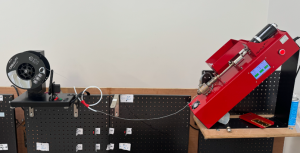
Plastics are collected, washed and shredded. This produces chips, which are fed into an extruder that softens and melts the plastic, then compresses it into a hole at the end. This creates a filament that cools as it exits the extruder.


What plastics can be recycled?

Plastic type Which items are typically made from these? The ease of recycling Suitability for 3D printing
Polyethylene (PE) Milk cartons Easy Very difficult
Polyethylene Terephthalate (PET) Single use drinks bottles Very difficult Good
Polylactic acid (PLA) Food packaging and many farm plastics Difficult Good


Harper Adams University will demonstrate the plastic recycling process at The Royal Norfolk Show Innovation Hub, curated by Agri-TechE and sponsored by BBRO.

Autonomous drone spraying poised to become a reality

Meet the Network
Agri-TechE

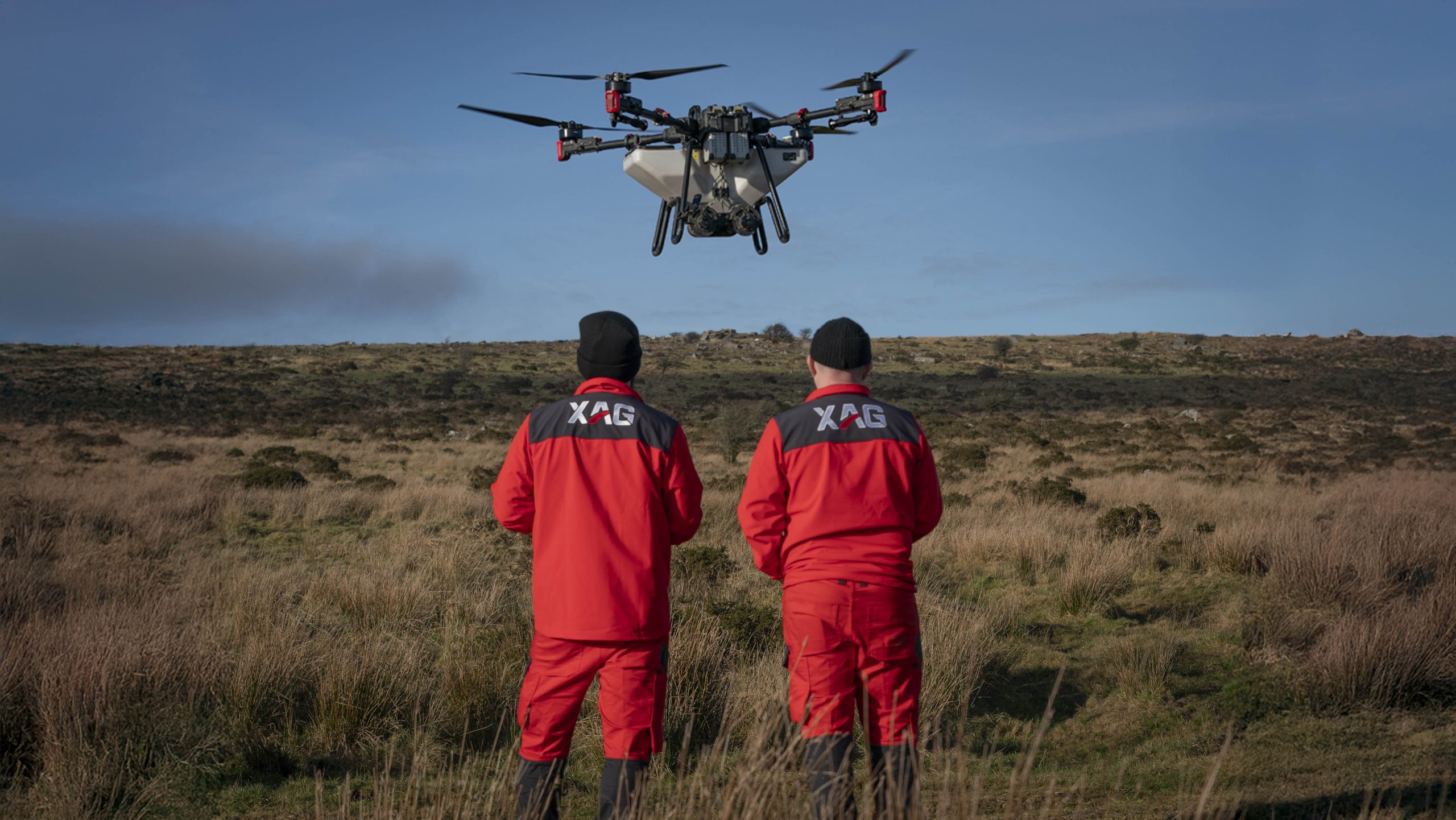
Pioneering work by SEAD Artists could be about to unblock the bottlenecks impeding the use of drones in agriculture, allowing beyond visual line of sight flight, the aerial application of key crop protection products and seed sowing for reforestation projects.

SEAD Artists is a consortium of like-minded drone experts supporting agricultural innovation using new technology and drones. The current participants are Autospray Systems, Skypointe, the University of Liverpool and DronePrep, and they are open to new members. SEAD Artists has collaborated on several projects utilising drones in specific settings, including Paludiculture and forestry.
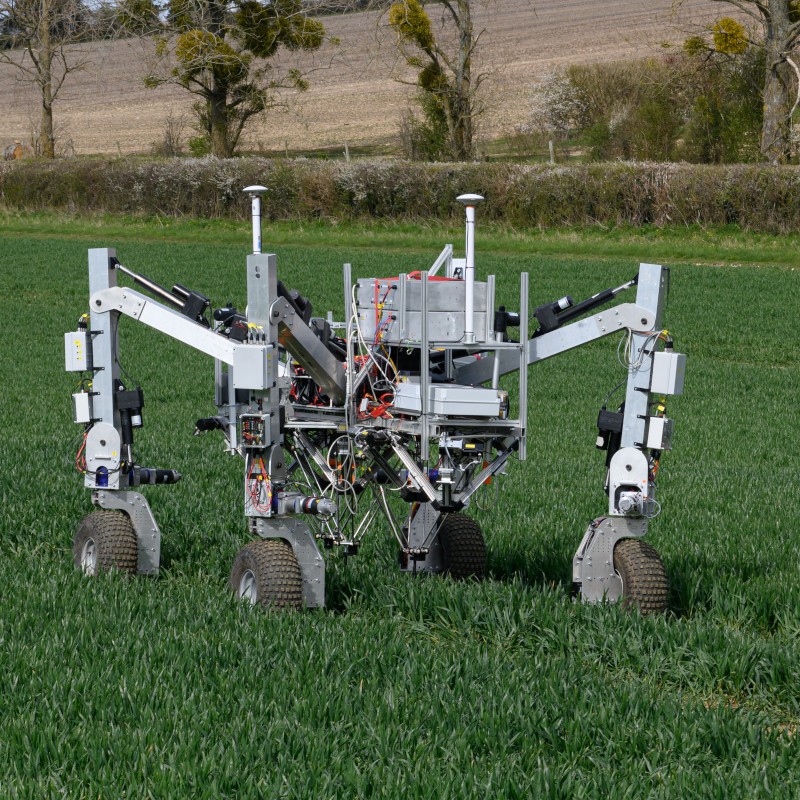
Their work is now set to overcome the regulatory hurdles that have hampered drone use and adoption in the industry.

SEAD Artists do not believe the regulation is necessarily the issue; it is the focus on building the evidence to demonstrate safe use. “It is the willpower to put your mind to it to make those applications, and that’s what we are spearheading,” says Andy Sproson, COO of Autospray Systems.

“We’re the only people who have started to find solutions that satisfy the regulator,”.

“It’s the same with agricultural drone spraying. Yes, you can’t apply a product unless the application method is on the label, but there are processes in place.”

Aleks Kowalski, CEO of Skypointe, believes there are three main areas beyond visual line of sight (BVLOS) drone operations need to address. Put simply, these revolve around where the operator is, where everybody else is, and what the risk to people on the ground is.

“The only way people have been able to fly drones so far has been using visual line of sight (VLOS). Usually, this means you are restricted to flying the drone no more than a range of 500 metres from where you take off.

“This is very limiting if you want to fly over thousands of hectares.”

Now, BVLOS has become a reality. It involves categorising low altitude, below 15 metres in their case, as an atypical air environment with an improbable likelihood of a collision with a crewed aircraft. The CAA announced a policy concept for this late last year, says Aleks.

“We’ve taken this policy concept and made a safety argument to the regulator that the type of spraying Andy does fits within that airspace at low altitude,” he adds.

This means that, presently, Autospray Systems is the only operator that can fly BVLOS without any trials or restrictions on the type of activity. Aleks believes they have unlocked BVLOS and are the first to do so in the UK.

To go with their new BVLOS capability, Andy has been working towards regulatory approval for drone spraying of key plant protection products.

“We’ve had to create drift data to quantify how far it goes if you spray it with a drone. Our drift is down to 15 metres, which is equivalent to a horizontal boom sprayer.”

They already have trial permits for some products. Slug pellets were announced last year, which could be a game-changer for farmers struggling through a wet autumn.

“We also have a biological insecticide called Dipel, which we’ve used to treat box caterpillars and oak processionary moths in oak trees. Other products are coming down the line. We have 13-15 at the end of the application process with the HSE (Health and Safety Executive).”

Andy adds that this includes an application for glyphosate products, which would put drone spraying on many farmers’ radar. “We are hopeful that we will have our glyphosate active substance-based product approval very shortly.

“This season, our operators will be in the field applying these products on a trial basis, but with the benefit that we will be controlling the pest or weed while they gather data to support further commercial approvals.”


What could BVLOS and a glyphosate approval mean for farmers this season?

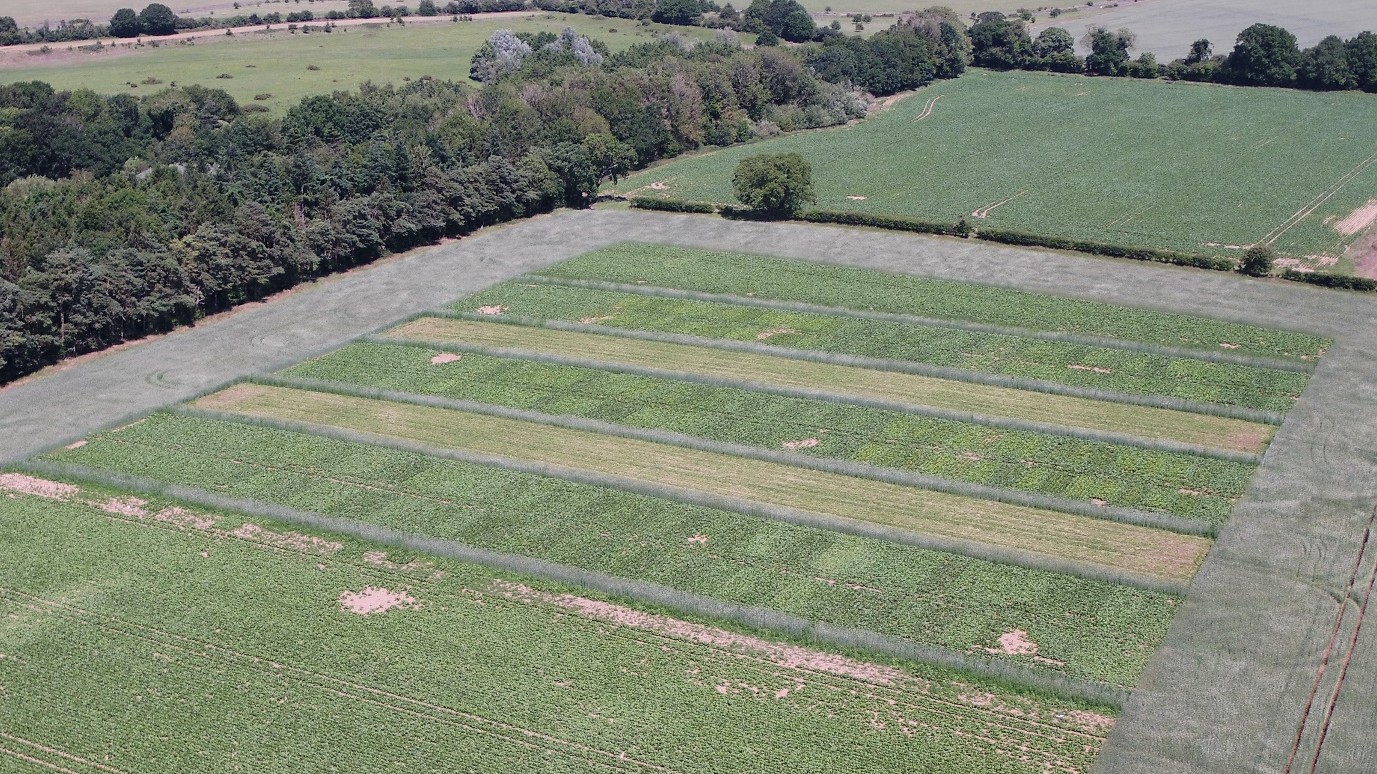
Ask any farmer tackling black grass on their farm, and they will say June is the month when the success or failure of their weed control strategy becomes apparent. For the worst fields, they must also decide whether to take it to harvest or spray it off and stop the seed return for future crops.

Many farmers will also spot spray patches of black grass in a field. With BVLOS and aerial application approval, this is where drones now offer a speedy and cost-effective solution.

“I was speaking to a farmer who spent nine hours driving 28 kilometres through their crops’ tramlines in their sprayer to treat under a hectare of blackgrass dotted through the wheat crop.

“We’d have done that in 20 minutes,” says Andy.


SEAD Artists are speaking at an Agri-TechE online event “Unlocking the potential of drones” on July 14th.
Drones to go beyond visual line of sight

Meet the Network
The views expressed in this Member News article are the author's own and do not necessarily represent those of Agri-TechE.

In a ground-breaking development for UK agriculture, AutoSpray Systems, working within the SEAD Artists consortium, has secured the UK’s first permanent Beyond Visual Line of Sight (BVLOS) approval for drone operations in an Atypical Air Environment (AAE). Awarded by the Civil Aviation Authority (CAA), this landmark permission removes a long-standing operational limit, enabling drones to fly beyond the typical 500-meter visual range.
For agriculture, the implications are huge.

Previously, drone-based pesticide spraying was held back not by legislation, but by the absence of an approved pathway. SEAD Artists challenged that gap, demonstrating to the CAA that low-altitude agricultural drone operations (under 15m) present minimal risk to airspace users.

The result: a new operational model that unlocks myriad use cases including aerial pesticide and granular material application, hyperspectral crop analysis, peatland restoration, paludiculture seeding, reforestation, and even harvesting in wetland crops like Typha.

This BVLOS approval means drones no longer need to remain within line of sight which allows operators to reduce labour and reach inaccessible or fragile terrain without compacting soil or damaging crops. Operators can now approve locations using a streamlined CEA template and fly as often as needed, with no activity-based restrictions.

A new framework for drone-enabled agriculture

With the SEAD Artists consortium combining drone operations, land management, and safety expertise, the sector now has a clear route to integrate advanced drone capabilities across the full production cycle, from sensing and mapping to input application and yield optimisation.
Drones also open the door to future commercial opportunities for farmers, such as:

  • Farmer-owned infrastructure for safe drone operations

  • Monetising safety and environmental data for shared drone usage

  • Solutions-integrated drone systems for carbon monitoring and biodiversity management

Funding is available through Innovate UK’s Future Flight Challenge to support the commercialisation of drone operations — including BVLOS in agriculture — with grants of up to £500k (Strategic Growth) or £200k (Regional Demonstrators). Applications close 11 June. Find out more.

Watch the Conversation

Explore the details of the BVLOS breakthrough and what it means for agri-tech in our conversation with SEAD Artists.

Join us online on 14 July

These opportunities will be explored at on online event on 14 July 1-2pm – Elevating Agriculture: Unlocking the Potential of Drones Free to Members.

You may also be interested in the Future Flight Innovate UK funding call, closing on 11 June 2025.

How Nano Electronic Services got started in agri-tech

Meet the Network
Agri-TechE

As Ag101 approaches, we explore why technology companies that are “new-to-ag” should consider the agricultural sector as a promising market for expansion.

Agriculture is a huge, dynamic industry with diverse opportunities across the supply chain – opportunities that tech companies may not have considered before. Ag101 is the perfect introduction to this world, offering a chance to explore how your technology can meet real, practical needs for global agriculture.

Featuring key decision-makers, including Defra’s Head of Agri-Tech, Russell Batten, and networking with real-life end users (that we prefer to call ‘farmers’!), Ag101 gives you direct access to the people shaping agriculture’s future. Whether you’re looking to understand the decision-making process or explore the potential for your technology, this event is an opportunity to find the right partners and grow your impact in a sector that’s hungry for innovation.

Ag101 takes place at Anglia Ruskin University, Cambridge on May 22ndmore information or to book tickets.

We spoke to Nano Electronic Services about how Ag101 has helped them tap into agriculture’s exciting potential.

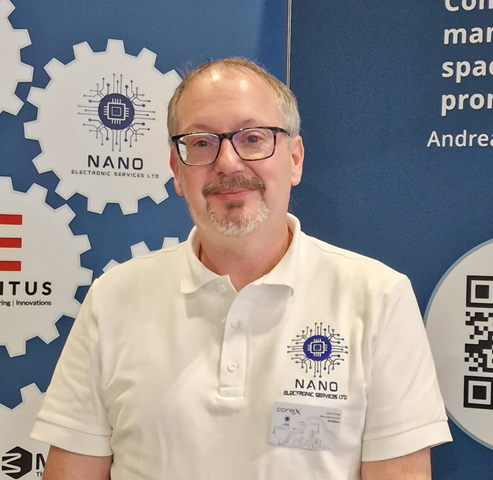
Steve Drew
Steve Drew
Director of Nano Electronic Systems

With over 30 years of experience in the electronics industry offering electronic manufacturing, design capability or testing solutions, Nano Electronic Systems became an Agri-TechE member to help it expand into the agri-tech market.

“We got involved in IOT sensors and began developing our own range a couple of years ago,” says Steve Drew, Director of Nano Electronic Systems. “Agri-tech is one of our target markets.”

“Ag101 helps see what is going on in the industry, and it gives me ideas about what solutions we can apply to fix some of the problems highlighted.”

He says most companies in the industry access sensors in two ways. They either use an off-the-shelf system from the Chinese manufacturer, which rarely has all the functionality they desire, or they build something bespoke, giving them their exact needs but at a cost. Nano Electronic Solutions alternative is called Nanoblox, and it works on the proof-of-concept stage of technology development to provide the customisation required without significant upfront costs.

“Agri-tech is a good opportunity for this because the technology is still developing and every farm is different. It is difficult for a company to design a product that fits everybody.

“We joined Agri-TechE three years ago as an introduction to the industry and have attended its REAP conference and Ag101 events. Through contacts made at these, we now have two customers who are agri-tech developers. We are building server platforms and providing additional sensors for their technology.”

To help with this development work, Steve calls upon the Agri-TechE team for introductions.

“The team is excellent. If we are looking for farmers, they can introduce us to those who are more open to developing solutions.

“As an early-stage adopter, I’m very happy with what Agri-TechE has done. It gives me a good grounding in the industry and helps build connections to grow our business,” concludes Steve.

Cutting through complexity in fresh produce supply chains

Meet the Network
Agri-TechE

With over 30 years of experience in the fresh produce industry, Veryan Bliss, founder of Food Intelligence, has built a consultancy that helps businesses navigate the intricate world of food production, distribution, and retail.

Food Intelligence provides expertise that bridges the gap between agri-tech businesses and real-world supply chain challenges, ensuring new technologies don’t just look good on paper but genuinely deliver value.

For many start-ups and businesses entering the fresh produce sector, the biggest hurdle isn’t necessarily their technology – it is understanding how supply chains work.

Veryan Bliss
Veryan Bliss
Founder/Director Food Intelligence Ltd

“A good product has to solve a real-world problem,” says Veryan.

“It’s not just about having a great idea; it’s about knowing where it fits in the food system, how it will reach the market, and whether it truly benefits growers, packers, and retailers alike.”

Tackling Inefficiencies in the Food System

One of the most pressing issues facing food supply chains today is labour shortages.

Grading and sorting fresh produce remains labour-intensive, yet automation technologies can be expensive and may only solve part of the problem. Investing in technology requires perfect timing as adopting too early risks obsolescence, while waiting too long can mean missing out on valuable efficiencies.

Similarly, partnerships between tech developers and growers aren’t always as mutually beneficial as they could be.

“New technology businesses often rely on growers and farmers to test and refine their innovations, but there’s not always a return on that investment,” Veryan explains.

“Farmers take the risk in trialling solutions, yet they could still end up paying close to market price once the tech goes mainstream.”

This dynamic needs to shift, ensuring that those contributing to the development process also truly reap the rewards.

Rethinking Food Waste and Supply Chain Challenges

Food waste is a hot topic in the industry, but there are misconceptions about where the biggest inefficiencies lie.

“Consumers often think the food industry is unaware of its own wastefulness, but that’s far from true,” says Veryan.

The real challenge is the rigid specifications that dictate what products make it to shelves.

Growers prioritise Class 1 produce, the highest-quality fruits and vegetables, because that’s where the money is. But this approach can result in significant food loss, simply because there isn’t enough market flexibility for lower-grade produce.

Storage solutions could be a game-changer, particularly in categories like salads and soft fruits.

“If we could store tomatoes, peppers, and cucumbers for three months under the right conditions, it would revolutionise the market,” says Veryan.

Currently, fluctuations in weather and market conditions can lead to sudden overproduction, where growers are forced to sell at reduced market prices, or risk product loss.

Smarter storage and supply chain optimisation could reduce this volatility, improving margins for producers.

What’s next for Food Intelligence?

Veryan is focused on continuing her work with food authenticity and consultancy, helping businesses streamline operations and make informed, strategic investments.

She is also developing her role as a thought leader, working with companies from early-stage angel investment all the way through to IPO.

Cutting through the noise and focusing on real business value is Veryan’s priority. At Agri-TechE ’s Ag101 event, she aims to start conversations that lead to genuine collaboration and real results.

“I love speaking at events like Ag101 because they connect people with ideas and opportunities,” she says.

“The fresh produce industry is one of the most dynamic in the world—short-life products, global supply chains, micro-margins—it’s complex, but that’s what makes it so exciting.”

By supporting businesses with deep industry knowledge and practical guidance, Food Intelligence is helping shape a smarter, more efficient food system—one where sustainability and profitability go hand in hand.


Ag101 is a one-day event on 22 May 2025, offering a practical introduction to the agri-tech industry – and those it exists as part of.
It’s ideal for anyone looking to enter the sector, expand their business, or better understand the agricultural landscape. To book your spot and learn more, head to Ag101 – An introduction to the industry.

How agri-tech innovations save parsnip producer over £500k per year

Meet the Network
Agri-TechE

This month’s Member Spotlight is a textbook example of the value agri-tech innovation can have for farmers and food processors.

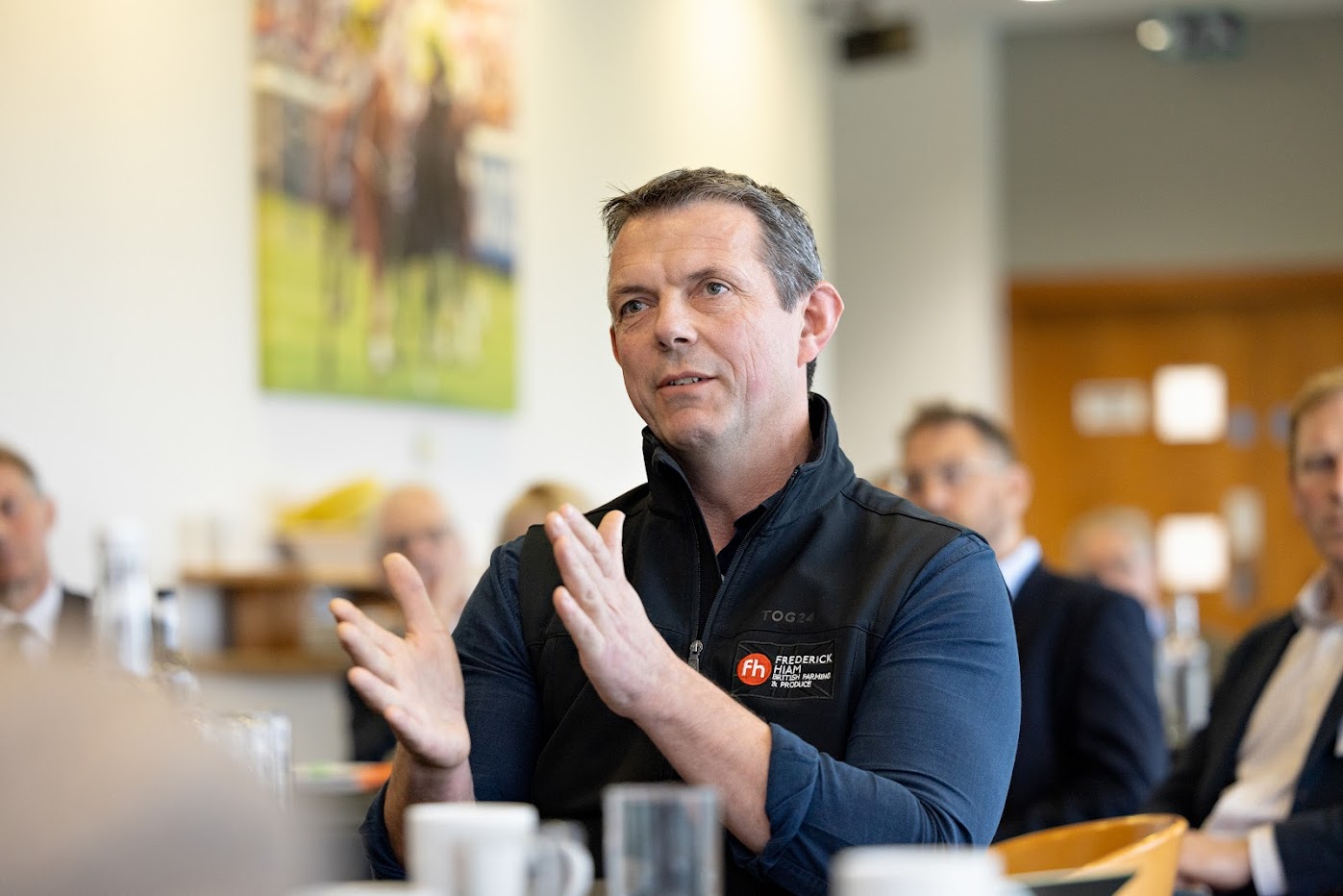
Frederick Hiam’s Managing Director, Jamie Lockhart, shares insights from his Nuffield Scholarship and the impact of new agri-tech on his operation.

You could say innovation is in Frederick Hiam’s DNA. Born in 1872, Sir Frederick Hiam began directly marketing his Cambridgeshire farm’s produce at Covent Garden and Spitalfields markets. The model he developed proved to be hugely rewarding, as by his death in 1938, the farm had grown from 300 to 6,000 acres.

The business has retained the ethos of adding value through the supply chain by continuing to process its own produce as well as third party produce it sources from nearby farms, on contract. While this allows higher returns and gives Managing Director Jamie Lockhart more control of the process, it is not without difficulties.

Covid accelerated ongoing challenges to the operation’s labour supply and costs. Jamie stepped into a situation he felt was unsustainable when he took over the management of the business.

“It came to a head at the end of 2021; labour was a real challenge. We were bussing workers from London, which cost £1,000 a day just for the transport.

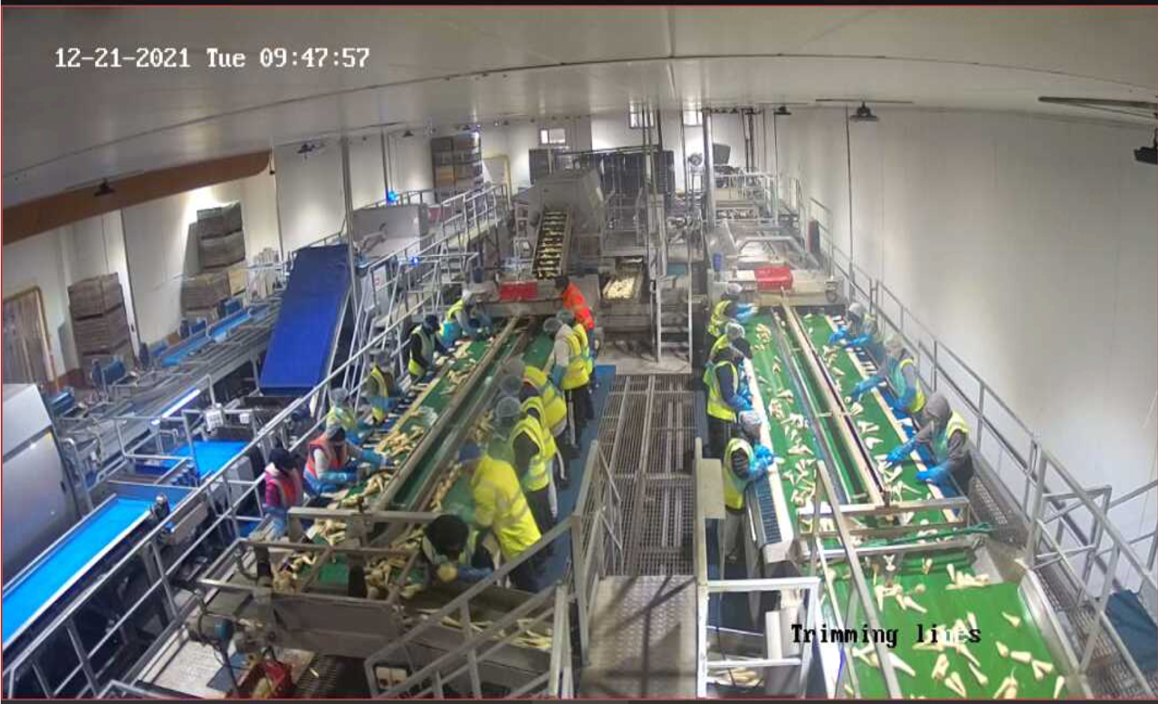
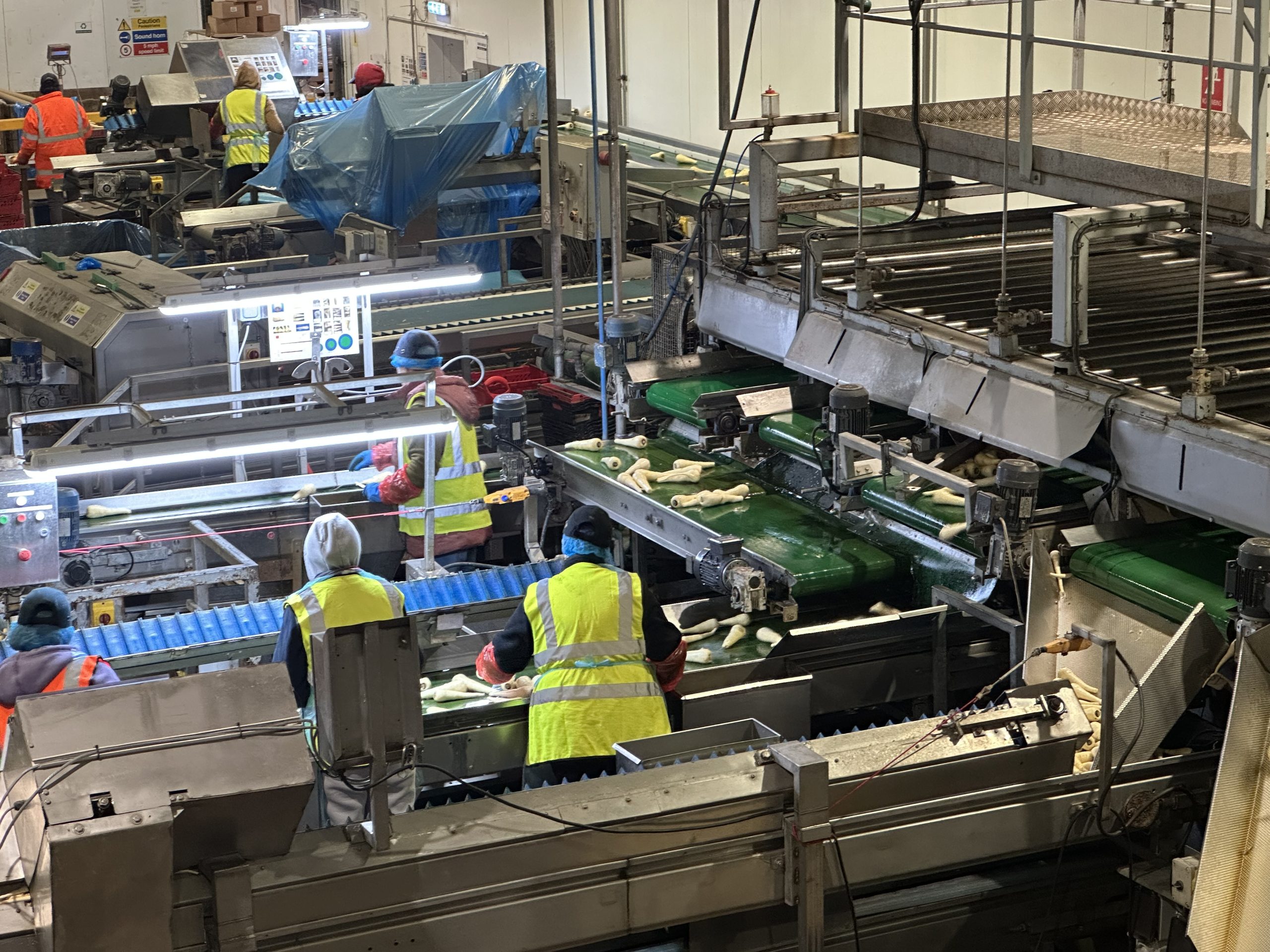
Frederick Haim ran a positive selection system for grading their parsnips, which meant they only picked off roots with the quality their customers were looking for, and anything left went for stock feed or processing. Selected parsnips ran on a belt through a processing system to cut the green material off the crown and trim the tip of the root to length.

“It was very labour intensive, but also skilled to the point that the workers need to know what is good and bad. If they put bad parsnips on the belt, we risked sending that to our customers. As worryingly, if they missed the good, it was straight off down the waste chute.”

Being mid-way through a Nuffield Scholarship sponsored by the Royal Norfolk Agricultural Association titled End-to-End Automation of Field-Scale Vegetable Production, Jamie naturally sought an agri-tech solution. However, the reality was no off-the-shelf alternative to their labour-intensive system existed. The options were to “sit on their hands and wait for somebody else to do it” or develop the solution themselves.

Pre install
Frederick Hiam pre install of new Wyma equipment
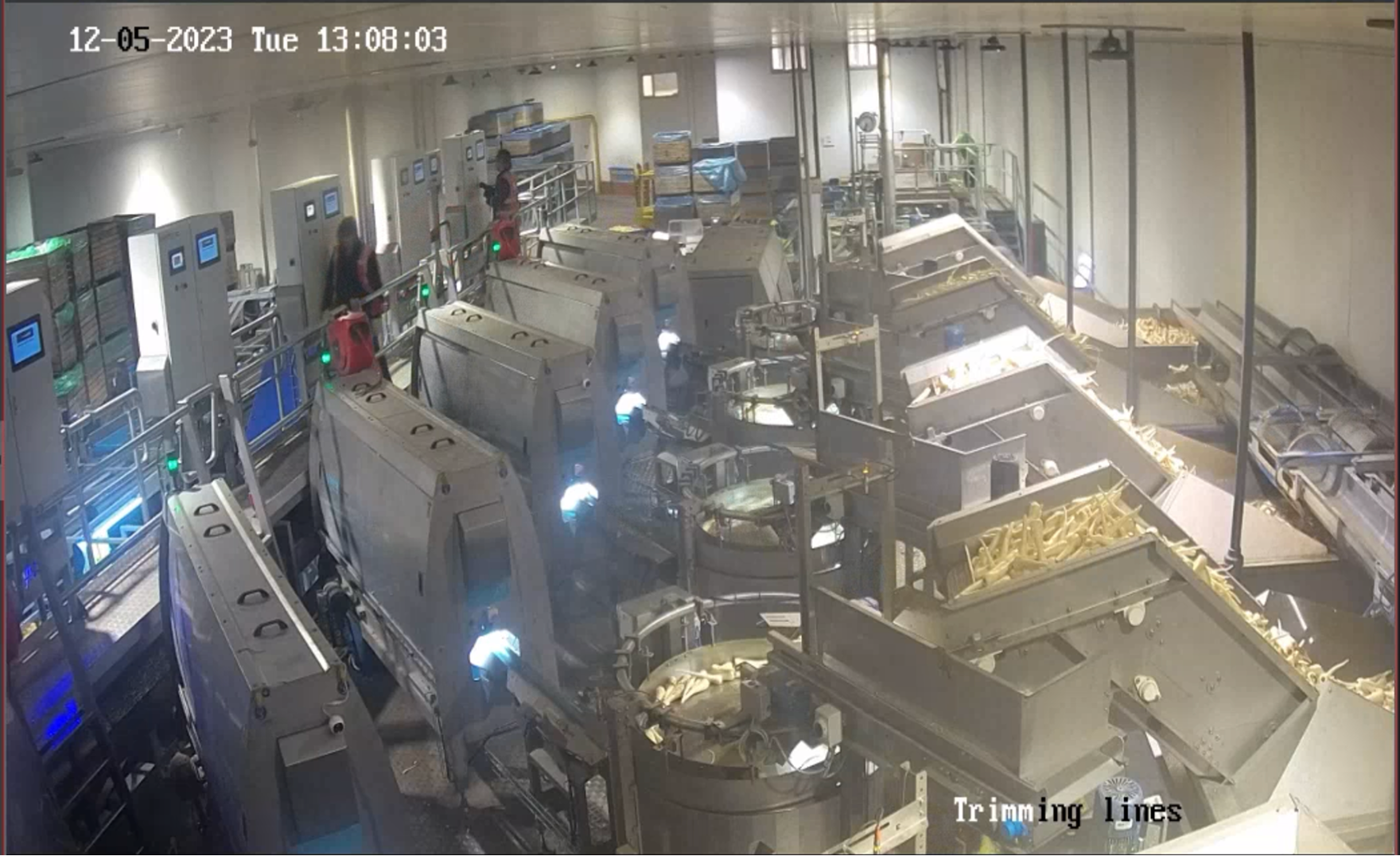
Install complete
Frederick Hiam The process after install completed.
Images show Frederick Haim pre and post installation of new equipment

New Zealand post-harvest equipment manufacturer Wyma, which has a UK base in Norfolk, was invited to evaluate Frederick Hiam’s existing processing line to determine whether there were opportunities to improve its efficiency.

“They played us a quick video of a new project they were working on in New Zealand, which showed the very early stages of a new rotor cut system. It was so uplifting to see someone working on a solution.

“We signed a collaboration agreement to develop the system together in early 2022. It was a real joint effort; they were taking the risk of developing the product, and we were risking the time and energy needed to invest in the project.”

At its heart is a camera-monitored rotary cutter that precisely trims the green material on the crown and the root tips with 95% accuracy as a parsnip travels through a conveyor. It meant pickers no longer needed to place parsnips on a trimming line.

Development was not without its challenges. The first rotor cut system needed parsnips to be fed into the conveyor crown first, but it proved difficult to do this and continue to feed enough parsnips into each rotor cut unit. One of Wyma’s software engineers provided a moment of inspiration. Two days later, the issue was solved by allowing the rotor cut to work with parsnips fed in both directions.

“They developed the system on-site, working towards our target of two parsnips per second over a two-minute period. Wyma was able to get to that number consistently, meaning we moved to the next stage.”

It was a risk, but Jamie felt it was a calculated one. The first two rotor-cut trimmers were installed in the factory in September 2022 and were initially fed by hand.

“With machine learning, there’s no doubt that the earlier you can get something working, the quicker the development becomes. This step saved us six months compared to waiting for everything to be fully commercially ready.”

18 months after the project began, Frederick Hiam had six trimmers and bowl feeders installed in the factory, in the same spot where over a dozen workers used to feed the old manual line. There was a further 12 months of fine tuning.

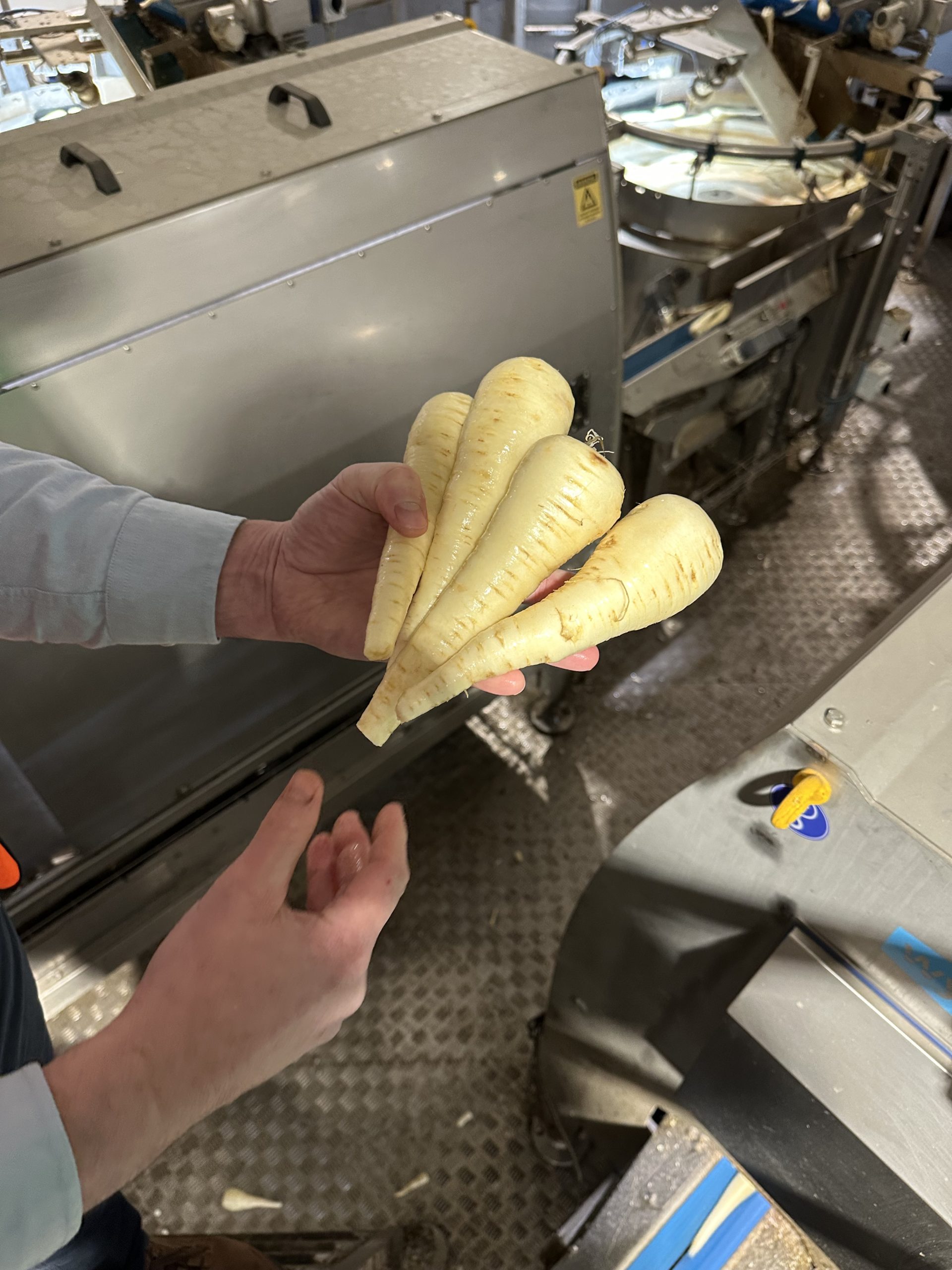
IMG_6509
Frederick Hiam parsnips

 First mover advantage

According to Jamie, the rewards of co-developing a solution have far outweighed the risks.

“Wyma were considering stopping the project because they couldn’t find a partner to take it to the next stage. I’d love to know how many innovative projects remain on the design board because there isn’t an open mind to take a risk.”

Frederick Hiam’s advantages of co-development include the ability to influence the design to meet exact specifications, a period of exclusivity  give them an advantage over other processors, and the fact that collaborating with the supplier to develop the solution results in a cheaper system than purchasing a finished product.

Jamie predicts that the capital outlay will deliver a return on investment in under four years because of the reduced labour costs. It is too early to say whether their rotor cut system will become the new industry standard, but for Frederick Hiam, that is immaterial. The system they co-developed with Wyma works for them and delivers a handsome return on the work and risk they undertook in 2021.


Jamie Lockhart
Jamie Lockhart
Managing Director, Frederick Hiam

Jamie’s top three tips for adopting agri-tech

1. Be clear on the problem: If you approach a technology company to help solve an issue, a clear briefing on precisely what you are looking for is essential.

2. Infrastructure is critical: Significant investments in intangible assets at an early stage can seem difficult to justify initially, but they pay dividends later. For example, high-speed internet and a Wi-Fi mesh network have allowed large amounts of data to move seamlessly between Frederick Hiam’s systems

3. Don’t accept that what you already have can’t be upgraded: With the help of the right partner, most older farm technology can be incorporated into smart systems. At Frederick Hiam, the discovery of a serial port on an existing weighbridge allowed it to be digitised and integrated into its ERP system at a fraction of the cost of a new weighbridge.

Pulses could deliver half of UK agriculture’s carbon reduction target

Meet the Network
Agri-TechE

We met Roger Vickers, head of PGRO, to discuss the vital role the PGRO plays in supporting domestic pulse production.

The launch of the Government’s Land Use Framework and Consultation last week highlighted how much we expect from our green and pleasant land. Food production, habitat creation, climate goals, and the UK’s ever-growing population compete for this finite resource.

The answer to intractable challenges is often complex and multi-faceted, requiring the collaboration and thought leadership that Agri-TechE hopes to help enable. There are some scenarios, however, when a simple solution exists that ticks almost all the boxes.

Growing more pulses would deliver the significant environmental benefits of having a flowering, no-nitrogen, biodiversity-stimulating cash crop whilst increasing domestic animal protein production and reducing UK agriculture’s carbon footprint.
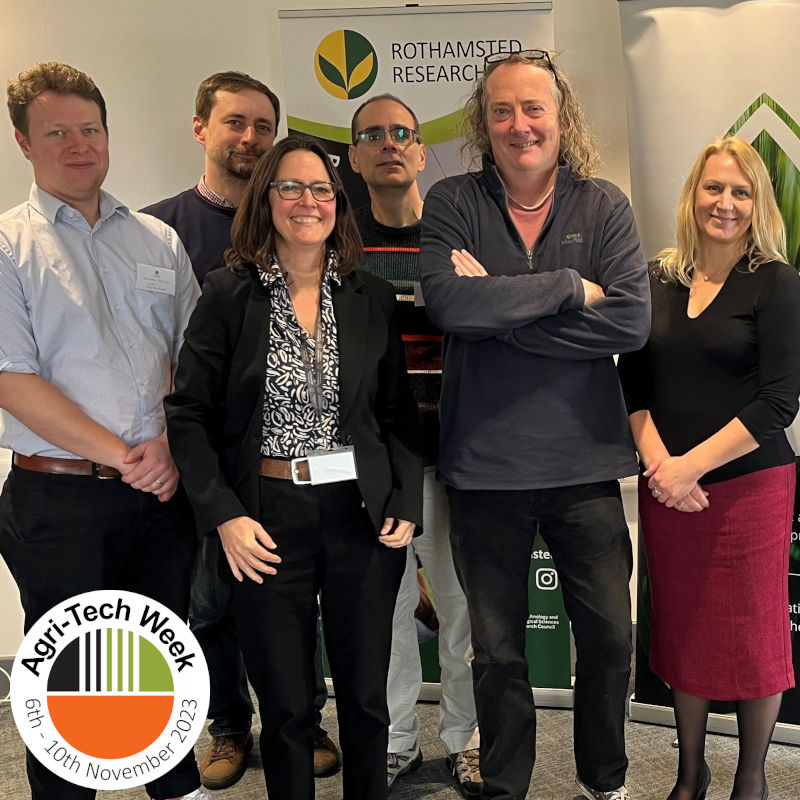
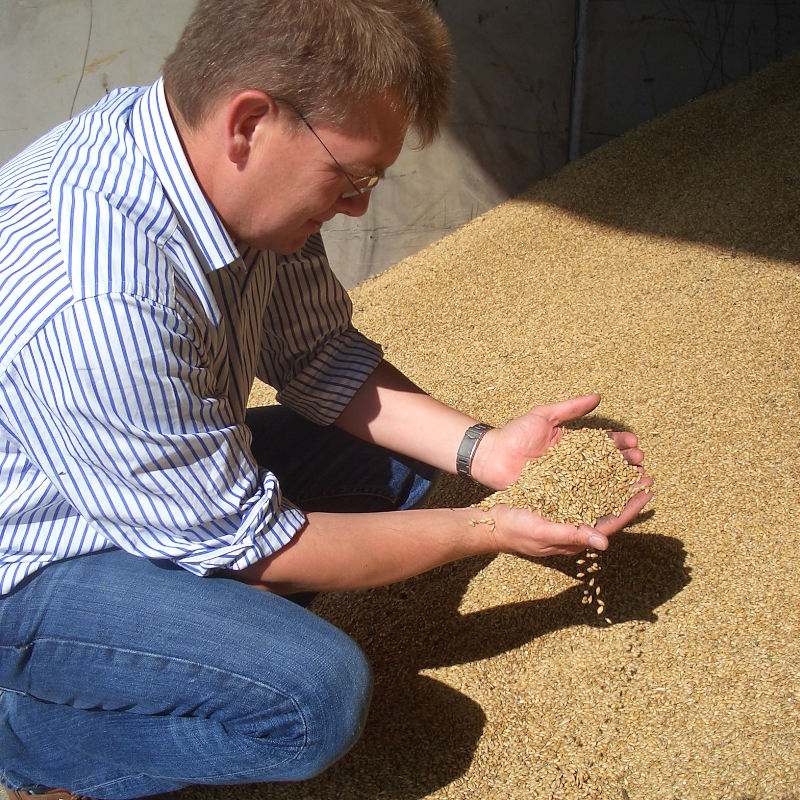
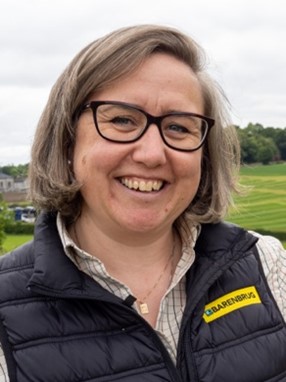
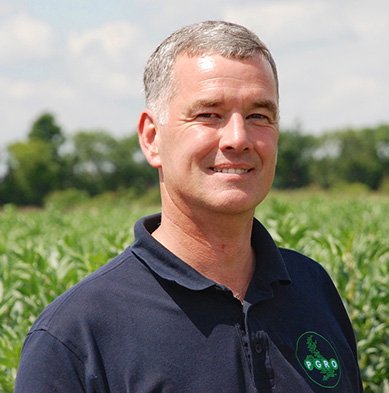
So says Roger Vickers, head of PGRO.

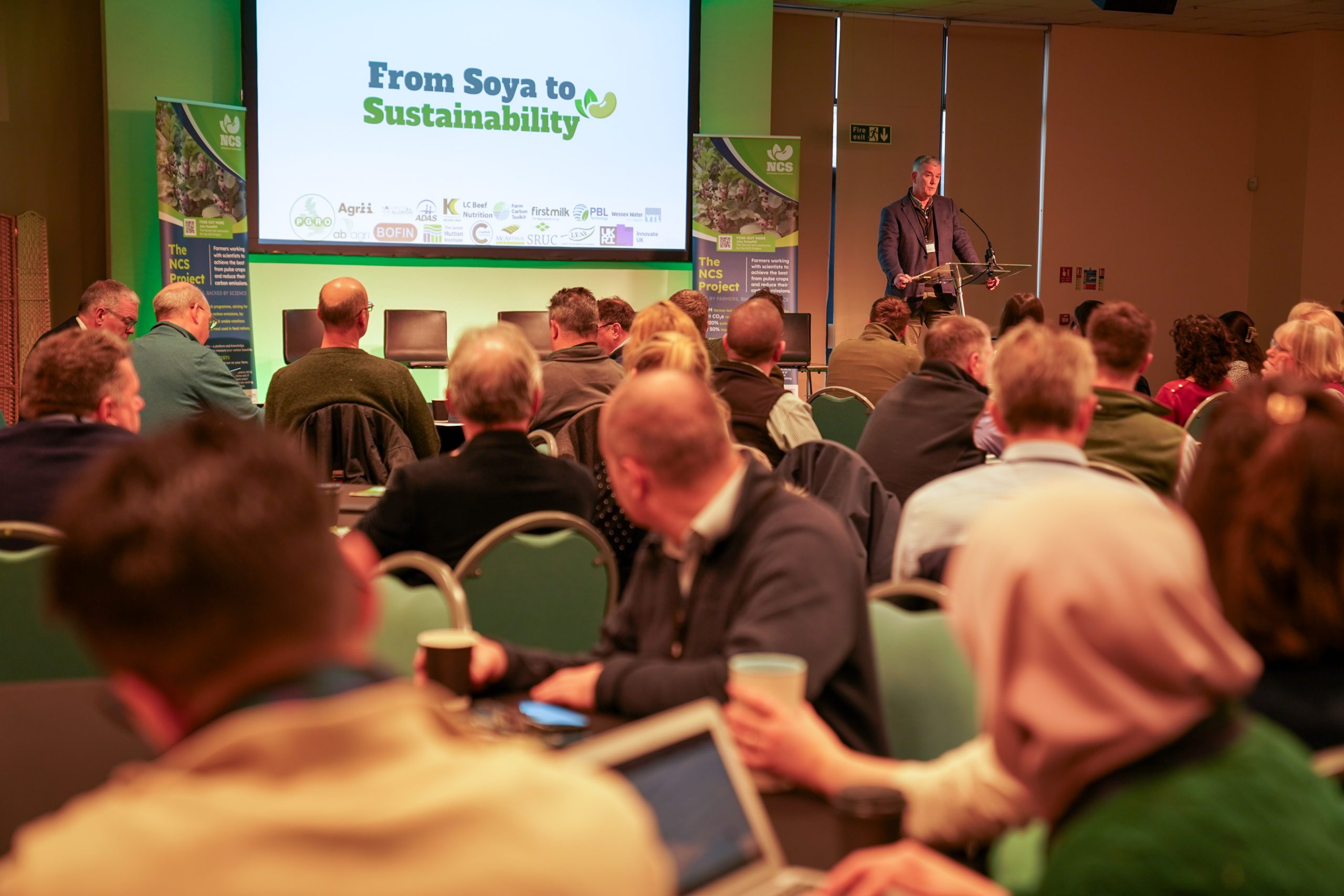
From Soya to Sustinaability conference
Peas
Peas

We spoke with Roger shortly after the ‘From Soya to Sustainability’ conference, which revealed the first learnings from the ‘Nitrogen Efficient Plants for Climate Smart Arable Cropping Systems’ (NCS) project.

NCS is a £5.9m DEFRA-funded project involving a consortium of 17 partners from research, commercial businesses and farmer networks. When it launched, it had the bold ambition to reduce the UK farming industry’s carbon emissions by 1.5Mt CO₂e per year, 54% of the maximum potential carbon reduction for UK agriculture as suggested by a 2021 government report.

In fact, two years into the project, research by the Farm Carbon Toolkit has calculated that growing the maximum potential area of pulses, which is 20% of the UK’s arable area, could reduce the industry’s total carbon emissions even more than initially thought, claims Roger.

The carbon savings from growing pulses arise chiefly from two key areas. If pulses were grown across 20% of the UK arable area, Farm Carbon Toolkit estimates that the industry would use around 100,000 tonnes less nitrogen fertiliser.

However, if we quadrupled the area of pulses from around 5% to 20%, what would that do to the domestic market for peas and beans? Roger says that is where the second significant carbon reduction can be found.

Roger Vickers
Roger Vickers
CEO Processors and Growers Research Organisation (PGRO)

“The immediate and obvious answer is to displace soya bean. Peas and beans are a protein crop, and we import nearly three million tonnes of soya beans and soya bean meal each year. Most of that goes to feeding animals.”

If 50% of the imported protein used in livestock feed was replaced with UK peas and beans, the Farm Carbon Toolkit research indicates a carbon saving of 2.8m tonnes of CO2 emissions each year. Added to the reduction in nitrogen fertiliser, this would save a staggering 3.4m tonnes of CO2 emissions annually.

Building up the industry’s knowledge and skills in growing pulses is a key area that Roger acknowledges NCS needs to deliver to enable an expansion of pulse growing. Pulses presently account for only 6% of the arable area, meaning many farmers do not have immediate experience growing them.

“An agronomy work package is looking at field-scale farmer engagement. We aimed to get 200 farmers involved, but we have more than 350 farmers engaged.

“In addition, we are pushing for 40 Pulse Pioneers over the project’s lifecycle, and we currently have 20. These farmers are doing on-farm experimentation and measuring the carbon impact of the altered cropping patterns.”

As the Land Use Framework and Consultation highlights, so much on which we base our assumptions in the ag industry could be about to change. This will bring challenges and opportunities. There could be a generational shift in how we attribute value to the crops we grow in this country, which may realign our perception of domestic pea and bean production.

To find out more about the NCS project, visit https://ncsproject.co.uk. If you are a farmer and would like to get involved, go to https://farmpep.net/programme/pulsepep .


What is the PGRO?

The Processors and Growers Research Organisation (PRGO) is the UK’s centre of excellence for peas and beans. As a non-statutory levy-funded research organisation, it is supported by its grower members, the UK pulse trade and partners commissioning contract research.

With over 75% of its workforce in the research team, the organisation is heavily tilted towards maximising the returns for its levy payers. Some of its most well-known outputs are the annual descriptive list of varieties, agronomy guides and the Pulse Magazine.

Germinating seeds, lightning-fast

Meet the Network
Agri-TechE

Zayndu joined Agri-TechE at the start of 2021, having commercialised the world’s first application of cold plasma on seeds. Sophie Butler, Content Manager at Agri-TechE , caught up with Zayndu’s CEO, Ralph Weir, to check out their progress.

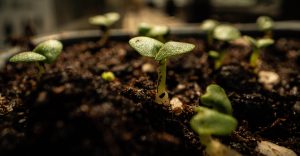
Ask any grower, and they will say establishing crops swiftly and evenly sets it up for success. This is especially true if a crop grows for only a few weeks before it is harvested, such as leafy salads grown in controlled environment conditions in a glasshouse or vertical farm.

This is where Ralph Weir, CEO of Zayndu, says cold plasma seed priming can transform crop production.

“Cold plasma seed priming is an amazing new technology that gives farmers a welcome boost in productivity, and if we’re honest, we are still learning its potential,” he explains. The process uses ionised gas containing reactive oxygen and nitrogen to modify the seed surface, enhancing its physiological and biochemical properties to promote germination, growth, and stress resilience.

The scientific concept was developed by Dr Felipe Iza’s research group at Loughborough University, where Zayndu is based, at the Advanced Technology Innovation Centre.

Zayndu first joined the Agri-TechE community in January 2021 when they were an early-stage start-up looking to build connections in the industry.

Ralph says Dr Belinda Clarke and the Agri-TechE team have introduced Zayndu to large-scale leafy salad growers and specialist marketing service providers in the membership community.

Ralph Weir Zayndu
zayndu sq 500px

From making it work “in the real world” to global expansion

Zayndu has been on a mission to get the technology into the hands of as many growers as possible.

“Looking back a couple of years, all our internal conversations were about making cold plasma actually work in the real world,” explains Ralph. “Team meetings were dominated by discussion about plasma stability: how do we make it work better when we have damp seeds, dusty seeds, or weird seeds?

“These topics don’t come up any more. The discussion has moved on. It is all about what we need to do for machine certification in a new region, how to make systems easier to use, shorten treatment times, and translate the signage into Spanish or Arabic.”

Asking farmers to embrace an entirely new technology and undertake a new process has led the Zayndu team to drill down into the return on investment. Its plant science team, led by Dr Alberto Campanaro, has been trialling cold plasma on an increasing range of plant species and varieties. This work has been done in-house and with research partners like Niab, another Agri-TechE member.

Zayndu has been running a popular free trial programme to help growers gain experience with cold plasma before committing to the technology.

Ralph also explains that they have established systems to assist customers worldwide. “We can support all users from our offices in the UK, giving them access to the best possible technical support.”

“This task is considerably eased by our remote monitoring system SeedCloud, which allows us to monitor systems, support and coach users, and even offer an audit trail of seeds processed, dosages delivered, etc.”

The Agri-TechE Back to the Future report highlighted that growers are seeking solutions that work effectively from the start and considering the return on investment as major barriers to adopting new agri-tech on farms. In light of this, Zayndu has directed its focus toward the appropriate priorities.

“We have a pricing structure specifically designed to ensure that every user enjoys a significant profit boost – from the first crop after installation onwards,” adds Ralph.

What will another three years as an Agri-TechE member look like?

Despite the opportunities, there remain challenges in the controlled environment (CEA) sector, which Zayndu has weathered along with many other firms. The end of ‘cheap money’ transformed the fortunes of some growers with massive infrastructure. 2024 ended with Bowery being the latest large-scale grower to cease operating.

Ralph believes that the adaptability of cold-plasma seed priming has enabled Zayndu to pivot its offer according to market and grower demands. The overall opportunity means that its ambitions are boundless at this stage, he says.

“The controlled environment market size was estimated at $51.9 billion in 2023, so the potential for Zayndu is tremendous.”

“A positive sign for Zayndu’s future is the global nature of demand for our systems.

Most of our installations are currently in the UK and the US, but an exciting new region for us is the Gulf, where there is so much emphasis on improving food security.”

“In three years, I expect many more growers will be using cold-plasma seed priming. It will be well on its way to becoming an accepted crop input technology across the CEA sector,” he concludes.


For more information, you can visit Zayndu’s member page or follow them on LinkedIn.

Technologies for Animal Welfare

Agri-TechE Article
Meet the Network
Agri-TechE

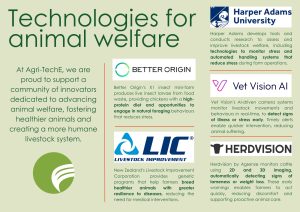
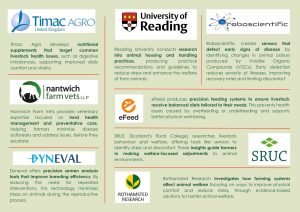
As the agricultural sector embraces technological innovation, one of the most promising areas of progress is in enhancing animal welfare.

New tools are helping farmers improve the health, comfort, and well-being of livestock, ensuring higher welfare standards. From AI-driven monitoring to improved genetics breeding programs and automated handling systems, these solutions help farmers prevent disease, reduce stress and support natural behaviours.

At Agri-TechE , our network of members is at the forefront of developing these solutions. By embracing these advancements, farmers can create healthier, more comfortable environments for their animals.

See below some examples of exciting scope of progress from our community.

For more insights on the benefits of technology for animal welfare, check out our latest blog and join upcoming event ‘Moo-ving the Oinksperation’ – focused on technologies for better animal welfare.

AI Animal Care

Meet the Network
The views expressed in this Member News article are the author's own and do not necessarily represent those of Agri-TechE.

Animal health and welfare monitoring is essential for farmers and vets constantly striving to keep livestock healthy and productive. Traditional welfare checks often occur during periodic vet visits, providing only isolated “moments in time” assessments that can be subjective.

VetVision AI aims to address these limitations by harnessing innovative technology to deliver continuous, in-depth animal behaviour monitoring.

“We wanted to use technology sensors to make a positive difference to animal health and welfare,” says co-founder Charlie Carslake. He is a qualified vet who gained a PhD at the University of Nottingham before founding the firm.

After four years of development, the company now offers a computer vision system that simplifies the monitoring process and provides actionable insights for improved animal welfare.

VetVision AI’s primary product consists of AI-powered cameras designed for easy installation. The cameras require just one week of data collection to deliver insights, tracking behaviours like feed access, lying times, and comfort levels.

Data is analysed and linked to a dashboard, offering key performance indicators. Reports created are designed to help vets and farmers improve areas such as equal access to food, comfort and space usage.

Charlie highlights the technology’s accessibility, saying, “we’re focused on developing low-cost, low-infrastructure ways of gaining valuable insights into animal welfare.” The team aims to ensure that farmers and vets can readily adopt VetVision AI’s solutions without significant financial or technical barriers.

The cameras are portable and require only an SD card for basic operation, while 4G connectivity enhances their functionality, allowing real-time data transfer and analysis. This robust monitoring experience means vets can integrate the system seamlessly into their existing services.

Continuous monitoring enables farmers to showcase their commitment to high welfare standards, adding value to their products while meeting consumer expectations. Simultaneously, vets benefit from the ability to provide more precise, informed advice based on real-time data, strengthening their role in animal health management.

“Our goal is to enable better veterinary services,” Charlie adds, noting that the system offers continuous monitoring beyond traditional moment-in-time checks. “We see potential across species and have developed an equine monitoring product that gives owners and vets insights they can use to improve their animals’ wellbeing.”

By focusing on building algorithms with human expertise, the team ensures that the power of AI driving the system is harnessed for effectiveness and reliability.

In summary, VetVision AI is transforming animal welfare monitoring through advanced technology. With a commitment to accessibility and scalability, VetVision AI is poised to make a significant impact on animal welfare and the agricultural industry as a whole.

Coffee: Same, Same but Different

Meet the Network
Member News
The views expressed in this Member News article are the author's own and do not necessarily represent those of Agri-TechE.

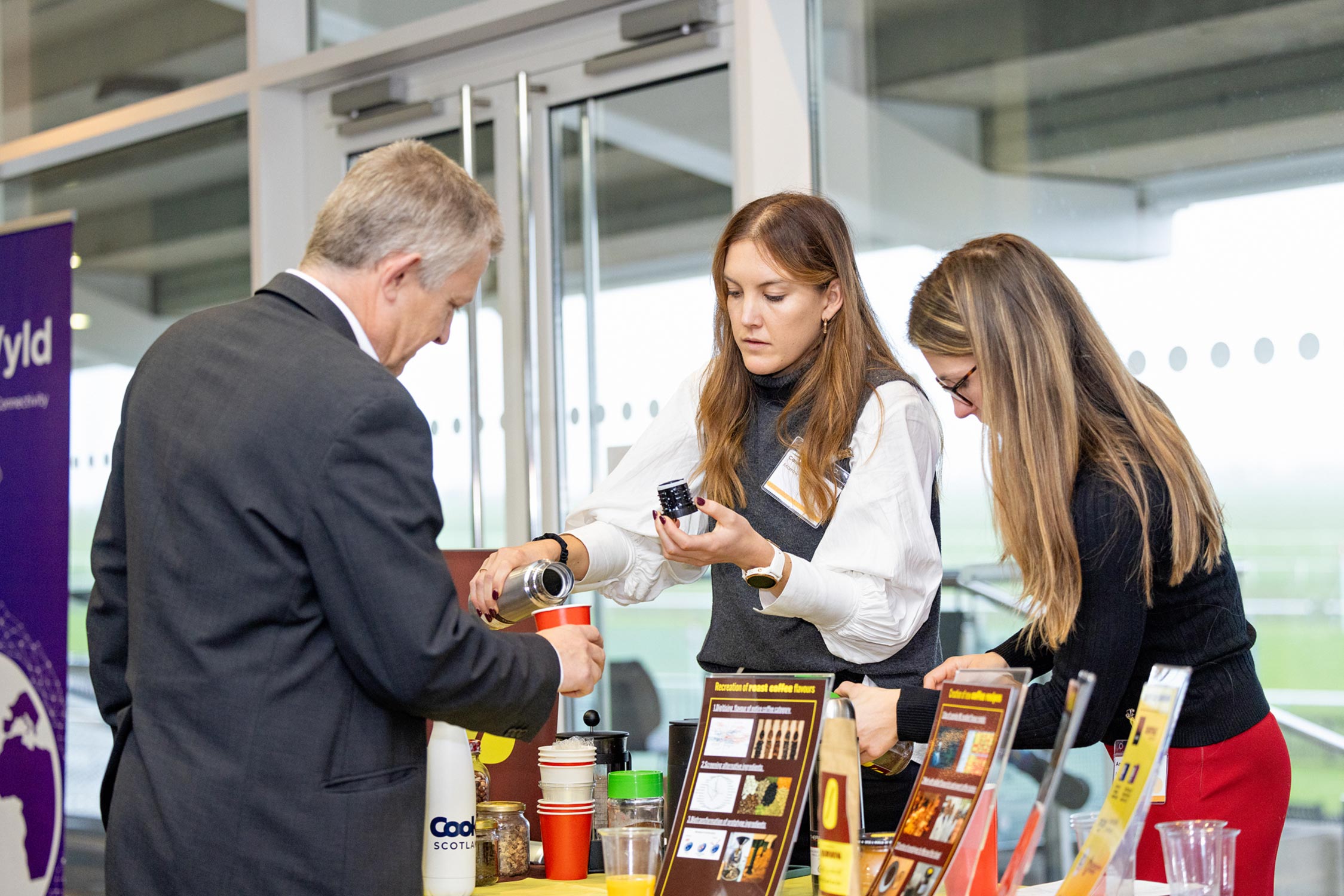
Founded in 2023, Morrow is revolutionising the coffee industry by creating a sustainable alternative to traditional coffee – without using coffee beans.

Their innovative approach upcycles ingredients like fruit pips, peels, and seeds, transforming them into a beverage that “smells, tastes, and feels like coffee,” according to co-founder Anna Sophie Deetjen. The company addresses the environmental impact of coffee production by replicating the flavour and aroma of a traditional brew using domestic sustainably-grown crops.

With 3 billion cups of coffee consumed daily and demand skyrocketing, supply for traditional coffee is under pressure due to growers in the equatorial ‘coffee belt’ struggling to maintain yields amongst soaring costs and increasing climate impacts..

Coffee bean farming is resource-intensive, requiring vast amounts of water, fertilisers, and pesticides, contributing to environmental degradation. Moreover, the vulnerability of coffee crops to climate change and pests threatens the livelihoods of millions of farmers. Morrow aims to alleviate this pressure by providing a locally sourced, resilient alternative that is both sustainable and scalable.

Working with Dr Ian Fisk as technical director, the team applies world-leading flavour chemistry, data-driven research and biotransformation to address the environmental challenges of traditional coffee production.

pexels-lood-goosen-508841-1235706
C0983_241

By leveraging advances in food science, Morrow has recreated the complex flavour profile of coffee using their upcycled, more locally sourced ingredients. This innovation helps reduce the environmental footprint of coffee production and supports regenerative agriculture practices.

Now in the final stages of product development, the company plans to launch this year across coffee shops, restaurants and other direct-to-consumer channels. They will focus on building relationships with speciality coffee shops, eco-conscious restaurants, and food producers.

Morrow is also expanding offerings to include decaf and instant blends and exploring applications in desserts such as ice cream. By creating versatile products, the team aims to lead the emerging market for bean-free coffee alternatives.

Beyond product development, the company is building a network of partners across the supply chain. By partnering with maltsters, growers, and distributors, Morrow is committed to diversifying the coffee market, offering a sustainable solution that complements or replaces traditional coffee.

The team values consumer education and transparency, aiming to provide transparent information about how their products are made and their environmental impact. By engaging with consumers through storytelling, Morrow hopes to raise awareness about the coffee industry’s challenges and encourage sustainable choices.

As the company prepares for its launch, it is investing in research and development to keep improving its products. The team is exploring additional upcycled ingredients and experimenting with different roasting techniques to enhance flavour. They aim to keep up with consumer trends by staying innovative and ensuring their products contribute to a more sustainable coffee industry.

The company hopes to create a more resilient and sustainable industry that benefits consumers and the environment by reimagining how coffee can be produced.

Revolutionising Broccoli

Meet the Network
Member News
The views expressed in this Member News article are the author's own and do not necessarily represent those of Agri-TechE.

Broccoli presents a unique harvesting challenge. With a harvest window of as little as 24 hours due to weather and reliance on large teams of casual labourers for multiple harvests, growers face both high costs and significant waste. Inconsistent weather conditions can further complicate this, making it difficult to achieve steady yields.

Despite broccoli’s high value per hectare, labour costs and operational inefficiencies often result in low margin returns for farmers.

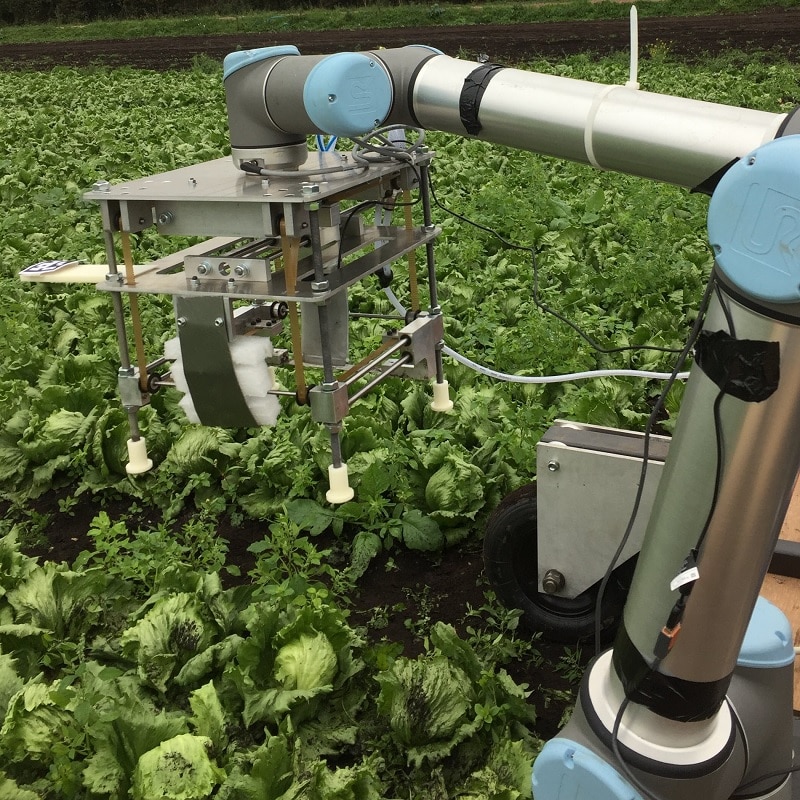
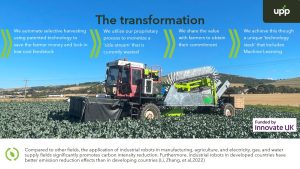
UPP (Upcycled Plant Power) offers a two-fold solution to these issues. First, they’ve developed an automated, patent-protected harvester powered by machine learning. This harvester selectively picks broccoli at its optimal time, reducing the need for large labour teams and minimising waste. With this innovation, farmers can optimise costs and reduce reliance on casual labourers while ensuring timely harvests.

The harvester will be offered on a rental model, making it accessible without heavy upfront costs. This addresses significant pain points for many growers and helps improve profit margins.

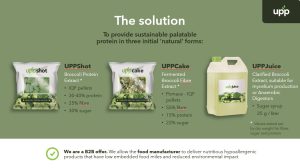
UPP’s second innovation transforms what would usually be considered agricultural waste (the broccoli cores) into high-protein, hypoallergenic ingredients. While most broccoli harvesting discards the stalk and core, UPP utilises these to create a protein that can be incorporated into food products like burgers, sausages, and smoothies.

Broccoli protein is a sustainable alternative to common plant proteins like soy and wheat, and is hypoallergenic. It also has a lower greenhouse gas footprint, making it an appealing choice for consumers seeking nutritious, sustainable foods.

One of UPP’s key target markets for their broccoli protein ingredient is the beef burger sector. By incorporating broccoli protein into burger patties, supermarkets and other retailers can offer healthier, more sustainable burgers to their customers with the added opportunity to reduce their Scope 3 Emissions.

With rising demand for plant-based alternatives, UPP’s broccoli protein offers a nutritious, low-cost solution for food manufacturers eager to meet consumer preferences for healthier, more sustainable food products.

In addition to the food market, this protein-from-waste process brings additional income to farmers from selling what would otherwise go to waste.

As UPP scales, they plan to process larger quantities of broccoli protein, increasing batch sizes from 50kg to 1000kg, allowing them to serve a growing market and boost income for farmers.

In summary, UPP tackles key challenges in broccoli farming by cutting labour costs, improving harvest efficiency, and reducing waste with their automated harvester. At the same time, they transform plant waste into a valuable, hypoallergenic protein source, providing farmers with an additional income stream.

By offering a rental model for the harvester and creating a sustainable plant protein, UPP is helping farmers increase profitability and contributing to a healthier, greener food system.