Patenting, Trademarks, Copyright, Trade Secrets...
In the next installment of our micro-learning series, we’ll explore potential legal solutions to help you keep your ideas safe and sound.

New ‘high tech sheep shed’ added to Rothamsted farm lab

Meet the Network
Agri-TechE

The new Robert Orr Small Ruminant Facility will bolster research into the sustainability of livestock.

A new high-tech ‘sheep shed’ has been unveiled which will allow Rothamsted researchers to monitor the impacts of livestock in real-world farming systems.
The new facility, which can also accommodate goats, is part of Rothamsted’s ‘farm lab’ at its North Wyke site near Okehampton, Devon, where it measures how sustainable different farming methods are.
It will help scientists study different ways of rearing and producing lamb – and examine whether a switch away from red meat is good for the environment in the UK.
The ‘farm lab’ or Farm Platform is in fact three self-contained farms where every relevant input such as fertiliser and manpower, and all key outputs including pollutants in water runoff from fields, greenhouse gases and, ultimately profits, are monitored.
The Robert Orr Small Ruminant Facility will become an integral part of the Farm Platform and will house 400 or more ewes and up to 60 goats, with group and single pen facilities for feeding and behavioural research trials, including 24 automatic feeding pens.
It will keep the flocks reared on the different farming systems separate over winter to fully examine and compare the environmental and efficiency benefits of each.
It will do this by allowing researchers to measure the nutrients taken in, animal growth, urine and faeces produced, and the greenhouse gases being emitted by the sheep, individually or in groups, during housing.
Professor Michael Lee, head of the North Wyke site, said agricultural research often focused on individual animals or field-scale trials, and it was not always easy to extrapolate that up to the level of the farm.
“All the research we do, the leading stakeholder is the farmer, to help them improve their productivity, sustainability, reduce emissions and improve efficiency generally.
“Instead of doing that at a field or animal scale, let’s do that at a farm scale.”
For four years, the three farming systems tested have been permanent pasture which uses fertiliser, a quasi-organic system which relies on natural nutrients such as manure, and a short-term lay system which sees farmers ploughing and sowing grass crops for feed.
“There’s been a lot of press about the detrimental impact of grazing livestock on the environment,” says Prof Lee, but there was no real evidence on the impact of removing ruminants such as sheep and cattle from the food chain.
“We want to run these experiments so we can have enough data to show the true impacts,” he said.
He added that the idea was to look at if it was possible to develop a system which utilises the natural benefits of grazing animals such as cattle and sheep for food security.
The facility was built through the help of CIEL (Centre for innovation and Excellence in Livestock) as a further development of the BBSRC North Wyke Farm Platform National Capability to allow complete separation of its three research flocks, but also as a research facility in its own right.
Lyndsay Chapman, chief executive of CIEL, said: “It’s exciting to see the Orr sheep facility come to fruition.
“Its versatility, combined with the expertise of the North Wyke team, make it ideal for supporting a broad range of projects across health, welfare, nutrition and behaviour.
“Working together with industry, we’re delivering valuable solutions for a sustainable livestock sector.”
The facility is capable of developing tailor made research trials to address industry needs. These include:

  • Effect of various forage types and protein supplements on the performance of ewes during pregnancy and early lactation.
  • The effect of supplemental minerals on the performance of ewes and lambs.
  • The effects of sire breed on lamb performance and carcass quality.
  • Effect of feed supplements on the health and wellbeing of ewes, and potential impact on ecto-parasites.
  • The fate of water during rumen metabolism in goats and sheep.

For SMEs in Devon, Cornwall and Isle of Scilly, there is potential opportunity to apply for innovation grants through the regionally funded ERDF program, Agritech Cornwall and Impact Lab.
There is also funding available through Innovate UK via its various funding competitions under the Industrial Challenge Fund.
The facility can also play host to farmer groups interested in sheep production systems and as a tool to demonstrate recent research findings to help improve on-farm management.

Innovation Insights includes soft robotic hands and AI-guided robot

Meet the Network
Agri-TechE

Cambridge Consultants - Mamut
Mamut, the AI-driven data-capturing robot

Most autonomous vehicles are designed to work best in predictable environments with a defined infrastructure – roads, lanes, crossing points – but this repetitive uniformity rarely exists in farming.
So innovation specialists Cambridge Consultants combined a number of techniques to develop Mamut, a new self-drive solution for agriculture and will be talking about it in Agri-Tech’s Innovation Insights at Fruit Focus.
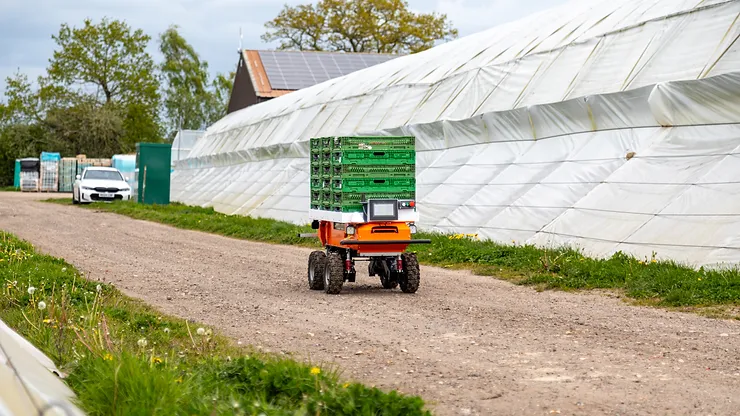
Mamut is an AI-powered robot that, equipped with an array of sensors, maps and navigates rows of a field, orchard or vineyard to capture detailed data at plant level, below the canopy, that current drone monitoring methods cannot access.

Mamut robot for data capture

Cambridge Consultants’ Chris Roberts explains: “Agriculture presents very different challenges for autonomous vehicles. Roads are well-defined, whereas fields are irregular, and solutions such as the virtual walls used by robotic lawnmowers won’t work in an agricultural context. Fields are also wet and dirty making visual navigation hard, and many sensors used in autonomous navigation, such as LIDAR, are fragile, expensive bits of kit with lasers and rotating mirrors that don’t work very well in the rain and dust!”
So, Cambridge Consultants are trying out a different approach and is trialling a range of different sensors and cameras, GPS and other navigation units on Mamut.
Chris continues: “Each sensor is used to compensate for the weaknesses of the others. For example, wheel odometers give you a sensible baseline of distance covered but can ‘slip’ through spinning or by hitting bumps. Equally, GPS can ‘jump’ because of branches overhead. So we’ve combined the outputs and employed mathematics to blend the sensors together for more accurate navigation. This approach is called sensor fusion.”

Meet soft hand Hank 

As Head of Industrial Robotics at Cambridge Consultants, Chris says that many of the things people find easy, robots struggle to do: “Robots have no sense of touch or feel for things, so they can pick something up and then not realise they have dropped it, blindly holding the arm out and carrying on with its task.”

Cambridge Consultants - Hank
Hank, the soft robotic hand

Cambridge Consultants believes it has the answer with Hank, a soft robotic hand. The silicon gripper inflates like a tentacle without hard ‘bones’ or joints and, using the latest in sensing, they have developed a hand that can ‘feel’.
Chris thinks this development could have applications in fruit production: “There isn’t a blueprint for a bunch of grapes, everyone is different, so you need a robotics system that can deal with the range of variation you find in natural items. Hank has three different sensors that can hold a piece of fruit, which is relatively heavy, squeezing it just enough to pick it up while not gripping it too hard because it’s fragile as well.
“I think Hank’s dexterity and flexibility could be used at any point in fruit picking or production, but, even with a high value crop like fruit, you’d need to consider the commercial benefits of automating specific parts of the process. “

Innovation Insights at Fruit Focus

Chris will be speaking about Mamut and Hank in a lightning presentation as part of Innovation Insights, hosted by Agri-Tech, at Fruit Focus 2019. This year’s event is held at Niab EMR, East Malling Trust Estate in Kent on 17 July, 9am – 5pm. Limited free tickets are available for members; please contact us for the discount code. 

Vertical farming has stacks of potential, says Tom Brunt of Savills Food and Farming

Meet the Network
Agri-TechE

Indoor farming in the UK has its roots in urban centres, but is it time now for the technology to move to the countryside?

This is an opinion piece submitted by Tom Brunt of Savills Food and Farming
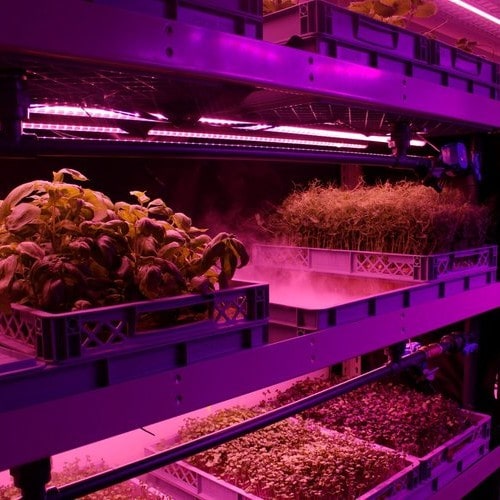
Until recently, vertical farming was very much an urban enterprise. Entrepreneurs took over industrial units and disused underground tunnels to grow high quality salad products for a discerning local market. Now, some of those same entrepreneurs are looking to take their knowledge and their technology to a larger, more commercial scale.
The rural market for vertical farming in this country is very immature, it hasn’t been developed yet. It is being done very well in city-centre locations such as Grow Bristol, for example, which uses lorry containers to bring farming right to the city centre, but the rural model will be to recreate this growing capacity in far larger, industrial scale sheds.
These sheds could be on a farmyard or an industrial park. They could be converted buildings or put up from scratch, as long as they have good access to water, such as a borehole, a renewable energy source to power the lights and good lorry access for getting to market.
All sorts of sites in rural locations are of interest and we’re currently reviewing site potential. You put up racks for the plants, creating a tiered system of growing beds, then seed comes into the building and leaves as a salad crop, packed and sealed in a bag all on site.
The advantages of vertical farms range from sustainability – they are much more efficient on water and land use – to the ability to offer a year-round supply.
There is no downtime during the winter, it’s 365 day production. You have complete control of your environment in terms of water, heat and light and you’re taking out variables such as the weather. With technology to monitor every aspect of the plant’s growth, you can know in exact detail the length of your growing period and precisely what you’re going to be producing and when, enabling a consistency of supply.

Case study: Grow Up farm

There are clearly many good reasons for indoor, vertical growing, but how do the economics stack up? Kate Hofman is the CEO of Grow Up, a vertical farming enterprise that is switching from an urban to a rural operation.
“Our first farm, Unit 84, was in an industrial unit in East London,” says Hofman. “It produced 20,000kg a year of salad leaves and herbs from a floorspace of 760 square metres. We sold our produce to New Covent Garden Market, local restaurants and top chefs, but it was a prototype and it didn’t make a profit.”
Hofman took the decision to close the urban unit and look for sites where Grow Up could use its learning and its technology to expand to an industrial scale – sheds of 5,500 square metres that will be capable of producing 1.5 tonnes of produce per day. “Even if we open 10 farms of that size, we’d only produce 1.5% of the salad leaves that are currently imported into the UK,” she says.
The farms will cost £13m to build and fit out and will be financed through partnerships and investors. “I think people will come at this from a number of different angles,” says Hofman. “The farms are a valuable asset that will offer a consistent income over a long period of time. In some cases we might have a straightforward rental agreement with a landowner and in others we could operate a more collaborative ownership model.”
Hofman’s farms would grow the product sustainably and wash and pack the product on site. “This keeps the unit cost competitive as it considerably reduces the amount of product that is lost due to handling and wastage through deterioration,” she says.
“Growers were hugely affected by the summer that we have just had, and if you then factor in Brexit and the unknowns that will bring to seasonal labour, the idea of increasing our food security with controlled environment technology makes perfect sense,” she adds.
Certainly countries around the world think so. The global value of vertical farming is predicted to be US$9.9bn by 2025. China now has more than 40 government-backed research institutes dedicated to indoor farming and in the UK, Harper Adams University has an Urban Farming Group and the Scottish sustainability-focused James Hutton Institute hosts a vertical farm run by Intelligent Growth Solutions.
“There’s a huge amount of interest in the field,” says Hofman. “As the LED and automation technology develops, growing will become more efficient and yields even higher. And while for the moment, the main crops are salad leaves and herbs, the ability is there to grow fruiting crops such as peppers, cucumbers and strawberries. They’re just not commercially viable yet.” I am also keen to see what lessons traditional agriculture can take from this growing industry.
Some of the technology that is being used, in terms of the detailed monitoring and how crops respond to nutrients, can be far more closely controlled in a building than the field, which means the learning can be that much more precise. Broad-acre farms use the technology, but there’s scope to go into even more detail.

Lincoln Agri-Robotics to establish first global centre of excellence

Meet the Network
Agri-TechE

University of Lincoln is already spearheading the development of next generation robots for agri-food production which will help streamline and maximise processes throughout the entire food industry, from farm to fork. This new funding, from the UK Government’s Expanding Excellence in England (E3) Fund through Research England, will enable its researchers to scale up their work tackling pressing issues facing the global food chain.

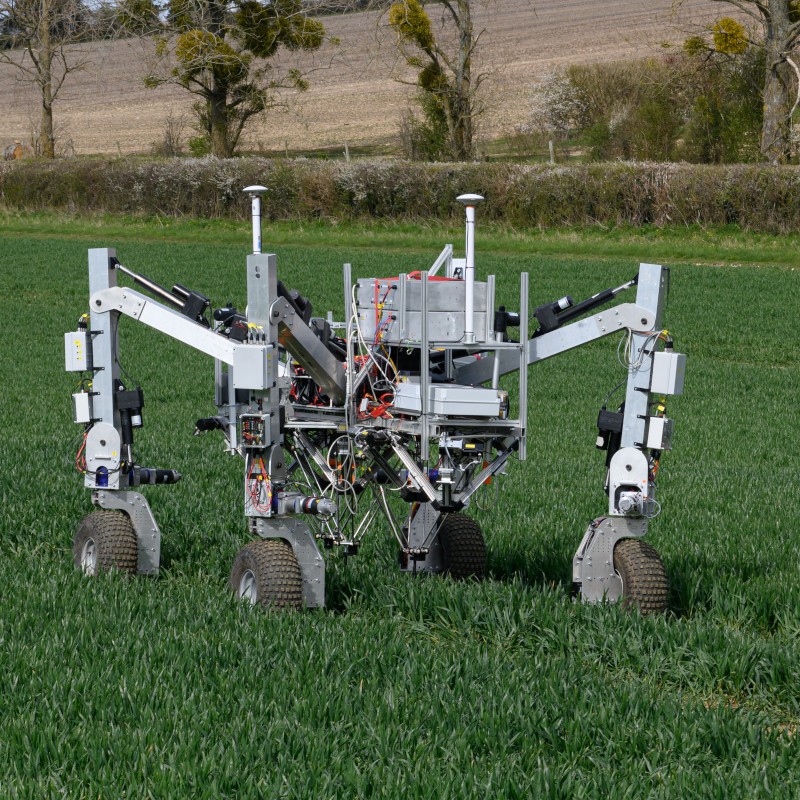
Thorvald-robot-in-field-credit University-of-Lincoln

Research at Lincoln Agri-Robotics, the new research centre, will focus on autonomous agri-robots that can efficiently tend, harvest and quality-control high-value crops with reduced human intervention, improving agricultural productivity and environmental sustainability, and addressing the demands of a growing population.

The £6.4million grant will enable the University to develop a state-of-the-art digital infrastructure, create specialist RAAI facilities and strengthen its pool of world-leading robotics researchers by bringing a number of new academic experts to the institution.

Professor Andrew Hunter, Lincoln’s Deputy Vice Chancellor for Research and Innovation, said: “Agri-food is the largest manufacturing sector in the UK – twice the scale of automotive and aerospace combined – supporting a food chain which generates a Global Value Added (GVA) of £113bn, with 3.9m employees in a truly international industry.
“It is widely agreed that robotics will transform the food and farming industries in the coming years, as producers adapt to meet significantly increased global demand, but there is still so much research and development to be done. The creation of Lincoln Agri-Robotics is therefore extremely timely and positions Lincolnshire, and the UK, at the leading edge of research innovations in this truly global industry. RAAI technologies will facilitate a step change in agricultural productivity while reducing environmental impact, and this new centre of excellence will be at the forefront of that change.”

Universities and Science Minister Chris Skidmore said: “Pushing the boundaries of knowledge and conquering new innovations are what our universities are known for the world over. This programme led by the University of Lincoln will give the UK another world first in Lincoln’s centre for research into farming robotics.

More information

NRI to implement Food and Nutrition Security Initiative

Meet the Network
Agri-TechE

The Natural Resources Institute (NRI) has gained a £7.5 million award to implement a Food and Nutrition Security Initiative  that will have a special focus on addressing climate change, food loss and food systems for nutrition.

FaNSI_1.Access-animal-source-foods_J-de-Bruyn-750

NRI’s work will include analysing plant growth in different conditions in a new Plant Ecology Lab plus a Food Innovation Lab for research on processing of food products, such as fortified food and innovations to extend shelf life.
Director of the NRI, Andrew Westby, added: “This funding from Research England is transformational in terms of increasing NRI’s capacity to contribute to food and nutrition security, especially in Africa.
‘Food and nutrition security’ is about ensuring that people have enough safe and nutritious food.
With the Research England’s ‘Expanding Excellence in England’ (E3) funding,  NRI will use an interdisciplinary ‘food systems approach’ to address food and nutrition security, which takes into account the complex interactions embedded in global food and nutrition.
At the same time, NRI will build on its Development Programmes, the institute’s thematic areas of work which respond to significant global challenges, in line with the UN Sustainable Development Goals.
More information about FaNSI – click here 

Rothamsted’s new ‘early warning system’ finds blackgrass evolving resistance to glyphosate

Meet the Network
Agri-TechE

Researchers develop way to predict risk of resistance before it occurs in the field

Scientists studying blackgrass, the UK’s most harmful weed, have detected early signs of resistance evolving to one of its main control agents, the weed killer glyphosate.
Worryingly, these latest findings show that this ubiquitous farmland weed could soon become uncontrollable, as glyphosate is one of the last lines of defence against what has been described as a weed “epidemic”.
If no new measures to combat blackgrass emerge, then falling yields of crops such as wheat would likely lead to higher prices in the shops.
Resistance to pesticides – like the antibiotic resistance crisis in healthcare – is a major problem for farmers across the world, and once resistance has evolved in a pest population, is almost impossible to reverse.
The results come from a new ‘early warning system’ that has been developed at Rothamsted that aims to identify those weed populations that are close to becoming herbicide resistant.
The scientists behind it say resistance to glyphosate would have considerable impacts on farmers, consumers and the environment, but if spotted early, resistance could still be avoided with smarter use of herbicides and other control methods.
Dr David Comont, the weed ecologist who led the study, said: “Several UK blackgrass populations are at risk of developing resistance to glyphosate, the world’s most used herbicide, and currently the last line of defence against the ongoing blackgrass epidemic.
“If glyphosate resistance did evolve, the impact could be extensive, with reduced wheat yields, and higher commodity prices.
“We need to develop ways to identify the early signs of resistance emerging. That way we can intervene before resistance becomes a major problem on farms.”
A previous study estimated that loss of control by glyphosate could result in 10-12% reduction in UK cereal and oilseed production, potentially costing over £500 million per year.
Glyphosate is one of the few herbicides that blackgrass isn’t already resistant to, and according to another recent study, it’s use by UK farmers has risen eight-fold in the last 30 years. It now accounts for a quarter of all herbicide sales globally.
According to Dr Comont, it is this increase in use that is driving the evolution of resistance.
“We found no evidence for high levels of resistance to glyphosate yet,” he said, “though we did find that sensitivity to glyphosate was reduced in several populations. Crucially, it’s the populations from fields where glyphosate has been used more extensively which are now less sensitive to this chemical. If glyphosate use continues escalating, it may only be a matter of time before resistance evolves.”
The results, published in the journal New Phytologist, demonstrate a completely new approach that combines field monitoring, glasshouse experiments, and classical genetics to predict the risk of resistance before it occurs in the field.
Working with collaborators at the University of Sheffield, the Rothamsted team collected blackgrass seed from 132 farmer’s fields across 11 English counties – from Hertfordshire in the south to Yorkshire in the north – in addition to collecting information on the how the field was farmed over the previous seven years or so.
More than 16,000 seedlings were grown from these seeds in glasshouses, and the effectiveness of glyphosate in controlling plants from each local population assessed.
Plants from nine of these populations were then cross bred to produce 400 new seed lines with known genetic pedigrees, that were also tested for their responses to glyphosate.
Crucially, the team showed that the degree of sensitivity was something plants inherited from their parents, and that the variation in sensitivity between populations was a result of historical glyphosate exposure – both prerequisites for pesticide resistance evolution.
Breeding from plants that survived glyphosate application resulted in offspring with even less herbicide sensitivity than their parents – clearly demonstrating that every generation is heading closer towards resistance than the last.
Taken together these results confirm that blackgrass populations can evolve reduced sensitivity to glyphosate on repeated exposure in farmers’ fields.
Co-author Dr Paul Neve, head of the Weed Ecology and Evolution research group at Rothamsted said: “Our work provides an early-warning to the UK farming industry that over-reliance on glyphosate is likely to lead to resistance.
“Glyphosate should be used judiciously in strategies that combine herbicide use with other cultivation or tillage practices to minimise herbicide survivors and reduce selection for resistance.”
Later this year Rothamsted will play host to the conference Resistance 19, the 8th International Meeting on Pesticide Resistance which will cover the latest research into resistance to insecticides, fungicides and herbicides.
The programme will include talks, posters and presentations under three headings “Molecular Mechanisms and Genomics”, “Evolution and Selection” and “Monitoring, Field Studies and IPM”, and it will bring together a wide range of academics, students, industry and stakeholder representatives to engage with the insights and strategies arising from the most up-to-date research.

Cereals – Niab celebrates 100 years of plant science

Meet the Network
Agri-TechE

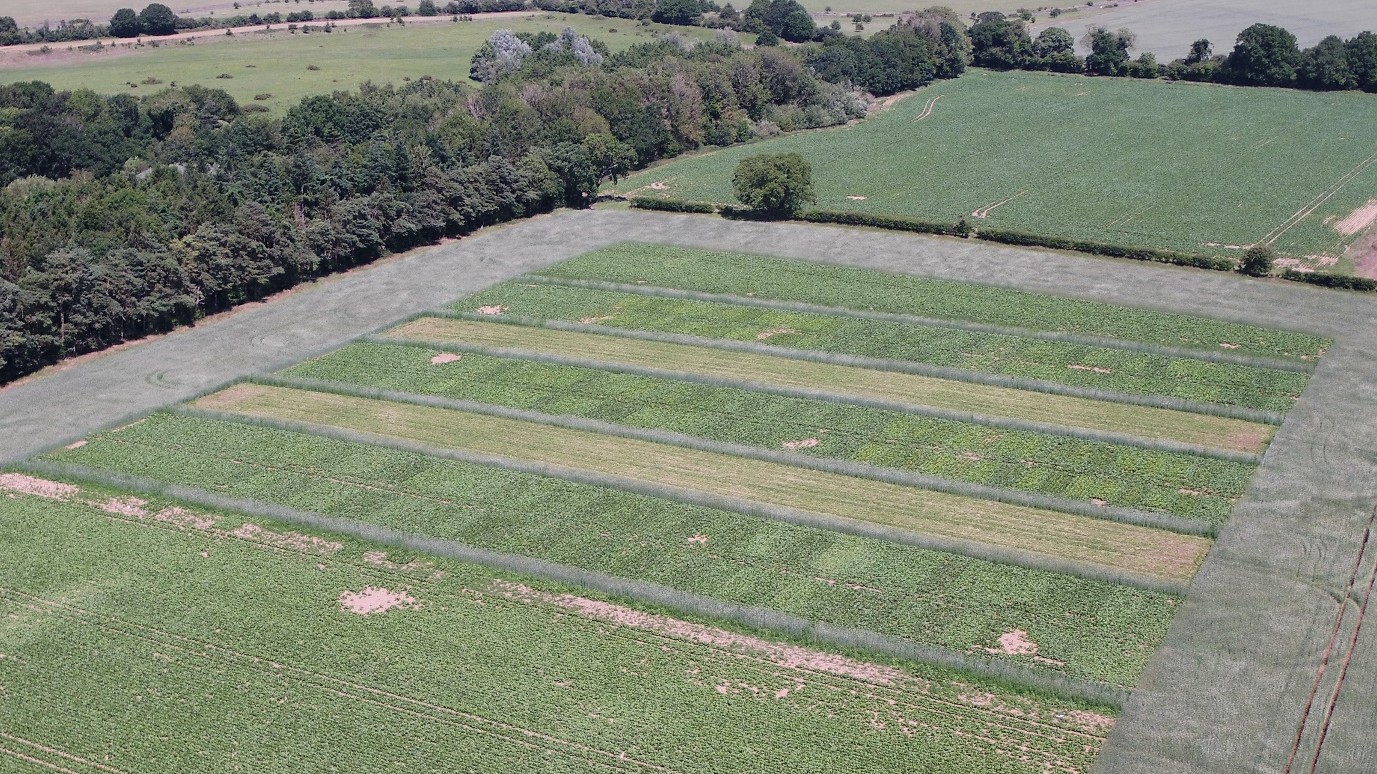
The past, present and future of plant science takes centre stage at the Niab stand at the 2019 Cereals Event,  with nearly 120 different crop and variety plots celebrating the organisation’s centenary year.
Niab has had a strong influence on  UK farming since it was established in 1919, from seed certification to advances in plant breeding, via field trials and the development of the Recommended List.
Niab at Cereals 2019
In some cases, the new varieties have led the fight against disease.  The development of yellow rust in the UK over the past 35 years has shortened the market life of many wheat varieties and the impact of each disease race will be shown on Brigadier, Robigus, Invicta and Solstice.
Looking  to the future,  the Niab UK Cereal Pathogen Virulence Survey team will be showing how recent developments in pathology research and field pathogenomics are aiding the fight against new races, particularly of yellow rust.
Plant breeding has changed the size, shape, yield, quality and agronomy of wheat varieties and this will be illustrated by the heritage plots showing varieties such as Squareheads Master,  Slejpner, Capelle Desprez to Claire, each with a story to tell on how the organisation has influenced either the variety’s breeding, seed production and certification, recommendation or agronomy.
The Niab stand at the Cereals Event is known for providing the latest technical advice and research in variety choice, independent agronomy, soil and rotation management, crop genetics and data science.
Niab TAG Membership services including the latest crop production advice and farmer-led research, field days, agronomy trials results, unique regional variety information and weekly agronomy updates through the season.
More information about Niab.

BASF and Rothamsted launch Sustainability Challenge

Agri-TechE Article
Meet the Network
Agri-TechE

A Sustainability Challenge that enables early career scientists to discuss their ideas on the future of farming in a corporate environment, has been announced by BASF and Rothamsted Research, who are working together in a long-term collaboration to shape modern sustainable agriculture.
The goal is to jointly address current agricultural challenges by identifying areas of R&D where novel approaches to science can accelerate innovation.

Sustainability Challenge

“We are encouraging the Rothamsted scientists to take a critical look at agricultural practices, address environmental, social and economic challenges through scientific research, and develop valuable practical skills for multidisciplinary projects,” says Julia Harnal, head of Global Sustainability and Governmental Affairs at BASF’s Agricultural Solutions division. “This is how we will drive modern sustainable agriculture together.”
The first initiative, designed as a hands-on training program, is a Sustainability Challenge which is framed as a competition to develop skills in collaborative research projects. Teams of Rothamsted researchers from all over the world are challenged to develop proposals on topics such as the future of farming, sustainable agriculture or innovation to mitigate the effects of climate change. The program includes coaching from BASF experts and a leading Design Thinking agency on how to co-design collaborations with partners. The first challenge took place this year.
After successfully pitching their concepts, the winning teams visited the headquarters of BASF’s Agricultural Solutions division in Limburgerhof, Germany, earlier this year, to exchange ideas on sustainable farming with industry experts.
“We are delighted to partner with BASF. No single organization can solve today’s agricultural challenges alone, so this is a great chance for our young researchers to learn what makes a collaboration project with industry successful,” says Achim Dobermann, Director and Chief Executive of Rothamsted Research.

PhD studentships on soil health

In addition, BASF and Rothamsted are launching PhD studentships focusing on soil management.
Healthy soil is essential for successful sustainable farming and plays a vital role in addressing climate change.
To accelerate research in soil health, PhD scientists will work with experienced multidisciplinary teams from Rothamsted, BASF and universities to address critical scientific knowledge gaps in soil health. BASF and Rothamsted Research have been collaborating for many years.
To mark the Institute’s 175th anniversary in 2018, both organisations renewed their commitment to a long-term collaboration with further initiatives to come.

BASF also supporting  GROW Agri-Hackathon 

BASF are also supporters of the GROW Agri-Hackathon   which is open to everyone with an interest in sustainability. It is being held 5-7 July 2019

Closing the Loop – making nitrogen fertiliser from waste

Meet the Network
Agri-TechE

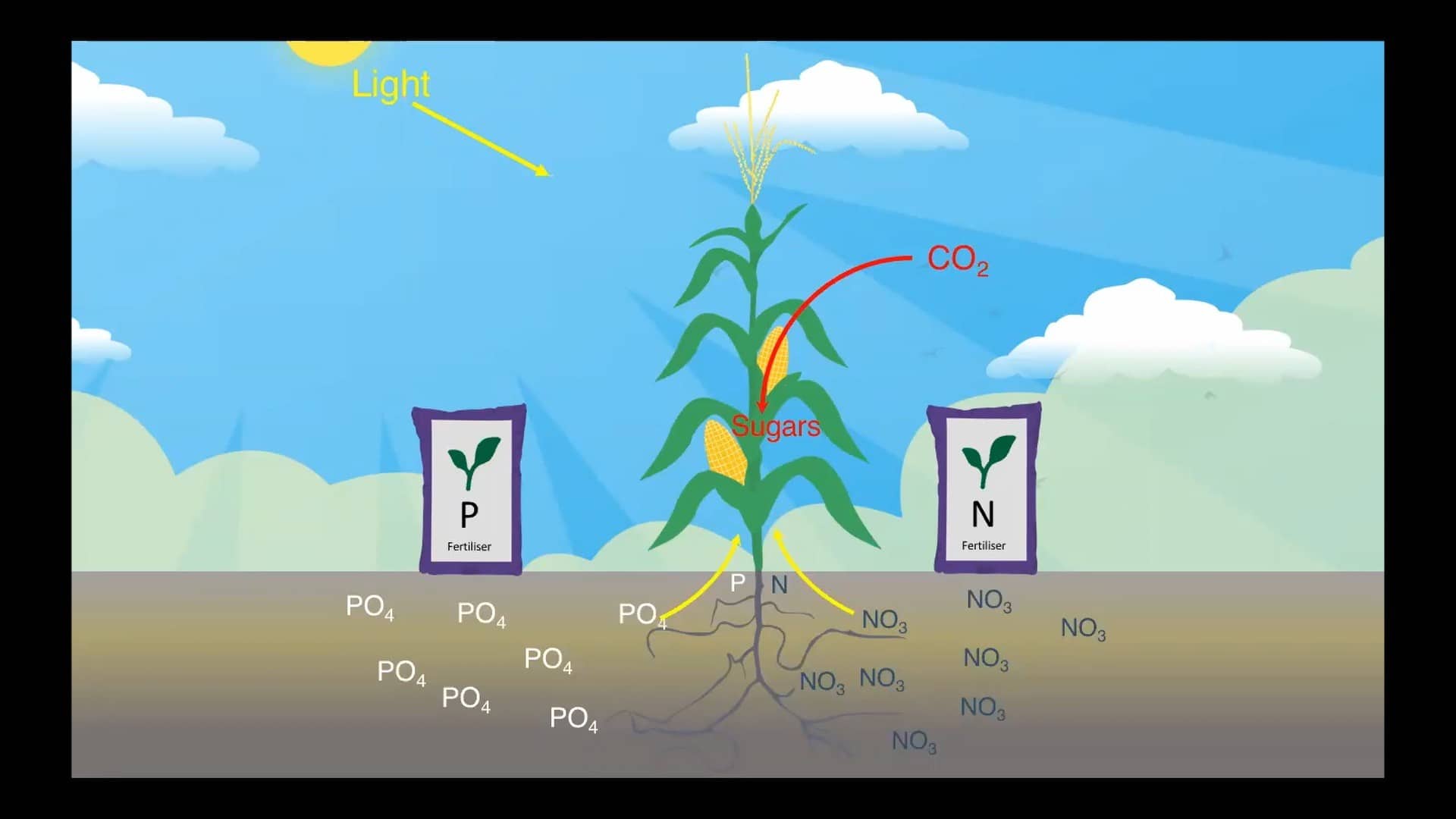
Oxford-based CCm Technologies has developed a method of producing nitrogen fertiliser from bio-solids and the carbon dioxide captured from the waste gases. The fertiliser returns carbon to the soil and stimulates an increase in micro-organisms, promoting a healthy soil. The process is one of the emerging technologies to be discussed at the Agri-TechE vent ‘Closing the loop on the circular economy’ on 5th June 2019.

Peter Hammond CCm Technologies
Dr Peter Hammond CCm Technologies – Closing the Loop

Dr Peter Hammond of CCm Technologies explains: “We can make equivalents of most compound fertilisers and these have performed well in trials. Findings just reported in the Journal of CO2 Utilisation* show a yield enhancement compared to soil enriched with compost.
“The fertiliser uses bio-solids from anaerobic digestion and carbon dioxide sourced from post combustion gas streams and plant materials. The carbon is converted to calcium carbonate in the final product, which makes the nitrogen more bioavailable and increases the carbon content of the soil. With this organic carbon we have seen uplift in the populations of soil micro flora and fauna.”
University of Sheffield’s soil science facility, P3, has established that CCm’s fertiliser material increases water and nutrient retention around the root ball by between 35-60% dependent on different control materials, replenishes soil carbon, raises the pH and temperature of the soil and boosts microbial activity in excess of 25% compared to the compost control. Peter is confident about its performance.
He says: “The process is able to source much of its nitrogen from non-fossil sources. It is scalable and in directly comparative trials carried out by Velcourt, Royal Agricultural University and Harper Adams University it produces the same yield response as conventional ammonium nitrate – and has done so for the last four years.”
The obstacle now is gaining industry support.
Peter continues: “Scale-up of production and market acceptance are the main obstacles – however, we do have a plant capable of producing 5,000t at the moment with two larger facilities planned for construction this autumn in the UK and another in Canada.”
Dr Belinda Clarke, director of the membership organisation Agri-Tech, says: “CCm Technologies is one of a number of inspirational approaches that use waste from one process as input to another. The event will also look at novel uses for crop waste.”
Other speakers at the event include: Gareth Roberts, CEO of Cambond; Naomi Pendleton, Head of Technical and CSR at AMT Fruit; Joe Halsted, CEO of AgriGrub; Steve Taylor, CEO of Celbius; Fabio Flagiello, Visiting Researcher, Universita’ di Napoli Parthenope; and it is to be chaired by Meredith Lloyd Evans, CEO of BioBridge.
Closing the Loop on the Circular Economy’ takes place on Wednesday 5th June 2019 from 13.30 – 17.00, at Centrum on the Norwich Research Park. Find out more at www.agritechenew.wpengine.com/events

30MHz gains €3.5m to accelerate development of agri-data platform ZENSIE

Agri-TechE Article

Meet the Network
30Mhz

30 MHZ receive 3.5m Euro investment30MHz has announced funding of 3.5 million EUR from two agricultural related funds: SHIFT Invest and the Rabo F&A Innovation Fund.
The funding will be used to accelerate product development and to further improve worldwide distribution of its agri-data platform ZENSIE, which makes it easy for growers to deploy wireless sensors and start capture the metrics most crucial to their operations in minutes, without technical expertise.
Jurg van Vliet, 30MHz CEO, says “ Although we have only been active in the horticultural and agricultural sector for two and a half years, we fully understand its potential and it is ripe for DIY digitization – ZENSIE’s ease of use means that it will become the go to product in the market. By working with our customers and partners we are looking forward to further developing the platform and thanks to this recent investment we are now able to further expand internationally.”
The investment in 30MHz will continue to drive its growth as a dominant brand in the sector, helping it to move closer to its vision of creating a space where all products and services are digitally accessible for growers, advisers, suppliers, distributors and researchers.
Antony Yousefian, UK Director at 30MHz, comments: “With the Series A complete, we can really accelerate development and expansion internationally too.
“Our early success in the UK and probably globally wouldn’t have been possible without being part of Agri-Tech. Their guidance, networking and opportunities have been invaluable.”
Read the full investment announcement on the 30MHz website here.
REAP 201930Mhz took part in the Technical Exhibition at REAP – for more details about how to participate in the exhibition click here. 
 

Agricompas and Farming Data announced as winners of the Agri-TechE Catalyst Challenge Fund

Agri-TechE Article
Meet the Network
Agri-TechE
Two Agri-TechE members are leading projects as part of the Colombian Prosperity Fund Programme.

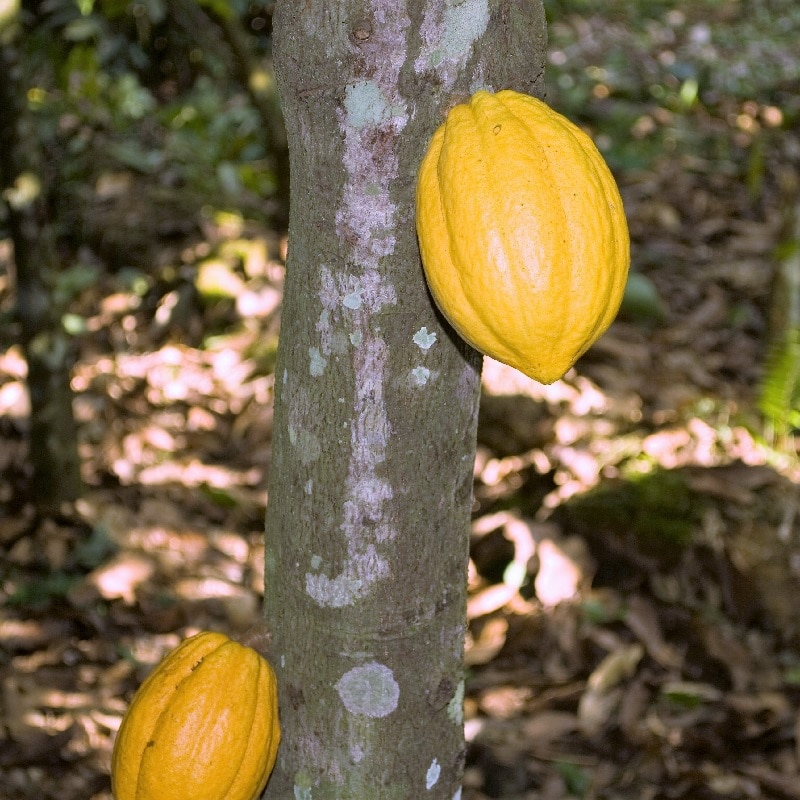
The “Digitising cacao production in Colombia” is run by Agricompas,  in partnership with the University of Lincoln and the University of Reading in the UK, and Fedecacao and Solidaridad Network in Colombia.  It aims to support women and smallholders in post-conflict areas.
Farming Data Limited were also winners with a project to deliver an “Integrated trading platform and data analytics for Colombian small farmers”. It will be working with Colombian partners: Región Central, RAP-E, ASOCAFE Manantial and Patrimonio Natural.
The winners of the Colombian Prosperity Fund Programme were announced by the Agri-TechE Catalyst Activity with its implementing partners, Innovate UK and the International Center for Tropical Agriculture-CIAT.
The Colombian Prosperity Fund Programme is investing up to £3 million in seven new agriculture projects around the country. The projects are managed by consortia of private sector companies, academic bodies and civil society from the UK and Colombia. The expected impacts are greater agriculture productivity; inclusive growth; poverty reduction; gender equality; women’s economic empowerment, as well as new commercial opportunities between both countries.
More information about the programme – click here 

Breedr to make livestock trading smarter and financing easier

Meet the Network
Agri-TechE
Breedr co-founder and CEO Ian Wheal

Breedr’s vision is to help farmers trade livestock smarter and finance faster, by enabling the value-chain to buy and sell animals based on data rather than how they look. Founder of the company, Ian Wheal, will be discussing the benefits of data-led trading in the ‘Integrating Supply Chains’ seminar alongside Dr. Stefano Vandoni of science-driven nutrition company Belcham and Ryan Law of meat processors Dunbia at NBA Beef Expo on 23 May 2019.
Traditionally, the way that animals are sold to processors is fragmented – some farmers sell to finishers, others through agents, at market or direct – so it is difficult for processors to see what is becoming available and for kill sheets and customer insights to be fed back to producers.
Breedr CEO Ian Wheal explains: “It’s all about linking up the supply chain, to get more value for the farmer and more consistency for the processor and retailer. Transparency and traceability are being demanded by customers, and farmers already collect a lot of data for regulatory purposes. Our aim with Breedr is to make data into actionable insights for the benefit of everyone in the value-chain.
“At the moment processors issue a kill sheet, showing the weight and carcass information, which is often supplied as a sheet of paper or pdf. To use this data, farmers need to retype it into their system. If this data was more accessible and informative it could be used to improve meat production.
“A data-led supply chain allows visibility of animals in the pipeline, which is why processors are interested. Rather than buying animals based on weight, as they currently do, they are able to select the ones that will be within their specification and know when they will be available.”
To enable this, Breedr is leading an Innovate UK project to create smart contracts for the livestock industry by using blockchain to assure the lifetime data of an animal. Blockchain is a method of securely sharing data around the world and making sure that data cannot be edited. Copies of the data are stored across hundreds of thousands of computers that are used to authenticate the information and prevent it from being tampered with. The data is encrypted and can only be read within Breedr using a secure login.
Breedr is working with Imperial College London to develop the software; with Deloitte to address the legalities; and with Dunbia to gain input from the processor perspective. A number of farmers from across the UK are also involved to ensure the system works well for farmers.
A major benefit of smart contracts is that instead of an animal being bought based on the way it looks, it is bought based on its track record.
Farmer and Breedr’s UK Manager James Wright gives the example of compensatory growth, an evolutionary strategy designed to help cattle survive hard winters. He says: “If you cut down an animal’s feed intake and then start feeding it again there will be a jump in growth. With a smart contract you will be able to see that the low growth rate has been caused by restricted rations. A farmer would be prepared to pay more in anticipation of rapid growth with enhanced feeding. The idea of data-led trading is that you are buying and selling animals on their potential performance.”
Improved performance and business efficiencies will be discussed by AHDB (Agriculture and Horticulture Development Board) and Claire Lewis, a Breedr co-founder, who will bring together her farming and the supply chain experience in Beef Expo’s ‘Challenges Facing The Industry’ seminar at 1.30pm.
Breedr is a sponsor of Beef Expo 2019 and will also exhibiting on Stand 24.
The 2019 NBA Beef Expo will be held at North West Auctions, J36 Rural Auction Centre, Milnthorpe, Cumbria on Thursday 23 May 2019.