Faba beans ‘in’ toast could grow its market value
 Agri-TechE
 Faba beans provide an excellent alternative to imported soya and thrive under UK growing conditions but the majority of the beans produced go to animal feed. Now a £2m project, ‘Raise the Pulse’, is aiming to increase market awareness of its potential and encourage farmers to switch some wheat producing land to faba bean for human consumption.
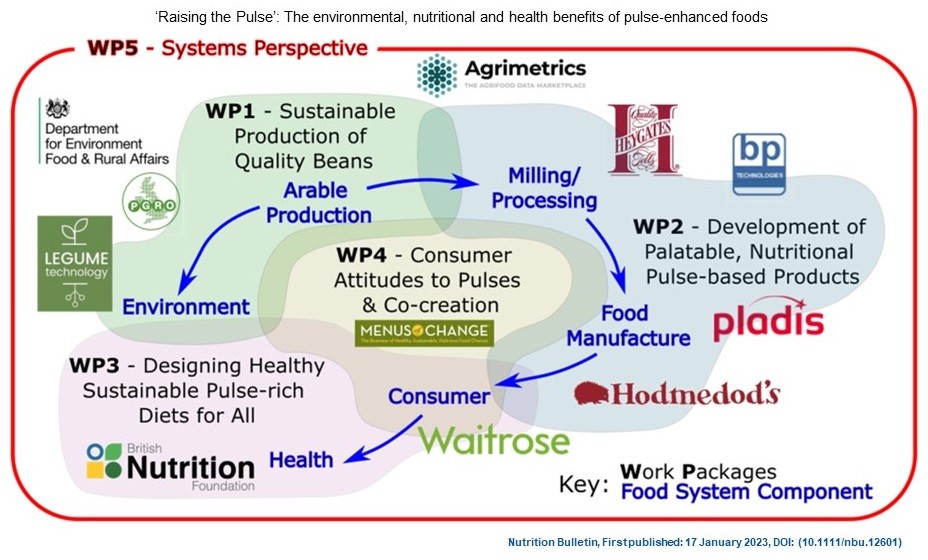
Faba beans are particularly high in easily digested protein, fibre, and iron, nutrients that can be low in UK diets. The team led by University of Reading are experimenting to see if Faba could replace soya in bread.
Professor Julie Lovegrove is leading the ‘Raising the Pulse’ research programme. She said: “We had to think laterally: What do most people eat and how can we improve their nutrition without them having to change their diets? The obvious answer is bread!
“96% of people in the UK eat bread, and 90% of that is white bread, which in most cases contains soya. We’ve already performed some experiments and found that faba bean flour can directly replace imported soya flour and some of the wheat flour, which is low in nutrients. We can not only grow the faba beans here, but also produce and test the faba bean-rich bread, with improved nutritional quality.”
The University will be doing taste testing with students as Matt Tebbit, who leads the University’s ‘Menus for Change’ research programme, explains: “Students will be asked to rate products made or enriched with faba bean, such as bread, flat bread, and hummus. They will be asked questions about how full they felt, for how long and their liking of the foods. It is hoped that faba bean will improve satiety, as well as providing enhanced nutritional benefits in products that are enjoyable to eat.”
‘Raising the Pulse’, which includes PGRO and Agrimetrics, also seeks to improve how the crop is grown, harvested and milled. Researchers will be choosing or breeding varieties that are healthful as well as high yielding, working with the soil to improve yield via nitrogen fixing bacteria, mitigating environmental impacts of farming faba beans, planning for the changing climate, and more.
Benefits of faba beans
 The faba bean represents a safe and sustainable UK pulse with great potential to improve overall diet quality and consumer health.
- highest yield potential and nitrogen-fixation rates
- valuable floral resources for a diversity of wild pollinating insects
- excellent break crop – can be sown in a diversity of farm systems as a winter or spring crop and can be harvested for a long period following maturation
- high-protein content (28%–29%), is micronutrient-dense and higher intakes have been reported to lower blood cholesterol.
- when added to pasta it was found to improve post meal satiety, glycaemia and blood pressure ( In consideration of all the above features, we consider that the faba bean represents a safe and sustainable UK pulse with great potential to improve overall diet quality and consumer health.
‘Raising the Pulse’ is a multidisciplinary programme of research, funded by the UKRI Biotechnology and Biological Sciences Research Council, as part of their ‘Transforming UK Food Systems’ initiative.
The Agri-TechE event “Novel Crops and Fresh Thinking” is to be held from 10am – 4pm at Wivenhoe House Hotel, Wivenhoe Park, Park Road, Essex, CO4 3FA on 23rd February 2023. It will include presentations by Dr Lydia Smith (Niab), Martin Lines (Nature Friendly Farming Network) and some of the 10 Seeding Award winners, together with a workshop for those interested in the business opportunities across the value chain that will arise from these new crops.
Post Overview
Agri-TechE Related Posts
Agri-TechE Week: Tackling the Agri challenge with genomics

Wyld Networks has signed an agreement with a Brazilian strawberry producer

The draft of The Genetic Technology Regulations 2025
Major grant for British bio-input company will boost African agriculture
Organic September Spotlight: How Far Organic Farming Has Come (and What’s Next?)