Join us at CropTec, the UK’s leading technical event for the arable sector, on 14-15 January 2026 at the NEC Birmingham. Gain exclusive insights from industry-leading specialists and explore the latest innovations shaping the arable industry.
Explore controlled environment agriculture (CEA): innovative techniques for optimising crop growth, enhancing yield, and ensuring sustainable farming in any climate.
Agri-TechE Newsletter
Get the latest agri-tech news, events and opportunities direct to your inbox
The views expressed in this Member News article are the author's own and do not necessarily represent those of Agri-TechE.
Airponix’s technology and ambition to transform global seed potato production and sustainable agriculture has been recognised with the award of an £830K Innovate UK DEFRA Investor Partnership grant, subject to securing £1.7 million in match funding and finalising heads of terms with a lead investor by 3 December.
The Innovate UK grant and part of the investment will fund the construction of a 2,300 m² high-tech seed potato production facility in Scotland, designed to supply up to 25% of the Scottish G0 seed potato market. This facility will act as a scalable model for sustainable, high-yield, and water-efficient production using Airponix’s proprietary aeroponic technology.
As an alternative route, Airponix has also reached an in-principle partnership agreement with a major UK grower, which would involve applying for a smaller grant requiring only 30% project funding but with significant upside in market reach.
Global Expansion and Strategic Engagements
Airponix continues to build international presence and partnerships across multiple key regions and events:
• World Agri-TechE Innovation Summit (London): In September, Michael and Matt attended the World Agri-TechE Innovation Summit, engaging with investors, innovators, and policymakers from across the agricultural technology sector. The summit offered valuable opportunities to connect with international stakeholders and explore partnerships aligned with Airponix’s mission.
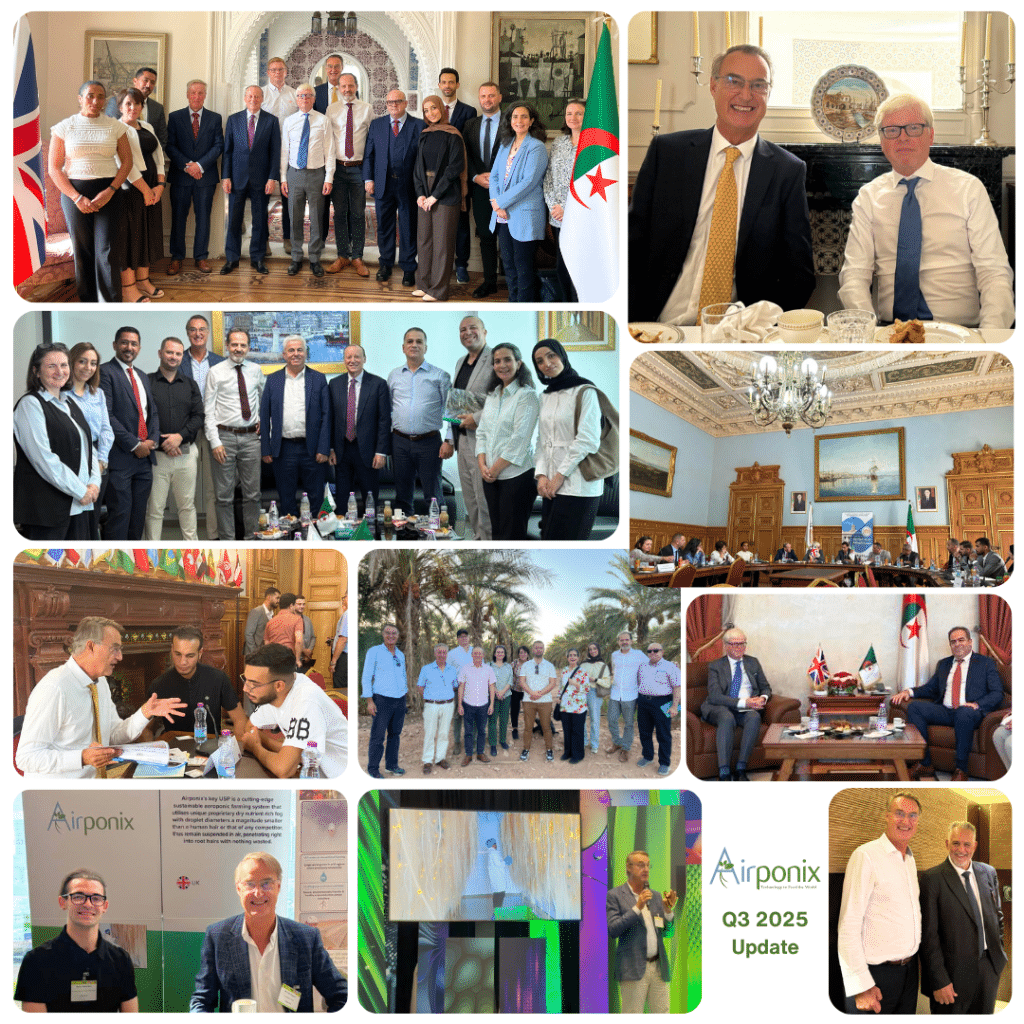
• Algeria: CEO Michael Ruggier joined the first-ever UK Agri-TechE delegation organised by the British Embassy and ABBC, meeting Ambassador H.E. James Downer, MADAR Holding, and senior officials from the Ministry of Agriculture. Discussions are progressing toward a partnership to enable Algerian growers to produce their own seed potato tubers domestically.
• Australia: Airponix was selected for the Farmers2Founders “Land x Launch” Australia Cohort, under the Innovate UK Global Incubator Program – Agri-Tech. Following two years of mentorship from Farmers2Founders, Michael has just returned to Australia to build on existing partnerships and explore new opportunities for growth.
• Saudi Arabia: Later this month, Michael will attend the UK Department for Business and Trade (DBT) AgriTech Mission during the Saudi Agriculture Show (19–23 October 2025). He will be speaking at the event and pursuing new investor and collaboration opportunities across the region.
Investment Opportunity
With £350K already secured from a cornerstone investor at an £8 million valuation, Airponix is now entering a major growth phase. We invite investors and strategic partners to participate in this unique opportunity to scale sustainable agriculture globally.
The views expressed in this Member News article are the author's own and do not necessarily represent those of Agri-TechE.
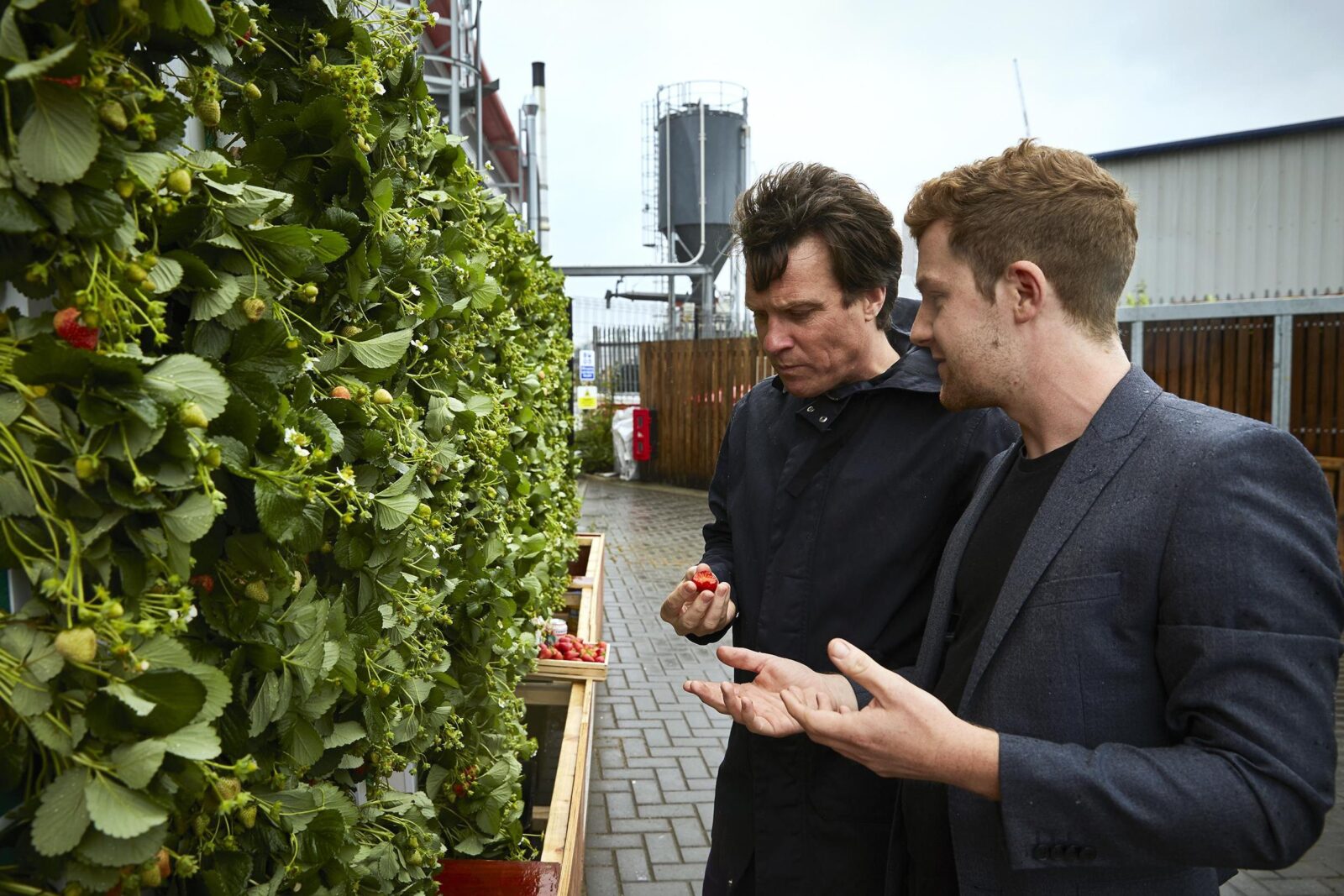
Dyson Farming is proud to unveil its latest breakthrough in sustainable agriculture: the Hybrid Vertical Growing System (HVGS), a pioneering innovation that’s transforming how strawberries are grown in Britain.
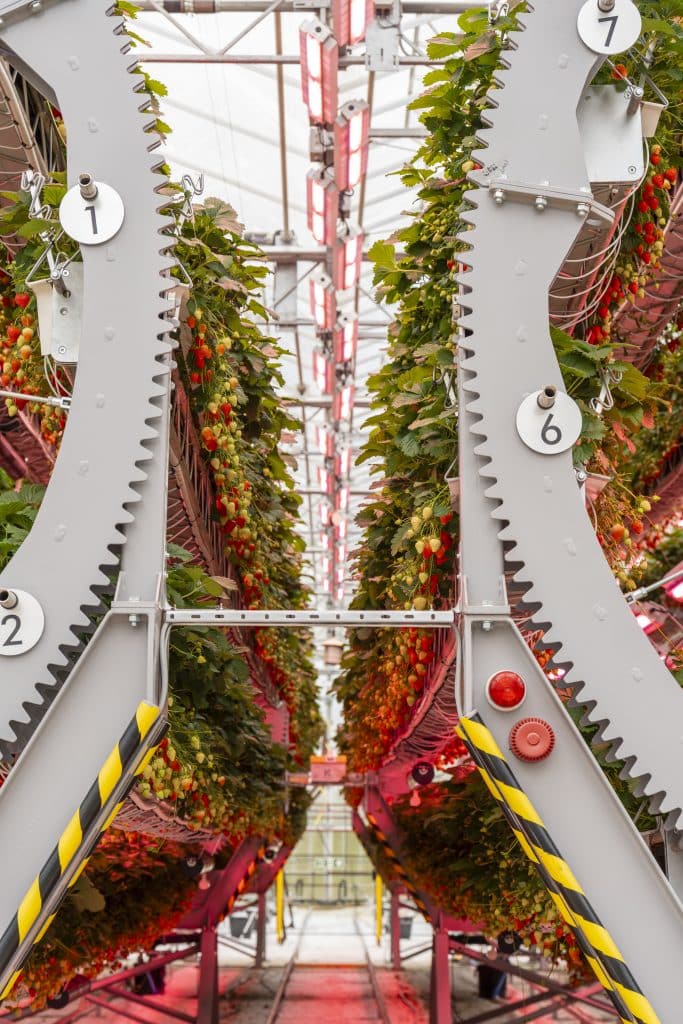
Located in our 26-acre glasshouse in Carrington, Lincolnshire, the HVGS boosts strawberry yields by an astonishing 250%. Instead of traditional rows, strawberries are cultivated on towering, Ferris wheel-like rigs, reaching over 5.5 metres tall, that rotate to ensure optimal exposure to sunlight and LED lighting. This vertical approach maximises space, enhances fruit quality, and allows for year-round production, even in the depths of winter.
The system is powered by renewable energy and surplus heat from our adjacent anaerobic digesters, which also supply CO₂ to enrich plant growth. Rainwater harvested from the glasshouse roof irrigates the crops, while advanced climate control systems maintain ideal growing conditions.
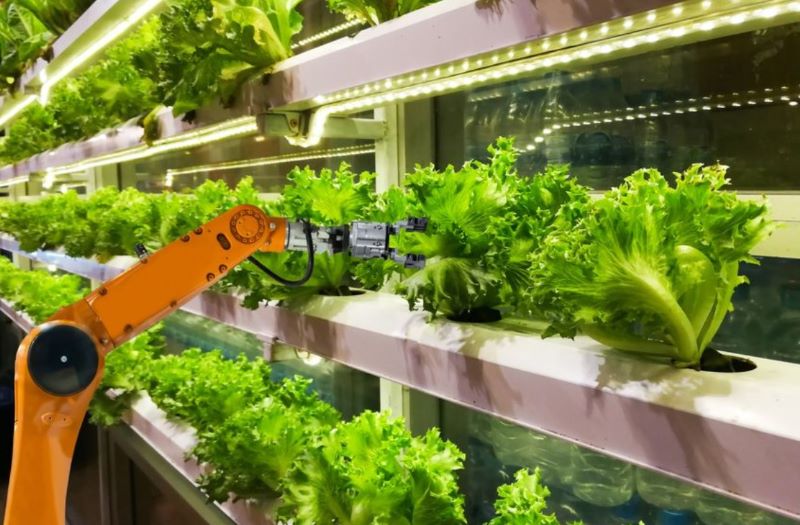
Robotic technology plays a key role too: vision-guided machines pick only the ripest fruit, while UV-emitting bots protect plants from mould. Insect predators are deployed instead of pesticides, ensuring a healthier, more natural crop.
This innovation marks a bold step toward food security, sustainability, and self-sufficiency in the UK.
Get the latest agri-tech news, events and opportunities direct to your inbox
How Earth’s earliest photosynthesizers could offer farmers a new commercial – net zero – opportunity
Meet the Network
Agri-TechE
Member Spotlight on: Tattva, with Founder Prantar Mahanta Tamuli
With the rising demand for a more sustainable economy, researchers have discovered a new method to harness the world’s oldest plants, cyanobacteria, to help reduce global carbon emissions.
Prantar Mahanta Tamuli, the founder of Tattva – recent recipient of the Innovate UK Smart Grant – discusses his discovery and the opportunities it presents for the farming sector.
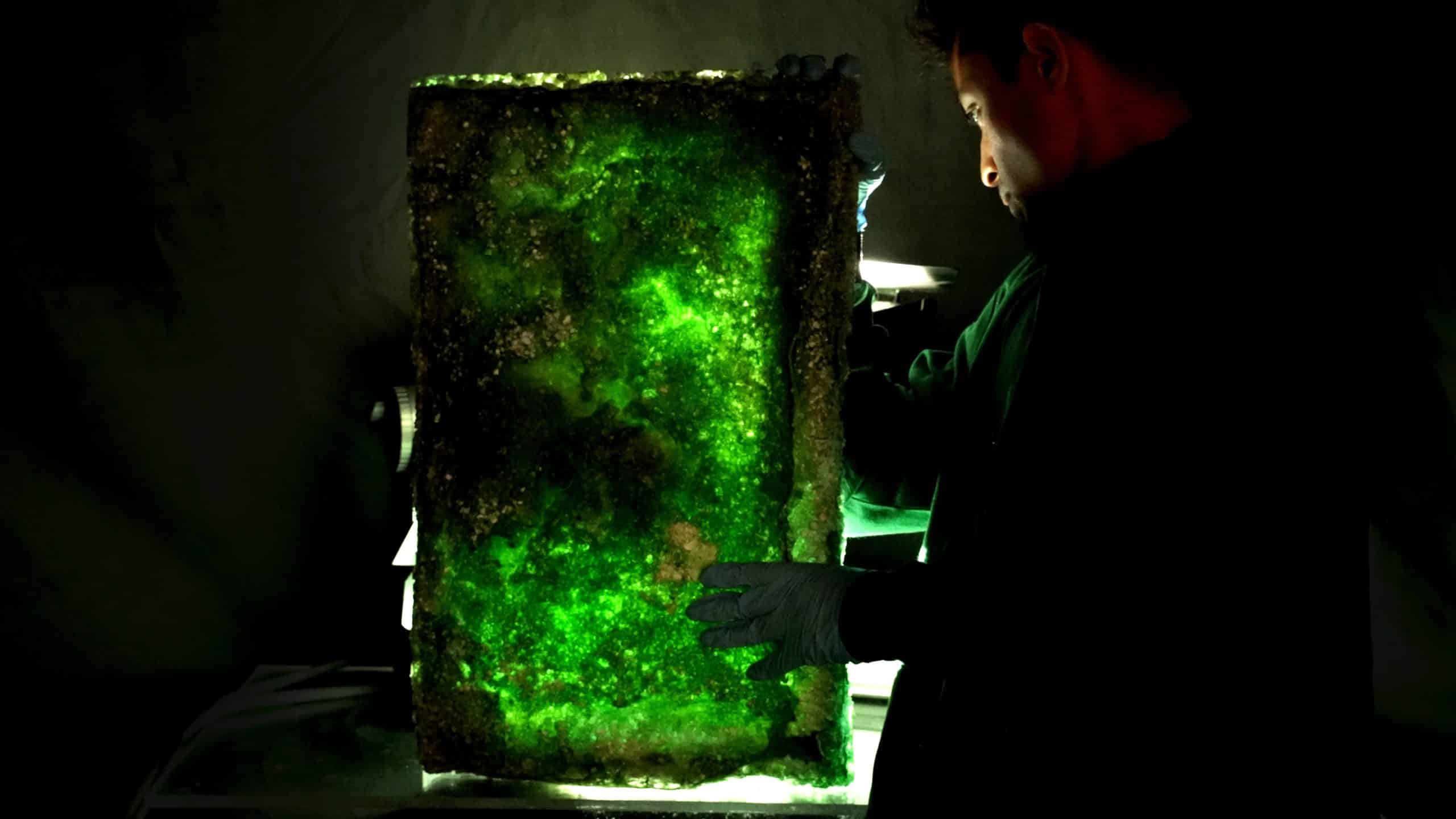
Cyanobacteria, over 3.5 billion years old, are recognised as the first organisms to develop photosynthesis and contribute oxygen to the Earth’s atmosphere. In their rock formations, known as stromatolites, these structures can sequester carbon, but until now, they have taken thousands of years to grow.
However, through his research, Prantar has discovered a method to artificially grow the bacteria in days, producing a new material that is poised to be instrumental for both the architectural and agricultural landscape.
“Growing the bacteria allows us to harness their ability to sequester these minerals in the form of calcium carbonate in just ten days.
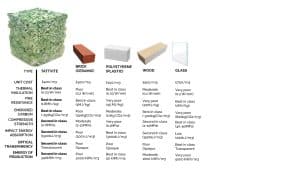
Using the organism cyanobacteria to create a new building material, Tattva aims to replace the four primary conventional materials — brick, foam, wood, and glass.
Prantar Mahanta Tamuli
Tattva Founder & CEO
“These four materials are some of the most used with a market size of about $1.11 trillion.
“They contribute about seven gigatons of materials of CO2 in the atmosphere, so even if you’re replacing an extremely small percentage, you’re looking at a massive global impact,” Prantar adds.
“The estimates show us that about one ton of carbon can be sequestered in about four cubic meters of this material when we grow it.
How does this stack up against traditional materials?
In comparison to conventional materials, the new cyanobacteria structure has both practical and sustainable properties.
“It’s like a brick, but extremely insulating and fire resistant, so it has very valuable, functional properties that we use in the current construction industry. But the main difference is that it sequesters carbon dioxide rather than emitting it,” says Prantar.
Initial prototypes and pilot projects have demonstrated the material’s application in the construction industry, but Tattva plans to expand into the agricultural sector.
What could this mean for farming?
The farming industry is facing challenges in reaching net-zero targets. Working with his co-founder Andy Grey, chairman of Devon Agriculture Association, Prantar is exploring ways to incorporate their discovery into farming systems to create commercial opportunities, aid in reducing carbon emissions, and achieve sustainability targets.
In the future, could farmers be growing construction materials and sequestering carbon at the same time?
“The process is essentially seeding, growing, and harvesting. We grow the bacteria in a solid-state reactor — a bed where the material is grown. This bed can be stacked vertically, which means that the principles of vertical farming we use today, and the principles of scaling food production, can also be applied to scale this new material technology.
“Therefore, the model we are approaching or developing is one of growing this material and supplying it to cities in much the same way our food is grown on farms and supplied to cities, within the same network,” he states.
“The estimates show us that about one ton of carbon can be sequestered in about four cubic meters of this material when we grow it.”
Big news for Tattva
Tattva have recently been awarded the Innovate UK Smart Grant of £650,000 (for an overall project award of £925,000) to scale the business and their bioengineered material, Stromate.
“With this grant, we hope to unlock its true potential to transform our world and usher in a new future that is regenerative, safe, and carbon negative,” Prantar states.
Join the conversation
You can stay up to date and learn more about the latest innovations by being a member of Agri-TechE . Tattva has found it to be a valuable asset for their business development.
“There are very few who know about something like this development, and that is where knowledge transfer is absolutely essential,” Prantar says.
“[Agri-TechE ] has helped us with this, exploring the dimensions of what would work in the agricultural domain, scaling and how it can help and those kinds of aspects.
Post Overview
30th June 2025
Agri-TechE
Agri-TechE Article
CEA and Vertical Farming
Tech from Other Industries
Share this Page:
Related Posts
Satellite data, farming and our environmental future
The views expressed in this Member News article are the author's own and do not necessarily represent those of Agri-TechE.
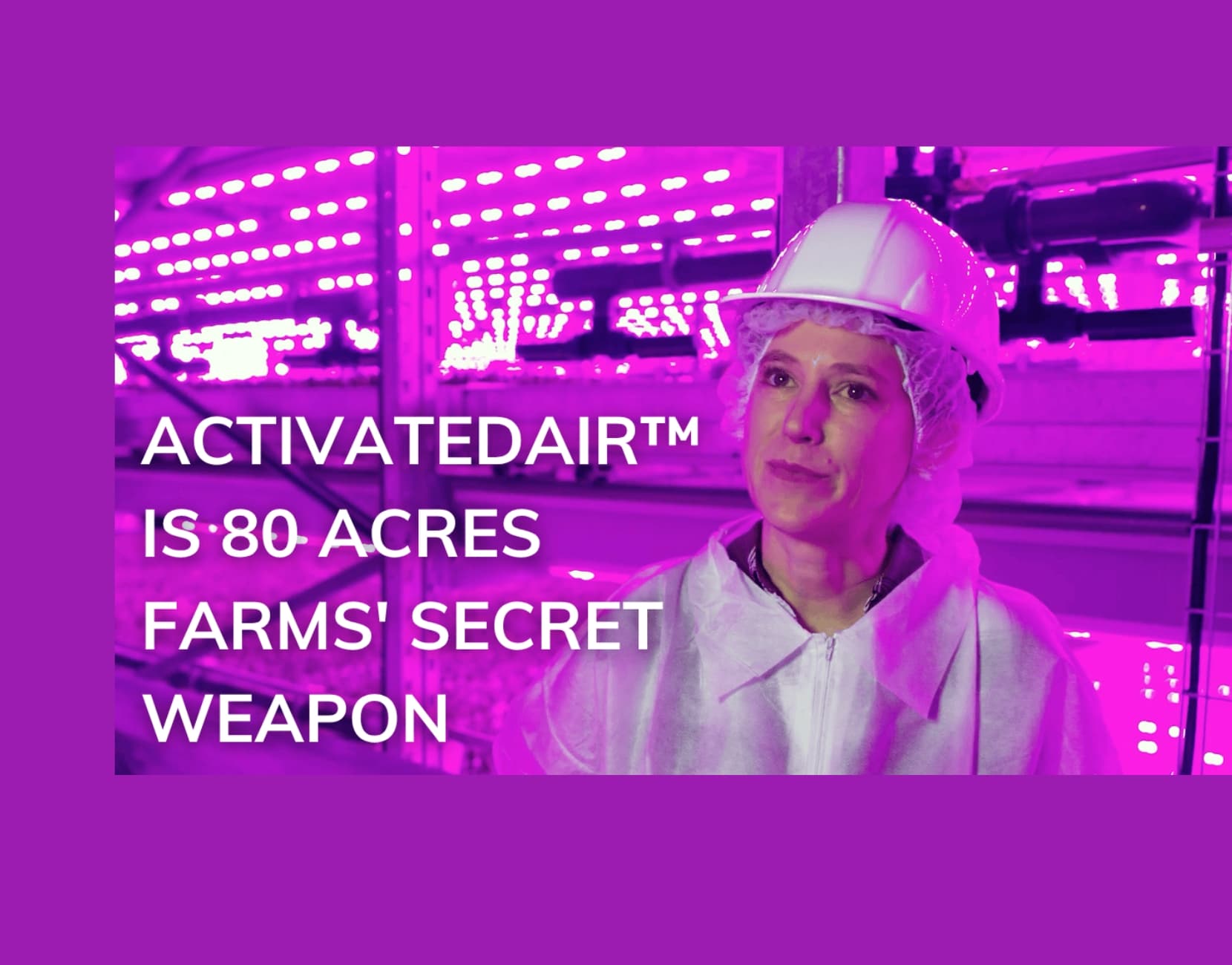
ActivatedAir® is being used by some of the largest growers in the world, and it doesn’t get much bigger than 80 Acres Farms.
They discovered ActivatedAir® at an industry exhibition. After thoroughly examining the science behind cold plasma, 80 Acres began a free trial, producing remarkable results.
It unlocked incredible outcomes for their business. Higher and more consistent seed germination delivers crops that achieve their target specification quicker, maximising their growing space.
See for yourself
Megan Gambrill, 80 Acres Farms senior manager of growing, explains how they began trialling ActivatedAir® and the results they saw on the crops they tried. She also discusses how ActivatedAir® seed priming is practically incorporated into their growing process.
How does 80 Acres maximise its output from its facility?
Noah Zelkind, 80 Acres head of operations, explains the role getting their crops off to the best start with ActivatedAir® plays in increasing output using the same growing space.
Read the full case study
To read the full blog, or follow along with other case studies, head to www.zayndu.com.
The views expressed in this Member News article are the author's own and do not necessarily represent those of Agri-TechE.
Gardin Raises $4.5M to Advance Precision Agriculture with Breakthrough Photosynthesis Sensor & AI Platform to Monitor Greenhouse Crop Health at Scale, in Real Time
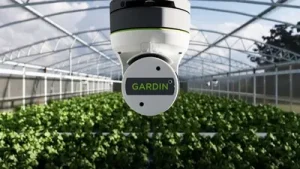
Gardin Agritech has raised a $4.5M Seed 2 financing round led by Navus Ventures with participation from new investor Oxford Innovation Finance as well as existing investors LDV Capital, MMC Ventures, Seedcamp, Alchimia Investments and angel investors.
Gardin is growing their list of customers leveraging their novel optical photosynthesis sensor & AI that measures crop photosynthesis in real time, giving growers early insight into plant health and development. This allows for faster, more targeted interventions, resulting in improved yields, better crop quality and more efficient use of resources such as water, light and energy. Clients have reported up to 10x return on investment.
Since commercial launch in June 2023, Gardin’s sensors have been deployed across a wide range of environments – from polytunnels in Spain and Morocco to greenhouses in the Netherlands and Canada – and used successfully on more than 20 crop species, from algae to tomatoes. In 2025, the company is doubling down on light optimisation and energy efficiency enabling growers to make informed decisions, with trials already showing growers can achieve 20-30% in energy savings. Gardin’s technology also aids research into hardier seed varieties, contributing to a more sustainable and secure food supply.
The news comes at a critical time for the $200 billion global Controlled Environment Agriculture (CEA) market, which is expanding rapidly due to rising demand for reliable food supplies and decreasing setup costs.
Yet the sector faces mounting pressures: energy and labour costs have surged, emissions regulations are tightening and there’s a shortage of skilled growers to operate indoor farms, greenhouses and seed breeding businesses. Existing tools lack the sophistication to process vast amounts of data and deliver timely insights, leaving many operations struggling to adapt efficiently. This underscores a pressing need for AI-powered solutions capable of analysing large swathes of data in real time – enabling smarter, automated decisions and unlocking the full potential of precision agriculture.
Agriculture Investments Limited, one of the UK’s most progressive fruit producers, adopted Gardin’s technology after seeing its potential to deliver scalable, confident decision-making for more resilient, high-quality crops.
“We have been long believers that to truly optimise food production we need to be able to change the greenhouse climate to adapt to the crop’s needs but there was no solution on the market that could solve this with high confidence and scaleably…. Until we met Gardin. Gardin’s unique sensor + AI is able to detect changes in crop photosynthesis and provide clear, actionable insights based on that. As a result, within a couple of months of trialling Gardin’s product we decided to sign a multi-year contract,”
said David Moore, Director of Agriculture at Agriculture Investments.
Fromboer reports a 5% yield increase per square meter thanks to more uniform, high-quality production and improved cost control. “The sensor contributes to homogeneous production with high quality and cost control. Overall, I estimate yield is at least 5% higher per square meter,” said Leonard Boer, Owner & Head Grower at Fromboer.
Ridder highlights Gardin’s ability to drive profitability boosts of up to 30%, yield gains of 15%, and early detection of crop stress weeks in advance – marking a shift from traditional climate control to data-driven “crop control.” “For many years now we have been able to effectively automate climate control around the crop, the next phase is to incorporate real time feedback from the crop and move from ‘climate control’ towards ‘crop control’. Gardin has developed the key technology to enable this,” said Sander Baraké, CTO at Ridder. “Results include profitability boosts of up to 30% by optimizing winter LED efficiency and maximising summer light. Yield increases of up to 15% and early detection of biotic and abiotic stresses by up to 4 weeks before crop walking,” he continued.
With this new round of funding, Gardin will enhance its platform and grow their commercial team to expand its customer base across continents.
Led by serial entrepreneur Sumanta Talukdar, who previously co-founded and exited WaveOptics for over $500 million, brings decades of experience across optics, photonics, sensors and computer science,
“Navus Ventures are in my opinion the best Ag focussed investor in Europe with a deep knowledge and network in this ecosystem. The whole Gardin team is very pleased to partner with Navus,” said Sumanta Talukdar, Founder & CEO of Gardin.
“Gardin has developed a unique affordable technology that gives growers an actual pulse on their plants and therefore business. A great addition to our portfolio and fit with our strategy and background, we are looking forward to helping Sumanta and the Gardin team through the next phase of commercial scaling,” said Jaap Zijlstra, director at Navus.
Post Overview
This story has been submitted by an Agri-TechE member.
Get the latest agri-tech news, events and opportunities direct to your inbox
Phase two for Farm Diversification
Agri-TechE Article
Agri-TechE
Farm diversification has become more critical than ever for farm profitability. Beyond the offerings of their natural capital, like glamping, ag-tech provides future diversification opportunities to innovative farms. This involves creating a closed loop where farmers can, for example, process their own waste, create biological fertilisers, or high-value out-of-season plants.
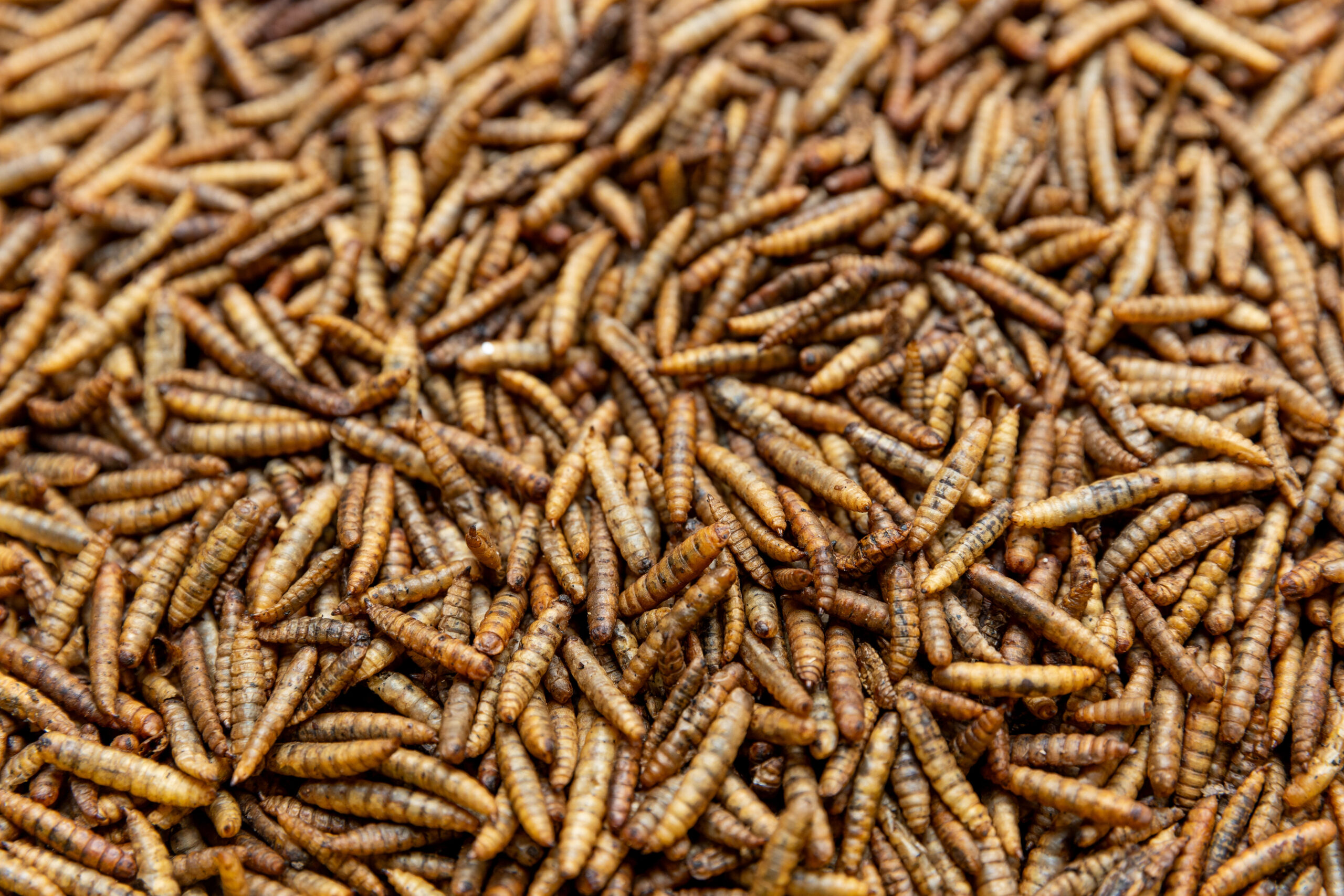
Could farms become mini manufacturers for insect protein, fermentation products, or high-value produce grown in a controlled environment?
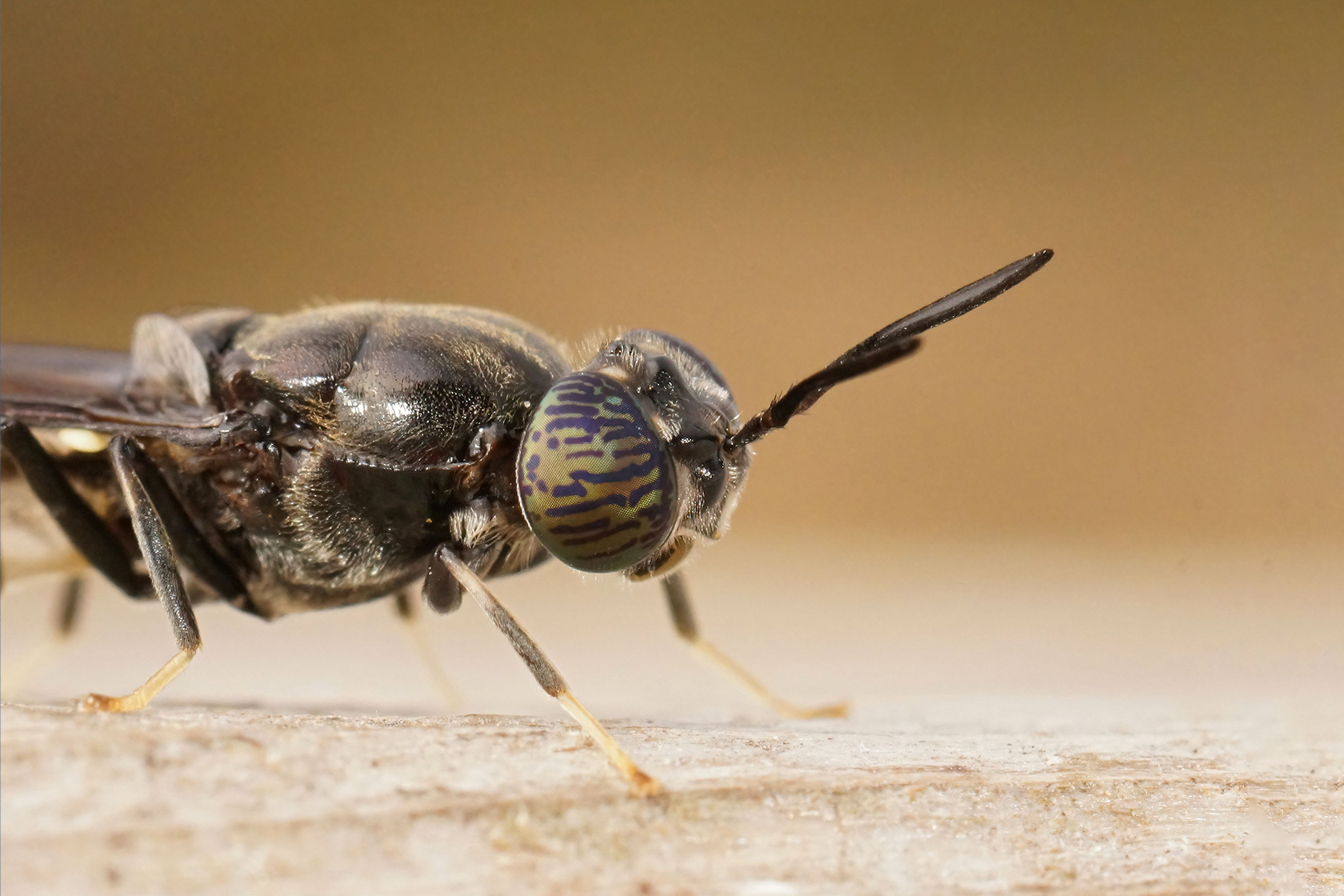
Modular insect farms are a ground-breaking and profitable waste management solution to help solve challenges like water pollution from excess poultry manure, simultaneously reducing our reliance on imported protein, says Larry Kotch, CEO of Flybox.
Flybox is developing smaller-scale insect farms. Larry says insect farms can be more efficient than an AD system while boasting greener credentials. The two technologies are also highly complementary.
“If you’re a farmer, you can diversify into the new protein source,” says Larry.
“You could convert an old poultry shed into an insect protein factory and have a guaranteed end market. We are trying to make it much more accessible with a lower requirement for capital.
“Previously, insect protein production was based around large factories with teams of entomologists and ingredients experts, which had a high amount of risk.”
As agriculture moves from the chemical to the biological age, there’s also potential for farmers to manufacture their own inputs, believes Joanne Neary, Senior Technical Lead at the Centre for Process Innovation (CPI).
For years, CPI has had queries from farmers, mainly in America, asking for advice on how to culture certain bacteria, explains Joanne.
“You would get questions from a farmer with an IBC container trying to grow microbes which they have tested on plots of tomatoes, asking us to help them refine the process. These days, the majority of enquiries are for non-farming businesses that have fermentors, but it’s an interesting concept to move this onto farms.”
Farmers making compost teas are already carrying out a process similar to a lab fermenter, so it is only a small step to a more formalised process, believes Jo. If the biologicals are produced correctly, it is cheaper than buying them because they do not need the sophisticated formulation to keep the organisms alive.
She says: “Much of the R&D budgets for commercial biological production is looking at the formulation. It is key to ensure the microbes are still viable when the product is stored, however it is packaged. You need the cells to stay in dormancy but still be viable.
“The cheaper approach is to make something on farm and use it immediately. You won’t have something that is stable, but if you can make it when you need it, why would you care?
“Another nice aspect of DIY biologicals is if you understand your soil microbial population, or if there’s a particular problem, you could tailor it to your needs.”
Mark Horler, Chairman of UK Urban Agri-TechE (UKUAT), believes that controlled environment growing technologies could be a viable proposition for arable and livestock farmers, providing they have the infrastructure. They would also link ideally with the quintessential farm diversification – a farm shop.
“UKUAT has identified a great deal of interest in controlled environment growing technologies as a form of diversification for farmers and landowners,” says Mark. “However, significant challenges and barriers remain. That might be in practical terms, for example, the capital cost, integration with renewable energy, or simply knowing where to get started and how to make appropriate choices.”
Firms like Grow Dynamics offer modular growing solutions more suited to the scale and cost farmers seek, but advice is still needed to navigate a complex landscape.
He adds: “Protected and controlled environment horticulture encompasses a wide range of technologies and approaches – from low tech/ low cost/ low control, for example, polytunnels, right the way through to Totally Controlled Environment Agriculture (TCEA) such as vertical farming. UKUAT tries to help bust some of the myths that have arisen around this topic and help farmers find the right advice.”
JOIN TODAY ONLINE! Future Farms Agri-TechE webinar – April 24th
Larry, Joanne and Mark will discuss the opportunities of future farm diversification in a webinar on April 24th, hosted by Agri-TechE . It’s a chance to delve into the technology, with information on how to get started and the opportunity to ask the speakers questions.
The views expressed in this Member News article are the author's own and do not necessarily represent those of Agri-TechE.
What do cars and vertical farms have in common? Plenty, it turns out, as showcased in the Hyundai Motor Group Innovation Center Singapore (HMGICS). Operational since late 2023, the seven-storey centre spanning 935,384 square feet (about 86,900 square meters) of floor space contains two smart farms which make use of robotics and automation (technology commonly used in car production), to produce various greens. There is a 5-meter tall vertical farm with automated rotating conveyors and robots that take care of processes from seeding through to harvesting.
Vertical farming is the practice of intensively growing plants in vertical stacks within a highly controlled environment. The super low footprint of a vertical farm is perfectly suited for producing fresh, high quality fruit and vegetables in an urban setting, especially in land-scarce, highly populated areas.
Although the concept has been around for decades, many regard Sky Greens’ facility in Singapore as the world’s first commercialised vertical farm. Set up in 2012, rotating, multi-layer troughs in a nine-metre-high vertical A-frame are used to grow plants hydroponically, or in soil. Natural lighting and water-powered rotation means the entire system is low energy, as well as low footprint. The inventor of the Sky Greens system, Mr Jack Ng, filed a patent application in Singapore in 2010, then made use of the Patent Cooperation Treaty (PCT) system to obtain protection for his invention in a range of countries around the world.
Market research firm MarketsandMarkets has predicted that the global market for vertical farming will be worth $13.7 billion by 2029, growing at a compound annual growth rate (CAGR) of 19.7% from 2024 to 2029. As awareness for the need for food security increases, government funding support in the agritech area has also been increasing globally, thus encouraging increased innovative activity.
In Singapore, there is a 30 by 30 initiative, which is a goal to increase the amount of Singapore’s nutritional needs that are produced locally and sustainably by 2030. A S$60 million (about US$44 million) Agri-food Cluster Transformation (ACT) Fund was set up in 2021, to encourage local farmers to upgrade their capabilities to raise productivity, resource efficiency, and reduce pollution and waste, and upscale their technologies.
In Korea, during the 3rd Agriculture, Forestry and Fisheries Future Technology Forum conducted in March 2024 by the President’s Special Committee on Agriculture, Fisheries and Rural Affairs, 243 billion won (about US$167.8 million) worth of funds were planned for supporting investments in green food technology, smart agriculture, among others.
According to a report from LexisNexis, there have been nearly 200 patent applications filed for documents that expressly use the phrase “vertical farming” in either their title, abstract, or claims with the top ten global patent authorities (Canada, China, France, Germany, Japan, Republic of Korea, Russia, the United States, the European Patent Office, and World Intellectual Property Organization). This does not account for any of the patent applications with applications in vertical farming that do not name it explicitly.
IP associated with vertical farming has also expanded in recent times to cover – amongst other things – sensors which monitor the plants, robots to tend to their needs, specialised lighting to ensure perfect all-year-round growth, and AI technology to manage it all. This “growing” trend is not limited to vertical farming, but encompasses many other Agritech sectors. In particular, the WIPO Patent Landscape Report on Agrifood shows substantial growth in the number of Agritech international patent families in the past 10 years. The sub-domain of connectivity/sensors/smart farming is among the top three sub-domain for patenting in Agritech, and has steadily grown over the years.
Innovation in the vertical farming sector is provided by an exciting mix of established agri-companies, global market leaders in non-agritech sectors, and new start-ups.
For example, Malaysian start-up BoomGrow, developed a system using repurposed shipping containers to grow pesticide-free produce grown in a controlled hydroponic environment. BoomGrow currently has pending patent applications in various Asia-Pacific countries, and received pre-Series A funding in 2023 to expand in Southeast Asia.
Urban Crop Solutions, a Belgian indoor vertical farming solutions provider, collaborated with global giant BASF SE in 2023 on a project to cultivate weed species for scientific research and develop innovative solutions to modern agricultural challenges. The company also recently partnered with Inagro and Ghent University to launch and validate the first of three vertical farming towers at Agrotopia, a research centre for urban food production in Belgium. Urban Crop Solutions currently holds several pending patent applications covering their vertical farming systems and facilities.
Danish start-up Nordetect, founded in 2016, produces portable lab-on-a-chip devices that enable vertical farmers to quickly identify and correct nutrient deficiencies in their crops, thereby obtaining optimum yield. Nordetect obtained a US patent grant in 2023 relating to their microfluidic device and method and system for performing inorganic determinations and has raised more than US$1.5 million in funding to-date.
As agritech companies continue to innovate, this emerging area of vertical farming presents an opportunity for growing intangible assets, whether it is to secure first-mover advantage, or to unlock licensing prospects for alternative revenue streams and/or collaborations. Whether you are a start-up or a multi-national, protecting your technology is paramount. Marks & Clerk’s Agri-tech team brings together years of expertise in biochemistry, engineering, AI, electronics and software. With our branches in the UK, Europe, Canada, Singapore, Malaysia and China, we are ideally placed to help grow your IP – around the world.
Article written by Nikki Lai, Associate Marks & Clerk
*I have permission from the copyright holder to publish this content and images.
Post Overview
This story has been submitted by an Agri-TechE member.
The views expressed in this Member News article are the author's own and do not necessarily represent those of Agri-TechE.
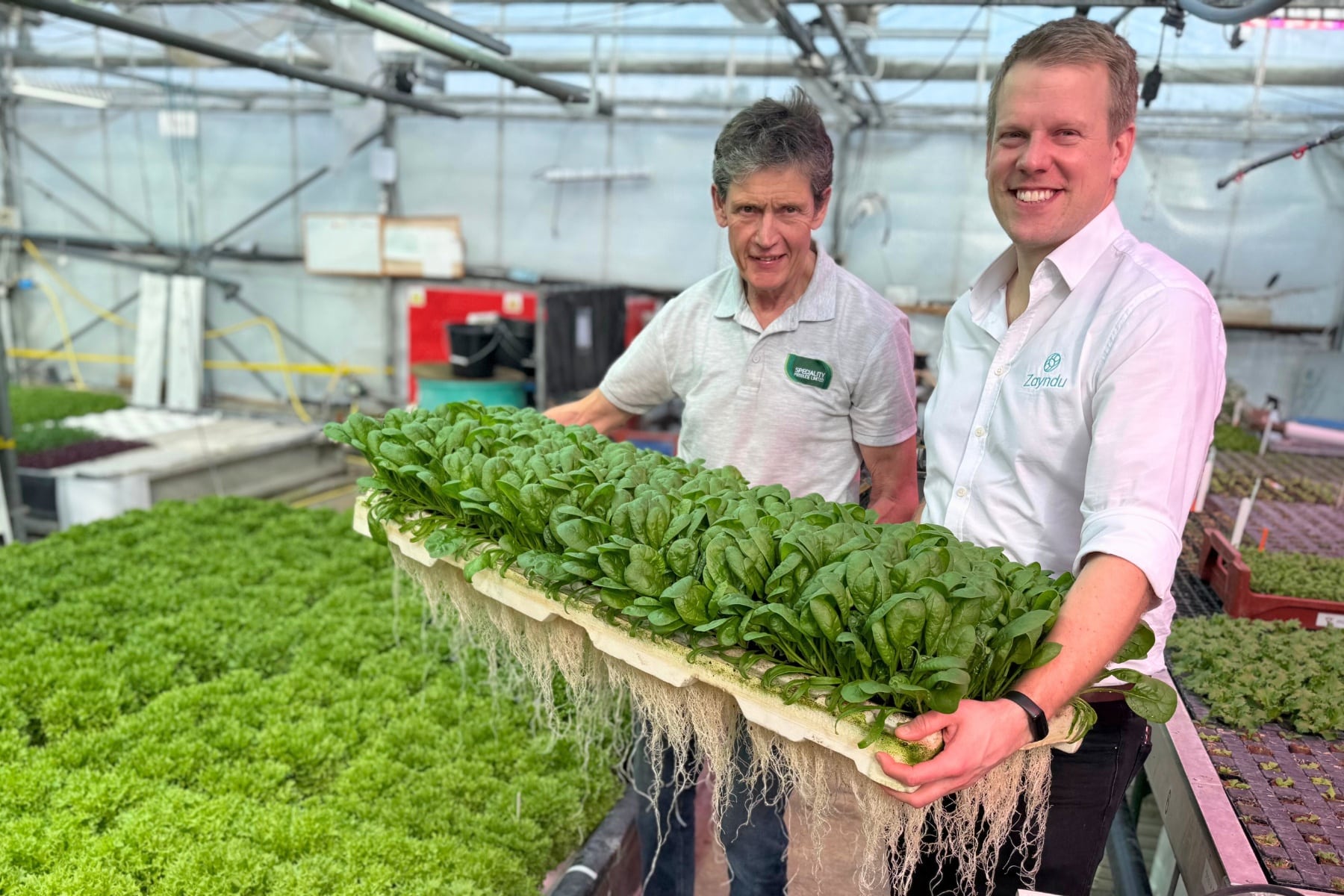
Zayndu recently produced a video explaining its groundbreaking ActivatedAirTM seed priming technology, which we wanted to share to help growers understand its benefits.
Shot on location at its UK headquarters at the Advanced Technology Innovation Centre in Loughborough, the video features members of the Zayndu team discussing every aspect of ActivatedAirTM.
Zayndu CEO Ralph Weir introduces ActivatedAirTM by saying it helps produce bigger, stronger and healthier plants without artificial chemicals by encouraging the seed to utilise its resources better.
At the heart of the Z-Series plasma seed treatment machine is a plasma generator using high-voltage electricity to expose seeds to an environment similar to a lightning strike, said James Seaman, director of engineering at Zayndu.
One of the key features of the machine is its simple user interface.
“We don’t want our customers spending lots of time upskilling and training their operators. We want the machines to be used out of the box with minimal skill required,” said James.
The plasma treatment removes the external waxes on the seed surface, increasing the water permeability of the seeds and enabling them to absorb water more efficiently, explained Dr Alberto Campanaro, head of plant science at Zayndu.
This produces faster germination, which, so far, Zayndu’s plant science team has tested around 130 varieties spanning 50 plant species.
“Generally speaking, what we see in terms of yield increase from using the ActivatedAirTM technology is somewhere in the region of 20%, up to 30%,” Alberto added.
What does this mean for a grower in practical terms?
“Vertical farmers find ActivatedAirTM particularly attractive because of the decreased (crop) cycle time,” said Nathanael Dannenberg, sales manager at Zayndu. “It means their crop under lights for less time, which makes their operational costs lower per cycle.”
Similarly, greenhouse growers can increase output by running more crop cycles per year, maximising their growing space, continued Nathanael.
In conclusion, Ralph added that ActivatedAirTM enables growers to lower their cost of production, increase their output, and deliver better crops without using artificial chemicals.
Get the latest agri-tech news, events and opportunities direct to your inbox
Germinating seeds, lightning-fast
Meet the Network
Agri-TechE
Zayndu joined Agri-TechE at the start of 2021, having commercialised the world’s first application of cold plasma on seeds. Sophie Butler, Content Manager at Agri-TechE , caught up with Zayndu’s CEO, Ralph Weir, to check out their progress.
Ask any grower, and they will say establishing crops swiftly and evenly sets it up for success. This is especially true if a crop grows for only a few weeks before it is harvested, such as leafy salads grown in controlled environment conditions in a glasshouse or vertical farm.
This is where Ralph Weir, CEO of Zayndu, says cold plasma seed priming can transform crop production.
“Cold plasma seed priming is an amazing new technology that gives farmers a welcome boost in productivity, and if we’re honest, we are still learning its potential,” he explains. The process uses ionised gas containing reactive oxygen and nitrogen to modify the seed surface, enhancing its physiological and biochemical properties to promote germination, growth, and stress resilience.
The scientific concept was developed by Dr Felipe Iza’s research group at Loughborough University, where Zayndu is based, at the Advanced Technology Innovation Centre.
Zayndu first joined the Agri-TechE community in January 2021 when they were an early-stage start-up looking to build connections in the industry.
Ralph says Dr Belinda Clarke and the Agri-TechE team have introduced Zayndu to large-scale leafy salad growers and specialist marketing service providers in the membership community.
From making it work “in the real world” to global expansion
Zayndu has been on a mission to get the technology into the hands of as many growers as possible.
“Looking back a couple of years, all our internal conversations were about making cold plasma actually work in the real world,” explains Ralph. “Team meetings were dominated by discussion about plasma stability: how do we make it work better when we have damp seeds, dusty seeds, or weird seeds?
“These topics don’t come up any more. The discussion has moved on. It is all about what we need to do for machine certification in a new region, how to make systems easier to use, shorten treatment times, and translate the signage into Spanish or Arabic.”
Asking farmers to embrace an entirely new technology and undertake a new process has led the Zayndu team to drill down into the return on investment. Its plant science team, led by Dr Alberto Campanaro, has been trialling cold plasma on an increasing range of plant species and varieties. This work has been done in-house and with research partners like Niab, another Agri-TechE member.
Zayndu has been running a popular free trial programme to help growers gain experience with cold plasma before committing to the technology.
Ralph also explains that they have established systems to assist customers worldwide. “We can support all users from our offices in the UK, giving them access to the best possible technical support.”
“This task is considerably eased by our remote monitoring system SeedCloud, which allows us to monitor systems, support and coach users, and even offer an audit trail of seeds processed, dosages delivered, etc.”
The Agri-TechE Back to the Future report highlighted that growers are seeking solutions that work effectively from the start and considering the return on investment as major barriers to adopting new agri-tech on farms. In light of this, Zayndu has directed its focus toward the appropriate priorities.
“We have a pricing structure specifically designed to ensure that every user enjoys a significant profit boost – from the first crop after installation onwards,” adds Ralph.
What will another three years as an Agri-TechE member look like?
Despite the opportunities, there remain challenges in the controlled environment (CEA) sector, which Zayndu has weathered along with many other firms. The end of ‘cheap money’ transformed the fortunes of some growers with massive infrastructure. 2024 ended with Bowery being the latest large-scale grower to cease operating.
Ralph believes that the adaptability of cold-plasma seed priming has enabled Zayndu to pivot its offer according to market and grower demands. The overall opportunity means that its ambitions are boundless at this stage, he says.
“The controlled environment market size was estimated at $51.9 billion in 2023, so the potential for Zayndu is tremendous.”
“A positive sign for Zayndu’s future is the global nature of demand for our systems.
Most of our installations are currently in the UK and the US, but an exciting new region for us is the Gulf, where there is so much emphasis on improving food security.”
“In three years, I expect many more growers will be using cold-plasma seed priming. It will be well on its way to becoming an accepted crop input technology across the CEA sector,” he concludes.
Get the latest agri-tech news, events and opportunities direct to your inbox
How secure is the UK’s food supply?
Agri-TechE Blog
Agri-TechE
Many of us will have spent the last month buying, preparing, cooking, eating and talking about food. With New Year traditionally viewed as a time to shed indulgences after festive excesses, and retailers are posting their performance over the Christmas period, food security might be a long way from our thoughts right now.
But an independent report published last month gives valuable insights into the status of the UK’s food security – and how worried we should be.
Mandated by the Agriculture Act 2020, this independent, triennial report is designed to inform policy-makers and stakeholders about the current state and future outlook of the UK’s food security.
The report considers five key themes:
Global food availability
UK food supply sources
Food supply chain resilience
Food security at household level
Food safety and consumer confidence
What do we really mean by “food security?”
The UKFSR uses the 1996 World Food Summit which defines food security as:
“When all people, at all times, have physical and economic access to sufficient safe and nutritious food that meets their dietary needs and food preferences for an active and healthy life.”
We can debate the merits (or otherwise) of this interpretation and talk about calorie security and poor nutrition in all its forms, (both under- and over-nourished diets), however several key – and uncomfortable – facts emerge from the analysis in the report.
Resilience amid volatility
The interconnectedness of global food systems is both an opportunity and a vulnerability.
The UK relies heavily on imports (around 40% of our food), particularly for fresh produce. While domestic fruit production has doubled since 2004 (now equating to 16% of demand), the UK remains far from self-sufficient.
This leaves us exposed to volatile factors like harvest fluctuations (the UK’s wheat harvest fell 22% in 2024 compared with 2023) and geopolitical disruptions.
As of December 2024, 17 countries have implemented 22 export bans, and 8 introduced export-limiting measures.
Yet the report highlights some welcome resilience. UK supply chains, while stressed, have adapted, and domestic production in areas like soft fruit continues to grow.
Moving forward, we can build greater resilience by exploring opportunities for enhanced domestic production. Such as through protected and controlled-environment farming (e.g. LettUs Grow and Innovation Agri-TechE Group), precision agriculture (such as the Omnia system developed by Hutchinsons), and innovations in crop diversity (including breeding work by Niab and Elsoms).
For imports that can’t be grown in the UK (e.g. bananas), supply chain diversification and adopting innovative trade policies will help to buffer disruptions. And we may explore shifting consumer preferences towards more local, sustainable alternatives (e.g. Morrow coffee).
Protecting – and enhancing – natural capital
One of the report’s more encouraging findings is that the decline in natural capital – the soil, water, and ecosystems that sustain our food systems – appears to have levelled off. This is likely due to the adoption of sustainable farming practices in recent years, such as better land management, reduced pesticide use, and increased adoption of regenerative agriculture.
However, progress remains fragile with natural capital still at a very low level compared to its historic state. The challenge now is ensuring this plateau becomes a sustained recovery – a baseline to enhance, not an end point.
Addressing inequalities in food security
Perhaps the most striking fact from the report is the decline – and unequal distribution – of food security in the past five years. Depending on income, between 13% and 42% of UK households fail to meet Government dietary recommendations.
Poor access to nutritious, affordable food highlights the need for systemic changes – and innovation can play its part, for example by helping to reduce waste and inefficiencies in the supply chain to lower costs.
What’s next?
This report sits at the heart of our personal and national health and wealth, not to mention informing decisions about the land-use framework and the wider agri-food ecosystem.
As we move into 2025, there is an opportunity – and responsibility – to drive innovation and collaboration across the food system. This report is a call to action for all of us working to build a more resilient, sustainable, and equitable food future – we disregard its contents at our peril!
Post Overview
7th January 2025
Agri-TechE
Agri-TechE Article

CEA and Vertical Farming
Crops, Varieties, Breeds, Rotations
Data: Collection to Management
Industry Trends
Natural Capital & Innovation for ELMs
Regenerative Agriculture
Soils and Water Management
Share this Page:
Related Posts
Maximise Crop Performance with NutriSphere-NL: A Breakthrough in Nitrogen Efficiency
The views expressed in this Member News article are the author's own and do not necessarily represent those of Agri-TechE.
Agri-TechE Week 2024 celebrates its 11th year – our largest yet, featuring nine events curated by Agri-TechE and hosted by our incredible member community. This week exemplifies innovation, collaboration, and forward-thinking in agri-tech.
Each event reflects the strength of our ecosystem, fostering vital connections between growers, researchers, and technology developers. Thank you to our members for hosting and making Agri-TechE Week possible and showcasing what our community can achieve.
Innovation Agritech Group (IAG) and the University of Essex proudly hosted this Agri-TechE Week event in collaboration with Agri-TechE . The event brought together leading minds from academia and the agri-tech industry to address one of the most pressing issues in modern agriculture—the skills gap—and showcased how university research and technology can advance sustainable food production.
After a morning session hosted by Tracy Lawson, Professor of Plant Science at the University of Essex, guests were invited to tour the Smart Technology Experimental Plant Suite (STEPS) facility in the School of Life Sciences featuring IAG’s GrowFrame360™ vertical farming system. The vertical farm is key in the STEPS laboratory’s mission to develop climate change-resilient crops for a harsher future growing environment. This hands-on experience offered attendees valuable insights into how cutting-edge technology is practically being used in a research setting to address future food production challenges.
Following the tour of the novel facilities at STEPS, IAG’s Business Development Director Kate Brunswick welcomed a number of expert speakers to discuss the role that agritech systems, such as those demonstrated earlier, can play in agricultural education and the importance of bridging the skills gap.
Dr Laura Placzynski, postdoctoral research associate at Harper Adams University, delivered an insightful keynote on behalf of Professor David Rose, Elizabeth Creak Chair in Sustainable Agricultural Change at Harper Adams, on the trends in British sustainable food systems and the skills needed to keep up with technological change.
Oxfordshire mixed farmer Will Brown, 2023 Nuffield Scholar, shared valuable insights about his scholarship on vertical farming and how vertical farming can fit into agricultural production, research and training.
Kirsty Barden, Head of Business Development at Management Development Services (MDS), discussed the skills gap in agriculture and how her organisation is helping to bridge it.
Lastly, Professor Tracy Lawson delivered a presentation overviewing the STEPS lab’s role in agricultural education and the benefits of installing a vertical farm within an educational institution.
The event wrapped up with an open panel discussion and Q&A session chaired by Kate Brunswick, where the keynote speakers were joined by IAG’s Lead Plant Scientist, Dr. Deepa Haridas. This interactive session allowed attendees to ask questions, sparking discussions on the essential combination of innovation and education in agri-tech. Key themes included the importance of equipping future agri-leaders with both practical skills and theoretical knowledge to navigate an evolving industry and a changing world.
Throughout the day, attendees enjoyed multiple networking opportunities, connecting with peers and industry experts who are shaping the future of agriculture. The event underscored the value of collaborative efforts between academic institutions and industry partners like Innovation Agritech Group in bridging the skills gap and fostering sustainable food production solutions.
The event highlighted the urgent need to attract new talent to agriculture, especially as 35% of the current farming workforce is over 65. Agri-tech’s modern, tech-driven environment could be instrumental in engaging younger generations, with vertical farms and advanced technology making agriculture more appealing and accessible. Re-educating the public on the diverse, high-tech career paths now available in agri-tech such as engineering, project management, and design can help dispel outdated stereotypes about the industry.
Supporting agri-tech in education, including integrating vertical farming and Controlled Environment Agriculture (CEA) into academic programs, offers hands-on experience and exposure to cutting-edge methods. These setups allow researchers to conduct experiments more efficiently, and with government support, could become a foundational part of agricultural education. Vertical farming, while not a replacement for traditional agriculture, can complement it by supporting niche crops and advancing agricultural research.
This Agri-TechE Week event not only highlighted the critical role of agri-tech in advancing academic research but also demonstrated how initiatives like IAG Educate and the GrowFrame360™ system are contributing to a skilled, knowledgeable, and capable future workforce. While changing perceptions around careers in agriculture requires ongoing effort, events like this highlight tangible steps to attract the next generation. By incorporating more agri-tech solutions into educational institutions, we can inspire young minds and move toward a sustainable future in agriculture.
Post Overview
This story has been submitted by an Agri-TechE member.
The views expressed in this Member News article are the author's own and do not necessarily represent those of Agri-TechE.
Agri-TechE Week 2024 celebrates its 11th year – our largest yet, featuring nine events curated by Agri-TechE and hosted by our incredible member community. This week exemplifies innovation, collaboration, and forward-thinking in agri-tech.
Each event reflects the strength of our ecosystem, fostering vital connections between growers, researchers, and technology developers. Thank you to our members for hosting and making Agri-TechE Week possible and showcasing what our community can achieve.
Industry representatives and researchers from the Essex Plant Innovation Centre (EPIC) at the University of Essex got together to discuss ways in which the agricultural sector can address challenges faced by growers and the wider industry.
What is the place of Controlled Environment Agriculture (CEA) in crop production?
Controlled Environment Agriculture has the potential to address issues in modern crop growing including protection from disease and pests, widening the land available to growers and water efficiency. However, it is not without challenges, not least of which is energy costs.
Jonathan Bell, Operations Manager for Stourgarden, described how his company is incorporating CEA into their operations. In conjunction with researchers at the University of Essex, Stourgarden are utilising a bespoke aeroponics facility to develop methodologies to reliably germinate and grow onions to crop size. With work funded for the next year it is hoped that CEA can produce high‑quality onions at scale for harvest or transplantation.
Dr Deepa Harridas, research scientist from Innovation Agritech Group spoke about her work on nutrient management in CEA. Dr Harridas’ work demonstrates the importance of substrate choice, watering regimes and the microbiome in maximising CEA technologies.
Professor Tracy Lawson from the University of Essex and EPIC spoke about her team’s project ‘Green Conversations’ – developing tools for real‑time monitoring of photosynthesis in CEA to maximise yield and minimise energy usage. Dr John Stamford (Vertical Future) presented on his team’s research into further ways to maximise efficiency of light usage.
Dr Mark Else, Head of Crop Science at Niab, addressed some of the challenges faced by strawberry growers. This sector depends on glasshouses for a large proportion of its crop and is therefore still reliant on natural light. Mark and his team have been working on methods to best utilise CEA tools and have shown substantial gains in yield under well managed conditions.
Non CEA Innovations
Work in non‑controlled environments was also presented to the audience. Karthik Ashok, a data scientist from Baker Consultants presented work from his team who carry out research on ‘eco‑acoustics’. Utilising novel machine‑learning tools the team are developing methodologies to identify how healthy a soil is from the sounds produced by the animals living in it. It is hoped that these tools will lead to an improved understanding of soil ecology.
Dr Pallavi Singh from University of Essex and EPIC spoke on her pioneering work in grafting monoctyledon plants, something historically thought not to be possible, which is opening up new possibilities in developing drought and disease resistant grain crops.
Dr Amanda Cavanagh from University of Essex and EPIC presented some early stage results from a PhD project sponsored by the British Beet Research Organisation, which aims to develop a more drought resistant sugar beet industry in the UK.
Conclusions
21st century agriculture is faced with unprecedented challenges, from climate change to labour shortages. But innovative research and the technologies it generates offer equally unprecedented opportunities to address these challenges.
Post Overview
This story has been submitted by an Agri-TechE member.