What do farmers need science to solve?
 Agri-TechE
From soil health, water management and crop protection to livestock breeding and AI, the research presented at REAP 2026 demonstrated the breadth of scientific research underway across UK agriculture.
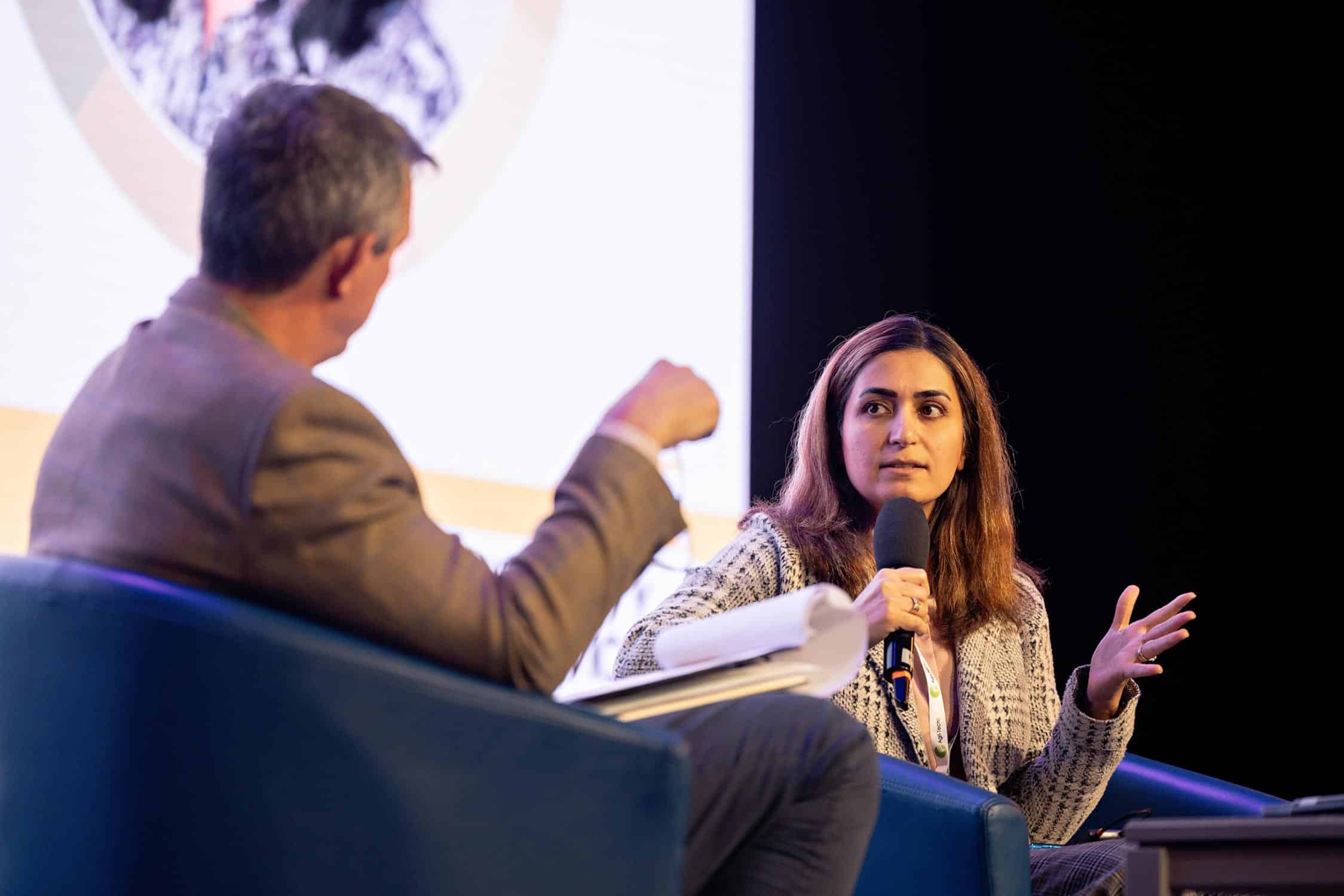
In a fireside conversation with arable farmer and Frederick Hiam Managing Director, Jamie Lockhart, researchers were challenged to explain their work through a farming lens: what problem are they solving, how will farmers use it, and what still needs to happen before it can deliver impact on farm?
Earth Rover – detecting soil compaction using seismology
Dr Joe Collins, Harper Adams University
By using established scientific methods to measure how seismic waves refract as they travel through soil, researchers at Harper Adams University can measure the physical properties of a farmer’s soil, including compaction.
Incredibly, they are working toward enabling farmers and advisors to do this using a mobile phone placed on the soil. Most modern phones have sensitive accelerometers, capable of detecting seismic waves. This means a mobile app is possible to scan fields.
Joe thinks this will give farmers a tool to regularly measure their fields, check compaction levels, and monitor progress as they take measures to reduce it.
Nature based solutions for water resources management
Jordan Bull, University of East Anglia
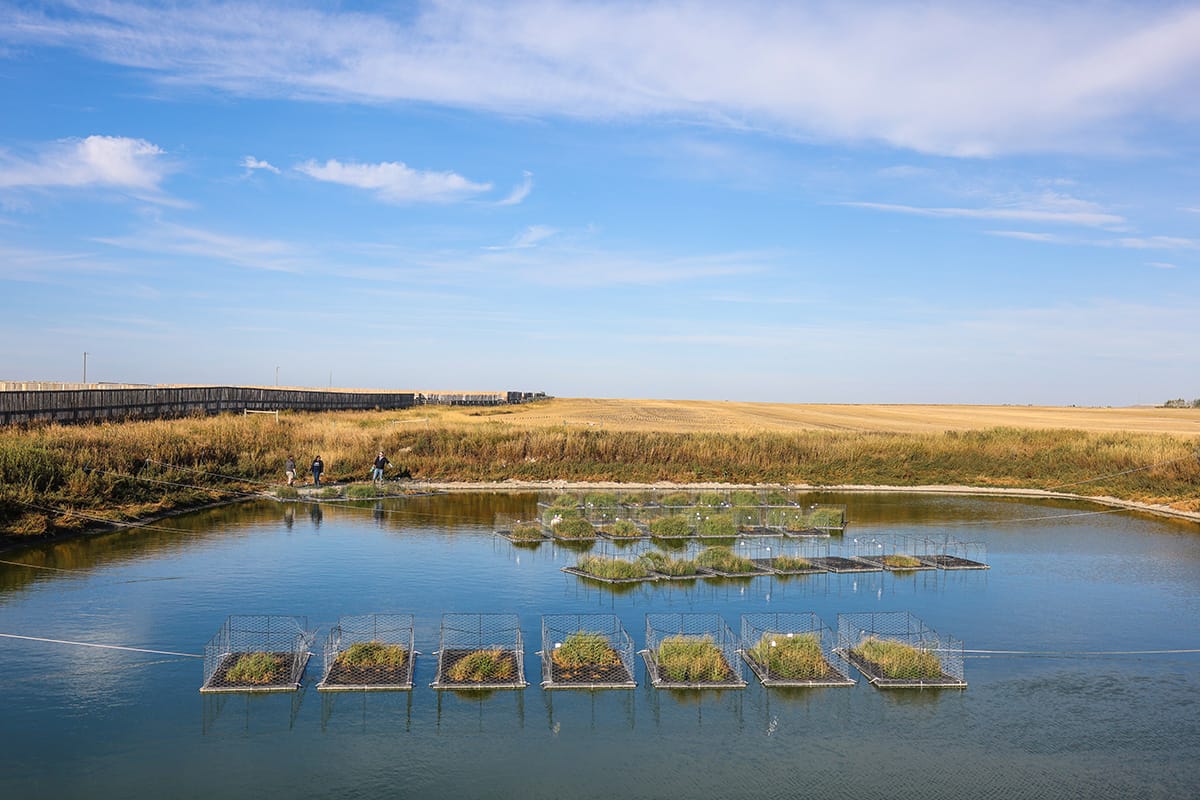
Water management has become the hot topic as farmers look ahead to next year, and Jordan’s research, supported by Water Resources East, offers a timely look at how natural features could help capture surface runoff and increase groundwater recharge.
Runoff attenuation and infiltration features, including small dams and retention basins, could direct water into underlying aquifers, helping strengthen water resilience. The research is examining how much additional groundwater recharge these interventions can achieve, alongside potential water-quality risks.


Propick – Strawberry picker behaviour to productivity
Dr Jack Grant, University of Lincoln
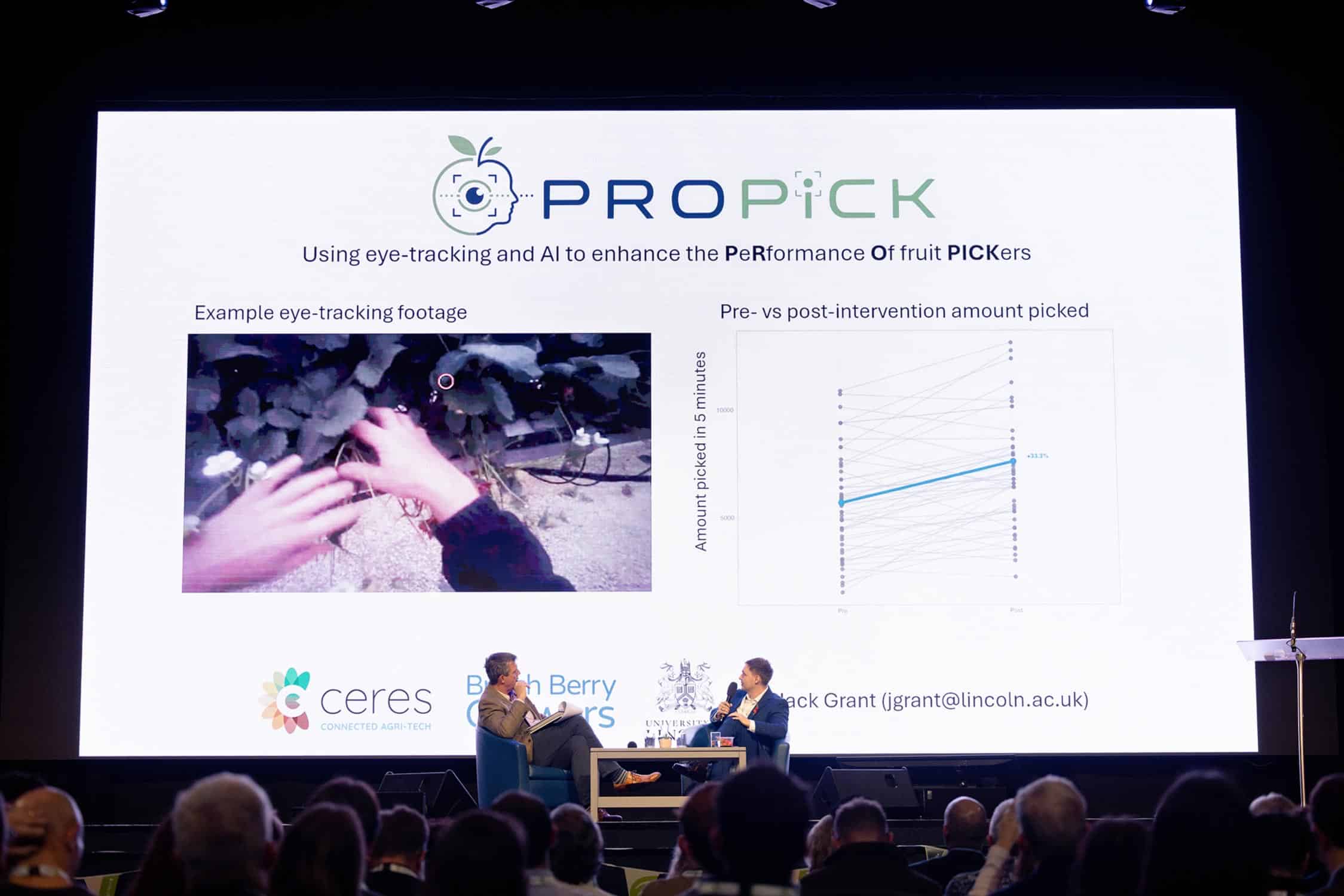
Rather than developing an expensive robot to pick soft fruit like strawberries, what if you used AI and machine learning, combined with psychological and behavioural insight, to improve human pickers.
Jack’s research, now spun out into the firm Propick, has demonstrated a 33% increase in strawberry picker productivity in trials across six commercial farms.
Eye-tracking glasses and video analysis are being used to understand the movements and behaviours that distinguish the most productive strawberry pickers. They are using these insights to give less productive growers specialist training to improve their productivity.
With most strawberry pickers on a piece rate, it is something they are happy to do if it improves their earnings.
Hyperspectral imagery to screen for mycotoxins in oats
Dr Carol Verheecke-Vaessen, Cranfield University
Scientists at Cranfield University are developing hyperspectral imaging technology to identify oat grains contaminated with mycotoxins, even when infection produces no visible symptoms. The research focuses on toxins produced by certain Fusarium species, which can downgrade grain from food to animal feed and result in a significant financial penalty for a farmer.
By combining imaging with machine learning, researchers have achieved 97.8% accuracy in identifying highly contaminated grains.
The ambition is to integrate the technology into existing optical sorting equipment, removing contaminated grains while retaining more of the crop for food use. Initially, they are partnering with the food chain and those farmers who store lots of grain and have sorting equipment,
A full scale commercial application could be four to five years away, with further potential for field-based detection.
Sequences to seeds – collaborative genomic innovation and vegetable breeding
Dr James Pike, Earlham Institute
Marker assisted selection is a well used tool for breeding major crops like wheat or barley. But in small niche crops, adoption requires committed, specialist researchers.
A collaboration involving vegetable breeder Tozer Seeds and the Earlham Institute is using genomic sequencing and molecular markers to accelerate the development of improved vegetable varieties.
Researchers are combining genetic information with field-trial data to identify markers linked to desirable traits, allowing them to select promising plants much earlier in the breeding process.
In celery, where developing a new variety can take around 15 years, the approach could potentially reduce breeding times to five to seven years. And one of their targets is to develop new mechanisms of celery blight resistance, a challenge singled out by veg grower Kathryn Wright during the REAP farmer panel.
The technology could subsequently be applied across other vegetable crops in Tozer’s breeding programmes.
Protein level biomarkers into commercial embryo selection
Dr Suzanne Madgwick, Newcastle University
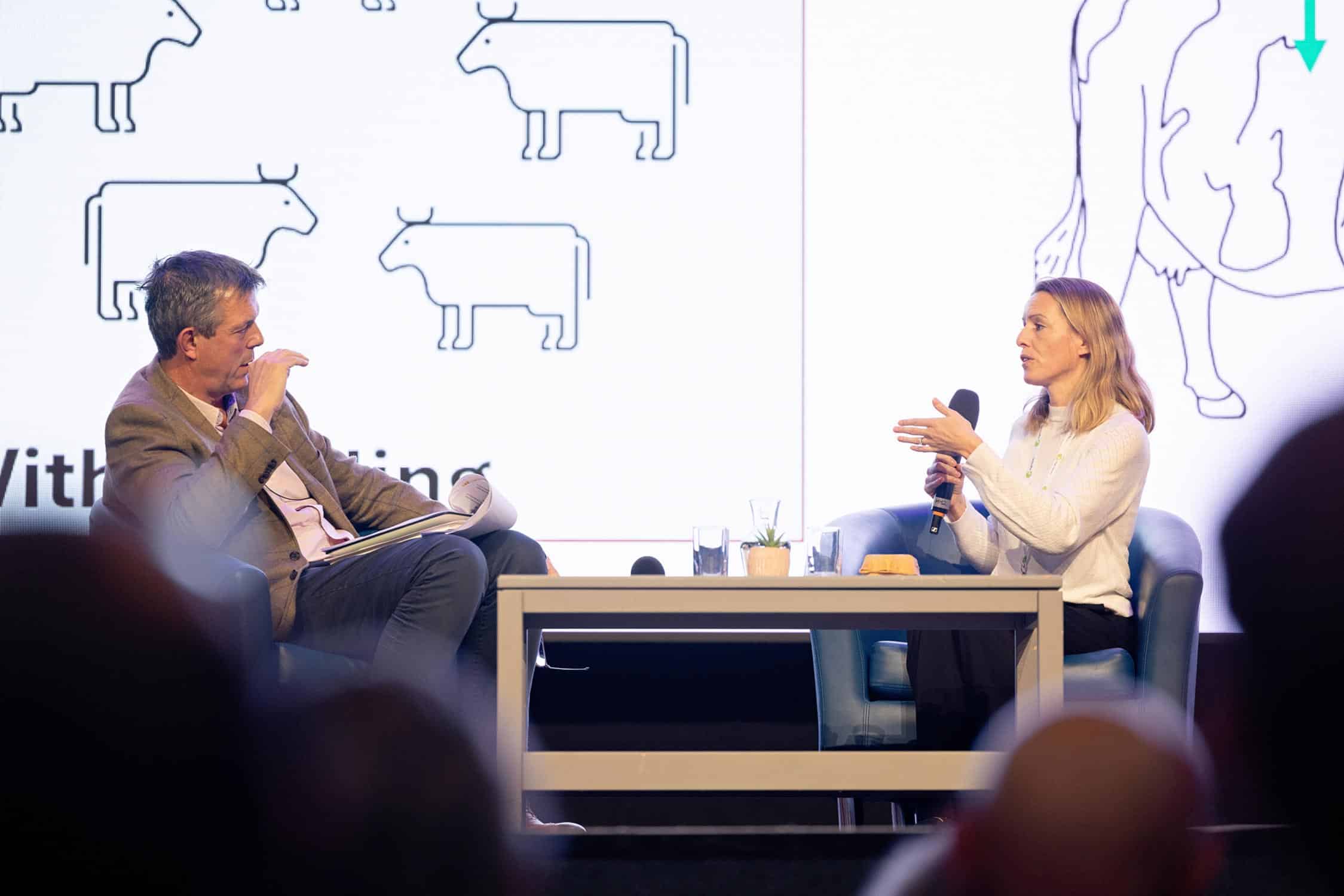
Dr Madgwick explained that fewer than 40% of transferred embryos used in commercial cattle breeding currently result in sustained pregnancies, despite success rates of 70–80% being considered scientifically achievable.
The research combines advanced protein profiling with artificial intelligence to identify biological markers associated with embryo development. Unlike conventional visual assessment, the approach could distinguish between embryos that look identical but have different developmental potential.
Pleasingly, the technology takes the same time to carry out as existing assessments, but it will provide a much more accurate quantitative assessment of embryo success.
Laboratory results are promising. Dr Madgwick is now hoping to prove the scientific principle through to a successful live calf birth.

Bacteriophages – protecting crops from bacterial diseases
Dr Mojgan Rabiey, University of Warwick
Naturally occurring viruses specific to bacteria called bacteriophages could provide targeted biological control of bacterial crop diseases. These bacteriophages infect and kill specific bacteria, potentially offering an alternative to conventional crop protection products.
Researchers are investigating several delivery methods, including foliar sprays, soil drenches and seed treatments. One particularly novel approach involves using bees to carry bacteriophages directly to flowers during pollination, targeting bacteria at a critical infection stage.
Further field trials are needed to establish reliability across different crops and growing conditions, along with the evidence required for regulatory approval.

Post Overview
Agri-TechE Related Posts
Agri-TechE in conversation with Elsoms
ATW 2026: From Lab to Land – Making Collaboration Work in Agri Tech

‘Speed carousel’ brings a new spin to the technology showcase
Adrian Scripps – from cupcake machines to the UK’s Top Automated Fruit-Packing Facility
Assessing economic value to move science into commercial world