Adrian Scripps – from cupcake machines to the UK’s Top Automated Fruit-Packing Facility
 Agri-TechE
 How Adrian Scripps looked beyond the industry for agri-tech innovation
Over the last decade, Adrian Scripps Ltd has expanded its tech operations to become the UK’s top automated fruit-packing facility. However, the secret to success was found not in agriculture but in the bakery industry. James Simpson, Managing Director, shares how cupcakes were the catalyst for their innovative shift and their plans to add to their impressive tech lineup.
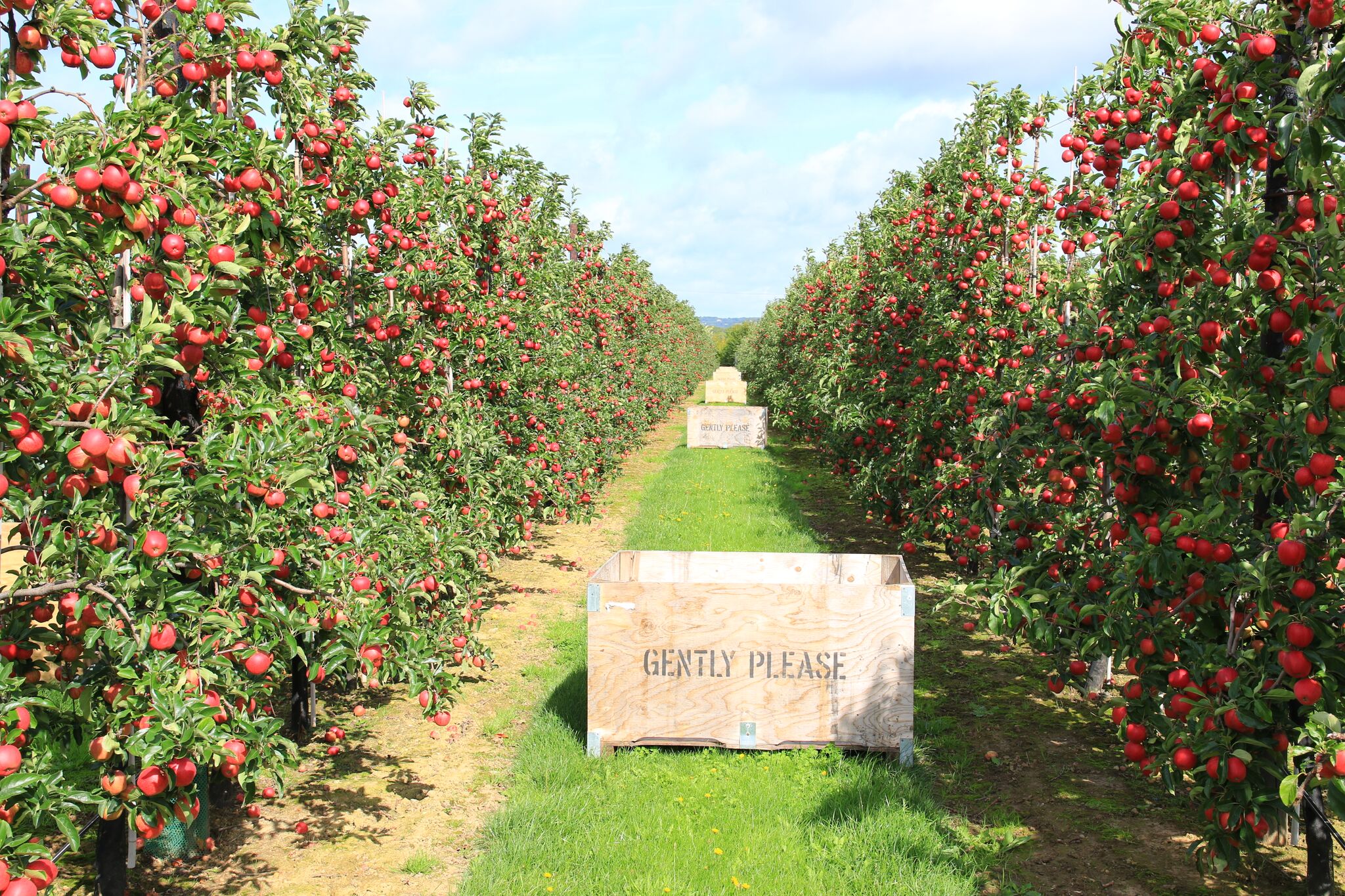
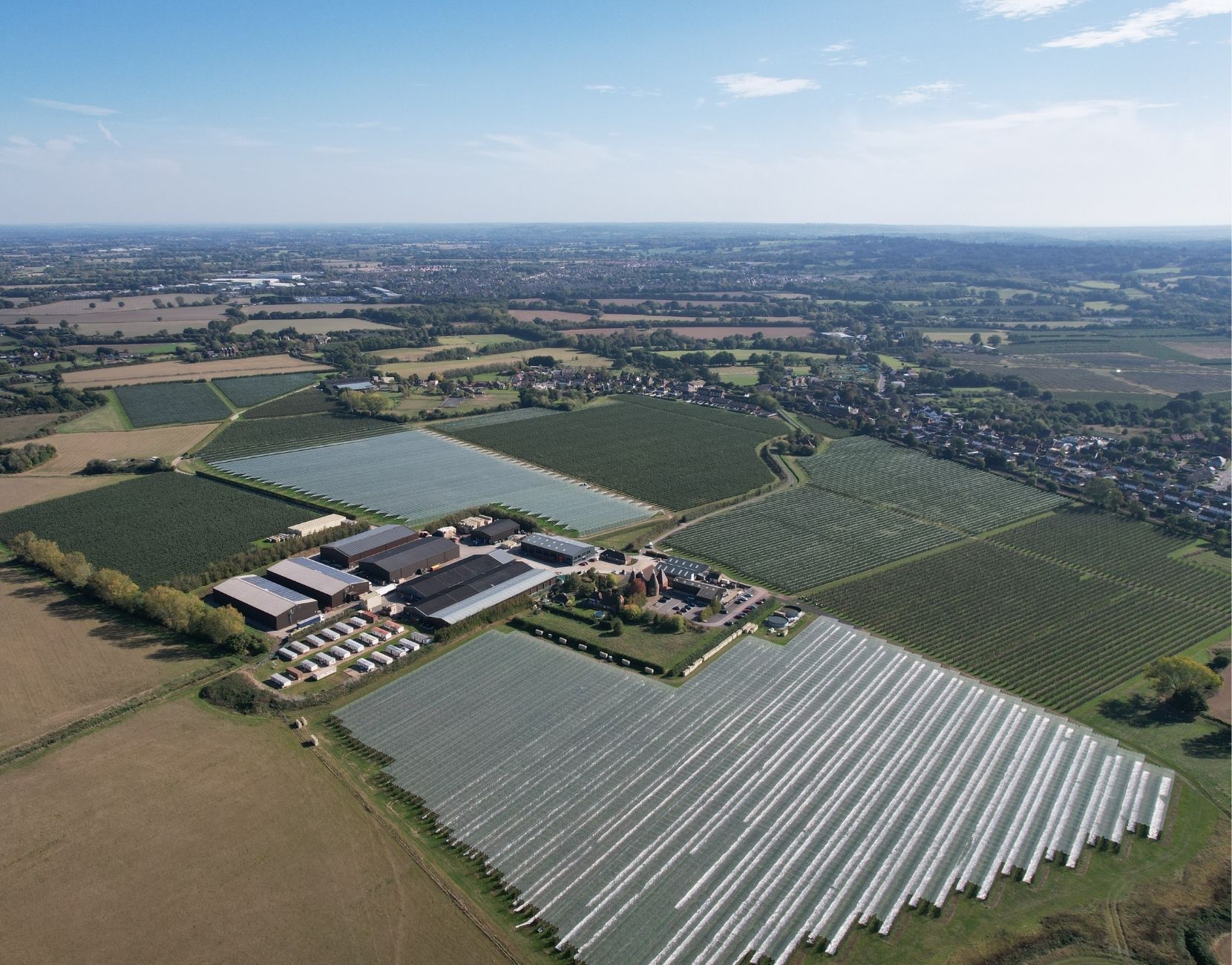
Starting as an assistant farm manager in 1991, James Simpson oversaw a diversified Adrian Scripps Ltd that included broad-acre crops, potatoes, hops, and top fruits. Over time, the business has narrowed its focus, now primarily concentrating on top fruit, with 300 hectares dedicated to orchards.
As part of this business rationalisation, the company has become focused on the retail sector, with investment in automation at the packing facilities since 2013. But what exactly drove the business to adopt the latest agri-tech and what have the benefits been?
‘The biggest driver in all businesses is profit,” says James. “Around 40% of our turnover would be used on employing labour. And if you’re in a soft fruit business, it’s higher than that. That’s our highest single cost.
“So, a lot of the automation has been driven by the cost of inputs into the business but also driven by the need for data and precision management.”
Despite adopting automation, James reiterates that they now employ more people, yet the productivity per person has increased four, five and in some cases, six times more than in 2013.
Starting with cupcake automation
With labour costs a driver to implement automation, the first aim was to find processes to take away simple tasks.
For example, the business started with the goal of simplifying the packing process by eliminating the steps where someone takes a pack of apples, places it into a crate of 14, pushes it onto the conveyor, and then another person picks it up to stack it.
However, the agricultural sector did not offer the automation machines they required, pushing the business to look outside the industry.
“There’s been an awful lot of robots being used in various industrial processes for decades, but they weren’t really being used in top fruit pack houses,” says James.
‘In the bakery industry, FlexiPick robots are commonly used to place cupcakes into plastic packs. We adapted this technology by collaborating with a company to modify the FlexiPick robot’s head, equipping it with suction cups to pick up flow wrap plastic packs of apples. These can then be programmed to place the packs into crates.”
For de-stacking the crates, feeding them to the FlexiPick robot and folding the crate arms to stack others on top, the team needed to invent a different machine.
“We automated the whole end-of-line process so that we took out nearly all of the human element at that end of it,” he says.
Over a decade later, the business continues to invest in innovation, with the current focus on precision and data-led technology.
Adrian Scripps has also been taking advantage of funding to apply more precision technology, including an 850E Innovate UK Swiss Research-funded project to record data from 80-90 trees across three orchards.
From orchard to tree level management: The on-farm technology
James Simpson says the focus is on getting the most out of every orchard by moving to tree-level management using various innovations.
- Hutchinson’s Omnia Terra Mapping
For soil analysis, the business is using Hutchinson’s Omnia Terra mapping to create 800 data points per hectare using gamma radiation technology.
Unlike traditional soil sampling, which covers one tree per 2,800, Terra mapping provides a data point near every 3.5 trees, according to James.
“800 data points gets us much closer to being able to apply nutrients at a tree level, we know where the soil changes, so we can adjust ground-applied fertilisers, not quite to the individual tree, but certainly far more precisely than taking one soil sample per hectare.”
- Tree scanning and blossom intensity
“We’re also scanning our trees in the orchard with kit to measure tree density. So how much wood is in the tree?” says James.
“We can also use the same kit to measure blossom intensity. So where are most of the flowers in the orchard, and which trees are they on?”
Utilising the data
With the data collected from terra mapping, tree scanning and blossom intensity, James says this allows the business to address the tree more closely using machine technology on farm and ultimately have the fruit hit its peak at the packhouse.
“We can root prune individual trees fully automatically with a machine on the back of a tractor, all based on our scanning of the tree vigour. We can also take blossom off the tree either with salts for burning the flowers off or with mechanical flails to take blossom off.”
“We’re also going one step further and measuring fruit numbers and measuring fruit size.”
“What we want to try and do is manage the crop load and get a uniform orchard so that every tree is essentially the same size, carrying the same load.
“That gives us more uniform size and quality, and we know with some of the mathematical modelling and algorithms that are behind the scans, we can predict our fruit size going forward.”
By adjusting the fruit size through the season, with varied thinning, water reduction or feeding, James explains that they can control the final size of the crop. Their goal is to achieve the peak of the bell curve – ensuring the bulk of the harvest matches the exact size and grading their customers want most.
“Rather than just growing it and thinking, that looks nice, and then, when it comes to the packhouse, only 50% of it hits the peak, we want to get 90% of it in that peak. And that makes a massive difference,” he says.
Healthier trees for increased disease resistance and sustainability
In addition to data being used to ensure fruit is at its best, James also explains how crucial optimum tree health is for reducing disease.
He discusses how the company is trying to get to the tree level to tackle challenges such as applying fewer pesticides and less fertiliser.
“We’re absolutely convinced that if we’ve got a healthier tree with a better leaf-to-fruit ratio, then those trees are predisposed to combat all pests and disease better.
“What we’re finding is that trees react differently. If we’ve got the right biostimulants or fertiliser, we’re finding that there is some interaction between some of these biostimulants and certain pests and diseases, and we’re able to use some of those products to fight pests and diseases,” James continues.
“We’re trying to reduce the pure chemistry being used and move to more biological controls. For instance, we use predators in our orchards to deal with some red spider mites.
The role of technology is a sustainable farming system
James believes that technology has a big role to play in sustainability and is implementing this across the business.
“With our soil analysis, for instance, we’re looking at carbon, active carbon and carbon in the soil.
“We’re doing organic matter, and we’re adjusting organic matter very precisely on the ground with variable rate applications of organic pelleted chicken manure. So, rather than put a chemical fertiliser on, we’ve got one whole farm running on organic ground applied fertiliser for nitrogen.”
“We used to have just a very simple grass strip between the trees that we would mow every week,” he continues. “Now we’ve got a multi-species mix full of pollinators and plants that harbour predators and so on, and we don’t mow them.
“This year alone, we’re covering over 30 hectares of our orchards in hail nets. So that protects the orchard, makes us more sustainable and more resilient, but it also slightly shades the tree, changes the humidity, and prevents some pests from getting to the trees.”
Next for Adrian Scripps Ltd is to continue to support their staff, disease identification, and explore more into improving soil management for a more resilient food chain and environment.
“We’ve got as much tech in our business as we’ve got because we are interested people. I’ve got a management team across the business that just love looking for stuff that’s going to make their life easier, such as a battery-powered set of secateurs.”
“One of the next steps for us is pest and disease identification by AI-enabled super camera. It’s coming, but it’s not there yet.”
“And technology and soil management, how do we improve soil structure? So, we’ve got to think about how we’re trying to improve our soil structure all the time by better data about ourselves. How do we build resilience into the food chain and how do we improve the environment? Well, data is going to have a big part in that.”
Post Overview
Agri-TechE Related Posts
Food Safety Research Network Funding Call: AI pilots award
The Inevitability of AI Quality Control
Space technology companies encouraged to consider the agri-tech market for growth
Bringing Roboverse to the UK, turning promising robots into practical farm systems
Harnessing Heavy Rain: Wetlands as Nature’s Carbon Champions