ATW 2026: From Lab to Land – Making Collaboration Work in Agri Tech
 University of Essex
Growers, industry representatives, innovators and researchers attended this year’s Agri‑Tech Week event at the University of Essex for a morning of talks and panel discussions focused on how agri‑tech can maximise the benefits and impact of collaborative projects.
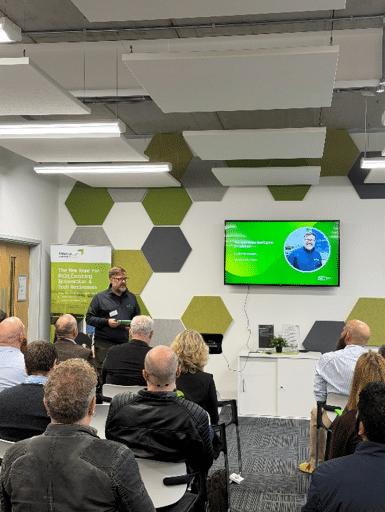
Hosted by Dr Andrew Simkin, Director of the Essex Plant Innovation Centre (EPIC) the event began with a keynote from Daniel Himsworth, Chief Engagement Officer at the UK Agri-Tech Centre. Daniel’s recently moved into agri‑tech from the world of retail and brought a unique perspective to his talk as a result. Attendees were challenged to be obsessed by problems, led by the needs of growers and acknowledge that the real challenge lies in ‘adoption not invention’. Daniel was followed by a series of insightful panel talks, hosted by academics and experts, and case study sessions, that covered how effective collaboration between businesses, growers and universities drives innovation in the agri-tech sector.
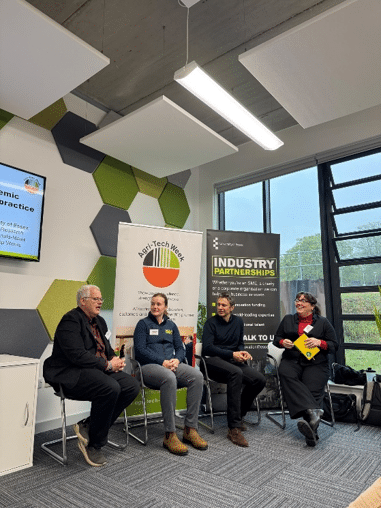
The first panel discussion Making industry-academic collaboration work in practice was hosted by Dr Amanda Cavanagh, Plant Productivity Research Group Director at Essex. Amanda was joined by Dr Georgina Barratt, Head of Crop Production at the British Beet Research Organisation, Professor Klaus McDonald-Meier, CEO of Versatile RobotX and lead of the university’s Intelligent Embedded Systems and Environments Research Group and Leo Roubicek, Founder of Crop Works.
The panellists brought a wide diversity of experiences from their collaborations with academia. Georgina talked in depth about the BBRO’s experience of how PhD funding can generate applicable research alongside training the next generation of highly skilled researchers and industry advocated. Klaus’s history as both a serial entrepreneur (spinning out three companies including Versatile RobotX) and senior academic provided insight from both sides of the coin. The key message of the panel came from Leo –people and relationships are fundamental to any collaboration.
After some refreshments (and maybe the genesis of the next collaborations in agri‑tech) the audience heard about three University of Essex collaborations.
Dr Yathreb Mahjoubi, KTP Associate at the University, talked about her work with PG Rix (Farms) Ltd, developing protocols for onion growing in controlled environments. Jo Waters and Ben Crick from Beth Chatto Gardens then presented three projects from their ongoing collaboration with Essex, and the benefits both measurable and intangible that they see. Lastly, Andrew Simkin returned to the stage to talk about his University of Essex Innovation Fund sponsored project with local growers Royal Mushrooms, during which Essex researchers worked with the company to develop optimised protocols for their growing methodologies.
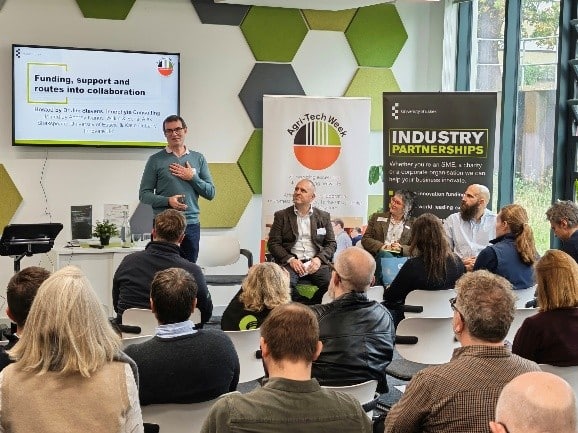
Dr Jim Stevens from Innophyte Consulting hosted the final session of the day – Funding, support and routes into collaboration – a panel to provide practical advice and insights to those looking to begin, or expand, their collaborations with other organisations. Jim was joined by Dr Katie Dubarry, Innovation Lead for agriculture at Innovate UK, Andrey Ivanov, Director at Wilkin & Sons and Dr Alex Shakspeare, Knowledge Exchange Manager at the University of Essex.
Katie’s expertise and experience of the Farming Innovation Program, particularly the ADOPT grants gave the audience an insight into the priorities of funders. Alex illustrated some other funding schemes that collaborating with the University of Essex can provide access to – highlighting the institution’s strong track record in Knowledge Transfer Partnerships and introducing the Innovation Fund – a new scheme designed to build University of Essex collaborations from the ground up. Andrey’s input from the perspective of growers, who can often feel that they lack the time and experience to generate high quality funding applications, was that joining forces with an academic partner with the experience and resource to collaborate on applications can be crucial in unlocking access to funds.
Andrew and Amanda ended the day with an open Q&A session. Discussions about how shifting national priorities in research funding are placing greater emphasis on innovation and commercialisation, and how this could benefit agri‑tech research and on‑farm adoption of beneficial technologies closed proceedings on an optimistic note.
Post Overview
University of Essex Related Posts
Adrian Scripps – from cupcake machines to the UK’s Top Automated Fruit-Packing Facility
LettUs Grow’s Advanced Aeroponics Unlocks Multi-Million Pound Market Opportunity: Vitamin B12-Fortified Salad Crops
We reveal the Top Eight Innovations in the REAP 2025 Start-up Showcase
MTC driving agri tech innovation through robotics and the success of its AgriScale programme
Bringing Roboverse to the UK, turning promising robots into practical farm systems