Sterilising the waste before it leaves the building
 AstellBio
A bespoke effluent decontamination system for a plant-science bioscience R&D facility
ANONYMISED VERSION — The customer, project partners and named individuals have not yet given permission for their identities to be published. Identifying details have been removed or generalised below pending that agreement. This version should not be published alongside, or cross-referenced against, any material that could re-identify the parties involved.
The challenge
A newly built, two-storey bioscience R&D facility — producing proteins, vaccines and other complex compounds from plant tissue rather than yeast, bacterial or animal-cell cultures — faced a hard rule before its labs could open: not one litre of process waste could leave the building untreated.
AstellBio designs bespoke effluent decontamination systems for exactly this kind of problem. This particular challenge arrived through a construction tender for the new laboratory building, rather than across a sales desk.
Background
The facility works with genetically modified microorganisms and microbiological cultures under the UK’s contained-use regime. Any liquid leaving containment — process solutions, sink waste, the residue of everyday lab work — had to be proven sterile before it reached the sewer. That meant every batch treated needed to reach a minimum temperature and pressure, hold it for a set time, and prove it had done so before a valve would even open.
Essential features
- Sterilise batches of effluent reliably, and prove it, every cycle
- Hold roughly two days’ worth of waste water, so lab work is never gated by the treatment cycle
- Integrate with the customer’s own holding-tank pump
- Install outdoors — which meant designing for weather and frost protection from the outset
The solution
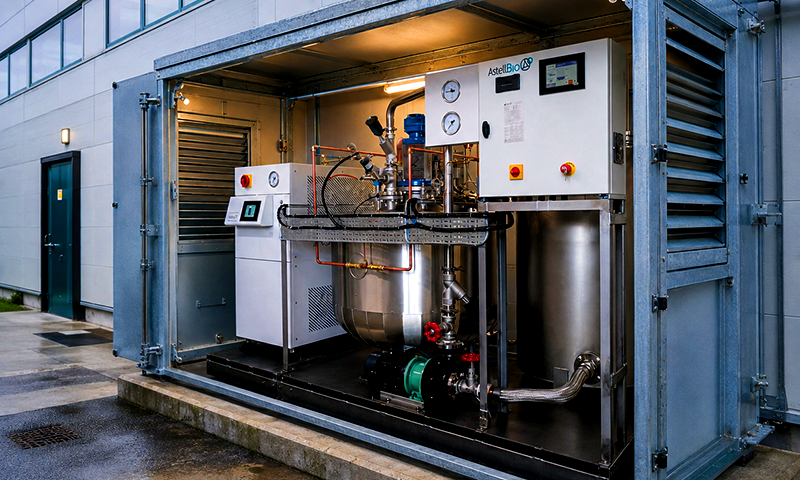
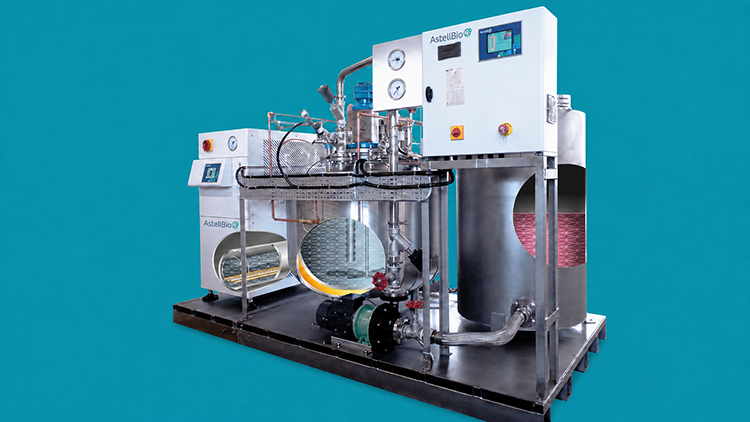
Astell designed and delivered a bespoke, code-compliant EFF350H batch effluent decontamination system, so the facility could treat its own waste water on site rather than trucking it elsewhere.
How it works
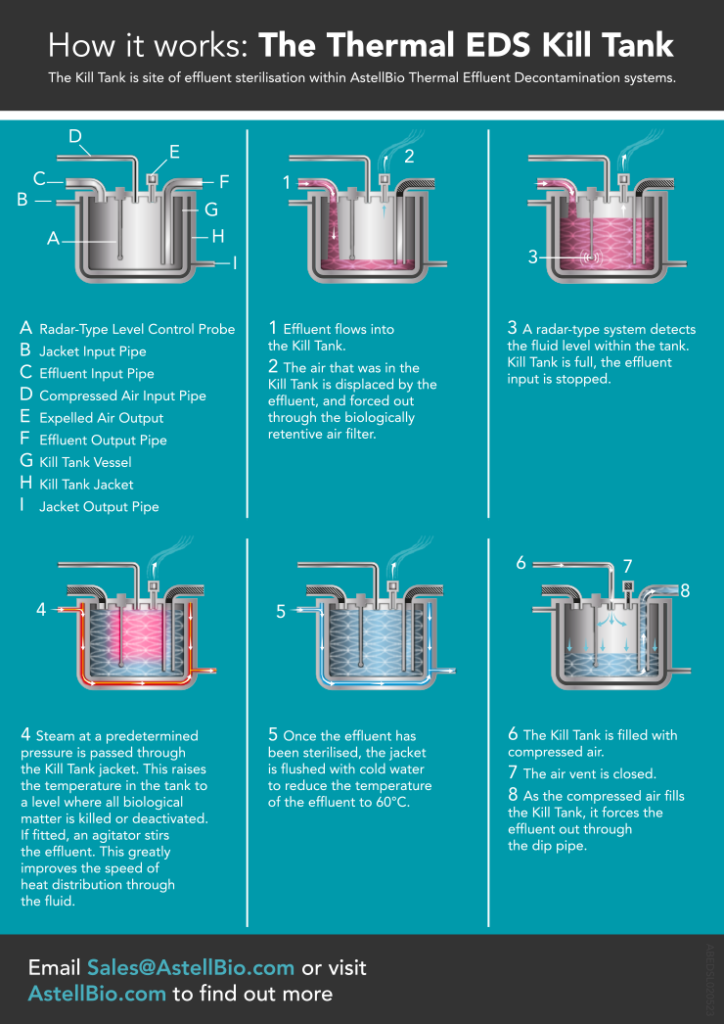
The system fills, heats the effluent to sterilising temperature, holds it there for the required time, then cools it below 60°C before it goes anywhere near a drain. If a cycle doesn’t hit its target temperature and hold time, the system alarms, stops and reprocesses the batch — it cannot release contents on a partial cycle.
Engineering collaboration and delivery
This was a genuinely collaborative project rather than an off-the-shelf supply. Astell’s area sales manager and technical director worked through the site’s requirements directly with the customer’s project contact, including responding to formal information requests raised through the main contractor. Because the plant had to sit outdoors, the design specified — well before delivery — that the contractor build a ventilated, frost-protected enclosure with removable panels for servicing.
Astell delivered and positioned the equipment on site, and the contractor built the enclosure around it. The unit was then piped and wired in, ready for Astell’s engineers to commission.
As the specification developed through consultation, a stand-alone tank grew into a full turnkey package — steam generator, air compressor, stainless-steel frame and delivery all folded in — with an electrical link added so the customer’s own pump could feed the Astell plant directly.
Outcome
Commissioning, staff training and a full set of certification — including a Certificate of Conformity, and ISO 9001 and PED documentation for the customer’s project file — followed, and the effluent system came online just as the new facility itself opened. At the customer’s request, Astell even added a simple green/red status light so staff could see the plant’s condition at a glance. What began as a tender line item became working containment infrastructure: treated water going to drain with a recorded, provable sterilisation cycle behind every discharge.
Why it matters
Plant-based production of proteins and vaccines is one of only a handful of alternatives to conventional cell-culture manufacturing — and reliable containment is the price of investigation. Systems like this are what let that kind of research and production happen safely on site, without waste treatment becoming the bottleneck. It’s also where AstellBio’s approach to bespoke effluent decontamination first came together as a distinct capability — one Astell has continued to refine on every project since.
- *I have permission from the copyright holder to publish this content and images.
Related Posts
Two hundred litres a day and zero tolerance for anything getting through
LettUs Grow joins QuBOOSTR Consortium to pioneer UK glasshouse rubber production

More to Harvest: Why the Difference Starts Earlier than You Think

Apply to Pitch or Demo at the Demo Day, December 2026
IGS reaches Dubai GigaFarm milestone as construction progresses