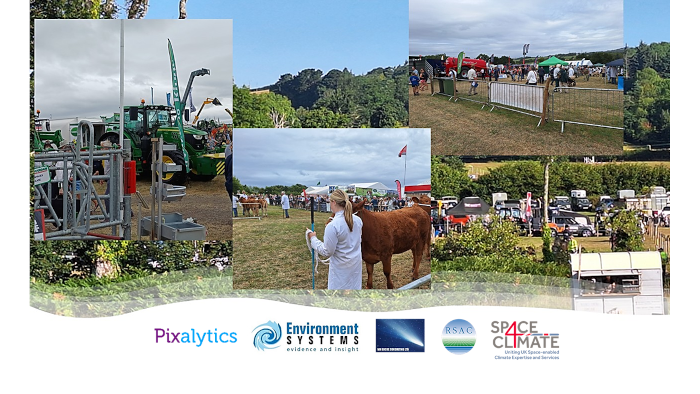
ATW 2026: ‘Big Ag’, the government and public sector bodies currently ‘call the shots’ in agricultural innovation
 BOFIN
Who’s driving agricultural innovation? “Put farmers at the heart of research”
‘Big Ag’, the government and public sector bodies currently ‘call the shots’ in agricultural innovation – according to a poll during an Agri-Tech Week webinar.
Attendees of the webinar ‘Who’s driving agricultural innovation’ were asked to select the organisations or stakeholders they felt held most power and influence over innovation in farming. ‘Big Ag’ was the most frequently selected answer at 39% (out of 54 who voted), followed by government and the public sector at 35%.
Only 26% of respondents chose farmers. How farmers can have greater involvement, and what this means for the technologies reaching their farms, was the focus of a panel discussion during the webinar hosted by the British On-Farm Innovation Network (BOFIN) .
Chaired by BOFIN managing director and Oxfordshire farmer Tom Allen-Stevens, the webinar brought together a panel of agricultural innovation experts – East Yorkshire farmer Adam Hayward, Daniel Kindred of the Agronomy Research Circle and Emma Chapelhow of Agribot.
Tom argued that farmers are often brought into the process too late.
“Farmers aren’t involved until a product or service is eventually launched onto the market,” he said, explaining that they then spend years learning how best to use a product before that experience reaches others.
“If you start that process earlier of involving farmers early on, adoption of a new technology can be accelerated.”
For Adam, who has tested a range of technologies on his farm, having access to more information does not necessarily make a tool useful. “The information wasn’t usable, I couldn’t export it anywhere,” he said, recalling his experience with soil sensors.
“I looked at the dashboard once and said goodbye.”
Emma urged developers to focus on the practical challenges farmers face, explaining that even incremental improvements can help build trust.
“The reality is that there are a lot of small problems that need solving, not necessarily one jet-propelled drone robot that promises to do everything,” she said.
That focus on usefulness also shaped the discussion about adoption. When asked why uptake of agri-tech can be slow, Daniel questioned the assumption that farmers should always be adopting more.
“We put a value judgement in there that farmers should be adopting more,” he said, arguing that this may not be the economically rational decision once risk is considered.
Pointing to autosteer as an example of technology with clear practical benefits, he added: “If it’s really solving a problem that farmers have, then it will get taken up.”
For Tom, building that practical understanding means working with farmers during development and recognising the value of their contribution. He reported that BOFIN had paid approximately £650,000 to farmers for their involvement in trials to date.
“They can do good science on farm, but you should pay them to do so, and that’s when you get results.”
BOFIN’s Launchpad service takes this approach, connecting technology developers with farmers to co-design and carry out robust on-farm trials, he explained.
Collaboration topped the list of changes that would make the biggest difference to agricultural innovation selected by a third (33%) of respondents. Better sharing of research findings and practical evidence followed, being chosen by 22% of respondents.
However collaboration needed to draw on farmers’ existing knowledge and experience concluded Daniel. “The industry must put farmers at the heart of research.”
Watch the full webinar below.
- https://youtu.be/G8j9efVu8dQ?si=qXy-c_MqTpC23l1X
- *I have permission from the copyright holder to publish this content and images.
Related Posts
UK Precision Breeding Act – transforming crop development and food security
Agri-Tech Week 2026
Why agri-tech adoption is usually a people challenge, not a technology challenge
AgFunder releases Global AgriFoodTech Investment Report 2026
Newest LEAF Demonstrator Farm launched with Home Farm Nacton