ATW 2026: “One field is expected to do many jobs now” captured webinar’s key land-use discussion
 ADAS
Webinar: Agricultural Land Use Change – Theory to Practice
“One field is expected to do many jobs now.” A quote that perfectly captured the discussion in this webinar around the future of land use.
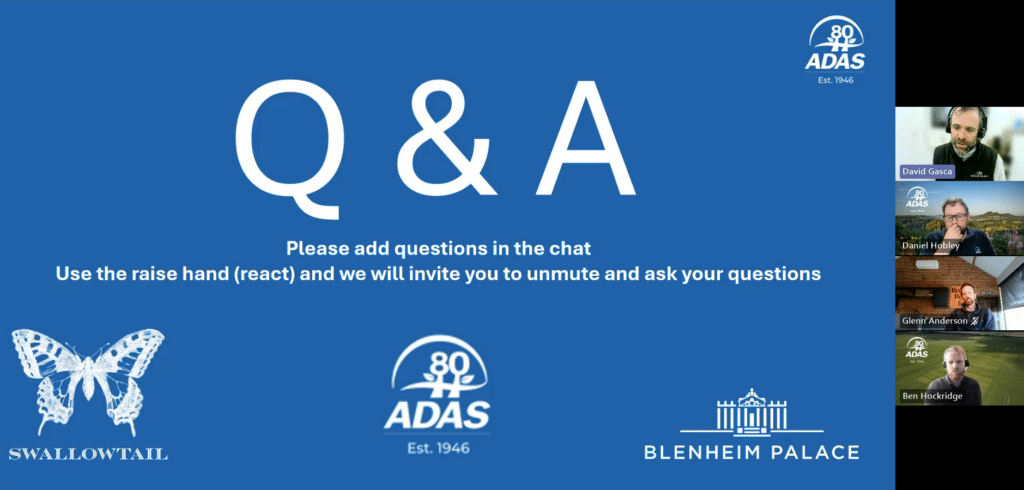
As part of Agri-Tech Week, ADAS hosted a webinar examining how analytical data and on-the-ground expertise can be combined to provide a more comprehensive approach to managing land use transitions. Attendees also discovered how LUMEO decision-support tool, can help support confident, evidence-based decision-making in an increasingly complex land management environment.
We heard from Dan Hobley, Senior Modeller at ADAS, Glenn Anderson, Director at Swallowtail Consulting and David Gasca, Head of Natural Capital at Blenheim Estate on the future of land use in an increasingly complex and fast-changing landscape.
As agricultural systems face increasing pressure from climate change, evolving policy, and the rapid emergence of natural capital markets, land managers are being asked to make more complex and higher-stakes decisions than ever before. This webinar brought together perspectives from research, policy and practice to explore how theories of land use change translate into real-world decision-making on farms and how the introduction of the LUMEO decision-support tool can help identify opportunities, assess trade-offs and support more informed decisions.
Standout takeaway: “The computer is not the truth.”
Data and modelling can identify opportunities, but successful land use change still depends on human judgement, local knowledge, and clear policy.
Key messages:
- Data is driving better decisions
- Lower-performing land often offers the biggest opportunities
- Technology informs decisions, but people make them
The future isn’t food production or nature recovery. It’s delivering both.
- https://www.youtube.com/watch?v=WiorlRAc2Lg
- *I have permission from the copyright holder to publish this content and images.
Related Posts
Implications of the Super El Niño for UK wheat farmers for the 2026/27 season

How open collaboration in agri-tech could help solve the farm profitability puzzle
New hyperspectral satellite imagery crucial for lowering nitrogen use amid rising fertiliser costs
Can Maltesers Grow Wheat?
ATW 2026: ‘Big Ag’, the government and public sector bodies currently ‘call the shots’ in agricultural innovation