The views expressed in this Member News article are the author's own and do not necessarily represent those of Agri-TechE.
Bayer have two cyclical schemes open to anyone to apply for. First introduced in 2015, the initiative has since evolved to offer researchers financial and scientific support to develop ideas for novel solutions across all research and development areas in the Division of Crop Science. Current deadline for submissions is 31st March 2023, but subsequent rounds on different themes will likely be open for applications.
“Our previous Grants4 programs succeeded in attracting top proposals in targeted niches – particularly biotech traits and biologicals,” said Phil Taylor, Open Innovation Business Partner for the Crop Science division. “The new Grants4Ag model expands the reach to a greater number of potential applicants, and therefore more diverse innovations.”
As with previous Grants4 programs, there are no formal reporting requirements and applicants retain ownership of any intellectual property developed. Taylor says the company views these grants as an initial investment with the potential to become larger-scale, longer-term collaborations with Bayer.
Topics can include Plant Breeding, Crop Protection, Biotechnology, Digital Farming and Data Science although there are other opportunities on occasion.
About Bayer Bayer is a global enterprise with core competencies in the life science fields of health care and nutrition. Its products and services are designed to benefit people by supporting efforts to overcome the major challenges presented by a growing and aging global population. At the same time, the Group aims to increase its earning power and create value through innovation and growth. Bayer is committed to the principles of sustainable development, and the Bayer brand stands for trust, reliability and quality throughout the world. In fiscal 2019, the Group employed around 104,000 people and had sales of 43.5 billion euros. Capital expenditures amounted to 2.9 billion euros, R&D expenses to 5.3 billion euros. For more information, go to www.bayer.com
The views expressed in this Member News article are the author's own and do not necessarily represent those of Agri-TechE.
Updated version helps growers.
CROP4SIGHT has announced the launch of an updated version of their web and mobile app, designed to make it easier for potato growers and agronomists to access, and view, potato crop performance on the go.
The latest version of the app makes it easier to use all data that is collected throughout the growing season, while out and about – making it easier to make agronomic and commercial decisions.
Additionally, there is now a module for growers to compare and benchmark their crop performance against anonymised data describing performance of other crops planted at similar times.
Senior Agronomist Fiona Law-Eadie said: “Realistically growers and agronomists don’t spend that much time in front of a computer, especially not when the season gets busier. The latest version of the mobile app gives you easy access to the crop insights you need, to make management decisions on the go.”
Content continues after advertisements
Having a tool to monitor crop performance throughout the season, and therefore confidently forecast yield and performance, is crucial for mitigating risk for the farmer.
“For example, if emergence is a week earlier than expected but you have a set lifting date, this could mean the crop has a 7 to 10 days extra growing period and will likely require changes to crop management plans (e.g. earlier burndown) to maintain the optimum commercial yield of the crop,” Fiona said. “This can be problematic for growers working to contract specifications.”
Mrs Law-Eadie also explains that, currently, there are no other platforms which allows growers and agronomists to compare potato crops, despite it being a crucial element for forecasting marketable crop yields.
“Benchmarking helps growers determine how ahead of the game they are in the growing season, compared to other potato farmers across the country – helping to assess the options available depending on predicted yield and lifting time.”
Post Overview
This story has been submitted by an Agri-TechE member.
The views expressed in this Member News article are the author's own and do not necessarily represent those of Agri-TechE.
It’s news across the world – the biggest wheat crop ever grown, yielding 18 tonnes of grain per hectare[1]! This is fantastic, and laudable in all respects, but it’s no accident. Tim Lamyman has grown high-yielding crops for many years, and throughout, he has been a member of the Yield Enhancement Network – or YEN – which celebrated its 10th birthday last week. The YEN provides Tim – and many other farmers in the UK, Europe, and now in North America – with detailed intelligence about each of their crops, including crop structure and nutrition, so Tim and all YEN members can learn how to do better from year to year.
Figure: Tim Lamyman’s YEN yields (blue diamonds) have set the standard in seven of the 10 years since the YEN started.
In 2022 Tim achieved not only the Guinness World Record for wheat but also the Guinness World Record for barley at 16.2 tonnes per hectare[2], and his oilseed rape crop would also have broken records if an authority existed – 9.0 t/ha, after accounting for its oil content.
The YEN has come to understand that Tim’s achievements over the past decade arise from a combination of his soils, his farm’s climate, and most importantly, the intensity of his thinking and management. This doesn’t mean huge expense on seeds, fertilisers and sprays; it means intensive appreciation of and attention to his crops’ needs, and frequent treatments so that his crops experience a minimum of setbacks. Tim has described how he grew each of his crops below.
Tim’s crops belie the common suspicion that large yields require large inputs. Tim knows his main inputs are light energy and water which come free if his crops can capture them. Whilst YEN doesn’t study economics, Tim’s reported inputs in the YEN’s database indicate that his world record crop must have achieved a 60% greater financial margin than the average YEN crop (which yields 11 t/ha), and double the margin of the average UK wheat crop (which yields 8 t/ha). Furthermore, the Nitrogen Use Efficiency of his wheat crop (at 57 kg grain produced per kg N applied) was better by 8% than the average YEN wheat crop and 35% better than the average UK wheat crop.
To sum up, Tim’s dedication, and his engagement with the YEN, have enabled all YEN members and sponsors to truly appreciate this world-beating achievement. It is not just a biological marvel, but also an exemplar for successful high-performance farming worldwide. Such high-performance crops produce more food from the same amount of land (dubbed ‘land-sparing’), they make more profit, and they use scarce or polluting resources more efficiently. It remains to be seen, but all the evidence indicates that they also fix more carbon into the soil and leave that soil better able to absorb over-winter rainfall and so reduce flooding.
YEN data show that yields of 14 t/ha are possible almost anywhere in NW Europe, and its mission through the next ten years will be to help as many farms as wish it, to achieve as close to their potential yields as Tim does.
[1] = 267 bushels per acre
[2] = 241 bushels per acre
Post Overview
This story has been submitted by an Agri-TechE member.
The views expressed in this Member News article are the author's own and do not necessarily represent those of Agri-TechE.
The agricultural transition period in England means a seismic shift in agri-environmental policy, away from the legacy of the EU Common Agricultural Policy and towards a brave new English future focused on Environmental Land Management (ELM). So, one year into this seven-year transition period, where have we got to?
MORE MONEY FOR COUNTRYSIDE STEWARDSHIP
At this year’s Oxford Farming Conference (OFC), Secretary of State George Eustice announced that Defra is increasing current and future payment rates for Countryside Stewardship (CS). On average, rates will be increased by 30 per cent. In reality, only some CS options will increase, some will remain the same and some may drop in 2023.
Existing agreement holders will be paid based on the new rates for options where the rate has increased. There is a clear drive from Defra to make CS as attractive as possible in order to encourage more land managers to put in applications. CS is intended to be the ‘bridge’ from the old to the new schemes.
SUSTAINABLE FARMING INCENTIVE: SOMETHING FOR EVERYONE?
The Sustainable Farming Incentive (SFI) is the part of ELM that Defra has shared the most specific information on, it will pay for actions that relate to farming activities and create environmental benefit.
The types of action the SFI will fund include soil management plans, growing green cover crops over the winter, and establishing herbal leys. Currently, farmers can receive between £22 per hectare per year and £58 per hectare per year, depending on the level of SFI standard they choose.
The scheme will be open to all who are currently eligible for the Basic Payment Scheme (BPS). The first application window opens this year and payments will be made before the end of 2022.
LOCAL NATURE RECOVERY: A CONTINUATION OF COUNTRYSIDE STEWARDSHIP
Local Nature Recovery (LNR) is the second element of ELM, and it is focused on paying for locally targeted actions to ‘make space for nature’ within the farmed landscape and the wider countryside.
LNR will be the ‘improved and more ambitious successor’ to the CS scheme. It will pay for things like habitat creation, species protection and woodland creation. Defra wants it to reward collaboration on nature recovery projects, but we don’t know how it intends to do that yet. The scheme will be available to all rural land managers by the end of 2024. Farmers are supposed to be able to sign up to both LNR and SFI, so long as it isn’t double funding the same activity.
LANDSCAPE RECOVERY: LARGE-SCALE AMBITIONS
This is the most environmentally ambitious part of ELM and is intended to deliver long-term, large-scale ecosystem recovery projects. The scheme will be open to applications from sites of 500–5,000 hectares. Applications can be made by individual land managers as well as collaborative groups. Each project will have bespoke payment rates that are negotiated during project development.
Defra wants to pilot up to 15 Land Recovery projects between 2022 and 2024 which it hopes will deliver over 20,000 hectares of wildlife-rich habitat.
HOW IS DEFRA DOING?
At the OFC, George Eustice reminded the audience that the agricultural transition is an ‘evolution not a revolution’ and that he hoped he had ‘been able to articulate a clear path that we have towards our final destination’.
However, at the same time, a House of Commons committee report heavily criticised the ELM proposals for lacking detail, being based on ‘blind optimism’ and not fully quantifying the impact rural land use change will have on the UK’s food security. The proof will most likely be in the pudding.
IS IT ENOUGH?
There has clearly been a lot of activity from Defra in the past year – this blog doesn’t even touch on the new productivity and capital grants schemes – but that does not necessarily make up for the BPS income reductions that farmers are now experiencing.
It is important to remember that ELM doesn’t offer a replacement for BPS. ELM is paying farmers for managing their land in new ways – unlike BPS, there will be costs involved. To make up for that lost income, the opportunities of emerging private markets are tempting, and it is good that Defra doesn’t want to ‘crowd out’ private finance. But how exactly it will make sure of this is less clear.
One thing is certain: there is a lot of new information for land managers to get to grips with. And that’s before we’ve even touched on the Environment Act and things like Biodiversity Net Gain and Local Nature Recovery Strategies. It can seem quite daunting, but our advice would be to think innovatively, positively and possibly even collaboratively in order to make the most of these new funding opportunities.
The views expressed in this Member News article are the author's own and do not necessarily represent those of Agri-TechE.
Fram Farmers, the Suffolk-based input purchasing and crop marketing co-operative, has a new chair and vice chair following its annual general meeting in November.
Wendy Houston moves from vice chairman to become chairman of the company, succeeding Suffolk farmer and haulier Andrew Read who has completed a three-year term. As well as running the family 1,100 acre arable and pig farm, she is a director of MPS Agri, the international electronic sow feeding business.
At the same time, Doug Inglis – a board member since 2020 – becomes vice chairman. A former director of the Velcourt corporate farming business, Mr Inglis now runs his own arable business and agronomy consultancy.
“I aim to ensure the co-operative continues to be best placed to serve members in navigating the challenges both arable and livestock members face, and to prosper in the years to come,” says Ms Houston.
Earlier in the year, Fram Farmers appointedMichael Muncey, former UK managing director of Bayer Crop Science and David Sheppard, former managing director of ADM Agriculture to its board, together with farmer directors Mark Williams and Frans de Boer.
“Farming is undergoing a period of unparalleled change, challenge and opportunity – the new board membership will deliver strong, critical and demanding leadership to Fram Farmers,” adds Fram Farmers chief executive Andrew Knowles.
“This will enable us to continue to evolve and strengthen our performance to members, whilst remaining faithful to the values of the cooperative, and ensure our performance is unparalleled with leading commercial agribusinesses in an increasingly competitive marketplace.”
Post Overview
This story has been submitted by an Agri-TechE member.
The views expressed in this Member News article are the author's own and do not necessarily represent those of Agri-TechE.
After an impressive pitch to the Angel Investors from Anglia Capital Group, WATR successfully secured funding for their clean-tech start-up.
The founders of WATR came to the Angels with a clear mission for their business – to use technology to improve water conditions across the globe. Their long-term ambition is for WATR to become the early warning system for water quality globally and to have units in every country in the world by 2024.
Water is the most valuable resource on the planet. With the environment and climate at the top of many minds right now, especially with the recent COP26 summit, WATR managed to strike a chord with the group as they could clearly see the need for this innovative new product. In conjunction with their partners at New Anglia Capital, Anglia Capital Group were able to assist WATR to raise a total of £75,000 for their seed round.
“When WATR pitched to our members they were immediately impressed by the mission to improve water conditions around the world. Businesses with a focus on sustainability are increasingly seeing success in gaining early-stage funding as more of our members seek to invest in companies which are having a positive impact on the environment. We wish WATR every success for the future and look forward to seeing them go from strength to strength” Hannah Smith, Managing Director, Anglia Capital Group.
Based in one of Norfolk’s technology hubs, the Hethel Engineering Centre (run by Hethel Innovation), the team at WATR have developed a product which can provide the customer with a live time data feed to an app or dashboard so they may observe parameters such as water temperature, ORP, dissolved oxygen, pH, conductivity and chlorophyll amongst others.
“We are extremely excited to see WATR’s vision and product quality be recognised by investors. Their success and focus on improving and protecting our environment is incredibly inspiring and we are proud to have them as a member of our innovative community of businesses at Hethel Innovation. We can’t wait to see what is next for the team and see their growth continue.” Imogen Shipperlee, Innovation Manager, Hethel Innovation.
WATR App Screenshot
WATR are now gaining recognition across the industry and have recently been selected as double finalists in the “World changing ideas” and “On the rise categories” in the Fast Company’s 2021 awards.
“WATR has had an extremely exciting year. We made new product enhancements to WATR, added new accessories and opened a new market with Soil Monitoring. We are currently working on a number of projects with different water companies, a large environmental project in Devon, as well as working with SME’s and fisheries. We are now generating enquiries globally and the level of interest in the product in the last three months has been phenomenal.It’s fantastic that after four years of intense development that we are starting to realise our mission, to improve water conditions around the globe.As a business we are extremely committed to the region and to have investment support from local investors has enabled us to accelerate our growth.” Glyn Cotton, Co-Founder, WATR
In an exciting new development WATR have recently launched their new product TERA which enables farmers and agriculturalists to utilise the power of real-time soil condition data to improve crop conditions, reduce costs and to create more efficient farming and agricultural solutions.
Don’t invest unless you’re prepared to lose all the money you invest. This is a high-risk investment, and you are unlikely to be protected if something goes wrong. Take 2 mins to learn more.
Post Overview
This story has been submitted by an Agri-TechE member.
The views expressed in this Member News article are the author's own and do not necessarily represent those of Agri-TechE.
It’s no secret that food prices have surged in the past year. Supply chain issues, geopolitical tensions, disease, and more have affected inflation for several commodities – most notably eggs. According to the latest December Consumer Price Index, prices were up nearly 60% compared to a year earlier. A prolonged stint of highly pathogenic avian influenza (HPAI) last year affected the industry more than expected, tightening supplies and inflating prices. However, that trend is starting to soften.
Wholesale egg prices began to decline in late December as consumer demand retreated from its holiday levels. After peaking at $5.38 a dozen for large shell eggs, they have dropped to a combined regional average of $4.70 as of Jan. 13, according to the U.S. Department of Agriculture’s Agricultural Marketing Service. Increased supplies are affecting wholesale prices as retail prices remain at historically high levels.
The price of large, carton eggs decreased 73 cents to $3.86 per dozen on the New York Market, USDA reported in its latest weekly Egg Markets Overview. Prices paid to producers in the Midwest fell 75 cents to $3.68. The California benchmark declined 65 cents to $6.72 per dozen. Meanwhile, it’s not uncommon to find conventional eggs going for more than $10 per dozen at local New York City markets.
A mix of market factors happened all at once to get to this point. Jada Thompson, assistant professor of agricultural economics and agribusiness at the University of Arkansas, said higher feed prices, seasonal demand spikes, transportation issues, and general inflation had a hand to play, but highly pathogenic avian influenza, also known as the bird flu, was the proverbial “straw that broke the camel’s back.”
The virus, which sickens and kills poultry, spread to several commercial egg houses last year, affecting more than 42 million poultry, USDA data show. Migratory waterfowl act as hosts to the virus each year, affecting the egg, chicken, and turkey industries, usually until the warmer, summer months when the number of cases dissipate. However, 2022 was different.
“It was different because it didn’t go away,” Thompson said. While the number of birds affected slowed during the warmer months, a resurgence occurred in the fall and has continued to infect flocks in the U.S. and around the world, including severe outbreaks in Asia and Europe.
The removal of millions of layers, pullets, and breeders from the egg system significantly hampered production and tightened domestic supplies. As a result of recurrent outbreaks, U.S. egg inventories were 29% lower in the last week of December compared to the start of 2022. Add the rising costs of inflation, transportation and supply chain issues spurred by the Russia-Ukraine conflict, various rail strikes, and the holiday season, where many people are making deviled eggs or baking cakes and pies, and that translates to historically high prices, Thompson said.
The phenomenon has created a frenzy of memes on social media, with users declaring eggs a luxury item. Genevieve Roch-Decter, the chief executive officer of Grit Capital, said that eggs were the “new bitcoin” and posted a chart of skyrocketing prices on Twitter.
Although prices remain elevated at retailers, recent data show prices starting to weaken at the wholesale level as birds are replenished and more supplies come online. Whether they can come down to pre-2022 levels is anyone’s guess, Thompson said.
“It’s an unprecedented animal health event that is ongoing and everyone is adjusting to it,” she said.
As part of her research, Thompson wrote about the impact of catastrophic events on farmers, from loss of income and additional operational costs to mental health effects. Finding a positive case on the farm can be devastating, she said. At the producer level, many are asking themselves what adjustments can be made to assist with bird replenishment and what the short- and long-term price dynamics will be, Thompson said.
“The industry is trying to address this preemptively,” she said. Some are looking to buy eggs in much larger quantities as prices become more favorable, while others are biting their nails, Thompson said.
Prior to last year, the worst poultry health emergency in the U.S. was from 2014 to 2015, when there were 50 HPAI outbreaks in commercial layer chicken flocks, affecting 43 million birds. Wholesale prices surged during this period and declined sharply the following year, remaining at or below $2 per carton until 2022.
Historically, HPAI is considered a seasonal disease, but last year, it never went away. Michael Nepveux, Stable’s senior protein analyst, said most outbreaks in the U.S. happen when birds migrate in the spring, which is just around the corner.
“It looks like we have the potential for HPAI to become more of just a regular part of producers’ lives instead of a black swan event that occurs, say, once in a decade,” Nepveux said. “If producers are able to restock their flocks and keep any new outbreaks out, we may see some relief in egg prices. However, egg prices could be in for another rocky year.”
The views expressed in this Member News article are the author's own and do not necessarily represent those of Agri-TechE.
Barclays Eagle Labs has been awarded a new grant to boost small and scaling tech businesses in all corners of the UK.
Estimates suggest strengthening regional tech industries could grow the UK’s digital sector by an additional £41.5 billion by 2025 and create 678,000 jobs.
The £12.09 million Digital Growth Grant builds on more than £42.2 million invested by the government to support tech start-ups and scale-ups since 2016.
Combined investment from Eagle Labs and the government will increase support for the tech sector so more than 22,000 businesses can benefit, with at least 80 per cent based outside London.
Barclays Eagle Labs has expertly delivered growth programmes, business mentoring and events to start-ups and scale-ups since 2015. Their growing network already supports businesses from Aberdeen and Belfast to Cardiff and Cumbria through 38 physical sites, as well as virtually across the country.
Together with best-in-class business support experts, Eagle Labs will create effective local networks to help tech businesses wherever they are in the country.
Eagle Labs and industry partners will provide specialist support, funded by the Digital Growth Grant, for founders from underserved communities – for example expanding access to their growth programmes for Black and female founded businesses.
The grant will fund training resources and opportunities for entrepreneurs, including a Learning Management System providing virtual training to over 10,000 businesses and training modules created for young people to inspire the next generation of UK entrepreneurs.
Minister for Tech and the Digital Economy, Paul Scully, said:
We want to unlock the potential of the next generation of start-ups and scale-ups and boost tech businesses in all corners of the country.
Barclays Eagle Labs are digital industry experts and will help tens of thousands of tech firms and founders to achieve their dreams and create jobs and economic growth.
The Digital Growth Grant was awarded following an open competition and rigorous assessment process. The Barclays Eagle Labs bid represented the best value for taxpayers’ money as the full grant will be allocated to supporting the UK tech ecosystem, with Eagle Labs absorbing all operational and people costs associated with delivering the programme of activity.
It will enable Eagle Labs to launch new programmes to grow tech businesses as well as increasing access to Eagle Labs’ existing services. The funding will double the number of mentoring sessions offered to tech firms to 1,500 a year.
The independent panel assessing applications concluded Eagle Labs was uniquely positioned to deliver targeted support across the country. A bespoke regional partnership programme will ensure funding and training reflects the challenges digital businesses are facing in their area.
Amanda Allan, Director of Barclays Eagle Labs, said:
Eagle Labs’ vision is to make the UK tech sector an engine for growth and for the UK to be the best place in the world to start and grow a tech business
Through the Digital Growth Grant, we’re excited to double down to reach more businesses across the country with our best-in-class business growth programmes and bespoke regional support.
We have a track record of supporting over 8000 start-ups and high-growth businesses since we launched in 2015 and we’re proud that, due to our established Eagle Labs network, we can pass through all grant funds to our delivery partners and programmes, helping to maximise the impact of the grant in supporting the UK tech ecosystem.
Tech Nation will continue to deliver remaining DCMS grant funding until March 2023. The Digital Growth Grant will be awarded to Barclays Eagle Labs from April 2023 and will fund activity until March 2025.
Post Overview
This story has been submitted by an Agri-TechE member.
The views expressed in this Member News article are the author's own and do not necessarily represent those of Agri-TechE.
It’s Veganuary! Where for the month of January, people are encouraged to try out or adopt a vegan diet. Since there aren’t a huge amount of seasonal fruits and vegetables to play with, we’re not sure the first month of the year is the best time to go vegan. However, this does reflect how consumers expect to be able to access any and all food at any time – and this now includes being able to eat meat, without actually eating meat. In this article, we look at the rising popularity of protein alternatives and how vertical farming technology might be able to help with the protein transition.
Whether it be to reduce their carbon footprint, make better choices for the planet, or for animal welfare reasons, many are choosing to reduce or remove meat from their diets. In doing so, there has become an increased demand for alternative protein sources. Alternative proteins can include “fake meats” sourced from plants such as soya, pea proteins or lentils, as well as from fungi, or less commonly, tissue cultures, or the consumption of insects.
Even in the past couple of years, the popularity of “fake meat” has soared, with many food manufacturers and well known restaurants or fast food chains adding meat-free options to their menus. According to a market report by Statistica, the consumption of meat vs alternative protein consumption is trending towards a 40/60 split – in favour of alternatives.
But if moving away from meat consumption for environmental and ethical reasons, we must also make sure that the alternative we’re now being offered isn’t harmful in other ways. Whilst the US Beyond Meat burger claims to produce 90% fewer greenhouse gas emissions than a beef burger, carbon emissions aren’t the only means of calculating environmental impact. We should also make sure that the methods of production aren’t playing into existing agricultural issues: such as pesticide use, water pollution, deforestation, or monocultures.
It’s widely agreed that eating more plants has health benefits for both people and the planet. If we want people to actually increase the proportion of plants in their diet, food producers should make sure we’re increasing the availability of plant proteins like legumes, rather than simply diverting existing sources away from consumption in their whole form to make meat alternatives. That is – in order to see benefits, we need consumers to replace their meat burger with a bean burger, rather than replacing beans with bean burgers.
As an emerging industry, controlled environment agriculture (CEA) and vertical farming could be in a unique position to help. Since vertical farms are still in development themselves, they have the potential flexibility to increase the amount of protein alternatives we are growing and to adapt to the demands of an emerging market, whilst also bringing good sustainability credentials – such as using less space, less water and removing the need for pesticides. Below, we explore some of the ways that CEA could support the alternative protein market.
Propagation in vertical farms
Growing crops used for alternative protein in a controlled environment, such as a vertical farm or greenhouse, is largely unexplored. As one example, propagating peas within a controlled environment could be explored as a way of increasing the amount of peas grown, without diverting the supply from existing sources – whilst minimising the resources used.
It doesn’t always make sense to use vertical farming for an entire growth cycle. In the case of pea protein, the cost of growth for this relatively low value crop would be far too high, since growing to seed would take an entire year. It is sometimes more resource, space or energy efficient to use vertical farming for only part of the process. Propagation is the part of the process where CEA is likely to benefit the production of alternative proteins most.
Propagating using aeroponics can often produce larger and healthier crops which could be more likely to survive transplanting into soil. LettUs Grow are currently exploring this with crops such as tomatoes and tree whips, but there is the potential that plants used as alternative proteins, such as soy, pea, amaranth, chickpea, rapeseed, water lentil and lupin might also benefit from being propagated in this way.
Biofortification
There are some health concerns surrounding fake meat – especially when they’re replacing meat as part of a vegan diet. These processed foods can often be perceived as “healthier” simply because they are associated with being “plant-based.” But though they are often higher in salt, studies have found that typically they have a higher nutrient performance, or there is no difference, to the foods they are replacing – it all depends on what is being added.
However, there are specific micronutrients that are more difficult to get using plant based ingredients, such as iron. CEA offers the opportunity to grow biofortified foods, in order to provide specific nutrients and make these vitamins or minerals more easily digestible. This could be done many ways, including through genetics, with breeding (though this can take an extraordinarily long time) or through gene editing, to alter the nutritional composition of the crops.
At LettUs Grow we have also begun work to see how we can impact the nutritional composition of crops by optimising the environmental conditions: using aeroponic irrigation systems to deliver specific nutrients to the crops during the growth stage, in order to increase the concentration of the specified nutrients or vitamins in foods. In doing so, it might be possible to increase the nutritional value of alternative proteins and deliver vitamins or minerals that might otherwise only be found in animal products.
Circular thinking
Another concept that is under explored is how we can join together different production methods to create a more circular food system. This can help to reduce physical waste and loss of resources, such as energy, in our supply chains.
Since both the alternative protein and vertical farming sectors are in their infancy, there could be an opportunity for circular thinking principles to be included in earlier design phases. For example, this could allow systems such as insect farms, aquaculture and plant growth to be linked to make use of waste streams from one process in another.
The future of protein alternatives
Our food system is broken. The main problem with introducing alternative foods into our supply chains, is that this doesn’t automatically fix any systematic issues. If we want to offer these alternatives, we must make sure that the processes creating them are not damaging. Only by looking at our food systems as a whole will we create real, lasting change. Otherwise we risk replacing one problem with another. This will include introducing alternative proteins, but also making improvements to the animal farming industry.
New agricultural technologies, such as vertical farming and aeroponics, can certainly help to support the growth of alternative proteins, but it cannot be considered a quick fix to the deeply embedded and nuanced issues surrounding eating meat. Yet it is exciting to begin to imagine how CEA might be able to support and make a reality of innovative solutions to our food system issues – we’re just at the beginning!
If you want to chat about how vertical farming could work with and impact different industries, then reach out to our business development team, who would love to hear from you. Get in touch here.
Post Overview
This story has been submitted by an Agri-TechE member.
Researchers and chefs at the University of Reading aim to encourage British consumers and food producers to switch to bread containing faba beans (commonly known as broad beans), making it healthier and less damaging to the environment.
The £2 million, three-year, publicly-funded ‘Raising the Pulse’ project has officially begun and is announced today (18 January 2023) in the Nutrition Bulletin journal.
Five teams of researchers within the University of Reading, along with members of the public, farmers, industry, and policy makers, are now working together to bring about one of the biggest changes to UK food in generations.
This is by increasing pulses in the UK diet, particularly faba beans, due to their favourable growing conditions in the UK and the sustainable nutritional enhancement they provide.
Despite being an excellent alternative to the ubiquitous imported soya bean, used currently in bread as an improver, the great majority of faba beans grown in the UK go to animal feed at present.
Researchers are optimising the sustainability and nutritional quality of beans grown here, with a view to encouraging farmers to switch some wheat producing land to faba bean for human consumption.
Faba beans are particularly high in easily digested protein, fibre, and iron, nutrients that can be low in UK diets. But the majority of people are not used to cooking and eating faba beans, which poses a major challenge.
Professor Julie Lovegrove is leading the ‘Raising the Pulse’ research programme. She said: “We had to think laterally: What do most people eat and how can we improve their nutrition without them having to change their diets? The obvious answer is bread!
“96% of people in the UK eat bread, and 90% of that is white bread, which in most cases contains soya. We’ve already performed some experiments and found that faba bean flour can directly replace imported soya flour and some of the wheat flour, which is low in nutrients. We can not only grow the faba beans here, but also produce and test the faba bean-rich bread, with improved nutritional quality.”
‘Raising the Pulse’ is a multidisciplinary programme of research, funded by the UKRI Biotechnology and Biological Sciences Research Council, as part of their ‘Transforming UK Food Systems’ initiative.
As well as consulting and working with members of disadvantaged communities, there will be studies using our novel foods at the University of Reading’s students halls of residence and catering outlets.
This links ‘Raising the Pulse’ with Matt Tebbit, who runs the University’s catering service and leads the University’s ‘Menus for Change’ research programme. He said: “Students will be asked to rate products made or enriched with faba bean, such as bread, flat bread, and hummus. They will be asked questions about how full they felt, for how long and their liking of the foods. It is hoped that faba bean will improve satiety, as well as providing enhanced nutritional benefits in products that are enjoyable to eat.”
Before there are products to be tested, the beans must be grown, harvested and milled. ‘Raising the Pulse’ seeks to improve these stages as well. Researchers will be choosing or breeding varieties that are healthful as well as high yielding, working with the soil to improve yield via nitrogen fixing bacteria, mitigating environmental impacts of farming faba beans, planning for the changing climate, and more.
Watch this space…
Post Overview
This story has been submitted by an Agri-TechE member.
18th January 2023
Member News
Share this Page:
Agri-TechE Newsletter
Get the latest agri-tech news, events and opportunities direct to your inbox
The views expressed in this Member News article are the author's own and do not necessarily represent those of Agri-TechE.
Understanding how crops respond to environmental stress is crucial to developing high performance varieties and growing crops profitably. No one knows this better than at Enza Zaden, who constantly strive to produce resilient varieties at scale for growers all over the world.
Gardin is thrilled to announce that, after the completion of a successful trial in September 2022, Enza Zaden has the intention to expand our collaboration across their facilities in the Netherlands and Spain in 2023.
Dr. Chiara Volpi, senior researcher at Enza, said:
“We tested the Gardin technology on some of our breeding lines. Being able to see how the plants respond to stress in real-time has been very valuable for understanding their potential. Not only this will make us aware of stress well before it becomes visible; it will also provide an objective and quantifiable way of understanding the effect of variability in the environment and of differences between varieties, as well as the efficacy of treatments. The Gardin platform measured crucial parameters of plant performance completely autonomously and directly where the plants grew without the need for any intervention from our team. This, together with the analytics capabilities provided by the Gardin team, enabled us to gather important data from our research experiments aimed at accelerating variety development”
Expanding our collaboration offers great potential for both organisations. Dr. Fabrizio Ticchiarelli-Marjot, Gardin’s lead biologist commented:
“Chiara and Duy are world class scientists, and working with them and Enza Zaden has been an absolute delight. We were able to observe unforeseen patterns in the way some vegetable crop varieties responded to abiotic stress and we hope these insights will aid Enza Zaden in bringing these crops to market as soon as possible. What excites me the most about next year is that we will be expanding the range of species we will work on together, helping as many people at Enza Zaden as possible. This will not only accelerate their pipelines, but also ensure Gardin’s predictive analytics is trained from the very start on some of the most innovative crops that will reach the market. This will put us in a great place to serve as many commercial growers as possible, all over the world.”
Post Overview
This story has been submitted by an Agri-TechE member.
Get the latest agri-tech news, events and opportunities direct to your inbox
Ag-drive app wins two awards at LAMMA 2023
Member News
Agri-TechE
This content is hosted by Agri-TechE as part of its service to its members. The views and opinions expressed are those of the individual/organisation that supplied the content and not those of Agri-TechE or its employees.This content is hosted by Agri-TechE as part of its service to its members. The views and opinions expressed are those of the individual/organisation that supplied the content and not those of Agri-TechE or its employees. Ag-drive, the app that helps agricultural contractors and farmers to manage their businesses more efficiently, has won gold in the digital category of the LAMMA Innovation Awards 2023, and the LAMMA Founders Trophy for the best overall innovation at the Show.
The increasingly popular app, developed by farmer and contractor Will Dunn, is used by businesses of all sizes who want to replace time-consuming paperwork with digital job records, timesheets, field mapping, health and safety checks, and integrated invoicing with common accounting software.
Ag-drive founder, Will Dunn, says “Ag-drive makes every job accountable and traceable. Input and labour costs are increasing year on year, so having a quick and simple way to track and record jobs, and invoice regularly, means businesses can better manage their cash flow and even increase income through more efficient and accurate invoicing.
“We are delighted to have won gold in the LAMMA Innovation Awards. Since we launched the Ag-drive app we have committed to continually improving the platform, and have regularly introduced new and improved features thanks to customer feedback.
“In the past six months we improved job recording features for multiple operators, invoice approval on the app, and added more accounting package integrations. Ag-drive can now be used with Quickbooks, Sage, and Xero.
“We have a vast range of businesses using the app across the world, from farms of all sizes to large and small contractors, and non-farm businesses who find the app’s job recording and integrated invoicing features ideal for their needs.”
The Ag-drive app is available on both iPhone and Android smartphones and has been designed for simplicity to support all users. A web version is also available and is mainly used for invoicing and processing time/job sheet information.
A free 14-day trial gives users the ability to try all the features before committing to a monthly subscription from £10 per month, depending on the size of their team. New subscribers get their first month free with discount code JAN23.
Visit Ag-drive at LAMMA, Hall 20, Stand 20.360.
Post Overview
12th January 2023
Agri-TechE
Agri-TechE Article
Digital Farm Management
Share this Page:
Related Posts
Sharing knowledge helps potato industry rise to storage challenge

 Bayer
Bayer Crop4Sight
 ADAS
ADAS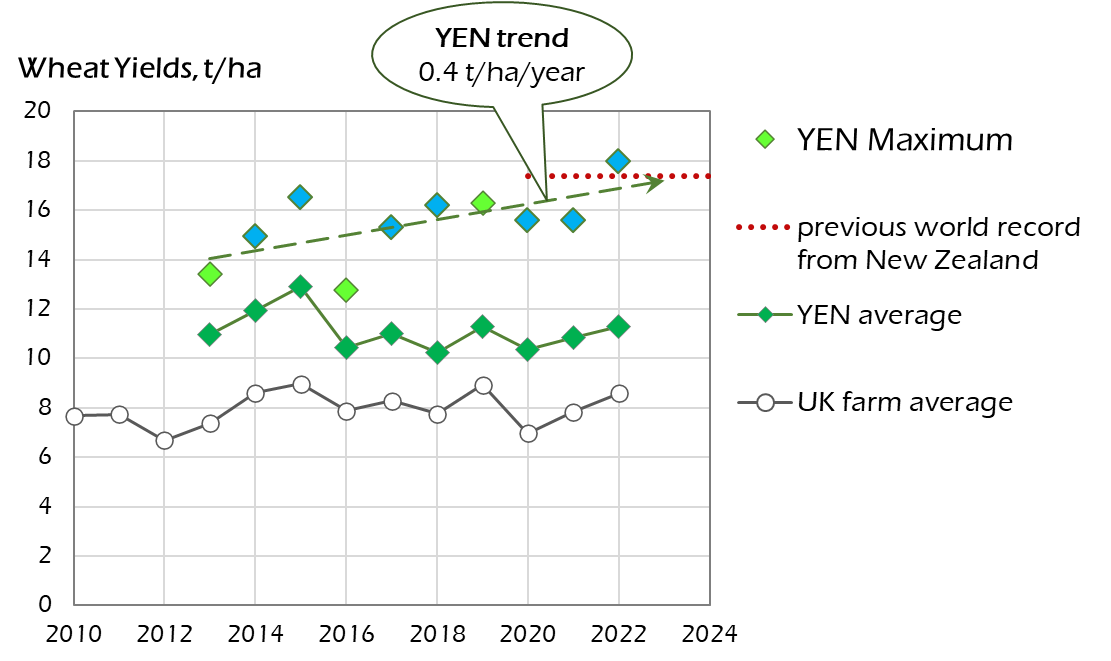
 Savills Limited
 Fram Farmers
 Anglia Capital Group
 Stable
 Barclays Eagle Labs
 LettUs Grow Ltd.

 Gardin Ltd
 Agri-TechE